Home Blog Page 5728

Abortion ruling casts cloud over usual cheer at US Pride parades

UNPLASH

NEW YORK/SAN FRANCISCO — People attending Pride celebrations hosted by LGBTQ+ (lesbian, gay, bisexual, transgender, queer/questioning) communities across the United States this weekend expressed outrage at the Supreme Court’s decision to overturn the constitutional right to abortion, and a wave of anti-transgender legislation.

For more than 50 years, LGBTQ+ people and supporters have marched on the last weekend in June to celebrate hard-won freedoms. But now many fear those freedoms are under threat.

Pride parades in New York, Chicago, San Francisco, Seattle and Denver followed protests in some of the same cities decrying the Supreme Court’s decision on Friday to reverse the landmark 1973 Roe v. Wade decision that legalized abortion nationwide.

“This march is going to have more of a serious tone than celebratory, and I don’t think that’s a bad thing at all,” said Krystal Marx, executive director of Seattle Pride, which drew thousands of people to its parade on Sunday.

In New York City, throngs of people dressed in rainbow colors cheered as representatives of the abortion rights group Planned Parenthood took part in a parade in Manhattan. The marchers held pink signs that read “Together. We fight for all.”

“Everybody please scream for Planned Parenthood!” an announcer called over a loudspeaker. “We won’t back down!” the crowd responded.

The marches commemorate protests that broke out after police raided a gay bar at the Stonewall Inn in New York City on June 28, 1969.

LGBTQ leaders fear the abortion ruling by the court’s conservative justices endangers personal freedom beyond abortion rights. In a concurring opinion, Justice Clarence Thomas wrote that the Court might reconsider other precedents, mentioning specifically the rulings protecting the rights to contraception, same-sex intimacy and gay marriage.

“The anti-abortion playbook and the anti-LGBTQ playbook are one and the same. Both are about denying control over our bodies and making it more dangerous for us to live as we are,” Sarah Kate Ellis, CEO of LGBTQ advocacy organization GLAAD, said in a statement.

Even before the Supreme Court’s ruling against abortion rights, the LGBTQ+ community’s Pride month jubilation was weighed down by a raft of Republican-backed state laws that specifically target transgender youth.

The measures enacted in several red states bar classroom discussion of gender identity, block access to healthcare to help young people transition, and restrict participation in sports.

In Texas, where Republican Governor Greg Abbott has called for prosecuting some gender-affirming care as child abuse, the line from overturning Roe to rolling back LGBTQ+ rights was clear to Patrick Smith, who attended Houston’s Pride Parade.

“The government should stay out of our private lives,” said Mr. Smith, who attended the event on Saturday with his partner. “Women went first. I fear what could happen to us too.”

Abortion rights and transgender rights were top of mind at San Francisco’s Pride parade, where people held signs that read “Abort the Court,” “Protect trans youth,” and organizers led a chant of “Get your laws off our bodies.”

“It feels like there’s a cloud over everybody who has a uterus,” said Maya Reddick, a high school student attending San Francisco’s celebration with friends. She held a sign that said “reproductive rights are human rights.” — Randi Love and Nathan Frandino/Reuters


Hamilo Coast: Nurturing nature for 15 years and beyond

The current rate at which individuals observe sustainability practices is far from halting climate change. Whether it is reducing the use of disposable items or saving more energy, environmentally conscious activities will only yield significant results if everyone is “cast in the same mold,” so to speak. That said, high-impact global sustainable development lies within the responsibility of the government and large organizations—conglomerates among them.

Understanding such a role, SM Prime Holdings, Inc., one of the largest integrated property developers in Southeast Asia, has incorporated its sustainable practices in its developments early on. Through SM Prime’s Costa Del Hamilo Inc., a leader in the leisure resort industry and the movers behind Hamilo Coast – this premium seaside complex in Nasugbu, Batangas, fosters a tangible connection with nature. Marking its quindecennial year, Hamilo Coast looks back at its milestones and achievements with its core emphasis on sustainable development.

“Sustainability has been at the forefront of our vision in providing a resort lifestyle. We strive to practice both environmental and social sustainability in our operations through our partners and commnunities,” Franklin M. Bolalin, Assistant Vice President for Hamilo Estate Management, said.

Disaster risk reduction

Every year, the country deals with an average of 19 typhoons, with some often resulting in damages to properties and loss of life. Coastal defenses such as seawalls and breakwater structures are often implemented to resist storm surges. In the case of Hamilo Coast, mangrove trees are the key.

Hamilo Coast’s 100,000 square-meter or equivalent to 10 hectares mangrove belt is one of the largest mangrove areas in the municipality. The sustainable beach resort town has since planted 50,000 mangrove propagules, protected hand-in-hand with the conservation organization World Wide Fund for Nature (WWF) Philippines.

Biodiversity conservation

Apart from disaster mitigation, mangrove trees also benefit the climate by absorbing greenhouse gases (GHGs) and carbon dioxide. This capacity nurtures the ecosystem and biodiversity in the area, providing habitat for a wide array of species.

Hamilo is home to rich marine life and abundant flora and fauna. Its conservation programs and various sustainability initiatives have nurtured and conserved its precious biodiversity. There are about 96 various bird species found at the estate. Among these bird species are the rough-crested Malkoha and the Philippine eagle-owl.

From growing local plants to conducting regular coastal clean-up drives, coastal resource conservation initiatives are active in Hamilo Coast. With the help of WWF, they can increase their fisheries’ biological capacity and monitor their Marine Protected Areas (MPAs)—the Pico de Loro, Etayo and Santelmo coves which are among the three MPAs for Costa Del Hamilo’s Sustainable Development Project. Hamilo has been working with WWF since 2007 monitoring the health and viability of Hamilo Coast area.

In recognition of its conservation efforts, Hamilo Coast was cited by the World Wide Fund for Nature as its longest Sustainability Partner in 2020.

“Over the years, our partnership with SM significantly contributed to the impact we are making in our work in Hamilo Coast. From liquid waste and coral monitoring, to our present work on integrated waste management and food sheds, we hope that this continuing partnership would help us realize our vision of making Hamilo a holistic model of sustainability”, says Katherine Custodio, WWF-Philippines’ Executive Director.

Green buildings development

The path towards a sustainable future is paved with many interventions, including zero waste, dematerialization, zero emissions and resource efficiency practices. For its part, Hamilo Coast makes its intention to be a premiere sustainability community possible by making sure its buildings are designed with the environment in mind.

Some of the estate’s facilities are powered by alternative sources of energy. For example, its lamp posts use solar power more than traditional ones to function. Natural lighting and ventilation are also noticeable in some of its residential areas, which benefits the environment as well as its tenants. Additionally, Hamilo Coast implements a solid waste management plan that consists of recovery of materials and vermicomposting, among others.

Sustainable living

At Hamilo Coast’s core is how a distinct beachfront home can harmonize with its surrounding environment. As people crave for a more relaxed environment, closer to nature and the outdoors amid a work-from-home setup pushed by the ongoing pandemic, Hamilo homes give access to invigorating landscapes, coves to explore and the calming sea.

Fifteen years later, Hamilo Coast has surpassed its reputation as a weekend respite. It is now one of the best settlement options for people looking to live the coastal life in a sustainable community.


Spotlight is BusinessWorld’s sponsored section that allows advertisers to amplify their brand and connect with BusinessWorld’s audience by enabling them to publish their stories directly on the BusinessWorld Web site. For more information, send an email to online@bworldonline.com.

Join us on Viber to get more updates from BusinessWorld: https://bit.ly/3hv6bLA.

Celebrating the purposeful life of fathers

Photo from freepic.diller - FREEPIK

In recognition for standing tall as the pillar of the family, people all over the world celebrate Father’s Day for super dads and father figures. Because they are the families’ frontliners who lead the pack to come out stronger as one, especially through the hardships and adversities faced during the height of the pandemic, many affirmed that fathers deserve to be honored, pampered, and supported exceptionally good this time around.

In the Philippines, Father’s Day is celebrated all-month long of June. Now that the country eases quarantine restrictions over the global health crisis, a multitude of options to express appreciation towards the family’s ever-dependable role models is available.

As fathers’ relationship with their children displays the utmost commitment and selfless love through sacrifices for the whole family’s welfare, Filipinos have creative and innovative ways to celebrate this wonderful occasion of honoring different types of dads.

Dads may talk about how they don’t want gifts for Father’s Day, but their loved ones know better. Finding the best gift for the man the family always look up to is no easy feat. To get started, lifestyle gurus advised people to consider giving presents and spending time on activities appropriate to what their dads particularly like.

For the handiest dad who enjoys fixing things at home, a complete set of power tools for mechanic aid, DIY projects, and house maintenance are guaranteed to impress them. If unsure of what to buy, some commercial hardware stores offer electronic gift cards nationwide to let dads pick their preferred tools by themselves.

Meanwhile, since the onset of the pandemic, most companies opted for flexible work arrangements to ensure the safety of the employees. As most dads work from home now, giving them the gift of comfort is another option, like gifting an ergonomic office chair that provides seat support and customizable table lamps to illuminate the home office and keep dad awake and active throughout the workday.

Technology has also already seeped into the modern Filipino culture. Many, including dads, use gadgets for purchasing, connecting to friends, watching their favorite channels and even gaming. Techie dads will want a better mobile experience in the form of phone accessories. Family members, as a way of giving back to the man of the house, can send funds to their e-wallets or finally proceed to checkout some products on techie dads add-to-cart lists.

For fit dads, a new pair of running shoes would definitely delight them. Some gym or sports equipment would also motivate them to keep their bodies in shape. While most of these dads are also avid sports fans, gift ideas like jerseys, caps and towels are also recommended.

But perhaps, the ultimate gift that families can prepare for their fathers is to buy them something ‘super’. Some social media influencers surprised their fathers with a new ride. While for many netizens, simply ushering their dads to the gasoline station and fueling their tanks full counts as an expensive Father’s Day gift already.

While it’s superb and ideal to buy pricey gifts for dads, getting creative with personalized gifts like letters, a nostalgic memoir or a scrapbook that can let them take a trip down the memory lane will still make dads feel special on this occasion.

For fathers working abroad and away from their families, preparing something sentimental like a Father’s Day dedication cake or a gratitude post online with old photos will keep them looking forward to coming home soon.

Some fathers value the bond of the family over material possessions. Spending this occasion with their loved ones on activities they dreamed of doing together will surely warm a father’s heart.

For foodie dads, family members can prepare a simple breakfast-in-bed meal for dads or take them to their favorite pub, set up barbecue sessions in the yard, treat them to a special dinner feast or organize a formal date night with mom on a yacht.

Some dads want to break the mundane of their daily work hustle by spending time with their families on a getaway out of the city. On this occasion, helping them organize outdoor activities such as hiking, trekking, camping, and stargazing — buzzwords of an adventurous father — can drive them to continue doing what they want amidst on doing what they needed to do for the family.

But for many dads, the everyday display of love, time and respect in their family is what really matters.

For a lot of Filipinos, simple yet engaging family activities like card and board games by the living room floor, a movie marathon at the couch, watching a ball game together, tending the backyard, taking small road trips on the way home from the grocery store, or singing and dancing in front of the karaoke, remain to be the best ways to celebrate the purposeful life of a father. — Allyana A. Almonte

Deeper roles of fatherhood

Photo from PEXELS

The roles of a father have long been transformed and expanded from the traditional roles of a breadwinner and a disciplinarian in the family into a more diverse set of roles, which include being a caregiver and a mentor. Especially at this time when many parents have learned further to balance work and parenting duties within a single space, their homes, the stereotypes of what a father is and should be are much more refuted.

In fact, the profile of a father has changed through time, as the American Psychological Association (APA) noted. “He can be single or married; externally employed or stay-at home; gay or straight; an adoptive or step-parent; and a more than capable caregiver to children facing physical or psychological challenges,” the APA wrote on its website.

APA attributes such change to two factors, one of which is economic trends. “Two to three centuries ago, fathers’ roles were primarily to serve as breadwinners and the conveyers of moral values and religious education to their children,” the association explained. “However, with the advent of industrialization and urbanization and as factories emerged as major sources of employment, fathers became distanced from the household and their families.”

Such circumstances are coupled, however, with the changing economic role of women as more of them get employed and their financial power has increased.

“In tandem with the growing autonomy of women, related trends such as declining fertility, increasing rates of divorce and remarriage, and childbirth outside of marriage have resulted in a transition from traditional to multiple undefined roles for many fathers. Today’s fathers have started to take on roles vastly different from fathers of previous generations,” APA observed.

Alongside those economic trends, research on child development was observed to have increasingly focused on fathers in the last 20 to 30 years.

APA highlighted a study conducted by United States’ National Institute of Child Health and Human Development, which found that fathers tended to be more involved in caregiving when they worked fewer hours than other fathers; had positive psychological adjustment characteristics like high self-esteem and lower levels of depression and hostility; when mothers worked more hours than other mothers; when mothers reported greater marital intimacy; and when children were boys.


“Other research on the role of fathers suggests that the influence of father love on children’s development is as great as the influence of a mother’s love. Fatherly love helps children develop a sense of their place in the world, which helps their social, emotional and cognitive development and functioning,” the association added.

Notably, a study published in the International Journal of Scientific and Research Publications in 2018 delved into the role of Filipino fathers as caregivers. The study interviewed 16 Filipino fathers based in south-central Mindanao who served as the primary caretakers of their children while their wives were working outside the Philippines.

The authors noted from their analysis of the respondents’ interviews that in fulfilling their caregiving roles, these fathers are deeply involved in maintaining the hygiene of their children, as well as in preparing their meals, guiding them in their studies, and attending to them in their sickness — which the fathers considered as the most difficult part of their duty.

“Fathers claimed they did everything for their children. This responsibility started the moment they woke up until they retired at night,” the authors wrote. “These responsibilities covered not only the concern on their children’s activities of daily living like grooming, feeding, schooling and a lot more, but also the household tasks that were traditionally done by women in the Filipino culture.”

This diversity in fatherhood roles actually got more emphasis in the midst the coronavirus pandemic. As shared in a story published on the website of public broadcaster NPR, fathers have faced the challenge of striking a balance between work and family over the last two years.

Photo from our-team – freepik

“You basically have to shift your role from being dad, to your role being dad, teacher, caretaker, [physical education] instructor, nutritionist, because all meals are eaten at home…. But also kind of finding that sense of balance on how beautiful it was that the family was together for just about all three meals every single day,” one father based in New York was quoted as saying.

Given these enhancing of fatherhood roles, the stereotypes of dads as mere providers and babysitters who hardly help in parenting and household chores are far from the reality.

JR Santiago, founder of the Dadvocacy Community on social media, has been showcasing Filipino fathers who are breaking such stereotypes.

“In doing this advocacy, I see that more dads are breaking the stereotypes and are stepping up to become more involved parents. In the years to come, I look forward to seeing more Pinoy dads not only change the fatherhood narrative but to also help change the world, one dad at a time,” he wrote in an article on the Smart Parenting website. — Adrian Paul B. Conoza

Technology with sustainability towards achieving ESG

Technologies and sustainable practices have both recently become a must for many organizations, and not merely something nice to have. For one, companies accelerated their digital transformation to keep up with the new normal. More and more consumers, meanwhile, value sustainable products and practices of brands.

Yet these two together are also imperatives for businesses in their ESG (environmental, social, and governance) performance.

Companies’ ESG performance has become more significant for investors. EY’s global institutional investor survey last year saw the COVID-19 pandemic as a catalyst to ESG, as 90% of the surveyed investors put greater importance on the ESG performance of companies for their investment strategy and decision-making. Furthermore, 74% said that the pandemic drove them more likely to divest from companies with poor ESG performance.

Given such importance for investors, businesses looking into creating or achieving their ESG goals should also look at their sustainability and technology strategies already in place. A report by Accenture titled “Uniting Technology and Sustainability: How to Get Full Value From Your Sustainable Technology Strategy” highlighted the need for the sustainability and technology strategies of businesses to become more compactly aligned to earn a competitive advantage, financial value, and a long positive impact on the environment and society, which could be valuable as businesses now establish bolder ESG goals.

The professional services firm referred to this as a ‘sustainable technology strategy.’ Its research considered that “an effective sustainable technology strategy helps drive business growth and ESG performance.” This is through delivering on three important factors: ‘sustainability by technology’, ‘sustainability in technology,’ and ‘sustainability at scale.’

“Many companies have begun to pilot and scale use cases that harness technology to drive sustainability,” Accenture’s report stated. “There are clear benefits from doing so. In fact, as our analysis shows, companies that adopt sustainable technology to a significant extent achieve 4% higher ESG scores on Arabesque S-Ray dataset — a global specialist in measuring ESG metrics — than those that do not. This can translate into an 11% jump in their ESG ranking.”

Technologies have been considered to play an important role in driving sustainability. According to the United Nations Environment Programme, although technology has caused several environmental and social problems, it could also be a key in dealing with global challenges such as climate change, waste management, and food scarcity.

“We need to harness the digital revolution to drive forward environmental sustainability using a combination of high and low tech solutions. We need to use digital technology to engage and empower governments, companies, and citizens to adopt environmentally sustainable practices, policies, and business models,” UNEP said on its website.

Likewise, all companies surveyed for the said Accenture report believed that technology is ‘important’ or ‘very important’ to meet their sustainability objectives.

One instance that presented technology’s role in driving sustainability from the report is that of the surveyed companies that succeeded in reducing carbon emissions in their productions and operations, 70% do so with the help of artificial intelligence (AI). Among other technologies that could also help in emission reduction are analytics, cloud, blockchain, and the Internet of Things (IoT).

The report also considered technologies a key to sustainable value chains, especially as supply chains are responsible for 60% of global emissions, according to the firm. The report added that technologies could also enable brands to ‘promote sustainable choices for consumers’ and help ‘build sustainable organizations.’

But as businesses leverage technologies to accelerate their sustainability transformation, they should also be mindful of the impacts of the technologies they utilized, which would make it seem to contradict the very purpose of their sustainability goals.

Accenture’s report cited that an estimated share of the information and communications technology sector of the world’s carbon footprint increased from 1.5% in 2007 to 4% at present, and is projected to reach 14% by 2040. This is what its concept of ‘sustainability in technology’ could help address.

Making technology sustainable could help mitigate its environmental impact. According to the firm, one way is for companies to embrace green software. 

Furthermore, the firm reminded to consider the human and social impacts of technology aside from its environmental impact. Hence the need for businesses to ‘build trustworthy systems’ that include ‘privacy, fairness, transparency, robustness, and accessibility,’ as not being able to address trust could damage the wider ESG strategy of a company.

Delivering on sustainability in technology, the report added, would also need clear governance structures to be instituted.

The last among the factors of an effective sustainable technology strategy from Accenture’s report is scaling sustainability by engaging ecosystem partners, as one organization cannot tackle global sustainability issues and make an impact at scale alone by itself.

As organizations enhanced their efforts towards achieving their sustainability goals with technologies, it could somehow impact their ESG performance, which, as mentioned earlier, has become more important for investors. However, PwC’s global investor survey in 2021 saw that only one-third of investors (33%), on average, deemed the quality of ESG reporting they see is ‘good.’ In solving this issue, therefore, technologies could once again serve a critical role or revolutionize another aspect of how businesses deal with ESG. — Chelsey Keith P. Ignacio

Revolutionizing ESG reporting through digital solutions

Large and public organizations treat environmental, social, and governance (ESG) as a major strategic imperative for businesses today. Market research shows how companies make long-term commitments now more than ever to help address climate change; stir social empowerment; and improve policies for worker safety, diversity, equity, and inclusion.

Overseas, small and large companies publish reports about their ESG initiatives. Locally, companies need to comply with the Philippine Securities and Exchange Commission’s (SEC) Sustainability Reporting Guidelines for Publicly Listed Companies on a “comply or explain” basis, as part of efforts to help them assess and manage their economic, environmental and social impacts in the country.

However, many organizations struggle to embrace the ESG mandate. Experts noted that companies can streamline their journey in ESG reporting using technology to revolutionize the traditional sustainability management through the automation of existing processes, intelligence and data-driven insights, and revving-up communication between a company and its various stakeholders.

As early as 2018, a World Economic Forum report presented that ESG data is becoming more fragmented and technology can provide auditable records for insight and visibility by helping companies to illustrate their performance and enabling investors to make informed decisions.

To provide transparency to investors and employees, build trust in communities, go deeper and act faster in innovating the brand, other companies have worked with digital solution providers to develop tech-enabled ESG record-keeping. They build efficient data centers that create a structure for reporting designed for each stakeholder by simply identifying which information to collect and defining methodology and performance indicators.

Meanwhile, as ESG data is often scattered across various locations, experts suggest that companies must digitize and automate the entire process of last-mile data collection and trace the data back to its source. By doing this, organizations can account for the credibility of the report and minimize the amount of cost and time spent on data gathering.

According to SEC, in reporting sustainability and non-financial issues, companies should adopt any of the following globally recognized frameworks: the Global Reporting Initiative’s (GRI) Sustainability Reporting Standards; the International Integrated Reporting Council’s (IIRC) Integrated Reporting (IR) Framework; the Sustainability Accounting Standards Board’s (SASB) Sustainability Accounting Standards; and, the recommendations of the Task Force on Climate-related Financial Disclosure (TCFD).

Due to an exponential increase in the number of frameworks, experts advise companies to create an agile mechanism that can help them to scale their ESG reporting to these different standards.

Business analytics provider S&P Global Market Intelligence reported more than 30 technology trends that can transform ESG reporting and how these technologies, in return, will also play a more subtle role across the palette of sustainability narrative over the coming years.

They added that technologies like 5G, artificial intelligence (AI), the cloud, customer-employee experience technologies, cybersecurity, data management, and the Internet of Things (IoT) are all influencing the ESG reporting in distinct ways, to varying extents and at different speeds.

With technologies’ potential longstanding impacts on ethical consumerism, talent strategies, consumer data privacy and dependence on ‘smart’ technology, the business analytics provider reminds companies, technology suppliers, and public policymakers to look closer and take note on how technological choices today can impact sustainability goals in the future.

Overall, market analysts encourage business leaders to innovate ESG reporting using technologies and view it as not just about showing transparency, but a transformation mechanism that can help drive industry and societal change. — Allyana A. Almonte

Why credit scores matter to financial health

With the pandemic putting a stall in the global economy, a multitude of businesses and individuals found themselves struggling to access credit. Banks, fintechs, and other financial institutions have launched a wide range of services to enable recovery, however, at the core of all these solutions is credit score — a three-digit number that can make or break your application.

Credit score is a multi-faceted tool for customers and institutions to ensure responsible lending. The main purpose of scoring is to provide protection for lenders by managing the inherent risk of debt. But more importantly, and perhaps underrated, is that it helps individuals unlock and view debt more as an asset rather than a burden since these scores help design loans that do not exceed an individual’s financial capability.

Whether a consumer or a business is applying for a credit product like a credit card or loan, or is already using one, the credit score serves as an indicator for lenders to assess historical behavior for loan repayment and manage risks.

Joel Del Valle, Managing Director of CIBI Information, Inc. (CIBI), one of the country’s leading credit bureaus, shared that through the credit score, individuals can assess whether:
  • they are likely to be approved for various credit products from other banks or financial institutions;
  • they can increase their line of credit or be able to take on additional credit.

While the range of credit scores vary, getting and staying in the higher range band of those scores is the ideal target for any borrower. Mr. Del Valle said that achieving a healthy credit score generally depends on paying your debts on time, having a steady cash inflow, utilizing and managing credit lines, maintaining credit good health by managing debt repayments, controlling different types of credit and caring for credit history, and being employed in a good and credible industry.

As a credit bureau, CIBI helps consumers and businesses avail and make sense of their credit scores by producing reliable credit reports.

“We make sure the reports are user-friendly and accurate. For financial institutions looking to use the score and credit report for decision making, we make sure to onboard them appropriately by explaining the sections of the report, and by guiding them on how to interpret the information within the report. CIBI also offers analytics consulting services as needed by our clients,” Mr. Del Valle added.

Clients can choose from CIBI’s two credit scoring solutions, namely the conventional bureau scores and the alternative credit scores.

“The conventional bureau score requires an individual to have a credit history in order to generate a score. Alternative credit scores use other and fairly new factors that are outside of the bureau data. In effect, the individual does not need to have a past credit product in order to generate a score,” Mr. Del Valle explained.

Individuals are advised to access their credit reports at least twice a year to maintain their credit health. They can request their personal credit reports through CIBI’s website, www.cibi.com.ph.


Spotlight is BusinessWorld’s sponsored section that allows advertisers to amplify their brand and connect with BusinessWorld’s audience by enabling them to publish their stories directly on the BusinessWorld Web site. For more information, send an email to online@bworldonline.com.

Join us on Viber to get more updates from BusinessWorld: https://bit.ly/3hv6bLA.

Measuring economic prospects through the growing demand for credit

Credit activity is one of the most effective barometers of the economic health of a nation. Not only does a robust financing landscape helps meet individual needs like personal loans and mortgages, it also enables and promotes entrepreneurship, creating greater social mobility among the populace, which in turn results in economic growth.

Most importantly, strong credit activity signifies confidence and optimism in the current economy, as many people tend to only borrow money that they believe they can pay back in the near future.

The significance of credit cannot be understated, especially as the country begins its long recovery after the events of the COVID-19 pandemic. Fortunately, things are looking rosy.

The Bangko Sentral ng Pilipinas (BSP) recently revealed that Philippine universal and commercial banks, which primarily drive the country’s financial system, continued to grow on the back of improving economic conditions and a ramp-up of credit activity.

“Key performance indicators showed a steady rise in assets, loans, and deposits, and sustained profitability with ample credit loss reserves, sufficient liquidity and capital buffers,” BSP Governor Benjamin E. Diokno said.

“The industry remains the prime mover of the Philippine banking system as it holds the lion’s share of the system’s lending at 93.6%, investing at 96.3%, and deposit-taking activities at 94.1% as of end-April 2022,” he added.

Big banks recorded a 26.7% year-on-year growth in their net profit to P61.4 billion as of March 2022, with their assets seeing an 8.2% rise to P19.45 trillion at end-April compared with the P17.98 trillion posted a year earlier. This was mainly driven by deposits, which increased by 8.7% to P15.18 trillion in the same period.

The total loan portfolio of the banks, extended to real estate, wholesale and retail trade, and manufacturing sectors of the economy, grew by 9.8% year on year to P10.7 trillion at end-April. Meanwhile, loans to micro, small and medium enterprises (MSMEs) were recorded at P334.8 billion as of April, while lending to households, including residential real estate, reached P1.7 trillion.

“With a solid and strong performance, U/KBs provided credit support to the main segments of the economy,” Mr. Diokno said.

Consumer loans saw positive growth for the first time in a year, rising 0.7% year on year to P1.97 trillion at end-March following four consecutive quarters of contraction in 2021. This was mainly driven by residential real estate loans, accounting for 44.6% of consumer loans in March. This was followed by credit card receivables at 22.7% and motor vehicle loans at 22.6%.

“This growth came largely from residential real estate loans, credit card receivables, and salary-based general-purpose consumption loans. These outpaced the declines in motor vehicle loans and other consumer loans,” Mr. Diokno said.

“The improved outlook is due to expectations of availability of more jobs and permanent employment, additional and high income, and effective government policies and programs, such as the easing of quarantine restrictions, availability and rollout of vaccines, and provision of financial assistance,” he added.

The BSP expects the surge in both business and consumer loans to persist for quite some time yet. The latest Senior Bank Loan Officers’ Survey released by the central bank showed half of respondent banks see growing demand for business loans at least until the end of the first half of 2022.

Provided that the country’s economic outlook continues to improve, lenders are optimistic that business loans will see further growth, as inventory and accounts receivable financing needs arise. Higher consumption is also expected to boost retail borrowings in the second quarter, alongside more attractive financing offerings by banks, lower interest rates, and higher housing investments.

Furthermore, for the April to June period, bank respondents said they also anticipate an increase in housing loan demand, alongside net easing in credit standards for housing loans. This will be backed by the improvement in borrowers’ profiles, more optimistic economic growth outlook, and increased risk tolerance, lenders said.

Making a ‘bigger pie’

Yet, there is still much of the Filipino market yet unserved or underserved by banks. According to a study conducted by information solutions firm TransUnion Philippines, which surveyed 1,008 unserved and 964 underserved consumers in the Philippines including responses from 11,128 adults, as much as half of unserved (51%) and underserved (52%) Filipino consumers expect their need for credit to increase in the next three to five years.

The onus is on the banks to develop and provide more affordable products to meet such needs.

“There’s a sizable market potential. A lot of our vendors are now in recovery mode and they do want to grow. But again, we have to increase the size of the pie. And how do you increase the size of the pie? It’s by tapping the unserved and underserved market,” TransUnion Philippines Regional President and Chief Executive Officer Pia L. Arellano said.

TransUnion’s study, made in partnership with Qualtrics Research Services, and titled “Empowering Credit Inclusion: A Deeper Perspective on Credit Underserved and Unserved Consumers”, found that despite a lack of credit experience, the unbanked and underbanked understand the benefits and risks of taking on credit.

The study found that 32% of underserved consumers in the Philippines would take on more credit if they can make lower weekly or monthly payments. Not wanting to incur debt was cited by 53% of unserved and 52% of underserved consumers as the reason they don’t take on more or any credit, while some 40% of underserved consumers also cited their concern over losing control of their finances.

“This implies that a majority of consumers are looking to gain more access to credit and leverage credit for their financial needs,” TransUnion said. — Bjorn Biel M. Beltran

Driving social inclusion and using Tech4Good: Globe wins in 2022 ASEAN Tech for ESG Awards

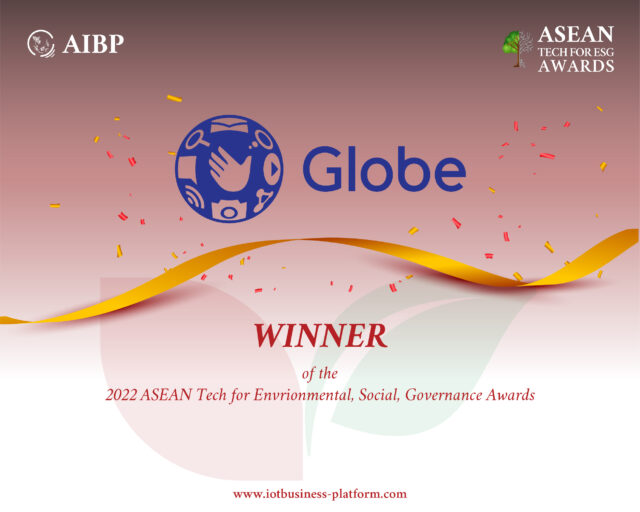
Leading digital solutions platform Globe was recently recognized by the ASEAN Innovative Business Platform (AIBP) for being a trailblazer on environmental, social, and governance (ESG) integration in digital innovation.

The leading digital solutions company was commended for its sustainability programs that focused on driving social inclusion and using Tech4Good.

AIBP is a business unit of Industry Platform, a growth-consulting firm based in Singapore. With a current network of over 30,000 stakeholders in Southeast Asia, it continues to develop ecosystems by engaging in activities creating value-adding information for stakeholders seeking to make transformative impact.

AIBP noted Globe’s programs across all E-S-G pillars, including the following:

  1. Green Network Solutions – utilizing green technology to address Direct (Scope 1) and Indirect (Scope 2) emissions from network operations
  2. Nature-based Solutions – complementing operational carbon reduction by utilizing technological solutions for natural resource protection and conservation strategies
  3. GClimate – using predictive analytics and machine learning technology to identify cell sites that may be at-risk of experiencing an outage during a typhoon, which will allow optimal placement of manpower and supplies to prevent or reduce downtime for customers
  4. Camp Kalikasan – raising environmental and climate awareness through a web-based climate education platform
  5. ISDApp – SMS-based weather alert system meant to equip fisherfolk communities with information to keep them safe at sea
  6. Digital Thumbprint Program (DTP) – promotion of responsible digital citizenship through capacity-building and online education
  7. Globe Rewards Donation Platform – empowering Filipinos to participate in community development through a mobile-first loyalty platform.

“We are grateful to be recognized for our sustainability efforts, especially alongside our peers across the ASEAN region. Guided by our Purpose, we will continue to advocate ESG adoption and embed them in our decision-making and operations, as we move forward,” said Yoly Crisanto, Chief Sustainability and Corporate Communications Officer at Globe.

Globe’s various ESG programs have achieved several milestones since their inception and initial roll-outs. Key are the following:

  • The company has successfully shifted 14 high-energy utilization facilities to 100% renewable energy as of 2021 and has deployed over 8,500 green solutions throughout its network.
  • Simultaneously, Globe, together with the Department of Agriculture’s National Fisheries Research and Development Institute (DA-NFRDI), piloted and rolled out the ISDApp platform to 600 fisherfolk in Quezon and Aurora province as of 2021.
  • In partnership with the Department of Education, the company has also successfully rolled out the Digital Thumbprint Program (DTP) in 4,050 schools, providing invaluable knowledge to 175,000 teachers and 1.9 million students nationwide.
  • Globe Rewards played an integral role in providing much-needed support at the height of the global pandemic crisis. It raised P36 million for 10 hospitals in 2020 and another P7.8 million in 2021 for COVID-related advocacies. The platform remains available to customers all year round for community assistance, including relief efforts for Typhoon Odette which struck in December. The company raised over P13 million worth of donations for 14 partner organizations in 2021.

AIBP shared that there is an increasing focus on how digitalization and technology will support the sustainability agenda. In recent years, ESG priorities have become essential for business resilience and sustainable development in ASEAN, complementing the United Nations Sustainable Development Goals (UN SDGs).

As a company, Globe aspires to contribute to 10 out of the 17 UN SDGs, including UN SDG No. 9, which focuses on building resilient infrastructure, promoting inclusive and sustainable industrialization, and fostering innovation, and SDG No. 13, which calls for urgent climate action.

To learn more about Globe, visit www.globe.com.ph.


Spotlight is BusinessWorld’s sponsored section that allows advertisers to amplify their brand and connect with BusinessWorld’s audience by enabling them to publish their stories directly on the BusinessWorld Web site. For more information, send an email to online@bworldonline.com.

Join us on Viber to get more updates from BusinessWorld: https://bit.ly/3hv6bLA.

Axelum Resources Corp. to conduct annual stockholders’ meeting on July 29 via remote communication


Spotlight is BusinessWorld’s sponsored section that allows advertisers to amplify their brand and connect with BusinessWorld’s audience by enabling them to publish their stories directly on the BusinessWorld Web site. For more information, send an email to online@bworldonline.com.

Join us on Viber to get more updates from BusinessWorld: https://bit.ly/3hv6bLA.

New taxes needed, Balisacan says

PHILIPPINE STAR/EDD GUMBAN

NEW TAXES may have to be introduced to fund the incoming Marcos administration’s priority projects, but the timing would have to be carefully considered, Socioeconomic Planning Secretary-designate Arsenio M. Balisacan said.

“If you want more public services, if you want to invest a lot into our health and education, and social sector, and to our farmers, you must have sources of money for that. Obviously, you can only go so far with an improved tax administration,” he said in a June 16 roundtable with BusinessWorld editors.   

Asked if new taxes would be introduced in the next six years, Mr. Balisacan replied: “I think we should. Part of the fiscal consolidation is to eventually also come up with new sources of tax.”

Incoming Finance Secretary Benjamin E. Diokno has said that he wants to avoid new taxes for now, preferring to focus on improving tax administration via digital processes.

The main issue, Mr. Balisacan said, would be timing the imposition of new taxes, especially with the country still recovering from a pandemic-induced recession.

“You don’t want to raise, I suppose, taxes when economic conditions are difficult,” the incoming National Economic and Development Authority (NEDA) director-general said.

Economic managers are aiming for a 7-8% gross domestic product growth this year, but high inflation threatens to slow the country’s recovery.

The Bangko Sentral ng Pilipinas last week raised its average inflation forecast for this year to 5% from 4.6% previously, well above the 2%-4% target band.

The Department of Finance (DoF) last month unveiled a fiscal consolidation plan which aims to raise an average of P284 billion in fresh revenues every year for the next 10 years to repay the P3.2-trillion additional debt incurred during the pandemic.

The plan involves new tax measures such as value-added tax (VAT) on digital service providers; excise tax on single-use plastics, motorcycles and luxury goods; and tax on gaming and cryptocurrency.

Mr. Balisacan noted that some sectors are still undertaxed.

“I suspect that mining is one [where] there are scopes for improving the royalty that can be charged to ensure that these mining resources are properly managed and sustained,” he said.

As part of the first package of the fiscal consolidation plan, the DoF also proposed establishing a single and rationalized fiscal regime applicable to all mining agreements. The DoF estimates this will generate P11.4 billion on average per year.

Mr. Balisacan said the government should consider pollution tax and more “sin” taxes.

“For example, I don’t understand why luxury vehicles are taxed so low, even vehicles are taxed so low, compared to our neighbors. And I think that while we’re trying to address transport issues, public transport issues, that should be part of the solution rather than just building more skyways,” he said.

The Duterte administration has managed to pass the initial packages of its comprehensive tax reform program, which involved lowering personal income tax, tax amnesty for delinquent taxpayers and higher sin taxes on cigarettes, heated tobacco products and alcoholic beverages.

Also approved was the Corporate Recovery and Tax Incentives for Enterprises (CREATE) Act, which cut corporate income tax.

However, reforms in real property valuation and passive income taxation failed to hurdle Congress.

“Congress didn’t have the appetite for it, for the other components of the reform. Now it’s the burden of this new administration to complete these other components. My colleague (Mr. Diokno) said that we need to study our options…address all these fiscal issues to ensure that the growth will be sustainable,” Mr. Balisacan said.

Catch BusinessWorld Roundtable: The View from the Starting Line with Mr. Balisacan on BusinessWorld’s Facebook page (https://www.facebook.com/BWorldPH) at 11 a.m. today (June 27). — Diego Gabriel C. Robles

Business groups bare wish list for Marcos’ first hundred days

Several roads leading to the National Museum in Manila have been closed in preparation for the inauguration of President-elect Ferdinand R. Marcos, Jr. as the 17th President of the Philippines on June 30. — PHILIPPINE STAR/ MIGUEL DE GUZMAN

By Revin Mikhael D. Ochave, Reporter

AS FERDINAND R. MARCOS, JR. is poised to assume office on June 30, business groups are hoping the new president will focus on ensuring food security, creating new jobs, and eliminating corruption in his first hundred days.

George T. Barcelon, Philippine Chamber of Commerce and Industry (PCCI) president, told BusinessWorld via mobile phone interview that Mr. Marcos should prioritize addressing issues related to food security, public transport, and education.

“(We hope he can address) health protocols for school reopening, public transport normalization, and food security,” he said.

Mr. Barcelon noted that supply chain issues may disrupt the food sector, so the Marcos administration should prepare for this.

Mr. Marcos is set to be sworn in as the 17th President of the Philippines on June 30. He takes office at a time when Filipinos are grappling with soaring food and fuel prices, joblessness, public transportation problems, and a possible surge in coronavirus infections.

Makati Business Club (MBC) Executive Director Francisco “Coco” Alcuaz, Jr. said in a mobile phone interview the economy will be hard to manage but Mr. Marcos is “off to a good start” after putting together an experienced and well-respected economic team.

“The Marcos administration can attract more job-creating investment if they make it clear business is again welcome to do its part in increasing investment and creating jobs,” he said.

“(He should) reduce corruption, take politics out of biddings, franchises and contracts, switch from making it harder to making it easier to do business and create jobs in this difficult environment. We would applaud such statements in his inaugural and cheer if he implements them,” he added.   

MBC is also urging the incoming economic team to undo recent changes to Republic Act No. 6957 or the Build-Operate-Transfer (BOT) Law implementing rules and regulations (IRR), and to reverse the Fiscal Incentives Review Board’s (FIRB) decision on remote work for business process outsourcing (BPO) firms, Mr. Alcuaz said.

The Marcos administration should also accelerate the shift to electronic receipts (e-receipts) and e-invoices, and push for the passage of an ease of paying taxes law.   

“These are the kinds of steps that would help businesses big and small, local and foreign, and create the jobs we need more than ever,” Mr. Alcuaz said.   

The National Economic and Development Authority (NEDA) had approved changes to the IRR of the BOT Law, which it said aims to protect the government and the public from excessive payments, undue guarantees, unnecessary fiscal risks, and onerous contractual provisions.   

In March, the MBC said the then-proposed amendments to the BOT IRR could hike transaction costs, cause delays, and discourage participation from the private sector.

Separately, the FIRB is currently requiring all registered business enterprises, including business process outsourcing firms, operating in economic zones (ecozones) to return to 100% on-site work for their employees or risk losing tax incentives.

MORE JOBS
Meanwhile, Sergio R. Ortiz-Luis, Jr., Employers Confederation of the Philippines (ECoP) president, said in a phone interview that the incoming Marcos administration should work on creating more jobs as unemployment remains a problem.   

“Our target is more job creation, and we have this project to create again one million jobs for this year, and we wish that the new administration will support it,” Mr. Ortiz-Luis said.   

The unemployment rate stood at 5.7% in April, representing 2.762 million unemployed Filipinos. It was the lowest unemployment rate since before the pandemic or the 5.3% in January 2020.

Federation of Philippine Industries (FPI) Chairman Jesus L. Arranza said in a mobile phone interview that the new administration should consult stakeholders first on what policies are needed to boost investments.

“(Mr. Marcos) should have a thorough dialogue with industry people in the Philippines so that he will be properly informed of what are the laws that are inimical to local industries and will also discourage the (entry) of investors to the Philippines,” Mr. Arranza said.