Home Blog Page 572

G-SHOCK’s ‘Tough Like You’ campaign leads the way with new G-STEEL GBM-2100 series
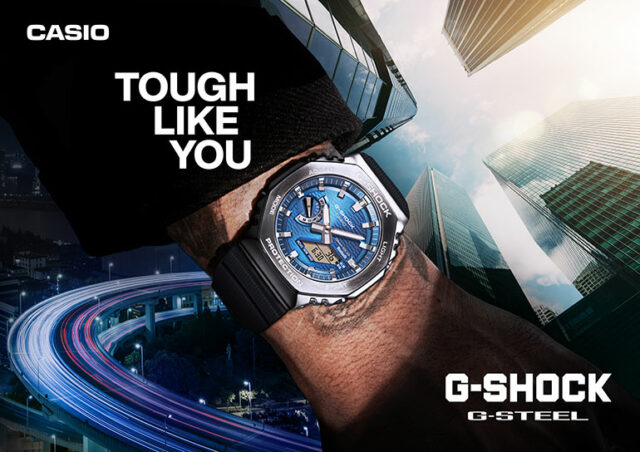
G-SHOCK is amplifying its message of resilience and strength with the latest iteration of its “TOUGH LIKE YOU” campaign.

This time, the spotlight shines on the new G-STEEL GBM-2100 models, embodying a theme of not just survival, but domination — leading the way and shattering barriers.

The “TOUGH LIKE YOU” campaign has always been about celebrating the spirit of personal evolution and breakthrough moments. It resonates deeply with young professionals who face pressure head-on, transforming challenges into opportunities.

This new phase of the campaign emphasizes that toughness isn’t just about enduring; it’s about rising above, leading with confidence, and making your mark.

The G-STEEL GBM-2100 series: Toughness redefined

The new G-STEEL GBM-2100 series perfectly encapsulates this ethos. These watches are more than just timepieces; they are a statement of intent.

Available in three distinctive dial colors — blue, burgundy, and light yellow-gold vapor deposition — the GBM-2100 series combines G-SHOCK’s signature toughness with cutting-edge technology and sleek design.

Each watch features Bluetooth® connectivity, solar-powered tech, and practical everyday functionality. The design ensures a seamless transition from the demands of a career to after-hours pursuits, making it a versatile companion for any challenge.

With a retail price of P18,300.00, the GBM-2100A-2B (blue), GBM-2100A-4B (burgundy), and GBM-2100A-8B (light yellow-gold) models are available in G-SHOCK stores and online through https://gshock.casio.com/ph/.

Dwight Ramos: The face of modern toughness

To represent this bold new direction, G-SHOCK has partnered with Dwight Ramos, a name synonymous with resilience, determination, and leadership.

As a basketball player, Dwight embodies the spirit of the “TOUGH LIKE YOU” campaign. His journey is a testament to pushing limits, silencing doubts, and leading by example, even when the road is uncharted.

“It’s about that internal pivot — where pressure becomes progress, and toughness becomes leadership; the G-STEEL series was made for those moments,” says Tomoaki Nakamura, General Manager at G-SHOCK.

“This timepiece is a true reflection of the toughness within today’s generation: composed, capable, and unapologetically driven.”

Tough by design

The G-STEEL GBM-2100 series isn’t just about looks; it’s built to last.

The watches feature a robust construction with a case size of 49.3 x 44.4 x 11.9 mm and a total weight of approximately 72g.

The case and bezel material combine resin and stainless steel, ensuring durability without compromising on style.

The band is made from a bio-based resin, reflecting G-SHOCK’s commitment to sustainability.

Additional specifications include:

Shock resistance, ensuring the watch can withstand the rigors of daily life;

Water resistance for 200 meters, making it suitable for swimming and water sports;

Power supply through solar energy, providing reliable and sustainable power;

Countdown timer, adding practical functionality; and

Double LED light (Super Illuminator), ensuring visibility in all conditions.

With approximately seven months on a rechargeable battery with normal use and up to 18 months when stored in total darkness with the power save function, the GBM-2100 series is designed for long-lasting performance.

The G-SHOCK legacy

Built from a mission by creator Mr. Ibe to create the unbreakable watch, G-SHOCK has defied conventional watchmaking logic.

G-SHOCK watches can resist gravity, freezing temperatures, high water pressure, and magnetic fields.

Launched in 1983, G-SHOCK celebrated its 35th Anniversary in 2018 and its watches have sold over 100 million in over 100 countries during that time.

The GBM-2100 G-STEEL series is available in all G-SHOCK stores and online. For more information, visit the official website: https://gshock.casio.com/ph/.


Spotlight is BusinessWorld’s sponsored section that allows advertisers to amplify their brand and connect with BusinessWorld’s audience by publishing their stories on the BusinessWorld Web site. For more information, send an email to online@bworldonline.com.

Join us on Viber at https://bit.ly/3hv6bLA to get more updates and subscribe to BusinessWorld’s titles and get exclusive content through www.bworld-x.com.

Classrooms of the future: AI, sustainability, and shared values

TAGPROS EDUCATION

Classrooms of the future are no longer imagined as spaces filled only with chalkboards, rows of desks, and overworked teachers. They are envisioned as living ecosystems where technology, sustainability, and shared responsibility converge. In the Philippines, where the education system is strained by a shortage of more than 100,000 teachers and declining performance in global assessments, this vision is not just aspirational, it is urgent.

That vision is beginning to take shape in GabAI, the country’s first AI-powered teaching sidekick. Developed by Filipino startup Tagpros Education, GabAI is more than just a tool to lighten the load of teachers; it is a platform for reimagining how government, the private sector, and educators can work together to meet national development goals and advance the United Nations Sustainable Development Goals (SDGs).

When I spoke recently with Chris Manansala, CEO of Tagpros Education, he described GabAI not as a replacement for teachers but as their “sidekick”: a partner that automates routine tasks like lesson planning, assessments, and administrative work. By reducing burdens that eat up countless hours, GabAI allows teachers to do what they do best: mentor, inspire, and connect with students.

What struck me most in our conversation was Mr. Manansala’s insistence that GabAI is not merely an app but a movement. “Together, we can ensure that every Filipino teacher is empowered, every student is supported, and the Philippines leads in shaping the future of education,” he told me. That perspective situates GabAI firmly within the sustainability agenda linking educational reform to national resilience.

Education has always been the bedrock of development. The SDGs may span 17 goals, but without SDG 4: Quality Education, progress on poverty, health, gender equality, decent work, and even climate action becomes fragile.

GabAI responds to this foundational need. By automating repetitive tasks, it enhances teacher efficiency and creates space for more meaningful engagement in classrooms. By extension, it also contributes to:

• SDG 8: Decent Work and Economic Growth – improving the quality of teachers’ working lives and enabling them to focus on high-value teaching and tutoring.

• SDG 17: Partnerships for the Goals – creating a model for multi-sector collaboration in education reform.

In this way, GabAI is not just an educational technology; it is a sustainability initiative. It redefines classrooms of the future as places where empowered teachers and engaged learners form the foundation of national development.

GOV’T AS ENABLER: DEPED’S ROLE
If classrooms of the future are to become reality, government must play the role of enabler. The Department of Education (DepEd) has already piloted GabAI in “GabAI-Powered Schools” under the National AI Research Program. These schools serve as living laboratories, generating evidence to inform national education policy.

As Mr. Manansala emphasized, the pilots are already offering critical data for policymakers. Imagine if DepEd, supported by Congress, scaled this across divisions nationwide. Instead of piecemeal reforms, we could have systemic, data-driven innovation that reduces workloads, personalizes learning, and strengthens policy outcomes.

Government’s task is not only to regulate or endorse but to create enabling environments:

• Embedding AI adoption into teacher training and accreditation.

• Budgeting for digital transformation as a strategic investment, not an afterthought.

• Ensuring equity so rural and underserved schools are not left behind.

In doing so, DepEd can make GabAI not just a pilot but a policy cornerstone, anchoring classrooms of the future within a coherent national AI strategy.

PRIVATE SECTOR AS PARTNER: FROM DONATIONS TO SUSTAINABLE CSR
If government enables, the private sector must energize. For decades, CSR in education has meant building classrooms, donating books, or funding scholarships. While valuable, these efforts are often fragmented, episodic, and hard to measure. GabAI introduces a new model: scalable, evidence-based, and Environmental, Social, and Governance (ESG)-aligned.

Corporations that adopt GabAI as part of their Corporate Social Responsibility (CSR) or sustainability programs can:

• Provide schools with a digital teaching support system.

• Track results with dashboards that measure teacher efficiency and student outcomes.

• Align their investments with global ESG standards by directly mapping impact to SDGs 4, 8, and 17.

This transforms CSR into shared value creation: schools gain real tools, policymakers get data, and corporations demonstrate measurable social impact.

One compelling example of how GabAI can complement existing CSR is PLDT’s long-running Gabay Guro initiative. For years, Gabay Guro has invested in the nation’s teachers through scholarships, livelihood support, digital connectivity, and training. It has touched the lives of thousands of educators by recognizing that teachers are at the core of nation-building.

GabAI adds a new dimension to this vision. Where Gabay Guro has built capacity and provided resources, GabAI offers a digital ally in the classroom: a tool that reduces workload, personalizes learning, and provides measurable data for impact. Together, they create a continuum of teacher empowerment: Gabay Guro uplifts and equips teachers, while GabAI sustains them in day-to-day practice.

This is where CSR evolves from traditional generosity to strategic sustainability. By integrating GabAI into Gabay Guro, PLDT could set a precedent for how corporations blend their flagship education programs with AI-driven innovation, ensuring that classrooms of the future are not only well-supported but also digitally enabled.

OVERCOMING CONCERNS: TRUST AND ADOPTION
As with any technological intervention, concerns exist. Some fear that AI may deskill teachers or widen the digital divide. Others worry about reducing education to algorithms.

Mr. Manansala acknowledged these anxieties, but underscored that GabAI is built to empower, not displace, teachers. Its recognition by the Professional Regulation Commission (PRC) as an official training platform strengthens this assurance. By embedding GabAI into professional development, teachers are not left behind; they are equipped to critically adopt AI, mastering its use rather than being mastered by it.

The key, however, is adoption that is participatory. Teachers must be consulted and supported, not dictated to. Parents must be informed transparently about GabAI’s impact on student learning. Communities must see GabAI not as technology imposed from above but as a tool co-created with them.

Trust will grow only when classrooms of the future are built with, not just for, the teachers, parents, and students who inhabit them.

For GabAI to deliver on its promise, it must be anchored in an ecosystem of shared values:

1. Government mainstreaming GabAI in DepEd’s digital transformation and aligning it with the National AI Strategy.

2. LGUs adopting GabAI in public schools, demonstrating grassroots innovation.

3. Corporations embedding GabAI in their CSR and ESG portfolios, ensuring measurable, sustained impact.

4. Universities and teacher associations integrating GabAI into pre-service and in-service training.

This collective approach transforms GabAI from a startup innovation into a national platform for resilience. Classrooms of the future will not be built by technology alone but by the synergy of policy, business, and pedagogy.

Education crises are never solved overnight. But they are also never solved by leaving the burden on one sector alone. GabAI offers us a different path: one where government enables, the private sector energizes, and teachers empower.

The Philippines now has a rare opportunity to lead, not just in AI adoption but in aligning technology with sustainability. By supporting initiatives like GabAI, we are not merely digitizing classrooms; we are future-proofing our nation.

As I reflected on my conversation with Mr. Manansala, one thought lingered: a nation that fails to educate cannot sustain itself. But a nation that empowers teachers, harnesses technology, and builds partnerships rooted in shared values? That is a nation prepared not just for the next decade, but for generations.


Dr. Ron F. Jabal, APR, is the CEO of PAGEONE Group (www.pageonegroup.ph) and Founder of Advocacy Partners Asia (www.advocacy.ph).

ron.jabal@pageone.ph

rfjabal@gmail.com.

Peso may stay weak as Fed cut bets ebb

BW FILE PHOTO

THE PESO may see sustained weakness against the dollar this week after stronger-than-expected US economic data led to reduced bets of US Federal Reserve rate cuts.

On Friday, the local unit closed at P58.10 versus the greenback, unchanged from the previous day’s finish, data from the Bankers Association of the Philippines showed.

However, week on week, the peso weakened by 95 centavos from its P57.15-per-dollar close on Sept. 19.

The peso was steady against the dollar on Friday after US gross domestic product (GDP) data for the second quarter was revised higher, which reduced expectations of rate cuts by the Fed, Rizal Commercial Banking Corp. Chief Economist Michael L. Ricafort said in a Viber message.

Mr. Ricafort said the dollar was generally stronger on Friday due to hawkish signals from Fed officials recently amid weak US jobs data.

In the Asian session on Friday, the dollar was steady against the euro and sterling, holding on to steep gains as investors awaited US consumer spending data after better-than-expected growth numbers dampened expectations of further easing by the Federal Reserve this year.

The euro was hovering near a three-week low at $1.1669 while sterling was flat at $1.3347 after touching a near two-month trough on Thursday.

The yen traded at an eight-week low following a new raft of tariffs announced by US President Donald J. Trump, which included a 100% levy on branded drugs, 25% on heavy-duty trucks, and 50% on kitchen cabinets.

The dollar index, which measures the greenback against major currencies, was poised for its biggest weekly advance in two months after figures on US economic growth, unemployment claims, durable goods and wholesale inventories all beat expectations on Thursday.

Markets are now pricing in about a 12% chance of the Fed keeping rates unchanged next month, up slightly from 8.1% a day earlier, according to the CME FedWatch Tool. The cumulative policy easing priced in by the end of the year has also dipped below 40 basis points.

The Commerce department reported on Thursday that US gross domestic product rose by an upwardly revised rate of 3.8% from April through June, higher than the 3.3% initially reported. Economists polled by Reuters did not expect the rate to be revised.

For this week, Mr. Ricafort said the market could take cues from the US economic data released later on Friday as these could affect Fed policy expectations.

He expects the peso to move between P57.75 and P58.45 per dollar this week.

US consumer spending increased slightly more than expected in August as households went on vacation and dined out, keeping the economy on solid ground as the third quarter progressed, while inflation continued to steadily pick up, Reuters reported.

The report from the Commerce department on Friday suggested the economy has so far retained most of its momentum from the April-June quarter. Signs of the economy’s resilience evident in other data last week showing low layoffs and strong demand by businesses for equipment would argue against the Federal Reserve cutting interest rates again this year after the US central bank resumed policy easing this month.

Consumer spending, which accounts for more than two-thirds of economic activity, rose 0.6% last month after an unrevised 0.5% advance in July, the Commerce department’s Bureau of Economic Analysis (BEA) said. Economists polled by Reuters had forecast consumer spending increasing 0.5%.

Spending has marched ahead despite the significant slowdown in the labor market. Consumption is being driven by high-income households as a robust stock market and still-elevated home prices boost their wealth. Fed data this month showed household wealth jumped to a record $176.3 trillion in the second quarter.

Meanwhile, the personal consumption expenditures (PCE) price index increased 0.3% in August after gaining 0.2% in July, the BEA said. PCE inflation was lifted by a 0.3% rise in services, reflecting airline fares, hotel and motel rooms as well as financial services and insurance, housing and utilities.

In the 12 months through August, the PCE price index advanced 2.7%. That was the biggest year-on-year increase since February and followed a 2.6% rise in July.

Excluding the volatile food and energy components, the PCE price index rose 0.2% last month after increasing 0.2% in July.

In the 12 months through August, the so-called core inflation index increased 2.9% after rising 2.9% in July. The Fed tracks the PCE price measures for its 2% inflation target.

The Fed this month cut its benchmark overnight interest rate by 25 basis points to the 4%-4.25% range. Financial markets continued to expect two more rate reductions this year. — A.M.C. Sy with Reuters

Hybrid Porsche 911 Carrera GTS models now available

The Porsche 911 Carrera 4 GTS (or 992.2) on display at the PGA Cars Studio — PHOTO BY KAP MACEDA AGUILA

THERE ARE few vehicles accorded the same reverence as the iconic Porsche 911.

Eight generations of the two-door, rear-engine vehicle have cycled since the model emerged as a replacement for the so-called 356 in 1963.

Throughout the years, the 911 has epitomized, in a way, the concept of changing by staying the same. While largely retaining its signature profile and fascia, the sports car has gone through an evolution inside and out.

Now in the Philippines is the once-improbable but now very real electrified 911 Carrera GTS (also known as the T-Hybrid or turbocharged hybrid). Derived from Porsche’s experience in motorsports, its electrified powertrain submits 544hp and 610Nm. Two versions — a rear-wheel-drive and an all-wheel-drive — are available.

The powertrain is comprised of an electric exhaust turbocharger (or eTurbo), a high-output drive battery, and an electric motor integrated into Porsche’s eight-speed dual-clutch PDK transmission. At its heart is a newly developed 3.6-liter six-cylinder boxer engine.

An electric motor is affixed onto the eTurbo — located between the compressor and turbine wheel. “The electric motor spins the turbine shaft directly connected to it, instantaneously providing full boost pressure regardless of engine speed,” said Porsche Philippines in a release. This is something we experienced for ourselves recently via a drive in Chiang Mai, Thailand. The driver benefits from nearly instantaneous torque without the usual lag associated with turbocharged mills.

“The T-Hybrid system really eliminates the lag. What we’ve got is a three-part system: a 1.9-kWh lightweight battery in the front, an electric motor inside the transmission supplies some 54hp, and an electric turbo delivers an additional 15hp. The engine itself submits 475hp. Combined, that’s 544hp,” shared Porsche Asia-Pacific Head of PR and Communications Brendan Mok during the aforementioned drive in Thailand.

On the proving ground of the Nürburgring Nordschleife, Porsche reported that the GTS T-Hybrid slashed a hefty 8.7 seconds off the time of the older GTS, completing a lap in seven minutes, 16.93 seconds.

In addition, the eTurbo can recover up to 11kW of electrical energy to charge the high-output battery or power the electric motor in the PDK. “The setup removes the need for a second turbocharger and a traditional wastegate, streamlining the new 911 Carrera GTS’s turbocharging system,” continued the release. “A permanently excited synchronous motor in the PDK is coupled directly to the crankshaft via a dual-mass flywheel, saving weight and ensuring immediate assistance to the engine.” During braking or coasting, up to 40kW of energy can be fed to the high-output battery.

In terms of performance, the 911 Carrera GTS can speed from a standstill to 100kph in just three seconds — on the way to a top speed of 312kph. — Kap Maceda Aguila

DAR Farm Business School expands to Zamboanga del Norte

FACEBOOK.COM/DARGOVPH

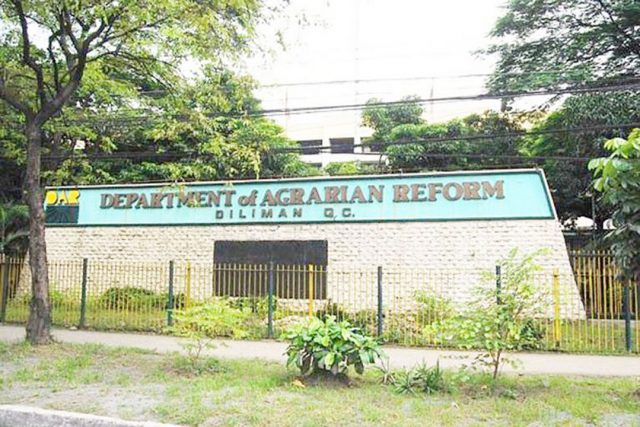
THE Department of Agrarian Reform (DAR) said its Farm Business School program has been expanded to serve farmers in Zamboanga del Norte.

The program hopes to provide farmers with the skills to turn their farms profitable by improving productivity.

Training under the program includes basic courses in business management, financial analysis, and marketing.

The program has been rolled out in Albay, Isabela, Marinduque, and General Santos City. — Andre Christopher H. Alampay

Infin8 Success not authorized to solicit investments — SEC

SEC.GOV.PH

THE Securities and Exchange Commission (SEC) has issued an advisory against Infin8 Success Global and Infin8success-Global Health and Beauty Products Trading, which it said have been soliciting investments without the required registration or license.

In an Aug. 28 advisory, the regulator said Infin8 Success Global has been inviting people to invest money through what appears to be a binary-style marketing system or recruitment-based model, with promises of high returns.

“Per SEC records, INFIN8 SUCCESS GLOBAL/INFIN8SUCCESS-GLOBAL Health and Beauty Products Trading is not registered as a corporation and has no secondary license or authority to solicit investments from the public,” the commission said.

The SEC said Infin8 Success Global operates a physical office, a website, and other digital platforms.

Upon checking, the company’s website displayed limited information and did not specify the nature of its business.

“We bring several years of experience in different fields of excellence — in both worlds of multi-level marketing and distribution. We offer our expertise in developing excellent and effective products,” Infin8 Success Global said on its “About Us” page.

“We take care of each distributor, identify their needs and help them succeed. Our excellent programs and training directions will help them achieve their goals and help others do the same.”

The regulator said that company registration alone does not grant authority to solicit investments from the public.

Republic Act No. 8799, or the Securities Regulation Code, requires entities engaged in the business of buying or selling securities — including investment contracts — to first secure a secondary license from the SEC.

In its advisory, the SEC reminded the public to exercise caution when dealing with entities that offer or promise earnings that appear “too good to be true.”

It also advised the public not to invest, or to immediately discontinue investing, in such schemes, as unauthorized solicitation may result in administrative, civil, and criminal charges.

Infin8 Success Global has yet to respond to BusinessWorld’s request for comment sent through its publicly available contact information. — Alexandria Grace C. Magno

Armani’s fashion legacy celebrated at Milan retrospective

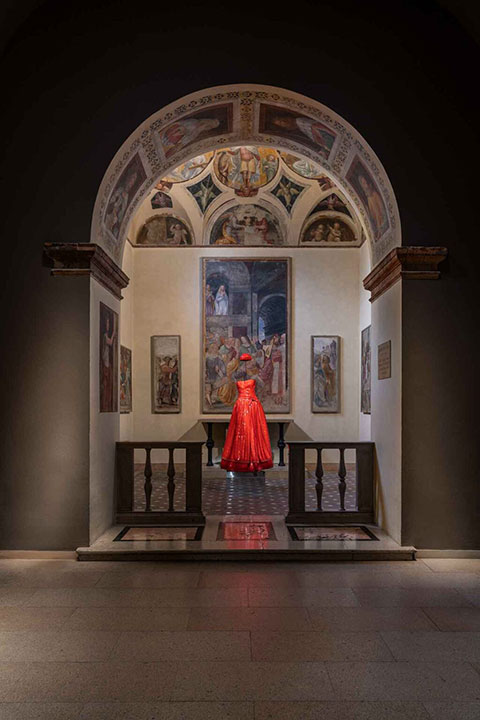
GIORGIO ARMANI. Milano per amore, Pinacoteca di Brera — AGNESE BEDINI, MELANIA DALLE GRAVE/DSL STUDIO/PINACOTECABRERA.ORG

MILAN — A retrospective celebrating half a century of Giorgio Armani’s work opened at a Milan museum on Wednesday, showcasing more than 100 creations including rare dresses and suits that defined the legendary Italian designer’s understated elegance.

Mr. Armani, known in the fashion world as “King Giorgio,”  died earlier this month at the age of 91 in Milan, a city with which he had a deep personal and professional connection.

The exhibition, which started during Milan Fashion Week and runs through January, was curated with Mr. Armani’s direct input and coincides with the label’s 50th anniversary.

It set the tone for a week that blended mourning with celebration, culminating in a runway show of Armani’s spring collection on Sunday evening at the Brera art museum, where the exhibition is also being held.

Garments including striking blue and red dresses are set among Italian art masterpieces from the Middle Ages to the 19th century.

“Armani’s aesthetic rigor is also an ethical rigor, like that of the greats of the past,” museum director Angelo Crespi said.

The retrospective marks the end of an era — and the beginning of a new chapter for the iconic brand.

Mr. Armani remained fiercely independent throughout his career, resisting takeover approaches and a stock market listing. In his will, however, he instructed heirs to sell the company in two phases, naming French luxury conglomerate LVMH, beauty giant L’Oréal, and eyewear heavyweight EssilorLuxottica as possible buyers.

Until then, the business remains in the hands of Mr. Armani’s closest family members and confidants, including longtime collaborator Pantaleo Dell’Orco, who will oversee the transition alongside a foundation created by the designer. — Reuters

Tax breaks for the tobacco industry will be a blow to public health and revenue

STOCK PHOTO | Image by Atlascompany from Freepik

In July, the new House Ways and Means Committee chair of the 20th Congress, Representative Miro Quimbo of the second district of Marikina, filed House Bill (HB) 1316, a bill “strengthening the administration of excise taxes on tobacco and vape products.”

HB 1316 is almost identical to the Anti-Illicit Tobacco Trade Bill of the 19th Congress, supported by health advocates and co-authored by Rep. Miro’s wife, then-Rep. Stella Quimbo, former Ways and Means Chair Rep. Joey Salceda, and Anakalusugan Party-list Rep. Ray Florence Reyes, numbered HB 11286 and passed on third reading earlier this year.

HB 11286 strengthens enforcement to mitigate illicit tobacco trade by establishing a comprehensive track and trace system, raising penalties on illicit tobacco trade, requiring registration of equipment and manufacturing-related items for tobacco and vape products, and creating an inter-agency body for strengthened enforcement. The bill was supported by health advocates, recognizing that illicit cigarettes and vape products are priced dangerously low and therefore much more accessible to the youth. More importantly, health advocates recognized that rather than simply increasing the penalties for illicit trade, HB 11286 increases the likelihood of apprehension by strengthening enforcement.

However, advocates are concerned over Section 7 of Rep. Miro Quimbo’s new bill, which was not present in HB 11286: a proposal to insert a section in the National Internal Revenue Code (NIRC) to allow tobacco/vape/HTP manufacturers, importers or sellers to claim losses directly attributable to illicit trade as deductible expenses under Section 34(D) of the NIRC.

This is an incredibly misguided proposal that will erode government revenues and will only benefit the tobacco industry.

Section 34(D) of the Tax Code provides the allowable conditions under which businesses can claim losses, including losses arising from fires or other casualties or robbery. It also requires that businesses present proof of these losses. Allowing tobacco companies to prove that losses are directly attributable to illicit trade is extremely difficult to carry out, as there is no objective method to determine a company’s losses due to illicit trade. The gap in prices between illicit tobacco and licit tobacco is so huge that one cannot prove that even consumers of a counterfeit or illicit brand would have otherwise bought a specific brand of more expensive, licit cigarettes.

Further, if we’re talking about fairness, granting tax deductions to the tobacco industry to compensate for losses from illicit trade means that all other industries, big and small, that suffer losses arising from illicit trade, should be given the same tax deductions as well. Implementing this provision would be extremely complicated and easy to game on behalf of businesses seeking tax breaks.

This proposal may also lead to the perverse incentive of the tobacco industry overestimating illicit trade to generate more profits. In fact, as shown in the past, registered tobacco companies themselves are also engaged in illicit trade. Global evidence and our own experience with the Mighty tax evasion case in 2017 show that the tobacco industry itself is often complicit in illicit trade. The industry cannot be trusted with their narrative on illicit trade, and we cannot give them the leeway to possibly manipulate the figures on illicit trade for their own benefit.

Rather than being given tax breaks, the tobacco industry should be made to shoulder the immense costs that smoking causes our economy. In 2023, there were a total of 89,000 tobacco-related deaths in the Philippines, according to the Philippine Statistics Authority. This translates to one Filipino dying of a tobacco-related illness every six minutes. According to Dr. Antonio Dans, the Philippines loses at least P380 billion per year due to smoking. Tobacco tax revenues have not even recouped half of the amount lost due to all those who get sick, are unable to work, and pass away due to tobacco-related diseases.

Lastly, the proposal to give tax breaks to the tobacco industry is most irresponsible in any situation. Smoking cigarettes, licit or illicit, is bad for health. And tax breaks, especially to an industry that manufactures harmful products, will mean significant revenue losses that will worsen an already serious fiscal problem.

The public should not be made to pay for this.

The Miro Quimbo bill that will allow tax deduction to the tobacco industry will not solve illicit tobacco trade. It will make the situation worse: abetting illicit tobacco trade and fattening the profits of the registered tobacco companies.


Pia Rodrigo is strategic communications officer at Action for Economic Reforms.

Manila Slips in Financial Centers List

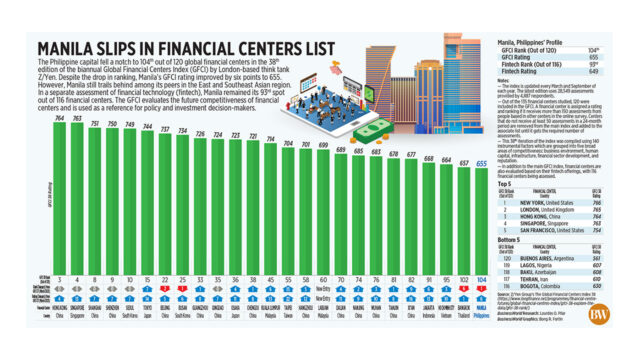
The Philippine capital fell a notch to 104th out of 120 global financial centers in the 38th edition of the biannual Global Financial Centers Index (GFCI) by London-based think tank Z/Yen. Despite the drop in ranking, Manila’s GFCI rating improved by six points to 655. However, Manila still trails behind among its peers in the East and Southeast Asian region. In a separate assessment of financial technology (fintech), Manila remained its 93rd spot out of 116 financial centers. The GFCI evaluates the future competitiveness of financial centers and is used as a reference for policy and investment decision-makers.

Manila Slips in Financial Centers List

BSP bills’ rates rise on weak demand

Bangko Sentral ng Pilipinas main office in Manila. — BW FILE PHOTO

YIELDS on the Bangko Sentral ng Pilipinas’ (BSP) short-term securities inched higher on Friday as both tenors went undersubscribed after the offer volume was increased.

The BSP bills attracted only P86.339 billion in total bids, below the P100 billion auctioned off but slightly above the P86.003 billion in tenders for the P80-billion offer a week prior. The central bank accepted all the submitted bids for a partial award.

Broken down, tenders for the 28-day BSP bills reached P35.042 billion, lower than the P40 billion placed on the auction block but higher than the P30.119 billion in demand for the P30-billion offer the prior week.

Accepted yields were from 5.25% to 5.4%, a tad wider than the 5.255% to 5.4% margin seen a week prior. This caused the average rate of the one-month securities to go up by 1.01 basis points (bps) to 5.3555% from 5.3454% previously.

Meanwhile, bids for the 56-day bills totaled P51.297 billion, below the P60-billion offer and the P55.884 billion in tenders for the P50 billion auctioned the previous week.

Banks asked for rates from 5.265% to 5.34%, wider than the 5.29% to 5.34% band last week. With this, the weighted average accepted yield of the two-month papers edged up by 0.08 bp to 5.3114% from 5.3106%.

The central bank uses the BSP securities and its term deposit facility to mop up excess liquidity in the financial system and to better guide short-term market rates towards its policy rate.

The BSP bills also contribute to improved price discovery for debt instruments while supporting monetary policy transmission, the central bank said.

The short-term securities were calibrated to not overlap with the Treasury bill and term deposit tenors also being offered weekly.

The BSP bills are considered high-quality liquid assets for the computation of banks’ liquidity coverage ratio, net stable funding ratio, and minimum liquidity ratio. They can also be traded on the secondary market.

Data from the central bank showed that around 50% of its market operations are done through its short-term securities.

BSP Governor Eli M. Remolona, Jr. earlier said that they are gradually shifting away from the issuance of short-term papers in their liquidity management operations as they want to boost activity in the money market. — Katherine K. Chan

The Subaru Forester goes hybrid

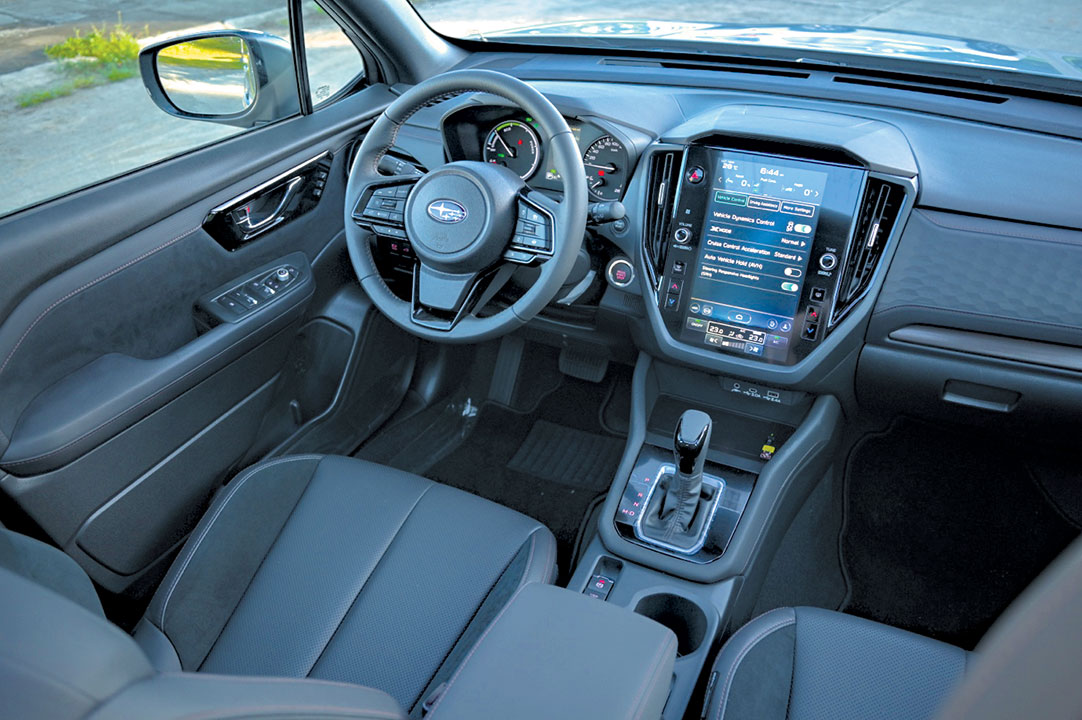
The all-new Subaru Forester still gets the brand’s vaunted symmetrical all-wheel-drive system.

Electrified SUV is priced from P2.498 million

MOTOR IMAGE PILIPINAS, INC. (MIP) recently launched the sixth-generation Subaru Forester, said to boast a “strong hybrid system delivering over 1,000 kilometers of range and uncompromised capability.”

In a release, the distributor added that the Forester blends advanced, eco-conscious performance “with Subaru’s legendary Symmetrical All-Wheel Drive (SAWD),” new-generation safety technologies, and an array of premium comfort features.

The e-Boxer strong hybrid powertrain yields benefits in efficiency and performance while delivering quiet operation and highlighting the “unique driving feel of a Subaru.” The intelligent, self-charging system requires no plugging in. “The system intelligently draws power from either engine, motor or both — ensuring optimal power and efficiency in all conditions,” said MIP.

At low to mid speeds, the vehicle operates on EV Drive mode — electric-only power giving silent, zero-emission urban driving — and switches to the internal combustion engine during highway driving. The electric motor assists during acceleration and hill climbing for a responsive “e-Turbo” feel and “an overall smooth, linear driving experience.”

The powertrain is comprised of a 2.5-liter horizontally opposed, four-cylinder, DOHC 16-valve Subaru Boxer engine with a “powerful electric motor” integrated into the transmission. With the Forester’s 63-liter fuel tank, the setup is expected to deliver a maximum range surpassing the aforementioned 1,000 kilometers per full tank of gas.

An updated Lineartronic transmission integrates the drive motor, power-generation motor, front differential, and electronically controlled coupling into a single compact unit. This efficient design maintains Subaru’s balanced weight distribution while maximizing energy utilization for powerful acceleration and enhanced quietness. A new electric compressor ensures that the air-conditioning system remains running even when the engine is off at idle, maintaining cabin comfort in situations such as stop-and-go traffic.

Chassis rigidity has been improved by 10% versus the outgoing version through a full inner frame construction and the wider use of structural adhesives. “This minimizes vibrations and reduces sudden body movements, providing a unified feel of steering and vehicle stability on any road. A specially designed suspension further improves ride comfort and handling,” added MIP.

The Forester retains its famous symmetrical all-wheel-drive (SAWD) system even as it is paired with the new hybrid system. Ground clearance measuring 220 millimeters is complemented by dual-function X-Mode, which “offers reliable support on rough terrain and makes it easier to free the vehicle from mud. Hill descent control is also included to help maintain a constant speed on slippery downhills.”

Inside is an 11.6-inch full-HD infotainment display which serves as the vehicle’s “intuitive command center.” Content can be enjoyed through an 11-speaker (including a subwoofer) Harman/Kardon audio system with an eight-channel amplifier. The system features wireless Apple CarPlay and Android Auto connectivity. A Qi wireless charging pad accepts compatible devices. Front Type A and Type C ports are available, as well as rear USB power ports.

The latest generation of Subaru’s driver assist technology, EyeSight 4.0, now uses a wide-angle monocular camera, significantly expanding the detection range for pedestrians and bicycles. Nine preventive safety functions are on tap: Lane Centering Function, Lane Departure Prevention, Lane Departure Warning, Lane Sway Warning, Autonomous Emergency Steering, Pre-Collision Throttle Management, and Lead Vehicle Start Alert, as well as Pre-Collision Braking and Adaptive Cruise Control, which have been improved for better performance.

The all-new Subaru Forester is available as the Forester 2.5i-S EyeSight e-Boxer Hybrid, with indicative pricing beginning at P2.498 million. For final pricing and model specifications, customers may contact the nearest authorized Subaru retailer. MIP also announced a renewed commitment to its customers with significant improvements to its after-sales services. “This enhancement promises a seamless journey for every customer, ensuring that every Subaru owner receives exceptional support and peace of mind long after their purchase,” concluded the release.

Brazil coffee exports to US seen declining further if tariffs stay

REUTERS

VITORIA, Brazil — Brazil coffee exports to the US will fall further if US tariffs remain in place, Marcio Ferreira, the head of exporter group Cecafe said, adding the industry was pleased by warming relations between the leaders of the two countries.

US President Donald J. Trump imposed a 50% tariff on Brazilian coffee and other goods, which came into effect in early August, amid tensions between his administration and the government of Brazilian President Luiz Inacio Lula da Silva.

As a result, Cecafe reported that the US was no longer Brazil’s biggest market as coffee sales there fell 46% in August, compared with the year before, when Brazil saw record exports. Through Sept. 19, exports to the US were down a further 20% versus their level in August, Mr. Ferreira told Reuters.

If tariffs continue, exports “will keep falling,” said Mr. Ferreira, who also works as the superintendent of Tristao Trading, a leading exporter of Brazilian coffee.

Only a shift in policy could revive sales, he said, adding that the industry was encouraged by the positive exchange between Mr. Trump and Mr. Lula at the United Nations this week.

US tariffs on goods from Brazil, the world’s largest coffee producer and exporter, have upended the global coffee market, pushing prices upwards.

In the short to medium term, the tariff restrictions may be good for producers, who have benefited from higher prices, Mr. Ferreira said, but added that exporters, roasters, and consumers are suffering.

Some producers are holding on to their stock, betting prices will return towards recent records, said Valdecir Schmidt, warehouse manager for Cooabriel, Brazil’s biggest cooperative of Conilon, a type of coffee related to robusta.

“We have a very high stock level for this time of year,” he said. “Last year, we didn’t even have half of what we’re seeing now, in the month of September.”

As US purchases shrink, exports to other countries are growing. According to Cecafe, total coffee exports to Colombia soared 578% in August.

Cooabriel’s Conilon exports to Colombia — itself a major arabica coffee producer — increased 300%, said Jose Carlos Azevedo, the cooperative’s sales manager, adding that places like Italy and Britain had also increased demand.

Still, the US market is too big for other countries to replace, Mr. Ferreira said. If tariffs remain in place for too long, Americans could grow used to other types of coffee, making it harder for Brazilian companies to recover their position in the US market in the future, he added.

“It’s time to get the kids out of the room and get the adults in to negotiate,” he said. — Reuters