Home Blog Page 5692

Scanning the health legislative agenda

FREEPIK

I have worked on health policy for more than a decade, but I have never seen health given so much importance by ordinary Filipinos until recently. COVID-19 has made our society and politics more aware of public health. Everyone suddenly has become interested in vaccines, the Department of Health (DoH), and all types of health news.

While we have succeeded in making many important health laws in the past including the game-changing Universal Health Care Act, our lawmakers and the Executive are now keen on introducing health legislation that will address many weaknesses in our health system’s response to the pandemic.

Despite not having appointed a Health Secretary, the President in his very first state-of-the-nation address (SONA) mentioned as priority the passage of three important health measures, namely: the Vaccine Institute, Medical Reserves Corps, and the Center for Disease Control and Prevention. This October, the Legislative-Executive Development Advisory Council (LEDAC) affirmed the SONA’s legislative health agenda and included the bill on the Magna Carta for Barangay Health Workers.

Some of these proposals had already been tackled in the previous 18th Congress. The bills on the Virology Institute and the Center for Disease Control and Prevention were in fact passed on third reading at the House of Representatives, but the lack of time prevented their legislation.

For the 19th Congress, many legislators have filed or refiled the bills.

First on the list is the creation of the Virology Institute. The goal is to boost our vaccine capacity by making vaccine development its primary function. It will be established under the Department of Science and Technology and will cover therapeutic research, aside from vaccine development.

When the COVID-19 vaccines were introduced, we experienced serious supply problems. To have access to vaccines, we were literally at the mercy of vaccine-producing countries. We now realize the need to build our own vaccine development capacity.

Second is the creation of the Center for Disease Control and Prevention or CDC. Some countries like the US have a functioning CDC, which has played a leading role in fighting the pandemic. The CDC sets the tone for the adoption of US health policies in response to the pandemic. This is what the Philippines wants to emulate.

While some functions of the CDC are already performed by several bureaus under the DoH and other government agencies, the pandemic response was bogged down by a lack of coordination and the differing or contradicting positions taken by officials from different government bodies.

The hope is that the creation of a CDC will address the coordination problems by lodging into one organization all relevant and important offices. This organizational coordination will deal with a real time response to COVID-19 and other emerging diseases.

However, it is an imperative that the bill creating the CDC avoid redundancy of organizations and functions. It should also result in an institution with a voice strong enough for the Chief Executive to base the country’s health interventions and policy directions.

Third is the establishment of a Medical Reserves Corps. The aim of the bill is to have a reserve medical workforce that will be called upon in times of health emergencies. This considers the need for quick and agile deployment of human resources when necessary. Our policymakers and politicians have seen how difficult it has been for our health frontliners to work overtime, do double duty, or perform straight shifts. The situation was much worse in the early pandemic period when hospitals were always at full capacity.

The supply of health human resources has been a perennial problem. According to the World Health Organization’s global health workforce statistics of 2017, the Philippines only has 0.6 doctor per 1,000 population. We also emphasize that geographically isolated and disadvantaged areas (GIDA) have very limited health human resources.

While the objective of having a reserve is good, the bigger challenge that we need to address is how to ensure a sufficient supply of health human resources.

Lastly, on the Magna Carta for Barangay Health Workers (BHW), we do recognize the significant role played by our BHWs especially during the COVID-19 pandemic. Such recognition must translate into giving commensurate benefits to them and having their ranks professionalized (instead of being politicized).

By providing them with ample training and setting qualifications, our health system will be able to establish primary care teams and networks that are the first point of contact in the delivery of basic health care services in the communities.

This will not only help address the insufficient supply of health workers in the delivery of basic health services, but will also allow better health monitoring, given the trust created by the personal link of the patients and the BHWs.

To conclude, these health priority measures for legislation, once passed into law, will aid and complement the Universal Health Care Act, and will better prepare and equip our health system in dealing with catastrophic illness or health emergencies.


Paula Mae Tanquieng, a lawyer by profession, provides legal guidance to Action for Economic Reforms in pursuit of legislative reforms on health.

Offshore wind puts the Philippines on the road to energy independence

CARL RAW-UNSPLASH

OFFSHORE WIND is emerging as a possible “win-win” for the Philippines in its pursuit of energy independence. The country’s success will depend on clear regulations, strong incentives, early investments in grid capacity, and the political will to make it all happen.

Offshore wind can meet growing energy needs, while protecting our land.

With its lush and beautiful nature, both above and below the sea, the Philippines is balancing the development and environmental agendas. And like all nations, it faces the imperative to transition to cleaner sources of energy while protecting its precious, and limited, land resources.

Land scarcity is a problem, and offshore wind is one of the solutions. Food vs Energy vs Environment is a false choice — The Philippines can achieve greater security on all through good political craftsmanship.

When you combine increasing food security concerns with the growing demand for clean energy, it’s natural to explore ways of producing energy offshore, rather than on land. Offshore wind in Asia, Europe, and North America has reached 60 gigawatts (GW) to date, and another 315 GW is anticipated to be added to the global energy mix by 2031.*

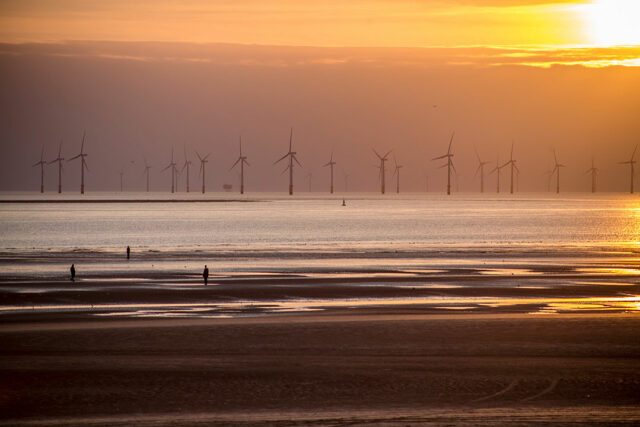
Offshore wind is poised to be an abundant energy source in the Philippines, with potential for up to 178 GW according to the World Bank. It’s been identified as a viable energy solution that allows this country to protect its scarce land resources, boost local employment, and stimulate industrial growth.

Size matters in the offshore wind game.

To get to this point, the World Bank suggests the Philippines needs a government-sanctioned roadmap, supporting a minimum of 15 GW of operational capacity by 2035, 30 GW by 2040, and 50 GW by 2050. This level of government commitment will give offshore wind players the long-term assurance they need to make the necessary investments. It will also help the National Grid Corporation of the Philippines (NGCP) plan its own development, as the grid remains a critical limiting factor to expanding renewables.

By the end of the 2nd quarter of 2022, the Philippines Department of Energy (DoE) has awarded over 22 GW of service contracts for offshore wind. This is a good start, but a lot of work remains to secure a position as more than just a minor contributor in the larger offshore wind ecosystem. The Philippines is home to strong players in the energy industry, and the country must continue to partner with global leaders to successfully navigate the energy transition. By scaling offshore wind along the shores, the Philippines has the potential to create a national cluster that benefits both the local economy and national development.

We have a window of opportunity to build a thriving offshore wind industry.

If we look at mature offshore wind markets today, they deliver competitively priced energy with zero direct emissions. This did not happen by accident. Every thriving market for offshore wind has always started with a certain level of government support. It begins with a clear and agreed upon roadmap towards a defined target that in turn drives the regulatory agenda. Well-crafted regulation gives the assurance needed to encourage investment.

To attract capital and secure the development of a domestic renewables industry, offshore wind will require a form of feed-in tariff in the initial phase. The larger the scale and the greater the visibility on the regulation side, the lower the tariff can be. However, there is no way around the fact that the first movers will require incentives from government to develop the industry. Thanks to the government support, the offshore wind power costs have fallen dramatically in recent years in the UK. In the latest auction, prices dropped 5.8%, and is a quarter of the current spot price.

Developing the domestic offshore wind industry will require upgrades of not only the national grid, but also the country’s ports, domestic shipping capabilities, sea-traffic management and much more — all with a keen eye to protect the rich and beautiful underwater environment surrounding the Philippines. In addition to Department of Energy and Department of Environment and Natural Resources, the Maritime Industry Authority and the Philippine Coast Guard should also be involved.

Support from the local government is also crucial to the success of offshore wind. From a regulatory and political perspective, they are an essential enabler in ensuring everything is in place to succeed. National, provincial, and municipal governments must work together to harmonize regulations.

With the build-out of offshore wind comes the need to take care of the aquatic life around the infrastructure. It requires research and mapping of the biodiversity and the migratory routes for aquatic life and birds. This enables the offshore developers to deliver the projects in a responsible and sustainable manner.

When it comes to the local fisheries in the Philippines, we see some clear advantages connected to offshore wind. While the construction period for the offshore structures may reduce catch levels temporarily, the large number of structures installed act as artificial reefs and can help boost biomass generation in the project areas.

The potential is enormous, but time is of the essence.

The Philippines is a country rich in offshore wind resources. It has a strong maritime legacy. It is home to highly capable local industries. And it’s a country that has long welcomed global partners to help it progress. These factors combined make the Philippines the ideal setting for a thriving offshore wind sector, and the country is well-positioned to extract significant value from this energy resource.

Offshore wind has the potential to put the Philippines on the road to energy independence. We see that a crucial enabler for offshore wind success in the Philippines will be finding the right partners who understand and respect Filipino culture, history, and legacy. The future offshore wind sites will become important infrastructure for the country’s future, and its development must be done in a way that is respectful and profitable for all.

*Global Wind Energy Council, annual report 2021


Torbjørn Kirkeby-Garstad is the General Manager Southeast Asia, Scatec. Scatec has a joint venture with Aboitiz Power: SN Aboitiz, and is aiming to develop 2.4 GW of offshore wind in the Philippines over the coming years.

What the new ‘Saudi First’ policy means for oil and power

GRAYSTUDIOPRO1-FREEPIK

PRINCE Abdulaziz bin Salman has had enough. The Saudi Energy Minister, object of vitriolic criticism in Washington since he led the OPEC+ cartel into an oil output cut this month, said he keeps hearing: “Are you with us, or against us?” But the kingdom isn’t choosing sides, he told Wall Street’s good and great last week in Riyadh. “Is there any room for ‘We are for Saudi Arabia and for the people of Saudi Arabia?’”

If putting his country first was impolite, Prince Abdulaziz — son of King Salman, half-brother of Crown Prince Mohammed bin Salman — warned he would have no choice but to be rude. “I’m pro-Saudi,” he said.

It’s been the reigning message at the kingdom’s annual Future Investment Initiative conference last week — and one that matters for everyone else as oil hovers close to the $100-a-barrel barrier.

In conversations with senior members of the Saudi royal family, officials and local business people, it’s clear that Riyadh is embarking on what I would call a “Saudi First” energy, economic and foreign policy agenda. It’s a shift several years in the making, which will have consequences for the rest of the world, chiefly via oil prices, but also when it comes to shaping Middle East diplomacy and the fight against climate change.

The signs have been around for a while. Earlier this year, Prince Mohammed, who runs the day-to-day affairs of the kingdom, said he didn’t mind whether US President Joseph R. Biden understood his approach. “It’s up to him to think about the interest of America,” he told The Atlantic. Left unsaid: MBS, as Prince Mohammed is known, was concentrating on the Saudis’ interest.

What I heard last week in Riyadh is the manifestation of that thinking: a bolder, determined and ambitious kingdom, still allied with America, but at the same time unshackled from the almost 80-year-old relationship. It’s a nation now more focused on Asia and its top oil clients — China, India, Japan, and South Korea. Together, the four countries account for 65% of all Saudi oil exports.

Amid a turbulent world, shaped by the Russian invasion of Ukraine and the highest inflation in 40 years in America and the United Kingdom, the kingdom has emerged as one of the few economic and political winners. Saudi economic growth is the strongest inside the Group of 20 (G20) major economies and the country is flush with cash.

Even after the recently announced OPEC+ output cut, Saudi oil production will set the highest ever annual average at roughly 10.7 million barrels a day in 2022. On year-to-date oil prices and output, its gross annual petroleum revenues are set to rise to almost $400 billion, just a fraction below the peak set in 2008 when oil prices rose to an all-time high.

And yet, away from the Ritz Carlton hotel, where the annual “Davos in the Desert” conference took place, and the moneyed districts of Riyadh such as Al Olaya where bankers stay, Saudi Arabia is a relatively poor nation. Its GDP per capita stood at $23,500 in 2021, well behind the $45,000 of the United Arab Emirates and the $68,000 of Qatar. With the country’s population growing by about 600,000 people every year (projected to reach 36.2 million in 2022), Riyadh has to run hard to stay still.

And that’s a key reason behind “Saudi First.” A banker, with decades of experience in the country, summed it up to me this way: “They just need the money, really need it — and that means high oil prices.”

In the past, Riyadh was willing to accept lower oil prices, boosting production — or delaying cuts — for the benefit of Washington. Not anymore. With the economic outlook uncertain, it would rather err on the side of supplying too little rather than too much. If it is going to make a mistake, let that result in higher, rather than lower, oil prices. Mohammed al-Jadaan, the Saudi finance minister, told me Riyadh was simply doing what others inside the G20 were — looking after themselves.

“Look at the Federal Reserve: The Fed is increasing the rates, it’s impacting everybody else, but we understand this is a domestic issue, they need to deal with inflation,” he said.

Saudi officials are at pains to say they don’t have a particular price target. But from their actions it’s clear Riyadh wants to keep Brent crude as close to $100 a barrel as it can. Many diplomats here see $80 a barrel as an unofficial floor. And if aiming for higher prices helps Russia, which is in need of cash to bankroll the invasion of Ukraine, that’s just a byproduct of the policy. Put differently, Riyadh believes the OPEC+ cut is about business, not politics.

But Riyadh also no longer believes that its oil-for-security bargain with Washington is working as it once was. For decades, Riyadh kept oil prices under relative control and purchased American weapons. In return, Washington provided regional security, deploying its military might if needed, and diplomatic support, largely ignoring human rights abuses. Now the kingdom wants a far more aggressive stance against Iran and its regional proxies, including in Yemen, and it is flummoxed by how Washington has seemingly turned a blind eye to the black market on Iranian crude, allowing Tehran to cash in on high oil prices.

The alliance, Saudi officials and local business people say, is unbalanced: If Washington wants Riyadh to keep oil prices down, it will have to deliver the other side of the bargain, most likely putting pressure on Iran. But the kingdom is increasingly likely to ask for bigger favors in return. As with America First under Donald Trump, Saudi First is transactional.

Such a turn has significant consequences for global economies: Oil prices are likely to remain higher for longer, fueling inflation. For equity and bond investors in fossil fuel companies, it’s a sign the boom times may continue. For everyone else, it’s a starker picture.

And further in the background is a profound disagreement about how to manage the energy transition and the fight against climate change. The Saudis believe the world is putting too much focus on restricting fossil fuel supply and discouraging investment while demand is still growing. It’s an approach, perhaps, fit for the US and Europe, but not for the emerging world.

“We’re looking at it from a Western point of view and the rest of the world needs to adapt,” said Amin Nasser, the chief executive of state-owned oil giant Saudi Aramco. “No, it doesn’t work like that.”

It’s a sign of what’s to come. Be prepared to hear “no” from the Saudis much more often.

BLOOMBERG OPINION

Puregold shines the spotlight on Filipino ‘winners’ and their success stories through “Nasa Iyo ang Panalo”

Puregold’s “Nasa Iyo ang Panalo” features the success story of Justin de Dios, sub-vocalist and creative lead of Filipino boy group SB19.

Puregold rings in its twenty-fifth year in the retail industry with one important goal: to highlight life ‘Panalo Stories’ of its customers—Filipinos across the country.

Puregold begins by telling the tales of triumph of six sought-after personalities in the fields of entertainment, music, and sports. The supermarket retail chain announced its partnership with these endorsers through a campaign called “Nasa Iyo ang Panalo”. Featuring videos that reveal the journeys these individuals took to get to where they are right now, it singularly conveys an important message: that all Filipinos can win in life, too.

Vincent Co, President of Puregold Price Club, Inc., says, “Our success would not have been possible without our customers, who have been with us all these years. As we look forward to our 25th year, we aim to show our appreciation through inspiring Panalo Stories, in the hope that Filipinos will see how success is possible for them as well.”

Puregold’s “Nasa Iyo ang Panalo” tells the story of Justin de Dios, popularly known as “Justin,” the sub-vocalist and creative lead of Filipino boy band SB19. A singer, rapper, and actor, Justin once doubted that he could achieve recognition for his musical talent, but with sheer determination, he has become a shining star in Philippine Pop.

“May panahong walang gustong makinig sa’kin; mga panahong gusto ko nang sumuko. Pero hindi ako nagpatalo,” he shares in his Puregold video, which has already garnered 3.9 million views to date, a testament to how many people listen to and believe in him now.

A beautiful face with stellar talent, as we have seen in the many teleseryes that she has starred in, Francine Diaz reveals a life that was filled with struggle. In her “Nasa Iyo ang Panalo” video, she gives us a glimpse of how much she has been through. “May mga iniyakan, pero mas marami akong nilabanan. Ang pagpursigi ko, walang cut, dahil alam kong nasa akin ang panalo.”

With her family as Francine’s inspiration, the young breadwinner worked hard to become who she is today—a gifted actress with fans who adore her, as well as projects and endorsements lined up for her to take.

Also featured in Puregold’s “Nasa Iyo ang Panalo” is celebrity couple Luis Manzano and Jessy Mendiola, both big names in the local entertainment industry even before their paths crossed.

In their video, the soon-to-be first-time parents profess how their love is their biggest victory, and how their partnership has led them to believe that they will win every battle they may face. “Hindi mo kailangang maging mag-isa,” the couple discloses. “May kasama kang sasalubong sa kahit anong ibigay ng tadhana.”

Conquering Tiktok, arguably the most popular social media platform of this generation, influencer, actress, and “Reyna Batangueña of the Tiktokverse” Queenay Mercado, also has a success story to share.

Now with over 12 million followers on Tiktok, Queenay, through her videos, took pride in her beginnings, which catapulted her into virality. Still, Queenay remains true to her roots. As she says in her “Nasa Iyo ang Panalo” video, “Isang maliit na boses mula sa malayo . . . ipinagmalaki ko at ipinarating sa buong bansa, at sa ibang parte ng mundo.”

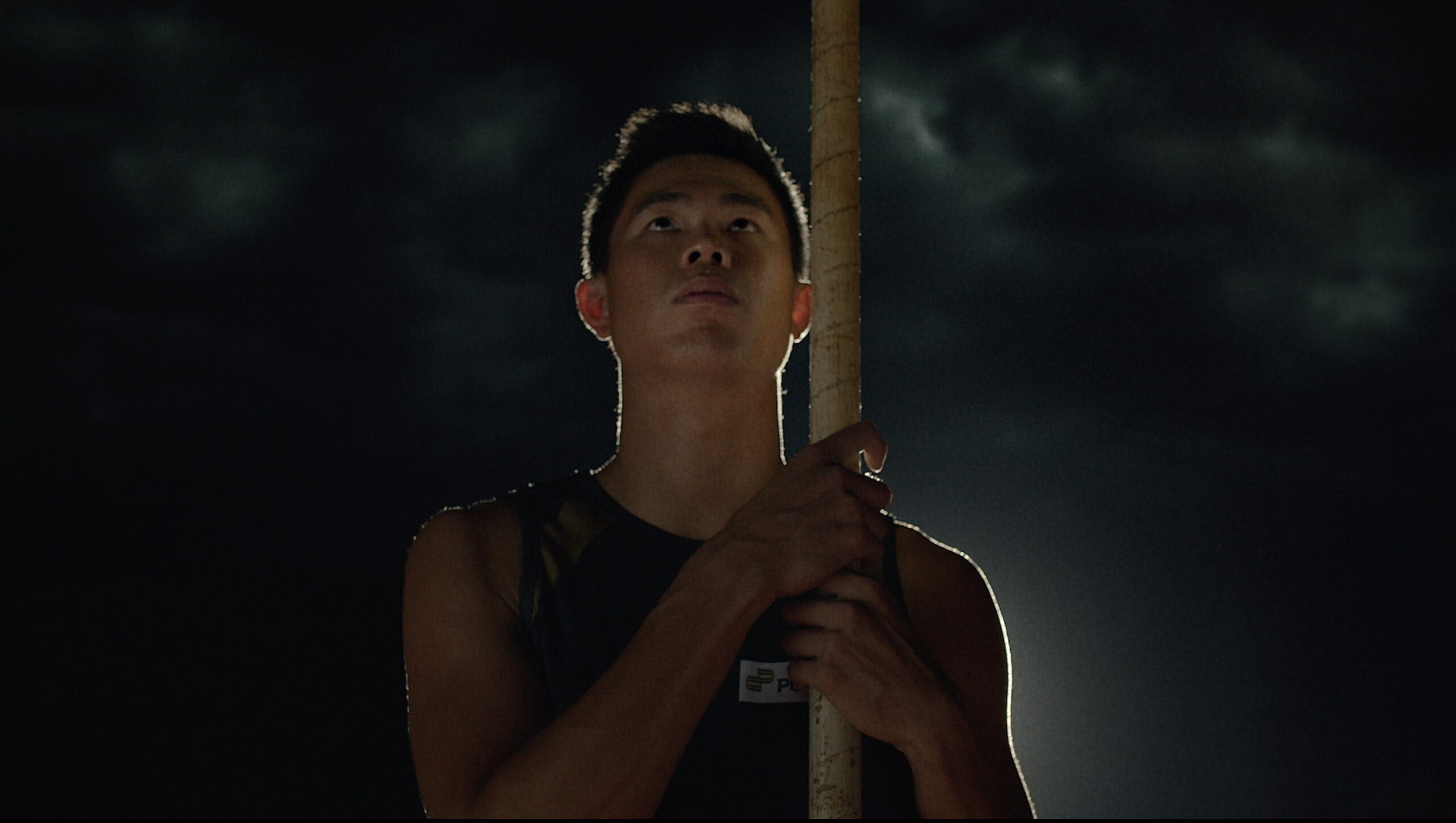
With another inspiring tale of hard work and perseverance, pole vaulter and record-holder EJ Obiena completes the six successful individuals featured in “Nasa Iyo ang Panalo”.


EJ’s grit and determination led him to his status as the highly esteemed athlete he is today. He continues to compete and bring success not just to himself, but also to the Philippines. He says in his video, “Sugod lang hanggang tuktok, dahil kahit anong mangyari, alam kong nasa akin ang panalo.”

Puregold customers and followers of its digital channels can watch for more Panalo Stories from these personalities, and from ordinary Filipinos, as the retailer celebrates its 25th year.

As Vincent affirms, “Puregold is honored to have this opportunity to encourage Filipinos to take hold of their destinies and begin their journeys towards their greatest aspirations. We hope that ‘Nasa Iyo ang Panalo’ communicates a very clear message: ‘Success— Panalo is in each and every one of us’.”

For more updates, like @puregold.shopping on Facebook, follow @puregold_ph on Instagram and Twitter, and subscribe to Puregold Channel on YouTube.


Spotlight is BusinessWorld’s sponsored section that allows advertisers to amplify their brand and connect with BusinessWorld’s audience by enabling them to publish their stories directly on the BusinessWorld Web site. For more information, send an email to online@bworldonline.com.

Join us on Viber to get more updates from BusinessWorld: https://bit.ly/3hv6bLA.

FIRST IN MANILA: A 3D Whale Shark billboard, Space Tunnel, Golden Gateway and Dazzling Light shows—all immersive experiences lead to SM

Mega Space Odyssey (left photo) and 3D Whale Shark (right photo), SM Megamall

LOOK: A 3D Whale Shark Billboard, Space Tunnel, Golden Gateway and Dazzling Light shows take over the Holidays in Manila.

SM Supermalls celebrates not just joyful, but also fun, immersive and experiential holidays. This year, we take you to the deep oceans with SM Megamall’s first-ever 3D Whale Shark LED billboard, see the Northern lights at the Aurora Trail of SM City North Edsa, Sparkle at the Light show and Holiday fireworks at SM Mall of Asia, enter the Golden gateway of SM Aura Premier and explore the outer space at the Mega Space Odyssey.

NORTH EDSA’S AURORA TRAIL

Aurora Walk, SM North Edsa

The illuminating lights of the Aurora Borealis is at the North this Christmas. Walk and indulge in a family friendly immersive experience at the Aurora trail ascending the giant holiday tree with a magical array of lights, forestry, rein-bears & holiday polar express.

MEGA SPACE ODYSSEY & 3D WHALE SHARK

Travel to majestic galaxies in outer space and take photos and videos with your space explorer friends. Experience the first-ever immersive 3D LED tunnel in Manila on October 21 to December 25 at the ground level Mega Fashion Hall (at the back of the Giant Christmas Tree).

SM Supermalls introduces the new 3D technology along EDSA by screening a hyper-realistic 3D Whale Shark at SM Megamall’s LED billboard. Bringing you the first in the Philippines, High-Definition Immersive content at the heart of the bustling metropolis. Netizens are awestruck of a larger-than-life Whale Shark peeking out of a digital billboard spanning over 2,000 square foot. The Mega Whale Shark was first teased on April 27 but customers, tourists and motorists can catch the short preview every 15 minutes starting April 28 at peak hours from 12nn to 10pm daily. Watch out for the new 3D content this Christmas. The Philippines has the 2nd largest population of whale shark in the world at over 1,950.

MOA SPARKLE OF LIGHT SHOW AND HOLIDAY FIREWORKS

Sparkle of Light Show, Mall of Asia

Feel the Christmas spirit as you watch the brightest and merriest indoor Christmas tree music and lights show. Be in awe as you watch over one hundred thousand lights set to music. Catch the show DAILY, every hour from 10am to 10pm until end of December at the Central Atrium.

Holiday Fireworks, Mall of Asia

Enjoy the most awaited and better than ever fireworks display at the MOA Complex every Friday and Saturday from November to December 2022. Make sure to experience this magical moment with your families and loved ones.

AURA’s GOLDEN GATEWAY and NIGHTS OF DAZZLING LIGHTS

Golden Gateway, SM Aura Premier

Tucked behind the giant Christmas tree is a golden gemstone-shaped immersive experience. In partnership with global smartphone brand TECNO Mobile, technology and art meet to transport all who enter this enclosure into scenes of an opulent holiday palace and fantastical golden worlds. Simply present PHP 1,000 in single or collected receipts and enter a whole new world filled with glitz and glamour.

The theatrical room isn’t the only technological experience the mall has. Equally spectacular is a choreographed light and sound display at SM Aura Premier’s Skypark at Level 5. Visitors of the Skypark enter a space with tall tree-like sculptures made of strings of lights. As they go through a forest of lights, a jaw-dropping musical show will entrance and excite them. Visitors can stop and enjoy the choreographed audio and visual performance at 7pm on all Sunday nights of December, including December 25th itself.


Spotlight is BusinessWorld’s sponsored section that allows advertisers to amplify their brand and connect with BusinessWorld’s audience by enabling them to publish their stories directly on the BusinessWorld Web site. For more information, send an email to online@bworldonline.com.

Join us on Viber to get more updates from BusinessWorld: https://bit.ly/3hv6bLA.

SEA suffers from digitalization skills gap, cybersecurity still top concern — IDC

UNSPLASH

Digitalization in Southeast Asia (SEA) is hampered by a shortage of talent and a skills gap, according to a market intelligence provider for technology vendors and investors.

“Just because we have automation doesn’t mean you don’t invest in talent,” said James Sivalingam, senior program manager at International Data Corporation (IDC) Asia/Pacific, at a cybersecurity webinar on Oct. 27. “Talent is ultimately your critical differentiator.”  

While talent shortage is a global problem, it is “more pronounced” in SEA, he added.

“A lot of deals are closed based on the kind of analysts and consultants you bring to the table,” he added. “This is probably the most expensive investment you make in the company.” 

He advised creating a consistent learning platform and providing a career pathway for employees.

In 2021, investments in cybersecurity (services, software, and appliance) for SEA organizations reached $3.2 billion. This figure is expected to increase at a five-year compound annual growth rate (CAGR) of 13.6% to reach $6.1 billion by 2026. 

Organizations want more control of the technology that runs their operations and now prefer local or national vendors because of digital sovereignty concerns, Mr. Sivalingam said. They have also moved away from implementing controls for compliance’s sake and are looking to manage security holistically. 

According to IDC Asia/Pacific’s Security Sourcing Survey 2022, organizations believe that the top three cyberthreats they are most vulnerable to are data loss and privacy, the cloud environment, and network security. This, Mr. Sivalingam noted, correlates with the top three areas of security spending in 2022: information and data security, network security, and cloud security operations. 

To become the preferred security provider among clients, Mr. Sivalingam told vendors to nurture their thought leaders by providing guidance and sharing expertise; templatize their workflows to help speed up the time to onboard new technologies and applications; showcase their human talent and make them the face of the company; and contextualize marketing campaigns to the end-user. 

“A lot of vendors miss this,” he said, on the fourth point. “Sometimes it’s not contextualized to SEA, or to the size of the business they’re going for. … Not everyone understands technical language.” — Patricia B. Mirasol


IMF cuts Asia’s economic forecasts as China’s slowdown bites

TOKYO — The International Monetary Fund (IMF) cut Asia’s economic forecasts on Friday as global monetary tightening, rising inflation blamed on the war in Ukraine, and China’s sharp slowdown dampened the region’s recovery prospects.

While inflation in Asia remains subdued compared with other regions, most central banks must continue raising interest rates to ensure inflation expectations do not become de-anchored, the IMF said in its Asia-Pacific regional economic outlook report.

“Asia’s strong economic rebound early this year is losing momentum, with a weaker-than expected second quarter,” said Krishna Srinivasan, director of the IMF’s Asia and Pacific Department.

“Further tightening of monetary policy will be required to ensure that inflation returns to target and inflation expectations remain well anchored.”

The IMF cut Asia’s growth forecast to 4.0% this year and 4.3% next year, down 0.9% point and 0.8 point from April, respectively. The slowdown follows a 6.5% expansion in 2021.

“As the effects of the pandemic wane, the region faces new headwinds from global financial tightening and an expected slowdown of external demand,” the report said.

Among the biggest headwinds is China’s rapid and broad-based economic slowdown blamed on strict coronavirus disease 2019 (COVID-19) lockdowns and its worsening property woes, the IMF said.

“With a growing number of property developers defaulting on their debt over the past year, the sector’s access to market financing has become increasingly challenging,” the report said.

“Risks to the banking system from the real estate sector are rising because of substantial exposure.”

The IMF expects China’s growth to slow to 3.2% this year, a 1.2-point downgrade from its April projection, after an 8.1% rise in 2021. The world’s second-largest economy is seen growing 4.4% next year and 4.5% in 2024, the IMF said.

While it expects China to gradually lift strict COVID-19 curbs next year, the IMF does not see a speedy resolution to Beijing’s real estate crisis, which it said needed to be addressed in a comprehensive way to support growth.

“One would hope that with the party congress behind us, there would be further attention being paid to policy response to these,” Mr. Srinivasan said.

“But we don’t see a quick resolution of the real estate sector (crisis) because that could take longer,” he added

As Asian emerging economies are forced to raise rates to avoid rapid capital outflows, a “judicious” use of foreign exchange intervention could help ease the burden on monetary policy in some countries, the IMF said.

“This tool could be particularly useful among Asia’s shallower foreign exchange markets” like the Philippines, or where currency mismatches on bank or corporate balance sheets heighten exchange-rate volatility risks such as in Indonesia, the IMF said.

“Foreign exchange intervention should be temporary to avoid side effects from sustained use, which may include increased risk-taking in the private sector,” it said. — Reuters

Smart leads in mobile network experience in the PHL — Opensignal

Smart Communications, Inc., the wireless arm of PLDT, Inc., remained the leader in Opensignal’s third-quarter ranking of mobile network experience among the Philippines’ three largest mobile operators.

Smart dominated in terms of download speed experience and fifth-generation (5G) download speed, with scores of 22.5 megabits per second (Mbps) and 134.8 Mbps, respectively, said Opensignal senior analyst Sam Fenwick in his report.

Smart outperformed DITO Telecommunity Corp. by 5.3 Mbps in terms of download speed and Globe Telecom, Inc. by 17.3 Mbps in terms of 5G download speed.

The report also found that Smart 5G users spent the most time with an active 5G connection and found a 5G signal in the most locations.

Rob Lerner, Opensignal vice president for Asia-Pacific, told BusinessWorld that despite heavy investment from telcos, 5G adoption in the Philippines is still at an early stage.

“Outside of Metro Manila it’s probably lower in terms of adoption rate,” Mr. Lerner said. “It’s not necessarily about adding more network, it’s about getting the handset into the customer’s pocket based on the cost-benefit tradeoff of using 5G.”

Smart’s score for 5G availability is 16.5%, with a lead of 6.7 percentage points over Globe’s 9.8%. Smart is also on top for 5G reach, given a score of 4.6 points, with Globe coming in second with 4.1 points, the report said.

While Smart won the award for overall games experience, Globe gained ground since the last Opensignal report.

Globe’s score of 46.7 was higher than its first-quarter score by nine points, while DITO’s increased by 4.7 points. Smart’s was statistically unchanged, moving Globe into second place and cutting Smart’s lead down to 7.8 from 12.9 points.

The report reflects the dynamic market in the Philippines, Mr. Lerner said.

“In recent history, Smart has dominated the awards table and raced ahead in 5G, but this report sees Globe making real gains in 5G, winning upload speed alongside video experience and getting joint wins with Smart on games and voice experience,” he said.

Globe also won for core consistent quality with a half percentage point over DITO. In excellent consistent quality, it was Smart that beat DITO by 3.8 percentage points.

Opensignal’s measures of “core consistent quality” quantify how often user experience was sufficient to support basic applications like messaging, uploading, and browsing.

Meanwhile, “excellent consistent quality” analyzes the percentage of users’ tests that met the minimum recommended thresholds for watching high-definition video, completing group video conference calls, and playing games.

DITO dominated the upload speed experience category, with its users seeing the fastest average upload speeds in the country at 4.4 Mbps. Smart came second with 3.9 Mbps.

Hastings Holdings, Inc., a unit of PLDT Beneficial Trust Fund subsidiary MediaQuest Holdings, Inc., has a majority stake in BusinessWorld through Philippine Star Group. — Brontë H. Lacsamana

Tech wreck shows US megacaps not immune to corrosive Fed tightening

Image via Huzaifa Abedeen/CC BY-SA 4.0/Wikimedia Commons

NEW YORK — Disappointing earnings from the megacap companies that led markets higher for years are cratering their shares and sending a disconcerting message about a US economy that until recently had appeared to be weathering a barrage of interest rate hikes.

Amazon was the latest corporate giant to deliver bad news, saying on Thursday that costs might eviscerate profits in the current quarter. Its shares fell 17% in extended trading, wiping $190 billion from its market capitalization.

Amazon’s report was the latest worrying announcement from the big tech-focused companies that command outsized weightings in stock indexes and are nearly ubiquitous in investor portfolios.

“From a markets perspective, you have to be cautious going forward,” said Michael O’Rourke, chief market strategist at JonesTrading. “They’re the biggest stocks in the market, and we really haven’t had much of anything good come out of any of them.”

Facebook parent Meta Platforms’ shares were pummeled Thursday after its costly metaverse bets disappointed investors. Earlier in the week, Google-parent Alphabet missed Wall Street’s target for revenue growth in the third quarter as ad sales remained weak, while inflation and a strong dollar led Microsoft to report its slowest topline growth in five years.

Even Apple, whose revenues and profits topped Wall Street targets, on Thursday reported weaker iPhone sales than some analysts had expected.

As of Thursday’s close, only Apple’s shares — which are down around 18% for the year — have outperformed the 20% year-to-date loss in the S&P 500. Meta leads the declines with a fall of some 70%.

Many view the growth giants as bellwethers for how corporate America is faring during a year in which inflation has soared, pushing the Federal Reserve to enact a series of jumbo-sized rate hikes that have bruised markets and raised fears of a looming recession.

Their disappointing results suggest that even the strongest US companies are feeling the effects of tighter Fed policy, a soaring dollar and persistent inflation.

The selloff in megacap shares “indicates that the Fed’s restrictive policy is beginning to be felt in the real economy, with growth slowing meaningfully,” said Daniel Krieter, a strategist at BMO Capital Markets. “Now we wait to find out if the Fed can achieve a soft landing. It will be very difficult.”

The Fed has already raised rates by 300 basis points this year as it fights the worst inflation in decades. Investors are bracing for another 75 basis point increase at next week’s monetary policy meeting, though hopes that Fed officials may soon slow the pace of tightening have buoyed stocks in October.

“Big tech companies are not impervious to slowdowns in the economy, particularly if they are consumer driven,” said Rick Meckler, a partner at Cherry Lane Investments, a family investment office in New Vernon, New Jersey.

“As the Fed embarks on this planned slowdown, it is eating away at some of their consumer-faced businesses and given their high multiples it is causing big contractions in their stock prices,” he said.

ERODING PROFITS

Resilient corporate profits have been one bright spot in an otherwise gloomy year, although the recent disappointing results are fueling doubts over how long this can last.

Based on results from 227 of the S&P 500 companies as of Thursday morning and estimates for the remainder, third-quarter earnings are now projected to have risen just 2.5% compared with an estimated gain of 4.5% on Oct. 1, according to IBES data from Refinitiv.

“The big technology companies like Amazon continued hiring to support a business that looks like the year 2021, and it’s not 2021. It’s 2022,” said Kim Forrest, Chief Investment Officer At Bokeh Capital Partners. “Layer on top of this inflation. People are buying less stuff.”

Despite the big stock price drops, some investors see more pain for the big tech-focused names.

In a Thursday morning report, analysts at UBS Global Wealth Management gave a litany of reasons for caution, including still-high earnings estimates given elevated inflation and the stronger dollar.

“Even after a significant underperformance by tech stocks so far this year … we don’t believe the continuing headwinds for the sector are yet fully priced into the market,” they wrote. — Reuters

Tuberculosis deaths rose during pandemic, reversing years of decline — WHO

Scanning electron micrograph of Mycobacterium tuberculosis bacteria, which cause TB. — National Institute of Allergy and Infectious Diseases/NIAID/Flickr

Global deaths from tuberculosis (TB) are estimated to have increased between 2019 and 2021, reversing years of decline as the coronavirus disease 2019 (COVID-19) pandemic severely derailed efforts to tackle the disease, the World Health Organization (WHO) said on Thursday.

Global efforts to tackle deadly diseases such as AIDS, tuberculosis and malaria have suffered during the COVID-19 pandemic. The health crisis has particularly hit the response to TB and led countries to fall behind in meeting targets to curb the infectious disease.

WHO urged the world to apply lessons learned from the pandemic to tuberculosis, which severely affects countries such as India, Indonesia, the Philippines, and Pakistan.

“If the pandemic has taught us anything, it’s that with solidarity, determination, innovation and the equitable use of tools, we can overcome severe health threats,” WHO Director-General Tedros Adhanom Ghebreyesus said.

WHO’s annual TB report estimates that tuberculosis killed 1.6 million people in 2021, above the estimated 1.5 million deaths in 2020, and 1.4 million deaths in 2019. Deaths related to tuberculosis had fallen between 2005 and 2019.

The report also warns that in the near future TB could replace COVID-19 to become the leading cause of death worldwide from a single infectious agent.

A recent report from Global Fund to Fight AIDS, Tuberculosis and Malaria shows that while the number of people reached with treatment and prevention efforts rebounded last year, the world is still not on track to defeat these killer diseases.

About 10.6 million people were infected with tuberculosis in 2021, an increase of 4.5% from 2020, according to the WHO report.

Under its “End TB Strategy,” the WHO set a target of reducing TB deaths by 35% from 2015 to 2020, but the net reduction was 5.9% between 2015 and 2021. — Reuters

For Twitter boss Elon Musk, now comes the hard part

S7AKTI-PIXABAY

Overspending on Twitter Inc. for $44 billion was the easy part.

Now, Tesla Inc. Chief Executive Elon Musk must prove why he believes that Twitter is worth 10 times that amount and turn around a social media platform that he has spent months ridiculing.

Earlier this month, the outspoken billionaire said: “Myself and the other investors are obviously overpaying for Twitter right now. The long-term potential for Twitter in my view is an order of magnitude greater than its current value.”

Mr. Musk has provided few concrete details about his plans, and what he has shared appears far-fetched or contradictory.

Here is what lies ahead for Mr. Musk, the self-proclaimed “Chief Twit,” according to current and former Twitter employees, analysts and investors who considered funding the deal.

X SUPER APP

Mr. Musk’s biggest bet borrows from China’s greatest hits of the 2010s. “Buying Twitter is an accelerant to creating X, the everything app,” Mr. Musk tweeted earlier this month.

The idea of an everything app, also referred to as a super app, originated in Asia with companies like WeChat, which lets users not only send messages but also make payments, shop online or hail a taxi. The all-in-one service appealed to users who had fewer choices in a region where Google, Facebook, and others were blocked.

Mr. Musk has told investors he plans to build one that will sell premium subscriptions to reduce reliance on ads, allow content creators to make money and enable payments, according to a source briefed on the matter.

There are no super-apps in the United States because the barrier is high and there are app choices aplenty, said Scott Galloway, co-host of tech podcast Pivot and a professor of marketing at New York University.

Apple Inc. and Alphabet Inc.’s Google, which control the app stores on iPhones and Android phones, see themselves as super apps and would be unlikely to allow other super apps to develop, Mr. Galloway said. Consider Apple’s recent rejection of Spotify’s plan to sell audiobooks as one example of barriers to entry.

Adding payments, which generally require identity verification, could complicate a service which has allowed anonymity to flourish, making Twitter a powerful tool for political activism in hostile environments, said Jason Goldman, a former Twitter board member.

“It’s not possible at this point in the evolution of the mobile internet,” Mr. Goldman added.

CUTTING CONTENT MODERATION

Current and former employees who spoke with Reuters said Mr. Musk’s plans to lower the guard rails that are common across all social media platforms would lead to a deluge of hateful, harmful and potentially illegal content on Twitter. Already, it has struggled with identifying and removing child porn.

Members of Twitter’s trust and safety team, which includes content moderators, are expected to be among Mr. Musk’s deepest job cuts, employees fear.

“Imagine a world where all those people are gone,” one employee said. “It’s going to be a hellscape.”

PREVENT ADVERTISERS FROM FLEEING

In 2019, Musk tweeted “I hate advertising.”

On the eve of the deal’s expected closing, he appealed directly to advertisers in an open-letter tweet: “Twitter obviously cannot become a free-for-all hellscape, where anything can be said with no consequences!… Twitter aspires to be the most respected advertising platform in the world that strengthens your brand and grows your enterprise.”

Advertisers are not buying it.

They point to Mr. Musk’s plan to reinstate the account of former US President Donald Trump as a major impediment to spending money on Twitter. Twitter permanently suspended Trump for risk of further incitement of violence after the Jan. 6, 2021, attack on the US Capitol.

Welcoming back Mr. Trump could alienate moderate and liberal-leaning users, and as a result push away major household brands who aim to market products and appeal to people across the political spectrum, said Mark DiMassimo, founder of ad agency DiMassimo Goldstein.

Until Mr. Musk finds new sources of revenue, he can’t afford to trigger a backlash from a group that contributes 90% of Twitter’s revenue.

OBEYING THE LAWS

Mr. Musk has promised to preserve free speech of all kinds, but has also struck a more conciliatory tone with global leaders who aim to rein in Big Tech.

In May, Mr. Musk said in a Twitter video that he agreed with the European Union’s new digital media regulation, which will force Big Tech to do more to tackle illegal content or risk fines of up to 6% of global revenue, in one of the world’s most severe approaches to regulating content online.

Regulators across Asia are also toughening legal stances against social media platforms and ordering the removal of content they deem illegal, which includes speech by political dissidents.

In India, Twitter has waged a “sophisticated battle” with the government to protect free speech online, and this battle would be at risk with Musk in charge, Mr. Goldman said.

Tesla’s expanding business in China, where it generated $14 billion last year, could also put Twitter at risk, Mr. Goldman, the former Twitter board member, said.

“The idea that he’s going to be the one liaising with the Chinese government and potentially turning over information on users, that’s very scary,” Mr. Goldman said.

Twitter is staffed with experts who review data requests from governments, but Mr. Musk has shown his contempt of these experts, he said.

“Whether or not Trump is going to come back on, I think that’s a parlor game,” Mr. Goldman said. “But what’s actually going to happen is a dissident’s IP address will be dropped on the floor.” — Reuters

Elon Musk taps tycoon Sy for satellite internet

Philippine tycoon Henry Sy Jr. will partner with Elon Musk to launch a satellite broadband service in the Southeast Asian nation.

Data Lake Inc. signed an agreement with Space Exploration Technologies Corp., making it the first Starlink integrator in the country and in Southeast Asia, the Sy-owned company said in a statement.

“With 7,640 islands, connecting the Philippine archipelago to the rest of the world often requires extensive infrastructure,” Data Lake Chairman Anthony Almeda said. Starlink, with its constellation of satellites in orbit, provides high bandwidth and reliable internet that’s crucial especially during natural calamities, he said.

Starlink targets to make its service available in the Philippines in the coming months, Jonathan Hofeller, vice president of Starlink commercial sales at SpaceX, said. — Bloomberg

ADVERTISEMENT
ADVERTISEMENT