Home Blog Page 5672

What to do when workers issue death threats

This week, a janitor reported scribbling in a toilet cubicle which contained a death threat against the human resource (HR) department head. The threat, addressed to the department head, was worded as follows: “Your days are numbered. Beware!” As the manager in charge of janitorial services, I took a photo of the graffiti and instructed the janitor to keep it secret. We locked the cubicle until the completion of an investigation. Management has no clue who might have done it, but suspects the employees’ union, which could be playing mind games during the new collective bargaining agreement (CBA) negotiations, which have run to an eighth meeting. What would you advise our management? — Lone Ranger.

I wrote about this topic in this space on May 25, 2018 in a column, “Death threats from sacked workers? Here’s the cure.” That article is about 18 dismissed workers who were suspected of having issued threats. The situation mirrors your current predicament with a union that could be taking a hardball approach in CBA negotiations.

Read that article online and connect the dots with the advice I’m about to give here.

Closing the cubicle is a good step. But don’t be complacent. Even if the janitor has been told to keep the incident a secret, there’s no guarantee rumors won’t spread. You can’t count on his loyalty especially if he’s employed by a manpower agency or if he turns out to be a union sympathizer.

Regardless of the identity of the perpetrator or perpetrators, the HR head and the management members of the CBA panel must take the matter seriously. Your suspicions are based on sound logic. The union may be resorting to brinkmanship to unsettle management into fast-tracking the negotiations and extend a solid counter-offer.

MANAGEMENT SOLUTIONS
CBA negotiation is often described as a “love-hate” relationship between labor and management. When this relationship involves death threats, it becomes a far more complex issue. However, management need not to be intimidated. It must remain sober and consider the following steps:

One, take the matter seriously without being emotional. Don’t be fearful but be extra careful. Otherwise, management could turn paranoid and not exercise its best judgment during negotiations. It should still perform its daily tasks, while changing its routines, like reporting early to work coming in late. Management schedule must be unpredictable, with working remotely an option.

Two, inform top management and the security manager. They’re the best authority to decide on a safety and security protocol. The measures might include providing your HR head a security detail, an armored vehicle, and a bullet-proof vest. It may not be wise to issue firearms to people not used to them.

Three, inform the union representatives. Do this face-to-face and shortly before you adjourn a negotiation session. This should be the last item on the agenda. Be brief. Don’t accuse anyone. Simply let them know that management is implementing security measures within the office or factory premises and the vicinity. The union could come to realize that its threat has backfired.

Four, file a report with the police. Have it on a police blotter. Cite the circumstances surrounding the CBA negotiations. Get a police report for the company’s records, but keep the matter confidential. Think hard before reporting to the police the names of union negotiating panel members or any union official.

You don’t want to complicate the CBA negotiations should the union dig up a copy of the blotter which is a public record. Many union officials will not take it sitting down if they discover that management has linked them to death threats.

Last, negotiate with the union as if there is no death threat. You want management to present a brave front when negotiating. If you show any sign of weakness, chances are the union will know the threats got to you. Go ahead with management’s original proposal and take it from there.

GOOD-FAITH BARGAINING
A successful negotiation of a new CBA that mutually satisfies both labor and management requires good faith in bargaining. The trouble is that management can’t dictate terms to the union. The union can do almost anything short of filing a notice of strike. Just the same, even without an impending strike, management can only act on things it can control.

Good faith enhances management credibility, which includes a sincere desire to agree to a new CBA that is within the capacity of the organization to pay. While some trade unions can resort to dirty tactics, management shouldn’t do the same thing. Never leave home without good faith as it attracts positivity, even when other people are unwilling or incapable of doing good.


Have a chat with Rey Elbo via Facebook, LinkedIn or Twitter or send your questions to elbonomics@gmail.com or via https://reyelbo.com

Protecting domestic industries against dumping

THE controversy surrounding the importation of sugar amid soaring prices and a looming supply shortage has hogged the headlines these past two weeks. It has all the elements of high drama with characters from the top echelons of government getting embroiled in a series of plot twists and turns.

But the sugar industry is not alone in its predicament. Local cement producers have also been up in arms against the alleged dumping of imported cement from Vietnam that threatens to undermine the domestic manufacturing industry.

Cement Manufacturers Association of the Philippines (CEMAP) executive director Cirilo Pestaño said predatory pricing by Vietnamese exporters is jeopardizing the contributions of local industry players to the economy in terms of revenue generation, job creation, natural resources utilization, additional investments, and improving the balance of payments.

Last June, CEMAP member firms such as Apo Cement, Holcim Philippines, Republic Cement, and Solid Cement reportedly filed an anti-dumping case against certain cement importations from Vietnam. Even non-members like Eagle Cement and Northern Cement supported the petition lodged with the Tariff Commission.

According to the petitioners, “the continuing rise in volume of certain exported Vietnamese cement to the Philippine market at dumped prices puts at risk our domestic industry and adversely impacts our country’s economic recovery.”

Republic Act No. 8752 or the Anti-Dumping Act of 1999 protects domestic industries that are likely to be materially injured by the dumping of articles imported into or sold in the Philippines. Based on the Department of Trade and Industry’s guidelines on anti-dumping, an exporting company is said to be dumping when exporters sell their product to an importer in the Philippines at a price lower than its normal value and is causing material injury to the industry producing a similar product.

Mr. Pestaño noted that Vietnam accounted for 91% of the Philippines’ cement imports as of 2021, versus 61% in 2017 and almost zero in 2013. This rapid increase was higher than the growth rate of the local market, and the continued influx of cement imports has resulted in the domestic manufacturers’ loss of sales volumes.

“Like our peers in the sugar sector, we welcome President Ferdinand R. Marcos, Jr.’s action against the flood of imported products. We hope that the Marcos administration would extend this policy to other local industries that are facing equally serious threats from the influx of imports,” CEMAP’s statement implored.

GREEN OASIS EMERGING
The hilly municipality of Dupax del Sur in Nueva Viscaya province is fast becoming a travel destination for food and nature lovers, thanks to its beautiful sceneries and a new attraction called the Green Oasis of Dupax.

A unique dining concept that combines the freshness of the farm-to-table approach with Italian-inspired cuisine, Green Oasis is situated at an ancestral farm in the town known for its 18th-century church and the oldest acacia tree in Northern Luzon. The restaurant-cum-garden is managed by John Lacanlale Danao, whose Tagbanua ancestors hail from El Nido, Palawan. It features a shop for native goods and organic products as well as a reflexology walk and a children’s playground

This development is in line with Nueva Viscaya’s aim to become a premier ecotourism destination and not just a transit point to the Banaue Rice Terraces in neighboring Ifugao province. Blessed with a temperate climate and bountiful agricultural land, it is a major producer of high-value crops, vegetables, and cutflowers.

Also known as the “Citrus Capital of the Philippines” and the “Watershed Haven of Cagayan Valley,” Nueva Viscaya offers cascading mountains, unspoiled caves, historic churches, and a unique cultural experience with its multi-ethnic and indigenous people.

***

The opinion expressed herein does not necessarily reflect the views of these institutions and BusinessWorld.


J. Albert Gamboa is the chief finance officer of Asian Center for Legal Excellence and chairman of the FINEX Media Affairs Committee. #FinexPhils

www.finex.org.ph

Entertainment News (08/19/22)

FILIPINO alternative pop band Any Names Okay

A night with Daddy Kool

TWO years after his sold-out show in Manila, CEO-turned-stand-up comedian Atul Khatri returns with a whole new set and a whole lot of jokes with Daddy Kool, in September at the Sheraton Hotel Manila in Pasay City. “Now that I’m back with Daddy Kool, expect new jokes about my COVID-19 experience, my new dog, my daughters, and my family,” he said in a statement. Ten years ago, he was the CEO of an Indian IT company and tried out stand-up comedy as a way to break the monotony of his life and try something new, and is now one of India’s top stand-up comedians. Daddy Kool will be held on Sept. 2, 9:15 p.m. (cocktails begin at 7:30 p.m.). Tickets are priced at P3,000 (Silver), P3,500 (Platinum), and P4,000 (VIP Black). Daddy Kool is produced by Primei Events, Inc. and presented by Esquire Financing Inc. and Collabera. For more information and inquiries, contact 0928-503-0545 or 0917-148-0545.


Any Names Okay releases new EP

FILIPINO alternative pop band Any Names Okay released their sophomore EP, Leaving Home, via Sony Music Philippines. The six-track release digs deeper into the journey of navigating adulthood and embracing the uncertainty that comes with the process. “As a band, we’re maturing in our songwriting and the way that we operate as creatives,” the five-member group said in a statement. “We want to grow old with our listeners — which can be scary, but very exciting. A lot of those fears and joys can be found in this collection of songs.” Its focus track, “Takbo,” tackles breaking free from burnout and hustle culture. The EP launch on Aug. 20 at Dirty Kitchen (Gravity Art Space), Quezon City is already sold out. Leaving Home is available on all digital music platforms worldwide.


Shanti Dope releases new single

RAPPER Shanti Dope releases his new single, “Tricks,” a song that revels in one’s need of an emotional connection and the magnetic sexual attraction that might develop into something more. Co-written by Lester Paul Vano, “Tricks” is Shanti Dope’s take on an easygoing yet more mature manner of delivering his perspective and storytelling. The song’s official lyric video gained over 100,000 views on YouTube. “Tricks” is available on all digital platforms.


Smile the opening film at Fantastic Fest 2022

PARAMOUNT Pictures’ new horror feature Smile is set to make its world premiere as the Opening Night Film at the Fantastic Fest 2022, running from Sept. 22-29 in Austin, Texas. Smile has been described as the intensely creepy debut feature from Parker Finn that will have even the seasoned Fantastic Fest crowd gripping their armrests in genuine fright. Held every September in Austin, Fantastic Fest is the largest genre film festival in the US, specializing in horror, fantasy, sci-fi, action and just plain fantastic movies from all around the world. Smile follows Dr. Rose Cotter (Sosie Bacon) who, after witnessing a bizarre, traumatic incident involving a patient, starts experiencing frightening occurrences that she can’t explain. Rose must confront her troubling past in order to survive and escape her horrifying new reality. Written and directed by Parker Finn, the film stars Sosie Bacon, Jessie T. Usher, Kyle Gallner, Robin Weigert, Caitlin Stasey with Kal Penn and Rob Morgan. Smile will be shown in cinemas across the Philippines starting Sept. 28, distributed in the Philippines by Paramount Pictures through Columbia Pictures.

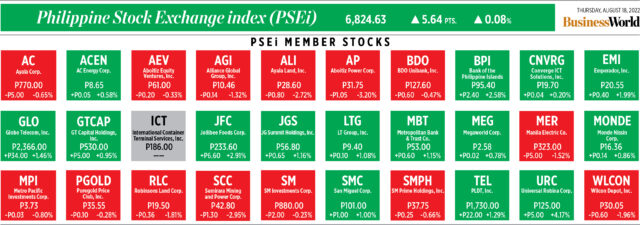
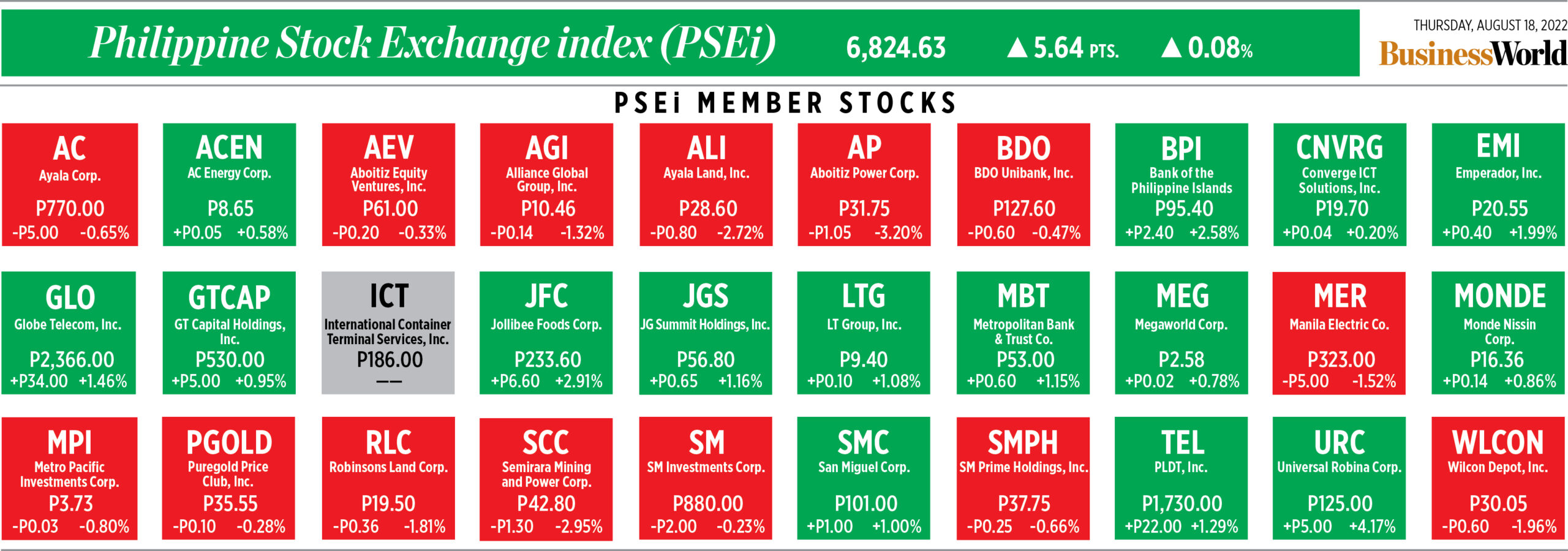
How PSEi member stocks performed — August 18, 2022

Here’s a quick glance at how PSEi stocks fared on Thursday, August 18, 2022.


Filipinos ‘most optimistic’ about metaverse in SEA — survey

UNSPLASH

Filipinos are the “most optimistic” in Southeast Asia when it comes to the implications of the metaverse, a survey showed.

The Digital Frontiers 4.0 survey by multi-cloud service provider VMware found that 55% of consumers in the Philippines — the highest in the region — are aware of the metaverse and are optimistic about its implications, with 43% saying they believe it will be favorable for society.  

A majority of Filipinos, or 78%, also believe that technology is a key driver of business transformation. 

“Fostering digitalization and modernization requires more than the ability to acquire immersive technologies. It also means creating environments where businesses can leverage innovation by delivering meaningful change to drive the best results for the customers,” said Walter So, VMware Philippines’ country manager, in a statement.  

The survey highlighted Filipino shoppers’ preference for an immersive and meaningful digital consumer experience, coming in second in the region to Thai shoppers. 

This tech savviness is also reflected in Filipino consumers citing internet service (76%) and better connectivity (68%) as contributing factors in buying homes in the future.  

“As the Philippines assesses the implications of COVID-19 and the economy shows a strong growth momentum, enterprises must equip their customers with secure digital offerings by strengthening their ability to develop and deliver superior digital experiences that are easily accessible on any app, any cloud, and device,” Mr. So said.  

However, Filipinos were found to prefer digital innovation in some sectors over others. They showed little enthusiasm for robotics in healthcare (21%) compared to the rest of SEA (25%), but said they rely heavily on technology for managing finances (67%).    

VMware highlighted in the study that the Philippines’ accelerated digital economy post-pandemic reflects “the need of rapid business transformation to meet the evolving needs of the customers.” 

The VMware Digital Frontiers 4.0 Study, conducted this April, surveyed 9,728 consumers from Singapore, Malaysia, Indonesia, Thailand, the Philippines, Korea, Japan, the United States, the United Kingdom, Germany, Spain, Italy, and France. — Brontë H. Lacsamana

PHL stocks flat as investors remain on sidelines

REUTERS

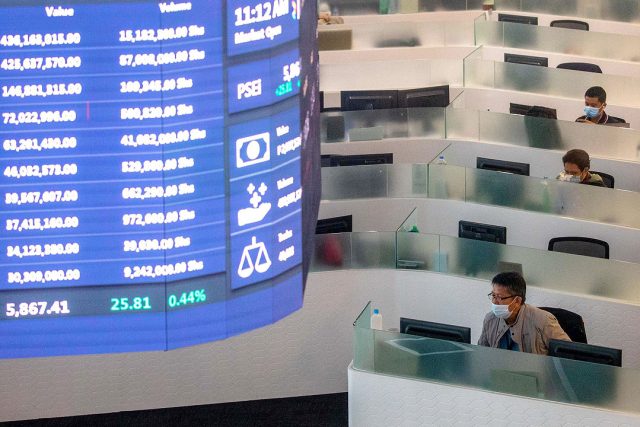
LOCAL stocks were flat on Thursday, as investors remained on the sidelines ahead of the Bangko Sentral ng Pilipinas’ (BSP) widely-expected rate hike.

The Philippine Stock Exchange index (PSEi) inched up 0.08% to close at 6,824.63 on Thursday, while the broader all shares index was flat at 3,619.77.

AB Capital Securities, Inc. Vice-President Jovis L. Vistan said the stock market moved sideways on Thursday, “losing some momentum after gaining for seven straight sessions.

“Market participants were also on the sidelines waiting for the BSP’s decision on the benchmark interest rates,” he said in a Viber message.

The Monetary Board raised its benchmark interest rate by 50 basis points (bps) at its Thursday meeting.

The BSP made the announcement at past 3 p.m., after the market closed.

“Investors remained vigilant ahead of the BSP meeting… Note that the street widely expects a 50-bp rate hike in the Monetary Board’s policy review meeting following an off-cycle 75-bp rate adjustment last July,” Regina Capital Development Corp. Head of Sales Luis A. Limlingan said in a Viber message.

Sectoral indices were mixed on Thursday. Industrials went up by 89.22 points or 0.90% to close at 9,991.07; while financials climbed 9.21 points or 0.57% to 1,608.15. Services also rose by 6.19 points or 0.35% to finish at 1,750.56.

Meanwhile, mining and oil declined 155.95 points or 1.29% to close at 11,921.01; while property shed 37.29 points or 1.21% to 3,035.36. Holding firms dropped 7.26% or 0.10% to finish the session at 6,660.93.

“Among PSEi members, Universal Robina Corporation (URC) jumped by 4.17% while Aboitiz Power Corporation (APC) was at the bottom, losing 3.20%,” Philstocks Financial, Inc. Research Analyst Claire T. Alviar said in a Viber message.

On Tuesday, URC through its collaboration with Asahi Beverages Philippines (ABP) announced the rollout of “Goodday,” a cultured milk drink, in the country.

Value turnover surged to P13.76 billion on Thursday with 909.51 million shares changing hands, from P8.04 billion with 1.17 billion issues seen on Wednesday.

Decliners outnumbered advancers, 104 versus 96, while 40 names were unchanged.

Net foreign buying reached P696.10 million on Thursday, lower from P857.07 million seen on Wednesday.

Regina Capital’s Mr. Limlingan said that investors are waiting for US economic data such as weekly jobless claims and existing home sales due on Thursday evening.

Philstocks’ Ms. Alviar placed the PSEi’s immediate support at 6,600 level and resistance between the 7,000-7,100 range, while AB Capital Securities’ Mr. Vistan put support at 6620 and resistance at 6900 level. — J.I.D. Tabile

Agents seize P220 million worth of sugar in three separate raids

BUREAU OF CUSTOMS FACEBOOK PAGE

CUSTOMS agents seized 44,000 sacks of hoarded sugar worth P220 million in separate raids north of Manila, the capital on Wednesday and Thursday as part of a crackdown amid rising sugar prices and tight supply.

The agents and police raided two warehouses in Bulacan province and another in Pampanga on orders of President Ferdinand R. Marcos, Jr., who is also Agriculture secretary, the Bureau of Customs (BoC) said in a statement.

“The BoC’s Pampanga sugar warehouse raid may very well serve as a warning to unscrupulous traders who are currently hoarding their stocks of sugar in order to profit from the current artificial sugar shortage situation,” Executive Secretary Victor D. Rodriguez said in a separate statement.

The government might visit more warehouses in the coming days, Press Secretary Trixie-Cruz Angeles told a news briefing.

Mr. Rodriguez earlier said the government was investigating reports that certain traders were pushing the imports of 300,000 metric tons of sugar so they could use it as a cover to release hoarded sugar, which they have not sold for fear of lowering prices.

The Sugar Regulatory Administration had authorized the imports, which Mr. Marcos later rejected. Three of the officials who signed the order have quit their jobs.

“Reports reaching the Office of the Executive Secretary said such massive importation of sugar could result in windfall profits for the traders of at least P300 million with a portion of the amount earmarked as lobby money,” Mr. Rodriguez said.

The Customs bureau is investigating reports that the Pampanga warehouse had long been smuggling sugar from Thailand, repacking and then selling it as local sugar, the presidential palace said.

Like the Pampanga warehouse, the two warehouses in Bulacan were also suspected of storing smuggled goods.

The agents also found imported corn starch from China, sacks of imported flour, plastic products, oil in plastic barrels, motorcycle parts and wheels of different brands, helmets, LED TVs and paints inside the Pampanga warehouse.

Authorities have given the warehouse owners 15 days to present import documents, the palace said.

Meanwhile, Ms. Angeles said Mr. Marcos, Senate President Juan Miguel F. Zubiri and sugar stakeholders have agreed to import 150,000 metric tons (MT) of sugar.

“That’s the proposed quantity for importation given the need of the industrials,” she said. “They are the ones who use sugar in commercial quantities and some jobs are dependent on their continued production.”

The president in a YouTube video on Sunday said he might allow as much as 150,000 MT of sugar imports in October due to tight supply. He also said he might let food manufacturers import sugar directly.

Mr. Marcos took the helm of the Agriculture department in June, vowing to boost food production and limit imports as much as possible.

Analysts have said the president would probably pursue free trade deals despite his protectionist stance, noting that he has yet to push changes to policies that have liberalized the Philippine economy.

Also on Thursday, Senator Ana Theresia N. Hontiveros-Baraquel urged Mr. Marcos to appoint an Agriculture chief who could focus on the sector to avoid another fiasco.

“This fiasco with the Sugar Regulatory Administration is just the tip of the iceberg when it comes to the chaotic organization and operation of the Department of Agriculture (DA),” she said in a statement.

“The president should reconsider his position and appoint a competent person who would take charge of the DA, end all controversies in the department, and focus on helping farmers and ensuring adequate food supply in the country,” she added.

Ms. Hontiveros said the sugar debacle presented a “deeply problematic” leadership issues at the Agriculture department and its attached agencies.

“It is clear by now that having the president also perform the tasks of a DA secretary only causes confusion and dysfunctionality in the bureaucracy,” she said. “This took place within the first 100 days of the current administration.”

The lawmaker said the public would continue to suffer from more of these blunders if the agency’s leadership structure is not reformed.

She noted that the president handles several offices and juggling responsibilities together with the issues encountered by the Agriculture department would be “very difficult.”

“Focusing on this crisis cannot be a part-time job,” Ms. Hontiveros said. “We need a good and proper DA Secretary who will help farmers and consumers full-time.” — Norman P. Aquino, Alyssa Nicole O. Tan and K.A.T. Atienza

Marcos, Chinese envoy meet to discuss relations

BBM FB PAGE

PHILIPPINE President Ferdinand R. Marcos, Jr. has met with China’s envoy to the Philippines in a bid to improve ties between the two nations, he said in a Facebook post on Thursday.

“We are very grateful for the visit, and we look forward to further strengthening the relationship between China and the Philippines for the benefit of both our peoples,” he said.

Chinese Ambassador Huang Xilian said in a Facebook post on Thursday he is confident that China-Philippines relations would further grow “under the strategic guidance of President Xi Jinping and President Marcos.”

Mr. Huang also met with Mr. Marcos in May to congratulate him on his presidential win on behalf of Mr. Xi.

Mr. Marcos earlier said he would enter into government-to-government deals with China and other countries to secure fertilizer supply for the Philippines. Mr. Huang’s Wednesday visit came weeks after tensions between China and the US over Taiwan.

The conflict was triggered by US House Speaker Nancy Patricia Pelosi’s visit to Taiwan, which China claims as a territory. Her visit angered China, which cut off talks on military issues and climate change.

Mr. Marcos this month told US Secretary of State Antony Blinken at a meeting in Manila that Ms. Pelosi’s Taiwan visit “did not raise the intensity” of a situation that was already volatile.

Mr. Blinken assured the Philippines the US would come to its defense if attacked in the South China Sea, seeking to allay concerns about the extent of the US commitment to a mutual defense treaty. He said a 70-year-old defense pact with the Philippines was “ironclad.”

“An armed attack on Philippine armed forces, public vessels and aircraft will invoke US mutual defense commitments under that treaty,” Mr. Blinken told a news conference. “The Philippines is an irreplaceable friend, partner, and ally to the United States.” — KATA

Philippine DoJ indicts BPI official for involvement in Wirecard fraud

REUTERS

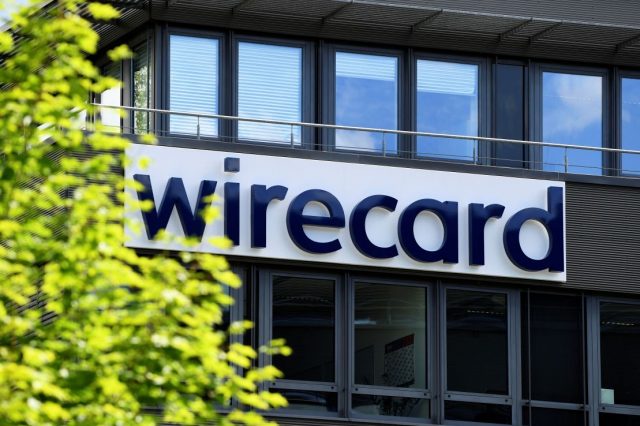
GOVERNMENT prosecutors have indicted an assistant manager of the Bank of the Philippine Islands (BPI) over his alleged involvement in a financial fraud at German payment company Wirecard AG, the Department of Justice (DoJ) said on Thursday.

The bank official was charged with four counts of falsification of bank certificates and two counts of violating the General Banking Act of 2010, it said.

DoJ added that it had dropped charges against other suspects for lack of evidence. It had yet to publish a copy of the charge sheet.

Under the law, bank officials are barred from making false entries in bank reports.

The Southeast Asian nation became embroiled in the collapse of Wirecard in June 2020, with the payment company initially claiming it had kept $2.1 billion in two Philippine banks, which the central bank and the lenders denied.

In 2020, the Bangko Sentral ng Pilipinas (BSP) said the money related to the incident did not enter the country, citing the country’s “strong financial oversight” against possible threats.

The Anti-Money Laundering Council in September 2020 said authorities were investigating 57 foreign and local “persons of interest” potentially involved in the scandal.

In June, global financial crime watchdog Financial Action Task Force (FATF) kept the Philippines on its gray list, citing the need to strengthen its action plan to address deficiencies in monitoring “dirty money” risks. — John Victor D. Ordoñez

PHL seen on track for 6-7% growth in 2022

PHILSTAR FILE PHOTO

THE economy’s 7.8% expansion in the first half, driven by investment and consumer spending, keeps it on pace for 6-7% growth for the full year even amid a global slowdown, First Metro Investment Corp. (FMIC) and the University of Asia and the Pacific (UA&P) said.

“The continuation of easing of alert levels, removal of tourism restrictions, return to work and school, among other initiatives, should support the economy which shows gradual recovery with respect to pre-pandemic performance,” the two institutions’ economists said in the August edition of their economic briefing, known as the Market Call.

Slower growth is expected in the second half given the absence of election spending and the likelihood of inflation exceeding 6% for the rest of the year, they said.

“While crude oil prices have stuck below $100 (per) barrel, the upward price effect on other consumer items since its earlier sharp runup this year may linger on for another three to four months, and so headline inflation will likely remain above 6% for most of the second half,” the economists said.

The 6% estimate is higher than the FMIC and UA&P’s earlier inflation forecast of 5-5.2% this year and the central bank’s 2-4% target.

The peso is also likely to weaken past P55 amid continued pressure for the remainder of the year, regardless of the impact of OFW remittances in the fourth quarter, as the Federal Reserve is expected to remain hawkish on rates to contain inflation.

The addition of 528,000 to the ranks of the employed in June and the positive impact on income of the peso’s depreciation “should offset likely fragility of inflation-beaten consumers” and drive further consumption-driven growth.

“The peso depreciated by 4.3% in July, but that means more income in the pockets of OFW (overseas Filipino workers) families, BPO (business process outsourcing) workers, exporters, and their suppliers, with an estimated 70 million beneficiaries,” FMIC and UA&P said.

“While we expect a slight slowdown in National Government spending, we do not think it will matter much, since the private sector has stepped up with close to 1 million jobs added in May and June. The National Government still has P1 trillion in unused (budget funds) for the second half while tax revenue will likely continue to outperform,” it added.

Healthy growth in investment spending is also expected to be maintained “as firms strive to catch up capacity to the unexpectedly faster rise in spending.”

However, the slight easing of manufacturing activity in July, as reflected in the Purchasing Managers’ Index (PMI) reading of 50.8 from 53.8 in June, indicates the presence of factors that may hinder economic activity.

Its assessment of the S&P Global Philippines Manufacturing PMI is that “while the modest expansion (of 50.8) showed up in employment gains, supply side issues persisted. Some of the drivers include global uncertainties, weakened client demand from foreign markets, logistical challenges, and port congestion.”

The PMI is a leading indicator of economic activity as raw material orders by the manufacturing sector are considered a proxy for the industry’s forecast for future demand. A reading above 50 signals an expansion in manufacturing activity, while a reading below 50 signals a decline.

The economy in the second half needs to grow by 5.2% to hit the lower end of the 2022 growth target of 6.5%, according to the Marcos administration. — Diego Gabriel C. Robles

Farm lobby says sugar tariffication could bring repeat of rice hardships

PHILSTAR FILE PHOTO

By Luisa Maria Jacinta C. Jocson, Reporter

THE farming industry said a liberal import regime for sugar could result in a repeat of the hardships endured by rice farmers when that commodity was subjected to tariffication.

“I have a few reservations (about sugar tariffication). The worry here is we might be jumping from the frying pan into the fire. What is happening now looks like a replay of what happened to rice in 2018. During that time, the rice inventory of the National Food Authority (NFA) fell to as low as a one- or two-day supply,” Federation of Free Farmers Chairman Leonardo Q. Montemayor said in an interview with ANC on Thursday.

“During the past three years, rice farmers have lost, based on data, at least P70 billion because of the depressed palay (unmilled rice) prices every year due to the non-stop entry of imports,” he added.

Bangko Sentral ng Pilipinas Governor Felipe M. Medalla on Wednesday raised the possibility of implementing a tariffication scheme on the sugar industry, emulating the Rice Tariffication Law of 2019.

The law liberalized the entry of foreign rice, whose importers needed to pay a 35% tariff on shipments from Southeast Asia, raising revenue for the government.

In compensation for exposing farmers to foreign competition, the law set up the Rice Competitiveness Enhancement Fund, which gets P10 billion a year from tariffs to support farm mechanization, credit assistance, and seed development, among others.

“The problem is when you allow imports… you really need the bureaucracy to decide,” Mr. Medalla said, adding that the rice model forces a choice on tariff levels to protect the domestic industry. “Do you want 100% tariff? Do you want 75%? So let the debate be on the tariff level,” Mr. Medalla said at an economic forum.

“Let people who bet their money on whether there will be a shortage or surplus do the importing, because they have the biggest incentive to get their forecast right, because if you forecast a shortage and import and there’s no shortage, you lose your money,” he added.

Mr. Medalla said that tariffs are a “transparent and efficient” scheme compared with import allocations decided by bureaucrats.

“The nice thing about tariffs is the revenue that’s raised can be used to target assistance, in this case, the farmers. So that’s another nice experience rather than bureaucrats who may actually get under the table payments for giving import allotments. At least the government captures the price difference,” he added.

According to Mr. Montemayor, a “dangerous” aspect of tariffication is that the government will be unable to regulate illegal imports.

“The government might lose the ability to regulate the industry’s fly-by-night importers or profiteers. We will be completely helpless. This might happen to our sugar sector if we are not careful… we want to make sure our farmers and workers are protected,” he said.

Mr. Montemayor said that the priority should be directed towards investing in modernization and providing subsidies to offset high input costs.

“With or without sugar tariffs, it’s critical that we strengthen our sugar industry. What happened in rice is that they totally liberalized the rice industry without (raising) the competitiveness (of rice farmers),” he said.

“It’s critical we start soon on the problem of fertilizer; subsidies for sugar planters, modernization for sugar mills, research and development for better varieties. We have to look for funding and support. That cannot be done overnight. It will take years,” he added.

Samahang Industriya ng Agrikultura Executive Director Jayson H. Cainglet said that the tariffication scheme can be replicated for other agricultural commodities, raising sufficient revenue that can go directly to the benefit of the workers.

“We’d rather that the end users are the ones importing. It should not be an unknown trader or importer,” he added in a Viber message.

Small stores, eateries seek gov’t action as sugar shortage impacts sales of softdrinks

BW FILE PHOTO

SMALL STORES and eateries, known as carinderias, are seeking government action because of the difficulty in sourcing sugary products like softdrinks, their industry association said.

The Philippine Association of Stores and Carinderia Owners, Inc. (PASCO) said in a statement on Thursday that its members have to contend with dwindling stocks of softdrinks, which are among their top sellers.

Noong pang mga nakaraang linggo ay napansin naming paunti nang paunti ang dumarating na stocks sa aming mga tindahan ng ilang produktong inumin, katulad ng ilang brand ng softdrinks (We’ve been noticing the diminishing supply of some products like softdrinks),” PASCO President Cristina A. Constantino said.

Kamakailan din ay may mga ilang wholesalers pa na nagsabi na asahan na raw namin na baka abutin ng tatlong buwan o higit pa na sila ay hindi muna makakapag-deliver ng sapat na dami ng softdrinks at iba pang inumin (Wholesalers have also alerted us that supply will remain tight for three months or more, and that they will be unable to fulfill our full drinks orders),” she added.

Talagang malaki ang epekto sa kinikita naming mga tindahan sa aming pangkalahatang kabuhayan ang kakulangan ng sapat na productong mabenta sa aming mga suki at mamimili (The impact on our income is serious because we don’t have enough goods to sell to our customers),” Ms. Constantino said.

Ms. Constantino said the sugar crisis is hindering the industry’s ability to recover from the pandemic.

Ngayong 2022 ay unti-unti na kaming nakakabalik sa pagtitinda dahil hindi na ipinapatupad ang mga hard lockdowns sa malaking bahagi ng bansa at hindi na rin gaanong limitado ang pagkilos ng ating mamamayan (We’ve only started to return to selling in 2022 after the lockdowns, now that movement restrictions have eased),” Ms. Constantino said.

She estimated a closure rate among association members of 57.6% in 2020, easing to 32.8% in 2021.

Coca-Cola Beverages Philippines, Inc., Pepsi-Cola Products Philippines, Inc., and ARC Refreshments Corp. have said that they are experiencing difficulty in accessing premium refined sugar. — Revin Mikhael D. Ochave