ONA Batlle (2 Spain) and Klara Buehl (19 Germany) during the UEFA Women’s Euro 2022 football match between Germany and Spain at Brentford Community Stadium in London, England. — REUTERS
LONDON — Eight-times women’s European champion Germany cruised clinically into the Euro 2022 quarterfinals as Group B winners with a game to spare on Tuesday after beating Spain 2-0 at Brentford’s Community Stadium.
Spain, who had hoped for a historic first win over Germany, enjoyed far more of the ball but lacked the final touch against opponents who pressed hard and were quick to seize their chances.
Germany was gifted a goal in the third minute after a blunder by Spain goalkeeper Sandra Panos, whose attempted clearance went straight to Klara Buehl for her to slot home into the bottom corner.
Forward Lucia Garcia then had a chance to equalize in the 10th, but after going around keeper Merle Frohms, her shot went into the side netting.
Alexandra Popp, making her first start after striker Lea Schuller tested positive for coronavirus disease 2019 (COVID-19) the day before, doubled the tally for Germany in the 37th with a flicked header off a corner.
“We scored the two goals at the right moment which really helped us. If the game had been 0-0 for longer, maybe it would have been a different game,” said Germany coach Martina Voss-Tecklenburg.
“If you win 2-0 against Spain, you didn’t do too much wrong.”
Frohms made a great fingertip save in the 71st from a Mariona Caldentay volley, her only big moment of the night, and Tabea Wassmuth had the ball in the back of the net in the 81st but was clearly offside.
While Spain had 70% of the possession, they managed only three shots on target to Germany’s two and the Germans did not miss as they ended their rivals’ 24 match unbeaten run.
Both sides had scored four in their opening group games and drew 1-1 on their last meeting in February in the Arnold Clark Cup at Middlesbrough’s Riverside stadium.
The defeat in front of a 16,000-strong crowd left Spain level on three points with Denmark, who beat Finland 1-0 earlier, but ahead on goal difference.
Spain and Denmark play each other on Saturday with Spain needing a point to set up a quarterfinal with host England. — Reuters
AFTER a three-year trial run and two different formats, the National Basketball Association (NBA) play-in tournament is now a permanent fixture on the league calendar.
The NBA Board of Governors voted on Tuesday to give the play-in event permanent status moving forward. Previously, the play-in structure was approved on a year-to-year basis.
The Board of Governors also added a rule change intended to discourage defensive teams from committing so-called “take fouls” that break up the opponents’ fastbreak. Moving forward, such fouls will now result in the offensive team getting one foul shot and maintaining possession of the ball.
Both decisions by the Board of Governors rubberstamped unanimous recommendations from the NBA’s Competition Committee, which includes players, officials from the National Basketball Players Association, coaches, owners, front office executives and referees.
The play-in event will continue with the format that was in place each of the past two seasons. In each conference, the seventh and eighth-place teams play a single game, with the winner heading to the postseason as the seventh seed. The loser of that game faces the winner of a single-game matchup between the ninth and 10th-place teams, with the victor in the final game earning the eighth seed.
The first season the NBA used a play-in event, only the eighth and ninth-place teams in each conference were to be involved, and then only if the ninth-place team finished within four games of the eighth-place team. The ninth-place team had to beat the eighth-place team twice to reach the playoffs, while the eighth-place team needed just one win.
The “take foul” rule adds a deterrent for the defensive team against illegally thwarting fastbreaks. Previously, the team that was fouled would only resume possession out of bounds. — Reuters
RAMON Urias belted a go-ahead homer for one of his three hits as the visiting Baltimore Orioles moved to .500 for the first time since entering Opening Day with their ninth straight victory, 4-2, over the Chicago Cubs on Tuesday night.
Baltimore’s Jorge Mateo also went deep, and Jordan Lyles threw seven solid innings.
Cedric Mullins had two hits and two steals while Anthony Santander recorded an RBI for the Orioles, who are amid their longest single-season winning streak since a 13-game run in September 1999. After going 52-110 games in 2021, Baltimore is 44-44.
Urias matched a career high in hits and erased the Orioles’ 2-1 deficit in the fourth inning with a two-run homer well up into the left field bleachers, helping hand Chicago a fifth straight loss.
Mateo, the Orioles’ ninth-place hitter, had two hits and provided some insurance with a solo homer in the seventh.
Lyles (6-7) yielded single runs in each of the first two innings but no more. He gave up seven hits and a walk while striking out five during his third consecutive quality start for Baltimore.
Chicago went 8-4 while winning four straight series before being swept in a four-game road set by the Los Angeles Dodgers over the weekend, then failing to take advantage of an early lead on Monday.
Two days after being named a first-time All-Star, Chicago’s Ian Happ homered just over the right field basket in the first for a 1-0 Chicago lead. The Cubs added another in the second when Nico Hoerner doubled, stole third and scored on Afonso Rivas’ single. — Reuters
AGRICULTURAL damage due to flooding triggered by rains brought by the southwest monsoon climbed to P27.28 million, according to data from the Department of Agriculture (DA).
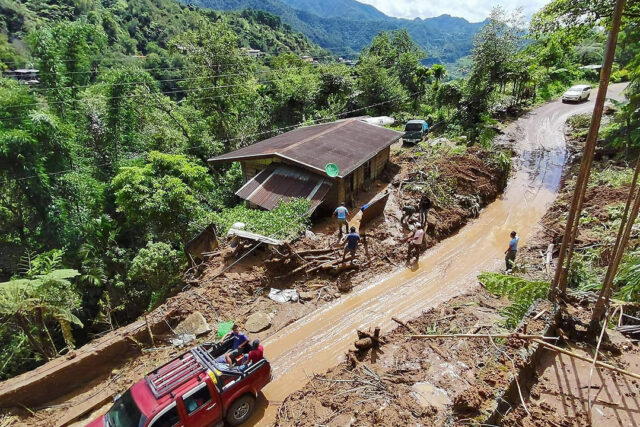
Damage and losses have been reported in Sultan Kudarat and Zamboanga del Sur, both in southern Philippines, as well as flash floods covered with mudslide in Ifugao province in the north.
Volume of production loss stood at 928 metric tons (MT) across 1,303 hectares of agricultural areas and affected 1,490 farmers.
The most affected commodities include rice, high value crops and livestock.
Available interventions by the DA include rice, corn and assorted vegetable seeds; and drugs and biologics for livestock and poultry.
The department said it will also provide funds from the Survival and Recovery Program of Agricultural Credit Policy Council; the Philippine Crop Insurance Corporation, and the Quick Response Fund for the rehabilitation of affected areas.
The DA’s Cordillera Administrative Region office also announced that it is scheduled to distribute available seed buffer stocks to affected farmers in Ifugao.
The DA said it will continue conducting assessment of damage and losses brought by flooding due to continuous rain in the agri-fisheries sector.
The southwest monsoon in the Philippines, as defined by state weather bureau PAGASA, are warm moist winds that cause rains over the western portion of the country from May to September. — Luisa Maria Jacinta C. Jocson
THE EXISTING Zamboanga International Airport is planned for conversion into a commercial complex when the new one is built. — CAAP
NEGOTIATIONS are underway for some of the private lots that will have to be acquired for the planned new Zamboanga International Airport, according to the Zamboanga City government.
Representatives of the City Planning and Development Office and City Assessor’s Office informed Mayor John M. Dalipe in a meeting on Tuesday that state-owned Land Bank of the Philippines (LANDBANK) has so far appraised 44 properties.
“Out of 44 lots appraised by the Land Bank of the Philippines, 10 lots amounting to P152M are now subjects of negotiation,” the local government said.
An initial P1-billion fund under the national budgets for 2019 and 2020 have been allocated for land acquisition for the new airport that is estimated to cost P9.9 billion.
A portion of the allocation was ready for downloading in early 2020, before a state of emergency was declared due to a coronavirus pandemic.
Reelected Zamboanga City 2nd District Rep. Manuel Jose “Mannix” M. Dalipe, the mayor’s brother, initiated the inclusion of the fund in the General Appropriations Act for those two years.
The city government, under former Mayor Maria Isabelle Climaco-Salazar, was planning to put up the project under a public-private partnership scheme.
The new airport site is located about 17 kilometers outside the congested city center, where the current Zamboanga International Airport is located.
In Feb. 2018, former Finance Secretary Carlos G. Dominguez III expressed support in moving the airport “to a new, more viable location.”
The existing airport is planned for conversion into a commercial complex. — MSJ
THE PHILIPPINE Tourism department on Wednesday cheered the inclusion of Boracay Island among TIME‘s 50 extraordinary destinations to explore in 2022, and at the same time reiterated its direction towards boosting marketing efforts for other destinations in the country.
“The Department of Tourism affirms its pride and honor as Boracay Island once again proved its allure as a tourist haven. Such recognition will surely help us attain our goal of regaining our position in the global market,” Tourism Secretary Christina Garcia Frasco said.
Ms. Frasco, who has been holding “Listening Tours” around the country in her initial days in office, said the department continues to closely collaborate with stakeholders to make tourism a significant revenue source.
“We will exert all efforts to put in the limelight not only the country’s premier tourist destinations like Boracay, but also other places of interest in the country which may not have been given equal focus and attention in the past.”
“Surely, the Philippines has a multitude of sites and tourism activities that we could offer to the world. And, in addition to natural resources, we look forward as well to developing and promoting the talents of our people and the products that have potential for national and global marketability,” she said.
TIME’s 50 World’s Greatest Places for 2022 was based on nominations from its international network of correspondents and contributors, with focus on places “offering new and exciting experiences.”
Boracay was closed in 2018 for about six months for a rehabilitation and redevelopment program upon the order of then President Rodrigo R. Duterte who said the popular tourist island had turned into a “cesspool.”
DIVE EXPO Meanwhile, the department is staging the Philippine International Dive Expo (PHIDEX) 2022 in hybrid mode on August 19 to 21.
The main physical venue will be at the SMX Convention Center in Pasay City.
There will be a conference to be participated in by local and international dive industry experts, dive tour operators, and partner dive businesses.
Exhibition booths will showcase dive resorts and centers in different parts of the country. — MSJ
SENATOR Ana Theresia “Risa” N. Hontiveros-Baraquel has called for a probe on alleged abuses at the state-run Philippine High School for the Arts (PHSA) and by extension, look into whether schools are complying with the law on safe spaces.
The resolution directs the Senate Women, Children, Family Relations and Gender Equality Committee, which she will likely chair, to conduct an inquiry in aid of legislation on reports of gender-based sexual harassment, emotional abuse and other violence experienced by alumni and students of the PHSA.
The committee was also called to investigate possible violations of the Safe Spaces Act, determine the lapses, and propose corresponding reforms to improve the implementation of the law as well as other child protection policies.
“It is imperative that the Senate, exercising its oversight powers, initiate a thorough but expeditious investigation on the matter to ensure that PHSA and other educational institutions are safe spaces, especially with the upcoming blended or face-to face-classes in August,” the senator said in a statement on Wednesday.
The office of Ms. Hontiveros met with some alumni of the school who claimed complaints sent were “downplayed by the PHSA administration, brushed off as hearsay and were not entertained for failing to comply with the format required under existing Civil Service rules.”
Instead, they were allegedly victim-blamed, silenced, and neglected by the PHSA administrators, she said.
Under the Safe Spaces Act, schools are required to provide a gender-sensitive environment and confidential mechanism for the reporting and redress of grievances on matters of sexual and gender-based harassment.
“If the accounts are accurate, the repeated failure of PHSA administration to address the violence and abuses is a blatant violation of the Safe Spaces Act and a flagrant disregard of the interests of PHSA students — interests they are duty bound to protect and promote as persons reposed with special parental authority,” Ms. Hontiveros said.
PHSA is a boarding school in Los Baños, Laguna that provides secondary education with a special curriculum on the arts.
Ms. Hontiveros also cited the “urgent need to review the reporting protocols and the procedures of the Committee on Decorum and Investigation of the educational institutions tasked to investigate and address complaints of abuse and harassment.”
The Education department on Tuesday asked the National Bureau of Investigation to conduct its own probe on the alleged sexual abuse and harassment of students at the PHSA.
The department is also doing its own investigation through its Child Protection Unit and Child Rights in Education Desk.
Allegations of various forms of abuses at the specialized school for budding artists were reported in an in-depth feature article published by VICE World News, which included testimonies from alumni who detailed their own experiences.
The state-owned institution called VICE‘s portrayal “unfair” and denied accusations that it is a “haven for abuse.” — Alyssa Nicole O. Tan
SENATORS on Wednesday supported a rightsizing plan proposed by the Department of Budget and Management (DBM), which may affect two million jobs as it aims to save an annual P14.8 billion in government expenditure.
“I think the call to streamline the bureaucracy has been there for some time and is probably overdue,” Senator Juan Edgardo M. Angara, who is set to head the Senate Finance Committee, said in a statement on Wednesday.
“I personally would not be averse to delegating the power to the executive particularly the DBM as that is part of its mandate,” he added.
Budget Secretary Amenah F. Pangandaman in a Wednesday interview with DZBB Super Radyo said the administration will soon determine which of the 187 government agencies, including state-owned companies, have repetitive or overlapping functions and cut down by merging, restructuring or abolition.
“I fully support the proposal of DBM to rightsize the bureaucracy,” Senator Lorna Regina “Loren” B. Legarda said in a separate statement, citing that she filed a similar bill in the 17th Congress.
“There are government agencies that have functions that overlap or are redundant. This makes them ineffective and inefficient, and these also entail unnecessary expenses,” she added.
Senator Francis Joseph “Chiz” G. Escudero said the DBM plan is the “right path” to take, though he acknowledged that it would be a difficult process.
“They just have to pour in the time to study which positions are redundant or unnecessary and to make sure that those that may be affected are given proper compensation on top of whatever benefits from GSIS (Government Service Insurance System) in order to help them get by and start anew amidst these trying economic times,” he said.
Ms. Pangandaman noted that the streamlining will not include teaching, medical, and military workers, as well as positions in state-firms covered by the government-owned and -controlled corporation governance law.
Senator Aquilino “Koko” L. Pimentel III said the first step is for the executive branch to identify which government agencies will be affected so that the corresponding bill can be drafted. [Text Wrapping Break]
“But the formal decision to abolish rests with Congress,” Mr. Pimentel said. — Alyssa Nicole O. Tan
A NEW STRAIN of drought-resistant wheat is helping to set the record straight on GMOs — a plant breeding technology that has long been considered at odds with sustainable agriculture but may be essential to its future.
The Food and Drug Administration recently determined that HB4, developed by the Argentinian company, Bioceres, is safe for humans to eat, bringing this new variety closer to commercial development in the United States. HB4 has already been approved for production in Argentina and Australia, but still requires sign-off from the US Department of Agriculture (USDA) — which is likely, pending reviews of the crop’s environmental impact.
This would be an agricultural milestone for two key reasons: First, whereas most GMO crops now grown in the US are used for livestock feed or derivatives such as corn syrup, HB4 would be directly consumed by humans. Second, it would be the first major food crop designed for drought tolerance. It’s hard to understate the importance of a crop that can better endure the kind of record-breaking drought and heat that is ravaging farms from the American West to Italy and Somalia. Just ask India, which recently banned most wheat exports to preserve adequate supplies for its own people, worsening a worldwide shortage already made critical by Russia’s war on Ukraine.
Yet many consumers and investors — especially those who aren’t among the 53 million food-insecure Americans currently relying on food banks to survive — remain skeptical of the value and safety of GMO wheat. I get it — I’ve been among those who recoil at the prospect of eating genetically modified bread — or GMO anything, really. But when I examined the scientific basis for my concerns, I found that there is none.
For decades, human consumption of genetically modified organisms (GMOs) has inspired misbegotten fear in consumers because few of us understand the technique, which uses bits of DNA from other plants, animals, or even bacteria to create desired traits in crops.
Critics have raised spurious concerns ranging from cancer and allergies to loss of nutritional value in GMO foods. Others worry about the modified genetics escaping into the wild, wreaking havoc on ecosystems. Many distrust the Big Ag companies creating new GMO crops to prioritize human safety over profit. As a result, GMO foods have been largely banned in Europe and much of Africa.
But nothing has ever been found proving that GMOs harm human health. In fact, every major scientific organization, including the National Academy of Sciences and the World Health Organization, has attested to the safety of this plant breeding technology. And while GMO crops can cause “genetic drift” in nearby fields, measures can be taken to avoid this. Consumers need to understand that GMOs aren’t inherently dangerous to human health or the environment any more than a television inherently damages your intelligence. GMO breeding is simply a technological platform: The danger or benefit lies in how it is applied.
Humans have been altering plant DNA for millennia — selecting and breeding ever bigger, softer grains, less-bitter vegetables and fatter, sweeter fruits. Before GMO, those traits were acquired by cross-breeding the same or similar species of plants. GMOs dramatically widen the possibilities by pulling from different organisms and producing swift results. Rather than taking a decade or more with conventional breeding methods, gene-editing tools can yield new plant varieties in two to three years. Gene-editing tools like Crispr, which can “delete” unwanted traits in a genome, can produce results even faster and more affordably.
One of the most powerfully beneficial traits integrated into commercial crops today is derived from a common soil bacterium, Bacillus thuringiensis (or Bt), which enables the plant to produce its own internal insecticides that are benign to humans. The development of Bt-integrated corn, now cultivated worldwide, and Bt-integrated eggplants grown in Bangladesh, have significantly reduced applications of chemical pesticides, saving farmers money and improving soil health.
To develop its drought-resistant wheat, Bioceres scientists added genetic material from a sunflower that determines how the plant uses the moisture it channels and stores. Discovered by Argentinian scientist Raquel Chan, HB4 is among the sunflower genes that govern water efficiency. After Chan and her team’s lab experiments showed crops including soybeans could thrive in hot, dry conditions with infrequent waterings, Bioceres licensed the gene.
The company reports that in field trials its GMO wheat varietal has boosted yields by an average of 20% in water-limited conditions. These numbers need to be corroborated by an independent analysis and far more research needs to be done to identify other genes that can help confer drought-tolerance to food crops. But this progress offers some hope to millions of farmers worldwide facing harsh conditions that will only get hotter and dryer.
History has shown us the consequences of genetic engineering in agriculture when its application is flawed. Monsanto’s Roundup Ready seeds — the crop that has become nearly synonymous with GMOs — contained genetics that made them immune to chemicals that kill virtually every other kind of plant. These herbicide-tolerant plants now account for 90% of all the corn, cotton, and soybeans in the US, and many of the products have backfired, leading to the emergence of “superweeds” resistant to the chemicals, which require the use of more and stronger weed-killing sprays.
And that’s the notable concern I have about the Bioceres product: In addition to the HB4 drought-tolerant gene, it has added a gene for herbicide tolerance. I understand the purpose, given how widely accepted the trait has become in agricultural markets. But the harmful impacts of herbicides undermine the core value of the HB4 innovation and its game-changing climate benefits. That isn’t enough reason to reject the new crop, though, and shouldn’t stop the USDA from approving HB4 wheat for commercial production.
We must move beyond the question of whether GMO crops should be developed at all, and instead focus on which applications will bring the most value to our world. Scientists are working to develop genetically modified crops with wider, deeper roots that can significantly improve carbon storage in soil. Research is also underway to develop GMO and gene-editing crop varieties of staple grains and specialty foods — from coffee and cacao to citrus and wine grapes — that are tolerant not only of heat and drought, but of the many other climate pressures bearing down on farmers worldwide: flooding, invasive insects, bacterial blights, and shifting seasons.
Some of these efforts will fail, but those that succeed will bring life-sustaining benefits to the most food-insecure populations in the most vulnerable climates. The bottom line: Rising environmental pressures have begun to justify the use of controversial agricultural tools that can help change the balance back in favor of humanity — as long as the technology is applied responsibly.
JAPANESE FORMER
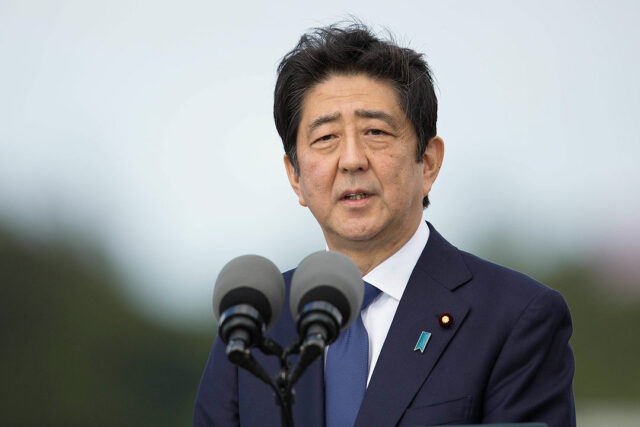
PRIME MINISTER SHINZO ABE — ANTHONY QUINTANO -FLICKER
Japanese former Prime Minister Shinzo Abe’s death, on Friday, July 8, at the hands of a lone gunman on a street island that Abe had used as a platform to campaign for a candidate for parliament, was deeply troubling for a largely genteel city like Nara and country like Japan. Nara was the ancient capital of Japan in the 8th century.
Police apprehended a man, later identified as 41-year-old Tetsuya Yamagami, who witnesses said fired at Abe twice with the second shot proving to be fatal. Police confiscated a homemade shotgun which Yamagami, said to be a former Navy man and presently jobless, used to kill Abe. Journalists Safoshi Sugiyama and Chang Ran-Kim of Reuters reported TV network NHK as quoting Yamagami as having told police that “he was dissatisfied with Abe and wanted to kill him.” The suspect was reported to have told police that he had made multiple handmade explosives and guns in the past, according to NHK.
The act was immediately condemned by Japanese and international leaders, led by Japan’s Prime Minister Fumio Kishida and US President Joe Biden. An emotional Kishida, said to be a protégé of Abe, denounced the “attack as an act of brutality that happened during the elections — the very foundation of democracy — and is absolutely unforgivable.”
The shooting contradicted unique qualities of Japanese politics and society in general, where political violence and crimes committed with the use of guns are rare, and guns are tightly controlled. Sugiyama and Chang-Ran Kim report that the Abe killing was “the first of a sitting former Japanese leader since a 1936 coup attempt, when several figures, including two ex-premieres were assassinated.” The two journalists state that political violence is rare in post-war Japan. In 2007, the Mayor of Nagasaki was shot and killed by a yakuza gangster. The head of the Japan Socialist Party was assassinated during a speech in 1960 by a right-wing youth with a samurai short sword. A few other politicians were attacked but not injured.
The two writers added that “doctors were unable to revive Abe, who was taken to hospital in cardiopulmonary arrest and showing no vital signs. He was declared dead at 5:03 p.m., five hours after being shot.”
Shinzo Abe comes from a long line of Japanese politicians and public servants. The former prime minister had an extensive history of serving the Japanese government. He was a member of the House of Representatives starting in 1996, and became Chief Cabinet Secretary from 2005 to 2006. He was elected Prime Minister in 2006 but relinquished the position in 2007. He made a spectacular comeback in 2012 and resigned due to health reasons but only after many initiatives designed to restore Japan’s economy and global reputation. He pushed for and succeeded in getting Tokyo to host the 2020 Olympics which however failed to make the desired impact on the Japanese economy because of the COVID-19 pandemic. He believed in the power of the Indo-Pacific and spearheaded the Indo-Pacific alliance, which was an attempt to create solidarity among the democracies that surround the Indian and Pacific Oceans. The group is comprised of the US, Australia, India, and Japan. It was obviously an attempt to counterbalance the increasing influence of China in east Asia.
As Japan’s longest serving Prime Minister, Abe earned high marks from both Japanese and international observers. CNN writers Jesse Yeung, Rhea Mogul, and Helen Regan refer to these achievements when they cite an interview that Kazuo Suzuki, professor of public policy at Hokkaido University had with CNN’s Max Foster. In that conversation, Suzuki said that “Abe left a number of legacies in Japan and the world.” Suzuki emphasized that Abe “very successfully transformed Japan into a modern state fitting into this globalizing world… after the subprime crisis.” Suzuki added that the former prime minister “(helped the country recover from deflation) through Abenomics.”
“Abenomics are economic policies that have to do with increasing fiscal and monetary stimulus in the country through increased government spending and unconventional central bank policy, respectively.”
As a consequence of Abe’s assassination, some discussion was triggered about the nature of political assassination. It must however be noted that, based on reports and on statements of the suspect, Abe’s assassination may not be classified as a political assassination even if Abe was a prominent person who was murdered and the crime was executed by surprise. Yamagami reportedly said he was “dissatisfied with Abe and wanted to kill him.” It seems that there was no political motive in the sense that the elimination of Abe would directly benefit some candidate who was opposed to the candidate Abe was supporting. At least that is what it appears to be based on media reports.
On the other hand, the assassination of Ninoy Aquino, which the late Senator “Ka Pepe” Diokno called an “execution,” seems to have the elements of a political assassination. A Philippine court convicted, in September 1990, 16 people, including a number of military personnel, of murdering Ninoy Aquino on Aug. 21, 1983, at the Manila International Airport.
POLITICAL ASSASSINATIONS As part of our reflection on political assassinations, we took a look at a paper of the Combating Terrorism Center of West Point entitled “The Rationale of Political Assassination,” written by Arie Perliger. Perliger is a professor and director of the graduate program in Security Studies at the School of Criminology and Justice at the University of Massachusetts. Our source document could therefore be considered an objective and balanced, neither tilting to the left nor to the right, presentation of professionals who are based in prestigious and credible institutions like the West Point and the University of Massachusetts, although Perliger’s views are his and do not necessarily reflect those of the Center, the US Military Academy, the Department of Justice and the US government.
The study used a comprehensive data set and employed quantitative analyses which we, unfortunately, cannot discuss in detail.
Among the observations presented in the paper are:
1. The number of (political assassinations) has risen dramatically since the 1970s, reflecting the emergence of new waves of terrorist groups, radical and universal ideologies operating on a global scale, and a growing willingness by oppressive regimes to use assassination as a tool in their treatment of political opposition.
2. The study also finds that in many cases, the perpetrators of political assassinations are the most experienced members of their group, and are government proxies.
3. Political assassinations are more probable in countries that suffer from a combination of restrictions on political competition and strong polarization and fragmentation.
4. The territorial fragmentation of a country is correlated with an increase in the number of assassinations.
There are quite a number of other interesting observations that are worthy of serious reflection. Most, if not all of them, have to do with supporting the democratic way of life.
Philip Ella Juico’s areas of interest include the protection and promotion of democracy, free markets, sustainable development, social responsibility and sports as a tool for social development. He obtained his doctorate in business at De La Salle University. Dr. Juico served as secretary of Agrarian Reform during the Corazon C. Aquino administration.
BEING out of the play gives the benefit of appreciating the big picture. Former players and coaches are recruited to analyze games and broadcast the play-by-play of a live game. Staying on the sidelines provides perspective and insights that those in the thick of things are too stressed to see.
One way to be involuntarily sidelined is to lose a contest.
Only winners are interviewed over and over about how they feel about winning a contest. Maybe, an obligatory interview is devoted to the loser — how did you feel when you lost it? The mumbled answer is not intended to be immortalized… if it is even understood.
Losers are pushed out of the play. They need to find a new role that is on the sidelines. Whatever the loser chooses to do becomes a footnote. The spotlight stays with the players still in the game. Even when a loser is preparing for a comeback, he has to say something outrageous (like, he didn’t really lose in the first place) to be part of the news cycle, along with the tantalizing prospect of a return to the game.
Outsiders like analysts, brokers, and economists stay on the sidelines. These observers pick up financial data, international trends, rumors, overheard conversation in boardrooms, insider takes, business developments, and public disclosures. With such bits and pieces, they connect the dots to make sense of what’s going on.
The sidelines in business (not to be confused with a sideline business) are the preferred vantage point for those playing the market or managing assets. In cycles of volatility, defined usually as a downturn such as what the pandemic and then the Ukraine invasion, and of course a new administration, have brought about, the smart money can stay in the sidelines waiting for some positive signals.
What is an investment in a stock, after all, if not a bet on the management and its prospects of winning? The bets are reflected in the ups and downs of stock prices not only of the target company, but also its competition. It requires an understanding of the industry and the regulatory environment.
Is the new administration tending towards a freer play for the market? Or is it clamping down on the private sector to achieve greater control through regulatory levers? (Go ahead and sue.)
Even the private sector can tilt the playing field by managing information. Leaking important strategic moves like mergers and acquisitions may favor particular outsiders.
Corporate governance considers profiting from insider trading punishable by law, especially for publicly listed companies. The principle of an even playing field presumes equal access to information. Hence, the rules on disclosure and trading halts are intended to provide transparency. (We are not aware of any developments affecting the unusual surge in volume and price of our company.)
Any advantage in undisclosed information is akin to buying a referee or one player to intentionally tilt the outcome of a game. Maneuverings behind the scenes play a significant role in business. It’s always too late to place a bet once the move is publicly disclosed.
The insiders and outsiders are no longer that clearly defined in our culture. In politics, these two sides are coordinated like a single machine. The seemingly outside calls of observers follow a designated narrative. With the suppression of traditional media through regulatory pressures, the biased observers (troll farms) are given free rein with the narrative agenda of the dominant team.
The dividing line between players and commentators has been breached. Is the “ambush interview” where questions are not submitted for vetting and controversial issues are thrown at the players (as they are boarding their cars) to be a thing of the past. (So, it’s no longer mandatory to pay income tax, Sir?) Even unscripted questions in a press briefing may be swept away by bloggers thrown into the mix of the legitimate press covering the palace.
It’s convenient for those in the playing field to be “doing their thing” without being called to account — are you talking to me?
Still, even the “man in the arena” eventually ends his playing days at some point. The term ends. Or he is taken out due to injury or worse. Then he is consigned to the sideline opting to keep his silence… or be an irrelevant kibitzer.
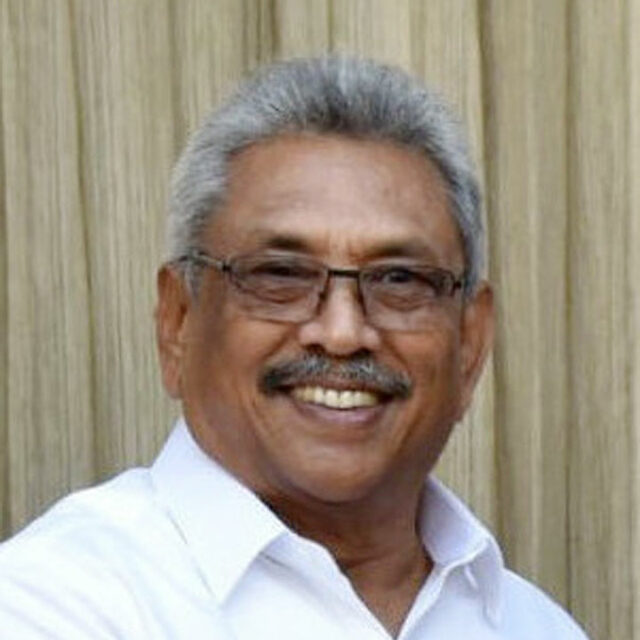
COLOMBO — Sri Lankan President Gotabaya Rajapaksa fled the country on Wednesday, hours before he was due to step down, after a people’s uprising over a devastating economic crisis ended his family’s powerful grip on the island nation.
Prime Minister Ranil Wickremesinghe declared a state of emergency as several hundred people surrounded his office in Colombo trying to breach the compound past police in riot gear, climbing the fences. Police fired several rounds of teargas and a military helicopter circled overhead.
“The prime minister as acting president has declared a state of emergency (countrywide) and imposed a curfew in the western province,” Mr. Wickremesinghe’s media secretary, Dinouk Colombage, told Reuters. Western Province includes Colombo.
As news of the president’s flight spread, thousands of people gathered at the main protest site in Colombo chanting “Gota thief, Gota thief,” referring to him by a nickname.
The president’s flight brings an end to the rule of the powerful Rajapaksa clan that has dominated politics in the South Asian country for the last two decades.
Protests against the economic crisis have simmered for months and came to a head last weekend when hundreds of thousands of people took over key government buildings in Colombo, blaming the Rajapaksas and their allies for runaway inflation, corruption and a severe lack of fuel and medicines.
Government sources and aides said the president’s brothers, former prime minister Mahinda Rajapaksa and former finance minister Basil Rajapaksa, were still in Sri Lanka.
Gotabaya Rajapaksa, his wife and two bodyguards left the main international airport near Colombo aboard a Sri Lankan Air Force plane early on Wednesday, the air force said in a statement.
A government source and a person close to Mr. Rajapaksa said he was in Male, the capital of the Maldives. The president would most likely proceed to another Asian country from there, the government source said.
Mr. Rajapaksa was due to step down as president on Wednesday to make way for a unity government after protesters stormed his and the prime minister’s official residences.
Mahinda Yapa Abeywardena, the speaker of Sri Lanka’s parliament, told Reuters partner ANI he was yet to receive any communication from Mr. Rajapaksa. A source in the ruling party said the president would send in a letter of resignation later on Wednesday.
That would make Mr. Wickremesinghe the acting president, although he has also offered to resign. If he does, the speaker will be the acting president until a new president is elected, as per the constitution.
Protest leaders, however, say the prime minister is allied to the Rajapaksas and have warned of a “decisive fight” if he does not resign by Wednesday afternoon.
“If we don’t hear of the resignation of the president and the prime minister by the evening, we may have to gather back and take over parliament or another government building,” said Buddhi Prabodha Karunaratne, one of the organizers of recent protests.
“We are strongly against the Gota-Ranil government. Both have to go.”
Amid the economic and political chaos, Sri Lanka’s sovereign bond prices hit fresh record lows on Wednesday.
The US Embassy in Colombo, which is in the central district of the city, said it was canceling consular services for the afternoon and for Thursday as a precautionary measure.
VICTIM OF PANDEMIC The island nation’s tourism-dependent economy was hammered first by the COVID-19 pandemic and then suffered from a fall in remittances from overseas Sri Lankans. A ban on chemical fertilizers hit output although the ban was later reversed.
The Rajapaksas implemented populist tax cuts in 2019 that affected government finances while shrinking foreign reserves curtailed imports of fuel, food and medicines.
Petrol has been severely rationed and long lines have formed in front of shops selling cooking gas. Headline inflation hit 54.6% last month and the central bank has warned that it could rise to 70% in the coming months.
Mahinda Rajapaksa, the president’s elder brother, resigned as prime minister in May after protests against the family turned violent. He remained in hiding at a military base in the east of the country for some days before returning to Colombo.
In May, the Rajapaksa government appointed Mohammed Nasheed, the speaker of the Maldives parliament and a former president, to help coordinate foreign assistance for crisis-hit Sri Lanka.
The same month, Mr. Nasheed publicly denied allegations that he was helping Mahinda Rajapaksa secure safe haven in the Maldives.
Media reports in the Maldives said the Sri Lankan president had arrived in the country early on Wednesday although Reuters was unable to independently verify this.
A Maldives government spokesman did not respond to Reuters’ request for comment.
On Tuesday, Sri Lankan immigration officials prevented Basil Rajapaksa from flying out of the country.
It was not clear where Basil Rajapaksa, who also holds US citizenship, was trying to go. He resigned as finance minister in early April amid heavy street protests and quit his seat in parliament in June. — Reuters