Home Blog Page 5649

Japan ruling party set for strong election showing after Abe killing
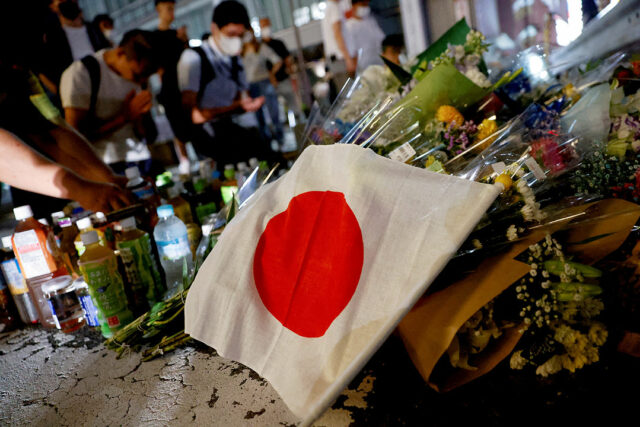
A Japanese flag is seen as people pray next to tributes laid at the site where late former Japanese Prime Minister Shinzo Abe was shot while campaigning for a parliamentary election, near Yamato-Saidaiji station in Nara, western Japan, July 8, 2022. — REUTERS/ISSEI KATO

TOKYO/NARA — Japanese voters went to the polls on Sunday for a parliamentary election that may give the ruling Liberal Democratic Party (LDP) a surge of support after the assassination of former Prime Minister Shinzo Abe, a dominant politician and power broker.

Abe, Japan’s longest-serving modern leader, was gunned down on Friday during a speech in support of a local candidate in the western city of Nara — a killing the political establishment condemned as an attack on democracy itself.

Turnout as of 11 a.m. (0200 GMT) was 10.44%, the Ministry of Internal Affairs said. That was up from 9.7% at the same time on the day of the last upper house election, in 2019. Media said 15.3% percent of voters had cast absentee ballots in advance.

Polls will close at 8 p.m., when initial exit poll results are expected.

“We just lost Mr. Abe. I would like the LDP to win many votes so that they can run the country in a stable manner,” said Sakae Fujishiro, a 67-year-old pensioner who cast his vote for the ruling party in Tokyo’s eastern Edogawa ward.

Elections for seats in parliament’s less powerful upper house are typically seen as a referendum on the sitting government, and opinion polls before the assassination already pointed to a strong showing for the ruling bloc led by Prime Minister Fumio Kishida, an Abe protege.

As the nation mourns, the LDP and its junior coalition partner Komeito could gain from a potential wave of sympathy votes, political analysts said.

“The ruling LDP-Komeito coalition was already on course for a solid victory,” James Brady of the Teneo consultancy said in a note. “A wave of sympathy votes now could boost the margin of victory.”

Campaigning was halted on Friday after Mr. Abe’s killing, but politicians resumed pre-election activities on Saturday.

There was an increased police presence when Mr. Kishida appeared at a campaign event in a city southwest of Tokyo and a metal detection scanner was installed at the venue — an unusual security measure in Japan.

Meanwhile, the Nara prefectural police office said on Sunday it had seized a motorcycle and a vehicle belonging to the man arrested for the shooting, Tetsuya Yamagami.

From the vehicle, police retrieved trays wrapped in aluminum foil that the suspect said he had used for drying gunpowder, and wooden boards with holes that he said he had used for test-firing his home-made weapon, according to the police office.

The unemployed 41-year-old has said he spent months planning the attack, accusing the former prime minister of links to a religious cult that he blames for his mother’s financial ruin, according to local media reports.

With the potential for a wave of sympathy votes following the slaying, a strong showing at the polls could help Mr. Kishida consolidate his rule, giving the former banker from Hiroshima a chance to carry out his goal of boosting defense spending.

It might also allow him to revise Japan’s pacifist constitution — something even the hawkish Mr. Abe was never able to achieve.

“In the months ahead, the government is certain to seek to strengthen domestic security,” Brady said. “By undermining the public’s general sense of safety and order, the event could also add further momentum to those key Abe causes like defense build-up and constitutional revision.”

PARTY POWER VACUUM
Polls last week showed the LDP winning at least 60 of the 125 seats being contested on Sunday, up from the 55 it now holds, allowing it to maintain the majority in the chamber that it holds with Komeito.

Reaching 69 seats in the upper house would give the LDP a majority, a threshold that had been seen as a stretch before Mr. Abe’s killing.

Not all voters were swayed by the assassination.

“The Kishida administration is well regarded, but if the LDP is in power too long, there will be too much collusion as a result,” said Yoshio Yamamoto, a 40-year-old civil servant who cast his vote in Tokyo’s central Nakano ward for the Democratic Party for the People.

Mr. Kishida, once on the more dovish side of the LDP, has shifted towards the right and said parts of the constitution may have elements that “are outdated and lacking”.

Opinion polls show a majority of voters favour greater military strength.

But even a strong LDP performance will be overshadowed by the murder of Abe, who as a lawmaker leading the party’s largest faction still wielded considerable strength over policy and personnel decisions.

His death raises the specter of a power vacuum and potential turmoil within the party, analysts said.

The small, populist Japan Innovation Party, which gained seats in a general election last year, could siphon off votes from the LDP. But since the party also backs constitutional revision, any advances it makes would be likely to bolster the LDP’s goals. — Reuters

Biden defends decision to visit Saudi Arabia, says rights are on his agenda

OFFICIAL WHITE HOUSE PHOTO BY ADAM SCHULTZ

WASHINGTON — President Joseph R. Biden on Saturday defended his decision to travel to Saudi Arabia saying human rights would be on his agenda as he gave a preview of a trip on which he aims to reset ties with the crown prince, who he previously denounced as a pariah.

Mr. Biden will hold bilateral talks with Saudi King Salman bin Abdulaziz and his leadership team, including Crown Prince Mohammed bin Salman on his visit to the Middle East next week.

The Crown Prince Mohammed, Saudi Arabia’s de facto leader, was believed to be behind the 2018 murder of Washington Post journalist and political opponent Jamal Khashoggi, according to the US intelligence community.

In a commentary published in the Washington Post late on Saturday, Mr. Biden said his aim was to reorient and not rupture relations with a country that has been a US strategic partner for 80 years.

“I know that there are many who disagree with my decision to travel to Saudi Arabia. My views on human rights are clear and long-standing, and fundamental freedoms are always on the agenda when I travel abroad,” Mr. Biden wrote.

Mr. Biden needs oil-rich Saudi Arabia’s help at a time of high gasoline prices and as he encourages efforts to end the war in Yemen after the Saudis recently extended a ceasefire there. The United States also wants to curb Iran’s influence in the Middle East and China’s global sway.

Mr. Biden argued that Saudi Arabia had recently helped to restore unity among the six countries of the Gulf Cooperation Council, had fully supported the truce in Yemen and was working to stabilize oil markets with other OPEC producers.

Mr. Biden said he will be the first president to fly from Israel to Jiddah, Saudi Arabia, next week, which he said would be a small symbol of “budding relations and steps toward normalization” between Israel and the Arab world.

“I will be the first president to visit the Middle East since 9/11 without US troops engaged in a combat mission there. It’s my aim to keep it that way.” Mr. Biden said.

The president will first stop in Israel on his July 13-16 trip. — Reuters

China tells Australia to act as partner, not opponent

REUTERS

SHANGHAI — Chinese Foreign Minister Wang Yi has urged his Australian counterpart Penny Wong to treat China as a partner, not an opponent, and to accumulate “positive energy” to improve ties between the two countries.

On the sidelines of the G20 Foreign Ministers Meeting in Bali on Friday, Mr. Wang expressed hope that Australia could “seize the opportunity, take concrete actions and come to a correct understanding of China,” according to a summary published late on Saturday by China’s foreign ministry.

“The root cause of the difficulties in Chinese and Australian relations in recent years lies in the insistence of previous Australian governments to treat China as an ‘opponent’ and even a ‘threat’,” Mr. Wang said, adding that Australia’s words and actions had been “irresponsible”.

China has been restricting imports of Australian coal and other products since 2020. Among Beijing’s grievances were Canberra’s call for a full probe into the origins of COVID-19, an investigation into Chinese interference in Australian politics, and a ban on China’s Huawei from participating in Australia’s 5G rollout.

Australian Foreign Minister Wong said on Friday that the meeting with her Chinese counterpart was a first step towards stabilizing the relationship but that it would take time for Beijing to remove trade blockages on Australia.

Australia has also expressed concern about China’s growing presence in the Pacific region, with Prime Minister Anthony Albanese warning on Friday that Beijing had become “more aggressive”.

Mr. Wang told Ms. Wong at the Friday meeting that China was conducting “equal exchange and cooperation” with sovereign island nations based on their requests and needs, the Chinese foreign ministry said. — Reuters

The effect of the Mandanas-Garcia ruling: A Northern Samar case study

FIRMBEE COM-UNSPLASH

The Mandanas-Garcia Ruling mandates the expansion of the income base for the computation of the national tax allocation (NTA) for local government units (LGUs) to include not only internal revenue collections but also customs collections. This assures LGUs with an additional 24% revenue share, aside from the 13.9% increase due to the increase in internal revenue collections. The figures look attractive especially for NTA-dependent LGUs like the barangays.

But how does this really look like in its first year’s implementation? Will the amount be enough to cover the devolved functions and services that the barangays need to deliver by virtue of the Executive Order No. 138?

To answer these questions, I look into Northern Samar as a focus province. Northern Samar is one of the provinces in the Philippines known for reducing poverty incidence from 51.8% in 2015 to 25.1% in the first semester of 2021. As a result, the province was stricken off the list of the top 20 poorest provinces in the country.

Northern Samar has readily available barangay-level national tax allocations data for fiscal years 2021 and 2022, making a pre- and during-the Mandanas-Garcia Ruling comparison possible.

Northern Samar has 24 municipalities and 569 barangays. On average, the barangay LGUs enjoy a 34.11% NTA increase as against the 24% increase at the national level.

Six barangays in the province enjoy an increase of more than 50% in NTA from 2021 to 2022. Two of these are in Pambujan, two in Catarman, and one each in Laoang and San Isidro. But the NTA increases are uneven. Twenty-one of the barangays receive NTA increases that are below the national average of 24%. Four of these are in Las Navas; three in Palapag; two each in Catarman, Lope de Vega and Pambujan; while the rest are from Catubig, Laoang, San Vicente, Biri, Gamay, Silvino Lobos and San Roque.

A total of 191 barangays have received more than P773,609.08 — the computed average NTA increase. But 23 barangays have received less than half a million-peso additional NTA. Clearly, the increase in NTA is not across the board. It still follows the formula laid down in Section 285 of the Local Government Code of 1991 which considers the population and equal sharing arrangements.

Are the additional NTAs of the barangays enough? The answer is “no.” For the local officials in island barangays, the bigger question is: Where is the NTA? Officials interviewed from these barangays say they are expecting an annual NTA increase, so what they received in 2022 is simply part of what they ought to have received. For those living in the mainland, especially those classified as urban barangays, the NTAs are not enough. The increase is not commensurate with the functions that they must perform and services they need to deliver.

During the COVID-19 pandemic, the barangay officials face not only a health issue but a complex event that highlights the problems in education, economy and livelihood, and peace and order. This is compounded by the lockdowns and community quarantines that limit mobility and compel their constituents working outside the province to return home. Hence, the population that the LGUs need to serve has increased, most of whom remain jobless.

The sudden increase of the population without the corresponding hike in income has become the biggest challenge among barangay officials. This has resulted not only in a loss of the already paltry revenues the barangay LGUs have been collecting but has also created acrimonious situations. As more and more find themselves unemployed, many become annoyed and sometimes pick quarrels with local officials who, being at the frontline, are easy targets.

On the education sector, while barangay LGUs are not directly involved in the provision of education-related services, they are still expected to make schools and child development centers function effectively. A number of barangay officials claim that their LGUs are tapped to satisfy the requirements in the Safe Schools Assessment Tool (SSAT). The SSAT is a list of 172 indicators that must be satisfied for schools to physically reopen. “The schools have limited funds so we have to pitch in with whatever we can provide,” claims Nolito Odtujap, the Punong Barangay of Aguin, Capul.

“We have to ensure that the children are safe on their way to and from the school. Thus, we have to deploy more barangay tanods (guards) and officials, and provide for the necessary health and hygiene kits,” adds Lerma Cula of Barangay Sagaosawan, also in Capul. But while some of those helping to ensure the safety of the children only receive an honorarium, health and hygiene-related kits and facilities need to be procured. This becomes an additional burden for Sagaosawan as well as for other barangays with small NTAs.

Barangay officials are worried over the coming fiscal years, from 2023 to 2025, when the NTAs are expected to decrease. The initial computation released by the Department of Budget and Management shows that LGU NTAs will be reduced by around 14%. This means an average reduction of around P427,000 per barangay LGU in Northern Samar.

All of the barangays in Northern Samar are NTA-dependent. In the short-term, these LGUs need technical and financial assistance from the municipal and provincial governments as well as national government agencies. For the technical assistance, barangay officials request policy guidance and capacity development on how to effectively manage the meager resources of their LGUs.

A priority is to revive the economy to generate more income both for the population and the LGU. Easing the health restrictions but doing so without sacrificing the essential protocols in municipalities that have contained COVID-19 infections is appropriate to revive the local economy.

For the long-term, barangay LGUs need assistance to reduce NTA dependency. National government agencies can provide technical support on how this can be done. This can be reinforced by providing lessons from LGUs that are no longer NTA-dependent.

The NTA allocation also needs re-examination. The current NTA is population-dependent, but population statistics are only updated every five years and do not consider shocks like the COVID-19 pandemic. When the economy grounds to a halt, people return to their barangays but the allocation that the barangay LGUs receive is based on their pre-pandemic situation.

The quality of life of the constituents must likewise be considered to make the tax allocation equitable and ensure that the increase in resources will benefit the barangay LGUs that need them most.

Judicious use of limited resources is possible through the use of data in planning. Providing early information on the available budget and data transparency help LGUs and stakeholders do project planning and prioritization. This gives substance to Bottom-Up Budgeting.


Jay A. Carizo is a local governance specialist working with the Galing Pook Foundation, which has partnered with Action for Economic Reforms in a data-driven development program that covers several LGUs, including those in Northern Samar.

It’s a race between the economy and the debt

BW FILE PHOTO

The Philippine economy has to outgrow the debt! The reverse scenario is unthinkable — it will send the Philippine economy in the direction of Sri Lanka. The Philippine economy grew at 8.3% in 2022 Q1 but that was helped along by a low base of 2021 Q1 and revenge household spending. Revenge spending will quickly ease up and the low base catapult will have disappeared for the 2022 Q2 and henceforth. We will be lucky to make 6% for the rest of the year. The till of the Philippine treasury has a negative balance with a debt of 63% (around P12 trillion) of GDP and the fiscal deficit at 8+% of GDP.

Dr. Vaughn Montes revealed during the FEF press conference on July 8, that only 18% of the debt burden is foreign exchange-denominated which is good news because the government can get more lenient treatment from local creditors. Likewise encouraging is that our foreign reserves position is still very comfortable (in excess of eight months of imports) although understandably on a slight downward trend. However, the debt denominated in foreign currency is still growing, although G2G borrowings and borrowings from multilateral institutions afford a greater potential for rollover and refinancing.

I cannot say how fast the debt will grow as the turmoil in the global economy is hard to predict: the Russia-Ukraine war is getting protracted and the withdrawal of Russian oil will continue; a determined upward production response by the non-Russian oil production will clearly soften and shorten the oil price crisis. The fact is we are at the moment in a guessing game. Nevertheless, an economic growth of 6-7% should be enough to cover any further surprises on the debt front.

Inflation has already reached 6% and the exchange rate has breached P56/$. We were in this situation in 2004-2005 with the political turmoil of Garci and the Hyatt 10 resignation. The Bangko Sentral ng Pilipinas (BSP) is set to raise interest rates further and that would pause economic recovery as the newly found exuberance on the demand side of the market will again be tempered. Which is why the BSP is reluctant to follow the US Fed example of more aggressive interest rate hikes. Given that rapid economic growth is our target, the BSP’s reluctance makes sense. Furthermore, supply shortfalls-led inflationary spikes are never directly cured by a higher interest rate which only serves to shrink the economy.

Unlike in 2016 when the government had money flowing out of its ears, the fiscal resources to back the extended Build, Build, Build (BBB) program moving forward has dried up and thus the government infrastructure program will understandably experience a pause. Higher taxes upon a polity that has already suffered a serious fall in income will also dampen market demand, apart from inflicting real pain and possibly bringing social unrest. There is also a growing clamor for safety net spending as a result of absolute destitution resulting from the loss of jobs and higher food prices. That clamor cannot be ignored since social disorders can start from such destitution.

When rapid economic growth is of the essence, the question of how to accelerate investment becomes paramount. It is the iron law of economic growth that without rapid investment the former will go pfftt. The Philippines has over decades traditionally lagged behind its more dynamic neighbors in the investment rate — 20% of GDP vs. 35-40% of GDP. Even in the last 12 years of the last two presidents’ tenures, we hardly breached the targeted 25% of GDP. Government infrastructure spending has improved from about 2.5% of GDP from 1980-2015 to 5-6% of GDP. That despite the correctly ambitious BBB. Now BBB will have a pause.

How do we maintain high infrastructure spending while being bereft of fiscal resources?

1.) For arterial infrastructure, there is absolutely a need to scale up the resort to public-private partnership (PPP) projects. PPP has already delivered gems in arterial infrastructure (Skyway 3, TPLEX, CALAX, and the Cebu and Clark Air Terminals, to name a few). But the appetite for PPP projects has waned among private players because of some actuation of the immediate past administration: the refusal to honor the decision of the Singapore arbitral court on the compensation to the Metro Manila water services concessionaires coupled with the threat of expropriation, signaled that the government cannot be trusted to abide by the contracts it signed. It is one thing to open new markets to foreign players (the new APC does that), it is another that contracts closed in those markets are honored by the authorities and the courts; without enforcement even the letter of the law is empty.

1.a) The new Marcos administration would do well to signal an iron-clad commitment to the rule-of-law: honor contracts it has signed;

1.b) Likewise, the new administration should recast the pending implementing rules and regulations for the New PPP law to include a strong MAGA (material adverse government action) provision as one signal of that commitment; and,

1.c) start the process of honoring the Singapore arbitral ruling on the water concessionaires. One source of new investment is the foreign direct investment community. The Duterte government showed little regard for the rule-of- law by raising the effective corporate income tax for extant PEZA (Philippine Economic Zone Authority) locators from 17% (the equivalent of the 5% gross income tax by Department of Finance calculation) to 25% without adequate compensation. The PEZA investment commitments have been falling ever since.

2.) Perhaps for potential PEZA locators, a 17% corporate income tax offer for 10 years (which is Vietnams’ offer) would be assuaging.

3.) Lift investment compression by opening up mining and forestry arenas. Let’s get the $6-billion Tampakan Gold and Copper Mining in Bukidnon moving.

4.) Borrow from local governments: roll over the obligation to local government by postponing the implementation of the Mandanas ruling for five years with appropriate interest; this will need Supreme Court approval. This will postpone for better times the cost of the fiscal drain (of 3% of GDP growth by DoF calculation);

5.) Attract private capital to the farm sector by facilitating (by a law if need be) the consolidation of farms to increase productivity through returns to scale.

6.) Articulate clear pro-tradables ecology: for example, exempt the electricity tariff to manufactures and agribusiness from universal and stranded assets and stranded debts imposts.

7.) For low-lying and quick investment and employment generation, incentivize via a contingent tax on idle rooftops — contingent since it expires the moment 20% of the rooftop is utilized for solar PV installation. Good news: the Gokongwei group has solarized the rooftops of all its malls and sites. Kudos.


Raul V. Fabella is a retired professor of the UP School of Economics, a member of the National Academy of Science and Technology and an honorary professor of the Asian Institute of Management. He gets his dopamine fix from bicycling and tending flowers with wife Teena.

Moscow will have to choose either butter or guns

EDEDCHECHINE-FREEPIK

ARE THE SANCTIONS against Russia useful? Yes, they are already hitting Vladimir Putin and his accomplices hard and their effects on the Russian economy will increase over time.

Since Russia deliberately violated international law by invading Ukraine, the EU has adopted six packages of sanctions against Moscow. Our measures now target nearly 1,200 individuals and 98 entities in Russia as well as a significant number of sectors of the Russian economy. These sanctions were adopted in coordination with the G7 members. Their effectiveness is enhanced by the fact that over 40 other countries (including traditionally neutral countries) have adopted them or taken similar measures.

By the end of 2022, we will have reduced our Russian oil imports by 90% and we are rapidly reducing our gas imports. These decisions are gradually freeing us from a dependence that has long inhibited our political choices in the face of Vladimir Putin’s aggressiveness. He probably believed that Europe would not dare to engage in sanctions because of its energy dependence. This is not the most insignificant of the Russian regime’s many miscalculations during this conflict. Of course, weaning ourselves off Russian energy so rapidly also creates serious difficulties for many EU countries and for several economic sectors. But this is the price we have to pay for defending our democracies and international law, and we are taking the necessary steps to deal with these problems in full solidarity.

Some may ask: Do these sanctions really have an impact on the Russian economy? The simple answer is “yes.” Although Russia exports a lot of raw materials, it also has no choice but to import many high value-added products that it does not manufacture. For all advanced technologies, it is 45% dependent on Europe and 21% on the United States, compared with only 11% on China.

In the military field, which is crucial in the context of the war in Ukraine, the sanctions limit Russia’s capacity to produce precision missiles such as the Iskander or the KH 101. Almost all foreign car manufacturers have also decided to withdraw from Russia and the few cars produced by Russian manufacturers will be sold without airbags or automatic transmission.

The oil industry is suffering not only from the departure of foreign operators but also from the difficulty of accessing advanced technologies such as horizontal drilling. The ability of Russian industry to bring new wells on stream is likely to be limited. Finally, in order to maintain air traffic, Russia will have to withdraw a majority of its aircraft from circulation in order to recover the spare parts needed to allow the others to fly. Added to this there is also the loss of access to financial markets, being disconnected from major global research networks and a massive brain drain.

As for the alternative offered by China for the Russian economy, in reality it remains limited, especially for high-tech products. To date, the Chinese government, which is very dependent on its exports to developed countries, has not assisted Russia in circumventing Western sanctions. Chinese exports to Russia have fallen in line with those of Western countries.

Will these significant and growing impacts lead Vladimir Putin to modify his strategic calculations? Probably not in the immediate future: his actions are not guided primarily by economic logic. However, by forcing him to choose either butter or guns, the sanctions lock him in a vice that is gradually tightening.

Regarding the impact of these sanctions on third countries, particularly African countries, which depend on Russian and Ukrainian wheat and fertilizers, where responsibility lies in terms of the food crisis is clear. Our sanctions do not in any shape or form target Russian wheat or fertilizer exports, while Ukraine is prevented from exporting its wheat by the Black Sea blockade and destruction caused by Russian aggression. If such issues linked to our sanctions were to arise, we are ready to put in place the appropriate mechanisms to address these. I have informed my African counterparts of this and asked them not to be fooled by the Russian authorities’ untruths regarding our sanctions.

The real answer to the difficulties in the world energy and food markets is an end to the war. This cannot be achieved by accepting the Russian diktat, it can only be achieved by Russia’s withdrawal from Ukraine. Respect for the territorial integrity of states and the non-use of force are not Western or European principles. They are the basis of all international law. Russia is blithely trampling on them. To accept such a violation would open the door to the law of the jungle on a global scale.

Contrary to what we thought rather naively just a few years ago, economic interdependence does not automatically imply a pacification of international relations. This is why the transition to a Europe as a power, which I have been calling for since the beginning of my mandate, is imperative. Faced with the invasion of Ukraine, we have begun to move from intention to action by showing that, when provoked, Europe can respond. Since we do not want to go to war with Russia, economic sanctions are now at the core of this response. They are already beginning to have an effect and will do so even more in the coming months.


Josep Borrell is high representative of the European Union for Foreign Affairs and Security Policy and vice-president of the European Commission.

Less talk about inflation

FREEPIK

Headline inflation in June surged by 6.1% year on year from 5.4% in May and 3.7% a year ago, the Philippine Statistics Authority (PSA) reported. This was slightly higher than the 6% median estimate in a BusinessWorld poll conducted at end June, but within the 5.7%-6.5% forecast range of the Bangko Sentral ng Pilipinas (BSP) for the month (BusinessWorld, July 5, 2022).

June’s inflation rate matched the pace recorded in November 2018 and was the fastest growth since the 6.9% print in October 2018. It was the third consecutive month that inflation went above the BSP’s 2-4% target range.

“6.1? I think I will have to disagree with that number. We are not that high,” President Ferdinand “Bongbong” Marcos, Jr. said at a press briefing following his first Cabinet meeting in Malacañang (GMA News, July 5, 2022).

National Statistician and PSA chief Dennis Mapa retorted, “The Philippine Statistics Authority stands by its report” (Ibid.). Finance Secretary Benjamin Diokno quickly defended Mr. Marcos Jr. saying, “The President’s disbelief at the 6.1% June 2022 inflation rate figure was misunderstood. He was referring to it as a full-year figure when in fact, the year-to-date, meaning January to June average inflation rate is actually 4.4%.” (Rappler, July 6, 2022).

At the press conference, Neil Mercado of Inquirer asked Mr. Marcos Jr.: “Inflation rate soared to 6.1%, the highest since October 2018. Does the President have any concrete plan to address this? Paano matutulungan ang mga Pilipinong umaaray na sa taas ng presyo ng bilihin (How will you help Filipinos feeling the pinch of high prices of goods)?” (Ibid.).

The question stumped the new president. It is indeed difficult to feel around the edges of inflation — what is the extent of the spillage, and how to sop it up with the proper remedies. Maybe not even the most technically adept statisticians or astute econometrists can accurately measure and conclude on the interplay of macroeconomic supply and demand that would raise prices and affect gross national product, much less anticipate the most micro elasticities in each economic participant’s deepest heart to determine the personal effect of changes in purchasing power and value of money. Inflation is felt, before it is known.

“In June, the World Bank projected in its Global Economic Prospects that the inflation rate in advanced economies rose from 1.9% to 6.95% in the year to April, while the inflation rate in the emerging and developing economies increased from 4.23% to 9.37% over the same period. The high inflation rate is expected to be persistent rather than transitory, as Russia’s invasion of Ukraine has further increased food and energy prices, hitting net food and/or energy importers particularly hard” (thediplomat.com June 20, 2022).

“Our inflation is imported,” Mr. Marcos Jr. said (on GMA News, cited), albeit ambiguously, maybe for lack of scientific nomenclature to define our economic situation as a “supply-side” problem that has caused rising “cost-push” inflation. Less talk na lang sana, but, yes, we must talk about “the elephant in the room” and try to feel around its size and might, in the complicating, persisting COVID-19 pandemic that has breast-fed the global inflation pandemic.

Perhaps former Secretary Ernesto Pernia talked too much, in his time as National Economic and Development Authority (NEDA) chief for four years in President Rodrigo Duterte’s term. In a statement, Mr. Pernia said he chose to leave his post due to personal reasons as well as “differences in development philosophy with a few of my fellow Cabinet members” (CNN Philippines, April 17, 2020). “Monetary policy is more of a demand side solution to inflation, not the supply side. But our inflation is mostly caused by the supply side — the availability of goods, high global oil prices. Those are the main causes of supply side inflation, as well as the unavailability of rice on time,” Mr. Pernia said. (Rappler, Aug. 10, 2020).

The US Federal Reserve increased its benchmark interest rate by 75 basis points to a range of 1.5%-1.75% in June — the biggest increase since 1994. Fed Chair Jerome Powell flagged that there could be another rate hike in July. The Reserve Bank of Australia is set to raise rates again on Tuesday, and other Asia-Pacific economies like the Philippines, Singapore, and Malaysia have all jumped on the same rate hike bandwagon (cnbc.com July 4, 2022). Effective June 24, 2022, the BSP/Monetary Board raised the interest rate on the BSP’s overnight reverse repurchase facility by 25 basis points to 2.5% (100 basis points equal 1%). Accordingly, the interest rates on the overnight deposit and lending facilities were raised to 2% and 3%, respectively (bsp.gov.ph).

Perhaps monetary policy is the wrong solution to inflation, many analysts now say, and as Mr. Pernia stressed in his time. Raising interest rates in inflation discourages borrowers, who would not lock in on high rates for long periods. It alarms lenders and investors (especially the individual investors), who calculate the real interest rate to be net of the inflation rate, finding little remaining value, or, worse, a “negative carry” (inflation rate is higher than the nominal interest rate), all for the risk of lending. Then also, borrowers at high interest rates, in high inflation, would clearly be desperate borrowers, and considered high-risk. Risk is so heightened in inflation, such that those with the excess cash would rather hoard scarce goods and buy real assets (going cheaper because of the need of some for liquidity amidst depreciating local currency).

HSBC senior economic advisor Stephen King said that “it is not simply either demand or supply shock that is to blame for inflation, but the workings of both sides of the equation. Both pandemic lockdowns, supply chain upheavals and the Russia-Ukraine war, as well as the stimuli governments pumped into their economies and loose monetary policies, have contributed to rising inflation” (cnbc.com, July 4, 2022).

“Authorities have to use all available policy tools to address inflation, including monetary measures to prevent the de-anchoring of inflation expectations, and supply-side measures such as importation and lower tariffs and non-tariff barriers for important commodities to help augment domestic supplies as needed, and greater support to agriculture production through extension services, seeds, and fertilizer,” said Karl Chua, then NEDA Chief in the Duterte administration. (Rappler, May 25, 2022).

Postpone income tax cuts, slap new taxes, slash VAT exemptions, outgoing Finance Secretary Carlos Dominguez III said at his exit press conference on May 25, where he presented his proposed transition plan to the then-assumptive political governance. (Read my column, “The proposed fiscal consolidation and resource mobilization plan,” in BusinessWorld on June 5.)

The pragmatist might realize some weaknesses heightened in this inflation, of “supply-side economics” upon which the aggressive Build, Build, Build strategic plan and the fiscal policy under the Tax Reform for Acceleration and Inclusion (TRAIN) law were based. There seems to be no formal reaction yet by the new Finance department, now led by Benjamin Diokno (BSP Governor under Duterte) to Dominguez’ proposed fiscal consolidation plan, nor has a counter-plan, or a totally new plan been made transparent to the people.

There should be less talk about inflation and seeming denial about the sorry state of the Philippine economy. An economic plan of action must be transparent so that it will ease the apprehensions of the people about what darker doom might be approaching while the COVID gloom wouldn’t yet let go.


Amelia H. C. Ylagan is a doctor of Business Administration from the University of the Philippines.

ahcylagan@yahoo.com

Marcos’ economic team optimistic on growth outlook despite headwinds

Buildings are seen along EDSA in Quezon City, July 3. PHOTO BY MIGUEL DE GUZMAN, The Philippine Star

by Diego Gabriel C. Robles

President Ferdinand Marcos Jr.’s economic team remains optimistic that growth momentum will be sustained this year, despite rising inflation and a darkening global economic outlook.

After a meeting on Friday, the Development Budget Coordination Committee (DBCC) said in a statement that it adjusted macroeconomic assumptions, fiscal program and growth targets for 2022 to 2028 “to take into account the [Marcos] administration’s priorities and fiscal strategy, latest domestic developments, and external pressures.”

Affirming Finance Secretary Benjamin E. Diokno’s statement last Wednesday, the DBCC now expects gross domestic product (GDP) to expand by 6.5-7.5 % this year, slightly lower than the 7-8% projection given by the previous administration.

“The increase in household consumption and private investments, along with a robust manufacturing industry, high vaccination rate, improved healthcare capacity, and the upward trend on tourism and employment have allowed us to safely re-open the economy and register a positive growth for the first three months of 2022. This momentum is expected to continue for the rest of the year,” the DBCC said in a statement.

Mr. Diokno said he expects the second quarter GDP growth to be even higher than the first quarter. The economy grew by a better-than-expected 8.3% in the first three months of 2022, despite an Omicron-driven surge in coronavirus infections in January.

The DBCC also expects the economy to grow by 6.5-8% annually from 2023 to 2028, higher than the previous administration’s assumption of 6-7% from 2023 to 2025.

In a press conference on Friday, Socioeconomic Planning Secretary Arsenio M. Balisacan said the growth projections for the next five years are based on expectations of global economic recovery and a drop in global oil prices.

Based on the DBCC assumptions, Dubai crude will average $90-$110 per barrel this year, $80-100 per barrel in 2023, and $70-90 per barrel from 2024 to 2028.

“We’re also addressing constraints to growth in the Philippines… There is so much potential out there if you address constraints to growth,” Mr. Balisacan said, citing plans to reduce logistics costs, enhance food security and address the energy problems.

Mr. Diokno said the Marcos administration’s focus on agriculture and mining will also help drive growth.

“Agriculture was a laggard. Now we’re focusing on agriculture so we expect it to grow around 2-3%,” he added.

Asked how a possible recession in China and the United States would affect the economy’s outlook, Mr. Balisacan said this may have a positive impact since it will lower the global demand for oil, which would be good for a net importing country like the Philippines.

“The negative implication is demand for our exports would be less, but on the other hand we have other sources of growth — domestic consumption including investment represents a huge chunk of GDP,” he said.

ELEVATED INFLATION
The average inflation rate assumption was raised to 4.5-5.5 % for 2022, from 3.7-4.7% previously, reflecting the impact of soaring transport, fuel, and food expenses.

Nonetheless, the DBCC is expecting inflation to ease to 2.5- 4.5 % in 2023, from 2-4%, previously. Inflation is likely to return to the 2-4% target range starting 2024 to 2028.

The Philippine peso-US dollar exchange rate assumption is still at P51-P53 in 2022, but will move to P51-P55 from 2023 to 2028.

This is due to “heightened global uncertainty such as the aggressive monetary policy tightening by the US Fed, market aversion amid Russia-Ukraine conflict, and increased global oil prices,” the DBCC said.

The peso closed at P55.92 versus the dollar on Friday, data from the Bankers Association of the Philippines showed.

The DBCC also retained this year’s export growth target to 7%, but increased import growth goal to 18% from 15% previously.

The export growth target was kept at 6% for 2023 to 2025, even expanding it until 2028. Likewise, imports are still expected to expand by 6% in 2023 and by 8% in 2024 to 2028.

FISCAL PROGRAM
The DBCC retained its revenue targets at P3.304 trillion, P3.633 trillion, and P4.063 trillion for 2022, 2023, and 2024 respectively.

Meanwhile, the revenue target for 2025 was raised to P4.577 trillion from P4.549 trillion in May.

Additionally, revenue targets of P5.155 trillion, P5.281 trillion, and P6.589 trillion were introduced for 2026 to 2028.

The expenditure program was also retained at P4.955 trillion for 2022 and P5.086 trillion for 2023 (both above 20% of GDP). On the other hand, disbursements are seen to increase to P5.402 trillion in 2024 from the P5.392 projection given in May. Likewise, the 2025 disbursement also increased to P5.759 trillion from P5.723 trillion, previously.

From 2026 to 2028, the expenditure program is projected to be at P6.250 trillion, P6.916 trillion, and P7.712 trillion for 2026, 2027, and 2028 respectively.

The DBCC maintained its target budget deficit for 2022 at 7.6% of GDP.
“Given the revised revenue and disbursement program, the deficit will be gradually reduced by at least 1.0 percent every year starting at 6.1 percent of GDP in 2023 to 3.0 percent of GDP in 2028 to ensure debt sustainability over the medium-term,” the DBCC said, adding it will be achieved through spending efficiency and alignment of budget priorities.

Also, Mr. Diokno said that the new administration will be opportunistic in its borrowing plans.

“The financing mix, if I remember right, is 75-25 [right now] and for the longer term we will try to increase this to 80-20. We will borrow domestically, 80%, and 20% from foreign sources,” Mr. Diokno said.

“We are doing this in order to reduce our foreign exchange risk. The way we borrow is that we try to be opportunistic. There are many sources of borrowing in terms of foreign debt, so we will choose the lowest cost as far as we’re concerned and the one that will offer the best terms. For example, it’s 40 years to pay, we would tend to borrow from those sources.”

DEBT-TO-GDP
Even as the Marcos administration plans to increase spending to boost growth, it will continue consolidating its debt, targeting to bring down the debt-to-GDP ratio that ballooned during the pandemic.

The country’s debt-to-GDP ratio stood at 63.5% as of the end of the first quarter, which surpasses the 60% threshold considered as manageable by multilateral lenders for developing economies.

By end-2022, the goal is to bring it down to 61.8%, Mr. Diokno said. The debt-to-GDP ratio is expected to steadily drop to 61.3% by next year all the way to 52.5% by 2028.

“This kind of debt structure is nothing to worry about. This is one of the lowest among emerging markets… The way out of this is by growing at a faster rate, we simply outgrow our debt,” Mr. Diokno said.

Mr. Diokno said it is not “crucial” to return to the 39.6% debt-to-GDP ratio seen as of end-2019.

“We have to prioritize growth first rather than going back to that number,” he said.

Marcos Jr.’s big promises to Philippines face economic reality

President Ferdinand Marcos Jr. answers questions from the media after his first Cabinet meeting in Malacañan Palace, July 5, 2022. — PHILIPPINE STAR/KRIZ JOHN ROSALES

After the initial euphoria from a landslide victory on promises of a building binge, more jobs, cheaper food and tax breaks, Philippines’ new President Ferdinand Marcos Jr. is finding that his populist pledges are running into reality.

The government simply lacks the fiscal space to allow tax concessions, or spend big on building bridges, roads and ports after racking up debt to help cushion the impact of the pandemic. That’s forcing Marcos Jr., the only son of late dictator Ferdinand Marcos, to take a different path.

The first signals from his new administration are that populism can wait. He’s vetoed a proposal to create a special economic zone and a freeport covering San Miguel Corp.’s New Manila International Airport because it came at a cost to the government: tax revenue. It’s not just corporates for which Marcos Jr. is reassessing benefits. The 64-year-old leader recently tempered his campaign pledge to reduce the price of rice to P20 (36 cents) a kilogram as an aspiration and walked back on his support for suspending oil excise tax.

“The most important area will have to be the economy,” Marcos Jr. said in his first Cabinet meeting on July 5. His comments at a press conference days before assuming the presidency provided more insight into how he plans to manage the economy. Social programs will be “very focused” because the government is “not so well funded,” he said.

Philippines’ budget deficit at an estimated 7.7% of gross domestic product this year is the highest in the Asia-Pacific, not counting crisis-ridden Sri Lanka, according to forecasts compiled by Bloomberg. Its debt-to-GDP ratio currently at 63.5% is a tad above the internationally prescribed 60% threshold. While that isn’t a concern as long as the economy can grow at a faster clip, a World Bank study warned that elevated debt levels for an extended period can be costly for countries as it can hurt growth.

Marcos’s economic team, led by former central bank governor Benjamin Diokno, needs to find ways to overcome the funding shortfall as well as return growth to its pre-pandemic path of at least 6% annually — key to winning higher grades from sovereign ratings companies to keep investor faith. Also at stake is the reputation of the Marcos name that was used in the election to evoke a time of economic prosperity, while glossing over hardships and human rights violations under his father’s dictatorship.

Marcos’s performance on economic issues will make or break his family’s legacy after he successfully rehabilitated their name, said Ronald Holmes, a professor of political science and development studies at De La Salle University in Manila. “If he fails to address the problems, including inflation and employment, that will definitely hurt his presidency, and in the longer term, lessen whatever is the appreciation of the family’s legacy.”

For all his focus on fiscal prudence, Marcos Jr. isn’t free of missteps. His comments Tuesday that inflation was “not that high” despite June data showing prices rising 6.1% are prone to being interpreted as insensitive. That prompted his economic managers to clarify that the president was referring only to the year-to-date number that averaged 4.4%. Concurrently, the new administration has said it prefers targeted support programs over wide-scale subsidies and excise tax suspensions to help ease the pain of rising prices.

NOT ALONE
The Philippines isn’t alone in facing budget constraints. Many Asian economies are also dealing with finances battered by the pandemic, and are trying to work around by cutting spending, including weaning all but the most-needy households away from subsidies to shield them from inflation. Interest-rate hikes by monetary authorities worldwide in an effort to stem price gains and protect currencies — including by the Philippine central bank are also making borrowings costlier for everyone, including the government.

Among those feeling the pinch in the Philippines is lottery bet collector Luzviminda Veruen, who is one of the more than 31 million who voted for Marcos Jr. She’s holding on to his promise to slash rice prices.

“There aren’t enough jobs. How can everyone pay for growing bills?” said Veruen, as she fell in line in front of Marcos’s campaign headquarters waiting for free lunch. “I hope the Philippines, as Bongbong promised, will soon rise again, soon thrive again,” she added, using the president’s nickname.

Despite the challenges, a Bloomberg survey showed that the Philippine economy will grow annually by at least 6% through 2024. That’s a pace officials say would pare government debt back to below the 60% of output typically viewed as sustainable and bring the poverty rate down to single digits.

Expanding by that clip over the medium term would also help secure a sovereign credit ratings upgrade, and bring investor confidence back, according to Christian de Guzman, senior vice president at Moody’s Investors Service in Singapore.

‘BE CREATIVE’
Ensuring the Philippines will meet its debt obligations is the first priority, Finance Secretary Diokno has said. Principal payments for pandemic-related borrowings are due from 2023, according to former finance officials.

Tax management will be improved in the early years to fund projects without adding tariffs nor bloating debt, said Diokno, who’s also a former budget minister. The government will also revive a public-private partnership program to bankroll infrastructure.

“We have to be creative here. We have to engage the private sector,” Marcos’s Economic Planning Secretary Arsenio Balisacan said at a July 4 briefing.

For de Guzman at Moody’s, the current debt level isn’t the main concern, as interest costs form less than 10% of revenue. “The uncertainty comes in terms of the path, the trajectory of institutions and government strength,” he said.

The Philippines, like many emerging economies, is no stranger to political flux. Previous presidents were embroiled in corruption scandals and faced coups that hurt efforts to liberalize and grow the economy. In 1986, a popular uprising against the dictatorship led the Marcoses to flee the nation.

Social-media narratives helped to paint his father’s dictatorship as a “golden age” when the economy was flourishing, prices were low and infrastructure was booming, eventually winning Marcos Jr. the presidency. However, these online narratives will have to contend with real-world economic pain, given inflation has typically been one of the public’s top concerns in the Philippines.

“It’s really a question of how difficult life would be for many Filipinos,” De La Salle Professor Holmes said. “Being elected is one thing, fulfilling your promises is another.” Bloomberg

Shinzo Abe sought to reinvigorate Japan with bold economic policies, strong armed forces

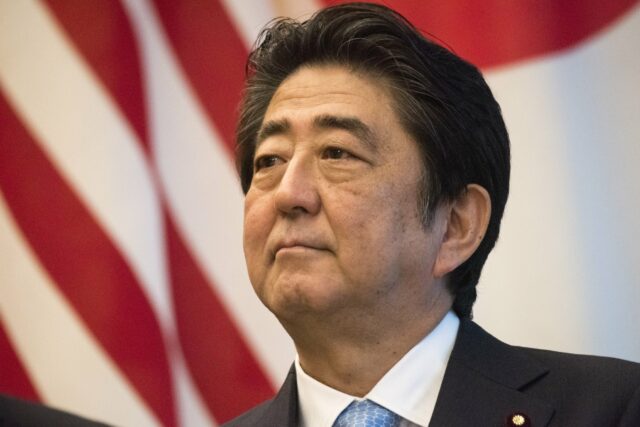
Former Prime Minister Shinzo Abe. Image via Chairman of the Joint Chiefs of Staff/Flickr/CC BY 2.0
Japan’s longest-serving prime minister, Shinzo Abe, was shot and killed on Friday. He was 67. — Image via Chairman of the Joint Chiefs of Staff/Flickr/CC BY 2.0

TOKYO — Shinzo Abe, Japan’s longest-serving prime minister, who sought to lift the economy out of chronic deflation with his bold “Abenomics” policies, beef up the military and counter China’s growing clout, has died at 67.

Abe, who left office in 2020, was shot and killed on Friday during an election campaign speech in an attack his protege and incumbent Prime Minister Fumio Kishida called “absolutely unforgivable.”

The lawmaker first became premier in 2006, lasting just a year before returning for a rare second stint in 2012 pledging to revive a stagnant economy, loosen the limits of a post-World War Two pacifist constitution and restore traditional values.

He was instrumental in winning the 2020 Olympics for Tokyo, cherishing a wish to preside over the Games and even appeared as Nintendo video game character Mario during the Olympic handover at Rio, the 2016 host.

Abe became Japan’s longest-serving premier in November 2019, but by summer 2020, support had been eroded by his handling of the coronavirus disease 2019 (COVID-19) outbreak as well as a series of scandals including the arrest of his former justice minister.

He resigned in September of that year without achieving his long-held goal of revising the constitution or presiding over the Games, which had been postponed to 2021 due to the pandemic.

But he remained a dominant presence over the ruling Liberal Democratic Party (LDP), controlling one of its major factions. He was campaigning for an Upper House election two days later when he was assassinated.

ABENOMICS

Abe first took office in 2006 as Japan’s youngest prime minister since World War Two. After a year plagued by political scandals, voter outrage at lost pension records, and an election drubbing for his ruling party, Abe quit citing ill health.

“What worries me most now is that because of my resigning, the conservative ideals that the Abe administration raised will fade,” Abe subsequently wrote in the magazine Bungei Shunju.

“From now on, I want to sacrifice myself as one lawmaker to make true conservatism take root in Japan.”

Five years after resigning, which he blamed on the intestinal ailment ulcerative colitis, Abe led his conservative LDP — ousted in 2009 — back to power.

He then launched a three-pronged “Abenomics” strategy to beat persistent deflation and revive economic growth with hyper-easy monetary policy and fiscal spending, along with structural reform to cope with a fast-aging, shrinking population.

Deflation proved stubborn, however, and his growth strategy suffered in 2019 from a sales tax hike and Sino-US trade war. The COVID-19 pandemic the following year triggered Japan’s deepest-ever economic slump.

At the pandemic’s onset, Abe took time to close Japan’s borders and implement a state of emergency urging people to stay home and shops to close. Critics initially branded the response clumsy and later faulted Abe for a lack of leadership.

When he resigned citing the same intestinal ailment, Japan’s COVID-19 death rate was far below that of many other developed nations.

DYNASTY

Abe hailed from a wealthy political family that included a foreign minister father and a great-uncle who served as premier. But when it came to many policies, his grandfather, the late Prime Minister Nobusuke Kishi, seems to have mattered most.

Kishi was a wartime cabinet minister imprisoned but never tried as a war criminal after World War Two. He served as prime minister from 1957 to 1960, resigning due to public furore over a renegotiated US-Japan security pact.

Five years old at the time, Abe famously heard the sound of clashes between police and leftist crowds protesting the pact outside parliament as he played on his grandfather’s lap.

Kishi tried unsuccessfully to revise Japan’s US-drafted 1947 constitution to become an equal security partner with the United States and adopt a more assertive diplomacy — issues central to Abe’s own agenda.

Abe boosted defense spending and reached out to other Asian nations to counter an increasingly assertive China. He pushed through laws to let Japan exercise the right of “collective self-defense”, or militarily aiding an ally under attack.

Revising the pacifist constitution remained a top priority for Abe, a contentious goal since many Japanese see the charter as responsible for the country’s post-war record of peace.

Abe’s underlying agenda was to escape what he called the post-war regime, a legacy of US occupation that conservatives argue deprived Japan of national pride. Reforming the education system to restore traditional mores was another of his goals.

He also adopted a less apologetic stance towards Japan’s World War Two actions, saying future generations should not have to keep apologizing for the mistakes of the past.

TOUGH STANCE

First elected to parliament in 1993 after his father’s death, Abe rose to national fame by adopting a tough stance toward unpredictable neighbor North Korea in a feud over Japanese citizens kidnapped by Pyongyang decades ago.

Though Abe also sought to improve ties with China and South Korea, where bitter wartime memories run deep, he riled both neighbors in 2013 by visiting Tokyo’s Yasukuni Shrine, seen by Beijing and Seoul as a symbol of Japan’s past militarism.

In later years, he refrained from visiting in person and instead sent ritual offerings.

Across the Pacific, Abe forged close ties with US President Donald Trump, playing golf and engaging in frequent phone calls and meetings.

He was re-elected as LDP president for a third consecutive three-year-term in 2018 after a party rule change and, until the COVID-19 pandemic struck, some in the LDP had considered another rule change to allow him a fourth term. — Reuters

Globe is PHL’s Most Reliable Mobile Network

Globe has earned the coveted recognition as the Philippines’ Most Reliable Mobile Network in the second quarter of 2022, topping other players in terms of consistency and availability, based on analysis by Ookla® of Speedtest Intelligence® data.

Globe achieved the highest Consistency Score™ of 79.44 and Most Available All Technology score at 93.11.

Only a few mobile operators in the world have managed to attain supremacy in both consistency and availability, making the reliability claim an elusive recognition in the industry.

Globe’s consistency score of 79.44 is a near two-point advantage over the next player, which got 77.69. The third placer, meanwhile, got 73.82.

In terms of availability, Globe received the highest score at 93.11, edging out competitors who got 91.91 and 91.41, respectively. The availability score identifies the network whose users spend the highest percent of their time on all technology.

“Being declared the Philippines’ Most Reliable Mobile Network is testament to the gains of our network buildup, which we have aggressively pursued over recent years. Ookla’s recognition is proof that wherever our customers are, Globe is there to provide reliable service in calls, SMS and data,” said Globe President and CEO Ernest Cu.

Darius Delgado, head of Globe’s Consumer Mobile Business, meanwhile, cited how reliability– as measured in terms of consistency and availability– matters to customers more than speed, especially when they are already being served by 4G/LTE and 5G networks.

“Ookla’s latest data show that Globe is indeed best-in-class in both consistency and availability– an acclaim that only a few mobile networks in the world have managed to attain. This affirms our efforts to achieve #1stWorldNetwork, and inspires us to march on with expansion plans so we can serve our customers better,” said Delgado.

As part of its commitment to innovation in line with the United Nations Sustainable Development Goals, Globe has been pursuing a relentless network expansion, with 234 new cell sites built in the first quarter of the year, 3,500 mobile sites upgraded, and 380 more 5G sites and 470,000 fiber-to-the-home lines installed.

In 2021, an unprecedented CAPEX of P92.8 billion led to the addition of 1,407 new towers, upgrade of over 22,300 mobile sites to 4G/LTE, and installation of 1.4 million fiber-to-the-home lines and 2,000 5G sites across the country.

Globe targets building a total of 1,700 new cell sites this year to reach even more customers. To date, Globe has a customer base of 92 million covering its mobile and broadband businesses.

To know more about Globe, visit www.globe.com.ph.                                                                        

Disclaimer:
Most Reliable Mobile Network in the Philippines:
Reliability based on analysis by Ookla® of Speedtest Intelligence® data for all technology Consistency and Availability data in the Philippines Q2 2022.
Ookla trademarks used under license and reprinted with permission.


Spotlight is BusinessWorld’s sponsored section that allows advertisers to amplify their brand and connect with BusinessWorld’s audience by enabling them to publish their stories directly on the BusinessWorld Web site. For more information, send an email to online@bworldonline.com.

Join us on Viber to get more updates from BusinessWorld: https://bit.ly/3hv6bLA.

Japan ex-PM Abe in grave condition after being shot during speech

Former Prime Minister Shinzo Abe. Image via Chairman of the Joint Chiefs of Staff/Flickr/CC BY 2.0

NARA, Japan — Former Prime Minister Shinzo Abe, Japan’s longest-serving leader, was in grave condition on Friday after being shot while campaigning for a parliamentary election, with media saying a man opened fire with an apparently homemade gun. 

Prime Minister Fumio Kishida condemned the shooting in the western city of Nara in the “strongest terms” while Japanese people and world leaders expressed shock at the assassination attempt in a country in which political violence is rare and guns are tightly controlled. 

Struggling to keep his emotions in check, Kishida said Abe, 67, was in grave condition. 

“Everything that can be done is being done to revive him. I’m praying from the depths of my heart that his life will be saved,” Kishida told reporters, adding he was not aware of any motive. 

“This attack is an act of brutality that happened during the elections — the very foundation of our democracy — and is absolutely unforgivable.” 

A fire department official said earlier that Abe appeared to be in a state of cardiac arrest when airlifted to hospital. 

Police said a 41-year-old man suspected of carrying out the shooting had been arrested. NHK quoted the suspect, identified as Tetsuya Yamagami, as telling police he was dissatisfied with Abe and wanted to kill him. 

Abe was making a campaign speech outside a train station when two shots rang out at about 11:30 a.m. (0230 GMT). Security officials were then seen tackling a man in a gray T-shirt and beige trousers. 

“There was a loud bang and then smoke,” businessman Makoto Ichikawa, who was at the scene, told Reuters, adding that the gun was the size of a television camera. 

“The first shot, no one knew what was going on, but after the second shot, what looked like special police tackled him.” 

TRANSFUSIONS 

Kyodo published a photograph of Abe lying face-up on the street by a guardrail, blood on his white shirt. People were crowded around him, one administering heart massage. 

Nara emergency services said he had been wounded on the right side of his neck and left clavicle. His brother, Defense Minister Nobuo Kishi, said Abe was getting blood transfusions. 

NHK showed live footage of Abe’s wife, Akie, on her way by train to the hospital where he is being treated. 

Airo Hino, political science professor at Waseda University, said such a shooting was unprecedented in Japan. “There has never been anything like this,” he said. 

Senior Japanese politicians are accompanied by armed security agents but often get close to the public, especially during political campaigns when they make roadside speeches and shake hands with passersby. 

In 2007, the mayor of Nagasaki was shot and killed by a yakuza gangster. The head of the Japan Socialist Party was assassinated during a speech in 1960 by a right-wing youth with a samurai short sword. A few other prominent postwar politicians were attacked but not injured. 

Police said the suspected shooter was a resident of Nara. Media said he had served in Japan’s military for three years until 2005. Defense Minister Kishi declined to comment on that. 

Abe served two terms as prime minister, stepping down in 2020 citing ill health. But he has remained a dominant presence over the ruling Liberal Democratic Party (LDP), controlling one of its major factions. 

Kishida, Abe’s protege, had been hoping to use the election to emerge from Abe’s shadow and define his premiership, analysts have said. Kishida suspended his election campaign after the shooting. All main political parties condemned the attack. 

‘VERY, VERY SAD’ 

US Secretary of State Antony Blinken expressed deep concern over Abe’s condition. 

“Our thoughts, our prayers are with him, with his family, with the people of Japan,” Blinken said on the sidelines of a G20 meeting on the Indonesian island of Bali. “This is a very, very sad moment. And we’re awaiting news from Japan.” 

The United States is Japan’s most important ally. 

The yen rose and Japan’s Nikkei index fell on news of the shooting, partially driven by a knee-jerk flight to safety. 

Abe is best known for his “Abenomics” policy of aggressive monetary easing and fiscal spending. 

He also bolstered defense spending after years of declines and expanded the military’s ability to project power abroad. 

In a historic shift in 2014, his government reinterpreted the postwar, pacifist constitution to allow troops to fight overseas for the first time since World War Two. 

The following year, legislation ended a ban on exercising the right of collective self-defense, or defending a friendly country under attack. 

Abe, however, did not achieve his goal of revising the US-drafted constitution by writing the Self-Defense Forces, as Japan’s military is known, into the pacifist Article 9. 

Abe first took office in 2006 as Japan’s youngest prime minister since World War Two. After a year plagued by political scandals, voter outrage at lost pension records, and an election drubbing for his ruling party, Abe quit citing ill health. 

He became prime minister again in 2012. 

Abe hails from a wealthy political family that included a foreign minister father and a grandfather who served as premier. — Satoshi Sugiyama and Chang-Ran Kim/Reuters