Home Blog Page 5619

Support for growers of feed corn seen having follow-on benefits for livestock

REUTERS

SUPPORT for growers of yellow corn, the variety used in animal feed, will be beneficial to downstream users of the grain like the livestock and poultry industries, industry officials said.

“The first thing that needs to be done is to help yellow corn farmers… When you support yellow corn farmers, you support the entire industry, from poultry farmers, livestock farmers — you help everyone, even fishermen and those in aquaculture,” United Broiler Raisers Association President Elias Jose M. Inciong said in an interview on One News.

“We need to help our farmers… President Ferdinand R. Marcos, Jr. must… bring back the confidence of our farmers. If our farmers have confidence, then we have the chance to win. These past years, our farmers have not had the chance to win. That is the sad reality of our situation,” he added.

Federation of Free Farmers Chairman Leonardo Q. Montemayor said economic managers should immerse themselves in agriculture to gain a grasp of the situation, which will guide policymaking.

“The problem is the mindset of some key economic managers and economists. They are too far away in the city. They are far away from the reality of what our everyday Filipinos go through, especially in rural areas. They do not feel the problems of the agriculture sector,” he said.

“This is why they are unable to give the proper attention to the sector. We lack the right policies and budgetary support. When they say that agriculture is useless, this is a result of wrong policymaking,” he added.

The administration should also focus on ramping up production through fertilizer subsidies, according to Mr. Montemayor.

“The priority now is production. For example, providing more fertilizer subsidies because many if not most farmers have really cut down on their fertilizer usage,” he said.

“It’s possible, for example, in the coming harvest period around October or November, (that) the harvest could drop by anywhere from 10% to 15%. That is a big drop. To arrest or minimize that, we need to ramp up the distribution of more subsidies,” he added.

Mr. Marcos has announced that he is considering government-to-government deals with Russia and China to ensure favorable fertilizer pricing.

“It will take a little time for negotiations to (conclude) and for the fertilizer to actually arrive and be available to farmers,” Mr. Montemayor said.

“In fact, we (must first) address the issue of the price of palay (unmilled rice). To me, that’s the most critical. The price and the market for palay should be attractive enough to cover the basic costs of farmers. Otherwise, they are just producing to make themselves lose money,” he added.

Samahang Industriya ng Agrikultura President Rosendo O. So said separately that the price of fertilizer was rising even before the Russia-Ukraine conflict.

“Before the war between Russia and Ukraine, the price of fertilizer (rose) because of demand from other countries. Since urea comes from the countries that produce oil, this is (effectively) a byproduct of oil,” he said on BusinessWorld Live.

“What we need now, immediately, is the fertilizer subsidy for the farmers. If we will not give subsidies, we will have high prices of palay… and the price of our rice will not go down,” he added. — Luisa Maria Jacinta C. Jocson


RCEF aid called inaccessible as bid to repeal rice law intensifies

PHILSTAR FILE PHOTO

THE industry modernization component of the Rice Tariffication Law, which is funded by tariffs on rice imports, has been inefficiently handled, with rice farmers unable to tap the program’s benefits, resulting in rice production remaining stagnant, a peasant organization said.

“The P10 billion (in annual funding) could not compensate for the losses of the rice industry. Not all rice farmers can access the (Rice Competitiveness Enhancement Fund). We have received complaints from farmers that they have not received or accessed RCEF, even though they are registered. In some areas, seed distribution is delayed,” Amihan National Federation of Peasant Women Secretary-General Cathy Estavillo said in an e-mail.

RCEF receives P10 billion from rice import tariffs a year for six years to drive farm mechanization, seed development, propagation and promotion, credit assistance, and extension services.

Ms. Estavillo called for the repeal of the Rice Tariffication Law because the liberalization of rice imports did not lower prices after the National Food Authority (NFA) was stripped of its function as the primary importer of the grain.

“The flood of rice imports as a result of the liberal import (policy) resulted in the drop in the farmgate prices of palay and losses in the first two years of its implementation…rice farmers were pushed deeper into poverty and bankruptcy due to the low prices of palay,” she said.

“It also limited the (ability) of the NFA to (put together a buffer stock); thus, it can no longer regulate the market price through subsidized (rice), which is no longer available in markets. The proponents of the law promised that retail prices of rice would fall to P25 per kilo, but our experience for the first three years of implementation proved otherwise,” she added.

Magsasaka at Siyentipiko para sa Pag-unlad ng Agrikultura Regional Coordinator Rowena A. Buena said that the law “virtually obliterated the rice market and buried rice farmers neck-deep in debt.”

“It basically intensified the food security problem both in the peasant and consumer sector… food security (has) always been problematic in the Philippines. On the production level, with chemical-based agriculture as the dominant production system, farmers are trapped in a cycle of expensive production costs and unpredictable yields,” she said in an e-mail.

“Paired with neoliberal policies such as the (Rice Tariffication Law) that allows the unregulated entry of foreign rice… farmers are once again burdened (by) unfair market prices. If not, farmers are totally removed from the market (losing the) chance to sell their milled rice at a price that would sustain them,” she added.

Ms. Buena said that conventional farmers and agricultural workers were also falling ill due to the continuous usage of glyphosate, a herbicide.

“It tells us that both the current agricultural production system and the neoliberal policies that govern it are not actually built to achieve food security. Ironically, it… serves only the profits of agri-transnational corporations (which) is the very reason we have food insecurity in the first place,” she said.

“Addressing food insecurity and malnutrition will start with shifting from chemical-based agriculture to sustainable organic agriculture that puts emphasis on a diversified and integrated farming system ultimately championing a diversified, accessible, and nutritious diet for the masses,” she added.

“The seeds distributed under RCEF are dependent on massive use of chemical farm inputs which [also] increases the cost of production, instead of promoting local and traditional varieties,” Ms. Estavillo added.

Ms. Estavillo recommended that the government provide a P15,000 production subsidy, build accessible post-harvest facilities, and improve irrigation services. — Luisa Maria Jacinta C. Jocson

Marcos needs to focus on job-generating production industries, think tank says

REUTERS

THE weak job market and the declining quality of jobs are the result of the government’s failure to develop industries involved in production, which President Ferdinand R. Marcos, Jr., should prioritize during his term, according to a think tank.

“The jobs crisis and inflation have worsened due to the lack of production sectors that can provide steady employment and incomes and deliver the requirements for national development,” Ibon Foundation said in a statement.

The agriculture and manufacturing industries have been stunted due to decisions taken to open up the economy to foreign investment and products, Ibon Executive Director Sonny Africa said.

He noted that the respective shares of agriculture and manufacturing in the 2021 economy of 9.6% and 19.2% are at multi-year lows — “in the case of manufacturing, in 70 years.”

Unemployment hit a three-month high in May, while job quality deteriorated despite increased economic activity, the Philippine Statistics Authority reported.

The 6% unemployment rate in May compares with the 5.7% posted in April. February saw the recent for the indicator at 6.4%.

Mr. Africa said the new government must address the country’s “weak” agriculture and “shallow” industry to make the Philippines resilient to economic shocks, including inflation.

Inflation has forced the government to temper its economic growth targets for this year. Economic managers are now aiming for gross domestic product growth of 6.5-7.5%, against the previous 7-8% target.

The “strategic measures” that Mr. Marcos should consider to develop agriculture and industry include the repeal of the Rice Tariffication Law, Mr. Africa said.

The President must also reconsider the push for expanded economic liberalization and trade deals that are not beneficial to the Philippines, he said.

Before the previous Senate adjourned, it failed to ratify the Regional Comprehensive Economic Partnership, a free trade agreement involving Australia, China, Japan, South Korea, New Zealand and ASEAN. Senators expressed concerns about lack of protections for agriculture and other industries.

Mr. Marcos, who heads the Agriculture department, will deliver his State of the Nation Address on July 25. Since his first day in office, the President has promised to boost domestic food production and limit imports where possible.

“The Philippines is the most food-insecure country in emerging Asia due to its reliance on imported food to feed its expanding population,” Trinh Nguyen, an economic research analyst, said in an article published by the Carnegie Endowment for International Peace.

The share of food bought by the Philippines from other countries stood at 13.18% in 2021, according to the World Bank. — Kyle Aristophere T. Atienza

PESO Act amendment seeks to add entrepreneurship assistance services

PHILSTAR

A SENATE BILL seeking to amend the PESO Act, which created a government office for job referrals, hopes to add facilitation services for aspiring entrepreneurs, with the creation of a cohort of self-employed workers intended to address high unemployment levels.

Senate Bill 7, refiled by Senator Lorna Regina B. Legarda, adds services for applicants seeking to start businesses. It proposes to amend Republic Act 8759 or the Public Employment Service Office (PESO) Act of 1999.

“Inarguably, entrepreneurs play a key role in creating job opportunities and consequently in stimulating the country’s economic growth,” she said in a statement on Wednesday.

The PESO Act created the Public Employment Service Office. If the amendment passes, this agency will be renamed the Public Employment and Entrepreneurship Service Office (PEESO), with Barangay Employment and Entrepreneurship Service Offices (BEESO) operating at the community level.

Unemployment hit a three-month high in May while job quality deteriorated despite increased economic activity, the Philippine Statistics Authority said.

Preliminary data from the statistics agency indicate that the jobless rate in May hit 6%, higher than the 5.7% posted in April but easing from the 7.7% rate in May last year.

Job quality deteriorated as the underemployment rate — the proportion of those already working but still looking for more work or longer working hours — rose to 14.5% in May from 14% in April. It was the highest underemployment rate since the 15.8% posted in March. — Alyssa Nicole O. Tan

Audit notice: No point in delaying the inevitable

I can only imagine the worry that taxpayers feel when they receive a Letter of Authority (LoA) from the Bureau of Internal Revenue (BIR). “Should we accept this?” “Is this valid?” “Does this mean we are not paying our taxes right?” These are just some of the usual questions we receive from taxpayers when a BIR revenue officer comes knocking on their door with an LoA.

An LoA represents the authority given to the named BIR revenue officers to perform assessment functions to ensure the collection of the correct amount of tax. It is a required document before any audit and assessment takes place.

Recently, the BIR issued Revenue Memorandum Circular (RMC) No. 82-2022, which removed the requirement for the BIR to serve the LoA to the taxpayer within 30 days from issuance.

In effect, a taxpayer can no longer refuse the service of an LoA or question its validity, in case the document is served beyond 30 days. However, the RMC also clarified that the deletion of the 30-day requirement from the BIR’s Updated Handbook on Audit Procedures and Techniques should not be an excuse for the concerned revenue officer to delay its service.

According to the circular, an LoA that remains unserved, or has been served beyond 30 days from the date of issuance, remains valid and enforceable, provided that the prescribed period to complete the audit process has not yet expired.

Previously, Revenue Audit Memorandum Order (RAMO) No. 1-2000 required that the LoA be served within 30 days; otherwise, it becomes null and void. Service or presentation may be performed via 1) personal service, 2) substituted service, or 3) service via mail.

An exception to the 30-day requirement is when the LoA has been revalidated by the BIR, which effectively extends the period within which the revenue officer must submit the report of investigation. In several cases, the Court of Tax Appeals has ruled in favor of taxpayers by declaring the assessments as invalid when the LoA was served beyond the 30-day period, since the revenue officers, in the first place, did not have the authority to conduct the tax audit. The principle is thus well-established that, in the absence of a valid LoA, the resulting assessment against the taxpayer is null and void.

Tax audits are heavily bound by a set of rules, with some cases ultimately decided one way or another by technicalities. What happens then, when the other party can set and change the regulations?

With the recent circular, the period for LoA service to the taxpayer appears to matter no longer. With the 30-day requirement provided in a previous RAMO by the BIR, the new rule (or lack thereof) seems anchored on RAMO No. 1-2020, except without the 30-day service period.

Generally, the entire audit process must be completed within 180 days from the issuance of the LoA for cases at Revenue District Offices or 240 days for those handled by the Large Taxpayer Service. This process covers the examination of the taxpayer’s books and records by the revenue officer until a report of investigation is submitted to the higher authorities to issue a deficiency tax assessment. Non-observance of the 180/240-day period by the revenue officers would constitute gross neglect of duty, subject to appropriate administrative sanctions.

One cannot help but question the purpose of the deletion of the 30-day requirement, even though the circular points out that the LoA’s immediate service is in the government’s best interest.

Perhaps the circular was issued by the BIR in light of the recent suspension of the service of any written orders to audit taxpayers as of May 30 until further notice, which may have resulted in LoAs not being served by revenue officers. Notably, RMC No. 82-2022 was dated June 28, a day before the lapse of the 30-day service period for LoAs issued on May 30.

However, the suspension of tax audits in May could soon be lifted with the BIR’s new leadership in place. Such policy shifts from the tax authorities are not unusual. Remember when the BIR relaxed its requirements for a valid waiver of the Statute of Limitations for issuing tax assessments, leaving the taxpayers little to no room to challenge the validity of waivers and resulting assessments?

Whatever may be the reason for the circular, it is clear that timelines are put in place to observe due process, which is a crucial factor in BIR tax audits. The Supreme Court has held that in exercising power to assess and collect taxes, the BIR has the commensurate duty to uphold a taxpayer’s fundamental right to due process. The BIR’s authority must be understood to take effect only after it issues and serves an LoA to the taxpayer.

Tax audits by the BIR are, as they say, inevitable. And like in most things, there is no point in delaying them.

If the revenue officer is given a strict timeframe to complete his audit, the taxpayer should be notified as soon as possible, through the service of the LoA. With or without the 30-day requirement, it is in the best interest of both the taxpayer and the BIR that the LoA is served immediately, in order to commence and complete the tax audit in a timely manner and avoid the additional stress of unnecessary rush during an investigation.

The views or opinions expressed in this article are solely those of the author and do not necessarily represent those of Isla Lipana & Co. The content is for general information purposes only, and should not be used as a substitute for specific advice.


Denned Miguel Pinza is a senior associate at the Tax Services Department of Isla Lipana & Co., the Philippine member firm of the PwC network.

+63 (2) 8845-2728

denned.miguel.v.pinza@pwc.com

910 more cases of Omicron subvariants detected

PHILIPPINE STAR/ MICHAEL VARCAS

THE PHILIPPINES has logged 910 more infections involving more contagious subvariants of the Omicron coronavirus, the Department of Health (DoH) said on Wednesday.

Of the total, 816 were BA.5, 42 were BA.4, and 52 were BA.2.12.1 cases, Health Officer-in-Charge and Undersecretary Maria Rosario S. Vergeire told a televised news briefing.

Majority of the patients have recovered, she said, adding that the Philippines remained at low risk from the virus despite rising infections.

Most COVID-19 admissions were asymptomatic and mild, she said. “The number of severe and critical admissions remains fewer than 1,000 at the national level.”

Ms. Vergeire said they would start a campaign on July 26 that would encourage more Filipinos to get booster shots against the coronavirus. Under the campaign, the government aims to fully vaccinate 90% of senior citizens and give booster shots to 50% of the target population in the first 100 days of President Ferdinand R. Marcos, Jr. in office, Ms. Vergeire said.

More than 71.4 million people had been fully vaccinated against the coronavirus as of July 19. More than 1.1 million people have received their second booster shot. 

Meanwhile, Mr. Marcos has ordered the Department of Education (DepEd) to allow blended learning in some areas if the country, rejecting the agency’s plan to mandate full face-to-face classes starting November.

“We continue with blended learning but in very specific places only,” he said during a Tuesday meeting with Vice President Sara Duterte-Carpio in mixed English and Filipino, according to a statement from the presidential palace. “As much as possible, it should be face-to-face.”

Mr. Marcos asked DepEd to prepare the learning devices and other supplies needed for blended learning. The President did not identify the areas covered by his order.

Ms. Carpio’s first order as Education chief mandates all public and private schools to implement five days of physical classes starting Nov. 2.

She earlier said classes would start on Aug. 22 amid a coronavirus pandemic, despite calls to move the new school year to September. 

The Teachers’ Dignity Coalition earlier asked DepEd to move the school year to mid-September or the first week of October to give teachers more time to rest and prepare, saying they had been working even during the break.

Under the order, all public and private schools must transition to five days of face-to-face classes.

“Starting Nov. 2, all public and private schools shall have transitioned to five days of in-person classes,” according to the order. Pure distance or blended learning except for schools that are implementing an alternative mode won’t be allowed.

DepEd said it would give schools “ample time to slowly transition” by implementing any of the following options: five days of face-to-face classes, blended learning, three days of in-person classes and two days of distance learning, four days of in-person classes and a day of distance learning or full distance learning. Schools may enforce these until Oct. 21. 

But Ms. Carpio said private schools that fail to start physical classes on Nov. 2 won’t be penalized. 

Some private schools have said they would not implement five days of in-person classes, citing their dialogues with parents.

In a statement, Ms. Duterte-Carpio said the president had agreed during the meeting that a plan for blended learning scheme “should be made with a caveat that face-to-face classes shall be the priority and blended modality shall be considered only in specific schools and areas with special circumstances.”

“DepEd will prepare a plan to be reviewed by the president,” Ms. Carpio said. “No details are forthcoming anytime soon.”

“The requirement of the five-day in-person classes by November 2, 2022 is still in effect,” she added. 

The Philippines was among the last countries to reopen schools physically after a global coronavirus pandemic was declared in 2020. 

A year of school closures cost about P10.8 trillion in productivity and wage losses over the next 40 years, according to the National Economic and Development Authority.

The President ordered DepEd and other agencies to address issues related to the reopening of physical classes, including internet connectivity, the palace said.

Mr. Marcos, 64, also expressed concerns about the increasing number of new coronavirus infections driven by highly contagious Omicron subvariants, it added.

“He was concerned that those issues might affect the implementation of in-person learning, but he was nevertheless determined to proceed with the plan.” — Kyle Aristophere T. Atienza

Watchdog rejects proposal to defer village elections

BW FILE PHOTO

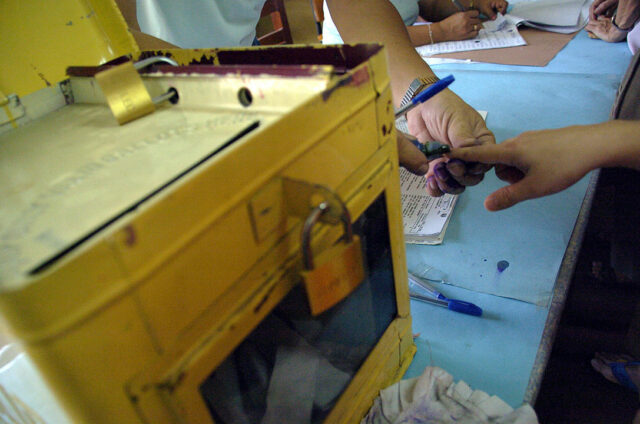
THE NATIONAL Citizen’s Movement for Free Elections (Namfrel) on Wednesday rejected a proposal to defer by a year village elections scheduled for December.

“The will of the people, as expressed through the ballot, is the very essence of democracy,” the watchdog said in a statement. “This should not be set aside again.”

Namfrel said voters should be allowed to choose their local leaders regularly and “without interruption.”

Senator Jose “Jinggoy” E. Estrada earlier filed a bill seeking to postpone village ang youth elections to December 2023, citing the coronavirus pandemic as a concern.

He said the budget for the elections could be used to fund other economic programs that would help industries recover from the pandemic.

Commission on Elections (Comelec) spokesman John Rex C. Laudiangco told reporters in a Viber message the budget for the December elections is P8.44 million.

Namfrel argued that local projects would be strengthened under new officials and lead to more pandemic response initiatives at the community level.

Barangays or villages are the smallest political unit in the Philippines and are the primary planning and implementing unit of the government in communities, the watchdog said.

More than 1.71 million Filipinos have registered for the elections. The registration started on July 4 and will run until July 23.

The Kabataan Party-list also opposed the postponement.

“Election postponement would actually hinder rather than help achieve efficient governance and services for pandemic recovery,” Party-list Rep. Raoul A. Manuel said in a statement. — John Victor D. Ordoñez

115 Filipinos in crisis-hit Sri Lanka want to come home

DEMONSTRATORS celebrate after entering the president’s house during a protest in Colombo, Sri Lanka, July 9. — REUTERS

AT LEAST 115 Filipinos in Sri Lanka, where the people are rioting amid a crippling political and economic crisis, are seeking to come home, the Department of Foreign Affairs (DFA) said on Wednesday.

There are about 700 Filipinos in the South Asian country that is home to more than 20 million people, DFA Undersecretary Eduardo De Vega told a televised news briefing.

Sri Lanka has been experiencing power blackouts, spiraling prices, fuel shortages and collapsing hard currency reserves in signs of how vulnerable its economy is.

The country is in talks with the International Monetary Fund (IMF) for a bailout, and has borrowed from India and other Asian nations to make ends meet this year.

Mr. De Vega said Manila has been struggling to arrange repatriation flights due to Sri Lanka’s administrative requirements, including landing rights approval.

“But there are commercial flights. That’s one way. We are thinking of funding plane tickets for those who want to go home,” he said. “The 100 Filipinos, hopefully within next week, the next two weeks, will already start to go home. That’s our goal.”

Mr. De Vega said returning Filipinos from Sri Lanka would get financial aid.

He said the government might also help the more than 500 Filipinos who want to stay in Sri Lanka. But bringing money to Sri Lanka could be a challenge due to regulations it has imposed to tame inflation.

Sri Lanka’s former leader Gotabaya Rajapaksa resigned last week after being under fire in recent months for mishandling the South Asian country’s economy, which is now unable to pay for imports of essential goods due to its ballooning external debt. — Norman P. Aquino and Kyle Aristophere T. Atienza

MIAA, CAAP heads named

PRESIDENT Ferdinand R. Marcos, Jr. has appointed Cesar Chiong as acting general manager of the Manila International Airport Authority, according to Malacañang

He also named Edgardo Diaz as deputy director-general for operations of the Civil Aviation Authority of the Philippines (CAAP) and Manuel Antonio Tamayo as deputy director-general for administration and finance, Press Secretary Trixie Cruz-Angeles said in a statement.

“The Civil Aeronautics Board (CAB) shall remain under the leadership of Executive Director Carmelo Arcilla,” she added.

Meanwhile, the Office for Transportation Security will be headed by Ma. O Ranada Aplasca.

Mr. Marcos also picked Hernani Nieves Fabia as administrator of the Maritime Industry Authority, she said. — Kyle Aristophere T. Atienza

Former labor usec to lead tech-voc agency; bowling icon Coo joins PSC 

PRESIDENT Ferdinand R. Marcos, Jr. has appointed Danilo P. Cruz as director of the Technical Education And Skills Development Authority (TESDA), according to the Presidential Palace.  

Mr. Marcos has also picked Olivia “Bong” Coo as commissioner of the Philippine Sports Commission (PSC), Press Secretary Trixie Cruz-Angeles said in a statement.   

Mr. Cruz served as Labor undersecretary under the administration of ex-President Gloria Macapagal-Arroyo.   

As head of TESDA, he will be in charge of steering the technical-vocational education sector towards improving the quality of training programs as well as the employment rate for graduates.  

The country needs to upgrade its technical and vocational education training (TVET) system to better adapt to industry developments after the economic impact of the coronavirus pandemic, according to an Asian Development Bank (ADB) report released in 2021.   

Skill mismatches limit TVET graduatesemployability and reflect an inability to keep the training curriculum, course offerings, and training equipment relevant for the job market,ADB said.  

Ms. Coo, meanwhile, previously headed the Philippine Bowling Federation. The bowling icon earned eight gold medals in the Southeast Asian Games. Kyle Aristophere T. Atienza 

More than 50% of target fund for typhoon Odette recovery still needed 

DAMAGED houses in the province of Dinagat Islands, where tropical cyclone Odette (international name: Rai) made its second landfall on Dec. 16, 2021. — DINAGAT ISLANDS PIO

MORE than 50% of the target fund for recovery programs in areas hit by typhoon Rai, locally known as Odette, in December is still needed, according to a United Nations official who is leading humanitarian assistance efforts.   

We were challenged, and the number one (reason is) the COVID-19 (coronavirus disease 2019),UN Resident Coordinator and Humanitarian Coordinator Gustavo Gonzalez said during Wednesday’s ribbon cutting ceremony for an exhibit on the Odette rehabilitation and resilience-building projects.  

He cited the need to follow various protocols and develop the concept of crises within a crisisto respond effectively to the situation.  

Typhoon Odette, the strongest tropical cyclone to hit the Philippines last year, swept through 11 of the countrys 17 regions, affecting close to 12 million people and leaving 2.4 million people in need of assistance.   

In February, the Humanitarian Country Team in the Philippines launched a revised Humanitarian Needs and Priorities (HNP) plan to coordinate the response.   

The HNP called for a budget of $169 million (about P9.5 billion), which is currently 46% funded, according to a release previously sent by the Spanish Embassy.  

Mr. Gonzalez said coordination was crucial in formulating a priority plan as various public and private agencies were involved in the immediate response and rehabilitation initiatives.   

He said a major lesson learned from Odette was that “the success of any humanitarian operation relies on readiness readiness for the nation, and I think that we are building a new model to coordinate amongst ourselves and with the government.”  

In a country like the Philippines, the humanitarian community needs to be very subtle and strategic,he added, noting that their role is to fill critical gaps. 

The Philippines, situated within the typhoon belt, is struck by an average of 20 typhoons per year.  

The country has a National Disaster Risk Reduction and Management Council that oversees local plans and teams set up at regional and local government levels.    

Mr. Gonzalez thanked the international community, the private sector and other resource persons for the massive response and their valuable contributions during Philippine disaster and resilience cooperation.  

I think I can properly say that there are not many humanitarian coordination efforts in the world as intense and effective as those developed in the Philippines,Ambassador of Spain to the Philippines Jorge Moragas Sanchez said during the event, citing the efficient leadership, willingness and commitment of all the national, international and national humanitarian institutions.   

The support of donors allowed the UN and over 200 humanitarian partners to address the urgent humanitarian needs of typhoon-stricken areas and assist them with early recovery programs through more than 14,600 multi-sectoral activities across 18 clusters.   

Funding is still needed specially to support mid- to long-term recovery activities,the Spanish Embassy said, noting that several humanitarian agencies are implementing projects which will carry on into the second half of the year.  

Although most of the displaced population have returned, development should be integrated into response and recovery efforts to provide sustainable and long-term solutions for affected communities, including education, economic, and livelihoods support,it said. 

Long-term and sustained recovery must consider measures to bolster preparedness and build resilience against future shocks,it added. Alyssa Nicole O. Tan 

Community bakeries urged to use coconut flour amid rising costs  

DTI.GOV.PH

A BAKING industry group called on community bakeries to use coconut flour in the production of the common Filipino bread roll pandesal to mitigate the high prices of raw materials.    

Lucito Chavez, Asosasyon ng Panaderong Pilipino president, said a major bread company has already adopted the use of the locally-made ingredient for making coco pandesal, and small neighborhood bakeshops should follow suit to keep their businesses afloat.   

One of the things we are pushing that big bakeries have already started is the use of coconut flour for coco pandesal,Mr. Chavez said in Filipino in a Teleradyo radio interview on Wednesday. 

And it has been successful so far. We hope that community bakeries will mix coconut flour. 10% of coconut flour for coco pandesal.”  

According to Mr. Chavez, consumers are slowly embracing the coco pandesal, which is priced at P23.50 for 10 pieces.     

The Department of Science and Technology, Department of Agriculture, Department of Trade and Industry, the Philippine Baking Industry Group, and the Virgin Coconut Organization of the Philippines launched the coco pandesal in June as an alternative amid the rising costs of flour and wheat.   

Coconut processors have been producing and exporting coconut flour, which is especially popular for those on a gluten-free diet.    

Previously, the Philippine Association of Flour Millers, Inc. said that flour prices are increasing, currently at over $500 per metric ton, due to the spike in   wheat cost caused by Russias invasion of Ukraine.   

The Agricultural Sector Alliance of the Philippines, Inc. also said recently that egg prices might reach P10 to P15 per piece due to high production costs.    

Meanwhile, Mr. Chavez said that pandesal prices could not be increased at this point as consumers already burdened by inflation may be discouraged. 

He said community bakeries have adjusted the size of pandesal instead to keep up with the high prices of inputs.   

The pandesal is already small. We cannot increase the prices because the community will not be able to handle it. The pandesal will not be bought. Most of the community bakeries made the pandesal smaller. The rates of the pandesal range from P2.50 to P4 in community bakeries,Mr. Chavez said. Revin Mikhael D. Ochave