Home Blog Page 5613

Attaining excellence

NGUYEN DANG HOANG NHU-UNSPLASH

The Spanish Jesuit Baltasar Gracian (1601-1658) wrote a book of stratagems for attaining excellence in a competitive world. A Pocket Mirror for Heroes reflects the individual as he really is and who he ought to be. It provides an image of ethical and moral perfection.

The 17th century hero, according to Gracian, was “the consummate person, ripe and perfect: accurate in judgment, mature in taste, attentive in listening, wise in sayings, shrewd in deeds, the center of all perfection.”

We live in a different world, a changing millennium. The modern hero must have those qualities, but he should contend with multiple, overwhelming situations. There are elements of deceit, danger and crises on many levels. To survive our daily challenges, one should proceed with caution; learn how to adapt to circumstances and take nothing for granted.

Life is very difficult, but one should not be paralyzed by fear and anxiety. Rather, one should move forward and “savor the seasons” and the perfection and beauty of the universe.

According to Gracian, extremes meet. The seed of wisdom is found in desengaño. One should show or conceal it depending on the situation. One should learn how to distinguish a quality from its shadow.

There is no equivalent to desengaño in English. It implies an awakening to truth, moral clear-sightedness that is tempered by skepticism.

It is not enough to be gifted or graceful. One must know how to manage that talent and adapt it to the age in which one lives.

People are both “what they are and what they seem.” There two kinds of reality — the inner and the outer qualities — wisdom, courage, wit — should be combined with quickness, elegance, variety, grace and a charming manner.

Among the hero’s stratagems for reaching distinction are the following:

1.) Conceal your intentions.

2.) Hide your depths.

3.) Understanding the origin of greatness.

4.) A sublime intellect breeds excellent taste.

5.) Being the best.

6.) Excellence from being first.

7.) A heroic occupation.

8.) Know your highest gift.

9.) Measure your luck.

10.) Know when to retire.

11.) Affectation is the dead weight of greatness.

12.) Win favors and goodwill.

13.) Grace enhances courage and prudence.

Wisdom is essential in our lives. We should measure life as though we had both a short and a long life to live.

“The age of maturity is destined to contemplation for the soul acquires strength as the body loses it, and the superior part of us grows stronger… In maturity, we can look back prudently and see fully what we merely glimpsed during our youth.

“Seeing makes us knowledgeable, but contemplation makes us wise.”

On another level, here are practical pointers for simplifying one’s lifestyle.

Oscar Wilde once wrote, “We live in an age that reads too much to be wise and thinks too much to be beautiful… We live in an age when unnecessary things are our only necessities.”

These perceptive lines from his novel, The Picture of Dorian Gray, were written many decades ago, yet they still apply to our modern life.

As one moves from childhood to adulthood and eventually the golden years, one collects an assortment of things — material possessions, emotional baggage, and friends. The accumulation continues until a saturation point.

It is easy to become dependent on the things one owns and feels helpless without them.

There is a big difference between needs and desires.

It is important to have discernment and restraint. To seek a level of balance, one needs objectivity and some detachment.

When one hoards things, there is clutter in physical, mental and emotional spaces.

Tied down by possessions, one cannot move and think freely. How can one savor new experiences and expand the perspective?

One gets caught in a time warp.

What are collectibles and non-collectibles?

Selected artworks, paintings, antiques, medals, achievement awards, rare books, vintage furniture and exquisite clothes, heirloom jewelry and costumes, delicate icons, crystals, commemorative stamps and coins, family photographs are worth keeping for posterity. If one has the space to keep them all. Storage is expensive.

However, travel souvenirs, old plaques and frames, obsolete electronic gadgets, appliances, rickety bicycles, old clothes and bags, and files should be discarded regularly.

There is a limited amount of quality and quantity in one’s life.

Moving office and house would be the best time to downsize and declutter. Space constraints forces one to be discriminating. Sort, sift, and select sparingly.

People derive pleasure from buying things. Retail therapy. The novelty wears off then one is stuck with clutter.

The process of selection is painstaking and painful. Sentimental things are hard to let go. “Frenemies,” the toxic crabs, should be released, too.

One must learn to release the past. Keep the memories fresh in the mind. But the confining barnacles stunt growth and movement. The unnecessary objects should be cut drastically.

It is a matter of will… and some tears.


Maria Victoria Rufino is an artist, writer and businesswoman. She is president and executive producer of Maverick Productions.

mavrufino@gmail.com

A nation of illegitimate children

RENE BERNAL-UNSPLASH

If ever there is a crisis the Philippines must urgently confront, utterly paramount is the deteriorating state of our families and children.

From the Philippine Statistics Authority (PSA) data, we see that in 2010, 765,074 illegitimate babies were born. One year later, in 2011 — practically the first full year of the Noynoy Aquino presidency — that number grew by 1.8%, making it nearly half of the babies born that year being illegitimate (44.6% or 778,680). By the end of Noynoy’s presidency, that number had risen to 49.2% or 851,088 babies born to unwed mothers.

Afterwards, the trend seemingly solidified: in 2018, more than half (54.3%) of Philippine births were to unwed mothers. By 2020, that rose to 57% or 870,820 illegitimate babies. Notably, indications are that more males are born illegitimate than females.

Put that within the context that teenage pregnancy in this country rose by 70% in the 10-year period between 1999 to 2009. The 2010 figures show there were 206,574 teen pregnancies, with more than half involving girls below 14 years of age. The 2013 data reveals that the Philippines had the third highest number of teen pregnancies in Southeast Asia, among the highest in the ASEAN region, and the only country where such numbers were increasing. Recent numbers aren’t that comforting: teenage pregnancies remain at a high: 62,510 in 2019 to 56,428 in 2020 (according to the PSA). Set within the Southeast Asian region, with a 2018 average adolescent birth rate of 37.2 for every 1,000 women aged between 15 and 19, the Philippines was at a high 57 (31 by 2020). And note that the Commission on Population and Development found that births by girls 14 years old and below increased by 7% in 2019 compared to the previous year, which also represents a nearly 300% rise from 2000.

Yet the state of marriages — and thus the condition of children within those marriages — is equally disturbing: 20% of marriages in the Philippines will be broken, with 82% of such broken marriages involving children. A World Health Organization study finds that there are 15 million solo parents in the Philippines, with 95% (or more than 14 million) of whom are women. Finally, with the steady decline in marriages in the country comes, ironically, a continual increase in the number of annulments. Incidentally, one study (citing data from the Solicitor General) showed that the majority of annulment cases “were filed by wives (61%), of whom 91% were 30 years old or younger.”

This is a devastating situation.

“We know the statistics — that children who grow up without a father are five times more likely to live in poverty and commit crime; nine times more likely to drop out of schools and 20 times more likely to end up in prison. They are more likely to have behavioral problems, or run away from home, or become teenage parents themselves. And the foundations of our community are weaker because of it,” said former US President Barack Obama, then a senator, of the state of Black children in a speech at the Apostolic Church of God in Chicago in June 2008 (https://politi.co/3TI8MS4).

And indeed: children deprived of married parents tend to perform worse in school, suffer more from depression, engage in more harmful activities, are more vulnerable to doing drugs or attempting suicide, engage in promiscuity leading to teenage pregnancy, and are less productive as adults. Even today’s lockdown data finds American children in stable families faring better psychologically and emotionally during the pandemic. (“Stable Families Are Helping Protect Kids From Lockdown-Induced Depression And Suicide,” Glenn Stanton, Feb. 18, 2021, https://bit.ly/StableFamilies).

In “Jobs, Expansion, and Development” (Paqueo, Orbeta, Lanzona, and Dulay, NEDA PIDS, 2013) found the “positive correlation of open unemployment with income and education.” More tellingly, they spoke of the fact that “income households headed by high school graduates is more than double that of households with only elementary education.” In short, “the rate of return to investment in education is relatively high.” The point is that the longer you stay in school, the higher your income and the greater the productivity, which then leads to overall national economic gain. But how can kids stay in school longer if they keep getting pregnant before they even graduate from college or reach marriageable age?

One unspoken impact of single mother homes: The US is notorious for school shootings. But what mainstream media (mostly liberal) refuse to report is that most, if not all of the shooters were bereft of fathers, “whether due to divorce, death, or imprisonment” as Susan Goldberg points out (“When Will We Have the Guts to Link Fatherlessness to School Shootings?,” February 2018, https://bit.ly/Fatherlessness_Shooting).

Then there’s this: “72% of adolescent murderers grew up without fathers; the same for 60% of all rapists. Seventy percent of juveniles in state institutions grew up in single- or no-parent situations. The number of single-parent households is a good predictor of violent crime in a community, while poverty rate is not.” (Terry Brennan, Co-Founder, Leading Women for Shared Parenting, https://bit.ly/Fatherlessness_Republicans).

Gen Z, more than any other generation, are raised in single mother homes (see Pew study). So should we be surprised that they are the most messed up as well?:

“Forty-two percent of [adult Gen Zs report] that they have been diagnosed with a mental health condition.” Of that, “57% of Gen Z adults struggling with their mental health reported taking medication to alleviate their condition and paying an average of $44 monthly. The most frequently cited conditions were anxiety and depression which were reported by 90% and 78% of respondents, respectively. Other conditions reported include: ADHD, 27%, PTSD, 20%, OCD, 17%, eating disorder 14%, and insomnia 12%. Less than 10% reported more diagnoses of bipolar disorder, addiction and substance abuse, and borderline personality disorder.” (“42% of Gen Z have diagnosed mental health condition, majority worried about future: study,” Leonardo Blair, Christian Post, November 2022, https://bit.ly/GenZ_MentalHealth; citing “State of Gen Z Mental Health 2022,” https://bit.ly/GenZ_MentalHealthState).

And yet, despite all the obvious and observable negative consequences of the foregoing — increasing broken families, more dysfunctional relationships, more depressed and mentally unhealthy people, lesser productivity, less social stability — our bizarre response is to encourage single parenthood and the break-up of married couples with children. Hence, a “Family” Code that removed distinctions between legitimate and illegitimate children, and gave State recognition and protection to cohabiting unmarried couples, a tax system that removed specific benefits for families with dependents, laws that provide single mothers privileges (some not available to married mothers), including leaves and taxpayer funded housing, education, and health benefits. Add a law that allots tax money for the purpose of giving out free contraceptives, plus political or legislative initiatives to decriminalize abortion, recognize same sex marriage and divorce, plus pro-homosexuality legislation such as the SOGI bills.

All sheer insanity.

The road to hell is paved with good intentions. In this case, it is paved, lightened, painted, and furnished with it.

What we should be doing is putting our energies into prioritizing character development in schools, encourage churches and civic organizations regarding youth development, mandate ROTC and compulsory military service, emphasize team sports (especially for the boys), cultivate a culture of courtship and proper understanding of sexuality, privileges for married couples and stable families, benefits to working married mothers.

Actually, anything that supports the traditional marriage and family is far better than the rut we’re determined to slouch towards to.


Jemy Gatdula is a senior fellow of the Philippine Council for Foreign Relations and a Philippine Judicial Academy law lecturer for constitutional philosophy and jurisprudence

www.facebook.com/jigatdula/

Twitter @jemygatdula

China’s Xi confronts Canada’s Trudeau at G20 over media leaks

REUTERS

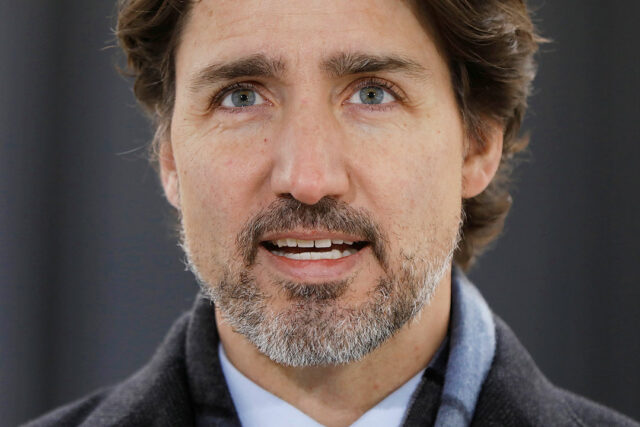
BEIJING — Chinese President Xi Jinping on Wednesday criticized Canadian Prime Minister Justin Trudeau in person over alleged leaks of their closed-door meeting at the Group of 20 (G20) summit, a rare public display of annoyance by the Chinese leader.

In video footage published by Canadian broadcasters, Mr. Xi and Mr. Trudeau can be seen standing close to each other and conversing via a translator at the summit on the Indonesian island of Bali.

“That is not appropriate, and we didn’t do it that way,” Mr. Xi said in Mandarin, smiling. “If there is sincerity, we can communicate well with mutual respect, otherwise the outcome will not be easy to tell”.

His displeasure was likely a reference to media reports that Mr. Trudeau brought up “serious concerns” about alleged espionage and Chinese “interference” in Canadian elections when meeting with Mr. Xi on Tuesday, his first talks with the Chinese leader in more than three years.

A translator for Mr. Xi can be heard in the video telling Mr. Trudeau that “everything we discussed was leaked to the paper(s), that’s not appropriate.”

The video captured a rare candid moment for Mr. Xi, whose image is carefully curated by Chinese state media.

Mr. Trudeau responds to Mr. Xi’s initial criticism by saying, “In Canada we believe in free and open and frank dialogue and that is what we will continue to have, we will continue to look to work constructively together but there will be things we disagree on.”

Before he finished speaking, however, Mr. Xi, looking slightly exasperated, cuts him off and says, “create the conditions, create the conditions, OK?” before smiling, shaking Mr. Trudeau’s hand and walking off.

Neither the Chinese foreign ministry nor state media have published anything on talks between Mr. Xi and Mr. Trudeau. The two held a 10-minute informal meeting on the sidelines of the G20 summit on Tuesday, according to a government source. Mr. Xi has held nine formal bilateral meetings with other heads of state while at the summit, according to the Chinese foreign ministry website.

Canada never released an official readout from the meeting, but Mr. Trudeau did confirm the conversation and the points that he made to Mr. Xi at a news conference at the end of the G20.

“Canada trusts its citizens with information about the conversations that we have in their name as a government,” Mr. Trudeau said according to a transcript of the news conference.

Mr. Trudeau added not all conversations with leaders were going to be easy, but pointed out that “systems” in the two countries are different and in China “there is not always the same openness that a democratic leader can and must have with his citizens.”

The short but revealing Xi-Trudeau exchange highlighted tensions between China and Canada, running high since the detention of China’s Huawei Technologies executive Meng Wanzhou in 2018 and Beijing’s subsequent arrest of two Canadians on spying charges. All three were later released.

Despite the release, tensions have recently resurged.

An employee at Canada’s largest electricity producer Hydro-Quebec who was involved in researching battery materials has been charged with espionage for allegedly trying to steal trade secrets to benefit China, Canadian police said on Monday.

News of the arrest came as Mr. Trudeau and Mr. Xi were attending the G20 summit.

This month, Canada ordered three Chinese companies to divest their investments in Canadian critical minerals, citing national security. — Reuters

France, Spain pledge to halt gas-driven vehicle sales

REUTERS

SHARM EL-SHEIKH, Egypt — France and Spain on Thursday joined a pledge to stop sales of gasoline-driven vehicles by 2035, five years earlier than previously planned, part of efforts to accelerate the transition to a low-carbon economy.

The countries made their pledges at the COP27 climate talks in Egypt’s Sharm el-Sheikh, among a group of new signatories to the Zero Emission Vehicles Declaration (ZEVD), launched at last year’s conference in Glasgow.

Signatories, including countries, municipalities and companies, pledged to shift to 100% sales of zero-emission vehicles by 2035 in leading markets and by 2040 across the globe.

Among a number of new corporate signatories were fleet owners Delta Electronic, Coca-Cola EUROPACIFC Partners and parts maker Valeo, the British government said in a statement.

The total number of signatories to the pledge now stands at 214, from 130 a year earlier. Going forward, the ZEVD would be overseen by a new group, the Accelerating to Zero Coalition, that aims to help signatories implement their commitment.

Policymakers are keen to slash or eliminate greenhouse gas emissions from cars, trucks and other forms of transport such as planes, a leading contributor to global warming. Aviation and shipping are harder to decarbonize, but low-emissions technology for smaller vehicles is well established and scaling fast.

Data released by BloombergNEF showed 2022 would be a record year for sales of zero-emission vehicles with electric vehicles comprising 13.2% of all sales in the first half of the year.

Alok Sharma, who was the president at COP26, said the zero-emissions vehicles pledge “was a major milestone bringing together leading actors to accelerate the transition to 100 percent new car sales being zero emission by 2040, and 2035 in leading markets”.

He added: “There are still huge opportunities in emerging markets and developing economies which is why I’m pleased to formally launch the Accelerating To Zero Coalition today. This coalition provides the platform for countries to go further and faster and to ensure that no country is left behind”.

To help developing countries make the shift to electric vehicles, Britain’s climate minister Graham Stuart said his country was partnering with others to launch a support plan. It includes creation of a zero-emissions vehicle rapid response facility to provide technical assistance to countries and help connect governments and companies to scale up investment. — Reuters

Geopolitics to stay in focus at APEC summit in Thailand

BANGKOK — World leaders arrived in Thailand on Thursday ahead of the Asia-Pacific Economic Cooperation (APEC) forum, the last of several of summits in the region that have been dominated by geopolitical tensions over the war in Ukraine.

Thai Prime Minister Prayuth Chan-ocha, who is hosting the 21-member bloc starting Friday, said at a pre-summit business event the agenda was to focus on “new trade and investment narratives…the need to reconnect supply chains and travel, and the global sustainability agenda”.

Foreign ministers of the group are set to meet on Thursday.

On the sidelines, Chinese President Xi Jinping is expected to have bilateral talks with Japanese Prime Minister Fumio Kishida later in the day. US Vice President Kamala Harris and Australian Prime Minister Anthony Albanese are among those also attending the main meeting.

French President Emmanuel Macron is a special invitee.

The APEC meeting comes on the heels of the Group of 20 (G20) summit in Bali where countries unanimously adopted a declaration saying most members condemned the war in Ukraine, but that also acknowledged some countries saw the conflict differently.

Host Indonesia said the Ukraine war had been the most contentious issue at the summit in Bali.

The leaders of the world’s biggest economies also agreed to pace interest rate rises carefully to avoid spillovers and warned of “increased volatility” in currency moves. — Reuters

Game On! SM Christmas Village is back—and it’s bigger than ever

Hop into our mall-tiverse and score 3M worth of vouchers and prizes!

We’re calling it: Christmas 2022 is going to be one for the books. 

The past two years saw Filipinos dialing down on the holiday celebrations as we exercised caution against the spread of the COVID-19 virus. It’s no easy feat, too, given that our Pasko is easily the biggest event of the year. The good—no, aweSM—news? This 2022, SM is set to give you a Christmas comeback like no other with the return of the SM Christmas Village, now on its second year!

In case you didn’t know: SM Supermalls is the very first mall in the Philippines to venture into the metaverse, giving you the first mobile brand rewards app that provides customers with fun and exciting ways to score amazing deals, earn free shopping money, and win wow-worthy prizes—anytime, anywhere!

And here’s proof of just how amazing it is: The pilot run of the ChristmaSaya Village in 2021 recently won four accolades at this year’s Vega Awards, earning nods for outstanding innovation in the digital and virtual realm. Wowza!

Enter the Mall-tiverse

Here’s how it works: To join, a user simply has to register for an account online via smmetaverse.world. Once registered, you gain access to the virtual SM Christmas Village, where you can explore different zones, interact with other players, and collect virtual coins to unlock exclusive shopping vouchers and earn raffle entries. And just like at SM Supermalls nationwide, #YoureAlwaysWelcomeHere.

Excited for supercharged virtual fun? Here’s a quick look at what’s in store for you this year:

  • Bigger rewards, bigger prizes 

If you loved last year’s vouchers, you’re in for even better rewards this time. SM has partnered with more of your favorite brands to give you exclusive shopping discounts and deals (a total of ₱2M worth of vouchers are up for grabs!) and is set to give away a whopping ₱1M worth of raffle prizes. Plus, one lucky winner will drive home the ultimate Christmas gift: a brand new Suzuki S-Presso!

  • An expansive game world awaits
    Your gaming experience gets a level up with improved game designs and an exciting game world featuring new areas to explore—from shopping and dining zones to entertainment zones—like you’re really at an SM Supermall! Experience augmented reality malling, e-meet friends, and play fun games to earn virtual coins. Before that, have fun customizing your own avatar down to the hair, outfit, and accessories (shopping bag, included), so you can create a character that’s uniquely you.

  • Enjoy fresh in-game features
    Get your family members in on the Christmas fever with the multiplayer option and stay connected while you play with the new chat and video-calling features. (Looking at you, social butterflies!) Be on the lookout for pop-ups, too, featuring special brand deets and surprise deals with every visit.
  • Earn shopping money every day

The more virtual coins you collect in-app, the more “shopping money” you get, which you can use to redeem vouchers from your favorite brands. Once you’ve claimed your vouchers virtually, you can use them at participating SM Mall branches nationwide—to pay for your Christmas shopping, dining, and more! You can also use your coins to unlock raffle entries and win one of the 20 major prizes at the end of the year. 

Some tips! 

  • Visit the village every day to earn more coins faster.
  • Excited to shop? You can spend your coins as soon as you earn them, but it pays to be patient, too. By accumulating your coins first, you’ll be able to redeem bigger rewards later on!
  • Make sure to explore all the zones and keep an eye out for hidden treasures and bonuses. 

A Christmas to remember

With restrictions easing up and COVID-19 vaccination rates at an encouraging high, this year’s holiday season surely is shaping up to be one to look forward to. If you’re jonesing for some real-life Christmas fun, though, you won’t be disappointed when you take a break from the metaverse and make your way to your favorite SM Supermalls instead! From the light shows and holiday centerpieces to all sorts of Christmas attractions, all things merry and bright await you and the whole family—and it all starts now! Check out all the holiday happenings here and have a #HappyChristmasAtSM!

The #SMChristmasVillage2022 will run from October 28, 2022 to January 5, 2023. Voucher redemption will be until January 31, 2023.

To stay updated on all things SM, follow SM Supermalls on Facebook, Instagram, and Twitter. SM implements strict #SafeMallingAtSM protocols nationwide and offers convenient shopping options via the SM Malls Online app, The SM Store, and ShopSM. (You can read more here.) For updates on mall hours and entry guidelines, click here


Spotlight is BusinessWorld’s sponsored section that allows advertisers to amplify their brand and connect with BusinessWorld’s audience by enabling them to publish their stories directly on the BusinessWorld Web site. For more information, send an email to online@bworldonline.com.

Join us on Viber to get more updates from BusinessWorld: https://bit.ly/3hv6bLA.

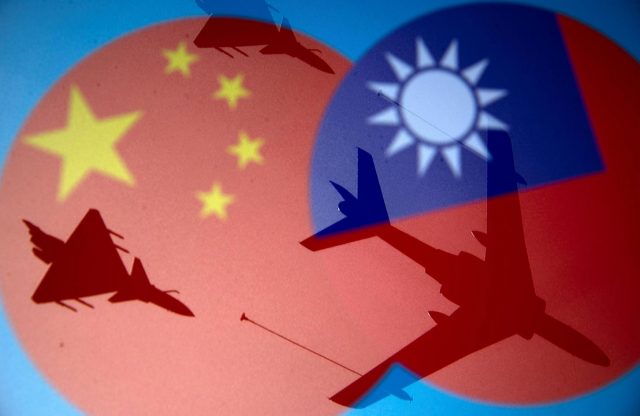
China’s freeze on Taiwan contact fuels worry as tensions build

REUTERS

TAIPEI – When Chinese authorities detained a Taiwanese citizen in China in August for an alleged violation of security laws, officials in Taipei sent messages of concern to Beijing seeking details.

The missives went unanswered, like many of the texts and faxes Taiwan’s Mainland Affairs Council has sent to Beijing’s Taiwan Affairs Office over the past six years, according to a Taipei-based person familiar with the Taiwanese government’s China policy. “They ignored us,” the person said.

China ended formal high-level communication with Taiwan’s government in 2016 after the island’s voters elected Tsai Ing-wen, whom Beijing considers a separatist, as president. But with Chinese jet fighters mounting almost daily manuevers around Taiwan since U.S. House Speaker Nancy Pelosi visited the island in August, concern is growing among some security experts that the official silence poses risks when the two militaries make frequent, close-in contact.

“The absence of communications aimed at managing the relationship is worrisome,” said Bonnie Glaser, a Washington-based security analyst with the German Marshall Fund of the United States. “There is a risk of misreading each others’ intentions and attendant miscalculation.”

A communications channel exists — a remnant of a more-cordial era in cross-strait relations under former Taiwanese leader Ma Ying-jeou, who met with Chinese President Xi Jinping in 2015 and signed economic and trade deals.

But the minister-level hotline has sat frozen in recent years while Beijing has grown its military capability and ramped up threats to bring Taiwan under its control, by force if necessary. To this day, the channel remains a neglected conduit through which officials could ease tensions in emergencies or arrange discussions between the Chinese Communist Party and the Tsai administration.

“Since she assumed office, it never rang,” said Alexander Huang, who was deputy minister of Taiwan’s Mainland Affairs Council in 2003-4 and still serves on its advisory board.

“The communication line is of utmost importance when the tensions are building up,” added Huang, who is the top representative in the United States for the Kuomintang, Taiwan’s main opposition party.

Tsai, elected on a platform of defending Taiwan’s sovereignty, has offered talks with Beijing on the basis of equality with mutual respect. China has rebuffed her because Tsai refuses to recognize the “1992 consensus,” which deems Taiwan and China part of one China but allows each side to interpret what that means.

The lack of dialogue has become more concerning as cross-strait tensions have intensified, said Jacob Stokes, a senior fellow at the Center for a New American Security.

“We need to prepare the offramps ahead of time, because if we get into a crisis and there are no offramps, then that’s where a very dangerous situation — a situation that’s even more dangerous than it is now — could occur,” said Stokes, citing collisions and the takedown of a plane as potential flashpoints.

Taiwan and China have no embassies in each other’s capitals. Neither recognizes the other’s government, a legacy of when officials from the defeated Republic of China fled to the island after Mao Zedong’s communists won the Chinese civil war and proclaimed the People’s Republic of China in 1949. Taiwan rejects China’s sovereignty claims and vows to defend its freedom and democracy.

After Tsai took office, Beijing “set up political preconditions that hinder official engagements,” but Taiwan has continued to send messages through existing channels, Taiwan’s Mainland Affairs Council said in a statement to Reuters.

China’s Taiwan Affairs Office did not respond to a request for comment.

‘PRETENDING TO BE SLEEPING’
Mutual mistrust extends lower down the chain. While some Taiwan officials who work on China policy have cellphone numbers for their Chinese counterparts, they have stopped making calls since 2016, according to the person familiar with Taiwan’s China policy, who described the numbers as “cold hotlines.”

“They won’t answer anyway. What’s the point?” the person said, adding that the calls would connect but Chinese officials wouldn’t pick up. “You can’t wake up someone who’s pretending to be sleeping.”

Still, at an operational level, the two sides maintain contact on routine matters such as transport, customs and personal assistance requests. Based on a long-standing practice, faxes continue to be exchanged between two semi-official organizations that handle routine affairs: Taiwan’s Straits Exchange Foundation and China’s Association for Relations Across the Taiwan Straits.

The council told Reuters that while Chinese officials do not reply directly, they have handled Taiwanese requests when needed or responded through public statements.

Third-party channels also exist involving business people, academics and journalists. One chat group on Chinese app WeChat contains more than 100 scholars — one-third Taiwanese and two-thirds Chinese. While their interaction continued through the Pelosi tensions, “it doesn’t carry weight” and no one is authorised to speak officially, said a person familiar with the group.

China is Taiwan’s top trading partner, and hundreds of thousands of Taiwanese work in China. Some entrepreneurs are regularly in touch with officials on both sides, reflecting the close cross-strait business links.

But at higher levels, both sides are reduced to communicating via news conferences that can descend into trading barbs. China this year labeled Tsai’s administration “evil” while Taiwan called China “incredibly absurd”.

The last publicly known face-to-face communication between senior figures from both sides occurred in August when Andrew Hsia, the deputy chairman of the Kuomintang, went to China and met a vice head of its Taiwan Affairs Office.

Taiwan’s government denounced the trip, but the Kuomintang says such outreach is needed now more than ever.

“Sometimes, it’s an inconvenient necessity,” said Huang, adding that opening communication channels between Taipei and Beijing could improve understanding of each other’s intentions and help to manage and defuse potential crises.

Some security analysts caution that communication has its limits.

“The bottom line is: If China wants to fight a war, it escalates. If China doesn’t want to fight a war, it doesn’t escalate,” said Oriana Skylar Mastro, a fellow at Stanford University’s Freeman Spogli Institute for International Studies. “You’re not going to get a war on accident.”

Even if the two sides did talk, “Chinese diplomatic channels are not being used to negotiate compromises,” said Drew Thompson, a former U.S. defense official now at the Lee Kuan Yew School of Public Policy in Singapore.

“Under Xi Jinping, they’re being used to issue directives and tell other countries what they need to do if they want to maintain good relations with China. It’s Xi’s way or the highway.” — Reuters

Despite controversy, Web3 advocates push for tokenization

UNSPLASH

The appeal of the decentralized version of the Internet is that it gives users ownership for the content they create instead of monetizing user data as Facebook does, Web3 advocates said.  

Before it was hit by controversy surrounding its unsustainable economic structure, the Web3 game Axie Infinity enjoyed a peak of about 2.78 million active players in January.

“The paradigm that made Axie powerful wasn’t play-to-earn,” said Yat Siu, group executive chairman and managing director of Hong Kong-based Web3 conglomerate and investment firm Animoca Brands, at the Philippine Web3 Festival on Nov. 15. “It was the ownership of the Axies that allowed someone like YGG [Yield Guild Games, a play-to-earn gaming guild] to come create a business on top of that ownership.”  

As of writing, Axie’s average active player count has dropped to under a million. 

Everything in the digital world is “already financified; we just don’t see it,” Mr. Siu said. “All of you here are building new economies, mini-nations in effect.” 

According to Malik Khan Kotadia, co-founder and global board chairman of the Global Impact FinTech (GIFT) Forum, a non-profit think tank in the fintech sector, “Web 3.0 is supposed to be a harbinger of the ownership economy.”  

The current version of the Internet, in contrast, is characterized by Web 2.0’s platform economy, composed of user-generated content and social media giants.  

“The problem with the platform economies is that we saw the rise of monopolies,” Mr. Kotadia said, noting the billion-dollar valuation of Meta Platforms, Inc., the parent company of Facebook and Instagram.  

“Your data has power, and not just power … but clear market value in the trillions,” he added. 

According to Mr. Siu, if the platform economy persists, it is these same companies that will benefit from the growth of immersive gaming, which is expected to surpass $2.4 billion in global revenue by 2024, according to marketing data company Statista.  

“The gamer doesn’t understand that he’s already heavily financified — that actually 80, 70% of his value translates to platforms that own his rights,” Mr. Siu said. 

A proponent of tokenization, Mr. Siu said that non-fungible tokens (NFTs, or digital representation of real-life objects like art or music) is an alternative to the platform economy as it democratizes ownership and is a means of judging value. 

“You’re really rewarding the players as opposed to giving all the value to the platform,” he said. — Patricia B. Mirasol

Young Malaysians urged to ‘get mad’ and vote to end political merry-go-round

STOCK PHOTO | Image by Wokandapix from Pixabay

KUALA LUMPUR — In a dining hall at Malaysia’s International Islamic University, 22-year-old undergraduate Hajar Wahab stood next to a makeshift polling booth, as she showed a fellow student how to mark and cast an election ballot.

Hajar is part of an army of student leaders across Malaysia aiming to battle political apathy and educate first-time voters on the voting process ahead of a tight election race on Nov. 19.

At stake is government stability: since the previous election in 2018, Malaysia has had three prime ministers and seen the collapse of two administrations, while two major opposing coalitions have splintered.

The infighting has exhausted voters, with two local elections held in the past year seeing lower than average turnout. Both state polls saw decisive wins for Prime Minister Ismail Sabri Yaakob’s ruling coalition, as disillusioned voters stayed away from the ballot box.

Student leader Hajar said while the fatigue was understandable, it was important for young people to voice their frustrations in the national arena.

“It should further drive you to vote,” she told Reuters. “Get mad!”

Young voters form a sizeable portion of the six million people newly eligible to cast a ballot, following reforms that lowered the voting age from 21 to 18 and allowed automatic registration. Voters under 40 now make up about half of the 21 million electorate.

The students’ efforts appear to be bearing out, with more recent polling data indicating turnout will improve amid the influx of new voters and as campaigning ramps up towards election day.

“Young voters feel that it’s an important election that they should not miss, particularly young people who are voting for the first time,” said Ibrahim Suffian, the director of independent pollster Merdeka Centre.

“They do want to go out and make their mark.”

‘GOVERNANCE CONCERNS’
The concerns over government stability and leadership come at a time of rising inflation and a cloudy economic outlook, which will also drive turnout, Ibrahim said.

Incumbent premier Ismail Sabri’s alliance Barisan Nasional is seeking a stronger mandate, and distance itself from the multibillion-dollar 1MDB corruption scandal that erupted when Najib Razak, the now jailed former leader of Barisan, held office.

Barisan faces two major coalitions in the election – one led by the anti-establishment opposition leader Anwar Ibrahim, and another by former prime minister Muhyiddin Yassin, who was forced out of Barisan after confronting Najib over 1MDB.

Several other smaller parties are also contesting in an election that will see a record 945 candidates vying for 222 parliamentary seats, a factor that could split the vote several ways.

Rival blocs will likely need to form alliances, as no single party or coalition will be able to win enough seats to form a government on their own, polling data has shown.

Digital marketer and first-time voter Muhammad Imran Hazem Ashari, 22, said he would “vote for any party that could give us stability.”

Some voters, however, remain turned off by the constant political wrangling, believing that their choices will have little impact.

Eddie Putera Noordin, a 55-year-old artist, said he felt it was “a crime to vote”, as he had no confidence in any of the candidates or parties contesting.

“I’m scared to vote because whoever you choose will be part of a weak coalition,” Eddie said.

“They have to form alliances with parties who were rejected in the elections, and will end up forming the same type of government.” — Reuters

Republicans win US House majority, setting stage for divided government

STOCK PHOTO | Image from Pixabay

WASHINGTON — Republicans were projected to win a majority in the US House of Representatives on Wednesday, setting the stage for two years of divided government as President Joe Biden’s Democratic Party held control of the Senate.

The victory gives Republicans the power to rein in Mr. Biden’s agenda, as well as to launch potentially politically damaging probes of his administration and family, though it falls far short of the “red wave” the party had hoped for.

The final call came after more than a week of ballot counting, when Edison Research projected Republicans had won the 218 seats they needed to control the House. Republican victory in California’s 27th Congressional district took the party over the line.

The party’s current House leader, Kevin McCarthy, may have a challenging road ahead as he will need his restive caucus to hold together on critical votes, including funding the government and military at a time when former President Donald Trump has launched another run for the White House.

“Americans are ready for a new direction, and House Republicans are ready to deliver,” Mr. McCarthy said on Twitter.

The loss takes away some of Mr. Biden’s power in Washington but on Wednesday he congratulated McCarthy and said he would work across the aisle to deliver results.

“The American people want us to get things done for them,” Mr. Biden said in a statement.

House Speaker Nancy Pelosi said in a statement House Democrats “will continue to play a leading role in supporting President Biden’s agenda – with strong leverage over a scant Republican majority.”

Democrats have been buoyed by voters’ repudiation of a string of far-right Republican candidates, most of them allies of Trump, including Mehmet Oz and Doug Mastriano in Pennsylvania’s Senate and governor’s races respectively, and Blake Masters in Arizona’s Senate contest.

Even though the expected “red wave” of House Republicans never reached shore, conservatives are sticking to their agenda.

In retaliation for two impeachment efforts by Democrats against Mr. Trump, they are gearing up to investigate Biden administration officials and the president’s son Hunter’s past business dealings with China and other countries – and even Biden himself.

On the international front, Republicans could seek to tamp down US military and economic aid to Ukraine as it battles Russian forces.

THE TUG OF INFLATION AND ABORTION
The United States returns to its pre-2021 power-sharing in Washington, with voters tugged in opposite directions by two main issues during the midterm election campaigns.

High inflation gave Republicans ammunition for attacking liberals, who won trillions of dollars in new spending during the COVID-19 pandemic. With voters seeing their monthly grocery, gasoline and rent bills rising, so rose the desire for punishing Democrats in the White House and Congress.

At the same time, there was a tug to the left after the Supreme Court’s June ruling ending the right to abortion enraged a wide swath of voters, bolstering Democratic candidates.

Edison Research, in exit polls, found that nearly one-third of voters said inflation topped their concerns. For one-quarter of voters, abortion was the primary concern and 61% opposed the high-court decision in Roe v. Wade.

In the Los Angeles mayoral contest, Edison projected that Democrat Karen Bass, a top progressive in Congress, had defeated Rick Caruso, a billionaire former Republican who ran on a platform of reducing crime and homelessness in the city. She stood at 53% of the vote so far.

EYES ON THE PRESIDENTIAL RACE
While the midterms were all about elections for the US Congress, state governors, and other local offices, hovering over it all was the 2024 US presidential race.

Trump, who still polls as the top choice among Republicans for the party’s presidential nomination, nevertheless suffered a series of setbacks as far-right candidates he either recruited or became allied with performed poorly on Nov. 8. Some conservative Republican voters voiced fatigue with Trump.

At the same time, Ron DeSantis coasted to a second term as governor of Florida, defeating Democratic opponent Charlie Crist by nearly 20 percentage points. Trump reportedly was seething over the high marks political pundits were doling out to DeSantis, seen as a potential challenger to Trump in the 2024 field of Republican presidential candidates.

The 2024 election will immediately influence many of the legislative decisions House Republicans pursue as they flex their muscles with a new-found majority, however narrow.

They have publicly talked about seeking cost savings in the Social Security and Medicare safety-net programs and making permanent 2017-enacted tax cuts that are due to expire.

Conservatives are threatening to hold back on a needed debt-limit increase next year unless significant spending reductions are achieved.

“It’s critical that we’re prepared to use the leverage we have,” far-right House Freedom Caucus Chairman Scott Perry told Reuters last month.

First, the House must elect a speaker for the next two years. Mr. McCarthy on Tuesday won the support of a majority of his caucus to run for the powerful position to succeed Ms. Pelosi.

With such a narrow majority, Mr. McCarthy was working to get commitments from nearly every member of his unruly Republican members, having failed in just such an endeavor during a 2015 bid. Freedom Caucus members, about four dozen in all, could hold the keys to his winning the speakership and the viability of his speakership writ large. — Reuters

England’s health service risks missing targets on waiting lists — report

STOCK PHOTO| Image by Bruno /Germany from Pixabay

LONDON – A plan to reduce lengthy wait times in England’s state-run National Health Service for elective and cancer care by 2025 is at risk, a report said on Thursday, as funding falls behind inflation and it faces issues with staffing and productivity.

Finance minister Jeremy Hunt will set out a raft of tax rises and spending cuts later in the day, with unions warning that the Autumn Statement is the last chance to “save the NHS”, and lining up potential strike action over the winter.

Health service officials have warned of an exceptionally tough winter, as the NHS tries to recover from the COVID-19 pandemic, which put a strain on services, disrupted non-COVID procedures and fueled a staffing crisis.

The report by the National Audit Office said that NHS England’s targeted pace of recovery in elective and cancer care services was “far from guaranteed, with many risks and challenges threatening to push the recovery further off track.”

“Government faces a monumental challenge in fixing NHS backlogs,” said opposition Labour lawmaker Meg Hillier, chair of the Committee of Public Accounts, which she said had “previously warned government against over-optimistic plans.”

Health minister Steve Barclay told the NHS Providers Conference on Wednesday that he wanted to identify practical measures he could take to support the NHS’ workforce against the difficult economic backdrop.

“Tackling the COVID backlogs is our absolute priority,” a health ministry spokesperson said. “The NHS is making strong progress by slashing waits of 18 months by 60% in a year and virtually eliminating waits of more than two years.”

NHS England is aiming for elective care waits of more than one year to be eliminated by March 2025, and that by March next year, patients waiting for cancer referrals should return to pre-pandemic levels.

But the NAO said that even if these targets are met, many patients will still be waiting longer than they should be according to the standards set for the service.

Siva Anandaciva, chief analyst at The King’s Fund health charity, said that waiting-time targets had been missed for many years even before the pandemic, showing “just how deep rooted these funding and staffing challenges are.”

“The government’s actions need to match its rhetoric– if it’s serious about reducing waiting lists and improving care for patients then the Autumn Statement later today should be a story of investment,” he said. — Reuters

FTX fallout hits crypto lender Genesis; Bankman-Fried, celebs sued

Logo of FTX | Source: Daveftx https://bit.ly/3TK37ev | This file is licensed under the Creative Commons Attribution 2.5 Generic license.

Major crypto player Genesis Global Capital suspended customer redemptions in its lending business on Wednesday, citing the sudden failure of crypto exchange FTX, while court papers showed FTX founder Sam Bankman-Fried faces legal action.

FTX filed for bankruptcy protection in the United States on Friday in the highest-profile crypto blowup to date, after traders pulled $6 billion from the platform in three days and rival exchange Binance abandoned a rescue deal. After a flurry of tweets and interviews by Bankman-Fried, FTX said he “has no ongoing role” at the company and does not speak on its behalf.

The implosion of FTX has rippled across the industry, hobbling liquidity at firms with exposure to what was once one of the world’s biggest crypto exchanges, and prompting investigations by regulators in several countries.

Lawmakers from the US Congress said on Wednesday they were planning hearings on FTX before yearend, while the New York Department of Financial Services said it is monitoring the situation at Genesis.

While not naming FTX directly, Treasury Secretary Janet Yellen said on Wednesday that more effective oversight is needed over the crypto markets to address risks previously identified that were “at the center of the crypto market stresses observed over the past week,” and urged Congress to act quickly.

Venture capital firm Digital Currency Group, the ultimate parent of Genesis, as well as of crypto asset manager Grayscale, said on Twitter that Genesis’ decision to suspend redemptions “was made in response to the extreme market dislocation and loss of industry confidence caused by the FTX implosion.”

Genesis, which also offers crypto trading and custody services through an affiliate that are not affected, had $2.8 billion in total active loans at the end of the third quarter, according to the company’s website. Last year, it extended $130.6 billion in crypto loans and traded $116.5 billion in assets, it said.

The suspension at Genesis “has no impact on the business operations of DCG and our other wholly owned subsidiaries,” the company said.

Still, Grayscale Bitcoin Trust GBTC.PK, the world’s largest bitcoin fund, plunged almost 7% on Wednesday, while the price of bitcoin fell 2.6% to $16,400 and is down around 20% this month.

Crypto exchange Gemini, which was founded by the Winklevoss twins, said its yield-generating “Earn” program, which uses Genesis as its lending partner, will not be able to meet customer redemptions.

Several other crypto firms, including Crypto.com and stablecoin Tether, said on Wednesday they had no exposure to Genesis.

Genesis is not alone in facing fallout from FTX’s collapse.

Crypto lender BlockFi, which previously acknowledged it has significant exposure to FTX, plans to lay off workers while preparing to file for bankruptcy, the Wall Street Journal reported on Tuesday.

Within the industry, some executives considered possible further ripple effects.

“I do think there’s going to be another washout of crypto, but it’s going to be the less well-capitalized crypto players who got burned by not having diversification of their assets,” said Jeff Howard, head of institutional sales at Hong Kong-based digital exchange OSL.

“The crypto ecosystem is intertwined in a way that will drive further contagion in the near term. Crypto contagion risk remains on the rise,” added Joe Urban, managing director of electronic trading at prime brokerage firm Clear Street.

LEGAL ACTION
Meanwhile, US court filings showed Bankman-Fried is facing legal action in the United States from investors alleging the company’s yield-bearing crypto accounts violated Florida law.

The proposed class action filed late on Tuesday in Miami alleges that FTX yield-bearing accounts were unregistered securities that were unlawfully sold in the United States.

The lawsuit also seeks damages from several celebrities who helped promote FTX, including National Football League quarterback Tom Brady and tennis star Naomi Osaka.

Representatives for Bankman-Fried, Brady and Osaka did not immediately respond to requests for comment.

US and Bahamian authorities were discussing the possibility of bringing Bankman-Fried to the United States for questioning, Bloomberg reported on Tuesday.

But Clayton Fernander, the Commissioner of Police in the Bahamas, said on Wednesday on the sidelines of a police conclave in Nassau that police have not interviewed or met with Bankman-Fried and that Fernander has not been in communication with US authorities in relation to the matter.

LIQUIDATOR SPAT
FTX group’s liquidation is proving a subject of dispute, as the exchange’s Bahamas-based liquidators filed a Chapter 15 petition in a US bankruptcy court in New York late on Tuesday questioning the validity of the US bankruptcy proceedings.

The liquidators, appointed by a Bahamas judge on Nov. 10, said that because their filing came before FTX’s bankruptcy filing in the United States, they were the only ones authorized to begin bankruptcy proceedings for FTX and its affiliates.

The US bankruptcy proceedings involve multiple FTX group companies with more than 100,000, and possibly over 1 million, creditors. — Reuters