Home Blog Page 5475

Rep gives Carousel a post-modern approach

LORENZ MARTINEZ and Mikkie Bradshaw-Volante in Carousel

THE CAST of Repertory Philippines’ production of Carousel was three weeks into rehearsals when the world shut down due to the coronavirus pandemic in 2020. After two years, they are finally able to step out and perform it on stage.

Rep will premiere Carousel in a new venue — the Tanghalang Ignacio Gimenez within the Cultural Center of the Philippines complex — on Nov. 26, and it will run until Dec. 18.

Created by Richard Rodgers (music) and Oscar Hammerstein II (book and lyrics), Carousel collected a slew of accolades from critics and audiences after its Broadway debut in 1945. This production won the New York Drama Critics’ Circle Award for Best Musical and was ultimately hailed by Time Magazine as the greatest musical of the 20th century. Its subsequent revivals also won Tony, Olivier, and Drama Desk Awards.

“When I included it in the season, it was [in a way] my homage to our founders. It was a homage to our legacy, and to Carmen ‘Baby’ Johnson Barredo with Zeneida ‘Bibot’ Amador, to their choices, and to their artistry,” Rep Artistic director Liesl Batucan said in a press conference on Oct. 3 at the Makati Garden Club. “But now the challenge is how to build upon that and how to bring it forward to the young generation and a new generation of theater goers.”

Rep first staged Carousel in 1996 under the direction of co-founder Ms. Barredo.

Carousel follows the story of carnival barker Billy Bigelow who falls in love with and marries the sweet yet naïve millworker Julie Jordan. After learning Julie is pregnant, desperate for money, Billy is forced to participate in a robbery that ends in tragedy. He is then given a second chance to make things right. Carousel features musical theater classics like “If I Loved You,” “June is Bustin’ Out All Over,” and “You’ll Never Walk Alone.”

Christopher “Toff” De Venecia makes his Rep directorial debut in this production.

UPDATING FOR A NEW CENTURY
For Mr. De Venecia, the pandemic’s pause was a welcome opportunity for introspection that has further helped the venerable theater company’s transition to more progressive, dynamic, and culturally relevant narratives.

In a post “Me Too” movement society and its changing world views on violence and misogyny, it was clear for Mr. De Venecia that they had “to address all of these landmines that are in the show.”

“I am in a liminal state — navigating the romanticism of the best musical of the 20th century and the landmines in the text, reading it from a contemporary 21st century perspective. We had a radical proposition during the 2020 staging, and possibly even a more radical proposition now which we’re excited to explore further in rehearsals,” Mr. De Venecia said.

This production is navigating the story into post-pandemic realities and contexts.

“It’s a postmodern take on a classical material,” Mr. De Venecia said of his directing approach to the material without having to change the text. “You’re going see all these postmodern, post pandemic experiences somehow being layered to the text.”

“Through staging and intention, we’re going to be pushing against these boxes and see how we can go out of it or be outside of it,” he said.

DOWNSIZED PRODUCTION
From the original cast of 30, the current production was downsized to 14 actors.

Rep’s production will be led by Gian Magdangal as Billy Bigelow and Karylle Tatlonghari as Julie Jordan in their debut Rep production, Joining the two leads are Mikkie Bradshaw-Volante as Carrie Pipperidge, Julie’s best friend, and Lorenz Martinez as Mr. Enoch Snow, Carrie’s love interest.

Also in the cast are Red Nuestro, Roxy Aldiosa, Julio Laforteza, Gia Gequinto, Noel Rayos, Mia Bolaño, Roby Mallubay, Paula Paguio, Steven Hotchkiss, Cara Barredo, Czar Decena, and  Kyla Rivera-Soong (who is also the show’s Assistant Director).

Through a venue grant from the CCP, the musical joins the inaugural production lineup of the newly opened Black Box Theater or Tanghalang Ignacio B. Gimenez at the CCP Complex.

TWO PIANOS
Aside from the cast, one could say that the music was also downsized as this production will use a two-piano musical orchestration — a departure from the musical’s regular orchestration which is performed by a 24- to 30-piece orchestra.

“Apparently, there is a license from the Rodgers and Hammerstein company for two-piano [accompaniment] but in concerto style. Imagine all those 24 instruments being inserted into two pianos! So, it’s quite difficult,” musical director and pianist Ejay Yatco said, describing the rehearsals for the musical arrangement like training for the Olympics.

Mr. Yatco is joined on piano by Jed Balsamo with whom he had previously collaborated with for the piano accompaniment in Himala: Isang Musikal.

Tickets for Carousel are available through the CCP Box Office, TicketWorld, and SM Tickets. Ticket prices range from P1,000 to P3,000. For updates, visit www.repertoryphilippines.ph, like and follow Repertory Philippines on Facebook and Instagram. Educators and school representatives who are interested in the show can e-mail sales@repphil.org. — Michelle Anne P. Soliman

Ballet Manila returns with Rise

BALLET Manila’s La Traviata in 2020 — BALLET MANILA

JUST over two years since the COVID-19 pandemic shut down live events and nearly three years after a fire ravaged its home theater, Ballet Manila has returned to live performance with a special show, Rise!, a double bill featuring all the elements of the performing arts such as opera, popular, OPM, and orchestral music.

The new show captures the essence of rising from adversity after a fire razed the Aliw Theater in 2019. Rise! will have performances at the rebuilt Aliw Theater at the CCP Complex in Pasay City on Oct. 7 (8 p.m.) and Oct. 9 (5 p.m.).

After the fire, Ballet Manila closed their 24th performance season with a performance of the same title at the Samsung Hall in SM Aura in Taguig City in January 2020.

The new version of Rise! is a double bill that will begin with a pop program entitled Ballet & Ballads and a retelling in ballet of the opera La Traviata as choreographed by Ballet Manila artistic director and CEO Lisa Macuja-Elizalde.

BALLET & BALLADS & OPERA
The first part of the program will feature inspirational music and songs.

“It will be a mixed of English and Filipino songs,” Ms. Macuja-Elizalde said during a press conference in Aliw Theater on Sept. 27.

The numbers were choreographed by Gerardo Francisco, Jr., Tony Fabella, Martin Lawrence, and Ms. Macuja-Elizalde.

The second half part of the program will feature a ballet adaptation of Guiseppe Verdi’s La Traviata which will run for 50 minutes instead of the opera’s original three-hour running time.

It will include a 12-person opera ensemble with soloists including award-winning opera singer Jade Riccio as Violeta, and a 60-piece orchestra.

“It is a dream come true for me to choreograph to the music of Guiseppe Verdi. La Traviata has always been my favorite opera of all time,” Ms. Macuja-Elizalde said. With Gerard Salonga as musical director and orchestra conductor, the show also features pop singer Bituin Escalante, and singer Ivan Nery. The creative team is led by Ms. Macuja-Elizalde as overall artistic director, and includes Michael Williams as the stage director, and Luna Inocian as scriptwriter.

Tickets are available exclusively through Ticketworld, via www.ticketworld.com.ph and 8891-9999. — MAPS

Arts & Culture (10/05/22)


CCP Library temporarily closes until June 2023

THE CULTURAL Center of the Philippines (CCP) Library and Archives will be closed from October 2022 to June 2023 in view of the impending renovation of the CCP Main Building and the relocation of the CCP offices by the end of the year. Library services will resume by the third quarter of 2023.


Film series highlights structural racism

A COLLECTION of award-winning and critically acclaimed psychological horror thrillers on structural racism will be screened for free every Wednesday of October. The films aim to raise awareness on the prejudice, discrimination and antagonism directed against people of color, as well as the systemic form of injustice embedded in society. The series starts on Oct. 5 with the screening of Candyman (2021), co-written and directed by American filmmaker Nia DaCosta, is a contemporary take on the blood-chilling urban legend. This will be followed on Oct. 12 by Antebellum (2020) by Gerard Bush and Christopher Renz and follows a successful author who suddenly found herself trapped in a Southern slave plantation; on Oct. 19 with Black Box (2020) by Emmanuel Osei-Kuffour about a single father who lost his wife and memory in a tragic car accident and opts for an experimental recovery treatment which leads to strange visions and nightmares; and on Oct. 26, Get Out (2017), written and directed by Jordan Peele, a psychological thriller about an African-American out on a weekend visit to his white girlfriend’s parents. Curated by the Museum of Contemporary Art and Design (MCAD) of the De La Salle-College of Saint Benilde, the free and public online screenings will be conducted via Zoom at noon on the scheduled dates. To register, e-mail mcad@benilde.edu.ph.


PHL-Korea show projected on CCP bldg.

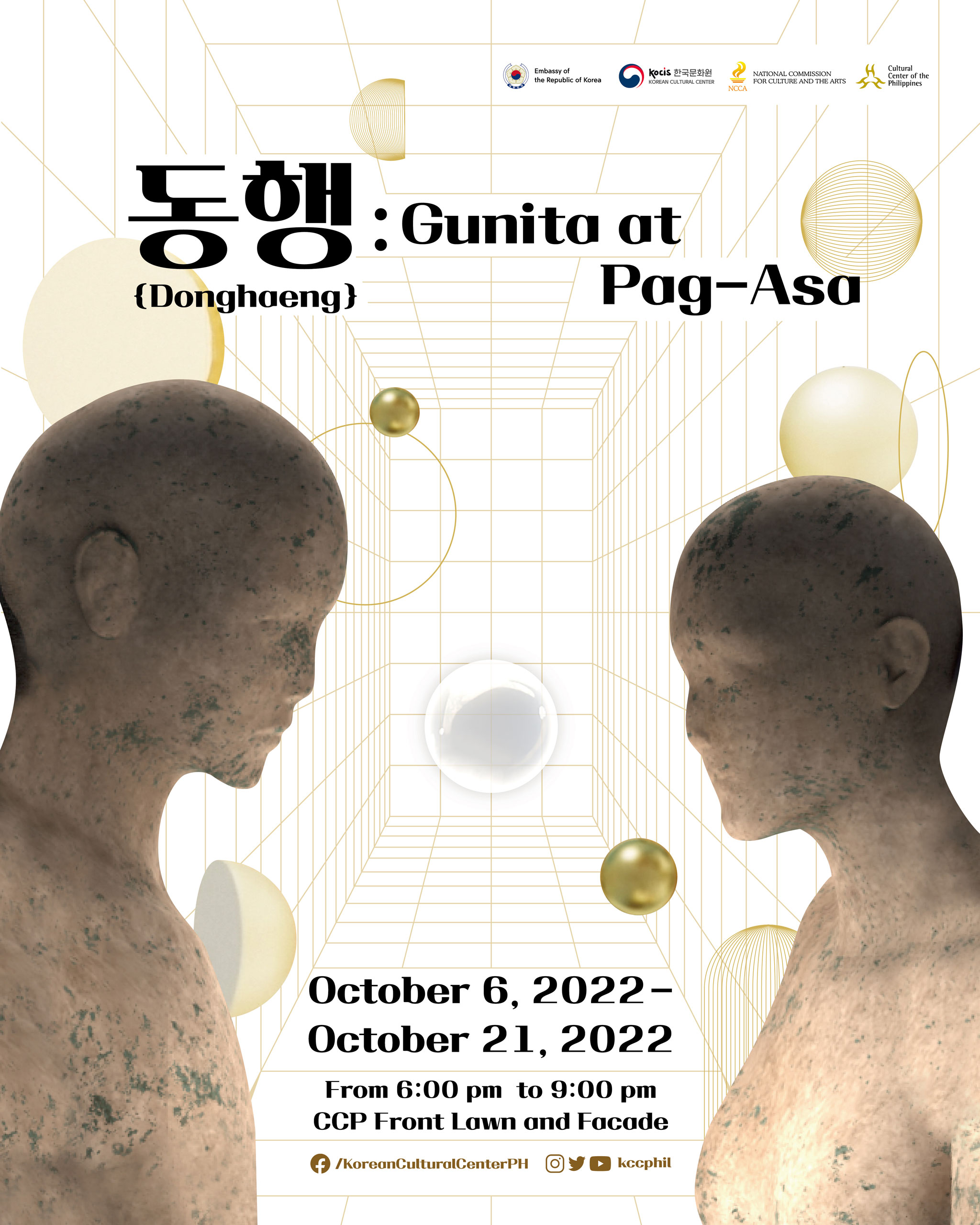
THE CULTURAL Center of the Philippines (CCP) joins the Korean Embassy in the Philippines, the Korean Cultural Center in the Philippines (KCC), and National Commission for Culture and the Arts (NCCA) as they present a media art show billed as “Donghaeng: Gunita at Pag-asa” from Oct. 6 to 21, 6 to 9 p.m., at the CCP Front Lawn. The media art show is part of the celebration of the 73-year friendship of the Philippines and Korea. The eight-minute-long spectacle will be projected onto the CCP Main Building façade and will be shown to the public for free.  Guests can also have the chance to win different prizes when visiting by joining contests in KCC’s official social media accounts. The KCC prepared this media art show so that Filipinos can experience Korea even here in the Philippines. Media art shows are public displays of art projected on the exterior of buildings using them as large screens. The media art show is divided into three parts: the cultural origins and growth, the communication of both rich cultures and, lastly, the celebration and harmony of friendship between the Philippines and Korea. Filipino and Korean dancers were recorded through motion capture and AI technology. They perform traditional dances such as Pandanggo and Buchaechum (Korean fan dance) with an ethnic score.  At the end of the show, there is a festive collaboration of the traditional dances of each country. “Donghaeng: Gunita at Pag-asa” is an event under the theme “Kita Kita Korea” where Filipinos can experience Korean culture in the Philippines without traveling to Korea. Other KCC events include the Philippine-Korean Hats Exhibition with The M on Oct. 21.


Galeria Paloma holds panel on crypto art collecting

GALERIA Paloma will be hosting a panel discussion on crypto art, “Perspectives: Collecting Crypto Art,” on Oct. 7, 3-4:30 p.m., at Cinema 7 of the Power Plant Mall in Makati. The panel discussion will address frequently asked questions about crypto art, how to start collecting, and what the blockchain offers to collectors in terms of investability, authenticity, and security. The panelists are: Fatmire Bekiri, Head of Tokenization, Sygnum Bank Zurich; Gareth Fletcher, Program Director for Art Logistics, Sotheby’s Institute of Art, London; Kenneth Stern, General Manager, Binance Philippines; and lawyer Regie Tongol, a collector of physical and crypto art. Bekiri and Fletcher will join the panel via Zoom. This is a live, face-to-face, and free event, but registration is required as seats are limited, via tinyurl.com/gpcryptoart.


Gateway Gallery holds art fair

IN CELEBRATION of Museums and Galleries Month this October, the Gateway Gallery will hold the Gateway Art Fair from Oct. 7-9 at the Gateway Mall Activity Area, Araneta City. The three-day art fair will gather 11 art groups from Metro Manila and nearby provinces who will show 200 works. Apart from exhibits and art demonstrations, Gateway Art Fair will also have local artists who will be selling their artworks, and other creative services.


PPO concert features violinist Owen Romanban

VIOLINIST Vincent Owen Romanban will be the featured soloist of the second Philippine Philharmonic Orchestra (PPO) concert for the season, on Oct. 7, 8 p.m., at the Cultural Center of the Philippines’ Main Theater. The 20-year-old violinist will perform Felix Mendelssohn’s Violin Concerto, Op. 64, E minor. Other works to be performed in the concert are Lucio San Pedro’s Lahing Kayumanggi, Peter Ilich Tchaikovsky’s Romeo and Juliet Fantasy Overture, and Igor Stravinsky’s Firebird Suite (1919). Mr. Romanban is a member of the UST Symphony Orchestra under Herminigildo Ranera. He is currently pursuing a Bachelor of Music degree in Violin Performance under Noel Martin at the UST. The concert is the second offering in the orchestra’s 38th concert season entitled “Metamorphosis” and continues the PPO search for its new Music Director and Principal Conductor. “Metamorphosis” features eight conductors, five of whom are shortlisted for the Music Director position. Guest conductor Grzegorz Nowak, who is on the shortlist, conducts the PPO for this concert. For more information, visit the CCP (www.culturalcenter.gov.ph) and follow the official CCP social media accounts on Facebook, Twitter and Instagram for the latest updates.


Mo_Space opens two exhibits

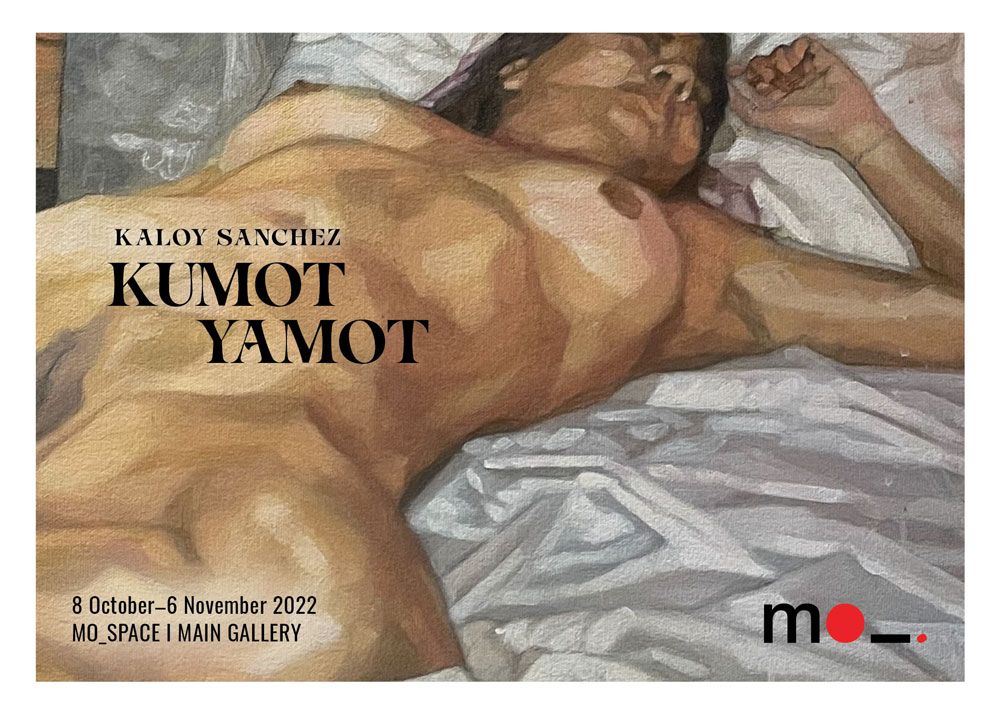
THE MO_SPACE gallery will open two exhibits — Kaloy Sanchez’ “Kumot Yamot” at the Main Gallery and Robert Langenegger’s “Populist Perversion” at Gallery 2 — on Oct. 8. Both exhibits will run until Nov. 6. “Kumot Yamot” features paintings of nudes while “Populist Perversion” is a series of paintings of seeming behind-the-scene tableaus of construction workers in tasks enacted beyond their designation. The gallery, located at the 3rd level, MOs Design, B2 Bonifacio High Street, Bonifacio Global City, Taguig, is open daily from 10 a.m. to 7 p.m.


Gavel&Block’s art+design online auction

SALCEDO Auctions’ subsidiary Gavel&Block quickly follows the recently concluded The Well-Appointed Life auction with the final 2022 edition of its signature online art+design auction on Oct. 8, 11 a.m., featuring over 500 lots of fine art, furniture, décor, and collectibles. The online auction will be hosted by salcedoauctions.com. The sale will have a special curated section titled “Objects as Convergence” showcasing the works of leading contemporary Filipino artists Robert Langenegger, Garapata, Doktor Karayom, Marionne Contreras and Juan Alcazaren, who were invited to respond to the art and design theme by creating object-based works. There will also be a capsule event, “art+design meets gin+tonic,” a bidding party co-hosted by premium gin brand Hendricks. Buyers are invited to come to NEX Tower on auction day so they can bid in real time on their devices while enjoying drinks. Gavel&Block “art+design” takes place at salcedoauctions.com on Oct. 8, 11 a.m. Register to bid and browse the catalog at the website. The auction preview is ongoing at Salcedo Auctions (NEX Tower, 6786 Ayala Ave., Makati City) daily from 9 a.m. to 5 p.m. For inquiries, e-mail info@salcedoauctions.com or contact 8 823-0956, 0917-591-2191.


ArtistSpace exhibit honors women

ARTISTSPACE presents the exhibitTribute to Filipino Women,” a solo exhibition of Maryrose Gisbert which will run from Oct. 6 to 19. The Filipino woman is the inspiration for the body of work that Ms. Gisbert is presenting. Set against brightly colored and richly textured canvases, with moods ranging from serious to playful, her subjects possess huge eyes that express a wealth of emotions. Ms. Gisbert is an active member of The Saturday Group of Artists, participating in the group’s regular exhibitions, as well as in selectively curated shows. Her artworks are on display and on sale in a Paris-based online gallery, Singulart Gallery. She runs her home-studio-turned-art classroom called the Creative Hands Art Workshop, where she is the main instructor. For queries on the exhibition, contact Rafael Manaay at 0921-271-9612. ArtistSpace, an art gallery established in 2004, is dedicated to the promotion of contemporary visual arts featuring a wide range of styles and media from local and foreign artists in two-week exhibitions. The gallery, located at the Ground Level, Ayala Museum Annex, Makati Ave. corner De La Rosa St. Greenbelt Park, Makati City, is open daily from 11 a.m. to 8 p.m. Admission is free.


Songs become art installations

VISUAL ARTIST Kristine Lim interprets the songs of OPM songwriter and producer Jonathan Manalo as a series of artwork and art installations for the multi-venue and multi-country art exhibition and book, “Kuwento Ng Alon (As Told By The Waves)”. The artworks also pay tribute to the singers who sang Mr. Manalo’s songs. The art exhibit is ongoing at Art Lounge Manila and Molito Alabang until Oct. 11, and will move to Newport World Resorts from Oct. 15 to 20. Meanwhile, the Kuwento Ng Alon Art Book features Lim’s art as well as her essays and those of Mr. Manalo, ABS-CBN’s Real Talk Pastor Monique Lopez- Ong, Art Lounge Manila manager Cindel Tiausas, art critic Cid Reyes, and National Artist for Music Ryan Cayabyab. The exhibit and book launch will be held at several other venues in the Philippines, and then in Australia, Singapore, Malaysia, China, Japan, London, France, the USA, Canada, and Dubai until to October 2023. The project is for the benefit of the ABS-CBN Foundation, Inc., Artists on a Mission Workshops, Operations Mobilization Philippines, and Sustainable PH. For more information, visit www.kuwentongalon.com, or follow KuwentoNgAlon on Facebook and Instagram


NAMCYA announces the solo semifinal schedules, concert

YOUNG Filipino talents will have the chance to showcase their mastery and expertise in various musical genres as they vie for a slot in the finals of the National Music Competitions for Young Artists (NAMCYA). The initial semifinal rounds took place in various venues all over the Philippines. On Oct. 8, 5 p.m., the concert of the Orchestra of the Filipino Youth will take place at the Tanghalang Nicanor Abelardo of the Cultural Center of the Philippines (CCP). The Orchestra of the Filipino Youth (OFY) is composed of members and mentors, some of whom are previous NAMCYA winners and participants from various categories. Celebrating its 10th anniversary, the OFY is a non-profit organization founded in 2012 that supports musically talented, less-privileged Filipino youths by providing programs which focus on orchestral training and instrument support. Meanwhile, the concluding solo semifinal round in the following categories will be held at Manila Pianos at the Ronac Lifestyle Center, Paseo de Magallanes, Makati City: Junior Strings (Oct. 11, 9 a.m.); Junior Voice (Oct. 12, 9 a.m.); Junior Piano (Oct. 12, 1 p.m.); Open Brass (Oct. 14, 9 a.m.); and Senior Guitar (Oct. 13, 1 p.m.). The National Finals Competition of NAMCYA 2022, entitled “Maglayog” (Lumipad) will be held from Nov. 15 to 20 at the CCP’s Tanghalang Nicanor Abelardo.


Vitra Design Museum pieces exhibited in PHL

MINIATURE versions of the most iconic furniture will be showcased in “62 Icons: Milestones in Furniture Design from the Vitra Design Museum,” an exhibit at the De La Salle-College of Saint Benilde (DLS-CSB) Design and Arts Campus, to begin on Oct. 14. The selection came from the world-renowned Vitra Miniatures Collection of the Vitra Design Museum in Wheil am Rhein, Germany. At one-sixth scale of the originals, the replicas encompass the rich history of the craft from Historicism and Art Nouveau, Bauhaus and New Objectivity, Radical Design and Postmodernism, up to the most contemporary design innovations. Masterpieces of notable legendary names in the architecture and industrial design are part of the exhibition, including Mies van der Rohe and The Barcelona Chair, Marcel Breuer and The Wassily, Charles and Ray Eames and The Lounge and Ottoman, George Nelson and The Marshmallow Sofa, and Gaetano Pesce and his La Mamma. Fred Yuson-led CWC Interiors, the exclusive distributor of the Vitra brand in the Philippines, likewise chose select versions of furniture to be displayed alongside the minis for the duration of the show. The company also partnered with the DLS-CSB animation program, whose students were tasked to animate the stories of the chairs. The videos will be screened inside the gallery plus on social media platforms. The exhibit will be open Mondays to Fridays from 10 a.m. to 6 p.m. at the DLS-CSB Design and Arts Campus from Oct. 14 to Dec. 17. Due to prevailing health and safety protocols, advance registration is mandatory. Visitors may fill out the appointment form here: http://tinyurl.com/62Icons.


13th of September goes to Germany

AFTER its celebrated run in the 9th Festival International de Théâtre De Mont-Laurier in Quebec, Canada, BOGT Philippines’ production of 13th of September is set to go to the Theaterwelten 2022, with a performance on Oct. 15 at the Cultural Center Dieselstrasse in Esslingen, Germany. With the support of the Philippine and German government, National Commission for Culture and Arts, and Bund Deutscher Amateurtheater, this trip fulfills one of the goals of BOGT Philippines — a team of professional theater and film practitioners based in Manila — which is to create and produce shows for international theater festivals. The play is a reimagination of Lanie Robertson’s The Insanity of Mary Girard, written and translated by playwright Eljay Castro Deldoc, directed by Riki Benedicto, with actors Marco Calilao, Norman Peñaflorida, and Lao Rodriguez. Theaterwelten is both a festival and an international theater encounter which is held every two years. This year’s festival will be held from Oct. 13 – 16 with participation from eight countries: Philippines, Ukraine, Chile, Mexico, Zimbabwe, Lebanon, Germany, and Israel. An accompanying symposium will examine the topic of “Theater and Safe Spaces” from local and global perspectives. The Insanity of Mary Girard follows Mary Girard (1758–1815) who was committed to an asylum in 1790 where her husband declared her legally insane. While preparing for her last night in the asylum after more than two decades, she relives the moments of lies and betrayal that have never been proven.


Trombonist Poonin holds solo recital in CCP

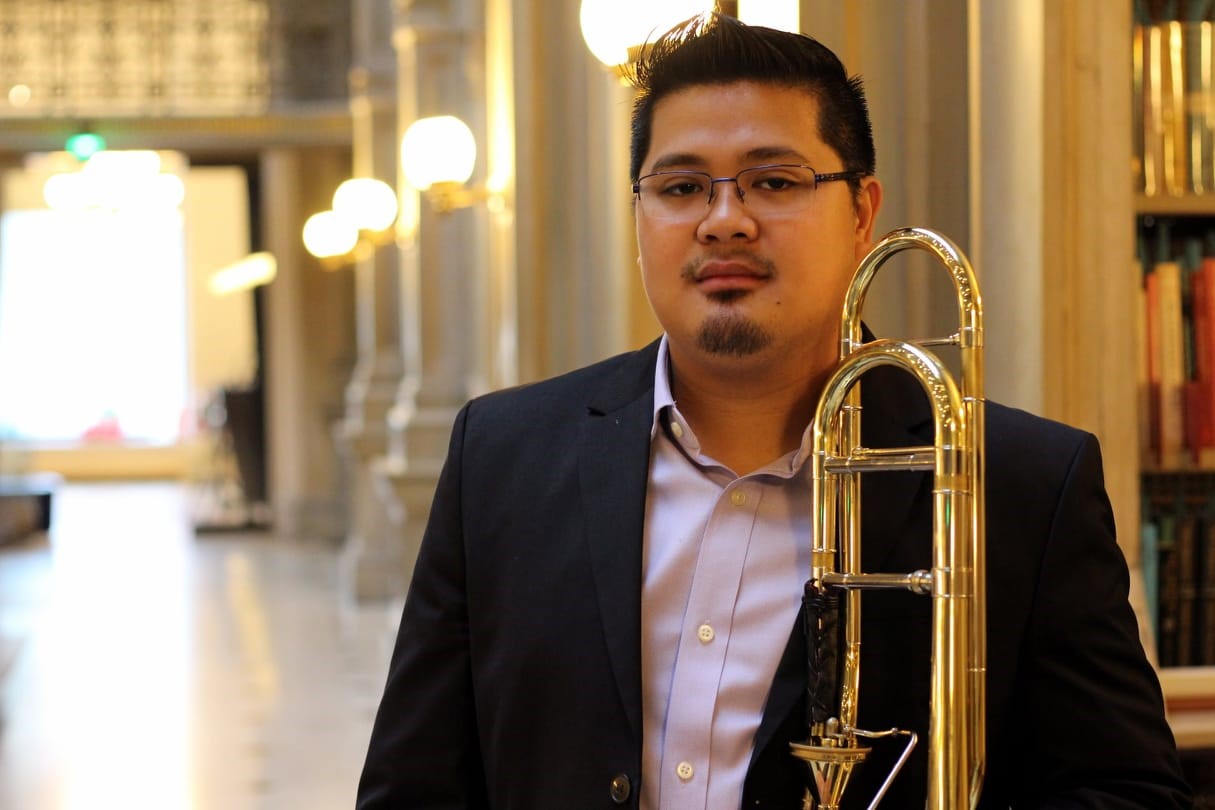
TROMBONIST Ricson Poonin will be the second featured artist of the Cultural Center of the Philippines (CCP) Special Concert Series on Oct. 20, 7:30 p.m., at the CCP Tanghalang Ignacio Gimenez (Black Box Theater). For his solo concert, he will be rendering “The Casterede Sonatine” which he described as challenging to play because of its 20th century syncopated rhythms; “Milagros,” a showpiece Filipino music presented with piano accompaniment; and the Pandemic Concert Piece for Trombone and Piano. Composed by Mr. Poonin’s long-term mentor Herminigildo Ranera, The Pandemic Concert Piece is a new trombone composition which Mr. Poonin himself requested from Mr. Ranera to create especially for this recital. During the pandemic years, together with his colleagues, Mr. Poonin gathered different Filipino trombonists who lived in the Philippines and overseas and had practice sessions, lectures, open fora, and virtual videos featuring multiple trombonists playing together in the first-ever Philippine Trombone Festival held virtually. Currently, Mr. Poonin is a trombone teacher at St. Scholastica’s College and at the University of Santo Tomas. Applications are currently being accepted for the Ricson Poonin Trombone Masterclass which will be held on Oct. 19, 2-6 p.m., at the CCP Tanghalang Ignacio Gimenez. For inquiries on the Ricson Poonin Trombone Masterclass, e-mail artist.training@culturalcenter.gov.ph or call at 8832-1125 local 1605.


Veterans Bank donates funds to save Death March markers

ON ITS 30th Anniversary, the Philippine Veterans Bank raised funds for the maintenance of Bataan Death March historical markers that had been destroyed, uprooted, and neglected due to drainage and other road projects. The “Ride for Valor,” a non-competitive 160 kilometers long bike ride raised close to P50,000 and monetary pledges for the Filipino-American Memorial Endowment (FAME) to save the historical markers. The funds will be turned over to FAME, a non-government organization that maintains the kilometer markers of the Bataan Death March from Mariveles, Bataan to Capas, Tarlac. “We would like to thank all the bikers, sponsors, private corporations and LGU partners for their invaluable support to the recently concluded Ride for Valor. Special thanks to DPWH Region 3 led by Regional Director Roseller Tolentino for their quick action and clarification about the Death March Markers along national roads that will be affected by road repairs,” said Mike Villa-Real, PVB first vice-president. “Philippine Veterans Bank is committed to keeping the memory of our heroes alive in the hearts and minds of Filipinos, so that we may always remember their sacrifices for our country and our freedom,” added Mr. Villa-Real. The Death March markers serve as a reminder of the route taken by Filipino soldiers who defended the country against Japanese forces during World War II.  Around 80,000 Filipino and American soldiers and prisoners of war were forced by the Japanese military to march 69 miles from Bataan to Tarlac during World War II. Only some 54,000 persons reached the camp, where around 20,000 died due to starvation, dehydration, diseases, and the brutality of Japanese captors. For more information, visit www.veteransbank.com.ph.


Descendants of victims, activists release Martial Law ebook

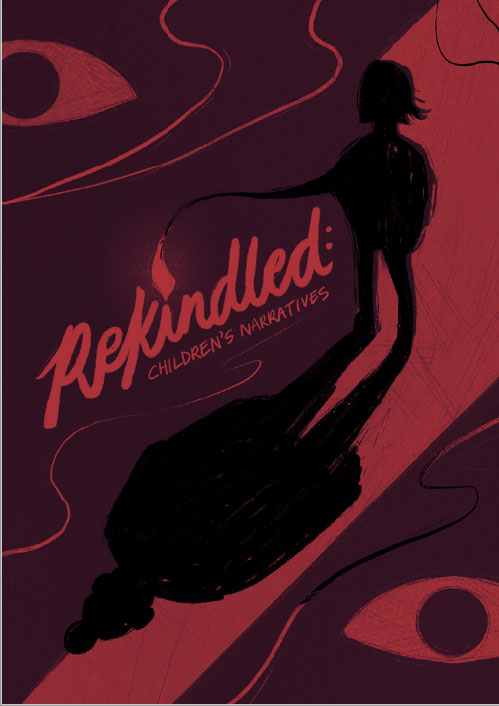
IN COMMEMORATION of the 50th Anniversary of the Declaration of Martial Law, Rekindled: Children’s Narratives, an e-book which features stories of the children of Martial Law activists and victims, was launched at the Bantayog ng mga Bayani in Quezon City. The 47-page e-book aims to provide another window into the life under Martial Law and a glimpse into one of the darkest chapters in the history of the Philippines through the lenses of affected family members. Among the stories are “I was Born in Prison” by Issa Manalo Lopez, daughter of Manjette Manalo and Ted Lopez; “Pagiging Makatao ba ay Komunista?” by Dr. Sibyl Jade Pena, daughter of Rolly Pena and Ninotchka Rosca; and “I Saw Him Only Once” by Joyette Jopson, the second child of Edgar Jopson and Gloria Asuncion. Other stories are “Bakit Hindi Paksaing Filipino?” by Silay Maria Mendiola Lumbera, the youngest of Bien and Shay Lumbera; “The Stories We Tell Ourselves” by Laraine Dela Torre, daughter of Edicio dela Torre and Girlie Villariba; “Unbothered” by Ronald Emmanuel de Vera, son of Adora Faye de Vera; “What Nanay Taught Me” by Antonio Luna Malay Ocampo, son of Satur Ocampo and Bobi Malay; “My Father Was Tortured” by Crisanto Malaya Lacaba, son of Jose F. Lacaba and Marra PL Lanot; and “The Movement Raised Me” by June Taguiwalo, daughter of Judy Taguiwalo. It also includes “Political Detainees” by Nicolas Isberto, son of Ramon and Ester Isberto, as well as “The Break of Dawn at Stonehenge, England” by Liwayway Arce-Rodriguez, daughter of Merardo Arce. De La Salle-College of Saint Benilde (DLS-CSB) Arts Management student Maegan Ellyse Lacson, the granddaughter of Ramon and Ester Isberto, shared an essay entitled “Peace, Like War, Must Be Waged.” In her foreword addressed to the youth, Bantayog ng mga Bayani Foundation, Inc. (BBFI) Vice-Chairperson Carolina Malay expressed how the featured stories serve as painful reminders of the past. She stressed that it was through the Marcos dictatorship that the generation of parents and grandparents became aware of the importance of human rights and international solidarity. The project was produced by the Center for Social Action (CSA) of the DLS-CSB and the BBFI, a non-profit corporation that aims to recognize and memorialize the Martial Law heroes and martyrs. Rekindled: Children’s Narratives was designed and illustrated by the National Service Training Program 02 students from the Benilde Multimedia Arts and Animation Programs under the guidance of their professor Melvin Lebria. For more information, visit the official Facebook pages of BBFI (https://www.facebook.com/bantayogngmgabayani) and Benilde CSA (https://www.facebook.com/centerforsocialaction).


Live opera returns to CCP in December

AFTER more than two years, live opera returns at the Cultural Center of the Philippines (CCP) main theater with Puccini’s monumental opera, Turandot. The Puccini opera’s gala night will be on Dec. 9, with a matinee on Dec. 11, at 3 p.m. Zenaida “Nedy” Tantoco, one of the producers representing Rustan’s Group of Companies, said she decided to tie up with the CCP in time for the celebration of the 60th year of the Philippine-Italian Association (PIA). “Presenting Turandot by Puccini would be an appropriate way to further promote Italian arts and culture in the Philippines and in the process raise funds for PIA,” she said in a statement. Italian Director Maestro Vincenzo Grisostomi Travaglini, who also directed Donizetti’s Lucia di Lammermoor at the CCP in 2020, will arrive early November to direct. Three Korean singers lead the cast namely tenor James Lee as Calaf, soprano Lilla Lee as Princess Turandot and bass Jinsu Lee as Timur, the exiled Tartar king. Soprano Rachelle Gerodias sings the role of Liu, Byeong In Park plays Ping the Grand Chancellor, with tenor Ivan Nery as Pong, the Grand Intendant. Also in the cast are tenor Nomher Nival as Emperor Altoum and baritone Greg de Leon as Mandarino. Valentino Favoino will lead the Philippine Philharmonic Orchestra along with choral ensembles of the Viva Voce Voice Lab. Members of the opera dance ensembles will come from the ranks of Alice Reyes Dance Philippines. Ticket prices range from P1,500 to P6,000. For ticket reservation and inquiries contact Lulu Casas at 0917-570-8301 or lgcasas@rgoc.com.ph; Maricar Alamodin at 0917-538-4508 or esalamodin@rgoc.com.ph; Rustan’s Makati at 8813-3739 loc. 280; Rustan’s Shangri-la at 8633-4636 loc. 400; Rustan’s Alabang at 8850-5592; Rustan’s Gateway at 8931-2460; the CCP Box Office at 8832-3704; TicketWorld at 8891-9999; and SM Tickets at 8470-2222 or 0917-870-2222.


Flu shots advised as cases rise

STUDENTS in Manila braved the rains after classes were suspended later on Tuesday. — PHILIPPINE STAR/EDD GUMBAN

By Brontë H. Lacsamana, Reporter 

FLU SEASON is far from over, with on-and-off rains continuing until November. Basic hygiene habits like hand washing and physical distancing can protect individuals against the influenza virus, doctors said.  

“Much like other infectious diseases, the flu is highly preventable through strict compliance with public health and safety regulations and the practice of basic hygiene habits whether in school or the office,” said Dr. Gyneth Lourdes G. Bibera, country medical director of GlaxoSmithKline Philippines, Inc., in an e-mail interview with BusinessWorld.  

“Other than those, I would say that getting vaccinated is probably one of the most effective steps in preventing the spread of influenza viruses,” she added.  

According to the Department of Health (DoH), there were 57,083 influenza-like cases reported Jan.Aug., a 15% increase from the same period last year.  

Getting a proper diagnosis from a physician is advised since flu symptoms are similar to those of coronavirus disease 2019 (COVID-19): fever, cough, sore throat, runny or stuffy nose, body aches, headache, chills, and fatigue.  

Influenza can be managed at home through guidelines provided by the DoH:  

  • Use of antiviral agents within the first two days (best to consult a physician);  
  • Paracetamol for fever (but no aspirin for children); 
  • Antibiotics to be given only to complications of influenza such as pneumonia;  
  • Adequate rest; and  
  • Increased intake of fluids and nutritious foods.  

“The safest and most fool-proof way to treat influenza is to consult your physician for medical guidance,” said Dr. Bibera.  

The US Centers for Disease Control and Prevention recommended annual flu vaccination due to viruses varying from season to season.   

“Every year, flu vaccines are formulated to protect against the viruses that research suggests will be most common,” said Dr. Bibera. “Ideally, people should be getting their flu vaccines from February to May before the flu season starts.”  

In September, the Philippine College of Geriatric Medicine released a statement asking the government to improve flu vaccination for senior citizens, who are most vulnerable to life-threatening circumstances when exposed to the illness.  

A 2020 study on flu in the Philippines determined that flu season in the country lasts from June to November, with a peak in August. It also found that the cost of hospitalization from being gravely ill from the flu can range from P10,000 to P30,000 per episode. 

“By getting vaccinated now, we can ensure our and our families’ protection as early as possible,” Dr. Bibera said.  

She added that since viral diseases usually start with flu-like symptoms, being protected can help dispel unwarranted anxiety and unnecessary costs.

USAID, partner aim to help boost PHL cybersecurity 

RAWPIXEL.COM-FREEPIK

By Arjay L. Balinbin, Senior Reporter

THE United States Agency for International Development (USAID) and global cybersecurity company Palo Alto Networks recently signed a partnership deal to help the Philippines strengthen its cybersecurity posture.

The alliance is expected to boost e-commerce and other digital services in the country by increasing customer confidence, Palo Alto Networks officials said during a briefing in Mandaluyong City on Tuesday.

USAID and Palo Alto Networks hope to achieve the goal by increasing customer confidence through awareness and promotion of safe computing practices, as well as the adoption of international standards.

“Governments are modernizing their networks to take advantage of digital innovations and improve the way they communicate with citizens,” said Oscar Visaya, Palo Alto Networks country manager for the Philippines.

“As they modernize their IT infrastructure, their cybersecurity must keep pace with these developments,” he added.

The company said that it will work with USAID to develop programs and activities and provide technical assistance and expert advisory to help realize the vision.

They envision an efficient, robust, and secure digital ecosystem to support the country’s digital transformation.

They hope to speed up the adoption and implementation of a “zero trust framework,” an approach to cybersecurity that helps “secure an organization by eliminating implicit trust and continuously validating every stage of digital interaction,” Palo Alto Networks said.

Government data showed 37% of online users in the country reported cyberattacks in 2020.

At least 73% of consumer data from micro-, small-, and medium-sized enterprises were lost to attackers, greater than the 56% figure in the Asia-Pacific region.

According to cybersecurity firm Sophos, the Philippines placed third in worldwide ransomware payments in 2021, with local organizations paying an average of $1.6 million, doubling the country’s average of $820,000 in 2020.

“The MoU (memorandum of understanding) that was signed, a lot of it focuses on capacity development side and individual levels, so we’ve heard about some of the training programs with Palo Alto, cybersafety programs, and professional development … and there are good practice frameworks and standards that we are also working with our partners,” said John Garrity, chief of party of USAID’s Better Access and Connectivity project.

“There are ways to come together to address these challenges through a multistakeholder approach from capacity building for organizations and individuals,” he added.

Mary Rose E. Magsaysay, deputy executive director at the Cybercrime Investigation and Coordinating Center, noted that the costs of cybersecurity capacity development are generally “unreachable.”

At the same time, she confirmed that foreign crime syndicates are responsible for the recent text scams.

She added that text scams have cost victims in the Philippines “millions of dollars.”

The government and the country’s telecommunications companies need more smishing and phishing alerts, she noted.

Meanwhile, the Department of Information and Communications Technology (DICT) announced on Tuesday that the Philippines was recently re-elected to the International Telecommunications Union (ITU) Council in Bucharest, Romania.

It said 193 member states of the ITU selected 48 states to lead the council.

“The Philippines is among the 13 states selected from Region E (Asia and Australia), along with Australia, Bahrain, China, India, Indonesia, Japan, Korea, Kuwait, Malaysia, Saudi Arabia, Thailand, and the United Arab Emirates,” the DICT said in a statement.

“The country commits to work towards the fulfillment of the ITU’s mandate to make the digital future inclusive and more accessible for everyone, especially in developing countries,” it added.

The department also said that it is expected to lead the country’s involvement in discussions and decision-making that will “significantly affect” the member states’ digital agenda.

“The department also enjoins the support and collaboration of government agencies to achieve its goals as a council member,” it noted.

Swedish geneticist wins Nobel medicine prize for decoding ancient DNA

Svante Paabo. — Frank Vinken/Max Planck Institute for Evolutionary Anthropology

STOCKHOLM/LONDON — Swedish geneticist Svante Paabo won the 2022 Nobel Prize in Physiology or Medicine on Monday for discoveries that underpin our understanding of how modern-day people evolved from extinct ancestors at the dawn of human history.  

Mr. Paabo’s work demonstrated practical implications during the coronavirus disease 2019 (COVID-19) pandemic when he found that people infected with the virus who carry a gene variant inherited from Neanderthals are more at risk of severe illness than those who do not.  

Mr. Paabo, director at the Max Planck Institute for Evolutionary Anthropology in Leipzig, Germany, won the prize for “discoveries concerning the genomes of extinct hominins and human evolution,” the Award committee said.  

“The thing that’s amazing to me is that you now have some ability to go back in time and actually follow genetic history and genetic changes over time,” Mr. Paabo told a news conference at the Max Planck Institute. “It’s a possibility to begin to actually look on evolution in real time, if you like.”  

Mr. Paabo, 67, said he thought the call from Sweden was a prank or something to do with his summer house there.  

“So I was just gulping down the last cup of tea to go and pick up my daughter at her nanny where she has had an overnight stay,” Mr. Paabo said in a recording posted on the Nobel website.  

“And then I got this call from Sweden and I of course thought it had something to do with our little summer house … I thought the lawn mower had broken down or something.”  

Asked if he thought he would get the award, he said: “No, I have received a couple of prizes before but I somehow did not think that this really would qualify for a Nobel Prize.”  

Mr. Paabo, son of a Nobel Prize-winning biochemist, has been credited with transforming the study of human origins after developing ways to allow for the examination of DNA sequences from archaeological and paleontological remains.  

Not only did he help uncover the existence of a previously unknown human species called the Denisovans, from a 40,000-year-old fragment of a finger bone discovered in Siberia, his crowning achievement is considered to be the methods developed to allow for the sequencing of an entire Neanderthal genome.  

‘GENETIC DIFFERENCES’ 
This research, which showed that certain genes of Neanderthal origin are preserved in the genomes of people today, was once considered impossible, given that Neanderthal DNA on bones has shriveled up over thousands of years into short fragments that have to be assembled like a gigantic puzzle, and are also heavily contaminated with microbial DNA.  

“This ancient flow of genes to present-day humans has physiological relevance today, for example affecting how our immune system reacts to infections,” the Nobel Committee said.  

The prize, among the most prestigious in the scientific world, is awarded by the Nobel Assembly of Sweden’s Karolinska Institute and is worth 10 million Swedish crowns ($900,357).  

It is the first of this year’s batch of prizes.  

Born in Stockholm, Mr. Paabo studied medicine and biochemistry at Uppsala University before creating a scientific discipline called “paleogenomics,” which helped show genetic differences that distinguish living humans from extinct hominins.  

“His discoveries provide the basis for exploring what makes us uniquely human,” the Committee said.  

The COVID-19 pandemic has placed medical research center stage, with many expecting that the development of the vaccines that have allowed the world to regain some sense of normality may eventually be rewarded.  

Still, it typically takes many years for any given research to be honored, with the committees charged with picking the winners looking to determine its full value with some certainty amongst what is always a packed field of contenders.  

PANDEMIC
When asked why the prize did not go to advances in combating COVID, Thomas Perlmann, secretary for the Nobel Committee for Physiology or Medicine, said the committee would only talk about prize winners, not those who had not won, or had not yet won.  

However, Mr. Paabo’s ancient forensics work did offer insight on why some people are at higher risk of severe COVID.  

In 2020, a report from Mr. Paabo and colleagues found that a gene variant inherited by modern humans from Neanderthals when they interbred some 60,000 years ago made those that carry the variant more likely to require artificial ventilation if infected by the COVID-causing virus.  

“We can make an average gauge of the number of the extra deaths we have had in the pandemic due to the contribution from the Neanderthals. It is quite substantial, it’s more than one million extra individuals who have died due to this Neanderthal variant that they carry,” Mr. Paabo said in a 2022 lecture.  

Mr. Paabo’s most cited paper in the Web of Science was published in 1989, with 4,077 citations, said David Pendlebury, from UK-based scientific data analytics provider Clarivate.  

“Only some 2,000 papers out of 55 million published since 1970 have been cited this many times,” he said.  

“It is, however, not an award for a discovery relevant to clinical medicine, which many anticipated this year after a Nobel Prize focusing on physiology last year.”  

Past winners in the field include a string of famous researchers, notably Alexander Fleming, who shared the 1945 prize for the discovery of penicillin, and Robert Koch, who won already in 1905 for his investigations of tuberculosis. — Reuters 

Cultural ministers pledge more action to return priceless artifacts

EVEN as Mexico demands the return of Montezuma’s Headdress from the Welt Museum in Vienna, experts say it is too fragile to move. — KHM-MUSEUMSVERBAND/ WELTMUSEUMWIEN.AT

MEXICO CITY — Cultural ministers and representatives from 150 countries committed to expanding efforts to return historical artifacts to their countries of origin, according to a declaration released last Friday, following a UNESCO conference in Mexico City.

Major museums, auction houses, and private collectors have faced growing pressure in recent years to repatriate priceless works of art and other antiquities from Latin American and African nations, among others, which argue the goods were often taken unethically or illegally.

The declaration from the United Nations’ cultural arm called for open, inclusive international dialogue on illegally acquired artifacts and concrete measures to battle the illicit trade in antiquities.

The declaration deems culture a “global public good” that should be included in the UN development goals.

Restitution of cultural artifacts is often politically sensitive and raises questions over the transport and care of often delicate antiquities.

The death of Queen Elizabeth II has renewed calls in India for the return of one of the world’s largest uncut diamonds from Britain’s crown jewels, while Chile has for years demanded the return of a Moai statue from the British Museum.

Mexico’s government has previously called for the return of a 500-year-old Aztec crest known as Montezuma’s headdress from a Vienna museum, but experts have deemed its centuries-old iridescent quetzal feathers, dotted with golden pendants, too fragile for transport.

During the conference, ministers also discussed how to protect heritage from wars and climate change.

Ernesto Ottone, a senior UNESCO official, expressed hope that old attitudes are shifting in an interview on the sidelines of the conference.

“In the last three years there has been a change, a turning point, on how restitution can be made,” he said, pointing to recent bilateral deals that have led to the return of artifacts. “Today, doors are opening for us.” — Reuters

Gov’t makes partial award of reissued T-bonds

BW FILE PHOTO

THE GOVERNMENT partially awarded the reissued seven-year Treasury bonds (T-bonds) it offered on Tuesday as investors asked for higher rates as they expect headline inflation to have reached a new peak last month.

The Bureau of the Treasury (BTr) raised just P22.85 billion from its offer of seven-year papers on Tuesday, less than the programmed P35 billion even as total bids reached P39.144 billion.

The bonds, which have a remaining life of two years and six months, were awarded at an average rate of 5.746%, 134.4 basis points (bps) lower than the 7.09% quoted for the bond when it was last offered on Dec. 11, 2018 and 0.4 bp below the 5.75% coupon for the issue.

However, this was 44.8 bps above the 5.298% quoted for the same bond series at the secondary market and 19.5 bps higher than the 5.551% yield seen for the three-year tenor at the secondary market prior to the auction, based on PHP Bloomberg Valuation Service Reference Rates data provided by the BTr.

National Treasurer Rosalia V. de Leon said in a Viber message to reporters after the auction that the BTr made a partial award as investors asked for higher rates.

“The market continues to provide cushion as high inflation remains persistent. That being the case, the BSP (Bangko Sentral ng Pilipinas) is expected to deliver another rate increase,” Ms. De Leon said.

Likewise, a trader said that the market remained defensive ahead of the release of September inflation data on Wednesday.

Rizal Commercial Banking Corp. Chief Economist Michael L. Ricafort likewise attributed the partial award to higher bid yields “ahead of the latest inflation data that is expected to pick up.”

Investors also priced in hawkish signals from the Federal Reserve, as well as the BSP amid the weakening peso, Mr. Ricafort said in a Viber message.

Headline inflation likely reached a fresh peak last month amid higher electricity rates and food prices, as well as the continued weakening of the peso versus the dollar, analysts said.

A BusinessWorld poll of 13 analysts yielded a median estimate of 6.7% for the September consumer price index, near the lower end of the central bank’s 6.6-7.4% estimate for the month.

If realized, this would be faster than the 6.3% print in August as well as the BSP’s 5.6% forecast and 2-4% target for the year.

BSP Governor Felipe M. Medalla last month said the central bank may need to continue hiking rates, with the peso’s continued decline against the dollar due to a hawkish US Federal Reserve posing an upside risk to inflation. The Monetary Board has hiked rates by 225 bps since May to rein in prices.

The peso closed at another all-time low of P59 per dollar on Monday, dropping 37.5 centavos from its P58.625 finish on Friday, Bankers Association of the Philippines data showed.

Year to date, the peso has weakened by P8 or 15.6% from its Dec. 31, 2021 close of P51.

Meanwhile, the US central bank has raised borrowing costs by 300 bps since March, with Fed chief Jerome H. Powell earlier saying they are strongly committed to bringing down inflation and may need to keep rates high for longer to achieve this goal.

The BTr wants to raise P200 billion from the domestic market this month, or P60 billion through Treasury bills and P140 billion from T-bonds.

The government borrows from local and external sources to help plug a budget deficit capped at 7.6% of gross domestic product this year. — Diego Gabriel C. Robles

JFC adds more Tim Ho Wan stores in China, eyes 100

BW FILE PHOTO

JOLLIBEE Foods Corp. (JFC) said on Tuesday that it recently debuted two Tim Ho Wan restaurants in Beijing, bringing to 11 its current store count in mainland China ahead of its target of 100 new openings.

“As the second largest city in the country in terms of urban population, Beijing is instrumental in our aim to further expand our business in China,” JFC President and Chief Executive Officer Ernesto Tanmantiong said in a press release.

The two Michelin-starred stores, which opened in August, are the 10th and 11th branches of Tim Ho Wan on China’s mainland, another step forward for the company’s overseas expansion and sustained growth in the region.

“The long queues and waiting lists that have welcomed our openings in Beijing give us greater confidence to continue with our global expansion strategy for the Jollibee Group and Tim Ho Wan,” Mr. Tanmantiong said.

JFC believes that the two new stores are in prime locations: CapitaMall Taiyanggong Mall branch in Chaoyang District, which can seat 108 people, and APM Mall branch along Wangfujing Street, which can seat 100 people.

It said Chaoyang District is the “main urban area of the Chinese capital” while Wangfujing Street is “a well-known shopping street that is also known as one of the city’s symbols of commerce.”

JFC said that both branches were packed on opening day, with more customers lining up for up to an hour to try Tim Ho Wan’s signature dishes, which include baked barbeque pork buns, rice rolls, and pan-fried radish cake.

“Jollibee Group is committed to open 100 Tim Ho Wan restaurants in China within the next few years,” the company said.

In September 2020, JFC opened its first Tim Ho Wan restaurant in Shanghai’s Jing’an District after it entered into a joint venture agreement with the Tim Ho Wan Group to open and operate Tim Ho Wan restaurants in China.

“We remain focused [on] expanding Jollibee Group’s presence in China because of the continued trust and support that the locals have shown our brands. Residents and even tourists of Beijing can expect to see more of our stores in the coming years,” JFC China and Yonghe King President Louie Liu said.

JFC plans to increase its store network in China, which now numbers 475 across the brands Tim Ho Wan, Yonghe King, and Hong Zhuang Yuan by the end of August.

Last week, JFC’s subsidiary — Jollibee Worldwide Pte. Ltd. — committed more funds to the private equity fund that owns the Tim Ho Wan brand and company-owned stores ahead of a planned expansion in China.

It committed additional capital to Titan Dining LP, which increased its fund size to (Singapore) $350 million from S$250 million.

On the stock market on Thursday, JFC shares added P5.80 or 2.48% to P240 apiece. — Justine Irish D. Tabile

RCBC launches physical-digital banking service for remote areas

RIZAL COMMERCIAL Banking Corp. (RCBC) has launched its physical-digital banking service, MoneyBela Barangayan Banking, as part of its financial inclusion drive to cater to unbanked Filipinos in far-flung communities.

Launched on Monday evening, the country’s first mobile human-assisted remote banking service will be rolled out in 42,000 barangays nationwide, introducing Filipinos in rural areas to banking services bundled with agent-assisted financial education.

Sustainable e-tricycles will roam around unreached communities to offer services such as basic deposit account creation, bills payment, e-load, cash in or cash out, microinsurance, and telemedicine purchase through DiskarTech.

“A keyword in the name of our program — manibela, or the car’s steering wheel — serves as the main inspiration of RCBC’s innovations. Just like a manibela, we are optimistic to steer Filipinos’ lives toward a direction that is empowering, inclusive, and equal for all,” RCBC President and Chief Executive Officer Eugene S. Acevedo said.

“The latest financial inclusion innovation supports RCBC’s thrust in promoting ESG or the environment, social, and governance within the framework of the United Nations Sustainable Development Goals,” Mr. Acevedo said. 

RCBC Executive Vice-President and Chief Innovation and Inclusion Officer Angelito “Lito” M. Villanueva said during MoneyBela’s launch that the bank is excited to partner with government agencies in advancing a digitally and financially inclusive future.

“The whole idea is for us to be able to penetrate even far-flung communities in the Philippines and we know for a fact that we still have quite a number of Filipinos that remain unbanked or underserved,” Mr. Villanueva told BusinessWorld on the sidelines.

“MoneyBela is a tool for us to be able to accelerate the realization of the twin goals of the central bank. It’s more of leveling the playing field, it’s more of providing equal access to everyone, it’s making sure no one is left behind,” he added.

The Bangko Sentral ng Pilipinas (BSP) wants to digitize at least 50% of the volume and value of total retail payments by 2023.

As of 2021, digital payments made up 30.3% of the total volume of retail transactions in the country from 20.1% a year earlier. Meanwhile, the value of payments done online represented 44.1% of total transactions last year, higher than the 26.8% share in 2020.

The BSP also wants 70% of Filipino adults to have formal financial accounts by 2023. The country’s banked population was at about 56% of all adults in 2021, up from just 29% in 2019, results of the central bank’s 2021 Financial Inclusion Survey showed.

“Of course, one of the challenges in digital infrastructure is connectivity,” Mr. Villanueva said, adding that the bank is working with the Department of Information and Communications Technology and the BSP to help address this.

He added that the active participation of local government units will be the key to MoneyBela’s success, noting they are partnering with the Department of the Interior and Local Government and the Liga ng Barangay.

Among the bank’s financial inclusion partners also include the Social Welfare and Development, Education, and Trade and Industry departments, the League of Provinces, Cities, and Municipalities, including the Cooperative Development Authority, and the National Youth Commission.

Among those who expressed their support for the project are BSP Governor Felipe M. Medalla and Finance Secretary Benjamin E. Diokno, who both commended RCBC for helping bring more Filipinos into the financial system at the launch.

RCBC’s consolidated net income rose by 84% year on year to P6.14 billion in the January to June period. This translated to a return on equity of 9.5%, while return on assets was at 1.1%.

The bank’s shares closed at P21.85 apiece on Tuesday, up by 85 centavos or by 4.05%. — Keisha B. Ta-asan

Chinese artist records era of COVID, one test at a time

ARTIST Siyuan Zhuji poses in a picture as part of his artwork titled ‘Shengji’ on the coronavirus disease (COVID-19) in China, in this handout image provided to Reuters Sept. 29. — SIYUAN ZHUJI/HANDOUT VIA REUTERS

SHANGHAI — For most of China’s 1.4 billion people, regular COVID-19 tests have become a way of life. Siyuan Zhuji is trying to turn them into a work of art.

Since March, the 33-year-old multi-disciplinary artist from Jiangsu province has been filming his own nucleic acid tests with a small camera in his mouth.

His video clips show teeth and tongue and an approaching cotton bud. In some shots, a PPE-clad health worker can be seen through his teeth, administering the test.

“This is how our life is now, this period of time involves doing regular nucleic testing,” Mr. Zhuji told Reuters in an interview in his studio. “It’s a way of life that’s unique to our time.”

Mr. Zhuji said the idea for the videos came to him when he began considering the vulnerability of the mouth, as an entry point for the virus and also for the repeated testing to find it.

He has recorded about 40 tests and says he will continue taking video with his thumb-sized camera as long as regular testing is required.

He aims eventually to display the videos simultaneously on a big screen in a grid, a snapshot of pandemic life in China. He calls his work Hesuan Jiance, which translates as “COVID test.”

“This work can represent this era. This is what I want to express. It is to record everyone’s current life,” Mr. Zhuji said.

The novel coronavirus emerged in the Chinese city of Wuhan in late 2019 and for nearly two years China was relatively virus free. But the Omicron variant brought persistent outbreaks across the country, which authorities have been battling with a barrage of testing.

In many places, a negative COVID test is required to use public transport, and enter schools, places of work, shops, banks, parks and anywhere else people gather.

China’s pursuit of “zero COVID” means Mr. Zhuji might be filming tests for some time yet.

“I will continue shooting these videos until the end of the pandemic,” he said. “If I die before the end, then I will keep shooting until I die.” — Reuters

Poor health-seeking behavior among males contributes to deadliness of prostate cancer

PIXABAY

Poor health-seeking behavior and a low awareness of prostate cancer prevention may explain why the disease is the top killer of male Filipinos above the age of 65, said a urologist.

According to Dr. Aristotle Bernard M. Roque, president of the Philippine Urological Association (PUA), six in 10 cases of those diagnosed with prostate cancer are men aged 65 or older.

Patients are asymptomatic early on in the disease, but may present with symptoms such as bone pain and hip pain in the late stages.

“Since there are no symptoms, we rely more on risk factors,” said Dr. Roque in a Sept. 29 Zoom call with BusinessWorld.

Risk factors include age (men 65 years old and above are susceptible), a family history of the cancer, a high-fat diet, and prostatism (an enlarged prostate, which affects the way the bladder empties).

To catch the disease early, men are advised to undergo a digital rectal exam (DRE).

Patients expect some form of digital equipment when they hear the term “DRE,” Dr. Roque said, and opt out when they find out that “digit” is the medical term for finger.

“When we do surgical missions, a lot of people would go and ask for DREs. When they learn what a digit is, about 40% of the audience would get scared and go away,” he said. “You could save lives with a DRE.”

Other screening tools include prostate magnetic resonance imaging (MRI), which shows a three-dimensional image of the gland and pinpoints which nodules have a high incidence of cancer; and a prostate-specific antigen test, which requires a blood sample.

Prostate cancer is cancer of the prostate, the walnut-sized part of the male reproductive system — right below the bladder — that produces fluid that makes up a part of semen. An enlarged prostate may or may not be cancer.

BLUE RIBBONS
Dr. Erwin G. Benedicto, Southeast Asia portfolio medical director of Johnson and Johnson (J&J), noted that Filipino men have poor health-seeking behavior compared to women.

“A man would endure pain unless it’s very severe — unlike women,” he said, adding that this is why the blue ribbon campaign, which raises awareness for prostate cancer, hasn’t gained the same traction as the pink ribbon campaign for breast cancer.

“Prostate cancer is already prevalent. We know how serious it is,” Dr. Benedicto said. “We want it to be equally recognized … so awareness would be high on prevention and treatment among patients.”

To boost awareness, the blue ribbon campaign also targets women, who can persuade their male partners or relatives to see a doctor.

“Let’s not forget our dads who protect us. Let’s also protect our dads,” Dr. Roque said.

Prostate cancer is the fifth leading cancer site and third leading cause of cancer deaths among Filipino males, per 2020 data from the Global Cancer Observatory.

The DoH said the average age at the time of diagnosis is 66 years old. — Patricia B. Mirasol


Treated prostate cancer with active surveillance

Benign cases of an enlarged prostate can be treated early on with medical management and active surveillance, said Dr. Aristotle Bernard M. Roque, president of the Philippine Urological Association (PUA).

The latter refers to regular monitoring through prostate-specific antigen tests and biopsies. If the problem persists, surgeries such as a transurethral resection of the prostate (TURP) or a laser prostatectomy can be performed to remove excess prostate tissue that blocks urine flow.

The male hormone testosterone feeds on prostate cancer cells, said Dr. Roque.

He added that today’s novel treatments attack the tumor that produces the testosterone instead of removing the primary source of the hormone (the testicles) — as was done in the past.

Advanced prostate cancer that is localized, meanwhile, can be taken out with radical prostatectomy, or the surgical removal of the prostate.

Even then, active surveillance is still needed post-surgery because cancer cells are recalcitrant.

“There are a lot of people who survive prostate cancer who are treated only with active surveillance and anti-testosterone treatments,” Dr. Roque added. — Patricia B. Mirasol