Home Blog Page 5438

Ayala Corp. seeks legal action against makers of fake app

AYALA Corp. is seeking legal action against the makers of a fake investment application circulating on social media channels.

The fake “Ayala Investment App” uses the Ayala Corp. logo and reposts content from Ayala’s official Facebook page and website, an advisory said.

“We are now working with internal and external partners to take down the app and identify its source, and subject the individuals behind this app to law enforcement and prosecutorial action,” said Catherine R. Bengzon, Ayala Corp. brand and reputation management head, in an e-mail to BusinessWorld.

“In addition, we have published a public notice across our digital channels. We are also sending cease and desist letters to known promoters of the app,” she added.

Ayala Corp. stocks can only be purchased via licensed stockbrokers accredited by the Philippine Stock Exchange.

“‘Investments’ in the Corporation or any of our business units and subsidiaries are not done through third-party apps and websites,” said Ms. Bengzon. — Patricia B. Mirasol

China’s trade tumbles sharply in Dec., clouds 2023 growth outlook

BEIJING — China’s exports shrank sharply in December as global demand cooled, highlighting risks to the country’s economic recovery this year, but a more modest decline in imports reinforced views that domestic demand will slowly recover in coming months.

While imports are expected to ride a wave of pent-up demand after China dropped its tough coronavirus disease 2019 (COVID-19) measures in December, its exports are seen weakening well into the new year as the global economy teeters on the brink of recession.

“The weak export growth highlights the importance of boosting domestic demand as the key driver for the economy in 2023,” said Zhiwei Zhang, chief economist at Pinpoint Asset Management, adding markets expect Beijing to announce more policies to support consumption.

Exports contracted 9.9% year-on-year in December, extending a 8.7% drop in November, though slightly beating expectations, customs data showed on Friday. The drop was the worst since February 2020.

Reflecting faltering world demand, outbound shipments to the United States shrank 19.5% in December, while those to the EU fell 17.5%, according to Reuters’ calculations based on the official data.

Despite the sharp falloff in shipments in the last few months, China’s total exports rose 7% in 2022 thanks to its strong trade with Southeast Asian nations as well as an export boom of new energy vehicles. Still, growth was a far cry from a 29.6% gain in 2021.

Imports fell 7.5% last month, moderating from a 10.6% decline in November and better than a forecast 9.8% decline.

China’s 2022 trade surplus hit an all-time peak of $877.6 billion, the highest since records started in 1950, compared with $670.4 billion in 2021.

DOMESTIC DEMAND KEY TO 2023 RECOVERY
Boosting domestic consumption will be vital to Beijing’s economic recovery plans, and there is lots of lost ground to recover — imports rose only 1.1% last year, down sharply from 30% growth in 2021.

China’s purchases of coal and copper shrank in December, as industrial activity slowed on a surge in COVID-19 infections.

Policymakers have pledged to increase support for the economy as they are eager to underpin growth and ease disruptions caused by the sudden end to COVID-19 curbs.

Measures to ease a crippling funding crunch in the property sector, in particular, could revive home sales and boost imports of industrial materials from iron ore to copper.

Lloyd Chan, senior economist at Oxford Economics, expects more support for property developers and households, but said net trade is still likely to be a drag on China’s growth this year.

“Any near-term lift is unlikely given weak domestic sentiment and the ongoing COVID surge.”

WEAK GLOBAL DEMAND COULD TEMPER ECONOMIC RECOVERY
China’s commerce ministry said on Thursday that slowing external demand and the rising risks of a global recession are posing the biggest pressures to the country’s trade stabilization, leaving “arduous tasks.”

An official factory activity survey showed a sub-index of new export orders has remained in contraction territory for 20 consecutive months.

But the ministry said major exporting provinces have reported seeing some improvement in getting new orders. After three years, Chinese authorities have finally removed anti-virus curbs that disrupted port logistics and shut down factories in key manufacturing hubs.

REBOUND
Analysts polled by Reuters expect China’s economic growth to rebound to 4.9% in 2023, before steadying in 2024, a Reuters poll showed.

The economy likely grew just 2.8% in 2022 amid widespread lockdowns, well below the official target of around 5.5%. Fourth quarter and 2022 gross domestic product data (GDP) data will be released on Jan. 17.

International Monetary Fund Managing Director Kristalina Georgieva said on Thursday she expected China to become a net contributor to the global economy by mid-2023, and urged Beijing to stay the course in reversing its earlier zero-COVID policy.

Analysts at the Bank of America expect China’s consumption to have a “faster and sharper” rebound than that seen in the rest of Asia.

But some manufacturers remain cautious about the outlook.

Jin Chaofeng, whose company in the east coast city of Hangzhou exports outdoor rattan furniture, said he has no market expansion or hiring plans for 2023.

“With the lifting of COVID curbs, domestic demand is expected to improve but not for exports…,” he said.

“With no signs of the ending of the Russia-Ukraine war or crucial improvement in China-US relations, this year’s exports may be worse than 2022,” Jin said, adding his company has been reducing inventories over recent months. — Reuters

Bank of Korea raises interest rates, hints they will now be steady

REUTERS

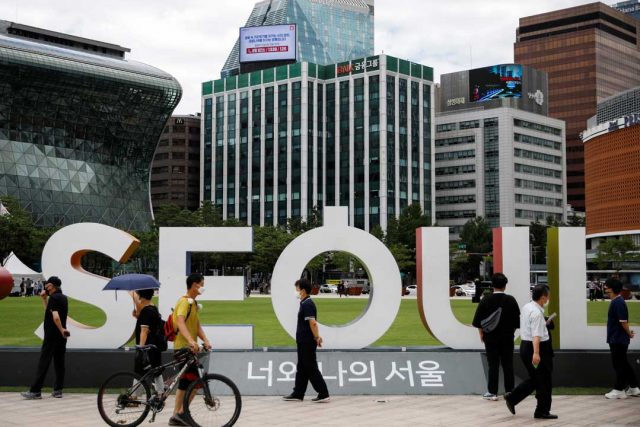
SEOUL — South Korea’s central bank raised its policy interest rate by 25 basis points on Friday, as expected, but bond yields plunged in response to comments suggesting its 1-1/2-year rate-hike campaign had ended.

The benchmark 10-year treasury bond yield dived as much as 14.3 basis points to 3.270%, its lowest since late August and far below the Bank of Korea’s policy rate, which was raised to 3.50% on Friday.

The central bank said in a statement that economic growth this year would fall short of forecasts issued in November while inflation would slow in line with its expectation of two months ago. It abandoned a formerly regular reference to the need for more interest rate rises.

“The Board will judge whether the Base Rate needs to rise further while thoroughly assessing the economic downside risks and financial stability risks, the effects of the Base Rate raises, the pace of inflation slowdown, and monetary policy changes in major countries,” it said in the statement.

Economists in a Reuters poll had predicted Friday’s rate increase would mark the end of the rate-hike cycle, which the Bank of Korea began in August 2021.

“There were more dissenters than expected and the governor’s comments were dovish in general,” said Ahn Jae-kyun, fixed-income analyst at Shinhan Securities.

Bank of Korea Governor Rhee Chang-yong told a news conference that two of the six board members had voted to hold interest rates steady. Rhee does not vote when a majority is formed among the other six.

Gross domestic product was probably lower in the fourth quarter of 2022 than in the previous quarter, Mr. Rhee said. That would be the first fall since mid-2020. Data for October-December has not been issued yet.

He said it was premature to say whether the economy would suffer two consecutive quarters of contraction but he hoped growth would be better in the current quarter.

Friday’s decision marked the 10th rise in the current tightening cycle and brought the total amount of increase to 300 basis points. — Reuters

Malaysia says it could stop palm oil exports to EU after new curbs

CRAIG MOREY/FLICKR/CC BY-SA 2.0

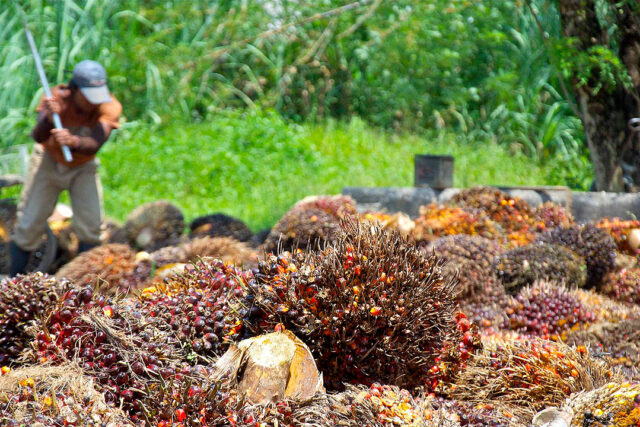
KUALA LUMPUR — Malaysia said on Thursday it could stop exporting palm oil to the European Union (EU) in response to a new EU law aimed at protecting forests by strictly regulating sale of the product.

Commodities Minister Fadillah Yusof said Malaysia and Indonesia would discuss the law, which bans sale of palm oil and other commodities linked to deforestation unless importers can show that production of their specific goods has not damaged forests.

The EU is a major palm oil importer and the law, agreed to in December, has raised an outcry from Indonesia and Malaysia, the top producers.

“If we need to engage experts from overseas to counter whatever move by EU, we have to do it,” Mr. Fadillah told reporters on the sidelines of a seminar on Thursday.

“Or the option could be we just stop exports to Europe, just focus on other countries if they (the EU) are giving us all a difficult time to export to them.”

Environmental activists blame the palm oil industry for rampant clearing of Southeast Asian rainforests, though Indonesia and Malaysia have created sustainability certification standards mandatory for all plantations.

Mr. Fadillah, who is also deputy prime minister, urged the members of the Council of Palm Oil Producing Countries (CPOPC) to work together against the new law and to combat “baseless allegations” made by the EU and United States about the sustainability of palm oil.

CPOPC, which is led by Indonesia and Malaysia, has previously accused the EU of unfairly targeting palm oil.

Responding to Mr. Fadillah, the EU’s ambassador to Malaysia said it was not banning any imports of palm oil from the country and denied that its deforestation law created barriers to Malaysian exports.

“(The law) applies equally to commodities produced in any country, including EU member states, and aims to ensure that commodity production does not drive further deforestation and forest degradation,” EU Ambassador Michalis Rokas told Reuters.

Mr. Rokas added that he looked forward to meeting Mr. Fadillah to ease Malaysia’s concerns.

EU demand for palm oil was expected to decline significantly over the next 10 years even before the new law was agreed to. In 2018, an EU renewable-energy directive required the phasing out of palm-based transportation fuels by 2030 because of their perceived link to deforestation.

Indonesia and Malaysia have launched separate cases with the WTO, saying the fuels measure is discriminatory and constitutes a trade barrier.

Indonesian President Joko Widodo and Malaysian Prime Minister Anwar Ibrahim this week agreed to “fight discrimination against palm oil” and strengthen cooperation through CPOPC.

The EU is the world’s third-largest palm oil consumer, according to Malaysian Palm Oil Board data. It accounts for 9.4% of palm oil exports from Malaysia, taking 1.47 million tonnes in 2022, down 10.5% from a year earlier. — Reuters

Australia’s natural disasters bill hits $3.5 billion in 2022, billions more to come

STOCK PHOTO | Image by Andi Graf from Pixabay

SYDNEY — Floods and natural disasters that hit all but one Australian state and territory in 2022 cost the economy A$5 billion ($3.48 billion) and stoked inflation according to Treasury estimates which forecast billions more spending in 2023.

Australia suffered four major bouts of flooding last year, with global reinsurer Munich Re estimating that February and March flooding across northern New South Wales state that killed more than 20 was the fourth most costly global disaster in 2022.

Natural disasters cost the economy A$5 billion or 0.25% of real GDP for last financial year, according to Treasury estimates, particularly delays to mining and construction plus the destruction of crops. The figures did not include damage or destruction of infrastructure and other assets.

“We’ve put that number out there really just as a reminder that even though we are rightly focused on the human cost of these natural disasters, which are becoming more and more frequent, there is a cost to the economy as well and a cost to the budget,” Treasurer Jim Chalmers told ABC radio on Friday ahead of a tour of Lismore, a town 700 kilometers (435 miles) north of Sydney devastated by floods last year.

Flooding worsened last year’s record inflation, according to the Treasury, with washed out crops and disrupted logistics contributing to a 16.2% rise in fruit and vegetables prices compared to the pre-COVID decade average of 2.5%.

Days after inflation surprised forecasters to the upside, the Treasury believes fresh food prices will continue to rise.

Mr. Chalmers also flagged more demands on the budget he will deliver in May, with billions of additional disaster-related spending expected this year on top of A$3.5 billion spent in 2022.

The government will focus on mitigating future disasters, he said, instead of policies like subsidizing expensive insurance for those who live in disaster-prone areas.

“We need to be careful about how we expose the government’s balance sheet to some of these big risks,” he said. — Reuters

Why the US needs Japan’s help on China chips restrictions

REUTERS

WASHINGTON — When the Biden administration unveiled aggressive export controls in October aimed at blocking China from becoming a global leader in advanced semiconductors it was missing a key ingredient: agreement from US allies to impose their own matching restrictions.

Persuading Japan to join the US effort, which limits Chinese access to US chipmaking technology and cuts China off from certain semiconductor chips made anywhere in the world, will be high on US President Joseph R. Biden, Jr.’s to-do list when he meets with Japanese Prime Minister Fumio Kishida in Washington on Friday.

American officials, touting an ever-closer strategic alignment with Japan, are praising Tokyo’s plan for the biggest Japanese military buildup since World War Two as rivalry with China in the region grows.

But while Japan is broadly in-line with the goals of the Mr. Biden administration’s expanded US export controls, Mr. Kishida’s government has been vague about the extent to which it will join in.

Speaking in Washington last week, Japan’s minister of Economy, Trade and Industry, Yasutoshi Nishimura, promised to work more closely with Washington on export controls, although he did not say whether Tokyo would match sweeping US restrictions.

The hesitation is understandable — Japan is a top producer of the specialized tooling equipment needed to manufacture advanced chips and its companies hold 27% of global market share, according to the Semiconductor Industry Association. Tokyo Electron, Japan’s leading chip manufacturing equipment maker, relies on China for about a quarter of its revenue.

The other top producers of chip-making gear are the United States and the Netherlands, home to ASML, another of the world’s biggest makers of chip-making tools.

SEEKING A DEAL

US officials are quick to play down the differences between the United States, Japan and other allies.

“I think there’s a very, very similar vision of the challenges,” a senior US administration official told Reuters on Wednesday, adding that Japanese export restrictions may not be exactly the same as the U.S. controls.

“But I don’t think the Japanese question the basic premise that we need to be working closely together on this.”

A US Commerce Department official said in October he expected a deal with allies in the near term.

Netherlands Prime Minister Mark Rutte will travel to Washington to meet Biden on Tuesday and discuss “cooperation on critical technologies and shared vision for a free and open Indo-Pacific,” the White House said on Thursday.

Still, said Daniel Russel, a former top US diplomat for Asia, a gap remains between the US and Japanese positions.

“Kishida wants the US to take a Goldilocks approach that is tough enough to deter Chinese assertiveness, but cautious enough to allow Japan’s business interests to thrive,” he said.

Behind the US drive for high-tech export controls is rising alarm about China’s military buildup and its effort to outpace the United States in technologies such as artificial intelligence and quantum computing.

Fearing that this will yield a military edge for an increasingly assertive China, US officials hope that keeping the most sophisticated chips – and the tools needed to make them — out of China’s hands will slow the country’s progress on advanced technologies.

But unless Japan and the Netherlands impose their own export controls, China will soon perfect other ways of getting the equipment it needs, even as American companies stand to lose market share.

A US deal with the Netherlands could also be within reach. One toolmaking industry executive familiar with that country’s sector said that if the Dutch government imposed similar export controls on its industry, ASML would probably not suffer a severe impact due to its extensive network of customers beyond China.

If US diplomacy succeeds, its policies could have the intended impact, argues Chris Miller, author of “Chip War” and an associate professor at Tufts University.

With Japan on board, particularly in terms of chip manufacturing tools, the United States could put up “a really large number of road blocks to China’s ability to advance its own domestic chipmaking,” Mr. Miller said.

That would have knock-on effects for Beijing’s other tech ambitions, including in artificial intelligence.

Japanese companies can make up for lost China business by expanding elsewhere, such as Southeast Asia, a chip industry source familiar with internal discussions about export restrictions said.

“For better or worse, Japan’s semiconductor strategy is moving in accordance with what the United States wants.” — Reuters

Four out of five Filipinos are interested in entrepreneurship – OCTA Research

STOCK IMAGE | Image by pikisuperstar on Freepik

Eighty-one percent (81%) of adult Filipinos would prefer to go into business – granting they had enough know-how to do so, according to the results of a survey conducted in October 2022 by OCTA Research, a private polling, research, and consultation firm,  

Results of the national survey was released January, 2023 by the office of Jose Ma. “Joey” A. Concepcion III, founder of GoNegosyo, a non-profit that supports Filipino entrepreneurs, and which commissioned the said survey. 

Across socioeconomic classes, the desire for entrepreneurship was at 80% among classes ABC and D, and 74% from class E. The national survey, commissioned by Go Negosyo, a non-profit that supports Filipino entrepreneurs, also found that capital provision is the kind of government support that small entrepreneurs need the most (69%), and that mentorship is a very important component for a small business to be more successful (66%). 

Filipinos have high interest for entrepreneurship, according to Ranjit Singh Rye, an OCTA Research fellow and a professor at the University of the Philippines, in a January 11 phone call.  

“It’s also clear they want government to support MSMEs [micro, small, and medium enterprises] by funding two things: loans and mentoring,” Mr. Rye said. 

“My opinion is that the government needs to expand investment in programs that broaden and deepen the development of MSMEs in the country.…Filipinos are hankering for support,” he added. “This is the viable way forward for us not just to recover, but prosper as a nation.”  

Among those Filipinos who prefer to get into business, the top reasons are: 

  • no boss to report to/get along with (24%) 
  • management of one’s own time/schedule (21%) 
  • working and earning at home or from anywhere (14%) 
  • daily income/money (13%) 
  • and no limit in profit/bigger salary (12%).  

Those who prefer work, in contrast, cite having a fixed/monthly income (34%), financial security (29%), and not having to need money/capital to start (17%) as their top reasons.  

Either way, three-fifths of adult Filipinos (62%) think the positive impact on the community is the main reason for supporting and favoring small businesses. 


Information sources 

Relatives and family are the main source of information about entrepreneurship for adult Filipinos (59%), with the local government unit (LGU) following at 43%. Only about 23% of the same segment consider the Department of Trade and Industry as the source of information about entrepreneurship. 

The October 2022 survey further found that more than half – or 53% – were also aware of Go Negosyo and its founder, Jose Ma. “Joey” A. Concepcion III. Go Negosyo is seen by adult Filipinos as either as a partner or supporter of small businesses (52%), or as one that teaches how to run a business (47%). 

“With the pandemic now behind us, and even with the current headwinds facing the global economy, I am confident that 2023 will be a much better year for our entrepreneurs,” Mr. Concepcion said in a January 8 press statement.  

“I think our growth will continue, and I believe that, perhaps by the second quarter, we will reach a tipping point where commodity prices will go down. Interest rates definitely will taper off, and hopefully, by the second quarter and maybe towards the third, interest rates will go down, and it will be the same with power rates,” said Mr. Concepcion. 

“Barring any further escalation between Russia and the Ukraine, we might have already seen the worst,” he added in the same press statement. 

Micro, small, and medium enterprises account for 62.66% of job generation in the Philippines, which amounts to 5,380,815 jobs, per the Department of Trade and Industry’s 2020 figures. 

The Philippines Statistics Authority classifies an enterprise as a micro enterprise if it has less than 10 employees, small if it has 10-99 employees, medium with 100-199 employees, and large if it has 200 or more employees. The Small and Medium Enterprise Development Council, on the other hand, uses asset size (up to P3,000,000 for microenterprises, and up to P100,000,000 for medium ones) as its basis for classification.Patricia B. Mirasol

The survey involved 1,200 respondents aged 18 years and older, covering socioeconomic classes AB, C, D, and E.  

Animal and pet-related Reels get most engagement on Facebook and Instagram in 2022

Reels of animals and pets received the most engagement on Facebook and Instagram in the first three quarters of 2022, according to Meta, the company that owns the two social media platforms. 

The Reels feature is a feed of short-form videos that were launched in the Philippines early 2022 (for Facebook) and late 2021 (for Instagram). 

For Facebook Reels, the top 5 most engaged topics from Filipino creators in 2022 are: 

  • Animals and pets 
  • Comedy/skit 
  • Sports 
  • Fashion 
  • Family and parenting 

For verified Philippine-based Instagram accounts, former Pinoy Big Brother housemate, Andrei King (@king.dreii), created the Reel with the highest number of views with his “Instagram vs. Reality” experience about taking Instagram-worthy travel photos, garnering 1,228,238 likes.  

Actress Maricar Reyes-Poon (@maricareyespoon) takes second place for most played Instagram Reels with her transformation from sweet and charming girl next door to chic and sophisticated lady with the Cruella filter. 

Philippine-based Korean creator Dasuri Choi’s quick glam change, fashion blogger Kryz Uy’s moment with husband Slater, and When In Manila’s sushi pun round up the top 5. 

Meta also noted that Jeeca Uy, the home cook behind The Foodie Takes Flight, gained more than 117,000 new Instagram followers after they viewed one of her Reels.  

“Reels enables everyone to create entertaining short-form videos and get discovered on a global stage. Since we launched Reels on Instagram in 2021, we have seen just how much Reels content reflect authentic Pinoy culture as a whole—from our soft spot for animals, to our penchant for finding humor in everyday life, how we value family, and how we express our shared love for food,” said John Rubio, Philippine country director at Meta, in a January 5 press statement. 

 “We look forward to seeing Filipino Creators expand their repertoire, grow their following, and explore fun new ways to engage people through short-form content in 2023,” he added.Patricia B. Mirasol

BSP chief hopes to cut rates in 2024

Buildings are seen along EDSA in Quezon City, July 3, 2022. — PHILIPPINE STAR/ MIGUEL DE GUZMAN

By Keisha B. Ta-asan, Reporter

THE BANGKO SENTRAL ng Pilipinas (BSP) may cut key benchmark rates in 2024, as well as lower the reserve requirements for banks in the first half of 2023, its chief said on Thursday.

“Now hopefully by 2024, when pent-up demand is gone, then monetary policy hopefully at that time will be much looser than what we have now. How much looser? I don’t know. Of course, so many things can happen,” BSP Governor Felipe M. Medalla said in a speech at the Rotary Club Manila meeting.

However, Mr. Medalla told reporters that monetary policy would still depend on what the US Federal Reserve does, saying the policy tightening in the United States “is far from over.”     

The US Federal Reserve increased rates by 425 bps last year, bringing its policy rate to 4.25-4.5%.  The Fed has signaled it will continue tightening this year to tame inflation.

“Even though we’re quite confident that inflation will normalize, I cannot say that we will have rate cuts before the end of this year. But hopefully 2024,” Mr. Medalla said.   

The BSP governor earlier this week flagged a 25-basis-point (bp) or 50-bp rate increase at its first policy meeting this year on Feb. 16.

The Monetary Board raised borrowing costs by 350 bps in 2022, to curb inflation and support the peso. This brought the policy rate to a 14-year high of 5.5%.   

Mr. Medalla also hopes that the series of rate hikes would be enough to tame inflation and prevent any second-round effects this year.   

Inflation rose to a 14-year high of 8.1% in December, bringing the full-year average to 5.8%. The BSP sees inflation easing to 4.5% this year and 2.8% in 2024.   

RRR CUT
Mr. Medalla said there is a high probability of cutting the banks’ reserve requirement ratio (RRR) in the first semester of 2023.

“Cutting the RRR is very important to us. The only reason we postponed this is because (when) we did this in the past, it confused the markets,” Mr. Medalla said.

A cut in RRR is a move intended to be an operational adjustment to facilitate the BSP’s shift to market-based instruments for managing liquidity in the financial system, particularly the term deposit facility and the BSP securities. 

The RRR for big banks is currently at 12%, one of the highest in the region. Reserve requirements for thrift and rural lenders are at 3% and 2%, respectively.

In March 2020, the BSP cut big banks’ RRR, or the percentage of deposits and deposit substitutes they must keep with the central bank, by 200 bps to 12%.

The BSP earlier committed to bringing down the RRR of big banks to single digits by 2023.   

Bank of the Philippine Islands (BPI) Lead Economist Emilio S. Neri, Jr. said the central bank is taking the right direction regarding the reserve requirements.

“Cutting RRR improves the competitiveness of local banks and should benefit bank customers as it lowers the cost of intermediation. It’s crucial that the sequence is done right,” Mr. Neri said in a Viber message.   

“It’s better for a policy rate cut to give way to an RRR cut as doing the opposite could lead to another postponement of a long-standing commitment to sharpen, so to speak, BSP’s policy tools. The RRR is a blunt policy tool being replaced by more precise and preventive ones like macro prudential measures,” he added.   

For ING Bank N.V. Manila Senior Economist Nicholas Antonio T. Mapa, the move to reduce the RRR is a welcome development and it should be well-timed to avoid confusion on the BSP’s policy stance.   

“In 2023, with less pressure on the peso and with the current governor indicating that the rate hike cycle is winding down, the RR (reserve requirement) reduction can take place in an orderly fashion,” Mr. Mapa said in an e-mail. 

“Furthermore, [Mr.] Medalla expressed the intention to reduce RR to offset the expiration of pandemic-era accommodation for lending to (small and medium enterprises). This should further ensure an orderly transition away from RR to market-based tools such as the BSP deposit facilities and bills,” he added.

During the pandemic, the BSP allowed lenders to count their lending to micro, small, and medium enterprises and pandemic-hit large enterprises as part of banks’ alternative compliance with the RR against deposit liabilities and deposit substitutes until the end of 2022.

NPL ratio continues to decline in November

STOCK PHOTO | Image by iiijaoyingiii from Pixabay

BAD DEBTS held by Philippine banks continued to drop in November, bringing the industry’s nonperforming loan (NPL) ratio to 3.35%, with the Bangko Sentral ng Pilipinas (BSP) governor saying he does not expect a further rise this year.

Based on data from the central bank, soured loans slipped by 0.9% to P408.097 billion in November from P411.632 billion in October. It also declined by 15.3% from P481.879 billion in November 2021.

This brought the November NPL ratio to 3.35%, which fell from 3.41% in October and 4.35% in the same month of 2021. This was also the lowest in 27 months or since the 2.84% print in August 2020.

Loans are considered nonperforming once they remain unpaid for at least 90 days after the due date. They are deemed as risk assets as borrowers are unlikely to settle these loans.

“It’s hard to predict (the trend in NPLs) but I do not expect it to rise (this year). Loans are going up, so the denominator is going up,” BSP Governor Felipe M. Medalla told reporters on the sidelines of a Rotary event on Thursday. 

Data earlier released by the BSP showed outstanding loans extended by universal and commercial banks climbed by 13.7% year on year to P10.64 trillion in November. However, this is slightly slower than the 13.9% expansion in October.

Asian Institute of Management economist John Paulo R. Rivera attributed the decline in NPLs to more income-generating activities and stable employment as the economy recovered from the pandemic.

“This is expected to continue as the economy recovers and approach pre-pandemic level,” Mr. Rivera said in a Viber message.

The unemployment rate eased to 4.2% in November, the lowest in over 17 years, as firms hired more workers ahead of the holiday season. 

Since March last year, Metro Manila and most provinces in the country have been under the most lenient alert level, allowing businesses to operate at full capacity.

Consumers and businesses were also able to pay their loans amid the economic recovery, Rizal Commercial Banking Corp. Chief Economist Michael L. Ricafort likewise said.

In November, banks’ total loan portfolio rose by 10.1% to P12.20 trillion from P11.08 trillion a year ago.

Past due loans fell by 13.2% to P492.528 billion from P567.512 billion a year earlier. These borrowings are equivalent to 4.04% of the industry’s total loan portfolio, down from 5.12% a year earlier.

Restructured loans fell by 4.9% year on year to P327.760 billion in November, from P344.897 billion in the same month of 2021. This brought the ratio to 2.69% in November, from 3.11% in the year prior.

Meanwhile, banks increased loan loss reserves by 2.7% to P431.501 billion in November, from P419.863 billion in the year prior. With this, the ratio went down to 3.54% from 3.79% in November a year ago.

Lenders’ NPL coverage ratio — which shows the allowance for potential losses due to bad loans — increased to 105.73% from 87.13% a year earlier.

“Further improvement in lending/credit standards also contributed to the improved loan/asset quality of banks, on top of the further reopening of the economy,” Mr. Ricafort said. 

However, he noted that elevated inflation and higher borrowing costs remain “overshadowing challenges” that may affect banks.

The BSP has raised benchmark interest rates by 350 basis points (bps) last year, bringing the overnight reverse repurchase rate to 5.5% to tame inflation.

Inflation rose to a 14-year high of 8.1% in December, bringing the full-year average to 5.8%. This is above the central bank’s 2-4% target for 2022.

BSP officials earlier said Philippine banks’ NPL ratio may peak at 8.2% in 2022.

As of end-December 2021, the ratio stood at 3.97%. — Keisha B. Ta-asan

GDP grew by at least 7.5% in 2022, says Diokno

Families celebrate Christmas at Luneta Park, Dec. 25, 2022. — PHILIPPINE STAR/WALTER BOLLOZOS

THE PHILIPPINE ECONOMY likely expanded by at least 7.5% in 2022, Finance Secretary Benjamin E. Diokno said on Thursday.

“We expect the economy to have grown by at least 7.5% last year. Because of the expected slowdown of the global economy, the Philippine economy is forecasted to grow by around 6.5% this year — still one of the highest, if not the highest, growth rate in the Asia-Pacific region,” Mr. Diokno said in a transcribed speech at the 16th Asian Financial Forum (AFF) on Wednesday.

The government had set a gross domestic product (GDP) growth target of 6.5-7.5% for 2022.

Economic managers previously said the Philippines will likely exceed the GDP target after the better-than-expected 7.6% growth in the third quarter, which brought the nine-month average to 7.7%.

The Philippine Statistics Authority (PSA) is set to release fourth-quarter GDP data on Jan. 26.

“Entering 2023, the world economy faces multiple challenges — from the COVID-19 pandemic to the global supply chain crisis; from persistently high prices owing to higher energy and other commodity prices to the rapid monetary tightening in the US, Europe, and practically all economies; and from worsening poverty to threatening climate disaster,” Mr. Diokno said.

Economic managers in December revised its 2023 GDP target to 6-7%, a narrower band than the previous goal of 6.5-8%.

The World Bank on Wednesday lowered its forecast for the Philippines’ GDP to 5.4% this year, from its previous projection of 5.6% amid the looming global recession.

The 5.4% Philippine GDP forecast was the second-fastest forecast in Southeast Asia this year, behind Vietnam’s 6.3%.

“While the challenges we face today are grand and complex, these are not insurmountable. There is much we can accomplish with the right policy tools, decisive action, and commitment to global cooperation,” Mr. Diokno said.

The Finance chief said that the government’s growth and price stability objectives can be achieved “if the leaders and policy makers are able and willing to adopt the appropriate monetary and fiscal policies.” — Luisa Maria Jacinta C. Jocson

Disasters, debt crisis are seen as top risks for PHL

Areas in Bulacan, Nueva Ecija and Tarlac experienced heavy flooding after super typhoon Karding hit the country in September. — PHILIPPINE STAR/KRIZ JOHN ROSALES/PPA POOL

NATURAL DISASTERS are considered the top risk faced by the Philippines over the next two years, alongside a possible debt crisis, rising inflation and misinformation, according to a survey conducted by the World Economic Forum (WEF).

In its Global Risks Report 2023, the WEF said Philippine respondents for its executive opinion survey (EOS) identified natural disasters and extreme weather events as the top risk facing the country.

The Philippines is one of the countries considered most vulnerable to natural disasters such as earthquakes, floods, heatwaves, and typhoons. It had the highest disaster risk among 193 countries in the World Risk Index last year.

“Natural disasters and calamities cause a lot of damage, disruption, and productivity losses in a year and is a consideration for investments,” Rizal Commercial Banking Corp. Chief Economist Michael L. Ricafort said in a Viber message when sought for comment.

Philippine respondents also considered a debt crisis as the second-biggest risk, as the government borrowed heavily to fund its coronavirus pandemic response.

The National Government’s outstanding debt stood at a record P13.644 trillion as of end-November. As of end-September, the government’s debt-to-gross domestic product (GDP) stood at 63.7%, still above the 60% threshold prescribed by multilateral lenders.

However, Mr. Ricafort said that the country’s debt-to-GDP ratio is still manageable.

“However, there is a need to bring the debt-to-GDP ratio to below the international threshold of 60% of GDP… to prevent any risk of credit rating downgrade,” Mr. Ricafort said.

MISINFORMATION
The WEF report showed Philippine respondents also identified rapid or sustained inflation, misinformation, and geopolitical contestation of resources as other top risks for the country.

Inflation rose to a 14-year high of 8.1% in December, bringing the full-year average to 5.8%. However, the Philippine central bank sees inflation easing to 4.5% this year and 2.8% in 2024.   

Based on the WEF report, the Philippines was the only country where respondents considered misinformation as one of the top five risks in the next two years.

“Misinformation and disinformation are, together, a potential accelerant to the erosion of social cohesion as well as a consequence. With the potential to destabilize trust in information and political processes, it has become a prominent tool for geopolitical agents to propagate extremist beliefs and sway elections through social media echo chambers,” WEF said.

Filipino voters had faced a barrage of fake news on social media, particularly during the national elections in 2016 and 2022.

“Information is key to any good working economy. Information asymmetry is not good especially for financial markets,” UnionBank of the Philippines, Inc. Chief Economist Ruben Carlo O. Asuncion said in a Viber message.

Mr. Ricafort said that misinformation is a high risk for the Philippines since it could affect both the economic and political landscape.

“It could potentially alter election results/voters’ behavior and choices. It is also important in view of the information age… Increased education and transparency can help address risk of misinformation,” he added.

Mr. Asuncion said the Philippine government has a “tough task” of sustaining economic recovery amid various headwinds.

“Nevertheless, we do have a leg up moving forward but still I would approach 2023 with much caution… Global economic growth is fragile and any unexpected event (like geopolitical noise, resurgence of COVID-19) can push the global economy into a deeper economic slowdown,” Mr. Asuncion said.

“Careful and deliberate policy coordination and support would be welcome amidst the challenges of uncertainties that we all face as citizens of this world,” he added.

The survey was conducted by WEF between April and September 2022. It involved over 12,000 respondents from WEF’s partner institutes, who were asked which five risks are most likely to pose the biggest threat to their country in the next two years. 

GLOBAL RISKS
Meanwhile, the “cost-of-living crisis” was ranked as the most severe global risk in the next two years, the annual WEF Global Risks Perception Survey (GRPS) showed.

“The persistence of a global cost-of-living crisis could result in a growing proportion of the most vulnerable parts of society being priced out of access to basic needs, fueling unrest and political instability,” WEF said.

Other top global risks identified by global respondents were natural disasters and extreme weather events; geoeconomic confrontation, failure to mitigate climate change; and erosion of social cohesion and societal polarization.

Global risk is defined by the possibility of the occurrence of an event that may negatively impact a significant proportion of global economy, population or natural resources.

In the next 10 years, the failure to mitigate climate change is seen as the biggest risk facing the global economy, followed by failure of climate change adaption, and natural disasters and extreme weather events.

“The short-term risk landscape is dominated by energy, food, debt and disasters. Those that are already the most vulnerable are suffering — and in the face of multiple crises, those who qualify as vulnerable are rapidly expanding, in rich and poor countries alike,” WEF Managing Director Saadia Zahidi said in a separate statement.

“Climate and human development must be at the core of concerns of global leaders, even as they battle current crises. Cooperation is the only way forward,” she added.

The GRPS collected responses from over 1,200 experts between Sept. 7 and Oct. 5, 2022. — Revin Mikhael D. Ochave