Home Blog Page 5409

BillEase raises $20M to expand loan portfolio

BILLEASE has raised an additional $20 million through a funding round to further expand its loan portfolio, the company said in a statement on Monday.

The debt facility was granted by Singapore-headquartered Helicap Securities, a financial technology (fintech) company that provides private debt investment opportunities for accredited and institutional investors.

“We are delighted to have secured a new facility which will further grow and expand our loan portfolio, demonstrating the confidence private investors have in our sustained growth trajectory and profitability,” BillEase Chief Executive Officer and Co-Founder Georg Steiger said.

“Being able to collateralize our loan book allows us to access funding to continue serving our fast-growing, underserved customer base,” Mr. Steiger said. “Our new funding comes at the right time as we develop and launch new products and continue to see strong growth. At the same time maintaining profitability means we can be a sustainable and long-term partner for consumers and merchants.”

This brings the total funding secured this year by the buy now, pay later (BNPL) platform to $55 million in debt and equity as it aims to accelerate the growth of its products.

In January, BillEase raised $11 million through Series B equity, with participants including BurdaPrincipal Investments, MDI Ventures, and KB Investment, among others. In March, it secured $20 million from UK-based Lendable, an emerging market credit facility.

“We are excited to support BillEase’s growth with this debt facility. We are impressed by the company’s growth over the past three years and its mission to further financial inclusion in the Philippines,” Helicap Securities Executive Director Zhiwei Tan said. 

“The rising acceptance of digital payments is changing the landscape of consumer lending and we are seeing BillEase as one of the few companies that can leverage and scale with the use of their AI-driven credit engine which allows them to offer consumer-centric, responsible financial products and highly personalized digital experience,” Mr. Tan said.

BillEase said it is well positioned to expand its financial services further in a market where low-cost loans are mostly inaccessible.

“The Philippines is among the emerging markets with low credit card penetration but has a tech-savvy and digitally-forward population, creating more growth opportunities and capturing a largely underserved market for the company,” it said. 

The volume of transactions done on BillEase climbed by nearly five times in the first half of the year from the same period in 2021, the company said. It has disbursed over 3 million in loans so far.

BillEase is a credit and finance platform that allows clients to pay for their purchases both online and offline through installment plans. It launched its in-store QR payment service this year.

The company has been profitable since 2021, which it attributed to its AI-driven underwriting process that allows it to automate loan approvals and keep costs low.

BillEase is currently accepted as a payment method by over 1,000 brands and small businesses and is offered by seven major payment gateways in the Philippines. — K.B. Ta-asan


AF Payments provides insurance to ‘beep’ cardholders

AF Payments, Inc., (AFPI) the company behind stored-value or “beep” cards, announced on Monday that it now provides personal insurance coverage to its cardholders.

“As we continuously work to deliver a convenient and reliable payment system, we want to empower our customers to maximize the benefits that come with their beep™ card,” said Sharon Fong, chief commercial officer of AF Payments, in a press release.

AFPI said that it partnered with Malayan Insurance Co., Inc. to provide personal insurance coverage to its cardholders.

The company said that qualified customers are entitled to P10,000 in life insurance coverage for death due to an accident.

“P10,000 benefit for total permanent disablement from an accident, up to P10,000 benefit for dismemberment and/or disablement from an accident, and P2,000 burial expense benefit following an accidental death,” AFPI said.

To qualify, AFPI said that customers must register their beep card in the beep mobile application from Sept. 5 to Dec. 5, “only one card per account is eligible for the free insurance.”

However, AFPI said that new beep cards will not qualify for the promo, even if registered in an existing mobile application.

“Coverage is valid for 1 month from the date of registration. Customers will receive their proof of cover, including details on how to claim benefits, in their registered e-mail address,” AFPI said. — Ashley Erika O. Jose

Hana Garden Villas launched

CHAN TOEI Properties recently launched Hana Garden Villas, which will offer Japanese-inspired homes in Canlubang, Laguna.

“To be built over the soft sloping terrain, the boutique community will have a lush landscape with trees and flowering plants, aligned with the meaning of ‘hana’ (Japanese for flower). The uncluttered view and ambiance will remain even after its development since utilities and cables will be placed fully underground,” the company said in a statement.

Hana Garden Villas is located along Nuvali Boulevard corner J. Yulo Avenue, also known as Canlubang Golf Road.

Leandro V. Locsin Partners and Japan’s TOEI collaborated on various home concept designs. The project will offer home units with three bedrooms and four bedrooms, which will be available with customizable layouts.

Amenities include an infinity lap pool, kiddie pool, outdoor lounge areas, multipurpose rooms, gym, and the property management office.

How PSEi member stocks performed — September 12, 2022

Here’s a quick glance at how PSEi stocks fared on Monday, September 12, 2022.


PHL shares climb as investors pick up bargains

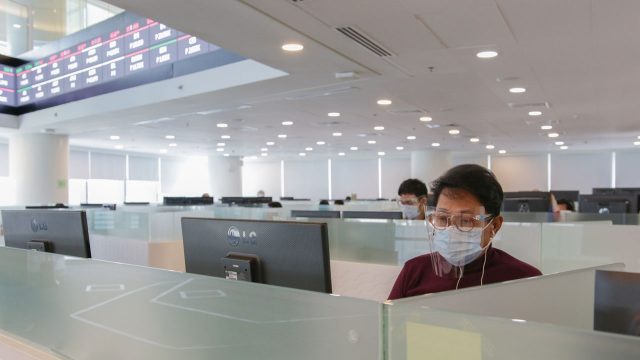
PHILIPPINE SHARES climbed on Monday on bargain hunting following last week’s decline and despite data showing foreign direct investments (FDIs) declined in June.

The benchmark Philippine Stock Exchange index (PSEi) rose by 109.75 points or 1.66% to close at 6,715.75 on Monday, while the broader all shares index went up by 39.35 points or 1.12% to 3,545.82.

“The PSEi finished today gaining 1.66% to close at 6,715.75 despite negative news on FDI inflows posting a 13-month low in June,” Unicapital Securities, Inc. Equity Research Analyst Ralph Jonathan B. Fausto said in a Viber message.

“We can attribute this upswing in our index today to some bargain hunting activities as the PSEi declined 1.3% week on week in the previous week presenting good windows of buying opportunities to some investors,” Mr. Fausto said.

Philstocks Financial, Inc. Research Analyst Claire T. Alviar added in a Viber message that Wall Street’s rise on Friday also lifted the market, although trading volume was weak ahead of the release of US consumer inflation data on Tuesday, which could influence the upcoming policy decisions of the US Federal Reserve and the Bangko Sentral ng Pilipinas (BSP) next week.

Value turnover went up to P4.31 billion on Monday with 636.9 million shares changing hands from the P4.27 billion with 787 million issues seen the previous trading day.

Net inflows of foreign direct investments dropped by 51.5% to $471 million in June from $971 million a year earlier, data released by the Bangko Sentral ng Pilipinas on Monday showed.

The June level was a 13-month low. FDI net inflows also declined by 36.5% from $742 million in May.

For the first half, FDI net inflows rose by 3.1% to $4.641 billion from $4.503 billion in the same period last year. The central bank expects FDI net inflows to reach $11 billion this year.

Meanwhile, on Friday, the Dow Jones Industrial Average rose by 377.19 points or 1.19% to close at 32,151.71; the S&P 500 gained 61.18 points or 1.53% to 4,067.36; and the Nasdaq Composite added 250.18 points or 2.11% to 12,112.31.

Back home, the majority of sectoral indices ended higher on Monday except for mining and oil, which went down by 4.65 points or 0.04% to close at 11,617.44.

Meanwhile, holding firms climbed by 129.48 points or 2.03% to 6,495.17; services went up by 31.17 points or 1.85% to 1,708.20; property increased by 47.66 points or 1.62% to 2,982.60; financials added 26.04 points or 1.62% to close at 1,632.67; and industrials gained 34.90 points or 0.35% to end at 9,863.79.

Advancers outnumbered decliners, 113 against 79, while 52 names closed unchanged.

Net foreign buying declined to P407.78 million on Monday from the P580.29 million seen on Friday.

Unicapital Securities’ Mr. Fausto placed the PSEi’s support at 6,550 and resistance at 6,750, while Philstocks Financial’s Ms. Alviar put support at 6,600 and resistance at 7,000-7,100. — J.I.D. Tabile

Peso inches lower on hawkish comments from Fed officials

BW FILE PHOTO

THE PESO weakened against the dollar on Monday following hawkish remarks from US Federal Reserve officials last week.

The local unit closed at P56.86 per dollar on Monday, shedding four centavos from its P56.82 finish on Friday, based on Bankers Association of the Philippines data.

The peso opened Monday’s session at P56.85 per dollar. Its best showing was at P56.84, while its intraday worst was at P57.07 against the greenback.

Dollars exchanged decreased to $897.2 million on Monday from $1.15 billion on Friday.

Rizal Commercial Banking Corp. Chief Economist Michael L. Ricafort said in a Viber message that the peso depreciated slightly due to hawkish statements from Fed officials.

“The peso weakened after hawkish policy comments from Fed officials Waller and George and remarked the US policy rate might be raised above 4%,” a trader said in an e-mail.

Fed Governor Christopher J. Waller on Friday said the US central bank can continue to be aggressive in its fight against inflation if the unemployment rate stays below 5%.

“If the unemployment rate were to stay under 5%, I think we could be really aggressive on inflation. Once it gets over 5 there are going to be obvious pressures to start making tradeoffs,” Mr. Waller said during a speech to the Institute for Advanced Studies in Austria. “If we don’t get inflation down, we’re in trouble.”

Meanwhile, Kansas City Federal Reserve Bank President Esther L. George said US inflation remains far too high, strengthening the case for more rate hikes.

“The case for continuing to remove policy accommodation remains clear-cut,” Ms. George said on Friday in remarks for the Peterson Institute for International Economics. “The key questions are by how much and how quickly.”

These comments add to similarly hawkish remarks from Fed chief Jerome H. Powell on Thursday. Mr. Powell said the US central bank is “strongly committed” to fighting inflation and needs to continue acting strongly to bring prices down.

The peso was also slightly weaker due to data showing that net inflows of foreign direct investments (FDIs) dropped to their lowest level in 13 months, Mr. Ricafort said.

Net inflows of foreign direct investments dropped by 51.5% to a 13-month low of $471 million in June from $971 million a year earlier, data released by the Bangko Sentral ng Pilipinas on Monday showed. FDI net inflows also declined by 36.5% from $742 million in May.

For the first half, FDI net inflows rose by 3.1% to $4.641 billion from $4.503 billion in the same period last year. The central bank expects FDI net inflows to reach $11 billion this year.

“Continued gains in the local stock market today also tempered the peso’s weakness for the day,” Mr. Ricafort added.

The benchmark Philippine Stock Exchange index climbed by 109.75 points or 1.66% to close at 6,715.75 on Monday, while the broader all shares index went up by 39.35 points or 1.12% to 3,545.82.

The trader said the peso may rise against the dollar on Tuesday on expectations of a “softer” US consumer inflation report.

Mr. Ricafort said US consumer inflation likely eased slightly from the 8.5% recorded in July, but will still be among the highest in more than 40 years or since December 1981.

For Tuesday, both Mr. Ricafort and the trader see the peso moving between P56.75 and P56.95 per dollar. — K.B. Ta-asan

Rights violations continue under Marcos, UN told

PHILIPPINE STAR/ MIGUEL DE GUZMAN

HUMAN rights violations in connection with the Philippines’ anti-illegal drug campaign continue under the government of President Ferdinand R. Marcos, Jr., Human Rights Watch told the United Nations (UN) Human Rights Council on Monday.

Based on a copy of a policy paper sent to the UN, the global watchdog said extralegal killings under former President Rodrigo R. Duterte’s anti-illegal drug campaign continue to this day.

“UN member states should not be fooled by the baseless claims from the new Philippine government that the rights situation has suddenly improved,” Human Rights Watch Geneva Director Lucy McKernan said.

“Continued UN scrutiny of the Philippines is vitally important because ‘drug war’ killings are still common and police impunity for rights violations remains the norm,” she added.

“No comment, no reaction,” Press Secretary Trixie Cruz-Angeles told a news briefing streamed live on PTV 4’s Facebook page.

The global human rights group called on member states of the UN council to pass a resolution that will expand human rights monitoring in the Philippines.

Citing a joint study by the University of the Philippines and Belgium’s Ghent University, Human Rights Watch (HRW) said there have been 221 drug-related killings from January to August this year.

“UN member states should make sure they don’t drop the ball on the Philippines and instead strengthen the Human Rights Council’s efforts to improve human rights in the country,” Ms. McKernan said.

The Philippine Commission on Human Rights (CHR) last month said it would submit a report on human rights issues in the country to the UN rights council.

CHR Executive Director Jacqueline Ann C. de Guia told news briefing on Aug. 11 they were consulting civic and grassroot groups on the UN’s mechanism to assess the human rights situation in the country.

The CHR said the Duterte government had encouraged a culture of impunity by hindering independent inquiries and by failing to prosecute erring cops involved in the government’s anti-illegal drug campaign.

Last week, Philippine Solicitor General Menardo I. Guevarra asked the International Criminal Court to reject the ICC Office of the Prosecutor’s plea to continue its drug war probe, saying it does not have the authority to do so.

He said the alleged murders of drug suspects in police raids were not crimes against humanity because these were not “attacks against the civilian population.”

“We have our own accountability mechanisms in place and these are all functioning as they should,” Mr. Guevarra, who was Mr. Duterte’s Justice secretary, said in a Viber message.

The Hague-based tribunal gave the Philippines until Sept. 8 to comment on the request to resume its probe of the government’s anti-illegal drug campaign.

In June, ICC Prosecutor Karim Ahmad A. Khan asked the ICC’s pre-trial chamber to reopen the probe since the Philippines had allegedly failed to show it had investigated crimes related to the campaign. 

He said the chamber should issue an order on an “expedited basis.” It should “receive any further observations it considers appropriate from victims and the government of the Philippines,” he added.

The ICC, which tries people charged with genocide, crimes against humanity, war crimes and aggression, suspended its probe of Mr. Duterte’s deadly war on drugs last year upon the Philippine government’s request.

Justice Secretary Jesus Crispin C. Remulla earlier said the government would not submit anything to the ICC as compliance but as a “matter of comity,” noting that the Philippines is no longer an ICC member.

President Ferdinand R. Marcos Jr. has said the Philippines would not rejoin the ICC. “This ICC is a very different kind of court, which is why we are carefully studying first the procedure so that our actions won’t be misinterpreted,” he said on Aug. 1.

Carlos H. Conde, a senior researcher at HRW, said the ICC would likely proceed with its investigation of the drug war even if the Philippines refuses to cooperate.

“Mr. Marcos and his advisers can spin this all they want, but this is definitely going to happen, and this is a decision the ICC is keen to take,” he said on Aug. 1.”

Only 21% or 62,000 of 291,000 drug cases filed have led to convictions, Interior Secretary Benjamin C. Abalos said in July, citing police data from 2016 to 2022.

The Department of Justice has brought five of the 52 cases involving 150 police officers to court since it started its own probe last year.

Philippine police have said they have killed about 6,000 people in illegal drug raids, many of them resisting arrest. Human rights advocates have placed the death toll at more than 27,000. — John Victor D. Ordoñez

President Marcos scraps mandatory use of face masks

PHILIPPINE STAR/ WALTER BOLLOZOS

By Kyle Aristophere T. Atienza, Reporter

President Ferdinand R. Marcos, Jr. has signed an order ending the mandatory use of face masks outdoors, more than two years after it was imposed to contain the coronavirus.

Wearing face masks in open spaces with good ventilation and where there is no overcrowding is now optional, Press Secretary Trixie Cruz-Angeles told a televised news briefing on Monday. The order takes effect immediately.

“Face masks shall continue to be worn in indoor, private, or public establishments, including in public transportation by land, air and sea and in outdoor settings where physical distancing cannot be maintained.”

Ms. Angeles said those who are not fully vaccinated against the coronavirus, senior citizens and people with weak immune systems are still “highly encouraged” to wear masks and observe physical distancing.

Cabinet officials and the private sector had long pushed the policy, but health authorities wanted people to keep wearing face masks during the pandemic.

The policy “might be a bit early” since the relatively low coronavirus disease 2019 (COVID-19) transmission in the Philippines is highly attributed to the observance of minimum public health standards, which include mask mandates, said Joey Francis Hernandez, a medical doctor and treasurer of the Philippine Society of Public Health Physicians.

“It would also be more difficult to control the spread of COVID-19, considering that even if physically distanced, coughing and sneezing can transmit droplets potentially infected with SARS-CoV-2,” he said in a Facebook Messenger chat.

Mr. Hernandez said it might be better to wait until the government reaches its first booster target, which is at least 50% based on a presidential mandate, “before we loosen mask mandates even outdoors.”

The doctor urged the government to improve access to timely and affordable COVID-19 testing if it will pursue the policy. “Filipinos should not easily let their guards down considering that anytime, COVID-19 cases may increase again,” he said. “Also, we have to protect the immunocompromised, senior citizens and younger children.”

The decision was first announced last week, after the pandemic task force’s Sept. 8 meeting, where economic managers cited increasing tourism demand in countries that have relaxed face mask rules.

The Philippines and Myanmar were the only Southeast Asian nations that continue to enforce the face mask mandate outdoors, according to data from the Interior and Local Government department.

Foreign tourists have increased in countries that have relaxed mask rules, while fresh infections have decreased, it added.

Noe Lineses, owner of an online platform that organizes trips and tours in Puerto Galera, expects the optional mask policy to attract more foreign tourists.

“Why are we always trailing behind other Southeast Asian countries like Thailand and Malaysia in terms of innovation and readiness to accept foreign tourists?” he said in a Messenger chat, adding that many Filipinos have been fully vaccinated against the coronavirus.

“It’s about time we learn to live with the virus.”

Mr. Lineses also cited the country’s booster uptake, but experts say it remained low.

Puerto Galera is a popular beach destination about three hours from Manila, the capital. The tourism sector accounted for 12.8% of Philippines economic output in 2019, or about P2.48 trillion.

Tourism’s contribution to the country’s gross domestic output fell to 5.2% last year after a global coronavirus pandemic forced many countries to close their borders.

Congressman: Marcos to order agrarian debt pardon 

PHILSTAR

PHILIPPINE President Ferdinand R. Marcos, Jr. would sign an order imposing a moratorium in the collection of P58 billion in agrarian reform debts of about 654,000 farmers, according to a congressman. 

Albay Rep. Jose Ma. Clemente S. Salceda, who authored a bill that seeks to pardon the debts covering 1.18 million hectares of awarded land, said it would be the first major executive order that the president would issue for farmers. “So, it is historic,” he said in a statement sent through Viber. 

“It sends an unmistakable signal to Congress about where the president wants to take this,” he said. “He means what he says in the state of the nation address. We need to enact a law condoning the P58 billion in agrarian reform beneficiary debts.” 

The Comprehensive Agrarian Reform Law of 1988 mandates that land awarded to agrarian reform beneficiaries be paid in thirty annual amortizations at 6% interest per year.  

“With this executive order, President Marcos is wielding the might of his 59% mandate — a mandate built heavily on his emphasis on farmer and rural development,” Mr. Salceda said. — Matthew Carl L. Montecillo 

Math, science proficiency bill refiled 

PHILSTAR

SENATOR Sherwin T. Gatchalian has refiled a bill requiring the government to set up math and science high schools in all provinces. 

“Innovation in our country depends on Mathematics and Science,” the head of the Senate education committee said in a statement in mixed English and Filipino on Monday. “Every province in the Philippines should have a math and science high school that will produce our mathematicians, engineers and scientists.” 

Under Senate Bill 476 or the proposed Equitable Access to Math and Science Education Act, the Department of Education (DepEd) must enforce a six-year integrated junior-senior high school curriculum that focuses on science, technology, engineering and mathematics. 

Filipino students ranked second to the last in math and science among learners in 79 other countries, according to the Organization for Economic Co-operation and Development’s 2018 program for international student assessment. It was last among 58 countries in the 2019 Trends in International Mathematics and Science Study. 

Only 17% of Filipino Grade 5 students met the minimum standards in Mathematics, according to the Southeast Asia Primary Learning Metrics 2019 of United Nations Children’s Fund. 

“This specialized academic preparation opens doors to critical thinking, financial literacy and evidence-based decision-making and is highly critical to the improvement of the nation’s economy as it relies on a workforce proficient in math and science,” Mr. Gatchalian said. — Alyssa Nicole O. Tan 

Trial courts in Dinagat eyed 

PROVINCIAL INFORMATION OFFICE - DINAGAT ISLANDS

A CONGRESSMAN has urged his peers to approve a bill that seeks to create courts in Dinagat Islands in southern Philippines. 

“At present, there are no municipal trial court branches to be found in our seven municipalities, while reaching branches of the Caraga Regional Trial Court could take hours, if not days, of accumulated travel by land and sea,” Dinagat Islands Rep. Alan B. Ecleo said in a sponsorship speech in plenary on Monday.  

House Bill 325 seeks to create a regional trial court branch and municipal trial court branch in San Jose, plus one more in Basilia.  

“We seek to make the administration of justice in the province of Dinagat Islands more expedient and accessible to the public,” he said. — Matthew Carl L. Montecillo 

Philippines told to boost anti-drone system 

PIXABAY

By Kyle Aristophere T. Atienza, Reporter 

THE PHILIPPINES should boost its anti-drone capability to counter aerial threats used in geopolitical disputes, according to defense analysts. 

Chester B. Cabalza, who studied national security and policymaking at the University of Delaware, said both state and nonstate actors have increasingly been using drones “for their violent activities due to their accessibility and pronounced use in war.” 

“The sophistication of this high technology will also lead to the rise of artificial intelligence and robotics to advance the level of warfare,” he said in a Facebook Messenger chat.  

The Israeli government on Monday shared with the Philippines its best practices in countering threats from “very developed” drones. 

“Every organization here in the Philippines has its own asset that needs to be defended,” Israel Ambassador Ilan Fluss told reporters before holding a closed-door meeting with Philippine security officials.  

At the meeting, representatives from state-owned and private companies in Israel offered anti-drone technologies and shared practices in keeping drone threats at bay.  

“It is a process, shaping policy, identifying what are the challenges, where are the issues, what kind of solutions and only at the end you look at the technologies,” Israel Defense Attaché to the Philippines Raz Shabtay told a news briefing. “For that, we have the Israeli companies to present the technologies and so it’s much wider than just bringing a company.” 

“We have here not only the military, but different civil departments or entities because it’s an all-government approach here.” 

The anti-drone seminar in the Philippines was held weeks after Taiwan shot down an unidentified civilian drone that entered its airspace near Lion islet, which is just a few kilometers away from mainland China. 

Chinese military exercises have been held around the area since August after a top US lawmaker visited Taiwan, which is being claimed by China.  

“The recent drone attack in Taiwan is a simulation of what China can do against its neighbors,” Mr. Cabalza said. “Drones are used in present and future warfare.” 

In case the Philippines defies Beijing and sides with Washington in the South China Sea, “China will heavily use drones for the fortification of its militarized islands in the disputed waterway, aside from using its armada,” he added.  

The commercial drone that flew over the Taiwanese islet, which serves as a defense outpost, should not be underestimated because China can use it to reconnoiter Taiwanese activities on the islet or “use it to attack,” Kiefer Zachary Hipe, a military historian, said in a Messenger chat. 

“While we are aware of Chinese maritime patrols and encroachment in Philippine waters, they could also utilize drones to further assess our military’s positioning and capabilities,” he said. “Sensitive military information about our forces is something that we do not want the Chinese to exploit or, at the very least, find out.” 

Mr. Cabalza said drones are a new means of “coercion and plausible warfare,” noting that they were used in hybrid warfare in the Marawi siege in the Philippines in 2017, Russia’s war in Ukraine and during tensions in the Taiwan Strait. 

The anti-drone market is valued at $900 billion and is expected to increase to $3.8 billion by 2027, according to a report by Markets and Markets. Rising security breaches are among the factors that fuel the market. 

Drones are widely used in the Philippines by content creators, allowing them to get a wider perspective of subjects. In advanced countries, the aerial device is widely used in nature conservation, farming and monitoring weather.  

“Drones also pose a considerable threat, given that they are flexible in terms of usage,” Mr. Hipe said, noting that the Russia-Ukraine war has already shown the “potency” of drones in both defense and offense.  

Drones can also be used in surveying areas that are closed to the public such as military bases and critical government facilities, he said.  

Extremists have also been using commercially available drones to widen their reach or carry out attacks, forcing countries with strong defense capabilities to heavily invest in anti-drone systems. 

But governments have also been using drones incorrectly, with Israel gaining the ire of international community in previous years for using drones to bomb Palestinian communities.  

“There are no existing domestic laws and regulatory measures in the use of drones during conflicts and war,” Mr. Cabalza said. “These should be mitigated by international bodies like the United Nations and regional organizations.” 

The Philippines has measures that regulate the use of drones, which could affect aviation operations. The Civil Aviation Authority of the Philippines has guidelines on how a person should operate their drones, Mr. Hipe said.  

But policies are not enough to deter drone threats, he said. “They can only go so far as to regulate their use by the general public.”  “The advancement of drones comes with countermeasures. We must ensure that our forces can adequately handle threats, lest we be caught off-guard.” 

Jose Antonio Custodio, a defense analyst, said the Philippines should develop its anti-drone systems amid the changing geopolitical landscape, noting that drones have been used in the country for years.  

While assistance from foreign countries should be welcomed, the country should use its capabilities and resources to develop anti-drone technologies locally, he said by telephone.