Home Blog Page 5398

PSEi surges to 7,000 level on Fed policy hopes

BW FILE PHOTO

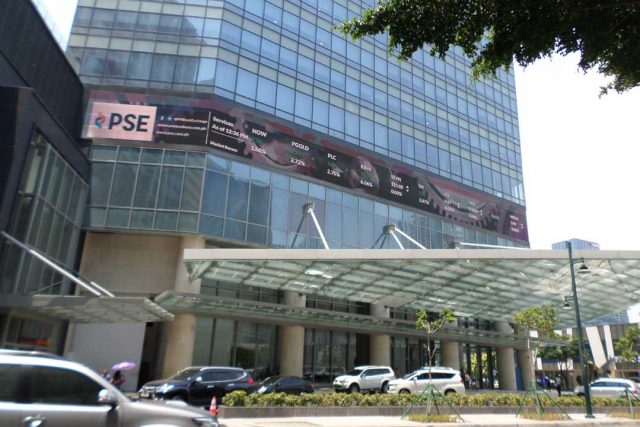
PHILIPPINE SHARES climbed on Monday amid Wall Street’s rise last week and a stronger peso amid expectations of smaller rate hikes from the US Federal Reserve.

The 30-member Philippine Stock Exchange index (PSEi) went up by 93.94 points or 1.35% to 7,045.48 on Monday, while the broader all shares index rose by 37.53 points or 1.03% to end at 3,675.15.

This was the first time the PSEi closed at the 7,000 level since April 25, 2022. It was also its best finish since the 7,061.49 close recorded on April 21, 2022.

“The uplift in the market was provided by US shares closing at the highest in a month, with the S&P 500 ending within a whisker of 4,000,” First Metro Investment Corp. (FMIC) Head of Research Cristina S. Ulang said in a Viber message.

Philstocks Financial, Inc. Research Analyst Claire T. Alviar said the market surged on Monday amid expectations that the Fed will be less aggressive following slower consumer inflation in December.

“The strengthening of the peso against the dollar lifted the market as well,” she added.

The S&P 500 and Nasdaq finished at their highest levels in a month on Friday, Reuters reported.

The Dow Jones Industrial Average rose 112.64 points or 0.33% to 34,302.61; the S&P 500 gained 15.92 points or 0.4% to 3,999.09; and the Nasdaq Composite added 78.05 points or 0.71% to 11,079.16.

The S&P 500 closed at its highest level since Dec. 13, while the Nasdaq closed at its highest level since Dec. 14.

The consumer price index and other recent data have bolstered hopes that a sustained downward trend in inflation could give the Fed room to dial back on its interest rate hikes.

The US central bank raised borrowing costs by 425 basis points last year, which brought the federal funds rate to 4.25-4.5%. It will hold its first policy review for this year from Jan. 31 to Feb. 1.

Fed hike hopes also helped boost the peso against the dollar. The local unit closed at P54.575 versus the greenback on Monday, an over six-month high.

Most sectoral indices closed higher on Monday except mining and oil, which went down by 80.18 points or 0.69% to 11,457.63, and services, which slipped by 1.79 points or 0.1% to 1,725.26.

Meanwhile, financials gained 50.12 points or 2.79% to 1,841.46; holding firms added 163.03 or 2.43% to end at 6,870.52; property went up by 11.21 points or 0.36% to 3,063.99; and industrials increased by 32.24 points or 0.32% to end at 10,005.80.

Value turnover went up to P10.23 billion on Monday with 1.11 billion shares changing hands from the P9.24 billion with 1.63 billion issues traded on Friday.

Advancers outnumbered decliners, 138 versus 65, while 46 names closed unchanged.

Net foreign buying climbed to P1.08 billion on Monday from the P706.98 million seen on Friday.

FMIC’s Ms. Ulang placed the PSEi’s support at 6,700 and resistance at 7,100. — J.I.D. Tabile with Reuters

Marcos orders 2-month buffer stock for sugar

BUREAU OF CUSTOMS FACEBOOK PAGE

THE GOVERNMENT will maintain a two-month buffer stock of sugar to contain price volatility in the commodity, Malacañang said in a statement on Monday, citing a briefing President Ferdinand R. Marcos, Jr. delivered en route to the Davos conference in Switzerland.

“We will maintain from now on, in sugar, a two-month buffer stock,” Mr. Marcos was quoted as saying. “People will know we won’t have a shortage because we will always (have) a two-month buffer stock, which I will maintain.”

The Palace gave no details on which agency will oversee the buffer stock scheme or what its procurement budget will be.

The government, through the National Food Authority (NFA), also maintains a buffer stock equivalent to at least 15 days’ consumption for rice.

The NFA builds up an inventory of rice purchased from domestic farmers and releases stock to local governments or non-government organizations during disasters. To do so the NFA maintains a network of buying stations, mills, and warehouses in rice-growing provinces.

The NFA rice buffer stock operation was granted a budget of P12 billion in 2023, including procurement.

The NFA does not engage in market intervention but releases a quantity of cheap rice for purchase by low-income consumers.

Mr. Marcos, who serves as his own Agriculture Secretary, promised when he took office in June to limit food imports “as much as possible.”

Early in his term, a spike in sugar prices allegedly caused by tight supply forced him to authorize sugar imports of 150,000 metric tons in September.

Sugar prices in supermarkets hit a record P134 per kilogram in October.

In December, Mr. Marcos also approved refined sugar imports of a further 64,050 metric tons.

Mr. Marcos said digitalizing the Bureau of Customs will be a key measure in dealing with smuggling.

Addressing domestic production of food, Mr. Marcos said: “We have to go back to the sugar industry … We have to go back to the onion growers and help them… so we do not need to import.” — Kyle Aristophere T. Atienza

Conditions imposed on onion importers deemed too restrictive

PIXABAY

THE government’s onion import plan is not likely to attract importers because of the “tight window” to apply for an import permit, the United States Department of Agriculture (USDA) said in a report.

“The extreme conditions attached to the unscheduled quota all but guarantee that it will not be filled and likely will not come close to filling,” USDA said.

“Regardless of the limited volume and tight window of opportunity to apply for import permits, several other conditions also apply and reduce the likelihood that the quota will be realized or achieve its intended result of providing price relief to consumers,” it said.

The Department of Agriculture (DA) recently authorized imports of 21,060 metric tons (MT) of onions — including 17,100 MT of the red variety and 3,960 MT of the yellow — to stabilize onion prices.

In a letter to the Bureau of Plant Industry dated Jan. 6, the DA said applications for sanitary and phytosanitary import clearances were open to importers between Jan. 9 and Jan. 13.

Importers were only given until Jan. 27 to bring in their shipments in order not to disrupt the domestic onion harvest.

The retail price of onions, observed in markets at up to P600 per kilo, has far exceeded the suggested retail price of P250.

“Meanwhile, the Philippines has no scheduled or notified exception for a quota or quantitative restriction on onions in the WTO (World Trade Organization),” the USDA said.

The restriction on the shipments, including the ports to be used to land the cargoes as well as the timeline, will limit the number of licensed importers able to import fresh onion, the USDA said, adding that cold storage capacity may not be up to the task of storing the imports.

“This combination of factors will further impede the ability of imported onions to access and flow through the local supply chain,” the USDA said. — Ashley Erika O. Jose

Senators say onion prices disproportionate to size of domestic shortfall

PHILIPPINE STAR/GEREMY PINTOLO

THE high price of onions is disproportionate to the small shortfall in domestic production, which could have easily been addressed by well-timed imports, Senators said.

Senator Cynthia A. Villar, who chairs the Senate committee on Agriculture and Food, cited data from the Philippine Statistics Authority pointing to a 2021 onion surplus if domestic production and imports are added up, raising the question of why prices rose so sharply late in 2022.

In 2021, she said, domestic production amounted to 218,047 metric tons (MT) of onion, against demand of 266,526 MT.

“If you look at the 2021 figure… there was a shortage of 38,000 MT but DA imported 101,000 MT, so there was a surplus during 2021 of 53,000 MT,” she said.

“They said that prices went up during 2022 because there was a shortage, but there was an oversupply in 2021 of 53,000 MT, so even if there is a deficiency of 30,000 MT, (it should have been) more than covered by the oversupply in 2021,” she added.

Demand in 2022 amounted to 270,410 MT against domestic production of 238,561 MT. The Department of Agriculture (DA) said it authorized imports of 29,707 MT to address the deficiency.

At the hearing, Senator Maria Imelda Josefa R. Marcos said market prices as high as P750 per kilogram reflect an “abject lack of planning.”

“Minimal importation would have solved this if it had been timely and well projected. However, there seems to be as well a level of treachery and manipulation involved,” she added.

Ms. Villar said market prices are completely out of line with the estimated supply shortfall. The 2022 deficit of around 2,140 MT “does not justify the price of P550 to P700.”

She noted that prices did not rise to the same extent in 2019, when the shortfall was 12,663 MT, but the price during that year’s holiday season topped out at P180.

DA Policy, Planning and Regulations Undersecretary Mercedita A. Sombilla, speaking at the hearing, said that the figures she received from the Bureau of Plant Industry is not consistent with data being cited by the DA.

Ms. Villar said such inconsistencies undermine trust in official data.

“You guys are changing the figures to justify the wrongdoings performed by some of those in the DA,” she said.

According to Ms. Sombilla’s presentation, at the end of 2022, the onion supply was in deficit by 3,859 MT, with total supply at 313,542 MT and total demand at 317,401 MT.

“While we were reviewing the data, we also unearthed that there was over 10,000 MT… that did not come out, so there should be 6,000 MT available,” Ms. Sombilla said.

“So, we could say that we really don’t have a shortage to (justify the extent of the price increase),” Ms. Villar said. “That is why we’re calling this hearing for the people to be able to explain what is happening… they have to explain to us what is happening in the DA and, of course, in the Bureau of Customs (BoC).”

Senator Joseph Victor G. Ejercito, speaking at the hearing, said smugglers remain unchecked, and the volumes they are bringing in far outweigh the highly-publicized retail shipments brought in by Philippine Airlines (PAL) crew members.

“The PAL crew were bringing gifts for personal consumption. Previously (it was) apples, grapes, perfume, shoes. But now, they (bring) their families onions,” he said.

“We choose to punish (aircrew), but what about the big-time cartels, smugglers, protectors, who get past?”

The crew members caught by customs will be charged with violating the Customs Modernization and Tariff Act and the Plant Quarantine Decree of 1978.

Senator Mary Grace Natividad S. Poe-Llamanzares noted that the price of one kilo of onions has now exceeded the daily minimum wage.

She said that P700 per kilo of onion is “about three times as expensive as chicken and 25-50% more expensive than pork or beef.”

The BoC has made some arrests, BoC Assistant Commissioner Vincent Philip C. Maronilla said during the hearing.

“Of those that docked, we apprehended 86 containers recently. There are onions which passed through the Port of Mindanao Container Terminal, Subic, and Davao,” he added.

Ms. Villar dismissed the 987 MT of agricultural products seized as “irrelevant.”

“The amount we imported in 2021 is more than 100,000 MT. What you apprehended seems very small,” she said. “In figures, that amount is just (a rounding error)… That is worthless.”

President Ferdinand R. Marcos, Jr. also serves as his own Secretary of Agriculture, making any disruptions in the food supply his responsibility to a great extent.

“I think it is important that the President take that portfolio so that not only to make it clear to everyone what a high priority we put on the agricultural sector, but also as a practical matter so that things move quickly because the events of the global economy are moving very quickly,” Mr. Marcos has said.

“We have to be able to be agile, we have to be able to respond properly in a measured way as soon as there is a situation that needs to be addressed,” he added. — Alyssa Nicole O. Tan

Low-cost housing industry grapples with issues of affordability, efficiency

PHILIPPINE STAR/ BOY SANTOS

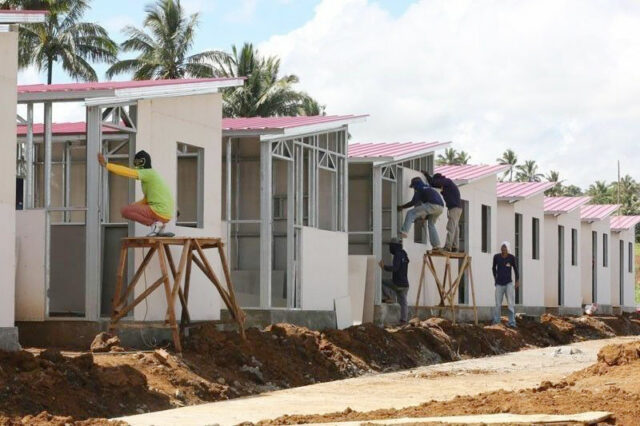
THE bottom line in providing low-cost housing is affordability, with Habitat for Humanity Philippines citing the wide gap between the pricing of affordable units and what the typical buyer can afford.

“The national and local governments, private, non-governmental organizations and contractors (must collaborate)” to produce an outcome where, “instead of one family covering the P855,000 for the house and a lot… it could just be P250,000,” Mardi Mapa-Suplido, chief executive officer of Habitat for Humanity Philippines, said at an industry forum on Monday. The key to true affordability, she added, is “knowing (the buyer’s) income.”

Ms. Mapa-Suplido was among the presenters at a conference for the “sheltertech,” industry, in which participants were exploring ways to make housing “vibrant and investible,” according to the conference’s organizers. 

Marcelino C. Mendoza, president and chairman of the Organization of Socialized and Economic Housing Developers of the Philippines, Inc., said one other approach to chip away at costs in low-cost housing is to ensure the process of building and buying houses is made more efficient via digitalization. 

“Digitalization in the Philippines is still at a very low level. There’s a lot more upside and what is important is it could benefit the homeowners through efficiency and more cash for them,” Mr. Mendoza said.

Roberto Batungbacal, the Dow Chemical Co. Philippines country manager, said one other way to make housing more efficient is to recycling waste to produce building materials.

“Apart from addressing pollution in the environment, it will enable us to (add to the) domestic supply of construction materials,” Mr. Batungbacal said.

He cited Green Antz Builders as an example of a company that recycles waste into construction materials. — Justine Irish D. Tabile

Infrastructure upgrades urgently needed to address rising air travel demand, study finds

PHILSTAR FILE PHOTO

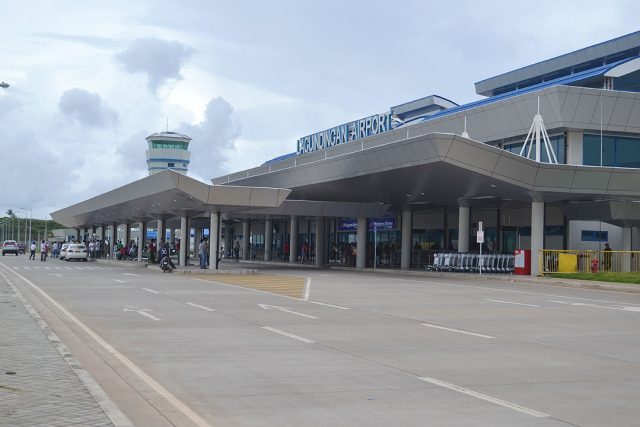
RISING air travel demand will require more investment in the supporting infrastructure, according to a study issued by the Philippine Institute for Development Studies (PIDS), a government think tank.

“While the government recognizes the need to improve the air transport infrastructure by building new airports and improving existing facilities and technical capabilities, huge investments are needed to catch up with the burgeoning demand for air travel,” the authors of the study said in a statement on Monday.

PIDS researchers Kris A. Francisco and Valerie L. Lim noted that the current challenges confronting Philippine airports are capacity, technical capability, quality, and institutional environment.

“The Ninoy Aquino International Airport (NAIA), being the country’s premiere airport is faced with problems related to congestion because the current capacity is unable to adjust to the increasing demand of air travelers and aircraft,” the study noted.

“Aside from passenger congestion, NAIA also suffers from runway congestion due to the layout and configuration of the runway and taxiway.”

The study found that many regional airports are not rated for night flights, restricting flight operations to the daylight hours.

PIDS also concluded that airport quality is not up to par with regional airports.

As for the policy environment, PIDS cited the need for coherent policy and alignment among the government agencies responsible for airport development.

“Like other sub-sectors of the transport sector in the Philippines, the institutional environment for the air transport sector is in need of an overhaul,” the researchers concluded.

Among the measure that could address these issues is the updated Philippine Development Plan, which hopes to improve the operational efficiency of airports and address constraints capacity to bring expansion in line with growing demand. The plan also hopes to position airports as a means of spurring tourism development and develop new growth centers.

The Department of Transportation is currently undertaking procurement on various airport projects, including renovation and new construction.

The department is also fast-tracking the privatization of NAIA, according to Transport Secretary Jaime J. Bautista. 

NAIA upgrades in particular are a matter of urgency because it is the only airport serving Metro Manila to breach its rated capacity, he said in a statement last week.

He said that NAIA can only handle 40 to 44 aircraft movements per hour.

If the privatization goes ahead, he said that NAIA will likely increase its aircraft capacity to 50 or even 55 aircraft movements per hour. — Arjay L. Balinbin

BoC working on trade facilitation upgrades in EU-backed project

THE Bureau of Customs (BoC) said it is working with ARISE Plus Philippines to improve trade facilitation in a European Union (EU)-backed project.

The collaboration focuses on creating new policy and procedures for trade facilitation mainly through e-commerce, authorized economic operators, and integrated risk management programs, the BoC said in a statement on Monday.

The ARISE project is fully funded by the EU. The implementing agency is the Department of Trade and Industry (DTI).

“Business efficiency at all levels is critical to the success of e-commerce. Supply chain management and related logistics are essential components of it. Efficient logistics systems and infrastructure, as well as e-government and capable e-commerce institutions, will be important in ensuring that e-commerce will be (easy),” DTI Assistant Secretary Glenn G. Peñaranda was quoted as saying.

As part of the initiative, the BoC and ARISE held workshops on trade-related assistance for micro, small and medium enterprises.

It also conducted sessions on supply chain management and logistics management, among others. — Luisa Maria Jacinta C. Jocson

Congress still studying revenue-generating potential of luxury goods

PHILIPPINE STAR/WALTER BOLLOZOS

THE House committee on ways and means intends to pass a luxury-tax bill and is evaluating which luxury goods have the greatest potential for generating revenue, its chairman said.

“The committee will definitely pass a measure expanding (the list of taxable luxuries), but we will discuss which items can generate the most revenue for the least effort,” Albay Rep. Jose Ma. Clemente S. Salceda said on Monday.

In a statement, Mr. Salceda said under consideration are wristwatches, bags and other leather items above P50,000, private jets, cars costing more than P5 million and residential property selling for more than P100 million. He is also looking to tax beverages selling for more than P20,000 per bottle; and paintings that change hands for P100,000 or more.

Describing such purchases as “conspicuous consumption,” Mr. Salceda said the targeted goods are out of reach of the majority of the population.

Mr. Salceda said his intention was to tax in a manner that does not spark capital flight.

“I want the rich to keep their money in the Philippines and spend it on our development.”

He said the objective is to tax the rich more fairly while “lowering tax rates for everybody else.”

The Makabayan Bloc at the House of Representatives filed House Bill 258, which seeks to impose a 1-3% tax on wealthy individuals. The bill has been with the committee on ways and means since July. — Beatriz Marie Cruz

Internal migrants estimated at over 30% of PHL population

SOME 30.6% of the Philippine population consists of internal migrants, defined as those currently living in jurisdictions where they were not born, the Philippine Statistics Authority (PSA) said.

According to the PSA’s 2020 Census of Population and Housing, the category, which the PSA calls “lifetime migrants,” numbered 29.87 million.

Of the so-called lifetime migrants, 21.48 million people were from a different province while 8.23 million were from a different city or municipality within the same province.

The foreign immigrant population was estimated at 167,032 individuals.

The non-migrant population — those who remained in the province of their birth — was 69.1% of the total.

The report defined the population as those aged at least five years. It calls this subset the “household population.”

Calabarzon (Cavite, Laguna, Batangas, Rizal, Quezon), Metro Manila and Central Luzon were home to the most lifetime migrants. Calabarzon had 6.23 million individuals, or 20.8% of the total. The National Capital Region had 5.47 million (18.3%) and Central Luzon 3.33 million (11.2%).

BARMM or the Bangsamoro Autonomous Region in Muslim Mindanao had the least number of lifetime migrants with 327,316 individuals or 1.1% of the total.

The overseas worker population in 2020 was 1.97 million individuals or 2.6% of the household population, consisting of 51.8% (1.02 million) females and 48.2% males (947,667).

The biggest cohort of overseas workers was aged between 30 and 34 (339,098 individuals or 17.2%). The 35-39 age group accounted for 315,291 or 16% and 25 to 29 294,926 or 15%.

Calabarzon was home to 18.9% of overseas Filipino workers (372,301 individuals) followed by Central Luzon with 14.4% (284,267) and Metro Manila 11.3% (221,368).

The census was conducted in September 2020 with May 1, 2020, as the reference date. — Abigail Marie P. Yraola

Yet another BIR deadline in April

For taxpayers following the calendar year as their tax period, the start of the new year marks the countdown to the April income tax deadline. While this is the most pressing deadline for most taxpayers, we should not forget that there is also another BIR requirement due in April — the Request for Confirmation (RFC) to avail of tax treaty relief on certain income payments.

What should taxpayers be aware of regarding the RFC?

The RFC applies to taxpayers who transact with nonresidents and whose transactions are covered by a tax treaty between the Philippines and the nonresident’s country. Examples of these transactions include business profits, dividend income, or interest income.

The RFC must be filed with the Bureau of Internal Revenue’s (BIR) International Tax Affairs Division (ITAD), and the prescribed time for filing is not later than the last day of the fourth month following the close of the taxable year when the income is paid or becomes payable, or when the expense/asset is accrued or recorded in the books, whichever comes first. For capital gains, it is not later than the last day of the fourth month following the close of the taxable year when the income is paid or when the transaction is consummated.  Thus, for taxpayers following the calendar year, they have until the last day of April 2023 (allowing for weekends and holidays) for their 2022 transactions.

While the above deadline is still more than three months away, preparations to file the application should be done ahead of time in order to avoid penalties for late filing.

What are the usual hurdles in preparing the documents for the RFC?  Here are some examples:

1. Evaluation by the applicant-taxpayer as to the characterization of the income payment

Determining the particular nature of an income payment for purposes of RFC filing is sometimes confusing for taxpayers. The characterization of the nature is important as there are income payments that are subject to preferential tax rates, like royalties, dividends and interests, and there are those that are exempt from taxes like business profits and capital gains.

Sometimes, taxpayers find it hard to evaluate their contracts. Are software transactions booked as business profit? Royalty income? For transactions falling under business profit, there is another evaluation involved, having to do with whether the transaction party maintains a permanent establishment in the Philippines. These are just some of the preliminary evaluations that may take time for the taxpayer.

2. Completing the list of required documents

The BIR has issued a checklist of documentary requirements for each type of income. Aside from the application form for the RFC, included in the required attachments to the application form are the Tax Residency Certificate (TRC) issued by the nonresident’s country, bank documents evidencing the income payments, and the nonresident’s incorporation documents, among others.

Considering that multiple documents must be acquired from the nonresident, it may take some time to deliver these to the Philippines, so it is advisable to request the documents from the nonresident ahead of time.

3. Apostillation/consularization process

The documents to be secured from the nonresident’s country should be authentic. As proof of authenticity, the documents should be apostilled/consularized. Please note that the apostillation/consularization process varies per country, and such could take a few weeks to a few months to prepare.

Thus, the timing of apostillation/consularization should be determined at the onset in preparations to file the RFC.

Aside from these, other hurdles could emerge in preparing the RFC; hence, the preparations should not be taken lightly.

While a taxpayer is required to file the RFC for applicable transactions, taxpayers who were previously issued a CoE to the tax treaty benefit are generally no longer required to file an RFC, provided that there is an income of similar nature paid to the same nonresident. This is very helpful for those taxpayers who have similar transactions with their counterpart-nonresidents yearly.

As we know, planning and preparation are the foundations of accomplishing any goal. Let’s start our new year right by being prudent in preparing to meet our deadlines, which include the deadline for the RFC.  Otherwise, we might see ourselves cramming in April.

Let’s Talk Tax is a weekly newspaper column of P&A Grant Thornton that aims to keep the public informed of various developments in taxation. This article is not intended to be a substitute for competent professional advice.


Jan Lorenzo S. Fevidal is an associate from the Tax Advisory & Compliance division of P&A Grant Thornton, the Philippine member firm of Grant Thornton International Ltd.

pagrantthornton@ph.gt.com

Lack of transparency in Marcos trip to Davos scored by analysts

PRESIDENT Ferdinand R. Marcos Jr. arrived in Switzerland on Sunday for his inaugural participation in the World Economic Forum (WEF) in Davos. — OFFICE OF THE PRESS SECRETARY

By Kyle Aristophere T. Atienza, Reporter
and Beatriz Marie D. Cruz

POLITICAL analysts on Monday criticized Philippine President Ferdinand R. Marcos, Jr.’s alleged lack of transparency about his trip to Davos this week, which they said bodes ill for efforts to attract foreign investors.

His five-day visit to Switzerland for the World Economic Forum (WEF) raises more questions than answers, they said, after the presidential palace was accused of hiding the size of his delegation. News website VERA Files reported that at least 70 people accompanied him on his trip.

“By not being completely transparent about his activities including his trip to Davos, he is disrespecting the Constitution, the country’s laws and the public to whom he is accountable,” Maria Ela L. Atienza, who teaches political science at the University of the Philippines, said in a Facebook Messenger chat.

“No matter how the government tries to invite investors to the country, the lack of transparency, as well as the perceived state of politics, governance and corruption in the country does not invite confidence,” she added.

Carol Claudio, the executive assistant of Presidential Communications Office chief Cheloy Velicaria-Garafil, did not immediately reply to a Viber message seeking comment.

Junkets with a large delegation are not new, said Hansley A. Juliano, a political economy researcher, noting that many dictators in Africa have been attending global fora “at taxpayers’ expense, with the promise that the junket is supposed to result in trade deals for the country.”

“If they can’t demonstrate with good faith why 70 people need to be there, questions and criticisms of the costs of travel and personnel are warranted,” he said in a Facebook Messenger chat.

VERA Files on Jan. 13 reported that Philippine delegates had a hard time finding hotel rooms in Davos, prompting them to turn to the nearest city, Zurich, which is considered as the seventh most expensive place to live in Europe.

“The choices are the Hyatt hotels in town of which there are three: Park Hyatt Zurich (5-star, P39,040 standard rate per night), Hyatt Place Zurich Airport The Circle (4-star, P9,997 standard rate) and Hyatt Regency Zurich Airport The Circle (4-star, P11,182 standard rate),” according to the website. “For a huge delegation from a poverty-stricken nation, that is no peanuts.”

“Investors who prioritize careful or transparent investments are likely to see red flags in the Marcos delegation,” Mr. Juliano said.

However, investors who want to engage in “predatory” or nontransparent business practices would see this “as the kind of government that will protect them, at whatever economic cost to the Filipino taxpayer,” he added. “Like attracts like, after all.”

Leonardo A. Lanzona, who teaches economics at the Ateneo De Manila University, said the lack of transparency is “indicative of the absence of ideas” on the part of the Marcos leadership.

“I have not heard of any proposed global initiative from the president,” he said in a Messenger chat. “So why is he going there in the first place?”

Mr. Lanzona said the World Economic Forum’s main objective is to “address and discuss critical global issues, not to finalize and obtain investment pledges.” “The government seems to be more concerned about its own costly travel preferences than the needs of the country.”

On Sunday, Mr. Marcos said he would seek out potential partners for his agriculture and infrastructure push.

Critics have said his appearance at Davos needs to be viewed as a reputation-building exercise rather than a realistic play for investment.

In 2003, the Philippine Supreme Court ruled the Marcos family had illegally acquired P25 billion worth of assets, which were kept in various Swiss bank accounts.

Switzerland is the eighth country that Mr. Marcos visited since he took office in June. The others are Indonesia, Singapore, the United States, Cambodia, Thailand, Belgium and China.

“What makes sense to me at least is the fact that they will be coupling the World Economic Forum travel with visiting communities of overseas Filipino workers (OFW),” Mr. Juliano said. “Considering OFW communities have been a sizable constituency for the Duterte-Marcos alliance since 2016, it does make sense that Marcos is showing himself off there to reinforce the constituencies.”

“This may be once again not about actual economic policy but constituency-building for Marcos, consistent with the kind of politics he espouses,” he added.

More than 2,500 people had registered for the event as of Jan. 10, including state leaders, businessmen, royalty, media honchos and academics, according to a Jan. 15 report by Quartz. “There are hundreds more participating on the sidelines, whether organizing, catering or attending corporate events along the promenade that cuts through the center of Davos,” it said.

‘PECKING ORDER’
Scholars from Germany’s University of Gotinggen, University of California, the National University of Singapore and Kiel Institute for the World Economy in a 2019 report said WEF meetings in 2009 to 2018 had been “dominated by high-income countries.”

“While the number of attendees from low- and middle-income countries has increased from 454 in 2009 to 712 in 2018, the share of attendees from this country group is stagnating.”

“Consistent with previous reports, there’s not always much tangible economic incentive for developing economies’ participation in the WEF,” Mr. Juliano said. “More often than not, they only tend to reinforce their pecking order with global capital.

The global forum has also enabled global inequality because it has been used by high-income countries to pursue unequal trade relations, he added. “What usually happens is a developing country is the one adjusting to the economic demands of rich countries — not them providing equal footing trade agreements with smaller economies.”

George N. Manzano, an economist at the University of Asia and the Pacific, said the Davos forum is “an event for those who want to see and be seen with influential people.”

“President Marcos’ attendance could raise the profile of the Philippines and pitch the investment attractiveness of the country,” he said in a text message. “Given the changes in the Philippines’ investment rules, the president can pitch infrastructure projects as well as manufacturing for companies willing to divest from China.”

Members of the Board of Investments and Philippine Economic Zone Authority (PEZA) are part of the Marcos delegation.

In a statement, PEZA said the Philippine delegation had bilateral talks with the Swiss government on trade and investments.

The two sides exchanged views on their domestic economic situation, discussed bilateral relations and touched on the free trade agreement between the Philippines and European Union, the agency said.

There are 60 Swiss companies operating in the Philippines, 28 of which are registered with PEZA as export-oriented IT and manufacturing enterprises, PEZA said. These Swiss locators have generated P19.168 billion in cumulative investments and created more than 8,000 jobs, it added.

Also on Monday, congressmen defended Mr. Marcos from criticisms about his foreign trips, noting that the president is the “architect of foreign policy.”

“At this rate, I cannot say that this is excessive,” San Jose Del Monte Rep. Florida P. Robes told BusinessWorld in a Viber message.

“The Philippines cannot afford to isolate itself from the rest of the world,” she said. “What we need now is to strengthen our position and presence in the world stage so that we can attract the needed investments and foreign relations to secure our economy and patrimony.”

Albay Rep. Jose Ma. Clemente S. Salceda said the president’s big delegation to Davos was justified, calling his trip “multi-purpose.” “If he believes that the country is best served by a foreign policy that emphasizes face-to-face and personal relationships, let him,” he said in a text message.

But Party-list Rep. France L. Castro questioned the practicality of Mr. Marcos’s trips. “While I understand that these trips can be beneficial to our country in terms of economic and diplomatic relations, it is important to consider the cost-benefit analysis and ensure that the resources allocated for these trips are being used in the most efficient and effective way possible,” she said in a Viber message.

Ms. Castro called for transparency and accountability on the use of public funds in the president’s trips.


Metro Manila’s COVID positivity rate declining, says OCTA

PHILIPPINE STAR/MIGUEL DE GUZMAN

CORONAVIRUS infections in Manila and nearby cities have declined, according to the OCTA Research Group.

The seven-day positivity rate in Metro Manila, which accounted for 31.5% of the country’s economic output last year, had fallen to 3.7% from 5.8% as of Jan. 14, OCTA said in a report on Tuesday. Low positivity rates were also observed in 10 other areas in Luzon.

Bulacan province posted the lowest positivity rate at 2.3%, followed by Pampanga at 2.6%. Batangas and Cavite both came in third at 3.2% each.

Benguet’s positivity rate was 3.6%, while Pangasinan, Ilocos Norte and Cagayan provinces were at 3.9% each.

The positivity rate of Isabela province in northern Philippines hit a very high level at 50.2% from 35.1%, OCTA said.

The Philippines posted 2,934 coronavirus infections in the past week, with a daily average of 419, according to health authorities.

The daily average from Jan. 9 to 15 was 6% lower than the average daily cases a week earlier, the Department of Health (DoH) said in a bulletin on Monday. Of the new cases, one was severe and critical.

The agency said 116 new deaths were verified in the past week, 14 of which occurred on Jan. 2 to 15.

It said 402 of 2,340 intensive care unit (ICU) beds had been used as of Jan. 15, while 3,917 of 19,607 non-ICU beds were occupied. There were 567 severe and critical admissions, it added.

The Health department said 73.81 million Filipinos have been fully vaccinated against the coronavirus, 21.24 million of whom got booster shots. — Kyle Aristophere T. Atienza