Home Blog Page 5332

Indonesia to offer 10 oil and gas blocks, including in South China Sea

INDONESIAN national flags fly at a business district in Jakarta, Indonesia, Feb. 5, 2021. — REUTERS

JAKARTA — Indonesia plans to offer 10 oil and gas working areas this year, including a block in the South China Sea, amid efforts to boost energy production and make new discoveries, a senior energy ministry official said on Monday.

In 2022, Indonesia auctioned 13 oil and gas fields and has appointed contractors for six of them.

The country is aiming to reach crude oil lifting of 1 million barrels per day (bpd) and gas lifting of 12,000 million standard cubic feet per day (mmscfd) by 2030. Last year, it missed its oil and gas lifting target amid delays in projects and unexpected shutdowns.

Among the oil and gas fields Indonesia plans to offer this year are working areas in Natuna D Alpha, which are giant gas fields situated in the South China Sea, energy ministry official Tutuka Ariadji told reporters.

“Hopefully this year, in May, we would be ready to launch the offering. We also need to gauge the interest for this Natuna block before we open this to public offering,” he said.

Last year, Indonesia approved development plan for $3-billion Natuna gas field in South China Sea.

Tutuka also hoped stalled gas mega-projects such as Indonesia Deepwater Development (IDD) and Masela could soon be resumed. 

Oil giant Cheveron is close to reaching a deal with an investor to transfer its stake in IDD, according to upstream oil and gas regulator SKK Migas.

Tutuka last week declined to disclose details of the discussion on IDD stake.

Meanwhile, Indonesian state oil and gas Pertamina is still negotiating with Shell to potentially take over its partnership in the Masela project. — Reuters

Philippine Long Term Investment Fund: a good set-up

BW FILE PHOTO

(Part 2)

To assess the wisdom of House Bill No. 6608 or “An Act Establishing the Maharlika Investment Fund, Providing for the Management, Investment, and Use of the Proceeds of the Fund, and Appropriating Funds Therefor,” let us make sure that we know what exactly are the provisions contained in the final draft of the bill that was already passed in the Lower House, on which the Senate will start deliberating once it resumes its session this month. It is necessary to know the final form of the proposed bill because it has gone through a good number of modifications as a result of a most democratic process of feedback from all the sectors of Philippine society that will be affected by the law if it is finally passed and implemented.

Section 10 of the Act enumerates the functions of the Maharlika Investment Corp. (MIC). It states that in carrying out its objectives and functions, the MIC shall:

a.) Establish a diversified portfolio of investments in the local and global financial markets and in other assets that promote the objectives of the Fund;

b.) Manage and invest the initial and future contributions to the Fund in accordance with this Act;

c.) Accept and manage investment mandates whose investment purpose is to increase income for development goals;

d.) Develop and foster skills in finance, economics, risk mitigation, good governance and other related areas, consistent with the capacity and capabilities build-up of human resources in the industry; and,

e.) Implement international best practices in investing and managing assets in accordance with the internationally accepted standards and principles of transparency and accountability.

From the functions enumerated above, it is clear that the Government is not unnecessarily putting up a state enterprise like the former National Development Corp. (NDC) that invested in extractive and processing industries aimed at the export market. These state enterprises failed miserably as they were flawed with what national scientist Raul Fabella refers to as “the moral hazard arising from state intervention.”

The nature of the Maharlika Investment Fund is that of a passive investment instrument that can, if properly managed, pump prime billions of dollars of foreign direct investments into very capital-intensive infrastructure and large-scale agribusiness projects that will surely help create millions of jobs today and contribute to sustaining the Philippine GDP growth at its present rate as one of the most rapid in the Indo-Pacific region. At the same time, these investments in much-needed infrastructure in telecom, transport, energy, and large-scale agriculture will greatly benefit future generations, thus replicating what sovereign wealth funds in other countries are able to do, i.e., transfer benefits from one generation to another.

That is why it was predictable that one of the first to cite the benefits of the Maharlika Fund (in contrast with numerous naysayers from the academe and civil society) was the President of the Philippine Stock Exchange (PSE), Ramon Monzon, who pointed out that the fund’s goals of sustaining infrastructure spending would help spur investments, ultimately benefiting the country’s capital markets. In an official statement, Mr. Monzon said: “The PSE’s primary mission is to facilitate the flow of capital into more productive and beneficial channels and as a result contribute to efficient capital formation for the country. Since the MIF seeks to attract and invest capital for big ticket infrastructure projects, sustainable green and blue infrastructures and countryside development, we believe these investments will create a multiplier effect that would attract more fund-raising activities and portfolio investments and in turn contribute to the growth and development of the capital markets.”

With the abysmally low level of domestic savings and a government buried in debt for at least the next five years, the greatest challenge to the Philippine economy is the shortage of long-term funds that can be invested in much needed infrastructure projects and large-scale agricultural investments that will improve productivity. That is why the battle cry should be the words of Secretary of Economic Planning Arsenio Balicasan: “The more sources of funding we have, the better.”

If a small amount of very scarce funds investment (a beginning capitalization of only $5 billion) in the Maharlika Fund can unlock some 10 billion or more dollars of FDIs every year, then it is worth the sacrifice involved in diverting some of the funds to be contributed by the investing government financial institutions away from more urgent needs like education, health, and poverty alleviation.

The proponents of the Maharlika Fund are not blind to the opportunity costs of the P250 billion to be contributed by the government financial institutions, the Philippine Amusement and Gaming Corp. (PAGCOR), and other government-owned gaming operators as well as other sources such as royalties and/or special assessments on natural resources such as in mining. They, however, have made the prudential judgment that these opportunity costs are far outweighed by the financial as well as social benefits of the billions of dollars that will flow into the country, facilitated by a partnership with the Investment Fund.

This is not pure theorizing. I have tested the concept with large foreign infrastructures companies from Spain, South Korea, and Japan. A good number of them are already preparing unsolicited proposals to build and own international airports, seaports, renewable power plants, data centers, railways, and subways. They are looking at the Mactan International Airport (our most modern international airport) that was a partnership between the Indian GMR and Megawide as a model. But instead of having a private company as partner, they would be more than happy to have a government entity like the Maharlika Fund as the one to “hold their hand” as they navigate the difficult waters of the Philippine investment environment.

Those who fear incompetence or corruption in the management of the fund (with constant reference to the Malaysian case) should be reassured by the provision of Section 16 of the proposed bill by the House of Representatives: The management of the MIF shall be subject to a set of investment policies, guidelines and risk management limits and procedures, as approved by the Board of Directors, upon due of the recommendations of the Advisory Body. Investment and risk management strategies of the MIC shall be in line with the policies and objective hereunder stated to ensure the long-term viability of the Fund. The Chairperson of the Board will not be a politician but will be the Secretary of Finance, a position in the Executive Department that has always been occupied for the last 40 years by some of the best, brightest, and honest professionals, whatever the quality of the political leadership.

This criterion of appointing only those among the best and brightest can readily be applied to the key positions of the MIF. They are the Chief Executive Officer of the MIC, President of Land Bank of the Philippines, President of the Development Bank of the Philippines, five independent directors from the private sector, the academe, business sector, and investment sector. The independent directors shall be chosen by the advisory body which shall be composed of the Secretary of the Department of Budget and Managment, the Directory General of the National Economic and Development Authority (NEDA), and two members from the private sector: the President of the Philippine Stock Exchange and the President of the Bankers Association of the Philippines.

Humility aside, I have been so deeply involved in advising Philippine banks, business corporations, civil society organizations like the Makati Business Club, the various chambers of commerce and industry, and business schools on a wide range of business issues, that I can, at the spur of the moment, recommend a list of the best and the brightest that can be considered by the Advisory Board for both the key executive positions and the independent directors of the MIC. From my close interaction with literally hundreds of business executives, especially in the financial sector, the following is a list of very experienced and highly respected investment bankers and investment specialists who can be considered (among others) by the Advisory Board (they are listed at random): Cesar Consing, Roberto de Ocampo, Francis Sebastian, Francisco del Rosario, Jr., Anton Periquet, Robert Panlilio, Omar Cruz, Lorenzo Tan, Jerry Kilayko, Raul de Mesa, Michael de Guzman, Rex Mendoza, Melo Bautista, Vaughn Montes, Edwin Bautista, Jose Teodoro Limcaoco, Rabboni Francis Arjonillo, Eugene Acevedo, Emmanuel Herbosa, Fabian Dee, Hans Sicat, Antonio Itchon, and Antonio Mancupa. There are some who are equally if not more qualified whom I did not include in this list because I have certain information that, for political reasons, they will never accept a position in this present Administration. Some of the persons listed are still very active in banking and may not find the time to be independent directors.

What I want to illustrate is if the present Administration is really intent in making the MIC truly a competent and honest instrument for drawing long-term funds to development projects, they will seriously consider choosing at least some of the executives and independent directors of MIC from this long list. It will be very easy for the Advisory Body to find the biodata of each of my nominees on the internet. They are very public figures, having occupied top positions in both domestic and multinational banks as well as in professional organizations that have to do with banking such as the Bankers Association of the Philippines and the FINEX.

(To be continued.)


Bernardo M. Villegas has a Ph.D. in Economics from Harvard, is professor emeritus at the University of Asia and the Pacific, and a visiting professor at the IESE Business School in Barcelona, Spain. He was a member of the 1986 Constitutional Commission.

bernardo.villegas@uap.asia

Who’s afraid of the NCAP?

PHILIPPINE STAR/ MIGUEL DE GUZMAN

The Supreme Court has finally wrapped up oral arguments on the No Contact Apprehension Policy (NCAP). Two petitions that raised legal issues caused the issuance of a temporary restraining order (TRO) on a policy that was meant to make the enforcement of traffic rules more efficient, less vulnerable to human intervention, and bolster overall road safety. In fact, a significant decrease in the number of traffic violations had been attributed to the NCAP.

One of the petitions was by transport groups, who claimed that motorists were under the constant threat of being arbitrarily apprehended. They also said that the penalties under the NCAP were unreasonable.

The second petition was filed by a lawyer who claimed that the NCAP violates his right to due process. He also claimed that the NCAP compromises people’s right to data privacy since traffic violation records and personal details of motorists could be accessible by anybody who keyed in the plate number of the vehicle involved.

It is fair to acknowledge the right of these petitioners to raise these concerns. It is a given, for example, that the system must have safeguards to protect personal data in compliance with the Data Privacy Act and safeguards are in place against this risk.

However, we must go back to the main principle that gave rise to the NCAP in the first place: to discipline erring motorists which would in effect help ease the flow of traffic and avoid vehicular accidents often caused by reckless driving.

Local government units (LGUs) control the implementation of the NCAP in their respective jurisdiction and has yielded very positive results.

In the City of Manila, fatal and non-fatal injuries dropped by 917 from its 2019 numbers, according to the Metro Manila Reporting and Analysis System 2021 Annual Report of the Metropolitan Manila Development Authority (MMDA). Average daily violations per camera dropped significantly from 56 in December 2020 to just three in August 2022.

Quezon City Mayor Joy Belmonte said in August last year that traffic violations in areas under the city’s NCAP program fell by 75%.

Parañaque City adopted the NCAP in 2018 using artificial intelligence and technologies in identifying traffic violators 24/7. On a per-camera basis, traffic violations dropped by a staggering 84% according to recorded data from 2018 to 2022.

Meanwhile, in Valenzuela City, Mayor Wes Gatchalian said that since they implemented the NCAP in 2019, some 200,000 traffic violators had been apprehended.

Public perception strongly supports the NCAP as revealed by a Pulse Asia survey that we in Stratbase commissioned. The vast majority of Filipinos agree that NCAP will be effective in instilling driver discipline and improve road safety. No less than eight of 10 of the respondents in the nationwide survey approve of the NCAP’s implementation.

Foremost is the non-discriminatory nature of the NCAP technology. It does not matter what kind of vehicle you drive, what prominent stickers are displayed on your windshield, or which influential people you know. The cameras of the system records in video the act of a violation, a Notice of Violation is sent to the registered owner who is subjected to penalties accordingly.

It thus does not hold that the penalties for the violations are unreasonable or unconscionable. There is one foolproof way to avoid these penalties: to drive carefully and conscientiously. Drivers wantonly disregarding traffic regulations are a serious safety risk to all road users and expecting light punishment for a life-threatening offense is downright outrageous.

Through the lens of good governance, the NCAP is very effective because it removes opportunities for bribery. There is no chance for apprehended drivers to slip a bill with their licenses when they hand them to enforcers, whether or not these motorists acknowledge their wrongdoing. If they want to explain their case, they will, instead, have to go to their LGU’s traffic adjudication board — personnel amply trained to review and approve the violations.

Finally, the NCAP is consistent with the government’s push for e-governance. President Ferdinand Marcos, Jr., in numerous pronouncements, the most recent of them being at the World Economic Forum in Davos, Switzerland, acknowledged that digital transformation is a priority of his administration, and a significant part of it is enabling the bureaucracy to transact its business and provide services to the people with digital technologies. He also committed to certify the proposed law on E-Governance as urgent.

The gains and benefits from the NCAP far outweigh the issues raised by the petitioners because these issues can easily be addressed with the proper implementation by the LGUs. It is in the interest of the LGUs, in turn, to make the NCAP work for them for the benefit of their constituents and in pursuit of our nation’s digitally driven development and governance.

The NCAP is a technological innovation that greatly enables the enforcement of traffic rules that are there to ensure the safety of our roadways. Only habitual offenders are afraid of NCAP and getting them off our streets will be best for all.


Victor Andres “Dindo” C. Manhit is the president of the Stratbase ADR Institute.

Dry January? Yes! Free-for-All February? Not so fast.

STOCK PHOTO | Image by Vinicius "amnx" Amano from Unsplash

WE’RE ALMOST done with Dry January, a transatlantic experiment in abstention that started a decade ago in the UK. The concept of an annual break from drinking has become something of a cultural phenomenon, with some 15% of adults in the US and UK participating this year.

The biggest benefit of Dry January seems to be in forcing us all to reflect honestly on our relationship with alcohol: how often and how much we drink, our triggers for drinking more, and how alcohol might be affecting our day-to-day lives.

The need to more deeply evaluate our habits is particularly acute coming out of the pandemic. Deaths in the US from alcohol-related liver disease, which had already been slightly increasing between 2017 and 2019, rose sharply in 2020. A worrisome trend in increased alcohol consumption among women only worsened during the first year of the pandemic.

On its surface, it would seem that Dry January is the hard reset that everyone needs. But as I watch more friends participate in the break (and even dabble myself this year with more of a “damp” than a “dry” approach), I wonder how much we know about its value. Are people treating the month as the start of real change or is this more of a feel-good hiatus? And if Dry January simply begets Free-for-All February, does that temporary break make a difference in our health?

On that last question, experts in alcohol use disorder told me unequivocally that yes, even that short break can matter for our health. Just a few weeks off from drinking can do wonders for repairing the liver, and can improve insulin resistance and blood pressure in even moderate drinkers. And people typically report tangible improvements to their daily lives, like sleeping better and losing weight.

But do the behavioral changes carry through the rest of the year? Here, the answer seems more tentative. Most of the evidence that an annual pause alters our long-term behavior comes from a study out of the UK. Researchers surveyed about 900 people who participated in Dry January at both the start and end of the month and again six months later. Overall, they found that even months later, participants felt more in control of their drinking; were imbibing on average one less day per week; and consumed about one less drink on the days they did partake, says Richard De Visser, the University of Sussex professor who led the study. “When you put those things together, it has a big benefit.”

Whether those outcomes translate to the US remains to be seen. The UK’s efforts to help people succeed seem more coordinated than the ad hoc approach in the US. For example, people in the UK can formalize their commitment by signing up to participate through a website run by the British charity Alcohol Change UK, which also offers a related app to help keep them on track, both during and after Dry January. An analogous program might help Americans make Dry January less of a quick detox and more of a long-term habit.

Science aside, a simple gut check at the end of the break might be the most compelling reason for people to reassess their drinking habits. “If you do Dry January and you feel better, then your body is trying to tell you something,” says George Koob, director of the National Institute on Alcohol Abuse and Alcoholism. “Listen to your body.”

Koob and other experts I spoke with suggest asking yourself a few basic questions: Did you sleep better this month? Did you have more energy or lose weight? Were you more regularly getting to work on time or having better interactions with your friends or family?

If the answer to some or all of those was yes, then you might want to seriously consider a drier 2023. Every expert I spoke with stressed that people don’t need to give up alcohol altogether, but cutting back can make a difference to our health.

Develop a plan for drinking less, says Henry Kranzler, director for the Center for Studies of Addiction at the University of Pennsylvania’s Perelman School of Medicine, emphasizing that any reduction at all is good for you.

One of the best ways to reduce overall consumption is to take days off. Kranzler suggests taking one day off after any two consecutive days where alcohol is consumed.

And set limits for yourself, whether that’s the number of drinks consumed on a night out or a total amount for the week. If you’re at a bar, alternating between cocktails and mocktails can help you stick to those goals.

Small changes like this can halve weekly alcohol consumption for someone who previously might have downed a glass of wine or two with dinner every night, Kranzler says.

So before pouring that first glass of wine on Feb. 1, consider what you got out of the last few weeks. If you felt healthier or happier, make a plan for how you’re going to sprinkle some of the Dry January philosophy into the rest of the year.

BLOOMBERG OPINION

Reinventing education

ELEMENT5 DIGITAL-UNSPLASH

My first real job was as a high school and college teacher in a missionary school in Baybay, Leyte. And my last full-time job was again as a teacher in a graduate school of business. The teaching, or really, learning methodologies were very different in many ways. Both jobs were among the hardest I ever held.

In my first job, there was a lot of administrative work. Preparing lesson plans, designing tests, checking and scoring tests, recording grades. As I was also an English language teacher, I had to check English language compositions, at least twice, for each of 200 themes (informal, then formal). Fortunately, I was very young and had a lot of energy even though I had little sleep.

I had been a poor student in grade school and high school, leaving class whenever I found it boring. Therefore, I went out of my way to make my classes more interesting by assigning students special readings and challenging them to openly discuss and debate various topics. Perhaps it helped one of them one day to become president of a large state university and the Philippine expert on indigenous trees. Another received an award as “the most outstanding Carolinian” (at the University of San Carlos which had more than 6,000 college students).

I also realized then that English in Baybay was truly a foreign language. There were no newspapers nor television. Media was basically radio, which broadcast in Cebuano or Tagalog. In order to overcome students’ lack of confidence in speaking English, I allowed discussion in a mixture of languages. The important thing was to sharpen their thinking skills. I had taken a course in English as a Second Language, so I treated it as such. American Peace Corps volunteers in the area, after all, could speak Cebuano almost like natives after only six months of training in Cebuano as a second language.

Our poor performance in international evaluation of learners’ skills in reading, writing, and mathematics may be caused by our students’ inability to think independently and by their learning confusion in a language (English) foreign to them. We should just be realistic and teach English as a second or (third) language. Linguists classify Cebuano and Tagalog as languages, not dialects. Nevertheless, while they communicate (send and receive) better in their mother tongue, English happens to be de facto the international language. Moreover, textbooks and other reading material are generally in English. And access to global knowhow and trends are in English.

In the graduate school job, I had to do a great deal of reading (cases, written analysis of cases or WACs, management research reports) and deep thinking. The challenge was how to draw out sharp analysis and simulate strategizing and problem-solving among the students. The learning methodology was facilitating the learning process through case discussions. There was little lecturing. There was also a simpler framework for grading students’ performance. Rather than mathematical grading in numbers, as in my high school and college teaching, there were four options: Pass, Fail, Distinction, and High Distinction.

It was such a joy to discover Paolo Freire’s book on “pedagogy.” He advocates regarding the learner as a “Subject” rather than “Object.” He criticizes the “banking” methodology of lecturing or depositing information for the students to play back in tests in order to be considered successfully educated. Per Freire, the learner as subject acts, rather than being acted upon. The teacher’s job is to challenge the learner to think and analyze and judge; to become skillful at understanding and dealing with reality and the social, political, economic, and natural environment.

The objectives for education are to educe (draw out) and enhance knowledge, skills, and orientations. It seems to me there is too much emphasis on the knowledge aspect and less on the skills of independent thinking, judging, and decision-making. In this age of rapid progress in technology and information dissemination, knowledge is constantly evolving. AI (artificial intelligence) is increasingly taking over much of the thinking and doing. The learner needs more to develop skills in independently obtaining knowledge and processing it. There are enough ways to access information with computers, Wi-Fi, and search engines on mobile phones.

The poor quality of our education outputs has got to be partly due to the overworking of our high school and college teachers who are burdened with too many administrative requirements. I know that as a high school and college teacher, I had to give almost daily quizzes in order to have numbers as the basis for grades. In these quizzes, so-called “objective” questions tended to emphasize memorizing of data such as dates, names, and places since these are easier to check and count.

I propose using the AIM (Asian Institute of Management) system of having just four options for student performance evaluation: Pass, Fail, Distinction, and High Distinction. Passing quizzes and tests tends to require good memories and playback of teachers’ inputs rather than sharp and independent thinking.

Emphasis on learning rather than teaching can enable our students to avoid being easily manipulated. They can become more discriminating and responsible citizens and voters. Open discussion and debate among learners will help sharpen their independent thinking. There are, after all, many ways to skin a cat.

Orientation also needs to be reemphasized. Learning about wholesome family and community life and responsible citizenry have to be a crucial part of the curriculum. It should be obvious from the generally poor quality of our chosen leaders that there has been little attention to these objectives.

Reengineering education will, of course, require highly intelligent and skillful teachers. This means teachers should certainly be paid much more than cops and soldiers. We will have to recruit the best and the brightest into the teaching profession. And they will need to be trained in learning, not teaching methodologies.


Teresa S. Abesamis is a former professor at the Asian Institute of Management and fellow of the Development Academy of the Philippines.

tsabesamis0114@yahoo.com

Australian nuclear body joins search for missing radioactive capsule

MELBOURNE — Australia’s nuclear safety agency said on Tuesday it had joined the hunt for a tiny radioactive capsule missing somewhere in the outback, sending a team with specialized car-mounted and portable detection equipment. 

Authorities have now been on a week-long search for the capsule which is believed to have fallen from a truck that had traveled some 1,400 kilometers (870 miles) in Western Australia. The loss triggered a radiation alert for large parts of the vast state. 

The capsule, part of a gauge used to measure the density of iron ore feed, had been entrusted by Rio Tinto Ltd to a specialist contractor to transport. Rio apologized on Monday for the loss, which happened sometime in the past two weeks. 

The Australian Radiation Protection and Nuclear Safety Agency said it was working with the Western Australian government to locate the capsule. It added that the Australian Nuclear Science and Technology Organisation has also sent radiation services specialists as well as detection and imaging equipment. 

The truck traveled from north of Newman, a small town in the remote Kimberley region, to a storage facility in the northeast suburbs of Perth — a distance longer than the length of Great Britain. 

State emergency officials on Tuesday issued a fresh alert to motorists along Australia’s longest highway to take care when approaching the search parties, as vehicles carrying the radiation detectors are traveling at slow speeds. 

“It will take approximately five days to travel the original route, an estimated 1400kms, with crews travelling north and south along Great Northern Highway,” Department of Fire and Emergency Services Incident Controller Darryl Ray said in a statement late on Monday. 

The gauge was picked up from Rio Tinto’s Gudai-Darri mine site on Jan. 12. When it was unpacked for inspection on Jan. 25, the gauge was found broken apart, with one of four mounting bolts missing and screws from the gauge also gone. 

Authorities suspect vibrations from the truck caused the screws and the bolt to come loose, and the capsule fell out of the package and then out of a gap in the truck. 

The silver capsule, 6 millimeters (mm) in diameter and 8 mm long, contains Cesium-137 which emits radiation equal to 10 X-rays per hour. 

People have been told to stay at least five meters (16.5 feet) away as exposure could cause radiation burns or radiation sickness, though experts have said driving past the capsule would be relatively low risk, akin to taking an X-ray. — Reuters

Home for hedgehogs: UK to restore swathes of wildlife habitat

Michael Gäbler/Wikimedia Commons

LONDON — Britain will announce a plan on Tuesday to improve the environment, including a commitment to restore at least 500,000 hectares (1.2 million acres) of wildlife habitat to protect the country’s rarest species from hedgehogs to red squirrels. 

The proposals comprise 70 new projects including 25 new or expanded National Nature Reserves, according to the Department for Environment, Food and Rural Affairs. 

There are 225 National Nature Reserves in England, with a total area of over 98,600 hectares or about 0.7% of the country’s land surface, according government data. 

The proposals come after the country’s nature protection watchdog criticized the government this month for falling far short on its environmental targets. 

“Protecting our natural environment is fundamental to the health, economy and prosperity of our country,” said Prime Minister Rishi Sunak, who was last year forced to reverse a decision to skip the COP27 summit after heavy criticism. 

Among the new pledges, the government said it wants to ensure everyone lives within a 15-minute walk from a green space or water. 

Other commitments included a promise to restore 400 miles (643.74 km) of river through the first round of landscape recovery projects and establishing 3,000 hectares of new woodlands along England’s rivers. — Reuters

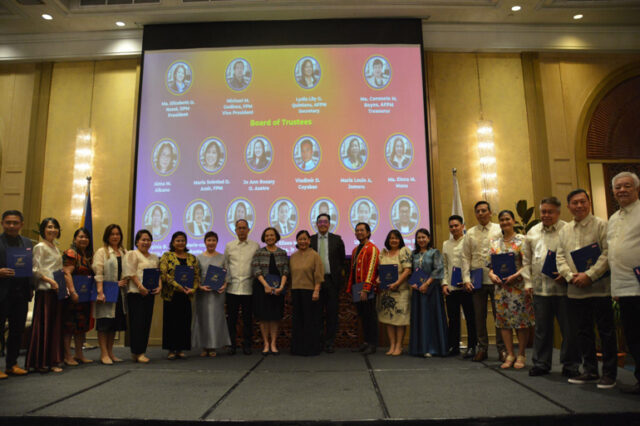
PMAP inducts new set of officers and trustees for 2023; President Beth Nasol vows to Refocus, Reconnect, and Restart

Another year has passed, and the newly elected PMAP 2023 officers and members of the board of trustees, led by 2023 PMAP President Ma. Elizabeth D. Nasol, DPM, took their oath of service at the annual induction rites held at the 681st General Membership Meeting at the Mayuree Ballroom 1, Dusit Thani Manila, last Jan. 25, 2023. The newly elected officers and trustees accepted the seriousness of their undertaking by signing their commitment to promoting sound people management. The ceremony was attended by DoLE Secretary Hon. Bienvenido E. Laguesma; and Mr. Richard Tantoco, president of Energy Development Corp., who also served as the inducting officer.

In her first speech as president of the organization, Ms. Nasol gave us her vision for the organization which is “Co-regeneration: Refocus, Reconnect, Restart” and charted the framework towards achieving a regenerative agenda for HR practitioners and called for a strong commitment to advancing sound people management and human capital development through the lens of building a green economy.

Notably, the officers and board of trustees for this year are representative of PMAP’s nationwide presence of which ten (10) members are from Luzon, three (3) from Visayas, and four (4) from Mindanao. Their representation will help PMAP address the peculiar issues of the regions.

The inducted PMAP Officers and Board of Trustees are as follows:

Officers

President – Ms. Ma. Elizabeth D. Nasol, DPM

SVP – HRMG

Energy Development Corp.

Individual Member

Vice-President – Mr. Michael M. Godinez, FPM

Chief People Officer

Ramon Aboitiz Foundation, Inc.

Secretary – Ms. Lydia Lily G. Quintans, AFPM

Managing Director/Sr. Consultant

Lead Interventions for Teams (LIFT), Inc.

Individual Member

Treasurer – Ms. Ma. Consuelo M. Reyes, AFPM

President, Manmover Specialists, Inc.

President, PMAP Tarlac Chapter

Board of trustees

Ms. Alma M. Albano

Part-time College Instructor

Andres Bonifacio College

JMH Furniture Australia (Freelance)

President, PMAP Zanorte Chapter

Ms. Maria Soledad D. Amir, FPM

Human Resources Director

Xavier University – Ateneo de Cagayan

Ms. Jo Ann Rosary O. Asetre

Customer Success Manager – Asia Pacific

Lee Hecht Harrison

Mr. Vladimir D. Cayabas

School President

NIIT – School that Empowers

President, PMAP Baguio Chapter

Ms. Maria Louie A. Jomero

HR Head

Falcor Marketing Corp.

President, PMAP Negros Chapter

Ms. Ma. Elena M. Mano

Head of Academic Program Chairperson

Polytechnic University of the Philippines

Ms. Virginia B. Mendoza, FPM

Individual Member

Ms. Marie-Cor Gm Militante, FPM

Individual Member

Ms. Marisol B. Tiu, DPM

Chief Operating Officer/OIC HR Director

Davao Doctors Hospital

Atty. Eliseo M. Zuniga, Jr.

Partner

Quisumbing Torres Law Offices

Mr. Arnold A. Guadalupe

HR and Admin. Manager

Mt. Labo Exploration and Development Corp.

President, PMAP Bicol Chapter

Ms. Unilyn E. Solon

Program Head

BS Psychology, Holy Name University

President, PMAP Bohol Chapter

Mr. Darlito B. Boraquit, Jr.

Human Resources Manager

Cagdianao Mining

President, PMAP Caraga Chapter


Spotlight is BusinessWorld’s sponsored section that allows advertisers to amplify their brand and connect with BusinessWorld’s audience by enabling them to publish their stories directly on the BusinessWorld Web site. For more information, send an email to online@bworldonline.com.

Join us on Viber to get more updates from BusinessWorld: https://bit.ly/3hv6bLA.

What to expect during the green comet’s encounter with Earth

Edu INAF/CC BY-SA 2.0/Wikimedia Commons

A green-hued comet that has been lurking in the night sky for months is expected to be the most visible to stargazers this week as it gradually passes Earth for the first time in about 50,000 years. 

The cosmic visitor will swing by our planet at a distance of about 26.4 million miles (42.5 million km). 

Here is an explanation of comets in general and this one in particular. 

WHAT IS A COMET?
Nicknamed “dirty snowballs” by astronomers, comets are balls of ice, dust and rocks that typically hail from the ring of icy material called the Oort cloud at our solar system’s outer edge. One known comet actually originated outside the solar system — 2I/Borisov. 

Comets are composed of a solid core of rock, ice and dust and are blanketed by a thin and gassy atmosphere of more ice and dust, called a coma. They melt as they approach the sun, releasing a stream of gas and dust blown from their surface by solar radiation and plasma and forming a cloudy and outward-facing tail. 

Comets wander toward the inner solar system when various gravitational forces dislodge them from the Oort cloud, becoming more visible as they venture closer to the heat given off by the sun. Fewer than a dozen comets are discovered each year by observatories around the world. 

This comet last passed Earth at a time when Neanderthals still inhabited Eurasia, our species was expanding its reach beyond Africa, big Ice Age mammals including mammoths and saber-toothed cats roamed the landscape and northern Africa was a wet, fertile and rainy place. 

The comet can provide clues about the primordial solar system because it formed during the solar system’s early stages, according to California Institute of Technology physics professor Thomas Prince. 

WHY IS THE COMET GREEN?
The green comet, whose formal name is C/2022 E3 (ZTF), was discovered on March 2, 2022, by astronomers using the Zwicky Transient Facility telescope at Caltech’s Palomar Observatory in San Diego. Its greenish, emerald hue reflects the comet’s chemical composition — it is the result of a clash between sunlight and carbon-based molecules in the comet’s coma. 

NASA plans to observe the comet with its James Webb Space Telescope (JWST), which could provide clues about the solar system’s formation. 

“We’re going to be looking for the fingerprints of given molecules that we can’t access from the ground,” said planetary scientist Stefanie Milam of NASA’s Goddard Space Flight Center in Maryland. “Because JWST’s so sensitive, we’re expecting new discoveries.” 

HOW CAN I SEE THE GREEN COMET?
Using binoculars during a clear night, the comet can be seen in the northern sky. On Monday, it appeared between the Big Dipper and Polaris, the North Star. And on Wednesday, it was positioned to appear near the constellation Camelopardalis, bordered by Ursa Major, the Big Dipper and the Little Dipper. 

Finding a remote location to avoid light pollution in populated areas is key to catching a nice view of the comet as it journeys past our planet heading away from the sun and back toward the solar system’s outer reaches. — Reuters

In climate resilience push, US federal cash flows to coastal rich

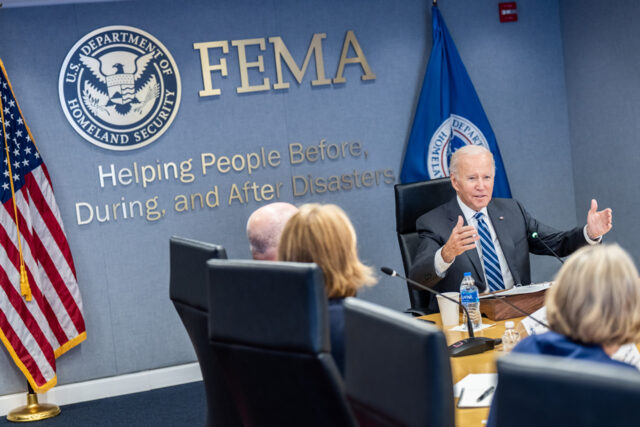
US President Joseph R. Biden, Jr., receives a briefing on the impact of Hurricane Ian on Sept. 29, 2022, at FEMA Headquarters in Washington, DC. — Official White House Photo by Adam Schultz/Flickr

MOSELEY, Virginia — When deputy clerk Kelly Smith saw how changing flood risk maps could saddle many of her Montana city’s about 2,000 residents with costly new building requirements or limitations, she pondered quitting her job. 

“When people get upset with the government, especially here, they complain to the office people,” said Ms. Smith, who is also treasurer of Three Forks, Montana, set near the confluence of three rivers that mark the start of the Missouri River. 

The city ultimately was able to secure a more than $4 million federal grant to help prepare for possible flooding — but only after it was turned down for a different resilience grant with no explanation, she said. 

As more federal funding becomes available to help communities deal with growing climate change-related flood risk, much of it has been steered to wealthier, coastal communities better able to manage the sometimes complex and time-consuming application processes, researchers say. 

That has left smaller inland cities like Ms. Smith’s struggling to prepare their residents for worsening floods, storms and other risks. 

“What’s required is almost out of reach for small communities,” said Ms. Smith, who spoke by phone from the western US city in between handling people trying to pay their water bills. 

“The smaller populations aren’t going to have the funds to get all the engineering (data) and everything that’s required to apply for these grants,” she said. 

Aware of such concerns, the Federal Emergency Management Agency (FEMA) is in the midst of reworking the program, known as Building Resilient Infrastructure and Communities (BRIC), to ease the burden on more rural and disadvantaged areas. 

Still, the challenges underscore how the United States is not immune to a long-time problem in the developing world: the difficulty in getting climate cash to communities most affected by global warming but often least equipped to access help. 

The issues are “very reminiscent” of those facing communities in poorer countries from Africa to Asia that have struggled to mobilize funds, said Clare Shakya, director of the climate change research group at the London-based International Institute for Environment and Development (IIED). 

“You’ve got the most capable always winning and therefore becoming even more capable” of winning competitive grants and undertaking resilience work, she said. 

“So you’re creating further unintended consequences of the most socially vulnerable falling out the bottom.” 

THINKING AHEAD
The US BRIC program marks a shift in attitude toward disaster relief for FEMA, which runs point for the US federal government’s response to major disasters such as hurricanes and floods. 

Rather than doling out money during or after a disaster, it awards funding on a rolling basis to help communities steel for climate impacts, paying for projects like stabilizing creek banks and upgrading water pipelines. 

FEMA is “thinking proactively,” said Kristin Smith, of Headwaters Economics, a nonprofit research group that has worked with Three Forks on resilience efforts. 

“I think what we know is it’s just a better use of tax dollars to help communities prepare for disasters rather than react,” she said. “BRIC really makes that possible.” 

But in 2020, 94% of the funding was set to flow to wealthier, coastal states, according to an analysis from Ms. Smith’s group. 

The ratio improved somewhat in 2021, but more rural, lower-capacity states are still being left out of the process, she said. 

BRIC is just one tool the Biden administration is using to help communities prepare themselves for climate change impacts — and hitting such resilience goals won’t happen overnight, FEMA spokesperson Jeremy Edwards said. 

“We are encouraged by the progress we have made to reach communities and people nationwide, with more inland states taking advantage of this program and nearly 50% of total funding being delivered to disadvantaged communities,” he said. 

In addition to staff shortages and capacity issues, the requirement that local governments foot up to 25% of the costs of work is another of the chief obstacles blocking access to cash for smaller, vulnerable towns, said Kyle Magyera of the Wisconsin Wetlands Association. 

Mr. Magyera’s nonprofit group helped Ashland County, in the north of the state, implement a disaster mitigation grant — secured from a different pool of federal funding — to study wetlands and flooding issues. 

“In addition to limited capacity, a lot of these communities don’t even have a computer, a tablet … there’s limited cell service,” he said. “No matter what, the towns are unlikely to have the resources themselves to pursue funding.” 

Globally, another major hindrance to getting climate financing where it needs to go is a failure by those delivering help to defer to local communities that have their own solutions in mind, said Shakya of the London research group. 

She pointed, for example, to a ward-level group in Kenya, working to manage drought. It invested in veterinary services after observing that sick cattle were among the first to die in dry periods. 

“What they really needed was healthier cattle so they could be more resilient,” she said. “So their idea was entirely (out of) left field. I mean, no one would have come up with a veterinary diagnostic service as being a critical thing.” 

HAVE THE MOST, GET THE MOST
Despite its growing pains, BRIC has seen improvements and better geographic diversity in its most recent round of funding, said Anna Weber of the Natural Resources Defense Council (NRDC), a nonprofit environmental advocacy group. 

“Of course FEMA is … a really big ship and it turns pretty slowly,” she admitted. But she said she was confident those working on programs like BRIC “are dedicated to making positive change”. 

Ms. Weber noted that an explanatory statement accompanying a 2023 government spending bill, which became law in December, directs FEMA to allocate $1.5 million for each of the 50 US states for “capacity building.” 

“That is, we think, a really good step forward,” she said. “If the process wasn’t designed with you in mind, you are already starting behind everybody else.” 

To address capacity concerns, FEMA is also increasing the number of communities that can take advantage of direct technical assistance and boosting the federal cost share to 90% for socially vulnerable areas, according to the agency. 

As well, the infrastructure law President Biden signed in 2021 helped more than double available funding for BRIC to almost $2.3 billion in 2022. 

In the United States, federal disaster aid has historically been slow to reach lower-income populations and communities of color, which often bear the brunt of the damage from climate-fueled floods, wildfires and storms. 

Antoine Richards, of the nonprofit Institute for Diversity and Inclusion in Emergency Management, said he’s a fan of the intentions behind BRIC — but it hasn’t entirely lived up to its promise yet. 

“It’s tying into the fact that those who are wealthy or those who have the means or the capacity typically get the resources,” he said. Basically, “those with the most get the most.” — Thomson Reuters Foundation

In diplomatic coup, Taiwan president speaks to Czech president-elect

XANDREASWORK-UNSPLASH

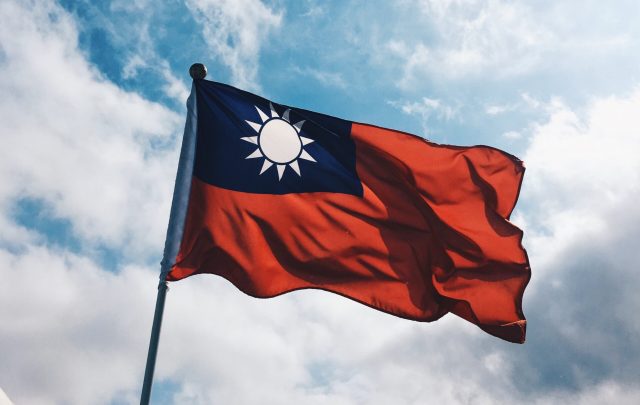
TAIPEI/PRAGUE — Taiwan President Tsai Ing-wen held a telephone call with Czech President-elect Petr Pavel on Monday, a highly unusual move given the lack of formal ties between their countries and a diplomatic coup for Taipei that is sure to infuriate China. 

The two leaders stressed their countries’ shared values of freedom, democracy and human rights during their 15-minute call, their offices said, and Mr. Pavel said he hoped to meet Ms. Tsai in the future. 

Most countries avoid high-level public interactions with Taiwan and its president, not wishing to provoke China, the world’s second largest economy. 

Beijing views Taiwan as being part of “one China” and demands other countries recognize its sovereignty claims, which Taiwan’s democratically-elected government rejects. 

In 2016, US President-elect Donald J. Trump spoke by telephone with Ms. Tsai shortly after winning the election, setting off a storm of protest from Beijing. 

Ms. Tsai said she hoped that under Mr. Pavel’s leadership the Czech Republic would continue to cooperate with Taiwan to promote a close partnership, and that she hoped to stay in touch with him. 

“Bilateral interaction between Taiwan and the Czech Republic is close and good,” her office summarized Ms. Tsai as having said. 

Mr. Pavel, a former army chief and high NATO official who won the Czech presidential election on Saturday, said on Twitter that the two countries “share the values of freedom, democracy, and human rights.” 

‘ONE-CHINA’ PRINCIPLE
Earlier, China’s foreign ministry had said it was “seeking verification with the Czech side” on media reports that the call was to take place. 

“The Chinese side is opposed to countries with which it has diplomatic ties engaging in any form of official exchange with the Taiwan authorities. Czech President-elect Mr. Pavel during the election period openly said that the ‘one-China’ principle should be respected,” the ministry said. 

Mr. Pavel will take office in early March, replacing President Milos Zeman, who is known for his pro-Beijing stance. 

Mr. Zeman spoke with Chinese President Xi Jinping this month and they reaffirmed their “personal friendly” relationship, according to a readout of their call from Mr. Zeman’s office. 

The Czech Republic, like most countries, has no official diplomatic ties with Taiwan, but the two sides have moved closer as Beijing ratchets up military threats against the island and Taipei seeks new friends in Eastern and Central Europe. 

The center-right Czech government has said it wants to deepen cooperation with democratic countries in the India-Pacific region, including Taiwan, and has also been seeking a “revision” of ties with China. 

In 2020, the head of the Czech Senate visited Taiwan and declared himself to be Taiwanese in a speech at Taiwan’s parliament, channeling the late US President John F. Kennedy’s defiance of communism in Berlin in 1963. — Reuters

Philippines’ proposed tax on nickel ore exports could ‘kill’ industry – group head

BW FILE PHOTO

MANILA — The head of the Philippine nickel mining industry warned on Tuesday that the government’s plan to impose an up to 10% tax on nickel ore exports could force local producers to close up shop.

“The initial proposal in the House of Representatives was 10%. That will kill the industry,” Dante Bravo, president of the Philippine Nickel Industry Association, told Reuters.

“We need to be heard so the government will understand our side,” said Bravo, who is also the president of miner Global Ferronickel Holdings Inc.

The Philippines is looking at taxing nickel ore exports to encourage miners in the world’s second-biggest supplier of the material – which is used in making stainless steel and batteries for electric vehicles – to invest in local processing instead of just selling raw ore.

Bloomberg News on Monday quoted Environment and Natural Resources Secretary Antonia Yulo Loyzaga, whose department also oversees the mining sector, as saying “there’s a range of actions including a progressive look at taxing exports” of raw nickel.

The idea is to follow in the footsteps of Indonesia, where a ban on nickel ore exports has attracted massive investment into processing plants. Indonesia wants to replicate the policy for other metals, including tin.

But, Bravo said, a comparison to Indonesia is flawed because it has more reserves to support investments in local mineral processing.

The Philippines has 34 operating nickel mines and exports most of its nickel ore to China and some to Japan. But it has only two nickel processing plants, which are both partly owned by the Philippines’ biggest ore producer Nickel Asia Corp.

Nickel Asia is partly owned by Sumitomo Metal Mining Co Ltd.

Latest government data show the Philippines produced 22.5 million dry metric tonnes (dmt) of nickel ore in January to September last year, valued at 46.8 billion pesos ($859 million), compared with 27.2 million dmt in the same period in 2021.

The proposed tax on mineral ore exports is part of the overall plan to establish a new fiscal regime for the industry to boost government revenue.

A pending legislative bill proposes royalty payments of 3% on gross output of large-scale miners, a margin-based windfall tax, on top of other taxes. — Reuters