Home Blog Page 5277

Marcos foreign policy should embrace middle power identity
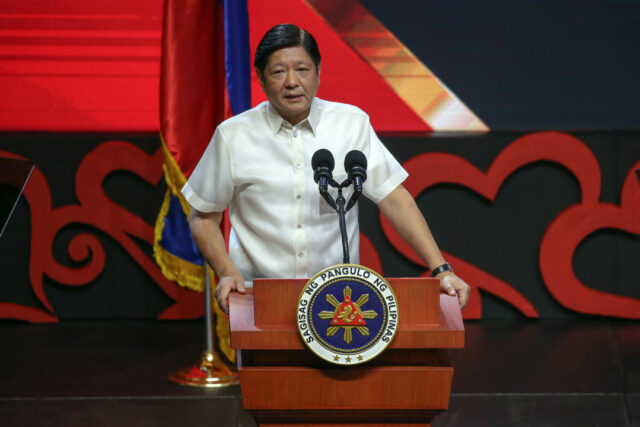
PHILIPPINE STAR/KRIZ JOHN ROSALES

Foreign policy and external relations are crucial aspects of President Ferdinand Marcos, Jr.’s government as they play a significant role in responding to the interaction between rapidly shifting domestic and international contexts. Furthermore, the administration should capitalize on the nation-state’s future demographic resources to build economic power and societal resilience, particularly against internal, geopolitical, and environmental threats, which are our weakest based on the Asia Power Index 2023.

Considering the Philippines’ specific military capability changes, it is time to utilize the nation-state’s resources as a middle power, maximizing our continuing source of influence through an expanding defense network (from the PHL-US alliance), our reach in the broadly integrating ASEAN plus network, and our potential multilateral power. These are crucial to navigating a complex interdependent world, where mounting US-China rivalry in the Indo-Pacific region has repercussions for the tightly integrated economies and securities in the region and the world.

As the primary architect of foreign policy, Marcos Jr. should promptly address the transformations affecting governance at different levels. The president must recognize that the Philippines has evolved into a middle power, occupying a favorable geopolitical and economic position in Asia between the great powers with their preponderant aims and the weaker nation-states that lack influence in global affairs.

Beyond a position in the distribution of power, middle power is also about positioning or how the nation-state and its leaders convert their resources and capabilities to real influence. Indeed, the notion of the middle power is also about foreign policy choice or strategy. To the middle power actor, with neither the immense military/economic wherewithal of the superpower but with the capabilities that can be the basis for voice in international and global politics, the Marcos Jr. administration must aim at a “middle” pathway to avoid being drawn into the escalating US-China rivalry.

At the 2023 World Economic Forum meeting, Marcos Jr. made it clear that when questioned about his stance, he stated, that he does not represent Beijing or Washington DC. His loyalty lies with the Philippines and that he stands with the Philippines. This approach of not siding with either party is known as having an independent or equidistant foreign policy in both its form and substance. However, its execution can prove to be challenging and require careful consideration in decision-making.

We have witnessed former Rodrigo Duterte’s execution of an independent (from the US) foreign policy through appeasement of China by affiliating within the ambit of the latter’s trade and investments. Similarly, a policy of downplaying the South China Sea arbitral ruling was necessary to deal with an aggressive neighbor. Towards the US, however, the policy was more of ambiguous distancing from the alliance while using a mix of incentives and pressure regarding the Mutual Defense Treaty, Visiting Forces Agreement, and Enhanced Defense Cooperation Agreement, which are cornerstones of the PHL-US relations. In addition, security and arms trade diversification of providers and partners underpinned the foreign policy separation from the US. Towards the end of his term, Duterte shifted the balance by reversing his appeasement policy towards a more cautious form of “soft balancing” towards China. Finally, to maintain a middle power choice, he revitalized US anti-terror support while resurrecting the legal force of the arbitral ruling power to respond to escalating Chinese provocations in the Philippine EEZ.

Is President Marcos Jr. shifting towards adopting a foreign policy approach that would establish the Philippines as a middle power?

His foreign policy incorporates vital elements necessary for the country to attain middle-power status and to embrace and solidify this identity. In his first 200 days in office, he continued and modified his predecessor’s foreign policy of soft-balancing China with strengthened economic ties and leveraging the arbitral ruling while reinforcing the Enhanced Defense Cooperation Agreement (EDCA) to increase US military access to Philippine bases and using this as the engine of the minimum credible defense. Additionally, like Duterte, Marcos Jr. is diversifying Philippine security beyond the US-led alliance system by strengthening bilateral strategic partnerships and security relations with Japan, South Korea, and Australia.

While these are forerunners in high politics, the middle power approach to foreign policy must necessarily entail that this administration develops the nation-state’s capabilities for what are otherwise non-traditional security and low political issues. For example, there are windows of opportunities found in the environmental agenda of the current administration under Secretary Toni Yulo-Loyzaga’s leadership. This administration should elevate its climate agenda to foster societal disaster resiliency and enhance maritime and marine sustainability in this area of great transnational significance. Furthermore, a prioritization of migration policy reform of overseas labor deployment under Secretary Enrique Manalo’s leadership is another window where a middle foreign policy choice based on some norm development at home will resonate globally.


Alma Maria O. Salvador, Ph.D. is an associate professor of Political Science at the Ateneo de Manila University.
Pentagon says latest shootdowns stem from more cautious stance

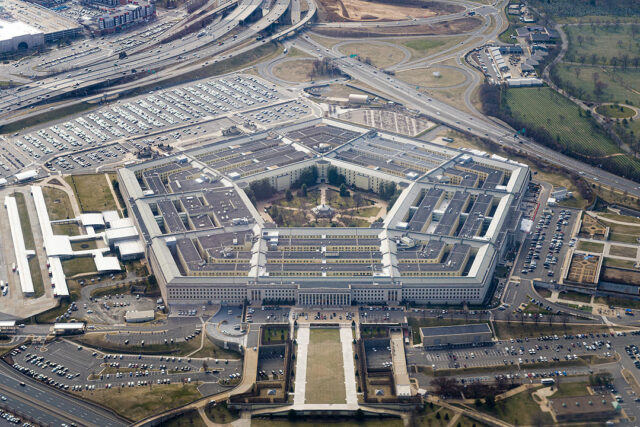
THE PENTAGON is seen from the air in Washington, US, March 3. — REUTERS

THE DECISION to shoot down three aerial objects in recent days stemmed from a decision to pay closer attention to North American skies and take a more cautious stance toward intrusions after US forces brought down an alleged Chinese spy balloon on Feb. 4, the Pentagon said.

The Defense Department doesn’t yet know what the additional objects are, but they approached sensitive military sites and posed a potential threat to commercial aviation, according to Melissa Dalton, assistant secretary of defense for homeland defense and hemispheric affairs.

After downing the Chinese balloon “we have been more closely scrutinizing our airspace at these altitudes, including enhancing our radar, which may at least partly explain the increase in objects that we’ve detected over the past week,” Ms. Dalton said in a briefing Sunday.

She said countries, companies and research organizations send up objects at those altitudes “for purposes that are not nefarious, including legitimate research.” She said the objects were shot down out of “an abundance of caution.”

A US F-16 fighter jet shot down an unidentified object over Lake Huron in Michigan earlier on Sunday, the fourth time in eight days a high-flying balloon or other craft has been brought down over the US or Canada. The US general in charge of NORAD said he hasn’t ruled out any possibilities on the source of three objects shot from the skies over the US and Canada — including that they might be of extraterrestrial origins.

“I’ll let the intel community and the counterintelligence community figure that out,” General Glen VanHerck, commander of the North American Aerospace Defense Command, said when asked Sunday if the US had excluded the possibility that the objects shot down over Alaska, Canada and Michigan were “aliens or extraterrestrials.”

“I haven’t ruled out anything at this point,” he said.

By contrast, the Biden administration said the high-altitude craft brought down on Feb. 4 was a Chinese spying balloon, which China denies, saying it was a weather balloon that went adrift. — Bloomberg

US tells citizens to leave Russia immediately

A RUSSIAN FLAG flies with the Spasskaya Tower of the Kremlin in the background in Moscow, Russia, Feb. 27, 2019. — REUTERS

MOSCOW — The United States has told its citizens to leave Russia immediately due to the war in Ukraine and the risk of arbitrary arrest or harassment by Russian law enforcement agencies.

“US citizens residing or travelling in Russia should depart immediately,” the US embassy in Moscow said. “Exercise increased caution due to the risk of wrongful detentions.”

“Do not travel to Russia,” the embassy said.

The United States has repeatedly warned its citizens to leave Russia. The last such public warning was in September after President Vladimir Putin ordered a partial mobilization.

“Russian security services have arrested US citizens on spurious charges, singled out US citizens in Russia for detention and harassment, denied them fair and transparent treatment, and convicted them in secret trials or without presenting credible evidence,” the embassy said.

“Russian authorities arbitrarily enforce local laws against US citizen religious workers and have opened questionable criminal investigations against US citizens engaged in religious activity.”

Russia has opened a criminal case against a United States citizen on suspicion of espionage, the Federal Security Service (FSB) said in January. — Reuters

Woman pulled alive from rubble in Turkey a week after major earthquake

ANTAKYA/ELBISTAN, Turkey — Rescuers pulled a woman alive from the rubble of a collapsed building in Turkey on Monday, broadcaster CNN Turk reported, a week after a major earthquake struck Turkey and Syria killing more than 33,000 people.

Sibel Kaya, 40, was rescued in southern Gaziantep province, some 170 hours after the first of two quakes struck the region, the report said. Rescue workers in Kahramanmaras had also made contact with three survivors, believed to be a mother, daughter and baby, in the ruins of a building.

With chances of finding more survivors growing more remote, the toll in both countries rose above 33,000 on Sunday and looked set to keep growing. It was the deadliest quake in Turkey since 1939.

On Sunday, rescue teams from Russia, Kyrgyzstan and Belarus pulled a man alive from a collapsed building in Turkey, about 160 hours after the quake struck, Russia’s Ministry of Emergency Situations said.

“Rescue work to remove the man from the rubble lasted more than four hours,” the ministry said on the Telegram messaging platform, alongside a video showing rescuers taking a man from rubble and carrying him away.

“The work was carried out at night with a risk to life coming from a possible collapse of structures.”

In a central district of one of the worst hit cities, Antakya in southern Turkey, business owners emptied their shops on Sunday to prevent merchandise from being stolen by looters.

Residents and aid workers who came from other cities cited worsening security conditions, with widespread accounts of businesses and collapsed homes being robbed.

Turkish President Tayyip Erdogan has said the government will deal firmly with looters, as he faces questions over his response to the earthquake ahead of an election scheduled for June that is expected to be the toughest of his two decades in power.

The quake is now the sixth most deadly natural disaster this century, behind the 2005 tremor that killed at least 73,000 in Pakistan.

A father and daughter, a toddler and a 10-year-old girl were among other survivors pulled from the ruins of collapsed buildings in Turkey on Sunday, but such scenes are becoming rare as the number of dead climbed relentlessly.

At a funeral near Reyhanli, veiled women wailed and beat their chests as bodies were unloaded from lorries — some in closed wood coffins, others in uncovered coffins, and still others just wrapped in blankets.

Some residents sought to retrieve what they could from the destruction.

In Elbistan, epicenter of an aftershock almost as powerful as Monday’s initial 7.8 magnitude quake, 32-year-old mobile shop owner Mustafa Bahcivan said he had come into town almost daily since then. On Sunday, he sifted through rubble searching for any of his phones that might still be intact and sellable.

“This used to be one of the busiest streets. Now it’s completely gone,” he said.

SYRIA AID COMPLICATED BY YEARS OF WAR
In Syria, the disaster hit hardest in the rebel-held northwest, leaving homeless yet again many people who had already been displaced several times by a decade-old civil war. The region has received little aid compared with government-held areas.

“We have so far failed the people in north-west Syria,” United Nations aid chief Martin Griffiths said on Twitter from the Turkey-Syria border, where only a single crossing is open for U.N. aid supplies.

“They rightly feel abandoned,” Mr. Griffiths said, adding that he was focused on addressing that swiftly.

The United States called on the Syrian government and all other parties to immediately grant humanitarian access to all those in need.

Earthquake aid from government-held regions into territory controlled by hardline opposition groups has been held up by approval issues with Islamist group Hayat Tahrir al-Sham (HTS) which controls much of the region, a U.N. spokesperson said.

An HTS source in Idlib told Reuters the group would not allow any shipments from government-held areas and that aid would be coming in from Turkey to the north.

The United Nations is hoping to ramp up cross-border operations by opening an additional two border points between Turkey and opposition-held Syria for aid deliveries, spokesperson Jens Laerke said.

U.N. Syria envoy Geir Pedersen said in Damascus the United Nations was mobilizing funding to support Syria. “We’re trying to tell everyone: Put politics aside, this is a time to unite behind a common effort to support the Syrian people,” he said.

The quakes killed 29,605 people in Turkey and more than 3,500 in Syria, where tolls have not been updated for two days.

Turkey said on Sunday about 80,000 people were in hospital, and more than 1 million in temporary shelters. — Reuters

Love in a time of inflation: how much will Valentine’s Day set you back?

PCH.VECTOR-FREEPIK

LONDON — This Valentine’s Day is set to look different after a year of record food inflation that has sent up prices of everything from flowers to chocolates and dining in restaurants.

COVID-era supply chain logjams and Russia’s invasion of Ukraine have meant that Britons paid a record 16.7% more for food in the four weeks to Jan. 22 compared to the same period last year, according to research firm Kantar.

As a result, romantic Valentine dinners out will cost more and restaurants are modifying their offerings to attract cash-conscious customers.

Last year, British restaurant chain PizzaExpress offered a three-course set menu complete with “a prosecco and raspberry mimosa, heart-shaped dough balls and a main, such as our Padana, with creamy goat’s cheese and sweet caramelized onion”.

Priced at 23.95 pounds ($29) per person, the ad for the meal asked: “Will the Triple Salted Caramel Cheesecake tickle your fancy?”

This year, PizzaExpress is advertising a slightly less impressive “love bundle” of a starter and a “classic” pizza for 15 pounds.

According to the latest data from Britain’s Office of National Statistics, eating at restaurants in December cost 9.4% more than last year.

Other expenses associated with date nights – from flowers and cinema tickets to taxis and childcare – also rose. As companies such as Mondelez, Nestle and Lindt hiked prices, people paid 10.7% more for chocolates.

The nation’s supermarkets are seeking to cash in, keeping prices for their Valentine’s Day meal-deals stable in the hope of luring customers from restaurants.

Morrisons is selling a 15-pound package for a starter, main, two sides, drink and dessert. Its members will get 1 pound off a dozen fresh red roses from Feb. 11, the retailer said. The price of flowers rose 6.2% in Britain in December.

Tesco, whose chief executive recently noted that consumers are shifting away from eating out, has reduced the price of its Valentine’s Day dinner-for-two to 12 pounds – down from 15 pounds last year – for a main, side dish, dessert and drink.

Sainsbury’s has tied up with Uber Eats to offer 15 pound “emergency bundles” of a three-course meal, drinks and gifts with free delivery in parts of East London.

“It’s an opportunity for the supermarkets to sell their premium ranges to people who wouldn’t normally buy them,” said Chris Beckett, head of equity research at investment firm Quilter Cheviot. “That could lead to repeat purchases in the future.”

Even diners with deeper pockets will have to dish out more this year.

London’s Michelin-starred Ritz Restaurant, whose ad boasts “breathtaking” interiors “with spectacular garland chandeliers and romantic twinkling candlelight all reflected in the mirrored panels”, this year priced its four-course set Valentine’s menu at 395 pounds per person, up from 325 pounds last year.

Both years, the deal included a glass of Barons de Rothschild “Ritz Reserve” Rosé NV Champagne and a menu created by the Ritz’s Executive Chef John Williams, Member of the Order of the British Empire.

Elsewhere in Europe, a similar trend has taken hold.

Luxury hotel Le Bristol in Paris, for instance, is this year charging upwards of 2,190 euros ($2,338) for its “seductive offer” that includes a room for one night, late check-out, a “gastronomic dinner for two”, chocolate and a bottle of champagne. Last year, a similar experience cost 1,090 euros.

The Ritz and Le Bristol did not respond to a request for comment. — Reuters

Explosions rock Gaza, Israel says it hit Hamas rocket factory

REUTERS

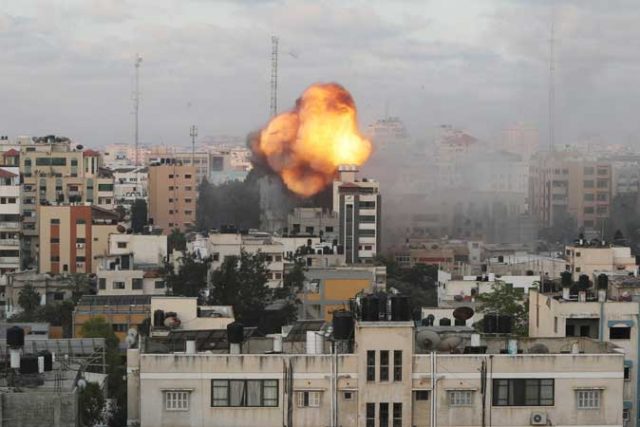
GAZA – Several explosions rocked the Gaza Strip early on Monday, according to a Reuters witness, as Israel’s military said it attacked an underground site used by the Palestinian enclave’s Hamas Islamists to manufacture rockets.

The air strikes, in which there was no immediate word of casualties, followed what Israel described as its shooting down over the weekend of a rocket that had been fired over the border from Gaza. There was no Palestinian claim for that launch.

In the Israeli-occupied West Bank, another Palestinian territory, witnesses said troops had surrounded a house in the city of Nablus, with gunfire ensuing and possible casualties.

The Den of Lions, a group of Palestinian gunmen based mostly in Nablus and nearby Jenin which has been subject to intensified Israeli raids over the past year, said it had ambushed an army unit. Israel had no immediate comment.

Hamas cadres seized control of Gaza in 2007 and have fought several wars with Israel there since. When smaller Gazan factions attack Israel, it generally retaliates against Hamas.

Palestinian sources said Israeli ground forces also fired on Hamas border positions on Monday. Sirens sounded in Israeli towns near the Gaza border, warning of possible new rocket launches. — Reuters

Russian arms supplies to India worth $13B in past 5 years – news agencies

REUTERS

Russian supplied India with around $13 billion of arms during the past five years, and New Delhi has orders placed with Moscow for weapons and military equipment exceeding $10 billion, Russian state news agencies reported late on Sunday.

India is the world’s biggest buyer of Russian arms, accounting for around 20% of Moscow’s current order book, and New Delhi has not explicitly condemned Russia’s invasion of Ukraine. Indian Prime Minister Narendra Modi has called for dialogue and diplomacy to solve the conflict, now in its 12th month.

Scores of Western countries imposed sanctions on Russia, including on arms, in response to the invasion, which Moscow calls a “special military operation”.

India, China and some Southeast Asian countries have maintained their interest in buying Russian arms, according to Dmitry Shugayev, the head of Russia’s Federal Service for Military-Technical Cooperation, the agencies reported.

“Despite the unprecedented pressure on India from Western countries led by the United States in connection with Russia’s special operation in Ukraine, it continues to be one of Russia’s main partners in the field of military-technical cooperation,” Interfax agency quoted Shugayev as saying.

Annual arms exports were about $14-15 billion, and the order book has remained steady at around $50 billion, Interfax reported.

Asian customers are particularly interested in Russia’s S-400 Triumf missile defence systems, short-range surface-to-air missiles systems such as the Osa, Pechora or Strela, as well as Su-30 warplanes, MiG-29 helicopters and drones, Shugayev said.

Russia’s TASS state news agency reported that Russia will present about 200 samples of weapons and military equipment at the 14th international aerospace exhibition Aero India 2023, which opens on Monday in Bengaluru.

India is scouting for billions of dollars worth of military planes, completing jetliner deals to meet civilian demand and pressing global aircraft manufacturers to produce more locally at the show this week. — Reuters

Ruling out aliens? Senior US general says not ruling out anything yet

ALBERT ANTONY-UNSPLASH

WASHINGTON – The US Air Force general overseeing North American airspace said on Sunday after a series of shoot-downs of unidentified objects that he would not rule out aliens or any other explanation yet, deferring to US intelligence experts.

Asked whether he had ruled out an extraterrestrial origin for three airborne objects shot down by US warplanes in as many days, General Glen VanHerck said: “I’ll let the intel community and the counterintelligence community figure that out. I haven’t ruled out anything.”

“At this point, we continue to assess every threat or potential threat, unknown, that approaches North America with an attempt to identify it,” said VanHerck, head of US North American Aerospace Defense Command and Northern Command.

VanHerck’s comments came during a Pentagon briefing on Sunday after a US F-16 fighter jet shot down an octagonal-shaped object over Lake Huron on the US-Canada border.

The incidents over the past three days follow the Feb. 4 downing of a Chinese balloon that put North American air defenses on high alert. US officials said that balloon was being used for surveillance.

Another US defense official, speaking on condition of anonymity, said the military had seen no evidence suggesting any of the objects in question were of extraterrestrial origin.

VanHerck said the military was unable to immediately determine the means by which any of the three latest objects were kept aloft or where they were coming from.

“We’re calling them objects, not balloons, for a reason, said VanHerck.

The incidents come as the Pentagon has undertaken a new push in recent years to investigate military sightings of UFOs – rebranded in official government parlance as “unidentified aerial phenomena,” or UAPs.

The government’s effort to investigate anomalous, unidentified objects – whether they are in space, the skies or even underwater – has led to hundreds of documented reports that are being investigated, senior military leaders have said.

But the Pentagon says it has not found evidence to indicate Earthly visits from intelligent alien life.

Analysis of military sightings are conducted by the Office of the Director of National Intelligence in conjunction with a newly created Pentagon bureau known as AARO, short for the cryptically named All Domain Anomaly Resolution Office.

Their first report to Congress in June 2021 examined 144 sightings by U.S. military aviators dating to 2004.

That study attributed one incident to a large, deflating balloon but found the rest were beyond the government’s ability to explain without further analysis.

A report from the Office of the Director of National Intelligence issued last month cited 366 additional sightings, mostly things like balloons, drones, birds or airborne clutter. But 171 remained officially unexplained.

“Some of these uncharacterized UAP appear to have demonstrated unusual flight characteristics or performance capabilities, and require further analysis,” the office said in the report.

Sill, Ronald Moultrie, under secretary of defense for intelligence and security, told reporters in December that he had not seen anything in the files to indicate intelligent alien life.

“I have not seen anything in those holdings to date that would suggest that there has been an alien visitation, an alien crash or anything like that,” Moultrie said. — Reuters

Mexico arrests cartel member suspected of leading fentanyl trade

THE MEXICAN FLAG flutters during the National Flag Day event in Iguala, Guerrero State, Mexico, Feb. 24, 2021. — REUTERS

MEXICO CITY – Mexico’s defense ministry said Sunday that security forces had arrested a suspected top cartel member accused of leading the region’s production of fentanyl, which has killed thousands in the United States.

The arrest, which took place on Thursday in the state of Sinaloa, came just weeks after US President Joe Biden visited Mexico, and followed the recent high-profile arrest of cartel leader Ovidio Guzman.

The suspect is described as being a leading logistics chief for the famed narco trafficker known as “Mayo Zambada,” who jointly headed the powerful Sinaloa cartel.

“It should be noted that the accused is considered the main producer of fentanyl and methamphetamine pills, in addition to carrying out the large-scale transfer of cocaine from Central and South America to the US,” the ministry said in a statement.

Following standard procedure in Mexico, it named him as Jose “N”, not giving his full name. — Reuters

S. Korea aims to join AI race as startup Rebellions launches new chip

A MAN walks along a nearly empty street in Seoul, South Korea, July 12. — REUTERS

SEOUL – South Korean startup Rebellions, Inc. launches an artificial intelligence (AI) chip on Monday, racing to win government contracts as Seoul seeks a place for local companies in the exploding AI industry.

The company’s ATOM chip is the latest Korean attempt to challenge global leader Nvidia Corp. in the hardware that powers the potentially revolutionary AI technology.

AI is the talk of the tech world, as ChatGPT – a chatbot from Microsoft-backed OpenAI that generates articles, essays, jokes and even poetry – has become the fastest-growing consumer app in history just two months after launch, according to UBS.

Nvidia, a US chip designer, has a commanding share of high-end AI chips, making up about 86% of the computing power of the world’s six biggest cloud services as of December, according to Jefferies chip analyst Mark Lipacis.

The South Korean government wants to foster a domestic industry, investing more than $800 million over the next five years for research and development in a bid to lift the market share of Korean AI chips in domestic data centers from essentially zero to 80% by 2030.

“It’s hard to catch up to Nvidia, which is so far ahead in general-purpose AI chips,” said Kim Yang-Paeng, senior researcher at the Korea Institute for Industrial Economics and Trade. “But it’s not set in stone because AI chips can carry out different functions and there aren’t set boundaries or metrics.”

Rebellions’ ATOM is designed to excel at running computer vision and chatbot AI applications. Because it targets specific tasks rather than doing a wide range, the chip consumes only about 20% of the power of an Nvidia A100 chip on those tasks, said Rebellions co-founder and chief executive Park Sunghyun.

A100 is the most popular chip for AI workloads, powerful enough to create – in industry lingo, “train” – the AI models. ATOM, designed by Rebellions and manufactured by Korean giant Samsung Electronics Co, does not do training.

While countries such as Taiwan, China, France, Germany and the United States have extensive plans to support their semiconductor companies, the South Korean government is rare in singling out AI chips for a concentrated push.

Seoul will put out a notice this month for two data centers, called neural processing unit farms, with only domestic chipmakers allowed to bid, an official at the Ministry of Science and ICT told Reuters.

‘TWISTING ARMS’

In a country whose firms supply half the world’s memory chips, the authorities want to create a market that can be a test bed for AI chipmakers, aiming to foster global competitors.

“The government is twisting the arm of the data centers and telling them, ‘Hey, use these chips’,” Rebellions’ Park, a former Morgan Stanley engineer, told Reuters.

Without such support, he said, data centres and their customers would likely stick with Nvidia chips.

Sapeon Korea Inc also plans to participate in the project, the SK Telecom Co subsidiary said.

FuriosaAI, backed by South Korea’s top search engine Naver Corp. and state-run Korea Development Bank, told Reuters it will also bid.

“There’s a lot of momentum behind Nvidia’s developments. These startups have got to build momentum, so that will take time,” said Alan Priestley, an analyst at IT research firm Gartner. “But government incentives such as what’s happening in Korea could well affect the market share within Korea.”

Rebellions will seek to participate in the government project in a consortium with KT Corp., a big Korean telecom, cloud and data centre operator, in the hopes of weaning Nvidia customers off the US supplier.

“Amid high dependence on foreign GPUs (graphics processing units) globally, the cooperation between KT and Rebellions will allow us to have an ‘AI full stack’ that encompasses software and hardware based on domestic technology,” said KT vice president Bae Han-chul.

Rebellions declined to give a forecast for its AI chip venture. It has raised 122 billion won ($96 million), including 30 billion won from KT in a funding round joined by Singapore’s Temasek Pavilion Capital and 10 billion won grant from the South Korean government. — Reuters

Philippines’ Marcos open to a troop pact with Japan

President Ferdinand Marcos Jr. answers questions from the media after his first Cabinet meeting in Malacañan Palace, July 5, 2022. — PHILIPPINE STAR/KRIZ JOHN ROSALES

MANILA – President Ferdinand Marcos Jr said on Sunday he saw no reason why the Philippines should not have a Visiting Forces Agreement (VFA) with Japan if it would boost maritime security and ensure greater protection for Filipino fishermen.

Marcos, however, also told reporters he would exercise care in pursuing a potential pact with Tokyo “because we do not want to appear provocative.”

Marcos’ first visit to Japan since taking office came after he recently granted the United States access to additional military bases in the Philippines under a VFA, a move which China said undermined regional stability and raised tensions. The VFA provides rules for the rotation of thousands of U.S. troops in and out of the Philippines for exercises.

“If it will be of help to the Philippines in terms of protecting, for example our fishermen, protecting our maritime territory … I don’t see why we should not adopt it (VFA),” Marcos told reporters before returning home on Sunday, according to an official transcript.

Marcos was in Japan for a five-day visit, to forge closer security ties with Tokyo, which in December announced its biggest military-build up since World War Two, fuelled by concerns about aggressive Chinese actions in the region.

Marcos and Prime Minister Fumio Kishida penned a deal to allow their armed forces to work together during disaster relief, an agreement seen as a step towards a broader pact that could allow the countries to deploy forces on each other’s soil.

“I always think about the need to protect our fishermen. We need to show clearly we are patrolling our waters and making sure that our maritime territory is clearly recognised,” Marcos said.

The Philippines has a VFA with the United States, while Tokyo has VFAs with Australia and Britain, and also hosts the biggest concentration of U.S. forces abroad.

Japan held military exercises with the United States and the Philippines as recently as October, and its military presence in the Philippines could help counter Chinese influence in the South China Sea, much of which Beijing claims, including the territory that Manila considers its own.

Kishida said the Philippines and Japan had agreed to try and establish a framework that would “strengthen and smooth the process of holding joint exercises”.

In an interview with Nikkei on Sunday, Marcos said his country could be pulled into a possible conflict in the Taiwan Strait because of its proximity to the self-ruled island regarded by China as a breakaway province.

“When we look at the situation in the area, especially the tensions in the Taiwan Strait, we can see that just by our geographical location, should there in fact be conflict in that area … it’s very hard to imagine a scenario where the Philippines will not somehow get involved,” Marcos said. — Reuters

Philippines gets $13B in Japanese investment pledges

The Philippines got $13 billion in investment pledges and contributions during President Ferdinand R. Marcos, Jr’s five-day trip to Japan.

In his arrival speech on Sunday, the president said the commitments from Japanese companies could create more than 24,000 jobs.

He said he had briefed Japanese business leaders and potential investors during roundtable meetings on “the new and better business climate and investment environment in the Philippines.”

“Key private sector representatives were with me and engaged with Japanese industry giants to seize the economic opportunities now present in the Philippines,” he said. — Kyle Aristophere T. Atienza