Home Blog Page 527

60-day freeze ordered on Cebu prices after quake

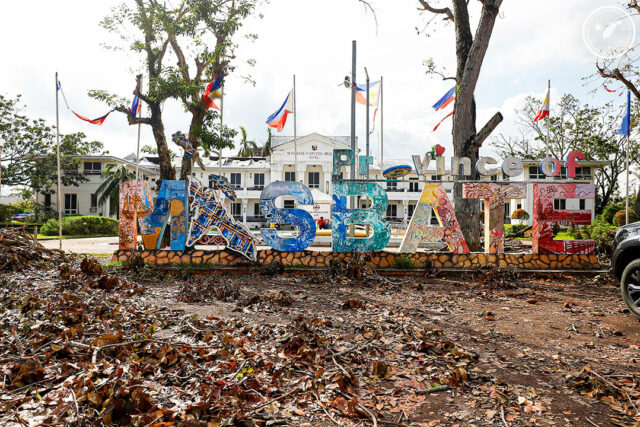
THE Archdiocesan Shrine of Santa Rosa de Lima in Daanbantayan, Cebu sustained heavy damage from the Sept. 30 quake. — ARCHDIOCESAN SHRINE OF SANTA ROSA DE LIMA FACEBOOK PAGE

THE Department of Trade and Industry (DTI) said it imposed a 60-day price freeze on basic necessities in Cebu following the magnitude 6.9 earthquake on Tuesday.

Trade Secretary Ma. Cristina A. Roque said the DTI is focused on ensuring the affordability and steady supply of essential goods.

“We recognized the heavy toll this disaster has taken on families. Beyond enforcing the price freeze, our priority is to ensure that prices and supplies are affordable and stable,” she said in a statement on Wednesday.

“The DTI will be vigilant in (protecting) consumers from undue price increase,” she added.

The price freeze automatically took effect after the declaration of a state of calamity in the province.

In a separate statement, the Department of Tourism (DoT) advised tourists to verify the state of their destinations before traveling.

“Several tourist sites in affected areas may be closed while safety inspections are ongoing,” the DoT said on Wednesday.

“The department, through its regional offices, is working closely with concerned agencies and local government units to assess the safety of access roads and bridges, as well as the condition of affected tourism establishments and workers,” it added.

In a separate Facebook post, Tourism Secretary Ma. Esperanza Christina G. Frasco said she has directed TIEZA to deploy inspectors to assess the damage to heritage churches and key establishments in Cebu.

“These assessments will guide the next steps to ensure safety and provide appropriate support,” she added. — Justine Irish D. Tabile

PHL international investment position net liability widens 9.8%

Bangko Sentral ng Pilipinas main office in Manila — BW FILE PHOTO

THE Philippines’ international investment position (IIP) came in at a net liability position of $68.3 billion at the end of June, up 9.8% from a quarter earlier, the Bangko Sentral ng Pilipinas (BSP) said.

Year on year, the net liability widened 44.1% to $47.4 billion.

“This increase was driven by inward foreign investments outpacing the country’s own investments abroad,” the central bank said in a statement.

The IIP is a gauge of the economy’s external exposure. The net position refers to the difference between assets and liabilities and represents either a net claim on or a net liability to the rest of the world.

External financial liabilities rose 2.7% quarter on quarter to $325.2 billion and by 11.8% from a year earlier.

Foreign direct investment rose 3.1% from a quarter earlier to $134.2 billion at the end of June, the BSP said.

“Nonresidents’ net investments in equity capital expanded 3.5% to $62 billion largely due to valuation adjustments from a broad decline of the dollar. Additionally, nonresidents’ net investments in debt instruments issued by residents increased 2.7% to $72.1 billion,” it added.

Foreign portfolio investment (FPI) rose 4.2% from a quarter earlier to $94.7 billion at the end of June.

Outstanding external financial assets rose 0.9% quarter on quarter to $256.9 billion and expanded 5.5% from a year earlier.

“The country’s external financial holdings rose by 0.9%, led by a 15.7% increase in loans extended by domestic banks to nonresidents, reaching $13.2 billion. Residents’ equity capital investments in their foreign affiliates likewise grew by 4.6% to $34.1 billion,” the BSP said.

The central bank held external financial assets worth $111.2 billion or 43.3% of the total, while the “other” category held $105.5 billion (41.1%) and banks $40.2 billion (15.7%). — Katherine K. Chan

Bargain hunting lifts PSEi back to 6,000 level

BW FILE PHOTO

PHILIPPINE SHARES rebounded on Wednesday as investors took advantage of lower prices following the market’s seven-day losing run.

The Philippine Stock Exchange index (PSEi) jumped by 1.21% or 72.57 points to close at 6,026.03, while the broader all shares index rose by 0.93% or 33.83 points to end at 3,654.62.

“The PSEi climbed back above the 6,000 mark, breaking its red streak as bargain hunters drove today’s trading session. Investors seized the opportunity to accumulate stocks at cheaper levels after the sharp declines over the past week.” Regina Capital Development Corp. Head of Sales Luis A. Limlingan said in a Viber message.

“The index reclaimed the 6,000 level, with bargain hunting fueling a rebound after seven consecutive days of decline,” AP Securities, Inc. said in a note.

The PSEi hit multi-month lows in the last few sessions as worries over domestic corruption issues and a lack of strong trading drivers caused sentiment to weaken.

“The market still needs stronger catalysts for a sustainable reversal of the prevailing downtrend,” Mr. Limlingan said.

He added that gains on Wall Street overnight also supported market sentiment.

“US equities finished the quarter on a solid note, with the S&P 500 and Nasdaq Composite advancing on the back of renewed interest in technology heavyweights. Investors focused on corporate momentum and the potential for future monetary easing.”

However, on Wednesday, Wall Street futures fell, gold struck a record high and the dollar eased as the US government shut down much of its operations, possibly delaying the release of crucial jobs data that could muddy the interest rate outlook, Reuters reported.

With no clear path out of the impasse over a funding deal, agencies warned the government shutdown would halt the release of a closely watched September employment report and lead to the furlough of 750,000 federal workers at a daily cost of $400 million.

Both S&P 500 futures and Nasdaq futures dropped 0.5% on Wednesday.

Back home, all sectoral indices closed in the green on Wednesday. Mining & oil jumped by 3.18% or 409.17 points to 13,246.67; services surged by 1.91% or 41.25 points to 2,193.64; industrials rose by 1.19% or 104.65 points to 8,882.30; property increased by 1.08% or 24.60 points to 2,302.79; financials climbed by 0.93% or 19.23 points to 2,072.77; and holding firms went up by 0.6% or 29.72 points to 4,910.45.

Value turnover went down to P6.8 billion on Wednesday with 2.46 billion shares traded from Tuesday’s P9.09 billion with 1.57 billion shares changing hands.

Market breadth was positive as advancers outnumbered decliners, 99 to 87, while 50 names closed unchanged.

Net foreign selling went down to P1.03 billion on Wednesday from P2.01 billion on Tuesday. — Alexandria Grace C. Magno with Reuters

Chip industry council unveils five-year workforce dev’t plan

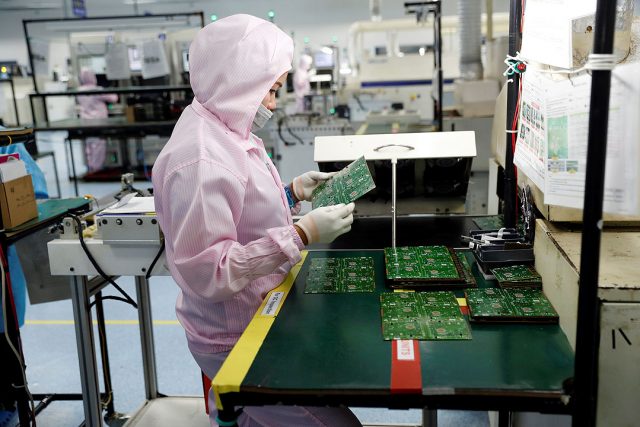
REUTERS

THE Semiconductor and Electronics Industry Advisory Council (SEIAC) said its five-year workforce development plan is intended to improve the school-to-industry pipeline.

Undersecretary Angel Ignacio of the Office of the Special Assistant to the President for Investment and Economic Affairs  said in a statement: “Investing in our people is the most critical component of building a resilient and globally competitive semiconductor industry.”

She added that the council’s long-term goal is to develop homegrown talent and encourage Filipinos to pursue careers in the country.

The workforce development plan features flexible learning pathways, including ladderized programs and micro-credentials, to nurture technical skills that meet global industry standards.

During its second meeting, the council also discussed initiatives to enhance the investment climate.

SEAIC proposed the development of strategic economic zones to follow a pilot site in Clark, as well as infrastructure audits to identify gaps in power, water, and logistics.

“The pilot project at New Clark City is expected to provide key insights for a nationwide rollout,” the council said.

It also reviewed efforts to streamline regulations, promote ease of doing business, and showcase the semiconductor industry to the global market.

The council will lead the Philippine delegation to SEMICON Europa 2025, where it will seek to “reduce reliance on traditional markets” and tap “Europe’s growing demand for alternative suppliers amid geopolitical shifts.”

“SEAIC aims to ensure alignment of all participating government agencies in their efforts to position the Philippines as a competitive hub for semiconductor and electronics manufacturing and innovation,” it added. — Justine Irish D. Tabile

Starting a business, insolvency cited as key EoDB sticking points

BW FILE PHOTO

STARTING a business and the insolvency process were identified as among the key obstacles to the government’s Ease of Doing Business (EoDB) goals, according to the foundation tapped as a private-sector partner by the Anti-Red Tape Authority (ARTA).

Roberto A. Alvarez, Jr., president of the Philippines-Ease of Doing Business Foundation, Inc., said late Tuesday that the organization will be assisting the ARTA in reviewing regulatory processes to supplement ARTA’s limited manpower and funding.

“We just want the system to run smoothly so that it is easier to do business because it’s hard to do business right now, as half of (consists of) compliance,” he added.

The foundation was endorsed as the private sector convenor for a nationwide review of regulatory processes by the Ease of Doing Business-Anti Red Tape Advisory Council. 

“I think the foreign investors will be happy about this because they are going to know that this is serious,” Mr. Alvarez said on the sidelines of a dinner meeting on Tuesday.

Mr. Alvarez said that the goal of the review is to cut redundant policies and benchmark it with other countries’ processes.

“We can see many of the steps are unnecessary. (They were put in place by the government) maybe two to three presidents ago. It’s no longer necessary,” he said.

“We will tell them to remove that. In short, the process should continue to get shorter,” he added.

He also said the foundation as sought the help of ambassadors in benchmarking Philippine processes against those in place in other countries.

“Other countries are being voted the best (places to do business) because their processes are simple and short,” he added.

The foundation hopes to present its findings and recommendations arising from the review to ARTA and the Office of the President.

“We are assisting ARTA in the review, but our authority ends with making suggestions,” he said.

He noted that the public works corruption scandals might have been avoided “if the system was designed better.”

“Maybe hindi nila ’yon magagawa ng basta-basta (They might not have been able to pull it off so easily),” he said, referring to corrupt practices in the infrastructure program.

“What we will look for is a system with integrity, which doesn’t have to be complicated,” he added.

The foundation is an arm of the Buklod Bayani Coalition, a multisectoral collaboration led by ARTA and the Department of Interior and Local Government.

Its members include the Philippine Chamber of Commerce and Industry, International Chamber of Commerce-Philippines, Philippine Exporters Confederation, and Employers Confederation of the Philippines. — Justine Irish D. Tabile

2.4-M bags of rice due for dispatch to Masbate, other typhoon-hit locations

PPA POOL

NATIONAL FOOD AUTHORITY (NFA) Administrator Larry Lacson said the NFA will send 2.4-million bags of rice from its stocks to Masbate and other typhoon-stricken locations.

Agriculture Secretary Francisco P. Tiu Laurel, Jr. added that the P20 subsidized rice program will operate in Masbate for one month starting on Tuesday.

About 70,000 households were affected by typhoon Opong (international name: Bulaoi), according to the Department of Social Welfare and Development.

Prices have been frozen for basic agricultural goods such as rice, pork, poultry, eggs, fish, cooking oil, onions, and garlic, in keeping with measures imposed in calamity areas.

Further aid packages are expected after the Department of Agriculture completes damage assessments, it said. — Andre Christopher H. Alampay

Tariff Commission imposes P349 Portland cement safeguard duty

PHILSTAR FILE PHOTO

THE Tariff Commission (TC) said it has recommended the imposition of a P349 per metric ton safeguard duty on cement imports.

In a Sept. 30 report, the commission said it determined that domestic cement is a ‘like product’ and directly competes with imported cement, which has been shipped in increased quantities.

“Having established the existence of a causal link between serious injury to the local cement industry and increased imports of subject cement products, the commission hereby recommends the application of the appropriate definitive general safeguard measure, in the form of a duty, on importation of cement,” it said.

It said the recommended safeguard measure on imports of ordinary Portland cement type 1 and blended cement seeks “to provide temporary relief and give the local industry a reasonable period to adjust to increased import competition.”

The commission proposed a P349 per metric ton duty or P14 per 40-kilogram bag, which was based on the difference between the weighted average of ex-importers’ store price and the weighted average of domestic ex-plant selling prices for 2024.

According to the commission, the safeguard measure will have a greater impact on lower-priced cement imports, as the equivalent ad valorem rate will depend on the value of the shipment.

However, it said that the measure exempts cement imports from developing countries with de minimis volumes, which include Indonesia, Iran, Pakistan, Singapore, Taiwan, and Thailand.

Meanwhile, the determination of whether the new exporting countries will be covered by the de minimis rule will fall to the Department of Trade and Industry.  

Since the proposed duty is only temporary, the commission said it expects the measure to be progressively liberalized, allowing market competition to revert to a normal level in due time. — Justine Irish D. Tabile

China delegation exploring EV projects in PHL

Employees work on assembly line during a construction completion event of SAIC Volkswagen MEB electric vehicle plant in Shanghai, China Nov. 8, 2019. — REUTERS/ALY SONG

A CHINESE business delegation is exploring investment opportunities in the Philippine electric vehicle (EV) and renewable energy (RE) industries, the Board of Investments (BoI) said.

In a statement on Wednesday, the investment promotion agency said that it met with the Chinese delegation, which included executives from manufacturers of EVs, solar power systems, and smart manufacturing products.

“The Chinese companies presented their project portfolios and expressed initial interest in potential ventures in the Philippines,” it added.

BoI Executive Director Evariste M. Cagatan said Philippine policies make it a viable investment destination for RE and EV companies.

These include the Electric Vehicle Industry Development Act, the proposed EV Incentive Strategy, and the Corporate Recovery and Tax Incentives for Enterprises to Maximize Opportunities for Reinvigorating the Economy (CREATE MORE) Act.

“The meeting is part of the BoI’s ongoing efforts to attract sustainable, innovation-driven investments and support the country’s clean energy transition,” it said. — Justine Irish D. Tabile

Mobile soil laboratory deployed to Western Visayas

DA.GOV.PH

A MOBILE soil laboratory has been deployed to the Western Visayas that will provide free on-site soil testing and analysis, the Department of Agriculture (DA) said.

The test results will help farmers determine an optimal fertilization plan.

Pilot tested in Tarlac in January, the P42-million  laboratory, mounted on a 10-wheel truck, is capable of performing 44 types of chemical, physical, and microbiological soil tests.

In Tarlac, the mobile laboratory generated 346 fertilizer recommendations after testing soil planted to high-value crops, and helped update soil fertility maps in the province. It also distributed 103 soil test kits across 18 municipalities.

Around 584 beneficiaries in Tarlac were trained on soil analysis and sustainable fertilizer management.

Rice, corn, sugarcane, coconut, and banana are the top agricultural products in the Western Visayas.

DA Regional  Executive Director Dennis R. Arpia said: “We need Science to further enhance agriculture as well as uplift the living conditions of our farmers.”

According to the Philippine Statistics Authority, in 2024 the Western Visayas was ninth-leading region by value of agriculture and fisheries production, making it the top Visayan region by that metric. — Andre Christopher H. Alampay

BCDA ties up with Japanese waste management, RE, telco firms

THE Bases Conversion and Development Authority (BCDA) said it will partner with the Japanese government and companies involved in waste management, renewable energy (RE), telecommunications, and sustainable development.

In a statement on Wednesday, the BCDA said it signed three memoranda of understanding (MoUs) on Sept. 30 during a four-day mission to Tokyo.

“With our Japanese partners, we are advancing projects that tackle waste management through renewable energy, strengthen digital connectivity for communities, and promote sustainable development in our economic zones,” BCDA President and Chief Executive Officer Joshua M. Bingcang said.

“More than infrastructure, these collaborations will deliver direct benefits by creating jobs, attracting investments, and improving quality of life,” he added.

Among the partners is industrial and engineering firm Kanadevia Corp., which will conduct preliminary studies on a waste-to-energy facility in New Clark City.

“This project aligns with the BCDA’s goal of transforming New Clark City into a green and resilient metropolis by introducing sustainable solutions and fostering a circular economy,” the BCDA said.

The agency also signed an MoU with telecommunications firms IPS, Inc., and InfiniVAN, Inc., to maximize the utilization of the information and communications technology assets in the Poro Point Freeport Zone in La Union and other BCDA sites.

“This will contribute to the implementation of the Luzon Bypass Infrastructure Program by ensuring that high-speed internet connectivity reaches local communities,” it added.

Another partner is the Japan Bank for International Cooperation (JBIC), which will promote BCDA energy transition and environmental and social sustainability projects.

“Under this MoU, JBIC will help develop BCDA relationships with the Japanese business community and promote Japanese participation in BCDA’s green and sustainable initiatives,” it said.

It added that the JBIC is also looking at strategic funding options to support the agency’s sustainable projects.

“We are confident that these MoUs will pave the way for more meaningful business opportunities, foster stronger partnerships, and deliver tangible benefits not only to the companies involved but also to the broader Philippine-Japan economic relationship,” Philippine Ambassador to Japan Mylene De Joya Garcia-Albano said. — Justine Irish D. Tabile

PEZA registers Chinese firms locating in Cavite

CAVITE.GOV.PH

THE Philippine Economic Zone Authority (PEZA) said it approved the registrations of two Chinese manufacturers planning to operate in Cavite.

In a Facebook post on Wednesday, PEZA said CIXIN Precision Metal Products (Philippines), Inc. and Philippine Newly Ever Rise Technology Corp. will operate as export enterprises in the Cavite Economic Zone.

CIXIN Precision committed to invest P40 million within its first year in new machinery and equipment. It plans to employ nearly a hundred workers in production roles.

Expected to start commercial operations in March, the facility will produce heat sink products, CNC products, and perform electroplating, and surface treatments.

Philippine Newly Ever Rise is expected to invest over P20 million in equipment and hire around 600 workers.

Its facility, which is expected to start operations in January, will manufacture and assemble transformers, power supplies, batteries, robotics products, solar systems, and electric vehicle parts.

PEZA Director General for Operations Vivian S. Santos said: “The two investments will reinforce the Philippines’ foothold in the regional supply chain for electronics, robotics, and precision metal products while aligning with the CREATE MORE Act and the country’s sustainability and industrial development goals.” — Justine Irish D. Tabile

My two cents on the Trillion Peso March against corruption

While guiding clients through their Bureau of Internal Revenue audits, I’ve been struck by an unsettling truth: congressional investigations into flood control corruption could erode taxpayers’ willingness to do their duty in funding vital public services. Allegations of collusion between contractors and officials to siphon off as much as 70% of project costs appears to turn every compliance initiative into an exercise in futility. When the very architecture designed to deter fraud instead abets it, even the most robust technical defenses can feel hollow.

While I wasn’t able to join the Trillion Peso March on Sept. 21, I was there in spirit. Driven by both technical curiosity and growing unease, I flipped through the audited financial statements of some of these government contractors that are publicly available on the Securities and Exchange Commission’s website (for a fee). Allegedly, up to 70% of a flood control project’s awarded cost is funneled into the pockets of various government officials and other co-conspirators. I wonder how they presented these government transactions in their financial reports.

For instance, if a contractor is awarded a P100-million contract, and it only uses 30% for the actual project, the net profit should theoretically approximate 70% unless the total revenue of P100 million was not recorded, or the 70% kickback was concealed or claimed as deductions by filing ghost expenses. As expected, one of these contractors’ net income accounts for only 5%-8% of service revenue. While such schemes can cover up bribed, understating the revenue would be more challenging due to publicly available information such as the DPWH’s awarded projects database and Sumbong sa Pangulo websites, which enable us to perform reasonableness checks on their total revenue.

It would appear that somewhere in the reports, large sums are buried in vague accounts labeled as professional fees or overhead, perhaps with invoices lacking real support, or sudden spikes in subcontractor payments that do not match work progress, and bookkeeping entries that erase audit trails.

All the recent revelations erode confidence in the system. To my mind, plunderers are also tax evaders. Recent Senate hearings also prompted questions on how these contractors managed to secure the tax clearances needed for government bidding. Most people assume that these clearances serve as proof that their books had been audited, and all taxes duly paid, fearing that the government might be barred from conducting further examinations should the need arise.

For clarity, a Tax Clearance for Bidding Purposes certifies only that a bidder:

• Has no unpaid annual registration fee;

• Has no open valid “stop-filer” cases;

• Is a regular user of the BIR’s Electronic Filing and Payment System from the time of enrollment up to the time of filing of the renewal of Tax Clearance for those with previously issued Tax Clearance for Bidding Purposes.

• Is not tagged as a “Cannot Be Located (CBL)” taxpayer;

• Has no Accounts Receivable/Delinquent Accounts; and

• Has no pending criminal information filed in any court of competent jurisdiction arising from any tax or tax-related cases.

In other words, taxpayers can still be investigated even after securing a tax clearance. While our tax laws generally grant the BIR a period of three years from a return’s due date to assess liability, this period can be extended to ten years in case of falsity or fraud, with the 10-year period counted from the date of discovery. The recent admissions from the Senate about systematic under-declaration satisfy the prima facie evidence test: a substantial understatement of taxable sales, receipts, or income, or a substantial overstatement of deductions. This constitutes prima facie evidence of a false or fraudulent return.

The BIR’s aggressive Run After Fake Transactions (RAFT) campaign, launched in 2022, deserves commendation for cracking down on ghost-receipt schemes that have long eroded the country’s tax base. Through coordinated audits, criminal complaints, and collaboration with the Department of Justice, the BIR has successfully collected over P4.3 billion — and expects that figure to grow to at least P8 billion once all current assessments conclude. This decisive action sends a clear message: tax evasion will not be tolerated, and our public revenue merits vigilant guardianship. As we applaud these successes, we anticipate that the next RAFT will scrutinize these government contractors behind ghost and substandard projects, ensuring that public funds are safeguarded with equal rigor, if not more — so every alleged tax evader faces justice and is held accountable.

Fortunately, the previous President vetoed the general tax amnesty provisions of Republic Act No. 11213, recognizing that without lifting bank secrecy, incorporating exchange-of-information clauses, and embedding robust safeguards against untruthful asset declarations, such an amnesty would be vulnerable to exploitation by potential tax avoiders. His veto message underscored that a tax amnesty’s success hinges on these protective measures to validate applications and deter evasion. In response, Senate Bill No. 60 now proposes a new general tax amnesty that enshrines these crucial safeguards (e.g., one-year window to inquire about bank deposits, and use exchange of information).  I am hopeful that once implemented, the program achieves its revenue objectives and does not become a vehicle for a select few to escape their fair share of taxes.

Whether we are public officials or private citizens, we owe it to our nation to make corruption not just unlawful, but culturally repulsive and intolerable. It must be seen as grotesque, treasonous, and never normal. Let us keep marching, keep speaking, and keep holding the line until justice becomes no longer the exception, but the rule. Let the Trillion Peso March rise beyond a moment of outrage and become a relentless movement that demands real reform and refuses to be silenced. The voices calling for change must not fade. They must continue to resonate until the systems that enable corruption are dismantled, where trust and accountability become the standard, not the surprise. 

The views or opinions expressed in this article are solely those of the author and do not necessarily represent those of Isla Lipana & Co. The content is for general information purposes only and should not be used as a substitute for specific advice.


Mac Kerwin Visda is a senior manager at the Tax Services department of Isla Lipana & Co., the Philippine member firm of the PwC network.

+63 (2) 8845-2728

mac.kerwin.visda@pwc.com