Home Blog Page 526

China to step up urban renewal, stabilize housing market in 2026
FREEPIK

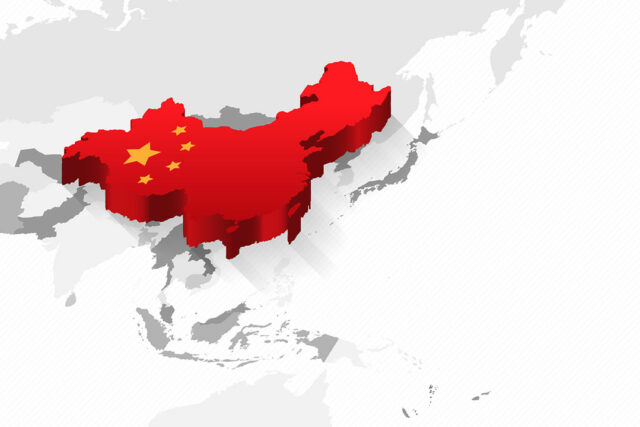
BEIJING — China will step up urban renewal and efforts to stabilize its property market in 2026 at the start of its latest Five-Year Plan (2026-2030), according to a readout of a housing policy conference released on Tuesday.

The conference, held in Beijing on Dec. 22-23, mapped out key housing development tasks for the Five-Year Plan period, and called next year a critical starting point for policy implementation, according to the readout published by the housing ministry’s official outlet.

A major focus will be the “vigorous implementation of urban renewal,” alongside efforts to stabilize the real estate market, prevent and defuse risks, and improve the supply of affordable housing.

China’s property sector, once a key engine of growth, has been in persistent decline since mid-2021, despite repeated government pledges to shore up the sector. Weak home sales and falling prices have weighed on consumer confidence and homeowners, with around 70% of household wealth tied to real estate.

Developers have also faced liquidity strains. China Vanke said in a filing on Monday it had won approval to extend the grace period for a 2 billion yuan ($284.2 million) bond repayment due on Dec. 15.

On market stabilization, officials said policies would be tailored to local conditions to manage supply and reduce inventories. Measures include renovating urban villages and supporting local governments in purchasing existing homes for use as affordable housing.

Officials also said China would push a shift toward selling finished new homes, so “buyers can see what they are getting.”

The conference pledged to strengthen the “project whitelist” mechanism, a government-backed program under which local officials nominate stalled residential projects for expedited bank financing and urged city governments to make full use of their discretion to adjust and optimize property policies.

On risk control, officials said they would follow market-oriented and the rule of law to address developers’ debt risks, tighten oversight of presale funds and protect homebuyers’ legitimate rights and interests.

On affordable housing, officials said they would seek to provide housing support for low-income urban households facing difficulties, while adopting targeted measures to meet the basic housing needs of vulnerable groups, including young people. — Reuters
Indonesia eyes US tariff deal signing in Jan., says all issues settled

REUTERS/DADO RUVIC/ILLUSTRATION

JAKARTA — Indonesia and the US have agreed on all substantial issues for a tariff deal, paving the way for the signing of an agreement by presidents Prabowo Subianto and Donald J. Trump at the end of January, Indonesia’s chief negotiator said.

Senior Economic Minister Airlangga Hartarto, speaking from Washington late on Monday after meeting US Trade Representative Jamieson Greer, said the United States wanted access to Indonesia’s critical minerals and had agreed to give tariff exemptions to its palm oil, tea and coffee.

Indonesia is the world’s biggest exporter of palm oil and a major global supplier of robusta coffee beans.

Talks between the two countries had appeared at risk of collapse earlier this month after the United States accused Indonesia of backtracking on prior commitments, although Jakarta said their “dynamics” were normal and it was just a matter of “harmonizing the language.”

Mr. Airlangga repeated there were “dynamics” during the talks, but said all substantial issues had been resolved and that the latest round of talks went well.

“The main thing, of course, is providing balanced market access for American products, and at the same time, market access for Indonesia to the US,” Mr. Airlangga said in a video briefing with Indonesian media.

Officials from both countries are now seeking to set up a meeting between Mr. Prabowo and Mr. Trump by the end of January, where a trade agreement could be signed.

Mr. Airlangga said there was no provision in the agreement that would limit Indonesia from making trade deals with other countries.

“No Indonesian policies are restricted by this agreement. This agreement is commercial and strategic in nature, and benefits the economic interests of both countries in a balanced manner,” Mr. Airlangga said.

A provision in a US-Malaysia tariff deal allows the United States to end the pact and restore the tariff Mr. Trump announced in April, if new deals endanger key US interests and talks fail to resolve its concerns.

Cambodia also has a similar clause in its US deal agreed in October, with some difference in the wording.

The deal would also cover cooperation in digital trade, technology and national security matters, according to a statement later released by Mr. Airlangga’s office, which provided no further details.

Mr. Trump imposed a 19% tariff on Indonesia after a preliminary agreement in July, down from the 32% he had threatened in April, in return for Indonesia’s promises to remove tariff and non-tariff barriers facing American exports, as well as to buy more American goods to close the trade gap.

Mr. Airlangga said there was no risk of the US raising the tariff back to 32% if the January signing does not materialize because everything within the draft deal had been agreed by both sides.

“There is no factor that can hinder the signing of this ART (Agreement on Reciprocal Trade),” he said.

From January to October period, trade between the two countries was worth $36.2 billion, with Indonesia booking a $14.9-billion surplus, Indonesian data showed. The US is Indonesia’s second biggest export market. — Reuters

Vietnam’s Communist Party selects next leadership candidates as January congress nears

Prime Minister Pham Minh Chinh of Vietnam (right) meets with US Secretary of Defense Lloyd J. Austin III in Hanoi, Vietnam, July 29, 2021. Image via Chad J. McNeeley/US Department of Defense.

HANOI — Senior officials of Vietnam’s Communist Party wrapped up on Tuesday a meeting which finalized decisions on candidates for the next top leadership of the country, party chief To Lam said, but no names were released.

Mr. Lam is viewed as the leading contender to keep the county’s most powerful post, but formal announcements are expected only at the five-yearly party congress scheduled for Jan. 19-25.

Officials who gathered for the party plenum in Hanoi on Monday and Tuesday “voted with a high level of support on the personnel nominated” for key positions, Mr. Lam said in a speech closing the plenum, which was published on the government portal.

Mr. Lam also said party officials agreed to continue on the reform of the public administration and on expanding the country’s infrastructure — both policies that he pushed during his first brief term as party chief. — Reuters

Trump unveils ‘Trump-class’ battleships, pressures defense contractors on overruns

REUTERS

PALM BEACH, Florida — US President Donald J. Trump on Monday announced plans for a new “Trump class” of battleships, marking the start of an expanded naval buildup and signaling increased scrutiny of defense contractors over production delays and cost overruns.

Mr. Trump said the new battleships would be larger, faster and “100 times more powerful” than any previously built, forming the centerpiece of what he called an expanded “Golden Fleet” aimed at cementing US naval dominance.

The program will begin with two vessels and is expected to grow to between 20 and 25 ships, Mr. Trump said. The first of the class will be christened the USS Defiant.

The announcement represents the latest example of the President rebranding an aspect of the federal government in his image. Mr. Trump, who has previously criticized the appearance of US warships, said he will be personally involved in the designs.

He said the ships will weigh more than 30,000 tons, larger than current destroyers, and be equipped with the latest technology, including artificial intelligence and directed energy lasers.

“We haven’t built a battleship since 1994. These cutting-edge vessels will be some of the most lethal surface warfare ships… other than our submarines,” Mr. Trump said.

In addition to carrying conventional naval guns, the new battleships will be equipped with nuclear-armed, sea-launched cruise missiles, US Navy Secretary John Phelan said, appearing with Mr. Trump in Florida for the announcement.

Some US officials have warned that a failure to build new battleships in recent years has handed an advantage to economic and military rival China. Mr. Trump downplayed China’s influence on the decision, saying the expansion was “a counter to everybody.”

DELAYS AND OVERRUNS
He said the naval expansion would be paired with renewed pressure on defense contractors to speed up production and rein in costs. He said he will meet with major defense firms next week to address delays and overruns, and to examine whether executive compensation, stock buybacks and dividends are contributing to missed production targets.

“We don’t want to have executives making $50 million a year, issuing big dividends to everybody, and also doing buybacks” while production of F35s and other jets languish, Mr. Trump said.

Reuters reported last week that the administration was planning an executive order to limit dividends, buybacks and executive pay for defense contractors whose projects are over budget and delayed.

Mr. Trump and the Pentagon have been complaining about the expensive, slow-moving and entrenched nature of the defense industry, promising dramatic changes that would make the production of war equipment more nimble.

Besides the new battleship class, the expanded fleet envisions increasing numbers of other war vessels, including introduction of a new, smaller class of frigates previously announced by the Navy, Mr. Trump said. — Reuters

Chinese envoy urges Thailand-Cambodia to resume ceasefire as soon as possible

CARLOS DE SOUZA-UNSPLASH

BEIJING — The top priority for Thailand and Cambodia is to agree to a ceasefire and stop fighting as soon as possible resume dialogue, and resolve their border disputes peacefully, a special Chinese envoy to the region said.

For three weeks, Thailand and Cambodia have engaged in daily exchanges of rockets and artillery along their 817 kilometer (508 miles) land border, after a truce first brokered by Malaysia as ASEAN chair and US President Donald Trump collapsed.

China has since joined the top diplomats of the 11-member Association of Southeast Asian Nations in urging both countries to exercise restraint and take steps to halt fighting.

China supports ASEAN’s mediation efforts and is willing to once again create conditions and provide a platform for dialogue and negotiations between the two sides, the Chinese foreign ministry said on Tuesday, citing its Special Envoy for Asian Affairs Deng Xijun.

Mr. Deng recently travelled to the two countries, meeting with their respective prime ministers and other senior government officials, as part of China’s shuttle diplomacy.

Thailand and Cambodia have agreed to hold a meeting on Wednesday of defense officials aimed at resuming the ceasefire, a move welcomed by ASEAN.

China, which calls itself a “friend” and “close neighbor” to both Cambodia and Thailand, has been seeking to facilitate mediation. It says it has been promoting a resolution to the conflict “in its own way”, without referring to the Mr. Trump ceasefire deal.

Mr. Trump claimed that the Thai-Cambodian conflict was one of the eight wars that he had stopped around the world, even as the fighting broke out again.

“In a region marked by complex historical sensitivities, few actors can claim to have the trust and willingness necessary to sustain mediation efforts as China, whose balanced and constructive approach provides a stable impetus for de-escalation of the tensions, as it did in helping broker reconciliation between Iran and Saudi Arabia last year,” state-run China Daily wrote in an editorial on Monday. — Reuters

North Korea’s Kim Jong Un tours hotels with daughter, lauds economic progress

KCNA VIA REUTERS

SEOUL — North Korean leader Kim Jong Un attended the opening ceremonies of hotels in a tourist zone of the country with his daughter Ju Ae, as he sought to highlight the country’s economic progress before a key party congress due to take place early next year.

Five hotels opened on Saturday and Sunday in North Korea’s Samjiyon tourist zone, in the northeast part of the Korean peninsula near the border with China, state media KCNA said on Tuesday.

Mr. Kim, who attended the ceremonies on Saturday, toured the upmarket hotels with Ju Ae, state media photographs showed.

Some analysts view Mr. Kim’s teenage daughter as the frontrunner to become the country’s next leader.

Mr. Kim said the hotels were “clear proof of the rising status of our people and the development potential of our country,” according to KCNA.

The North Korean leader has attended multiple opening ceremonies of facilities in the past month, including three regional factory openings last week alone.

North Korea is expected to hold its first party congress in five years in early 2026, where a new development plan for the next five years is expected to be unveiled. State media such as Rodong Sinmun, have been urging an all-out public effort to complete major projects ahead of the gathering. — Reuters

China’s second attempt at completing a reusable rocket test fails

REUTERS

BEIJING — The first stage of China’s reusable Long March 12A “was not successfully recovered” during the rocket’s inaugural flight on Monday, according to the state-run Xinhua news agency, as Beijing looks to close the gap with US giant SpaceX.

The second stage of the rocket did successfully enter its planned orbit, Xinhua reported. The Long March 12A’s maiden flight marked China’s second attempt at landing and recovering a rocket booster after launch.

China has in recent years launched dozens of rockets that deliver satellites into orbit but has yet to successfully complete a reusable rocket test, which requires the rocket’s large lower section, known as the first stage or booster, to be landed and recovered after launch.

With Elon Musk’s SpaceX having mastered this capability several years ago, Chinese private and state-owned rocket firms are rushing to test domestically developed reusable rockets.

Reusability is crucial to lowering the costs of rocket launches, which would make it cheaper to send satellites into space. SpaceX’s reusable rocket Falcon 9 has allowed its Starlink unit to achieve a near-monopoly on low-Earth orbit (LEO) satellites.

While Chinese firms have sent several hundred LEO satellites into orbit in recent years, Beijing will not be able to catch up to Starlink unless it develops its own version of the Falcon 9.

The race to become SpaceX’s primary Chinese challenger intensified earlier this month when private rocket firm Landspace became the first Chinese entity to attempt a full reusable rocket test with the launch of Zhuque-3, though it failed to stick the booster landing.

The developer of the Long March 12A, China Aerospace Science and Technology Corporation, is a state-owned conglomerate with more than 100,000 employees and is the main rocket contractor for the country’s space program.

In contrast, Landspace operates as a startup with less than 2,000 staff. — Reuters

GCash expands into cross-border payments with Virtual US Account

In alignment with Department of Information and Communications Technology’s (DICT) digital work and freelancer empowerment initiatives, GCash is rolling out its Virtual US Account, that will allow Filipinos to receive US Dollar (USD) payments and remittances directly into their GCash e-wallets without needing a US-based bank account. #GCashVirtualUSAccounts


Spotlight is BusinessWorld’s sponsored section that allows advertisers to amplify their brand and connect with BusinessWorld’s audience by publishing their stories on the BusinessWorld Web site. For more information, send an email to online@bworldonline.com.

Join us on Viber at https://bit.ly/3hv6bLA to get more updates and subscribe to BusinessWorld’s titles and get exclusive content through www.bworld-x.com.

NTC orders ISPs to block unregistered online trading platforms on BSP request

The National Telecommunications Commission (NTC) has ordered internet service providers (ISPs) to immediately block access to dozens of unregistered online trading and virtual asset platforms, clarifying that the move was made at the request of the Bangko Sentral ng Pilipinas (BSP) and in line with existing financial regulations.

In a statement, the NTC said it issued a memorandum directing all ISPs to disable access to 50 online entities identified by the BSP as unlicensed or unregistered Virtual Asset Service Providers (VASPs) operating in the Philippines without proper authorization.

The directive was issued in response to concerns raised in a Bilyonaro.com article dated Dec. 21, 2025, titled “No warning: Filipino investors rage after telcos block access to global trading platform Interactive Brokers on National Telecommunications/SEC order.”

The NTC stressed that the takedown order was not arbitrary but was carried out in support of the BSP’s supervisory and enforcement mandate.

According to the NTC, the BSP formally requested the removal of the listed platforms from the Philippine digital space after determining that they were engaging in prohibited activities under Section 902-N of the Manual of Regulations for Non-Bank Financial Institutions. The provision was amended by BSP Circular No. 1206, Series of 2024, which lays down updated guidelines governing VASPs.

The NTC said its authority to issue the takedown directive is exercised in aid of relevant government regulatory and enforcement agencies to prevent the continued operation of unregistered entities and to protect the public from unauthorized virtual asset activities.

The BSP, for its part, exercises regulatory and supervisory powers under Section 3 of Republic Act No. 7653, or the New Central Bank Act, as amended by Republic Act No. 11211. The law grants the central bank authority over money service businesses, including VASPs, and empowers it to authorize entities or individuals seeking to operate such services in the country.

Regulators reiterated that only BSP-authorized platforms are allowed to offer virtual asset and related financial services in the Philippines, warning investors to exercise caution when dealing with online trading platforms that lack proper registration and approval.


Spotlight is BusinessWorld’s sponsored section that allows advertisers to amplify their brand and connect with BusinessWorld’s audience by publishing their stories on the BusinessWorld Web site. For more information, send an email to online@bworldonline.com.

Join us on Viber at https://bit.ly/3hv6bLA to get more updates and subscribe to BusinessWorld’s titles and get exclusive content through www.bworld-x.com.

President Marcos extends his Christmas greetings and well wishes to the Filipinos

I extend my heartfelt Christmas greetings to the entire Filipino nation as we solemnly and festively celebrate Christmas this year.

‎Once again, the season has arrived when streets come alive with Christmas songs, twinkling lights, holiday delicacies, and the joyful excitement of finding and sharing gifts for the people that we love.

This time of the year reminds us of the warmth of family, the laughter that we share with friends, and the blessings we extend to others, especially to those who need it most.

Let us commemorate the birth of Christ with compassion and kindness — by helping one another and standing together in recovery and in renewal.

‎Just like the Child in the Manger, may we always spark happiness and bring hope to every person that we meet along the way, as we move forward to a Bagong Pilipinas.

‎Once again, Merry Christmas and may this Yuletide reflect the generosity of the Filipino spirit — always giving, always loving, and always putting others’ welfare before our own.
Maligayang Pasko po sa ating lahat!


Spotlight is BusinessWorld’s sponsored section that allows advertisers to amplify their brand and connect with BusinessWorld’s audience by publishing their stories on the BusinessWorld Web site. For more information, send an email to online@bworldonline.com.

Join us on Viber at https://bit.ly/3hv6bLA to get more updates and subscribe to BusinessWorld’s titles and get exclusive content through www.bworld-x.com.

Nvidia aims to begin H200 chip shipments to China by mid-February, sources say

NVIDIANEWS.NVIDIA.COM

NVIDIA has told Chinese clients it aims to start shipping its second-most powerful AI chips to China before the Lunar New Year holiday in mid-February, three people familiar with the matter told Reuters.

The US chipmaker plans to fulfil initial orders from existing stock, with shipments expected to total 5,000 to 10,000 chip modules – equivalent to about 40,000 to 80,000 H200 AI chips, the first and second sources said.

Nvidia has also told Chinese clients that it plans to add new production capacity for the chips, with orders for that capacity opening in the second quarter of 2026, the third source said.

Significant uncertainty remains, as Beijing has yet to approve any H200 purchases and the timeline could shift depending on government decisions, the sources said.

MAJOR POLICY SHIFT

“The whole plan is contingent on government approval,” the third source said. “Nothing is certain until we get the official go-ahead.”

The sources declined to be identified as the discussions are private.

Nvidia said in a statement to Reuters “we continuously manage our supply chain. Licensed sales of the H200 to authorized customers in China will have no impact on our ability to supply customers in the United States.”

China’s Ministry of Industry and Information Technology did not immediately respond to a request for comment.

The planned shipments would mark the first deliveries of H200 chips to China after US President Donald Trump said this month that Washington would allow such sales with a 25% fee.

Reuters reported last week that the Trump administration had launched an inter-agency review of license applications for H200 chip sales to China, making good on his pledge to allow the sales.

The move represents a major policy shift from the Biden administration, which banned advanced AI chip sales to China citing national security concerns.

The H200, part of Nvidia’s previous-generation Hopper line, remains widely used in AI despite being superseded by the firm’s newer Blackwell chips. Nvidia has focused production on Blackwell and its upcoming Rubin line, making H200 supply scarce.

Mr. Trump’s decision comes as China pushes to develop its domestic AI chip industry. Local firms have yet to match the H200’s performance, raising concerns that allowing imports could slow domestic progress.

Chinese officials held emergency meetings earlier this month to discuss the matter and are weighing whether to allow shipments, Reuters reported this month. One proposal would require each H200 purchase to be bundled with a set ratio of domestic chips, according to the report.

For Chinese technology giants such as Alibaba Group and ByteDance, which have expressed interest in buying H200 chips, the potential shipments would provide access to processors roughly six times more powerful than the H20, a downgraded chip Nvidia designed for China. — Reuters

Trump pulls 30 envoys in ‘America First’ push, critics say it weakens US abroad

REUTERS

WASHINGTON — The Trump administration is recalling nearly 30 ambassadors and other senior career diplomats to ensure embassies reflect its “America First” priorities, a move critics said would weaken US credibility abroad.

The State Department declined to provide a list of the diplomats being recalled. A senior department official said on Monday the move was “a standard process in any administration” but critics said that was not so.

“An ambassador is a personal representative of the president, and it is the president’s right to ensure that he has individuals in these countries who advance the America First agenda,” said the official, who spoke on condition of anonymity.

Nearly 30 senior diplomats were among those ordered back to Washington, people familiar with the matter said.

They were posted to smaller countries where the top US representative has traditionally been from the Foreign Service, which is made up of career officials not aligned with a political party, the people said.

The recalled diplomats were encouraged to find new roles in the State Department, a second US official said.

The American Foreign Service Association representing foreign service officers said it was working to confirm which members were recalled after some reported being notified by phone with no explanation – a process its spokesperson called “highly irregular.”

“Abrupt, unexplained recalls reflect the same pattern of institutional sabotage and politicization our survey data shows is already harming morale, effectiveness, and US credibility abroad,” spokesperson Nikki Gamer said in an email.

The State Department declined to respond to Ms. Gamer’s comments.

Politico reported on Friday that two dozen ambassadors were being told to leave their posts, citing a State Department official.

Mr. Trump has sought to place loyalists in senior roles since starting his second term after encountering resistance during his first term advancing his foreign policy priorities within the US national security establishment.

Jeanne Shaheen, ranking Democrat on the US Senate Committee on Foreign Relations, assailed the Republican administration’s removal of the diplomats while about 80 ambassadorial posts remain vacant.

“President Trump is giving away US leadership to China and Russia by removing qualified career Ambassadors who serve faithfully no matter who’s in power,” Ms. Shaheen posted on X. “This makes America less safe, less strong and less prosperous.” — Reuters

ADVERTISEMENT
ADVERTISEMENT