NASSAU, Bahamas — The collapse of cryptocurrency exchange FTX is the subject of scrutiny from government investigators in the Bahamas, who are looking at whether any “criminal misconduct occurred,” the Royal Bahamas Police said on Sunday.
FTX filed for bankruptcy on Friday, one of the highest profile crypto blowups, after traders rushed to withdraw $6 billion from the platform in just 72 hours and rival exchange Binance abandoned a proposed rescue deal.
In a statement on Sunday, the Royal Bahamas Police said: “In light of the collapse of FTX globally and the provisional liquidation of FTX Digital Markets Ltd, a team of financial investigators from the Financial Crimes Investigation Branch are working closely with the Bahamas Securities Commission to investigate if any criminal misconduct occurred.”
FTX did not respond to Reuters’ request for comment.
FTX’s newly appointed Chief Executive John J. Ray III, a restructuring expert who took over after the bankruptcy filing, said on Saturday that the company was working with law enforcement and regulators to mitigate the problem, and was making “every effort to secure all assets, wherever located.”
The exchange’s dramatic fall from grace has seen its 30-year-old founder Sam Bankman-Fried, known for his shorts and T-shirt attire, morph from being the poster child of crypto’s successes to the protagonist of the industry’s biggest crash.
Mr. Bankman-Fried, who lives in the Bahamas, has also been the subject of speculation about his whereabouts and he denied rumors on Twitter that he had flown to South America. When asked by Reuters on Saturday whether he had flown to Argentina, he responded in a text message: “Nope.” He told Reuters he was in the Bahamas.
The turmoil at FTX has seen at least $1 billion of customer funds vanish from the platform, sources told Reuters on Friday. Mr. Bankman-Fried had transferred $10 billion of customer funds to his trading company, Alameda Research, the sources said.
New problems emerged on Saturday when FTX’s US general counsel Ryne Miller said in a Twitter post that the firm’s digital assets were being moved into so-called cold storage “to mitigate damage upon observing unauthorized transactions.”
Cold storage refers to crypto wallets that are not connected to the internet to guard against hackers.
Blockchain analytics firm Nansen said on Saturday it saw $659 million in outflows from FTX International and FTX US in the preceding 24 hours.
Crypto exchange Kraken said on Twitter on Sunday that it froze the accounts of FTX, Alameda Research and their executives in order “to protect its creditors.”
The exchange did not immediately reply to a request for comment on the holdings of those accounts.
In its bankruptcy petition, FTX Trading said it has $10 billion to $50 billion in assets, $10 billion to $50 billion in liabilities, and more than 100,000 creditors.
A document that Mr. Bankman-Fried shared with investors on Thursday and was reviewed by Reuters showed FTX had $13.86 billion in liabilities and $14.6 billion in assets. However, only $900 million of those assets were liquid, leading to the cash crunch that ended with the company filing for bankruptcy.
The collapse shocked investors and prompted fresh calls to regulate the cryptoasset sector, which has seen losses stack up this year as cryptocurrency prices collapsed.
Bitcoin fell below $16,000 for the first time since 2020 on Wednesday, after Binance abandoned its rescue deal for FTX.
On Sunday it was trading around $16,400, down by more than 75% from the all-time high of $69,000 it reached in November last year. — Reuters
Designed by National Artist for Architecture Leandro V. Locsin, the Cultural Center of the Philippines (CCP) will be rehabilitated after 53 years. Opened on Sept. 8, 1969, the CCP, a brainchild of former first lady Imelda Marcos, in its first year mounted 195 performances, 35 of which were foreign. Long due for an overhaul, the brutalist building will embark on a rehabilitation that is expected to run for three years, beginning 2023.
In this episode of B-Side, Department Manager Administrative Services Teresa “Tess” S. Rances tells BusinessWorld reporter Michelle Anne P. Soliman, about the P950 million project.
TAKEAWAYS
It’s possible to preserve the cultural value of a building while improving its technology.
The project includes the renovation of the hydraulic pit, the freight elevators, and the light and sound systems for the theaters. Electricals and plumbing will likewise be updated.
CCP management tapped Leandro V. Locsin Partners as a consultant to protect the legacy of the building’s designer, Leandro V. Locsin.
The interiors of the building will hew close to the original design with the Locsin firm having a say in the approval process.
“We have been discussing that this is what we envision to happen: that we will be able to maintain that vision of our National Artist for Architecture,” Ms. Rances said. “Myexpectation is that people will be very excited to come and see performances at the CCP … as we open the CCP in 2025.”
The CCP is ‘decentralizing,’ so to speak.
Since the main building needs to be vacated, CCP is partnering with venues such as the Manila Metropolitan Theater, which is run by the National Commission for Culture and the Arts, and the new Samsung Performing Arts Theater in Circuit Makati.
“The good side of the Main Building closing down … is that it forges more interrelationship with other theater owners,” said Ms. Rances, who added that the CCP’s regional programs will also be strengthened.
Held recently at the Carlos P. Romulo Auditorium in RCBC Plaza, Makati City, the community convention dubbed as “MAD Talks presents: Sa Ngayon, Padayon. (Kwentuhan. Kantahan. Kabayanihan.)” and themed in collaboration with digital creator and witty shirts brand Linya-Linya put the spotlight on volunteerism and mental health.
The event highlighted the spirit of resilience and positivity that come from purpose. ‘Padayon’ is a term used in several Visayan languages which means to move on, to carry on, to move forward or to keep going.
Co-presented by the Rotary Club of Makati Uptown, Rotary District 3830, and H.E.L.P. Pilipinas, the gathering saw some 250 participants consisting of its volunteers and delegates from various organizations and networks, students, youth leaders, educators, and young professionals to mark the World Mental Health Day in October.
“Your deepest hugot is your most effective advocacy,” said Maco Ravanzo, I am M.A.D.’s co-founder and chief executive volunteer, during his “Kwento ng Bawat Boluntir” talk. He added that no matter what anyone is going through, in the spirit of optimism and resilience, there will always be a reason to bounce back, and we can all make a difference.”
Maco Ravanzo, I am M.A.D.’s co-founder and chief executive volunteer
Mr. Ravanzo likewise emphasized that managing mental health is very important in making sure that you live a life where you can achieve what you want without being held back. “We can do it, the M.A.D. way, by applying what we do as a volunteer group — Mind your mind, Acknowledge and accept, and Discover to recover,” he stressed in talking about “Managing Mental Health, the I am M.A.D. way.”
The MAD Talks Padayon event started off with an original musical grand opening salvo entitled, “Superherong Walang Kapa” by the performers from Jose Rizal University’s Teatro Rizal, followed by welcome remarks from its co-presenter H.E.L.P. Pilipinas’ founder Dr. Mildred Vitangcol and a message from one of its partners, Unilab Foundation, represented by Dani Valera, Project Specialist for its Youth Forward PH program.
Moreover, amazing theatrical performances from 22 artists of Teatro Rizal enthralled the audience that included their original musical composition titled “Lupa ng Saya” and “Be the Hero, Be the Hope” along with soulful renditions of “Nobela” by Tawag ng Tanghalan four-time defending champion Vanessa Celestial, “Ako Naman Muna” by GMA’s The Clash and Tawag ng Tanghalan alumnus Kyle Pasajol and ensemble. Teatro Rizal’s very own Armando Leo Mansilungan also performed a spoken poetry titled “Hindi Ka Isang Manunulat.”
Volunteering and mental well-being
I am M.A.D Co-Founder and Chairman Christian Marx Rivero
I am M.A.D. Co-Founder and Chairman Christian Marx Rivero brought the audience back to the organization’s humble beginnings as he wholeheartedly shared his volunteering story and the group’s journey through his “Kwento ng I am M.A.D.” segment titled “Molding Myself and Making a Movement.”
Regarded as “Your Ultimate Hugot Event,” the MAD Talks event consists of three parts called “Nagmahal,” “Nasaktan,” and “Nagvolunteer” or Kwentong N3. Participants were touched and inspired by the heartfelt firsthand experiences and stories of volunteer-guest speakers led by peace and development champion and counter-terrorism operator Capt. AJ Ramos Celestial of the Philippine Army who shared his “Kwentong Nagmahal,” about how he conquered anxiety while loving the country. He was especially introduced by his sister Vanessa after the latter’s soulful singing.
Meanwhile, women empowerment advocate and I am M.A.D.’s chief of volunteer operations & partnerships Ruth Butad spoke about “Kwentong Nasaktan,” which narrated her dealing with depression during detachment. The Kwentong N3 concluded with multi-awarded Global Youth Leader and ASEAN Youth Advocates Network founder Mirus Ponon recounting his “Kwentong Nagvolunteer” that examined his transitioning from a teen with low self-esteem to a multi-awarded young individual.
During a health break segment, the audience had fun in the “Sa Ngayon Padayon, Tumindig Ngayon” last man standing game. Three participants received gift certificates from one of the sponsors, Power Mac Center.
M.A.D. Talks Padayon speakers were honored.
On the keynote talk about “Raising Mental Health Awareness through Storytelling,” the attendees were equally inspired and moved to tears as Happy Hearts Initiative & Introspect PH Co-Founder and mental health coach Ymari Kristia Pascua, whose story was featured on ABS-CBN’s Maalaala Mo Kaya program, shared her “Kwento ng Padayon” amidst mental health adversities to increase understanding on the matter.
Everyone in the audience ‘made a difference,’ too
On top of volunteerism and mental health awareness talks and performances, the grand convention took a tug at the heart of everyone with a surprise short documentary video on the moving story of the Baluyot family entitled, “Kwentong Padayon ni Candice.” It was starred by I am M.A.D.’s very own volunteer creative officer and mental health advocate herself, Candice Baluyot and her mother Catherine, who was diagnosed with stage 4 breast cancer.
With the help of other I am M.A.D. volunteers, Candice personally hand-brewed and produced the iced coffee tokens which were given to all the participants as part of their ticket purchase. And as announced during the final part of the program, all the proceeds from the iced coffee which amounted to P26,000 will go to the Baluyot family. By just buying a ticket, everyone who took part in the event made a simple yet meaningful contribution.
The short documentary film, in collaboration with Vineyard Films and directed by I am M.A.D.’s multi-awarded independent film enthusiast and one of the event directors and lead organizers, Ram Esteban Estael, also marked the comeback of the nonprofit organization’s CineMAD production.
Prior to the main event, participants experienced some “MADgic” from the talented personalities, namely: Mr. Magic of the Philippines Mac Florendo, card magician Jofer Abata, and mentalist Emmanuel Espiritu. Everyone was greeted with an array of booth exhibits, a grand photo wall, and a specially designed tote bag with a bottle of coffee and other freebies. All participants also took home a gift box full of care kit items containing health supplements and vitamins from one of its partners, Pharex.
The grandest community gathering ended with free mental health coaching and consultations led by the volunteers from Mental Health PH and the National Youth Commission — Mental Health Youth Hub.
As MAD Talks Padayon organizers have activated a digital opinion board, the group is thankful for positive notes from the attendees and will consequently use inputs for succeeding events. If you were able to attend this momentous event and haven’t shared your reactions yet, you may drop your thoughts and comments via bit.ly/MTPadayonWall.
“MAD Talks presents: Sa Ngayon, Padayon” was organized and presented by the volunteers of I am M.A.D. (Making A Difference) led by its live event production team — Wino Dela Cruz (director & overall-in-charge of production), Ram Esteban Estael (stage director & production manager), Patricia Esquejo (pre-show director & stage manager), Maco Ravanzo (creative and content director), John Martin Recio (floor director & technical & documentation lead), John Brian Ignacio (lights & sounds supervisor), JR Maltizo (graphics & video playback operator), Jake Villanueva (lead writer and host), Anne Carbon Vale (talent manager), Ena Elaine Lensico and EA Janairo (talent coordinators), Christian Opeña, John Ronver de Leon, and Larae Lemaire (production assistants), and Christian Marx Rivero (event consultant).
Sidebar hosts, The Js of I am M.A.D.: BigJay Lagang (Big J, also voiceover master), Jake Villanueva (Catriona J), Lorrielyn Ople (J. Lo), and Minette Geñorga (Minette J)
The event was hosted by digital content creators and influencers — Grace Co aka Tita G and Jesus Guinto aka Jesse G together with The Js of I am MAD — BigJay Lagang (Big J, also voiceover master), Jake Villanueva (Catriona J), Lorrielyn Ople (J. Lo), and Minette Geñorga (Minette J).
MAD Talks Padayon was made possible in cooperation with CID Communication, Creative Adobo, Itemhound, and JRU — Teatro Rizal. This event was likewise supported by the National Youth Commission — Youth Organization Registration Program, Mental Health PH, and the National Youth Volunteers Coalition, along with other volunteer organizations: Magbasa Tayo Movement, The Green Thumbs Up Project, and ASEAN Youth Advocates Network.
The convention was also backed by the following media partners: BusinessWorld, ClickTheCity.com, CSR Insights, DigitalFilipina.com, Inquirer Group of Companies (Philippine Daily Inquirer, Inquirer Super, Inquirer.net, Inquirer Mobile), Mellow947.fm, Metropoler.net, Mindanao Times, Now You Know PH, PageOne Media, SwirlingOverCoffee.com, The Manila Times, The New Channel, WhenInRizal.com, and WhenInManila.com as the primary blog partner.
Additionally, the gathering was made possible by the following sponsors — Pharex Health Corp., Youth Forward PH of Unilab Foundation, Inc., Power Mac Center, PLDT and SMART, Casio Calculators Philippines, Print & Mount, Meat Outlet, Pan Delight, Pangkat Etniko, Chowking, Lord J (Rogelio Estacio, Jr.), Ruth Butad, Erica Curatcha-Geronimo, We Lift Club, iVolunteer Philippines, CNDC BREWS by Candice, Shelter Now Filipinas, Art of Airepx by JR Maltizo, Office of Barangay Bagong Silang of Mandaluyong City, and Heidi Manabat.
Teatro Rizal enthralled the audience with their original musical composition titled Lupa ng Saya.
Spotlight is BusinessWorld’s sponsored section that allows advertisers to amplify their brand and connect with BusinessWorld’s audience by enabling them to publish their stories directly on the BusinessWorld Web site. For more information, send an email to online@bworldonline.com.
The persistent housing backlog in the Philippines might expand in the following years, if left unaddressed, calling for both government and the private sector to ramp up their efforts in closing the gap.
According to the Department of Human Settlements and Urban Development (DHSUD), the housing backlog is estimated at 6.5 million homes. This number is actually what was reflected in 2030 projections shared by the Board of Investments, assuming that production of housing units would average 200,000 units every year from 2012 to 2030.
From 2021 to June 2022, the DHSUD reportedly produced 294,142 housing units.
In a previous finance committee hearing at the Senate, DHSUD Assistant Secretary Avelino Tolentino III said that if housing production continues “business as usual,” the backlog might end up rising to 10.9 million by the end of the current administration.
Recognizing such alarming occurrences, a new housing production target has been set for the next six years.
Under the “Pambansang Pabahay Para sa Pilipino” program, DHSUD is given a directive to work towards clearing up the backlog by building one million houses, particularly affordable and accessible ones in selected areas every year, until the President completes his term.
As BusinessWorld reported about the announcement of this program last October, the housing program will require P1 trillion to realize at a cost of P1 million per home, which will need to be subsidized.
An annual subsidy budget of P36 billion is proposed to cover the difference between commercial mortgage rates and the expected preferential interest for home buyers of one percent.
“The intention is to bring interest rates to 1%, so that’s where the interest subsidy will come in. The market rate that we’re looking at for this marginalized sector is 6%,” Human Settlements Undersecretary Roberto Juanchito T. Dispo was quoted as saying.
Moreover, Human Settlements Undersecretary Henry L. Yap said the DHSUD wants to tap the private sector, particularly banks, to participate in the program.
“We’ve been going around talking to the developers. They have expressed their support for this project. The SHDA (Subdivision and Housing Developers Association) is one of the housing organizations that we’ve been meeting with and many of them have expressed support,” Mr. Yap was also quoted as saying.
The department added that the “Pambansang Pabahay” program can trigger economic activities in 80 allied industries of the housing sector once it goes full blast in the construction.
“Among the top 10 out of 80 industries that could benefit from the housing program once fully implemented include steel and metal manufacturing, cement, veneer and plywood, refine petroleum producers, sawmills and wood and wholesale/retail businesses,” the DHSUD said in a statement.
The program is also seen as a means for the Philippine real estate sector to further recover from the coronavirus pandemic, when community quarantines and other restrictions slowed down construction and other development projects.
“This program will be a big market for private developers as we will be building one million housing units a year in the next six years… this will trigger much-needed economic activities in the sector and propel its recovery from the adverse effects of the pandemic,” DHSUD Secretary Jose Rizalino L. Acuzar said in a separate statement.
Meanwhile, for the private sector, the need to make getting permits easier is seen as key to developers’ participation in an intensified drive to clear the backlog.
In another BusinessWorld report, 8990 Holdings Chairman and Co-founder Mariano D. Martinez said that the government has to support the private sector as well, especially by cutting the length of permitting processes — which he finds as “one of the hardest hurdles or longest hurdles” in housing production — from 24 months to six months.
“[I]f they want to achieve a million houses that should really [be a] number one [priority],” Mr. Martinez as quoted as saying.
As part of the housing program, DHSUD recently broke ground for housing projects in the cities of Iloilo, Bacolod, and Roxas in Western Visayas. The units are said to be used for the relocation of informal settlers and offered to low-income families in the said cities. — Adrian Paul B. Conoza
As the Philippines aims to continue its growth narrative, significant attention must be placed on the ever-growing housing crisis. According to the Department of Human Settlements and Urban Development (DHSUD), housing backlogs could reach the 10-million mark by the end of President Ferdinand Marcos, Jr.’s term.
“Adequate housing means more than a roof over one’s head. It also means adequate privacy; adequate space; physical accessibility; adequate security; security of tenure; structural stability and durability; adequate lighting, heating and ventilation; adequate basic infrastructure, such as water-supply, sanitation and waste management facilities; suitable environmental quality and health-related factors; and adequate and accessible location with regard to work and basic facilities: all of which should be available at an affordable cost,” the United Nations Human Settlements Programme said.
Housing is an integral part of the 2030 Agenda for Sustainable Development, as it embraces core principles, including universality (it applies to all countries and considers all people despite their status and location), interconnectedness and indivisibility (it needs to be implemented as a whole), inclusiveness (every contribution is valid), and multistakeholder partnerships (to support implementation).
“The effects of change are, as ever, felt most strongly in cities and urban areas. This was underlined by COVID-19 which laid bare the economic and social vulnerability of our urban way of life. Sustainable urban development has therefore never been more difficult and with two thirds of the world’s population expected to live in urban areas by 2050, according to the UN Department of Economic and Social Affairs, that challenge will only grow more formidable,” UN Habitat wrote in a report.
Fortunately, local government officials in the country are stepping up to support the government’s sustainable housing programs aimed at addressing this need. The country currently needs to cover a backlog of more than 6.5 million.
DHSUD Secretary Jose Rizalino Acuzar has reportedly met with Mayors Marcelino Teodoro of Marikina, Ruffy Biazon of Muntinlupa, Vico Sotto of Pasig, Jeannie Sandoval of Malabon, Dale Malapitan of Caloocan, Francis Zamora of San Juan and Imelda Calixto-Rubiano of Pasay. They had met to discuss the issue concerning a majority of the 3.7 million informal settler families (ISFs) in the country are present in the National Capital Region.
Based on DHSUD data, around 500,000 ISFs are in Metro Manila, with the families living in slums, railways, waterways, canals and other high-risk areas.
“We see the role of local government units as one of the key components to gradually address or eliminate the challenges we are facing in the housing sector. They are our allies in development,” Mr. Acuzar had said.
Most recently, President Marcos, Jr. had signed an executive order (EO) reserving idle government lands for housing projects, implementing Section 24 of Republic Act No. (RA) 11201, which mandates several government agencies to jointly identify idle state lands suitable for housing and rural development.
Under RA 11201, an inventory will be conducted by the Department of Human Settlements and Urban Development (DHSUD), Department of Agrarian Reform (DAR), Department of Agriculture (DA), Department of Environment and Natural Resources (DENR), Department of the Interior and Local Government (DILG), and the Land Registration Authority (LRA) to identify these lands, estimated to be more than 16,000 hectares, to be used for socialized housing.
Meanwhile, the DHSUD also met with local government officials in the Visayas such as Jonas Cortes of Mandaue, Alfred Romualdez of Tacloban, Albee Benitez of Bacolod and Jerry Trenas of Iloilo City to promote the housing programs.
“Major cities and provinces in the Visayas recorded a significant number of ISFs and people living in calamity-prone areas. So it is a must to also prioritize the Visayas group of islands,” Mr. Acuzar said.
“I am confident that with the help of local officials, we can transform these informal settlements into prime residential and world-class developments for the benefit of our countrymen, especially those in the low-income bracket,” Mr. Acuzar said. — Bjorn Biel M. Beltran
Artworks by Filipino painters are projected on the facade of the Bangko Sentral ng Pilipinas (BSP) along Roxas Boulevard, Manila, Oct. 18. —PHILIPPINE STAR/ MIGUEL DE GUZMAN
THE BANGKO SENTRAL ng Pilipinas (BSP) is set to hike rates by 75 basis points (bps) this week, which analysts said is appropriate to support the peso and to curb inflation that reached a near 14-year high in October.
BSP Governor Felipe M. Medalla on Friday said the central bank is ready to follow the US Federal Reserve’s lead in aggressively tightening policy at its Thursday meeting.
“Since they hiked by another 75 bps, you can expect that I will be voting to raise the policy rate by a similar magnitude. The reason we do this is to increase the likelihood that headline inflation will be within (2-4%) target by the second half of next year and hopefully, for the rest of 2024,” he said in a recorded message at an event hosted by the Economic Journalists Association of the Philippines on Friday.
Inflation accelerated to 7.7% in October — the fastest pace in nearly 14 years, from the 6.9% print in September. October marked the seventh straight month inflation breached the BSP’s 2-4% target band.
For the 10-month period, inflation averaged 5.4%, still below the BSP’s 5.6% full-year forecast.
Since March, the US Federal Reserve has increased rates by 375 bps to 3.75-4%, including a 75-bp rate hike on Nov. 2.
The BSP, for its part, has raised rates by 225 bps since May. This brought the overnight reverse repurchase facility rate to 4.25%. A 75-bp hike on Thursday will bring the benchmark rate to 5%.
Mr. Medalla said the rate increases will prevent a “significant narrowing” of the interest rate differential between the Fed and the BSP.
“Keeping a comfortable differential between our policy rate and that of the US lends support to the peso,” he said.
The foreign exchange market has seen heightened volatility in recent months amid the US dollar’s strength.
The local unit closed at P57.23 on Friday, up by 96 centavos from its P58.19 finish on Thursday. This is the peso’s best close in nearly two months or since it finished at P57.16 a dollar on Sept. 15.
As of Friday’s close, the peso has declined by P6.23 or 10.9% versus the dollar from its Dec. 31, 2021 finish of P51.
“The BSP observes a flexible exchange rate policy. As such, we do not target a specific exchange rate nor set a specific line in the sand,” Mr. Medalla said.
“Nevertheless, we recognize that significant and persistent depreciation of the peso can dislodge inflation expectations. We, therefore, intervene in the market as needed, consistent with our price stability mandate,” he added.
EXPECTED MOVE ING Bank N.V. Manila Senior Economist Nicholas Antonio T. Mapa said the BSP is now expected to match any move by the Fed.
“We also expect BSP to match any rate hike carried out by the Fed in December as Governor Medalla vows to maintain the 100-bp differential,” he said in an e-mail.
Bank of the Philippine Islands (BPI) Lead Economist Emilio S. Neri, Jr. said future rate hikes by the BSP for this year will continue to depend on factors such as global oil prices, US dollar performance, and domestic price movements.
“What’s crucial is the board demonstrates flexibility and determination to use its numerous policy tools to bring both core and headline inflation back on target, in contrast to their dyed-in-the-wool dovish guidance and policy rate decisions in late 2021 and the first semester of 2022,” Mr. Neri said.
China Banking Corp. Chief Economist Domini S. Velasquez said in a Viber message that October inflation was higher than expected, the rate hikes of the BSP seem to be on the right track.
“Many of the unexpected drivers in October’s print came from supply shock of higher food prices due to past typhoon and food shortages. This should be addressed through ensuring adequate food supply at reasonable prices by the National Government,” she said, adding that a larger rate hike on Thursday will not help supply issues.
ING’s Mr. Mapa said he does not expect an emergency rate hike by the BSP. “The governor is cognizant of the need to preserve price stability but not at the cost of growth,” he added.
The Philippine economy grew at a faster-than-expected pace of 7.6% in the third quarter, boosting the case for further monetary tightening by the BSP.
In the nine months ending September, gross domestic product (GDP) growth averaged 7.7%. Socioeconomic Planning Secretary Arsenio M. Balisacan last week said the economy would likely grow above the 6.5-7.5% full-year target.
DOLLAR RESERVES Meanwhile, Mr. Medalla said the Philippines has enough gross international reserves (GIR) as of end-October, as the BSP exercises flexibility in selling dollars.
Based on preliminary data from the central bank, GIR reached $94.1 billion as of end-October, up 1.9% from the $93 billion as of end-September, ending eight straight months of decline.
The BSP attributed the increase from the dollar bond issuance in October, in which the government raised $2 billion (P118 billion).
“The uptick in GIR was tied solely to the bond issuance and thus we can expect GIR drawdown to resume in the next month as BSP remains active in the spot market to smooth out volatility. GIR will likely edge lower in the last few months of the year,” Mr. Mapa said.
The BSP is expecting a GIR of $99 billion for this year and $100 billion for next year.
“It’s a good thing that the central bank was the most active monetary authority in terms of GIR buildup to prepare precisely for moments like this. GIR is currently at $94 billion, roughly $20 billion more than the most recent low of $74 billion back in 2018,” Mr. Mapa added. — Keisha B. Ta-asan
THE NATIONAL GOVERNMENT’S debt service bill surged to P207 billion in September due to higher amortization payments, according to the Bureau of the Treasury (BTr).
Preliminary data from the BTr showed the government made P206.996 billion in debt service payments in September, 280.16% up from the P54.45 billion seen in the same month a year ago.
Month on month, debt service payments jumped by 203.08% from P68.3 billion in August.
Of the total, 71.06% of debt repayments during the month went to amortization, while the rest went to interest.
In September, amortization payments hit P147.1 billion, significantly higher than the P6.59 billion in the same month last year.
The BTr paid P128.33 billion in principal payments to domestic lenders, while payments to foreign creditors amounted to P18.77 billion.
On the other hand, interest payments rose by 25.16% year on year to P59.9 billion from P47.86 billion in the same month a year ago.
Interest paid on domestic debt jumped by 19% year on year to P47.72 billion in September. This consisted of P24.03 billion in interest for Treasury bonds, P22.53 billion for retail Treasury bonds, and P744 million for Treasury bills.
Interest paid on foreign debt in September climbed by 57.16% to P12.18 billion from P7.75 billion in the same month a year ago.
Despite the rise in September, the nine-month debt service bill slipped by 7.68% year on year to P889.85 billion. More than half (55.05%) went to interest payments, and the rest to amortization.
In the January to September period, principal payments dropped by 21.56% year on year to P489.87 billion. This consisted of P407.94 billion in domestic debt and P81.93 billion in foreign obligations.
Interest payments declined by 17.87% to P399.98 billion in the nine months ending in September. These included P306.21 billion worth of payments to domestic creditors and P93.77 billion to external creditors.
The government plans to borrow P2.47 trillion from local and external sources to help plug a budget deficit capped at 7.6% of gross domestic product (GDP) this year, with a goal of sourcing 75% of this domestically.
As of end-September, the National Government’s outstanding debt grew 3.8% to a record P13.52 trillion, driven by peso depreciation and higher domestic borrowings.
The government allocated P1.298 trillion on debt payments this year, with P785.21 billion for principal and P512.59 billion for interest.
DEBT-TO-GDP Meanwhile, the National Government’s outstanding debt as a share of GDP rose to 63.7% at the end of September, its highest rate in 17 years or since the 65.7% logged in 2005.
Data from the BTr showed the latest quarterly debt-to-GDP ratio was higher than the 62.1% as of end-June.
At 63.7%, the debt-to-GDP ratio was much higher than 60.4% at the end of 2021, and 39.6% at the end of 2019.
It remains above the 60% threshold considered manageable by multilateral lenders for developing economies.
The government is aiming to bring down the debt-to-GDP ratio to 61.8% by yearend and all the way to 52.5% by 2028.
Rizal Commercial Banking Corp. Chief Economist Michael L. Ricafort said that inflationary pressures would likely keep the debt-to-GDP ratio at 63-64% for the rest of the year.
“This would require greater intervention, in the quest to bring down the debt-to-GDP ratio to below the 60% international threshold through more fiscal reform measures such as intensified tax collections, higher tax rates, and even possible new taxes,” Mr. Ricafort said in a text message.
Mr. Ricafort noted new tax measures at this time may “not be that good” since these could add to inflationary pressures.
“But once inflation stabilizes, there is a need to push for more tax reform measures, at the very least intensified tax collections. Faster economic growth amid further reopening would be the biggest catalyst to help reduce the debt-to-GDP ratio,” he added.
October inflation accelerated to 7.7%, its fastest pace in almost 14 years, mainly driven by rising food prices.
In the first nine months, GDP growth averaged 7.7%, putting the economy on track to meet the 6.5-7.5% full-year target. — Luisa Maria Jacinta C. Jocson
Commuters line up at the MRT-3 North Avenue Station, March 28, 2022. — PHILIPPINE STAR/ MIGUEL DE GUZMAN
By Arjay L. Balinbin, Senior Reporter
METRO PACIFIC Investments Corp. (MPIC) will be interested in taking over the operations and maintenance (O&M) of the Metro Rail Transit Line 3 (MRT-3) and the Light Rail Transit Line 2 (LRT-2) if the government bids out the contracts, according to the conglomerate’s chairman.
“If they bid out the O&M, we’ll be interested,” MPIC Chairman, President and Chief Executive Officer Manuel V. Pangilinan told BusinessWorld last week.
MPIC owns 35.8% of Light Rail Manila Corp. (LRMC), which holds a 32-year concession to operate and maintain the LRT-1. The concession covers the original 18 passenger stations from Baclaran to Monumento plus the north line extension, which covers the two stations in Balintawak and Roosevelt along Epifanio de los Santos Avenue (EDSA). The concession also granted LRMC the right to build an 11.7-kilometer extension from Baclaran to Bacoor, Cavite, with eight stations.
In 2017, a consortium composed of MPIC, Ayala Group and Macquarie Infrastructure Holdings (Philippines) Pte. Ltd. was granted original proponent status for the rehabilitation and O&M proposal for the aging MRT-3.
However, the group decided it would no longer pursue the proposal in 2020. While the Duterte administration said it was still open to privatizing the O&M contract for MRT-3, no progress was made.
The Marcos administration is looking at “partnering with private rail operators for MRT-3’s O&M, with the rail lines assets remaining government-owned,” Transportation Secretary Jaime J. Bautista said in a statement last week.
Metro Rail Transit Corp. (MRTC), which is led by businessman Robert John L. Sobrepeña, is set to transfer the MRT-3 to the government by 2025. MRTC financed the construction of MRT-3 under a 25-year build-lease-transfer deal.
“Today, there is little for them to invest in MRT-3,” Rene S. Santiago, former president of the Transportation Science Society of the Philippines, told BusinessWorld in a phone interview on Saturday when asked to comment on MPIC’s interest in the railway.
“The only thing I think they need to invest in is how to deploy the Chinese commuter trains,” he noted, referring to the trains purchased from China’s CRRC Dalian Co. Ltd. under the Aquino administration. There are issues with the measurements and weight of the trains.
Mr. Santiago said the MRT-3 assets have already been rehabilitated using a $300-million loan. He added it is “logical for the private sector to hesitate to invest a huge amount of money” in the railway “given what happened to LRT-1.”
LRMC has filed an arbitration case against the Transportation department and the Light Rail Transit Authority, the grantors under the 32-year concession agreement for LRT-1. The company wants to recover around P2.67 billion in compensation claims and costs resulting from delays in the implementation of fare adjustments for 2016, 2018, and 2020.
MPIC is one of three key Philippine units of First Pacific, the others being Philex Mining and PLDT. Hastings Holdings, Inc., a unit of PLDT Beneficial Trust Fund subsidiary MediaQuest Holdings, Inc., has a majority stake in BusinessWorld through the Philippine Star Group, which it controls.
The Entrepreneur Of The Year Philippines 2022 has concluded its search for the country’s most undaunted and unstoppable entrepreneurs. Entrepreneur Of The Year Philippines is a program of the SGV Foundation, Inc., with the participation of co-presenters the Asian Institute of Management, the Department of Trade and Industry, the Philippine Business for Social Progress, and the Philippine Stock Exchange. BusinessWorld is featuring each finalist for the Entrepreneur Of The Year Philippines 2022 ahead of the awards ceremony on Nov. 21.
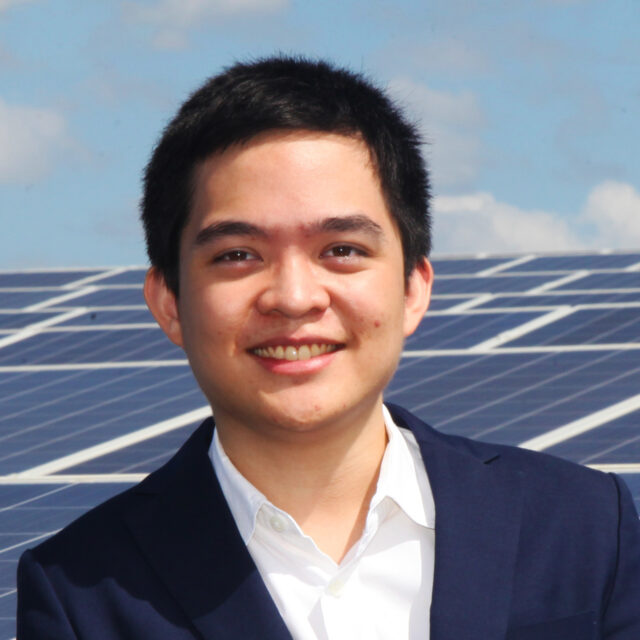
Leandro Leviste Founder and Chief Executive Officer Solar Philippines Power Project Holdings, Inc.
LEANDRO LEVISTE was only 20 years old when he said he started investing in Tesla and Solar City, both US companies that specialized in manufacturing solar panels. He observed that when the stock price of Tesla did well, it illustrated that the market had underestimated the potential for solar energy. Inspired by this, he believed that he could bring this energy solution to the Philippines, where the electricity rates were among the highest. In 2013, he invested his savings to set up Solar Philippines Power Project Holdings, Inc. (Solar Philippines).
Solar Philippines started with rooftop installations, where the company would import solar panels from China. The company completed the first solar panel rooftop installation at the Central Mall in Biñan City, Laguna, followed by the SM City North EDSA project where 5,760 solar panels were installed — the largest solar-powered rooftop installation at a mall in the country.
“It started with the rooftops, but it has always been about the potential demand for solar, which is driven by the falling cost of the solar panels whether on the roof or on the ground,” he said.
In 2016, the company was able to avail of a subsidy program from the Department of Energy for solar projects completed until March of the same year. The Calatagan Solar Farm enabled the funding of the rest of Solar Philippines’ projects. Between 2016 and 2018, the company signed three power supply agreements with Manila Electric Co. (Meralco), including one with a starting rate of P2.9999 per kilowatt-hour, the lowest cost for any power plant in the Philippines.
Solar Philippines claimed it is currently the largest solar energy production company in Southeast Asia with over 400 megawatts (MW) of operating or under construction and 10 gigawatts (GW) under development. It currently has solar farms in Batangas, Nueva Ecija and Tarlac.
Part of its success, Mr. Leviste said, is that Solar Philippines is a pioneer in the industry. “The traditional challenges in the power industry are developing the project, getting off-take and getting funded, so we were very fortunate,” he said. “We were the first mover in an industry at the time when there was no competition.”
Part of the reason why Solar Philippines solely focuses on solar farms is because it tried everything in the solar business and found that solar farm development in the greater Manila area is unique and has the most opportunity for growth. “In the case of solar energy, it was a short window of entry and a large market appeared, so we were in the right place to capitalize on it,” he said.
Solar Philippines started providing large-scale solar energy rather than going into retail because installing rooftop panels was difficult to do one customer at a time. With its solar farm model, the company can create much more generation to supply the country’s energy needs, helping to reduce overall power costs and ensure energy sufficiency. Mr. Leviste noted that a large part of the company’s operations involves land development — being able to buy the land and secure the right permits and right of way to be able to construct the solar farms that unlock the value of the land.
By creating utility-scale solar farms, Solar Philippines is generating additional electricity supply for the Luzon grid and increasing the productivity of many communities and customers. Its Calatagan Solar Farm has generated over 500 gigawatt-hours (GWh) of clean energy, and enough to power over six municipalities in Batangas, while sourcing the majority of its workforce from the locals in nearby areas. The Tarlac Solar Farm, which is in partnership with another company, completed its first phase, with a total capacity of 100 MW, in 2020.
Always looking to capitalize on a growing industry, Mr. Leviste said that Solar Philippines is building the world’s first large-scale solar-battery baseload project after securing an original proponent status to supply Meralco with up to 200 MW on a 24 hour a day basis from a 1,800 MW solar and 1,800-MWh battery project, which could replace the capacity of a 200-MW coal power plant. The power generated from the project will be 20-40% cheaper than from fossil fuel. Mr. Leviste aims to show solar with batteries can deliver a cost-competitive baseload power that can benefit Filipino consumers.
According to Mr. Leviste, Solar Philippines’ biggest CSR contribution is being able to provide the country with low-cost solar energy, setting the benchmark for lowering energy costs.
The company’s other developments include a 3,500-MW solar, 4,500-MWh battery project to supply Meralco 850 MW of mid-merit power for around 12 hours per day, and another 2300 MW of projects contracted under the Department of Energy’s Green Energy Auction, including a 500-MW Solar Farm in Nueva Ecija. These would potentially bring the company’s contracted capacity to 8 GW scheduled to commence operations mostly between 2025 and 2026, which it estimates would be two-thirds of the total contracted renewable energy capacity of the Philippines.
A subsidiary, Solar Philippines Nueva Ecija Corp., launched its initial public offering on the Philippine Stock Exchange. The proceeds will fund the company’s developments in Nueva Ecija, which according to Mr. Leviste, will be largest in Southeast Asia.
“All of these projects are consistent to the original goal which is to accelerate the adoption of solar in the Philippines. The more value we can create, the faster we can get there,” Mr. Leviste said.
The media sponsors of the Entrepreneur of the Year Philippines 2022 are BusinessWorld and the ABS-CBN News Channel. Gold Sponsors are SteelAsia Manufacturing Corp., Uratex, and Navegar. Silver Sponsors are Intellicare, OneWorld Alliance Logistics Corp., and Regan Industrial Sales, Inc. Banquet Co-presenter is PMFTC, Inc. Banquet Sponsors are Uratex, MerryMart Consumer Corp., Robert Blancaflor Group, Inc., International Container Terminal Services, Inc. (ICTSI), Joy~Nostalg and Vista Land & Lifescapes, Inc.
The winners of the Entrepreneur Of The Year Philippines 2022 will be announced on Nov. 21 in an awards banquet at the Grand Hyatt Manila. The Entrepreneur Of The Year Philippines will represent the country in the World Entrepreneur Of The Year 2023 in Monte Carlo, Monaco in June 2023. The Entrepreneur Of The Year program is produced globally by Ernst & Young (EY).
THIRD-QUARTER earnings results are in line with expectations, analysts said, as they pointed to the reopening economy and a stronger dollar that boosted spending among families of overseas Filipino workers (OFWs).
“Companies’ third-quarter earnings were in line and some were beyond expectation. Overall, recovery came from the government’s effort to open 100% of the economy,” Mercantile Securities Corp. Head Trader Jeff Radley C. See said in a Viber message.
Separately, Regina Capital Development Corp. Head of Sales Luis A. Limlingan cited in a Viber message the same factors for the listed companies’ quarterly earnings performance.
“[T]hat is saying a lot. Looking at third-quarter growth, we can see that consumption helped boost the economy,” he said.
Mr. Limlingan also said that remittances from Filipinos working abroad also helped in improving consumption.
“Also, since we have a lot of OFWs, the foreign currency that they sent home could have given some relief to the sudden rise in living expenses,” he added.
Carlos Angelo O. Temporal, equity research analyst at AP Securities, Inc., said several index heavyweights — SM Investments Corp., Ayala Land, Inc., BDO Unibank, Inc., Bank of the Philippine Islands, and PLDT, Inc. — beat earnings expectations for the quarter.
“These better-than-expected corporate earnings were reflective of recently reported third-quarter GDP (gross domestic product) growth, which ended up faster than expected,” Mr. Temporal said.
For the July-September quarter, the country’s GDP expanded by 7.6%, higher than the revised 7.5% economic growth in the second quarter and 7% in the same period last year.
“We attribute this to the sustained reopening of the economy on the back of continued improvement in mobility, return to face-to-face classes and more employees going back to on-site work arrangements,” Mr. Temporal said.
He said that the reopening led to a significant recovery in jobs and businesses, which resulted in more money for people to spend.
“In our view, the pace of recovery has outpaced the surge in inflation and interest rates, driving the 8% growth in household consumption over the quarter,” he added.
For the fourth quarter, analysts expect earnings to still be in line with their expectations due to seasonal demand as well as window-dressing activities.
“Going to the fourth quarter, while we do see earnings growth to continue on the back of the seasonal boost from the Christmas season, most of the numbers would be in line with expectations,” Mr. Temporal said, citing a fine-tuning of earnings estimates “to incorporate third-quarter figures.”
He added that he expects banks and consumer companies to lead the performance in the fourth quarter “on potential surprises in net interest margins and loan growth for the former and gross profit margins” for the latter.
He said, “some consumer companies may take advantage of the Christmas season to increase their prices.”
“The markets [can] anticipate any potential window-dressing activities towards the end of the accounting year [on Dec. 31],” said Rizal Commercial Banking Corp. Chief Economist Michael L. Ricafort in a Viber message.
He said markets can anticipate seasonal increases in sales and business transactions, which could translate into higher sales, net income, and overall valuations for some listed companies.
GLOBE Telecom, Inc. announced over the weekend that its attributable total comprehensive income for the third quarter of the year reached P5.7 billion, up 16% from P4.9 billion in the same period a year ago, owing primarily to revenue growth in its corporate data and mobile services, as well as non-telco services.
Third-quarter revenues, both service and non-service, grew 3% to P42.9 billion from P41.7 billion previously, the company’s third-quarter financial performance report showed.
Costs and expenses went up 6% to P37.3 billion from P35.3 billion in the same period a year earlier.
For the nine months ended Sept. 30, Globe saw its attributable total comprehensive income increase 37% to P24.9 billion from P18.2 billion previously.
Total revenues for the period went up 3% to P130.2 billion from P126.4 billion in 2021.
The growth was “led by corporate data and mobile services, supplemented by the sustained growth from non-telco services,” Globe said in a statement.
The company saw its total data revenues as a percentage of total service revenues increase to 81% from 79% in 2021.
“Mobile business achieved strong revenue growth this period at P80.6 billion compared to P78.4 billion reported in the first nine months the previous year,” Globe noted.
“This represents Globe’s second highest nine-month mobile revenue, bested only by pre-pandemic high in 2019,” it added.
The revenue growth came primarily from prepaid, according to the company, citing the rapid rise in Filipinos’ adoption of digital technology.
Globe saw its mobile customer base expand to 87.9 million for the nine-month period, or 5% higher than the level in the same period in 2021.
At the same time, the company saw its mobile data traffic increase to 3,365 petabytes as of end-September, surpassing the 2,730 petabytes reported in 2021.
“Corporate Data soared to another record level revenues of P12.5 billion or 21% increase from a year ago and significantly higher from pre-pandemic level,” Globe noted.
“This was mainly due to the strong traction from information and communication technology (ICT) services which grew 96% year on year. Growth from ICT was largely from business application services, cloud services and data center,” it added.
Globe saw revenues from its home broadband business decrease further in the third quarter. Nine-month revenues reached P20.5 billion, lower than the previous year’s P22.4 billion.
“Total home broadband subscriber count now stands at 2.7 million or down by 27% year on year,” Globe noted.
Meanwhile, non-telco revenues grew to P2.8 billion in the first nine months, up 101% from 2021.
“Substantial revenue contributions from ECPay, Yondu, and Asticom led to this period’s outstanding performance,” Globe said. — Arjay L. Balinbin
THE Securities and Exchange Commission (SEC) is looking into making mandatory some parts of sustainability reports, requiring sustainability reporting for public and small companies while rewarding their good methods.
SEC Director for Corporate Governance and Finance Department Rachel Esther J. Gumtang-Remalante said that the regulator is considering guidelines on mandatory items that it wants to be disclosed in a sustainability report.
“We do a lot of partnerships in order to encourage reporting, not only to encourage reporting but good-quality reporting,” Ms. Gumtang-Remalante said at the 8th Annual Forum of Good Governance Advocates and Practitioners of the Philippines last week.
She said the move might raise fears among companies as reports require a review from a third party, but the SEC will make sure that the companies are ready.
“Definitely, we will be providing companies some space and opportunity to go over the draft,” she said.
Meanwhile, Ms. Gumtang-Remalante said that the SEC is also looking into requiring sustainability reporting for public companies as well as small enterprises.
“It’s not only the job of the private companies to be sustainable,” she said, adding that public entities must also have their own sustainability guidelines.
“There is [also] a growing discussion even in the global space that micro-small – and medium-sized enterprises (MSMEs) have to have their reports as well,” she added.
According to Ms. Gumtang-Remalante, although there is a push for the inclusion of small companies, the SEC would need to ensure capacity-building for MSMEs to help them in reporting.
“We have to [also] identify which industry we have to focus on, [those] which have a large impact, especially to the environment or social side,” she said.
The SEC is also considering an awards system that will serve as an incentive for companies to abide by sustainability guidelines.
“The [SEC] chairman wants us to come up with an awarding system for those companies which are providing good sustainability methods,” Ms. Gumtang-Remalante said.
She noted, however, that the move is going to be a challenge for the SEC as companies will tend to only share the good side of their sustainability reports.
“In a sustainability report, you don’t only report the good ones, you also have to report on the negative ones. Because when you report on the negative ones this will also help policymakers do the right policies,” she added. — Justine Irish D. Tabile






 “MAD Talks presents: Sa Ngayon, Padayon” was organized and presented by the volunteers of I am M.A.D. (Making A Difference) led by its live event production team — Wino Dela Cruz (director & overall-in-charge of production), Ram Esteban Estael (stage director & production manager), Patricia Esquejo (pre-show director & stage manager), Maco Ravanzo (creative and content director), John Martin Recio (floor director & technical & documentation lead), John Brian Ignacio (lights & sounds supervisor), JR Maltizo (graphics & video playback operator), Jake Villanueva (lead writer and host), Anne Carbon Vale (talent manager), Ena Elaine Lensico and EA Janairo (talent coordinators), Christian Opeña, John Ronver de Leon, and Larae Lemaire (production assistants), and Christian Marx Rivero (event consultant).






 The Entrepreneur Of The Year Philippines 2022 has concluded its search for the country’s most undaunted and unstoppable entrepreneurs. Entrepreneur Of The Year Philippines is a program of the SGV Foundation, Inc., with the participation of co-presenters the Asian Institute of Management, the Department of Trade and Industry, the Philippine Business for Social Progress, and the Philippine Stock Exchange. BusinessWorld is featuring each finalist for the Entrepreneur Of The Year Philippines 2022 ahead of the awards ceremony on Nov. 21.