Home Blog Page 5160

Investment in new P&G diaper facility estimated at P864M — DTI
P&G CAREERS FACEBOOK PAGE

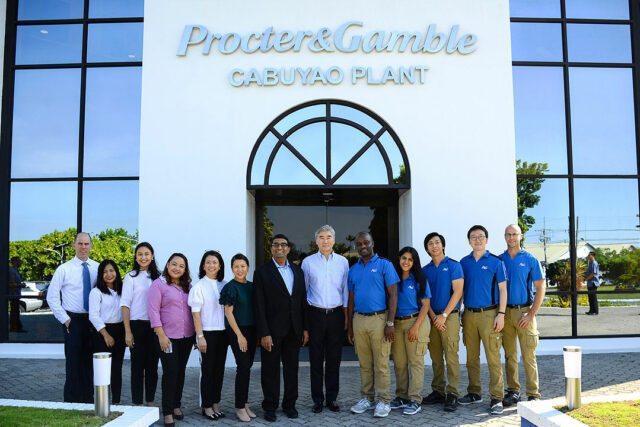
THE Department of Trade and Industry (DTI) said consumer goods manufacturer Procter & Gamble (P&G) Philippines brought in P864 million worth of investment with the inauguration of its Pampers diaper manufacturing line in Cabuyao, Laguna.

Trade Secretary Alfredo E. Pascual said during the ribbon-cutting ceremony on Thursday that the new Pampers facility will export to South Korea and Vietnam.  

“This P864-million investment is the direct outcome of a critical economic reform that the Philippine economic team has pushed for since the previous administration — Republic Act 11534 or the Corporate Recovery and Tax Incentives for Enterprises Act or CREATE,” Mr. Pascual said.  

“The diaper products from this new line will eventually be exported and sold to Korea and Vietnam. That is why, among other benefits listed in the CREATE Law, the importation of capital equipment, raw materials, or accessories is exempt from tax and duty,” he added.

“From the vantage point of the Philippine government, the new diaper manufacturing line will create direct and indirect jobs. Moreover, it will link the Philippines to the global value chain for manufacturing and distributing these diapers across Asia,” Mr. Pascual said.

Other products manufactured at the Cabuyao plant are laundry detergents like Ariel and Tide, Joy dishwashing liquid, Downy fabric conditioner, Whisper disposable period pads, and Safeguard antibacterial soap. The facility services both domestic and export markets.

“P&G’s commitment to continuous improvement and innovation of our supply chain technology has enabled us to provide products of superior quality and value,” P&G Philippines President and General Manager Rafael Arturo S. Fajardo said.  

“Together with the anticipated boost in sales for the company, this project will also help the economy and boost the country’s export output. P&G has and will always believe in Filipino talent, and this project will also facilitate significant upskilling for employees working on the line,” he added. 

Mr. Pascual said in his speech that the exports of Philippine sanitary products hit $40 million last year, adding that the DTI is seeking more investment from the producers of these items.

“Sanitary towels, feminine hygiene products, and baby diapers appear to be pandemic-proof, if not pandemic-driven. The export value of these products, which P&G also manufactures, has jumped over six-fold from $6 million in 2018 to $40 million in 2022,” Mr. Pascual said.

“Last year, South Korea was the top export market for these products, followed by Vietnam and Malaysia. As we welcome more investments in producing these products under the CREATE Law, the Philippines may depend less and less on importing such products,” he added. — Revin Mikhael D. Ochave
Philippines won’t tolerate ICC meddling in drug war, says DoJ

PHILIPPINE STAR/ MIGUEL DE GUZMAN

By John Victor D. Ordoñez, Reporter

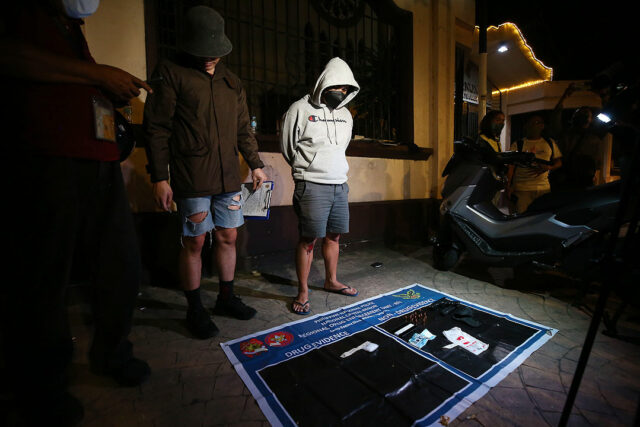
THE PHILIPPINES would not tolerate “external interference” by the International Criminal Court (ICC), its Justice chief told the United Nations (UN) Human Rights Council on Wednesday night, saying it does not have the power to investigate the country’s deadly drug war.

“We draw the line, as any sovereign state must, when an international institution overreaches and departs from the boundaries of its creation,” Justice Secretary Jesus Crispin C. Remulla said in a speech before the UN in Geneva, according to a video posted on the UN website.

“Unjustified external interference has very rarely if at all, served the cause of human rights,” said the Justice, who spoke at the council’s 52nd session.

Mr. Remulla said the state does not condone extralegal killings. “Let me assure this council, partners and civil society: To reiterate, there is no culture of impunity in the Philippines.”

“We are doubling our efforts in ensuring that individuals who have breached the bounds of the law, state actors included, meet justice,” he added.

In January, the ICC pre-trial chamber reopened its investigation into killings and so-called crimes against humanity under ex-President Rodrigo R. Duterte’s anti-illegal drug campaign. The Hague-based tribunal said it was not satisfied with Philippine efforts to probe the deaths.

President Ferdinand R. Marcos, Jr. has called the ICC’s probe a threat to the country’s sovereignty, saying the court does not have jurisdiction over the Philippines.

He said the Philippine justice system could hold erring officials accountable.

The tribunal, which tries people charged with crimes against humanity, genocide, war crimes and aggression, suspended its probe of Mr. Duterte’s deadly war on drugs in 2021 upon the Philippine government’s request.

It was also set to probe vigilante-style killings in Davao City when Mr. Duterte was still its vice mayor and mayor.

On Tuesday, Mr. Remulla told UN member states the Philippine government is aware of problems with its prison system and is doing something about the criminal justice system.

Ephraim B. Cortez, president of the National Union of Peoples’ Lawyers, said the ICC probe does not violate Philippine sovereignty. 

The court has the authority to probe drug-related deaths including those that happened after the Philippines sent a notice that it was withdrawing from the ICC and before it took effect, he said in a Viber message, citing the treaty that created the body. “It is all about complying with our treaty obligations.”

Mr. Duterte withdrew Philippine membership in the ICC. Mr. Marcos has said the country would not rejoin.

Last year, the Philippines accepted 200 UN Human Rights Council recommendations, including investigating extralegal killings and protecting journalists.

More than 30 member-states of the UN Human Rights Council have urged the Philippine government to do something about human rights violations in connection with Mr. Duterte’s anti-illegal drug campaign.

‘DIGNITY FOR ALL’
“While the Philippines is a sovereign country, it is part of the international community with rights and responsibilities,” Maria Ela L. Atienza, who teaches political science at the University of the Philippines, said in a Viber message.

It is a member of the United Nations and a signatory to many human rights conventions,” she said. “It is also bound to promote and protect human rights and to be accountable for its actions. One country cannot hide behind the sovereignty principle when it has accepted international norms on human rights and even put into national laws these human rights principles.”

Last week, a delegation of lawmakers from the European Union said the Philippines should rejoin the ICC to show its commitment to human rights.

Hannah Neumann, a vice chairperson of the European Parliament subcommittee on human rights, said lawmakers and other state officials seemed more willing to discuss reported rights violations than the previous administration.

“We’d be very happy to see the Philippines rejoin the Rome Statute of the ICC as it would clearly reinforce the government’s commitment to fighting impunity,” she told a press briefing.

Mr. Remulla told the EU lawmakers on Feb. 23 the Philippine government could investigate human rights abuses under the war on drugs without the ICC’s intervention.

Philippine police arrested 8,183 drug suspects in 6,044 illegal drug operations from the start of the year to Feb. 11, national police chief General Rodolfo S. Azurin, Jr. said on Feb. 13.

Human rights abuses continued under the first six months of the Marcos government, Human Rights Watch said in a report on Jan 12.

The Philippine government estimates that at least 6,117 suspected drug dealers had been killed in police operations. Human rights groups say as many as 30,000 suspects died.

The UN Human Rights Committee has said the Philippines should comply with international human rights mechanisms and cooperate with the ICC’s drug war probe.

The Commission on Human Rights has said the Duterte government had encouraged a culture of impunity by impeding independent probes and failing to prosecute rogue cops.

“Let us uphold sovereignty and harness solidarity to promote and protect human rights and dignity for all,” Mr. Remulla said.

Analysts: Philippines can learn from KL’s sea dispute strategy

NASA

By Kyle Aristophere T. Atienza, Reporter

THE PHILIPPINES can count on Malaysia to help resolve the South China Sea dispute, security analysts said on Thursday, citing the country’s wise use of natural resources in areas it claims in the waterway.

“The Philippines must learn from how Malaysia utilizes the natural resources in its claimed island features and promotes tourism without further aggression and complaints from Beijing,” Chester B. Cabalza, founding president of Manila-based International Development and Security Cooperation, said in a Facebook Messenger chat.

“Both the Philippines and Malaysia must comprehensively address maritime insecurity in the region, given their common maritime interests and as leading voices in the Association of Southeast Asian Nations (ASEAN),” he added.

Malaysia, which has strong ties with China, had opened Swallow Reef, an oceanic atoll in the Spratly Islands, to diving tourism. The islet, which Malaysia calls Layang-Layang, is also being claimed by  China, Vietnam and Taiwan.

China claims more than 80% of the South China Sea.

Malaysian Prime Minister Anwar bin Ibrahim was in Manila for a two-day visit that started on March 1.

During a meeting with President Ferdinand R. Marcos, Jr. on Monday night, he urged him to involve ASEAN in trying to resolve the Philippines’ sea dispute with China.

Resolving the conflict through ASEAN would help the two countries come up with “a comprehensive approach and achieve an amicable resolution,” Mr. Ibrahim told Mr. Marcos, based on a statement from the Philippine presidential palace.

The two leaders agreed to boost security ties and efforts against transnational crimes.

Mr. Cabalza urged ASEAN countries to “adhere to their mission and vision of a united region amid the great power rivalry between China and the US in the region.

“It is expected that Southeast Asia’s sea lanes would become naval battlegrounds of the two superpowers in case a big miscalculation triggers a war,” he said.

Both Malaysia and the Philippines recognize “how the maritime hotspot has become a theater for the great power competition,” Lucio Blanco Pitlo III, a research fellow at the Asia-Pacific Pathways to Progress Foundation, said in a Messenger chat.

“Close encounters between the US and China in the disputed waterway or the airspace above it may lead to accidents that can exacerbate tensions,” he added.

Some ASEAN countries might be worried about stronger security ties between the Philippines and US even if they are also anxious about China’s increasing assertiveness, he said.

The Marcos government has given the US access to four more military bases under their 2014 Enhanced Defense Cooperation Agreement (EDCA).

Some ASEAN countries “might ask Beijing to harden its posture and intensify its activities in choppy waters,” Mr. Pitlo said.

“As most ASEAN countries continue to eschew taking a side in the US-China rivalry, there may also be concerns about the Philippines moving closer to the US by granting it further military access and exploring possible joint patrols,” he added.

‘COMPLICATED’
Kuala Lumpur’s (KL) push for an ASEAN-centered strategy in the South China Sea dispute reflects the sentiments of civil society, says Hansley A. Juliano, a political economy researcher studying at Nagoya University’s Graduate School of International Development in Japan.

“They do want ASEAN to be this bloc structure by which members can lobby and defend mutual interests in the region,” he said via chat.

Mr. Juliano said Mr. Ibrahim’s push is similar to the defunct Southeast Asia Treaty Organization, created in 1954 primarily to block further communist gains in the region.

“However, this tends to clash with the reality that more often than not, ASEAN integration has clashed multiple times with the sovereignty and nonintervention clauses that individual member states invoke to not be bound by regional agreements,” he added.

He also said the push for ASEAN countries to take a stand against China is complicated by the fact that three countries — Myanmar, Laos and Vietnam — share their borders with China, while most members have strong cultural and economic ties with China.

China is Malaysia’s largest trade partner, accounting for 18.9% of total trade, according to a report by the South China Morning Post.

It is also the Philippines’ biggest trading partner. Philippine exports to and imports from China hit $10.97 and $28.2 billion, respectively, last year.

“There’s massive vested interest in Vietnam, Indonesia and the Philippines to mobilize ASEAN as a bulwark against China,” Mr. Juliano said. “However, when practically half of ASEAN is in Mainland Asia and is held hostage by Chinese capital through the Mekong River projects and Belt and Road projects, this is far easier said than done.”

COVID infections continue to fall amid report delays

COMPUTER-GENERATED representation of COVID-19 virions via Felipe Esquivel Reed / CC BY-SA

THE WESTERN Pacific Region, which includes the Philippines, posted an 89% decline in coronavirus infections on Jan. 30 to Feb. 26 amid delays in reporting and a decline in testing output in many countries, according to the World Health Organization (WHO).

Deaths also fell by 84%, the WHO said in a reported posted on its website.

Globally, cases fell by 76% to 4.8 million cases during the period from the previous 28 days, it said. Deaths fell by 66% to about 39,000.

“Current trends in reported COVID-19 cases are underestimates of the true number of global infections and reinfections as shown by prevalence surveys,” WHO said. “This is partly due to the reductions in testing and delays in reporting in many countries.”

As of Feb. 26, more than 758 million confirmed cases and more than 6.8 million deaths have been reported globally, it said.

Latest Data “may be incomplete and should, therefore, be interpreted with caution.” “Additionally, data from previous weeks are continuously updated to incorporate retrospective changes in reported COVID-19 cases and deaths made by countries.”

WHO had been calling on countries to boost surveillance and sequencing “so that as the virus evolves, vaccines, therapeutics and diagnostics can be evaluated and updated quickly as needed.”

The Philippines posted 832 infections on Feb. 20 to 26, according to a Department of Health report.

This brought its daily average to 119 infections, or. 7% decline from a week earlier. — Kyle Aristophere T. Atienza

Mindoro oil spill hits marine protected areas

THE OIL spill has reached the shoreline of a community in Pola, Oriental Mindoro. — PHILIPPINE COAST GUARD

By Kyle Aristophere T. Atienza, Reporter 

AN oil spill from a tanker that sank near Oriental Mindoro province could endanger over 20 marine protected areas, according to the Philippinesenvironmental agency.  

The Department of Environment and Natural Resources (DENR) said at least 21 locally-managed marine protected areas can be potentially affectedby the spill from oil tanker MT Princess Empress, which had engine trouble Tuesday and had completely sunk by Wednesday.  

The agency said the spill could have reached a maximum radius of 40 kilometers, at a point starting five nautical miles east of Balingawan Point in Naujan town in Oriental Mindoro.   

It said the Biodiversity Management Bureau had mapped potential risk areas including seagrass beds, mangroves, and dispersion pathways for spawned fish larvae.”  

The sunken vessel, which carried 800,000 liters of industrial fuel, drifted towards Naujan due to strong waves.   

The Philippine Coast Guard (PCG) confirmed that the oil spill in the waters of Oriental Mindoro contained industrial fuel oil.  

In a statement, the PCG said it had observed patches of emulsified oil,which has spread near Sable Island waters.  

It had also seen an oil spill stranding along the shorelineof a village in the town of Pola.  

Oriental Mindoro is one of the five provinces surrounding the Verde Island Passage, recognized globally as one of the most diverse marine habitats.  

Citing the provincial governments assessment, Oriental Mindoro Vice Governor Ejay L. Falcon said at least 16 fish sanctuariesare estimated to have been affected by the spill. 

These protected sanctuaries are in the towns of Nauhan, Pola, and Pinamalayan, he told BusinessWorld via Facebook Messenger chat on Wednesday. 

The incident has already hit 16 coastal villages in the three towns, he added. 

Mr. Falcon said that based on a report as of Wednesday afternoon, the oil spill might have also spread to the towns of Bansud and Bongabong. 

Earlier in the day, Governor Humerlito BonzA. Dolor said the oil spill had affected an area of about six by four kilometers.

The coverage of the spill was getting wider, he told ABS-CBNs Teleradyo. 

The provincial government, with the help of various government agencies, is monitoring the oil spill incident,Mr. Falcon said, adding that authorities have been rushing to contain the spill and ensure that its impact on coastal communities would not worsen. 

ERC denies red tape is cause of Occidental Mindoro’s power woes

THE ENERGY Regulatory Commission (ERC) has denied that the ongoing power crisis in Occidental Mindoro is due to red tape on its part. 

The ERC has always been mindful of its responsibility to timely act on applications filed before it to ensure continuous supply of electricity to consumers. We, therefore, regret the statements made that ERC is to be blamed for the power crisis in the Province of Occidental Mindoro,” ERC Chairperson Monalisa C. Dimalanta said in a statement on Thursday. 

The ERC’s statement was in response to claims by Occidental Mindoro Electric Cooperative, Inc. President Eleanor S. Costibolo that the longstanding power crisis in the province should be blamed on the regulatory agencys bureaucratic procedures.  

Ms. Dimalanta said the ERC has been prioritizing the resolution of pending issues of parties concerned.  

ERC said that it has been diligent in facilitating the issuance of certificates of compliance or provisional authorities to operate to generation companies in the province.  

“In fact, the Commission has been closely coordinating with all concerned stakeholders, particularly with Occidental Mindoro Consolidated Power Corp.,” the ERC said.  

On Feb. 28, the House energy committee conducted a hearing on the provinces power woes based on a resolution filed by Occidental Mindoro Rep. Leody F. Tarriela. Ashley Erika O. Jose

CTA sets aside MisOr power co-op’s tax liabilities based on 2013 reform law 

THE COURT of Tax Appeals (CTA) has granted Misamis Oriental (MisOr) II Rural Electric Service Cooperative, Inc.’s appeal to set aside its 2015 income tax liabilities worth P21.35 million and penalties amounting to P25,000. 

In a 22-page decision dated Feb. 28 and made public on Mar. 1, the CTA Special Second Division said the utility was entitled to an income tax exemption under the National Electrification Administration (NEA) Reform Act of 2013 or Republic Act No. 10531.   

“Existing electric cooperatives may likewise opt to register as stock corporations with the Securities and Exchange Commission and shall continue to enjoy the benefits under this act,” the tribunal said.  

Under the law, electric cooperatives registered with NEA are exempt from income taxes, franchise tax, value-added tax and all national government fees.  

Cooperatives are also given the option to remain non-stock and non-profit.  

The CTA said the entity is engaged in generating and distributing electricity and is exempt from income taxes as provided by the country’s tax code.  

In a legal opinion in December last year, the Department of Justice said all electric cooperatives (ECs) may apply for tax exemptions without prior registration with the Cooperative Development Authority (CDA).  

“Notably, no other requirement for the availment of these preferential rights, other than the compliance of electric cooperatives with the financial and operational standards set by the NEA, like the supposed CDA registration, is mentioned in the law,Justice Secretary Jesus Crispin C. Remulla said in the opinion. 

It overturned a 2014 department opinion that said electric cooperatives are still liable to pay local taxes and real property taxes.  

“At any rate, even in the absence of any categorical ruling by the Supreme Court on the matter, the above disquisitions still make it clear that at the present, the NEA law is the governing law insofar as ECs are concerned,” the tax tribunal said.  

The Misamis Oriental II co-op distributes electricity in Gingoog City and 12 towns in the southern Philippine province. John Victor D. Ordoñez

Test run of Metro Manila single ticketing system for traffic violations set in April 

PHILIPPINE STAR/ RUSSEL PALMA

THE METROPOLITAN Manila Development Authority (MMDA) will hold a dry run for the implementation of the single ticketing system for traffic violations within the first half of April.  

In a statement on Thursday, MMDA Acting Chairman Romando S. Artes said seven local government units in the capital region have expressed their readiness for the test run. 

These are the cities of San Juan, Muntinlupa, Quezon, Valenzuela, Parañaque, Manila, and Caloocan.  

“The single ticketing system across Metro Manila is nearing full implementation. There is a need to conduct a dry run to increase public awareness,” Mr. Artes said during a Metro Manila Council meeting on Thursday.   

Metro Manilas 17 mayors have approved the adoption of a common system through the Metro Manila Traffic Code of 2023, which provides for an integrated transport and traffic management.   

The implementation of the single ticketing system will highly benefit our motorists because they have the option to pay thru online channels for their violations,San Juan City Mayor Francis M. Zamora, who chairs the Metro Manila Council, said.

Senators call for further extension of jeepney operators’ consolidation deadline 

PHILIPPINE STAR/WALTER BOLLOZOS

SENATORS on Thursday asked the government to further extend the Dec. 31 deadline for the consolidation of traditional jeepney owners and drivers, saying thousands in the transport sector could lose their jobs.  

I do think, and I do believe that nine months is not enough before the phaseout of all of these jeepneys,Senator Jose JinggoyE. Estrada said in a mix of English and Filipino during a public services committee hearing.  

Land Transportation Franchising and Regulatory Board Chairman Teofilo E. Guadiz III has clarified that the end-Dec. deadline was for jeepney owners to join or form a cooperative, and not for the phaseout.  

The deadline is only for the consolidation urging the drivers to come together, consolidate as one, and start the formation of a cooperative in pursuit of a modernization,he told senators.  

After the consolidation, there would still be other stages of this modernization scheme,he added. The phaseout will be the last stage.”  

The consolidation is intended to ease the delivery of government support services such as financing for modern jeepney units and alternative livelihood programs.   

Transportation Secretary Jaime J. Bautista has also said earlier that traditional jeepneys will not be taken off the road until there are enough modern transport units to replace them.   

However, Senator Mary Grace S. Poe-Llamanzares, who chaired the hearing, said in Filipino that if you are unable to consolidate, you no longer have a provisional authority to operate.”  

Its wrong to say that its not a phase out by December because if they are unable to consolidate by that time, they are removed,she said. You are not even done with your route rationalization, yet you want all of them to comply.”  

Mr. Guadiz said that about 62% or 98,801 public utility jeepneys have already been consolidated. About 65,000 units have yet to join a cooperative.   

REQUIREMENTS
Meanwhile, the Transportation department has ordered LTFRB to adjust the requirements for jeepney owners in the implementation of the modernization program.   

“We are willing to bend backwards, suggesting to the board of LTFRB to relax the requirements to enable drivers to adopt to the program,” Mr. Bautista said in a statement on Thursday.

The Transport secretary also said that the department has reached out to public transport operators and drivers for a detailed discussion on the modernization program.   

As of Feb. 25, LTFRB has recorded at least 1,156 cooperatives covering 98,801 jeepney units and 406 consolidated entities that operate 14,289 UV express or van units.  

The Transport department said there are already 6,814 units of modern public transport units that ply over 400 routes, according to DoTr. — Alyssa Nicole O. Tan and Justine Irish D. Tabile

IPOPHL, Manila airport partner to prevent transport of fake goods

IPOPHL

THE INTELLECTUAL Property Office of the Philippines (IPOPHL) has teamed up with the Manila International Airport Authority (MIAA) to prevent the movement of counterfeit items via air travel.  

In a statement on Thursday, the IPOPHL said its partnership with the managing agency of the countrys main gateway comes amid the revenge travelphenomenon, or the surge of travelers in the aftermath of mobility restrictions during the coronavirus pandemic.   

Our MOU (memorandum of understanding) also assures that we have MIAAs full cooperation in ensuring IP-safe travels,IPOPHL Director General Rowel S. Barba said.   

By safe, we mean destinations are safeguarded from counterfeit goods. We achieve this by jointly developing efficient measures to thwart the importation, exportation and sale of such goods through and at the airport, all while keeping in mind the convenience of our travelers, he said.    

Under the agreement, the IPOPHL and other members of the National Committee on IP Rights (NCIPR) will provide training to MIAA personnel to improve their knowledge on IP-related laws, rules, and regulations in relation to fake goods.    

MIAA and IPOPHL will share critical information and statistics to monitor the movement of counterfeit goods and help other enforcement agencies in their surveillance and investigation of identities involved in IP infringement to the extent permitted by the Data Privacy Law of 2012,the IPOPHL said.    

Currently, the warning related to carrying IP-infringing items is only part of various declaration forms at the entry points in airports.    

We hope we can conduct joint IP awareness activities, and put up more information materials on IP in the airport that are highly visible to the public,Mr. Barba said.    

Under Republic Act No. 10863 or the Customs Modernization and Tariffication Act, IP infringing goods are barred from being imported and exported. Violators could be charged with penalties ranging from P100,000 to P300,000 and/or imprisonment of 31 days to a year.    

The MIAA, a government-owned and controlled corporation under the Transportation department, is mandated to manage the Ninoy Aquino International Airport. Revin Mikhael D. Ochave

US donates bomb disposal equipment to PHL police 

US EMBASSY PHOTO RELEASE

THE UNITED States has donated P182.3 million worth of bomb disposal equipment to enhance the Philippine police forces capability to counter terrorism, according to a statement released by its Embassy in the Philippines on Thursday.  

This turnover ceremony underscores the increasingly strong relationship between the United States and the Philippines as friends, partners, and allies,US Ambassador Marykay L. Carlson said.  

This year, the United States has invested more than P276 million to provide specialized training and equipment to the PNP (Philippine National Police) in the areas of explosive ordnance disposal, crisis response, digital forensics, investigations, and intelligence fusion,she added.  

These include bomb suits, digital x-ray machines, response vehicles, and tactical medical kits.   

We are extremely grateful for this donation, which will undoubtedly be a gamechanger in our ability to fulfill our mission to keep our communities safe from terrorism and other forms of criminality,PNP Director for Logistics Police Major General Ronaldo E. Olay said. Alyssa Nicole O. Tan

Solon renews call for probe on migrant workers on death row, other concerns 

A LAWMAKER has renewed her call for an inquiry on the status of Filipino workers on death row abroad as well as other concerns on claiming benefits.  

During the House overseas workers committee on Thursday, OFW Party-list Rep. Marissa P. Magsino pushed for the approval of House Resolution 864, calling for a probe, in aid of legislation, on the condition of migrant workers who have been sentenced to death in their respective host countries. 

Ms. Magsino said the investigation must include an assessment of the various assistance currently being provided by the government in their legal battles and in elevating their concerns and conditions while in incarceration.  

Meanwhile, a representative of overseas Filipino workers (OFW) group BANSA, Paul Madriaga, told the panel that the families of deceased migrant workers struggle to receive death benefits if they do not have connections in government agencies.  

Sometimes it takes more than six months before they could claim (benefits from the Foreign affairs department). Even in OWWA (Overseas Workers Welfare Administration), it takes two to three months before they could claim the workers death benefits,Mr. Madriaga said.  

He added that if the death of their deceased relative is not given extensive media attention, assistance for the family is often delayed.  

There are 83 OFWs currently on death row, mostly relating to cases on murder and drugs, Foreign Affairs Assistant Secretary for Migrant WorkersAffairs Paul Raymund P. Cortes told the committee. Beatriz Marie D. Cruz