Home Blog Page 5146

Three out of four PHL youth believe life will improve in next 5 years — survey

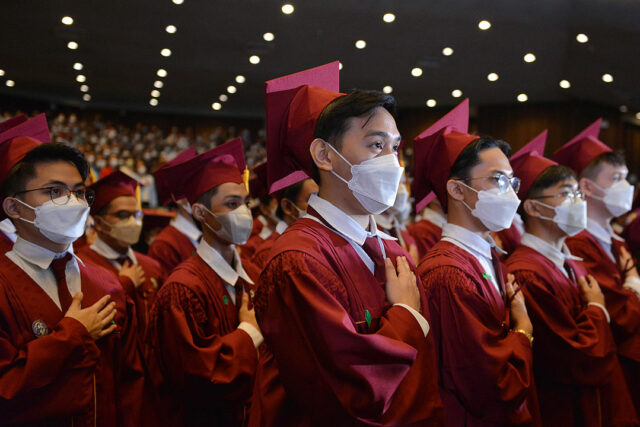
Young men and women attend their graduation ceremony in Pasay City. — PHILIPPINE STAR/EDD GUMBAN

Three-fourths of Filipino youth aged 15 to 30 are optimistic that their quality of life will improve over the next five years despite the pandemic, according to a national survey conducted in 2021 by Youth Leadership for Democracy (YouthLed) and Social Weather Stations (SWS). 

“The survey was conducted to help us as an organization and as a program unpack what the current perspectives of youth in the country are,” said Sam Chittick, country representative of the Asia Foundation, in a press conference that presented the survey results on Friday. 

YouthLed, which aims to increase civic engagement, is a project of the Asia Foundation and the United States Agency for International Development (USAID).

The net optimism score of +72 in the State of the Filipino Youth 2021 survey is a significant increase from the +46 tallied in April 1996, the last time the SWS was tasked to do a comparable large-scale poll by the National Youth Commission (NYC). 

The net optimism score is computed by subtracting those who responded negatively from the number of those who responded positively.

This year’s respondents included 4,900 Filipino youths, ages 15 to 30 years old, with 81% belonging to Class D. 

The coronavirus pandemic and the subsequent lockdown was the “most important issue they [respondents] had in mind” when answering the survey, said SWS vice president and chief operating officer Gerardo Sandoval.

Despite the pandemic, survey results reflected a positive outlook on health, with 66% of respondents describing their health as “good,” an improvement over the 51% in 1996.

INFLUENCES

Almost all, or 99% of respondents, use traditional media, with three out of four young Filipinos watching the news on television at least once a week. More respondents find traditional media “very reliable and factual” (20%) than social media (7%). 

Traditional mass media (20%) came in second only to the home (24%) as the main influence in finding references on the responsibilities of a Filipino citizen. High school  (17%) and social media (15%) rounded out the list.

Majority of the respondents see their family as a guide to their stance on political issues (59%) and their support for government policies and activities (57%).

The survey was conducted March 14 to March 29, 2021, during general community quarantine (GCQ), and was released this February. 

The survey had an error margin of +/-1.4% at 95% confidence level for national percentages. — Aaron Michael C. Sy

Budget deficit widens to P99B in October

PHILIPPINE STAR/ MICHAEL VARCAS

By Luisa Maria Jacinta C. Jocson, Reporter

The National Government’s budget deficit ballooned to P99.1 billion in October, as state spending outpaced revenue collections, the Bureau of the Treasury (BTr) reported on Friday.

In its latest cash operations report, the BTr said the October budget gap rose by 54.08% from the P64.3 billion deficit in the same month a year ago.

“The higher deficit for the period resulted from the year-over-year acceleration in government spending outpacing revenue growth,” it said in a statement.

National Government fiscal performanceMonth on month, the October deficit sharply narrowed from the P179.8 billion in September.

In October, government expenditures rose by 22.23% to P387.9 billion from P317.4 billion a year ago.

The BTr said faster government spending was driven by higher tax allotments of local government units (LGUs) and subsidy releases for programs implemented by government corporations. National tax allotments to LGUs stood at P86.5 billion, while subsidies amounted to P40 billion.

“Disbursements for the social protection programs of the Department of Social Welfare and Development (DSWD) and road infrastructure projects of the Department of Public Works and Highways (DPWH) also contributed to the higher October spending,” the BTr added.

Primary expenditures, which refers to total expenditures minus interest payments, jumped 24.11% to P354.7 billion, accounting for 91% of the total monthly spending.

Interest payments rose by 5.23% to P33.2 billion in October.

Meanwhile, total revenue collection increased by 14.14% to P288.9 billion in October from P253.1 billion in the same period last year.

Tax revenues rose 19.53% to P261.9 billion in October from P219.1 billion a year ago.

The bulk of tax revenues came from the Bureau of Internal Revenue (BIR) with P186.8 billion, up 15.20% year on year.

The Bureau of Customs (BOC) collections also jumped 35.16% to P75.1 billion in October, while tax collections from other offices plunged 94.31% to P99 million.

Nontax revenues also fell by 20% to P27 billion from P34 billion as nontax collections from other offices, privatization proceeds and fees and charges declined 44.2% to P13.7 billion.

BTr revenues surged 47.24% to P13.2 billion “due to higher National Government share from the Philippine Amusement and Gaming Corp. (PAGCOR) profit and Bond Sinking Fund (BSF) investment performance which offset lower dividend remittance.”

Rizal Commercial Banking Corp. Chief Economist Michael L. Ricafort said in an email that the higher expenditures for the month was due to soaring inflation and rising borrowing costs.

Headline inflation accelerated to 7.7% in October, its fastest pace in 14 years, mainly driven by soaring food costs. In the 10-month period, inflation averaged 5.4%.

The Bangko Sentral ng Pilipinas (BSP) delivered a 75 bp hike this month, increasing its benchmark rate to 5%, the highest in nearly 14 years. It has so far hiked rates by 300 bps since May to tame inflation and keep in step with the Fed.

“The continued growth in government revenues has been consistent with measures to further re-open the economy towards greater normalcy (which) could have increased government tax revenue collections with more businesses operating at higher capacity,” Mr. Ricafort added.

UnionBank of the Philippines, Inc. Chief Economist Ruben Carlo O. Asuncion said that the fiscal deficit in October was a “reversal from the fiscal prudence that we have seen in most of the third quarter.”

“Nevertheless, we think that if revenues continue its double-digit growth, it will be a leg up for fiscal management moving forward,” Mr. Asuncion added in a Viber message.

10-MONTH DEFICIT

Meanwhile, the fiscal deficit narrowed by 7.61% to P1.11 trillion in the January to October period, from the P1.2 trillion during the same period a year ago. This accounts for just 67% of the P1.7-trillion full-year program.

Total expenditures rose 9.87% to P4.1 trillion in October, as interest payments jumped 16.8% to P433.2 billion.

On the other hand, state revenues increased by 18.31% to P2.9 trillion as of end-October, accounting for 89% of the P3.3 trillion goal for the year.

Tax collections jumped 17.67% to P2.6 trillion in the 10-month period, while non-tax revenues rose 24.33% to P299.5 billion.

The government borrows from local and external sources to help fund a budget deficit capped at 7.6% of gross domestic product (GDP) this year.

As of end-September, the deficit to GDP ratio eased to 6.5%, from 8.3% a year ago.

UK pork producer pays £4M to hire Filipino butchers

REUTERS

One of the UK’s biggest pork producers has spent £4 million ($4.8 million) hiring butchers from the Philippines, after a staffing crisis threatened to hamper production.

Cranswick Plc, which supplies supermarkets with pork and poultry, is paying for 400 butchers to travel from the Asian islands to work in Britain after staff from continental Europe flocked home following Brexit.

“It’s absolutely necessary if we want food on the plates,” said Cranswick’s Chief Executive Officer, Adam Couch. “Obviously it’s very expensive to bring them over, but it’s far better to bring them over than to curtail production as we did this time last year.”

Mr. Couch said that paying for each butcher from the Philippines cost between £10,000 and £12,000 — equivalent to more than £4 million. Each butcher needs a visa, a flight to the UK, an English test, and accommodation. Cranswick has an apprenticeship program to train up new butchers, but Mr. Couch said that there was just “not enough people”.

Jayne Arnold from the Food and Drink Federation said the whole industry is suffering from a lack of staff “despite employers making significant efforts to attract workers from offering higher wages to introducing more flexible shifts.”

RECESSION RISK

Earlier this week, Tony Danker, director general of the Confederation of British Industry, said the UK needed more foreign workers to help it escape a likely recession.

Labor shortages have prompted businesses to seek new ways to find workers. Halfords Group Plc, the motoring and bike retailer, has launched a recruitment drive to hire 1,000 new technicians — prioritizing the over 50s.

Until Britain voted to leave the European Union, 65% of Cranswick’s workers in the UK came from central Europe. That number has since plunged. Last year, the staff shortage was so severe that Cranswick had 25% fewer staff than required at its processing plants in areas such as Hull, northern England, and Norfolk, eastern England. — Bloomberg

In Britain, nurses prepare for unprecedented strike over pay

REUTERS

GOSPORT, England/LONDON — Chukwudubem Ifeajuna, a nurse in the south of England, loves his job, but next month will walk out for two days as part of British nurses’ biggest ever strike action, which he says is necessary for staff and patient welfare alike.

The industrial action on Dec. 15 and Dec. 20 is unprecedented in the British nursing union’s 106-year history, and comes as the state-run National Health Service (NHS) braces for one of its toughest winters ever. 

Mr. Ifeajuna has seen members of his team leave to work in supermarkets, where there is less stress and better pay, while he has had to cut back on spending. 

“I have a few staff who are using food banks at the moment. I’ve had to cut down on a lot of things with the kids which I can’t afford to provide for them because of the high cost of living. So it’s really really tough, for everyone, not just myself,” he told Reuters. 

“We are striking because we deserve to be paid better. We haven’t had decent pay for over a decade now.” 

Strike action is also impacting Britain’s rail, postal and education sectors as workers struggle with soaring prices. 

Patricia Marquis, director of the Royal College of Nursing (RCN) union in England, said the government must listen. 

“This is not something that nurses do at the drop of a hat,” she told Reuters. 

‘MOST VICIOUS OF CYCLES’ 

The RCN says experienced nurses like Mr. Ifeajuna are 20% worse off in real terms than they were in 2010 after a string of below-inflation pay awards, and are seeking a pay-rise of 5% above RPI (retail price index) inflation. 

That would amount to a payrise of 19.2%, based on October’s inflation data. The government says the RCN demands would cost 10 billion pounds ($12.14 billion) a year and are unaffordable. 

But the RCN’s Ms. Marquis said that without higher pay, staff would continue to leave the profession, increasing the pressure on those who remain and ultimately damaging patient care. 

Billy Palmer, at the Nuffield Trust health think-tank, told Reuters that those who were considering leaving “often cite issues around not having enough staff to do a good job,” but their departure further exacerbates the staffing problem. 

“It’s the most vicious of cycles,” he said. 

Mr. Ifeajuna says he has also sometimes considered quitting. 

“But each time I’ve had the chance, I sort of had to pause for a minute and say ‘I can’t leave my patients. I can’t leave my colleagues to suffer alone,’” he said. — Reuters


Researchers test mRNA technology for universal flu vaccine

FREEPIK

An experimental vaccine provided broad protection against all 20 known influenza A and B virus subtypes in initial tests in mice and ferrets, potentially opening a pathway to a universal flu shot that might help prevent future pandemics, according to a US study published on Thursday.

The two-dose vaccine employs the same messenger RNA (mRNA) technology used in the coronavirus disease 2019 (COVID-19) shots developed by Pfizer with BioNTech, and by Moderna. It delivers tiny lipid particles containing mRNA instructions for cells to create replicas of so-called hemagglutinin proteins that appear on influenza virus surfaces.

A universal vaccine would not mean an end to flu seasons, but would replace the guess work that goes into developing annual shots months ahead of flu season each year.

“The idea here is to have a vaccine that will give people a baseline level of immune memory to diverse flu strains, so that there will be far less disease and death when the next flu pandemic occurs,” study leader Scott Hensley of the Perelman School of Medicine at the University of Pennsylvania said in a statement.

Unlike standard flu vaccines that deliver one or two versions of hemagglutinin, the experimental vaccine includes 20 different types in the hope of getting the immune system to recognize any flu virus it might encounter in the future.

In lab experiments, vaccinated animals’ immune systems recognized the hemagglutinin proteins and defended against 18 different strains of influenza A and two strains of influenza B. Antibody levels induced by the vaccine remained unchanged for at least four months, according to a report published in the journal Science.

The vaccine reduced signs of illness and protected from death even when the ferrets were exposed to a different type of flu not in the vaccine, the researchers said.

Moderna and Pfizer both have mRNA flu vaccines in late-stage human trials, and GSK and partner CureVac are testing an mRNA flu vaccine in an early-stage safety trial in humans. These vaccines are designed to defend against only four recently-circulating influenza strains but could theoretically be changed up each year.

The universal flu vaccine, if successful in human trials, would not necessarily prevent infection. The goal is to provide durable protection against severe disease and death, Mr. Hensley said.

Questions remain regarding how to judge efficacy and potential regulatory requirements for a vaccine against possible future viruses that are not currently circulating, Alyson Kelvin and Darryl Falzarano of the University of Saskatchewan, Canada, wrote in a commentary published with the study.

While the promising results with the new vaccine “suggest a protective capacity against all subtypes of influenza viruses, we cannot be sure until clinical trials in volunteers are done,” Adolfo García-Sastrem, director of the Institute for Global Health and Emerging Pathogens at Mount Sinai Hospital in New York, said in a statement. — Reuters

Slower Fed hikes spell relief from Tokyo to Buenos Aires

REUTERS

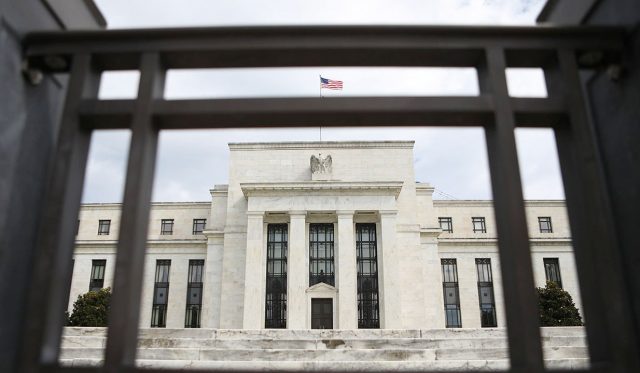
FRANKFURT — The Federal Reserve’s signaling of a slowdown in the pace of US interest rate hikes takes pressure off global peers to keep on raising rates and offers relief to emerging markets, which have suffered their biggest rout in over a decade this year.

Central banks around the world have taken their cue from Washington in lifting borrowing costs at record pace. 

So a signal in the minutes of the Fed’s November meeting that policy tightening will soon slow has global ramifications, from a drop in global yields and rising stocks to a rebound in currencies against the dollar. 

More importantly, the Fed’s hint suggests that inflation may be coming under control, bolstering hopes of a “soft landing” for the world’s biggest economy that could in turn cushion others, many of which are already in recession. 

The inflation fight is far from over, especially in Europe, where the energy shock from the Ukraine has hurt most, but the Fed’s shift eases the pressure on central banks to keep moving in big steps. 

Major peers like the European Central Bank (ECB) and Bank of Japan (BoJ) will clearly benefit but emerging economies, which moved early with rate hikes and suffered a double whammy of higher borrowing costs and currency depreciation, will be the biggest winners. 

“Many emerging markets, for instance in Latin America, have reached peak rate pretty much already, and actually are in a position where they could take the foot off the accelerator a little bit if the Fed did,” Paul Watters at S&P Global said. 

Emerging economies started hiking before the Fed, and quickly, partly because their currencies had weakened against the dollar, raising funding costs and importing inflation. 

Before this month’s hint of a Fed slowdown, the dollar index, which measures the greenback’s strength against major currencies, had risen 18% year-to-date. That had quickly fed through to prices, especially energy and some food commodities that are generally traded in dollars. 

The index has now dropped 6% from that peak, suggesting that some relief is already feeding through. 

“This year’s interest rate hikes in the United States are set to cut an estimated $360 billion of future income for developing countries, excluding China, and signal even more trouble ahead,” the United Nations Conference on Trade and Development says. 

UBS, which is predicting 8–12% returns in emerging market equities next year and 10–15% returns in the mainly dollar-denominated emerging market hard currency debt indexes, argues that emerging market assets have fared worse through the current Fed tightening than they have in the previous five cycles. 

“Many countries are intervening to protect their currencies from rout,” S&P Global said. “Total reserves in the emerging markets had fallen by over $400 billion, down 7%, this year as of September.” 

Though the Fed signals a respite, Nomura said some economies still face the threat of a currency crisis, according to its in-house “Damocles” warning system, which uses eight disparate indicators over a longer period to model risk. 

“Damocles is flashing warning signals for seven countries: Egypt, Romania, Sri Lanka, Turkey, Czech Republic, Pakistan and Hungary.” 

BNP Paribas meanwhile sees Hungary, Colombia, Egypt and Malaysia as most vulnerable, and notes that Brazil’s fortunes are tied to the policies of the incoming government. 

ECB & BoJ 

At the ECB, the Fed’s signal bolsters an already strong case for more measured rate hikes after back-to-back 75 basis point moves and eases growth concerns. 

The euro’s 7% rise against the dollar since its autumn lows will curb import costs, which are now quickly feeding into consumer prices via energy. 

This shallower rate path will then ease growth and debt concerns especially on the euro zone’s vulnerable periphery. 

Italian bond yields are down sharply in the past month, while the closely watched spread between Italian and German borrowing costs is at its narrowest since May, signaling growing investor confidence in highly indebted Italy. 

Slower Fed rate hikes also help the BoJ, whose ultra-low rates have been criticized for fueling a sharp yen decline that inflates the cost of imports. 

Less downward pressure on the yen would give the BoJ space to gauge whether inflation will sustainably hold around 2% next year. On the other hand, if global yield moves stabilize, that could give scope for the BoJ to make its policy framework more flexible, some analysts say. 

Sayuri Shirai, a former BoJ board member who is considered a candidate to become deputy governor next year, said a slower pace of Fed tightening would ease pressure on the BoJ to ramp up bond buying to defend an implicit 0.25% cap for the 10-year Japanese government bond yield. 

“When the appropriate timing comes such as when the US monetary policy is becoming closer to the terminal rate, the BoJ should phase out its operation that offers to buy unlimited bond buying to defend its yield cap,” Ms. Shirai said. — Reuters


Weapons industry booms as Eastern Europe arms Ukraine

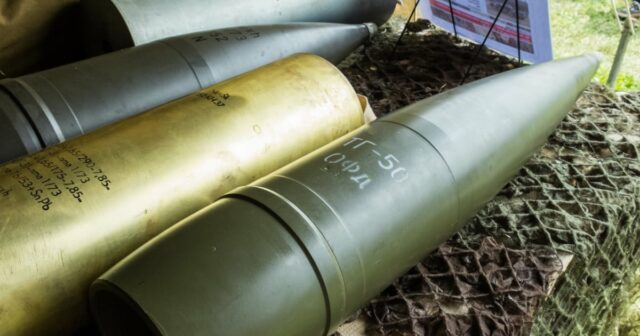
152mm artillery ammunition. — MIL.IN.UA/FLICKR

PRAGUE/WARSAW — Eastern Europe’s arms industry is churning out guns, artillery shells and other military supplies at a pace not seen since the Cold War as governments in the region lead efforts to aid Ukraine in its fight against Russia.

Allies have been supplying Kyiv with weapons and military equipment since Russia invaded its neighbour on Feb. 24, depleting their own inventories along the way. 

The United States and Britain committed the most direct military aid to Ukraine between Jan. 24 and Oct. 3, a Kiel Institute for the World Economy tracker shows, with Poland in third place and the Czech Republic ninth. 

Still wary of Russia, their Soviet-era master, some former Warsaw Pact countries see helping Ukraine as a matter of regional security. 

But nearly a dozen government and company officials and analysts who spoke to Reuters said the conflict also presented new opportunities for the region’s arms industry. 

“Taking into account the realities of the ongoing war in Ukraine and the visible attitude of many countries aimed at increased spending in the field of defence budgets, there is a real chance to enter new markets and increase export revenues in the coming years,” said Sebastian Chwalek, chief executive officer of Poland’s PGZ. 

State-owned PGZ controls more than 50 companies making weapons and ammunition — from armoured transporters to unmanned air systems — and holds stakes in dozens more. 

It now plans to invest up to 8 billion zlotys ($1.8 billion) over the next decade, more than double its pre-war target, Mr. Chwalek told Reuters. That includes new facilities located further from the border with Russia’s ally Belarus for security reasons, he said. 

Other manufacturers too are increasing production capacity and racing to hire workers, companies and government officials from Poland, Slovakia and the Czech Republic said. 

Immediately after Russia’s attack some eastern European militaries and manufacturers began emptying their warehouses of Soviet-era weapons and ammunition that Ukrainians were familiar with, as Kyiv waited for NATO-standard equipment from the West. 

As those stocks have dwindled, arms makers have cranked up production of both older and modern equipment to keep supplies flowing. The stream of weapons has helped Ukraine push back Russian forces and reclaim swathes of territory. 

Mr. Chwalek said PGZ would now produce 1,000 portable Piorun manpad air-defense systems in 2023 — not all for Ukraine — compared to 600 in 2022 and 300 to 350 in previous years. 

The company, which he said has also delivered artillery and mortar systems, howitzers, bulletproof vests, small arms, and ammunition to Ukraine, is likely to surpass a pre-war 2022 revenue target of 6.74 billion zlotys. 

Companies and officials who spoke to Reuters declined to give specific details of military supplies to Ukraine, and some did not want to be identified, citing security and commercial sensitivities. 

HISTORIC INDUSTRY 

Eastern Europe’s arms industry dates back to the 19th Century, when Czech Emil Skoda began manufacturing weapons for the Austro-Hungarian Empire. 

Under Communism, huge factories in Czechoslovakia, the Warsaw Pact’s second-largest weapons producer, Poland and elsewhere in the region kept people employed, turning out weapons for Cold War conflicts Moscow stoked around the world. 

“The Czech Republic was one of the powerhouses of weapons exporters and we have the personnel, material base and production lines needed to increase capacity,” its NATO Ambassador Jakub Landovsky told Reuters. 

“This is a great chance for the Czechs to increase what we need after giving the Ukrainians the old Soviet-era stocks. This can show other countries we can be a reliable partner in the arms industry.” The 1991 collapse of the Soviet Union and NATO’s expansion into the region pushed companies to modernize, but “they can still quickly produce things like ammunition that fits the Soviet systems,” said Siemon Wezeman, a researcher at the Stockholm International Peace Research Institute. 

Deliveries to Ukraine have included artillery rounds of “Eastern” calibres, such as 152mm howitzer rounds and 122mm rockets not produced by Western companies, officials and companies said. 

They said Ukraine had acquired weapons and equipment via donations from governments and direct commercial contracts between Kyiv and the manufacturers. 

NOT JUST BUSINESS 

“Eastern European countries support Ukraine substantially,” Christoph Trebesch, a professor at the Kiel Institute, said. “At the same time it’s an opportunity for them to build up their military production industry.” 

Ukraine has received nearly 50 billion crowns ($2.1 billion) of weapons and equipment from Czech companies, about 95% of which were commercial deliveries, Czech Deputy Defence Minister Tomas Kopecny told Reuters. Czech arms exports this year will be the highest since 1989, he said, with many companies in the sector adding jobs and capacity. 

“For the Czech defense industry, the conflict in Ukraine, and the assistance it provides is clearly a boost that we have not seen in the last 30 years,” Mr. Kopecny said. 

David Hac, chief executive of Czech STV Group, outlined to Reuters plans to add new production lines for small-calibre ammunition and said it is considering expanding its large-calibre capability. In a tight labour market, the company is trying to poach workers from a slowing car industry, he said. 

Defense sales helped the Czechoslovak Group, which owns companies including Excalibur Army, Tatra Trucks and Tatra Defence, nearly double its first-half revenues from a year earlier, to 13.8 billion crowns. 

The company is increasing production of both 155mm NATO and 152mm Eastern calibre rounds and refurbishing infantry fighting vehicles and Soviet-era T-72 tanks, spokesman Andrej Cirtek told Reuters. 

He said supplying Ukraine was more than just good business. 

“After the Russian aggression started, our deliveries for Ukrainian army multiplied,” Mr. Cirtek said. 

“The majority of the Czech population still remember times of a Russian occupation of our country before 1990 and we don’t want to have Russian troops closer to our borders.” — Reuters


China hustles on summit sidelines to challenge US outreach

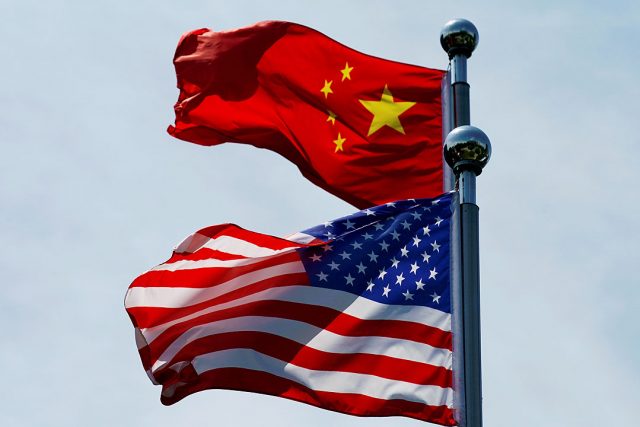
CHINESE AND US flags flutter near The Bund in Shanghai, China July 30, 2019. — REUTERS

When Chinese President Xi Jinping and his Indonesian counterpart Joko Widodo sat together last week to watch a trial run of a new China-backed high-speed railway, it was a clear sign of their expanding economic involvement. “Begin,” was the command they gave, as the train pulled out of a Bandung station.

Projects like this are key to Beijing’s strategy to compete with the US for clout in Southeast Asia, as it looks to cement its position in a region that counts China as its biggest trading partner. Two-way trade grew 13.8% year-on-year in the first 10 months of 2022, reaching $798.4 billion. The raft of new infrastructure and trade deals signed at a series of summits over the last two weeks, shows China only seeks to enhance this further. 

Here’s what was agreed:

INDONESIA

Mr. Xi and Jokowi, as the Indonesian president is known, signed agreements on the sidelines of the Group of 20 in Bali, bolstering digital economy cooperation and increasing bilateral trade. China also pledged to encourage companies to support the development of Indonesia’s $34 billion new capital in Borneo, as well as an industrial park on the island.

Jokowi, who referred to Mr. Xi as “big brother” when the two met, has turned to Beijing to fuel his ambitious infrastructure projects before his final term in office expires in 2024. China has been Indonesia’s largest trade partner for the past decade, with foreign investment doubling to $3.63 billion in the first half of this year, according to Indonesian government data.

CAMBODIA

Chinese Premier Li Keqiang used his trip to close ally Cambodia, for the Association of Southeast Asian Nations summit, to ink more than 10 cooperation agreements with Prime Minister Hun Sen. The deals ranged from agriculture to infrastructure, education, traditional Chinese medicine and science and technology.

The two countries also signed a $1.6 billion deal to build an expressway from the Cambodian capital to the Vietnamese border. China has invested heavily in the country, including upgrades to the Ream Naval Base along Cambodia’s southwestern coast. That’s raised concerns in the US, including from President Joseph R. Biden, Jr., over possible activities by China’s military there.

China is by far Cambodia’s largest trading partner, and accounted for 43% of the nearly $3 billion in investment it approved in the first half of this year, Xinhua reported.

THAILAND

Mr. Xi sought greater “synergy” when he met Thai Prime Minister Prayuth Chan-Ocha on the sidelines of the Asia-Pacific Economic Cooperation forum in Bangkok on Nov. 19. The two sides signed a five-year strategic cooperation agreement, and a deal promoting Belt and Road projects. 

China said it wanted to strengthen cooperation in trade, tourism and infrastructure, and cultivate new growth areas like the digital economy, new energy vehicles and technological innovation. It also stressed the need to speed up China-Thailand-Laos railway cooperation.

SINGAPORE

China welcomed Singapore’s “in-depth participation” in China’s “new development paradigm,” Mr. Xi said in his meeting with Prime Minister Lee Hsien Loong in Bangkok, according to a readout. Mr. Xi also said efforts need to be made to upgrade their bilateral free trade agreement and implement the previously agreed New International Land-Sea Trade Corridor.

In talks between their defense ministers, the two nations also agreed to hold joint military exercises next year, and set up a hotline between ministries. China has been Singapore’s largest trading partner since 2013.

PHILIPPINES

Mr. Xi said China views its relations with the Philippines from a “strategic height” and they should improve their cooperation quality, after meeting Philippine President Ferdinand R. Marcos, Jr., in Bangkok on Nov 17. China also expressed a willingness to import more quality agricultural and other products, and said the two sides must handle differences properly when it comes to the South China Sea.

Amid the ongoing territorial dispute, the Philippines has also been strengthening security ties with the US, with an agreement to start building training facilities and warehouses on the nation’s military bases next year. — Bloomberg


Singapore’s gig workers to get work injury, pension coverage

GRAB SINGAPORE

SINGAPORE — Singapore will extend work injury insurance and pension coverage to food delivery and ride-hailing workers under proposed legislative changes that it aims to implement as early as late 2024, the Manpower Ministry said.

The new rules will affect about 73,000 workers who deliver food or drive passengers for companies such as Grab, Gojek, Deliveroo and Delivery Hero’s Foodpanda.

Workers would gain coverage under the national pension system, which collects contributions from both workers and companies, and receive work injury insurance covering medical expenses, income loss, and lump sum compensation for permanent disability or death.

Gig workers would not, however, be considered full-time employees entitled to paid leave and other benefits.

The changes, based on recommendations from an advisory committee set up to create standards for gig worker protections, were approved by the government on Wednesday.

Grab, Foodpanda, and Deliveroo said in a joint statement that the roll-out should be “evenly paced” given the “complexities of business operations and economic pressures.”

Rights groups and governments around the world have voiced concerns about the interests of contract workers, whose ranks swelled significantly during coronavirus disease 2019 (COVID-19) lockdowns but who do not typically receive benefits available to full-time employees.

A report released by the Institute of Policy Studies in Singapore early this month found that 16.1% of 1,002 food delivery riders it surveyed had been in an accident serious enough to require medical treatment. — Reuters

Spanish painter Betsy Westendorp, 94

Spanish artist Betsy Westendorp, who made a name in the Philippines for her portraits and her atmosferografias, passed away on Nov. 23 in her home in Aravaca, Madrid. She was 94 years old.  

Born on Feb. 22, 1927, and raised in Spain, Ms. Westendorp was named after a Dutch aunt who was also an artist. She first arrived in Manila when she was 21 years old, after her marriage to Filipino businessman Antonio Brias. They were blessed with three daughters. 

In 1971, then-Philippine ambassador to Spain Luis “Chito” González invited her to an exhibition at the Instituto de Cultura Hispanica in Madrid. The ambassador’s wife, Vicky Quirino-Gonzalez introduced her to Spanish royals who then posed for portraits. Among her high-society portraits include those of now-King Felipe VI and his sisters as children.

Among her accolades are the Lazo de Dama de la Orden de Isabela Catolica (Order of Isabella the Catholic) and the Presidential Medal of Merit for Art and Culture. 

Aside from portraits, Ms. Westendorp painted large-scale canvases of flora, skies, and landscapes. 

In 2020, Instituto Cervantes de Manila produced an 18-minute documentary that featured an interview with the artist.


In 2018, a self-titled two-volume coffee table book about the artist’s life and work was published in time for her 90th birthday.  

During the launch of the coffee table book, Ms. Westendorp shared to this writer that her favorite painting was that of her grandson Ian and daughter Isabel (Portrait of Isabel with Ian). “I had a picture taken of him and my daughter by a window in my house in Madrid. They were sitting by the window … I painted it. I enjoyed so much painting his face,” Ms. Westendorp then recalled.  

“If you know a person very well, it’s easy to paint,” she said. 

In a 2017 interview with High Life, the defunct large-format lifestyle glossy published by BusinessWorld, Ms. Westendorp said: “You can endure many hardships in life if you have art. I paint and that’s my prayer. That’s the way I keep on going.”

With her passing, Metro Manila galleries that championed her work wrote tributes online.  

“Westendorp opened our eyes to the beauty of Philippine flora, fauna, and landscapes through her glorious works of art. For more than half a century, Westendorp was moved by the allure and grace of our natural surroundings as her muse… León Gallery offers its condolences to family, friends, and all those moved by the works of Betsy Westendorp,” Leon Gallery wrote on social media.  

“We mourn the passing of one of the country’s most beloved artists, Betsy Westendorp, and express our loving thanksgiving for her life and art,” Salcedo Auctions wrote on social media.  

The Metropolitan Museum of Manila (now called The M), which mounted Ms. Westendorp’s retrospective in 2020, wrote: “The Metropolitan Museum of Manila is deeply saddened by the passing of Betsy Westendorp, a beloved Spanish artist who developed a lifelong relationship with the Philippines through her art.” — Michelle Anne P. Soliman 

Related Story: Celebrating Beauty | Betsy Westendorp


Latest look into the country’s oil and gas industry

In today’s economy, oil and gas are vital resources. They generate energy to power critical facets of the economy, such as transportation and electricity. Oil is also an important material to create products like plastics and chemicals. Thus, the stability of the oil supply, as the Department of Energy (DoE) said, is “of paramount importance to any economy.”

From 2000 to 2019, the contribution of oil and natural gas, along with coal and condensate, to the country’s overall economic activity grew from 0.04% to 0.46%, according to the Philippine Statistics Authority.

But oil and gas are considered unsustainable sources. For instance, the Malampaya gas field — the country’s major source of natural gas — is projected to be depleted by 2027, while its service contract is set to expire in 2024. Yet, the DoE is seeking to reach energy independence by 2040.

Data from the DoE’s Philippine Energy Plan (PEP) 2020-2040 stated that the total petroleum reserves of the country comprise an estimated 68.7 million barrels (MMB) of oil, 637 billion cubic feet (BCF) of gas, and 27.9 MMB condensate as of June last year.
In terms of production, the Galoc field in Northwest Palawan and Algeria field in onshore Cebu produced a total of 700,115.83 barrels (BBLs) of crude oil in 2020, with the former contributing 695,247 BBLs and the latter with 4,869 BBLs.

Meanwhile, the country’s production of natural gas was at 141,732 million standard cubic feet (MMSCF) in 2020. The total consumption was 133,606 MMSCF, 98.8% of which was utilized by the power sector.

According to recent oil supply/demand report by the DoE, crude oil stock was at 342 million liters (ML) and there were 2,077 ML of finished petroleum products recorded (biofuels not included) as of end-June this year.

The country’s crude oil imports were at 2,493 ML in year-to-date (YTD) June 2022, 105.5% more than the 1,213 ML in YTD June 2021. The DoE said this is due to the nil crude oil imports in the first quarter of the previous year because of the economic shutdown of the refinery.

These crude oil imports in the first half of the year were 100% sourced from the Middle East. Saudi Arabia accounted for 56.79% with 1,416 ML, making it the major crude oil supplier to the country. The United Arab Emirates (UAE) followed with a 22.59% share in crude oil imports, then Iraq with 17.42%, and 3.2% from Qatar.

Meanwhile, the country has 10,209 ML total imported petroleum products in the first half of 2022, up by 1.01% from the 10,107 ML in YTD June 2021.

Diesel oil was the top imported product with 4,297 ML. Gasoline came in second with 2,552 ML, followed by liquefied petroleum gas (LPG) with 1,544 ML. Imports of fuel oil and avturbo were at 1,544 ML and 563 ML, respectively.

China was the top finished petroleum products supplier in the country in 2021. But due to its prior plan to suspend oil export, local oil companies imported mostly from South Korea and Singapore, with respective shares of 34.08% and 20.09%. China’s share in imports went down to 11.74%.

Refinery production output also increased in YTD June 2022 by 100% to 2,686 ML from 1,284 ML in YTD June 2021.

As travel restrictions became less strict this year, driving economic activity, the demand for petroleum products increased by 9.6% to 13,256 ML in YTD June 2022.

Diesel oil topped the product demand mix with 42.1%, up by 6.5% compared with YTD June 2021 figures. Gasoline demand increased by 8.1%, now with a 27.2% share. LPG followed with a 12.1% share. Avturbo demand rose by 99.9%, now accounting for 6.2% in the demand mix. Then, fuel oil has 4.7% in the mix, growing by 11.7%. Kerosene’s share was at 0.3%, which was a 17.5% decrease.

Pilipinas Shell Petroleum Corp., Petron Corp., and Chevron — the major oil firms in the country — have 40.77% market share of the total demand. The remaining 59.23% were gotten by other industry players and end-users who imported directly for their own needs.

Roadmaps
In the PEP 2020-2040, the DoE is seeking greater energy independence for the country by 2040.

“The DoE recognizes the significant contribution of indigenous conventional energy in providing the energy and power requirements of the Filipinos, supporting economic growth, and reducing dependence on energy imports. Hence, the DoE is continuously promoting the exploration, development, and production of upstream oil, gas, and coal in the country in support of the sector’s goal to reach greater energy independence by 2040,” the department said in the PEP.

As per the roadmap for the upstream oil and gas sector laid out in the PEP, it aims to increase reserves and hence seeks to “aggressively pursue” awarding of new service contracts (SCs) as well as discovering new oil and gas field soon. Oil reserves are targeted to increase from 48.7 MMB in 2022 to up to 116 MMB before end-2040. It is also aimed for gas reserves to attain up to 5.9 trillion cubic feet (TCF) by 2040.

The DoE also anticipates the drill of six oil prospects over the Northwest Palawan Basin and five gas prospects in the Northwest and Southwest Palawan Basins between 2023 to 2040. Potential recoverable reserves of up to 67 MMB of oil and 3.5 TCF of gas are expected from these prospects.

“The DoE will continue to supervise the SCs and monitor the target total production of 66 MMB crude oil and 3.5 TCF of natural gas by 2040,” it also noted.

Meanwhile, without the indigenous replacement from Malampaya’s natural gas supply, the DoE concentrates on importing liquefied natural gas (LNG) with the development and operation of LNG receiving facilities. Applications of seven LNG import terminal projects have so far been approved by the DoE.

“This strategy not only introduces a new industry, but also stabilizes the country’s natural gas supply that ensures the continued operation of the existing power plants being supplied by the Malampaya,” the DoE said.

The department also mentioned in the PEP that natural gas would fuel the more flexible plants, which would serve as support to renewable energy sources.

As stated in the PEP 2020-2040, under the clean energy scenario, the country targets to grow the share of renewable energy in its power generation mix to 35% by 2030 and 50% by 2040. — Chelsey Keith P. Ignacio


Powering opportunities for future generations

Children in a remote area in Palawan now dream of a future where they can be engineers or other professions different from anything they grew up knowing, ever since their village gained access to electricity via Pilipinas Shell’s Access to Energy (A2E) program.

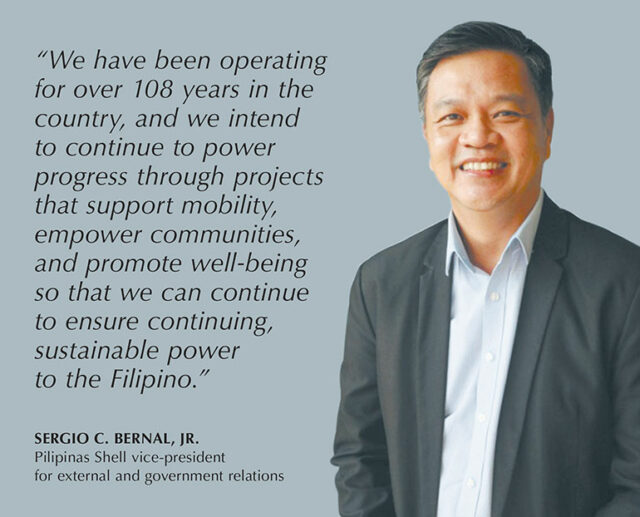
Sergio C. Bernal, Jr., Pilipinas Shell vice-president for external and government relations, says that teachers in areas like Sitio Binaluan in barangay Liminangcong in the town of Taytay, Palawan noticed that the aspirations of their students changed once exposed to learning via the Internet.

Through its social investment arm Pilipinas Shell Foundation, Inc. (PSFI), the energy company provided a micro-grid project at the home of the tribal Tagbanuas, harnessing the power mix of a solar array, wind turbine, a separate solar array for the school and a generator set.

“Now, they want a different future. They see a bigger world and more opportunities out there for them,” says Mr. Bernal. Economic activity has also increased, with sari-sari stores and karinderyas becoming social hubs, now that they can remain open at night, he adds. Initiatives like PSFI’s A2E program, which powers up remote, off-grid communities using renewable energy, is part of Shell’s commitment to sustainable development.

The energy company is in the midst of transformative journey revolving around its Powering Progress strategy, with its main goals of achieving net-zero emissions at pace with society, powering lives, respecting nature, and generating shareholder value, forming the framework of its transition.

“Powering Progress demonstrates our determination to play a leading role in tackling climate change and puts sustainability at the heart of our strategy. We intend to seize opportunities in the energy transition as we work with our customers to provide the low and zero-carbon energy products and services they increasingly need. Powering Progress is designed to create value for our investors, our customers and wider society,” says Mr. Bernal.

He says that the company is reducing its operational emissions and moving into the renewable energy space by powering its own import terminals to renewable energy. Of Pilipinas Shell’s 1,100+ mobility sites, 132 are now powered by solar. Its Sites for the Future also feature the use of eco-bricks, rain catchers and other energy-efficient installations.

Shell is also the first energy company in the Philippines and the first Shell market in Asia to offer, as an option, its carbon offsetting programs and nature-based carbon credits to consumers. Low carbon products like Bitumen freshAir, lubricants like Shell Helix 0W are carbon-neutral. Shell Recharge is committed to helping customers embrace the future and drive the shift towards electric vehicles.

Mr. Bernal says that Powering Progress also means powering lives and livelihoods. The supply of affordable, reliable and sustainable energy is crucial for addressing global challenges, including those related to poverty and inequality. This is why through projects like A2E and SINAG (Save, Invest, Nurture Access to Green Energy and Technologies), Shell has installed renewable energy facilities in 14 communities in Palawan, giving more than 4,600 individuals access to power.

“Pilipinas Shell powers the lives of more than 15million Filipinos, primarily in areas where we operate. Through PSFI, we support local enterprises and enhance livelihood capacities, build technical skills for gainful employment, install renewable energy facilities in communities that are not connected to the grid, enhance critical systems thinking of STEM students, help create safe, resilient, and healthy communities, build decent housing for homeless families, and contribute to the reduction of CO2 and plastic wastes,” he adds.

Mr. Bernal says that Pilipinas Shell remains committed to being the country’s partner in nation-building, providing more and cleaner energy solutions in a responsible manner in a way that balances short- and long-term interests, and that integrates economic, environmental and social considerations. “We have been operating for over 108 years in the country, and we intend to continue to power progress through projects that support mobility, empower communities, and promote well-being so that we can continue to ensure continuing, sustainable power to the Filipino,” he says.


Spotlight is BusinessWorld’s sponsored section that allows advertisers to amplify their brand and connect with BusinessWorld’s audience by enabling them to publish their stories directly on the BusinessWorld Web site. For more information, send an email to online@bworldonline.com.

Join us on Viber to get more updates from BusinessWorld: https://bit.ly/3hv6bLA.