Home Blog Page 5081

Pag-IBIG releases P53.76B cash loans in 2022; Assists record-high 2.61M members
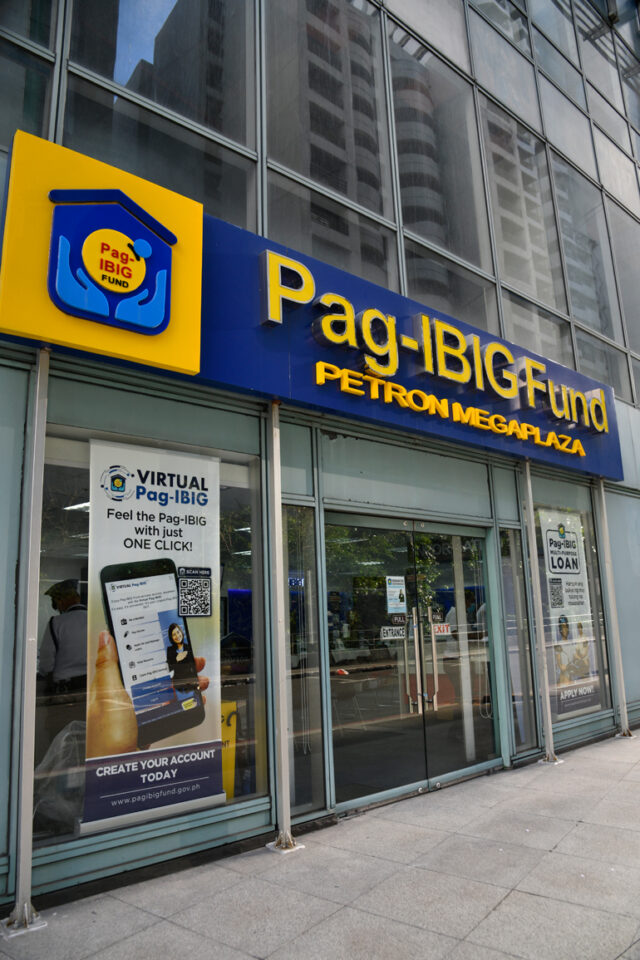
Pag-IBIG Fund disbursed P53.76 billion in cash loans, otherwise known as short-term loans, benefitting a record-high 2,612,491 members in 2022, agency officials stated Tuesday (21 March 2023).

For 2022, the amount of short-term loans released by the agency increased by 21% or P9.46 billion compared to the P44.30 billion released in 2021. With the amount, the number of members assisted through the program increased by 24% or over half a million more than the 2,090,851 members in 2021.

“We at Pag-IBIG Fund exert all efforts in providing our members with assistance on their financial needs. We are happy to note that through our Short-Term Loan Program, we were able to aid more than 2.6 million Filipino workers gain added funds to tend to their needs last year. All our efforts are in line with the call of President Ferdinand Marcos, Jr. to provide the best service to the Filipino people,” said Secretary Jose Rizalino L. Acuzar, who heads the Department of Human Settlements and Urban Development (DHSUD) and the 11-member Pag-IBIG Fund Board of Trustees.

Pag-IBIG Fund’s Short-Term Loan Program includes the agency’s Multi-Purpose Loan (MPL) and Calamity Loan. Under the Pag-IBIG MPL, qualified members can borrow up to 80 percent of their total Pag-IBIG Regular Savings, which consists of their monthly contributions, their employer’s contributions, and accumulated dividends earned. Borrowers may choose between a 24- or 36-month payment term and are provided a two-month grace period prior to their first payment. The MPL comes at an interest rate of 10.5 percent per annum. The Pag-IBIG Calamity Loan, on the other hand, is made available to members residing or working in areas declared under a state of calamity.

Of the total amount of cash loans released by the agency, P49.85 billion were in the form of Pag-IBIG MPLs which helped 2,313,143 members, while P3.91 billion were in the form of Calamity Loans which in turn aided 299,348 members.

Pag-IBIG Fund Chief Executive Officer Marilene C. Acosta, meanwhile, cited the reliability and ease of access in availing the Pag-IBIG’s MPL and Calamity Loan as the main drivers for its strong growth.

“We at Pag-IBIG Fund are aware that millions of our members rely on our MPL for their immediate financial needs and our Calamity Loan to help rebuild their lives. That is why we have made these loan programs more accessible and easier to avail for our members. Today, our members can easily and conveniently apply for these loans through many channels, which include their employers, our more than 200 branches and services offices nationwide, or online via the Virtual Pag-IBIG or the Virtual Pag-IBIG Mobile App. What’s more, we also have our Lingkod Pag-IBIG On Wheels which are currently going around the country, ready to receive loan applications from members particularly those from underserved and calamity-stricken areas,” said Acosta.


Spotlight is BusinessWorld’s sponsored section that allows advertisers to amplify their brand and connect with BusinessWorld’s audience by enabling them to publish their stories directly on the BusinessWorld Web site. For more information, send an email to online@bworldonline.com.

Join us on Viber at https://bit.ly/3hv6bLA to get more updates and subscribe to BusinessWorld’s titles and get exclusive content through www.bworld-x.com.

London police institutionally racist and sexist, major review finds

LONDON – London’s Metropolitan Police is institutionally racist, misogynistic and homophobic and unable to police itself, an independent review said on Tuesday, mounting pressure on the Met’s new chief to reform Britain’s biggest police force.

The review was commissioned by the then-head of the Met, Cressida Dick, in 2021 after a serving officer was sentenced to life in prison for the rape and murder of Sarah Everard in a case that shocked the country and – along with subsequent instances of crimes against women – turned a focus onto the force’s broader work culture.

“There is institutional racism, sexism and homophobia, inside the organization in terms of how officers and staff are treated, and outside the organization in terms of how communities are policed,” the report said, adding that the force was “failing women and children”.

The independent review, which was led by Louise Casey, who sits in Britain’s upper house of parliament, found “severe” failings across the Met that it said will need “radical reform.”

It comes over two decades after a 1999 inquiry into the murder of Black teenager Stephen Lawrence identified institutional racism within the force over its response to the killing.

Finding that policing by consent was broken in the capital, the review said the biggest barrier to fixing the force was the Met’s culture of defensiveness and denial about the scale of its problems.

“Whichever way you look at it, whichever label or description, the evidence is absolutely clear that as an institution, are they prejudiced and discriminatory? Yes, they are,” Ms. Casey told reporters ahead of the report’s release.

Met Commissioner Mark Rowley, Britain’s most senior police officer, told reporters: “We’ve let Londoners down and we’ve let our own frontline down and this report paints that vividly … I’m deeply sorry.”

“It (the report) generates a whole series of emotions: anger, frustration, embarrassment… But most of all, it generates resolve,” he added. He said the force’s professional standards department had been “stepped up,” and that with their help “we are sacking officers at a faster rate.”

Still, he said the job was not done yet.

“I can’t say I have reduced the risk of a bad officer to zero yet, but every day we’re rooting people out and we’re making progress,” he said, when asked if there were still officers accused of crimes such as murder, rape and domestic abuse serving in the force.

The 360-page report said the force needed strong leadership, a women’s protection service, and a new children’s strategy, among other recommendations for reform.

Ms. Casey’s interim report said last October that it found the force took 400 days on average to resolve misconduct allegations against its officers.

“I just think it (Everard’s case) is so dreadful and has to be a moment that change came – (but) change didn’t come. So now this report has to carry that and has to take responsibility for getting the change needed,” Ms. Casey said. — Reuters

US states urge Hyundai, Kia to do more to tackle theft risk

STOCK PHOTO | Image by Hans from Pixabay

WASHINGTON – A group of 22 US state attorneys general on Monday blasted Hyundai Motor and Kia Corp. and said they need do more to address problems with millions of US vehicles that are prone to theft.

Last month, the Korean automakers said they would offer software upgrades to 8.3 million US vehicles to help curb increasing car thefts using a method popularized on TikTok and other social media channels.

“The surge in thefts of these vulnerable vehicles has been truly shocking,” said the letter from 22 states and the District of Columbia led by Wisconsin Attorney General Joshua Kaul. “More needs to be done so that every current owner can obtain one of these devices at no cost as soon as possible – especially those owners whose cars are not compatible with the software upgrade you recently announced.”

The attorneys general letter said the automakers had failed to take adequate steps to address the alarming rate of theft and urged them to accelerate the implementation of the software upgrade and provide free alternative protective measures for owners whose cars cannot support the software upgrade.

Kia and Hyundai said Monday they have contacted over 2.1 million customers to advise them of software upgrades. Kia said it is actively working with major insurance carriers “to ensure our customers have access to quality and comprehensive coverage.”

Hyundai said all of its vehicles meet US anti-theft requirements and has begun reimbursing eligible customers for steering wheel lock purchases.

In Chicago there were over 7,000 thefts of Hyundai and Kia vehicles in 2022 accounting for 10% of Kia and 7% of Hyundai vehicles registered in the city, the letter said.

Earlier this month, Minnesota Attorney General Keith Ellison said he had launched a civil investigation into Kia and Hyundai’s sale of vehicles to Minnesota consumers that lacked industry-standard, anti-theft technology and sought documents and answer questions under oath.

Mr. Ellison said in Minneapolis in 2022 Kia and Hyundai vehicle thefts were tied to five homicides and 265 motor vehicle accidents.

TikTok videos showing how to steal cars without push-button ignitions and immobilizing anti-theft devices has spread nationwide. This had led to at least 14 reported crashes and eight fatalities, the National Highway Traffic Safety Administration (NHTSA) said in February.

The free upgrade will be offered for 3.8 million Hyundai and 4.5 million Kia vehicles, the automakers and NHTSA said. Hyundai said the upgrade applies to various US 2011 through 2022 model year vehicles.

Many Hyundai and Kia vehicles have no electronic immobilizers, which prevent break-ins and bypassing the ignition.

An insurance research group said immobilizers were standard on 62% of models from other manufacturers in 2000, rising to 96% by 2015. But they were standard on only 26% of 2015 Hyundai and Kia vehicles.

Hyundai will also provide customers with a window sticker alerting would-be thieves that the vehicle is equipped with anti-theft protection.

All Hyundai vehicles produced since November 2021 are equipped with an engine immobilizer as standard equipment. — Reuters

Moderna expects to price its COVID vaccine at about $130 in the US

Image via Bloomberg

Moderna Inc. expects to price its COVID-19 vaccine at around $130 per dose in the US going forward as purchases move to the private sector from the government, the company’s president Stephen Hoge said in an interview on Monday.

“There are different customers negotiating different prices right now, which is why it’s a little bit complicated,” Hoge said ahead of a Congressional hearing run by Democratic US Senator Bernie Sanders on Moderna’s pricing plans.

Moderna previously said it was considering pricing its COVID vaccine in a range of $110 to $130 per dose in the United States, similar to the range Pfizer Inc. said in October it was considering for its rival COVID shots sold in partnership with BioNTech.

Mr. Hoge said the government’s Medicare health plan for seniors pays $70 per dose for the seasonal influenza vaccine. That there were two to three times more hospitalizations and deaths from COVID in the past three months alone than from the flu went into the company’s pricing reasoning, Hoge said.

The Biden Administration has said the pandemic public health emergency will end in May, shifting price negotiations to insurers and other purchasers instead of just the federal government.

Mr. Sanders, chair of the Senate’s powerful Health, Education, Labor and Pensions Committee, has said Moderna should not raise the price of its vaccine because of the government funding it received. He plans to question Moderna Chief Executive Stephane Bancel on the price increase at the hearing on Wednesday.

Mr. Hoge said the company had more than paid back that federal support by selling a similar number of mRNA COVID vaccines as Pfizer to the government for around $3 billion less, and that Moderna had paid to ramp up its vaccine manufacturing itself.

Moderna in February forecast significantly declining 2023 COVID-19 vaccine sales, which reached $18.4 billion in 2022.

Demand for the shots has declined sharply this year due to built up product inventories around the world and increased population immunity from high rates of vaccination and previous infections. — Reuters

Biden signs bill requiring declassification of COVID origins information

WASHINGTON – US President Joe Biden on Monday signed a bill that requires declassification of information related to the origins of the coronavirus that causes COVID-19, the White House said.

Mr. Biden said he shared Congress’ goal of releasing as much information as possible about the origin of COVID-19.

“In implementing this legislation, my administration will declassify and share as much of that information as possible, consistent with my constitutional authority to protect against the disclosure of information that would harm national security,” Mr. Biden said in a statement.

The bill sailed through the Senate and House of Representatives without opposition before being sent to the White House.

Washington has been conducting a highly politicized debate about the origins of the coronavirus pandemic almost since the first human cases were reported in the Chinese city of Wuhan in late 2019, amid calls from both Biden’s fellow Democrats and Republicans to push back harder against a rising China.

The debate was refueled last month, when the Wall Street Journal reported that the US Energy Department had assessed with that the pandemic likely arose from a Chinese laboratory leak, an assessment Beijing denies.

The department made its judgment with “low confidence” in a classified intelligence report. The FBI has also assessed that the pandemic likely originated from a lab leak. Four other US agencies still judge that COVID-19 was likely the result of natural transmission, while two are undecided.

Many US officials have said the pandemic’s origins may never be known. China said claims that a laboratory leak likely caused the pandemic have no credibility.

Mr. Biden noted that he had directed intelligence agencies to investigate COVID-19’s origins in 2021, that work is ongoing and his administration would continue to review all classified information, including potential links to the Wuhan Institute of Virology.

“We need to get to the bottom of COVID-19’s origins to help ensure we can better prevent future pandemics,” he said. — Reuters

BDO Unibank, Inc. to hold hybrid annual meeting of stockholders on April 19


Spotlight is BusinessWorld’s sponsored section that allows advertisers to amplify their brand and connect with BusinessWorld’s audience by enabling them to publish their stories directly on the BusinessWorld Web site. For more information, send an email to online@bworldonline.com.

Join us on Viber at https://bit.ly/3hv6bLA to get more updates and subscribe to BusinessWorld’s titles and get exclusive content through www.bworld-x.com.

BSP may pause tightening — Diokno

PHILIPPINE STAR/KRIZ JOHN ROSALES

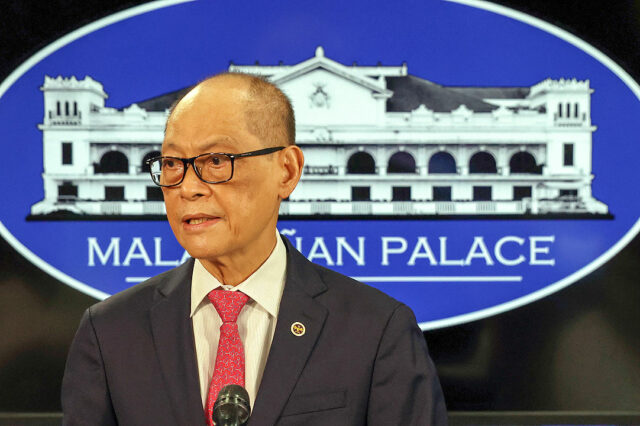
THE BANGKO SENTRAL ng Pilipinas (BSP) may consider a smaller 25-basis-point (bp) rate hike or even pause monetary policy tightening at its meeting on Thursday amid heightened global uncertainties, Finance Secretary Benjamin E. Diokno said on Monday.

Mr. Diokno, a member of the Monetary Board (MB), said the recent global developments may prompt central banks all over the world to slow the pace of rate hikes.

“There’s very little contagion on the Philippine side. Central banks are likely to ease on the hiking of interest rates, and so that’s the positive side of this,” he said at a forum organized by the Foreign Correspondents Association of the Philippines.

Global markets have been rattled by turmoil in the banking sector, which began with the collapse of Silicon Valley Bank (SVB) and Signature Bank in the United States. Troubled Swiss bank Credit Suisse needed a state-backed rescue by its rival UBS Group, as regulators sought to calm markets.

“The Philippines won’t be affected directly, because we do not have any transactions with the Silicon Valley Bank or even Credit Suisse, etc.,” Mr. Diokno said.

The US Federal Reserve will start its two-day meeting on Tuesday, while the BSP’s Monetary Board is scheduled to hold its meeting on March 23.

Mr. Diokno said the only options are to hike by 25 bps or to keep rates unchanged on Thursday.

“Maybe before we talked about 25 bps, and even a likelihood of a hold or steady. We will hold it for a while knowing there are many uncertainties. That will depend on the MB board,” Mr. Diokno said.

The Monetary Board raised its benchmark interest rate by 50 bps for a second straight meeting in February, bringing the key rate to a near 16-year high of 6%. Since May, the central bank hiked rates by a total of 400 bps.

A BusinessWorld poll last week showed 12 out of 14 analysts expect the Monetary Board to hike rates by 25 bps at its March 23 meeting.

In its Market Call report on Monday, First Metro Investment Corp. (FMIC) and the University of Asia and the Pacific (UA&P) said they expect the BSP to raise its rates by 25 bps at its next two meetings amid expectations of easing inflation.

“There is an upside risk if the Fed hikes its policy rates by 50 bps in the March 21-22 meeting. BSP will likely not want to extinguish the economic recovery momentum,” FMIC and UA&P said.

At the same time, Mr. Diokno said he is “optimistic” that inflation could ease to 4% by the end of the third quarter.

“The price of oil has been declining, the peso has been appreciating and we have put in place mechanisms to control the price of food items, which is a major trigger of inflation,” he added.

Inflation eased to 8.6% in February from a 14-year high of 8.7% in January.

BSP Governor Felipe M. Medalla earlier said inflation will ease to within the 2-4% target by November or December this year.

The BSP sees inflation averaging 6.1% this year, and easing to 3.1% in 2024.

Mr. Diokno also said there is a high probability the banks’ reserve requirement ratio (RRR) will be cut to a single-digit level by the end of the year.

The RRR for big banks is currently at 12%, one of the highest in the region. Reserve requirements for thrift and rural lenders are at 3% and 2%, respectively.

A cut in RRR is a move intended to be an operational adjustment to facilitate the BSP’s shift to market-based instruments for managing liquidity in the financial system, particularly the term deposit facility and the BSP securities. 

BUDGET
Meanwhile, Mr. Diokno said the National Government is unlikely to have a balanced budget in the next decade.

“Given the state of our economy, I don’t see us having a balanced budget in the next 10 years. As long as revenues exceed current operating expenses, then we still have enough money for capital outlays and that’s fine,” he said.

The Philippines’ budget balance swung to a surplus of P45.75 billion in January, a turnaround from the P23.38-billion deficit a year earlier.

The last time the government recorded a budget surplus was in April 2022, with P4.94 billion.

“It’s not appropriate to shoot for a surplus this time. We are investing 6% for infrastructure, we will continue to invest for infrastructure, because the Philippines has been left behind,” Mr. Diokno said.

This year, the government set a budget deficit ceiling of P1.47 trillion, equivalent to 6.1% of GDP. — Luisa Maria Jacinta C. Jocson

Amended PSA to take effect in April

PHILIPPINE STAR/EDD GUMBAN
Telecommunications is considered a critical infrastructure under the implementing rules of Republic Act No. 11647, which amends the 85-year-old Public Service Act. — PHILIPPINE STAR/EDD GUMBAN

By Luisa Maria Jacinta C. Jocson, Reporter

A LAW that allows full foreign ownership in more public services such as telecommunications, airlines, and railways will finally take effect in April, the National Economic and Development Authority (NEDA) said.

The NEDA on Monday released the implementing rules and regulations (IRR) for Republic Act No. 11647, which amends the 85-year-old Public Service Act (PSA), a year after it was signed by then-President Rodrigo R. Duterte into law.

The rules will take effect on April 4.

“The implementation of policies on competition and regulatory efficiency necessitates comprehensive and transparent consultations with key stakeholders and legislators to ensure that these remain faithful to public interest,” NEDA Secretary Arsenio M. Balisacan said in a statement.

The law effectively allows full foreign ownership in telecommunications, domestic shipping, railways and subways, airlines, expressways and tollways, and airports. These sectors were previously subjected to the 40% foreign ownership cap for public utilities under the Constitution.

However, other public service utilities such as electricity transmission and distribution, water and wastewater pipeline distribution systems including sewerage, petroleum and petroleum products pipeline transmission systems, seaports, and public utility vehicles will still be subjected to the 40% foreign equity limit.

Under Rule 8, Section 32 of the IRR, telecommunication is the only public service considered as a “critical infrastructure,” which is defined as “so vital to the Philippines that the incapacity or destruction of such systems or assets would have detrimental impact on national security.”

“No other public service shall be considered critical infrastructure unless declared by the President (through an executive order),” the rules said.

However, the NEDA can recommend a public service to be considered as critical infrastructure upon request of an administrative agency.

The rules included a reciprocity requirement for foreign investments in critical infrastructure. Foreign nationals cannot own more than 50% of a firm engaged in services classified as critical infrastructure, unless their country accords reciprocity to Philippine nationals.

Also, the IRR sets the process and criteria for a national security review of foreign investments in public services and critical infrastructure.

A national security review may be conducted if a proposed merger, acquisition or any investment in a public service would result in giving control, whether direct or indirect, to a foreigner or foreign corporation.

A review may also be triggered if the proposed deal would have national security implications. For instance, the public service entity is involved in top secret or confidential contracts, military or defense-related services, or operates in geographical areas critical to national security.

Upon recommendation of relevant agencies, the President is given the authority to suspend or prohibit transactions or investments in public services if it will result in the grant of control to a foreigner or foreign corporation.

The rules prohibit foreign governments or foreign state-owned enterprises from making an investment or owning any capital in any public service classified as public utility or critical infrastructure. This also includes entities controlled or acting on behalf of foreign governments or state-owned enterprises.

Sovereign wealth funds and independent pension funds of each state may also collectively own up to 30% of the capital of a public service classified as critical infrastructure.

British Chamber of Commerce of the Philippines Executive Director Chris Nelson said the amendments to the PSA will help the Philippines attract more foreign investments.

“We look at all these developments very positively and what we see is the need to continue to further open up the economy. The Philippines is an important market in its own right,” he said in a phone call.

Mr. Nelson said the government should continue to implement measures that will further liberalize the economy and improve the ease of doing business.

Foundation for Economic Freedom (FEF) President Calixto V. Chikiamco said the IRR will be able to “facilitate investments without compromising national security.”

“However, execution depends on how good, efficient, reasonable, and fair the implementing administrative agencies are,” he added.

Mr. Chikiamco also said that the PSA can boost investments in infrastructure and other strategic industries like shipping and telecommunications, since they are now open to greater foreign entry and competition.

“I think the Public Service Act is in order and is clearly an improvement over the previous law limiting foreign ownership to only 40%,” Leonardo A. Lanzona, who teaches economics at the Ateneo de Manila University, said in an e-mail.

However, Mr. Lanzona said that the PSA may not necessarily boost infrastructure development “since the liberalization is limited to the running of the businesses or services in these select industries.”

“The entire supply chain for these industries may involve industries that are still subject to this 40-60% rule. Because of this, the investments may not be forthcoming. I would prefer the liberalization of public service utilities with the necessary safeguards to ensure national security,” he added.

Finance Secretary Benjamin E. Diokno said in a forum on Monday that there are still many other industries that can be opened up to foreign ownership.

“There are many more areas to improve upon. Like ownership of mass media, that’s closed. Foreigners can’t own (mass media). I’m for opening that up, that will give more opportunities. And education institutions, there are still many areas,” he said.

PHL banks prepared to withstand ‘shocks’ — BSP

REUTERS

THE PHILIPPINE banking sector is ready to withstand possible shocks arising from the recent failure of two midsized banks in the United States, the Bangko Sentral ng Pilipinas (BSP) said on Monday.

“The Philippine banking system is strong and prepared to withstand possible shocks posed by the collapse of some banks in the US. Philippine banks have an asset base that significantly differs from that of US banks,” the BSP said in a note for President Ferdinand R. Marcos, Jr. which was shared to the media.

Global financial markets have been on edge after the collapse of Silicon Valley Bank (SVB) and Signature Bank in the United States. A crisis of confidence also hit Credit Suisse, which resulted in a state-led rescue by its Swiss rival UBS Group.

“Nonetheless, the BSP will continue to closely monitor developments, assess their impact on the banking system and respond accordingly,” the central bank said.

In a Viber message to reporters, BSP Governor Felipe M. Medalla noted that developments surrounding Credit Suisse are not a cause of concern and will unlikely significantly impact the global economy.   

“This means (Credit Suisse) is too big to fail. It does not look like that other Globally Systemically Important Banks (GSIBs) have the same problem, in which case the impact on the global economy (and therefore the Philippines) will not be significant,” Mr. Medalla said.   

In its note to Mr. Marcos, the BSP said most Philippine banks hold loans that are “less susceptible” to changes in fair value, while SVB’s security holdings were larger in relation to its capital.

Data from the BSP showed Philippine banks’ total loan portfolio, net of allowance for credit losses, made up the largest share of the banking system’s total assets at 53% or at P11.9 trillion as of end-January. This was followed by investments (29.2% or at P6.57 trillion) and by cash and due from banks (12.2% or at P2.74 trillion).   

On the other hand, SVB had about $118-billion debt securities, accounting for 56.6% of its $209-billion total assets as of end-December.

For the same period, only 27.5% or around P6.32 trillion of Philippine banks’ total assets were in portfolio investments.

The BSP also emphasized that Philippine banks have lower market risk exposure compared with US lenders.   

Losses of Philippines banks, including estimated net unrealized losses on security holdings due to rising policy rates, are expected to be smaller than those of US lenders, the BSP said.   

The BSP attributed this to the fact that US Fed policy rate hikes were larger and came from a lower level.

The US Federal Reserve has raised its target federal funds rate by 450 basis points (bps) since March last year to 4.5-4.75% from just 0-0.25%, while the BSP overnight reverse repurchase rate was hiked by 400 bps since May 2022 to 6% from just 2%.   

Moreover, the Philippine yield curve did not invert like the US yield curve, the BSP said.   

The BSP also noted that US banks’ bond holdings have longer tenors, some as long as 30 years, compared with Philippine banks, which mostly hold government securities with residual maturity of up to 15 years.   

“(Philippine banks) maintain a diversified lending base across counterparties and industry types and their loan quality is manageable,” the BSP said.   

Based on preliminary data from the central bank, bad loans reached P405.138 billion in January, up by 1.6% from P398.79 billion in December 2022. Still, this is 12.2% lower than P461.66 billion a year earlier. This brought the industry’s nonperforming loan ratio to 3.28%, inching up from the 3.16% in December but lower than the 4.14% in January 2022. 

According to the central bank, Philippine lenders have strong risk governance and risk management systems. The industry could also maintain enough capital to absorb unexpected losses from local policy rate increases.   

Philippine banks are also highly liquid and tend to rely on a wide depositor base compared with US banks, the BSP said. It also reiterated that lenders do not have material exposure to developments outside the country.

Universal and commercial banks’ liquidity coverage ratio stood at 185.7% on solo basis as of end-December last year. This is higher than the 100% minimum requirement of the BSP.   

The minimum liquidity ratios of standalone thrift banks, rural banks, and cooperative banks were at 29.9%, 63.7%, and 44.4%, respectively. All were above the 20% requirement of the central bank. 

The BSP said it has implemented structural reforms, such as the adoption of risk management standards and prudential limits and requirements, to ensure the safety of banks.

Additionally, the BSP said it has strengthened its surveillance mechanisms and coordination efforts in order to closely monitor any developments that may negatively affect the financial system.   

“The BSP also has in place Emergency Loan Facilities which can be tapped by solvent banks experiencing serious liquidity problems (and) was given enhanced resolution authority through the amendments to the Charter of the Philippine Deposit Insurance Corporation,” it said. — Keisha B. Ta-asan

Economy likely expanded by 7.1% in first quarter

PHILIPPINE STAR/EDD GUMBAN

THE ECONOMY likely expanded by 7.1% in the first quarter, as consumption may have gotten a boost from higher remittances and personal income tax cuts, First Metro Investment Corp. (FMIC) and the University of Asia and the Pacific (UA&P) said.

“We expect a solid 7.1% GDP (gross domestic product) growth in the first quarter, buoyed further by personal income tax cuts and robust overseas Filipino workers (OFW) remittances…this should prove sufficient to boost business and consumer confidence moving forward,” FMIC and UA&P said in its Market Call on Monday.

The government set its growth target at 6-7% this year, slower than the 7.6% expansion seen in 2022.

Under the Tax Reform for Acceleration and Inclusion law, personal income tax cuts took effect this year. Taxpayers with annual taxable income above P250,000 but less than P8 million have lower tax rates ranging from 15% to 30%.

Cash remittances rose by 3.5% to $2.76 billion in January. The central bank expects remittances to grow by 4% this year.

“We expect National Government infrastructure spending, together with major ongoing public-private partnerships, to bulk up in 2023,” FMIC and UA&P said.

The government is planning to spend 5-6% of GDP on infrastructure this year.

“The employment picture should improve starting February when the weather permits more travel, eating out, and construction work,” it said.

At the same time, FMIC and UA&P said that inflation likely peaked in January and should slow in the coming months “though not as fast as policy makers would want.”

Inflation slowed to 8.6% in February from the 14-year high of 8.7% in January.

“Despite high inflation and negativity that troubles many minds, we think the economy is far from being down and out,” FMIC and UA&P said. — L.M.J.C. Jocson

Meralco moves to partly replace lost 670 MW 

MANILA Electric Co. (Meralco) is finalizing supply agreements to partially replace the 670 megawatts (MW) of lost capacity under a terminated contract with SMC Global Power Holdings Corp.

“We have already accepted offers. Right now, we are in the process of finalizing the agreements with the generators,” Jose Ronald V. Valles, Meralco’s first vice-president and head of its regulatory management, told reporters on the sidelines of the Philippine Electric Power Industry Forum 2023 in Manila on Monday.

The capacity was supposed to be delivered by SMC Global Power unit South Premiere Power Corp. (SPPC) under a power supply agreement (PSA) with Meralco that was agreed upon in 2019.

The 10-year deal at P4.2455 per kilowatt-hour (kWh) was indefinitely suspended after the appellate court granted in January an injunction sought by the power arm of San Miguel Corp. (SMC).

“[For] the 2019 PSA, we have received offers from GNPD (GNPower Dinginin Ltd. Co.) for 300 MW and 370 MW from SMC, but that is only for one year,” Mr. Valles said.

He said the offer has an average price of P7.80 per kWh and will take effect on March 26.

“I cannot say the exact amount but this is a fuel pass-through,” Mr. Valles said, referring to rates that are subject to adjustment based on the price of fuel.

Aboitiz Power Corp.’s GNPD previously supplied Meralco with a 300-MW capacity through an emergency power supply agreement (EPSA) forged on Dec. 15, 2022 until Jan. 25, 2023 at a rate of P5.96 per kWh. The contracting parties agreed on a second EPSA, which was secured on Feb. 3 to last until Feb. 25.

The second EPSA has a full fuel pass-through structure with an implemented rate of P8.53 per kWh.

Last year, SMC Global Power sought a temporary rate increase, jointly filed with Meralco, saying that SPPC and another unit San Miguel Energy Corp. incurred a combined loss of P15 billion. The rate increase was meant to recover part or P5 billion of the units’ losses.

The company cited a “change in circumstance” when surging fuel costs breached the price range contemplated during the execution of the contracts with Meralco. However, the Energy Regulatory Commission (ERC) denied the petition, saying this had no basis as the PSA is a fixed-rate contract.

Meanwhile, Mr. Valles said that Meralco is confident that it will get a supplier after SMC Global Power terminated two more PSAs with Meralco. He could not say whether a re-bid would result in higher prices since new terms of reference will be needed.

“We don’t know the parameters to determine the price,” he said.

Last week, Meralco announced that two subsidiaries of SMC Global Power — Excellent Energy Resources, Inc. (EERI) and Masinloc Power Partners Co. Ltd. (MPPCL) — notified the power distributor that they had terminated their PSAs.

EERI proposed to supply capacity from its natural gas-fired power plant starting in 2024 for P4.1462 per kWh, while MPPCL offered 600 MW from its coal-fired power plant for P4.2605 per kWh by 2025.

ERC Chairperson and Chief Executive Officer Monalisa C. Dimalanta told reporters on Monday that SMC Global Power’s move will not have an immediate impact on electricity prices but said the pressing concern is power supply.

She confirmed that the PSA application went past the date during which it should have been approved by the ERC. But she said the agency will also check whether SMC failed to submit pending requirements that prevented immediate approval.

“The real concern is on the security of supply next year. Of course, rate is an issue, but the real concern now is supply — whether or not we can get a replacement,” she said.

“We’re waiting for their (Meralco) filing. When they informed us on Friday, they said they will file the proper motion today (Monday). We are expecting that they will file something today once we receive that, we will evaluate the basis for termination,” she added.

On Monday, Meralco told the stock exchange that under the terms of the newly terminated contracts, the termination will be effective after the lapse of 15 days from receipt of the notice, or on April 1.

On the stock exchange, Meralco shares rose by five pesos or 1.64% to close at P309 each.

Meralco’s controlling stakeholder, Beacon Electric Asset Holdings, Inc., is partly owned by PLDT Inc. Hastings Holdings, Inc., a unit of PLDT Beneficial Trust Fund subsidiary MediaQuest Holdings, Inc., has an interest in BusinessWorld through the Philippine Star Group, which it controls. — Ashley Erika O. Jose

ACEN opens solar farm in Australia, plans 8 GW more

A UNIT of Ayala-led ACEN Corp. opened its solar project’s first 521-megawatt direct current (MWdc) in Australia, which required the installation of about a million solar panels.

In a disclosure to the Philippine Stock Exchange, the energy company said that the project, New England Solar, will be one of the largest projects in Australia to participate in the foreign country’s National Electricity Market (NEM).

“I truly believe that the work ACEN Australia is doing to accelerate Australia’s transition to a renewable energy future is here and now and it starts with New England Solar,” ACEN Australia Chief Executive Officer (CEO) Anton Rohner said in a statement.

In total, the solar farm will have a capacity of 936 MWdc, which was approved by the New South Wales (NSW) government in 2020.

“We decided to build New England Solar on a fully merchant basis to ensure it is online in time to help replace closing coal-fired power stations in NSW. We wanted to get things built, to decarbonize Australia,” Mr. Rohner said.

The first stage began construction in March 2021 and is expected to generate a full nameplate capacity of 521 MWdc in the coming months.

The project, which is located near Uralla in the NSW government’s New England renewable energy zone, was built with the support of host landholders, “First Nations” people, and the Uralla community.

“ACEN Australia is investing more than (Australian) AU$5 million in community funding into Uralla over the next 25 years as part of New England Solar,” the company said.

ACEN Australia’s Uralla grants program aims to provide assistance and support to the community, AU$200,000 of which will be delivered by the time the first stage of New England Solar is completed.

ACEN President and CEO Eric T. Francia said the overseas unit is eyeing to increase its capacity in Australia by 8 gigawatts (GW).

“ACEN Australia has around 1 GW capacity worth US$1 billion in construction, and more than 8 GW capacity in the development pipeline. This represents ACEN’s largest investment outside of the Philippines,” Mr. Francia said.

“With this milestone, we reaffirm our commitment to strengthen Australia’s energy security while bolstering its roadmap to a low carbon future as we work towards our goal of 20 GW of renewables by 2030,” he added.

In a separate disclosure, ACEN announced the resignation of its chief audit executive, Michael E. Limbo. The resignation, which was said to be for personal reasons, is said to be effective by March 30.

“The Board of Directors will elect his replacement as Chief Audit Executive in due course,” ACEN said.

On Monday, ACEN shares rose by P0.05 or 0.85% to finish at P5.95 on the stock exchange. — Justine Irish D. Tabile