Home Blog Page 505

Remolona tempers hawkish view, sees one more cut

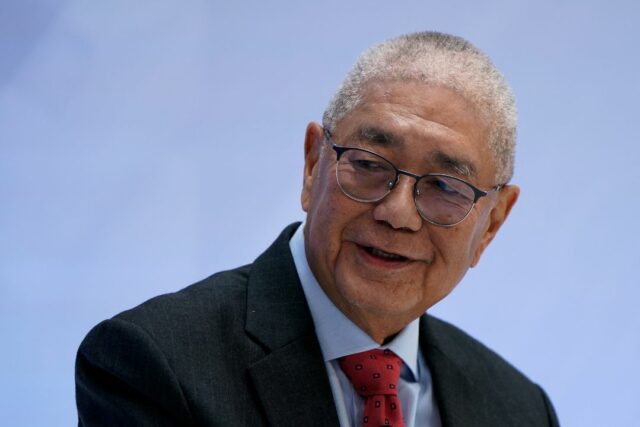
Bangko Sentral ng Pilipinas (BSP) Governor Eli M. Remolona Jr. -- Credit: Lam Yik/Bloomberg

Philippine central bank Governor Eli M. Remolona Jr. said monetary authorities may cut the benchmark interest rate one more time in the current easing cycle with the economic recovery likely to last longer than thought.

“If we get off the fence it’s probably another rate cut but that’s probably about it. One more rate cut,” Mr. Remolona said in an interview with Bloomberg Television’s Stephen Engle and Annabelle Droulers on Friday.

Mr. Remolona said the economy “looks worse than we thought” in the current quarter, prompting the Bangko Sentral ng Pilipinas to cut its key rate for a fifth straight meeting on Thursday. “The latest data seems to suggest recovery will be delayed by a quarter or two. We don’t see a significant recovery until second half of 2026,” he said.

The central bank cut its overnight target reverse repurchase rate by 25 basis points to 4.5%, the lowest since September 2022.

Mr. Remolona said on Thursday that it may be the last reduction in its easing cycle that began over a year ago, with domestic demand set to recover.

The central bank has said it expects a gradual recovery in domestic demand following previous rate cuts. A graft scandal involving billions of dollars meant for flood control projects had curbed consumer and state spending, causing gross domestic product growth to slow sharply in the last quarter. — Bloomberg

Autonomous AI systems to drive cyberattacks in 2026, says Fortinet report

Veronica ‘Bambi’ Escalante, Fortinet Philippines Country Manager with Jonas Walker, Director of Threat Intelligence at FortiGuard Labs during the Fortinet year-end media briefing. — PHOTO FROM FORTINET

Global cybersecurity firm Fortinet warned that cyberattacks in 2026 may be executed by autonomous artificial intelligence (AI) systems capable of infiltrating networks, stealing data, and deploying ransomware without human oversight.

In its 2026 Cyberthreat Predictions Report, the firm said these AI-powered systems will extend far beyond the early FraudGPT, WormGPT, and similar models observed on underground forums in 2025.

“Velocity now defines risk. Attackers are no longer limited by human capability. Automation allows them to operate on a scale and speed that defenders cannot match,” the report said.

It also warned that purpose-built AI cybercrime agents will emerge as the defining threat in 2026.

These agents can perform major stages of intrusion, including credential theft, phishing, reconnaissance, and lateral movement entirely on their own, allowing even low-skilled attackers to run sophisticated campaigns.

Experienced threat actors, meanwhile, are likely to scale their operations across thousands of targets simultaneously.

Sectors that rely heavily on interconnected systems, such as healthcare, manufacturing, utilities, and cloud-dependent industries, are seen as the most vulnerable.

The report noted that ransomware groups have already begun extending operations into operational technology environments, where data theft, disruption, and extortion increasingly converge.

In healthcare, attackers could paralyze operations or expose sensitive patient data within minutes. The report also said that generative AI will accelerate extortion campaigns. Once attackers obtain stolen databases, AI models can analyze massive volumes of information in minutes, identify high-value assets, prioritize victims, and generate personalized ransom messages.

The report is part of FortiGuard Labs’ global outlook on how technology, economics, and behaviors shape cyber risk worldwide.

Many of the trends initially predicted for 2025, including AI-assisted phishing, the expansion of Crime-as-a-Service platforms, and rapid ransomware franchising, have materialized faster than expected, entering what the report describes as an “industrial age.”

In 2027, the global cost of cybercrime is projected to exceed US $23 trillion, driven by industrialized ransomware operations, automated fraud networks, and the merging of traditional crime with cyber syndicates, the report said, citing the World Economic Forum.

To defend against fast cyberattacks, the report urged organizations to adopt a strategy that unifies threat intelligence, vulnerability monitoring, and automated incident response.
This approach provides real-time visibility and rapid containment across networks and cloud environments.

Identity is also expected to become the “operational backbone” of cybersecurity next year.

As organizations use more automation and AI, the number of machine identities such as bots and cloud processes will increase.

The report warned that if even one human or machine account is compromised, attackers could quickly access large amounts of data, urging the need for strict, time-limited access and continuous monitoring of account activity.

Other key findings of the report include a rise in insider recruitment, with attackers bribing or coercing employees, and the growth of dark web marketplaces that operate like legitimate e-commerce sites.

The report said that the defining challenge for organizations is no longer detecting or blocking individual attacks, but instead on how to keep pace with adversaries operating as automated, large-scale ecosystems.

Success in 2026, it said, will depend on how effectively organizations combine human judgment with machine-speed operations to anticipate, detect, and contain threats before they escalate. — Edg Adrian A. Eva

[B-SIDE Podcast] Mindful Consumption During the Holiday Season

Follow us on Spotify BusinessWorld B-Side
The season of sales and spending is here, fueled by Christmas and other year-end bonuses. In this B-Side episode, BusinessWorld talks about conscious consumption with Liza Mae L. Fumar, an assistant professorial lecturer 7 at De La Salle University’s Ramon V. del Rosario College of Business. She defines mindful purchases and shares tips for avoiding impulse buying, including during online sale days.
Interview by Patricia Mirasol
Audio editing by Richard Mendoza
Follow us on Spotify BusinessWorld B-Side

Caribbean nations team up to cut power costs, revive geothermal push

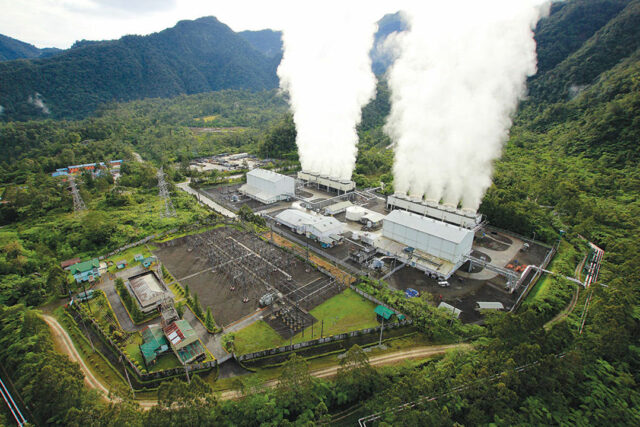
EDC

BELEM — Five Caribbean nations are pushing to develop geothermal energy by pooling expertise and separating drilling from power plant development to work around scarce funding, aiming to cut costs in a region with some of the world’s highest power tariffs.

After multiple failed attempts since the 1970s in the region, Grenada, Saint Kitts and Nevis, Saint Lucia, and Saint Vincent and the Grenadines said after the UN COP30 climate conference in Brazil that they were looking to supply clean and cheap power in places where high electricity bills strangle household budgets and curtail tourism competitiveness.

The five nations hold an estimated 6,290 megawatts (MW) of geothermal potential, enough to power the region many times over and to save each country $5 million to $30 million annually by cutting diesel imports by more than 90%, according to the Organization of Eastern Caribbean States (OECS).

Electricity tariffs in the region average between $0.29 and $0.40 per kilowatt-hour – more than double the US average of about $0.15, OECS data showed. The nations currently operate small and isolated grids and aging diesel generators that depend on expensive imports.

Saint Lucia intensified geothermal testing before commencing civil works and adjusted drilling contracts this year to avoid cost overruns such as those from a site redesign in Dominica, said Arthur Antoine, technical director at its Renewable Energy Sector Development Project.

Dominica’s 10 MW geothermal plant, which could meet over 75% of its total electricity needs and is due for completion early next year, has needed a decade to gather a $68 million financing package from multiple lenders.

Globally, geothermal projects are gaining traction after breakthroughs in drilling and heat extraction techniques.

Relying entirely on grant financing for exploration has caused delays and design changes in Grenada but shielded taxpayers from risk, said a spokesperson for the geothermal project management unit at the country’s ministry of climate resilience, the environment, and renewable energy.

Grenada hopes its planned 15 MW project will start generating power in 2033 and supply every household at 2024 consumption levels.

“The sizing is based on current demand and resource confirmation, and future expansion depends on confirmed resource and financing,” the spokesperson said in an emailed statement.

CLIMATE RISKS

Successful execution would boost the finances of island nations vulnerable to extreme weather, said James Fletcher, climate envoy for the Caribbean Community, a group of 21 countries where hurricanes regularly destroy infrastructure and disrupt diesel shipments.

“Caribbean governments just don’t have that kind of fiscal space that would allow them to borrow as it has been eroded by having to constantly respond to extreme weather events,” he said on the sidelines of the COP30 conference last month.

OECS is facilitating joint management of drill rigs to slash upfront costs, which had stalled Dominica’s attempts to secure financing, said Chamberlain Emmanuel, who heads the environmental sustainability division at the OECS.

Saint Kitts and Nevis, which expects to start drilling in early 2026, tripled its project capacity to 30 MW, secured financing upfront and backed a debt-funded private power plant to offset risks, said Albert Gordon, general manager at the Nevis Electricity Co.

Mr. Gordon said he expects the plant to be commissioned by 2029. — Reuters

Philippine central bank governor says intervening in forex market ‘a little bit’

MANILA – Philippine central bank governor Eli M. Remolona, Jr. said on Friday the bank is intervening in the foreign exchange market to dampen volatility of the local currency, but not to set a target rate against the U.S. dollar.

“We’re intervening a little bit,” the Bangko Sentral Pilipinas governor told Bloomberg TV in an interview a day after the bank eased its benchmark interest rate to a three-year low of 4.50%. — Reuters

Trump administration unlawfully canceled disaster prevention program, US judge rules

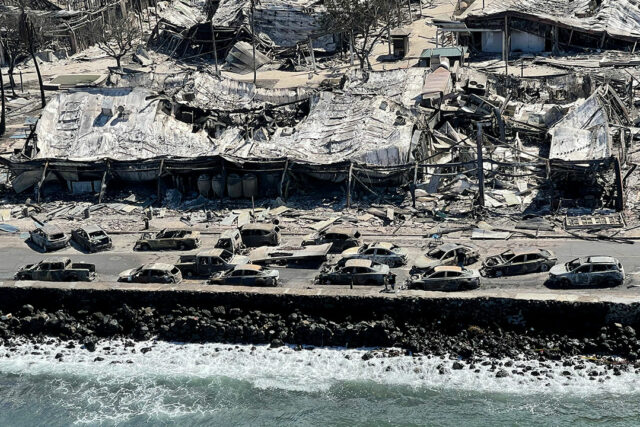
THE SHELLS of burned houses and buildings are left after wildfires driven by high winds burned across most of the town in Lahaina, Maui, Hawaii, US Aug. 11. — HAWAI’I DEPARTMENT OF LAND AND NATURAL RESOURCES/HANDOUT VIA REUTERS

BOSTON — A federal judge ruled on Thursday that US President Donald Trump’s administration unlawfully terminated a Federal Emergency Management Agency grant program designed to protect states and communities against natural disasters before they occur.

US District Judge Richard Stearns in Boston sided with 20 mostly Democratic-led states in finding that the Republican president’s administration lacked authority to end the Building Resilient Infrastructure and Communities (BRIC) program and use money Congress approved to support it for other purposes.

The agency, which is part of the US Department of Homeland Security, announced in April it would end the program, calling it wasteful, ineffective, and politicized.

But Mr. Stearns, who was appointed by Democratic President Bill Clinton, said the administration’s action amounted to an “unlawful executive encroachment on the prerogative of Congress to appropriate funds for a specific and compelling purpose.”

“The BRIC program is designed to protect against natural disasters and save lives,” Mr. Stearns wrote. “It need not be gainsaid that the imminence of disasters is not deterred by bureaucratic obstruction.”

Mr. Stearns at an earlier stage in the case in August blocked FEMA from diverting more than $4 billion allocated to BRIC and spending it on other purposes.

On Thursday, he blocked the program from being canceled without the approval of Congress and ordered FEMA to promptly take all steps necessary to reverse its termination.

“Today’s court order will undoubtedly save lives by preventing the federal government from terminating funding that helps communities prepare for and mitigate the impacts of natural disasters,” Massachusetts Attorney General Andrea Joy Campbell, a Democrat who co-led the case, said in a statement.

A Department of Homeland Security spokesperson said in a statement it had not terminated BRIC and that “any suggestion to the contrary is a lie.” BRIC was used by Democratic President Joe Biden’s administration “as a Green New Deal slush fund,” the spokesperson added.

“It’s unfortunate that an activist judge either didn’t understand that or didn’t care,” the department spokesperson said.

The BRIC program is the largest pre-disaster mitigation program offered through FEMA. It helps state and local governments protect major infrastructure such as roads and bridges before the occurrence of floods, hurricanes, and other disasters.

According to the lawsuit, FEMA approved about $4.5 billion in grants for nearly 2,000 projects, primarily in coastal states, over the last four years.

States led by Washington and Massachusetts sued in July, saying that the end of the BRIC program had devastating impacts on communities nationally, forcing them to delay, scale back or cancel hundreds of disaster mitigation projects. — Reuters

Fearless energy, multiple possibilities: Toyota Motor Philippines officially launches bZ4X BEV

Toyota Motor Philippines (TMP) has officially launched the all-new bZ4X BEV with the release of units to the first customers.

The all-new bZ4X is TMP’s first Battery Electric Vehicle (BEV) under the Toyota brand, further boosting its full electric lineup which was previously comprised of the Lexus RZ and the Lexus UX.

Guided by its multi-pathway approach to carbon neutral mobility, TMP has been laying the groundwork for electrified mobility in the country since introducing the Prius Hybrid Electric Vehicle (HEV) in 2009. Today, the mobility company has the widest range of electrified vehicles (xEVs) in the country, with 22 electrified models under its Toyota and Lexus brands, providing various options for customers with different needs.

The all-wheel drive bZ4X is powered by a 73.11 kWh Lithium-ion battery and dual motors with a front output of 227 PS and rear output of 120 PS, and a front torque of 269 Nm and rear torque of 170 Nm. It records up to 570 km of EV range (Based on United Nations Regulations101. Actual consumption and range will vary based on conditions and driving habits). Drive modes include Eco and X-Mode.

The bZ4X features an angular exterior design, LED headlights, 20-inch alloy wheels, and a panoramic moonroof. It has a ground clearance of 200mm and seats up to five people. The power back door with kick sensor provides ease of access for loading and unloading of items into the cargo space.

Inside, the seats are clad in synthetic leather, with generous second-row space for passengers. Both front and rear seats have built-in heating, while the front seats also have ventilation. Additionally, the driver gets an eight-way power seat that can be adjusted based on memory settings.

For functionality, the bZ4X has a 7-inch Digital Meter Cluster and Multi-Information Display, 14-inch Display Audio with Wireless Apple CarPlay and Android Auto, dual wireless charging ports in front, and USB Type C chargers in the front and rear.

The all-new bZ4X is equipped with the latest Toyota Safety Sense with Pre-Collision System (PCS), Automatic High Beam (AHB), Adaptive High Beam System (AHS), Lane Tracing Assist (LTA), Lane Departure Alert (LDA), and Dynamic Radar Cruise Control (DRCC). Blind Spot and Panoramic View Monitors, and a Digital Inside Rearview Mirror further assist drivers by providing additional visibility of the road.

Every purchase of the bZ4X comes with a free wall box charger and a portable charger.

“It takes time and strategic planning to roll out what we call our multi-pathway approach to carbon neutral mobility, which involves customer education and preparedness, and providing technologies and solutions that are most appropriate for the market’s needs. From building up our widest lineup of Hybrid Electric Vehicles (HEVs) and introducing Battery Electric Vehicles (BEVs) through our luxury brand Lexus, we believe we’re ready to make BEVs more mainstream with the Toyota bZ4X, especially with Filipino users’ better understanding of EV technologies and power mix along with improving charging infrastructure,” shared TMP First Vice President for Vehicle Sales Operations Elijah Marcial.

Asked why they decided to purchase the Toyota bZ4X, a customer who signed up during the reservations period shared, “A lot of my friends are getting [battery] electric and hybrid cars. I saw the advantages since I spend so much on fuel. I commute daily from Quezon City to Caloocan City, and even Nuvali [Laguna] three times a week. In Nuvali there are a lot of charging stations and during the weekdays most of them are available, so I don’t feel any range anxiety.”

“It’s hard to bet on new players in the market. I’ve been a Toyota owner since the ‘80s, so I’m confident with their service and parts. When we get a car, [my family] doesn’t re-sell, so for sure [the bZ4X] will be [with us] for the long run,” another customer shared.

The all-new bZ4X comes in one variant and is available at P2,699,000 for the Dark Blue Mica/Attitude Black Mica colorway, P2,714,000 for the Platinum White Pearl Mica/Attitude Black Mica colorway, and P2,719,000 for the Precious Metal/Attitude Black Mica and Emotional Red/Attitude Black Mica colorways.

Interested customers may already take the fearless leap with the Toyota bZ4X at the following dealerships: Toyota Alabang, Toyota Commonwealth, Toyota Global City, Toyota Mabolo Cebu, Toyota Makati, Toyota Manila Bay, Toyota Mandaue South, Toyota North EDSA, Toyota Pasig, Toyota Quezon Avenue, Toyota San Fernando, and Toyota Santa Rosa.

For more information on the bZ4X, customers may visit https://www.toyota.com.ph/bz4x.

For the latest updates on Toyota products, services, dealer operations, announcements and events, follow Toyota Motor Philippines on Facebook and Instagram, ToyotaMotorPH on X, and Toyota PH on Viber.


Spotlight is BusinessWorld’s sponsored section that allows advertisers to amplify their brand and connect with BusinessWorld’s audience by publishing their stories on the BusinessWorld Web site. For more information, send an email to online@bworldonline.com.

Join us on Viber at https://bit.ly/3hv6bLA to get more updates and subscribe to BusinessWorld’s titles and get exclusive content through www.bworld-x.com.

Torrential rains unleash widespread flooding, evacuations in Pacific Northwest

STOCK PHOTO | Image by Andi Graf from Pixabay

SNOHOMISH, Washington — Heavy rains drenching the Pacific Northwest triggered flooding on Thursday across much of the region from Oregon north through Washington state and into British Columbia, closing dozens of roads and prompting the evacuations of tens of thousands of people.

The intense downpours began earlier in the week, swept into the region by a storm system meteorologists call an atmospheric river, a vast airborne current of dense moisture funneled inland from the Pacific Ocean.

Western Washington state bore the brunt of the storm, with flood watches posted across the Cascade and Olympic mountains and Puget Sound, as well as for a northern slice of Oregon, a region home to some 5.8 million people, according to the US National Weather Service.

The same storm system brought heavy showers and flooding to western Montana and an edge of northern Idaho.

Roughly 100,000 residents in western Washington were under “Level 3” evacuation orders urging them to immediately move to higher ground, the bulk of them in rural Skagit County north of Seattle, said Karina Shagren, spokesperson for the state emergency management division.

About 3,800 evacuees were believed to be in need of temporary shelter, Skagit County emergency chief Julie de Losada said.

Ms. Shagren said swift-water rescue teams had been deployed across the region, but there were no reports of casualties or of people missing or stranded in the flooding.

The worst flooding was reported along the Skagit, Snohomish and Puyallup rivers. More than 30 highways and dozens of smaller roads were closed due to flooding across the region, state officials said.

Several lengthy segments of the BNSF Railway, a major freight line serving the Pacific Northwest, were washed out or closed due to flooding, the company said, citing reported rainfall of 10 to 17 inches (25.4 to 43.1 centimeters) or more in many areas.

So far, the walls of flood-control levees and dikes were holding firm.

But officials said they were bracing for the Skagit River to crest at 2 feet above record levels on Thursday night near the Skagit County towns of Mount Vernon and Burlington, potentially topping levees and testing their strength for the first time since repairs were made following the last major flood in that area in 2021.

“The situation is unpredictable, it’s dangerous and we don’t know exactly what will happen when those floodwaters come through,” said Robert Ezelle, director of the state’s emergency management division.

The Weather Service said the storm had dumped 5 to 10 inches (12.7 to 25.4 cm) of rain over wide swaths of the Pacific Northwest, with 72-hour totals reaching more than a foot as of Thursday along the western flanks of the Cascades.

“It’s a lot of water,” Ms. Shagren said, even for a region accustomed to soggy weather conditions.

Washington Governor Bob Ferguson issued a statewide emergency declaration on Wednesday to hasten federal disaster aid amid forecasts of catastrophic flooding and rivers expected to crest at historic levels.

VANCOUVER HIGHWAYS SHUT DOWN

In British Columbia, five of the six Canadian highways leading to the Pacific port city of Vancouver were shut down due to floods, falling rocks and the risk of avalanches, local authorities said on Thursday.

“This situation is evolving and very dynamic,” said the Transport Ministry of British Columbia, the province where Vancouver – the country’s largest port – is located.

Access to Vancouver relies largely on a limited highway and railway network that crosses the Rocky Mountains, making it vulnerable to severe weather.

In late 2021, an atmospheric river dumped a month’s worth of rain in two days on southern British Columbia, triggering floods and mudslides that killed four people, cut off rail access to Vancouver and caused more than C$500 million ($363.35 million) in damage.

The atmospheric river storm was expected to subside later on Thursday, but the Weather Service warned that lingering rains continued to pose a flood threat across the rain-saturated region.

While such storms are not uncommon on the US Pacific Coast, meteorologists say they are likely to become more frequent and extreme over the next century if planetary warming from human-induced climate change continues at current rates. — Reuters

BSP cuts key rate, signals easing cycle nears end

Bangko Sentral ng Pilipinas (BSP) Governor Eli M. Remolona, Jr. — REUTERS

By Katherine K. Chan

THE Bangko Sentral ng Pilipinas (BSP) on Thursday lowered its benchmark policy rate anew by 25 basis points (bps) to 4.5% and signaled the current easing cycle is nearing its end.

The Monetary Board cut its target reverse repurchase rate for a fifth meeting in a row, bringing the rate to its lowest in over three years or since September 2022.

It likewise trimmed rates on the overnight deposit and lending facilities by 25 bps each to 4% and 5%, respectively.

This was in line with a BusinessWorld poll conducted last week where 17 out of 18 analysts anticipated a 25-bp cut at the Board’s last meeting of the year.

“Depending on the data, (the easing cycle) may have ended already. This may be the last cut,” BSP Governor Eli M. Remolona, Jr. said during a press briefing. “But depending on what else we see, we can still con-sider another cut.”

The central bank has so far lowered key borrowing costs by 200 bps since it began its easing cycle in August last year. It delivered a 25-bp cut at each of its meetings in April, June, August and October this year.

“On balance, the Monetary Board sees the monetary policy easing cycle nearing its end,” it said in a statement.

The Monetary Board’s decision to deliver a fifth straight cut came on the back of expectations that the economy will continue to weaken due to downbeat business sentiment amid the ongoing flood control controversy.

“The Monetary Board noted that the outlook for domestic economic growth has weakened further. Overall business sentiment has continued to decline on concerns about governance issues and lingering uncertainty over global trade policy,” it said.

“Nevertheless, domestic demand is expected to rebound slowly as the full impact of monetary policy easing works its way through the economy and as the pace and quality of public spending improves.”

The Philippine economy saw its weakest growth in over four years at 4%, a slump from the 5.5% seen in the second quarter and the 5.2% a year ago. This brought gross domestic product (GDP) growth to an average of 5% as of September, below the government’s 5.5-6.5% growth target.

“Sentiment remains weak due to the corruption issue as we can gauge from various sentiment indices,” Mr. Remolona said.

Business and investor sentiment has weakened as an ongoing probe revealed some government officials, lawmakers and private contractors received billions in kickbacks from anomalous infrastructure projects.

“The (rate) cut will revive economic activity a bit at a time when painful governance issues around infrastructure investments have weakened government spending, business confidence, and domestic demand,” Mr. Remolona said.

BSP Deputy Governor Zeno Ronald R. Abenoja said the GDP growth may settle around 5% by yearend.

The central bank chief said the economy might only start to rebound by the second half of 2026, noting that rate cuts usually take one to two years to take full effect.

“I was hoping we would recover by the first half,” Mr. Remolona said. “With the new data we’re getting, it looks like it’s more (going to) be in the second half rather than the first half.”

“And we’re hoping by 2027, we will be more or less back on target,” he added.

Still benign inflation likewise prompted the BSP to cut benchmark rates, after the consumer price index (CPI) eased to 1.5% in November on negative food inflation, slower than the 1.7% in October and 2.5% a year ago.

November marked the ninth consecutive month that inflation settled below the central bank’s 2%-4% target and brought the 11-month CPI to average 1.6%.

“The outlook for inflation continues to be benign, and inflation expectations remain firmly anchored,” the BSP said.

The central bank now expects inflation to end at 1.6% this year, lower than its earlier projection of 1.7%. However, it hiked its inflation forecasts for next year to 3.2% from 3.1% and for 2027 to 3% from 2.8%.

Mr. Remolona noted that supply shocks may push inflation faster, but negative investor sentiment could help it slow down.

“The high inflation scenario would be due to possible supply shocks such as power rate adjustments and increased rice tariffs. The low inflation scenario would be if investor sentiment remained negative for a protracted period,” he said.

The peso hitting the P59-per-dollar level has not impacted inflation “for now,” he said.

“It hasn’t weakened enough, and the oil prices have been benign,” the BSP chief said. “It’s when the two of them move in an adverse direction together that we begin to worry about.”

On Tuesday, the peso sank to its lowest ever at P59.22 against the dollar after the greenback strengthened on expectations of a Fed cut.

However, it recovered on Thursday after closing at P58.99 per dollar, up 22 centavos from its P59.21 finish on Wednesday, Bankers Association of the Philippines data showed.

FURTHER EASING LIMITED

While Thursday’s cut may be the end of the central bank’s easing cycle, Mr. Remolona still left the door open for another reduction if economic conditions turn “worse than they thought.”

“Any additional easing will likely be limited and will be guided by incoming data,” the BSP said in a statement.

“Looking ahead, the BSP will ensure that overall policy settings remain consistent with maintaining price stability conducive to sustainable economic growth.”

Oxford Economics Lead Economist Sunny Liu also said that this could be the last cut following the BSP’s cautious monetary policy signals, but dismal economic growth may still call for further easing.

“We expect no further rate cuts in 2026. That said, a sharper-than-expected slowdown in economic activity could still prompt additional easing,” she said in a note.

However, Pantheon Macroeconomics Chief Emerging Asia Economist Miguel Chanco said the Monetary Board may deliver another 25-bp cut at its first meeting next year.

“We continue to believe that the Board won’t stop easing until its benchmark interest rate falls to a terminal level of 4.25%; we now expect the last 25-bp move to come almost immediately at its first meeting in 2026,” he said in a note.

“It’s clear that the Board still sees space and a reason to potentially ease further in the foreseeable future,” he added.

Rizal Commercial Banking Corp. Chief Economist Michael L. Ricafort said that benign inflation and the need to boost economic growth provide the BSP additional room to ease more next year.

He projects inflation to remain below target until March next year, before accelerating to between 2% and 3% by April until December.


Flood control fiasco imperils Philippines’ credit rating — Fitch Ratings

A protestor holds a placard depicting a crocodile during the second Trillion Peso March at the People Power Monument in Quezon City, Nov. 30, 2025. — PHILSTAR FILE PHOTO/MIGUEL DE GUZMAN

By Katherine K. Chan

THE Philippine economy continues to bear the brunt of the ongoing flood control corruption scandal, Fitch Ratings said, noting that further unrest could spill over to the country’s credit rating.

Fitch Ratings Head of Asia-Pacific Sovereigns Thomas Rookmaaker said the controversy surrounding the anomalous government flood control projects threatens the country’s political stability, fiscal policy implementation, as well as business and consumer confidence.

“We believe that the flood control corruption scandal in the Philippines poses an ongoing risk to political stability, fiscal policy execution, and business and consumer confidence,” Mr. Rookmaaker told BusinessWorld in an e-mail.

Government officials, lawmakers and contractors have been accused of getting billions of pesos in kickbacks from substandard or nonexistent flood control projects. This has triggered widespread protests, slowed government spending, and hurt investor and consumer sentiment.

“The overall impact the scandal will have on the Philippines’ public finances is still uncertain,” Mr. Rookmaaker said.

“Public investment spending is likely to remain weak for quite some time, but continued social unrest could simultaneously lead to spending pressures to head off public discontent.”

In October, government spending fell for a third straight month to P430.6 billion, down 7.76% from P466.8 billion a year ago. Revenues likewise slipped by 6.64% to P441.7 billion from P473.1 billion last year.

Mr. Rookmaaker noted that the immediate impact of the scandal was reflected in the sharp economic slowdown in the third quarter.

Philippine gross domestic product (GDP) expanded by an over four-year low of 4% in the third quarter, as household final consumption expenditure and government spending slowed amid the corruption mess.

For the first nine months, GDP growth averaged 5%, well-below the government’s 5.5-6.5% full-year target.

Public investments likewise took a hit from the corruption issues, he added.

In the third quarter, foreign investment pledges approved by investment promotion agencies plunged by 48.7% to P73.68 billion, Philippine Statistics Authority data showed.

“Persisting social tensions could become more of a drag on growth if confidence among foreign and domestic investors suffers,” the Fitch analyst said. “Tensions could also serve as a distraction for policymakers, impeding the passage of reforms that have the potential to enhance economic productivity and competitiveness.”

Mr. Rookmaaker said implementing reforms to enhance accountability and governance could bolster private investments and promote growth in the medium term.

Still, he noted that continued instability may negatively impact the debt watcher’s outlook on the Philippine economy, which could potentially lead to a credit rating downgrade.

“If social unrest would reduce our confidence in strong, stable medium-term economic growth and continued adherence to sound economic policies, this could lead to negative rating action,” Mr. Rookmaaker said.

“Failure to maintain a stable government (debt-to-GDP) ratio, for example due to scaling back fiscal consolidation further to support growth, or a significant deterioration in the foreign currency reserve buffers, could also put the rating under downward pressure,” he added.

Fitch Ratings last affirmed its “BBB” long-term foreign currency issuer default rating and “stable” outlook for the Philippines in April. A “stable” outlook means the Philippines will likely maintain its rating in the next 18 to 24 months.

Budget Undersecretary and Principal Economist Joselito R. Basilio said in October that Fitch Ratings had “verbally” affirmed its outlook on the Philippines.

However, in a separate report, Mr. Rookmaaker noted that the Philippines’ ongoing fiscal measures amid the economic slowdown may dampen fiscal consolidation and cause public debt to worsen.

He added that social unrest due to the widening corruption issues could intensify next year, raising further fiscal and economic risks.

“Bouts of political unrest have the potential to weigh on sovereign economic and fiscal performance, and to influence governance standards and institutions,” he said in Fitch Ratings’ Asia-Pacific Sovereigns Outlook 2026 dated Dec. 8.

Still, Mr. Rookmaaker said the country could keep its credit rating by improving governance standards to match its peers and bringing government debt ratios well below the “BBB” median.

“Stronger medium-term growth and continued adherence to sound macroeconomic policies, supporting faster convergence of GDP per capita towards peer levels, could also improve the sovereign credit profile,” he added.

Taiwan pushes for closer economic links with Philippines amid China tensions

A Taiwan flag can be seen on an overpass ahead of National Day celebrations in Taipei, Taiwan, Oct. 8, 2025. — REUTERS/ANN WANG

By Kenneth Christiane L. Basilio, Reporter

KAOHSIUNG, TAIWAN — Taiwan is looking to bolster its economic ties with the Philippines through potential engagements and industry expansion, as both grapple with shared security concerns in the region, Taiwanese officials said.

Taipei is seeking to forge an economic corridor with Manila that is similar to a project started last year by the US, Japan and the Philippines in northern Luzon, which aims to enhance the connectivity of the main Philippine island’s key economic regions, Taiwan Deputy Minister of Foreign Affairs Chen Ming-Chi said late on Tuesday.

“Taiwan aims to align with the strategic objectives of our like-minded partners and deepen bilateral economic ties with the Philippines,” he said at an opening gala of a port development forum organized by Taiwan’s Ministry of Foreign Affairs here.

“The Philippines is a key partner for Taiwan, with our interests and strategies closely aligned,” he added. “Both nations are committed to upholding freedom, democracy and regional peace and stability.”

Taipei and Manila share a trade relationship, and they are forging deeper ties amid mounting tensions with China. Beijing sees Taiwan as its own territory and is not shying away from taking control of the island by force, while Chinese ships have repeatedly clashed with Philippine vessels within the Southeast Asian nation’s exclusive economic zone in the South China Sea.

The Taiwan-Philippines Economic Corridor will help Manila in port development, with Taipei also planning to build data servers in the Philippines and expand cooperation in agriculture and workforce training, Ministry of Foreign Affairs Director-General for International Cooperation and Economic Affairs Yu-Ping Lien said on Wednesday.

She said Taiwan is seeking to train young Filipino workers to build a pool of skilled talent that could help attract more Taiwanese companies to invest in the Philippines.

“The Philippines has a demographic dividend, and Taiwan is in shortage of labor,” she told BusinessWorld in an interview on the sidelines of the port development forum.

Taipei also aims to help modernize the Philippines’ food sector by sharing artificial intelligence (AI) technology to boost industry development and increase agricultural yields, Ms. Lien said.

The Taiwanese government plans to collaborate with the Philippines on its national food hub in Clark, Pampanga, helping in managing its distribution and logistics systems, she added.

“We use smart devices to do distribution management. We are very good at management and distribution,” said Ms. Lien. “We would like to cooperate with the Philippines to be a part of the partners in the food hub.”

The Clark hub is viewed as a gateway for Philippine agricultural goods to reach global markets, offering services such as distribution, storage and processing of high-value produce for domestic and overseas buyers. Construction is underway after the project was launched in late October.

Ms. Lien said Taiwan is also looking at possibly having some of its data centers hosted in the Philippines.

“It’s very important for data storage and data flow… to have a second place,” she said. “We would like to find a second place to establish our AI data center so that when anything happens, there will be a safe harbor for our data.”

China claims Taiwan as a breakaway province and has threatened to annex the island, putting its 23 million people and the world’s most advanced semiconductor factories at risk.

“Taiwan suffers a lot of pressure from the other side of the Taiwan Strait,” Ms. Lien said. “We know that the China problem is not only for Taiwan, but also for the world, especially the First Island Chain,” referring to the string of nations stretching from Japan in the north through Taiwan and the Philippines to Indonesia in the south.

“This is another very important strategic reason that we want to strengthen our ties with the Philippines… Why not we work together to manage this kind of threat from China? So that the First Island Chain will be a united force to face the threat,” Ms. Lien said.

Sought for comment, the Chinese Embassy in Manila told BusinessWorld: “There’s but one China in the world and Taiwan is part of China. This is an undeniable historical and legal fact, and an unchangeable status quo in the Taiwan Strait. The Taiwan question is purely China’s internal affairs and is at the core of China’s core interests.”

The US, a close ally of the Philippines and Taiwan, released its national security strategy last week, in which it urged allies along the First Island Chain to grant greater US military access to their ports and other facilities.

“One needs to bear in mind the relationship of economic and defense sectors. That at the end of the day, what can bolster the military and defense capabilities of a country is also defined by its economic strength,” Josue Raph-ael J. Cortez, a diplomacy lecturer at De La Salle-College of St. Benilde, said in a Facebook Messenger chat.

“Deepening the trading ties that it has with other nations is one way of strengthening its economy,” he added.

Taiwan’s ports are automated and technologically advanced, while the Philippines is working to modernize its facilities to keep pace with growing shipping demand.

Ms. Lien said Taipei wants to boost the development of Philippine seaports. “We want to have more cooperation, especially in the port management… we all put our energy into that,” she said.

“The movement of goods and people between our two countries relies heavily on the efficiency and effectiveness of our ports,” Mr. Chen said.

INDUSTRIAL PARK

Also on Wednesday, Ms. Lien said Taiwanese authorities are considering establishing an industrial park in the Philippines that would serve as a site for Taiwanese companies’ investments in the country.

“We are evaluating the possibility,” she said. “We would like to own the park, then we manage the park, and we will introduce our investment, the whole ecosystem in the park.”

Ms. Lien said Taiwan has already shared its proposal with Philippine authorities, and that Taipei wants a memorandum of understanding with Manila for the negotiations on the proposed investment site, which she said could host Taiwan’s data centers, factories and clean energy facilities.

“The concept has already been conveyed to the Philippines government,” she said. “We also want to sign a memorandum of understanding to establish an institutional structure so that the following negotiation or consultation will be in a frame and guided in the same objective that is agreed by both sides.”

ADB approves $500-million loan to support Philippines’ blue economy

A fisherman tries to catch fish in Taal Lake, Talisay, Batangas. Photo by RYAN BALDEMOR, THE PHILIPPINE STAR

THE ASIAN Development Bank (ADB) has approved a $500-million (around P29.56-billion) policy-based loan to support the development of the Philippines’ blue economy and improve the resilience of coastal communities.

The financing for the Marine Ecosystems for Blue Economy Development Program Subprogram 1 was approved on Thursday, the multilateral lender said in a statement.

This loan seeks to “strengthen the productivity and diversity of the country’s ocean-based economy, and improve the health and adaptability of coastal areas and communities,” the ADB said.

The program also aims to improve the plastic and solid waste management value chain to ensure long-term ecological and economic resilience in the Philippines.

“More than half of the Philippine population is dependent on the country’s oceans and rich marine biodiversity for food and livelihoods, with the blue economy having great potential to be central to attaining inclusive, resilient, and low-carbon development,” ADB Country Director for the Philippines Andrew Jeffries said.

“This is ADB’s first extensive cross-sector program focused on fostering national blue economy development in the region. We are committed to assisting our host country in achieving its climate resilience and low-carbon objectives,” he added.

In addition, Agence Française de Développement and Germany’s KfW Development Bank are set to provide cofinancing of up to €200 million (about P13.82 billion) each for Subprogram 1.

Last year, key blue economy sectors generated P1.01 trillion ($17.17 billion) to the country’s economy, accounting for 3.8% of gross domestic product.

The blue economy includes fisheries, manufacturing of ocean-based products, tourism-related services, shipping, and offshore energy.

However, marine ecosystems in the Philippines are being affected by plastic and solid waste pollution, as well as extreme weather.

The Philippines, the world’s second-largest archipelagic nation, is battered by around 20 typhoons each year, with cyclones growing stronger in recent years.

The Marine Ecosystems for Blue Economy Development Program is aligned with the Philippine Development Plan 2023-2028 and supports the implementation of the National Adaptation Plan (NAP) 2023-2050.

The NAP is a joint initiative of the Climate Change Commission and the Department of Environment and Natural Resources to craft fit‑for‑purpose, science‑based adaptation strategies for sectors already facing and expected to face the impacts of climate change.

The program leverages ADB’s backing for climate action under the Climate Change Action Program, the bank’s first climate policy‑based loan in the region.

The loan complements the Philippines Flyway Project, which focuses on conserving and managing three priority wetlands, such as Candaba in Luzon, and Lake Mainit and Sibugay wetlands in Mindanao. This aims to bolster biodiversity, expand sustainable livelihoods, and improve climate resilience.

Earlier this year, ABD expressed its support for the proposed Blue Economy Act to improve marine-based livelihoods and ensure the long-term sustainability of the ocean economy.

The Senate passed Senate Bill No. 2450 in August last year, while the House approved its counterpart in December 2023. However, lawmakers failed to ratify a reconciled measure before the end of the 19th Congress.

Senators Lorna Regina “Loren” B. Legarda and Senator Risa N. Hontiveros-Baraquel have refiled the measure since the 20th Congress opened.

President Ferdinand R. Marcos, Jr. will support renewed efforts to pass the Blue Economy Act, Palace Press Officer Clarissa A. Castro said in July.

The ADB was the second-biggest development partner of the Philippines in 2024 with 59 loans and grants worth $11.05 billion. — Aubrey Rose A. Inosante