Home Blog Page 5

Flagg’s breakout game

The National Basketball Association’s calendar was abuzz the other day with holiday matchups featuring marquee names, but it was a 19-year-old who ultimately made the biggest statement. Cooper Flagg, barely a week past his birthday and still settling into the league he entered as the first overall pick in the draft in June, delivered a breakout performance that redefined the Mavericks’ narrative for the season and, perhaps, for the foreseeable future.

Flagg finished with 33, nine, nine, one, and one, spearheading a breathtaking 131-130 win over the Nuggets at the American Airlines Center. In putting on a show filled with highlight reels, he flirted with a triple-double through efficient shooting, timely threes, crisp playmaking, and poise in tightly contested moments. And although the visitors had every chance to steal the contest at the buzzer, fate smiled on him and his teammates; a wide-open attempt rimmed out, and they prevailed. 

Still grappling with a losing record and the weight of a seismic shift following the departure of erstwhile foundational piece Luka Doncic last season, the Mavericks most definitely needed the performance. More than a mere, if rare, notch in the win column, it was a signal that their rising star was no longer a project with promise. In taking the measure of the Nuggets’ twin engines of Nikola Jokic and Jamal Murray, Flagg showcased an unusual blend of youth and savvy. Losing head coach David Adelman noted what many around the league saw: His maturity belied his age, especially as he stymied a furious comeback from double digits.

Flagg’s transcendent outing enters the record books alongside the Mavericks’ great single-game lines, joining Luka Doncic and Jason Kidd as the only rookies to post a 33-9-9 line. It’s a feat more often associated with longtime All-Stars than a teenager in just his first full season. And, yes, the context around these numbers deepens their resonance. The Mavs have been searching for consistency and identity, and, if nothing else, his emergence offers a connective thread between the here and now and the there and then. It suggests that even in a rebuilding patch, moments of real promise are tangible.

Beyond the gaudy numbers, what stands out is the manner in which they were amassed by a competitive mind in the crunch. Flagg’s capacity to elevate those around him, even under duress, is what separates him from other prospects. For the Mavericks, the victory — narrow, dramatic, and narratively rich — may well be the first of many where he becomes a catalyst for collective growth.

The 2025-26 campaign has oscillated between hope and frustration, but success against the Nuggets the other nigh served to remind all and sundry that the essence of pro hoops is often distilled in singular performances that herald broader trajectories. And, for all intents, his Christmas Eve gift was a definitive declaration of intent.


Anthony L. Cuaycong has been writing Courtside since BusinessWorld introduced a Sports section in 1994. He is a consultant on strategic planning, operations and human resources management, corporate communications, and business development.

Manila urged to expand ASEAN chairship agenda beyond security

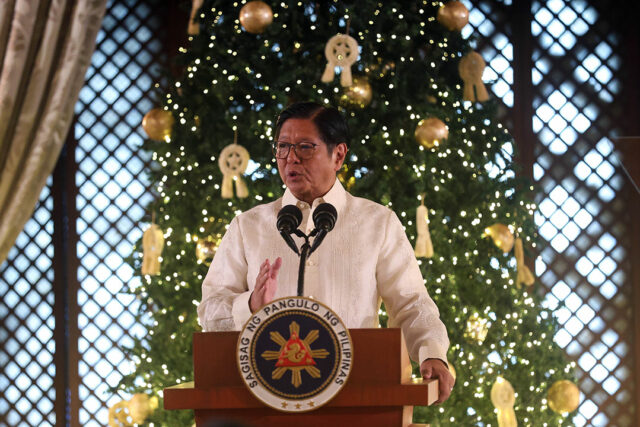
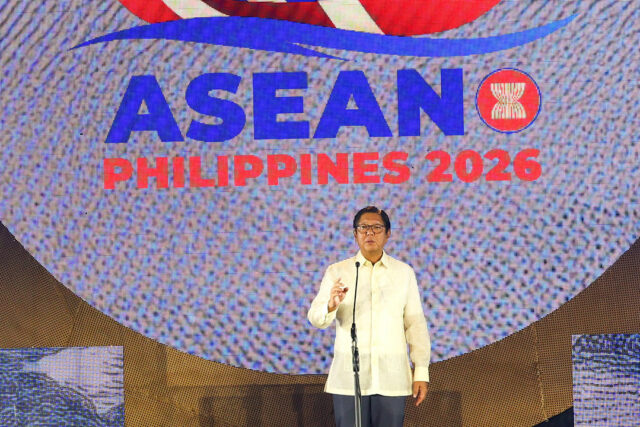
PRESIDENT Ferdinand R. Marcos, Jr. leading the official launch of the Philippines’ Chairship of the Association of Southeast Asian Nations (ASEAN) 2026 at Foro de Intramuros, Manila, Nov. 14. — PHILIPPINE STAR/NOEL B. PABALATE

By Adrian H. Halili, Reporter

THE PHILIPPINES should focus its agenda beyond traditional security issues, analysts said, as the country assumes chairship of the Association of Southeast Asian Nations (ASEAN) next year.

Climate change and the digital economy should be central to the Philippines’ agenda as these could shape how Southeast Asia navigates its collective future, Josue Raphael J. Cortez, an ASEAN Studies lecturer at the De La Salle-College of St. Benilde, said in a Facebook Messenger chat.

Mr. Cortez added that the country’s upcoming chairship should address most of the “complex challenges” that the region is confronting.

Hansley A. Juliano, a political science lecturer at Ateneo de Manila University, however, said the regional bloc is not expected to change its focus next year.

“General agenda does not seem to shift much. The things we are discussing in ASEAN seem to be consistent every year — only because the issues concerning us in the region also remain unresolved,” he said in a Messenger chat.

The Philippines is set to host the ASEAN summit in 2026, following the official hand over by Malaysia last month. The country assumed the post a year earlier than scheduled, in place of Myanmar which won’t take over due to political unrest.

Manila is expected to put peace and stability matter high on its agenda next year, amid increasing tension with China on the South China Sea and growing conflict between Thailand and Cambodia.

According to Mr. Cortez, the country should take a stronger stance against conflict across Southeast Asia.

“Conflicts have always been a part and parcel of our shared experiences, and given that some of today’s tensions may potentially diminish the spirit of collective action and the regional order and stability we have always subscribed to when the bloc was established,” Mr. Cortez said.

He added that Manila is expected to “generate bold ideas that can aid in mitigating and devising pragmatic yet constructive pathways for coexistence between the involved parties.”

Southeast Asia has emerged as a flashpoint, with border clashes in Cambodia and Thailand, Myanmar’s junta-led elections amid a humanitarian crisis, and intensifying disputes in the South China Sea involving China and the Philippines among other claimant states.

Mr. Juliano added it is in the country’s best interest to promote peace in mainland Southeast Asia.

“Of course, the salient concern here is that these very countries are vulnerable to Chinese influence due to the governance situation of the Mekong. We should have a proper response to that, too,” he said.

He added that the government has become keen in platforming its agenda in the South China Sea by consolidating allies in the region. He, however, noted the Philippines should take caution in pushing for the completion of the South China Sea code of conduct (CoC).

“We should be cautious about the CoC because passage is contingent on neutralizing open China allies and even if it should pass, it is not an automatic guarantee of ceasing hostilities,” Mr. Juliano said.

Benilde’s Mr. Cortez said that the Philippines can lead in helming regional discussions on how the South China Sea dispute can be handled collectively.

“With some of its neighbors, including Vietnam and Brunei, also as state-claimants, the Philippines’ perception can undoubtedly be the impetus for us to further realize the importance of ensuring that these waters would not be subjected to full hegemonic control,” he added.

He said that Manila can exert pressure on member states to finalize a legally binding CoC for the disputed waterway.

“It is necessary that ASEAN takes a collective stance on the matter, and Manila as a regional negotiator may trailblaze all the trajectories we could pursue together,” he added.

The ASEAN and China agreed to craft a code of conduct in 2002, however, progress toward a binding framework has been repeatedly delayed by legal, political and strategic differences.

China has increasingly expanded its presence in the disputed waterway despite a 2016 arbitral ruling by a United Nations-backed tribunal that voided its sweeping claims, it has ignored the decision.

Analysts urge caution on blockchain bill as costly tech risks draining public funds

FREEPIK

By Adrian H. Halili, Reporter

ANALYSTS caution that the proposed measure that will require the government to upload all budget data onto a digital portal, risks draining public funds if expensive technology contracts fail to yield actual transparency reform.

“If it will require spending on tech and consultancies that hype mere services but ultimately do not deliver or become a drain on public finances,” Hansley A. Juliano, a political science lecturer at the Ateneo de Manila University, said in a Facebook Messenger chat.

The Senate last week approved on third and final reading Senate Bill No. 1506, the Citizen Access and Disclosure of Expenditures for National Accountability (CADENA) bill, which seeks to create a tamper-proof, publicly accessible digital ledger for tracking all national government expenditures in real time.

It will be developed through the adoption of distributed ledger technology, including but not limited to blockchain. A similar measure in the House of Representatives is pending at the committee level.

The proposal gained significant momentum following massive public outcry for greater transparency in government transactions after billions of pesos in public funds were siphoned off by Public Works officials, lawmakers, and contractors.

President Ferdinand R. Marcos, Jr. also certified the bill as a priority measure to help restore public trust and ensure that taxpayer money is traceable from allocation to actual disbursement.

“The digitization of materials and putting them in secure platforms is always a good idea,” Mr. Juliano said, however noting that the government needs to be more wary of adopting new tech.

He added that it is necessary to establish infrastructure that would ensure the proper storage of information and its access to the public.

“The security of data will mean no single office can wipe out documents the way we do where we burn offices with documents during corruption scandals, but also data must be backed up constantly,” he said.

Mr. Juliano added that the process should also involve civil society, including long-time advocates for data transparency, in scrutinizing government spending.

While the CADENA bill is “not a cure all” measure, Ederson DT. Tapia, a political science professor at the University of Makati, said in a Messenger chat that as a structural reform, “it moves accountability from episodic disclosure toward continuous public oversight.”

This is necessary in strengthening public scrutiny of the budget system, which, as he observed, weakens after enactment. It also emphasizes that accountability in budgeting is shared across institutions.

“The bill could recalibrate accountability by making agencies answerable not only upward to Congress and DBM (Department of Budget and Management), but outward to the public,” he said.

“Agencies would face stronger incentives to justify delays, reallocations, and deviations from approved purposes because those actions would be more visible and easier to question. For Congress, the measure subtly shifts responsibility as well. Greater transparency during execution reduces the ability to deflect blame onto implementing agencies alone.”

Adolfo Jose A. Montesa, an adviser for the People’s Budget Coalition, said the Senate bill would allow the public to track allocations in the budget and how they are being utilized.

“This would ostensibly allow for a democratized tracking of every peso from every line item in the budget and allow all budget documents to be visible to the public,” he said in a Messenger chat.

He added that approving the proposed measure would not only enable better transparency and accountability, but also wider public participation.

Concrete action against corruption crucial to Marcos’ legacy, analysts say

PRESIDENT Ferdinand R. Marcos, Jr. led the 2025 Galing Pook Awards, which recognized 10 outstanding barangay initiatives, at the Ceremonial Hall in Malacañan Palace. — PPA POOL/MARIANNE BERMUDEZ

By Chloe Mari A. Hufana, Reporter

PHILIPPINE President Ferdinand R. Marcos, Jr. should translate his reform rhetoric into concrete action as his final two years in office near, analysts said with corruption, institutional reform and delivery failures emerging as defining tests of his presidency.

The window for shaping a lasting legacy is narrowing, with public skepticism persisting despite repeated pledges to clean up government.

Arjan P. Aguirre, who teaches political science at Ateneo de Manila University, said Mr. Marcos must confront what he described as a credibility deficit that has undercut his anti-corruption messaging.

While the President has made strong pronouncements, Mr. Aguirre said that restoring trust would require demonstrable steps, such as backing a Freedom of Information law, protecting the independence of investigative bodies, and pushing for long-stalled legislation against political dynasties.

“President Marcos should take the project of building his legacy more seriously,” he said via Facebook Messenger, adding the President must confront his “credibility problem.”

“Restoring public trust requires more than rhetoric; it demands concrete action.”

Earlier this month, Mr. Marcos urged Congress to prioritize the passage of an anti-political dynasty measure despite belonging to one of the country’s most powerful political clans himself.

The call was framed as part of a broader push to strengthen democratic institutions and level the political playing field, with the Presidential Palace saying that entrenched family rule has weakened accountability amid a widening graft scandal.

As the administration looks toward 2026, Ederson DT. Tapia, a University of Makati political science professor, said the President’s challenge is shifting from agenda-setting to institutional discipline.

With policy priorities already laid out, he said the focus should now be on execution — pushing difficult reforms through Congress, enforcing coherence across agencies and delivering results that outlast political cycles.

“This includes long-delayed legislation such as the anti-political dynasty bill, stronger campaign finance regulation, and more credible budget transparency and fiscal accountability measures,” he said via Facebook Messenger.

He added that these reforms go to the core of how political power is exercised and restrained.

Jean S. Encinas-Franco, a political science professor at the University of the Philippines, also said that anti-corruption enforcement should be a central component of the President’s agenda, including the arrest and prosecution of corrupt officials.

She warned that flood control — amid recurring infrastructure failures and allegations of misuse of funds — could become the defining issue of the administration.

“If he does well in addressing this, he will have a legacy to leave behind,” Ms. Encinas-Franco said via Viber. “Otherwise, his administration will be remembered for corruption.”

She added that reforms to make the budget process less vulnerable to corruption and excessive political discretion should be a priority in 2026, particularly as lawmakers debate next year’s spending plan amid heightened scrutiny over public funds.

The proposed 2026 General Appropriations Act is under intensified scrutiny following allegations that billions of pesos in unprogrammed funds were inserted into this year’s national budget.

Despite heightened scrutiny in the budget-making process due to the graft scandal, the bicameral conference committee still approved P243 billion in standby funds, undoing earlier attempts to curb the mechanism after the Senate version reduced the allocation to P174.55 billion — roughly P68.66 billion less than the P243.22 billion passed by the House.

Such funds are contentious because, while intended to provide flexibility for emergencies or unforeseen needs, their excessive or opaque use can weaken fiscal discipline and undermine accountability.

Mr. Tapia said a “successful” 2026 would not be marked by new slogans or headline initiatives, but by measurable progress.

He cited food security, disciplined infrastructure rollout and fully functioning digital government services as key indicators of whether the administration has moved from promises to performance.

“For President Marcos, success would mean being remembered less for rhetoric and more for stewardship,” he added. “For helping anchor reforms within institutions and restoring confidence in government as a system that works, even without constant spectacle.”

The Philippines is probing a massive graft scandal following Mr. Marcos’ exposé last July in his fourth State of the Nation Address.

He alleged that high-ranking government officials and contractors were colluding to receive kickbacks from public works projects, specifically flood control plans in a climate-vulnerable country.

Since the scandal erupted, the country has suffered economically, following a lackluster third-quarter economic growth and a historical low in Philippine peso values.

Help those in need, Marcos says

DEVOTEES flocked at the Minor Basilica and National Shrine of Jesus Nazareno in Quiapo, Manila on Thursday to attend the Holy Mass in celebration of Christmas Day. — PHILIPPINE STAR/RYAN BALDEMOR

PRESIDENT Ferdinand R. Marcos, Jr. urged Filipinos on Thursday to turn the spirit of Christmas into acts of compassion and generosity, calling on the public to be “a source of light and goodness” for others amid continued economic and social challenges.

In a Christmas message, Mr. Marcos said the season should go beyond festive gatherings and serve as a reminder to extend help to those most in need, including the poor, the sick, disaster-hit communities and other marginalized groups.

“As we enjoy our gatherings, let us also remember those who are in most need of our compassion and generosity — the poor, sick, calamity-stricken, and marginalized,” he said.

“Like Jesus, who brought salvation to the world, let us share our abundance with the people around us,” he added, calling for special focus on the children.

The President described Christmas as a uniquely Filipino tradition marked by joy, reflection and gratitude, saying it offers time to appreciate life’s blessings and strengthen ties with family and loved ones.

He encouraged citizens to carry the values of kindness and goodwill beyond the holidays.

“It is my fervent hope that the deepest desires of our hearts be fulfilled and that love and goodwill continue to guide our families and communities.” — Chloe Mari A. Hufana

CPP begins holiday ceasefire

THE Communist Party of the Philippines (CPP) said its unilateral holiday ceasefire began on Wednesday, a declaration that put Maoist rebels on the defensive amid clashes with government forces in the countryside.

While units of the CPP’s New People’s Army (NPA) will refrain from launching offensive operations, the Philippine Army said it will continue pursuing the Maoist rebels, describing them as a weak and depleted force.

“They are not a force to reckon with, they are just bandits,” Army spokesman Col. Louie Dema-ala told reporters in a Viber message.

The NPA, which is waging one of the world’s longest‑running insurgencies, has significantly weakened since its peak in the 1980s. Armed communist fighters have dwindled to about 780 from about 25,000 at the height of the rebellion, according to government data released earlier this month.

In a statement last week, The CPP said it would cease hostilities from Dec. 25 to 26 and again from Dec. 31 to Jan. 1 to mark the Christmas and New Year holidays, as well as the group’s anniversary celebrations.

The Defense department had dismissed the announcement as a “sad propaganda stunt,” saying the armed forces would continue its security operations throughout the holidays.

The CPP said on Wednesday the NPA must remain prepared to defend itself should the military launch attacks.

“This clearly demonstrates Marcos’ bloodlust and his intent to disrupt the Filipino people’s traditional holiday celebrations,” CPP Chief Information Officer Marco L. Valbuena said. “He has nothing to offer the people during this season but bullets and bombs.”

Palace Press Officer Clarissa A. Castro did not immediately reply to a Viber message seeking comment. — Kenneth Christiane L. Basilio

UN, BARMM assist Moro entrepreneurs

COTABATO CITY — An agency of the United Nations (UN) and the Bangsamoro government provided on Tuesday, eight groups of neophyte Moro entrepreneurs producing preserved native delicacies a P50,000 grant each as additional capital input to boost their productivity.

Bangsamoro Labor and Employment Minister Muslimin G. Sema said on Thursday that many of the entrepreneurs in the eight groups, based in barangays in Datu Odin Sinsuat and Talitay in Maguindanao del Norte and in Guindulungan, Shariff Saydona Mustapha and South Upi, all in Maguindanao del Sur, belong to families identified with the Moro Islamic Liberation Front and the Moro National Liberation Front (MNLF) that have separate peace pacts with the government.

This was facilitated through the Bangsamoro Rural Employment through Entrepreneurial Development (BREED) Program of the Ministry of Labor and Employment-Bangsamoro Autonomous Region in Muslim Mindanao (MoLE-BARMM).

It was led by Mr. Sema, Director-General Surab A. Abutazil, Jr., and Abdulrakman S. Nor of MoLE-BARMM’s Bureau of Labor Relations and Standards, at their regional office in Cotabato City.

Mr. Sema told reporters on Thursday that they are thankful to the Food and Agriculture Organization of the UN, whose representative to MoLE-BARMM is Helen M. Flores, for its active involvement in the BREED Program.

Another entity under the UN, the International Labour Organization, is also MoLE-BARMM’s partner in addressing child labor and use of children as combatants by their clans that are locked in bloody “rido,” or feud in most southern vernaculars, triggered by affronts to family pride and honor, land disputes and political rivalries.

“To these two entities of the United Nations, we in the Bagsamoro Labor and Employment ministry are so grateful,” said Mr. Sema, who is chairman of the central committee of the MNLF. — John Felix M. Unson

Japan expects growth to accelerate next year with fiscal stimulus

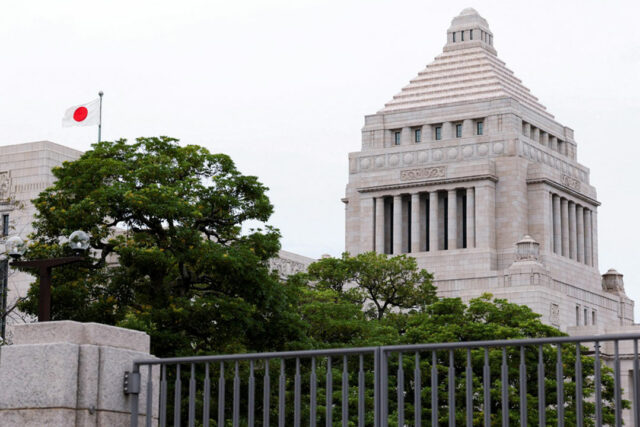
A Japanese flag flutters near Japan's National Diet Building in Tokyo, Japan. — REUTERS

TOKYO — Japan’s government revised up its economic forecast for the fiscal year to next March and projected that growth would accelerate in the following year, on the view that its massive stimulus package will boost consumption and capital expenditure.

The projections are the first to be compiled under Prime Minister Sanae Takaichi’s administration, which has announced big spending plans aimed at cushioning the blow to households from rising living costs while promoting investment in growth areas.

Under the latest projections approved by the cabinet on Wednesday, the government expects Japan’s economy to expand 1.1% in the current fiscal year, up from 0.7% growth estimated in August due to the smaller-than-expected hit from US tariffs.

Growth is expected to accelerate to 1.3% in fiscal 2026 as robust consumption and capital expenditure offset soft overseas demand, according to the projections.

The government said it expects consumption to rise 1.3% next fiscal year, the same pace projected for fiscal 2025, as tax breaks and moderating inflation underpin household spending.

Capital expenditure will likely increase 2.8% in fiscal 2026, faster than an estimated 1.9% rise for the current fiscal year, due in part to the effect of subsidies and tax breaks aimed at promoting investment in crisis management and growth areas.

The government will use the estimates when it drafts the next fiscal year’s state budget, which will be finalized on Friday.

The administration compiled a 21.3 trillion yen ($136.7 billion) stimulus package in November that included payouts to families with children, subsidies to cut utility bills, and fiscal spending to promote investment in areas such as infrastructure, artificial intelligence, and semiconductor chips.

The next fiscal year’s budget is likely to include record total spending in line with the administration’s expansionary fiscal approach, which has heightened market concerns over debt over-supply and pushed up government bond yields. — Reuters

Pope Leo, on Christmas Eve, says denying help to poor is rejecting God

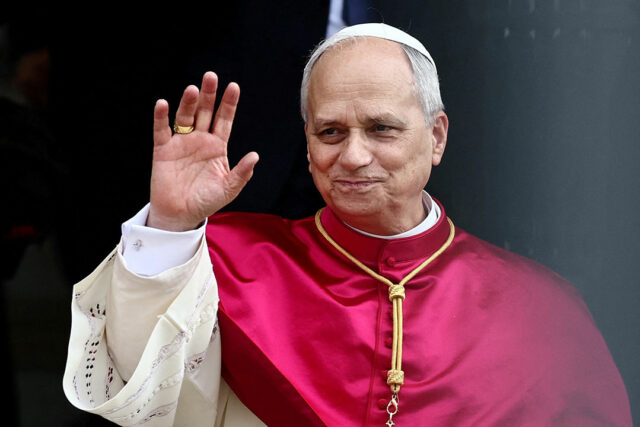
POPE LEO XIV waves as he leaves the basilica of Saint Paul Outside the Walls in Rome, Italy, May 20, 2025. — REUTERS

VATICAN CITY — Pope Leo said in a Christmas Eve sermon on Wednesday that the story of Jesus being born in a stable because there was no room at an inn should remind Christians that refusing to help the poor and strangers today is tantamount to rejecting God himself.

Leo, who has made care for immigrants and the poor key themes of his early papacy, said Jesus’ birth showed God’s presence in every person as the pontiff led the world’s 1.4 billion Catholics into Christmas at a Mass in St. Peter’s Basilica.

“On earth, there is no room for God if there is no room for the human person. To refuse one is to refuse the other,” said the pope during the solemn service, attended by about 6,000 inside the basilica.

Leo, the first US-born pope, is celebrating his first Christmas after being elected in May by the world’s cardinals to succeed the late Pope Francis.

The pope, who has criticized US President Donald Trump’s divisive immigrant crackdown, quoted a line from the late Pope Benedict XVI lamenting that the world does not care for children, the poor or foreigners.

“While a distorted economy leads us to treat human beings as mere merchandise, God becomes like us, revealing the infinite dignity of every person,” said Leo.

“Where there is room for the human person, there is room for God,” he said. “Even a stable can become more sacred than a temple.”

Outside the basilica, about 5,000 people watched the service on screens from St. Peter’s Square, holding umbrellas and wearing ponchos under a hard rain in Rome.

Leo, 70, came outside to greet them before the start of the Mass. “I admire and respect and thank you for your courage and your wanting to be here this evening,” he said, “even in this weather.”

On Thursday, the pope will celebrate a Christmas Day Mass and deliver a twice-yearly “Urbi et Orbi” (to the city and the world) message and blessing. — Reuters

Christmas celebrations muted at Bondi as Australians grieve after deadly shooting

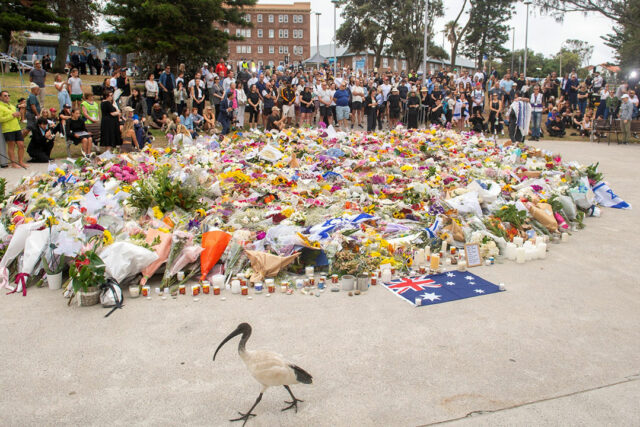
People gather at the floral tribute at Bondi Beach to honor the victims of a mass shooting targeting a Hanukkah celebration on Sunday at Bondi Beach in Sydney, Australia. — REUTERS

SYDNEY — Christmas celebrations were muted at Sydney’s famed Bondi Beach on Thursday in the aftermath of a terror attack that killed 15 people there more than a week ago, as the community continued to grapple with the country’s deadliest mass shooting in nearly three decades.

Police patrolled across the beachfront in Bondi, a traditional Christmas destination, as hundreds of people, many wearing Santa hats, gathered on the sands.

“I think it’s tragic, and I think everybody respects and is very sad for what happened, and I think people here are out on the beach, because it’s like a celebration but everybody has got it in their memories and everybody is respectful of what happened,” British tourist Mark Conroy told Reuters.

“Everyone is feeling for the family and friends who are going through the worst possible thing you could imagine.”

The gun attack on December 14 at a Jewish Hannukah celebration has prompted calls for stricter gun laws and tougher action against antisemitism, while public gathering rules in Sydney have been tightened under new laws passed on Wednesday.

Beachgoers were seen taking photos next to a Christmas tree while some posed with lifeguards, although windy weather conditions appear to thin crowds.

“It’s not the best conditions for Christmas Day today, it’s a bit choppy. … so not ideal, but people are still here,” Surf Life Saving Patrol Captain Thomas Hough said.

Flags flew at half mast outside the heritage-listed Bondi Pavilion building near the site of the attack, which police say was allegedly carried out by a father and son, inspired by the militant group Islamic State.

In Melbourne, a car with a “Happy Chanukah!” sign was set alight on Christmas Day in the city’s southeast, with no injuries reported, Australian media reported.

Prime Minister Anthony Albanese, facing mounting criticism from opponents who argue his government has not done enough to curb a rise in antisemitism, called the firebombing of the car “just beyond comprehension.”

“What sort of evil ideology and thoughts at a time like this would motivate someone?,” Mr. Albanese told reporters on Thursday.

Since the start of Israel’s war in Gaza in October 2023, there have been attacks against synagogues, Jewish buildings and cars in Australia. — Reuters

BP to sell stake in Castrol to Stonepeak for $6 billion

BP HAS AGREED to sell a 65% stake in its Castrol lubricants business to US private equity firm Stonepeak for about $6 billion, a significant step in the oil major’s $20-billion divestment plan aimed at cutting debt and boosting returns.

The deal, announced on Wednesday, values Castrol at $10.1 billion, and marks the British company’s most ambitious asset sale so far in its efforts to streamline operations and scale back its renewable energy investments after years of lagging rivals in share performance.

BP will retain a 35% stake in a new joint venture with Stonepeak, which it can sell after a two-year lock-in period.

Shares in BP gained more than 1% on Wednesday following the announcement before slipping to trade fractionally lower as of 1147 GMT.

While the deal values Castrol at about $10 billion, the enterprise value falls to roughly $8 billion after adjusting for minority interests and debt-like obligations, RBC analysts said in a note on Wednesday.

“We continue to question the rationale (beyond the headline multiple) of selling this highly cash generative, low volatility and low capital intensity asset, as ultimately this is detrimental to the long-term dividend sustainability and earnings quality of the business,” RBC analysts said in the note.

“Accelerated dividends now will help reduce debt, but clearly at the expense of medium term cash flows.”

The sale, which includes $800 million for accelerated dividend payments, comes after BP put the century-old lubricants unit under review earlier this year as part of a broader strategy to focus on its core oil and gas business.

BP will use the sale proceeds to reduce debt, it said. BP expects the deal to complete by the end of 2026, it said.

The oil major has vowed to sell $20 billion worth of assets to help slash its net debt from $26 billion to between $14 billion and $18 billion by the end of 2027.

After the Castrol deal, BP’s completed and announced divestment proceeds total around $11 billion.

In a separate statement, Stonepeak said the Canada Pension Plan Investment Board will invest up to $1.05 billion as part of the deal and gain an indirect stake in Castrol.

Stonepeak, an infrastructure-focused private equity firm, has investments in hard assets such as energy businesses and real estate and seeks assets that offer growth over the long-term.

Private equity buyers have around $2 trillion in capital raised from investors and not committed to specific investments that they are keen to deploy, according to S&P Global.

Recently private equity firms have focused on divestments by conglomerates looking to focus on their core businesses.

Reuters reported in November that BP was in talks with Stonepeak about selling Castrol. The Wall Street Journal and the Financial Times first reported details of the deal late on Tuesday.

Castrol’s sale process began earlier this year. In September, Stonepeak and private equity firm One Rock submitted bids for the unit, Reuters previously reported, citing sources.

BP last week appointed Woodside Energy’s Meg O’Neill as its next chief executive officer, taking over from Murray Auchincloss.

In October, new BP Chair Albert Manifold told employees that the group’s portfolio was “overly complex” and it needed to shift focus back to oil and gas faster.

In August, BP had said it would launch a review of how best to develop and monetize its oil and gas production assets and consider more cost cuts to boost shareholder returns. Reuters

Retail investors likely to have more sway over Wall Street after record year

The Wall Street entrance to the New York Stock Exchange (NYSE) is seen in New York City, US, Nov. 15, 2022. — REUTERS

RETAIL INFLOWS into US stocks are set to hit a record in 2025, as individual investors become a major force behind a rally that is likely to extend into the next year on hopes of interest rate cuts, analysts said.

The amount of cash retail investors poured into US stocks so far in 2025 is up 53% from $197 billion a year earlier and 14% higher than the $270-billion hit at the height of the retail trading frenzy in 2021, according to JPMorgan analysts.

Retail trading, meanwhile, accounted for 20-25% of total activity this year, touching a record high of about 35% in April, according to separate trading data from JPMorgan.

Individual investors snapped up high-quality stocks at discounts during sell-offs, most notably after US President Donald J. Trump’s “Liberation Day” tariffs triggered a global meltdown in April, helping push the S&P 500 to fresh records. The benchmark index is up about 16% this year.

“Retail investors are here to stay, especially for 2026. They made money this year, they like to trade stocks, they have the applications to do so. We will continue to see them being a good presence,” said Steven DeSanctis, small- and mid-cap strategist at Jefferies.

Retail participation in the stock market has grown steadily over the years as the rise of low-cost, no-commission brokerages such as Robinhood and Interactive Brokers has made it easier and cheaper for average Americans to access the market.

The trend got wider notice in 2021 as many Americans who were homebound during the COVID-19 pandemic and were flush with cash used mobile trading platforms to bet on everything from GameStop to Big Tech.

Artificial intelligence (AI) plays such as Nvidia and Palantir Technologies were top favorites this year, according to retail brokerage data and executives, with the latter more than doubling in value as small-time traders bought the dip when institutional investors stepped back on valuation concerns.

Tesla shares, another top retail favorite, touched a record high on Dec. 17, their first since the end of 2024.

“The two most active stocks on our platform are typically Nvidia and Tesla. Those are just two examples of individual investors seizing the narrative and in many cases forcing institutional investors to play along,” said Steve Sosnick, chief strategist at Interactive Brokers.

Quantum computing firms, uranium miners, metal miners and rare earth companies also saw substantial retail interest, as investors became more “thematic” in their approach.

RETAIL TRADERS INCREASINGLY PREFER ETFS
A key feature of retail trading in 2025 was the increasing preference for exchange-traded funds (ETFs) tracking equity indexes, cryptocurrencies and commodities, according to executives at major trading platforms.

“Investors continue to be attracted to the ETF technology. It trades throughout the day — it’s tax efficient, it’s transparent,” said Bryon Lake, global co-head of Third-Party Wealth at Goldman Sachs Asset Management.

Direxion’s Daily Semiconductor 3X Bull and 3X Bear ranked among the top five ETFs by dollar volume on eToro, said Bret Kenwell, US investment analyst with the trading platform.

Retail investors are making more informed trades now as indicated by fewer and shorter so-called “meme frenzies,” said Joe Mazzola, head of trading and derivatives at Charles Schwab.

“Retail has been a little bit more in tune to the market dynamics this year,” he added.

POTENTIAL INTEREST RATE CUTS SEEN AS KEY CATALYSTS
Potential rate cuts by the US Federal Reserve are expected to continue to boost markets next year, keeping up the retail momentum in 2026, according to analysts and brokerages.

Elevated stock market volatility may trigger dips that could also pull in individuals willing to wager on a bounce back, although recent evidence points to less enthusiasm about such opportunities than they have been in the past.

Reuters last week reported that Nasdaq is planning to submit paperwork with the US Securities and Exchange Commission to roll out round-the-clock stock trading, a move analysts believe can further accelerate retail momentum.

“We’re in a kind of golden age of retail investing with better access to knowledge, to the markets themselves and advanced trading platforms,” said David Russell, global head of market strategy at TradeStation.

Still, with doubts continuing to linger around the AI names that have dominated the market this year, analysts said they did not expect the coming year to top 2025’s record as investors may consider broadening their portfolios.

Financials, communications, discretionary, energy, miners and gold mining ETFs could do well, Mr. Kenwell said.

“But ultimately, retail loves tech so that is an area they will continue to come back to in 2026, particularly if we do see any sort of volatility.” — Reuters