Home Blog Page 4982

Japan bans steel, aircraft exports to Russia in latest sanctions on Ukraine war

A person holds Japan’s national flag at the Imperial Palace in Tokyo, Japan, Jan. 2, 2020. — REUTERS

TOKYO – Japan bans Russia-bound exports of steel, aluminum and aircraft including drones in its latest sanction against Moscow’s invasion of Ukraine, the trade ministry said on Friday.

The measure, which also prohibits Japanese entities from exporting a wide variety of industrial items such as construction machinery, ship engines, testing equipment and optical devices to Russia, will go into effect on April 7, the ministry said in a statement.

At least six Russian missiles hit the eastern Ukrainian city of Kharkiv late on Thursday, and officials are gathering details about damage and casualties, the regional governor said.

Meanwhile, the United States said it has new information that Russia is actively seeking to acquire additional weapons from North Korea in exchange for food aid. — Reuters

Philippine central bank head says ‘too early’ for rate pause

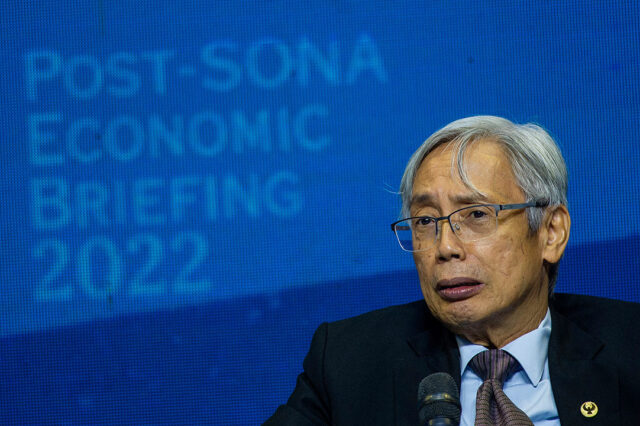
Bangko Sentral ng Pilipinas (BSP) Governor Felipe M. Medalla attends an economic briefing in Pasay City, July 26, 2022. — REUTERS

It may be too soon for the Philippine central bank to pause from raising interest rates at its next policy meeting in May, Bangko Sentral ng Pilipinas (BSP) Governor Felipe Medalla said, signaling its most aggressive tightening cycle in two decades could continue.

May is “too early” to pause, “unless we actually see a price fall,” Mr. Medalla said in an interview Thursday on the sidelines of the Association of Southeast Asian Nations forum in Bali, Indonesia. The Bangko Sentral ng Pilipinas expects headline inflation this month to cool to a range of 7.4%-8.2% when the statistics agency reports the data on April 5, it said in a monthly forecast on Friday.

BSP remains “cautious” and needs to see “enough low month-on-month inflation, to give the public confidence that the BSP forecast of inflation averaging 2.9% is quite likely,” Medalla said in the interview, referring to its 2024 estimate.

Annual inflation stood at 8.6% in February, still near a 14-year high, and the core gauge, which strips out volatile food and fuel costs, was the fastest in 24 years. Mr. Medalla said the central bank could pause its rate hike cycle if prices decline on a month-on-month basis. The price index in February was unchanged from January.

It’s the latest signal from the BSP chief that the tightening cycle can extend even after it has raised its key rate by 425 basis points since May, among the most aggressive moves in the region. On Wednesday, Mr. Medalla said the BSP can raise policy rate further without risking financial stability.

Mr. Medalla’s comments contrast with those of Finance Secretary Benjamin Diokno, a member of the BSP’s policymaking monetary board, who on Sunday made the case for a pause, saying the central bank has done enough to address inflation.

BSP will likely raise its policy rate by another 25 basis points in May as a “precautionary move,” with inflation still way above its 2% to 4% target, said Makoto Tsuchiya, assistant economist at Oxford Economics.

For Dan Roces, chief economist at Security Bank Corp. in Manila, the central bank “has been doing the heavy lifting and there is only so much that monetary policy can do.” The national government should complement the BSP’s moves, as price gains are “more of a supply problem,” he added.

The peso is set for a third week of gains and was up 0.2% against the dollar in early trade Friday as most regional currencies also advanced. The main stock exchange index was down 1% for the day even as other equities market rallied.

Mr. Medalla also said on Thursday that Philippine banks can absorb higher interest rates as they’re very liquid and well-capitalized, having cut back on their bond holdings during the pandemic. The rate increases have yet to restrict economic growth, he said.

“My point is we have enough tools and our main tool, the interest rate, does not have the undesirable effect of destroying the balance sheet of banks or significantly reducing GDP growth,” the governor said. — Bloomberg

BSP says March annual inflation likely in 7.4%-8.2% range

People eat at a restaurant in Quezon City, Metro Manila, Philippines, Jan. 26, 2023. -- REUTERS/Lisa Marie David

MANILA – Philippine annual inflation in March was expected to come in between 7.4% and 8.2%, with downward pressure seen from lower prices of petroleum and some food items, the central bank said on Friday, ahead of the release of the data on April 5.

High inflation, which at 8.6% in February was well outside the central bank’s target range of 2% to 4%, remains the top concern for monetary authorities, Bangko Sentral ng Pilipinas (BSP) Governor Felipe M. Medalla reiterated earlier this week.

“The BSP remains prepared to respond appropriately to continuing inflation risks in line with its data-dependent approach to monetary policy formulation,” the central bank said in a statement.

The BSP last week hiked its benchmark interest rate further although at a slower pace of 25 basis points to 6.25% and said its next policy move would depend largely on how consumer prices will behave in the coming months. — Reuters

Trump criminally charged in New York, a first for a US ex-president

REUTERS

NEW YORK – Donald Trump has been indicted by a Manhattan grand jury after a probe into hush money paid to porn star Stormy Daniels, becoming the first former US president to face criminal charges even as he makes another run for the White House.

The specific charges are not yet known, as the indictment remains under seal. CNN on Thursday reported Trump faces more than 30 counts related to business fraud.

Trump said he was “completely innocent” and indicated he would not drop out of the 2024 presidential race. He accused Bragg, a Democrat, of trying to hurt his chances of winning re-election against Democratic President Joe Biden.

“This is political persecution and election interference at the highest level in history,” he said in a statement.

Shortly after, Trump appealed to supporters to provide money for a legal defense. He has raised over $2 million, according to his campaign, since he incorrectly predicted on March 18 that he would be arrested four days later.

Trump, the frontrunner for the 2024 Republican nomination according to polling, received support from a number of his potential challengers on Thursday including Florida Governor Ron Desantis and former Vice President Mike Pence.

“This will only further serve to divide our country,” Pence said.

While the White House did not comment, Democrats said Trump was not immune from the rule of law.

“I encourage both Mr. Trump’s critics and supporters to let the process proceed peacefully and according to the law,” said the top Democrat in the Senate, Chuck Schumer.

The charges will likely be unsealed by a judge in the coming days. Trump will have to travel to Manhattan for fingerprinting and other processing at that point.

Bragg’s office said it had contacted Trump’s attorney to coordinate a surrender, which a court official said would likely occur next Tuesday.

Trump’s lawyers Susan Necheles and Joseph Tacopina said they will “vigorously fight” the charges.

The Manhattan investigation is one of several legal challenges facing Trump.

Bragg successfully prosecuted Trump’s business last year on tax-fraud charges, leading to a $1.61 million criminal penalty.

The presiding judge in that case, New York Supreme Court Justice Juan Merchan, is expected to oversee this case as well, according to a person familiar with the matter.

Trump could use the case to stoke anger among his core supporters, though other Republican voters might tire of the drama. Some 44% of Republicans said he should drop out of the race if he is indicted, according to a Reuters/Ipsos poll released last week.

Outside the courthouse, several protesters silently held signs criticizing Trump. Authorities bolstered security around the courthouse after Trump called for nationwide protests on March 18, recalling his charged rhetoric ahead of the Jan. 6, 2021, attack on the US Capitol by his supporters.

HUSH MONEY

Daniels, whose real name is Stephanie Clifford, has said she received money in exchange for keeping silent about a sexual encounter she had with Trump in 2006.

The former president’s personal lawyer Michael Cohen has said he coordinated with Trump on the payments to Daniels and to a second woman, former Playboy model Karen McDougal, who also said she had a sexual relationship with him. Trump has denied having affairs with either woman.

Trump in 2018 initially disputed knowing anything about the payment to Daniels. He later acknowledged reimbursing Cohen for the payment, which he called a “simple private transaction.”

“No one is above the law,” Daniels’ lawyer Clark Brewster said on Twitter.

Cohen pleaded guilty to a campaign-finance violation in 2018 and served more than a year in prison. Federal prosecutors said he acted at Trump’s direction.

Cohen said he stood by his testimony and the evidence he provided to prosecutors. “Accountability matters,” he said in a statement.

No former or sitting US president has ever faced criminal charges.

Aside from this case, Trump faces two criminal investigations by a special counsel appointed by US Attorney General Merrick Garland and another criminal probe by a local prosecutor in Georgia.

Trump has escaped legal peril numerous times. In the White House, he weathered two attempts by Congress to remove him from office, including for the Jan. 6, assault on the US Capitol by his supporters, as well as a years-long probe into his campaign’s contacts with Russia in 2016.

In last year’s tax-fraud trial, the Manhattan District Attorney’s office targeted Trump’s business but declined to charge Trump himself with financial crimes.

In the hush-money case, legal experts say Bragg is expected to argue Trump falsified business records to cover up another crime, such as violating federal campaign-finance law, which makes it a felony. — Reuters

Asian shares ride high in Q1 but steel for US inflation data

REUTERS

SYDNEY – Asian shares were headed for a second quarterly gain on Friday while bonds were enjoying the best month since 2008, but the market was braced for a stormy session after an upside surprise in German CPI raised the stakes for US inflation data.

Also making headlines on Friday, Donald Trump was indicted after a probe into hush money paid to porn star Stormy Daniels, becoming the first former US president to face criminal charges even as he makes another run for the White House.

MSCI’s broadest index of Asia-Pacific shares outside Japan jumped 1% on Friday, heading for its first March gain in four years with a rise of 2.9%, as fears of a global banking crisis receded.

It is up 4% for the quarter, after surging 12% in the three months ending December.

Japan’s Nikkei also gained 1%,as inflation data for the capital city Tokyo highlighted broadening price pressures.

China’s bluechips rose 0.3% and Hong Kong’s Hang Seng Index leaped 1.5%, after China’s PMI data showed the recovery in the services sector is gathering pace and manufacturing activity expanded at faster than expected.

Investors cheered a major revamp plan by Alibaba Group , taking it as a signal that Beijing’s regulatory crackdown on technology corporates is ending. Alibaba’s shares jumped 4.4% on Friday, bringing its monthly gain to 17%.

Overnight, Wall Street was boosted by gains in technology-related shares, although regional bank shares fell after Treasury Secretary Janet Yellen said banking regulation and supervisory rules need to be re-examined.

The Dow Jones rose 0.4%, the S&P 500 gained 0.6% and the Nasdaq Composite added 0.7%.

Markets are shifting their focus back to the inflation vigil and the outlook for interest rate hikes on hopes that the recent bank turmoil has been largely contained.

A slower than expected decline in German inflation has raised the stakes for US personal consumption expenditures (PCE) inflation, tracked by the Federal Reserve for monetary policy, later in the day.

Economists are expecting the PCE index to ease to 0.4% in February from January when it rose 0.6%.

However, there is still an expectation that banks will tighten lending following the troubles at three regional US banks and the Credit Suisse takeover, so central banks do not have to hike more.

“The strongest headwind for the global economy has shifted from an energy crisis and the related squeeze on real incomes to a potential banking crisis and associated drag on credit,” said analysts at Capital Economics.

“With central banks still mindful of inflation risks, interest rates will stay at their peaks for several months. But when they come, cuts will be more aggressive than is typically assumed.”

Fed funds futures are still split on whether the Federal Reserve will hike or not at the next policy meeting in May, while pricing in a rate cut by November. That compared with an overwhelming bet on a 25 basis point hike a month ago before the banking volatility started.

Overnight, three Fed officials kept the door open to more rate rises, although two of them noted that banking sector problems could generate enough headwinds on the economy to help cool price pressures faster than expected.

US Treasuries had a blockbuster month, with the two-year yields down a whopping 68 basis points to 4.1113%, the biggest monthly decline since early 2008. Ten-year yields were 36 bps lower this month to 3.5563%.

The US dollar fell 2.6% against its peers so far in March, with the euro surging 3% to $1.0903 and the yen gaining 2.2% to 133.3 per dollar amid the safe-haven flows into the Japanese currency.

Oil prices were a touch higher on Friday, but were still down more than 3% for the month. US crude futures edged up to $74.42 per barrel, while Brent crude futures rose 0.2% to $79.42 per barrel.

Gold was slightly lower but is up 8.3% for the month. Spot gold was traded at $1,978.49 per ounce, highest since April last year. — Reuters

First Atkins cold storage opening to fulfill commitment to food security, local economy

In attendance during the opening were (L-R) PNB Capital President Gerry Valenciano, Cong. Harry Angping, Michael Ornido, Cold Chain Association President Anthony Dizon, NMIS Deputy Executive Director Roberto Umali, MITA President Jesus Cham, Naic Vice-Mayor Junio C. Dualan, Phil. Business Bank Chairman Emeritus Amb. Alfredo M. Yao, Department of Agriculture Senior Undersecretary Domingo F. Panganiban, First Atkins Deputy CEO Hillary Kay Ang, President and CEO Gabriel Ang, Strategic Officer Gavin Christian Ang, NMIS Executive Director Claire Sangcal, BAI Deputy Director Arlene Vytiaco, DTI Assistant Secretary Claire Cabochan, BAI Region IV-A Director Randy Lontoc, Emmanuel Ang, PEZA Cavite Economic Zone Administrator Atty. Norma B. Tañag, ICTSI Inc. Executive Director Philip Marsham, and Engr. Jun Ducat.

For many countries, food security has been their topmost concern, especially with the major economic and climate crises we have been experiencing, which have also exacerbated global concerns with food. Such concerns are still being aimed to be addressed with the pursuit of the second of United Nations’ (UN) Sustainable Development Goals (SDGs) — to end hunger and achieve food security and improve nutrition.

According to the World Economic Forum (WEF), the dilemma facing global food security is that by 2050, 9 billion people must be fed and food demand will increase by 60%. Adequate and proper food storage plays a big role in addressing these demands. By preventing deterioration, proper food storage is necessary for preserving nutritional worth and the quality of foods people consume. Moreover, safe food storage can aid in preventing hazardous bacteria that comes from food.

Among the companies actively doing their part towards addressing the country’s food sufficiency needs is First Atkins Holdings Corp., a company that specializes in importing and distributing high-quality meat products from several countries.

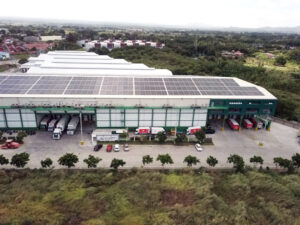
Participating in the country’s food security plan, the company recently launched the largest continuous cold storage facility in Southern Luzon, with the intention to deliver their commitment to food security and empower the local community.
“Food security and rising demand for logistics services are a critical issue facing our country today, and it is a privilege for our company that we are able to help take significant steps towards addressing it,” First Atkins President and CEO Gabriel Ang said.

First Atkins Group receives the Triple A certification for Hazard Analysis Critical Control Point (HACCP), the highest accreditation level.

Last March 24, First Atkins opened its cold storage warehouse facility located in Cavite Technopark, Brgy. Sabang, Naic, Cavite. The company held a ribbon cutting ceremony on the economic zone, which is operated by Ayala Land Logistics Holdings Corp.

According to the First Atkins’ Deputy CEO Hillary Kay Ang and Strategy Officer Gavin Christian Ang, the newly opened facility can produce roughly 65,000 metric tons of meat.

“As a significant contributor to the country’s food industry, First Atkins has always believed in the capabilities and contributions of cold storage facilities in extending the shelf life of perishable goods and maintaining their quality, while also reducing food waste and ensuring that consumers have access to quality meat products at more affordable prices,” Ms. Ang and Mr. Ang said in the opening remarks.

“With this facility alone, our group can now contribute around 65 million kilograms more of frozen meat products, bringing our average estimated turnover to date to around 176 million kilograms on an annual basis,” they added.

The plant is also equipped with 1,776 solar panels that have a 1-megawatt capacity. These renewable energy sources are expected to save around 30% of the total energy output of the facility.
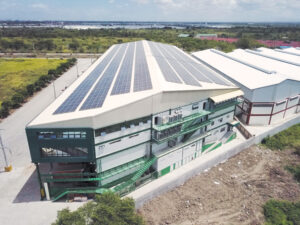
The cold storage warehouse is just ten minutes away from the anticipated Bataan – Cavite Interchange Link. Once completed, First Atkins group’s delivery time from the facility going to Bataan and adjacent cities will be cut down from five hours to 40 minutes.

The ceremony was attended by heads from different national government departments, such as Department of Agriculture Sr. Undersecretary Domingo F. Panganiban, Department of Trade and Industry Assistant Secretary Atty. Claire Cabochan, and Philippine Economic Zone Authority Administrator Atty. Norma Tañag, to name a few.

Local government officials of Naic were also present. Among those officials, Vice-Mayor Junio C. Dualan has expressed his extreme gratitude for the success of this project and thanks the respective partners and shareholders of the project as well. He congratulated First Atkins for building the largest cold storage facility in Southern Luzon, as this does not only contribute in addressing food supply constraints but also helps with employment in the municipality.

“The cold storage facility is a statement to ensure our commitment to food security. I am confident that this facility will ensure food security,” Ms. Ang said during the launch.

After the opening remarks, the First Atkins Group received licenses and awards from the National Meat Inspection Service in order to operate and store food products. First Atkins received a Triple A certification for Hazard Analysis Critical Control Point (HACCP), which is the highest accreditation level. The HACCP system is a widely accepted set of guidelines and requirements for safeguarding food production, food processing, and food distribution from any contamination and other potential dangers in the food process. 

In addition to upcoming projects, First Atkins is also in the process of building a food storage for meat products and onions located in Nueva Ecija.

“Our commitment will not stop at the operation of this facility. Soon we will be undertaking another project that will be in line with our goal to have food sustainability in the Philippines. By next quarter, I would like to announce, that we will break ground another cold storage, this time located in Nueva Ecija” said Mr. Gabriel Ang in his closing remarks.

Fr. Emilio D. Lim, SVD, blessed the grand opening event.

First Atkins Group CFO Myk Gamora said that the next project in Nueva Ecija will not only serve as storage for meat products, but also for onions. Onions now are priced at P100.00 per kilo, but has once reached as high as P500.00 per kilo due to supply constraints.

Similar to the one in Cavite, the facility in Nueva Ecija will also make use of solar energy for operating.

First Atkins Holdings Corp. is the parent company of meat importation and distributor Atkins Import and Export Resources, Inc., cold storage operator First Meycauayan Cold Storage and Leasing Inc., real estate arm First Inland Kingdom Resources, Inc., logistics firm Trident Supply Chain Solutions, Inc., and ready-to-cook and packaged food manufacturer First Gablen Trading Corp.




Spotlight is BusinessWorld’s sponsored section that allows advertisers to amplify their brand and connect with BusinessWorld’s audience by enabling them to publish their stories directly on the BusinessWorld Web site. For more information, send an email to online@bworldonline.com.

Join us on Viber at https://bit.ly/3hv6bLA to get more updates and subscribe to BusinessWorld’s titles and get exclusive content through www.bworld-x.com.

Boosting PHL’s anti-piracy law critical in protecting P1.60-T creatives sector, future-proofing economy

Albay 2nd District Rep. Joey Salceda on Wednesday underscored the urgency of amending the country’s 26-year old Intellectual Property (IP) Code to protect some 6.89 million Filipinos in the P1.60-trillion creatives industry, a top contributor to the economy that is  under constant threat of worsening content piracy.

In his speech read by Neil Gane, Head of Content Protection, Asia Pacific for the Alliance for Creativity and Entertainment at an anti-piracy symposium, Salceda asserted the need to reinforce the law by granting stronger powers for the authorities to crack down on pirated content, particularly in film, “the most piracy prone component” of the creatives sector.

“This is why piracy is a crime that can completely stifle the country’s creative sector. If our creators cannot defend what they own, they will not be encouraged to create. There are signs that the sector is already stagnating, in a country whose mass market is Asia’s most prolific users of smartphones – easy avenues for spreading pirated content,” said Salceda.

The symposium on “Disrupting the Piracy Ecosystem and Protecting Legal Services” was co-hosted by the Alliance for Creativity and Entertainment (ACE), GMA Network, Inc (GMA) and the Intellectual Property Office of the Philippines (IPOPHL).

The creatives industry is critical as it accounts for a significant portion of the country’s GDP:  P1.6 trillion in gross value-added, or roughly 7.3 percent in 2022. But while still notable, this has already declined from 7.5 percent in 2018, going against the global growth trend.

“If we don’t fight piracy in a more proactive way, the creatives in the Philippines could slowly become a sunset sector even before it had its time in the sun,” Salceda warned.

Salceda’s House Bill 7600 seeks to introduce stronger provisions in the Intellectual Property Code as an antidote to the viral nature of content piracy, enabled by the Internet. Proposed amendments aim to make intellectual property protection in the country more proactive through introducing powerful mechanisms such as site-blocking, which he said is  critical to intellectual property protection because “the internet has accelerated the transmission of pirated content.”

“COVID-19 has taught us the mathematics of virality: the earlier you contain something viral, the better. The same goes for viral pirated content: the sooner we can prevent it from being spread out, the better we protect intellectual property,” Salceda said.

He cited how the impact of piracy could grow more severe for the creatives industry when it eats into the intended market: “Piracy becomes seriously damaging to the creatives sector when it is commercialized to the extent that it competes for the mass market for original content. Piracy, in other words, is more serious when it steals the audience, not just the content.”

This is where the power of site blocking comes in, as it “directly curtails the mass impact of piracy by shutting down the venue for sharing,” Salceda said.

Salceda’s bill with the proposed amendments has moved to the House plenary after approval of the House Committee on Trade and Industry. Salceda expressed confidence that the bill will be passed on third reading “within the next two to three months,” citing how several lawmakers come from the sector itself.

He also urged advocates of the cause to support the measure and help see through its passage into law.

“I would like to emphasize that a strong creatives sector is a way of future-proofing the country’s economy,” he said, citing examples of how countries such as the United States, South Korea, Taiwan and Thailand invest heavily in the industry given its potency in stimulating economic sustainable growth.

“The creatives sector could save us, if we can save it,” Salceda said.

Globe, the country’s leading digital solutions platform and purveyor of digital entertainment and lifestyle, has been a staunch supporter of anti-piracy efforts. Through its #PlayItRight campaign, Globe aims to combat content piracy to protect the creatives industry from copyright infringement and consumers from malware and cybersecurity threats posed by pirate sites.

This is in line with Globe’s commitment to the United Nations Sustainable Development Goals, particularly SDG No. 9, which underscores the role of infrastructure and innovation in development.

Content piracy undermines this goal as it poses a direct threat to creativity and innovation and curtails industry growth, leading to potential revenue and job loss in the sector.


Spotlight is BusinessWorld’s sponsored section that allows advertisers to amplify their brand and connect with BusinessWorld’s audience by enabling them to publish their stories directly on the BusinessWorld Web site. For more information, send an email to online@bworldonline.com.

Join us on Viber at https://bit.ly/3hv6bLA to get more updates and subscribe to BusinessWorld’s titles and get exclusive content through www.bworld-x.com.

Emerging trends and exciting flavors at the 15th Philippine Food Expo

Brace yourselves for the return of the only All-Filipino Food & Beverage expo in the country! Supporting local growers and entrepreneurs while featuring native delicacies and gourmet offerings, the Philippine Food Expo makes a much-awaited comeback with its 15th edition this April 28-30 at the SMX Convention Center, Pasay City.

Organized by the Philippine Food Processors and Exporters Organization, (Philfoodex) Inc., the 3-day exhibition will bring together over 300 micro, small, medium and large exporters involved in food manufacturing, growing, export, equipment, packaging, ingredients, additives, and allied services and industries.

Home-grown medium and small enterprises born out during the quarantine period will also exhibit their products and produce for the first time in this unique gastronomic event. As Philfoodex President Ruben See enthuses, “Exhibitors are putting their best foot, and best food, forward as we try to regain our global competitiveness in the post-pandemic era.”

Co-presented by the Department of Agriculture, the 15th Philippine Food Expo is in conjunction with the culminating activity of the Filipino Food Month, an annual celebration of the country’s rich culinary treasures and traditions. Get a taste of the regional flavors our country has to offer while also learning new recipes and skills through the series of simultaneous cooking demos, beverage preparations, and technical seminars that await visitors of the event.

Spicing up the expo is the Culinary Challenge competition where participants can flaunt their expertise in the following categories: Food Styling and Photography, Philippine Regional Table Setting, Kitchen Masters, PINASarap Breakfast, Healthy Pasta, Modern Filipino Dessert, and Mystery Ingredient. Over 30 schools will be engaging in friendly competition to showcase the skills of their respective students and faculty members — future frontliners of our food service and tourism industries.

Experience all these flavorful affairs at the 15th Philippine Food Expo — a must-visit event for everyone, from the everyday Filipino consumer to international traders and importers of food products. The 3-day event will be open to the public from 10 a.m. to 7 p.m. Pre-register now to get your event pass at a discounted rate.

For more information, visit www.phillippinefoodexpo.ph, follow its social media channels, or contact event manager Cut Unlimited at direct lines (02) 8363-5192 / 8363-4900 / 8362-2266 or cut.eventsph@gmail.com.


Spotlight is BusinessWorld’s sponsored section that allows advertisers to amplify their brand and connect with BusinessWorld’s audience by enabling them to publish their stories directly on the BusinessWorld Web site. For more information, send an email to online@bworldonline.com.

Join us on Viber at https://bit.ly/3hv6bLA to get more updates and subscribe to BusinessWorld’s titles and get exclusive content through www.bworld-x.com.

Where PHL is in the renewable shift

Photo from FREEPIK

The Intergovernmental Panel on Climate Change (IPCC) has recently released its AR6 Synthesis Report: Climate Change 2023, which summed up its five years of reports. In a statement, the IPCC said that the challenge needed to limit warming to 1.5°C  becomes greater now since it stressed such a challenge in 2018, as greenhouse gas emissions continued to rise.

Losses and damages being experienced and would continue to be felt in the future, which especially impact most vulnerable people and ecosystems intensely, are in sharp focus of the IPCC’s latest climate change report. Nonetheless, it outlined several options that could be undertaken to reduce emissions.

The energy sector, having a critical part to address climate change, is striving for a clean energy future. But where is the industry now in turning the vision of a clean energy future into a reality?

In the Department of Energy’s (DoE) National Renewable Energy Program 2020-2040 (NREP), the country has set a target of 35% renewable energy (RE) share in power generation mix by 2030, then 50% by 2040.

In the past years, however, the country saw a downward trend in RE’s share in power generation. From the DoE’s Energy Sector Accomplishment Report 2016-2022, the country’s installed capacity of renewables went down to 28.9% or 7,965 megawatts (MW) in 2021 from 32% (6,994 MW) in 2016. The share of coal, which remained to be the country’s primary energy source, went up from 34% (7,419 MW) to 42.5% (11,684 MW) in the same period.

Looking at the capacities of different renewable sources, as per the Global Energy Monitor, the Philippines has a 1,757 MW of currently operating solar farm capacity as of January; geothermal power capacity of 1,590 MW; 435 MW in wind farm capacity; and 125 MW in bioenergy capacity.

In terms of prospective capacities, the country has a prospective capacity of 27,357 MW in solar farm; 14,988 MW in wind farm; 250 MW in geothermal power; and 42 MW in bioenergy.

The Global Energy Monitor has yet to release its tracker on global hydropower. As per DoE’s accomplishment report, hydropower had the highest RE share in the country with 3,781 MW in 2021. An additional hydropower capacity of 233 MW for the period 2021-2027 is expected from the committed RE power projects.

The Philippines is seen to have a potential of 246,00 MW untapped renewable capacity. So what are some of the recent programs and expansion involving renewables in the country?

The Green Energy Auction Program (GEAP) was issued in 2021 to provide an additional market for renewables via competitive electronic bidding of RE capacities.

The second round of GEA is set in June, with the DoE hoping to have 11,160 MW of RE available in the few succeeding years, according to DoE undersecretary Rowena Cristina L. Guevara. For the coming year, 3,590 MW of the 11,160 MW is targeted for installation, with Luzon accounting for 2,400 MW, Visayas with 860 MW, and 330 MW for Mindanao.

Ground-mounted solar, roof-mounted solar, onshore wind, and biomass would be among the RE sources.

The first round of auction generated nearly 2,000 MW of RE capacities committed to deliver energy in 2023 to 2025.

“Compared to the first auction or GEA-1 last year, we are more aggressive this year and we are looking for RE developers who have ready capacity by next year,” Ms. Guevara was quoted as saying.

Meanwhile, the Energy Regulatory Commission (ERC) is confidently expecting a “significant increase” in the participants of the net metering program.

Net metering allows consumers to generate electricity for their own use by installing a maximum of 100 kilowatts (kW) of RE systems and sell their excesses to the distribution grid.

The ERC said there are 7,583 net metering participants as of end-2021, with 6,120 are in Luzon, 1,168 in Visayas, and 295 in Mindanao.

“While the program demonstrates potential savings in electricity cost and protection from bill shock, actual data shows the need for more aggressive efforts to promote and implement the program in many parts of the country,” the ERC said last January.

“We can encourage more end-users to sign up via information campaigns so consumers will be aware of what net metering is all about, how to join and highlight the benefits,” it added.

Full foreign ownership of RE projects has also been allowed in the country, as the DoE issued Circular No. 2022-11-0034, amending Section 19 of the Implementing Rules and Regulations of the Renewable Energy Act of 2008. Foreign ownership of RE projects was limited to 40% then.

“With the impressive amount of interest, the DoE has been receiving both from the local and foreign investors in RE development, particularly in the offshore wind potential, the state can now directly undertake the exploration, development, production, and utilization of RE resources or it can enter into RE service or operating contracts with Filipino and/or foreign citizen or Filipino and/or foreign-owned corporations or associations,” DoE Secretary Raphael P.M. Lotilla said in a statement.

The Philippines committing to net zero is seen to have the capacity to “send a strong signal” to investors, which could then help the country attract investment needed to make the energy transition happen.

“On the flip side, without a net zero goal, the Philippines risks detaching itself from an increasingly climate-conscious global community and worsening its own exposure to climate change,” said David Kayanan, a financial and market analyst at Wärtsilä Energy.

Wärtsilä said in a statement from September that the Philippines could achieve net zero by 2050 through renewable-based power systems, backed by grid balancing engines and energy storage.

The country has yet to declare a clear net-zero target. Instead, it has committed to reducing its emissions by 75% by 2030 for its first Nationally Determined Contribution submitted to the United Nations Framework Convention on Climate Change in April 2021.

[EXPLAINER] Availability of HIV prevention pill in the Philippines

Prevention medicines for the human immunodeficiency virus (HIV) are available in the Philippines for at-risk populations, including men who have sex with men and sex workers, according to Manoj Sihag, Philippine country head of Camber Pharmaceuticals, Inc., a unit of Indian drugmaker Hetero Drugs.

In this explainer video, Mr. Sihag tells BusinessWorld reporter Patricia B. Mirasol how Filipinos can better prevent HIV infection.

He said Filipinos have low awareness about HIV, making them at risk of getting — and spreading — the disease.

“There are many patients who don’t know they are carrying HIV,” said Mr. Sihag.

The Health department has said 14,970 more Filipinos got HIV last year, 21% more than a year earlier. The increase pushed the average number of people diagnosed with HIV daily to 41 from 34.

There were about 140,000 HIV cases in the Philippines in 2021, according to the HIV and AIDS Data Hub website.

Read more: https://www.bworldonline.com/health/2023/03/29/513433/philippines-told-to-boost-awareness-about-hiv-aids/

NextPay transactions reach P3.2B in 2022

LOCAL financial technology (fintech) firm NextPay announced on Thursday that it recorded P3.2 billion in transactions in 2022, driven by the growth and digital transformation of small and medium enterprises (SMEs) all over the country.

“We take great pride in achieving this significant milestone, which not only showcases NextPay’s remarkable success but also underscores the success of SMEs in the Philippines,” Don Pansacola, co-founder and chief executive officer of NextPay, said in an e-mailed statement.

“Our growth momentum has not only solidified our position in the market but has paved the way for a promising Series A funding round in the second half of 2023, indicating a bright future ahead for NextPay,” he said.

The homegrown fintech startup was launched in 2020. Since then, it has served 3,800 growing businesses with more than 32,000 employees and recorded over 10,000 suppliers.

NextPay offers digital financial services to entrepreneurs in various industries, helping them grow their SMEs by automating end-to-end processes of financial operations.

The P3.2-billion milestone marks a record-high increase of over 200% in user transactions in 2022 versus the previous year, the firm said.

It is now seeking more partners to further its mission of providing accessible and innovative financing services to underserved markets.

NextPay’s Cofounder and Chief Experience Officer Aldrich Tan said that there is still room to grow for the company.

“The past years have given us the opportunity to provide basic financial services to more Filipinos. This year we aim to push the boundaries of the services we provide for SME owners,” he said.

In early 2023, the company launched a referral program product feature, allowing customers to earn points and reduce transaction fees. The platform also adjusted its payout period from once a week to thrice a week, making processes much easier and better for merchants.

Upcoming services include virtual debit cards for employee reimbursements and corporate online subscriptions, lending and advances with easy accessibility for qualified users, and premium subscription tiers to unlock access to special advanced features.

NextPay raised $1.9 million in funding in 2021. This includes the pre-seed backing of Silicon Valley-based startup accelerator Y Combinator.

The seed funding round was led by Singapore-based Golden Gate Ventures and Sy-led Gentree Fund. — Brontë H. Lacsamana

Making progress towards a Philippines powered by secured, reliable supply

By Bjorn Biel M. Beltran, Special Features and Content Assistant Editor and Chelsey Keith P. Ignacio, Special Features and Content Senior Writer

The Philippines is in the midst of an energy crisis unlike any before. The Malampaya natural gas fields, which currently supplies 30% of Luzon’s energy consumptio.n, will run out next year. With the country’s ever-increasing population, one of the highest economic growth rates in the region, and massive government efforts towards building additional infrastructure to support that growth, the energy sector needs to take action quickly, or else have it all crashing down.

According to the government, for the Philippines to become energy self-sufficient, it needs to utilize all existing resources it has through a combination of fossil fuels and renewable energy (RE). About 43 gigawatts of additional capacity will be required by 2040, and the clock is ticking.

This is one of the main issues discussed at the recently concluded Philippine Electric Power Industry Forum 2023, held at the Diamond Hotel Manila, organized by the Independent Electricity Market Operator of the Philippines (IEMOP), in coordination with the Department of Energy (DoE) and Energy Regulatory Commission (ERC).

Currently, in terms of energy mix, coal accounts for 47% of the country’s energy supply. Natural gas accounts for 22%, while renewables like hydro, geothermal, wind, and solar for 24%, and oil for 6% of the total 23 gigawatts of energy production.

With a second round of the Green Energy Auction Program (GEAP) scheduled for June for capacity coming online in 2024, the DoE hopes to have 11,160 megawatts (MW) of renewable energy available in the coming year.

The GEAP aims to accelerate investments in new or additional renewable energy capacities to ensure the provision of adequate supply and competitive rates of electricity in the country.

“Compared to the first auction or GEA-1 last year, we are more aggressive this year and we are looking for RE developers who have ready capacity by next year,” DoE Undersecretary Rowena Cristina L. Guevara said.

According to Ms. Guevara, the initial GEA held in 2022 yielded an additional volume of roughly 2,000 MW for the country’s RE supply.

The goal is to have 3,590 MW operational by the end of 2024, out of a total of 11,610 MW. There are 2,400 MW on Luzon, 860 MW on Visayas, and 330 MW on Mindanao. Solar panels installed on the ground or on a building’s roof, onshore wind turbines, and biofuels all fall under this category of renewable energy.

Ms. Guevara has stated that by 2025, the target installation capacity is 3,630 MW, with 2,325 MW on Luzon, 940 MW on the Visayas, and 365 MW on Mindanao. By 2026, the target installation is 4,390 MW, with 2,990 MW on Luzon, 905 MW in the Visayas, and 495 MW on Mindanao.

Ms. Guevara also mentioned that third round of auctions, the GEA-3 for geothermal and impounding hydropower, would be conducted by the DoE in the fourth quarter of 2023.

“In preparation for this, we are collaborating with development partners for technical assistance, specifically in developing auction guidelines and a policy on settlement and payment through WESM (Wholesale Electricity Spot Market),” she said.

Mary Grace Gabis, senior science research specialist at the DoE, mentioned that the GEAP, alongside other programs such as the Net Metering program, which allows consumers to install an on-site RE facility not exceeding 100 kilowatts in capacity so they can generate electricity for their own use, are currently “the most effective policies so far in the energy sector for the Philippines” in terms of addressing the supply and demand side of renewable energy.

“More investors will hopefully lead to more competition in the market and more capacity available for supply,” ERC Chairperson and CEO Atty. Monalisa C. Dimalanta had told BusinessWorld. “More capacity will also mean less instances of thin margins and less price volatility especially if new capacity comes from indigenous and/or renewable energy sources.”

Opportunities in electric power

Electric power industry players and the government discussed updates and opportunities during the second day of the forum.

Luisa I. Hernandez, acting department manager for corporate planning at National Electrification Administration (NEA), talked about the importance of and initiatives to power rural areas with the topic “Energy Access – Rural Electrification”.

“The Rural Electrification Program is about sustainable development through rural electrification,” she said. “It is not just about the construction of lines reaching the last household in the ECs (electric cooperatives) franchise area. It’s about social and economic development in the countryside; it’s about sustainable rural development.”

NEA’s plans and programs are Sitio/Barangay Electrification Program, Strategized Household Electrification Program, and Solar Schools Electrification Program, among others.

Senator Sherwin “Win” Gatchalian, who serves as the vice-chairperson of the Senate Committee on Energy, gave a keynote focused on “Legislative Agenda to Promote Energy Security”.

Mr. Gatchalian shared some Senate Bills (S.B.) that he filed, such as the S.B. No. 157 or the Energy Transition Act, which would involve the creation of an Energy Transition Plan to attain net zero by 2050. He also mentioned the S.B. No. 152 or the Midstream Natural Gas Industry Development Act; the S.B. No. 151 or the Waste-to-Energy Act; and S.B. No. 485, which seeks the removal of the 100-kilowatt (kW) cap to let more end-users participate in the net-metering program.

Manila Electric Company (Meralco) First Vice-President and Chief Commercial Officer Ferdinand O. Geluz followed by giving details about the Net Metering Program, including the application process and requirements.

“Through net metering, it allows consumers to become prosumers. So, they produce as well as they consume,” Mr. Geluz said.

He also shared some net metering statistics from Meralco, showing that they have a total of 6,665 activated net metering customers and a total installed capacity of 40,075 kWp (kilowatt-peak), as of end-December 2022.

PEPIF also highlighted the “Challenges and Opportunities in the Retail Electricity Supply Sector” with a presentation by Retail Electricity Supplier Association President Raymond Carl R. Roseus, stating that the participation has grown from around 29% of the contestable market in 2013 to 60% at present.

Mr. Roseus then joined in the panel discussion on the same topic with Atty. Chiara Angela LB Blanco, division chief of ERC’s Contestable Market Division, and Katrina A. Garcia-Amuyot, manager of IEMOP’s Registration and Stakeholders Services Division.

In his presentation in a panel discussion on “Missionary Electrification: Ensuring Reliable, Adequate, and Quality Services to Off-Grid Areas,” Rommel U. Mamangun, department manager of corporate planning and corporate affairs group of the National Power Corporation (NPC), showcased the policies and programs on missionary electrification from 2001 until 2022, as well as NPC’s Missionary Electrification Plan.

Joining Mr. Mamangun in the panel discussion were Irma Exconde, Director IV of the DoE’s Electric Power Industry Management Bureau (EPIMB), and Carlos Rheal B. Cervantes, CFO and COO of PowerSource Philippines, Inc.

Consumers’ perspectives on issues concerning electricity were then delved into by Jesus L. Arranza, chairman of the Federation of Philippine Industries. One of the points that Mr. Arranza noted was that players in the power industry lack in enlightening the people, especially when it comes to power issues.

“We are explaining these in the language that we know, [which involves] highfalutin words. But we should turn such explanations to a level that can be better understood by more people,” he said in Filipino.

“The consumers are the lifeblood of the electric power sector. We must ensure they are protected when we endeavor to enhance efficiency for more transparency, accountability, and competitiveness in the power market,” Congresswoman Ma. Rene Ann Lourdes G. Matibag, a member of the House of Representatives Committee on Energy, also said in a recorded video of her keynote message during the forum.

Updates about the WESM Governance were then presented by Philippine Electricity Market Corporation (PEMC) President Atty. Elvin Hayes E. Nidea, followed by Market Operations and Developments Update from IEMOP COO Robinson P. Descanzo.

As of March 3, the total WESM registered capacities were at 26,396 MW, with Luzon accounting for the 18,448 MW, 3,628 MW in Visayas, and 4,321 MW in Mindanao; while coal remaining to be dominant across the three regions.