Home Blog Page 4882

ECoP wants economic managers’ input on bill raising wages by P150

THE Employers Confederation of the Philippines (ECoP) said economic managers may not have been properly consulted by the Senate, which is trying to bring forward legislation to effect an across-the-board minimum wage hike.

“We have faith in Senate President Juan Miguel F. Zubiri, but he might not have consulted with the concerned government agencies on his proposal yet,” ECoP President Sergio R. Ortiz-Luis, Jr. said during a televised briefing on Wednesday.

He said senators need to consult the National Economic and Development Authority, the Department of Trade and Industry, and the Department of Labor and Employment before passing a wage hike bill.

Mr. Zubiri’s Senate Bill 2002 calls for a national minimum wage hike of P150 for the private sector, including agricultural workers.

Mr. Ortiz-Luis said workers in private companies only account for about 16% of the workforce, adding that the legislated wage hike proposal should consider the situation of workers in less formal employment.

“If you raise the pay of the private sector workers, it is only increasing the pay of a small percentage of the workforce,” he said. “What about the large percentage of our workers such as our farmers, fisherfolk, and market vendors?”

The Nagkaisa labor coalition on Tuesday urged President Ferdinand R. Marcos, Jr. to certify the Senate bill as urgent.

It said Congress is an alternative avenue for raising wages since employers and foreign investors typically object to wage hikes pursued via the normal channel of regional wage boards.

In March, Unity for Wage Increase Now! sought to raise the P570 daily minimum wage in Metro Manila to P1,100. The region’s wage board approved a P33 minimum wage hike in June 2022.

Every wage order approved by a Regional Tripartite Wages and Productivity Board is subject to final approval by the Labor secretary.

Wage boards can only act on wage petitions a year after a region’s last wage order.

“ECoP will continue working with government agencies to address the jobs mismatch and to provide skills training programs for our workers,” Mr. Ortiz-Luis said.

Mr. Ortiz-Luis, in a separate phone conversation with BusinessWorld, said the high cost of doing business in the Philippines is the result of high production costs.

“Fuel prices are high, our agricultural sector is behind — we import (commodities like) sugar, we have no (proper) irrigation… our supply chain is also struggling with transportation issues,” Mr. Ortiz-Luis said.

Speaking at a Senate hearing, Ferdinand Ferrer, a member of the ECoP board of governors, said employers will find it difficult to raise wages because the cost of doing business has also risen.

“We feel for the employees definitely but on the other side of the coin, the cost of doing business also has increased,” he said at a hearing of the Senate Labor, Employment, and Human Resources Development committee on Wednesday.

Mr. Ferrer called for measures to strengthen purchasing power, noting that the P470 daily wage set by the wage board in the Calabarzon (Cavite, Laguna, Batangas, Rizal, Quezon) region is not enough to pay for basic commodities like food and transportation.

Headline inflation eased to 6.6% in April from 7.6% a month earlier, but remained higher than the 4.9% rate posted a year earlier, the Philippine Statistics Authority said last week.

Mr. Zubiri told the hearing that the Senate has passed “incentives” benefiting companies under the Corporate Recovery and Tax Incentives for Enterprises Act, by lowering the corporate income tax to 25% from 30%.

“Since we gave you guys fiscal incentives, allow us to give also fiscal space and a decent wage for our laborers,” Mr. Zubiri told the committee.

SB 2002 is known as the proposed Across-the-Board Wage Increase Act of 2023. It calls for wages to be increased regardless of employer size or headcount.

Kilusang Mayo Uno Chairman Elmer C. Labog called for a legislated wage increase, saying “the recurring low salaries of workers contributes to the increasing wealth gap between the rich and the poor.”

He told senators that the salary of workers in the Capital region increased by 18% over the last decade, even with productivity growing 42% within the same period.

Sentro ng mga Nagkakaisa at Progresibong Manggagawa Secretary-General Joshua T. Mata called for the elimination of regional wage boards. “Let’s come up with one national minimum wage that does not discriminate between agricultural and non-agricultural workers,” he told Senators.

Labor Secretary Bienvenido E. Laguesma said the largest daily wage increase in registered collective bargaining agreements for small enterprises is P75, and the lowest P1, as of March 31, 2023.

Mr. Laguesma added that nine wage petitions have been filed between Dec. 31 and April — two each in the National Capital Region, Calabarzon, and the Western Visayas, and three in the Central Visayas.

He said that the Labor department and the National Wages and Productivity Commission are not “oppositors” or “outright supporters” of the bill, noting their role as a “consultative and advisory body… (to help the committee arrive) at a mutually beneficial solution that will address the concerns of both labor and employers’ sectors.”

The panel created a technical working group to fine-tune the measure. — John Victor D. Ordoñez, Beatriz Marie D. Cruz

BIR amends tax exemption rules for foreign dividend recipients

THE Bureau of Internal Revenue (BIR) said it amended the tax exemption eligibility rules for recipients of foreign dividends.

In Revenue Regulations (RR) No. 5-2023, which amends RR No. 5-2021, the BIR said the RR deals with documents domestic corporations need to submit to be exempt.

The requirements include a sworn statement accompanying the annual income tax return (AITR) filed during the taxable year in which the foreign dividends were received.

It also requires a sworn declaration as an attachment to the AITR in the year immediately following the year of receipt of foreign dividends.

“Compliance with the above requirements is sufficient in order to avail of the income tax exemption. However, in case of partial or non-utilization of the foreign-sourced dividends, the domestic corporation shall pay the corresponding income tax due thereon, inclusive of surcharge, interest, and penalties, by amending the AITR filed for the particular period,” according to the RR.

“In the event that the amendment is already prohibited due to the existence of audit, the income tax shall be paid using payment form (BIR Form 0605),” it added.

The previous regulations required domestic corporations to submit the sworn statement within 30 days from the actual receipt of the remitted dividends.

They were also required to attach to the audited financial statement an “independent auditor sworn certification” in the year of the receipt of the dividend.

“In addition, a disclosure of the dividends in the said audited financial statement which shall be attached to the AITR to be filed in the year of receipt, as well as the amount of dividend deemed exempt from income tax shall be declared in reconciliation part of the said AITR,” according to the previous regulations. — Luisa Maria Jacinta C. Jocson

PHL housing stock at 28.5 million units in 2020

PHILIPPINE STAR/ BOY SANTOS

THE Philippine Statistics Authority said the Philippine housing stock was at 28.5 million units, citing the May 2020 Census of Population and Housing (2020 CPH).

The inventory of registered housing units includes 25.19 million occupied units, against the 24.22 million housing units in 2015 and 21.29 million in 2010.

Between 2020 and 2015, the number of occupied housing units increased by 2.77 million, 12.4%, higher than the 2.70 million recorded between 2010 and 2015.

The occupancy rate in the 2020 CPH was 88.4%, down from 92.6% in 2015.

The Bangsamoro Autonomous Region in Muslim Mindanao recorded the highest occupancy rate of 98.8% in 2020, followed by the Zamboanga Peninsula (92.5%) and Bicol and Cagayan Valley (both at 90.8%). The lowest occupancy rate was recorded in the Cordillera Administrative Region at 81.6%.

Calabarzon had the most number of occupied housing units at 3.82 million, accounting for 15.2% of the national total. This was followed by National Capital Region (3.26 million or 12.9%) and Central Luzon (2.89 million or 11.5%).

In the 2020 housing census, 87.6% of registered housing units were single homes (22.06 million), while apartments/accessorias/row houses accounted for 6.5% (1.63 million) and duplexes 3.0% (746.77 thousand).

The census also found that 34.6% of occupied housing units were built 10 years prior to the 2020 CPH, while 20.6% were built between 2001 and 2010. The remaining 35.4% were built more than 20 years prior. Some 15.5% were built between 1991 and 2000, 9.1% between 1981 and 1990, and 10.8% built in 1980 or earlier.  — Lourdes O. Pilar

TESDA bats for 10% share of education budget 

TESDA.GOV.PH

THE Technical Education and Skills Development Authority (TESDA) said it will seek a 10% share of the education budget, citing the need to accommodate more trainees availing of its courses.

TESDA Director General Danilo P. Cruz told reporters on the sidelines of a Management Association of the Philippines (MAP) conference in Makati City on Wednesday that demand has grown for its training programs.

“Our total budget in education I think is more or less P900 billion. TESDA’s part of that is only P16 billion. Our budget should be increased. Our scholarship (programs) already (account for) P12 billion,” Mr. Cruz said.

“There is much to be done. Even the training programs of government agencies, we are the ones implementing them. The housing program of the government (needs) a training program for the people who will build the structures. We don’t have many carpenters and masons,” he added.

Under the P5.268-trillion 2023 national government budget, the education sector accounts for P895.2 billion.

“The increase should at least not less than 10% of the total education budget,” Mr. Cruz added.

For 2023, Mr. Cruz said the TESDA is targeting 1.8 million enrollees for the various technical vocational (tech-voc) courses. Last year these programs graduated 1.2 million.

“Most of the local and foreign companies, aside from the diploma, are now asking for a national skill certification. Many companies in the developed countries, such as the United Arab Emirates, are doing this,” Mr. Cruz said.

 “The biggest courses now involve construction. We have a shortage of construction workers. Agriculture is the second most in-demand; number three is tourism,” he added. — Revin Mikhael D. Ochave 

PPA remits P4.44 billion in 2022 dividends to Treasury

ICTSI

THE Philippine Ports Authority (PPA) said it remitted to the National Government (NG) was P4.44 billion for 2022, up 9%.

“The latest dividends contribution from PPA will greatly help our government’s recovery efforts from the pandemic especially now that we are gaining momentum towards economic recovery,” PPA General Manager Jay Daniel R. Santiago said in a statement.

The PPA said it remains a consistent top performer among government-owned and -controlled corporations (GOCCs) in the Corporate Governance Scorecard.

Between 2016 and 2022, the PPA remitted P25.91 billion, with dividends peaking at P5.05 billion in 2019.

Republic Act No. 7656, or the Dividend Law, requires GOCCs to declare and remit at least 50% of net earnings as cash, stock or property dividends to the NG. — Justine Irish D. Tabile

EPR law success hinges on long-term behavioral change — DENR’s Loyzaga

STOCK PHOTO | Image by Hans Braxmeier from Pixabay

THE success of the Extended Producer Responsibility (EPR) law, or Republic Act 11898, will depend on behavioral change accompany the broader effort to curb plastic packaging waste, the Department of Environment and Natural Resources (DENR) said.

“The biggest challenge is education and in changing the behaviors of people. At the end of the day, that’s what will determine the success of the EPR law and it’s not solely on the large producers,” Environment Secretary Maria Antonia Yulo-Loyzaga said in a briefing.

She said efforts to alter behavior should begin with childhood, “because that’s where in fact the biggest influence can actually be made.”

Ms. Loyzaga signed the implementing rules and regulations of the EPR law earlier this year. The law requires large companies to manage plastic packaging waste over the life cycle of the products.

Ms. Loyzaga said single-use plastics need to be removed from circulation, alongside parallel efforts to improve the means of their disposal and finding more uses for plastics beyond the first sale.

Citing a 2021 study, the DENR said in a statement that the Philippines is the “single, largest contributor” to the global plastic waste problem, generating around 356,371 tons of plastic waste.

“The World Wide Fund for Nature Philippines also found that Filipinos consume a yearly average of 20 kilograms of plastics, of which more than 75% becomes waste,” the DENR said.

She said reducing such volumes needs to be the main effort at the local government unit level, requiring an upgrade of their technical, environmental, and financial capacity.

Ms. Loyzaga also called for consumers to make an effort to buy things that comply with the EPR law.

“Please look at the way you are purchasing your goods and support those that are sustainably packaged,” she said.

“How we treat plastics is a matter of chemistry. There needs to be an investment in research for recycling and upcycling. We cannot stay with today’s state of science and technology,” she added. — Sheldeen Joy Talavera

BARMM targeted for program broadening public participation in budgeting process

PHILSTAR FILE PHOTO

THE Department of Budget and Management is seeking to bring its Open Government Partnership, which seeks to broaden public participation in the budgeting process, to the Bangsamoro Autonomous Region in Muslim Mindanao (BARMM).

“(BARMM) has a new government… It would be nice to reach out for them (to) push for citizen participation,” Budget Secretary Amenah F. Pangandaman said in a webinar on Wednesday.

Assistant Budget Secretary Rolando U. Toledo said that the open government approach provides “opportunities for citizens and the civil society to interact with government and enable collaborative partnerships.”

Mr. Toledo noted that participatory budgeting promotes “genuine involvement of grassroots organizations and communities to (immerse) in participatory planning and budgeting processes.”

“It also ensures that citizens can propose programs based on their needs on the ground, especially as we are reinforcing the decentralization process,” he said.

“Without citizen participation, it would not be possible to render reports that are reliable and transparent. This is all towards good governance and prudent use of resources,” Interior and Local Government Assistant Secretary Ester A. Aldana added.

Ms. Pangandaman also noted the importance of digitalization in the open government approach.

“Digitalization will definitely promote transparency. It’s easy to see transactions in local government units and even the National Government,” she said.

She also said that digitalization will help streamline processes and make transactions easier for everyone. — Luisa Maria Jacinta C. Jocson

Rising prices, sustainability consciousness highlights need to rethink brand differentiation — PwC

A woman buys food items at a supermarket in Quezon City, March 4, 2022. — PHILIPPINE STAR/ MICHAEL VARCAS

COMPANIES need to re-evaluate their brand value propositions as consumers grapple with increasing prices and become more conscious of companies’ environmental and social impacts, consulting firm PwC Philippines said.

“One of the lessons the past years has taught us is that focusing on profitability is no longer enough. As consumers deepen their understanding of environmental impact and societal well-being, so should companies broaden their definition of brand value and overall purpose,” PwC Philippines Consulting Managing Partner Veronica R. Bartolome said in a statement on Wednesday.

“Such and many other pandemic-induced consumer behavior changes have pushed companies to adapt their operations from being sales-focused to being customer-focused through reshaping of portfolios and brand innovation,” she added.

Rakesh Mani, PwC Southeast Asia consulting partner and consumer markets leader, said that “winning companies” will prioritize greater focus and flexibility amid disruption and uncertainty.

“This means taking a sharper position on one’s differentiating capabilities while gaining a deep understanding into demand patterns across shoppers and channels, planning and forecasting processes, supply chain realities, and the workforce and digital infrastructure that bring it all together,” he said.

PwC was discussing the findings of its 2023 Global Consumer Insights Pulse Survey, which covered 9,180 consumers across 25 territories, including 212 respondents from the Philippines.

The PwC’s Philippine report, released in March, indicated that 56% of consumers do not share more personal data that they need to, while 43% opt out from receiving communications from companies, while 43% either manage or rejected data privacy terms presented to them while shopping online.

“With hybrid working on its way out in the Philippines, and in-office work being the norm again, the resulting changes to mobility patterns skews channel preferences (e.g., quick grocery run vs. pantry filling) and formats (planned vs. impulse),” it added.

Meanwhile, the report found that 91% of consumers in the Philippines are open to spending more on recycled materials, 90% for locally sourced products, 88% for ethically produced products, 83% for cruelty-free ingredients, and 80% for items produced by “reputable companies” with ethical practices.

“Despite a planned spend reduction and a challenging economic environment, consumers say they are still willing to pay more for sustainable product types,” PwC said.

“For companies, this could mean reshaping their portfolios whether through innovation or mergers and acquisitions (M&A),” it added. — Revin Mikhael D. Ochave  

Demystifying ESG

ESG or environmental, social, and governance is a novel concept for many. But the truth is, it’s just as old as it is new.

When one thinks of ESG or sustainability, greenhouse gases (GHG) or carbon emissions, climate change, circular economy, energy transition, diversity and inclusion, and sustainability reporting come to mind.

While these may be new areas that companies are exploring, there are other aspects of ESG that most companies already have in place.

ENVIRONMENT
In terms of the environment, there are already laws that highlight our responsibility to ensure clean air and water, take care of natural resources and practice proper waste management. Recently, laws were instituted to promote conservation of energy as well as the recovery of plastic waste that harms our environment, oceans and marine life and leads to societal and health problems. Complying with these laws and regulations falls under a number of environmental aspects of ESG.

SOCIAL
As the first country to industrialize, the UK established regulations against child labor and laws that addressed poor working conditions for workers in the late 18th century. In the Philippines, our labor laws and regulations champion the welfare of workers. The protection of workers and the promotion of secure tenure, humane working conditions, and equal work opportunities for all are at the very heart of our constitution.

Again, if a company has policies and practices that adhere to these regulations, then the social aspect of ESG is already partially satisfied.

GOVERNANCE
Laws and regulations require companies to practice good governance, conduct businesses in an ethical manner, protect data security, report reliable financial statements, pay the correct taxes and the like.

If entities have a governance structure and policies that take care of these, then they are on the right track in terms of ESG.

EVOLVING ESG REQUIREMENTS AND PRACTICES
In most cases, ESG simply brings to the forefront the basic practices, policies, and processes that organizations should have in place but may have forgotten as they prioritize their bottom line.

But ESG is also more than that.

ESG requirements are constantly evolving. For example, a strong ESG practice would propel a company to assess its GHG or carbon emissions and identify ways to reduce them. These gases contribute to climate change, which has a significant impact on typhoon-prone countries like the Philippines. Companies are also encouraged to promote workplace diversity, highlighting equal and fair opportunities for all, as well as respect for the dignity of each person.

ESG policies would also suggest that companies should encourage their suppliers to comply with laws and regulations by checking on their practices before engaging with them. In addition, certain companies are now required to report on their ESG performance under global sustainability standards, much like financial statements are required to adhere to internationally accepted accounting and financial reporting standards.

CREATING VALUE THROUGH ESG
A good ESG strategy is not solely a matter of implementing any or all of these initiatives. Similar to a business strategy, it has to fit into the company’s vision and mission, purpose, business model and industry environment. It has to address the requirements of its stakeholders and respond to issues that are relevant to them.

Some may see implementing ESG strategies as an additional cost in terms of resources, effort and time. These are some of the roadblocks to adopting ESG or more sustainable practices. However, this kind of mindset overlooks an important part of the equation — the benefits.

ESG can create value not only for the stakeholders but also for the company.

Consumer preferences have begun to change; more customers are now conscious about the products they buy, favoring companies that do the right thing. As such, a company that acts “responsibly” can enhance brand, increase customer loyalty, and reach out to new markets and customers. This leads to increased market share, which translates to higher revenue.

More efficient use of resources arising from ESG objectives can lead to cost savings for the company. For instance, energy saving devices, policies and practices not only reduce GHG emissions but also utility costs. Moreover, switching to renewable energy power for a facility’s use can also save millions of pesos annually.

Initiatives that promote the welfare and well-being of employees improve employee retention and engagement. This could save companies hiring and retention costs.  Furthermore, employee engagement leads to higher productivity, bringing cost savings, improved services and customer satisfaction.

Leveraging these practices may provide pricing power to companies, resulting in improved margins.

More and more investors and lenders take into account how target companies or borrowers address ESG-related risks and opportunities. Consequently, a good ESG performance can provide businesses with access to capital.

Although ESG may be unknown territory to many, it is not all rocket science. An entity may already have some basic policies and practices in place that it can build on. The important consideration is to create an ESG roadmap that is not only an add-on, but one that is embedded in the company’s business operations.

In conclusion, there are many benefits from adopting ESG practices. ESG does not only nurture the environment, protect the rights of people, promote the welfare of the community and foster good business practices. It can also enhance shareholder value through improved performance. If done right, the improved performance yields lasting positive impacts, leading to a sustainable business and a healthy world.

The views or opinions expressed in this article are solely those of the author and do not necessarily represent those of Isla Lipana & Co. The content is for general information purposes only, and should not be used as a substitute for specific advice.


Catherine H. Lipana-Gomez is an ESG and financial services partner at the Deals and Corporate Finance department of Isla Lipana & Co., the Philippine member firm of the PwC network.

+63 (2) 8845-2728

catherine.h.lipana@pwc.com

Marcos to push code of conduct at ASEAN Summit in Indonesia

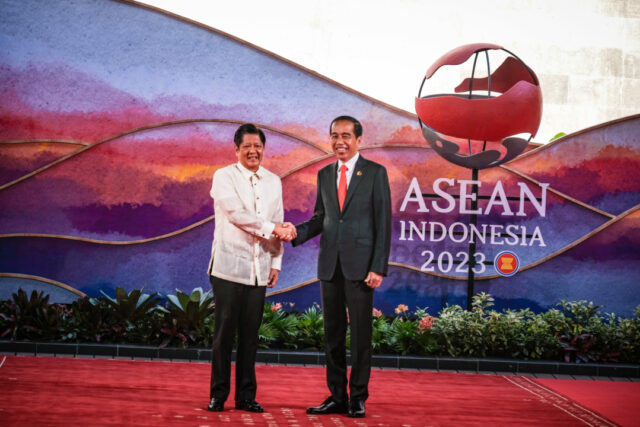
PRESIDENT Ferdinand R. Marcos, Jr. shakes hands with Indonesia’s President Joko Widodo in Labuan Bajo, Indonesia, May 10, 2023. — PPA POOL PHOTO

By Kyle Aristophere T. Atienza, Reporter

PHILIPPINE President Ferdinand “Bongbong” R. Marcos, Jr. on Tuesday night pushed a code of conduct for the South China Sea amid worsening tensions from China’s increased assertiveness at sea.

The target code of conduct, which dates back to 1992, should be released “sooner rather than later because tensions are increasing,” Mr. Marcos Jr. told reporters before meeting his Southeast Asian counterparts in Indonesia, based on a transcript sent by the presidential palace.

Tensions in the South China Sea and power rivalries in the region are expected to be tackled during the 42nd Association of Southeast Nations (ASEAN) Summit in Indonesia that started on May 9 and will end on May 11.

Mr. Marcos vowed to raise the matter again like he did at last year’s ASEAN Summit in Cambodia, but said negotiations would be done outside the ASEAN Summit and related summits.

“You cannot stop trying,” he said. “So yes, I will bring it up again.”

“When we talk about the issues on the West Philippine Sea, South China Sea, they will not stop until we have a code of conduct.”

During his intervention at the ASEAN Leaders’ Interface with the High-Level Task Force on the ASEAN Community’s post-2025 vision on Wednesday, Mr. Marcos said ASEAN should show the world that “we are able to respond effectively to geopolitical and geo economic challenges as a cohesive force.”

“Today, ASEAN faces a complex geopolitical environment which includes rivalries amongst great powers, climate change and technological disruptions, amongst others,” he said. “ASEAN itself is not immune to its own challenges, as we continue to navigate our differences in the region towards a general consensus of action.”

“Regionalism should mirror our collective interests, for our strength relies on our united voice,” Mr. Marcos said.

There were challenges that prevented ASEAN leaders from coming up with a South China Sea code of conduct, the Philippine leader said, and one of them was the overlapping agreements between China and other ASEAN members.

During the 25th ASEAN-China Summit in Cambodia last year, Mr. Marcos pushed the approval of the code for the South China Sea, which is being claimed by Beijing almost in its entirety.

The Philippines and other ASEAN members such as Brunei, Malaysia, and Vietnam hold different — and in some cases overlapping — claims over the waterway, which is rich in oil and fish.

In 1992, ASEAN leaders signed a declaration that emphasized the “necessity to resolve all sovereignty and jurisdictional issues pertaining to the South China Sea by peaceful means, without resort to force.”

They aimed to establish a code of international conduct over the waterway that they said should be based on the “principles contained in the Treaty of Amity and Cooperation in Southeast Asia.”

In 2002, ASEAN and China signed a nonbinding agreement in which 11 countries agreed that a South China Sea code of conduct was needed.

Various issues, including the use of strong language against China, have prevented ASEAN members from finalizing the code.

‘MEASURED EXPECTATION’
“What is the problem? What is the bottleneck? Where are we having a hard time? How can we fix that problem?” Mr. Marcos told reporters. “That’s what these meetings should be for, and I think we’ll get to that point because everybody wants this to work, everybody wants to have a code of conduct.”

In December, a Philippine Foreign Affairs official dealing with ASEAN affairs said ASEAN members and China were “still very far from concluding” the code of conduct.

Noel Novicio, deputy assistant secretary and executive director of the Department of Foreign Affairs Office of ASEAN Affairs, said some Southeast Asian countries preferred to have face-to-face negotiations.

At the time, they had finalized the first part of the document.

“I’d like to inform you that there is an unwritten agreement among ASEAN member states and China that nothing is finalized until everything is finalized,” he told a news briefing then.

Indonesia, this year’s ASEAN chairman, is a nonclaimant state but has conflicts with China over its exploration of oil and gas in the North Natuna Sea. China claims some parts of the area fall under its nine-dash line, which Indonesia in 2020 said was illegal.

The largest ASEAN member, in a note verbale addressed to United Nations Secretary-General Antonio Guterres, also raised the 2016 Hague arbitral ruling that largely favored the Philippines in its sea dispute with China.

“The common Code of Conduct by claimant-countries in the South China Sea should be agreed now,” Chester B. Cabalza, founding president of the International Development and Security Cooperation, said in Facebook Messenger chat. “It has been long overdue. The collective agreement should be fast-tracked to prevent further escalation of maritime insecurities in the contested waterways.”

A binding code of conduct would “give teeth and enforcement to regional mechanisms agreed by claimant-countries in the South China Sea,” he said, adding that only claimant-countries should contribute to the contents of the code.

It’s unwise for parties concerned to pin all their hopes in the document in managing sea disputes, said Lucio B. Pitlo III, a research fellow at the Asia-Pacific Pathways to Progress Foundation.

“There should be a measured expectation of what the code of conduct can and cannot deliver,” he said in a Messenger chat. “A binding code of conduct may prescribe certain actions or behavior in the disputed sea, but it will not resolve territorial or maritime claims.”

The three-day ASEAN Summit and Related Summits take place amid increasing tensions between China and the United States, whose 2014 Enhanced Defense Cooperation Agreement (EDCA) with the Philippines has been expanded by Mr. Marcos.

Mr. Marcos Jr. said the code of conduct is in line with the concept of ASEAN centrality, which he has vowed to uphold in dealing with maritime tensions.

Security experts have said the Philippine leader had yet to bank on the strength of ASEAN in dealing with China’s aggression in Philippine waters.

Mr. Marcos Jr., 65, has boosted Manila’s defense alliance with Washington, giving it access to four more military bases on top of the five existing sites under EDCA.

Aside from being vocal against China’s expansive activities in the South China Sea, the US has also criticized the Asian superpower’s aggression against self-ruled Taiwan.

China has criticized the EDCA expansion, accusing Washington of endangering regional peace and stability.

Marcos Cabinet may get reorganized with lifting of 2022 appointment ban

PCO

PHILIPPINE President Ferdinand “Bongbong” R. Marcos, Jr. on Tuesday night said he would reorganize his Cabinet after the one-year ban on the appointment of losing politicians ended on May 9. 

“By the end of the first year, it will be clear in the sense that everyone’s on-the-job training is over,” he told a press briefing in Indonesia, based on a transcript sent by the presidential palace.

“We’ve seen who performs well and who is — will be — important to what we are doing. So, yes, there’s still going to be… I don’t know about a reshuffle, but reorganization in the Cabinet,” he added.

Mr. Marcos, 65, has yet to appoint permanent secretaries for the Health and Defense departments.

The Philippines is still reeling from the impact of a coronavirus pandemic that exhausted the country’s health system in the past years.

Daily COVID-19 infections in the Philippines more than doubled to 1,352 in the past week from a week earlier, weeks after the country detected its first case of the Omicron subvariant XBB.1. 16.

The Marcos government is showing little or no concern for public health, the Medical Action Group said in a statement, citing the president’s failure to name his Health secretary.

“What adds insult to injury is that his hands are seemingly full in appointing former police and military officials to key government posts including the DoH that undermines the importance of having expertise and experience in the field of public service, especially in public health,” it added. 

The group said appointment of people to key positions, especially in the Department of Health (DoH), should be based on their capability and commitment.

“They should be able to foster an environment of accountability, transparency and good governance in the health sector,” Medical Action said.

The group political favors send a negative signal to health professionals who have dedicated their careers to advancing public health. 

“It shows that their expertise and contributions are undervalued and that their voices have no place in the decision-making processes,” it said. “This highlights a more significant problem in the Philippines, where political appointments and connections often prevail over qualifications and merit, which is only further eroding public trust in the government.”

Mr. Marcos this month said he was considering giving Cabinet posts to people who lost in the 2022 elections.

The 1987 Constitution bars the appointment of losing politicians within a year after elections. — Kyle Aristophere T. Atienza

Interpol issues notice on Philippine lawmaker facing murder case

INTERPOL.INT

THE INTERNATIONAL Criminal Police Organization (Interpol) has issued a notice against a Philippine congressman who faces murder charges back home, according to the country’s Justice chief.

Interpol had issued a so-called blue notice against Negros Oriental Rep. Arnolfo A. Teves Jr., who has been linked to the murder of provincial Governor Roel R. Degamo, Justice Secretary Jesus Crispin C. Remulla told a news briefing on Wednesday.

This allows the Philippine government to gain information about Mr. Teves when he travels to different countries. 

“What’s happening now is that we are informed of his movements by all jurisdictions,” the Justice secretary said. “Once he enters a certain jurisdiction, they inform us of his movements.”

Mr. Remulla said the country’s anti-terrorism council might discuss how to go about designating the suspended congressman as a terrorist under the Anti-Terrorism Act of 2020.

Timor-Leste has rejected the congressman’s bid for political asylum, the Foreign Affairs department said on Tuesday night. He was given five days to leave the country, it said.

Mr. Degamo and eight others, including two village leaders, were killed, while 15 were wounded when armed men opened fire at his residential compound, where cash aid was being distributed on March 4.

Last month, the House of Representatives suspended the congressman for 60 days for failing to report back to work after his travel authority expired on March 9.

Mr. Teves, who has gone into hiding, has denied involvement in the crime and cited threats against him and his family.

In a separate statement, Speaker Ferdinand Martin G. Romualdez urged Mr. Teves to return to the Philippines and face the charges.

“Rather than evade investigation by Philippine law enforcement agencies, Congressman Arnie should return home immediately and face the accusation against him,” he said. — John Victor D. Ordoñez