Home Blog Page 4875

Solar capacity grew the most among renewables in 2022

TRINA SOLAR FB PAGE

RENEWABLE ENERGY (RE) capacity hit 8,255 megawatts (MW) in 2022, up from 7,914 MW a year earlier, with solar adding the most new capacity, the Department of Energy (DoE) said.

RE accounted for 29% of the energy mix by capacity at the end of 2022, the DoE said in its Renewable Energy Act implementation status report.

New solar projects in Luzon added 170.9 MW in capacity during the year, followed by biomass with 12 MW, and hydro 4.6 MW.

In the Visayas, biomass added capacity of 70 MW, and hydro 15.9 MW. In Mindanao, geothermal added 3.6 MW in new capacity and hydro 0.8 MW.

The DoE said 1,002 projects were awarded RE contracts last year, of which 216 are running and 786 under development with potential capacity of 80,399 MW.

The DoE said that following the implementation of the RE Act of 2008, investment in RE facilities hit P280 billion.

The DoE estimated the reduction in carbon dioxide emissions resulting from the RE projects at about 4,365 kilotons.

Under the Philippine Energy Plan, the Philippines is aiming to increase the share of renewables to 35% by 2030 and 50% by 2040. — Ashley Erika O. Jose

Talent dev’t ‘nonnegotiable’ in achieving BPO industry’s 1.1-million job target

THE business process outsourcing (BPO) industry cannot delay talent development initiatives if it is to create 1.1 million new jobs by 2028, industry officials said.

“Our goal is not going to be easy and it will necessitate the coordinated efforts of a multi-stakeholder coalition across the next six years,” Jack Madrid, IT and Business Process Association of the Philippines President and Chief Executive Officer, said.

Speaking at the IT-BPM (Information Technology-Business Process Management) Talent Summit on Wednesday, Mr. Madrid added: “This is non-negotiable. We can’t delay any longer on getting a scalable, strategic, and sustainable talent attraction and development program off the ground if we want to see and feel its positive impact on the sector and the competitiveness and employability of Filipinos by 2028.”

In his speech, Trade Secretary Alfredo E. Pascual said an inter-agency technical working group has been formed to support the implementation of a five-year National Development Program for the IT-BPM industry.

“The signing of the statement of commitment serves as a testament to the Philippine government’s unwavering support and dedication to the growth and expansion of the IT-BPM industry,” Mr. Pascual said.

The statement of commitment’s other signatories were the departments of Education, Information and Communications Technology, Labor and Employment, Science and Technology, as well as the Commission on Higher Education and the Technical Education Skills and Development Authority.

“Our efforts to increase the industry’s full-time employees to 2.67 million by 2028 must be carefully coordinated and planned,” Information and Communications Technology Secretary Ivan John E. Uy said in a statement of support.

“A multi-stakeholder approach is required to ensure the development of a workforce-ready and globally competitive Filipino talent. With a workforce that possesses the necessary skills and competencies, we will be able to maintain our position as a top global destination for digitally-enabled and customer-centric services,” he added.

Mr. Madrid said the Philippines has secured a place in the IT-BPM industry and needs to work on the “talent crisis” to continue to grow.

“The biggest opportunity really for us to continue to grow and deliver the 1 million jobs is if we can address the talent crisis, and I use the word crisis, because this is really important to drive home the urgency of talent, because, you know, the Philippines is a world capital already in IT-BPM,” he told reporters on the sidelines of the event.

“This talent thing is really going to require the joint efforts of the government who have a hand in the educational reforms that are needed, then, of course, the private sector, because it is the private sector that needs the talent. These are the companies that will give jobs to the Filipinos,” he said. — Justine Irish D. Tabile

PHL in talks to join International Transport Forum

INTERNATIONAL TRANSPORT FORUM

By Arjay L. Balinbin, Multimedia Editor

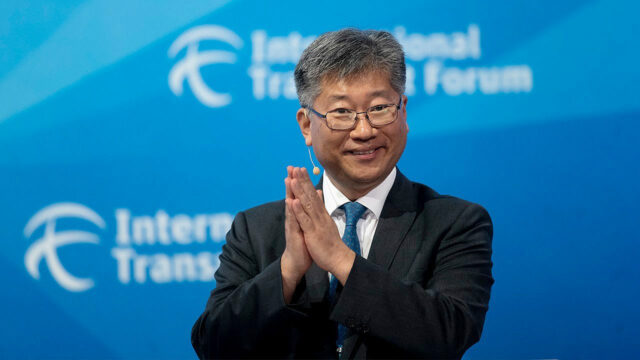
THE Department of Transportation is in talks to join the International Transport Forum (ITF), ITF Secretary-General Young Tae Kim said.

“We discussed the current questions in the mobility sector in the Philippines, but more broadly, we also discussed the possible joining of the Philippines into the ITF community,” Mr. Kim told BusinessWorld on Tuesday, referring to the outcome of his April 24 meeting with Transportation Secretary Jaime J. Bautista.

The ITF serves as a policy think tank for all modes of transport. It is an arm of the Organisation for Economic Co-operation and Development.

According to the ITF, only eight out of its 64 member countries are from Asia, including Cambodia, China, Japan, South Korea, and India. 

Last year, Cambodia became the first Southeast Asian country to join the ITF after being unanimously voted in by the membership during the annual summit in Leipzig, Germany.

“To make more balanced discussions and to provide more balanced solutions, we need to have more non-European countries, because out of 64, 44 countries are from Europe, so the Secretary (Mr. Bautista) thought about this positively, and we will further discuss how we can arrange the Philippines joining the ITF in the future,” Mr. Kim said.

The ITF, through its members, aims to set the future direction of the mobility sector. It also hosts the largest meeting of transport ministers every year in Germany.

“If the Philippines becomes a member, it can officially participate in the discussion to set the orientation for the future mobility sector,” Mr. Kim said.

“Also, the Philippines can participate in our research projects. We publish between 30 and 60 reports every year that reflect the expectations and needs of member countries.”

According to the organization, it is implementing a four-year sustainable infrastructure program in Asia running until 2025 to encourage the transition towards cleaner energy, transport, and industrial systems, particularly in Central Asia and Southeast Asia.

“Existing members can (also) learn from the Philippines, the new member, because every region has a different context and… specific elements, and we have to take into account all the differences in terms of diversity and in terms of the relevance of the policy implementation, and I think, in this respect, the Philippines might benefit a lot from working more closely with the ITF,” Mr. Kim said.

The ITF also said that it aims to disseminate best practices for fostering low-carbon freight transport systems in the Philippines.

“In the Philippines, I know that all the supply chain really depends on freight transportation, which emits a lot of CO2 (carbon dioxide), and we cannot change everything immediately, but how we can set up a relevant governance system to make all the things possible…, how we can build consensus so that people can change their behavior…, and how other countries are doing, we have to know,” Mr. Kim noted.

Asked to comment on the state of Philippine transportation, he said: “You see on the roads, unlike the case in European countries, you have a lot of motorcycles, and you have a very specific transport mode in the Philippines, and I saw at a gas station that you still have octane 91, and I think everything should be upgraded and improved, but how we can do it quickly, that’s an issue or a question, but I think, first of all, the government should prepare a good regulation.”

The 2023 ITF summit will take place between May 24 and 26 in Leipzig.

Discussions will center on the role of transportation in improving social welfare, providing benefits to society, and promoting inclusion, while minimizing externalities such as traffic congestion, air and maritime pollution, and road crashes, the ITF said.

The summit will also cover how transport stakeholders can promote system resilience.

‘Naughty list’ of fake-receipt users, sellers targeted soon

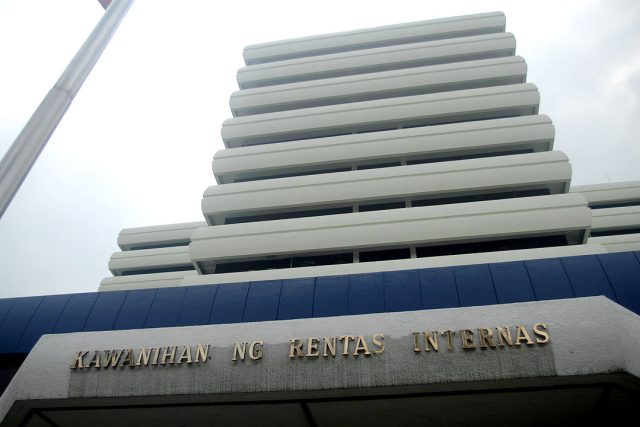
THE Bureau of Internal Revenue (BIR) said it has compiled a list of sellers and users of fake receipts, as well as the accountants who abet them.

BIR Commissioner Romeo D. Lumagui, Jr. said that the agency “will remain aggressive” in taking down the identified targets.

“I am challenging you to come clean and together let us be partners in nation-building,” he added in a statement on Wednesday.

The effort is led by the BIR’s Run After Fake Transactions task force.

In March, the BIR filed criminal complaints against four suspected “ghost” corporations behind the sale of fake receipts.

The revenue foregone as a result of fake-receipt usage has been estimated at around P25.5 billion.

Later that month, the BIR filed an administrative case against an accountant suspected of being behind the four “ghost” corporations. 

In February, the BIR filed tax evasion cases against 74 individuals and corporate taxpayers over taxes evaded worth P3.58 billion. — Luisa Maria Jacinta C. Jocson

Farm industry touts biosecurity initiatives for hog growers

REUTERS

MODERNIZING the hog industry’s biosecurity practices will help growers more effectively contain future outbreaks of animal disease, Cargill Philippines said in a roundtable discussion on Wednesday.

“Modernization includes modern facilities, but of course it should also include modern methods around biosecurity and sharing best practices on how to do that inside the farm,” Sonny Q. Catacutan, Cargill Philippines managing director, said.

Mr. Catacutan said Cargill has a playbook for African Swine Fever (ASF) which it will detail in an upcoming Animal Nutrition Summit, where participants will discuss techniques for keeping farms healthy.

“Digitalization should be at the core of modern farming, allowing our farmers to have the right data that direct production decisions,” he added.

Cargill is a global leader in animal nutrition and a major trader of agricultural goods.

Ruth S. Miclat-Sonaco, director of the National Livestock Program at the Department of Agriculture, said that the department is focused on monitoring hog health and repopulating the depleted Philippine herd.

The repopulation program is known as the Integrated National Swine Production Initiatives for Recovery and Expansion, which in 2024 will focus on “providing additional equipment to further modernize facilities,” she added.

Rolando E. Tambago, president of the Pork Producers Federation of the Philippines, Inc., said modernization “should be driven by the private sector.”

“If really wanted to move forward and be competitive globally, then the private sector should lead the way,” he added.

Ms. Sonaco said the outlook for the hog industry is positive over the next two years, citing the turnaround in hog population trends starting in the second quarter of 2022 after a growth rate in the “low negatives” over the previous three years.

She said government budget constraints remain an issue.

“We were asking for approximately P33 billion (in 2021) for a three-year program to restore the base of breeding hogs.

The Bureau of Animal Industry estimates that as of 2022, ASF outbreaks have been detected in 4,418 barangays, up from 2,139 in 2021.

Alfred Ng, vice-president of the National Federation of Hog Farmers, Inc., said farmers are reluctant to repopulate, viewing it as a risky investment.

“Of course, farmers are enjoying higher farmgate prices right now, but still they think of the risk,” he said.

He estimated the cost of repopulation at P25,000 per breeder.

“We know it’s so difficult to get funding from the government. If the budget is really for repopulation, I think they should concentrate their (efforts) on purchasing breeders,” he said. — Sheldeen Joy Talavera

World Bank: Migration a channel for capital, skills transfer and tool for reducing poverty

PHILIPPINE STAR/MIGUEL DE GUZMAN

MIGRATION must be viewed through the lens of capital and knowledge transfers to properly harness it for poverty reduction, the World Bank said.

“Cross-border mobility can be a powerful force for reducing poverty in origin countries. The benefits for development arise from remittances, knowledge and technology flows, higher incentives and opportunities for human capital accumulation, and more efficient allocation of labor,” it said in its latest Migrants, Refugees, and Societies report.

“In countries with relatively large numbers of current or potential labor emigrants, economic and development strategies should reflect the importance of the potential contribution of emigration to poverty reduction,” it added.

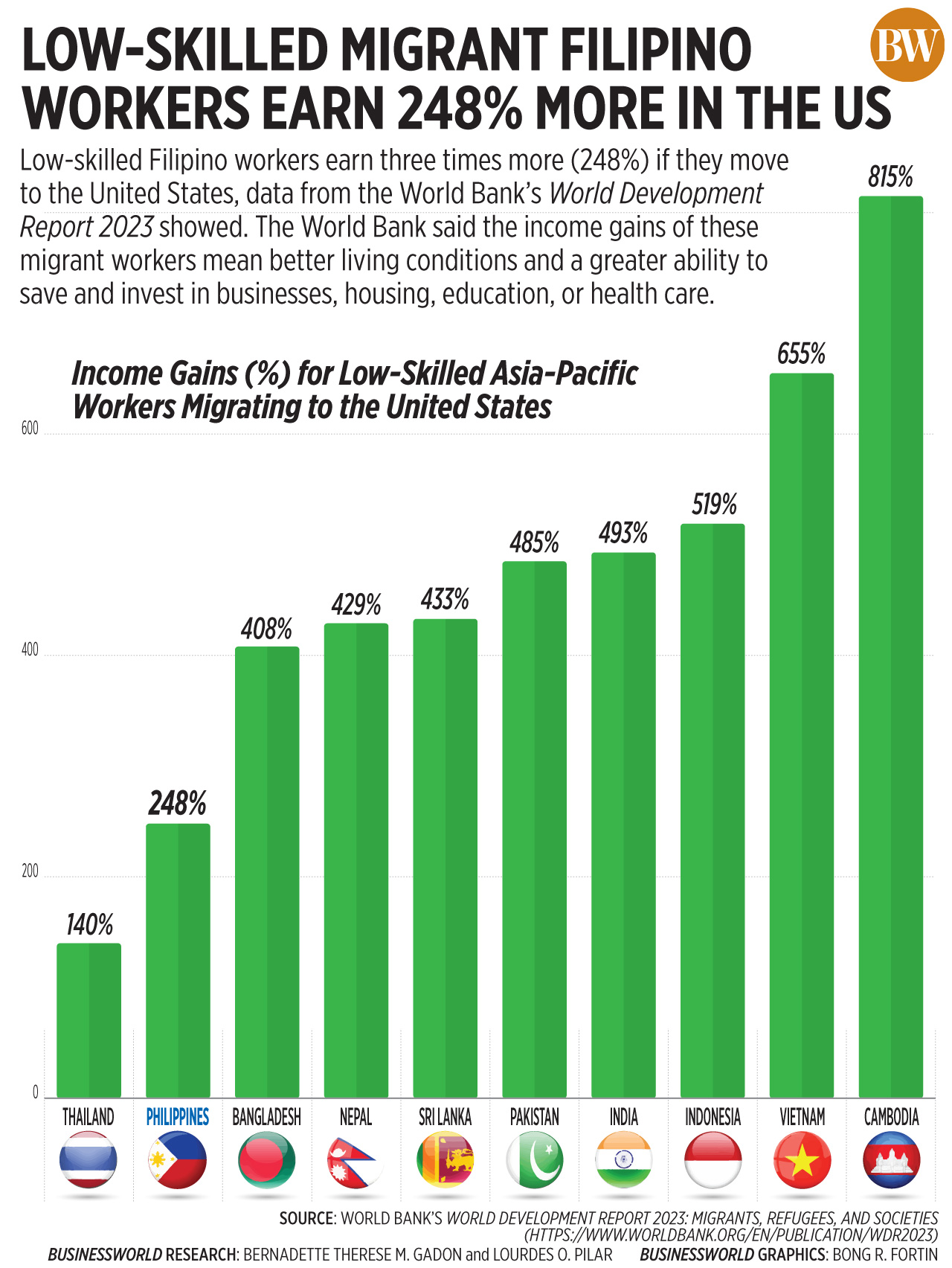
Low-skilled migrant Filipino workers earn 248% more in the US

The World Bank recommended that countries make migration part of their development strategies.

“These strategies should outline specific measures the government intends to take to maximize these benefits and to mitigate negative impacts. In preparing their strategies, governments would benefit from input from the private sector, labor unions, current and would-be migrants, and the diaspora. In some cases, dedicated institutions are needed to ensure the implementation of these strategies,” it added.

The report singled out the Philippines, which has made labor migration a focus in the Philippine Development Plan (PDP) for 2023 to 2028.

“The PDP is directed at supporting returning migrants’ reentry into the economy and managing the social impacts of emigration, including by offering health and psychosocial services to migrants and their children,” it said.

“In parallel, the government set up two institutional structures to manage migration policy and regulation: the Philippine Overseas Employment Administration and the Overseas Workers Welfare Administration. They were recently consolidated into a single Department of Migrant Workers,” it added.

Around 2 million Filipinos leave for temporary foreign jobs each year, on average for seven years, according to the report.

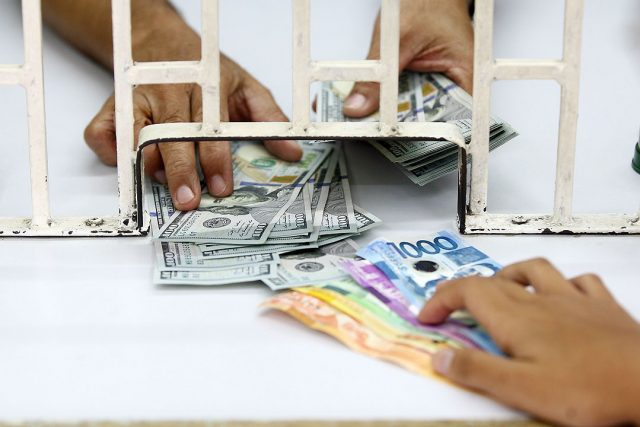
Remittances from migrants can also help reduce poverty if channeled into investments.

“In countries where they account for a relatively large share of income, remittances contribute to macroeconomic stability and reduce fluctuations. Reducing remittance fees and enabling remittances to flow through formal channels are critical, as articulated in the United Nations’ Sustainable Development Goals,” it added.

“The cost of sending remittances to the Philippines from other countries in the region are among the world’s lowest because of efforts by the government and the private sector to develop digital platforms and expand information on remittance services,” it added.

Other policies that ease remittance flows include increasing financial-industry competition, expanding access to digital finance, and adopting new digital payment tools.

“Many returning migrants, regardless of their formal education level, bring back improved skills, assets, and knowledge…. better-skilled migrants often have more access to regular entry channels, enter the destination labor market in a stronger position, and are paid higher incomes,” it said. — Luisa Maria Jacinta C. Jocson

Cacao industry revival stalls as volumes remain stagnant 

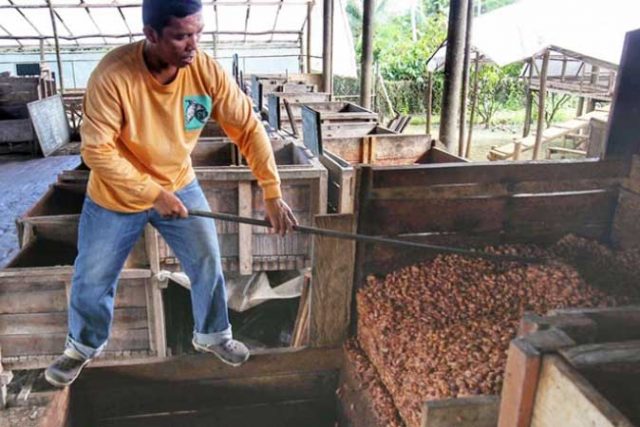
CACAO FARMERS continue to struggle to increase yields to a level sufficient to raise their earnings, according to an industry official.  

At a briefing on Wednesday, Philo Chua, board member of Philippine Cacao Industry Association (PCIA), said cacao farmers are only able to produce 700 grams of dried beans per tree, well below the target of two kilograms, the level estimated to generate adequate earnings.   

He said that the government recently started to revive the industry by distributing seedlings and promoting the beans.  

“Because of (the resulting) unbridled enthusiasm, we told farmers to just plant anywhere. What happened is that for a lot of farmers, the productivity is not there,” he said.  

Mr. Chua said the Philippines has been only able to produce 10,000 metric tons (MT) of beans, well short of demand estimated at 37,000 MT.  

“There’s always a big opportunity for the cacao industry right now because demand is still increasing,” he said.  

Some large-scale companies are not buying domestic beans and are importing because they are worried about supply. 

According to the Philippine Cacao Industry Roadmap for 2017-2022, the Philippines, the first country in Asia to plant cacao, remains an importer of chocolate, cocoa powder, cocoa beans, and cocoa butter.

Mr. Chua said that with the aid of state universities, the industry is now focusing on how and where cacao should be planted.

“We learned that cacao should not be planted just anywhere, even though we say that the Philippines is a good place to plant cacao,” he said.  

He said that the PCIA and the Department of Agriculture have mapped out ideal growing areas for cacao.

He said standing trees are sometimes cut by farmers interested in cultivating durian.   

“There’s definitely big opportunity for the cacao right now. Even the cacao price here is quite high. Our prices are much better than international prices because Philippine cacao is known for its fine flavor,” he said

He said that the Philippines is exporting cacao to chocolate makers in Japan, North America, and Europe and has produced beans that have been recognized as among the best in the world, with gold medals awarded to Philippine entrants starting 2017. — Sheldeen Joy Talavera 

Bridging the gap between TP and Customs

In recent years, the business community has acknowledged the relevance of transfer pricing (TP) not only in terms of taxation, but also in relation to customs matters. In these two areas, there is common ground that may be useful to both tax and customs authorities.

At the outset, the customs and tax authorities may have similar objectives when assessing related party transactions. For customs valuation purposes, import transactions between two distinct and legally separate entities belonging to the same multinational group are treated as related party transactions. One of the main objectives of the customs authorities in examining these import transactions between related parties is to determine whether the prices declared for the imported goods are influenced by such relationships.

On the other hand, for taxation purposes, the determination of prices of transactions between related parties is called TP. At the heart of every TP rule is the concept of the arm’s length principle which requires the transfer prices between related parties to be consistent with the prices that independent parties would charge for a similar transaction. Thus, in TP audits, the tax examiner’s main objective is to determine if the taxpayer’s selected TP methods and arrangements are consistent with the arm’s length principle.

The parallel objective of both the customs and tax authorities on related party transactions opens a discussion on what information can be shared between them.

Aside from the above, the customs valuation methods also have striking similarities with the TP methods set out by the OECD TP Guidelines and Philippine TP Guidelines. In terms of customs valuation, the primary method is the transaction value, which is the price that is actually paid or payable when the goods are sold for export, plus any adjustments or cost elements which are not included in the invoice price (e.g., related royalties, commissions, etc.). When the transaction value method cannot be applied, the following alternate methods may be applied:

• Transaction value of identical goods

• Transaction value of similar goods

• Deductive value method

• Computed value method

• Fallback option

In order to apply the transaction value of identical or similar goods, there must be an available comparable shipment to which the transaction value of the identical or similar goods is applied. The criteria for similar goods are less restrictive than for identical goods, hence allowing a larger pool of potential comparable goods/shipment. These methods resemble the comparable uncontrolled price (CUP) method under the OECD and Philippine TP Guidelines.

The deductive value method, on the other hand, is based on the price at which the imported goods are sold on the domestic market, reduced by costs related to post-import activities (e.g., transportation and storage costs) and by profit and general expenses. The deductive value approach is quite similar to the resale price method under TP Guidelines which starts with the price at which the product that is the object of the controlled transaction is resold to an independent enterprise, which is then reduced by an appropriate gross profit margin in order to determine an arm’s length price.

The computed value method, which is based on the manufacturing cost of such imported goods, is akin to the cost-plus method which starts with the costs incurred by the supplier of the property or services that are the object of the controlled transaction plus an appropriate mark-up in order to determine an arm’s length price.

Given the above, one may ask, ‘What if the information available to the customs authorities is made available to the tax authorities, and vice versa?’. For instance, if the customs authorities have access to the transaction value of identical or similar goods, would that information be helpful to tax authorities as well in assessing the arm’s length nature of the import transaction between related parties? On the other hand, what if the information needed by the customs authorities is already included in the transfer pricing documentation of the local entity, would that bring more value to the TP documentation in terms of supporting the position that the pricing between related entities is not influenced by their special relationship?

Another matter worth noting is the impact of TP adjustments to customs duties. In some cases, TP adjustments may be necessary to be consistent with the arm’s length principle. For instance, imagine a limited risk distributor (LRD) that imports goods from its related party supplier (Entrepreneur) which acts as the main entrepreneur and bears majority of the risk. In this scenario, given that the LRD only assumes limited functions and risks, the LRD’s TP policy is to maintain a targeted arm’s length margin. Any difference from the actual and the targeted arm’s length margin of the LRD should be taken into account by both the LRD and the Entrepreneur. If deemed reasonable, there may be an adjustment on the LRD’s purchase price from the Entrepreneur. Such adjustments are usually done at year end before the closing of the books and after importation. As such, these adjustments may also need to be reported to the customs authorities to reflect the correct transaction value of the imported goods. However, there is a possibility that such adjustments may not be accounted for by the customs authorities given that these adjustments usually occur only after the goods have been released from customs custody. In such cases, a clear understanding of the TP policy of the related parties by the customs authorities should be helpful in order to assess whether future adjustments may still be possible to arrive at the final transfer price. Thus, TP documentation should equip the customs authorities in their collection efforts especially on related party transactions.

With rapid globalization, the interplay between TP and customs can no longer be downplayed. The linkages between TP and customs come with a lot of possibilities and discussions as to what can be done to streamline the two practices. This is not an easy task but having an open conversation is a great start.

The views or opinions expressed in this article are solely those of the author and do not necessarily represent those of Isla Lipana & Co. The content is for general information purposes only, and should not be used as a substitute for specific advice.


Leizelyn De Villa is a manager at the Tax Services department of Isla Lipana & Co., the Philippine member firm of the PwC network.

+63 (2) 8845-2728

leizelyn.e.de.villa@pwc.com

Marcos sees Philippine and US troops fire at mock enemy ship

PNA PHOTO BY ALFRED FRIAS/ROLANDO MAILO)

By Kyle Aristophere T. Atienza, Reporter

PHILIPPINE President Ferdinand R. Marcos, Jr. on Wednesday witnessed a live-fire sea drill between the Philippines and United States armed forces near the South China Sea, as the allies near the end of their largest-ever war games.

The drill — the highlight of the Balikatan (shoulder-to-shoulder) exercises between the two countries this year — involved the sinking of a World War II-era Philippine Navy ship that was decommissioned in 2021.

The vessel 12 nautical miles off the coastal waters of San Antonio, Zambales in northern Philippines was treated as an enemy vessel.

About 1,400 marines, soldiers, sailors, airmen and coastguards from both countries took part in the drill, which “involved detecting, identifying, targeting and engaging a target ship using a variety of ground and air-based weapons systems,” the Presidential Communications Office said in a statement.

The exercise featured US and Philippine weapon systems including the High-Mobility Artillery Rocket Systems (HIMARS) and Avenger air defense systems, which delivered coordinated fires on the target ship.

“HIMARS is a C-130 air transportable wheeled launcher mounted on a five-ton Family of Medium Tactical Vehicles XM1140A1 truck chassis organic/assigned to field artillery brigades,” the presidential palace said. 

Built to support an “expeditionary, lethal, survivable and tactically” mobile force, the HIMARS carries one launch pod containing either six Guided MLRS rockets or one Army Tactical Missile System.

Temario C. Rivera, a retired professor of international politics at the University of the Philippines, said the drills that involved the use of advanced missile weaponry and sinking of a mock enemy ship “could only lead to the worsening of tensions” in the Philippines’ exclusive economic zone in the South China Sea.

It also posed threats to the Philippines’ relations with China, the Southeast Asian nation’s largest trade partner, he said.

“While we can develop a minimum military deterrence, this should not be held hostage to the strategic security priorities of the US that are not necessarily aligned with our core national interests,” Mr. Rivera said in a Facebook Messenger chat.

“In negotiating our relations with the major powers, we should rely mainly on innovative and agile political and diplomatic initiatives in exploring peaceful approaches to the conflict in the region.”

San Antonio, Zambales is about 140 miles from Scarborough Shoal, which China claims. In 2016, an international court ruled both Chinese and Filipino fishermen have the right to engage in traditional fishing there. China has ignored the ruling.

During the littoral live-fire event, a US Marine Corps command and control and sensor network enabled various firing platforms to sense their target, develop firing solutions and deliver precision-integrated fires against the target vessel, according to the palace.

The drill was also participated in by Armed Forces of the Philippines Chief of Staff Andres Centino, National Security Adviser Eduardo Año, Zambales Rep. Doris Maniquiz and Zambales Governor Hermogenes Ebdane, Jr.

US Ambassador to the Philippines MaryKay Carlson, US Deputy Assistant Secretary of Defense for South and Southeast Asia Lindsey Ford and US Exercise Director William Jurney were also present.

STRONG SIGNAL
Security expert Chester B. Cabalza said the Philippine president’s presence at the live-fire drill sent a strong message to China that Manila and Washington are “geared toward collective deterrence in protecting what is ours and obey maritime rule-based norms.” 

“His presence was a solid rock to Philippine claims in the Scarborough Shoal and other maritime features in the West Philippine Sea,” Mr. Cabalza said via Messenger chat.

His presence could lead to a “swift shift” of the Armed Forces of the Philippines to external defense, he added.

“This is contrary to the defeatist posture of the Philippines. It brings out the fighting spirit of the Philippines in our assertive claims in the West Philippine Sea.”

The so-called Balikatan exercises this year started on April 11 and will end on April 28. Almost 18,000 soldiers from both sides participated in the drill. There were observers from Japan, South Korea, the United Kingdom, France, India and Southeast Asian countries. 

“Mr. Marcos being there himself is just a manifestation of every president’s desire to project a strong military commander persona,” Michael Henry Ll. Yusingco, a policy analyst, said via Messenger chat.

“The president’s presence shows to the troops that he can be a battlefield commander himself,” he said. “It’s all about perception because these kinds of events are tightly scripted.”

But Mr. Yusingco noted that if the president’s presence at the drill was meant to send a strong signal to China, “it’s counterintuitive to the administration’s policy of neutrality.”

Lucio B. Pitlo III, a research fellow at the Asia-Pacific Pathways to Progress Foundation, said the Philippine leader’s decision to witness the drill “signals the importance of the alliance with the US for the country’s security.”

But the government appears committed to its economic partnership with China, he said in a Messenger chat.

In February, Mr. Marcos allowed wider American access to Philippine military bases under their Enhanced Defense Cooperation Agreement (EDCA).

China has criticized the expansion, accusing Washington of endangering regional peace and stability.

EDCA banks on the 1999 visiting forces agreement and 1951 Mutual Defense Treaty between the Philippines and US.

In September 1991, Filipino senators voted to end a century of US military presence in the Philippines.

The military base treaty would have given the US 10 more years to maintain Subic Naval Base, one of its most strategic bases in the Southeast Asian nation. A year before this Mt. Pinatubo’s eruption forced the US to abandon Clark Airbase in Pampanga province. The two former US bases are now economic hubs in central Luzon.


Makati City told to hold hearings on address law

GOOGLE MAPS

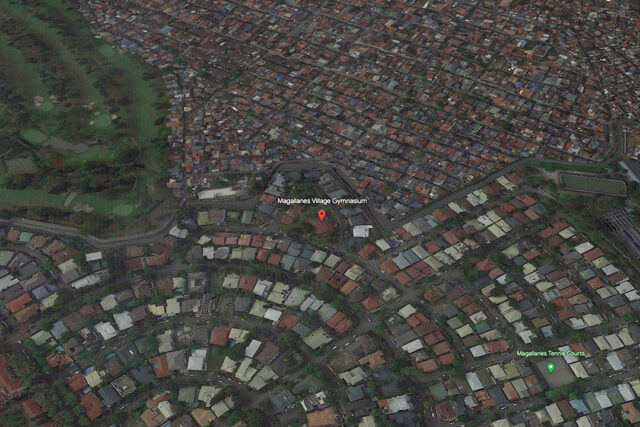
A POLITICAL analyst on Wednesday urged Makati City to hold public hearings before enforcing a 2020 ordinance standardizing the local government’s address system.

“The local government unit’s rationale for the ordinance is sound,” Maria Ela L. Atienza, who teaches political science at the University of the Philippines, said in a Viber message. “However, did they hold public consultations with all stakeholders? Did they conduct research?”

“The ordinance was issued in 2020 during the first year of the pandemic and lockdown, so people might not have paid attention to it at that time,” she added.

Makati City Mayor Marlen Abigail Binay-Campos did not immediately reply to a Viber message seeking comment.

A copy of the ordinance could not be found on Makati City’s website.

The local council of Makati City in 2020 passed an ordinance replacing all existing address numbers in the city with new standardized numbers.

An April 24 Philippine Daily Inquirer (PDI) column based on an interview with a resident from Magallanes Village in the city noted that if implemented, residents would have to change the addresses on important documents such as utility bills, bank statements and parcels, among other things.

The ordinance aims to “ensure that every individual, building or organization can easily be found and reached, especially during service delivery in times of disasters.”

The city’s Urban Development Department had only notified Makati residents of the start of the implementation on March 29, “with the barangay residents expected to submit their new address numbers by April 24,” according to the report.

Ms. Atienza said it is the obligation of local governments to consult the people on any planned ordinance.

“Should a new ordinance be passed, it should also be properly explained to the people and implemented in accordance with their inputs as well as that of experts,” she said.

“People also have the right to question and challenge local ordinances and other actions.” — Kyle Aristophere T. Atienza

SMC considers building Batangas-Mindoro bridge as provinces grapple with oil spill, power crisis 

DOT PHOTO

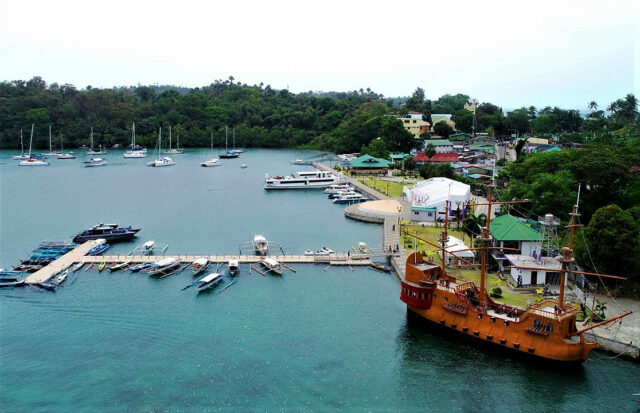
SAN Miguel Corp. (SMC) on Wednesday said it is eyeing to build a 15-kilometer bridge that will connect Mindoro island to mainland Luzon through Batangas province.  

We have started bringing together global experts across disciplines, including a European architectural and engineering firm to do a technical feasibility study on how the bridge can be built sustainably to benefit both people and the environment,SMC President and Chief Executive Officer Ramon S. Ang said in a press release.   

The company said it is in talks with the Oriental Mindoro provincial government through Governor Humerlito A. Dolor about the project, which was first proposed in 2015.  

Mindoro, the 7th largest and 8th most populous island in the country, is divided into two provinces, the other being Occidental Mindoro.  

Mr. Ang said that since his last meeting with Mr. Dolor, SMCs team has engaged the services of a local company to initially do a bathymetric survey to measure water depth.  

It has faced a series of setbacks over the years, but we hope that together we can finally bring the vision to fruition,he added.    

The bridge project will span between Barangay Ilijan in Batangas, pass through Verde Island, and Barangay Sinandigan in Puerto Galera, a popular tourist town in Oriental Mindoro.   

The bridge is seen to result in faster and more efficient transport of people and goods and spur local economic growth through job generation, higher investments and optimization of basic services such as water, power and telecommunications, among others,the company said.   

The Batangas-Mindoro super bridge is part of President Ferdinand R. Marcos Jr.s 10 projects for public-private partnership.  

OIL SPILL
Meanwhile, the Department of Environment and Natural Resources (DENR) said the government is now working on a harmonizedrecovery plan for the oil spill incident in waters off Oriental Mindoro.  

We have a convergence framework where we look at each of our mandates, at the point of how we can support the building of resilience for inclusive and sustainable activities,said DENR Secretary Maria Antonia Y. Loyzaga in a statement on Wednesday following a multi-agency meeting last week. 

According to the DENR, they are establishing plans to address the intersecting impactsof the oil spill incident on the environment, tourism, and the local economy.

Motor vessel MT Princess Empress was carrying 800,000 liters of industrial oil when it sank off Naujan in Oriental Mindoro on Feb. 28.  

Ms. Loyzaga said the recovery plan should not only look at bouncing back but bouncing forwardto assure the resiliency of communities and ecosystems. 

Tourism Secretary Maria Esperanza Christina G. Frasco reported that there are over 1,600 tourism industry workers whose livelihoods have been affected.

Defense Undersecretary Ariel F. Nepomuceno, who also serves as the executive director of the national disaster management council, sought for a “scientific approach.” 

He said he aims to work with the Department of Science and Technology for accurate guidance on the recovery efforts. 

POWER SUPPLY
In Occidental Mindoro, the National Electrification Administration (NEA) has contracted Power Systems, Inc. (PSI) to operate its diesel power plant to ease the 20-hour daily power outages in the province.

In a statement on Wednesday, NEA Administrator Antonio Mariano C. Almeda said this would give Occidental Mindoro residents about six to seven hours of electricity supply per day.

NEA said PSI agreed “in principle” to operate its diesel power plant in San Jose town starting April 29, which has a dependable capacity of five to six megawatts (MW). 

“NEA will cover the cost of operation for the first two months,” Mr. Almeda said, adding that the contract for the two-month period will be a form of subsidy from the national government.

“The cost of the operation will not be passed on to the consumers,” NEA added.  

Meanwhile, Mr. Almeda has also requested DMCI Power Corp. to supply power to Occidental Mindoro Electric Cooperative, Inc. (OMECO) after the Department of Energy (DoE) issued a certificate of exemption from the competitive selection process for the procurement of 17 MW emergency power supply.  

The DMCI promised to roll out 10 MW in a matter of 30 days and the 7 MW in two months,” he added. Justine Irish D. Tabile, Sheldeen Joy Talavera and Ashley Erika O. Jose

Wage hike, right to organize among major calls on Labor Day 

PHILIPPINE STAR/EDD GUMBAN

AN ALLIANCE of major labor groups in the Philippines will call for wage increase, decent work, and rights to freely unionize as they take to the streets of the capital Manila on May 1.   

In a statement, the All Philippine Trade Unions (APTU) said it will gather more than 10,000 workers and march from a major thoroughfare to a key demonstration center near the presidential palace in Manila on Labor Day, an annual holiday in the country.  

It said protest actions have also been planned in other parts of the country.  

Workers will march on May 1 to press for Malacañangs position on our demands for an inclusive roadmap to achieve decent work, an immediate action to the popular clamor for immediate wage increase and an end to impunity, among other matters,the Kilusang Mayo Uno (KMU) said.  

Currently, there are petitions for wage increase in almost all regions, ranging from P150 to P750. 

Among them is a March 22 petition seeking to raise the current P570 daily minimum wage for nonagricultural workers in the National Capital Region (NCR) to P1,100. 

Wages should climb together with productivity because it is only right and just that workers, who create the wealth of our nation, get their fair share of our economic growth,the Trade Union Congress of the Philippines said. 

Workers cannot wait anymore, and workers definitely deserve better. 

The Nagkaisa! Labor Coalition said it is necessary for workers to defend their rights to organize and engage in collective bargaining, which the group said are democratic practices that are being violated in the country.  

A report submitted by the APTU to the International Labor Organizations (ILO) high-level tripartite mission to the Philippines in January indicated that at least 68 trade union killings and hundreds of violations of the right to freedom of association had been violated in the country.  

The report cited the killing of labor union leader Emmanuel Asuncion, who was shot to death during police raids in 2021; cases of labor activists being tagged as communists; and trumped-up charges filed against labor activists.   

The report said the Philippine government has consistently failed to comply with ILO conventions on freedom of association and the right to organize.

Meanwhile, the APTU said ending labor contractualization remains highin their priority list. 

The current administration should pass the security of tenure bills in both the public and private sectors, and ratify ILO Convention 190 on the elimination of violence and harassment in the world of work,Annie Geron of Women Workers United said. Kyle Aristophere T. Atienza