Home Blog Page 475

Philippines’ dollar reserves jump to $108.8 billion at end-September

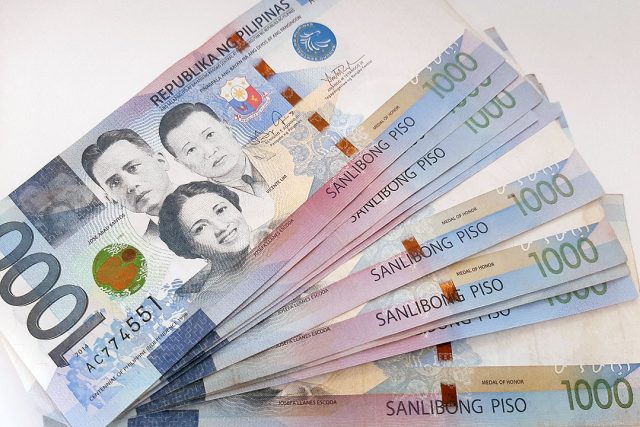
US dollar bills are seen on a light table at the Bureau of Engraving and Printing in Washington in this Nov. 14, 2014 file photo. — REUTERS

THE PHILIPPINES’ dollar reserves rose to its highest in 11 months at end-September, driven by higher global gold prices, earnings from the central bank’s investments and the National Government’s foreign currency deposits.

Preliminary data from the Bangko Sentral ng Pilipinas (BSP) showed that gross international reserves (GIR) reached $108.805 billion as of end-September, up 1.6% from $107.098 billion in August.

This was the highest GIR level in nearly a year or since the $111.084 billion seen in October 2024.

However, it was 3.5% lower than $112.707 billion in September last year.

“The Philippines’ gross international reserves rose in September 2025 due to higher global gold prices, income from Bangko Sentral ng Pilipinas’ investments, and foreign currency deposits by the National Government with the BSP,” the BSP said in a statement.

Dollar reserves are the central bank’s foreign assets held mostly as investments in foreign-issued securities, foreign exchange and monetary gold, among others.

These are supplemented by claims to the International Monetary Fund (IMF) in the form of reserve position in the fund and special drawing rights (SDRs).

BSP data showed the level of dollar reserves in the nine-month period is enough to cover about 3.6 times the country’s short-term external debt based on residual maturity.

It is also equivalent to 7.3 months’ worth of imports of goods and payments of services and primary income, well above the three-month standard.

“The latest GIR level provides a robust external liquidity buffer,” the central bank said in a statement.

Ample foreign exchange buffers protect the country from market volatility and ensure that it is capable of paying its debts in the event of an economic downturn.

The BSP’s foreign investments inched up by 0.3% to $87.243 billion as of end-September from $86.987 billion in the previous month. However, it went down by 8.4% from $95.199 billion in the same period a year ago.

Central bank data also showed that its gold holdings were valued at $16.385 billion, jumping by 12.8% from the $14.523 billion seen at end-August and by 50.9% from $10.86 billion last year.

Meanwhile, foreign exchange holdings slumped by 44.9% to $505.1 million in September from $916.1 million in August and by 75.3% from $2.042 billion a year earlier.

The Philippines’ reserve position in the IMF edged up by 0.2% to $737.7 million at end-September from $736.4 million in August. It climbed by 0.9% from $731.1 million in September 2024.

SDRs — or the amount the Philippines can tap from the IMF’s reserve currency basket — were unchanged month on month at $3.935 billion. Year on year, it was 1.5% higher than $3.875 billion.

The BSP also reported that net international reserves inched up by 1.6% to $108.8 billion as of end-September from $107.1 billion as of end-August.

Net international reserves refer to the difference between the BSP’s reserve assets (GIR) and reserve liabilities, including short-term foreign debt, and credit and loans from the IMF.

“This GIR uptrend appears to be above expectations as the end-September GIR already exceeds the BSP’s year-end target of $105 (billion),” Security Bank Corp. Chief Economist Angelo B. Taningco said in an e-mail.

However, Mr. Taningco noted that a weakening peso could pose risks to the country’s dollar reserves in the coming months.

“Potential risks on GIR in upcoming months include persistent peso depreciation pressures induced by foreign capital outflows and higher (United States) Treasury yields,” he said.

At end-September, the local currency closed at P58.196 per US dollar, falling by P1.066 from its P57.13 finish on Aug. 29.

Rizal Commercial Banking Corp. Chief Economist Michael L. Ricafort also noted a $411-million month-on-month decline in the central bank’s foreign exchange holdings amid the foreign exchange market volatility and “political noises.”

Earlier this month, the BSP revised its GIR projection for this year to $105 billion, slightly higher than its previous forecast of $104 billion. In 2026, it expects GIR to reach $106 billion. — Katherine K. Chan

World Bank keeps PHL GDP forecasts unchanged

People shop for goods in Divisoria, Manila. — PHILIPPINE STAR/RYAN BALDEMOR

THE WORLD BANK maintained its Philippine gross domestic product (GDP) growth forecasts for this year and 2026, amid heightened uncertainty and slowing global growth.

In its latest East Asia and Pacific Economic Update released on Tuesday, the multilateral lender kept its growth outlook for the Philippines at 5.3% this year and 5.4% for 2026, unchanged from its projections in June.

These forecasts are below the government’s 5.5-6.5% target for this year, and 6-7% for next year.

The Philippines is expected to be the region’s fourth fastest-growing economy in the East Asia and Pacific this year, trailing Vietnam (6.6%), Mongolia (5.9%), and Palau (5.7%).

For 2026, the Philippines is projected to post the third-fastest growth after Vietnam (6.1%) and Mongolia (5.6%).

The country’s growth forecast is above the regional average, with East Asia and the Pacific expected to expand by 4.8% this year and 4.3% in 2026.

“East Asia and Pacific region growth remains relatively high, but it is slowing down,” World Bank East Asia and Pacific Chief Economist Aaditya Mattoo said in a virtual briefing on Tuesday.

“At the same time, domestic policy choices, especially the reliance in some countries on fiscal stimulus rather than structural reform, are likely to shape near and longer-term growth outcomes. Turning to the reasons why growth is slowing down, we identify three main factors — trade restrictions, increased economic policy uncertainty, and slowing global growth,” he said.

The US imposed a 19% tariff rate for Philippine-made goods starting Aug. 7.

Mr. Mattoo noted that most economies in the region now face higher tariffs, but the Philippines, Thailand and Vietnam are less affected since electronics and semiconductors are exempted from tariffs for now.

The World Bank noted that economies in the region have lowered tariffs exclusively on US imports and pledged to increase purchases of specific American goods, in response to higher tariff rates.

“In some cases, countries have engaged with other trading partners to pursue greater diversification of their trade. These actions may be costly but necessary in an uncertain trading environment,” it said.

The Philippine government has vowed to adopt a zero-tariff scheme on selected US goods, but the move could cost the government P27 billion to P30 billion in forgone revenues. However, negotiations with the US have yet to be finalized.

RISE OF DIGITAL INFORMALITY
Meanwhile, the Philippines is seeing a shift in informal work from agriculture to digital platforms like ride-hailing applications, the World Bank said. However, poor education may prevent workers from capitalizing on tech-driven jobs, it added.

“Now there is the new informality, which is informality of these new platform-based services, which are growing in Thailand and in the Philippines,” Mr. Mattoo said.

However, Mr. Mattoo said regulation and taxation of the informal sector can be reformed to ensure fewer people are marginalized from the economy.

“I think the Philippines is in a position to benefit (from emerging jobs due to technology) if it deals with the huge deficit in human capital,” he said.

“It is stunning that a country that punches above its weight in services, exports, still has feet of clay when it comes to basic education.”

Mr. Mattoo noted that companies in the Philippines are actively involved in the artificial intelligence (AI) economy but see a lack of skills in workers due to poor basic educational foundation.

“East Asia’s export-oriented labor-intensive growth lifted a billion people out of poverty in the last three decades, but the region now faces the twin challenges of trade protection and job automation,” he said.

Mr. Mattoo called for reforms in the business climate and education system to foster a “virtuous cycle between opportunity and capacity,” which would lead to stronger growth and better-quality jobs.

The World Bank also called for reforms and investments in human capital and digital infrastructure, greater competition in services, and policies to ensure a match between job opportunities and people’s skills.

It noted that rapid advances in AI, robotics, and digital platforms require greater agility from firms, workers, and policymakers.

Meanwhile, Mr. Mattoo also flagged the Philippines’ slow industrialization compared with regional peers such as Vietnam, citing the country’s continued reliance on trade tariffs.

“Trade taxes are the simplest way of limiting revenue especially in countries with low administrative capacity,” he said, as it diverting resources away from sectors where the country holds an advantage.

The Philippine government lowered the rice import tariff to 15% from 35% in July 2024 to curb inflation. Agriculture groups have since called for the restoration of the original rate, citing adverse effects on local farmers and an estimated P4.3-billion revenue loss for the government.

“I think non-discriminatory instruments like value-added taxes, better and more effective income taxes and perhaps even the more controversial wealth taxes might be the more effective way of meeting revenue needs,” Mr. Mattoo said.

Finance Secretary Ralph G. Recto has downplayed the urgency of a wealth tax, but said he would support the measure if passed by Congress. — Aubrey Rose A. Inosante

PHL manufacturing output expands in August

A worker is seen inside a manufacturing plant in Sto. Tomas, Batangas, March 1, 2023. — PHILIPPINE STAR/KRIZ JOHN ROSALES

By Isa Jane D. Acabal

FACTORY OUTPUT expanded in August, driven by higher production of food products, machinery and equipment, and a slower annual decline in basic metals, the Philippine Statistics Authority (PSA) reported.

Preliminary results of the PSA’s latest Monthly Integrated Survey of Selected Industries showed factory output, as measured by the volume of production index (VoPI), rose by 1.4% year on year in August. This was slightly faster than the 1.3% growth in the same month last year, and a turnaround from the 1.8% drop in July.

The August reading was the fastest growth since the 1.6% expansion in June.

In the eight months to August, factory output growth averaged 0.5%, slower than the 2.5% average in the same period last year.

On a monthly basis, August’s output picked up by 0.1%, slower than 2.6% in July. Stripping out seasonality factors, it fell by 3.2%.

According to the PSA, the faster year-on-year growth rate of VoPI for manufacturing in August was primarily driven by food products, which jumped by 20.2% from 11.4% in July.

There was also an uptick in machinery and equipment except electrical (6.7% in August from 3.1% in July), and a slower annual decline in basic metals (-9.6% from -26.8%).

Nine other divisions recorded expansions, while 10 saw declines.

The PSA also said that the top three industry divisions that contributed to the overall year-on-year growth in the VoPI were food products, transport equipment (6.5% in August from 9.5% in July), and electrical equipment (19.5% from 21.2%).

Average capacity utilization, or the extent to which industry resources are used in producing goods, averaged 77.3% in August. This was a tad higher than the revised 77.2% in July and the 75.6% posted last year.

In comparison, the Philippines in the S&P Global Manufacturing Purchasing Managers’ Index (PMI) expanded to 50.8 in August from 50.9 in July.

PMI is a leading indicator for factory activity, reflecting the volume of materials purchased in advance of manufacturing operations weeks or months down the line. A reading above 50 separates expansion from contraction.

Ruben Carlo O. Asuncion, chief economist at Union Bank of the Philippines, said the expansion in food production can be attributed to producers’ anticipation of strong holiday demand.

“Inflation was still relatively low overall, so consumer purchasing power remained intact, supporting demand for processed food,” he said in a Viber message.

Mr. Asuncion also said the immediate impact of the US tariffs on the Philippines was limited as food and machinery production is mostly domestic-focused or exempted from tariffs.

“However, exports slowed significantly, and US-bound shipments fell, signaling that the tariff’s full effect will likely hit in the fourth quarter 2025. Sectors like garments and footwear faced pressure, but they contribute less to overall manufacturing output compared with food and machinery,” he said.

US President Donald J. Trump imposed a 19% tariff on Philippine goods, which took effect on Aug. 7.

Sergio R. Ortiz-Luis, Jr., president of the Philippine Exporters Confederation, Inc., said in a phone interview that manufacturers may have ramped up production ahead of the implementation of US tariffs.

“For food products, there was frontloading for the US tariff… Double time in manufacturing food products,” he said.

Meanwhile, Mr. Asuncion said manufacturing output is expected to “grow moderately” in the remaining months of the year, driven by food demand ahead of the holidays, infrastructure-linked machinery production, and further monetary easing by the central bank.

“However, risks remain from US tariffs, global trade slowdown, weather-related disruptions, and local political risks. If BSP delivers another rate cut and fiscal spending accelerates, output could rebound toward yearend despite external and internal headwinds,” he said.

Meralco sees higher generation charge for October

PHILSTAR FILE PHOTO

POWER DISTRIBUTOR Manila Electric Co. (Meralco) expects a rise in its generation charge this month, as the peso’s depreciation is seen to drive up the cost of power purchased from its suppliers.

“While we are still waiting for some billings from our suppliers to finalize the October electricity rate, indications point to a possible increase in the generation charge this month,” Meralco Vice-President and Head of Corporate Communications Joe R. Zaldarriaga said in a statement on Tuesday.

He said the potential upward adjustment in the generation charge is due to the weakness of the peso, which affects the cost of power supply contracts that are mostly dollar-denominated.

The peso closed at P58.196 per dollar on Sept. 30, weakening by P1.07 from its P57.13 finish on Aug. 29, according to the Bankers Association of the Philippines’ reference exchange rate.

Meralco, however, is hoping that the upward adjustment will be offset by lower power prices at the Wholesale Electricity Spot Market (WESM), the electricity trading floor.

The average WESM rate system-wide fell by 33.8% month on month to P3.04 per kilowatt-hour (kWh) in September supply billing, according to the Independent Electricity Market Operator of the Philippines (IEMOP).

According to IEMOP, the decline is the lowest in the past seven months.

For Luzon alone, spot prices fell by 31.7% month on month to P2.57 per kWh.

The generation charge typically accounts for more than 50% of the monthly electricity bill.

In September, the overall rate dropped by P0.1852 per kWh to P13.0851 per kWh from P13.2703 per kWh the previous month, owing to a lower generation charge.

Meralco is the main power distributor for Metro Manila and nearby areas, covering 39 cities and 72 municipalities, and delivering power to around eight million customers.

Meralco’s controlling stakeholder, Beacon Electric Asset Holdings, Inc., is partly owned by PLDT Inc. Hastings Holdings, Inc., a unit of the PLDT Beneficial Trust Fund subsidiary MediaQuest Holdings, Inc., has an interest in BusinessWorld through the Philippine Star Group, which it controls. — Sheldeen Joy Talavera

SEC plans unified lending ID to improve credit access, stop lending abuses

STOCK PHOTO | Image by terimakasih0 from Pixabay

By Alexandria Grace C. Magno

THE Securities and Exchange Commission (SEC) is looking to introduce a unified lending identification (ULI) system to make it easier for borrowers to access credit and to prevent predatory lending and abusive debt collection practices.

“Since our national ID system is still not reliable, we intend to introduce the ULI to provide easy access to credit facilities through authenticated data,” SEC Commissioner Rogelio V. Quevedo said during a Senate committee hearing on Monday.

From January to Sept. 15, the SEC handled 5,415 public complaints involving financing and lending companies and their online platforms, he noted.

“Of this total, 3,570 complaints, or 66%, involve unfair debt collection practices or collection harassment. Among these, 3,315 complaints were filed against unregistered financing companies, lending companies, and online lending platforms (OLPs), while 435 complaints targeted unregistered entities and/or unrecorded OLPs,” he added.

He said unregistered online platforms are among the key concerns that should be addressed by law enforcement agencies.

“Actually, we want to report that the problem is the unrecorded, unregistered online platforms. These are the people, the institutions, that are the subject of complaints. These are the lending companies that are not registered with the SEC,” he said.

“I must note that while the SEC is empowered to conduct investigations, we have no police power. We cannot raid these institutions without enlisting the help of our law enforcement agencies,” he added.

As part of its ongoing monitoring, the SEC said enforcement measures have been carried out, including the issuance of show-cause letters, notices of deficiencies, assessment letters, walk-through examinations, desk reviews, and on-site audits.

While the commission issues show-cause orders and suspends or revokes the licenses of abusive lenders, some continue to operate. The SEC has sought coordination with the Philippine Association of Online Credit (PAOC) to strengthen enforcement.

“There was even one instance where PAOC referred about 20,000 complaints to us, and we discovered that many of these complaints were simply repetitions,” Mr. Quevedo said.

He said complaints against abusive lenders often come alongside cases of borrowers who refuse to pay back loans after filing complaints.

“There are abusive borrowers. They think that if they complain to the financial lending companies, they don’t need to pay. The SEC also needs to protect this industry because it caters to the unbanked sector.”

The commissioner said the SEC also intends to lift the moratorium on online lending platforms once the ULI is fully established and operational.

Apart from the proposed ID system, Mr. Quevedo said the commission is also exploring the use of blockchain technology as a centralized system to verify borrower information for transparency.

He said this will make it easier for consumers to access legitimate credit options and equip authorities with better tools to combat debt collection harassment and prevent abuses by unregistered lenders.

“This is necessary for transparent dissemination of information to borrowers and the public regarding loan products, interest rates, online lending platforms, and third-party service providers. We also intend to use artificial intelligence, as I mentioned, blockchain technology,” he said.

Philippine Institute for Development Studies Senior Research Fellow John Paolo R. Rivera said the ULI is a strategic initiative to improve credit access while curbing predatory lending and harassment.

“By giving borrowers a unique lending ID, it will allow lenders to better assess risk through verified and centralized data, which could lower borrowing costs and reduce default rates. It also strengthens borrower protection by deterring multiple overlapping loans and making abusive collection practices easier to monitor,” he said in a Viber message.

For his part, Rizal Commercial Banking Corp. (RCBC) Chief Economist Michael L. Ricafort said the ULI system would reduce asymmetric information on borrowers, resulting in faster processing, reduced costs, and more loans disbursed.

“With better information available about borrowers, lenders can make improved credit decisions and manage credit risk more effectively. A more reliable credit scoring or vetting system would also help reduce nonperforming loans (NPLs) and improve loan collection processes,” he said in a Viber message.

Gov’t fully awards dual-tranche T-bond offering

BW FILE PHOTO

THE GOVERNMENT made a full award of the dual-tranche Treasury bonds (T-bonds) it offered on Tuesday at average rates close to comparable secondary market levels following slower-than-expected September inflation.

The Bureau of the Treasury (BTr) raised P35 billion as planned via its dual-tenor T-bond offer as total bids reached P77.776 billion, or more than double the amount placed on the auction block.

Broken down, the Treasury borrowed the programmed P15 billion via the reissued seven-year bonds, with total bids reaching P34.436 billion or more than double the amount on offer.

This brought the total outstanding volume for the bond series to P376.4 billion.

The bonds, which have a remaining life of two years and six months, were awarded at an average rate of 5.698%. Accepted yields ranged from 5.6% to 5.71%.

The average rate of the reissued papers rose by 9.3 basis points (bps) from the 5.605% fetched for the series’ last award on Sept. 23 and was also 207.3 bps above the 3.625% coupon for the issue.

Still, this was 0.2 bp below the 5.696% fetched for the same bond series and 0.7 bp lower than the 5.705% quoted for the three-year bond — the benchmark tenor closest to the remaining life of the — at the secondary market before Tuesday’s auction, based on PHP Bloomberg Valuation Service (BVAL) Reference Rates data provided by the BTr.

Meanwhile, the government also raised P20 billion as planned from the reissued 10-year T-bonds it auctioned off, with total bids for the tenor reaching P43.45 billion.

This brought the total outstanding volume for the bond series to P462.6 billion.

The papers, which have a remaining life of nine years and six months, were awarded at an average rate of 6.043%. Accepted yields ranged from 6.035% to 6.05%.

The average rate rose by 13.6 bps from the 5.907% fetched for the series’ last award on Sept. 16 but was 33.2 bps lower than the 6.375% coupon for the issue.

This was also 0.2 bp below the 6.041% seen for the same bond series but 2.4 bps higher than the 6.019% quoted for the 10-year bond at the secondary market before Tuesday’s auction, PHP BVAL Reference Rates data showed.

T-bond yields were within market expectations and were close to comparable secondary market levels amid a lack of leads, a trader said in a text message.

The lower-than-expected September inflation print likely affected yield movements, the trader added.

Headline inflation picked up to 1.7% in September from 1.5% in August, the Philippine Statistics Authority reported on Tuesday.

This was the fastest pace in six months or since the 1.8% print in March, but was within the central bank’s 1.5-2.3% forecast for the month and below the 1.9% median estimate in a BusinessWorld poll of 12 analysts.

This also marked the seventh straight month that the consumer price index (CPI) was below the Bangko Sentral ng Pilipinas’ (BSP) 2-4% annual target.

For the first nine months, the CPI averaged 1.7%, matching the BSP’s forecast for the year.

Meanwhile, the 10-year bond’s average rate rose from the previous award as players may have been hesitant to place their cash in longer tenors due to external risks, Rizal Commercial Banking Corp. Michael L. Ricafort said in a Viber message.

These include “concerns over long-term inflation if the Federal Reserve becomes more aggressive in cutting rates in the coming months as urged by US President Donald J. Trump recently, as this could loosen their grip on inflation and inflation expectations,” he added.

The BTr is looking to raise P180 billion from the domestic market this month, or P110 billion via Treasury bills and P70 billion through T-bonds.

The government borrows from local and foreign sources to help fund its budget deficit, which is capped at P1.56 trillion or 5.5% of gross domestic product this year. — A.M.C. Sy

AAA winners are meditations on colonial history, faith, and memory

AN ART INSTALLATION by Jel Suarez

ARTWORKS that ponder Philippine colonial history, personal and collective memory, and expressions of faith came out on top in the 2025 edition of the Ateneo Art Awards (AAA), held last Sunday at the Ateneo Art Gallery of the Ateneo De Manila University in Quezon City.

The four main prize winners for the Ateneo Art Awards-Fernando Zobel Prizes for Visual Arts — given to artists for an exhibit of their works — were Jel Suarez’s As I Lift One Stone, Silke Lapina’s Bakit Pa, Hannah Reyes Morales’ Home Holds Still, and Uri De Ger’s Beauty Is In The Eye Of The Colonizer.

Nine residencies were also given out, including the No Space Residency in Baguio, Benguet, to Mr. De Ger; the ABungalow Residency in Talisay, Negros Occidental, to Ms. Morales; and Project Space Pilipinas in Lucban, Quezon, and La Trobe Art Institute in Bendigo, Australia, to Ms. Lapina.

Ms. Suarez received five residency grants, from CASA San Miguel in San Antonio, Zambales; Koganecho Area Management Center in Yokohama, Japan; The Creative Campus at Liverpool Hope University in Liverpool, UK; the Monsoon Southeast Asia Collection and LASALLE College of the Arts in Singapore; and OCAD University in Ontario, Canada.

The winners were chosen from a shortlist of 12, which, in turn, were chosen from 158 nominees back in August.

Mr. De Ger’s Beauty Is In The Eye Of The Colonizer — exhibited at Kalawakan SpaceTime — examines how neocolonial forces actively shape contemporary Filipino perceptions of beauty, value, and identity. His installation pieces and paintings draw from internet culture and humor to expose how Filipino aesthetic ideals are informed by Western imperialism.

Ms. Morales’ Home Holds Still was exhibited in Tarzeer Pictures. Her photographs explore how historical memory and current events shape everyday life, spanning Duterte’s drug war to the present day. Her body of work had previously earned her a Pulitzer Prize finalist spot.

Ms. Lapina’s Bakit Pa — exhibited at Edoweird — was only her second solo show in the Philippines. As a German-Filipino multimedia artist, she tackles themes of faith, doubt, and resilience, inspired by Filipino Catholicism and German skepticism, in her installation which uses textiles, mirrors, images, and light.

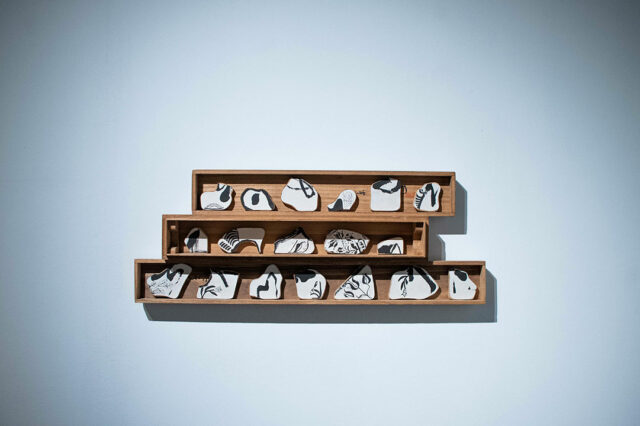
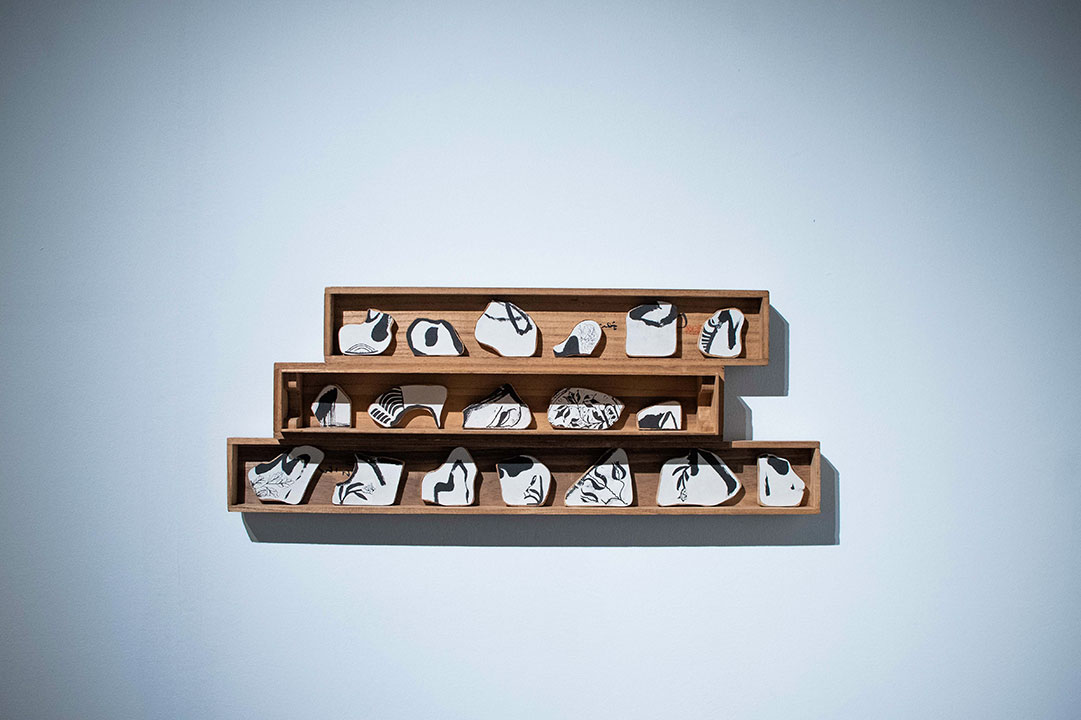
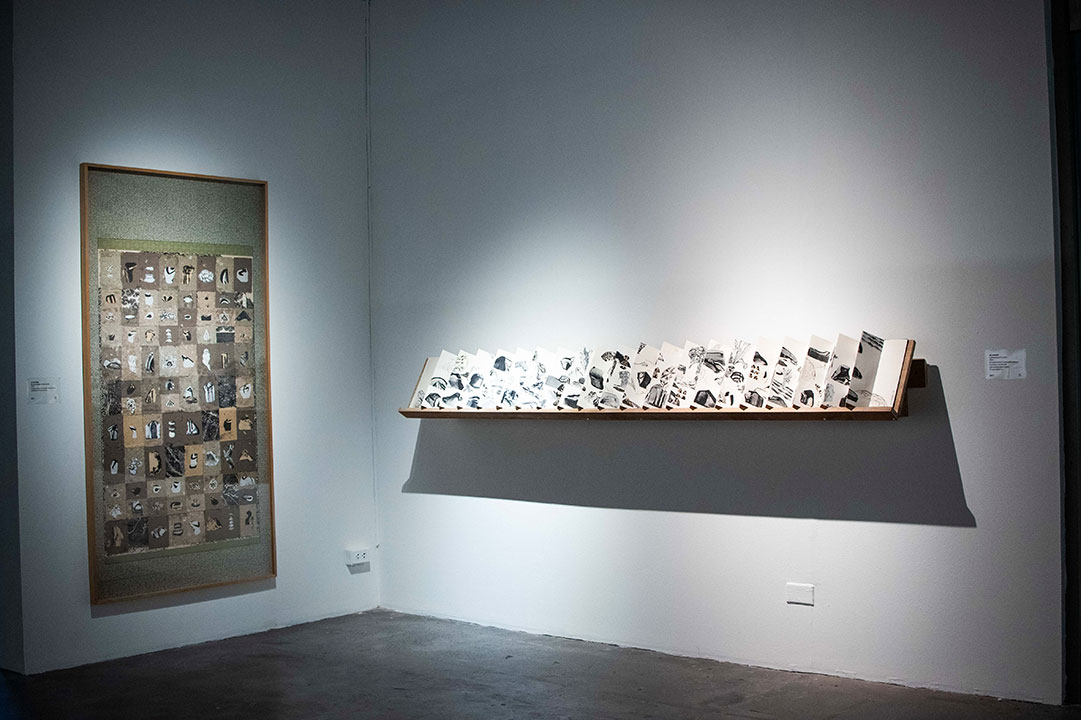
Ms. Suarez’s As I Lift One Stone was exhibited at the Blanc Gallery. Pulling from her personal experience of moving houses, her collage art depicts found objects like book pages, scraps of wood, and fragments of writing. Her ink-brush drawings are assembled to evoke feelings of uncertainty, change, and impermanence.

“The exhibit happened at a time when I found out my mom was sick. She’s terminally ill, so I had to figure out how to come up with works with portability because I needed to be back and forth in Manila and Bacolod,” Ms. Suarez told BusinessWorld after the awarding.

“My practice is mainly collage-making, but for this exhibition it transformed into object-making,” she added, noting that her goal is for the works to resonate with people who may see their own personal memories in the collection of items.

Meanwhile, the Ateneo Art Awards-Purita Kalaw-Ledesma (PKL) Prizes in Art Criticism went to Pie Tiausas and Bea Belen-Ferrer in the English category and Emersan Baldemor in the Filipino category.

Mr. Tiausas’ essay, “The internet is a space for the lonely,” was awarded the PKL Prize for The Philippine Star. With the essay “In Between Flight and Fallout: What Would Postwar Modernists Do?,” Ms. Belen-Ferrer clinched the PKL Prize for ArtAsiaPacific magazine, the Naranja Residency under Orange Project, and the Indeks Residency grant. Mr. Baldemor’s essay, “Hindi Lahat ng Umaangat ay Naaalala: Si Tandang Ano at ang Politikang Estetiko ng Paglimot,” earned him the PKL Prize for the Katipunan Journal and the White House Residency grant.

The Ateneo Art Awards 2025 exhibit is on view at the third floor of the Ateneo Art Gallery in Areté, Ateneo de Manila University, Katipunan Ave., Quezon City, until Dec. 7. — Brontë H. Lacsamana

Toyota Financial ends P2-B bond offer ahead of schedule

PHILSTAR FILE PHOTO

TOYOTA FINANCIAL Services Philippines Corp. (TFSPH), the automotive financing and leasing arm of listed GT Capital Holdings, Inc., ended the offer period for its P2-billion maiden bond issuance on Oct. 7, earlier than scheduled, citing strong investor demand.

“Originally set to run from Oct. 6 to 13, 2025, the offer period was cut short and closed on the second day due to strong investor demand from both institutional and retail clients, reflecting the market’s confidence in the company,” it said in a statement on Tuesday.

The issue and listing date for the bond offer is set for Oct. 21.

On Monday, GT Capital said the P2-billion bond offering would be issued in up to two series: two-year Series A Bonds due 2027 at a fixed rate of 5.7725% and three-year Series B Bonds due 2028 at 5.9418%.

Proceeds will be used to further diversify TFSPH’s funding sources and support its projected asset growth. The issuance will also enable the company to expand its investor base.

First Metro Investment Corp. and ING Bank N.V. Manila Branch served as joint lead arrangers and bookrunners. Both firms, along with Metropolitan Bank & Trust Co. and BPI Capital Corp., acted as selling agents.

TFSPH was assigned an issuer credit rating of PRS Aaa by the Philippine Rating Services Corp. (PhilRatings), with a stable outlook, citing strong shareholders, the Toyota brand’s solid franchise, good asset quality, and sustained revenue growth.

Established in 2022, TFSPH is the exclusive provider of Toyota-branded financial solutions in the Philippines. Japan-based Toyota Financial Services Corp. owns 60% of TFSPH, while the remaining 40% is held by GT Capital.

GT Capital operates businesses across banking, automotive assembly, importation and dealership, property development, life and general insurance, and infrastructure.

The company reported a 39% increase in second-quarter attributable net income to P9.28 billion from P6.67 billion in the same period last year.

At the local bourse on Tuesday, GT Capital shares rose by 1.81% or P10.50 to close at P590 apiece. — Beatriz Marie D. Cruz

Peso rebounds as focus turns to BSP review

BW FILE PHOTO

THE PESO recovered against the dollar on Tuesday as the market expects the Bangko Sentral ng Pilipinas (BSP) to pause its easing cycle against this week even as September inflation came in slower than expected.

The local unit closed at P58.10 versus the greenback, rising by 25 centavos from its P58.35 finish on Monday, Bankers Association of the Philippines data showed.

The peso opened Tuesday’s session steady at P58.35 versus the dollar. Its intraday best was at P58.08, while its worst showing was at P58.38 against the greenback.

Dollars exchanged rose to $1.34 billion on Tuesday from $1.19 billion on Monday.

“The dollar-peso closed lower as local inflation data came out lower than expected but was still higher than last month’s reading, giving BSP space to hold rates,” a trader said in a phone interview.

Headline inflation picked up to 1.7% in September from 1.5% in August, the Philippine Statistics Authority reported on Tuesday.

This was the fastest pace in six months or since the 1.8% print in March, but was within the BSP’s 1.5-2.3% forecast for the month and below the 1.9% median estimate in a BusinessWorld poll of 12 analysts.

For the first nine months, the CPI averaged 1.7%, matching the BSP’s forecast for the year and still below its 2-4% annual target.

The Monetary Board will meet to review policy on Thursday (Oct. 9), with analysts divided on their rate call. Ten of the 16 analysts in a BusinessWorld poll expect the central bank to pause anew after it delivered three straight cuts, while the remaining six said a fourth consecutive 25-basis-point (bp) reduction could happen this week to help support domestic demand and boost the economy.

The central bank has lowered benchmark borrowing costs by a total of 150 bps since it kicked off its rate cut cycle in August 2024, with the policy rate now at 5%. BSP Governor Eli M. Remolona, Jr. has left the door open to one more cut this year that could mark the end of this easing round.

The peso rose following the release of data showing that the country’s gross international reserves hit an 11-month high at end-September as this could provide support to the local unit, Rizal Commercial Banking Corp. Chief Economist Michael L. Ricafort said in a Viber message.

Preliminary BSP data showed that the country’s dollar reserves rose to $108.805 billion at end-September, the highest level since the $111.084 billion in October 2024.

For Wednesday, the trader said the peso could consolidate between P57.90 and P58.30 per dollar, while Mr. Ricafort sees it ranging from P58 to P58.25. — A.M.C. Sy

Bringing back magic and myth

OFFICIAL PHOTO BY EXPLODING GALAXIES

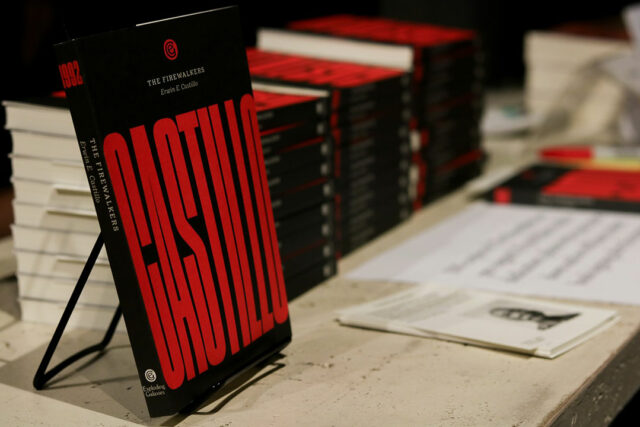
“TELL THE STORY. Make a song,” is how Filipino novelist Erwin E. Castillo concludes his preface to the new edition of The Firewalkers. In it, he details how the novel arose in 1992 “while the country tried to rearrange itself, but not too much, and not really.”

Now re-published by local press Exploding Galaxies — the third in its collection of reprinted, forgotten Filipino classics — The Firewalkers is an epic filled with magic and murder. Set in 1913 in the mountain town of Lakambaga, Cavite, it opens with police sergeant Gabriel Diego faced with a series of mysterious deaths, connected with otherworldly ancestors, mythical monsters, and cowboys that roam the land.

This edition also includes a companion piece, “The Watch of La Diane,” which serves as a postlude. The story is set and written in the 1970s, following two lovers who set off across America.

“Most of my grandchildren — bright, tech-savvy, world-traveled cosmopolitans — will be strangers in the world of The Firewalkers and ‘The Watch of La Diane.’ They will be unsure, uncomfortable, vulnerable. But I hope I’ve designed the funhouse, the labyrinth, well enough to lure them in, so they may experience their moment screaming above the abyss, to be able to later declare, ‘I am escaped to tell thee,’” said Mr. Castillo in his official statement.

At the launch of the new edition on Sept. 27, he detailed the long and winding road of his career, from his days writing for The Philippines Free Press, where his mentor Nick Joaquin served as editor-in-chief, to his writing fellowship in the US (and later opting out of getting a green card), to his career as an ad man in the 1980s.

“When The Firewalkers was first published in 1992, it was already five years after EDSA. Time was passing by so quickly. It seemed important then to show, ‘no, we did not stop writing; no, we never stopped trying to learn to write.’ That was 33 years ago,” he said.

NO BRAINER
For Exploding Galaxies publisher Mara Coson, it was a no-brainer to reintroduce Mr. Castillo and his work to today’s generation of Filipino readers.

“Erwin Castillo has long joined the list of enigmatic Filipino writers whose work has been praised for generations and until kingdom come and yet has remained so hard-to-find,” she said about the release.

Through this edition, they hope to take him out of that frustrating category. “This is a book that demands to be read and enjoyed again, because it is unquestionably one of our greatest works of Filipino literature,” Ms. Coson said.

Mr. Castillo, born in Manila in 1944, grew up in Mendez-Nuñez, Cavite, and Project 4, Quezon City. He studied at the University of the Philippines, where he was later writer-in-residence. Among the many awards he has won are the Tagayan and Palanca prizes.

Despite all that, in his own words, he comes from “a provincial storytelling tradition, from a distant, perhaps imagined mountain.”

“Nobody ‘should’ read the book. But if ever you begin, I hope you will find it knowledgeable, intelligent and good-hearted, loving and brave,” he said of the new edition.

For Ms. Coson, his approval of resurrecting the novel reflected “generosity not just towards the readers of this edition, but towards trusting us that this all has to be done, that this book has to be reopened.”

In his speech, Mr. Castillo acknowledged the tumultuous nature of Philippine history, which has circled back to the same problems time and again from the 1900s up to now. He cited the winds of the amihan and habagat, which take turns to shape the lives of Filipinos.

His final statement for people who’d want to read the book encapsulates his hopes for it: “The book aspires to suggest another way, a guide to survival that is tentative and hesitant but may, if only at this precious, this single instant, assure you we have done as well as we are able.”

The Firewalkers is available in Fully Booked, National Bookstore, and select bookstores including Everything’s Fine in Makati and Mt. Cloud Bookshop in Baguio, as well as in online marketplaces Shopee and Lazada. — Brontë H. Lacsamana

The Papal guidelines on artificial intelligence: Not a replacement for the human person

FREEPIK

(Part 3)

As we saw in the last two columns in this series, Pope Leo XIV — true to the promise he made immediately after being elected Supreme Pontiff of the Catholic Church — has been issuing moral and ethical guidelines about the use of artificial intelligence (AI) in today’s highly industrialized society (at the level of Industrial Revolution 4.0).

In keeping with the doctrinal continuity that has always characterized the Teaching Authority of the Catholic Church, Pope Leo XIV has been clearly influenced by a document that was issued at the beginning of 2025, during the papacy of the late Pope Francis. I am referring to the “Guidelines on Artificial Intelligence” issued through the Pontifical Commission for Vatican City State’s Decree No. DCCII that contained the basic principles behind the Guidelines.

These Guidelines contain principles and standards for the ethical, responsible and controlled use of AI within the Vatican City State. The main objective of the Guidelines is to ensure that AI research, development, and implementation are aimed at achieving the common good and place people at the center. In keeping with the definition given by the social doctrine of the Church, the integral human development of each individual person is the objective of the common good. This differs from the definition given in some so-called free societies which define the common good as “the greatest good for the greatest number.” This pragmatic definition has on occasion given an erroneous majority the dubious right to victimize the minority, as in the case of Nazi Germany.

The Guidelines address several highly relevant issues, including ethics and transparency, which not only involves protecting human dignity but also adopting systems that are easily accessible and controllable by users. Needless to say, transparency is absolutely essential in order to foster trust in the use of AI and to ensure that decisions made by automated systems are clear and aligned with ethical principles. The Guidelines ensure that AI should serve people, not dominate them and that final decisions are always made by humans, not machines.

There is also an emphasis on security and data protection. The Guidelines emphasize the need for data security and confidentiality, especially biometric data. In this regard, the use of AI must be guided by principles of protection, in order to prevent data misuse.

The Guidelines also highlight the importance of non-discrimination and sustainability. Furthermore, economic and environmental sustainability are required investments to adopt intelligent technologies that have positive long-term impacts. There should also be continuous monitoring of data management and data processing to ensure that results are accurate, appropriate, and in line with the principles of transparency and proportionality.

The Guidelines include certain restrictions regarding the implementation of AI. Firstly, as regards to discrimination and psychological harm, it is strictly prohibited to use AI for any discriminatory acts, such as making statements that may violate human rights or cause psychological or physical harm. Another important point addresses access to AI by people with disabilities. The use of AI is categorically prohibited if it prevents access to the disabled.

As regards scientific research and healthcare, AI must be used to improve health management and medical protection, without influencing the decision-making freedom of doctors.

There is also a prohibition of violating copyrights of creative and artistic works. The Guidelines emphasize that content generated through AI must be recognizable and that the Vatican Governorate hold economic and authorship rights over content created within its territory.

Within the context of infrastructures and services, AI can be used to improve economic and environmental sustainability. However, it must never compromise security or limit the decisions made by experts. AI can be used to simplify administrative procedures and improve their efficiency, but decision making should always be up to humans. The Guidelines include a provision to monitor the impact of regulations on its use. In the workforce, for example, AI can be used to upgrade staff training and workplace safety, and foster transparency in personnel selection, avoid discrimination, and respect human dignity.

In the legal field, AI can only be used for the organization and simplification of legal work and legal research. Effectively, it can never be involved in making final decisions nor ever replace magistrates in their judgment. In the area of security, the Guidelines establish that the use of AI will be regulated by specific implementing regulation. Thus a set of special regulations will dictate its use in the field of protection and security. Repeatedly, the Guidelines state that it is fundamental that AI be an aid to human decision-making and never a replacement for it.

Since he was elected Pope, Leo XIV has refined these guidelines by articulating some key principles further:

1. AI is an exceptional product of human genius, but above all it is a tool. Pope Leo XIV acknowledges AI’s extraordinary achievement, especially in areas like healthcare and scientific discovery. Yet, he consistently emphasizes that AI remains “above all else a tool.” It must serve human beings, not diminish or replace them.

2. Pope Leo insists that all AI applications must be evaluated against the integral development of the human person and society. This includes material, intellectual, and spiritual well-being, alongside respect for cultural and spiritual diversity. He frames human dignity not as optional but as the “superior ethical criterion” by which AI’s benefits or risks must be assessed.

3. Pope Leo XIV emphasizes special care for children and young people. He warns that AI access to vast data must not be mistaken for true intelligence. Authentic wisdom is about being open to life’s ultimate truths, not merely consuming information. Youth must be helped, not hindered, in their journey toward maturity and responsibility.

4. Pope Leo underscores shared responsibility among those who develop, manage, and use AI systems. Developers should embed ethical intent, while users must wield AI responsibly. He calls for regulatory frameworks centered on the human person, both locally and globally.

5. At the Vatican’s “Jubilee of Governments” gathering, Pope Leo affirmed that legislation and policy must be grounded in natural law, transcending contingent beliefs. AI must not undermine human identity, dignity, or fundamental freedoms.

6. Advocating for “human-compatible AI,” Pope Leo references a need for “algor-ethics” — a blend of algorithm and ethics. AI should reinforce human value rather than become instruments of dehumanization. Transparency, fairness, and inclusivity are crucial — especially in decisions impacting marginalized groups (e.g., asylum applications).

To summarize, Pope Leo XIV stresses that AI is a tool, not a replacement for the human person. He described AI as an “exceptional product of human genius,” but affirmed it remains, fundamentally, a tool whose moral value depends on how it is used. He repeatedly asserted that AI must never replace or undermine human dignity or identity. He also expressed concerns about AI’s potential to harm the intellectual, neurological, and spiritual development of children and young people. He warned that access to data should not be mistaken for authentic intelligence or wisdom — which involves openness to transcendence, truth, and moral depth. He emphasized the importance of intergenerational mentorship — helping young people integrate truth into their moral and spiritual lives.

The Pope also urged political leaders to ensure that AI serve the common good, respect natural law, and not erode human freedoms. He warned about potential misuse for selfish gain or to incite conflict, underlining that human moral vigilance is indispensable.

(To be continued.)


Bernardo M. Villegas has a Ph.D. in Economics from Harvard, is professor emeritus at the University of Asia and the Pacific, and a visiting professor at the IESE Business School in Barcelona, Spain. He was a member of the 1986 Constitutional Commission.

bernardo.villegas@uap.asia

SEC seeks explanation from Villar Land appraiser over asset valuation

BW FILE PHOTO

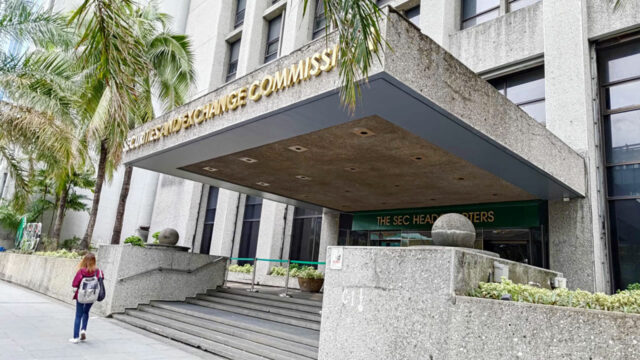
THE Securities and Exchange Commission (SEC) has directed E-Value Phils. Inc., the appraiser of Villar Land Holdings Corp.’s properties, to explain its valuation of assets owned by the Villar Land group as part of an ongoing review of the accuracy of the developer’s financial reporting.

In a show-cause order dated Sept. 29, the SEC Office of the General Accountant asked E-Value Phils. to explain why it should not be penalized for its valuation of properties owned by Villar Land group companies, including Althorp Land Holdings, Inc., Chalgrove Properties, Inc., and Los Valores Corp.

The order was issued after the commission conducted special onsite inspections to assess E-Value’s compliance with SEC Memorandum Circular No. 2, Series of 2014, which sets guidelines on asset valuations and adopts international valuation standards for appraisal reports.

“The SEC will continue to investigate this matter thoroughly in the interest of upholding transparency and accountability in valuation practices and accuracy in financial reporting. The Commission will provide updates as necessary in the interest of the public, while upholding the required confidentiality of the proceedings,” the SEC said in a press release on Tuesday.

On Sept. 30 last year, Villar Land acquired Althorp Land Holdings, Inc., Chalgrove Properties, Inc., and Los Valores Corp., which together own 366 hectares of land, for P5.2 billion.

The SEC said the delays in the submission of Villar Land’s audited financial statements occurred because its external auditor, Punongbayan & Araullo (P&A), sought to review the fair value of the properties.

Villar Land initially hired SEC-accredited valuer E-Value Phils., which reported a P1.33-trillion increase in value.

P&A later engaged Crown Property Appraisal Corp. to conduct an independent review, which resulted in a much lower value increase of P8.63 billion.

In August, the SEC Markets and Securities Regulation Department (MSRD) imposed the maximum P1-million administrative fine on Villar Land and 11 of its officials, totaling P12 million, in lieu of suspending the company’s registration statement and permit to offer and sell securities.

The latest show-cause order stems from the commission’s continuing investigation into Villar Land Holdings’ delayed submission of its audited financial statements, in violation of Republic Act No. 8799, or the Securities Regulation Code. — Alexandria Grace C. Magno