Home Blog Page 4725

AboitizPower ‘determined’ to hit 2030 renewables target

ABOITIZ POWER Corp. (AboitizPower) is optimistic about reaching its renewable energy (RE) expansion target by 2030, with two new power projects expected to be completed this year.

“AboitizPower is determined to fulfill this ambition. In fact, based on our pipeline, we continue to make progress towards achieving our balanced mix portfolio target in the next 10 years,” Emmanuel V. Rubio, president and chief executive officer of AboitizPower, said in a Viber message last week.

Mr. Rubio said the company expects to complete its Cayanga solar photovoltaic project in “the next few months.” In February 2022, the energy company of the Aboitiz group announced the construction of the 94-megawatt-peak solar farm in Pangasinan.

“We are also expecting the completion of our Tiwi binary power plant — with a nameplate capacity of 17 MW — by December this year,” Mr. Rubio said.

Earlier this year, AboitizPower, through its subsidiary AP Renewables Inc., broke ground for its binary geothermal power plant project in Tiwi, Albay.

The company expects an additional 17 MW from its geothermal power plant. The project will be built with an entirely new binary plant system, pipes, and transmission line.

“Together with its partners, AboitizPower offers the most diverse RE types in the Philippines — from solar, hydro to geothermal, and eventually wind. It is constantly pursuing opportunities to grow its green portfolio en route to reaching 4,600 MW,” Mr. Rubio said.

The company is targeting to expand its renewable energy portfolio in the next 10 years. It has set an ambition of building an additional 3,700 MW of RE, growing its capacities to 4,600 MW by 2030.

To date, the company has a pipeline of projects of over 1,000 MW, which include the development of wind, solar, and geothermal plants. — Ashley Erika O. Jose

CAMPI, TMA: Auto sales spike by 44.8% in May

PHOTO BY KAP MACEDA AGUILA

VEHICLE SALES continued to trend upward, according to a joint report of the Chamber of Automotive Manufacturers of the Philippines, Inc. (CAMPI) and Truck Manufacturers Association (TMA). Member companies recorded consolidated new vehicle sales of 38,177 units last month, or 44.8% more than the 26,370 mustered in May 2022. The year-to-date figure is 166,104 units — 31.5% more than the same month last year.

In a release, CAMPI President Atty. Rommel Gutierrez said that “the growth of new motor vehicle sales in May… is definitively driven by the high market demand, recording double-digit growth across all segments from the figures last year.”

Replying to a question from this writer, Atty. Gutierrez declared that CAMPI member companies might be able to realize growth of up to 25% this year, helped along by improving vehicle supply and new model introductions. He added that CAMPI is welcoming four new brands into the fold, along with the returning Ford marque.

When asked about what challenges remain for the industry, the executive averred that the microchip (or semiconductor) shortage remains a factor that can hamper the faster production of vehicles. “The problem has not been totally eliminated, so we expect difficulties there,” he told “Velocity.”

Once again leading the sales charge is Toyota Motor Philippines (TMP), which sold 17,866 units in May, up 26.5% versus 14,123 units in April this year. TMP cornered 46.8% of total sales. Compared to May 2022 (14,723 units), the company sold 21.3% more vehicles last month.

In second place is Mitsubishi Motors Philippines Corp. (MMPC), selling 6,822 units in May, up by 21.5% compared to its 5,613-unit performance last month. The company accounted for 17.87% of total sales, and its May number represents a hefty 132.1% growth versus the same month in 2022. Ford Motor Company Philippines (3,039) is in third, and cornered almost eight percent of sales while growing by 39.7% versus April, when it sold 2,176 vehicles. Nissan Philippines, Inc. (NPI) realized six percent of industry sales in May, when it sold 2,298 units — 8.7% up over April’s 2,114 units sold.

Honda Cars Philippines, Inc. (HCPI) completes the top five with 1,439 vehicles sold in May. It accounted for 3.8% of sales, and grew by 16% over its April figure of 1,240 units sold.

The industry also welcomed the country’s sustained improvement in major economic sectors, which remain an important factor toward economic and market conditions that are favorable for the industry and consumers alike,” the CAMPI head added in a statement. “The steady year-on-year growth recorded in the first five months gives the industry a reason to be even more optimistic and grateful at the same time as attaining its growth forecast this year felt even closer to reality and proves rather possible.” — Kap Maceda Aguila

Managing the Department of Education

Asked during an interview by Mimi Ong of ANC as to the basic problem of the Department of Education, we replied that the problem is not with the foot soldiers (teachers) but rather with the generals (Administrators). There is a basis for my assertion.

Students in private schools have greatly outperformed students in public schools in international tests such as the PISA (Program for International Student Assessment) and TIMSS (Trends in International Mathematics and Science Study). And the private schools have achieved this better performance at half the cost of the public schools.

In a paper presented at the 5th Paderanga-Varela Memorial Lectures entitled “DepEd’s Voucher Program: A Promising Tool for a Whole of Nation Approach to Philippine Education Development,” Dr. Vicente B. Paqueo, Ph.D. cited the following findings:

1.) Public but not private school students are significantly adversely affected by educational material shortages;

2.) Coefficients of percentages of schoolteachers with master’s degree are significantly positive among private but not public schools;

3) Coefficients of percentages of schoolteachers fully certified are significantly positive among private but not public schools.

The findings indicate that our public-school administrators, as compared to private school administrators, are less competent in managing the human and physical resources placed at their disposal.

We argue that this poor performance is due to the management structure of the Department of Education (DepEd), the low teeth-to-tail ratios of the public schools which result in overloading of the public-school teachers.

Let us take a public school such as the Nicanor Garcia Elementary School in Makati City. Elsa Soliva, the school principal, reports to Maria Magdalena M. Lim, the Makati City School Superintendent. She in turn reports to Wilfredo E. Cabral, the National Capital Region Regional Director. Mr. Cabral in turn reports to Undersecretary Revsee A. Escovedo. Undersecretary Escovedo in turn reports to DepEd Secretary Sara Z. Duterte. There are therefore five levels of management — six if Makati was a municipality as there would be an additional provincial layer. By comparison, the private schools have only two levels, the principal reports directly to the president. Even the Catholic Church has only three levels, the pope, the bishop, and the parish priest. Thus in the DepEd we have a lumbering bureaucratic behemoth.

In the Vietnam War, 500,000 American soldiers were matched against 100,000 Vietnamese. But the Americans did not have a decisive advantage. Only 50,000 American soldiers were actually fighting in the field, the 450,000 American soldiers were support staff (due to the long supply lines from the United States all the way to Vietnam). On the other hand, only 50,000 of the 100,000 Vietnamese soldiers were support staff (due to the short supply lines from North Vietnam to South Vietnam). In military terms, the teeth-to-tail ratio of the American military was 1:9 while for the Vietnamese military was 1:1. In sum, the American soldier had no numerical superiority but was evenly matched with the Vietnamese soldier.

Let us again go back to the Nicanor Garcia Elementary School. Take a look at the organizational chart:

Nicanor Garcia Elementary School has 58 employees of which 36 are teaching staff and 22 non-teaching staff. The non-teaching staff consists of three administrators, five non-teaching staff, six utility personnel, six security personnel, one maintenance employee, and one alternative learning system employee. So it has a teeth-to-tail ratio of 36:22.

The management structure and the low teeth-to-tail ratio has resulted in the overloading of the teachers such that DepEd mandates that public school teachers teach at least six hours per day or 30 hours per week. Alliance of Concerned Teachers (ACT) spokeswoman Ruby Bernardo cites the following statistics:

* Teachers in private high schools such as Xavier, University of Santo Thomas, and La Salle teach only 10-12 hours a week;

* Teachers in the University of the Philippines teach only 12 hours per week, while in the Polytechnic University of the Philippines, they teach 15 hours per week;

* In Vietnam, teachers teach for 13 hours per week and in Indonesia 18 hours per week.

The remaining 10 hours per week of the public school teachers is allocated to meeting the bureaucratic red tape demands of their superiors as well as their numerous duties as public servants.

These considerable obstacles have prevented effective management in the Department of Education. To remove these obstacles would require a drastic re-structuring of the DepEd.

We propose the devolution of the public grade schools and high schools to the LGU school boards or Pamantasan.

For example, the public grade schools and high schools of the City of Pasig could be devolved to the Pamantasan ng Pasig. As part of the Pamantasan ng Pasig, the grade school and high school principals will report directly to the President, reducing the levels of management from five to two levels. More importantly, the principals will be reporting to a person keenly aware of the educational requirements of Pasig and who has a great interest in improving the quality of the grade school and high school students as they will be the incoming students in his colleges.

The support functions of the grade school and high schools would be transferred to the support staff of the Pamantasan ng Pasig. The support staff of the grade schools and high schools who are qualified to teach can now be reassigned to teaching. The support staff who cannot teach, i.e., the security staff, can be absorbed by the city government of Pasig. This will greatly improve the teeth-to-tail ratios of the public schools.

With this improvement, the DepEd requirement of a minimum of 30 teaching hours per week for public school teachers can now be reduced to the Pamantasan ng Pasig requirement of a minimum of 18 hours per week for the Pamantasan teachers.

With a lower teaching load, the now Pamantasan ng Pasig teachers can focus on increasing the learning levels of their students. Moreover, as employees of the City of Pasig, they can call on their fellow employees to assist them in their public service duties.


Dr. Victor S. Limlingan is a retired professor of AIM and a fellow of the Foundation for Economic Freedom. He is presently chairman of the Cristina Research Foundation, a public policy adviser, and of Regina Capital Development Corp., a member of the Philippine Stock Exchange.

Valentino returns to Milan Fashion Week with flowery menswear show

VALENTINO-CDN.THRON.COM

MILAN Italian luxury house Valentino kicked off Milan Fashion Week’s menswear shows on Friday with a lineup combining blazers and coats with shorts, as creative director Pierpaolo Piccioli sought to redefine the meaning of the masculine identity.

The collection used embroidered flowers to add a note of delicacy to classic workwear pieces, with subversive elements such as tissue flowers in lieu of ties. (Watch the show here: Valentino The Narratives Spring/Summer 2024 | Valentino )

Valentino, which is controlled by Qatari investment vehicle Mayhoola, presented its menswear collection for spring and summer 2024 in the arched courtyard of Milan’s state university.

Valentino ditched the co-ed show model — the mixing of men’s and women’s shows — which it had adopted for the last three years and returned to Milan, where founder Valentino Garavani staged the first Valentino menswear show in 1985.

Milan Fashion Week includes 72 events and presentations of menswear collections. It runs until June 20 and will feature shows from high-end labels including Giorgio Armani, Prada, Dolce & Gabbana, and Ermenegildo Zegna. — Reuters

Smart maintains lead in registration of SIM

PLDT Inc.’s wireless unit Smart Communications, Inc. said it kept its lead among public elecommunication entities in SIM (subscriber identity module) registration with 47.02 million registered subscribers.

The number of Smart’s registered subscribers as of June 15 accounts for 70.92% of its total number of subscribers at 66.3 million, data from the National Telecommunications Commission show.

Meanwhile, Globe Telecom, Inc. recorded 45.64 million registered SIMs representing 52.61% of its total subscribers, while DITO Telecommunity Corp. tallied 6.84 million registrants accounting for 45.73% of its subscribers.

Republic Act No. 11934 or the SIM Registration Act requires all SIM users to register their SIMs under their name or risk SIM deactivation.

At PLDT’s annual stockholders’ meeting, Danny Y. Yu, chief financial officer and chief risk management officer, said the registration numbers represent around 91% of mobile revenues.

“While we do not expect 100% registration, we do not expect this to materially impact mobile revenues,” Mr. Yu added.

Smart’s collaboration with the government in coming up with the implementing rules and regulations and its focus on SIM registration proved vital in the campaign, said PLDT President and Chief Executive Officer Alfredo S. Panlilio.

“We made sure that Smart’s SIM registration customer experience would be seamless. It was important for us to understand the customer journey and make it as convenient to our customers as possible,” he added.

The wireless company partnered with state agencies and local government units to deploy thousands of assisted SIM registration booths.

“We also invested heavily in a customer education campaign,” Mr. Panlilio said.

Smart continues to encourage subscribers to register their SIMs before July 25, the extended deadline under the SIM Registration Act. — Justine Irish D. Tabile

Subaru PHL, Russ Swift fans visit Hospicio de San Jose

Tan Chong International Limited Deputy Chairman and Managing Director Glenn Tan (center) and Motor Image Limited executives pose with Hospicio de San Jose staff. — PHOTO FROM SUBARU PHILIPPINES

MOTOR IMAGE Pilipinas, Inc., exclusive distributor of Subaru vehicles in the Philippines, made a special visit to share joy with beneficiaries at Hospicio de San Jose. Bearing Subaru merchandise such as Subaru Safety Ambassador plush toys and Subaru apparel, company executives created a mini-shopping mall for residents of the Roman Catholic welfare institution. The residents could select a plush toy and apparel of their choice. In addition, a check was presented to the Hospicio de San Jose leadership to support the educational needs of the young residents.

This monetary gift was raised at the recent Manila International Auto Show 2023 when audience at the popular “Subaru x Russ Swift Rustle and Hustle” stunt shows contributed to this worthy cause. Over multiple performances throughout the four days, renowned British precision driver Russ Swift performed his signature stunts to packed stands. A total of P139,000 was generated, and full proceeds from the ticket sales were presented at a simple ceremony-cum-Subaru shopping spree.

Said Sr. Martha Gamolo, DC, “We would like to thank Mr. Glenn Tan and Subaru Philippines for the generosity and continuous support to Hospicio de San Jose. The gifts and monetary proceeds will be of great help for us here as this would allow us to continue our commitment of providing integral development to vulnerable and excluded sectors of society.”

Added Tan Chong International Limited Deputy Chairman and Managing Director Glenn Tan, “We are delighted to support the beneficiaries of Hospicio de San Jose, as their mission aligns with Tan Chong International Limited’s values of being reliable and responsible in all our business practices as we aim to provide care, support, a sense of belonging and empowerment to both our employees and customers, while fostering hope for a brighter future. I hope this initiative reinforces and reminds the beneficiaries that they are not just recipients of gift-giving but part of something bigger — our Tan Chong community.”

Ad hoc, again?

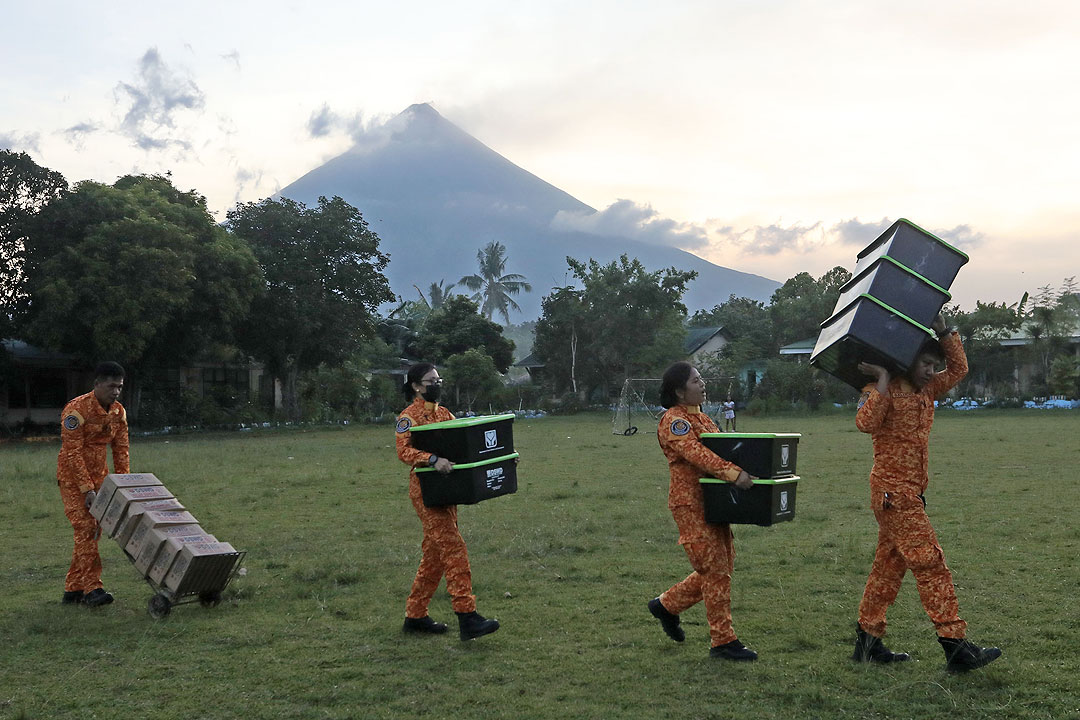
WORKERS from the local government of Sto. Domingo in Albay bring relief goods to evacuees from the Mayon Volcano eruption who are staying at the Sto. Domingo Central School. — PHILIPPINE STAR/EDD GUMBAN

Recently, Malacañang issued Executive Order (EO) 24 s. 2023, creating the Disaster Response and Crisis Management Task Force. The Task Force, per EO 24, shall primarily “oversee and coordinate the preparation, implementation, monitoring, and evaluation of disaster risk reduction and management (DRRM) plans, programs, projects, and activities on disaster preparedness and response.”

EO 24 seems to be this administration’s response to the perennial clamor to fix our institutional set-up in handling disasters. Since the 17th Congress, legislative proposals and experts’ commentaries have sought the creation of a stand-alone, dedicated agency — a Department of Disaster Resilience or DRRM Authority in charge of disasters. However, the proposed Department has been set aside due to calls for rightsizing, gridlock among contentious provisions, and the inconclusive stance of the Chief Executive.

Will the Task Force bring solutions to the problems on the ground? Will the Task Force become another ad hoc coordinative body which will duplicate the functions of the current NDRRMC (National Disaster Risk Reduction and Management Council)?

Foremost, the Philippines’ Disaster Risk Reduction and Management Law or RA No. 10121 established a 44-member inter-agency body, the NDRRMC, for “policymaking, coordination, supervision, integration, monitoring.” The law named the Department of National Defense (DND) head as the NDRRMC Chairperson, the Department of Science and Technology head as Vice-Chairperson for Prevention and Mitigation, the Department of the Interior and Local Government for Preparedness, the Department of Social Welfare and Development for Response and Relief, and the National Economic and Development Authority (NEDA) for Rehabilitation and Recovery. Implementation of programs, projects, and activities is “shared” among NDRRMC members with the Office of Civil Defense, an office under the DND, as the Technical Secretariat. The law lumped together 16 functions of the NDRRMC and tasked the Office of Civil Defense (OCD) with 18 functions. However, the law and its IRR did not specify functions for the Vice-Chairpersons.

On the other hand, the Task Force shall provide leadership, collaborate with relevant agencies, exercise oversight, manage and oversee the implementation of disaster programs, in coordination with agencies and stakeholders, a task which is embedded in the NDRRMC functions per the law. The President is yet to designate the Chairperson and Vice-Chairperson from among the members of the Task Force which comprises a subset of member-agencies of the NDRRMC, namely, the agencies mentioned above, with the departments of Health, Trade and Industry, Public Works and Highways, and Transportation.

As a background, this is not the first time that Philippine government created ad hoc bodies for disasters. For a country which ranked 1st in the 2022 World Risk Report, we had Task Force Yolanda, Task Force Bangon Marawi, the Office of the Presidential Assistant for Rehabilitation and Recovery, and the Boracay Inter-Agency Task Force, among others. It is difficult to find a comprehensive written report to assess the performance of these bodies.

This piece attempts to answer the banner question above by highlighting some local experiences and views.

1. The current system fails to address the huge disparity in local governments’ disaster information and actions. In specific terms, we still hear of some local authorities who failed to anticipate disaster impacts and threats. Our institutional policies bank on the ideal that local governments should and can manage disasters. Local governments, down to barangays, should have Local DRRM Offices and inter-office 21-member Local DRRM Councils answerable to the Local Chief Executives. When support is needed, LGUs call on the next level LGU (municipal-provincial) or the appropriate national agency — for instance, the Bureau of Fire Protection or Coast Guard for search and rescue.

However, reality tells us that not all can achieve the same standards. When push comes to shove, LGUs need not be referred to multiple “coordinating” agencies regarding assistance. EO 24’s Task Force will merely “oversee and coordinate efforts” among various agencies and LGUs, and this does not equate to holding accountability, especially in implementation down to the local level.

2. Dispersed accountability and resources at the national level resulted in a multitude of plans, protocols, systems, and tools not being fully utilized and implemented.

Studies show that there are about 18 required plans and documents expected from LGUs related to disasters (Philippines Voluntary Report of Sendai MTR). These include: Local DRRM Plans, Contingency Plans for each hazard, Pre-Disaster Risk Assessment Actions, and Programs, Protocols, Rehabilitation Plan, among others. The current state of government efforts to check and evaluate could only go so far up to compliance (presence or absence).

Assessing whether these plans are implemented and are effective might be futile because the many plans, protocols, systems, and tools disperse local resources and absorptive capacity. The same report tells us that the average permanent staff for Local DRRM Offices is about six persons for cities and one to three for municipalities.

Instead of waiting for all LGUs to complete and implement a multitude of plans, a stand-alone, independent agency can work and seriously consolidate (or collapse) these plans and requirements to come up with an action program.

3. Local DRRM workers think that the dismal state of infrastructure, equipment, and manpower in disasters can be resolved by having a dedicated agency.

LGUs need infrastructure support and adequately trained civilian protection corps for various skills such as urban search and rescue, chemical, biological, radiological, nuclear, and pandemic response. Currently, some of these skills sets and infra support can be found among various government agencies. A Development Investment Program tied to an agency should cover technology and equipage upgrading like securing uninterrupted utilities and internet connection. At present, unsustainable semi-formal arrangements among agencies characterize disaster response.

Studies show underutilization of Local DRRM Funds (5% of an LGUs’ annual estimated revenues) by as high as 80% (Domingo, S. and Manejar, A., 2021). But LGUs struggle in implementing infrastructure projects and capital investments due to technical requirements and manpower constraints. (See the chapter of Magno, C., Capistrano, F., and Cases, S. et al., 2022 in a Report submitted to the UNDP.)

Hence, it should take a dedicated agency with manpower and budget to fill the gaps among these LGUs. Per Section 7 of EO 24, funds shall be sourced from existing appropriations of member-agencies. An option instead is to program these investments within the NDRRMC, with OCD as its Executive arm.

Perhaps the Task Force is an immediate measure to increase oversight and efficiency among the NDRRMC members without going through the tedious act of legislation. However, an ad hoc body may not seem a sustainable solution towards increasing Philippines preparedness for disasters.

Among other Asian countries belonging to the Top 10 most at-risk in the World Risk Index, only the Philippines and Myanmar do not have a dedicated ministry- or department-level agency for disaster risk management.

Lessons from past experiences tell stakeholders that ad-hoc task forces for disaster risk reduction are ineffective. The long-term reform is to create a department for national disaster management.


Kriszia Enriquez is an independent policy researcher on Disaster Risk Reduction and Management. She coordinates an advocacy group, Agap Banta, an open coalition of civil society and individual practitioners to enhance disaster preparedness in the Philippines.


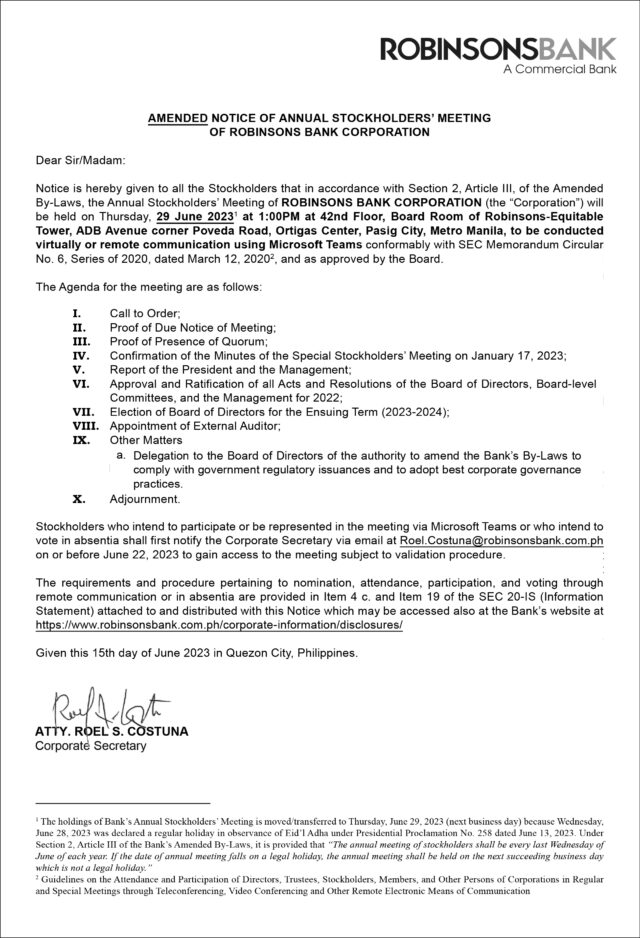
Robinsons Bank Corp. sets 2023 Annual Stockholders’ Meeting on June 29 via remote communication


Spotlight is BusinessWorld’s sponsored section that allows advertisers to amplify their brand and connect with BusinessWorld’s audience by enabling them to publish their stories directly on the BusinessWorld website. For more information, send an email to online@bworldonline.com.

Join us on Viber at https://bit.ly/3hv6bLA to get more updates and subscribe to BusinessWorld’s titles and get exclusive content through www.bworld-x.com.

Fashion retailers resilient despite consumer fears

LONDON — A strong start to June for the world’s second-biggest fashion retailer H&M, an optimistic outlook from Hugo Boss, and a return to profitability at ASOS helped allay concerns over a sector hit by weakening US demand.

Signs of resilience came as a relief to investors concerned that economic uncertainty is driving shoppers in key markets like Europe, the US, and China to spend less on clothes.

However, squeezed consumers are being more selective with their apparel purchases, driving a wider divergence between brands.

“Retailers with a clear, distinctive brand and a very clear value proposition, where product quality is key, will emerge as the winners from a tougher environment,” said Erin Brookes, head of retail at consultancy Alvarez & Marsal.

Shares in H&M rose 3.5% as analysts forecast a stronger third quarter after flat sales from March to May.

H&M, which has lagged Zara owner Inditex, has sought to increase its fashion appeal and further develop its higher-priced brand Cos, targeting shoppers who are less vulnerable to a higher cost of living, as fast-fashion giant Shein takes market share with cheap clothes.

H&M’s sold-out collaboration with luxury brand Mugler could also help boost half-year earnings expected on June 29, according to Bank of America analysts.

ASOS, which is trying to recover from a sharp increase in inventory and debt, is also highly dependent on young shoppers who want the latest trends at low prices. Despite sales falling, it said its focus on profit per order was paying off.

The online retailer, bruised by shoppers’ return to physical stores post-pandemic, has cut stock since the start of the year and said it was removing unprofitable brands from its platform.

“Our experience in the current trading environment is that when we create a product that really resonates with our customers and is priced correctly, full-price sales are very strong,” ASOS said.

Highlighting the divergent fortunes of different brands in this uncertain environment, premium fashion retailer Hugo Boss raised its sales and profit targets for 2025 and said it continues to see strong growth in the US even as peers flagged weakness among “aspirational” shoppers there.

“While cracks are clearly visible in the US consumer environment and to a lesser extent in Europe, Hugo Boss has been immune so far,” Citi analysts said. — Reuters

T-bill, T-bond yields may rise before BSP meeting

BW FILE PHOTO

By Aaron Michael C. Sy, Reporter

TREASURY BILL and bond rates may rise this week as the Bangko Sentral ng Pilipinas (BSP) is widely expected to mirror the US Federal Reserve’s pause in its tightening cycle.

Rates on the short-term debt may follow the advance at the secondary market due to recent signals that the BSP may begin cutting the key rate in the first quarter of next year, Michael L. Ricafort, chief economist at Rizal Commercial Banking Corp., said in a Viber message at the weekend.

At the secondary market on Friday, the 91-, 182- and 363-day T-bills went up by 12.84 basis points (bps), 6.67 bps and 11.41 bps week on week to end at 5.8941%, 6.0297% and 6.0455%, respectively, based on PHP Bloomberg Valuation (BVAL) Service Reference Rates posted on the Philippine Dealing System website.

“With inflation starting to go down, the outlook is that possibly next year, there could be a shift in the BSP’s monetary policy stance,” central bank Deputy Governor Francisco G. Dakila, Jr. said on Thursday.

The Bureau of the Treasury (BTr) will auction off P15 billion worth of T-bills on Monday, or P5 billion each in 91-, 182- and 363-day debt.

On Tuesday, it will offer P25 billion in reissued seven-year T-bonds with a remaining life of five years and 11 months.

Mr. Ricafort said the seven-year yield rose by 10.85 bps week on week to 5.9604% on Friday as investors looked to signals from the BSP ahead of its policy-setting meeting on June 22.

All 15 economists in a BusinessWorld poll last week expected the Monetary Board to keep the key rate at a near 16-year high of 6.25%.

This could be the second straight meeting the BSP will leave interest rates untouched. The central bank has raised borrowing costs by 425 bps since May last year.

The T-bond rate could range between 5.9% and 6%, with weak demand following the trend seen at previous auctions with a similar tenor, a trader said in an e-mail.

“Expect the board to echo what BSP Deputy Governor [Francisco G.] Dakila [Jr.] said — that they are ready to resume monetary action as data warrant it,” the trader said.

Last week, the Treasury bureau raised P13.608 billion from P15 billion worth of T-bills on offer, with bids hitting P20.049 billion.

The Treasury borrowed P3.608 billion from the programmed P5 billion via the 91-day T-bills, with tenders reaching P4.518 billion. The average rate of the three-month securities rose by 9.5 bp to 5.922%. Accepted rates were 5.75% to 6%.

The government fully awarded P5 billion of the 182-day T-bills as bids for the tenor reached P7.72 billion. The six-month T-bill was quoted at an average of 5.978%, up by 8.7 bps from a wee earlier. Accepted rates were 5.85% to 6.05%.

The Treasury also raised P5 billion from 363-day T-bills as demand reached P7.811 billion. The average rate of the one-year T-bill rose by 8.2 bps to 6.062% from a week earlier. Accepted yields were 5.89% to 6.188%.

The reissued seven-year T-bonds to be auctioned off on Tuesday were last offered on Feb. 28, when the government raised the programmed P25 billion. The debt was awarded at an average rate of 6.172%.

The Treasury seeks to raise P185 billion from the domestic market this month, or P60 billion via T-bills and P125 billion via T-bonds.

The government borrows from local and foreign sources to help fund its budget deficit, which is capped at 6.1% of economic output this year.

Bangus growers face cost squeeze, many feared to be exiting market

PHILSTAR FILE PHOTO

By Sheldeen Joy Talavera

THE aquaculture industry, particularly milkfish or bangus growers, is confronting the twin problems of falling demand and rising input costs, industry officials said.

Napaka-gloomy ng kinakaharap natin sa (The outlook is gloomy for) aquaculture which I think is supposed to (play a key role in) food self-sufficiency,” David B. Villaluz, chairman of the Philippine Association of Fish Producers, Inc. told BusinessWorld via phone.

“Weak demand and the increase in our production cost because of the increase in the prices of feed” have led to members of the industry reporting losses.

He estimated that the production cost for milkfish producers has risen to P145 per kilogram from P98 to P102 previously.

Of the total cost, fish feed accounted for P135 per kilogram, based on a feed conversion ratio of 2.5 kilograms of feed to produce one kilogram of fish.

The current price of fish feed is between P45 and P50 per kilogram, up from P35 to P37 per kilogram, according to Mr. Villaluz.

Despite the increased production cost, Mr. Villaluz noted that 500 grams of fish sells for P150, down from around P180 to P200 previously.

“We can really produce. Our problem is would you produce if you are incurring losses?,” Mr. Villaluz said.

After consulting  members from Mindanao, he said the average size of fish has increased to 700 grams from the usual harvest of 400-500 grams, indicating that growers are holding on to their fish “kasi hinihintay nila na tumaas-taas pa ang presyo pero pababa ’yung presyo — pabagsak e (they are waiting for prices to rise a bit, but it’s actually falling).”

“As of now, what we are afraid of here is if… our fish producers, especially our small fishpond operators, close,” he added.

Asis G. Perez, former director of the Bureau of Fisheries and Aquatic Resources and co-convenor of advocacy group Tugon Kabuhayan, said weakened demand may be due to increased pork imports and the strong commercial fishing catch.

“It would appear that the demand has slowed in aquaculture. As of now, farmgate price of bangus is down by about P10 while production cost has increased,” he said in a text message.

Mr. Villaluz said climate change is affecting the industry in the form of tidal action causing rivers to overflow.

“The dikes are breaking and the water overflows if the floodwaters are high, so our fish are lost. Nawalan ’yung farmer pero nahuhuli ng fishermen natin (What the farmer loses, the fishermen catch). Siguro 70-80% ng nawala sa fishpond, nahuhuli ng mga municipal fishermen natin (The municipal fishermen catch 70-80% of what the fishponds lose),” he said.

Ang mangyayari diyan, ang gusto ng gobyerno mag-import na lang kasi hindi nila masolusyunan ang problema ng farmers (The government is trying to solve the problem through fish imports because it can’t solve the farmers’ problems),” he added.

As of Friday, the prevailing price of milkfish in Metro Manila markets was between P140 and P240 per kilogram, while the price of tilapia was between P110 and P160 according to Department of Agriculture price monitors.

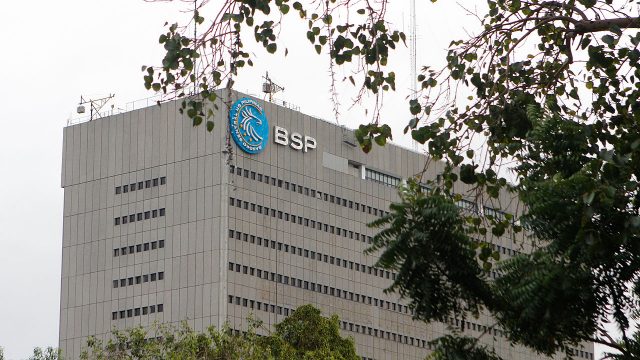
BSP swings to net loss for Q1

THE Bangko Sentral ng Pilipinas (BSP) posted a net loss of P1.4 billion in the first quarter as revenues declined and expenses surged.

It had a net income of P23.56 billion a year earlier, central bank data showed.

The BSP recognized P11.08 billion in net losses from foreign exchange rate fluctuations in 2022, a reversal of the P17.46 billion in net gains in 2022.

The central bank posted revenues of P38.55 billion during the quarter, by 7.4% lower than a year earlier. Revenues mostly came from interest income on foreign investments and government securities.

Interest income jumped by 34% to P41.81 billion. The central bank posted a P3.25-billion loss in miscellaneous income, which includes trading gains, fees and penalties — a reversal of the P10.42-billion gain a year earlier.

Meanwhile, expenses more than doubled to P49.63 billion. Interest expense almost tripled to P38.89 billion, while other central bank expenses rose by 3.9% to P10.74 billion.

Total assets held by the BSP slid by 6.1% to P7.36 billion. Liabilities went down by 6.7% to P7.216 billion.

The BSP’s net worth stood at P143.75 billion at end-March, higher than P98.51 billion a year earlier. — Luisa Maria Jacinta C. Jocson