Home Blog Page 454

Maduro pleads not guilty to drug charges, saying he was ‘kidnapped’
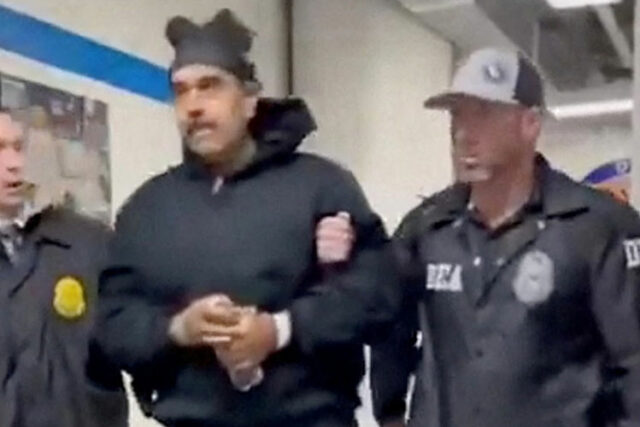
A STILL IMAGE from a video posted by the White House’s Rapid Response 47 account on X.com shows Venezuela’s President Nicolas Maduro being walked in custody down a hallway at the offices of the US Drug Enforcement Administration in New York City, Jan. 3. — @RAPIDRESPONSE47/HANDOUT VIA REUTERS

NEW YORK — Toppled Venezuelan President Nicolas Maduro pleaded not guilty on Monday to narcotics charges after President Donald J. Trump’s stunning capture of him rattled world leaders and left officials in Caracas scrambling to regroup.

“I am innocent. I am not guilty. I am a decent man. I am still president of my country,” Mr. Maduro, 63, said through an interpreter, before being cut off by US District Judge Alvin Hellerstein in Manhattan federal court.

Mr. Maduro’s wife Cilia Flores also pleaded not guilty. The next court date was set for March 17.

Dozens of protesters, both pro- and anti-Maduro, gathered outside the courthouse before the half-hour hearing.

Inside, as he stood shackled at the ankles and wearing orange and beige prison garb, Mr. Maduro declared he had been “kidnapped” and remained president of Venezuela. He listened to an interpreter through headphones as Mr. Hellerstein summarized the charges.

Mr. Maduro is accused of overseeing a cocaine-trafficking network with international drug cartels and faces four criminal counts: narco-terrorism, cocaine importation conspiracy and possession of machine guns and destructive devices.

Mr. Maduro has long denied the allegations, saying they were a mask for imperialist designs on Venezuela’s rich oil reserves.

Mr. Maduro’s defense lawyer Barry Pollack said he anticipated voluminous and complex litigation over what he called his client’s “military abduction.”

SUCCESSOR SWORN IN
Hours later in Caracas, Mr. Maduro’s vice-president, Delcy Rodriguez, was sworn in as Venezuela’s interim president with words of support for Mr. Maduro but no indication she would fight the US move.

A recent US intelligence assessment determined Ms. Rodriguez would be best positioned to lead a temporary government in Mr. Maduro’s absence, finding that opposition figures such as Nobel Peace Prize winner Maria Corina Machado or one-time presidential candidate Edmundo Gonzalez would struggle to gain legitimacy, the Wall Street Journal reported, citing people familiar with the classified report.

Asked by Reuters about the report, White House Spokeswoman Karoline Leavitt said, “The President and his national security team are making realistic decisions to finally ensure Venezuela aligns with the interests of the United States.”

While many anti-Maduro activists had assumed this would be their moment, Mr. Trump appeared to have sidelined the Venezuelan opposition for now. Instead, he has suggested Ms. Rodriguez was willing to work with Washington.

Ms. Leavitt told Fox News that Secretary of State Marco Rubio was in “constant correspondence” with the remaining Maduro government, and that Washington maintained “leverage” over Caracas.

In Caracas, senior officials from Mr. Maduro’s 13-year-old government remained in charge of the South American oil producer of 30 million people, alternating between angry defiance and possible cooperation with the Trump administration.

The intelligence assessment concluded that Ms. Rodriguez was among the few Venezuelan leaders capable of maintaining order, along with the interior and defense ministers, in a government dominated by ideological opponents of the US, the Wall Street Journal said.

Mr. Trump told NBC News the US was not at war with Venezuela but rather, “we’re at war with the people that sell drugs.”

The US would need to help address the South American country’s problems before any new elections, Mr. Trump said, calling a 30-day timeline for a vote unrealistic.

“We have to fix the country first. You can’t have an election. There’s no way the people could even vote,” Mr. Trump told NBC.

QUESTION OF LEGALITY
The US has considered Mr. Maduro an illegitimate dictator since he declared victory in a 2018 election marred by allegations of massive irregularities.

At the same time experts in international law have questioned the legality of the raid, with some condemning Mr. Trump’s actions as a repudiation of a rules-based international order.

Deputy Attorney General Todd Blanche, who previously served as Mr. Trump’s criminal defense lawyer while in private practice, told NBC News the Trump administration “did everything within the law,” and that the United States has an “absolute legal right to go and arrest people charged with horrible crimes.”

As world leaders and US politicians grappled with the extraordinary seizure of a head of state, the United Nations Security Council debated the implications of the raid, which was condemned by Russia, China and leftist allies of Venezuela.

The future governance of Venezuela also remained uncertain, after Mr. Trump asserted on Sunday that “we are in charge.” White House Deputy Chief of Staff Stephen Miller reiterated to CNN on Monday that “the United States of America is running Venezuela.”

“We set the terms and conditions. We have a complete embargo on all of their oil. So for them to do commerce, they need our permission,” Mr. Miller said.

Mr. Rubio, Secretary of Defense Pete Hegseth and other top administration officials spent more than two hours briefing congressional leaders and the heads of national security committees about the Venezuela operation on Monday evening.

Senator Chuck Schumer of New York, the Senate’s Democratic leader, told reporters the briefing was extensive but posed more questions than it answered. “Their plan for the US running Venezuela is vague, based on wishful thinking, and was unsatisfying,” Mr. Schumer said, adding that Trump officials would not rule out similar interventions in other countries.

Meanwhile, Mr. Trump has made no secret of wanting to share in Venezuela’s oil riches, telling reporters on Air Force One on Sunday that American oil companies will return to Venezuela and rebuild the sector’s infrastructure.

He told NBC News on Monday that the US may subsidize the rebuilding of the country’s oil infrastructure by US companies, a project he said could be completed in less than 18 months.

CBS News, citing two unnamed sources, said representatives of oil majors Exxon Mobil, ConocoPhillips and Chevron Corp. would meet with Energy Secretary Chris Wright on Thursday. — Reuters


US cuts broad recommendation for four childhood vaccines including flu

FREEPIK

WASHINGTON — The United States ended on Monday its longstanding guidance that all children receive vaccines against flu and three other diseases, a sweeping change that advances one of Health Secretary Robert F. Kennedy, Jr.’s long-term goals.

Public health experts warn the latest rollback could lead to preventable hospitalizations and deaths.

The action, which removes the recommendation for rotavirus, influenza, meningococcal disease and hepatitis A, and states that parents should consult healthcare providers under what it calls shared clinical-decision-making, was approved by Centers for Disease Control and Prevention (CDC) Acting Director Jim O’Neill without the agency’s usual outside expert review. It advances Mr. Kennedy’s campaign to pare back childhood vaccinations.

Last month, President Donald J. Trump urged the US to “align with other developed nations” by reducing the number of shots for children.

Mr. Trump said the new schedule was “rooted in the Gold Standard of Science” and aligns the United States with other developed nations. In a post on his Truth Social platform, the president congratulated Mr. Kennedy and other health officials on the change.

“Many Americans, especially the ‘MAHA Moms,’ have been praying for these COMMON SENSE reforms for many years. Thank you for your attention to this matter!” he wrote, referring to Mr. Kennedy’s Make America Healthy Again movement.

Mr. Kennedy, a prominent vaccine critic, has previously led efforts to drop universal recommendations for COVID-19 and hepatitis B shots for children, citing links to autism that scientists have repeatedly debunked.

AMERICAN CHILDREN AT RISK
Vaccine experts decried the changes they said put American children at risk.

Dr. Michael Osterholm, director of the University of Minnesota’s Center for Infectious Disease Research and Policy, said there should have been public discussion on the risks and benefits of the potential impact of dropping the recommendations.

Dr. Sean O’Leary, chair of the American Academy of Pediatrics, said other developed countries face different disease risks and have different healthcare systems than the United States. Unlike the US, which depends on private healthcare, most countries provide basic universal healthcare that is paid for by the government.

“Any decision about the US childhood vaccination schedule should be grounded in evidence, transparency and established scientific processes, not comparisons that overlook critical differences between countries or health systems,” he said.

IMMUNIZATION POLICY OF 20 NATIONS CONSIDERED
For the change in policy, two leading officials of the Department of Health and Human Services (HHS), Martin Kulldorff and Tracy Beth Hoeg, reviewed vaccine protocols in 20 other developed countries — all of which have universal healthcare — and made the recommendations to change the US schedule, the agency said.

In a report, HHS wrote that the level of risk varies by disease and child.

The vaccine schedules of the 20 reviewed countries show that the flu shot is recommended universally in four countries and a shot against hepatitis A is universal only in Greece. The rotavirus shot is recommended for all children in 17 of the 20 countries and shots against meningococcal disease are recommended in 16.

Each of the four vaccines prevents diseases that once caused unnecessary hospitalizations and death in children, said Dr. Jesse Goodman, a Georgetown University professor and former US Food and Drug Administration (FDA) chief scientist.

Flu shots can help prevent pediatric deaths from flu, which killed 288 children in the 2024-25 season, according to the CDC. Hepatitis A, which infects the liver, usually resolves on its own but can lead to hospitalization and lifelong liver damage.

Rotavirus, which causes severe diarrhea and dehydration, used to send tens of thousands of children to the hospital each year, but vaccines have made this extremely rare, Mr. Goodman said.

While meningitis, a bacterial infection of the brain, is rare in children, some 15% of those infected do not respond to antibiotics and die, he said. “If you can safely prevent it, it makes total sense.”

The updated recommendations maintain immunizations for 11 diseases, including measles, mumps, and varicella, while categorizing others as either targeted for high-risk groups or subject to the shared-decision-making category, HHS said.

Insurance providers will continue covering immunization costs regardless of the category, senior HHS officials told reporters on a call.

The new schedule also recommends US children receive a single dose of human papillomavirus (HPV) vaccine, rather than a two-dose course. Recent studies have concluded that a single dose is not inferior to the longer course and noted the World Health Organization also backs a single-dose schedule.

Merck, which makes Gardasil, the only US-approved HPV vaccine, was not immediately available for comment. The drugmaker has said that since there is not sufficient data for the US FDA to license the shot as a single-dose regimen, the CDC’s recommendations should be in line with the agency’s approval.

Merck recorded $2.4 billion in US Gardasil sales in 2024. — Reuters

Flash floods in Indonesia’s North Sulawesi kill 14, four still missing

STOCK PHOTO | Image by jorono from Pixabay

JAKARTA — At least 14 people were killed after being swept away by flash floods in Indonesia’s North Sulawesi, an official said on Tuesday, as the search for the missing continued.

Heavy rain early on Monday triggered flash floods on the island of Siau, located in the region of Siau Tagulandang Biaro, said Nuriadin Gumeleng, a spokesperson for the local rescue agency.

Sixteen rescuers have been deployed to search for four people who remain missing on Tuesday, Mr. Gumeleng told Reuters, adding that 18 people had been injured so far.

“We continue to collect data from local residents in case there are more missing people,” he said.

As of Tuesday, main roads in the affected areas were still covered by rocks, debris and thick mud, Mr. Gumeleng said.

At least 444 people have been evacuated to local schools and churches after the flash floods, the country’s disaster mitigation agency spokesperson Abdul Muhari said in a statement.

Authorities have deployed excavators to clear roads that have been blocked by the debris and mud, he said.

The floods also destroyed hundreds of houses and government buildings, North Sulawesi Governor Yulius Selvanus said.

The flash floods took place in the peak of the wet season in Sulawesi island, as forecast by Indonesia’s weather agency.

The islands of Java, Sulawesi, Maluku, and Papua are expected to experience their peak wet seasons over January and February this year, bringing more risks of floods, the weather agency had said.

Rain in other parts of Indonesia like Sumatra and Borneo reached its peak in November and December last year.

Last November, cyclone-induced floods and landslides killed more than 1,000 people in Sumatra, with hundreds still missing. Green groups say deforestation linked to mining and logging exacerbated the impact of the floods. — Reuters

Over a dozen media workers detained in Venezuela, says national press association

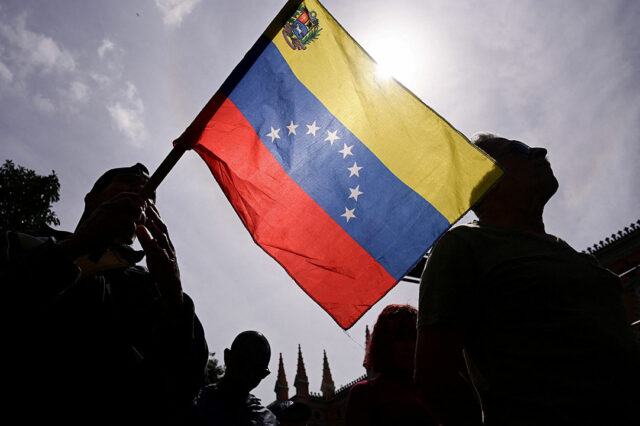
A person holds a Venezuelan flag as government supporters gather after US President Donald Trump said the US has struck Venezuela and captured its President Nicolas Maduro, in Caracas, Venezuela, January 3, 2026. — REUTERS/GABY ORAA

More than a dozen media workers were detained on Monday while covering events in the Venezuelan capital Caracas, including a march in support of ousted President Nicolas Maduro and the swearing-in of the country’s new legislature, the South American nation’s press association said.

All 14 of those detained were later released, the press association (SNTP) said on X, though one was a foreign journalist who was deported.

SNTP said that those detained included 11 people working with international media outlets and one with a national outlet.

Reuters was unable to independently confirm all of the detentions.

China’s foreign ministry said on Tuesday that all Chinese reporters in Venezuela were safe.

Venezuela’s information ministry, which handles all contact with the government, did not immediately respond to a request for comment about the detentions. Venezuela’s Ministry of Communications also did not respond to requests for comment.

The Associated Press, Agence France-Presse and CNN did not immediately respond to requests for comment. Reuters also did not immediately respond to a request for comment.

The press detentions come after the US military detained Maduro in an overnight operation this weekend. On Monday the deposed leader pleaded not guilty to narcoterrorism charges in a New York court.

His vice president, Delcy Rodriguez, has since taken the reins as interim leader. — Reuters

Pope Leo, closing Catholic Holy Year, urges kindness to foreigners

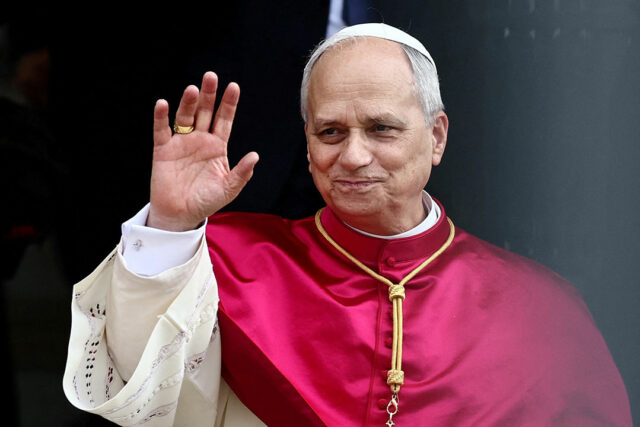
POPE LEO XIV waves as he leaves the basilica of Saint Paul Outside the Walls in Rome, Italy, May 20, 2025. — REUTERS

VATICAN CITY — Pope Leo closed the Catholic Church’s Holy Year on Tuesday by sealing shut the special “Holy Door” in St. Peter’s Basilica and urging Christians worldwide to help those in need and treat foreigners with kindness.

Leo, who has made care for immigrants a central theme of his early papacy, said at a Vatican ceremony that the record 33.5 million pilgrims who visited Rome during the Holy Year should have learned not to treat humans as mere “products”.

“Around us, a distorted economy tries to profit from everything,” said the pope. “After this year, will we be better able to recognize a pilgrim in the visitor, a seeker in the stranger, a neighbor in the foreigner?”

Holy years, or jubilees, typically occur every 25 years and are considered a time of peace, forgiveness, and pardon. Pilgrims to Rome can enter special “Holy Doors” at four Rome basilicas, and can attend papal audiences throughout the year.

At 9:41 a.m. (0841 GMT) on Tuesday, Leo, dressed in gold-trimmed robes, pulled shut the special bronze door at St. Peter’s, officially ending the year.

The next jubilee is not expected before 2033, when the Church may have a special one to mark 2,000 years since the death of Jesus.

Vatican and Italian officials said on Monday that pilgrims to Rome for the 2025 jubilee came from 185 countries, with Italy, the United States, Spain, Brazil, and Poland leading the pack.

The 2025 jubilee was marked by an historical rarity not seen for 300 years. It was opened by one pope, Francis, and closed by his successor, Leo.

Francis died in April after 12 years leading the 1.4-billion-member Church. The last jubilee held under two popes was in the year 1700, when Clement XI closed a holy year opened by Innocent XII.

Leo, who has pledged to keep Francis’ signature policies such as welcoming gay Catholics and discussing women’s ordination, echoed the late pope’s frequent criticisms of the global economic system on Tuesday.

Leo, the first US pope, lamented that the markets “turn human yearnings of seeking, traveling and beginning again into a mere business.” — Reuters

UN chief Guterres raises concerns about instability in Venezuela, legality of US operation

United States Ambassador to the United Nations Mike Waltz addresses a Security Council meeting to discuss 'ongoing US aggression' against Venezuela at the UN headquarters in New York City, US, Dec. 23, 2025. — REUTERS

UNITED NATIONS — United Nations Secretary-General Antonio Guterres raised concerns on Monday about greater instability in Venezuela after the US capture of President Nicolas Maduro, while the United States said it does not plan to occupy the Latin American country.

The 15-member Security Council met at UN headquarters in New York just hours before Maduro was due to appear in a Manhattan federal court on drug charges including narco-terrorism conspiracy.  Mr. Maduro has denied any criminal involvement.

“I am deeply concerned about the possible intensification of instability in the country, the potential impact on the region, and the precedent it may set for how relations between and among states are conducted,” Mr. Guterres said in a statement delivered to the council by UN political affairs chief Rosemary DiCarlo.

NO OCCUPATION

US Ambassador to the UN Mike Waltz told the Security Council the United States carried out “a surgical law enforcement operation facilitated by the US military against two indicted fugitives of American justice,” referring to Mr. Maduro and his wife Cilia Flores.

“As Secretary (of State Marco) Rubio has said, there is no war against Venezuela or its people. We are not occupying a country,” said Mr. Waltz, as he laid out the US case against Mr. Maduro at the Security Council.

“We’re not going to allow the Western Hemisphere to be used as a base of operation for our nation’s adversaries,” Mr. Waltz said. “You cannot continue to have the largest energy reserves in the world under the control of adversaries of the United States, under the control of illegitimate leaders, and not benefiting the people of Venezuela.”

Venezuela’s UN Ambassador Samuel Moncada called the US operation to capture Mr. Maduro “an illegitimate armed attack lacking any legal justification.” Mr. Moncada told the council that Venezuelan institutions are functioning normally, constitutional order has been preserved, and the state exercises effective control over all of its territory.

Mr. Guterres called on all Venezuelan actors to engage in an inclusive and democratic dialogue, adding: “I welcome and am ready to support all efforts aimed at assisting Venezuelans in finding a peaceful way forward.”

INTERNATIONAL LAW
Mr. Guterres also expressed concern that the US operation to capture Mr. Maduro in Caracas on Saturday did not respect the rules of international law. The UN Charter states that members “shall refrain in their international relations from the threat or use of force against the territorial integrity or political independence of any state.”

The United States has cited Article 51 of the UN Charter, which says that nothing “shall impair the inherent right of individual or collective self-defense if an armed attack occurs against a member of the United Nations.”

Russia, China, and Colombia condemned the US military operation as illegal. Most remaining council members did not directly criticize the United States and instead stated the importance of abiding by international law and the UN Charter.

“Unintelligible murmurings and attempts to avoid principled assessments by those who in other circumstances froth at the mouth and demand that others respect the UN Charter today seem particularly hypocritical and unseemly,” said Russia’s UN Ambassador Vassily Nebenzia.

Russia has been denounced by the United Nations for its 2022 invasion of Ukraine.

China drew comparisons to the 2003 US-led invasion of Iraq and more recent attacks on Iran’s nuclear facilities.

“The lessons of history offer a stark warning,” said Sun Lei, the charge d’affaires of China’s Permanent Mission to the United Nations. “Military means are not the solution to problems, and the indiscriminate use of force will only lead to greater crises.”

Colombia, which requested Monday’s meeting, condemned the US operation as a clear violation of the sovereignty, political independence and territorial integrity of Venezuela. Russia, China, and Venezuela called on the United States to release Mr. Maduro and his wife.

The United States cannot be held accountable by the UN Security Council, which is charged with maintaining international peace and security, for any such violation. The United States wields a veto – along with Russia, China, Britain, and France – so it can block any action. — Reuters

Philippines raises alert level at restive Mayon volcano

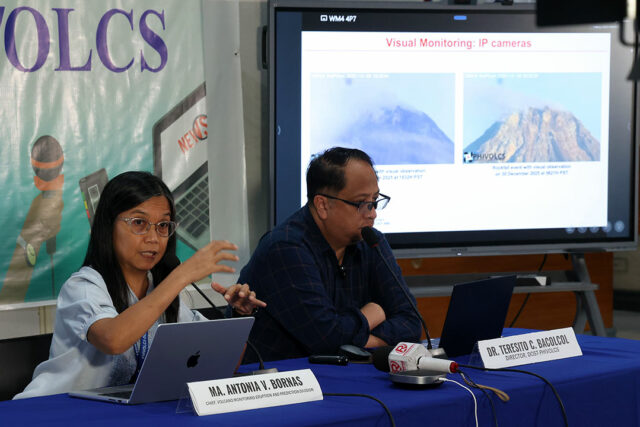
Philippine Institute of Volcanology and Seismology (PHIVOLCS) Director Dr. Teresito Bacolcol (right) and Volcano Monitoring Eruption and Prediction Division Chief Ma. Antonia Bornas give updates regarding the raising of Alert Level 3 for the Mayon Volcano during a press conference on Tuesday, Jan. 6, 2026. — PHILIPPINE STAR/MIGUEL DE GUZMAN

MANILA — The Philippines on Tuesday raised its alert level for the Mayon volcano in the central province of Albay, warning of “potential explosive activity” in the coming days or weeks and advising people to stay outside of a 6-kilometer (3.7 miles) danger zone.

The Philippine Institute of Volcanology and Seismology, also known as PHIVOLCS, raised the alert to level three on a five-level scale, which means magma is pushing up inside the volcano and forming a lava dome at the summit.

PHIVOLCS urged residents within the 6-km no-go zone to evacuate because of risks like lava flows, falling rocks, and other hazards.

Mayon is the most active of 22 volcanoes in the Philippines, having erupted more than 50 times in the last four centuries. Its last magmatic eruption was in June 2023 when it spewed lava and noxious gases.

The most destructive eruption came in February 1841 when lava flows buried an entire town and killed 1,200 people.

The Philippines lies on the “Ring of Fire”, a belt of volcanoes circling the Pacific Ocean that is also prone to earthquakes.

PHIVOCLS urged civil aviation authorities to advise pilots to avoid flying near Mayon’s summit because ash from a sudden eruption can be hazardous to aircraft.

Since January 1, 2026, PHIVOLCS has recorded 346 rockfalls and 4 volcanic earthquakes, compared to 599 rockfalls in November–December 2025. — Reuters

Jollibee plans a US listing of its international business

A service assistant carries a takeaway order at a Jollibee Foods Corp. restaurant in Quezon City. BLOOMBERG

(UPDATE) Shares of Jollibee Foods Corp. jumped the most in more than five years after it announced plans to spin off its international business and list it on a US stock exchange by late 2027 as the Philippine fast-food group plots its global expansion.

Jollibee, which increasingly is taking aim at global fast-food giants such as McDonald’s and Yum! Brands Inc. from Los Angeles to Ho Chi Minh City, said Tuesday said it has hired international and local advisers to work on the spinoff and potential US listing.

Jollibee Foods Corporation International would include all of the company’s businesses outside its home market, the company said in a statement filed to the Philippine Stock Exchange, where its Philippine operations will remain listed.

Jollibee shares — after a one-hour trading halt — rose as much as 11.56% on Tuesday, the most since October 2020.

Establishing two listed businesses is designed to sharpen the strategic focus of each company and enhance the “clarity of each equity story,” Jollibee said.

The spinoff would allow investors to value the “stable, cash-generative Philippine business separately from the higher-growth but more volatile international operations,” COL Financial Group analyst Rachelle Biacora said in a note. However, the company’s domestic unit may have a lower market value, which could affect its weighting in some stock indexes, she added.

Jollibee shareholders would receive a number of shares in the international business equal to their company holdings at the time of the listing, the company said.

The food giant owns several brands, including its iconic Jollibee chain known for its sweet-style spaghetti and crispy fried chicken.

Jollibee is building its international profile, striking 27 cross-border deals worth around $1.1 billion since 2000, according to data compiled by Bloomberg. That includes US brands such as Smashburger and Coffee Bean and Tea Leaf, which Jollibee struggled to turn around, and recently, South Korea’s Compose Coffee.

The group had 10,304 stores as of September, of which 6,859 were located overseas across over 30 countries, including China, Canada and Vietnam. International business generated around 43% of Jollibee’s P224.2 billion ($3.8 billion) revenue from January to September. — Bloomberg

Dell revives XPS brand with new laptops to boost PC market share

DELL has brought back its popular XPS laptop lineup a year after retiring the premium brand, as it looks to drum up demand in a sagging personal computer market.

The company on Monday unveiled its thinnest laptops yet, XPS 14 and XPS 16, with plans to launch an even lighter XPS 13 later this year.

The announcement at the annual Consumer Electronics Show in Las Vegas marks a U-turn for Dell following “very broad” feedback from its partners.

“I owe you an apology today. We didn’t listen to you. You were right on branding,” Dell Chief Operating Officer Jeff Clarke said in a media briefing.

Launched in the 1990s, XPS helped Dell carve a share of the consumer market after years of targeting businesses. But the company shifted its strategy last year to sell models under “Dell,” “Dell Pro,” and “Dell Pro Max” names.

With the revival, Dell aims to boost its position in the premium segment amid rising competition from rivals such as HP and Lenovo.

Limited configurations of the first two models will go on sale in the US and Canada on Tuesday, with the XPS 14 starting at $2,049.99 and the XPS 16 at $2,199.99.

The two models will use Intel’s Core Ultra Series 3 processors with built-in Arc graphics, which Dell says deliver up to 57% and 78% faster AI performance, respectively, and more than 50% faster graphics performance than previous models.

Mr. Clarke offered little detail on how Dell will navigate the surge in memory prices that analysts say will force industry-wide price hikes, while adding AI has not generated the kind of demand the company expected a year ago.

Dell is moving away from tier names like “base, plus and premium” to simplify choices for consumers, Kevin Terwilliger, head of product for Dell’s PC business line, told Reuters.

Instead, the company will have mainstream and entry-level laptops under the “Dell” brand, premium products under XPS and Alienware for full gameplay, Mr. Terwilliger said.— Reuters

Pag-IBIG keeps low 3% rate as higher price ceilings lift quality of socialized homes

Filipino workers are expected to benefit from better-quality socialized housing following the government’s approval of higher price ceilings for socialized subdivision and condominium projects, while Pag-IBIG Fund continues to provide affordability through its subsidized housing loan rates under the Expanded Pambansang Pabahay Para sa Pilipino (Expanded 4PH) Program.

The updated ceilings, issued under the Implementing Rules and Regulations (IRR) of the Department of Human Settlements and Urban Development (DHSUD) and the Department of Economy, Planning, and Development (DEPDev) Joint Memorandum Circular No. 2025-001, are intended to reflect current cost conditions and enable developers to deliver improved unit quality and safer housing standards.

“Under President Ferdinand R. Marcos, Jr.’s housing agenda, our goal is clear. Filipino workers should have access to homes that are safe, decent and built to last, and that remain within their reach,” DHSUD Secretary Jose Ramon P. Aliling said. “By updating the price ceilings, we are aligning project prices with today’s cost conditions so developers can build better socialized housing units and sustain construction. This strengthens the housing industry’s capacity to deliver more homes at scale, while keeping Expanded 4PH firmly focused on affordability to make homeownership more attainable for Filipinos.”

Under the IRR, the maximum selling price for socialized house-and-lot units has been adjusted to P844,440 for a minimum unit size of 24 to 26 sq. m., and P950,000 for 27 sq. m. and above.

For socialized condominium projects, price ceilings were also updated based on building classification and unit size, with maximum selling prices set at up to P1.8 million for projects above five floors with unit sizes of 27 sq. m. and above.

For eligible socialized condominium projects in the National Capital Region and other highly urbanized cities, the IRR also allows maximum add-ons based on zonal value of up to P200,000, bringing the allowable maximum selling price for select categories to as high as P2.0 million.

Pag-IBIG Fund Chief Executive Officer Marilene C. Acosta said the Fund will continue to support Expanded 4PH by keeping housing loan terms affordable for qualified members, in line with President Marcos, Jr.’s push to expand access to homeownership. She added that Pag-IBIG Fund will work closely with housing stakeholders, including partner developers, to help speed up unit production and takeouts under the program.

“Our strong fiscal position allows us to continue offering subsidized rates under the Expanded 4PH so our members can truly achieve their dream of owning a home,” Ms. Acosta said. “Even as better socialized homes become available under the new ceilings, we will keep loan terms affordable and work closely with our partners to help fast-track the availability of more housing units for Filipino workers.”

Under the Pag-IBIG Housing Loan for the Expanded 4PH, qualified members may avail of loans at a subsidized 3% interest rate for the first five years of the loan, extendible for another five years for qualified borrowers. This lowers monthly payments to P4,005 for house-and-lot units priced up to P950,000, and about P8,432 for condominium units priced up to P2 million. Through the agency’s Early Bird Promo, the first 30,000 qualified borrowers may enjoy the subsidized rate for the first 10 years of the loan.


Spotlight is BusinessWorld’s sponsored section that allows advertisers to amplify their brand and connect with BusinessWorld’s audience by publishing their stories on the BusinessWorld Web site. For more information, send an email to online@bworldonline.com.

Join us on Viber at https://bit.ly/3hv6bLA to get more updates and subscribe to BusinessWorld’s titles and get exclusive content through www.bworld-x.com.

Sri Lanka targets 3 million tourists to aid cyclone recovery

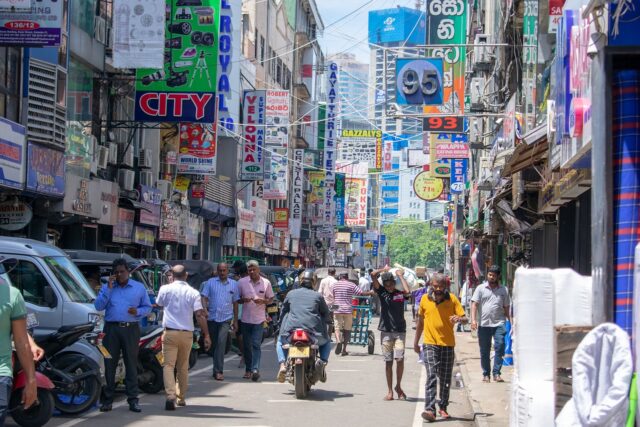
PIXABAY

COLOMBO — Sri Lanka is targeting 3 million tourist arrivals in 2026, a top official said on Monday, after a record 2.36 million last year, as the country seeks to boost revenue and support recovery from Cyclone Ditwah.

Famous for its pristine beaches, ancient temples and Ceylon Tea, tourism is Sri Lanka’s second-largest foreign exchange earner with $3.2 billion in revenues in 2025.

The tourist arrival target, which is an ambitious 27% increase over the previous year, will help Sri Lankans recover from Cyclone Ditwah, which hit the island nation at the end of November killing 645 people, said Vijitha Herath, Minister of Foreign Affairs and Tourism.

Torrential rains and hundreds of landslides damaged over 110,000 houses as well as key roads, railroads, and bridges causing $4.1 billion in damage according to World Bank estimates.

Growth, which was projected at 3.1% for 2026, was reduced to 2.9% by the International Monetary Fund (IMF) in December. An IMF delegation is expected in Colombo this month to conduct the fifth review of a $2.9 billion program with Sri Lanka.

“We are proud that Sri Lanka still managed to record the highest-ever tourism numbers. We are hopeful that tourism revenue will also continue to grow and this will help our economy at a crucial time,” Mr. Herath told reporters.

Sri Lanka is also eyeing about $500 million in investment in the tourism sector in 2026 after attracting $329 million from 126 projects last year, said Buddhika Hewawasam, Chairman, Sri Lanka Tourism Development Authority.— Reuters

25% of Filipinos uncertain life will improve in 2026 — survey

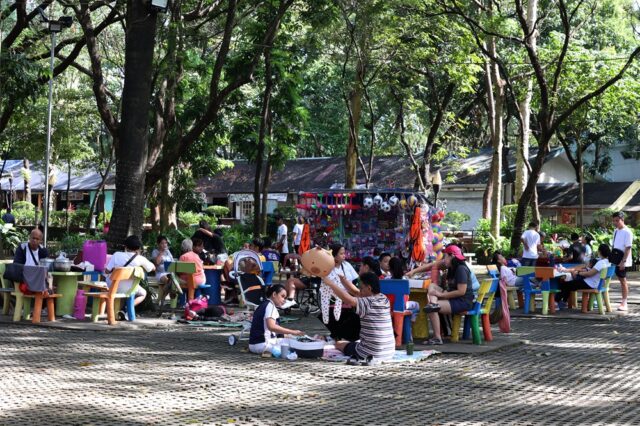
Families enjoying and spending quality time at the Quezon Memorial Circle park grounds in Quezon City on Sunday, Jan. 4, 2026.— PHILIPPINE STAR/MIGUEL DE GUZMAN

According to a nationwide survey by public opinion firm WR Numero, a quarter of Filipinos are unsure if their own lives and their families’ will improve in 2026, highlighting uncertainty among Class E citizens as they enter the new year.

“Some Filipinos are unsure whether life will improve in the upcoming year (25%), while a majority remain optimistic that life will improve in the coming year (55%),” the firm said.

“Two in ten believe that life this year and next year will remain the same (16%), while a small portion (4%) think that life will be worse in the coming year,” it added.

The survey noted that 50% of citizens in income Class E are the least optimistic about their outlook for the new year, followed by Class D at 65% and Class ABC with 66%.

29% of Class E respondents added that they do not have expectations of a better life this year, while 5% expects life to be worse.

The negative outlook for the year was also echoed among Filipinos in Luzon, where 6% anticipates life to be worse in 2026, while 20% predicts the new year will be the same as the previous one.

Visayas had the highest number of respondents claiming to be uncertain about their future at 29%, followed by Luzon at 26%, Metro Manila at 23%, and Mindanao at 20%.

Male participants appeared to be more doubtful about the new year, compared to females, with 27% having lower expectations and 3% less optimistic than women.

IBON Foundation Executive Director Jose Enrique “Sonny” A. Africa said that the uncertainty for the new year, especially within Class E, reflects a deeper structural problem in the country.

“It can only come from the lived experience of economic insecurity and limited prospects by the large majority of Filipinos, in numbers well beyond what grossly understated official poverty estimates admit,” he told BusinessWorld in a message.

“It’s also possible that such sentiments have become heightened with the well-publicized disclosure of the extreme wealth of corrupt contractors, officials and lawmakers,” he added.

In 2025, several government employees received public scrutiny after anomalies in budget allocations were discovered, sparking multiple nationwide rallies.

National President of  Bukluran ng Manggagawang Pilipino Renecio “Luke” S. Espiritu also linked poverty to the dubious outlook of Filipinos for 2026.

“It is no surprise that Class E respondents—mainly comprised of the jobless, underemployed, the poorest of the poor—are least optimistic,” he told BusinessWorld in a Viber message.

“The government, regardless of whoever is in power, has never resolved poverty and is instead promoting inequality through systemic corruption and anti-poor policies,” he added.

Mr. Africa noted that if the government wants to establish a more positive mindset for the new year, it has to fill the gaps in the social protection system.

“The government can address these structural drivers of uncertainty if it wanted to,” he said.  “Support a family living wage and decent work, invest in agriculture to make food cheaper, and invest in Filipino industry to create jobs for the long-term.”

New Year’s Resolution
In the same survey, the firm revealed that across all income classes, wealth and health remain the top priority in the new year’s resolutions for Filipinos.

Among the resolutions declared by the participants are saving money (38%), taking better care of their health (37%), improving career and income (28%), and quality time with family (27%).

24% of the participants also included starting their own business as part of their goals this year, along with being more optimistic (22%), becoming more active in church and religion (16%), and helping the community (10%).

Meanwhile, others are focusing on learning new skills and personal development.

The survey found that 9% aim to study better, 8% want to learn new skills and hobbies, 6% plan to migrate overseas and learn more about social issues, and 4% are planning to be more active and exercise.

WR Numero interviewed 1,412 Filipinos residing in the Philippines for the latest Philippine Public Opinion Monitor, which was conducted from Nov. 21 to 28, 2025, and has a ±3% margin of error and 95% confidence level.— Almira Louise S. Martinez