Home Blog Page 4504

Malnutrition and management

JOSE ALJOVIN-UNSPLASH

Pundits may ask why the Management Association of the Philippines (MAP) is into solving malnutrition and hunger. I personally believe that management not only involves present-day management but also looks after sustainability in terms of the present-day workforce, a future workforce, and how to ensure their company’s sustainability with human resources (HR).

Should it be just a problem of HR or should not managers be involved in ensuring we have enough brain power in the future? This is why I commend the active committees in MAP who are working on why malnutrition should be the problem for every manager to solve.

When we became members of MAP, we knew we would learn from our peers, and we could share with our peers the new concepts and ideas that develop and evolve as we go about our ways in managing this already chaotic business environment. Though there are immutable management principles we learned in University — Planning, Directing, Organizing, Controlling —these have been complicated with the onset of Digital, ChatGPT and Artificial Intelligence (AI). Further, there is also a change in the culture of the workforce.

There are new challenges to employee retention and even recruitment. There are challenges to how you hire a Marketing team, where more freelancers offer services and agencies are hard-pressed to keep their most brilliant minds in tow.

In Finance, the developments happen every day to make payroll remote, make simple payments bank-to-bank, and the management of financial products have become more digital. Even stock placements are now done online and it almost removes the messenger and the runners of yesteryears.

When I look back at what we learned in school, and the management principles we were made to digest and almost memorize, I can just smile and think: yes, they helped me learn a thinking process that managers ought to practice. But where is all that now? At a recent briefing we had on ChatGPT with the NextGen Organization of Women Corporate Directors (NOWCD), a new company called Thinking Machines (I love the name) explained to us the simplicity and complexity of AI and ChatGPT. These young entrepreneurs, mostly 26 and maybe younger, were teaching us 55-year-olds and up in age about how to “prime” ChatGPT or a similar program that they made using AI. Same principle as the 1970s computer revolution: garbage in, garbage out. It helped us understand that AI is good if you feed it the correct data you have. Wrong or skewed data will generate bad results.

And this is what managers and corporate directors ought to think about today. How can I use my academic background to be the foundation and add the new ingredients — ChatGPT and AI, digital banking, fintech — and become the manager or board director armed with “future ready” information and ideas?

While NOWCD attempts to share these new ideas with its members, MAP on the other hand must keep thinking of the core of business — its employees. And this, I believe, is the key for every manager to know. As MAP also has started recruitment of its NextGen members and has managed to lower its average membership age to 60 (it used to be 67), we also must think about who our teams will be 20 years from now.

Companies who wish or plan to survive the next 20 years and longer have to start thinking of the future workforce now. And this is a good move on the part of MAP to harness the power of NGOs and experts in finding solutions to stunting and wasting amidst the food crisis where we need to import almost every staple because the Filipino farmer failed to plan his succession. Children of farmers do not want to be farmers. So, as they say, for the farmer, it’s the end of the line. Who will grow our food? Thank God there are new farmers in our midst who have taken a love for the soil and are now planting vegetables, albeit in small farms for specialty markets, like organic and natural food markets. The mainstream vegetable market still must contend with lower farm gate prices and is still in a precarious situation. As a manager, is your solution also to scale production?

Food security and malnutrition are joined at the hip. You cannot think of one without thinking of the other. So why is MAP thinking of solving malnutrition? Because food security is connected to it and since we are not agriculturists, but managers, we can manage what we know or think we can know. Food security is more complex in that it requires a decision of doing scale versus backyard production. I personally am for Slow Food — good, clean, and fairly produced food like what our forefathers used to do. You may check out www.slowfood.com to get more ideas on how small farmers are doing small but safe food production. Or you can promote scale and be victim to chemicals and pesticides, GMO seeds and hybrids — and feed the world bad food. And serve the multinationals who produce the world’s food — there must be only six of them producing all of the world’s food, by the way.

So, you see, it is not as simple as managing a malnutrition program. It involves political will and management skills. Do you go slow food, or fast and unhealthy food? Do you want healthy workers in the future or workers who will be prone to sickness and have a lot of sick days? There is much to think about if we want to see a healthy workforce 20 years from now.

Or even if there is a workforce to speak of.

Yes, people will look for work but are they the people who we fed with healthy or bad food today? So, tell me, why should managers get involved with malnutrition and stunting? The answer is simple. Sustainability of a company hinges on a continuous throughput of a healthy workforce — today and a generation after.


Chit U. Juan is co-vice chair of the MAP Environment Committee. She is president of NOWCD, president of the Philippine Coffee Board, Inc., and founder of the ECHOstore Sustainable Lifestyle. She is a member of the global Slow Food community promoting good, clean, and fair food.


map@map.org.ph

pujuan29@gmail.com

Celebrating 60 years of service to the nation: LANDBANK to beef-up physical, digital services to drive financial inclusion

State-run Land Bank of the Philippines (LANDBANK) is marking 60 years of public service with plans to further expand its physical presence in unbanked and underserved communities, while enhancing its digital services to consistently deliver a seamless and exceptional customer experience.

LANDBANK President and CEO Lynette V. Ortiz said that the Bank will continue to support the National Government’s development agenda by improving access to reliable, relevant, and convenient financial services.

“We are adopting a phygital strategy to cater to our customer’s evolving preferences and demands, with increased investments in expanding our physical touchpoints and beefing-up our digital offerings. LANDBANK is ready to reach and serve a wider customer base, as we continue to bring more Filipinos into the financial mainstream,” said LANDBANK President Ortiz.

The only bank operating in all 82 provinces of the country, LANDBANK eyes to establish physical touchpoints in all 1,634 cities and municipalities nationwide to bring banking services closer to Filipinos.

As of 30 June 2023, LANDBANK has 606 branches and branch-lite units, 58 lending centers, 2,951 automated teller machines (ATMs), 226 cash deposit machines (CDMs), and 1,785 Agent Banking Partner POS cash-out terminals.

LANDBANK is currently present in 85.4% or 1,396 cities and municipalities in the country, including the previously unbanked towns of Sallapadan in Abra, Barlig in Mountain Province, Tamparan in Lanao del Sur, Anahawan in Southern Leyte, and Kinoguitan in Misamis Oriental.

In support of the Government’s digitalization push, LANDBANK is also looking to onboard all government offices in its digital platforms to increase operational efficiency, improve the ease of doing business, and enhance meaningful public service delivery.

From January to June 2023, the Bank has onboarded a total of 180 government entities to its Link.BizPortal payment platform, and facilitated across all its digital channels a total of 96.5 million transactions valued at P3.9 trillion.

LANDBANK is also working closely with the Philippine Statistics Authority (PSA) in providing unbanked Philippine Identification System (PhilSys) registrants with their own transaction accounts with no initial deposit.

As of June 2023, the Bank has already onboarded 8.35 million unbanked Filipinos to the formal banking system, allowing for convenient fund management and access to financial transactions such as cash withdrawals, fund transfers, and online bills payments.

LANDBANK has likewise taken significant steps to make digital banking more affordable, which includes recently reducing the transaction fees for online fund transfers to other banks through InstaPay, from P25 to P15.

The Bank has also doubled the total daily amount limit of fund transfers via InstaPay from P50,000.00 to P100,000.00, subject to a maximum amount of P50,000.00 per transaction.

LANDBANK, which was established on 8 August 1963 through Republic Act No. 3844 or the Agricultural Land Reform Code, will celebrate its 60th anniversary on 08 August 2023, representing six decades of uplifting lives, empowering communities, and serving the nation — towards building an inclusive and sustainable economy.


Spotlight is BusinessWorld’s sponsored section that allows advertisers to amplify their brand and connect with BusinessWorld’s audience by enabling them to publish their stories directly on the BusinessWorld website. For more information, send an email to online@bworldonline.com.

Join us on Viber at https://bit.ly/3hv6bLA to get more updates and subscribe to BusinessWorld’s titles and get exclusive content through www.bworld-x.com.

Londoners struggle to afford homes elsewhere in the UK

BLOOMBERG

LONDON’s expensive housing market is notorious for pricing out would-be buyers. Now its residents are struggling to afford a home outside the capital as well.

Londoners bought 32,600 homes elsewhere in the UK during the first six months of the year, according to a report from broker Hamptons International. That’s about a fifth lower than the 40,000-plus homes purchased in the first half of 2022, as the priciest mortgages in almost 15 years block many would-be movers and first-time buyers from affording deals.

“This year London outmigration has increasingly been driven by need over want,” said Aneisha Beveridge, head of research at Hamptons. “Higher mortgage rates reduce buyers’ budgets, pushing them in search of smaller homes in more affordable areas.”

UK households are facing an avalanche of cost pressures triggered by rising interest rates and the worst cost-of-living crisis in a generation. Millions of homeowners have already seen the value of their properties decline this year, with some analysts forecasting a double-digit drop in prices as the nation adapts to costlier borrowing.

Meanwhile, London’s first-time buyers are struggling to get on the housing ladder — in or outside the city — as the priciest rents and living costs in the country squeeze their budgets to the brink.

The amount of homes bought outside the capital by London-based first-time buyers dropped 19% year-on-year to just over 25,000 in the first half of 2023, according to Hamptons, prompting a forecast from the broker that this year will see lowest amount of leavers in almost a decade.

What’s more, affordability pressures this year have forced the average London leaver to buy for about £60,000 ($76,233) less than those who left in 2022, with the average spend falling under £430,000. That’s because London leavers are hunting for cheaper deals further away from the capital, the report said, with the average distance moved in the first half of the year rising to the furthest since at least 2009.

Still, more than a third of London-based first-time buyers have left the capital to purchase a home so far this year, the second-highest share since Hamptons’ records began. These buyers are generally happy to settle for smaller homes — typically east of the capital — with the share of movers purchasing a one- or two-bedroom property rising in the first half of the year.

“The likelihood that mortgage rates will stay higher for longer may keep the pace of London outmigration up,” Hamptons’ Beveridge said. “With property prices in parts of the capital lower today than when they bought, trading the city for a cheaper area outside the M25 might be the only option for those needing to upsize.” — Bloomberg

Shakey’s says new Potato Corner product aims to aid farmers

SHAKEY’S Pizza Asia Ventures, Inc. announced on Monday that it has partnered with Gawad Kalinga (GK) through its Potato Corner (PC) brand to support local farmers.

The company introduced Potato Corner’s Harvest Chips product, using potatoes sourced from farmers in Benguet, under the supervision of Gawad Kalinga, and processed by Enchanted Farm workers.

In a statement, the company said that the new offering aims to help local farmers create a new income stream, which, in turn, “is in tune with PC’s innovation play.”

“We are extremely grateful for this opportunity to partner with Gawad Kalinga in support of the local farming community. As a global, proudly Filipino brand, we believe that PC has a unique role in bringing our local produce center stage,” Shakey’s President and Chief Executive Officer Vicente L. Gregorio said.

“PC has the ability to empower entrepreneurship and create livelihoods in the Philippines and beyond. We hope that, given its scale and the platform GK has provided, we can boost the income of Filipino potato farmers and make a positive impact in their lives,” Mr. Gregorio added.

The company also said that its promotional event, “National Fries Weekend,” contributed to boosting business for its franchisees.

“By developing programs like these, we are able to support our franchisees, promote entrepreneurship, and foster valuable partnerships that prime the brand for long-term growth,” Mr. Gregorio said.

The campaign was held for four days in July across all Potato Corner outlets domestically and in select stores internationally, including those in Singapore, Myanmar, Cambodia, British Columbia, and the United Arab Emirates.

Last year, the company acquired the assets and intellectual property of Potato Corner, resulting in a combined footprint of over 1,500 outlets in the Philippines and internationally.

For the first quarter, the company reported a net income of P200.78 million, more than double the P76.23 million recorded during the same period last year, thanks to sustained dine-in foot traffic.

Revenues for the first quarter surged by 94% to reach P3.14 billion, compared to P1.61 billion in the same period last year.

Shares for Shakey’s closed unchanged at P9.4 apiece on Monday. — Adrian H. Halili

Lenders leave rediscount facility untapped in July

BW FILE PHOTO

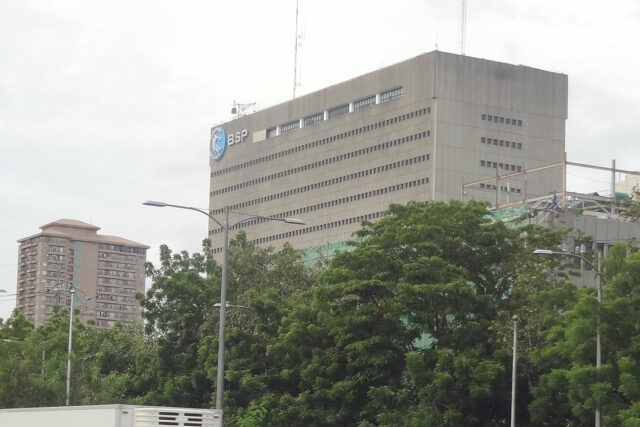
LENDERS left the rediscount facility of the Bangko Sentral ng Pilipinas (BSP) untouched in July as banks remained well-capitalized and as the cut in their reserve requirement ratios (RRR) freed up more liquidity.

The BSP’s peso rediscount window was untapped anew last month, it said in a statement on Monday, marking the ninth consecutive month that the rediscount facility was not used by Philippine banks.

Last year, the rediscount window was only tapped in April, June, and October, with loans reaching P15.3 billion, more than double the P6.12 billion in 2021.

The Exporters’ Dollar and Yen Rediscount Facility (EDYRF) was also untouched in July. The last time an availment was made under the EDYRF was a dollar rediscounting loan in 2016.

The BSP’s rediscount window gives banks access to additional money supply by posting their collectibles from clients as collateral.

In turn, banks may use the cash — denominated in peso, dollar or yen — to extend more loans to their corporate or retail clients and service unexpected withdrawals.

“The BSP rediscounting facilities remained untapped by banks so far this year, thereby manifesting the strength and resilience of the Philippine banking system, in terms of profitability, capitalization, and overall asset quality,” Rizal Commercial Banking Corp. Chief Economist Michael L. Ricafort said in a Viber message.

The Philippine banking sector saw its net profit jump by 34.8% to P89.47 billion in the first quarter from P66.34 billion in the same period a year prior, BSP data showed.

“Furthermore, the recent cut in banks’ RRR also effectively freed up more funds for lending by banks, as another reason for not tapping the BSP rediscounting facilities,” Mr. Ricafort said.

In June, the central bank cut the RRR for universal and commercial banks as well as nonbank financial institutions with quasi-banking functions by 250 basis points (bps) to 9.5% from 12% previously.

Likewise, the RRR for digital banks was narrowed by 200 bps to 6% from 8%, while thrift banks, rural and cooperative banks saw a 100-bp reduction in their reserve ratios.

Moving forward, the improvement in banks’ asset quality due to still-relatively lower nonperforming loan (NPL) ratio may reduce the need for banks to tap the central bank’s rediscounting facilities, Mr. Ricafort said.

The banking industry’s gross NPL ratio went down to 3.46% of their total loan portfolio in May from 3.75% a year ago. However, it inched up from the 3.41% seen in April. The May NPL ratio is the highest since 3.53% in August 2022.

“The continued growth in deposits and overall asset growth would still allow banks to fund more loans with no or minimal need to source funds from the BSP’s rediscounting facilities,” Mr. Ricafort said.

“Banks have also been tapping the capital markets and also the interbank borrowing and lending as alternative source of funding, in lieu of tapping the BSP rediscounting facilities,” he added.

AUGUST RATES
For August, the applicable rate for peso rediscount loans will be at 7.3926% for those maturing in 90 days and at 7.5352% for those falling due in 91-180 days.

Meanwhile, dollar borrowings will be priced at 7.86400% (1-90 days), 7.92890% (91-180 days) and 7.92890% (181-360 days).

Yen-dominated borrowings will have an interest rate of 2.04750% (1-90 days), 2.05791% (91-180 days) and 2.08423% (181-360 days).

“The Peso rediscount rates are based on the BSP Overnight Lending Rate, while the United States Dollar and Japanese Yen rediscount rates are based on the applicable benchmark rates,” the central bank said.

“The applicable spread, as may be determined by the BSP, may change periodically to complement the changes in the BSP’s monetary policy goals and reflect movements in market interest rates,” it added. — Keisha B. Ta-asan

‘Bohemian Rhapsody’ piano, other Freddie Mercury belongings to be auctioned

FOR SALE is Freddie Mercury’s crown and regal cloak, worn for the “God Save The Queen” finale during the singer’s last tour with Queen in 1986, estimated at £60,000–£80,000. — SOTHEBYS.COM

LONDON — Fans of Freddie Mercury might wonder if this is the real life, or just fantasy, when they walk into a near-replica of his London home, where thousands of items belonging to the late Queen frontman which went on exhibition Friday.

Rare items including handwritten lyrics, art and collectibles from Mr. Mercury’s London home, Garden Lodge, have been looked after by his close friend Mary Austin since his death from AIDS-related pneumonia in 1991.

They have gone on public display for the first time in the month-long exhibition at Sotheby’s, which will then auction many of the items in September, with prices ranging from as low as £40 to millions of pounds.

“We’ve conceived our gallery spaces to give it a sense of what it was like living with Freddie at home,” said David MacDonald, head of single owner sales at Sotheby’s London said.

“If he was to walk in, he’d instantly recognize some of the spaces we’ve created,” Mr. MacDonald said.

At the heart of the auction is Mr. Mercury’s treasured, black Yamaha piano, estimated at £2-3 million ($2.5-$3.8 million), on which he composed the 1975 Queen epic “Bohemian Rhapsody.”

“It was an extension of himself, his vehicle of creativity,” Ms. Austin said of the baby grand piano. “He would never smoke at the piano or rest a glass on top of it and would ensure nobody else did either. The piano was always pristine.”

Other items for sale range from Mr. Mercury’s crown and regal cloak, worn for the “God Save The Queen” finale during the singer’s last tour with Queen in 1986, estimated at £60,000- £80,000, to a Tiffany & Co silver moustache comb (£400- £600).

Handwritten manuscript working lyrics for “We Are The Champions” have an estimate of £200,000–£300,000, while those for “Killer Queen” have a price tag of £50,000–£70,000. — Reuters

Del Monte Pacific Limited to hold Annual General Meeting on Aug. 29


Spotlight is BusinessWorld’s sponsored section that allows advertisers to amplify their brand and connect with BusinessWorld’s audience by enabling them to publish their stories directly on the BusinessWorld website. For more information, send an email to online@bworldonline.com.

Join us on Viber at https://bit.ly/3hv6bLA to get more updates and subscribe to BusinessWorld’s titles and get exclusive content through www.bworld-x.com.

Inflation deceleration, G7 deindustrialization, and deficit reduction

Last week, there was a piece of good news reported by the Philippine Statistics Authority — the inflation rate has significantly declined, from 8.7% last January down to 5.1% last June, and only 4.7% in July. The Inter-Agency Committee on Inflation and Market Outlook (IAC-IMO), headed by the Secretaries of Finance, the National Economic and Development Authority (NEDA), and Budget, is working.

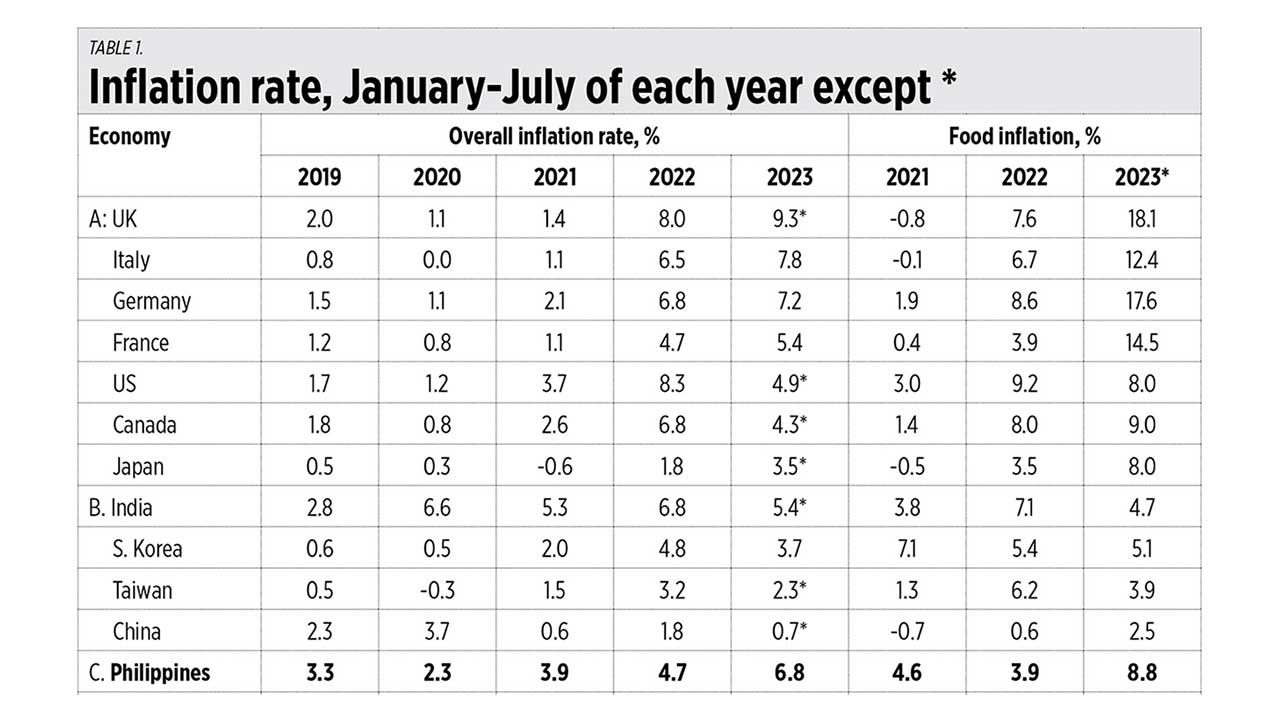
Continuing this column’s inflation monitoring of major economies of the world and Asia, I note that the average inflation rate of the Philippines in January-July 2023 is 6.8%, still high but not as bad as that in the UK, Italy, and Germany which range between 7-9%.

I checked food inflation in particular and saw that a surprising trend is that all the G7 countries (group A) have very high food inflation, with averages of 3.5% to 9% in January-July 2022, and 8% to 18% in January-June 2023. Group B (other big Asian economies) and group C (ASEAN-6) countries had food inflation of only 2.5% to 8.8% in January-June 2023 (see Table 1).

This column has suggested since last year that the G7 countries, the Europeans especially, are on the slow path to deindustrialization and degrowth, driven mainly by their climate, energy, and trade policies. Industrialized countries are supposed to have low inflation because they can mass produce and have efficient storage and transportation of a huge amount of food and other commodities — now this is not happening.

The Philippines’ economic and infrastructure teams should note this slow deindustrialization in the west and further modernize our energy, seaports, and airports, toll roads, water and other infrastructure, to attract many companies that are slowly leaving the west.

THE BUDGET
Also last week, Budget Secretary Amenah Pangandaman and the Office of the President submitted the budget proposals for 2024 to Congress. Below is a summary of the fiscal program from the Budget of Expenditures and Sources of Financing (BESF). I extended the data to 2020 and 2021 to further provide context. Here are the trends.

1. Disbursements have jumped from P3.8 trillion in 2019 to P4.23 trillion in 2020, and P5.16 trillion in 2022. Consequently, the deficit has more than doubled, from P0.66 trillion in 2019 to P1.55 trillion/year average in 2020-2022.

2. Net borrowings (new gross borrowings minus amortization) have nearly tripled, from P0.88 trillion in 2019 to P2.24 trillion/year average in 2020-2022, which is huge and really unsustainable.

3. The Deficit/GDP ratio has expanded from -3.4% in 2019 to -7.8% yearly average in 2020-2022 (see Table 2). This was irresponsible and very dangerous damage done by the lockdown dictatorship of the previous administration in 2020 and 2021.

The projected deficit/GDP ratio this year is still high at 6.1%. The main problem is not in the revenue side, because they keep rising even without new tax measures as many businesses and households are still recovering from the “kill business” philosophy of the horrible lockdowns. The problem is in the expenditure side, and I want to highlight three sources of spending distortion.

1. The salaries, allowances and bonuses of government personnel — from the National Government down to barangay staff — were given intact in 2020-2021 even if millions of people became jobless in the private sector and many taxpaying businesses were closed by the government. Revenues declined from P3.14 trillion in 2019 to only P2.86 trillion in 2020 and P3 trillion in 2021.

2. Endless subsidies with no timetable — like free tuition in all state universities, free irrigation, free healthcare, and free monthly cash for millions of households, and so on. If you reward poverty, then many people will declare themselves poor even if their actual incomes are rising. And many social welfare agencies plus their consultants will demand that their budget should keep rising by tens of billions yearly.

3. The continuing fiscal bleeding from irresponsible pensions for the military and uniformed personnel (MUP). I say irresponsible because the active and retired MUPs contribute zero for their generous current and future pensions, and the pensions are funded 100% from taxes — yet they are not even taxed. The proposed reforms in MUP pension have been submitted to Congress — new entrants will contribute, which is good. But current retirees and pensioners will keep getting tax-free pensions, up to about P180,000/month, tax free. Congress should tax this.

My minimal government hat says I should not support the continuing expansion of the budget while revenues keep lagging. But the economist in me recognizes the constraints faced by the economic team, so I support their target of sustained reduction in the deficit/GDP ratio to only -3.5% by 2026. And hopefully down to only -2.8% or less by 2028 when the Marcos Jr. administration steps down.


Bienvenido S. Oplas, Jr. is the president of Bienvenido S. Oplas, Jr. Research Consultancy Services, and Minimal Government Thinkers.

minimalgovernment@gmail.com

DMCI Homes donates universal testing equipment to UP ICE

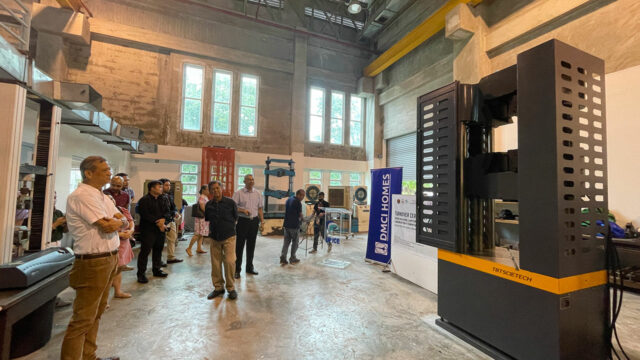
DMCI Homes turned over a 2000 kilonewton universal testing machine and other laboratory equipment to the University of the Philippines Institute of Civil Engineering, July 28. — COMPANY HANDOUT

DMCI HOMES recently donated a 2000 kilonewton (kN) universal testing machine to the Construction Materials and Structures Laboratory (CoMSLab) of the University of the Philippines Institute of Civil Engineering (UP ICE).

The company also turned over laptop computers and laboratory furniture, as part of its long-standing partnership with UP ICE.

DMCI Homes President Alfredo Austria emphasized the importance of research in the construction industry.

“Research is very important for innovations, and in companies like DMCI Homes, we always do a lot of innovations for us to be of service to the community around us and to be able to create value for our customers,” he said in a statement.

Nathaniel Diola, UP ICE deputy director for planning development and finance, said the 2000 kN universal testing machine will replace an old equipment in the CoMSLab that dates back to the 1950s.

“We want a machine that can be used for research, that can be controlled through computers so we can have accurate and precise assessments,” Mr. Diola said.

The DMCI Group of Companies has made donations to UP ICE throughout the years, which include professorial chairs, lecture rooms, computational laboratory, canteen, and the 260-seat David M. Consunji Theater.

Alaska Milk signs two-year CBA with workers union

ALASKA Milk Corp. (AMC) on Monday said it has signed a two-year collective bargaining agreement (CBA) with the Alaska Milk Workers Union-Independent, offering work-life flexibility and career development for its employees.

The CBA package, signed on July 27, is beneficial to both AMC and the rank-and-file employees working in the San Pedro, Laguna manufacturing plant, the company said in a statement.

The previous CBA was signed in September 2020 and expired on June 10 this year. The new CBA retroactively took effect on June 11.

“Employees will receive a package that will enable work-life flexibility and career development for them. Apart from the improvements to government-mandated benefits, employees will also be entitled to a funeral aid, medical and dental care, and hospitalization benefits,” the AMC said.

“They will also be enjoying annual recreational activities such as sports fests, summer outing, and Christmas party. An annual recognition of loyalty awardees will also be held to recognize outstanding performance,” it added.

According to the AMC, the CBA negotiation rounds were completed at the site level in less than two weeks, faster than previous negotiations that took at least three months to complete.

“This new agreement or what we call at AMC as Collective Growth Agreement, can only be made possible through the good relationship and trust between the management and the workers. This is a testament to our commitment in ensuring the continuous growth of our people and the business despite the current socio-economic status of the country,” AMC Managing Director Tarang Gupta said. — Revin Mikhael D. Ochave

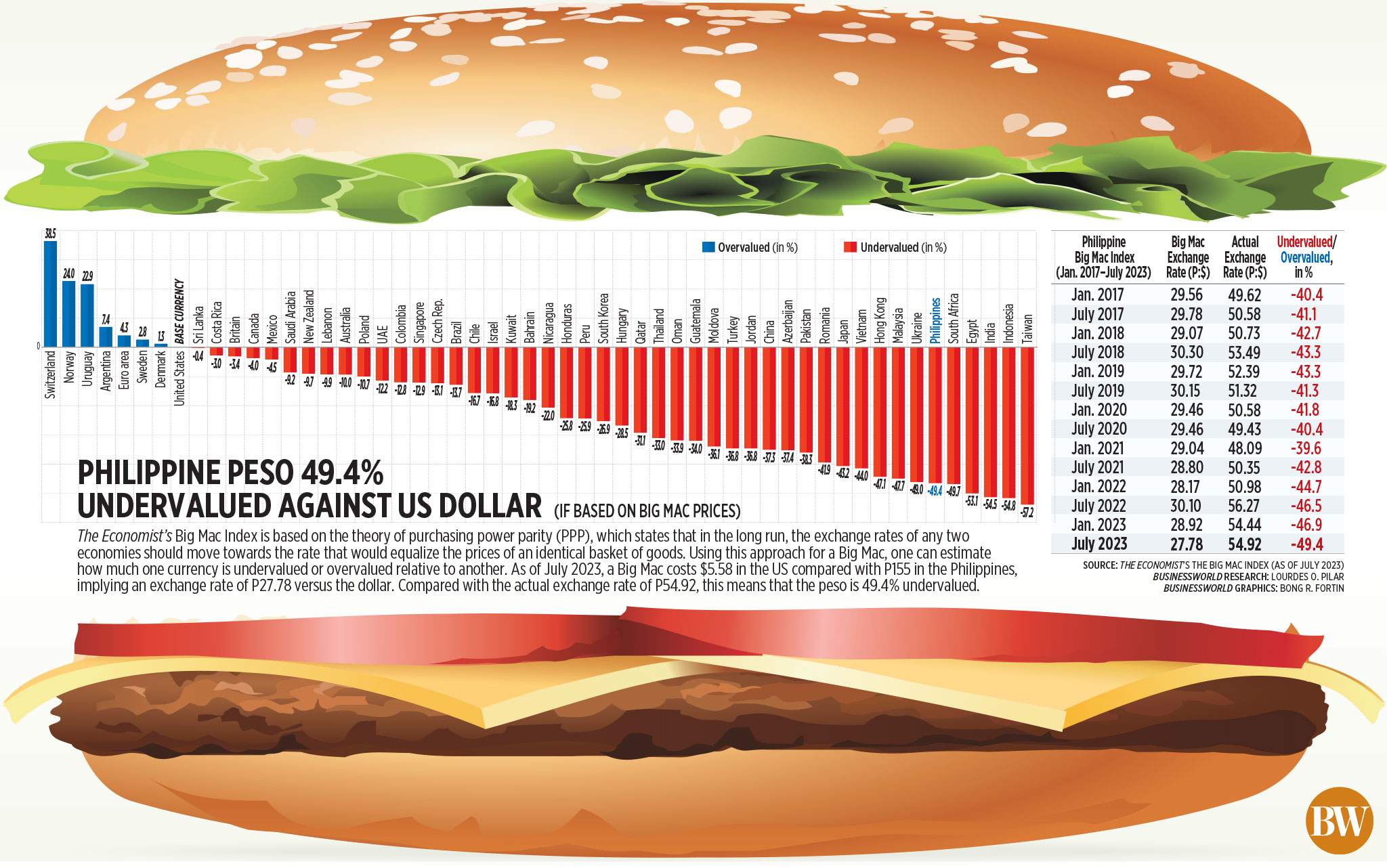
Philippine peso 49.4% undervalued against US dollar

(If based on Big Mac prices)

The Economist’s Big Mac Index is based on the theory of purchasing power parity (PPP), which states that in the long run, the exchange rates of any two economies should move towards the rate that would equalize the prices of an identical basket of goods. Using this approach for a Big Mac, one can estimate how much one currency is undervalued or overvalued relative to another. As of July 2023, a Big Mac costs $5.58 in the US compared with P155 in the Philippines, implying an exchange rate of P27.78 versus the dollar. Compared with the actual exchange rate of P54.92, this means that the peso is 49.4% undervalued.

PSBank posts 18% increase in net income in the first half

PHILIPPINE SAVINGS Bank (PSBank) saw its net income rise by 18% year on year in the first half amid an increase in loans and improved asset quality.

The net income of the thrift arm of the Metrobank Group stood at P2.17 billion in the first half, up from P1.84 billion in the same period last year, it said in a statement on Monday.

This translated to a return on equity of 11.4% at end-June, up from 10.4% in the first six months of 2022.

Its financial statement was not available as of press time.

“The bank, through its recalibrated strategies and focus on enhanced customer experience, was able to benefit from the continued expansion of the economy and the sustained growth in consumer demand for the first six months. We are hopeful, despite the external headwinds, that this can be sustained for the rest of the year,” PSBank President Jose Vicente L. Alde said.

The bank’s core revenues, which includes net interest income from loans and investments including fees, grew by 8% year on year to P6.8 billion.

Meanwhile, operating expenses slipped by 2% due to ongoing cost optimization projects, PSBank said.

Total loans grew by 9% to P120 billion, driven by a 21% increase in auto loans amid steady demand for vehicle financing.

Despite the increase in loans, the bank’s gross nonperforming loan (NPL) dropped by 11% for an NPL ratio of 3.5%.

On the funding side, total deposits stood at P187 billion at end-June.

Total capital rose by 7% to P39 billion, with the bank’s capital adequacy ratio at 24.6% and common equity Tier 1 ratio at 23.7%.

“Both ratios are above the minimum level set by the Bangko Sentral ng Pilipinas and among the highest in the industry,” the bank noted.

The bank’s total resources stood at P235 billion at end-June.

PSBank’s shares closed unchanged at P57.90 each on Monday. — AMCS