Home Blog Page 4474

SMIC wins Stevie Award

SM INVESTMENTS Corp. (SMIC) recently received another international business award.

In a statement, SMIC said it was given the Stevie Award as the bronze winner for the best annual report — privately-owned companies category in the 20th Annual International Business Awards.

“We are pleased to receive this award for our 2022 Integrated Report that reflects how we continue to serve communities. We are mindful that with transparent reporting, we can demonstrate that our business performance and sustainability efforts continue to create value for all our stakeholders,” Frederic C. DyBuncio, SMIC president and chief executive officer, said in a statement.

The International Business Awards are the world’s premier business awards program.

“The report encompasses a good survey and gives a great overview on the Philippine economy,” the judges said.

SMIC is a leading Philippine conglomerate with businesses in retail, banking, and property.

Bank margins may narrow

THE NET interest margins (NIM) of banks could narrow as loan demand is expected to remain tepid and with the Bangko Sentral ng Pilipinas (BSP) seen to cut rates next year.

“Even with rate cuts, borrowers’ appetite to take up loans are likely to stay muted for longer. That will put pressure on the NIM of banks,” Moody’s Analytics Economist Sarah Tan said in an e-mail.

Ms. Tan said while loan demand might increase if the central bank cuts rates, this will not be enough to boost margins.

Moody’s Analytics expects the BSP to begin its policy easing by the first quarter of next year.

The BSP last week kept its benchmark interest rates steady for a third straight meeting, but signaled that it is prepared to resume tightening if needed amid risks to inflation.

The central bank left its overnight reverse repurchase rate unchanged at 6.25%. Interest rates on the overnight deposit and lending facilities were maintained at 5.75% and 6.75%, respectively.

The BSP has raised borrowing costs by 425 basis points from May 2022 to March 2023 to tame inflation.

Banks could mitigate the impact of lower borrowing costs on their margins through the dynamic pricing of loans and other instruments, Rizal Commercial Banking Corp. Chief Economist Michael L. Ricafort said in a Viber message.

He added that lower rates could result in an at least 10% increase in loan disbursement.

Latest data from the BSP showed that outstanding loans by big banks, net of reverse repurchase placements with the central bank, expanded by 9.4% to P10.9 trillion in May from P9.97 trillion a year ago.

This was slower than the 9.7% expansion in April, and was the slowest credit growth in 15 months or since the 8.9% print in March 2022.

Month on month, bank lending grew by 0.7% in May.

University of the Philippines Los Baños senior lecturer Enrico P. Villanueva said in a social media message that retail-dominant banks will see a “lower and slower” impact from the expected policy easing.

“Rate cuts in general encourage more lending, so there is still a positive effect on loan growth. Net interest margin will just not be a high as before, he said.

Meanwhile, Fitch Asia-Pacific Financial Institutions Director Tamma Febrian said in an e-mail that banks will likely be able to maintain their profitability even if the BSP cuts rates, as they have in earlier monetary easing cycles, like in 2020.

“Lower yields on loans will be partly mitigated by their growing share of higher-yielding consumer loans, corresponding but delayed decline in funding costs and higher balance-sheet leverage,” Mr. Febrian said.

Profits will also be boosted by an increase in loan demand amid lower interest rates, especially for longer-dated corporate loans and residential mortgages, Mr. Febrian said.

“On the other hand, rates on credit card receivables are less influenced by policy rates and their growth are likely to be influenced more by consumer spending than interest rates,” he added. — A.M.C. Sy

IPOPHL says ‘Eat Bulaga’ trademark renewal ‘separate’ from cancellation case

THE Intellectual Property Office of the Philippines (IPOPHL) clarified that the registration renewal of the “Eat Bulaga” trademark is separate from a pending trademark cancellation case, amid the ongoing legal dispute for its use. 

“As the renewal requests and other pending applications at the Bureau of Trademarks (BoT) are separate from the trademark cancellation case at the Bureau of Legal Affairs (BLA), they do not affect the BLA’s disposition of the merits of the trademark cancellation case,” the IPOPHL said in a statement on Monday. 

“The renewal process strictly observes an ex-parte nature prescribed by Republic Act 8293 or the Intellectual Property Code. Under the law, requests for renewal should be granted primarily if the registrant can prove the actual and continuous use of the mark,” it added. 

The IPOPHL issued the statement in response to queries on the renewal of the “Eat Bulaga” trademark of Television and Production Exponents, Inc. (TAPE), which was approved in June. 

“The IPOPHL confirms the approval on June 14, 2023 of the request to extend the term of registration over EAT BULAGA AND EB covered by TM Reg. No. 42011005951, for Nice Classes 16, 18, 21 and 25 for another 10 years,” it said. 

Recently, TAPE confirmed that it had received the certificate of renewal of registration for the trademark. 

The IPOPHL issued the certificate amid the pending petition by Vicente “Tito” Sotto III, his brother Marvic Valentin “Vic” Sotto, and Jose Maria “Joey” de Leon, or better known as TVJ, to cancel TAPE’s trademark registration. 

TVJ parted ways with TAPE, which produces “Eat Bulaga” for GMA Network, on May 31, and started hosting E.A.T. in TV5 channel on July 1. 

The trio previously filed charges against TAPE and GMA in June, citing the alleged copyright infringement and unfair competition complaints. They also filed a petition for the issuance of a writ of preliminary injunction to halt TAPE and GMA from using the name, logo and other devices. — Revin Mikhael D. Ochave

India’s trade policy is working great — for Vietnam

ANNIE SPRATT-UNSPLASH

THE printed circuit board assembly, the camera module, the touch-screen display and the glass cover.

Together, they account for three-fourths of the bill-of-materials cost of a smartphone. Vietnam, the world’s second-biggest exporter of handsets after China, sources these and most other components at zero tariffs from free-trade partners. But India, which has few such accords of its own but is still keen to emulate the manufacturing powerhouse in its neighborhood, has customs duties as high as 22%.

The result? Making mobile phones in the world’s most-populous nation now comes embedded with a cost disadvantage of 4%, says the 2023 edition of a comparative study of tariffs by India Cellular & Electronics Association (ICEA), an industry body.

This extra burden is something India has deliberately imposed on assemblers even as it began remunerating them for its many existing cost disabilities, especially poor infrastructure and red tape. The so-called production-linked incentives, or PLI, promise to pay firms as much as 4% to 6% of their incremental sales for five years.

One way to think about this is that India is first damaging its competitiveness, and then compensating firms to set up factories in the country. Another perspective is that the handouts are being “supported through indirect revenue from increased indirect taxes from the same sector,” as the ICEA report says.

Policymakers are convinced that their strategy is a masterstroke. The PLI program, which kicked in for mobile phones in October 2020, is being touted as a success. Annual production has surged by more than 60% to $42 billion. Of this, $11 billion is exported, compared with virtually nothing when Prime Minister Narendra Modi came to power in 2014. From being a net importer, India has become a net exporter of handheld devices.

Elsewhere in Asia, the contest is about semiconductors, the high-value heart of communication, transportation, artificial intelligence, and a lot else besides. From Thailand to Singapore and Malaysia, several countries are now in the fray to shift the locus of front-end chip manufacturing from East to Southeast and South Asia. India is trying to step on that ladder via packaging and testing. While those plans are yet to bear fruit, cheap labor has already made the nation an upcoming rival to Vietnam in a low-value-added activity like assembling electronics parts.

The pandemic and President Xi Jinping’s souring relations with the West have changed the thinking of multinationals. A Foxconn Technology Group plant in the southern Indian state of Tamil Nadu is preparing to deliver iPhone 15s only weeks after they start shipping from factories in China, Bloomberg News reported on Wednesday. The likes of Apple, Inc. are reluctant to rely too heavily on the People’s Republic to feed global demand. Their quest for a China+1 strategy has presented India with a once-in-a-generation chance to storm the supply chain. Vietnam’s phone exports last year were six times the South Asian nation’s thanks to Samsung Electronics Co. It is this gap that New Delhi wants to close. However, conflating correlation with causation could jeopardize this goal.

Just because an apparent change in the country’s fortunes has occurred despite a lurch toward protectionism, government ministers are angrily dismissing critics who dare to question the wisdom of the tariff-subsidy combo. The official view is that as long as exporters can claim back the duties on imported components, they won’t grumble about India’s cost disadvantage against Vietnam — not when they’re being paid generous PLI incentives.

Following up on this thinking, the Modi government in 2018 announced a “calibrated departure” from more than two decades of greater trade openness, and raised import duties on mobile phones to 20% from 15%. That project has continued unabated. In 2020, the duty on printed circuit board assembly and display was raised by 11 percentage points. This year’s government budget cut the duty on camera lenses to zero.

That hasn’t made much difference. As the ICEA study shows, the accumulated increase from three years of changes still works out to nearly 5.6% of the bill of materials, or 3.6% of a phone’s total cost. Add the impact from the rupee’s 11% slide against the dollar since the start of last year — double the decline in the Vietnamese dong — and Indian-made phones would be uncompetitive by more than 4%, the ICEA says.

This cost may not be showing up in export performance because it is being borne by India’s 1.4 billion consumers. Costlier imports are hurting local demand amid high inflation. Component manufacturers have no incentive to become globally competitive if they can hawk whatever they make in their home market at an inflated price, shielded by tariffs.

Exporters, meanwhile, have every reason to keep importing components — and claim duty drawbacks. Self-reliance, the slogan under which the program is being sold to the public, may be an illusion. Raghuram Rajan, a University of Chicago economist and a former governor of the Indian central bank, has shown that after adding major parts that go into phones, the country may have become a bigger net importer than before.

The PLI incentives are on incremental production, but the tariffs are on total costs. When the handouts eventually end, the elevated duties would bite. India’s own history is littered with cautionary tales of excessive state control. Erecting protectionist walls didn’t work in the past. High tariffs and a newly imposed license requirement on imported computers, laptops and tablets — a measure that smacks of bureaucratic desperation, as my colleague Tim Culpan has written — may not help make India the next factory to the world even now.

BLOOMBERG OPINION

Leyte couple grows success with LANDBANK’s support

Spouses Leonilo and Bella Basister from Mayorga, Leyte grew their palay trading business with support from LANDBANK, now running two rice mills that produce more than 100,000 sacks of milled rice per year.

Mayorga, Leyte — As someone who was not able to pursue higher education due to financial constraints, Leonilo “Kiloy” Basister only had limited opportunities to make ends meet, especially after getting married at the young age of 21.

With a seed money of only P270, Kiloy initially ventured into selling fish and live piglets in the market, while taking side jobs in between. He also borrowed resources from relatives and friends to expand his capital.

After years of hard work, he and his wife, Bella, earned enough to start the L.K. Basister Rice and Palay Trading in 1998, with Kiloy supervising the overall operations and his wife handling all financial aspects of the business.

From buying and selling only about 17 sacks of palay, the couple saw their business expanding year after year, until they were challenged to look for local rice mill operators that can accommodate their growing stocks. This pushed them to establish their own rice mill in 2010 that can process up to 30,000 sacks per year.

Kiloy and Bella have been managing the L.K. Basister Rice and Palay Trading over the years, with the former supervising the overall operations and the latter handling the financial side of the business.

The big break for their business came in 2012 when Kiloy and Bella secured a P3-million credit line from the Land Bank of the Philippines (LANDBANK). With a bigger working capital, the couple was able to buy more palay from local farmers in Mayorga and neighboring towns, providing a sure market for their produce.

Malaking tulong talaga ang LANDBANK sa paglago ng aming business at kung nasaan kami ngayon. Nagkaroon kami ng mas malaking pondo na nagagamit para makabili ng palay na gigilingin namin sa buong taon. Dahil dito ay patuloy na tumaas ang aming kita at talagang nakaahon kami sa hirap,” Kiloy shared.

Through the Bank’s constant support over the years, the L.K. Basister Rice and Palay Trading has now grown into a multimillion enterprise, producing more than 100,000 sacks of milled rice per year.

And as their profits steadily increased, the couple’s credit line with LANDBANK likewise expanded to P100 million due to their good credit standing.

Kiloy and Bella are currently running two rice mills with whitener and mist polisher, complemented by two warehouses and 14 mechanical dryers. They also have 14 delivery equipment for logistics support, and an outlet in Tacloban City to facilitate the disposal of the milled rice.

Aside from contributing to the town’s food security, the business has been providing employment opportunities to 70 local residents involved in drying, milling, hauling, sacking and delivery of products. An additional workforce is also employed during harvest season when there is an expected higher volume of production.

The couple’s business also provides employment opportunities for about 70 local residents involved in drying, milling, hauling, sacking and delivery of the milled rice.

More than anything else, Kiloy and Bella now enjoy a comfortable life with their six children. They are able to send their kids to school, with four of them already graduated from college and are now helping in running the family business.

Despite all their success, the couple is not taking it easy, as they continue to manage their business with the same persistence as when they were starting. They have also expanded and diversified into other fields such as poultry farming.

It was indeed a long journey for Kiloy and Bella, and they remain thankful to LANDBANK for pushing them to their limits as entrepreneurs. “Ang masasabi ko sa mga gustong mag-negosyo ay magtiyaga lang kayo. Mangutang kung kailangan basta marunong magbayad at alam ninyo kung saan ito gagamitin,” Kiloy said.

LANDBANK has been extending financial support to micro, small and medium enterprises (MSMEs), as part of its commitment to assist key economic sectors in building stronger and more inclusive local communities. As of end-June 2023, the Bank’s outstanding loans to the MSME sector reached P49.5 billion for the benefit of over 6,100 borrowers nationwide.


Spotlight is BusinessWorld’s sponsored section that allows advertisers to amplify their brand and connect with BusinessWorld’s audience by enabling them to publish their stories directly on the BusinessWorld website. For more information, send an email to online@bworldonline.com.

Join us on Viber at https://bit.ly/3hv6bLA to get more updates and subscribe to BusinessWorld’s titles and get exclusive content through www.bworld-x.com.

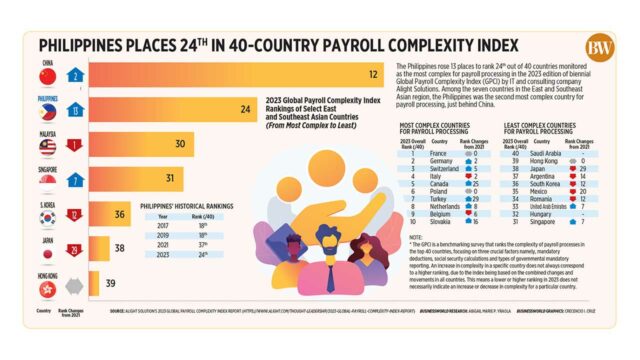
Philippines places 24th in 40-country Payroll Complexity Index

The Philippines rose 13 places to rank 24th out of 40 countries monitored as the most complex for payroll processing in the 2023 edition of biennial Global Payroll Complexity Index (GPCI) by IT and consulting company Alight Solutions. Among the seven countries in the East and Southeast Asian region, the Philippines was the second most complex country for payroll processing, just behind China.

Stocks may move sideways amid lack of leads

BW FILE PHOTO

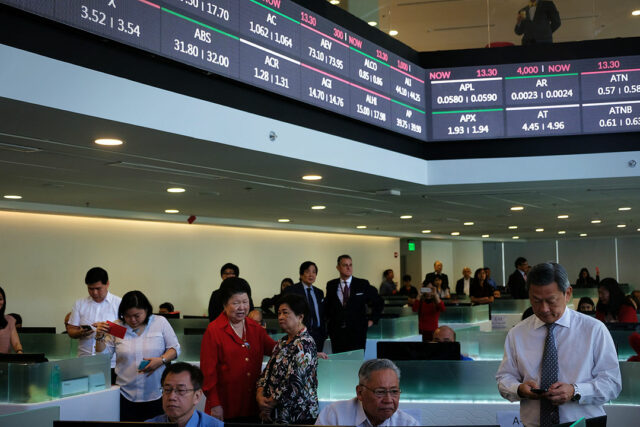
PHILIPPINE SHARES may move sideways this week, with investors expected to stay on the sidelines as they await fresh leads.

The Philippine Stock Exchange index (PSEi) fell by 74.70 points or 1.17% to close at 6,290.27 on Friday, while the broader all shares index went down by 26.39 points or 0.77% to end at 3,383.41.

Week on week, the PSEi went down by 115.64 points or 1.81% from its close of 6,405.91 on Aug. 11.

“A key support level was broken [last] week, as sentiment glided with the US Fed meeting minutes reaffirming a hawkish stance [plus] the Bangko Sentral ng Pilipinas’ (BSP) higher inflation projections in the long term,” online brokerage 2TradeAsia.com said in a report.

Fed officials were divided over the need for more interest rate hikes at the US central bank’s July 25-26 meeting, with “some participants” citing the risks to the economy of pushing rates too far even as “most” policy makers continued to prioritize the battle against inflation, according to minutes of the session that were released on Wednesday, Reuters reported.

The Fed raised borrowing costs by 25 basis points (bps) at its July meeting, bringing its target rate to the 5.25% to 5.5% range. Since it began its tightening cycle in March 2022, it has hiked rates by a cumulative 525 bps.

Meanwhile, the BSP last week raised its inflation forecasts to 5.6% from 5.4% for 2023, 3.3% from 2.9% for 2024, and 3.4% from 3.2% for 2025.

Investors may face a challenging trading week due to negative sentiment amid concerns over the Chinese property sector, China Bank Capital Corp. Managing Director Juan Paolo E. Colet said in a Viber message.

Embattled developer China Evergrande Group last week filed for US bankruptcy protection as part of one of the world’s biggest debt restructurings, as anxiety grows over China’s worsening property crisis and its impact on the weakening economy, Reuters reported.

A string of Chinese property developers have defaulted on their offshore debt obligations since Evergrande ran into trouble, leaving unfinished homes and unpaid suppliers, shattering consumer confidence in the world’s second-largest economy.

The property crisis has also fanned worries about contagion risks to the financial system, which could have a destabilizing impact on an economy already weakened by tepid domestic and foreign demand, faltering factory activity and rising unemployment.

“Moreover, many investors are expected to stay cautious as they await news from the Federal Reserve’s annual economic policy symposium at Jackson Hole, Wyoming later this week. All eyes and ears will be on the speech of Fed Chairman Jerome Powell, which investors hope could offer clues on the direction of US monetary policy, particularly whether the narrative is “how high will rates go” or “how long will rates remain high,” Mr. Colet added.

Mr. Colet placed the PSEi’s support at 6,150-6,200 and resistance at 6,370-6,400, while 2TradeAsia.com put immediate support at 6,350 and resistance at 6,600-6,700. — AHH with Reuters

Maharlika will have ‘no wealth to manage,’ BSP ex-chief says

PPA POOL/ MARIANNE BERMUDEZ

By Keisha B. Ta-asan, Reporter

THE former governor of the Bangko Sentral ng Pilipinas (BSP) said the Maharlika Investment Fund (MIF) will likely cause the Philippines to take on additional debt as there is “no wealth to manage.”

Ex-governor Felipe M. Medalla made the remarks at a forum organized by the University of the Philippines School of Economics (UPSE) on Friday.

“I really thought that there’s no wealth to manage. (According to the) rules of accounting, any money that goes (into the fund) is taken from somewhere else. Since somewhere else is financed by borrowing, then that’s clearly borrowing. Either that or someone else will suffer,” he told reporters on the sidelines of the forum.

The MIF is expected to be operational by early 2024, Finance Secretary Benjamin E. Diokno earlier said. The MIF law was signed by President Ferdinand R. Marcos, Jr. in July.

The MIF draws capital from the National Government as well as from the two big government banks — the Land Bank of the Philippines (LANDBANK) and Development Bank of the Philippines (DBP).

“Anything that goes to the fund is additional borrowing because the entire country has a deficit. Even the BSP dividends. That dividend goes to the National Government, and it reduces the borrowings of the National Government,” Mr. Medalla said.

“So, if those dividends go to Maharlika, then the government has to borrow more,” he said.

He also noted that if LANDBANK and DBP are required to invest in the fund, it will lower demand for government securities as both banks are major buyers of government securities.

Mr. Medalla said he wanted no part in the discussions leading to the creation of the MIF last year, especially when the initial proposal involved the use of the BSP’s dollar reserves as seed money for the fund.

He eventually signed off on the measure after legislators made changes to the Maharlika bill. These included giving the fund a stronger mandate to invest in strategic projects, rather than serving as a wealth management fund.

Mr. Medalla said another risk is that the fund’s moves will have an outsized impact — positive or negative.

“If they do good things, they’ll be very impactful. If they do bad things, it will also be impactful. So, at any rate, the law is there now and let’s see how it can be less a danger to the economy in the future,” he said.

Mr. Medalla also said the UPSE was not remiss in speaking out against the fund, describing the process of setting up the fund “too fast.”

“In fact, my impression was the President himself was not sold on the idea (at the time he knew he was going to be President) but not yet in office. At that point, he was not really sold on the idea yet,” he said.

“So, to me the curious thing is what happened between that and (the time he expressed his support),” he added.

Separately, Mr. Medalla expressed concerns about rising wages, which he said could put pressure on small businesses.

“First, many firms are really incapable of paying (their workers), so what do you do, exempt them? But then it won’t be a minimum wage anymore,” he said.

“This is the problem if the minimum wage is too high. It’s like saying everyone should wear size 6 shoes,” he added.

A P40 wage hike in the National Capital Region took effect on July 16. Pending wage hike petitions elsewhere in the country will likely be decided by September.

Mr. Medalla said if other businesses can pay their workers more, increases should be subject to negotiation.

“One-size-fits-all will be tough for the bottom part of the economy. You will be forcing them to either act illegally (to) survive, or seek exemption. But if you’re going to give exemptions, is that (still a) minimum wage?,” he said.

Debt outpacing budget growth

THE national debt is settling into a growth trajectory that is outstripping that of the budget, according to a policy think tank attached to the House of Representatives.

In its analysis of the proposed P5.768-trillion 2024 national budget, the Congressional Policy and Budget Research Department (CPBRD) noted that next year’s budget is set to grow 9.5% to P5.77 billion, against the 14.4% growth rate for National Government (NG) debt.

“(While) the total NG expenditure program has been steadily increasing, the rate at which it has grown is much lower compared to the growth of the debt burden since 2021,” according to the report, published earlier this month.

The NG’s outstanding debt hit a record P14.1 trillion as of May, the Bureau of the Treasury (BTr) said in July. The Budget department noted that it could grow further to P15.84 trillion in 2024.

“As the debt burden takes up a huge chunk of the national budget, the productive part of the budget that supports government operations and the implementation of programs/projects also gradually reduces in share,” the CPBRD added.

The NG is set to borrow over P2.46 trillion until next year, up 11.5% from this year’s P2.207-trillion program.

The planned borrowing will consist of P1.85 trillion in domestic debt and P606.85 billion in external borrowing.

The CPBRD also projected that NG debt as a share of gross domestic product (GDP) could peak at 61.4% in 2024 and sink below the 60% threshold to 57.9% by 2026.

“This debt-to-GDP trajectory can be described as conservative given the trajectories defined by the projections of the DBCC (Development Budget Coordination Committee),” the CPBRD said.

During the House appropriations panel’s hearing on the proposed budget for next year, the DBCC projected that debt-to-GDP is expected to peak at 60.2% by next year before settling at 58.5% in 2025 and 51.5% in 2028.

At the end of March, the debt-to-GDP ratio was 61%, still above the 60% threshold considered manageable for developing economies by multilateral lenders.

“The government appears poised to rely more on increasing taxes and adjusting expenditures rather than borrowing and/or expanding the money supply. Nevertheless, borrowing remains a major component of financing the budget gap,” it said. — Beatriz Marie D. Cruz

Agri-tech investment seen critical in shedding dependence on imports

THE GOVERNMENT needs to promote investment in new agriculture and manufacturing technology to raise domestic production and reduce import dependency, analysts said.

“Government with the help of private sector must find ways to increase production by investing in technology that will transform the country’s production,” John Paolo R. Rivera, chief economist at Oikonomia & Research, Inc., said in a Viber message.

“Prioritizing these would spur new ways of doing things.”

Last week, National Economic and Development Authority (NEDA) Secretary Arsenio M. Balisacan told the Senate finance committee that the government was working towards raising domestic production, calling imports a temporary measure to stabilize prices.

He said the government should invest in logistics and provide technological support to farmers.

“Our trade policy is used to enhance the workings of the economy in such a way that we can stabilize prices, create employment, and make our local products more competitive,” Mr. Balisacan said.

Mr. Rivera said importing agricultural products is not sustainable, adding that new technology needs to be introduced to boost domestic production.

“(Reliance on foreign firms is) among the reasons why there is a weak domestic multiplier effect and why manufacturing employment chronically lags behind reported manufacturing gross domestic product growth,” Jose Enrique A. Africa, executive director of the think tank IBON Foundation, said in a Viber message.

He said the government should provide more subsidies for domestic agriculture and manufacturing.

China Banking Corp. Chief Economist Domini S. Velasquez added that importing cannot be avoided to stabilize prices during to shortages, but cited the need for a plan to boost production.

“The government should also give clear-cut steps and a comprehensive plan to boost production,” she said in a Viber message.

“Import dependence can only be sustainably reduced if Filipino industries are built,” Mr. Africa said. — John Victor D. Ordoñez

Chicken demand expected to remain weak in coming quarters

PHILSTAR FILE PHOTO

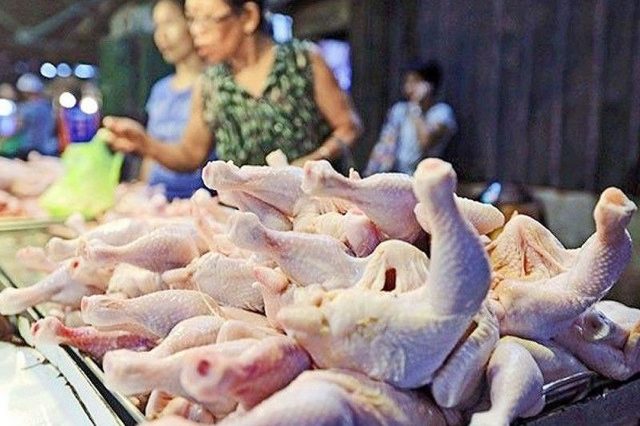
CHICKEN DEMAND is expected to remain weak for the next few quarters as households grapple with increased expenses, including the cost of other food items, a poultry industry official said.

“Demand is very poor,” according to Elias Jose M. Inciong, president of the United Broiler Raisers Association (UBRA).

Speaking to BusinessWorld by phone, Mr. Inciong added: “I do not think demand will recover given (other expenses like) electricity, transportation, staples like rice, etc. It will certainly have an impact on the demand for meat, chicken, and pork,” he added.

The consumer price index slowed for a sixth straight month to 4.7% in July from 5.4% in June, for a year-to-date average of 6.8%. This exceeds the Bangko Sentral ng Pilipinas estimate of a 2023 average of 5.4%.

Rice prices rose 4.2% year on year in July, the highest growth rate since 2019.

“Definitely, there’s an improvement (in demand) but I don’t think we are back to pre-pandemic levels in terms of being able to absorb… supply. Farmgate prices remain unstable. One moment it can go very high, another moment it can go very low,” he said.

UBRA estimates that as of Aug. 18 the average farmgate price of regular-sized and prime broiler chicken fell 9.6% month on month to P113 and 13% to P118, respectively.

However, even though demand has a chance of strengthening in the following quarters, he said import volumes will likely remain high.

“Generally, everyone will be conservative because demand is expected to increase during the last quarter of every year and the first quarter of the following year. Importers will also be aggressive (in shipping in products) during this period,” he said.

Mr. Inciong said that the Bureau of Animal Industry (BAI) and the industry held final consultations before guidelines on the vaccine against avian influenza are issued.

“We just want to be able to use the vaccine… because based on world experience, this (new strain) is different, very persistent,” he said.

The BAI data lists eight barangays across two regions as having active infections as of Aug. 11.

The bureau drafted vaccination guidelines in collaboration with the Philippine College of Poultry Practitioners. 

The initial draft was presented on July 11 in a consultation with representatives from the Food and Drug Administration’s regional field offices, and other concerned agencies. — Sheldeen Joy Talavera

The BIR and the Ease of Doing Business Act

“Kaizen,” the Japanese management concept of “continuous improvement,” is a philosophy many live by, myself included. It is based on the belief that any process can be improved, and nothing should remain status quo. Embracing kaizen is a commitment to a mindset of making small, incremental progress, culminating in significant positive change over time.

Our tax authorities also seem to be adopting continuous improvement, as seen in their efforts to implement the Ease of Doing Business Act, which requires agencies to streamline the delivery of government services and forces them to complete transactions within a prescribed timetable. Now that we are in its fifth year of implementation, taxpayers and government officials may wonder how much progress this reform has made.

The good news is, the BIR has indeed released issuances that rang in substantial changes to comply with the Ease of Doing Business Act this year.

QUARTERLY FILING OF VAT RETURNS
The year started off with Revenue Memorandum Circular (RMC) No. 5-2023 on Jan. 13. The RMC covers transitory provisions on the quarterly filing of VAT returns. Starting Jan. 1, 2023, VAT-registered taxpayers are no longer required to file monthly VAT returns (BIR Form 2550M) pursuant to Section 114(A) of the Tax Code of 1997, as amended by RA No. 10963 (the TRAIN Law).

After the first quarter, most taxpayers found solace in the simplified filing and payment of VAT returns, but then again, not everyone was on the same page. Some taxpayers found themselves in distress regarding the burden of the preparations, especially companies that deal with numerous monthly transactions. Hence, some taxpayers are pleading to be allowed to file and pay their VAT returns monthly. In response, the BIR issued RMC No. 52-2023, which cited Republic Act (RA) No. 11032, or the Ease of Doing Business and Efficient Government Service Delivery Act of 2018, and approved the request to continue with monthly filing.

Considering that the Tax Code follows the pay-as-you-file system of taxation under which taxpayers compute their own tax liability, prepare the return, and pay the tax as they file the return, VAT-registered persons may thus still choose to file and pay their VAT returns monthly if it is convenient on their end, with no penalty.

VAT REFUND MADE EASY
One of the highlights of the BIR’s issuances this year is simplified requirements and procedures for VAT refund applications. In June, the BIR issued Revenue Memorandum Circular (RMC) No. 71-2023 and Revenue Memorandum Order (RMO) No. 23-2023, which streamlined the process and requirements for making VAT refund. The new rules apply to all claims filed starting July 1, 2023.

The issuances cover the change in venue for filing VAT refund claims of indirect exporters or those engaged in other VAT zero-rated activities other than direct exports. The most talked-about revision significantly reduces the number of documentary requirements needed to be submitted by taxpayers applying for a VAT refund. The revised checklist contains a maximum of 22 required documents, in contrast with 30 in the previous checklist. The BIR also now only requires original copies of the sales invoices or official receipts issued for sale and purchase transactions.

However, this raises a concern on the taxpayer’s end since there is a probability the BIR may lose track of these original documents considering that they are also handling large volumes of documents from other taxpayers. The taxpayers will also need their original documents in case they are audited by the BIR or in case of denial of the VAT refund claim by the BIR. Accordingly, they will also have to present the same documents to the courts if the claim is elevated to the judiciary.

Other highlights involve the acceptance of VAT refund applications, including VAT refund applications filed beyond the two-year prescriptive period. In such cases, applications will be accepted, but the processing office will recommend outright denial to make the claimant avail of judicial remedy.

Further, the BIR will now accept VAT refund applications from taxpayer-claimants with existing tax delinquencies reflected in the Delinquency Verification Certificate (DVC). However, tax liabilities will be offset against any approved amount of VAT refund for collection, either fully or partially.

ENHANCED REGISTRATION FORMS
In light of the Ease of Doing Business Act, the BIR issued RMC No. 60-2023 to launch the enhanced BIR registration forms (July 2021 version).

In conclusion, we can say that the BIR is striving to align its recent issuances with the Ease of Doing Business Act. Such incremental actions are indeed noteworthy, and taxpayers have felt a substantial improvement. The tax authorities’ efforts to make our tax system easier to navigate promise more improvements to come, if they are indeed on the path of kaizen.

Let’s Talk Tax is a weekly newspaper column of P&A Grant Thornton that aims to keep the public informed of various developments in taxation. This article is not intended to be a substitute for competent professional advice.


Neymhel Marie I. Obedencio is a semi-senior from the Tax Advisory & Compliance Practice Area of P&A Grant Thornton. P&A Grant Thornton is one of the leading audit, tax, advisory, and outsourcing firms in the Philippines, with 29 Partners and more than 1000 staff members.

Tweet us: @GrantThorntonPH

Facebook: P&A Grant Thornton

pagrantthornton@ph.gt.com

www.grantthornton.com.ph

ADVERTISEMENT
ADVERTISEMENT