Home Blog Page 4189

Peso may strengthen vs dollar

BW FILE PHOTO

THE PESO could strengthen slightly against the dollar this week on bets of a rate hike from the Bangko Sentral ng Pilipinas’ (BSP) hawkish stance following faster September inflation.

The local unit closed at P56.62 per dollar on Friday, strengthening by five centavos from its P56.67 finish on Thursday, data from the Bankers Association of the Philippines showed.

Week on week, however, the peso weakened by 4.5 centavos from its P56.575 per dollar finish on Sept. 29.

The local currency opened Friday’s session at P56.64 against the dollar. Its weakest showing was at P56.66 while its intraday best was at P56.56 versus the greenback.

Dollars exchanged went down to $1.08 billion on Friday from $1.23 billion on Thursday.

The peso strengthened on Friday after global crude oil prices continued to decline to new one-month lows, Rizal Commercial Banking Corp. Chief Economist Michael L. Ricafort said in a Viber message.

For this week, the peso could inch up against the dollar amid hawkish BSP bets, Mr. Ricafort said.

BSP Governor Eli M. Remolona, Jr. previously said he is open to an off-cycle rate hike before the Monetary Board’s Nov. 16 meeting if inflation risks persist.

Headline inflation picked up to a three-month high of 6.1% in September from 5.3% in August, but was slower than the 6.9% print in the same month last year.

For the first nine months, the consumer price index averaged 6.6%, above the BSP’s 5.8% forecast for the year.

For this week, Mr. Ricafort sees the peso ranging from P56.45 to P56.85 per dollar. — AMCS

NAIA 9-month passenger traffic surpasses 2022 full-year tally

PHILSTAR FILE PHOTO

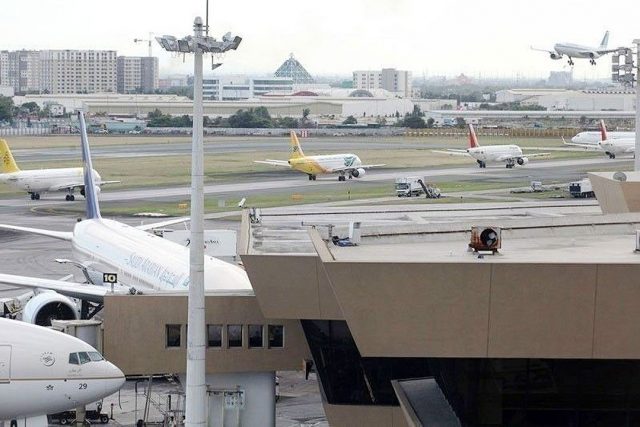
DOMESTIC and international passenger volume at the Ninoy Aquino International Airport (NAIA) surged to 33.76 million in the first nine months, exceeding 2022’s full-year tally, the Manila International Airport Authority (MIAA) said.

“With this consistent growth, MIAA remains on track to achieve our year-end projections of 45 million passengers and 275,000 flights by the end of 2023,” Bryan Andersen C. Co, MIAA officer-in-charge, said in a statement on Sunday.

The passenger tally at the end of the period surpassed the 30.94 million full-year total in 2022. It was up 59% against the year-earlier period.

“These projected flight estimates are poised to surpass the pre-pandemic levels of 2019, reflecting the resilience and recovery of the aviation industry in the Philippines,” Mr. Co said. 

MIAA said its domestic and international aircraft movements, or takeoffs and landings, amounted to 206,050, up 31% from a year earlier.

NAIA’s flight on-time performance (OTP) also improved to 80% in September.

“This result represents a major improvement from the OTP low of 60% in early June. This decline was attributed to hurdles such as the suspension of all flight and ground operations at NAIA during a Red Lightning Alert, as well as issues with aircraft maintenance and spare parts that disrupted major airline operations,” MIAA said. — Ashley Erika O. Jose

Australia sees further opportunities in PHL agriculture, tech, education

By Justine Irish D. Tabile, Reporter

AUSTRALIA’s investment and education promotion agency said it considers the Philippines a promising market for its agriculture, cybersecurity, and education companies.

It added that Australian industries long established in the Philippines like mining are also positive on the country’s prospects.

“We are very bullish about the prospects for Philippine economic growth and correspondingly, we are also very focused and also very hopeful about increasing links between Australia and Philippines in terms of trade, economic, and education ties,” Austrade Senior Trade and Investment Commissioner Christopher Lim said in a briefing on Friday. 

He said the Australian government and companies have seen the potential of upgrading the economic relationship between the two countries.

“We have seen a huge uptick in terms of the number of Australian companies coming into the Philippines and these Australian companies range from agrifood, education institutions, also mining firms, technology companies and cybersecurity companies,” he said.

The value of two-way trade between the Philippines and Australia totaled 6 billion Australian dollars last year, representing growth of 18% from 2021.

“The Philippines is Australia’s 15th largest export partner so, I think there is room for improvement there,” Mr. Lim said.

Australia also currently has around 30,000 Filipino students, much larger than the 18,000 students before the pandemic.

“This is an example of how where we think the relationship is going,” said Mr. Lim.

He added that the start of mango exports to Australia, which arrived in Perth and Sydney last month, is also one trade item in which the Australian government sees strong prospects.

“The first shipments were oversold so, everything points to a very robust bilateral economic relationship between Australia and the Philippines,” he said.

“I reckon there is a lot of demand and with any luck I think this is something which Filipino farmers should really look forward to focusing on — ensuring quality, timeliness, and making sure that it gets to Australia,” he added.

He said there remains a need to address supply chain issues, competition, and unclear policy to help support further growth of bilateral trade.

“We would love to see more Philippine exports into Australia but the thing is, because of the structure of your economy, supply chain issues, and also competition, it’s very hard to actually raise it,” Mr. Lim said.

He said Philippine mangoes have had access to Australia for some time, but there was not enough supply.

“It’s just that there isn’t enough supply and consistent quality to come to Australia, so I think more effort has to be put in to actually ensuring good quality and supply and timely delivery,” he added.

He sees a possible opportunity to bring pineapple to Australia as their own crop is considered sour, and not sweet like Philippine pineapple.

In terms of regulations, Mr. Lim said that the Australian government and companies would like to see a lot more clarity, simplification, and consistency in the imposition of policies.

“We do know that there are challenges here in the Philippines in that regard, but on the other hand that there are countering forces such as the President’s Anti-Red Tape Authority has been extremely helpful in making sure that they get the right people together … and sort out the issues,” he said.

Hydrogen eyed for power generation in draft Energy dep’t exploration rules

REUTERS

THE Department of Energy (DoE) said it drafted a policy that will set the guidelines governing the exploration and development of hydrogen resources for use in power generation.

In a draft circular posted on its website, the DoE said that the “prospective uses of hydrogen in the energy sector shall be divided into power generation and electricity storage applications and non-power applications.”

“Power generation and electricity storage applications shall include the use of electricity produced from hydrogen energy supplied to the grid or as backup and off grid power supply, industrial scale energy storage, co-firing with hydrogen derivatives in existing fossil fuel power plants, and hydrogen and its derivatives cogeneration systems,” the DoE said.

According to the proposed circular, the DoE said that a hydrogen storage facility must function as an energy storage system, using hydrogen gas to store energy for later use in power generation.

This excludes facilities that produce hydrogen and directly convert it to electricity for power generation in “a linear process.”

Non-power applications, on the other hand, include the use of hydrogen as an alternative fuel in industrial, commercial, and transportation applications.

According to the draft policy, the DoE also hopes to allow the import and export of hydrogen resources to “contribute to decarbonization,” as well as to service the domestic demand.

The DoE will also organize a hydrogen energy industry committee that will oversee the implementation of the circular. 

Its function would include developing the roadmap for the hydrogen energy industry, forming a technical working group, collaborating with organizations to conduct research and development, and preparing the budget for such operations, among others. 

“The potential of utilizing hydrogen resources, if optimally developed, will play a major role in improving the country’s energy security by reducing dependence on imported fossil fuels, and in achieving the country’s goal for a low-carbon future,” the DoE said. — Sheldeen Joy Talavera

Limited gov’t funding for franchise trade shows seen as constraint on small business growth

THAIFEX-ANUGA ASIA FACEBOOK PAGE

THE Philippine Franchise Association (PFA) said limited government support for small businesses seeking to participate in international trade shows is one of the challenges for micro-, small- and medium-scale enterprises (MSMEs) planning to go international.

Asked whether he sees more brands going international, PFA President Chris Lim said: “Definitely. This is why we’re investing so much money, time and effort into running this because some of them might go international five years from now.”

“This year we were able to go to Singapore but we still had limited funding. In the coming years we want to join a lot of these franchise shows internationally and bring our delegations there,” he told reporters.

He said the governments of South Korea, Indonesia, and Thailand provide ample support for trade show participation.

“A lot of that is heavily government subsidized which makes it easier for MSMEs to enter the shows,” he added.

“We want to work more with the government to be able to support this because they know if they support us, we are going to be exporting entire brands, not just one or two SKUs (stock keeping units),” he said.

“That is something we’d love to work with the government on, in terms of getting that funding to go to some of these new markets,” he added.

He said that PFA has engaged the Department of Trade and Industry (DTI) and trade attaches overseas regarding the help the industry needs but noted that funding remains “the missing piece.”

“At the end of the day, you do just need plain and simple funding to be able to attend some of these shows to really make an impact,” he added. — Justine Irish D. Tabile

Ex-BSP governor warns cost of tech adoption favors large companies, may curb competition

FREEPIK

THE sheer cost of adopting new technology gives larger companies an advantage which could end up limiting competition, the chairman of SM Investments Corp. said.

Amando M. Tetangco, Jr., who is also a former central bank governor, said at the FINEX Conference 2023 that although digitalization and technological innovation are beneficial, they have the potential to disrupt the market, noting how artificial intelligence (AI) has redefined how businesses operate.

“However, AI systems benefit from economies of scale which favors larger firms who can afford to invest more in AI research and development,” Mr. Tetangco said.

“This can lead to the creation and dominance of a few super firms (which) could potentially restrain competition and innovation,” he added.

He said nevertheless that it is essential to embrace technology as businesses can harness big-data applications and machine learning.

“Overall, the use of technology in the conduct of surveillance will help firms to make well-informed and data-dependent decisions,” he said.

“Technology can also be used to innovate, redefine and enhance delivery of products and services. You have seen how the pandemic accelerated digital transformation across industries,” he added.

Meanwhile, he said that climate change and the transition to sustainable energy pose physical and transition risks which could affect the broader economy.

The physical risks stem from the direct effects of severe weather disturbances, while transition risks stem from the economy’s steps to shift to a low-carbon economy.

“While (the transition is) beneficial, the process can be very costly with large macroeconomic implications … For instance, the large investments needed in green technologies could further increase interest rates which in turn could lead to changes in asset prices,” he said.

He called for collective effort to address the global challenges, especially the effects of climate change, that the economy is facing.

“Collaboration brings together diverse perspectives to tackle complex challenges comprehensively. It also paves the way for shared capacity and resources when tackling resource intensive challenges,” he said.

Mr. Tetangco said economies also face a higher-for-longer interest rate environment and greater geo-economic fragmentation.

“In such a challenging environment, our best strategy is to build resilience. Resilience that can be achieved by pursuing diversification, embracing technology, and working together to greater cooperation and collaboration,” he said.

“These will not only help us weather these challenges but also gain clarity to discern opportunities that will help stir us towards sustainable growth,” he added. — Justine Irish D. Tabile

Philippine food services industry sales expected to grow 20% in 2023, USDA says

REUTERS

GROWTH in the Philippine food services industry is projected at 20% this year amid a revival of hotels and tourism, according to the United States Department of Agriculture (USDA).

“With the recovery in the service industry, restaurants and hotels are expected to become more profitable in 2023,” the USDA said in a report.

It added that dining in restaurants, catering, and events will continue to boost sales, with food delivery also established as a convenient option for consumers.

Restaurant chains are also seen continuing to open new stores and franchises.

The USDA also sees full-service restaurants overhauling limited-service restaurants in terms of sales, with growth of 25% in 2023.

Limited-service restaurants, which accounts for more than half of the industry, are expected to post sales growth of 20% this year.

Café and bar sales, on the other hand, are estimated to expand 20% as more establishments open. The forecast suggests a slowdown from the 26% reported in 2022.

The USDA said sales growth of street stalls and kiosks is expected to decelerate during the year, due to the “higher cost of raw materials and thrifty spending by consumers.”

“The USDA projects the Philippine food service industry to recover to pre-pandemic levels by 2024,” it said.

It said that the Philippines presents “a substantial opportunity” for US processed food, with the country becoming the seventh-largest export market for the US in 2022.

US consumer-oriented exports to the Philippines were the highest in Southeast Asia last year at $1.6 billion. — Adrian H. Halili

How green supply chains create long-term value

Historically, sustainability was a “nice-to-have” item for executive boards. However, in recent years, environmental, social, and governance (ESG) considerations have gained considerable momentum. ESG is now far from being mere boxes to check for compliance purposes, with topics like sustainability becoming ever prominent and essential agenda items in boardroom discussions.

A focus on ESG is imperative for organizations as it enables them to effectively manage risk, meet stakeholder expectations, drive cost savings and efficiency, and gain a competitive advantage. By integrating ESG practices into their supply chains, business leaders can navigate risk and disruption, future-proof their organizations, and create a positive impact on the environment.

Most of a company’s carbon emissions commonly stem from its supply chain, primarily through manufacturing and logistics operations. As a result, this crucial aspect of business faces mounting pressure to meet progressively ambitious sustainability goals.

This is the third article in a supply chain series that previously looked at reimagining the integrated supply chain. This article will discuss how green supply chains can help create long-term value.

ESG AND GREEN SUPPLY CHAINS
Green supply chains refer to the implementation of sustainable and environmentally responsible practices throughout the supply chain process. The process involves integrating eco-friendly initiatives into various stages — including sourcing raw materials, manufacturing, packaging, and distribution. “Green” here pertains to the environmental considerations of the supply chain, and “sustainable” covers the social and economic perspective of the business.

ESG and green concepts in the product design up to end-of-life management should also be incorporated to enhance environmental sustainability. By integrating ESG principles, companies prioritize environmental impact, social responsibility, and strong governance throughout their operations.

 ESG and green supply chains are closely related, with ESG considerations forming the base of developing and implementing sustainable practices within supply chain operations. Although a green supply chain addresses only the environmental side of ESG, a sustainable supply chain encompasses the environmental, social, and governance principles of ESG. Green supply chains embody the practical implementation of ESG principles by reducing carbon emissions, minimizing waste, and adopting sustainable technologies and practices.

A key part of ESG performance is to commit and take action toward a sustainable supply chain. This starts with ensuring interconnectedness and transparency in the whole of operations as well as collaboration with suppliers in adhering to green and ethical standards. Greening the supply chain brings value not just by reducing environmental pollution and waste but also by enhancing operational performance through improved production costs and asset utilization. This also builds positive brand awareness and reputation as consumer behavior shows a preference for companies or products that value their impact on the environment and society.

The relationship between ESG and green supply chains is symbiotic. ESG provides the framework and guiding principles, and green supply chains concretize those principles within the supply chain to drive sustainable and responsible outcomes.

SUSTAINABILITY POLICIES
Since the Philippine SEC mandated sustainability reporting, companies that identify supply chains as one of their material topics are required to disclose their ESG initiatives in compliance with their reporting framework/standards used. This promotes transparency and accountability, empowering employees, customers, suppliers, investors, business partners, local communities, legislators, regulators, policymakers, and other stakeholders to make informed decisions as well as contribute to the management of companies’ economic, environmental and social impacts.

In addition, Republic Act No. 11898, also known as the Extended Producer Responsibility (EPR) Act of 2022, requires obliged enterprises to establish their own EPR programs. Obliged enterprises have been given the responsibility of managing their products throughout their lifecycles, starting with plastic packaging covered in the Act, with a potential expansion of coverage in the future. The EPR Act was covered more extensively in a previous C-Suites article titled “Understanding the implications of the EPR Law.”

The Philippines also has the Green Jobs Act of 2016, which promotes the creation of “green jobs” or employment that contributes to environmental preservation. Under RR No. 05-2019, businesses that offer green jobs are granted an additional deduction equal to 50% of the total expenses for skills training and research development. Moreover, the law provides that capital equipment that is directly and exclusively used in the promotion of green jobs may be imported free of taxes.

Treating ESG as secondary can deter organizations from meeting their strategic objectives, including the potential loss of business opportunities and investment capital. Companies can improve their operational processes and drive cost reductions by enhancing environmental sustainability and overall ESG performance across the supply chain.

KEY ESG INITIATIVES
Creating a green supply chain is a manifold process. First, assessing the materiality of sustainability issues at the outset is essential, focusing on the most pressing concerns. This systemic approach allows for a targeted way to address these issues. Second, organizations should establish their strategic objectives — aligning resources, structures, and processes to sustainability imperatives identified in the initial assessment.

Leadership buy-in and board oversight are crucial for consistent direction and support throughout the business. Management and suppliers should receive training in market practices, expanding sustainability goals beyond direct operations to encompass all levels of the supply chain.

Deploying technology can enhance accountability and transparency, allowing for better monitoring and reporting. Moreover, leveraging buying power and influence can facilitate supply chain sustainability.

Finally, organizations should consider disclosing supply chain information beyond siloed sustainability reporting mechanisms, promoting transparency, and encouraging industry-wide progress.

THE FUTURE OF SUSTAINABLE SUPPLY CHAINS
Green supply chains have emerged as a critical driver of long-term value for organizations. Companies can reap a snowball effect of benefits by prioritizing sustainability and integrating environmentally responsible practices and technologies into their supply chain operations. Internal ethical leadership and support, as well as considerations of different external drivers such as customers, suppliers, and social and regulatory requirements are vital factors in integrating sustainability in an end-to-end supply chain.

Not only do green supply chains help address disruption, mitigate risk, and enhance reputation, but they also drive operational efficiency, cost savings, and access to capital. Integrating a social and economic perspective to transition to a sustainable supply chain also contributes significantly to the competitiveness, long-term profitability, innovation, differentiation, and societal impact of companies.

By taking this holistic approach to sustainable supply chains, organizations can pave the way toward a greener, more resilient future.

The next article in this series will discuss how the Regional Comprehensive Economic Partnership (RCEP) may impact supply chains in ASEAN.

This article is for general information only and is not a substitute for professional advice where the facts and circumstances warrant. The views and opinions expressed above are those of the authors and do not necessarily represent the views of SGV & Co.


Benjamin N. Villacorte is a climate change and sustainability services partner and Mary Andrea T. Bacani is a Supply Chain and Operations (SCO) senior manager of SGV & Co.


Philippines condemns Hamas attack on Israel; no Filipino casualties yet

A VIEW OF ROCKETS fired by Palestinians in response to Israeli airstrikes during an operation in Gaza City, Gaza on Oct. 7, 2023. — REUTERS

THE PHILIPPINE government on Sunday condemned the surprise attack by Hamas militants on Israeli towns, where dozens were killed and others kidnapped during a major Jewish holiday on Saturday.

“The Philippines condemns the attacks, especially against civilian populations,” the office of President Ferdinand R. Marcos, Jr. said in a statement.

The country recognizes “the right of states to self-defense in the light of external aggression as recognized in the United Nations charter,” the presidential palace said.

The Presidential Communications Office in a separate statement said the Department of Migrant Workers (DMW) and the Overseas Workers Welfare Administration (OWWA) had been ordered to “locate and account” for all Filipinos in Israel.

Hamas militants backed by a barrage of rockets stormed from the blockaded Gaza Strip into nearby Israeli towns, killing dozens and kidnapping others in an unprecedented surprise attack at the weekend.

A stunned Israel launched airstrikes in Gaza, with its prime minister saying the country is now at war with Hamas and vowing to inflict an “unprecedented price.”

No Filipino died or was hurt in the attacks, Foreign Affairs Assistant Secretary Paul Cortes told OneNews Channel. “Nobody has been hurt or killed. There are no casualties.”

The abduction of Filipino students by the militant group Hamas reported on social media had not been verified, he added.

Most of the more than 30,000 Filipinos in Israel live in the country’s northern district, which is far from the conflict that started on Saturday morning, Mr. Cortes said.

The Philippine Embassy in Tel Aviv on Saturday said it was still verifying reports that Filipino workers had been captured by the extremist group.

The Overseas Workers Welfare Administration said there are almost 25,000 Filipinos in Israel, 200 of whom are based in the Gaza Strip, which is under the control of Hamas.

Hamas said the attack was in response to the desecration of the Al Aqsa Mosque and atrocities committed by Israelis against Palestinians for decades.

The Israel Defense Forces said about 3,500 rockets were fired, but Hamas put the figure at 5,000.

There have been huge demonstrations in Muslim countries in support of Palestinians.

On the other hand, the United States vowed to “offer all appropriate means of support” to the Israeli government.

“Terrorism is never justified,” US President Joseph R. Biden said in a statement. “Israel has a right to defend itself and its people. The United States warns against any other party hostile to Israel seeking advantage in this situation.”

‘CONDEMN TERROR’
China called for an immediate cease-fire. “All parties concerned [should] exercise calm and restraint, to cease fire immediately, to protect the civilian population and to prevent further deterioration of the situation,” the Chinese Foreign Ministry said in a statement.

At a news briefing on Zoom, Israel Ambassador to the Philippines Ilan Fluss said Hamas, which he called a terrorist organization, has continued to fire rockets, injuring at least 1,600 and killing 250 Israelis.

More than 100 Israelis, including soldiers, have been kidnapped by the militant group, he said. “The terrorist organization entered our cities and residential homes targeting innocent Israeli citizens including elderly people, women and children.”

Israel air strikes on Gaza, on the other hand, had killed more than 200 Palestinians and hurt more than 1,600, according to the Palestinian Health Ministry.

Mr. Fluss said the Israeli Defense would continue to respond to the attacks by Hamas, which has declared a war against Tel Aviv. “Israel has the full right to respond and protect itself.”

The Israeli envoy urged the international community and their close allies to “condemn terror and express support for Israel’s right to defend itself and its citizens.”

Philippine House Speaker Martin G. Romualdez called for a dialogue between the two camps.

“I align myself with the sentiments of global leaders and advocates for peace, emphasizing that dialogue and understanding are paramount,” he said in a statement. “True change can only be achieved when we respect and protect the rights of civilians, as stipulated under international law.”

In a statement, Amnesty International Secretary General Agnes Callamard said the root causes of the armed conflict “must be addressed as a matter of urgency.”

International law must be upheld and Israel must end its 16-year-long “illegal blockade on Gaza and all other aspects of Israel’s system of apartheid imposed on all Palestinians,” she tweeted.

“The Palestinian struggle encompasses multiple dimensions, including the pursuit of land and food sovereignty, as exemplified by the ongoing Al Aqsa food battle,” Jose Monfred Sy, professor at the University of the Philippines College of Arts and Letters, said in a Facebook Messenger chat.

“It is also a quest for dignity, following the desecration of Palestinian places of worship by Israeli armed forces, and a fight for basic human rights given the incarceration of Palestinians, the tragic daily loss of innocent lives among children, women, medical and humanitarian volunteers, and the enduring siege of Gaza,” he added. — Kyle Aristophere T. Atienza

Government urged to use old maps to prove ownership of islands in South China Sea

PHOTO FROM GOOGLE MAP

By Beatriz Marie D. Cruz, Reporter

THE PHILIPPINE government should use historical evidence including old maps to cement its claim to disputed islands and reefs in the South China Sea, historians said at the weekend.

“The strongest way of owning a property is when you buy the island or the property,” Sultan Tomas R. Cabili, Jr., president of the Tomas Cabili Peace Foundation in Manila, said by telephone. “The second is through patrimony.”

Mr. Cabili said the indigenous Philippine map called Carta Indigena Filipina showed Philippine jurisdiction over the Spratly Islands and Scarborough Shoal in the South China Sea.

“Patrimony is through your ancestors who were the ones who brought people and did trade in the area with Taiwan up to the Vietnam Strait, where they anchored at the Spratlys to get their goods [to different places,]” he said.

Sixteen sultans in Mindanao known to be descendants of the Iranun ethnic group signed in August a declaration claiming ownership of the Spratlys and Scarborough Shoal using the Carta Indigena Filipina as evidence.

Muslim historian Nasser S. Sharief said in a separate video call the Philippine Congress should pass a bill declaring ownership of these islands, after which the government could bring the issue to the United Nations.

The House of Representatives passed the proposed law on maritime zones in May. A counterpart bill is being heard at the committee level.

Maritime experts have been urging Congress to pass the measure to enforce a 2016 ruling by a United Nations-backed arbitration court that voided China’s claim to more than 80% of the South China Sea based on a 1940s map.

The Philippines has been unable to enforce the ruling and has since filed hundreds of protests over what it calls encroachment and harassment by China’s coast guard and its vast fishing fleet.

Mr. Cabili said the Philippines should fast-track mapping its claims in the South China Sea, noting that China has allegedly developed nine of about 20 features in the Spratlys “without our knowledge.”

“They only need two more and they can apply for an archipelago themselves and own these islands,” he added.

Mr. Sharief said the Carta Indigena Filipina was found on an Iranun-Moro ship that sunk along the coast of Sulu between the late 18th century and the early 19th century. It has been at the Museo Naval de Madrid since 1847.

He said the other map of the Philippines commonly used to refer to its territory, the Velarde map, only includes the Second Thomas Shoal and Scarborough Shoal, not the Spratlys.

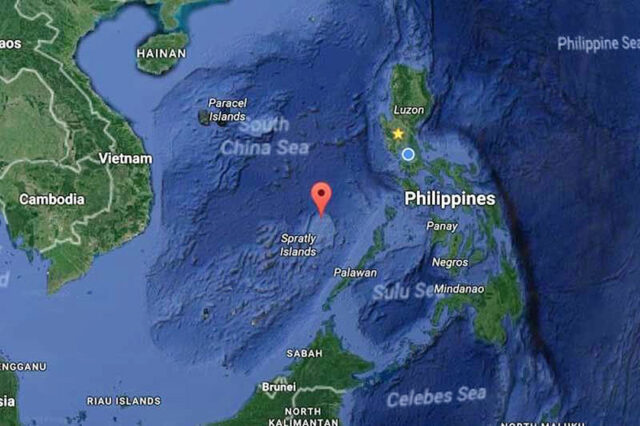
The Spratly Islands are a disputed archipelago in the South China Sea composed of islands, islets, cays and more than 100 reefs. They lie off the coasts of the Philippines, Malaysia and southern Vietnam.

“The Carta Indigena Filipina map includes the South China Sea itself and it was drawn by indigenous Filipinos,” Mr. Sharief said.

The Iranun ethnic group, known to be ancestors of the Maranao and Maguindanaon, traded spices, vegetables and gold via the Sulawan Island or the Spratlys and Panakot Island or Scarborough Shoal, Mr. Cabili said.

“They were really warriors or pirates of the sea,” he said. “They were really very much armed during those days and they fought for the products they had on board.”

“Our ancestors actually traded from Palawan to the mainland Southeast Asia through the Spratlys,” Mr. Sharief said.

Mr. Cabili said he is still trying to confirm a scheduled meeting with President Ferdinand R. Marcos, Jr.’s special envoy to China, Teodoro “Teddy Boy” L. Locsin, Jr., to propose negotiations with Beijing using the Carta Indigena Filipina map.

Manila’s ‘transparency initiative’ working vs China

PHOTO FROM PHILIPPINE COAST GUARD

THE PHILIPPINES’ so-called transparency initiative has been effective in countering China’s gray-zone tactics in the South China Sea, forcing it to rethink its strategies, a security think tank said.

“The tactic of deliberately seeking out the dark spaces where gray-zone actors conduct their illegal, malign and coercive act” has helped in “strengthening national resilience, whereby a nation rallies its people and institutions to engage effectively in the long-term gray zone contest,” Raymond Powell from the Gordian Knot Center for National Security Innovation said in an analysis piece posted on the SeaLight website.

“In a democracy, none of this is sustainable without the support of the population, which will not support long campaigns against adversaries it can’t see,” he added.

The transparency campaign had also helped the Philippines build international support, he said. “[It] has yielded impressive moral support from like-minded governments across the globe. There has also been evidence of increased material aid, such as promises of joint West Philippine Sea patrols and help in building the country’s maritime capacity.”

The Philippine Coast Guard (PCG) announced its transparency initiative after the Chinese Coast Guard used a military-grade laser against its patrol vessel near Second Thomas Shoal in mid-February.

After the incident, the PCG has been actively publicizing Chinese actions within the Philippines’ exclusive economic zone in the South China Sea.

In 2016, a United Nations-backed tribunal voided China’s expansive claims in the waterway

Mr. Powell said while the election of ex-President Rodrigo R. Duterte “may have eased the ruling’s bite somewhat, China has not been able to escape its long-term consequences.”

Mr. Duterte started a foreign policy pivot to China in 2016 in exchange for investment pledges, few of which materialized.

Under President Ferdinand R. Marcos, Jr., the Philippines “changed the game by conclusively reframing its maritime contest with China from one of “us vs them” to one of “right vs wrong.”

“This time, Manila’s target is the gray zone of opacity and deniability in which China has so relentlessly pressed its advantage, and its chief weapon is photography, applied purposefully, generously and consistently over time,” Mr. Powell said.

He said the transparency initiative has resulted in reputational costs for China, “forcing it to recalculate the increased risks of continuing its aggressions against the benefits it hopes to achieve from them.” — KATA

Binay hints at another mass transport project

PHILIPPINE STAR/ERNIE PENAREDONDO

By Revin Mikhael D. Ochave, Reporter

MAKATI CITY Mayor Marlen Abigail “Abby” Binay-Campos has hinted at the prospect of “another mass transport system” traversing the city amid the alignment issue on the ongoing subway project.

“The project proponent sent a new proposal. Let’s wait because the proposal is currently being studied. We will announce soon because hopefully, we will still be able to deliver something by 2025,” she said on the sidelines of the 2023 Financial Executives Institute of the Philippines (FINEX) Conference in Pasay City last week.

The project’s private proponent is listed infrastructure and real estate developer, Philippine Infradev Holdings, Inc.

Asked for more details about this new proposal, Ms. Binay-Campos said: “It is still being studied. It will be another mass transport system. What it will be and how it will be executed is what is still being studied by the city (Makati).”

Last month, Philippine Infradev said the alignment of the $3.7-billion Makati City subway project is no longer feasible after the Supreme Court (SC) ruled that Fort Bonifacio and the Enlisted Men’s Barrios (EMBOs) barangays are under the jurisdiction of Taguig City.

The firm said the depot and some stations of the Makati City subway are included in the affected areas under the SC’s ruling.

Meanwhile, Ms. Binay-Campos disclosed that the construction of the Makati City subway project is still ongoing.

She added that the Makati City government has no plans to include the Taguig City local government in the joint venture for the subway project.

“Construction is ongoing. The on-ground development is ongoing,” Ms. Binay-Campos said. 

The Makati City subway project, originally expected to be fully operational by 2025, is a joint venture between the Makati City local government and Philippine Infradev.

The 10-kilometer project has 10 stations that seeks to link Ayala Avenue to the vicinity of the Ospital ng Makati in about 15 minutes.