Home Blog Page 4189

PRA values Manila Bay reclamation property investments at nearly P23 trillion

PHILIPPINE STAR/EDD GUMBAN

RECLAMATION projects around Manila Bay will attract investments in vertical property development worth P23 trillion, with an additional P1.95 trillion expected in low-rise “horizontal” development, the Philippine Reclamation Authority (PRA) told a Congressional panel on Monday.

In addition, reclamation costs have been estimated at P650 billion.

“The 14 approved projects from Navotas to Cavite province have a total area of 5,503 hectares (ha) which is 2.8% of Manila Bay,” PRA assistant general manager Joseph John Literal told the House ways and means committee.

The reclamation development phase will generate fees for the PRA worth P25 billion, extraction fees worth P30 billion. The valuation of the raw land assets was estimated at P734.71 billion, Mr. Literal said.

Horizontal development from Manila Bay reclamation projects would generate fees of P19 billion, with real property taxes estimated at P4.8 million per hectare. The saleable land asserts are valued at P2.20 billion.

“Reclamation projects offer immense economic opportunities, and hence, offer opportunities to expand fiscal space,” House ways and means panel chairman and Albay Rep. Jose Ma. Clemente S. Salceda said.

Eight reclamation projects are currently awaiting approval, Mr. Literal said.

President Ferdinand R. Marcos, Jr. in August suspended all reclamation projects around Manila Bay.

“A suspension is not tantamount to the abandonment of the projects and may be an opportunity for us to rethink the costs and benefits of reclamation projects,” Mr. Salceda said.

Mr. Literal cited Jurong in Singapore as an example of how reclamation can become “a platform for economic growth,” making Singapore the eighth largest exporter of chemicals by 2019.

He also cited the SM Mall of Asia complex, and the Cultural Center of the Philippines-Financial Center Area complex, which were reclaimed in the 1990s and the 1960s and 70s, respectively.

“Through the decades, these reclamation projects have survived typhoons and floods — proving the stability, safety and reliability of reclamation,” he told the panel.

A 2014 study conducted by University of Illinois professor Kelvin Rodolfo on the geological hazards of the Manila Bay reclamation projects showed that the capital region’s coastal areas are sinking by nine centimeters every year.

International environmental group Oceana has urged the government to permanently halt reclamation projects along Manila Bay, citing ecological damage.

“They put in peril food security, violate our constitutional right to a healthy, balanced, safe and resilient environment and the right of artisanal fisherfolk and coastal communities to access their fishing grounds and livelihoods,” the group said in August.

It takes 30 years to complete a reclamation project, Mr. Literal said, with four years needed to develop raw land through reclamation, three years for horizontal development, and 23 years for vertical development. — Beatriz Marie D. Cruz

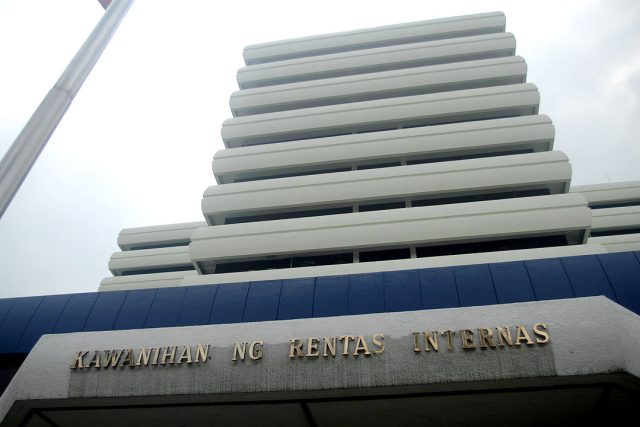
BIR seizes P604M worth of perfume, other scented products

THE Bureau of Internal Revenue (BIR) seized over 390,000 bottles of perfume and eau de toilette valued at P604.3 million in foregone excise tax.

In a statement on Monday, the BIR said it inspected over 400 factories, warehouses and stores from Sept. 27 to 28.

“Big or small, every business has to comply with excise tax regulations,” BIR Commissioner Romeo D. Lumagui, Jr. said.

According to the BIR, manufacturers, producers, or brand owners availing of the services of a toll manufacturer, subcontractor, or import-dealer of perfume and eau de toilette must file an application in writing for a permit to engage in such business with the BIR Commissioner through a duly authorized representative.

The persons or entities engaged in such business must also secure permits from the Excise Taxpayers Regulatory Division. They must also secure a permit to operate for excise tax purposes.

“The manufacturer, importer, owner, or person having possession of the excisable articles can be made liable for lack of permit to operate, failure to file certain information returns, and/or unlawful possession or removal of articles subject to excise tax without payment of the tax under the National Internal Revenue Code, as amended,” it added.

In August, the BIR said that it was losing as much as P370 billion in revenue due to “ghost receipts.”

The BIR expects to collect P2.64 trillion this year, of which P336 billion will come from excise taxes.

It collects about 70% of government revenue. — Luisa Maria Jacinta C. Jocson

Exporter ease of doing business seen enhanced by suspension of LGU tolls

PHILSTAR FILE PHOTO

THE suspension of pass-through fees with the issue of Executive Order No. 41 is expected to enhance the ease of doing business for exporters and manufacturers.

Philippine Economic Zone Authority (PEZA) Director General Tereso O. Panga told reporters last week that the signing of the order is a welcome development as it will help locators.

“It will definitely reduce the cost of logistics, (particularly in) trucking,” Mr. Panga said.

He added that PEZA locators’ shipments typically pass through many local government units (LGUs) to and from the ports.

“Imagine (transporting the goods from) the ports … all the way to the economic zones. And certain LGUs can just impose their tolls on trucks that traverse their jurisdiction,” he said.

The LGUs have “no basis” for charging tolls, he said.

Separately, Philippine Chamber of Commerce and Industry Vice-President for Industry Affairs Ferdinand A. Ferrer said that the suspension of fees had been on the business group’s action agenda.

“It will improve the ease of doing business which exporters and the manufacturers need,” Mr. Ferrer said.

He also said that the fees are “unnecessary” and are ultimately shouldered by consumers.

“(And at the end of the day) we just want ease of doing business; that is what we want,” he added.

On Sept. 25, President Ferdinand R. Marcos, Jr. signed Executive Order No. 41 which prohibited the collection of pass-through fees on national roads and urged LGUs to suspend the collection of any form of fee on all types of vehicles.

Under the Local Government Code of 1991, LGUs have revenue-raising powers which allow them to collect fees.

Section 153 of the Local Government Code allows LGUs to impose and collect reasonable fees and charges for the services rendered.

Meanwhile, Section 155 of the code states that they can impose tolls or charges for the use of any public road, pier, wharf, waterway, bridge, ferry or telecommunication system funded and constructed by the LGU. — Justine Irish D. Tabile

DTI engages fulfillment company to support halal small businesses

FREEPIK

THE Department of Trade and Industry (DTI) said it signed a memorandum of understanding with DK P.O. Fulfillment Co., Inc. (DKPO) to offer non-interest financing services to micro-, small- and medium-sized enterprises (MSMEs) in the halal industry.

“Our MSMEs are at the forefront of our halal initiatives, poised to reap significant benefits,” Trade Secretary Alfredo E. Pascual said at the signing event on Monday.

Under the agreement, DKPO will provide support to MSMEs seeking to join the global supply chain for the halal industry.

The partnership also aims to provide the small companies with logistics management, quality control and inspection, custom brokerage, insurance, and global sourcing and procurement services.

“DKPO greatly believes that the true growth of the halal industry will be dependent on a program that will address the development of an end-to-end entrepreneurial ecosystem,” said Antonio P. Intal, president and chief executive officer of DKPO.

According to Mr. Intal, the financing services that DKPO will provide are compliant with Islamic financing that rules out charging “riba” or interest.

He said that DKPO will be the MSMEs’ partner in fulfilling purchase orders through an excess opportunity sharing program.

“We want to concentrate not on your company but on the contract or the purchase order that you have. We will help you in fulfilling and delivering that,” he said.

Instead of charging interest, the DKPO scheme is to share profits with MSMEs once the purchase order has been fulfilled.

“The sequence will focus on entrepreneurial education, then pre-seed funding incubation, then acceleration, then market penetration and development, and finally growth funding via transaction venture capital (or profit-sharing model),” said Mr. Intal.

Aside from the partnership with DKPO, the DTI also entered other partnerships with entities in Malaysia, Indonesia, and Brunei Darussalam.

“Further capacity and capability building, expert exchanges, and mutual recognition in certification and accreditation are among the collaborations being advanced by the DTI Halal team,” the department said.

Malaysian Ambassador to the Philippines Dato Abdul Malik Castelino said that he welcomes the Philippines’ burgeoning halal industry and has committed to help the Philippine government in its efforts in growing the industry.

“The trade and investment relations between the Philippines and Malaysia are even brighter, especially when the Philippines is able to supply the halal needs of global halal consumers,” Mr. Castelino said.

Mr. Pascual said that DTI intends to develop and promote the halal industry and position the country as the most halal-friendly trade and investment hub in the Asia-Pacific.

“We are eyeing a bigger share of the $7-trillion global halal market. This market encompasses a diverse range from halal food, halal pharmaceuticals, halal-friendly tourism, and Islamic finance to modest fashion and halal cosmetics,” he said.

He added that the global Muslim population is expected to grow to 3 billion in the next year which will help grow the global halal market, which was estimated at $3.2 trillion in 2015.

Malaysia, Brunei Darussalam, and Indonesia are among the biggest markets for halal. Mr. Pascual noted significant Muslim populations in Singapore, Thailand, and other ASEAN countries.

“Their presence further underscores the vast scope of opportunity before us,” Mr. Pascual said.

This week, President Ferdinand R. Marcos, Jr. is set to lead a delegation to the ASEAN-Gulf Cooperation Council Summit in Riyadh, in which Mr. Pascual will promote Philippine halal programs. — Justine Irish D. Tabile

PHL rice self-sufficiency seen improving on increased planting

PHILIPPINE STAR/KRIZ JOHN ROSALES

RICE self-sufficiency is expected to improve this year as more land is planted to rice and as fertilizer costs drop, the Department of Agriculture (DA) said on Monday.

“This year we are expecting it to rise. First, our area has grown; secondly, the cost of inputs has been greatly reduced, especially for fertilizer,” Agriculture Assistant Secretary and Spokesperson Arnel V. de Mesa told reporters on the sidelines of a forum.

“While our productivity is increasing, our population is also increasing,” he cautioned. “Compared to before we are now more than 110 million, (production) also needs to keep up.

Last year, Philippine’s rice self-sufficiency ratio (SSR) declined to 77% from 81.5% reported in 2021, according to the Philippine Statistics Authority (PSA).

Mr. De Mesa said 100% self-sufficiency in rice will be difficult to achieve in the next few years.

He said that the government is targeting 95% to 97% SSR for rice in the next few years.

President Ferdinand R. Marcos, Jr. has said that he is seeking an “adequate” level of self-sufficiency in rice of 97.5% by 2028, calling this level sufficient to meet the country’s needs.

This was a downgrade from the DA’s Masagana Rice Program’s goal of 100% self-sufficiency by 2027.

The program aims to stabilize the supply of the staple grain at between 24.99 million metric tons (MT) and 26.86 million MT, in the process keeping the annual growth of rice prices at less than 1%. — Adrian H. Halili

The genuine opportunity to be heard: Due process in tax assessments

As the adage goes, the only certainties in life are death and taxes. Taxes are also the lifeblood of government. The pivotal role of taxes cannot be emphasized enough as the nation focuses on recovering from the COVID-19 pandemic.

Yet, even as we concede the inevitability and indispensability of taxation, it is paramount in any democratic system that this power be wielded judiciously, respecting the rights of taxpayers. Due process is the cornerstone of many legal systems around the world, upholding the principles of justice, protection of individual rights, and the rule of law. No less than the 1987 Philippine Constitution provides that no person shall be deprived of life, liberty, or property without due process of law.

Due process becomes increasingly important in light of the state’s plenary power of taxation. In numerous decisions, the Supreme Court has reiterated that between the power of the state to tax and an individual’s right to due process, the scale favors the right of the taxpayer to due process.

Under Section 228 of the Tax Code, as amended, the Bureau of Internal Revenue (BIR) is required to inform taxpayers in writing of the law and facts on which the assessment is based. It is no surprise that most taxpayers feel a sense of unease and apprehension when faced with the prospect of a tax audit, driven by concerns about inconsistent rules during the tax assessment process and doubts about whether they will genuinely be heard at any stage of the process.

The BIR’s tax assessment process begins with the issuance of a Letter of Authority (LoA). Taxpayers must ensure that a valid LoA has been duly issued and received before the BIR can proceed with its tax assessment. If the BIR finds deficiency taxes during its examination, it shall issue a Notice of Discrepancy (ND). Should the taxpayer and the BIR fail to resolve the issues at the ND stage, a Preliminary Assessment Notice (PAN) will be issued, allowing the taxpayer to respond in writing within 15 days of receiving it.

Within an additional 15 days from the taxpayer’s response to the PAN, the BIR will issue a Final Assessment Notice along with a Formal Letter of Demand (FAN/FLD). The taxpayer is required to submit a protest letter within 30 days of receiving the FAN/FLD, which can take the form of either a request for reconsideration or a request for reinvestigation. In the case of a request for reinvestigation, additional supporting documents can be submitted within 60 days from the date of filing the protest. The BIR will then communicate its decision on the taxpayer’s protest through the issuance of a Final Decision on Disputed Assessment (FDDA).

In a minute resolution released by the Court in 2019, it was clarified that Section 228 of the Tax Code, as amended, gives the taxpayer 60 days to submit relevant supporting documents in a request for reinvestigation from the date of filing its protest to the PAN, and not the FAN/FLD. This pronouncement by the Court caused confusion among taxpayers as it is contrary to the BIR’s interpretation on when the 60-day period to submit additional documents must commence.

Because of this apparent contradiction, the Supreme Court corrected itself in G.R. No. 261065 dated July 10, and released it to the public on Oct. 4, 2023. In this case, the Court stated definitively that the reckoning point of the 60-day period for the submission of relevant supporting documents in a request for reinvestigation is from the filing of the administrative protest to the FAN/FLD, and not from the filing of the response or reply to the PAN.

In the same decision, the Court also ruled to cancel the deficiency taxes due to the BIR’s violation of the taxpayer’s right to due process. In this case, the BIR issued the FDDA after 30 days from the taxpayer’s filing of the protest and before the lapse of the 60-day period for the taxpayer to submit additional supporting documents in its request for reinvestigation.

The BIR contended that the taxpayer was not actually deprived of due process, arguing that the essence of due process in administrative proceedings is merely the opportunity to be heard, and the taxpayer was given such an opportunity when it was able to file its protest to the FAN/FLD. In rejecting the BIR’s argument, the Court explained that the taxpayer “was denied even the opportunity to present its evidence as would afford it a genuine opportunity to be heard, despite the clear procedural rules giving it a 60-day period within which to provide relevant supporting documents pursuant to its request for reinvestigation.”

In another case (G.R. Nos. 201398-99. October 3, 2018), the Court also ruled that while the BIR is not compelled to accept the taxpayer’s explanations, it must provide a justification for dismissing the same. The BIR is obliged to give the particular facts upon which its conclusions are based, and those facts must appear in the record.

These court decisions underscore the importance of due process, not just in providing a mere opportunity for taxpayers to be heard but in ensuring a genuine opportunity. Taxpayers must be provided with ample time, as permitted by law, to present their evidence, and they should be assured that their submitted documents will be considered and addressed by tax authorities with reason before arriving at a final decision, be it the acceptance or denial of the taxpayer’s claim. The right to present evidence is rendered meaningless if tax authorities can arbitrarily disregard it without a valid explanation.

Balancing the rights of taxpayers and the government’s need to collect taxes is essential for promoting transparency within the tax system. In the context of tax audits and assessments, it is important to uphold the principles of fairness and equity, as these processes affect the proprietary rights of specific persons. It is also crucial to emphasize that when taxes are due, they should rightfully be paid to the government.

Let’s Talk Tax is a weekly newspaper column of P&A Grant Thornton that aims to keep the public informed of various developments in taxation. This article is not intended to be a substitute for competent professional advice.


Carlo Angelo T. Negado is a senior associate of the Tax Advisory & Compliance Practice Area of P&A Grant Thornton at Cebu Office. P&A Grant Thornton is one of the leading audits, tax, advisory, and outsourcing firms in the Philippines, with 29 Partners and more than 1000 staff members.

Tweet us: @GrantThorntonPH,

Facebook: P&A Grant Thornton,

pagrantthornton@ph.gt.com

www.grantthornton.com.ph

Philippines asks Egypt to let Filipinos pass through Rafah border with Israel

A view shows houses and buildings destroyed by Israeli strikes in Gaza City, Oct. 10, 2023. — REUTERS

By John Victor D. Ordoñez and Beatriz Marie D. Cruz, Reporters

THE PHILIPPINES on Monday asked Egypt to allow Filipinos and other foreigners caught in the crossfire between Israeli and Palestinian Islamists to pass through the Rafah Border Crossing so they could return to their homelands.

“DFA is hopeful for a solution to be reached soonest in order for the Rafah crossing to start receiving foreign nationals, so that our countrymen in Gaza will be allowed to cross into Egypt,” its Department of Foreign Affairs (DFA) said in a statement.

“From there, our teams will work on their repatriation to the Philippines.”

DFA on Sunday placed Gaza under Alert Level 4, forcing Filipinos to evacuate and come home amid the worsening war.

There were 131 Filipinos in Gaza, with at least 78 of them waiting near the Rafah Border Crossing to move into Egypt, Foreign Affairs Undersecretary Eduardo Jose A. de Vega said on Sunday.

Only about half of them are actually Filipino nationals, the rest being children with their Palestinian spouses, he said.

Hamas militants backed by a barrage of rockets stormed from the blockaded Gaza Strip into nearby Israeli towns, killing dozens in a surprise attack on Oct. 7.

A stunned Israel launched airstrikes in Gaza, with its prime minister Benjamin Netanyahu vowing to inflict an “unprecedented price.”

The Department of Migrant Workers (DMW) said about 388 of the more than 30,000 Filipinos in Israel have sought help from the agency.

Migrant Workers officer-in-charge (OIC) Hans Leo J. Cacdac told the ABS-CBN News Channel 385 of them have been accounted for.

“We are hoping and praying that with the help of the Israel Defense Forces and their employers, we’ll continue the search and find them,” he said.

Mr. Cacdac said 35 Filipinos had asked the DMW to help them come home, adding that repatriation would likely start this week.

He said Filipinos would be flown out of Israel through the Ben Gurion International Airport near Tel Aviv, which remained operational.

There was still no repatriation call for Filipinos in Israel, which was still under Alert Level 2, Mr. De Vega earlier said.

At least three Filipinos have died in the war, all of them caregivers, while three others remained missing, DFA said at the weekend.

Mr. Cacdac said DMW had reached out to the families of the three victims to express their sympathies.

The agency last week said 313 Filipinos had marked themselves safe.

About a third of Filipinos in Israel live in Tel Aviv, according to Overseas Workers Welfare Administration (OWWA) chief Arnell A. Ignacio.

A fifth live in the central district, 12% live in Israel’s third-largest city Haifa and 6.4% are from the northern district.

A tenth of the Filipinos live in the capital Jerusalem, while 5.3% live in the southern district, which is near Gaza.

Mr. Ignacio said 90% of Filipinos in Israel work as caregivers, 8% are permanent residents, 497 are student-interns and 19 are tourists.

“Over the years, Filipinos have found a home in Israel, they feel safe and secure which is why some of them did not request repatriation,” Mr. Cacdac said, noting that most of the Filipinos in Israel are caregivers.

Meanwhile, the Philippines could lose as much as $131 million (P7.4 billion) worth of money sent home by Overseas Filipino Workers (OFWs) in Israel amid the worsening conflict between Israeli forces and Hamas militants, Surigao del Sur Rep. Johnny T. Pimentel said in a statement.

“Our best estimate is that Filipino workers in Israel send to their families here in the Philippines around $131 million in cash transfers on an annual basis,” “The ballpark figure covers dollars coursed through banks as well as nonbank remittance channels.”

MMDA says transport strike failed to paralyze capital; more protests planned

PHILIPPINE STAR/EDD GUMBAN

A TRANSPORT strike failed to paralyze Metro Manila on Monday, Philippine authorities said, even as drivers and operators threatened to extend the protest to five days.

“Based on our monitoring as of 11 a.m., there was no major disruption of public transportation in Metro Manila,” Metro Manila Development Authority Acting Chairman Romando S. Artes told a news briefing.

“If the purpose of the strike is to paralyze public transportation, they failed,” he said in mixed English and Filipino. “But if the purpose is to get attention, maybe they succeeded in that aspect. They got their airtime.”

Mr. Artes cited passenger buildup in some areas, which he said was usual Monday morning foot traffic.

“The government cannot be held hostage by threats of economic sabotage and inconvenience to the commuting public,” Mr. Artes said in a separate statement.

The Malayang Alyansa ng Bus Employees at Laborers (Manibela) staged the two-day strike that started on Monday to protest the government’s impending public utility vehicle modernization program and alleged corruption at the Land Transportation Franchising and Regulatory Board.

The modernization plan seeks to replace diesel-powered traditional jeepneys with more environment-friendly vehicles.

“For now, we want to wage a strike for as long as we can, maybe up to five days,” Manibela Chairman Mar S. Valbuena said in a Facebook video.

LTFRB has set a year-end deadline for traditional jeepney franchise holders to consolidate their fleets or join existing cooperatives.

Mr. Valbuena said the government should not rush the program.

He said about 500 out of 785 routes in Metro Manila joined the strike. “They already canceled classes and deployed vehicles. Metro Manila is paralyzed. The strike will continue.”

The Department of Interior and Local Government (DILG) has downplayed the strike, saying 95% of the country’s transport groups nationwide would continue plying their routes. — Ashley Erika O. Jose

Marcos: Technology to help rice farmers face calamities, fight smuggling

PHILIPPINE STAR/MICHAEL VARCAS

PRESIDENT Ferdinand R. Marcos, Jr. on Monday said technology sharing could help the rice sector deal with natural calamities and in fighting smuggling.

In a speech at the sixth International Rice Congress in Pasay City, the President said disaster resilience in rice production is important.

He cited typhoons and other natural calamities that affect farmers and criminal and anti-competitive activities such as smuggling and hoarding.

“Seeing the complexities of the situation, we strive to approach it in a comprehensive and a holistic way based on science,” he said.

Mr. Marcos said his government has been working with international institutions like the International Rice Research Institute (IRRI) and foreign governments “not only to ensure the steady supply of rice but also to enhance the development and sharing of crucial technologies and strategies.”

“We have likewise been working on our disaster preparedness and resilience so that the rice industry can respond and adapt to the effects of El Nio and other calamitous events,” he said, citing the need to boost research and help farmers acquire machinery.

“I enjoin all of our government agencies and of course our partners in the private sector to continue collaborating with the IRRI and its partners in identifying creative solutions and mechanisms for a more robust rice industry,” he added.

The President on Sept. 5 imposed a price cap on rice that ran for almost a month, amid reports of hoarding and smuggling.

The cap, which was lifted on Oct. 4, limited the price to P41 a kilo for regular milled rice and P45 for well-milled rice.

Economists said rice prices remained elevated despite the price cap. Rice inflation rose to 17.9% in September from 8.7% in August, the fastest since March 2009.

Also on Monday, Mr. Marcos vowed to support efforts to consolidate farmers’ cooperatives, which he said helps improve food security.

“In rice alone, our production cost is very high, and one of the biggest factors is the labor cost,” he said in mixed English and Filipino.

“The labor cost for every hectare of rice here in the Philippines is double the labor cost per hectare in Vietnam, in Thailand, even Indonesia,” he added.

The Philippine agriculture sector could achieve economies of scale through cooperatives, he said, noting that the use of huge farm machinery for production would help cut food prices. 

There were 20,105 cooperatives in the country as of 2022, lower than the 20,467 cooperatives registered in 2021, the presidential palace said in a statement.

It said credit and financial service cooperatives accounted for more than half of the total, followed by agriculture, consumers and marketing cooperatives. The industry generated almost 335,000 jobs last year.

Meanwhile, Mr. Marcos encouraged the private sector to help the Philippines achieve its goal of becoming a part of the global chain of electric vehicles “by investing in manufacturing facilities in our country.”

“Strive with us as we generate more employment opportunities, enrich our people’s quality of life and foster more environmentally friendly communities,” he said in a speech at the launch of Dongfeng Motors in the Philippines.

Dongfeng Motor Corp. Ltd. is a Chinese state-owned automobile maker.

“In return, we offer fiscal incentives such as the income tax holiday and duty exemption of capital equipment, raw materials and spare parts used in electric vehicles,” he added.

Mr. Marcos said the government aims to increase the share of electric vehicles to 50% by 2040. As of late 2020, there were 8,800 electric vehicles in the country.

“To boost this number, we are working on the gradual shift to electric vehicles for public transportation,” he said.

The President said the government should encourage the shift to electric vehicles “considering our continued dependence on imported fuels and the volatility of oil products in the world market.”

“We not only get savings in fuel and gas, but also significantly lessen our greenhouse gas emissions and champion sustainability in our day-to-day activities,” he added. — K.A.T. Atienza

Senate seeks probe of cyberattacks

BW FILE PHOTO

A PHILIPPINE senator filed on Monday a resolution that seeks to probe the recent string of cyberattacks on government systems, the latest of which was Sunday’s defacing of the House of Representatives (HoR) website.

In filing Senate Resolution 829, Senator Ana Theresia N. Hontiveros-Baraquel said citing the need to protect information that could risk national security and the privacy and protection of Filipino citizens.

Prior to the hacking of the HoR website, previous weeks saw data breaches in varying degrees of the Philippine Statistics Authority (PSA), the Philippine Health Insurance Corporation (PhilHealth), and the Department of Science and Technology (DoST).

Apart from government databases, the De La Salle University announced last week that a “data security incident” affected its online system, prompting it to seek assistance from the Department of Information and Communication Technology (DICT).

“The state has an inherent obligation to ensure that personal information in information and communications systems in the government and the private sector are secured and protected,” Ms. Hontiveros-Baraquel said in her resolution.

She cited data from the Philippine National Police Anti-Cybercrime Group stating that there had been 16,297 reports of cybercrime in the first quarter of 2023.

Speaking to reporters on the sidelines of Monday afternoon’s HackforGov 2023 Finals Awarding, DICT Assistant Secretary Renato A. Paraiso said that judging from the language used in the defacement of the HoR website, which was Filipino, there is a likelihood that local hackers were behind it.

Uploaded on its website was an image of a trollface with the words, “You’ve been hacked, have a nice day,” written. “Happy April Fullz kahit October palang! Fix your website hacked by ~3musketeerz,” the caption read. [Happy April Fullz even if it’s just October! Fix your website hacked by ~3musketeerz.]

Last week, the DICT also said it believed a local hacker was behind the data breach of the PSA systems, while a “very professional international cybercriminal syndicate” was behind the ransomware attack on PhilHealth.

The agency earlier reported a Medusa ransomware attack on the PhilHealth’s systems, which encrypts files and demands payment in exchange for the data.

“There is a need to assess the current capacity of the government to secure critical strategic infrastructure from cyberattacks and other potential threats,” Ms. Hontiveros said. — John Victor D. Ordoñez

Fund for sugar workers OK’d

PHILSTAR FILE PHOTO

THE DEPARTMENT of Labor and Employment (DoLE) has approved the release of additional financial aid to sugar industry workers totaling P6.8 million for maternity benefit and P11.76 million for death assistance.

In a statement released on Monday, the DoLE said the additional aid falls under the Social Amelioration Program (SAP) funded through a levy on sugar production as contained in an order signed by Labor Secretary Bienvenido E. Laguesma last Oct. 4.

The additional fund being released for the purpose will increase maternity benefit claims from P5,000 to P8,000 and death benefit claims from P10,000 to P14,000, as prescribed in Department Order No. 236.

The main objective of this order is to enhance social protections for vulnerable workers within the sugar mill, sugarcane field, and migratory sugarcane sectors, particularly in Central Luzon, Calabarzon, Bicol, Central Visayas, Eastern Visayas, Davao, SOCCSKSARGEN, and Iloilo.

Last week, the Sugar Regulatory Administration (SRA) said it plans to “regulate supply and ensure a fair price [of imported sugar] for farmers and consumers.”

The SRA had said the continued decline of farmgate prices was «to the detriment of sugar farmers» who found it difficult to sell sugar with the fluctuating price of the commodity.

SRA Administrator Pablo Luis S. Azcona earlier approved Sugar Order No. 7, which authorized shipments of 150,000 metric tons of raw sugar that arrived on Sept. 15.

“To promote inclusive and equitable social protection for all workers, DoLE continuously strengthens initiatives for the country’s most vulnerable workers, including those in the sugar mill, sugarcane field, and even the migratory sugarcane workers,” the DoLE said. — John Victor D. Ordoñez

Bill sets Feb. 25 as fixed holiday

PHILIPPINE STAR/ MICHAEL VARCAS

A CONGRESSMAN has filed a bill declaring February 25 — which commemorates the ouster of the late dictator Ferdinand E. Marcos, Sr. in a bloodless “People Power” revolution in 1986 — as a fixed annual national holiday.

“There must be a law institutionalizing the celebration as a regular national public non-working holiday of the EDSA People Power Revolution which started on Feb. 22, 1986 and culminated on Feb. 25, 1986,” Albay Rep. Edcel C. Lagman said in House Bill No. 9405 filed on Monday.

While there is no law that declares February 25 as a special non-working holiday, it has been declared so by the sitting president each year since 1986. Last week, Malacañang released Proclamation No. 368, the list of holidays next year; but it did not include February 25.

The Office of the President said it “maintains respect for the commemoration of the EDSA People Power Revolution” but added that the date is not included as a non-working holiday as it falls on a Sunday.

“There is a minimal socio-economic impact in declaring such day as a special non-working holiday since it coincides with the rest day for most workers/laborers,” it said in a statement.

However, the Feast of the Immaculate Conception of Mary, which falls on a Sunday, was included in the list of special non-working holidays.

In a Viber chat to reporters, Mr. Lagman said: “Filipinos are forgetful and sitting presidents would treat in varying degrees the celebration of the peaceful EDSA People Power Revolution.”

He added that human rights violations, committed particularly during Martial Law, is not erased by the election of the late dictator’s son, President Ferdinand R. Marcos, Jr. Beatriz Marie D. Cruz

ADVERTISEMENT
ADVERTISEMENT