Home Blog Page 4146

SMC’s Ang elected to MPIC board after buying shares

RAMON S. ANG
RAMON S. ANG

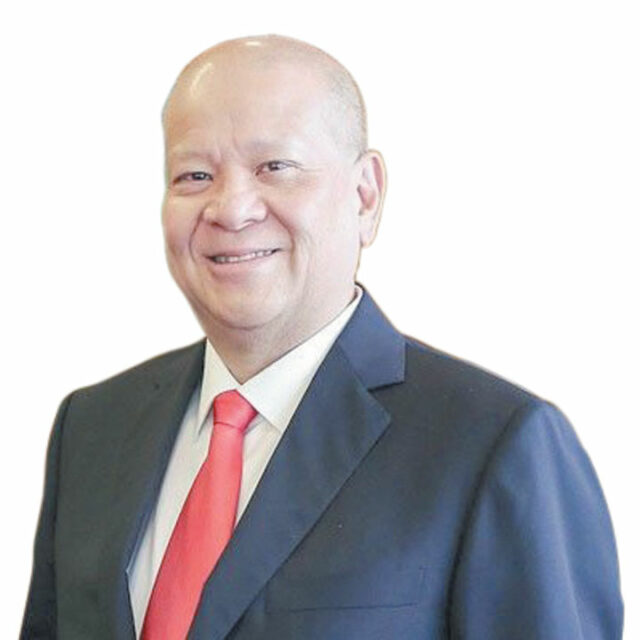
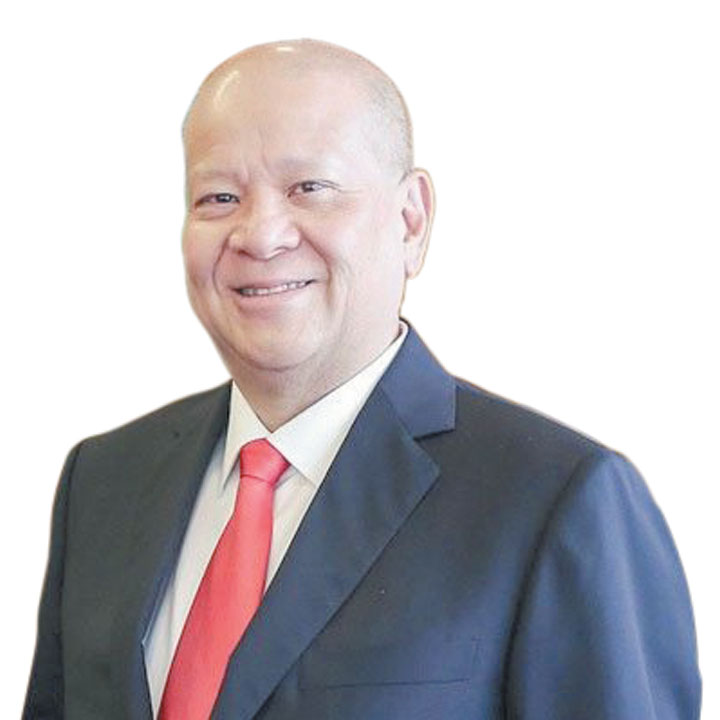
RAMON S. ANG, president and chief executive officer of San Miguel Corp. (SMC), has been elected to the board of Metro Pacific Investments Corp. (MPIC), the listed diversified conglomerate said on Monday.   

“Mr. Ang was elected as a member of the board of directors of MPIC during a meeting of the board of directors of MPIC held on Oct. 17,” SMC said in a regulatory filing.

SMC also disclosed that Mr. Ang made an indirect investment in MPIC “in his personal capacity and on the invitation of [MPIC President and Chief Executive Officer] Manuel V. Pangilinan.”   

However, the company did not provide details on the investment and the corresponding share of Mr. Ang in MPIC.   

Meanwhile, SMC clarified that it has not made any investment in MPIC.   

“To date, there have been no developments relating to the Nasugbu Bauan and the Cavite Batangas Expressway projects of MPIC and the SMC Infrastructure Group,” SMC said.   

“SMC shall make disclosures to the exchange in the event there are material disclosable developments pertaining to such tollway projects,” it said.   

Hastings Holdings, Inc., a unit of PLDT Beneficial Trust Fund subsidiary MediaQuest Holdings, Inc., has a majority stake in BusinessWorld through the Philippine Star Group, which it controls. 

On Monday, SMC shares at the local bourse rose P2.60 or 2.53% to close at P105.30 apiece. — Revin Mikhael D. Ochave

Appellate tax court grants part of Philip Morris’ refund claim

THE COURT of Tax Appeals (CTA) has granted part of a refund claim of Philip Morris Philippines Manufacturing, Inc. in the amount of P32.04 million representing its unused input value-added tax (VAT) traced to zero-rated sales in 2015.

In a 16-page ruling dated Oct. 17, the CTA full court said Philipp Morris was able to prove its entitlement to the amount by proving the sales invoices it submitted were actual shipments from the Philippines to foreign countries for export sales.

“The court finds that even without the reopening of the trial at the Division level, the submissions made by Philip Morris clarifying certain tabular presentations/summaries of its alleged zero-rated sales may already be reconsidered,” Associate Justice Catherine T. Mahan said in the ruling.

Zero-rated sales are transactions made by VAT-registered taxpayers that do not translate to any output tax. Taxpayers must present official receipts that are attributable to a specific fiscal period, with the term “zero-rated” being written on them to qualify for a 0% rating.

Philip Morris earlier sought a total refund worth P90 million covering excess input VAT for 2015. The CTA Third Division partially granted the petition, ordering the commissioner of internal revenue (CIR) to issue a refund worth P31.18 million to the firm.

Citing its own rules, the CTA said the firm submitted its appeal on time since the court granted its motion for a 15-day extension to file the petition.

The tax court said the CIR failed to present new arguments that would call for a dismissal of Philip Morris’ plea.

The CIR argued that the CTA should have rejected the firm’s appeal since it claimed the export sales were not proven to be paid in acceptable foreign currency in line with the Bangko Sentral ng Pilipinas rules.

The tribunal disagreed, saying Philip Morris had submitted airway bills and bills of lading which showed that the subject shipment of goods during the period was paid for in acceptable foreign currency. — John Victor D. Ordoñez

Gender fair education

JCOMP-FREEPIK

With the recent opening of schools, I was reminded of a significant milestone that took place in September 2015, when 193 countries of the United Nations (UN) General Assembly, including the Philippines, committed to achieving the Sustainable Development Goals (SDGs) by 2030. Among the 17 Global Goals are SDG 4: Quality Education and SDG 5: Gender Equality.

It has been eight years since the SDGs were adopted. The question to ask is are we even there yet?

With reference to the UN’s “The Sustainable Development Goals Report: 2023 Special Edition” which presented a candid assessment of the global progress on SDGs, an estimated 84 million children and young people will still be out of school by 2030 and it will take 140 years for women to be represented in leadership positions. UN cited the COVID-19 pandemic and the war in Ukraine as the major causes that reversed the decades of progress we have so far achieved. Given this, the world is falling far behind in achieving quality education and is not on track to achieve gender equality by 2030.

GENDER BIAS IN FAMILIES
The family, as a primary agent of socialization, is the foundation of values, behaviors, and social development. As a matter of fact, in Filipino culture, the family ranks in the top list of our life priorities. Inadvertently, gender and social norms, such as women being the default caregivers and men as the main financial providers of the family, are being perpetuated at home.

Oxfam’s report entitled “Understanding Norms Around the Gendered Division of Labour” reveals that the concepts of obligation or responsibility and the idea that each household member fulfills a prescribed role contributes to family harmony and unity. As traditional values still dominate our society, families inevitably conform to these expectations and socially accepted norms based on gender to avoid conflicts.

Furthermore, the language and social cues used within families perpetuate gender bias. In the same report, women who did not fulfill care responsibilities were generally perceived in a negative manner, often described as “lazy,” “negligent,” and “untrustworthy.” Therefore, as the report noted, the notion of women not being involved in care responsibilities is unacceptable. In addition, the Women in the Philippine C-Suite Study of the Philippine Business Coalition for Women Empowerment (PBCWE) and the Makati Business Club (MBC) found that, “timing is apparently crucial for women, especially when we recognize that aside from work, they also need to anticipate, plan, and prepare for their child-bearing and child-rearing years or when prioritizing having a family.” Overall, the mindsets and perceptions that children learn at home are carried over in school, and eventually when they pursue their chosen professional careers.

FORMAL EDUCATION
Schools are extensions of a child’s “home,” and therefore, play an important role in eliminating gendered expectations by fostering safe and inclusive learning environments. Materials, such as textbooks and visual aids, are fundamental to learning (and unlearning) gender stereotypes. One of the prevailing examples of stereotypes is the belief that boys are “naturally” gifted in learning technical skills in math and science, while girls are good at livelihood education and literature. This example only further exacerbates the notion that gender is a major determinant of what professions children should pursue, which should not be the case.

Notwithstanding that gender bias still exists, we are seeing gradual changes albeit at a slow pace. Using data from the Philippine Statistics Authority (PSA), the Department of Science and Technology — Science Education Institute (DoST-SEI) reported that there was a 148% increase, from 179,000 in 1990 to 445,000 in 2015, in Filipino women pursuing careers related to Science, Technology, Engineering, and Mathematics (STEM). Females occupy nearly half of the country’s total science and technology workforce, prominently in the health industry, while women in engineering, architecture, and ICT-related fields remain to be under-represented. The under-representation can be attributed to the long-standing metaphor called the “leaky pipeline,” which refers to the decrease in number of female employees as they progress in their careers due to many factors, such as discrimination, lack of role models, gender pay gap, and the outdated idea of job segregation. Insights from the recent Women in Engineering Baseline Study, spearheaded by the Council of Engineering Consultants of the Philippines-Young Professionals Forum (CECOPHIL-YPF), further uncover that while it is believed that opportunities for men are similarly offered to women, factors that are unique to women must be considered — one of the main reasons why there is a need to conduct gender sensitivity trainings in the workplace.

SOLVING PROBLEMS TOGETHER
Education starts at home and therefore, unlearning gender biases must start within families. When people are limited to conforming to obsolete beliefs, it hurts everyone. In a similar manner, academic institutions must hold gender sensitivity training among teachers and learners. In addition, an extensive review of the current curricula must be initiated to ensure that gender bias and harmful norms are removed from learning materials, and one is free to pursue a professional career, regardless of gender. Without a doubt, rendering a more gender-fair environment at home is conducive to achieving success in school and in the workplace.

The likelihood of achieving the global targets outlined in the SDGs is unlikely, but we are not saying that it is impossible. You may ask, what can we do immediately? I believe now is the right time to reverse mindsets and stand up for gender equality at home and in school. Let us start accepting the norm that men should have an active role in doing care work, and that it is normal for women to provide for the family. As they say, if not now, when?

I would like to end by sharing an African proverb, “If you educate a man, you educate an individual. But if you educate a woman, you educate a nation. When girls are educated, countries become stronger and more prosperous.”

(This article reflects the personal opinion of the author and does not reflect the official stand of the Management Association of the Philippines (MAP).)


Ma. Aurora “Boots” D. Geotina-Garcia is a member of the MAP Committee on Diversity, Equity and Inclusion. She is the founding chair and president of PHILWEN. She is also chair of the Governing Council of the PBCWE and president of Mageo Consulting, Inc., a corporate finance advisory services firm.

map@map.org.ph

magg@mageo.net

Sy company partners with Musk’s Starlink for satellite kit distribution

STARLINK.COM

SY-LED Data Lake, Inc. has signed an agreement with Elon Musk’s Starlink for the distribution of the latter’s satellite kits, the data services and solutions company said.

“Our collaboration with Starlink has showcased the vast potential of our joint endeavors. We’re now amplifying our commitment to ensuring rapid, reliable internet connectivity worldwide,” Henry T. Sy, Jr., Data Lake chairman, said in a media release on Monday.

In a statement on Monday, Data Lake said it had executed a global retailer agreement for Starlink. 

“This partnership is transformative. Reliable internet is pivotal, and with Starlink, we’re at the forefront of this change,” said David A. Tanael, president of Data Lake.

With the agreement, Starlink kits — which include Starlink dish, modem, power supply and mounting tripod — will be available at SM Malls priced at P29,000 starting Nov. 1, Data Lake said.

Starlink is a satellite internet of Space Exploration Technologies Corp. (SpaceX). According to its website, SpaceX continues to launch satellites into orbit to bring high-speed broadband to rural and remote areas. Earlier this year, SpaceX’s Starlink deployed about 200 units across the country.

The collaboration between the two parties aims to advance internet accessibility in the country, Data Lake said.

Data Lake is a Philippine company owned by Mr. Sy. Its business is mainly engaged in data services, business intelligence modernization, data science, big data pilot-to-production, Internet of Things and mobile application development, cloud and data pipeline. — Ashley Erika O. Jose

SLMC Bonifacio Global City MAB Corp. to hold 2023 Annual Stockholders’ Meeting on Nov. 10


Spotlight is BusinessWorld’s sponsored section that allows advertisers to amplify their brand and connect with BusinessWorld’s audience by enabling them to publish their stories directly on the BusinessWorld website. For more information, send an email to online@bworldonline.com.

Join us on Viber at https://bit.ly/3hv6bLA to get more updates and subscribe to BusinessWorld’s titles and get exclusive content through www.bworld-x.com.

Overcoming headwinds, maximizing tailwinds (part 2)

Estrella-Pantaleon bridge pictured on July 8, 2021. — PHILIPPINE STAR/ MICHAEL VARCAS

This is the second of a two-part article. The first part was published on Oct. 17 https://www.bworldonline.com/property/2023/10/17/551787/overcoming-headwinds-maximizing-tailwinds/.

CAPTURING RISING DEMAND FROM EXPATS
Colliers believes that the leasing market has gradually picked up in 2022. We attribute this to the easing of restrictions of coronavirus disease 2019 (COVID-19) protocols.

In our view, the expatriates are now more inclined to return to the Philippines. Colliers has seen Fort Bonifacio as one of the most preferred locations among expats due to the presence of schools as well as retail and leisure establishments. Other popular options include Makati CBD and Rockwell.

We have been getting more queries from large business process outsourcing (BPO) firms, manufacturing firms, and even multilateral lending agencies that are planning to welcome more expatriates.

In our view, the upkeep of residential units should remain topnotch if investors want to attract renters, including discerning expats. Providing high-end appliances is definitely a plus.

OFFERING ATTRACTIVE LEASING, PRICING SCHEMES
Vacancy in the secondary residential market continues to hover above 17%. With the substantial inventory in the secondary market, developers should remain active in offering attractive leasing and early move-in promos for ready-for-occupancy (RFO)  projects.

A couple of developers are even allowing buyers to move-in with a downpayment as low as 5%, and discounts as much as 20% on Total Contract Prices (TCPs) for spot cash buyers.

Attractive RFO schemes should be implemented especially in business districts where there will be substantial completion from 2023 to 2025, including the Bay Area.

RECOVERY ON THE HORIZON
Colliers Philippines believes that property developers should be guided by the interest rate environment and future modifications should have an impact on the promos and payment schemes that they will implement for the remainder of the year.

Given the compressing yields in the market, property firms should also continue highlighting the capital appreciation potential of condominium units, especially those located in masterplanned communities. Developers should zero in on the residential units’ viability as a hedge against inflation.

In our view, 2024 will likely remain to be a precarious period for the secondary market with the completion of a significant number of new condominium units, especially in the Bay Area.

Colliers is optimistic that vacancy will improve towards end-2023, but vacancy will likely spike again due to completion of additional units. We are retaining our forecast of marginal rise in rents and prices annually from 2023 to 2025.

With substantial completion in the market, we expect developers to remain cautiously optimistic with their launches. Attractive payment packages and leasing schemes are likely to continue.

The Philippines’ property segments are starting to rebound. At Colliers, we always say that while some are recovering at a much faster pace than others, there’s no doubt that developers, investors, and end-users are starting to reap the fruits of a real estate market that is finally seeing light at the end of the proverbial tunnel.


Joey Roi Bondoc is the research director for Colliers Philippines.

Lines are being drawn

All hell has broken loose. On Oct. 10, former President Rodrigo Duterte went on a verbal rampage on television, threatening to kill the Communists in the House of Representatives, particularly the Alliance of Concerned Teachers (ACT) party-list’s France Castro, and as if to prove his capability to do so, he bragged about his having France’s companions in Davao City killed, and accused the House of Representatives as corrupt and Speaker Martin Romualdez as “swallowing” pork barrel funds.

Speaking in Pilipino in his television program Gikan sa Masa Para sa Masa on Sonshine Media Network International (SMNI), Mr. Duterte lashed out at Ms. Castro, who led the Makabayan bloc in the House of Representatives that opposed vigorously the request for confidential and intelligence funds (CIFs) of his daughter Sara, Vice-President and concurrently Secretary of Education. “The first target of your intelligence fund is you, France. I want to kill all you communists.” He admitted using the CIFs of Davao City to finance his vicious “war on drugs.” “My intelligence funds, I used it to buy. I had all of them killed. That’s why Davao is like that. Your companions, I really had them killed. That’s the truth,” said he.

He called the House of Representatives the “most rotten institution” in the country. He said, “There is no limit to their pork barrel.” He also implied that Speaker Martin Romualdez is behind the attacks on his daughter. “This Romualdez… has been feeding congressmen with cash, but I say he should be audited because the Speaker is poised to run for president.”

The broadside immediately drew return fire from the main target, Ms. Castro, as well as from the collateral victims, congressmen who were not party to the reallocation of VP Duterte’s CIFs to defense and security agencies. The blast also roused Mr. Duterte’s old enemies — he made many when he was all-powerful — to launch their offensive against him, now defenseless, his arrogant defenders now impotent, many even in the submissive service of the present dispensation, a number of them in the Cabinet.

ACT, the party-list of Ms. Castro, issued this statement: “This statement by Rodrigo Duterte, who has always been a fascist and a murderer, is deplorable and disgusting. It is clear that this is a direct threat to the life of Rep. France Castro and the progressive groups and individuals who insist and fight only for the legitimate call and rights of the people. ACT chairman Vladimer Queta said, ‘Executioners like Rodrigo Duterte must be held accountable for his crimes against the Filipino people and humanity.’”

Nobody in Congress, not even his most bitter critic, dared call him a murderer when Mr. Duterte was president. A private citizen referring to him as executioner, as Mr. Queta did, would have suddenly disappeared from the face of the earth.

The Makabayan bloc filed a joint resolution urging the other members of the House of Representatives to collectively press President Ferdinand Marcos, Jr. to allow the International Criminal Court to enter the country to investigate the alleged extrajudicial killings carried out by the notorious Davao Death Squad when Mr. Duterte was Davao City mayor and subsequently when he was president of the country.

Former Senator Antonio Trillanes, a mortal enemy of the former president, has joined the fray. “We, the Magdalo group, are urging the Marcos administration to allow the ICC investigators into the country in order to make ex-president Rodrigo Duterte accountable for his crimes against humanity,” said the chairman of the political party.

Another former Senator, Richard Gordon, who is still nursing the deep wounds inflicted on him by Mr. Duterte, indicated he is ready to do battle again against his old adversary. On Mr. Duterte’s threat against a congressman, he said, “In law those are grave threats. He can be prosecuted now, he is not the president anymore.” He added, “I am not finished with Pharmally. I have a paper that says all these people have to be properly pursued… The evidence is very very strong. You have to be an ally of the criminals if you do not prosecute them.” He was obviously referring to the people behind the anomalous purchase of overpriced medical supplies by government officials appointed by President Duterte.

Deputy Speaker Ralph Recto was presiding when VP Duterte’s request for CIFs was being deliberated on and subsequently rejected. Mr. Duterte’s taking a pot shot at Speaker Romualdez intrigued many. They speculate he may have done it for Congresswoman Gloria Arroyo, a major contributor to the war chest of Mr. Duterte when he ran for president in 2016.

Ms. Arroyo was unceremoniously ousted from her position of Senior Deputy Speaker in May this year on suspicion that she was plotting to replace Mr. Romualdez as Speaker. Sometime in the middle of September, Ms. Arroyo invited the former president to an “informal” meeting. He came with Senator Christopher “Bong” Go and former executive secretary Salvador “Bingbong” Medialdea.

Having been collectively maligned by the former president, Speaker Romualdez and the overwhelming supermajority in the lower chamber of Congress might be more amenable to the call of human rights advocates and of civil society in general to allow the ICC to enter the country to investigate and prosecute the former president for the extrajudicial killings during his vicious war on drugs. They may have also been provoked to re-open the investigation of the malodorous multi-billion-peso Pharmally deal.

President Ferdinand “Bongbong” Romualdez Marcos, Jr. has prudently stayed away from the firefight. But if the former president ramps up his verbal offensive against Speaker Romualdez, whom he sees as his daughter’s rival in the presidential race in 2028, President Bongbong would be drawn to the side of his first cousin.

It would be interesting to know how prominent personages in the Marcos II administration would react if the word war between Mr. Duterte and Mr. Romualdez turns into a family feud — the Romualdez first cousins against the Dutertes, father and daughter. Executive Secretary Lucas Bersamin, Justice Secretary Crispin Remulla, Solicitor General Menardo Guevarra, Finance Secretary Benjamin Diokno, Interior and Local Government Secretary Ben Hur Abalos, National Security Adviser Eduardo Año, Presidential Adviser on Peace Calixto Galvez, Jr., and Ambassador to the Court of St. James Teddy Boy Locsin also held high positions in the Duterte administration.

Special Adviser to the President Antonio “Anton” Lagdameo, Jr. is a bosom boyhood friend of the President. His father, “Tonet” now the ambassador to the United Nations, was appointed ambassador to the Court of St. James by then President Duterte. Anton Lagdameo’s mother Linda belongs to the Florendo family of banana fame. The Florendos have been dear family friends of the Dutertes through several generations. I wonder how Anton will react if the family feud escalates into a bitter political war.


Oscar P. Lagman, Jr. has been a keen observer of Philippine politics since the late 1950s.

Steniel given until Nov. 22 to meet ownership rule

THE Philippine Stock Exchange, Inc. (PSE) has given listed firm Steniel Manufacturing Corp. until Nov. 22 to comply with the rule on minimum public ownership or risk being delisted. 

“[S]hould the company remain non-compliant with the minimum public ownership requirement after the lapse of the six-month period from May 22, Steniel Manufacturing shall be automatically delisted from the official registry of the exchange,” the PSE said in a memorandum dated Oct. 23.

“Please be advised that, as of date hereof, Steniel remains non-compliant with the amended minimum public ownership rule,” the market operator added.

Trading of Steniel shares was suspended by the PSE after its public float dropped to 13.09%, which is below the exchange’s minimum requirement of 20%.

“Pursuant to the amended minimum public ownership rule, listed companies which become non-compliant with the minimum public ownership shall be suspended from trading for a period of not more than six months and shall be automatically delisted if it remains non-compliant with the minimum public ownership after the lapse of the suspension period,” the market operator added.

However, Steniel said on Oct. 9 that its public float is set to hit 22.32% from 13.09% after the transfer of the company’s shares to three parties, going above the PSE’s minimum requirement. This would also lift the trading suspension on the company’s shares.

According to the company, Steniel (Netherlands) Holdings B.V. transferred 70 million common shares to Monceau Philippine Holdings, Inc., as well as 940,604 common shares to Segovia Capital Holdings Phils., Inc., while Greenkraft Corp. also transferred 60 million common shares to a certain Ismael Cuan.

“With these transfers, the company’s public ownership will increase from 13.09% to 22.32% in compliance with the existing rules and guidelines of the PSE,” Steniel said.

Incorporated in 1963, Steniel and its subsidiaries are engaged in the manufacturing, processing, and selling of various paper products, paperboard, and corrugated carton containers. — Revin Mikhael D. Ochave

Telling stories about the reality of violence

Sheron Dayoc’s latest coming-of-age tale is making its debut at the Tokyo Int’l Film Fest

THE GOSPEL of the Beast is a coming-of-age drama about a 15 year-old boy, Mateo, who accidentally kills his classmate and runs away with an older man, bringing him into the criminal underworld. This story, though akin to many gritty Filipino indie films, is set apart by its focus on the perspective of a teenager who slowly loses his innocence, according to the film’s director, Sheron Dayoc.

The film, which is Mr. Dayoc’s first feature in seven years, his last being the Gawad Urian-winning Women of the Weeping River in 2016, is set to premiere in competition at the Tokyo International Film Festival this October.

“Some are not aware that this is happening, that kids gradually becoming drug dealers and being exploited as part of underground syndicates, is a rampant thing,” Mr. Dayoc told BusinessWorld in a Zoom interview.

He explained that it may be a fictional film, but it mirrors the Philippine reality of violence, where children falling to the wayside and taking the fall for greater evils is tolerated and normalized.

“Our culture has become passive about it,” he said.

COMEBACK FILM
The Gospel of the Beast was first conceptualized in 2017, shortly after Mr. Dayoc’s team’s previous feature swept most of the awards at the Gawad Urian and QCinema. Circumstances put it on hold indefinitely — until 2021.

That was when it received support from the International Co-Production Fund of the Film Development Council of the Philippines (FDCP) and was selected for the 2021 Full Circle Lab Philippines.

Southern Lantern Studios, the local production house behind Mr. Dayoc’s previous films, once again came on to produce, with help from E&W films from Singapore and Tinkerbulb Productions, also from the Philippines.

“In the past seven years, I focused more on making TV commercials, so I really wanted to go back to my creative roots,” said Mr. Dayoc.

“As a filmmaker, I thought about film not just as an opportunity to tell crucial stories, but also as a sustainable business practice to keep doing the important work. It’s something I, and many people in the industry, are still figuring out,” he explained.

For his part, the goal is to continue telling stories that mirror Philippine reality while making sure it isn’t too niche to be shown to a wider audience.

While The Gospel of the Beast awaits its reception by the global festival audience in Tokyo, the studio is working on deals to bring it to the Philippines, namely to Western Visayas where the story takes place.

In the meantime, Thailand-based sales agent Diversion has picked up international sales rights.

DISTINCTLY FILIPINO
Mr. Dayoc said that 100% of the film’s cast are from Western Visayas, a practice he insisted upon coming from a documentary filmmaking background and a similar approach to his previous film that had a full Mindanaoan cast.

This goes for the leads as well, with Antique native Jansen Magpusao (known for the film John Denver Trending) playing Mateo and the acclaimed Bacolod-born veteran actor Ronnie Lazaro taking on the role of his newfound father figure.

“What I set out to do is make meaningful stories that can have a meaningful impact in the community,” he said. “That’s why I hope to screen this in Iloilo.”

As for the visuals, Mr. Dayoc wanted to make it more filmic, with rich-colored textures rather than the dark atmosphere people associate with gritty dramas.

His film recommendations and inspirations for The Gospel of the Beast include the 2000 Spanish drama El Bola by Achero Mañas and the 1999 Scottish drama Ratcatcher by Lynne Ramsay — both centered on children navigating a bleak world.

“Compared to films I admire, and my own previous films, this one has the same approach, the same core,” he said.

“I’ve met with so many such people who’ve lived through violence and despair in my documentary days, so I want to tell stories about those without a voice.” — Brontë H. Lacsamana

Whose voice is it anyway? Actors take on AI copycats

MEXICO/LONDON/JOHANNESBURG — Voice actor Armando Plata does not recall promoting a shopping mall in Bogota, narrating a porn movie, or advertising a big bank. Yet his voice comes over loud and clear: schmoozing, sighing, and selling with neither permission nor payment.

It was the mild, robotic twang — rather than worry over any memory lapse — that alerted Mr. Plata to the fact his voice had been quietly cloned via artificial intelligence (AI), robbing the veteran actor of his key asset, artistic choice, and vocal rights.

“I believe that the most cloned and artificially used voice in Spanish is mine,” said Mr. Plata, owner of a deep and lilting voice, 50-year audio career, and president of the Colombian Association of Voice Actors.

Now Mr. Plata is organizing with voice actors across Latin America to legislate the “right to own one’s voice.”

And the group is not alone in what is emerging as a global push for human rights against the precipitous rise of AI.

From South Africa to Europe, Japan to the United States, artists are joining forces to protect their jobs, and their souls, from the ramifications of AI that sounds just like them.

The genesis of the voice grab seemed innocent enough.

It was two decades ago that Mr. Plata took part in a paid, text-to-speech project for a firm that later — unbeknownst to him — sold its recorded voices to an AI software company.

Mr. Plata’s voice proved popular, if of no commercial value — to him at least. As it common in the voiceover business, Mr. Plata signed no contract so could not then press any lawsuits.

“At one point we will be able to sue companies and push for class actions. But first, we need governments to recognize the ownership of our voices,” the voice actor told the Thomson Reuters Foundation.

HUMAN RIGHT TO A VOICE
This year, approximately 500,000 video and voice deepfakes will be shared on social media sites, according to synthetic media detection company DeepMedia.

Cloning a voice used to cost $10,000 in server and AI-training cost; now startups offer it for a few dollars, according to DeepMedia.

Among high-profile cases of vocal appropriation are Morgan Freeman, whose voice and likeness were used in a faked video to criticize President Joseph R. Biden in April 2023.

Given that an AI clone can come in at about half the cost of a voice artist, let alone a celeb, the technology is tempting.

One Colorado voice actor listed on Voices.com marketplace can be hired for a 60-second radio ad for $500; the AI equivalent costs $200 a minute, about $1 a word. Others cost half that.

Speech-generating AI — such as Microsoft’s VALL-E language model — works by sifting through reams of data, categorizing how people speak then using an algorithm — known as a neural network — to replicate human vocal patterns and speech characteristics.

After AI-powered audio production companies launched in Chile this year, the national voice actors’ association met with lawmakers to discuss voice ownership as a human right.

Voice actors in Colombia have similarly set up a legislative project to establish the human voice as personal patrimony.

Both legislations aim to serve as a basis for future regulations, such as mandating audio watermarks in all materials generated with synthetic voices.

While copyright laws protect works captured on a tangible medium, be it on canvas or stored digitally, voices fall outside the remit.

Some countries also prohibit deepfakes of celebrities, but there are no laws that govern vocal deepfakes specifically.

PERSONAL INFORMATION?
In Africa, voice artists are looking to protect themselves though there are few AI voice models able to prosper in such a rich mix of regional accents and languages, Andrew Sutherland, a South African sound engineer and voice artist, said.

One vehicle may be the South African Protection of Personal Information Act, under which personal data — voice included — cannot be collected, processed or stored without consent.

A voice could be classed as personal and sensitive data as it may show anything from class to age, said Mr. Sutherland, so “a legislator could recognize that and protect it on those grounds.”

The South African Guild of Actors is lobbying government to enact policies around performer rights, a tactic mirrored by Japan’s main industry body for freelance performers, Arts Workers Japan.

Copyright law in Tokyo sides more strongly with AI than does legislation in other countries, letting companies exploit any language, sound, or images for data analysis.

Tokyo, however, may have to bring in protections for actors at the start of their career, as AI can generate similar content instantly and preclude their future success, Michihiro Nishi, a partner at law firm Clifford Chance, told the Thomson Reuters Foundation over e-mail.

Japan has also pushed for new G7 legislation while relying on “superficial” old laws to fill the gaps, according to Megumi Morisaki, an actor who is president of Arts Workers Japan.

The result — scant artistic protection, said Ms. Morisaki.

WHO RULES IN AI WORLD WITHOUT BORDERS?
Artists across the world are looking to the European Union’s (EU) AI Act, which classifies AI tools by potential risk, aiming to lay a global baseline for the use of synthetic voices.

“I’ll work with a director in the UK, a producer in Canada, a voice actor in Africa, another producer in Sweden, and then I’m in Los Angeles — so who owns what?” said Tim Friedlander, president of the National Association of Voice Actors (NAVA).

“The internet doesn’t know borders or boundaries.”

While there was talk in the United States of AI legislation, Mr. Friedlander considers it is now at a political stalemate.

The EU must also do more; specifically, NAVA wants AI voices to sit alongside deepfake images in a high-risk group.

“It doesn’t just affect well-known voice actors, it affects anybody who has recorded audio anywhere,” Mr. Friedlander said, referring to the potential for scams or blackmail.

Industry expects the Act to pass this year but there is no deadline, so those at risk are taking their own precautions.

Spanish-speaking voice actors gathered this year to create the United Voices Organization, which aims to negotiate contracts with fair compensation for AI-related projects.

“We want to ensure that voices are used in an ethical manner, guaranteeing contracts of good faith,” said its president Daniel Soler de la Prada.

And while NAVA and the Screen Actors Guild-American Federation of Television and Radio Artists (SAG-AFTRA) have clauses in their contracts to guard against abuse by AI, fewer than one in five workers in the industry is unionized.

Similarly, voice artists are considered freelancers in South Africa and unable to “unionize and collectively bargain for rights and fair market fees and standards,” Mr. Sutherland said.

Having protections in informal markets is vital, especially in Global South countries, said Urvashi Aneja, founding director of Digital Futures Lab, a research collective.

“The nature of work is changing, we’re seeing more and more informal and precarious work,” Ms. Aneja said at the Thomson Reuters Foundation’s annual Trust Conference in London on Friday.

“But we have to design social protection systems that deal with the precariousness of that work.”

Until legislation is global, advocates for the rights of humans hope platforms will pay named voices instead of those startups that sell AI copies fed by data scraped off the web.

“The ethical piece of AI is so prominent now,” said Colin McIlveen, vice-president of Voices.com.

In an upbeat note, Mr. McIlveen said organizations are now looking to ethical sources for voice acting, something they may not have done two years ago when cheap was better than real.

Even Mr. Plata — the accidental porn and ad star — believes AI, if duly regulated, can become a new source of artistic income.

“Imagine that in 15 or 20 years from now, when I’m long gone, my family can still own my voice and have it be productive for one or two more generations,” he said.

“This can affect me, but also make me transcend.” —  Thomson Reuters Foundation

Robinsons Offices teams up with FarmTop to set up ‘sky farms’ in buildings

JG SUMMIT President and CEO Lance Y. Gokongwei (left) inspects the rooftop farm at the Robinsons Cyberscape Alpha in this photo taken Oct. 10. — COMPANY HANDOUT

ROBINSONS Offices and FarmTop have partnered to develop “sky farms” in the former’s office buildings around the Philippines.

FarmTop (Farm-to-Plate) promotes urban agriculture by developing “sky farms” on building rooftops, as way to address the growing demand for fresh produce delivered straight to your doorstep.

“Under the Farm-to-Plate concept, fresh vegetables are produced much closer to where they are consumed, typically within a five-kilometer radius. This minimizes the carbon footprint that traditional farm-to-market routes would typically entail,” the company said.

Danny Dy, president and chief executive officer of FarmTop, said each rooftop farm can produce as much as five tons of vegetables a month. This can serve customers in condominiums, offices, schools, hotels, and restaurants within its vicinity.

“By tying up with FarmTop, we are able to offer alternative means to healthy eating. We can provide the space, expand the market, and create jobs for urban farmers,”  Jericho P. Go, Robinsons Offices senior vice-president and general manager, said in a statement.

Mr. Dy said they want to raise awareness of rooftop farming or controlled environment agriculture as a technology-based method of producing food. “The goal is to control all our farm environment through my smartphone. We want to make farming more sexy,” he said.

Mr. Dy said FarmTop specializes in building farms on roof decks. “The travel of the greens to the consumer is shorter. It’s cost-efficient and it’s fresher,” he said.

By reducing the journey from farm to plate, he noted the rooftop farms play a crucial role in decreasing the reliance on fossil fuels. FarmTop is also exploring environmentally-friendly delivery options, like bicycles, side cars, or electric vehicles.

Robinsons Land has consistently supported the causes of Rise Against Hunger, an international hunger relief organization that distributes food and aid to the world’s most vulnerable.

FarmTop will formalize its commitment to Rise Against Hunger through the “Bawat Buto Buhay” program, which will be launched this year.

Financing growth: Maharlika Fund and SWFs from abroad

(Part 3 of a series)

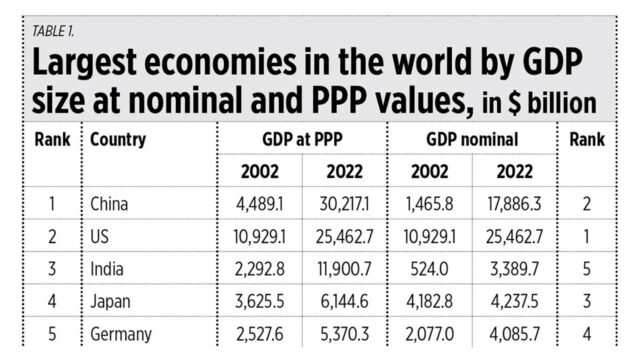
The International Monetary Fund (IMF) released the World Economic Outlook (WEO) October 2023 two weeks ago. In Table 1 I show the largest economies in the world, with a focus on Asians. Two valuations of GDP here: nominal (GDP at national currency divided by US$ average exchange rate for the year) and purchasing power parity (PPP, which converts the currency of one country with another to buy the same amount of goods and services in each country).

When it came to GDP at nominal values in 2022, the US was the largest in the world and three Asians were in the top 10. When it came to GDP at PPP values, China was the largest and three other Asians were in the top 10 — India, Japan, and Indonesia.

The Philippines was the 30th largest economy in the world at PPP values, but in nominal values, it was the 39th largest (Table 1). Since we have the 12th largest population in the world, this does not appear impressive, but if we look at the expansion over the past 20 years, from 2002 to 2022, the Philippines’ economy has expanded four to five times while the population has expanded only 1.4 times, from 80 million in 2002 to 112 million in 2022.

So there has been a significant increase in productivity and income in the Philippines and many other developing countries through the years and it is something to ponder, that all those crisis narratives and the alarmism in the world — the food/hunger crisis, the oil/energy crisis, the NCDs/virus crisis, the climate/garbage crisis, etc. — are not realistic enough to deter continued improvement in the people’s lives and standard of living.

MAHARLIKA FUND AND SWFs ABROAD
The Philippines economic team, composed of Finance Secretary Benjamin Diokno, Budget Secretary Amenah Pangandaman, Economics Secretary Arsenio Balisacan, and Bangko Sentral officials went to Doha, Qatar and Dubai, United Arab Emirates (UAE) on Sept. 10 to 12, for a business dialogue and Philippine Economic Briefing (PEB). The team met with the representatives of the sovereign wealth funds (SWFs) of both countries — the Qatar Investment Authority and the Investment Corp. of Dubai — plus other big investment entities. Several big investment pledges were made on those two economic diplomacy meetings in the Middle East.

Then President Ferdinand Marcos, Jr. went to Riyadh, Saudi Arabia for business dialogue last week, on Oct. 19. The head of the economic team, Mr. Diokno, joined him and again pitched the Maharlika Investment Fund. He said that “Maharlika seeks to work with other sovereign wealth funds, both as an investment partner and peer in the global sovereign wealth fund community. We look forward to exchanging views and learning from the best practices of top-of-class funds, such as those here in Saudi Arabia.”

Here are recent stories in BusinessWorld about the Maharlika Fund: “Philippines’ Marcos suspends implementation of sovereign wealth fund” (Oct. 18), “Philippines committed to start operating sovereign wealth fund this year — Marcos” (Oct. 19), “Safeguards sought for Maharlika fund” (Oct. 19), “Diokno tells Saudi investors Maharlika fund prioritizes safety, transparency” (Oct. 20), “Philippines says over $4.26-B investment deals agreed with Saudi business leaders” (Oct. 20), “MIF’s governance structure needs improvement — analysts” (Oct. 23).

For me, the establishment of the Maharlika Investment Fund is good and important mainly because there are many big infrastructure projects that must be done here, like the Cavite-Corregidor-Bataan bridge, and the Iloilo-Guimaras-Negros bridge, both 32 kms long each. And there are many super-rich and wealthy SWFs abroad that can be tapped to invest here and having our own SWF or sovereign investment fund will help attract them. In Table 2 are listed the largest and richest SWFs abroad.

I doubt the government-owned banks like LANDBANK and DBP, even the big conglomerates here like San Miguel Corp. and Metro Pacific, can attract those big SWFs abroad to bring in big money. They lack the political plus financial muscles in the vetting process by those huge SWFs. The Maharlika Fund capitalization of P500 billion is only $8.9 billion (at P56/$), of which only P125 billion is the initial capitalization. An investment of $2-3 billion in Maharlika is “small amount” for the SWFs of UAE, Qatar and Saudi Arabia. Not to mention the SWFs of Norway, China, Kuwait, Singapore and Hong Kong.

This administration’s economic team is doing the right thing when it comes to business and investment diplomacy. Go out there and meet those big SWFs, tell them of the reforms that have been done, the reforms that are under way, the big infrastructure projects that can be utilized by our big population and rising business communities. We need to sustain fast growth, 5% to 8% yearly, for many years to come.

See also my previous columns in this “Financing growth” series: Part 1, “Financing growth: a rice tariff cut, an MUP pension cut, and reforms in excise tax in mining, oil, and coal” (Sept. 26), and Part 2, “Financing growth: Reducing interest payments and spending control” (Oct. 5).


Bienvenido S. Oplas, Jr. is the president of Bienvenido S. Oplas, Jr. Research Consultancy Services, and Minimal Government Thinkers.

minimalgovernment@gmail.com

ADVERTISEMENT
ADVERTISEMENT