Home Blog Page 414

Red Sox rally off Yankees’ bullpen, capture Game 1

NEW YORK — Garrett Crochet struck out 11 in 7 2/3 outstanding innings and the Boston Red Sox went ahead after getting Max Fried out of the game and opened their American League wild-card series with a 3-1 victory over the New York Yankees on Tuesday.

Boston grabbed the advantage in the best-of-three series on Masataka Yoshida’s pinch-hit, two-run single in the seventh inning and Alex Bregman’s RBI double in the ninth. Carlos Rodon starts for the Yankees against Brayan Bello on Wednesday.

Crochet (1-0) allowed four hits in his first career postseason start after making four relief appearances for the Chicago White Sox in the 2020 and 2021 playoffs. He walked none and retired 17 straight at one point.

“Every time he takes the mound, we feel like we have a chance to win,” Bregman said of Crochet. “He competes his tail off. Thought that he was executing all of his pitches tonight to both sides of the plate.”

After getting the first two outs of the second inning, Crochet gave up a homer to Anthony Volpe that gave the Yankees a 1-0 lead.

Crochet did not allow another baserunner until permitting a single to center field by Volpe on his 109th pitch. The left-hander ended his night at a career-high 117 pitches by reaching 100 mph on a called third strike to Austin Wells, who thought he walked.

“Just determined to keep the (Yankees’) lead where it was at 1,” Crochet said. “Just wanted to do everything I could to give my team a fighting chance to get back into it. Nothing really changed mindset-wise. Maybe a little more aggressive in the zone. But I think that was just me finding my rhythm as the game went on.”

Boston manager Alex Cora said of Crochet, “For how great he was tonight, I tip my hat to the medical staff. They have done an amazing job with a guy that has never pitched 200 innings (before this year) … never pitched 7 2/3 in the playoffs.

“It is a total team effort. I made sure the training staff, you know, knew how I felt.”

Red Sox closer Aroldis Chapman retired Jose Caballero on a fly ball to end the eighth after balking Volpe to second on a disengagement violation.

Chapman allowed three straight singles to load the bases in the ninth but escaped. He struck out Giancarlo Stanton, got Jazz Chisholm Jr. to fly out to right field and fanned Trent Grisham on a 101 mph fastball to notch his 11th career postseason save.

“We are talking about a stud pitcher,” Yankees manager Aaron Boone said of Chapman. “I still thought we got some good swings off. I thought (Stanton) had a good swing on him where he just missed. Looked like a cutter or a sweeper in the middle of the zone.”

Crochet did not get the lead until Fried exited after firing 6 1/3 scoreless innings and 102 pitches.

Luke Weaver (0-1) entered and struggled to command his changeup, walking Ceddanne Rafaela to cap an 11-pitch encounter. Nick Sogard hit another changeup for a hustle double to right field, putting runners at second and third.

Yoshida batted for Rob Refsnyder and the Red Sox went ahead when he hit a fastball to center field for a base hit, scoring both runners.

In the top of the ninth, Bregman doubled to left field off David Bednar after Trevor Story singled and stole second.

Fried allowed four hits in his New York postseason debut. The left-hander struck out six and walked three, including a free pass to Carlos Narvaez in the sixth on a nine-pitch plate appearance that drove up his pitch count.

“They pressured him pretty good in the fourth, fifth, sixth,” Boone said of Fried. “Had a couple baserunners each inning. Felt like he kind of cruised through the first few and obviously ends up pitching great. Had to work pretty hard.” — Reuters

US government shutdown begins as partisan division rules Washington

A US flag is draped at Union Station with the US Capitol dome in the background on Capitol Hill in Washington, DC, June 28, 2025. — REUTERS/KEN CEDENO

WASHINGTON — The US government shut down much of its operations on Wednesday as deep partisan divisions prevented Congress and the White House from reaching a funding deal, setting off what could be a long, grueling standoff that could lead to the loss of thousands of federal jobs.

There was no clear path out of the impasse, while agencies warned that the 15th government shutdown since 1981 would halt the release of a closely watched September employment report, slow air travel, suspend scientific research, withhold pay from US troops and lead to the furlough of 750,000 federal workers at a daily cost of $400 million.

Mr. Trump, whose campaign to radically reshape the federal government is already on track to push out some 300,000 workers by December, warned congressional Democrats that a shutdown could clear the path for “irreversible” actions including cutting more jobs and programs.

The shutdown commenced hours after the Senate rejected a short-term spending measure that would have kept government operations afloat through Nov. 21.

Democrats opposed the legislation over Republicans’ refusal to attach an extension of health benefits for millions of Americans that are due to expire at the end of the year. Republicans say the issue must be addressed separately.

At issue on the government funding front is $1.7 trillion for agency operations, which amounts to roughly one-quarter of the government’s total $7-trillion budget. Much of the remainder goes to health and retirement programs and interest payments on the growing $37.5-trillion debt.

Independent analysts warn the shutdown could last longer than the budget-related closures of the past, with Mr. Trump and White House officials threatening to punish Democrats with cuts to government programs and the federal payroll.

Mr. Trump’s budget director Russell Vought, who has called for “less bipartisan” appropriations, threatened permanent layoffs last week in the event of a shutdown.

Wall Street futures slipped, gold struck a record high and Asian stocks wavered as investors worried about delays in the release of key data and the impact of job losses. The dollar hovered near a one-week low versus major peers.

RECORD DATES TO FIRST TRUMP TERM
The longest government shutdown in US history stretched over 35 days during December 2018 and January 2019 during Mr. Trump’s first term in office, in a dispute over border security.

“All they want to do is try to bully us. And they’re not going to succeed,” Senate Democratic leader Chuck Schumer said in a floor speech a day after a White  House meeting with Mr. Trump and other congressional leaders that ended with the two parties far apart.

Senate Majority Leader John Thune described the failed short-term spending bill as a “nonpartisan” measure devoid of partisan policy riders that Democrats have had no problem accepting in years past.

“What’s changed is, President Trump is in the White House. That’s what this is about. This is politics. And there isn’t any substantive reason why there ought to be a government shutdown,” the South Dakota Republican told reporters.

Mr. Trump’s Republicans hold majorities in both chambers of Congress, but legislative rules require 60 of the 100 senators to agree on spending legislation. That means that at least seven Democrats are needed to pass a funding bill.

DEMOCRATS FOCUS ON HEALTHCARE FUNDING
Democrats are under pressure from their frustrated supporters to score a rare victory ahead of the 2026 midterm elections that will determine control of Congress for the final two years of Mr. Trump’s term.

The healthcare push has given them a chance to unite behind an issue that resonates with voters.

Along with the extended health subsidies, Democrats have also sought to ensure that Mr. Trump will not be able to undo those changes if they are signed into law. Mr. Trump has refused to spend billions of dollars approved by Congress, prompting some Democrats to question why they should vote for any spending legislation at all.

University of Chicago professor Robert Pape said the unusually polarized US political climate in the aftermath of conservative activist Charlie Kirk’s assassination and the growing power on the extreme wings of both parties could make it harder for party leaders to agree on a deal to reopen the government.

“The rules of politics are radically changing, and we can’t know for sure where all of this is going to end,” said University of Chicago political science professor Robert Pape, who studies political violence.

“Each side would have to backtrack against tens of millions of truly aggressive supporters, their own constituents, which is going to be really hard for them to do,” he said.

Before the shutdown, Mr. Trump reached out to his own supporters with a deepfake video showing manipulated images of Mr. Schumer appearing to criticize Democrats while top House Democrat Hakeem Jeffries stood next to him, with a crudely drawn sombrero and mustache imposed over his face.

“It was childish. It was petty,” Mr. Schumer told reporters. “It’s something that a 5-year-old would do, not a president of the United States. But it shows how unserious they are. They don’t give a damn about the harm they will cause with their shutdown.” — Reuters

Japan’s $550-billion US investment to have no FX impact, top trade negotiator says

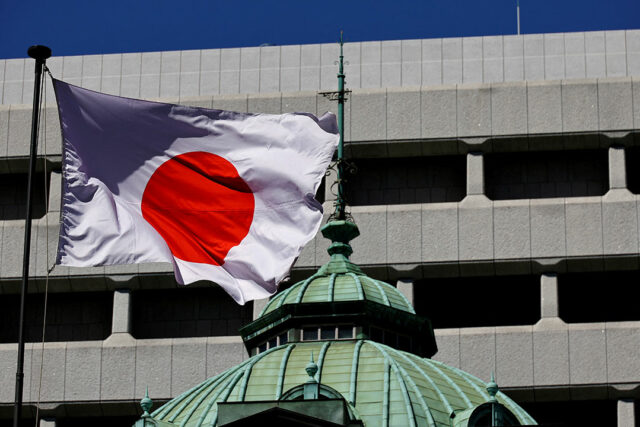
THE Japanese national flag waves at the Bank of Japan building in Tokyo, Japan on March 18, 2024. — REUTERS/KIM KYUNG-HOON/FILE PHOTO

TOKYO — Japan will run a $550-billion US-bound investment package agreed in Tokyo’s tariff deal with Washington without any impact on the foreign exchange (fx) market, its top trade negotiator Ryosei Akazawa said on Wednesday.

“Based on our calculation, $550 billion is within the range where there will be no foreign exchange impact,” Mr. Akazawa said, speaking to reporters at the Foreign Correspondents’ Club of Japan.

Japan and the United States signed a memorandum of understanding on the details of the package last month, which covers Japanese investments in sectors such as chips, metals, pharmaceuticals, energy and shipbuilding to be made by January 2029.

Concerns over foreign exchange implications have become a major issue in South Korea’s negotiations to formalize a US tariff deal, which would reduce US levies on Korean imports to 15% from 25% in return for South Korea’s investment of $350 billion in the US.

Mr. Akazawa said the government may use foreign exchange reserves for loans, for example by tapping a special account of the foreign exchange fund managed by the finance ministry.

Japan’s investment package would include equity, loans and loan guarantees from the state-owned agencies Japan Bank for International Cooperation (JBIC) and Nippon Export and Investment Insurance (NEXI).

When asked about a comment he made in July that the equity component would account for just about 1-2% of the $550 billion, Mr. Akazawa clarified that the percentage was based on the past investment track records for JBIC and NEXI.

He said it’s up to Japan to decide the actual ratio when it starts investing. — Reuters

Taiwan will not agree to 50-50 chip production deal with US, negotiator says

REUTERS

TAIPEI — Taiwan will not agree to a deal with the United States for half of all semiconductor production to take place in the country, the island’s top tariff negotiator said on Wednesday after returning home.

US Secretary of Commerce Howard Lutnick told US television network News Nation over the weekend that Washington’s pitch to Taiwan would be a 50-50 split in making chips, the vast majority of which are now made on the island.

Taiwan Vice Premier Cheng Li-chiun, who is leading the tariff talks with Washington, told reporters upon getting back to the island that she had not discussed the 50-50 idea suggested by the US during the talks.

“Our negotiating team has never made any commitment to a 50-50 split on chips. Rest assured, we did not discuss this issue during this round of talks, nor would we agree to such conditions,” she said, according to Taiwan’s official Central News Agency.

Neither the US Commerce department nor the Office of the United States Trade Representative responded to requests for comment sent outside of US business hours.

Taiwan, home to the world’s biggest contract chipmaker Taiwan Semiconductor Manufacturing Co. (TSMC), runs a large trade surplus with the United States. The island’s exports to the United States are currently subject to a 20% tariff.

TSMC, whose business is surging on strong demand for artificial intelligence applications, is investing $165 billion to build chip factories in the US state of Arizona, though the bulk of its production will remain in Taiwan.

Taiwan’s government said last month that it hoped for a more favorable tariff rate from the US after talks achieved “certain progress.”

Speaking in parliament in Taipei on Tuesday, Premier Cho Jung-tai said Ms. Cheng had had multiple talks with the United States on tariff issues.

“The most critical substantive consultations are currently underway,” he said.

Ms. Cheng, speaking at the airport, said that “detailed” discussions had taken place which yielded “certain progress,” the Central News Agency added.

Separately, Taiwan’s presidential office said late on Tuesday that President Lai Ching-te had met the visiting Luke J. Lindberg, Undersecretary for Trade and Foreign Agricultural Affairs at the US Department of Agriculture.

Mr. Lai said that a Taiwan agricultural delegation visiting the United States in September planned to buy $10 billion of US agricultural goods over the coming four years, including soybeans, wheat, corn and beef. — Reuters

South Korea to increase defense budget by 8.2% next year, President Lee says

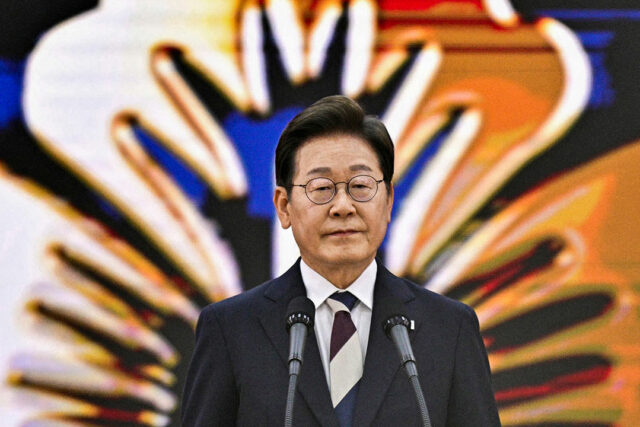
SOUTH KOREA’S President Lee Jae-myung delivers a speech after taking his oath during his inauguration ceremony at the National Assembly in Seoul on June 4, 2025. — REUTERS

SEOUL — South Korean President Lee Jae Myung said on Wednesday the country’s defense budget for next year would rise by 8.2% to 66.3 trillion won ($47.1 billion), adding that peace would only be possible on a strong foundation of security.

Mr. Lee made the comments on South Korea’s Armed Forces Day, highlighting the importance of self-defense capabilities.

“The momentum for cooperation and shared prosperity is weakening across the world, and we are entering an era of increased conflict, where it’s every man for himself,” Mr. Lee said.

“To ensure peace and prosperity for the Republic of Korea, we must not depend on anyone else but strengthen our own power,” said Mr. Lee, using South Korea’s official name.

Mr. Lee said next year’s defense budget, with its “significant” increase, would be focused on investing in cutting-edge technology like drones and robots.

The South Korean leader, who is pursuing engagement with North Korea, said that peace would only be possible on a strong foundation of security. He said the country’s defense spending was already 1.4 times North Korea’s gross domestic product.

Mr. Lee took office in June after a snap election, which followed the fall of Yoon Suk Yeol, who imposed a short-lived martial law order that prompted troops and military helicopters to be deployed to parliament and other buildings.

Mr. Lee said the military’s reputation had suffered an “endless decline” and called for the military to regain public trust.

“An army meant to protect the people must never repeat pointing its guns at them,” he said. — Reuters

($1 = 1,408.7300 won)

(Reporting by Ju-min Park, Heejin Kim; Editing by Tom Hogue and Michael Perry)

How does the Cebu quake compare in seismically vulnerable Philippines?

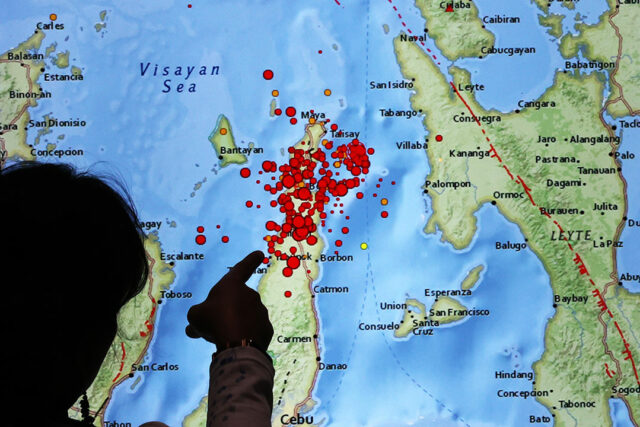
Dr. Winchelle Ian Sevilla, chief of the Seismological Observation and Earthquake Prediction Division of the Department of Science and Technology-Philippine Institute of Volcanology and Seismology (DOST-PHIVOLCS), shows a visual representation of the magnitude 6.9 earthquake centered 19 kilometers northeast off the coast of Bogo City, Cebu. — PHILIPPINE STAR/MIGUEL DE GUZMAN

A magnitude 6.9 earthquake struck in waters near the island of Cebu in the central Philippines late on Tuesday, the deadliest to hit the country since 2013, with more than 60 people reported dead and dozens injured.

The Southeast Asian archipelago is one of the most seismically vulnerable countries on the planet, often experiencing more than 1,000 quakes a year.

EARTHQUAKE LIST
According to Earthquake List, which compiles data from global earthquake monitoring agencies the US Geological Survey and the European-Mediterranean Seismological Centre, in the past decade the Philippines has experienced an average of 826 quakes a year, amounting to about one every 10 hours.

That compares to 2,053 quakes per year in Indonesia, 1,777 in Mexico, 1,025 in Japan and 734 in Papua New Guinea. The United States saw an average of 176 per year over the period, according to Earthquake List.

PACIFIC ‘RING OF FIRE’
The Philippines lies on a complicated tectonic subsystem that forms part of the Pacific “Ring of Fire”, an earthquake-prone belt of volcanoes stretching from South America to the Russian Far East. It is also vulnerable to tsunamis generated by earthquakes in other parts of the western Pacific.

The Cebu quake event was a relatively shallow “strike-slip” event in which two plates brush up against each other at different speeds.

DEADLIEST PHILIPPINES QUAKES
The deadliest recorded earthquake in the Philippines in recent decades took place at Moro Gulf in 1976, measuring 8.0 and causing at least 5,000 deaths.

A quake of a magnitude 7.8 also hit the densely populated island of Luzon in 1990, killing more than 1,600 people and causing lasting infrastructure damage.

PHILIPPINES QUAKE LIST
Following is a list of the biggest and deadliest earthquakes to hit the Philippines in recent years:

August 2024 – Caraga earthquake (magnitude 6.8). No casualties, but at a depth of only 20 miles (32 km), nearly 30,000 people were affected and 193 homes damaged.

November 2023 – Mindanao earthquake (magnitude 6.7). Killed 11 people and 730 reported injured. Another quake struck Mindanao a month later, with a more powerful magnitude of 7.6, killing three and injuring dozens more.

July 2022 – Luzon earthquake (magnitude 7.1). Eleven people killed, 615 injured in a quake that was felt in the capital Manila.

December 2019 – Davao earthquake (magnitude 6.8) Thirteen people were killed and 210 injured.

October 2019 – Cotabato earthquakes, magnitudes 6.4 to 6.6. Death toll of 31, 778 injured.

April 2019 – Luzon earthquake (magnitude 6.1). Eighteen people dead, 256 injured.

October 2013 – Bohol earthquake (magnitude 7.2). Death toll 222, 976 injured. — Reuters

A new ‘home’ and helpline begin this October: BingoPlus Foundation embraces love and bridges hope by advancing Mental Healthcare for every Filipino

A ceremonial signing marking the EmbracePLUS mental health helpline partnership was held on Sept. 19, 2025, with (from left to right) BingoPlus Foundation’s Executive Director Angela Camins Wieneke; DigiPlus’ Vice-President for Investor Relations, Corporate Communications and Sustainability, and BingoPlus Foundation Chief Operations Officer Celeste Jovenir; and Dr. Ronivin Pagtakhan, founder and executive director of LoveYourself, Inc., at the DigiPlus headquarters in Bonifacio Global City, Taguig.

For Filipinos struggling with anxiety, depression, and moments of acute crisis, accessible mental health support remains a daunting challenge. The expensive cost, limited availability of professionals, and mostly the unwanted social stigma often prevent those in need from seeking help.

Based on a journal in Acta Medica Philippina published in 2024, more than 12 million Filipinos are suffering from depression and anxiety due to poverty, disasters, and other socioeconomic disparities. With the reported millions of individuals struggling with mental health, unfortunately, there are only two to three mental health workers available for every 100,000 Filipinos, according to the National Institute of Health.

Aiming to address this concern while at the same time create a compassionate community, the BingoPlus Foundation, the social development arm of DigiPlus Interactive Corp., has made a landmark move to bridge the gap in mental healthcare by forging ties with two of the country’s significant nongovernment organizations — LoveYourself and Bridges of Hope.

“At BingoPlus Foundation, we believe in ‘multiplying the good’ by forging meaningful partnerships that create real impact,” said Angela Camins-Wieneke, executive director of BingoPlus Foundation. “By combining our resources, we can strengthen our shared mission to make mental health support accessible to everyone, no matter their location or circumstance.”

EmbracePLUS: A helpline to self love

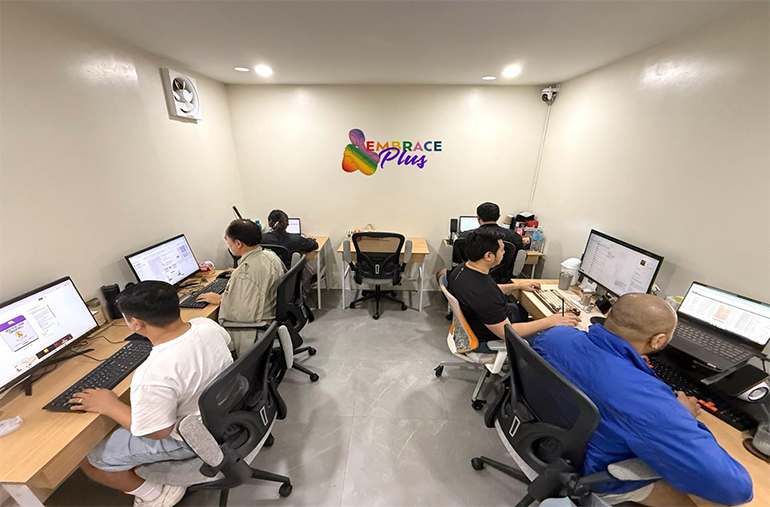
BingoPlus Foundation partnered with LoveYourself to establish a free help channel that would serve as the first line of support to fellowmen who are battling mental health issues — the EmbracePLUS.

EmbracePLUS provides Psychological First Aid services through 24/7 initial assessments online and teleconsult calls from 12:00 p.m. to 8:00 p.m. from Monday to Sunday. Individuals may avail of services starting Oct. 1, 2025, in time for World Mental Health Month.

Set to be fully operational beginning Oct. 1, EmbracePLUS is a free helpline that acts as a critical first-response system for individuals facing mental health challenges. It aims to dismantle barriers to care, offering a critical first response system that is accessible to everyone, regardless of location or economic status.

Consisting of telehealth associates trained to provide essential Psychological First Aid (PFA) and counseling support, EmbracePLUS offers two key touchpoints: assessments currently available through its dedicated hotlines (Smart: 0908-235-2351, Globe: 0956-392-1924) from 12:00 p.m. to 8:00 p.m. daily, and first aid assistance through calls during the same hours. A 24/7 assessment feature via the EmbracePlusPH Facebook page is also in development and will be available soon.

BingoPlus Foundation and LoveYourself revealed that the new mental health helpline is a combination of two of their projects: Embrace Virtual Hub and KalusuganPLUS.

Embrace is LoveYourself’s established online health platform that specializes in immediate, confidential support while KalusuganPLUS, which recently rolled out community-based mental health training for first responders at the barangay level in Cebu and General Santos, is one of the core health programs of BingoPlus Foundation.

Dr. Vin Pagtakhan, founder and executive director of LoveYourself, emphasized the sustainability factor. “Beyond amplifying awareness, BingoPlus Foundation’s support helps strengthen our capacity for responder training and operations, ensuring our programs are not only immediate but also sustainable,” he said. “This collaboration highlights the value of working together across sectors to create stronger and more responsive services.”

The partnership is anchored by a renewed P500,000 commitment from BingoPlus Foundation. This vital funding supports the ongoing specialized training for telehealth associates and operations of the EmbracePlus hub.

Bridging hope in a new home

The ceremonial handover of equipment support to Bridges of Hope took place on Sept. 29, 2025, with (from left to right) BingoPlus Foundation Executive Director Angela Camins Wieneke; DigiPlus’ Vice-President for Investor Relations, Corporate Communications and Sustainability, and BingoPlus Foundation Chief Operations Officer Celeste Jovenir; and Jon Ty, chairman and CEO of Bridges of Hope, at the DigiPlus headquarters in Bonifacio Global City, Taguig.

With a powerful commitment to building a more compassionate and stigma-free society, BingoPlus Foundation continues to find ways to provide stronger mental healthcare assistance.

While EmbracePLUS serves as the first line of help, a major step for individuals with mental health issues, BingoPlus Foundation believes there should also be a ready and reliable community for those people who will seek long term support.

Enter Bridges of Hope, the country’s largest network of rehabilitation and recovery private centers. With over 15 facilities located from Luzon to Visayas, Bridges of Hope provides treatment to addiction and mental health problems.

Ms. Camins-Wieneke disclosed that in the spirit of multiplying the good, BingoPlus Foundation is amplifying the capacity of Bridges of Hope centers to serve more through the organization’s donation of laptops, printers, televisions, projectors, fans, music instruments, and supplies saying “these are more than just tools; these are instruments of healing, learning, and hope.”

As BingoPlus Foundation provides training to city health workers and guidance counselors on Psychological First Aid, LoveYourself initiated training for EmbracePlus telehealth associates through mental health provider, Empath. This underscores the commitment of both partners to capacity-building programs that make mental health support accessible across a variety of platforms and touchpoints for those in need.

“We deeply appreciate BingoPlus commitment to the well-being of their patrons and the gaming community as a whole. By working hand in hand with BingoPlus, we can ensure that those who need support have access to the right resources and that our gaming environment is all safe and enjoyable,” disclosed Jon Ty, chairman and CEO of Bridges of Hope.

In celebration of Mental Health Awareness Month, BingoPlus Foundation reaffirms its commitment to combat the suffering of millions of Filipinos living with mental health challenges. Through life-support hotlines, rapid response initiatives, and the amplification of mental health shelters, the Foundation remains steadfast in its advocacy to bring hope and embrace love as it works to restore the well-being and dignity of every Filipino. This is the action it takes, driven by an unwavering commitment to serve.


Spotlight is BusinessWorld’s sponsored section that allows advertisers to amplify their brand and connect with BusinessWorld’s audience by publishing their stories on the BusinessWorld Web site. For more information, send an email to online@bworldonline.com.

Join us on Viber at https://bit.ly/3hv6bLA to get more updates and subscribe to BusinessWorld’s titles and get exclusive content through www.bworld-x.com.

For global mergers and acquisitions, third quarter was one of the best and worst in recent history

The Wall Street entrance to the New York Stock Exchange (NYSE) is seen in New York City, US, Nov. 15, 2022. — REUTERS

LONDON/NEW YORK/HONG KONG — For dealmakers across the world, the third quarter was one of the best and one of the worst in recent history.

Megadeals tallied a stunning $1.26 trillion in global mergers and acquisitions during the third quarter up 40% year over year making it the second-best third quarter on record by deal value for the three months ended Sept. 30, according to Dealogic data. But a paltry 8,912 deals were signed, down 16% from last year, the worst third-quarter for deal volume in 20 years, data show.

It’s a peculiar time for dealmakers, who came into 2025 with lofty predictions of a banner year following US President Donald Trump’s election. But Trump’s punishing tariffs unleashed on Liberation Day and a continued antitrust crackdown on Big Tech sent markets gyrating in the second quarter, prompting many corporations to delay M&A and IPO plans while the trade negotiations played out.

Pent-up company demand coupled with fresh stock market highs has unleashed a flurry of big deals and IPOs in recent months that have salvaged an otherwise moribund year for the industry. Fewer deals are getting signed, but the average size has surged to $141.4 million during the third quarter, up from $85.5 million during the same time last year, data show.

“The second quarter was lining up to be quite exciting, and then Liberation Day happened right at the beginning. People, understandably, took a little bit of the foot off the pedal, trying to understand the implications,” Naveen Nataraj, co-head of US investment banking at Evercore, told Reuters in an interview. “As the year has progressed, there’s growing comfort that the tariff landscape is going to land in a place that people are able to navigate.”

Several big, splashy initial public offerings that were pulled in April, including ticket reseller StubHub’s $800 million IPO and buy-now-pay-later fintech company Klarna’s $1.37 billion trading debut, helped revive the IPO market earlier this month. Still roughly 987 companies across the world raised some $115 billion in their IPOs so far this year, down 24% and 9% respectively over the same period last year.

In Europe some IPOs are getting done again.

“The relatively subdued IPO issuance we have seen since September last year is mainly because we hadnít seen high-quality, large-cap companies come to market, but now we are starting to see that,” said Martin Thorneycroft, global co-head of equity capital markets at Morgan Stanley.

CHINA DELISTING THREATS IN US
IPOs and second listings in Asia were particularly hot, especially on the Hong Stock Exchange where the largest IPO in the world came with the debut on Tuesday of Chinese firm Zijin Gold International raising $3.2 billion. Companies have raised a total of $23 billion in Hong Kong so far this year, more than three times the value for the same period in 2024, Dealogic data show, as Republicans threaten to delist Chinese stocks in the US

“A fundamental shift in how investors perceive China risk, together with global long-only funds diversifying away from the US, is driving more capital into Hong Kong listings,” said James Wang, head of equity capital markets for Asia excluding Japan at Goldman Sachs.

While the pipeline for IPOs is robust, dealmakers say, there’s one potential glitch for new listings, as the US Congress and the Trump administration are deadlocked in federal budget negotiations and the country faces a potential government shutdown as soon as Wednesday. That would cause a logjam for IPOs as the federal regulators tasked with approving new listings face furloughs.

“The IPO backlog remains strong, and we anticipate a steady flow of IPOs coming to market through year-end,” said JPMorgan’s David Bauer, co-head of equity capital markets for the Americas. “Investors have made money in IPOs year-to-date, however, as market conditions become somewhat more volatile, it will be important to price equity appropriately.

CRYPTO AND AI BOOM
Crypto companies and just about anything tied to them helped fuel the boom in IPOs in September as the industry cashed in on Trump’s easing of regulations in the US Stablecoin issuer Figure raised $787.5 million in its September 10 debut in an IPO that was oversubscribed and upsized.

Just about anything tied to AI was hot in M&A and IPOs, whether it was software companies, infrastructure or chips. Splashy private deals like Nvidia’s $100 billion investment in OpenAI didn’t make Dealogic’s league tables, but plenty of others did, like Israeli software company CyberArk Software’s $24.5 billion acquisition in July of Palo Alto Networks, which uses AI to provide network and cloud security.

“Almost every client, and it doesn’t matter what industry the client is, they are thinking about AI in their M&A strategy,” said Camila Panama, a partner specializing in M&A at Mayer Brown. “There’s a robust pipeline for Q4, so we are anticipating a strong quarter, particularly active in the financial services industry, insurance, as well as in-bound/out-bound Japan deals,” she said.

GOING FOR SCALE IN M&A
Cross-border dealmaking is also making a comeback, rising by 44% to $931 billion, the biggest jump in such M&A since 2021 and a peak not seen since that year.

Companies are going for scale, dealmakers say. Smaller deals under $500 million or so just aren’t moving the needle with shareholders these days, they added.

There were a record number of deals over $10 billion so far this year 49 up 75% from the first nine months of last year, data show. Monday’s $55 billion leveraged buyout of videogame maker Electronic Arts is the most recent mega deal of the quarter, but that wasn’t even the biggest one. That honor goes to Union Pacific’s $88.18 billion acquisition of Norfolk Southern announced in July, according to Dealogic. — Reuters

Franchise Negosyo Para sa Region V (Legazpi) opens on Friday at SM City Legazpi

The Philippine Franchise Association (PFA) is all set to bring the final leg of its premier Regional Franchise Show, Franchise Negosyo Para sa Region V (Legazpi), on Friday, Oct. 3, 2025, at the Mall Atrium area of SM City Legazpi.

Event highlights that attendees can look forward to:

  • 2-day business matching sessions to connect directly with franchisors and service providers
  • Free Seminar on ‘How to Invest in the Right Franchise’ (Oct. 3-4, 2025 at the Mall Atrium area), where you can learn the basics of franchising and how to make wise investment decisions
  • Paid Seminar on ‘How to Franchise Your Business’ (Oct. 4, 2025 at The Marison Hotel), specially designed for existing business owners who are looking to scale up their business through franchising

This highly-anticipated event will bring over 30+ exhibitors representing 200+ proven and successful franchise brands and business solutions. Whether you are looking for an entry point to your entrepreneurial journey or a seasoned business owner, this two-day event will serve as a perfect gateway for learning, networking, and discovering the right franchise for you.

“We are very happy that Franchise Negosyo has finally reached the hands of my fellow Bicolanos,” PFA Director for South Luzon Marco Antonio Soliman shared. “This event brings entrepreneurship closer to more Filipinos, not just in the Metro area of Manila, but also across thriving regions like Bicol.”

Franchise Negosyo Para sa Region V (Legazpi) is expected to draw participants from various places in the Bicol region, including entrepreneurs, aspiring business owners, and investors.

Get access to the participating brands in advance through this link: https://drive.google.com/drive/folders/1WvO8N9r1aMDQRnfEYfQ7JORAe3NH2xN8?usp=sharing

This event is supported by DTI Region 5, OWWA Region 5, Local Economic Development Investment Office — Albay, Albay Chamber of Commerce and Industry, Legazpi Albay Chinese Filipino Chamber of Commerce, Inc., SM Supermalls, SM City Legazpi, 7 Eleven, Carrier, LT & G Credit Line, U-Franchise Sales and Management, Francorp Philippines, Converge ICT, PLDT Enterprise, Gcash, BPI, Hapihap, Powerhouse, Tapa King, and Famous Belgian Waffles.

Media partners: NET 25 Eagle Broadcasting Corp., BusinessWorld, Business Mirror, Mega Mobile (Inquirer Mobile), Inquirer Group of Companies, Asia Journal / Balikbayan Magazine, Philstar Media Group, Philippine Daily Inquirer, Around Bicol, Mr.GeeTv, IAmMhel, Twin Diaries, Probinsyanong Rabasero, and BicoldotPH.

Admission to the event is FREE and open to everyone! Learn more about this event by visiting: https://www.pfa.org.ph/event-details/legazpi.


Spotlight is BusinessWorld’s sponsored section that allows advertisers to amplify their brand and connect with BusinessWorld’s audience by publishing their stories on the BusinessWorld Web site. For more information, send an email to online@bworldonline.com.

Join us on Viber at https://bit.ly/3hv6bLA to get more updates and subscribe to BusinessWorld’s titles and get exclusive content through www.bworld-x.com.

Asian factory activity hit by sluggish demand from US and China

REUTERS

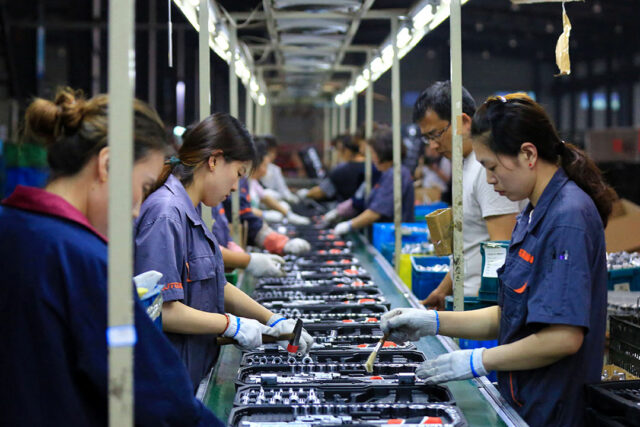
TOKYO — Factory activity shrank in most of Asia’s major economies in September, private surveys showed on Wednesday, as signs of a slowdown in US growth and the expected impact of President Donald Trump’s tariffs added to pressure from weak Chinese demand.

The stress on manufacturers highlights the challenge Asian policymakers face in protecting the export-reliant region from higher US levies, a key policy of the Trump administration that has upended the global trade order and put the brakes on economic growth.

Export powerhouse Japan and global tech hub Taiwan saw manufacturing activity shrink in September, the surveys showed, leaving businesses in Asia – heavily reliant on the US market – on a fragile footing.

Worryingly, China, a key engine of the global economy, also remained in the doldrums.

An official survey released on Monday showed manufacturing activity in the world’s second-biggest economy contracted for a sixth month in September, dragged down by weak consumption and the squeeze from US tariffs.

The prolonged slump underlines the twin pressures on China’s economy: domestic demand has failed to mount a durable recovery in the years since the pandemic while Trump’s tariffs have squeezed Chinese factories as well as overseas firms that buy components.

“The September PMI readings for most countries in Asia remained weak and we continue to expect manufacturing activity in the region to struggle in the near term,” said Shivaan Tandon, emerging markets economist at Capital Economics.

“With growth set to soften and inflation likely to remain contained, we expect central banks in Asia to loosen policy further.”

The S&P Global Japan Manufacturing purchasing managers’ index (PMI) fell to 48.5 in September from 49.7 in August, staying below the 50.0 threshold that separates growth from contraction. It shrank at the fastest pace in six months due to steep falls in output and new orders, the survey showed.

“Overall, the data indicate that unless we see a notable improvement in demand at home and overseas, it’s likely the sector will struggle to see much growth in the near-term,” said Annabel Fiddes, Economics Associate Director at S&P Global Market Intelligence, on Japan’s PMI.

Taiwan’s manufacturing PMI fell to 46.8 last month from 47.4 in August. Factory activity also shrank in the Philippines and Malaysia, the private surveys showed.

By contrast, South Korea’s factory activity expanded for the first time in eight months in September underpinned by improving overseas demand.

Manufacturing PMI in Asia’s fourth-largest economy, released by S&P Global, rose to 50.7 in September from 48.3 in August, moving above the 50-mark for the first time since January 2025.

The outlook for South Korea’s exporters, however, hinges on negotiations to formalise a July deal aimed at reducing US tariffs on Korean imports, including automobiles, to 15% from 25%, in return for South Korea’s investment of $350 billion in the US The talks have stalled due to Seoul’s concerns over foreign exchange implications. — Reuters

Staying put in Vietnam, furniture exporters bet US consumers will absorb tariff blow

REUTERS

HANOI — Trayton Group signed a deal to relocate most of its furniture production to Vietnam from China the day after Donald Trump was re-elected as US President. New US tariffs would not change the strategy, its head told Reuters.

The mid-sized manufacturer, which declined to disclose its revenues, ships 70% of its furniture to the US, where its sofas and armchairs are sold either under top retailers’ names or with its own Simon Li brand in major chains, including CostcoUS.

Trump signed on Monday a document imposing 25% tariffs on wooden furniture from October 14, which could rise next year to 50% for vanities and kitchen cabinets and to 30% for upholstery. He had earlier said the new duties would take effect on October 1.

Trayton is exposed to the levy on upholstery, said the company’s founder and CEO Simon Lichtenberg, noting that may narrow margins but was likely to be largely absorbed by US consumers who will pay more.

The relocation to Vietnam, from where Trayton currently sends to America 50 containers per week, “remains the right strategy,” he told Reuters, noting US duties are higher for exports from China, where the company still has most of its international workforce of more than 1,000.

China remains the company’s hub for research and development, and spare capacity there could allow it to resume production if Beijing managed to lower tariffs on its exports to the US, Lichtenberg said.

US RELOCATION IS “NEXT TO IMPOSSIBLE”
In a posting on Monday on Truth Social, Trump said: “I will be imposing substantial Tariffs on any Country that does not make its furniture in the United States.”

“It would be next to impossible to produce in the United States” because costs are too high and skilled workers would be hard to find, Lichtenberg said, noting that was out of the question.

Jonathan Sowter, head of Jonathan Charles Fine Furniture, a maker of high-quality wood furniture, which employs 2,500 skilled staff in Vietnam and ships about 60 containers a month to the United States, said he would seek to export more to alternative markets. US tariffs would potentially narrow margins, and higher prices were inevitable, he said.

However, “we would have zero intention to manufacture in the United States,” Sowter added, noting his company’s workforce could not be replicated in America.

VIETNAM TO BE HIT HARD
Trayton’s relocation of a large share of its export-bound production to Vietnam followed similar moves by its main Chinese competitors, including Man Wah Furniture and KUKA Home, which have all transferred capacity from China to its southern neighbour in recent years to avoid US tariffs.

As a result, Vietnam may be on track this year to surpass China as the main supplier of furniture to the United States, US data show.

In the first seven months of this year the Southeast Asian nation shipped furniture worth nearly $8.2 billion to the US, accelerating from 2024, whereas Chinese exports slowed to $8.4 billion in the same period.

The US is the largest market for Vietnam-made furniture and wooden goods, which in turn are Vietnam’s fifth largest export sector to the world’s biggest economy.

Vietnam-based exporters were shocked when tariffs were first announced, but Lichtenberg was less pessimistic, as he hoped the company’s higher-quality products would remain attractive to less cost-conscious buyers.

“Consumers are not very sensitive to furniture prices as they buy them only every few years,” he said. — Reuters

Cultural integrity in the age of artificial intelligence

Our mental models and social environments are being redefined by technology. According to sociologist Melba P. Maggay, it is important to ground AI development in ethical and cultural frameworks.

Filipino concepts like palabra de honor (word of honor) offer a stabilizing framework in a post-truth era, she told BusinessWorld. By embedding our cultural identity into emerging technologies, Filipinos can challenge narratives that “inferiorize” their culture and support a more value-driven approach to innovation.

Interview by Patricia Mirasol
Video editing by Jayson Mariñas