Home Blog Page 4139

China-linked ‘Spamouflage’ blitz targeted lawmakers — Canada

A PERSON stands in front of a Canadian flag in Montreal, Quebec, Canada, Sept. 20, 2022. — REUTERS

OTTAWA — The Canadian government said on Monday it detected a China-linked “Spamouflage” campaign that involved bots posting disinformation and propaganda on the social media accounts of members of parliament, including Prime Minister Justin Trudeau.

The Spamouflage campaign, using networks of new and hijacked social media accounts to post bulk messages, took place in August and September, and targeted dozens of lawmakers from across the political spectrum, the foreign ministry said in a statement.

The messages included accusations against the lawmakers of criminal and ethical violations, a claim that Hawaiian wildfires were caused by a secret US military “weather weapon” and deepfake videos.

Thousands of such comments in English and French were posted on the lawmakers’ Facebook and X accounts, and the government worked with the platforms to get the bot networks removed.

“This campaign could discourage and make it difficult for MPs to carry out their duties and may dissuade MPs and diaspora communities in Canada from speaking out on issues which concern them,” said a foreign ministry report about the incident.

In a statement, the Chinese embassy in Canada said Beijing has never interfered in the internal affairs of other countries. It said the accusations were a “blatant smear campaign” and that Canada was a “downright liar and disseminator of false information.”

“For some time now, the Canadian side has been falsely accusing China of spreading false information against Canadian politicians, a move that is in itself a dissemination of false information, in the absence of any direct and substantive evidence,” the embassy statement said, adding that Canada should do more to improve and develop bilateral relations.

China-Canada relations turned icy in late 2018 when Canadian police detained a Chinese telecommunications executive. Shortly after, Beijing arrested two Canadians on spying charges. All three have since been released.

Ottawa has also accused Beijing of trying to interfere in its affairs through various schemes, including illegal police stations and the targeting of lawmakers. China has strongly denied all such allegations.

In September, the Trudeau government announced an independent public inquiry into allegations of attempted foreign meddling by China, Russia and others. — Reuters

Obama warns some of Israel’s actions in Gaza may backfire

SMOKE and flames billow after Israeli forces struck a high-rise tower in Gaza City, Oct. 7, 2023. — REUTERS

WASHINGTON — Some of Israel’s actions in its war against Hamas, like cutting off food and water for Gaza, could “harden Palestinian attitudes for generations” and weaken international support for Israel, former US President Barack Obama said on Monday.

In rare comments on an active foreign policy crisis, Mr. Obama said any Israeli military strategy that ignores the human costs of the war “could ultimately backfire.”

“The Israeli government’s decision to cut off food, water and electricity to a captive civilian population (in Gaza) threatens not only to worsen a growing humanitarian crisis; it could further harden Palestinian attitudes for generations, erode global support for Israel, play into the hands of Israel’s enemies, and undermine long-term efforts to achieve peace and stability in the region,” Mr. Obama said.

Israel has heavily bombarded Gaza with airstrikes since Hamas’ Oct. 7 assault on Israel left over 1,400 people dead. Israel’s air strikes have killed more than 5,000 Palestinians, Gaza officials say.

Mr. Obama condemned Hamas’ attack and reiterated his support for Israel’s right to defend itself, while cautioning about risks to civilians in such wars.

It was not clear whether Mr. Obama had coordinated his statement with US President Joseph R. Biden, who served as his vice president for eight years.

During his presidency, Mr. Obama often backed Israel’s right to self-defense at the start of conflicts with Palestinian Islamist group Hamas in Gaza, but quickly called for Israeli restraint once Palestinian casualties mounted from airstrikes.

Gaza, a 45 km-long (25-mile) strip of land that is home to 2.3 million people, has been ruled politically since 2007 by Hamas, an Iran-backed Islamist group, but faces a blockade from Israel.

The Obama administration sought, but ultimately failed to broker, a peace deal in negotiations between Israel and the Palestinians.

Since taking office in early 2021, Mr. Biden has not tried to resume long-stalled talks, saying that leaders on both sides were too intransigent and the climate was not right.

Mr. Obama and Israeli Prime Minister Benjamin Netanyahu had a testy relationship when Mr. Obama was in office, including when Mr. Obama’s administration was negotiating a nuclear deal with Iran.

Mr. Biden, as Mr. Obama’s vice president, often acted as a mediator between the two men.

In his statement on Monday, Mr. Obama acknowledged that the US had itself “fallen short of our higher values when engaged in war,” especially after the Sept. 11, 2001 attacks. — Reuters

Ancient Amazon River rock carvings exposed by drought

A VIEW of ancient stone carvings on a rocky point of the Amazon River that were exposed after water levels dropped to record lows during a drought in Manaus, Amazonas state, Brazil, Oct. 23, 2023. — REUTERS

MANAUS, Brazil — Human faces sculpted into stone up to 2,000 years ago have appeared on a rocky outcropping along the Amazon River since water levels dropped to record lows in the region’s worst drought in more than a century.

Some rock carvings had been sighted before but now there is a greater variety that will help researchers establish their origins, archaeologist Jaime de Santana Oliveira said on Monday.

One area shows smooth grooves in the rock thought to be where Indigenous inhabitants once sharpened their arrows and spears long before Europeans arrived.

“The engravings are prehistoric, or precolonial. We cannot date them exactly, but based on evidence of human occupation of the area, we believe they are about 1,000 to 2,000 years old,” Mr. Oliveira said in an interview.

The rocky point is called Ponto das Lajes on the north shore of the Amazon near where the Rio Negro and Solimoes rivers join.

Mr. Oliveira said the carvings were first seen there in 2010, but this year’s drought has been more severe, with the Rio Negro dropping 15 meters (49.2 feet) since July, exposing vast expanses of rocks and sand where there had been no beaches.

“This time we found not just more carvings but the sculpture of a human face cut into the rock,” said Mr. Oliveira, who works for the National Historic and Artistic Heritage Institute (IPHAN) that oversees the preservation of historic sites. — Reuters

US says it wants forfeiture of billionaire Russian oligarch’s $300 million superyacht

JCOMP-FREEPIK

NEW YORK — The United States on Monday sought the forfeiture of a $300 million superyacht it says is controlled by billionaire Russian oligarch Suleiman Kerimov, who is under U.S. sanctions.

Authorities in Fiji seized the 348-foot (106-meter) Amadea yacht pursuant to a U.S. warrant in May 2022 as Washington ramped up sanctions enforcement against people close to Russian President Vladimir Putin, to pressure Moscow to halt its war against Ukraine.

Monday’s complaint, filed in federal court in Manhattan, kicks off a potentially long judicial process in which the United States would seek ownership of the yacht, which is docked in San Diego, and then likely auction it and transfer proceeds to Ukraine.

Kerimov and his family are worth $10.7 billion, according to Forbes magazine.

He amassed much of his wealth through a stake in Russian gold producer Polyus. Kerimov was sanctioned by the U.S. Treasury Department in 2014 and 2018 in response to Russia’s activities in Syria and Ukraine. Those sanctions barred Kerimov from accessing the U.S. financial system.

Polyus PLZL.MM was sanctioned in May 2023. The company said the sanctions were unfounded.

In Monday’s complaint, the U.S. Department of Justice said Kerimov bought the Amadea in 2021, and then violated U.S. sanctions by making more than $1 million in maintenance payments through U.S. financial institutions.

The yacht’s owners will have the chance to contest that claim in court.

Kerimov could not immediately be reached for comment.

Lawyers for the Amadea’s owner, Millemarin Investments, told a Fiji court last year that the Amadea was owned not by Kerimov but by former Rosneft chief Eduard Khudainatov, a Russian oligarch who has not been sanctioned.

Khudainatov is not named in Monday’s complaint.

U.S. prosecutors said a Sept. 14, 2021, transaction transferring ownership of the Amadea from Millemarin to a newly incorporated company, Errigan Marine, was designed to make it appear that Evgeny Kochman, the president of sanctioned yacht broker Imperial Yachts, owned the yacht.

Prosecutors said Kochman was, in fact, only a “straw owner.”

A spokesman for Khudainatov said in a statement on Monday that the vessel was “unlawfully seized” by the DOJ. — Reuters

Alaska Airlines flight diverts after off-duty pilot attempts to disable engines

YASSINE KHALFALLI-UNSPLASH

An off-duty pilot riding in the cockpit of an Alaska Airlines jet tried to disable the aircraft’s engines on a flight from the Seattle area to San Francisco, but crew members subdued him, and the plane landed in Portland, Oregon, officials said on Monday.

Joseph David Emerson was arrested on Sunday in Portland and was booked into jail on 83 counts of attempted murder, 83 counts of recklessly endangering another person and one count of endangering an aircraft, according to the local prosecutor’s office.

Formal charges against Emerson, 44, were expected to be filed on Tuesday in Multnomah County court in Portland, where he was due to appear for an afternoon arraignment and enter a plea, a spokesperson for the county district attorney said.

Alaska Airlines <ALK.N> Flight 2059, operated by Alaska Air Group’s regional subsidiary Horizon Air, departed Everett, Washington, on Sunday bound for San Francisco but wasre-routed to Portland after reporting a security threat, the airline said.

The Federal Aviation Administration (FAA) told U.S. airlines in a notice seen by Reuters that the off-duty pilot, flying as a “validated jump seat passenger,” sought to disable the engines of the twin-jet Embraer 175 by attempting to activate the engine fire-suppression system while the plane was at cruise altitude.

“The crew was able to subdue the suspect and [he] was removed from the flight deck,” the FAA notice said. The engines were never disabled, Alaska said.

Radio chatter from the flight deck moments later was captured on audio posted by LiveATC.net, an online service that streams communications between air traffic control and commercial jets.

“I’ll just give you a heads-up. We’ve got the guy that tried to shut the engines down out of the cockpit,” the Horizon pilot told air traffic control, according to the audio. “It doesn’t sound like he’s causing any issue at the back. I think he’s subdued. … We want law enforcement as soon as we get on the ground and parked.”

Port of Portland police officers met the flight and took the suspect into custody without incident.

An FAA pilot database showed Emerson listed as a certified pilot who received a medical clearance last month. Aviators are expected to self-report any mental health conditions, two U.S. pilots told Reuters.

The Air Line Pilots Association (ALPA), the world’s largest pilots union, which represents aviators at Alaska, said in a statement that the airline “profession in North America is one of the most highly vetted and scrutinized careers.”

Adam Silverthorne, president of California-based NRI Flying Club, said the incident was incongruous with the kindhearted, methodical family man he knew Emerson as several years ago when Emerson was a club member and flight instructor. A club newsletter mentioned Emerson was at NRI in 2016.

“To say that it was out of character would be a huge understatement,” Mr. Silverthorne said by phone. “It’s bonkers.”

The FBI in Portland said it “is investigating and can assure the traveling public there is no continuing threat related to this incident.”

The FAA told airlines in a separate notice on Monday the incident “is not connected in any way, shape or form to current world events” but said it is “always good practice to maintain vigilance.”

It is standard practice for off-duty pilots to sit in jump seats for flights home or en route a future flight assignment.

Alaska Airlines said all passengers on board traveled on a later flight. – Reuters

Russia, Iran strengthen ties in ‘trusting’ atmosphere -Russian foreign ministry

Russia and Iran are firming up bilateral relations in a ‘trusting’ atmosphere, Russia’s foreign ministry said early on Tuesday after its chief, Sergei Lavrov, was received by Iranian President Ebrahim Raisi during a visit to Tehran.

“In a traditionally trusting atmosphere, current aspects of the bilateral agenda were substantively discussed with an emphasis on further building up the entire complex of multifaceted Russian-Iranian partnership,” the foreign ministry said in a statement on the Telegram messaging app.

Lavrov, who went to Tehran shortly after an Asia trip to China and North Korea, discussed energy and logistics projects with Iranian Foreign Minister Hossein Amirabdollahian.

As has been the Russian norm, few details of the talks, which took place amid the rising tensions in the Middle East, have been disclosed.

Lavrov also participated in regional talks hosted by Iran, aiming to bring peace to the South Caucasus region after Azerbaijani forces last month recaptured the breakaway region of Nagorno-Karabakh and forced thousands of ethnic Armenians to flee.

Since launching its full-scale invasion of Ukraine in February 2022, Moscow has sought to firm up ties with countries traditionally considered Western aligned, accusing “the collective West” of trying to break up Russia.

Ukraine has urged Tehran to stop supplying deadly drones to Russia, which Kyiv says have played a major role in Moscow’s attacks on Ukrainian cities and infrastructure.

Iran initially denied supplying the Shahed kamikaze drones to Russia but later said it had provided a small number before Moscow launched the war.

The United States has said that it has been concerned by the “burgeoning defense partnership” between Iran and Russia, which poses risks not only to Ukraine but also to Iran’s neighbours. — Reuters

Peru preparing stimulus measures for mining, agriculture amid recession

STOCK PHOTO | Image by Dariusz Sankowski from Pixabay

 – Peru’s government is preparing measures to jumpstart growth in key sectors like mining and agriculture amid a recession, Economy Minister Alex Contreras said on Monday.

“We are going to announce stimulus measures very soon for certain sectors. We are working with the mining and agriculture sectors,” he said after a cabinet meeting.

“The idea is to be able to reverse the country’s structural growth trend.”

Contreras admitted for the first time on Friday that Peru, the world’s second-largest copper producer, is “without a doubt” going through a recession, after months of contractions due to the adverse effects of the El Nino weather phenomenon, lower private investment and lingering social conflicts.

Peru’s central bank sees economic growth of 0.9% this year and the government forecasts a 1.1% expansion. Analysts, however, consider both views to be too optimistic and some predict the economy could contract in 2023.

After the fallout from the COVID-19 pandemic, this would mark Peru’s worst economic performance since the end of the last century.

“Mining has been growing at double digits, but the statistical effect of Quellaveco (the copper mine that began operations last year) has been moderating and that is why we are going to launch a mining package,” Contreras said, without giving details on the package.

Meanwhile, the agriculture sector recorded its seventh consecutive monthly drop in August, hit by adverse weather with intense rains in Peru’s agro-exporting north.

Contreras also said he has sent a bill to Congress to provide “incentives” to the textile sector to boost output, which has fallen for five consecutive months. – Reuters


World far off track on pledges to end deforestation by 2030 – report

STOCK PHOTO | Image by DaveMeier from Pixabay

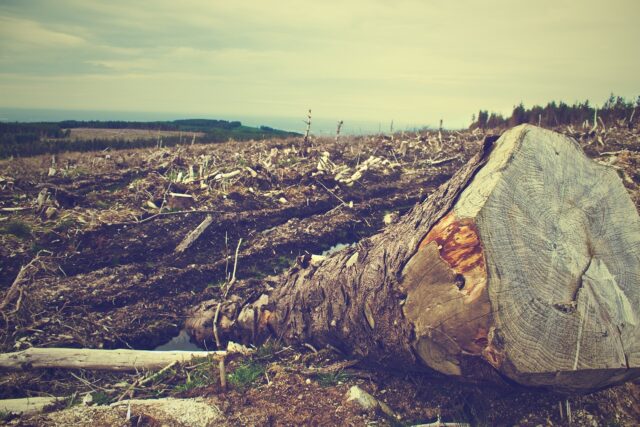
 – The world is moving too slowly to meet pledges to end deforestation by 2030, with the destruction worsening in 2022, according to a report by a coalition of environmental organizations released on Monday.

More than 140 countries – representing the vast majority of the world’s woodlands – pledged at the 2021 United Nations climate summit in Glasgow to halt and reverse forest loss and degradation by the end of the decade.

Yet deforestation increased by 4% worldwide in 2022 compared with 2021, as some 66,000 square kilometers (25,000 square miles) were destroyed, the annual Forest Declaration Assessment report said. That means the world is 21% off track to end deforestation by 2030.

“The world’s forests are in crisis. The opportunity to make progress is passing us by,” said Erin Matson, a senior consultant at environmental group Climate Focus.

The report was conducted by a coalition of civil society and research organizations who assess progress towards pledges to eliminate deforestation by 2030.

That includes the Glasgow pledge and the 2014 New York Declaration on Forests, which saw a shorter list of countries as well as dozens of the world’s biggest companies make a similar commitment.

Efforts to preserve old-growth tropical forests — prized for their dense carbon content and rich biodiveristy — are 33% off track, with 4.1 million hectares lost in 2022, according to the study.

In a news briefing, the researchers involved in the report stressed that the annual $2.2 billion in public funds channeled to projects to protect forests every year is a fraction of the investment needed.

The study also looked beyond deforestation to analyze forest degradation, with one researcher estimating the area of degraded forests to be much larger than the area of global deforestation.

Drivers of forest degradation include logging activities, livestock grazing, and road construction, according to Climate Focus.

But some parts of the world are making progress, said Franziska Haupt, a lead author and managing partner at consultancy Climate Focus.

Ms. Haupt said that some 50 countries are on track to end forest loss, with Brazil, Indonesia, and Malaysia showing drastic reductions in deforestation.

“Hope isn’t lost,” Ms. Haupt said. “These countries set clear examples that others must follow.”

Brazil, which is responsible for around 30 percent of the world’s deforestation, has seen a significant turnaround with a new government which is much more committed to fighting deforestation than the last, said a WWF Brazil representative during the news conference.

“This showcases what could happen when countries with good laws and the books actually invest in enforcing them,” said Darragh Conway, lead on rights & governance for the Forest Declaration Assessment. – Reuters

Argentina to expand export incentive program beyond soybeans

STOCK PHOTO | Image by StockSnap from Pixabay

 – Argentina announced on Monday it would expand and extend an export incentive program for a month starting on Tuesday, after Economy Minister Sergio Massa emerged as the surprise frontrunner in the presidential election.

The program, which had once been available to exporters of soybeans and their derivatives, will now be offered to all export sectors, in a bid to boost exports and bring in hard currency to replenish the central bank’s meager reserves.

The measure would go into effect on Tuesday and Argentine agro-export firms will be able to swap 30% of the foreign currency they make on alternative exchange markets that offer better rates than the official rate, Mr. Massa said at a press conference with foreign journalists.

Argentina’s international sovereign bonds fell and its stock market tumbled on Monday after the center-left Mr. Massa finished first in Sunday’s vote and earned a spot in next month’s run-off election.

Mr. Massa, who took over as economy chief a little over a year ago, has overseen Argentina’s worst economic crisis in two decades, with annual inflation hitting 138% in September.

The Peronist economy chief also told reporters that he will promote a change in the 2024 budget to include a primary fiscal surplus projection of 1% of GDP instead of the previously planned deficit of 0.9% of GDP.

The surplus will result from “cuts in budgetary and tax benefits that Congress has been sanctioning year after year,” the minister said.

Mr. Massa earned some 37% of Sunday’s vote, ahead of libertarian Javier Milei, who received 30%, a surprise reversal of pre-election expectations.

Mr. Massa and Mr. Milei will now compete to woo nearly 9 million swing voters before the run-off election scheduled for Nov. 19. – Reuters

Infrastructure spending surges 66% in August

PHILIPPINE STAR/EDD GUMBAN

STATE INFRASTRUCTURE spending surged by 65.8% in August as the government ramped up the implementation of projects, the Department of Budget and Management (DBM) said.

In its latest National Government (NG) disbursement report, the DBM said infrastructure and other capital outlays jumped to P122.1 billion in August from P73.7 billion in the same month a year ago.

Month on month, infrastructure spending also rose by 10% from P111 billion in July.

“This was largely attributed to the disbursements made by the Department of Public Works and Highways (DPWH) for its completed projects nationwide, such as national roads and bridges, infrastructure projects, flood control projects, convergence programs, and payment of right-of-way claims,” the DBM said.

Capital expenditures for the month also included the health facilities enhancement program of the Department of Health.

The DBM also cited payments made by development partners for the Department of Transportation’s (DoTr) railway projects, such as the Malolos-Clark Railway Project and the South Commuter Railway Project.

“The increase, however, was partly tempered by lower capital outlay disbursements posted in the Department of National Defense, largely due to the timing of releases for their Revised Armed Forces of the Philippines Modernization Program (RAFPMP),” the DBM said.

It noted that “big-ticket releases” are scheduled for the fourth quarter this year, unlike last year when significant disbursements were made in August.

In the first eight months, infrastructure spending climbed by 19.2% to P740.3 billion from P621.2 billion a year ago.

The Budget department attributed this to DPWH’s “robust spending performance.” It cited the accelerated project implementation for roads and bridges, closer monitoring of construction work, and expedited processing of billings by implementing offices.

“The direct payments made by foreign creditors of the DoTr for their foreign-assisted rail transport projects also contributed to the higher infrastructure and other capital outlays for the period,” the DBM added.

Meanwhile, infrastructure disbursements in the January-August period went up by 12.1% to P876.6 billion from P781.7 billion a year earlier.

These included estimated NG infrastructure disbursements and infrastructure components of subsidy and equity to government-owned and -controlled corporations and transfers to local government units.

Rizal Commercial Banking Corp. Chief Economist Michael L. Ricafort said in a Viber message that the higher infrastructure spending was due to the “commitment to ramp up government spending for the rest of 2023 after some underspending earlier this year to help support faster economic growth and recovery.”

“Furthermore, the base effects were already lower after the election-related spending earlier in 2022, thereby mathematically leading to faster year-on-year growth,” Mr. Ricafort added.

The Philippines’ gross domestic product (GDP) grew by 4.3% in the second quarter, the slowest in over two years. This was partially attributed to slow state spending, which contracted by 7.1%.

Government agencies have been tasked to come up with catch-up spending plans amid the low budget utilization in the first half.

The Department of Finance earlier said it is working with agencies to address challenges to spending, including procurement, implementation and payment issues.

This year, the government plans to spend 5.3% of GDP on infrastructure, equivalent to P1.29 trillion. — Luisa Maria Jacinta C. Jocson

Governments urged to impose a 2% minimum wealth tax on billionaires

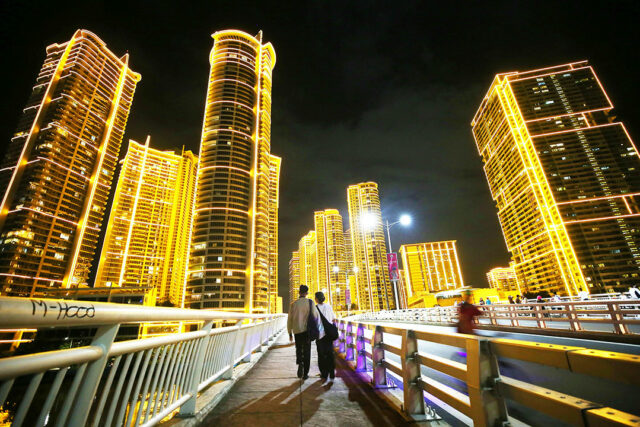
Buildings are seen from the Estrella-Pantaleon Bridge in Makati City. — PHILIPPINE STAR/MIGUEL DE GUZMAN

By Luisa Maria Jacinta C. Jocson, Reporter

GOVERNMENTS should impose a global minimum tax on billionaires, which could raise as much as $250 billion annually, according to a report by the EU Tax Observatory.

A 2% minimum wealth tax could generate as much as $17.3 billion (around P983 billion) from 260 billionaires in South and Southeast Asia alone, the EU Tax Observatory said in the Global Tax Evasion Report 2024 released on Monday.

The 260 billionaires in South and Southeast Asia have a combined wealth of $991 billion and have paid around $2.5 billion in personal tax annually.

The EU Tax Observatory noted that tax evasion “including gray-zone evasion at the border of legality” is increasingly happening domestically.

Globally, billionaires have had “very low” personal effective tax rates ranging from 0% to 0.5% of their wealth, due to the frequent use of shell companies to avoid income taxes, it added.

“When expressed as a fraction of income and considering all taxes paid at all levels of government beyond personal taxes (including corporate taxes, consumption taxes, payroll taxes, etc.), the effective tax rates of billionaires appear significantly lower than those of all other groups of the population,” it added.

It also cited studies that showed that around 25% of global offshore financial wealth remains untaxed.

The EU Tax Observatory, an independent research laboratory, proposed a global minimum tax on billionaires, equal to 2% of their wealth which could raise nearly $250 billion from less than 3,000 individuals annually.

“Under this assumption, global billionaires pay around $44 billion in personal taxes today, about 0.35% of their wealth. A minimum tax that would bring their personal tax payments to 2% of wealth would thus add the equivalent of 1.65% of their wealth in tax. This minimum tax would generate $214 billion in government revenue globally,” it added.

In the Philippines, different versions of a wealth tax have been proposed in recent years.

Last year, the Makabayan bloc filed House Bill No. 258, which seeks to impose a 1-3% tax on the “super-rich” or people with net value of taxable assets exceeding P1 billion. It estimated the tax would raise P236.7 billion annually from the 50 richest Filipinos.

ACT Teachers Party-list Representative and Deputy Minority Leader France L. Castro, who is one of the bill’s authors, said that the government should not hesitate to tax wealthy individuals.

“I think that the super-rich in the Philippines would themselves like to help the country, where they made their billions, to prosper and to assist in uplifting the lives of Filipinos if given the chance,” Ms. Castro said in a statement sent through Viber.

Meanwhile, Eleanor L. Roque, tax principal of P&A Grant Thornton, warned of the “unintended consequences” of a billionaire’s tax.

“I think only very few countries in the world impose a wealth tax. Wealthy individuals have shifted tax residences to escape wealth tax,” she said in a Viber message.

Philippine Chamber of Commerce and Industry (PCCI) President George T. Barcelon also said a wealth tax would be difficult to implement.

“I believe people in that category are already taxed, they have corresponding taxes from their companies, or they are taxed from their dividends. (The tax) would be an added layer. I think people would try to circumvent that by splitting their holdings to their heirs or other people, so they won’t be part of the billionaire’s (bracket),” he said in a phone call.

Ateneo de Manila University economics professor Leonardo A. Lanzona also noted that the wealth tax may not be as effective in the Philippines as most billionaires “engage in tax planning and mitigation strategies to legally reduce their tax liabilities.”

“This can include using trusts, tax-efficient investments, and other financial instruments. They may also decide not to reveal their wealth fully and engage in tax evasion. Hence, for wealth taxes to work, the necessary institutional reforms are needed to ensure that these billionaires pay their taxes truthfully,” he said in an e-mail.

PCCI’s Mr. Barcelon also noted that there would be a need to clarify what constitutes a “billionaire.”

“A billionaire in terms of peso, that’s quite small. It depends on what currency you’re talking about. A billionaire in (terms of) US dollar is quite big,” he said in mixed English and Filipino.

On the other hand, the billionaire’s tax could also be a means to address inequality, Mr. Lanzona said.

“As far as tax revenues go, the country is already scraping the bottom of the barrel through indirect taxes such as the value-added taxes and sin taxes. Imposing progressive wealth taxes offers an alternative source of revenue which is critical at the time when most of our loans are maturing in the short term,” he said.

A study by think tank Ibon Foundation earlier this year showed that a wealth tax on the country’s billionaires can generate P468.8 billion annually.

More Filipinos turn to solar panels as energy costs bite

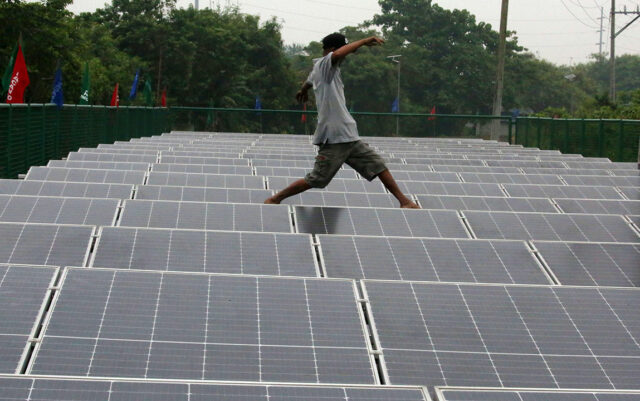
A man inspects solar panels in this file photo. — PHILIPPINE STAR/EDD GUMBAN

By Ashley Erika O. Jose, Reporter

JENNELYN VALENCIA-BURGOS, 33, is among many Filipinos who have installed solar panels on her roof to ease costs in a country with the most expensive power rates in Southeast Asia.

Ms. Burgos, who spent P65,000 ($1,145) on her solar panels, said her monthly electricity bill used to cost as much as P1,000 a month. Now, there are months when she doesn’t have to pay for power.

“It’s worth it, especially if you have several panels,” she said in a Facebook Messenger chat. “Yes, it’s expensive, but it will really save you money.”

The Philippines relies heavily on imported coal, most of it from Indonesia and Australia, exposing its electricity system to political unrest, price volatility and the risk of unfavorable foreign exchange rates.

There’s a push for renewable energy and solar energy is expected to drive the Philippines’ renewable energy growth in the next decade, according to a report from Fitch Solutions Country Risk and Industry Research.

The country aims to increase the share of renewable energy in its power mix to 35% by 2030 and 50% by 2040 from 22% now.

Household use of solar panels is being pushed to ease the effects of rising electricity prices. Solar rooftops are expected to help households especially during the summer months when power supply is tight.

Early this year, the Luzon power grid was placed under red and yellow alerts, with more than 300,000 customers in Metro Manila and nearby provinces experiencing brownouts after transmission lines tripped, forcing two power plants to shut down.

Another measure being pushed by the Department of Energy (DoE) is the net metering program, which allows household consumers with renewable energy facilities such as solar power to use electricity when needed while contributing their output to the grid.

Net metering, which allowed consumers to earn credit for their power export, was the first policy mechanism of the Philippine Renewable Energy Act of 2008 that was first implemented. The program is open to users with a capacity of as much as 100 kilowatts (kW).

There were 6,665 net metering customers at the end of last year with an installed capacity of 40,075 kilowatts peak (kWp), according to Ferdinand O. Geluz, Manila Electric Co. first vice-president and chief commercial officer.

The Energy Regulatory Commission (ERC) has said net metering protects consumers from rising electricity prices.

To qualify, a consumer must apply with a distribution utility for evaluation, inspection, completion and commissioning, but the application process varies from local government to local government.

To install a solar photovoltaic (PV) system with net metering, a customer needs a solar PV panel that absorbs light, and a DC/AC inverter that converts the panel’s direct current output to alternating current, which can then be fed into a commercial electrical grid or used off grid.

COMPLIANCE HURDLES
Senator Sherwin T. Gatchalian, vice-chairman of the Senate Energy Committee, has proposed to remove the 100-kW cap for net metering to encourage more Filipinos to invest in renewable energy.

The Energy Regulatory Commission last year approved the use of renewable energy of as much as 1 megawatt (MW).

“Last year, we issued the regulatory framework for distributed energy resources or DERs that already allows the installation of up to 1-megawatt (MW) RE installations for a customer’s own use,” ERC Chairperson and Chief Executive Officer Monalisa C. Dimalanta said in a Viber message.

“This 1-MW cap will be reviewed after one to two years to see if there is demand to increase the cap,” she said.

This would allow the regulator to unlock the ability of large consumers to choose and provide themselves with renewable energy, Ms. Dimalanta said, “while managing the impact on remaining captive customers of distribution utilities.”

She added that current procedures are already enough and streamlined and that the challenge in solar rooftop utilization now lies within local government units.

Ms. Dimalanta noted that on the regulatory side for residential consumers, the procedure is already clear and streamlined.

“It is now a matter of implementation to make sure it is seamless from the national agency to the distribution utility to the local government unit,” she said. “The remaining challenges are information dissemination and access to financing.”

Solar PV installations are not yet widespread in the Philippines mainly due to lack of awareness among homeowners, according to the Institute for Climate and Sustainable Cities (ICSC).

“Many consumers are not yet aware of the potential cost savings attributed to solar energy on their rooftop,” Jephraim C. Manansala, ICSC chief data scientist said in a Viber message.

Some Filipinos hesitate to have a solar PV system because they don’t know how to maintain and operate it, he said. “Others may also be unsure about which type of solar PV system to utilize — whether a grid-tied or a hybrid system.

Many homeowners also find the permitting process difficult. “Some local government units have a streamlined process for solar PV installations, while others are not yet prepared for this,” Mr. Manansala said.

Some solar panel installations fail to comply with the requirements of the distribution utility and are not monitored by the government, he added.

“Regulatory oversight including monitoring by distribution utilities and the government, or installation compliance requirements for renewable energy certificate meters may be challenging for some consumers, leaving them disincentivized to register and install solar PV systems,” Mr. Manansala said.

“Addressing these challenges will require collaboration between diverse stakeholders including government agencies, distribution utilities and consumers,” he added.