Home Blog Page 4034

Phoenix Petroleum and Chelsea Logistics incur wider Q3 net loss
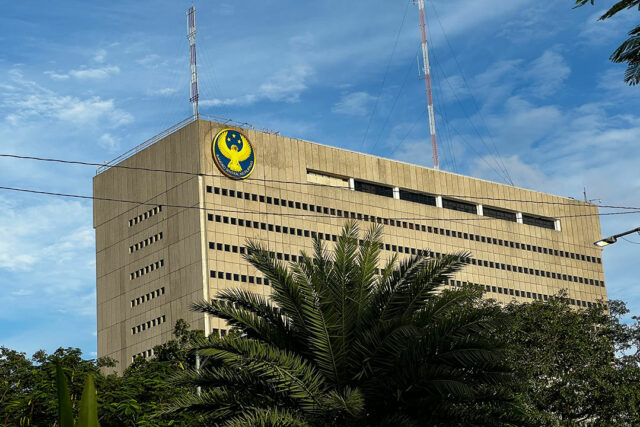
PHOENIX PETROLEUM Philippines, Inc. incurred a net loss of P1.62 billion in the third quarter (Q3), wider than its P948.61 million loss in the same quarter last year, amid lower revenues.

Its gross revenues sank by 35.8% to P15.25 billion from last year’s record of P23.74 billion, the listed independent oil firm said in its quarterly financial report disclosed on Wednesday.

For the July-September period, revenues from the sale of goods declined by 36.5% to P14.7 billion from P23.14 billion a year ago.

Fuel service and other revenues were slightly down by 0.3% to P507.21 million while rent income slid by 51.4% to P42.07 million.

The third quarter’s net loss brought Phoenix’s nine-month losses to reach P3.68 billion, or more than three times the P1.07 billion suffered in the same period in 2022.

From January to September, the company’s topline stood at P42.80 billion, lower by 57.2% from the P99.92 billion posted last year.

The company attributed the decline to the 46.7% decrease in total volume sold at 1,156 million liters versus the 2,177 million liters last year.

It said the decline in domestic volume was a result of the implementation of its Third-Party Supply Model or 3PS where a third party supplies the oil firm’s retail requirements directly and in return, the company earns service income.

During the three quarters, revenues from its sale of goods in the Philippines went down by 69.9% to P10.45 billion from last year’s P34.67 billion.

Sales revenues also dropped in Singapore and Vietnam, sinking by 53.5% to P27.88 billion and 21.9% to P2.85 billion, respectively.

For its depot and logistics segment, revenues during the period rose by 2.5% to P1.61 billion from P1.57 billion last year.

Real estate revenues increased 41.2% to P12.82 million from last year’s P9.07 million.

Phoenix said last month that its board of directors had approved its divestment from its trading and supply subsidiary PNX Petroleum Singapore Pte. Ltd., in which it held an 85% stake as of September, via a share buyback.

The company explained that the move was aimed to “generate additional working capital to support core business operations.”

It also announced that it was looking at entering into a sale-and-leaseback agreement with BDO Unibank, Inc. to restructure its debts.

Assets involved in the proposal are some terminals, depots, and retail stations.

At the local bourse on Wednesday, shares of the company went down by P0.83 or 13.88% to close at P5.15 apiece.

CHELSEA LOGISTICS
Chelsea Logistics and Infrastructure Holdings Corp. recorded a net loss of P613.52 million in the third quarter, wider than the P489.14 million incurred a year earlier.

From July to September, its total revenues went up by 2.9% to P1.77 billion from P1.72 last year, the quarterly financial report of the shipping and logistics arm of the Udenna group showed.

The company’s improved revenues for the period were pulled down by higher expenses for the period.

For the nine months through September, the company trimmed its net loss to P1.04 billion from P1.49 billion a year ago.

Nine-month gross revenues climbed by 15.6% to P5.35 billion from P4.63 billion in the corresponding period last year.

The company attributed its higher top line to its shipping business, which recorded P5 billion in revenues for the period, or about 93% of its total revenues.

Broken down, its passage business accounted for P1.4 billion of revenues, while the freight segment contributed P2.4 billion, which it said was due to higher cargo volumes.

The charter and tugboat segments generated revenues of P462 million and P281 million, respectively.

Further, logistics revenues recorded P378 million as of September.

Total expenses for the period, however, reached P5.3 billion, a 3.3% climb, from P5.13 billion in the same period last year.

Meanwhile, Chelsea Logistics has expressed optimism about sustaining its growth momentum.

“This improvement in our revenue’s performance is a testament to the hard work, dedication and innovation of our entire team, who have adapted to the challenges and opportunities of the changing market,” said Chryss Alfonsus V. Damuy, the company’s president and chief executive officer.

Chelsea Logistics will continue to strengthen its business segments as it aims to return to profitability, he said.

“As we enter the fourth quarter of the year, the Group is confident that we will maintain our momentum and meet our strategic objectives. We have a robust pipeline of new products and services, a devoted and expanding customer base, and a clear vision for the future,” said Ignacia S. Braga IV, chief financial officer of Chelsea Logistics.

At the local bourse on Wednesday, shares in the company closed unchanged at P1.24 apiece.

Both Phoenix and Chelsea Logistics are chaired by Davao City businessman Dennis A. Uy. — Sheldeen Joy Talavera and Ashley Erika O. Jose

Megawide trims Q3 net loss as revenues surge

SAAVEDRA-LED Megawide Construction Corp. trimmed its net loss for the third quarter after a surge in revenues. 

The company said in a stock exchange disclosure on Wednesday that its July-to-September net loss shrunk to P30.06 million from P529.28 million a year ago.

Megawide’s revenues in the third quarter improved 34% to P4.4 billion from P3.27 billion last year led by its construction operations, which grew 30% to P4.21 billion from P3.25 billion.

From January to September, Megawide said its consolidated net income hit P332.5 million, a turnaround from the P970.4 million net loss in the same period last year. 

Megawide’s nine-month revenues rose 47% to P15.6 billion led by increases in its construction, landport, and real estate businesses.

The company’s construction segment, which accounted for 97% of total revenues, posted a 47% growth in revenues to P15.2 billion.

“Our growth trajectory remains intact, with our pursuit of big-ticket infrastructure projects, like the Malolos Clark Railway Project and soon the Metro Manila Subway, and high-value commercial developments, such as the Westside City Resorts Complex, materializing,” Megawide President and Chief Executive Officer Edgar B. Saavedra said.

“We are confident that over the long-term, this direction will unlock a strong and steady earnings momentum for the engineering, procurement, and construction (EPC) segment,” he added.

Megawide’s landport operations at the Parañaque Integrated Terminal Exchange (PITX), which contributed 2% of the top line, had a 23% increase in revenues to P339.7 million as of September.

“PITX continues to serve as a key junction for commuters, through additional long-haul trips to various destinations across the country and as a strategic link to the EDSA Bus carousel, resulting in high passenger throughput of more than 106,000 daily as of September,” PITX President Jaime Raphael C. Feliciano said.

PITX’s commercial occupancy reached 80% while average passenger spending in September was at P36.9, up 61% from last year and exceeding the previous record of P35.5 in June.

“The trend is expected to improve further as new offerings, such as Tim Hortons and Robinson’s Easymart, opened their doors to PITX patrons in the third quarter of the year, offering a more holistic commuting experience,” Megawide said.

Office occupancy rates in PITX doubled to 65% as of end-September from 33% at the start of 2023, and is expected to benefit from the scheduled launch of Manila Light Rail Transit (LRT) Line 1 Asia World Station by next year.

“By next year, the LRT1 Asia World Station will be operational and direct access to PITX will strengthen the facility’s value proposition as an office hub and convergence point for workers and travelers alike,” Megawide said. 

Megawide said its nine-month real estate revenue reached P36.5 million, representing the two months’ share by real estate firm PH1 World Developers, Inc., which was acquired in July.

“The segment is expected to contribute more significantly to consolidated revenues in the next two to three years, as new and existing developments steadily reach payment milestones and increase construction progress,” Megawide said.

In September, PH1 launched two new projects in the vertical and horizontal spaces, the Modan Lofts in Ortigas Hills, valued at about P8.7 billion, and the Northscapes at San Jose del Monte, Bulacan, with an estimated value of P1.9 billion for the first phase, respectively.

On Wednesday, shares of Megawide at the local bourse closed unchanged at P3.17 each. — Revin Mikhael D. Ochave

Apex Mining earns P1 billion on higher gold, silver revenues

APEX Mining Co., Inc. reported an attributable net income of P1.03 billion in the third quarter, 14.8% higher than the P898 million in the same period last year, amid higher gold and silver revenues.

In a regulatory filing, the company said that its top line rose by 10.9% to P3.04 billion from P2.74 billion the previous year.

It said the higher average realized gold price of $1,913 per ounce during the year and favorable Philippine peso to US dollar exchange rate added to further lift revenues.

Gold and silver revenues amounted to P2.92 billion and P116.71 million, respectively. Total volumes reached 26,856 ounces for gold and 89,648 ounces for silver.

The company’s Maco mine site in Davao de Oro has a total gold production of 24,665 ounces, 4% higher than the prior year.

Total tons milled from the site rose by 4% for the three-month period to 218,879 tons, while daily mill throughput was 2,478 tons.

For the nine months ending September, the company’s attributable net income fell by 6.1% to P2.31 billion from P2.46 billion last year.

Apex Mining’s top line increased to P8.73 billion, up 16.2% from P7.51 billion in the same period in 2022 on the back of higher gold revenues at P8.38 billion. The company’s silver revenues amounted to P345.5 million.

The company said that as of Sept. 30, the combined operations of its Maco mine and Sangilo mine in Benguet operated by its subsidiary Itogon-Suyoc Resources, Inc. milled a total of 701,713 tons for a 3% rise from the previous year.

It added that the consolidated gold ounces sold by the two operations reached 77,652 ounces, or 6% higher than the 73,219 ounces in 2022.

From January to September, the Sangilo mine milled 104,270 tons of ore, 15% higher than the previous year. It had a gold recovery rate of 86%.

Meanwhile, the company said that based on its Mine Reserves and Resource Certifications from 2021, its mining operation in Maco has enough reserves and resources to continue its targeted daily production rate of 3,000 tons until 2032.

Apex Mining shares rose by 3.15% or eight centavos to close at P2.62 apiece on Wednesday. — Adrian H. Halili

Villar’s AllHome posts 21% income decline

VILLAR-LED AllHome Corp. logged a 21% decline in its net profit for the third quarter on the back of lower sales.

In a regulatory filing on Wednesday, AllHome said its net profit from July to September dropped to P139.55 million from P176.48 million last year.

The company’s third-quarter sales fell 3.5% to P2.74 billion versus the P2.84 billion posted in 2022.

In contrast, AllHome said its net income for January to September rose 46% to P582 million from P399 million a year ago.

The higher net income comes despite the company’s nine-month sales falling 3.6% to P8.78 billion from P9.11 billion last year due to lower demand.

“This was brought about by the weakened demand in the hard categories as customers deferred their purchases for home construction and finishing owing to rising inflation, while soft categories remained steady,” AllHome said. 

AllHome Chairman Manuel B. Villar, Jr. said the company is expecting a strong performance in the fourth quarter and a positive outlook for next year.

“We are heading into [the] last quarter of 2023 — historically strong for AllHome — and beyond that, a positive 2024 outlook,” Mr. Villar said. “We are confident in the performance of our soft categories, as this shows that new homeowners are now entering into the furnishing stage, and we see this further picking up to close out 2023.”   

“This uptick in AllHome’s soft categories also coincides with a holiday season where travel and movement restrictions from the pandemic are gone, and overseas Filipino workers will be coming home to their families, which only bodes well for AllHome,” he added.

Meanwhile, AllHome President and Chief Executive Officer Benjamarie Therese N. Serrano said the company is pleased with its business results as of September.

“We set out to implement initiatives towards optimization of our operations across the board: store revenue potential, energy and manpower initiatives — even warehousing. We are glad to see all of these bear fruit,” Ms. Serrano said.

“While we saw some slowing in our hard category performance, we also see a unique opportunity to wrestle market share from our competitors. In addition to our hard categories, the AllHome value proposition of one-stop full-line home center allows us to present to an attractive alternative to in terms of unique offerings and convenience to our customers,” she added. 

On Wednesday, shares of AllHome at the local bourse fell eight centavos or 5.71% to P1.32 apiece. — Revin Mikhael D. Ochave

Business units lift FDC’s profit

GOTIANUN-LED conglomerate Filinvest Development Corp. (FDC) posted a 28% improvement in its net income in the third quarter as its business segments posted higher revenues.

The listed firm said in a regulatory filing on Wednesday that its July-to-September profit attributable to equity holders of the parent company climbed to P1.99 billion from P1.55 billion in the same period last year.

FDC’s total revenues and other income in the third quarter rose 22% to P22.08 billion from P18.08 billion a year ago.

For the nine months through September, FDC’s attributable net income rose 57% to P5.9 billion from P3.8 billion a year ago.

The company’s total revenues and other income rose 26% to P64.6 billion compared with P51.1 billion last year.

“The increases reflected mainly the continued recovery of the businesses over prior periods which were adversely affected by the COVID-19 pandemic,” FDC said.

“The level of total revenues and other income of the conglomerate in the first nine months of 2023 already surpassed the amount generated before the pandemic of P63 billion in the first nine months of 2019,” it added.

FDC’s East West Banking Corp. posted a 33% increase in revenues led by higher interest income and the build-up of high-yielding fixed-income securities. As a result, the bank’s net income rose 59% to P4.7 billion.

Real estate saw a 22% increase in net income as overall revenues rose 15% carried by the growth of residential and mall revenues. The residential segment was boosted by the improvement in housing and medium-rise condo projects while mall leasing saw growth due to higher shopper traffic and the normalization of rental rates. 

The net income of FDC’s power segment rose 1% as revenues increased 19% led by higher electricity prices.

FDC’s hospitality segment posted a 53% increase in revenues on the back of higher occupancy rates and average room rates for hotel properties with the continued recovery of travel and tourism.

“We are pleased to report the strong performance of our portfolio with an impressive broad-based growth in revenues and profit across all our business segments in banking, real estate, hotels, power, and sugar despite the challenges of high interest and inflation rates,” FDC President and Chief Executive Officer Chiqui A. Huang said. 

“With enhanced business strategies and execution, and a resilient organization, we look forward to sustaining, if not accelerating, our growth in 2024 and the years ahead,” she added.

FDC’s subsidiaries include Filinvest Land, Inc., EastWest, and FDC Utilities, Inc. — Revin Mikhael D. Ochave

Max’s Group’s net income down on higher expenses

LISTED restaurant operator Max’s Group, Inc. posted a 53% drop in its attributable net income in the third quarter amid increased expenses.

In a regulatory filing on Wednesday, the company said its attributable net income fell to P68.35 million compared with P145.74 million last year due to higher expenses.

The company’s third-quarter revenues improved 4.3% to P2.91 billion from P2.79 billion last year.

Meanwhile, Max’s Group logged a 26% decline in its nine-month attributable net income to P313.72 million from P426.41 million led by increases in food and packaging costs, cost of labor, rent, and store-related expenses “that were instrumental in reinforcing the customer dining experience.”

The company said its revenues rose 13% to P8.8 billion while systemwide sales improved 10% to P13.8 billion. 

“The solid performance is owed to the group’s dedication to provide great food and great service to its growing base of customers. Max’s Restaurant and Pancake House are on track in rebounding from a challenging past three years as they capitalize on the growing market appetite for eating out,” it said.

“Meanwhile, Yellow Cab Pizza Co. and Krispy Kreme continue to be the group’s stalwarts in the off-premise channels, while [Max’s Group] international arm sustains its growing contribution with strong operations in the group’s operations in the rest of Asia, North America, and the Middle East,” it added.

Max’s Group President and Chief Executive Officer Robert F. Trota said that the company is confident that its brands will remain relevant in “today’s consumer.”

“Our reinvigorated efforts to provide customers with fresh experiences through product and retail innovations make us optimistic as the dine-in segment in particular gets a boost with the expected higher consumer spending in anticipation of the holiday season, the declining unemployment rate, and the overall trajectory of household consumption expenditure,” Mr. Trota said.

“These results underscore our steady growth rate notwithstanding the effects of challenging market conditions, and our teams are ready to channel this momentum into the Christmas season, priming us for a strong finish to cap the year,” he added.

As of the third quarter, Max’s Group store network covers 14 territories, with 591 Philippine branches and 66 stores across North America, the Middle East, and Asia.

Its shares at the local bourse fell six centavos or 1.55% to P3.80 apiece. — Revin Mikhael D. Ochave

PSE income improves nearly 20%

BW FILE PHOTO

LOCAL stock market operator The Philippine Stock Exchange, Inc. (PSE) logged an increase of nearly 20% in its nine-month net income amid higher investment income.

“The PSE realized a net income after tax of P575.65 million, 19.9% higher from P480.07 million in the same period last year, on account of higher investment income,” PSE said in a regulatory filing on Wednesday.

It said investment income rose 210.7% to P128.76 million while its operating income dropped 19.8% to P545.38 million.

PSE’s operating revenues dropped 8.7% to P1.1 billion, of which 39.8% came from listing-related activities, and 30.7% from trading-related activities.

Other revenues such as certifications and product training contributed 12.7%, while market data and technology made up 11.5% and 5.3%, respectively.

Listing revenues fell 19.2% to P438.47 million from P542.73 million led by the 29.4% drop in initial listing fees as there were only three initial public offerings (IPOs) as of end-September.

For its nine-month performance, the PSE said P91.88 billion in capital was raised. Of the total, 58.4% came from follow-on offerings, 21.9% from private placement, 15% from stock rights offerings, and 4.7% from IPO.

Trading-related revenues during the nine-month period fell 8.8% to P338.25 million from P370.91 million as total value turnover fell 8.8% to P1.21 trillion as of end-September.

“Retail investors comprised 19.03% of total market transactions, lower compared to the 20.89% recorded in 2022. Meanwhile, percentage of foreign trading was steady at about 43% of total value of trades,” PSE said.

Market data revenues fell 16.1% to P126.49 million from P150.75 million last year while revenues from technology platform subscriptions rose 105.2% to P57.81 million.

“The increase in subscription revenue was on account of the implemented fee adjustments for the use of PSE’s front-end system,” the market operator said.

PSE shares at the local bourse closed unchanged at P170 apiece on Wednesday. — Revin Mikhael D. Ochave

PAL expands flight, signs codeshare deal with Singapore Airlines

FLAG CARRIER Philippine Airlines (PAL) has expanded its codeshare partnership with Singapore Airlines (SIA), increasing flight options between their respective countries and adding more international destinations.

“The partnership is the product of a strengthened relationship with our fellow ASEAN mainline carrier, Singapore Airlines, and an enduring commitment to expanding our presence in Singapore,” Stanley K. Ng, president and chief operating officer of PAL, said in a media release.

The codeshare agreement, PAL said, will start by the fourth quarter of this year after regulatory approvals.

SIA will also codeshare PAL’s flights from Manila to 27 destinations in the Philippines, PAL said, adding that it will codeshare six flights of SIA in Copenhagen, Frankfurt, Milan, Paris, Rome, and Zurich.

“This agreement enables Philippine Airlines and Singapore Airlines to work more closely together, and find ways to offer our customers enhanced travel connections between Singapore and the Philippines,” said Goh Choon Phong, chief executive officer of SIA.

This collaboration between the two airlines will also support the growing demand for travel both in the Philippines and Singapore, he said.

PAL said the European codeshare sectors will be launched across its sales channels, as well as SIA’s in the coming weeks.

It added that the codeshare services to Copenhagen and Milan are the first air link to Denmark’s capital and Italy’s commercial hub. — Ashley Erika O. Jose

PT&T secures nod on capital hike

PHILIPPINE Telegraph and Telephone Corp. (PT&T) has secured the approval of the Securities and Exchange Commission (SEC) to increase its authorized capital stock.

In a media release on Wednesday, the listed telecommunications company said its enhanced capital stock consists of 1.5-billion common shares priced at P1 each and 230 million preferred shares at P10 apiece.

Its capital structure will increase to P12.6 billion from P3.8 billion, PT&T said.

“It’s not merely about the increase in figures; it’s about expanding our horizons. We are ready to lead the charge into a new era of telco and technology,” Miguel Marco A. Bitanga, chief operating officer and treasurer of PT&T, said in a statement.

The company said its capital stock increase will also include 6.75-billion Series A serial redeemable preferred shares; 1.8-billion Series B serial redeemable preferred shares, and 250-million Series C serial redeemable preferred shares, at P1 each.

It added that the increase in its authorized capital stock will strengthen its financial capacity as it is looking at “strategic expansion” and other corporate activities.

“Our revamped corporate structure sets the stage for a new era of innovation, growth, and financial stability. These changes are expected to empower us to continue delivering exceptional services while facilitating fundraising endeavors, ensuring that PT&T remains at the forefront of the ever-evolving connectivity and IT landscape,” said James G. Velasquez, president and chief executive officer. — Ashley Erika O. Jose

After a pandemic-induced hiatus, the Grand Wine Experience returns

FACEBOOK.COM/THEGRANDWINEEXPERIENCE

HALTED by the pandemic, the Grand Wine Experience is coming back with a bang after three years.

There was a press preview earlier this week at Rustan’s Makati by the Philippine Wine Merchants and Ralph’s Wine and Spirits, but the store would not have been able to fit all the brands that will be showcased on Friday, Nov. 17, at the Marriott Grand Ballroom. According to the president of both wine companies, Ralph Joseph (of the Joseph wine distributing family), there will be over 1,000 wine, spirits, beer, and saké (Mr. Joseph’s latest obsession) brands at the event.

This Friday’s Grand Wine Experience is the 20th for Philippine Wine Merchants, and is also a celebration of their 48th year in business. This year’s theme is “Bud Break,” which captures the essence of renewal and optimism. According to a release, “bud break is the first stage of the grapevine’s annual cycle, when the dormant buds burst into life and produce new shoots. It is a critical time for the vineyard, as it determines the potential yield and quality of the grapes.” Mr. Joseph relates this to the three-year pause they had to take, noting the auspiciousness of the dates had they been allowed to carry on in 2020. The 20th anniversary was to have been marked on Nov. 20, 2020. “Sayang (what a waste). 20/2020.”

“We would have done it last year, but for us, we’re better prepared for a bigger one,” he said on holding the event this year, despite pandemic-related restrictions loosening up last year.

Mr. Joseph made an observation on the maturity of the Philippine wine market in their 48th year in operation. “Before, people only drank brands. Now, everybody’s open to anything.”

Which leads us to his latest obsession, saké (Japanese rice wine), itself with many appellations and varieties. They had just opened a saké bar at BGC’s Mitsukoshi Mall last year, and, according to him, over 40 saké brands will make an appearance at the Grand Wine Experience. “I think saké’s growing fast,” he said.

On another note, he told reporters that his preferred hangover cure — sure to come in handy after Friday’s festivities: “The next day, you have to drink again.”

The 20th Grand Wine Experience will take place on Nov. 17 at the Grand Ballroom of the Manila Marriott Hotel at Newport World Resorts in Pasay City. The doors will open at 5 p.m. and the event will last until midnight. Tickets are available at https://grandwineexperience.com/grandwine for P8,500. The ticket price includes unlimited tastings, an all-you-can-eat buffet, entrance to talks, and a raffle entry. — Joseph L. Garcia

BSP proposes framework for merchant payment acceptance

BW FILE PHOTO

THE CENTRAL BANK is looking to establish a regulatory framework for merchant payment acceptance activities for financial institutions looking to provide these services, a draft circular showed.

The proposed framework posted on the Bangko Sentral ng Pilipinas’ (BSP) website will create new sections in the Manual of Regulations for Payment Systems (MORPS) once finalized.

Stakeholders are given until Dec. 15 to give their feedback on the proposed circular.

The framework will cover BSP-supervised financial institutions (BSFIs) and nonfinancial institutions that conduct merchant payment acceptance activities in the Philippines.

Merchant payment acceptance activities are services that allow retailers to accept various payment instruments by collecting and processing the related transaction information.

Allowing merchants to accept different forms of payments from their customers will facilitate the smooth flow of funds in the economy and improve the adoption of digital payments, the central bank said.

“For digital payments to thrive, minimum standards and good practices to safeguard the funds received from customers of merchants and to protect the rights and interests of end-users (i.e., merchants, customers) that deals with entities that facilitate merchant payment acceptance must be established,” the BSP said. 

The proposed framework will ensure that financial institutions will adopt appropriate governance structures and proper measures to manage risks to their business model, it said.

These risks include risks to settlement, operations, data protection, information technology (IT) and cybersecurity, anti-money laundering and countering terrorist and proliferation financing (AML/CTPF) and end-user protection.

The central bank also proposed a capital requirement for merchant acquirers or entities that directly or indirectly enable businesses to accept different payment instruments. These firms maintain relationships with payment schemes and card networks and settles funds accepted on behalf of retailers in accordance with a written agreement. 

Under the draft rules, minimum capital for a large-scale merchant acquirer is at P20 million, while small-scale merchant acquirers should have a minimum capital of P5 million.

“As necessary, separate guidelines shall be issued to cover capital requirements for payment facilitators, payment gateways, and other entities conducting merchant payment acceptance activities, which may consider additional criteria other than aggregated inflow and outflow of transactions, such as number of merchants serviced,” the BSP said. 

Under the framework, merchant acquirers and payment facilitators should complete funds settlement to both physical and e-commerce merchants after two days at the maximum.

“In the event that the period to transfer the collected funds is more than the agreed maximum number of days as stated above, a merchant acquirer or payment facilitator shall undertake risk-mitigating measures to ensure that liquid assets are insulated from risks,” the BSP said. 

Entities that provide merchant payment acceptance services will also adopt a pricing mechanism that is reasonable, transparent, market-based and proportional to the costs of the services offered, it said.

In applying for license to conduct merchant payment acceptance activities, entities may need to secure an approval from the BSP. If an institution is granted a license, it is expected to comply with the operational standards and requirements in the MORPS. 

“For an entity that intends to handle merchant onboarding and merchant payment processing, including transfer of funds to transaction accounts of merchants, it shall secure a Merchant Acquisition License with the appropriate department of the BSP,” it said.

“Covered BSFIs that provide merchant payment acceptance services as part of their normal or allowed business operations do not require a separate license from the Bangko Sentral,” the BSP said.

Financial institutions will also be expected to comply with AML/CTPF requirements as merchant acquirers and payment facilitators will be considered as covered persons under the Anti-Money Laundering Act.

“They shall maintain a proportionate system of verifying the true identity of their merchants and, in case of corporate clients, require a system of verifying their legal existence and organizational structure, as well as the authority and identification of all persons purporting to act on their behalf,” the central bank said.

Entities that offer merchant payment acceptance services should also design and implement IT risk management commensurate with their size, nature and types of products and services. 

“There shall be a robust and effective information technology and fraud risk management framework and processes, including corresponding governance structures, and controls, to ensure financial stability, operational resilience, and consumer protection,” the BSP said. — Keisha B. Ta-asan

Now partners with German satellite firm

NOW Corp. has partnered with a German-based satellite communications company to provide a next-generation connectivity network in the country, the listed telecommunications company said on Wednesday.

In a regulatory filing, Now Corp. said it had signed a memorandum of understanding with Rivada Space Networks to tap its low-latency point-to-point connectivity network of 600 low Earth orbit or LEO satellites.

This seamless connectivity, as the company describes, will accelerate connectivity network performance while also improving security.

Headquartered in Germany, Rivada will provide Now Corp. with digital solutions for high-quality voice, video, and data solutions to enterprises to ensure secure infrastructure.

“As we aim to link and to secure critical infrastructures in the Philippines, we aim to provide the most reliable and secure connectivity to our intended market,” Henry Andrews B. Abes, president and chief executive officer of Now Corp., said in a statement.

Rivada’s low-latency connectivity network is an advanced inter-satellite laser link, harnessing onboard processing to provide routing and switching capabilities which in turn can provide wireless free-space optical communication, the company said.

At the local bourse on Wednesday, shares in the company closed six centavos or 4.76% higher at P1.32 each. — Ashley Erika O. Jose