One of the ‘Fill and Win’ winners of P300,000 worth of fuel, Jesson Duque — PHOTO FROM UNIOIL PETROLEUM
THE THIRD largest petroleum company in the country (per a 2023 report of the Department of Energy) is staging its “Fill and Win” campaign, “a token of appreciation for the unwavering support of… valued customers,” said the company in a release.
Customers can win over 100 prizes daily. For every P250 spend, whether on fuel or lubricants, customers are entitled to a spin entry. The receipt includes a QR code at the bottom. By scanning the QR code, these entries are credited to the customer’s registered account on Unioil’s gamified website. Unioil loyalty card members enjoy an extra perk — an additional free spin with every gas-up, meeting the minimum spending requirement of P250.
Prizes up for grabs include fuel products worth P100,000 (three winners), P10,000 (15 winners), P1,000 (300 winners), P500 (300 winners), P200 (600 winners), P100 (3,000 winners), and P50 (6,000 winners).
“Unioil Petroleum is proud to be the third largest petroleum company… We attribute this success to the loyalty and trust of our customers,” said Unioil Petroleum Vice-President for Corporate Marketing Eduardo Pasion. “The Fill and Win Promo is our way of expressing gratitude to our customers and giving back to the community that has supported us throughout our journey.”
The promo runs until Dec. 31, 2023. For more information, visit https://unioil.com/news/unioil-fill-and-win-2023-promo-mechanics.
THE business model known as fast fashion has proved wildly successful. Apparel makers churn out new styles on an ever-shorter cycle, offering them at prices so low — like $5 for a shirt or $20 for jeans — that consumers buy more and more items, sometimes getting only a few wears out of them. But there’s a dark side: The boom in the production of garments has increased carbon emissions and other ecological harms, and generated enormous clothing waste. Some consumers say they would prefer to buy clothing made with less injury to the environment, and brands in the $1.5- trillion fashion industry are starting to commit to producing so-called sustainable fashion. Even so, fast fashion continues to grow unabated.
1. How does clothing harm the environment?
In China and developing nations where most garments are produced, energy is often generated from dirty fuels such as coal. Frequently, each step of the assembly process occurs in a different country, adding to emissions from transportation. All told, textile production, dominated by apparel, generates as much as 8% of global carbon emissions, according to the United Nations, exceeding the impact of maritime shipping and international flights combined. Polyester and cotton make up 85% of all clothing material, and both are rough on the planet in added ways. Most polyester is made from crude oil. Chemical dyes are often added to the fabric, which can contaminate groundwater. When polyester and nylon clothes are washed, they shed particles that contaminate sewage. Cotton is thirsty: The production of a single T-shirt requires enough water to sustain a person for three years.
2. What’s the issue with clothing waste?
In the last two decades, clothing production roughly doubled, whereas the global population increased by about 30%. That means people are buying more garments and using them for shorter periods. More clothes than ever are being discarded, both by consumers and by fast-fashion sellers, which often ditch unsold merchandise to make room for new designs. Most used clothing isn’t collected for recycling or reuse, leaving much of it to be sent to landfills or incinerated, which releases carbon. Because clothes are dyed and chemically treated, they account for an estimated 22% of hazardous waste globally.
3. What’s sustainable fashion?
It’s a movement aimed at making the fashion industry more environmentally responsible by changing the way clothes are designed, made, transported, used and discarded. Proponents say that if apparel makers were forced to bear the cost of cleaning up after themselves, they would adopt cleaner practices. Among the practices promoted by advocates: tighter integration between the design and manufacturing phases, which often happen on different continents. That could make fabric cutting more accurate and reduce textile waste. Clothing brands are feeling the pressure and have begun citing the budding popularity of sustainable fashion as a risk to their business. They are also making changes. Adidas AG reported that roughly 96% of the polyester it used in 2022 came from recycled material. Hugo Boss AG said 93% of its cotton was purchased from “more sustainable” sources in 2022; for Gap Inc. that number was 81%. Burberry Group, H&M Hennes & Mauritz, and Levi Strauss & Co. are moving toward plant-based alternatives to chemical dyes. Many small apparel makers hawking sustainable fashion have entered the market in recent years, exploring the potential of “leather” made from mushrooms and even algae to reduce the impact of clothes that are thrown away.
4. Is recycling or reuse a solution?
Yes and no. Most clothing can be at least partly recycled, but the process has its own environmental costs. For example, the fiber blends need to be separated using an energy-intensive process. Even after separation, only about 20% of the material can be blended with polyester or so-called virgin cotton to make a new garment. In the US, only about 15% of textiles including clothing are recycled or reused. Western nations have long exported their textile waste to developing countries for reuse, mainly in Africa, but those countries are accepting less of it now. Regulators in parts of the US and Europe are considering making fashion companies pay fees based on how much clothing they produce, as makers of batteries and mattresses sometimes do, with the proceeds going to recycling programs.
5. Is any of this making a difference?
Not yet. Better practices still don’t offset the negative effects of the industry’s rapid growth, projected to reach more than 100 million tons of apparel and footwear purchased each year by 2030. Retailers including Shein Group, H&M, Zara ,and Boohoo Group have been chided by consumers, activists, and public officials for their mounting climate, water and plastic pollution footprints and for “greenwashing,” or misleading consumers about their environmental impact. In November, Singapore-based Shein filed confidentially with US regulators for an initial public offering that could take place in 2024, despite claims by critics of poor labor conditions and overproduction. Some industry solutions raise new problems: Organic cotton farming reduces exposure to toxins, but it uses much more water. And even the most adamant proponents of a shift to “slow fashion” acknowledge that little change is possible without a radical change in consumer habits. — Bloomberg
SAO PAULO — Brazil’s Para state, which leads the country for the highest levels of Amazon rainforest destruction, will launch a mandatory program to track cattle in a bid to crack down on related deforestation, a partner in the project said.
Cattle pasture is the most common initial use for deforested areas in the Amazon and neighboring Cerrado savanna, a practice that faces strict legal limits but continues illegally in Brazil, the world’s biggest beef exporter.
The government of Para state in northern Brazil announced the program at the UN COP28 climate summit, according to The Nature Conservancy, a global conservation advocacy group working on the project.
The state government established the program in a decree published on Monday and sets the target of individual tracking of all 24 million cattle in Para by December 2026.
Cattle ranching in Brazil is linked to nearly 24% of global annual tropical deforestation and approximately 10% of total global greenhouse gas emissions, the conservancy said.
Para has Brazil’s second biggest cattle herd behind the west-central state of Mato Grosso, according to government data. The conservancy said the program will offer incentives for ranchers to join the traceability system to ensure compliance with the new law, without giving details on incentives.
“In a state larger than France, Spain, and Norway combined, with over 24 million cattle on more than 295,000 farms, the program brings a new approach to ensure continued reductions in deforestation and associated greenhouse gas emissions from cattle,” the conservancy said.
The program is part of a drive led by Para Governor Helder Barbalho to bolster the state’s green credentials ahead of hosting the COP30 climate change summit in 2025.
“The Para Cattle Integrity Program, announced at COP28, is a foundational layer for addressing the biggest driver of deforestation and emissions in Brazil,” said Jack Hurd, executive director of the Tropical Forest Alliance, an initiative that works with commodities firms to reduce deforestation.
“The absence of full traceability in Para undermined their ability to attract legitimate investment into this sector.” — Reuters
The COVID-19 pandemic has had an unprecedented impact on healthcare services, particularly immunization programs. Recently, the World Health Organization and United Nations Children’s Fund released their joint report revealing the largest sustained decline in childhood vaccinations in approximately 30 years.
This unprecedented decline in immunization coverage was due to many factors including increased misinformation, and even disinformation, during the COVID-19 pandemic.
The Philippines was among several middle-income countries that recorded the highest numbers of children who missed out on one or more doses of diphtheria, tetanus, and pertussis (DTP) routine immunization in 2021. The DTP vaccination is a marker for immunization coverage within and across countries. From a high of 87% in 2014, the country’s immunization coverage among children dipped to 68% in 2019, and by 2022 was down to 62.9%. This is way below the national target coverage for routine immunization among children of 95%.
Apart from getting back on track to ensure more children are protected from preventable diseases, there is an urgent need to transition to “vaccination programs for all ages and all groups.” A life-course approach to immunization (LCI) is critical for future pandemic preparedness and health security, by providing additional protection against waning immunity and stemming the rise in mortality from vaccine-preventable diseases during adulthood.
This is why World Immunization Week, celebrated under this year’s theme of “The Big Catch-Up,” highlighted the collective action needed to promote the use of vaccines to protect people of all ages against diseases.
In support of The Big Catch-Up and in recognition of the vital role of media in delivering accurate public health information, the Philippine Press Institute (PPI), in partnership with the Pharmaceutical and Healthcare Association of the Philippines (PHAP) and member Pfizer Philippines, organized a seminar-workshop for journalists and patient organizations. Aptly titled “Injecting Hope,” the seminar-workshop was held in partnership with the Philippine Medical Association (PMA), Philippine Foundation for Vaccination (PFV), and Philippine Alliance for Patient Organizations (PAPO).
The seminar-workshop featured a distinguished panel of resource speakers from both the government and private sector that included infectious disease specialists, vaccine experts, policymakers, and patient leaders. It aimed to emphasize the need for urgent action to implement catch-up vaccination and promote life-course immunization to ensure the protection of people of all ages; and capacitate journalists and patient advocates to counter misinformation and boost vaccine confidence. It also sought to link journalists and patient leaders with government and medical experts as sources of credible information and highlight a whole-of-society approach to vaccination, to generate medically verified stories as reliable information resources for the public.
Among the speakers were Dr. Janis Bunoan Macazo, Department of Health (DoH) Program Manager for the National Program for Immunization; Undersecretary Odilon Luis Pasaraba, Undersecretary for Project Development Management of the Department of Interior and Local Government; and Dr. Mark Lawrence Tirao, Medical Officer of the Baguio City Health Services Office.
Also on the panel were Dr. Benito Atienza, immediate Past President of the PMA; Dr. Lourdes Carolina I. Dumlao, President of the Philippine Society of Geriatrics and Gerontology; Dr. Rontgene Solante, Chairman of Adult Infectious Diseases and Tropical Medicine, San Lazaro Hospital; and Dr. Artur Dessi Roman, Secretary of the Philippine Society for Microbiology and Infectious Diseases.
The second day of the seminar also had Fatima “Girlie” Lorenzo, Board Member of the PAPO; Dr. Lulu Bravo, Executive Director of the PFV; Rep. Ray Reyes of the Anakalusugan Party-list and vice-chairperson of the House Committee on Health, and Dr. Lani Buendia, Medical Officer V of the Quezon City National Immunization Program Medical Coordinator.
Also important to the forum were Undersecretary Enrique A. Tayag, head of the Field Implementation and Coordination Team, North & Central Luzon of the DoH; and Dr. Minerva Calimag, President of the PMA.
PPI Chairman Rolando Estabillo, Seminar Director Joyce Panares, Executive Director Ariel Sebellino, and Chito Maniago of Pfizer also delivered powerful messages, emphasizing the role of accurate reportage in helping the people make informed health decisions.
To recognize and honor the dedication of journalists, PHAP is working with PPI to confer a joint health award based on the proceedings of the Injecting Hope seminar-workshop. Through this award, it aims to encourage national and community journalists to write more stories about the value of life-course immunization. PHAP also recognizes the contributions of patient leaders in disseminating accurate health information and helping Filipino patients make informed health decisions.
Through their lessons from the Injecting Hope seminar-workshop, it hoped that journalists and patient leaders can help empower more Filipinos to get the recommended vaccines and, in the process, help save lives.
Teodoro B. Padilla is the executive director of Pharmaceutical and Healthcare Association of the Philippines (PHAP). PHAP represents the biopharmaceutical medicines and vaccines industry in the country. Its members are in the forefront of research and development efforts for COVID-19 and other diseases thataffect Filipinos.
RAZON-LED International Container Terminal Services, Inc. (ICTSI) was the most actively traded stock last week as its share price increased following news of its port expansion in Melbourne and its operations in the South Pacific International Container Terminal (SPICT) managing its largest ship.
Data from the Philippine Stock Exchange (PSE) showed the port operator had the most actively traded stock last week in terms of value turnover with P2.32-billion worth of 10.55 million shares exchanging hands from Nov. 28 to Dec. 1.
ICTSI shares closed at P219.80 apiece on Friday, inching up by 0.6% from its P218.40 close on Nov. 24.
Year to date, the stock has climbed by 9.9%.
The main reason for the port operator’s price movement last week was its announcement that it handled the largest international vessel to call Papua New Guinea, Luis A. Limlingan, head of sales at Regina Capital Development Corp., said.
The listed operator’s subsidiary at the SPICT in Lae and the Motukea International Terminal “logged a record” as they welcomed the largest boxship to ever dock in Papua New Guinea and the Pacific Islands region,
Mr. Limlingan said in an e-mail. “Such feat was viewed positively by the market, as evidenced by the stock’s price last Nov. 24.”
The 2,754-TEU or twenty-foot equivalent units ship Kota Gabung made its first call in Lae on Nov. 12 and in Motukea, adjacent to Port Moresby, on Nov. 17, ICTSI said last month.
Meanwhile, ICTSI last week said the expansion of its unit in Australia, Victoria International Container Terminal, is expected to be completed by yearend.
Phase 3A of VICT in Melbourne is projected to be finished by this month, ICTSI said, adding that this would allow VICT to service larger vessels.
The project, which is valued at 235 million Australian dollars, is divided into two phases, the listed port operator said, noting that phase 3A will increase the terminal’s capacity by 30% to 1.25 million TEUs or twenty-foot equivalent units.
The listed company said VICT’s expansion includes three additional storage blocks, six auto container carriers, and six auto stacking cranes, which it said is part of the phase 3A expansion.
Meanwhile, phase 3B of the project is expected to be completed by 2025, which includes the acquisition of automated ship-to-shore cranes and construction of two additional storage blocks.
“I think [these] developments are positive as these would help the firm to expand its operating capacity and widen its reach,” Mr. Limlingan said.
These could also help the port operator sustain its profit growth, he added.
“Investors may want to take a piece of [ICTSI] as it is one of the best performers, ranking 8th amongst the index members,” Mr. Limlingan said.
“Immediate support is P215, but should this get broken, the next support is at P208.20. Meanwhile, its resistance can be found at P224.20 — its 52-week high,” he said.
ICTSI’s attributable net income inched up by 0.05% to reach $170.74 from $170.66 million in the third quarter, while consolidated revenues grew by 3.2% to $594.88 million.
In the January to September period, earnings increased by 4.2% to $484.54 million, while consolidated revenues grew by 7.3% to $1.76 billion. — A.M.P. Yraola
YIELDS on government securities (GS) ended lower last week as investors expect slower November inflation at home and the US Federal Reserve to keep rates steady for the rest of the year.
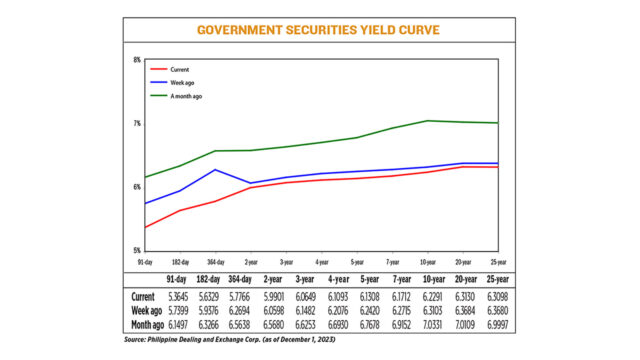
GS yields at the secondary market fell by an average of 16.64 basis points (bps) week on week, based on the PHP Bloomberg Valuation (BVAL) Service Reference Rates of Dec. 1 published on the Philippine Dealing System’s website.
Rates went down across all tenors. The 91-, 182-, and 364-day Treasury bills (T-bills) declined by 37.54 bps, 30.47 bps and 49.28 bps to yield 5.3645%, 5.6329%, and 5.7766%, respectively.
At the belly of the curve, the rates of the two-, three-, four-, five-, and seven-year Treasury bonds (T-bonds) went down by 6.97 bps (5.9901%), 8.33 bps (6.0649%), 9.83 bps (6.1093%), 11.12 bps (6.1308%), and 10.03 bps (6.1712%), respectively.
At the long end, yields on the 10-, 20-, and 25-year T-bonds dropped by 8.12 bps (to 6.2291%), 5.54 bps (6.313%), and 5.82 bps (6.3098%), respectively.
Total GS volume traded amounted to P9.3 billion on Friday, lower than the P23.25 billion recorded on Nov. 24.
“Expectations of slowing inflation have fueled yields to fall. This is supported by bets that the US Fed may be at the end of its tightening cycle,” Jonathan L. Ravelas, senior adviser at Reyes Tacandong & Co., said in a Viber message.
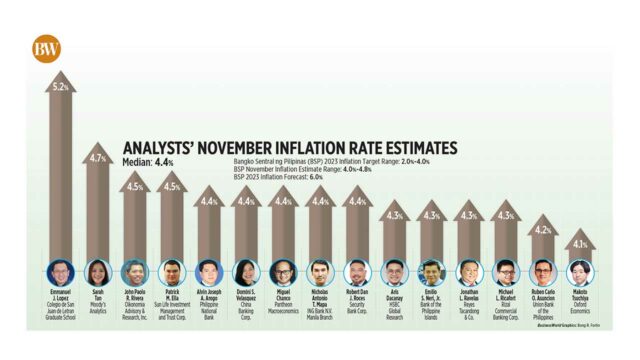
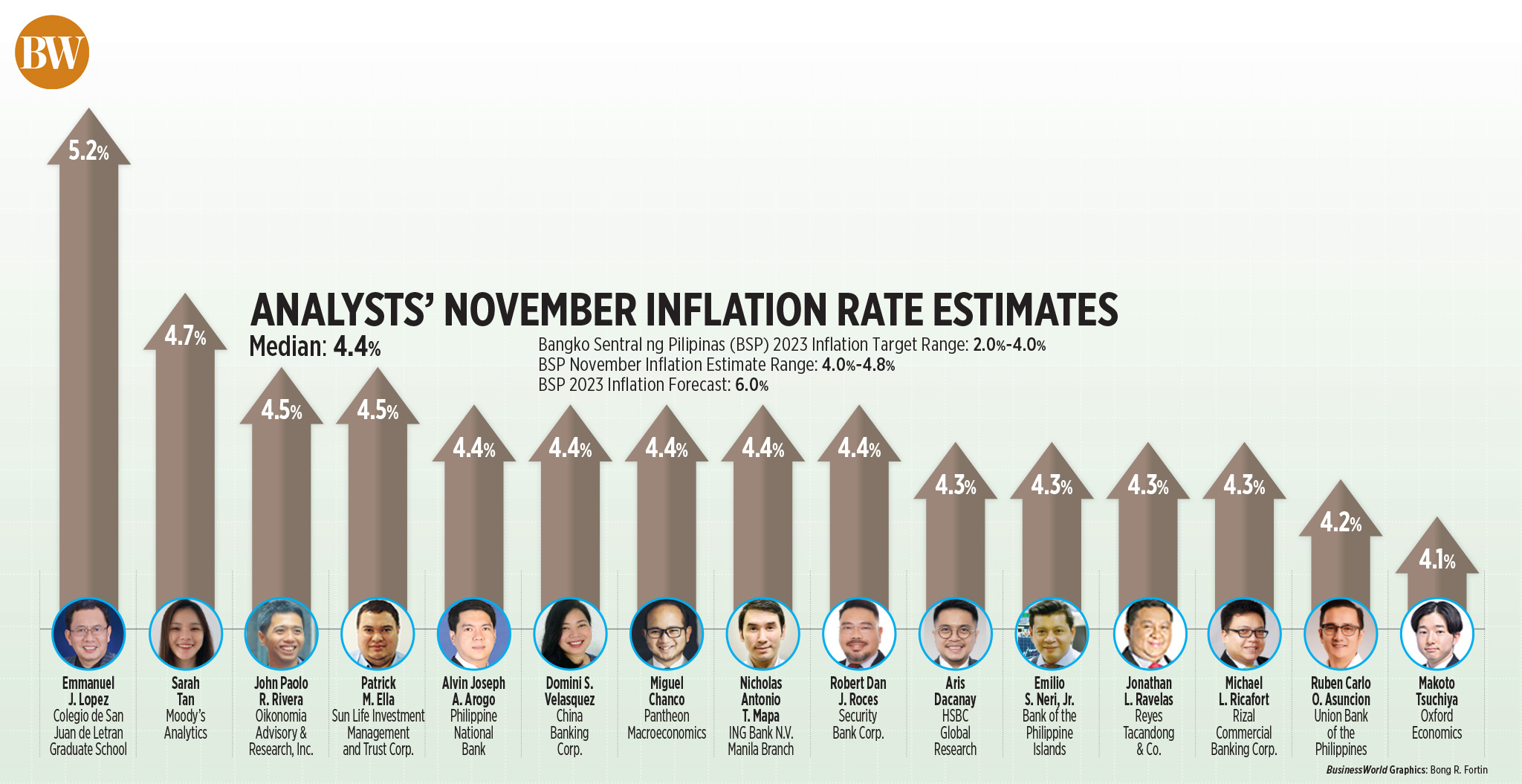
A BusinessWorld poll of 15 analysts yielded a median estimate of 4.4% for November headline inflation, at the midpoint of the 4-4.8% forecast of the Bangko Sentral ng Pilipinas (BSP) for the month.
If realized, the November consumer price index (CPI) would ease from the 4.9% print in October and the 8% recorded in the same month last year.
However, this would mark the 20th straight month that inflation exceeded BSP’s 2-4% annual target.
The November CPI report will be released on Tuesday.
Meanwhile, US Treasury yields and the dollar fell on the day as investors were encouraged by Federal Reserve Chair Jerome H. Powell’s vow to move “carefully” on interest rates, Reuters reported.
Treasury yields fell after Mr. Powell said the risks of hiking interest rates too much and slowing the economy more than necessary have become “more balanced” with the risks of not hiking enough to control inflation.
The Fed kept its target rate steady at the 5.25%-5.5% range for a second straight time during its Oct. 31-Nov. 1 meeting.
It has hiked borrowing costs by a cumulative 525 bps since it began its tightening cycle in March last year.
The Federal Open Market Committee will next meet on Dec. 12-13 to review their policy stance.
“Investors were keen on loading up local bonds across the curve as supply declined significantly especially on the T-bills space. At the same time, the upcoming inflation print for November pushed investors to bet on a lower headline CPI by adding up long end bonds for duration,” Alessandra P. Araullo, chief investment officer at ATRAM Trust Corp., said in a Viber message.
For this week, the auction of 10-year T-bonds and the November CPI data release will be the main GS trading drivers, Ms. Araullo said.
“These events may pull yields lower given the recently announced supply of bonds for the month of December which is significantly lower (only P60 billion for the whole month), and Bangko Sentral ng Pilipinas’ November CPI indicative range at 4-4.8% (lower from previous print at 4.9%),” she said.
“Despite these developments’ movements, equity markets remain cautious as upside risks to inflation remains. Continue to be expect rates to move sideways in the week ahead,” Mr. Ravelas added. — Lourdes O. Pilar with Reuters
Atty. Martin A. Loon, LL.M. — President and CEO, Cocolife
Good health can be considered a key to being able to fulfill dreams not just for one’s self, but also for his or her family. Yet, while staying healthy by having a well-integrated lifestyle might be easy to say, it can also be the hardest thing to do, especially with too many uncertainties under way and life being too unpredictable.
For Cocolife, the biggest Filipino-owned stock life insurance company, the dreams and aspirations of their clients and their loved ones are the driving force in continuing in providing a better life for them.
Cocolife’s life insurance products and services, tailored to Filipino families, provides them with better financial protection and stability in the occurrence of unfortunate events. Cocolife considers these solutions as a means that help families turn their goals into reality, and so achieve their dreams whatever comes their way.
“In Cocolife, we are people-focused — both with how we service our customers and value our employees. We make it a point to provide the best possible servicing in the industry. From the time a customer purchases any of our products up to the time a claim has to be paid, we make it as convenient and efficient for them. Of course, they put their trust in us so it is our mission to repay them for that trust,” Atty. Jose Martin A. Loon, President and Chief Executive Officer of Cocolife, told BusinessWorld in an email.
A financially secure future is what Cocolife envisions for individuals and families. Guided with this vision, Cocolife puts great value in developing comprehensive and unique products and services that will help protect their health and wealth at the same time. Such products and health programs are designed to cover various types of illnesses and protect individuals’ and their family’s financial well-being.
“Cocolife is truly a one-stop shop for the Filipinos’ financial needs — we are one of the few that provide a wide array of financial products from life, healthcare, non-life, investment, and much more. What our clients love about the company is the diversity of our products that cater to all needs for any demographic,” Atty. Loon stated.
While security has always been a primary goal, it is not the first time that insurers are also worried about the cost and affordability of such plans. With that in mind, Cocolife has always been customer-centric, prioritizing the development of products and services that will surely be affordable and accessible on insurers’ end. In other words, it aims to offer products that are more affordable in terms of securing and strengthening the Filipino family welfare.
“Our products cater to all segments and demographics — to all Filipinos. As the biggest Filipino stock-life insurance company, we value every peso invested in our products as we make it our mission to provide excellent and efficient service to all our countrymen. No matter how big or small your investment,” Atty. Loon added.
On top of that, Cocolife intends to educate Filipinos on the importance, benefits, and beauty of insurance through financial literacy programs. These programs are designed to help them realize that insurance is a necessity and a smart investment in protecting their income and living a more comfortable life.
“Cocolife’s ongoing financial literacy programs stress the importance of every dream and a tailored plan to secure the dream. In the said programs, we do not trivialize to our customers the importance of money,” Trinna V. Bernardino, senior vice-president, chief actuary and head of Actuarial Division at Cocolife, explained.
Maria Katarina Bernardino, Senior Vice-President and Chief Actuary, Cocolife
“We let them know that money is essential in securing financial well-being. We educate that insurance benefit is not a mere investment, but a tangible source of money in case of untimely need. Insurance is a concrete and enduring expression of our commitment to secure our loved ones even beyond death,” she added.
As a customer-centric insurance business that seeks to deliver more security to families, Cocolife optimizes the assistance of its financial advisors, housed in Cocolife’s 24 Sales Offices, present in 14 super malls, as well as approachable online. These advisors will help clients evaluate their financial situation and develop a certain financial goal that they can actually achieve.
Driven by a passion to fulfill the dreams and aspirations of Filipinos, Cocolife intends for its quality insurance products and services to truly meet the needs of Filipino insurers in attaining a more secure financial future. The earlier they avail of these choices, the earlier they can ease their worries and so begin focusing on achieving their dreams.
“In terms of purchasing insurance or any investment for that matter, the best time to obtain one is now. Time must not be wasted hemming and hawing before taking action and waiting to reach a certain financial status or life stage. Money grows exponentially and the earlier you invest, the higher the long-term return,” Ms. Bernardino said.
“What we treasure the most is what we need to protect. Whether it be the family home, your children’s schooling, your health — there is a product that is tailor-fit for the things that matter most,” Atty. Loon added.
Learn more about Cocolife’s new and comprehensive life insurance products by visiting www.cocolife.com.
Spotlight is BusinessWorld’s sponsored section that allows advertisers to amplify their brand and connect with BusinessWorld’s audience by enabling them to publish their stories directly on the BusinessWorld website. For more information, send an email to online@bworldonline.com.
Join us on Viber at https://bit.ly/3hv6bLA to get more updates and subscribe to BusinessWorld’s titles and get exclusive content through www.bworld-x.com.
HEADLINE INFLATION likely eased further in November amid lower pump prices, a slower rise in food costs and high base effects, analysts said. Read the full story.
The Philippines is no stranger to the winds of change. The challenges of modern life make it imperative that we rethink our approach to urban living. In an era of uncertainty, sustainable communities stand as beacons of progress, reminding us that the choices we make today will shape the world of tomorrow.
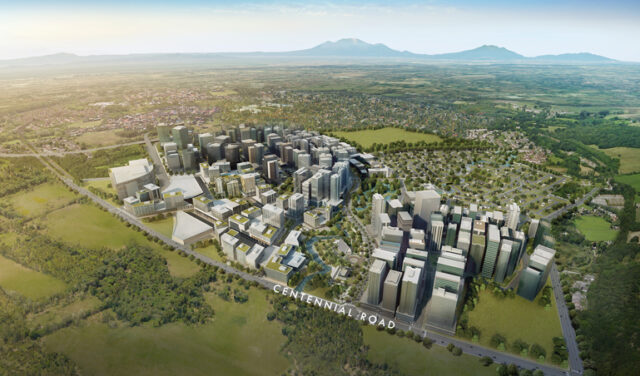
Developed by Ayala Land, one of the Philippines’ premier real estate developers, Evo City is a 200-hectare development that aims to redefine urban living and set new standards for sustainable development.
Evo City is strategically located at the heart of Kawit, Cavite, offering residents and businesses unparalleled connectivity and convenience. The main entrance of the estate is along the busiest highway of Kawit, the Centennial Road (Antero Soriano Highway), and is only 3.5 kilometers away (10-minute drive) from the Manila–Cavite Expressway (CAVITEX) Kawit toll gate exit. The entire estate encompasses four barangays within Kawit, namely Brgy. Batong Dalig, Brgy. Toclong, Brgy. Tabon I, Brgy. Tabon III; and it covers nearly a tenth of the entirety of Kawit.
Easily accessible through existing infrastructure, the estate is positioned to become even better in the future, enhanced by upcoming projects like the completion of the CALAX (Cavite-Laguna Expressway) and CAVITEX. Particularly, the gradual extension of CALAX to new exits will further interconnect the southern towns of Laguna and Cavite, funneling to Evo City through the Kawit interchange. This puts the estate further at a location brimming with opportunities for investors, entrepreneurs, and residents alike.
What sets Evo City apart is its fusion of the best practices from existing estates with innovative features tailored to the needs of today’s market.
Evo City was masterplanned by international design and planning firm DPZ (Duany Plater-Zyberk). Together with Ayala Land, the combined expertise in creating sustainable and well-designed communities is evident in every aspect of Evo City’s development. The estate is meticulously planned to provide a harmonious blend of residential, commercial, and recreational spaces, creating a holistic environment for its residents.
The estate boasts a wide range of amenities and facilities designed to cater to the diverse needs and interests of its residents. From beautifully landscaped parks and open spaces to diverse lifestyle and recreational areas, Evo City offers a myriad of opportunities to live, work and play.
For those seeking a modern lifestyle, Evo City offers a vibrant retail and commercial district that will be home to a mix of local and international brands, trendy boutiques, gourmet restaurants, and retail options. Residents will have everything they need right at their doorstep, eliminating the need for long commutes and ensuring a convenient and hassle-free living experience.
Evo City Park Plaza
Evo City Park Plaza, the landmark lifestyle hub of the estate, is a 32-hectare mixed-use retail and lifestyle center, reminiscent of the famous Ayala Center in Makati City. This will include, among others, the estate’s 1000-seat church designed by Dominic Galicia Architects; a 2.6-hectare active park; a mall with gross leasable area of 54,000 square meters; and two campus-type business process outsourcing buildings. True to its commitment in developing thriving estates like Evo City, ALI is investing P4 billion over the next three years to fund said projects. An S&R shop has also opened earlier this year to kickstart economic activity.
A sustainable, prime development
Moreover, Evo City embodies Ayala Land’s commitment to sustainable development and environmental stewardship. The estate incorporates green building practices, energy-efficient design, and sustainable landscaping to minimize its ecological footprint.
Evo City Streetscape
Evo City also features shared bike lanes and pedestrian-friendly walkways, encouraging a healthier and more active lifestyle while reducing carbon emissions. In fact, Evo City is implementing road network systems that take inspiration from the pedestrian experience of existing estates such as Makati and BGC.
Particularly, Evo City’s design recognizes the issue in that some road types in other districts may have a wider road-right-of-way, which often makes it difficult for both pedestrians and bikers to safely share the road. As such, the estate will be implementing shared bike lanes to create a new dimension in the urban setting, allowing people to safely move around the city in a smarter mode of transportation.
This, alongside intelligent city innovations such as a unified governance center that provides multiple and interconnected services, state-of-the-art storm water management, eco efficiency measures such as solar-powered facilities and waste reduction programs, Ayala Land spared no effort in bringing Evo City into the future.
It is also a strategic location for businesses and investors. With its prime location and excellent connectivity, the estate offers an ideal setting for companies across various industries. The commercial and office spaces available in Evo City provide a conducive environment for innovation, collaboration, and growth, as economic prosperity expands away from Metro Manila’s confines and towards the rest of the country.
Spaces for living and working
Evo City Main Entrance
At the heart of Evo City are residential and commercial lots developed by Alveo Land Corp., an Ayala Land subsidiary dedicated to developing upscale living and working spaces.
The Residences at Evo City by Alveo Land, the laid-back side of the estate, houses homes where residents can easily go to and from the hum of a bustling central business district and nurture closer, intimate bonds with their loved ones.
Adjacent to these residential spaces are Evo City Commercial Lots, more known as the West District, consisting of 31 commercial lots that are strategically situated at the key areas in the estate.
Both developments are ongoing turnover of its units; and, in addition, the Evo City South District, also consisting of commercial lots, was launched late last month, once again bringing fresh opportunities for locators and investors.
With Evo City, Ayala Land aims to redefine modern urban living and bring the epitome of this vision to Kawit, Cavite. With its strategic location, superior accessibility, and commitment to sustainability, Evo City offers residents and businesses the perfect blend of connectivity, convenience, and a vibrant community.
Whether you are seeking a modern lifestyle, a strategic business location, or a place to call home, Evo City brings all these together within a vicinity of substantial progress at the south of Metro Manila.
Spotlight is BusinessWorld’s sponsored section that allows advertisers to amplify their brand and connect with BusinessWorld’s audience by enabling them to publish their stories directly on the BusinessWorld website. For more information, send an email to online@bworldonline.com.
Join us on Viber at https://bit.ly/3hv6bLA to get more updates and subscribe to BusinessWorld’s titles and get exclusive content through www.bworld-x.com.
PHILIPPINE STOCKS may rise this shortened trading week, with the release of November inflation data expected to be a major catalyst for the market.
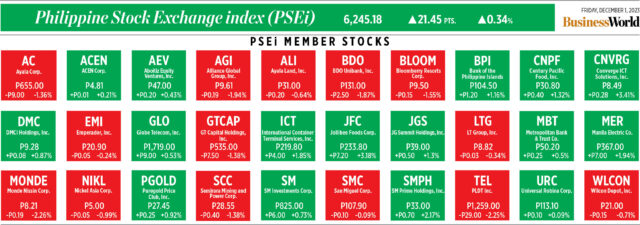
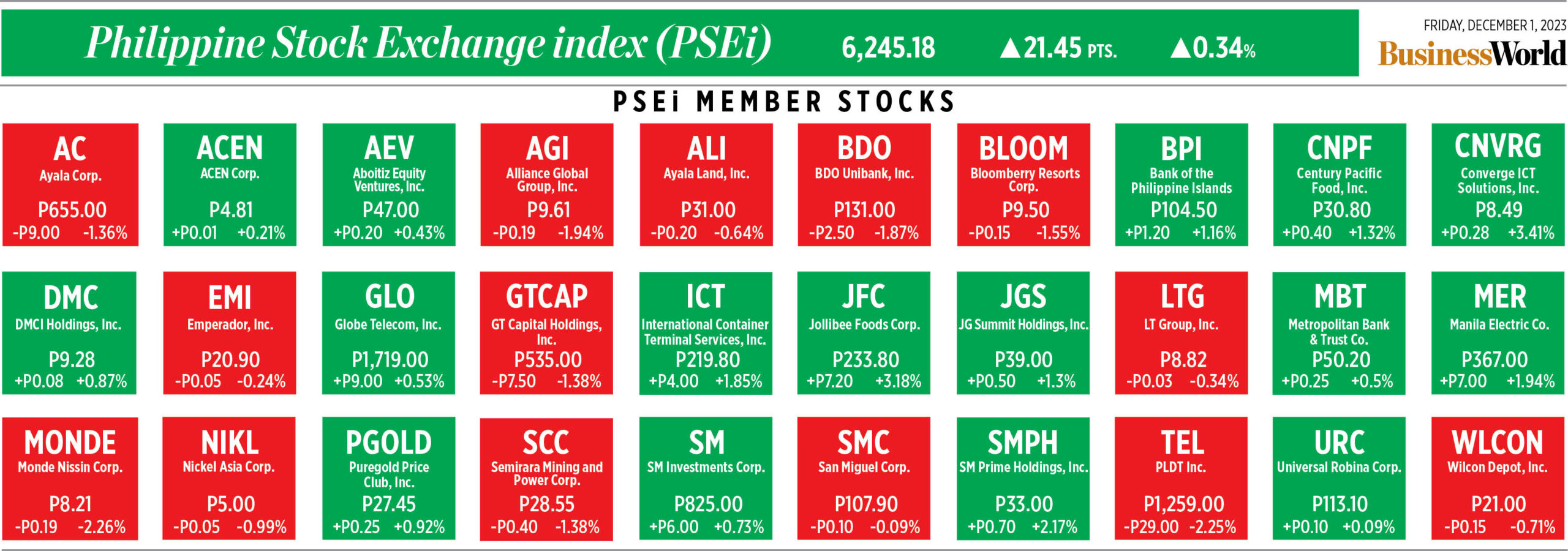
The Philippine Stock Exchange index (PSEi) went up by 21.45 points or 0.34% to close at 6,245.18 on Friday, while the broader all shares index climbed by 4.39 points or 0.13% to end at 3,332.22.
Week on week, the PSEi dropped by 24.32 points or 0.39% from its close of 6,269.50 on Nov. 24.
“A growing number of investors are piecing together a picture of a potentially good December for stocks. That narrative will be tested this week as the market turns its focus to the Philippine November inflation print and October US jobs data,” China Bank Capital Corp. Managing Director Juan Paolo E. Colet said in a Viber message.
“The upcoming week will be another four-day trading week, but the release of November inflation data early on should help spark some excitement before discussion once again moves to monetary policy talks mid-December,” online brokerage 2TradeAsia.com said in a report.
The market will be closed on Friday for a holiday in commemoration of the Feast of the Immaculate Conception.
November consumer price index (CPI) data will be released on Tuesday. A BusinessWorld poll of 15 analysts yielded a median estimate of 4.4% for November headline inflation, at the midpoint of the 4-4.8% forecast of the Bangko Sentral ng Pilipinas (BSP) for the month.
If realized, November CPI would be slower than the 4.9% print in October and the 8% logged in the same month last year.
However, November would also mark the 20th straight month that inflation exceeded BSP’s 2-4% annual target.
The Monetary Board will hold its final policy meeting for the year on Dec. 14.
The BSP has raised borrowing costs by 450 basis points since May 2022 to help bring down inflation, with its policy rate now at a 16-year high of 6.5%.
The strong factory activity report released on Friday is also expected to boost sentiment when trading starts this week, Philstocks Financial, Inc. Senior Research Analyst Japhet Louis O. Tantiangco said in a Viber message.
The S&P Global Philippines Manufacturing Purchasing Managers’ Index (PMI) rose to 52.7 in November from 52.4 in October amid robust demand and growth in new orders and production, a report released on Friday showed.
A PMI reading above the 50 mark denotes an improvement in operating conditions, while a reading below 50 signals deterioration.
For this week, 2TradeAsia.com placed the PSEi’s support at 6,100-6,150 and resistance at 6,400.
“Major support is still seen at 6,000 while major resistance is seen at 6,400,” Mr. Tantiangco said.
“The market may see continued consolidation in the 6,200 area and could potentially make an attempt for 6,380 in case of positive news flows,” Mr. Colet added. — S.J. Talavera
THE PESO may trade sideways against the greenback this week before the release of November inflation data and following comments from the US Federal Reserve chair.
The local currency closed at P55.40 versus the dollar on Friday, appreciating by 8.5 centavos from Thursday’s P55.485 finish, data from the Bankers Association of the Philippines’ website showed.
Week on week, however, the peso inched down by two centavos from its P55.38 close on Nov. 24.
The peso inched up against the dollar on Friday as the Bangko Sentral ng Pilipinas (BSP) said inflation may have eased further in November, Rizal Commercial Banking Corp. Chief Economist Michael L. Ricafort said in a Viber message.
The BSP on Friday said November headline inflation may have settled within the 4-4.8% range. If realized, this would be slower than 4.9% in October and the 8% print in the same month a year ago.
The low end of the BSP’s November estimate would also match the high end of the central bank’s 2-4% annual inflation target.
The Philippine Statistics Authority will release November inflation data on Tuesday.
The peso was also supported by easing global crude oil prices and US inflation, Mr. Ricafort added.
Improved US personal consumption expenditure (PCE) data could support a pause by the Fed at its next meeting, he said.
Data on Thursday showed US consumer spending rose moderately in October, while the annual increase in inflation was the smallest in more than 2-1/2 years, Reuters reported.
The PCE price index rose 3% in October from a year ago, moderating from a three-month string of 3.4% readings though still above the Fed’s 2% target.
For this week, the peso could trade sideways following comments from Fed Chair Jerome H. Powell and ahead of the release of Philippine November headline inflation data, Security Bank Corp. Chief Economist Robert Dan J. Roces said in a Viber message.
The risks of the Federal Reserve slowing the economy more than necessary have become “more balanced” with those of not moving interest rates high enough to control inflation, Mr. Powell said on Friday, reaffirming the US central bank’s intent to be cautious but also offering fresh optimism on its progress so far, Reuters reported.
As the Fed goes forward, “the data will tell us if we need to do more” rate hikes, Mr. Powell said as he fielded questions from Spelman College President Helene Gayle after his opening remarks at the historically black college.
For this week, Mr. Roces expects the peso to move between P55.30 and P55.80 per dollar, while Mr. Ricafort sees it ranging from P55.10 to P55.60. — A.M.C. Sy with Reuters