Home Blog Page 3850

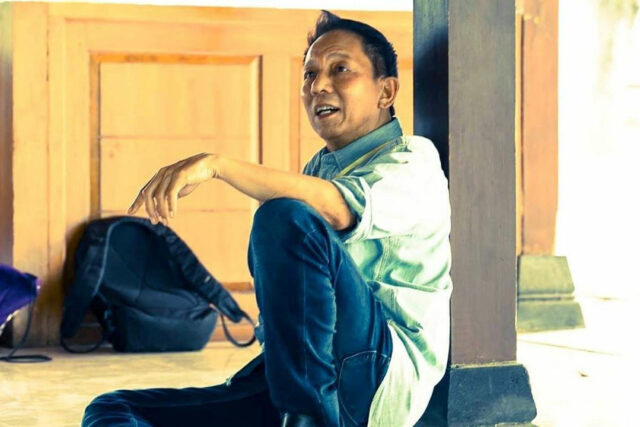
Theater stalwart, Areté artistic director Ricardo G. Abad, 77

RICARDO “RICKY” G. ABAD, a theater director, actor, teacher, and sociologist, died on Tuesday, Dec. 26. He was 77.

Areté, the creative hub of the Ateneo De Manila University (ADMU), posted a short tribute for their artistic director on Facebook a day after his death.

“Dr. Abad was the spirit behind Areté’s development as a cultural institution, devising its artistic programs and presentations. He conceptualized and directed shows like the Noel Concert series, the staging and online release of 2Bayani The Musical, and the Sari-sari pocket presentations to name a few,” the post said.

As a professor emeritus of ADMU, Mr. Abad contributed to the growth of the Department of Sociology and Anthropology and the Department of Fine Arts.

In the late 1990s, he was part of a committee convened to propose a university program with fields of study drawn from Ateneo’s rich artistic tradition. That program would become the Department of Fine Arts (FA), where Mr. Abad served as founding director from 2000 to 2003.

“For us that are a part of the FA community — past and current students, faculty, and staff — Dr. Abad’s greatest seed planted and cultivated was what we’ve become and aspire to be: a community of educators, artists, authors, performers, and professionals committed to nurturing contextualized and critical practices in the artistic disciplines our programs represent,” the Ateneo Fine Arts Department said in a Facebook post.

Theater group Tanghalang Ateneo also paid homage to Mr. Abad, acknowledging his role in mentoring some of the best talents working across many professions and fields, particularly, in theater, film, and TV.

“We remember him fondly for his passion, humor, and lust for life, and for shaping Tanghalang Ateneo, and the Loyola School’s theater tradition, into what it is known for today: courageous and forward-thinking artistry, uncompromising discipline, and intellectual rigor,” it said.

The Philippine Sociological Society, where he had served as president and editor of the Philippine Sociological Review, highlighted his contributions to the field in a Facebook post. “His research covered a diverse range of topics including poverty and inequality, demography, migration, values, social capital, and religion, He was a recognized expert on survey research methods. A beloved teacher and mentor, Dr. Abad was a recipient of the prestigious Metrobank Outstanding Teacher Award.”

Choreographer and director Dexter M. Santos posted on Facebook his own tribute to the late master. He spoke to Mr. Abad’s “commitment and pure love for the theater.”

“He didn’t need to mentor all those TA kids. He was a more than accomplished and celebrated Doctor of Sociology,” Mr. Santos said. “Pero sobrang mahal niya ang Teatro, mahal niya ang pagtuturo (But he loved theater so much, and he loved teaching).” — Brontë H. Lacsamana

ACEN subscribes to additional shares of subsidiaries

AYALA-LED ACEN Corp. has subscribed to additional shares worth a combined total of about P12.87 billion in its six wholly owned subsidiaries to develop several renewable energy projects.

In separate disclosures on Thursday, the listed energy company has agreed to purchase shares in its units, namely: Giga Ace 6, Inc., Giga Ace 8, Inc., Santa Cruz Solar Energy, Inc., Sinocalan Solar Power Corp., SolarAce2 Energy Corp., and Gigasol1, Inc.

ACEN has subscribed to 799.48 million common A shares and 7.16 million redeemable preferred A shares in Giga Ace 6 for a total subscription price of P7.96 billion.

The subscription price will be used for the proposed development of a 335-megawatt (MW) onshore wind power project located in the provinces of Laguna and Quezon.

With Giga Ace 8, the company has signed a subscription contract for an additional 7.2 million common A shares, 64.8 million redeemable preferred A shares, and 16.8 million redeemable preferred C shares worth a total of P2.4 billion.

The additional investment will be used to fund the proposed 300.011-megawatt peak (MWp)/237-megawatt alternating current Palauig Solar 2 Project.

ACEN has also invested in Gigasol1 by subscribing to 2.4 million redeemable preferred shares for a total subscription price of P240 million.

It also inked a contract with SolarAce2 Energy to subscribe to 2.5 million redeemable preferred shares worth P250 million.

“The subscription price will be used by the SPV (special purpose vehicle) for development activities relating to renewable energy projects in the Philippines,” ACEN said in both disclosures.

With Santa Cruz Solar Energy, the company has signed a deal to subscribe to 13.05 million common A shares and 117.53 million redeemable preferred A shares worth P1.31 billion.

The additional investment will be used to fund continuing works for the construction of the San Marcelino Solar Energy Power Plant Project.

Lastly, to fund the development of the proposed 60-MWp solar power plant in San Manuel, Pangasinan, ACEN has subscribed to 70.8 million redeemable preferred A shares in Sinocalan Solar Power worth P708 million. 

The additional subscription to the subsidiaries will be issued out of the increase in their authorized capital stock, the company said.

ACEN President and Chief Executive Officer Eric T. Francia has said that the company might soon reach its renewables capacity target of 5,000 MW as ongoing projects reach completion.

“So it’s around the corner, getting to the 5,000-megawatt mark,” Mr. Francia previously said. “I cannot say if it’s end of the year, early next year but somewhere in that neighborhood.”

Currently, ACEN has approximately 4,430 MW of attributable capacity spanning the Philippines, Vietnam, Indonesia, India, and Australia.

On Thursday, ACEN shares jumped by P0.12 or 2.88% to close at P4.28 apiece. — Sheldeen Joy Talavera

South Korea assures Philippines on continued need for migrant workers

REUTERS

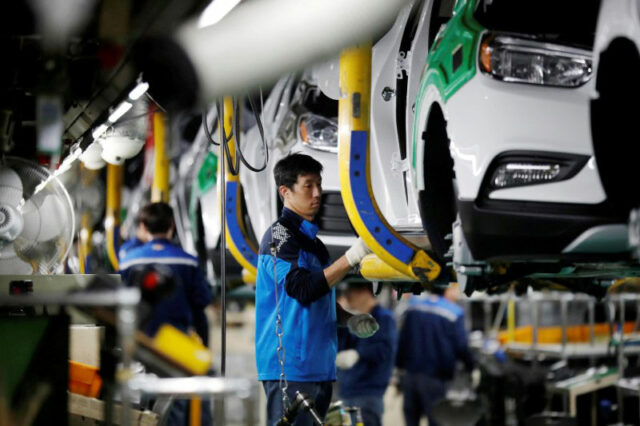
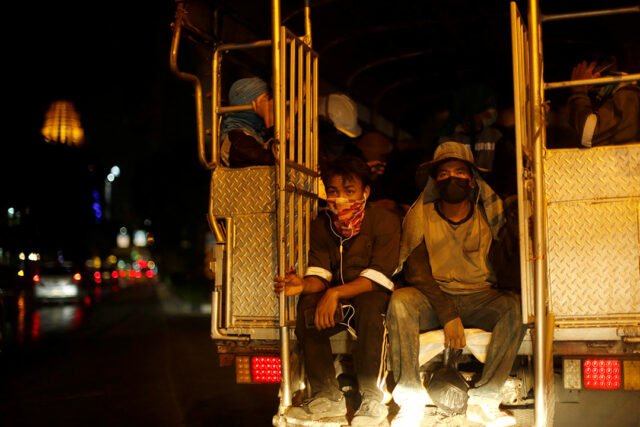
SOUTH KOREA has declared its continued openness to admitting migrant workers to address its shortfall in working-age citizens, the Department of Foreign Affairs (DFA) said.

DFA officials met their South Korean counterparts Wednesday to tackle overseas Filipino worker (OFW) policy, the DFA said in a statement.

Foreign Affairs Undersecretary Eduardo A. de Vega led a Philippine delegation to Seoul to meet with South Korean Foreign Minister Hong Seok-in.

“I commend the cooperation between the Republic of Korea government and the Philippine Embassy in strengthening relations, especially people-to-people relations,” Mr. de Vega said.

Mr. Hong said migrant workers mitigate the effects of South Korea’s low fertility rate. “It is indispensable and necessary to take care of foreign workers,” he said.

Earlier this month, the Philippine Senate ratified a 2019 social security treaty with South Korea, which allows OFWs in South Korea to refund their contributions to South Korea’s National Pension system after the end of their employment.

The deal also allows OFWs to continue receiving insurance coverage and other social protection benefit where they decide to reside.

More than 67,000 Filipinos in South Korea are expected to benefit from the pact.

Cash remittances from OFWs rose by 3% in October, as migrants sent home more money ahead of the holiday season.

The volume of money was the highest in 10 months or since the $3.16 billion in December 2022.

Envoys from both countries have said they are looking forward to the approval of a free trade agreement (FTA) between the Philippines and South Korea, which the Senate is expected to ratify when it resumes session in January.

Under the free trade deal, South Korea will remove tariffs on about 94.8% of Philippine products, while the Philippines will remove tariffs on 96.5% of South Korean goods.

The Philippines will also enjoy waived tariffs on 1,531 categories of agricultural goods, with 1,417 tariff lines removed upon effectivity of the FTA.

The Philippines is also seeking to export more bananas, processed pineapples, and other fruits to South Korea. — John Victor D. Ordoñez

Where to go for New Year’s Eve dinner

SURELY it’s good luck to greet the New Year with a full stomach. We’ve got options around the city which will bust your bellies and belts in time for 2024.

CROWNE PLAZA

At the hotel’s 7 Corners buffet (we recommend the steak), there will be buffet dinners on New Year’s Eve and New Year’s Day. The Dec. 31 dinner is priced at P3,500 net and will be available from 6 to 10 p.m. The Jan. 1 dinner will be priced the same and will be available at the same schedule. For reservations, call 0916-631-7523 or e-mail fandb.reservations@ihg.com.

CONRAD MANILA

Conrad Manila’s buffet feasts at Brasserie on 3 will run until New Year’s Eve. In these last days of 2023, Brasserie on 3’s buffet offerings will cost P2,650 and P3,050 net for weekday lunch and dinner, while the Friday and Saturday dinner buffet will cost P3,450 net per person. The New Year’s Eve Lunch Buffet will be offered at P3,250 net per person. At the C Lounge, the hotel will have a New Year ’80s Countdown Party, with an entrance fee of P1,988++ per person, but a discounted price of P1,688++ for in-house and dining guests. The price is inclusive of sparkling wine or non-alcoholic beverages. For reservations, call 0917-650-3747 or 0917-650-3591.

CITY OF DREAMS MANILA

A countdown event and indulgent year-end menus beckon at City of Dreams for year-end festivities. At DreamPlay, DreamWorks movie characters from Shrek, Kung Fu Panda, Puss in Boots, Madagascar, and Trolls are bringing the holiday cheer with an all-star parade at 5:30 p.m. on New Year’s Day at The Shops at the Boulevard. In the spirit of holiday gift-giving, guests checked in between Dec. 20 to Jan. 1 at Nüwa Manila, Nobu Hotel, and Hyatt Regency Manila will receive a bottle of wine. The holiday welcome amenity is available for bookings made via direct channels and on applicable Best Available rates, or Rack rates. Terms and conditions apply.

At CenterPlay, City of Dreams Manila revs up its entertainment scene as it throws a year-end countdown party with live music performances from 6 p.m. up to 2 a.m. from local artists Eye Candies, DJ Lena, and Part 3 band. Revelers can reserve a seat or a table starting at P2,500, inclusive of a glass of prosecco and plated holiday treats and P1,500 worth of food and drink from the regular menu. Prices vary depending on seat location, the number of persons, and consumables. Meanwhile, Crystal Dragon continues to offer its holiday menu. Available from lunch onwards until Jan. 1, the a la carte menu includes Braised Sea Treasure Broth with Alaskan King Crab, Fish Maw and Chinese Ham, Oven-baked Chicken filled with black truffle paste and foie gras; Wok-fried Prawns in homemade cheese sauce and crispy enoki mushrooms; Flaming Wagyu Beef — Sichuan Style with king oyster mushrooms; and Chilled Sweetened Honeydew with soymilk jelly, homemade vanilla ice cream and pearl sago.

At Nobu Manila, there’s a special seven-course dinner tasting menu offered only on Dec. 31 and Jan. 1. Available for P5600++ per person, it starts with an amuse-bouche compliments of the chef, followed by scallops with anchovy salsa and grilled vegetables, and Assorted Sushi and Inaniwa Noodle Soup with rolled beef and asparagus. Salmon Apple with ponzu, extra virgin olive oil, wasabi salsa, chives, and garlic chips follows this; then Ika (squid) Salad with spicy lemon dressing, kelp salad roll, vegetable salsa, asparagus and yamagobo (pickled burdock root); King Prawn with shitake butter and seasonal vegetables; and Wagyu Short Ribs Nabeyaki with sake, soy, and mirin reduction, udon noodles, bok choy, and tofu come after. A dessert of Passion Fruit Mousse with flourless peanut caramel and crunchy peanuts concludes the meal.

Diners looking for an indulgent brunch can opt for unlimited helpings of Nobu-style dishes at the restaurant’s New Year Sunday brunch on Dec. 31. A hybrid of a la carte and buffet, it highlights whole tuna, and chilled seafood such as oysters, blue crab, and slipper lobsters. Whole rib roast and wagyu brisket served with mushroom wasabi pepper sauce and creamy wasabi, and wagyu striploin au jus are the brunch’s pièce de resistance along with Nobu signature sashimi. Special ala carte choices, a ramen bar, a kushiyaki station, salads, and a wide array of desserts complete the new year’s brunch spread, at P4,388 net per person.

City of Dreams Manila’s modern Filipino restaurant Haliya welcomes the year with its Bagong Taon a la carte menu available on Dec. 31 from lunch onwards and for dinner on Jan. 1. This menu includes Bringhe de Bola with prawns, capsicum, tomato chutney and cheese sauce and Chicken and Tomato Consommé with 62-degree egg, charred onion oil, cherry tomato, bread and bone marrow butter, red chili finger, and micro greens. Beef Callos with chorizo, beef tripe adobo, Brussels sprouts, green olives, chickpeas, shallot confit, green peas, and potato truffle is a hefty entry. For dessert, the restaurant offers its innovative take on Filipino desserts with its version of Pastillas de Taro Parfait, with taro pastillas, ube and kesong puti pinwheel, cathedral window balls, crispy champorado and muscovado crumble.

For inquiries and reservations, call 8800-8080 or e-mail guestservices@cod-manila.com. For more information, visit www.cityofdreamsmanila.com.

Stock investors seen to take more risks in 2024

BW FILE PHOTO

By Sheldeen Joy Talavera, Reporter

INVESTORS are on the lookout for opportunities to buy stocks next year amid expectations of easing inflation and favorable interest rates, analysts said.

“We are bullish on the local equity market’s prospects next year given the prevailing outlook for a continued easing in inflation, and rate cut prospects,” Rastine Mackie D. Mercado, research director at China Bank Securities Corp., said in an e-mail interview.

“These should help boost risk appetite amongst investors, improving trade liquidity and fund flows,” he added.

Toby Allan C. Arce, head of sales at Globalinks Securities and Stocks, Inc. said that investors are anticipated to show increased interest in stocks next year, driven by “favorable interest rates” and “accelerated economic growth.”

“This positive shift follows a period of skepticism throughout much of 2023 when investors had largely dismissed the market,” Mr. Arce said. “Anticipated is a shift in market sentiment towards a more risk-on attitude during the initial quarter of 2024.”

The Bangko Sentral ng Pilipinas recently kept its policy rate steady at a 16-year high of 6.5% for a second straight meeting.

From May 2022 to October 2023, the central bank raised borrowing costs by a cumulative 450 basis points to tame inflation.

Headline inflation cooled to 4.1% in November amid easing prices of food as well as restaurant and accommodation services, data from the Philippine Statistics Authority showed.

The November figure is slower than the 4.9% in October and 8% in November 2022. However, this was still above the BSP’s 2-4% target for the 20th straight month.

Analysts said the Philippine Stock Exchange index (PSEi) could still surge to the 7,000 level on major catalysts for economic growth.

“With respect to the index, our initial target is at 7,100, based on conservative valuations amid expectations of modest earnings growth of just under 10%,” Mr. Mercado said.

“There are reasons to be optimistic about the equity market next year, and I see a reasonable chance that the index will reach the 7,000 level,” Juan Paolo C. Colet, managing director of China Bank Capital Corp. said in a Viber message.

According to Mr. Colet, the three potential major drivers of better market performance next year are a dovish shift in monetary policy, higher economic growth, and the implementation of capital market reforms.

The Philippine economy expanded by 5.9% for the third quarter, faster than 4.3% in the second quarter but slower than 7.7% a year earlier.

The expansion in the third quarter also ended three consecutive quarters of slowing growth.

“As always, there are risks. Among those we should watch out for are a hawkish monetary policy overshoot that stuns economic growth; a failure by China to shore up the world’s second-largest economy; and geopolitical flareups or natural calamities that severely destabilize supply chains and financial markets,” Mr. Colet said.

When do we do a Greece?

CRISTINA GOTTARDI-UNSPLASH

The annual Article IV consultation between the Philippines and the International Monetary Fund (IMF) for 2023 was concluded by the Fund’s Executive Board on Nov. 27, 2023. A press release was subsequently issued this month with the main message that “the Philippines’ growth momentum started to moderate after a strong post-pandemic recovery.”

It was quite a moderation.

From 2022’s 7.6% to 4.3% in the second quarter of 2023, the economy was humbled mostly by external headwinds, weak public spending, and dissipation of pent-up demand. Elevated inflation undermined private consumption even as the labor market showed some improvements. Weak imports mostly of fuel and capital goods motivated a more modest current account deficit.

Of course, we are wiser today because we know that the economy staged a 5.9% strong recovery in the 3rd quarter. Perhaps, the Fund with this information could update its forecasts of 2023 to 2025 of 5.3%, 6%, and 6.1% to more optimistic levels. But upgrading its growth forecasts might prove daunting because consumption could remain relatively sluggish compared to its average 7.7% performance in 2022. The external sector challenged by war and more war could even be more ominous such that even a tentative risk assessment should point us to more realistic assumptions and projections.

Which makes us wonder why, with a three-quarter average gross domestic product (GDP) growth of 5.5%, the Development Budget Coordination Committee (DBCC) decided to maintain the growth target for 2023 at 6% to 7%. For 2024, some slight downgrading to 6.5% to 7.5% was done, with an upward tweak for 2025-2028 at 6.5% to 8%. We thought official forecasts that many times deviate from the actual outcome could also erode public trust in official pronouncements and undermine ownership of public policy.

During the consultation, the Philippine authorities highlighted the upside to economic growth from recent initiatives to encourage more foreign investment and digitalization of the economy. In principle, they concurred on the importance of improving connectivity and upskilling the labor force but how these are to be mainstreamed has to be worked out. Existing social protection programs were claimed as well targeted while sustainable finance was reported to have limited impact.

In the Fund, there is relatively less optimism about the Philippines.

It projects a growth of only 5.3% for this year, 6% next year, and 6.1% in 2025 — or lower than the lower end of the Government’s targets. Given its weight in total output, weaker consumption, both private and public, could drive the possible weak economic performance in the next two years. One can always argue, and we agree, that a 6% output growth is not something we can trivialize or belittle. At that rate, the Philippine economy could very well be one of the fastest growing economies in this part of the world.

The point is that we need to grow more to build more infrastructure and provide more social services, we need to grow more to address the issues of poverty and income inequality.

How public policy can help bring this about still has to be worked out to the last detail. Tax to GDP ratio is expected at only about 15% in the next two years. While World Bank metrics would say anything above 15% is desirable, other countries which experienced periods of high economic growth had much more than that. True, we have the Medium-Term Fiscal Framework which establishes more ambitious tax measures to create more fiscal space. However, the current fiscal challenge of reforming the military pension system, rationalizing public spending, and reducing contingent liabilities would certainly call for a much wider fiscal flexibility.

We can validate the reality of these challenges. For local business leaders, they could not be more optimistic than saying that the country’s economic growth in the coming year is faced with difficult issues. They include geopolitical conflict, ease of doing business, and overall global economic slowdown. This guarded sense comes from business leaders from the Philippine Chamber of Commerce and Industry, the International Chambers of Commerce in the Philippines, the Philippine Exporters Confederation, and the Employers Confederation of the Philippines.

In turn, we see this mirrored by the results of the 4th quarter Business Expectations Survey (BES) of the Bangko Sentral ng Pilipinas (BSP). As we stressed in our report in the GlobalSource Partners for the Philippines this week, this is quite representative of business sentiment in the Philippines with 1,543 firms surveyed nationwide, with 583 firms in the National Capital Region, and 965 companies outside the National Capital Region covering 16 regions with a response rate of 65.1%. All firm sizes were represented quite well: 43.7% were small; 33.6% medium; and nearly 13% large.

The latest BES Survey showed that Philippine businesses remained modestly positive in their outlook for the current quarter compared to the previous quarter as measured by the BSP Confidence Index (CI). The CI was up by only 0.1 percentage point in Q4 2023 (35.9) compared to Q3 2023 (35.8).

This broadly steady sentiment, as cited by the business respondents themselves, was attributed to businesses’ expectations for: a.) some increase in demand for goods and services during the Christmas season, b.) sustained economic recovery to pre-pandemic levels, c.) business expansions in the utilities, trade, financial, and hotels and restaurant sub-sectors, d.) development and launch of new products and services, and, e.) brisker consumer spending on the back of higher remittances and inbound holiday travelers, including Overseas Filipino Workers (OFWs).

However, this optimism was tempered by concerns over: a.) the negative economic impact of the ongoing conflicts in Gaza and Ukraine, b.) elevated inflation, and, c.) higher interest rates, as similarly identified in the report.

This 4th quarter results have limited relevance because the last quarter is almost over. But for the 1st quarter 2024 and the next 12 months, the CI significantly plunged to 38.2 from 53.8 and from 59.7 to 54, respectively. Concerns about the: a.) negative effects of the Israel-Hamas and Ukraine-Russia conflicts on the economy, including higher oil prices, b.) lower demand for goods and services, c.) higher prices of basic goods, d.) increasing interest rates, and, e.) higher costs of production and raw materials motivated this less favorable outlook.

Our business respondents also pointed out such growth-negative macroeconomic outcomes as elevated inflation, higher market interest rates, peso depreciation, and limited job opportunities.

If there is anything that should be prioritized, it is raising productivity and harnessing the digital economy, both of which were discussed only in the latter part of the staff report under structural policies. It’s imperative to sustain the economic gains in the last 20 years and benefit from what the Fund already called a demographic dividend. However, this is possible only when the Philippines is able to attract foreign investments to help diversify exports, harness new skills, and strengthen connectivity across the country.

In particular, the Fund observed that given the country’s dominant services industry, it is crucial to raise labor productivity through digital skills and portability.

By all means, upskilling should be taken up while the use of artificial intelligence should be broadened. Industry should aspire to move up the global value chains as the country continues to improve on its digital infrastructure.

All these productivity-raising strategies can guarantee multiple gains in economic growth, make it more sustainable and self-sustaining, and create the right conditions for mitigating poverty and income inequality. As the recent edition of The Economist commended Greece as its country of the year, “it is possible to enact tough, sensible economic reforms, rebuild the social contract, exhibit restrained patriotism — and still win elections.”

As The Economist narrated, a decade ago Greece was literally crippled by heavy indebtedness with its people’s incomes eaten up by high inflation and chronic unemployment. Political extremism was tearing the country apart. Corruption eroded public governance and left its infrastructure in disrepair. Civil liberties of migrants were violated. Unpopular but appropriate economic restructuring ameliorated this state of affairs. The people caught up and realized the country is moving in the right direction. The reformers won popular support.

For its part, this Government should use its massive political capital during the 2022 election in getting all sensible public policies off the ground. The next electoral exercise will simply test whether the right economic reforms were put in place, and whether civil society has caught up with the reform program.

We have started right with what The Economist would refer to as our continuing determination to hold our nerve “in the face of Chinese aggression, often in collaboration with America. The Philippines defended its maritime boundaries, and the law of the sea, against much bigger Chinese ships.”

When then do we do a Greece?


Diwa C. Guinigundo is the former deputy governor for the Monetary and Economics Sector, the Bangko Sentral ng Pilipinas (BSP). He served the BSP for 41 years. In 2001-2003, he was alternate executive director at the International Monetary Fund in Washington, DC. He is the senior pastor of the Fullness of Christ International Ministries in Mandaluyong.


Regional wage increases inadequate — labor groups

PHILSTAR

PAY HIKES imposed by regional wage boards are welcome but inadequate in addressing income disparities, labor coalitions said.

The Department of Labor and Employment (DoLE) reported that 15 out of the 16 Regional Tripartite Wages and Productivity Boards (RTWPBs) issued new wage orders this year, ensuring salary hikes for minimum wage earners. For organized labor, however, these regional orders are insufficient.

In its year-end briefing this week, the Federation of Free Workers (FFW) called for a review of the regional wage board system of adjusting wages, proposing instead a national body.

“It is necessary to review the mechanism of RTWPBs. One of our proposals is to create a national tripartite wages and productivity board.” FFW President Jose G. Matula said.

“These wage increases… we consider to be a victory for the workers. And yet these wages are not enough to support a family,” he added.

In a separate statement this week, Partido Manggagawa (PM) said that the regional wage hikes are insufficient to offset inflation. “The difference between nominal and real wages is a result of inflation over the years: wage hikes have not kept up with the rise in prices and so workers’ purchasing power has been depleted.”

“The wage orders from the various regional wage boards have fallen short of the wage recovery demand,” PM added.

According to Mr. Matula, the regional wage boards failed to boost productivity and attract investment in the provinces with workers continuing to flock to Metro Manila for higher pay.

Apart from a national wage board, both labor groups are lobbying for a legislated P150 national wage increase for workers in all sectors, measures which are pending in Congress.

“We are still pursuing the P150 across-the-board nationwide wage hike proposal, now pending in both houses [of Congress]. We hope that by early next year, it will be passed into law,” Mr. Matula said.

He added that the P150 wage hike proposal is doable, citing the economy’s improving performance. He expressed doubts whether such an increase will result in the displacement of workers.

FFW said it welcomes DoLE’s decision to join the International Labor Organization’s Global Coalition for Social Justice, which it said commits the department to ensure fair compensation and labor protection.

In a statement, DoLE said: “With its participation, the Philippines will be joined by other governments, workers’ and employers’ organizations, international and regional organizations, non-governmental organizations, and the academe in pushing for better labor and employment conditions.” — Jomel R. Paguian

China Bank sees loans sustaining high single-digit growth in 2024

CHINA BANKING Corp. (China Bank) expects its loans to continue growing at a high single-digit pace next year, in line with the expansion seen for 2023, as interest rates are seen to remain elevated until the fourth quarter of 2024, a senior official said.

“China Bank’s gross loans will continue to grow at a measured pace at high single digits. Several factors can stir loan growth, like sustainability of consumer spending, and business expansions, as well as government infrastructure projects,” China Bank Chief Finance Officer Patrick D. Cheng said in an e-mail.

Still, the expected pace of loan growth for this year and next would be slower than the 15% recorded in 2022, he said.

China Bank will lean on its consumer business to support continued credit expansion, Mr. Cheng said.

“Our objective is to increase our consumer loan ratio from 20% to 25% over the next five years while still maintaining growth in our corporate loan book,” he said.

“China Bank will maintain a conservative approach to managing its asset quality. The NPL (non-performing loan) ratio is projected to stay below the industry average, while NPL coverage will still be above 100%,” Mr. Cheng added.

The Sy-led bank expects the Bangko Sentral ng Pilipinas (BSP) to maintain its target reverse repurchase rate at a 16-year high of 6.5% and only begin easing its policy stance in the fourth quarter of 2024 amid lingering upside risks to inflation, China Bank Chief Economist Domini S. Velasquez said.

Lower benchmark rates could help bring its margins closer to the 4% level in the near term, Mr. Cheng said.

“Any expected drop in the yields will offset lower funding cost,” he added.

China Bank’s net interest margin stood at 4.24% at end-September.

The BSP kept its policy rate steady for the second straight time at its last policy meeting for the year earlier this month. The interest rates on the BSP’s overnight deposit and lending facilities were likewise kept at 6% and 7%, respectively.

BSP Governor Eli M. Remolona, Jr. said the Monetary Board kept its stance unchanged as “the balance of risks to the inflation outlook still leans significantly toward the upside,” due to potential pressures from rising transport, electricity and fuel prices, as well as the El Niño weather phenomenon.

“With the sum of recent information, the Monetary Board continues to see the need to keep monetary policy settings sufficiently tight to allow inflation expectations to settle more firmly within the target range… Going forward, the BSP remains ready to adjust monetary policy settings as necessary, in line with its mandate to ensure price stability,” Mr. Remolona said.

The Monetary Board has raised benchmark interest rates by a cumulative 450 basis points since it began its tightening cycle in May 2022 to help bring down inflation.

Philippine headline inflation eased to 4.1% in November from 4.9% in October and 8% in November 2022.

For the first 11 months, the consumer price index averaged 6.2%, faster than 5.6% in the same period a year ago. This is still above the BSP’s 2-4% target for 2023.

China Bank’s attributable net income grew by 16.47% to P5.35 billion in the third quarter amid continued growth in its core businesses and lower loan loss provisions. — A.M.C. Sy

Globe expects positive showing in 2024 amid data center growth

GLOBE Telecom, Inc. expects better business in 2024 amid the continued expansion of its data center operations and as the company ventures into climate technologies, the company said on Thursday.

“We remain optimistic for 2024. We are hopeful that inflation and interest rates have already reached peak levels,” Ernest L. Cu, president and chief executive officer of Globe, said in a media release.

“We are very confident that given the state of competition in the market, given our people’s continued efforts, and our market position, we’ll be able to sustain a lot of what has happened in our mobile and fixed line side of our telco business this year,” he added.

The listed telecommunications company said it is “positive” of maintaining its business trajectory after recording an all-time high consolidated revenues from January to September this year.

In the third quarter, Globe posted an attributable net income of P4.97 billion, lower by 27% from P6.81 billion a year ago, amid higher non-operating charges.

Globe reported consolidated revenues of P44.27 billion in the quarter, a 3.2% increase from P42.88 billion a year ago, amid strong service revenues.

Service revenues, totaling P40.66 billion, accounted for the majority of the company’s third-quarter top line, rising by 4% year on year from P39.1 billion.

Globe’s nine-month attributable comprehensive net profit fell by 27.1% to P19.29 billion from P26.46 billion in the same period last year. Its consolidated revenues stood at P133.79 billion for the period, 2.8% higher than the previous year’s P130.2 billion.

For next year, Globe’s optimism for its business operations is hinged on an expectation of rate cuts and the continued expansion of its data centers.

Globe through ST Telemedia Global Data Centres (Philippines) is building data centers, which the one in Fairview, Quezon City anticipated to come online by the first quarter of 2025 at a potential capacity of 124 megawatts (MW).

ST Telemedia Global Data Centres (Philippines) is Globe’s joint venture with Ayala Corp. and ST Telemedia Global Data Centres (STT GDC).

The company’s expansion plan is likely to reach a capacity of 5.2 MW for its existing data centers in Makati, Cavite, and Quezon City.

“These next generation data centers are designed to cater to the increasing needs of enterprise businesses and hyperscalers for reliable, high-quality data services, marking a significant step in Globe’s expansion strategy. These facilities are expected to generate revenues for Globe and its partners by 2025,” Globe said.

The Monetary Board on Dec. 15 kept its benchmark rate at a 16-year high of 6.5% for a second straight meeting.

From May 2022 to October this year, the Bangko Sentral ng Pilipinas (BSP) raised borrowing costs by a cumulative 450 bps to tame inflation.

BSP Governor Eli M. Remolona, Jr. said that the central bank is unlikely to cut rates in the next few months, adding that rates may have to stay “higher for longer” as inflation remains elevated.

Meanwhile, Globe has explored new ventures as the company expands its non-telco business to foray into transportation by partnering with Taiwanese vehicle company Gogoro.

Gogoro has partnered with Ayala Corp. and the Globe group’s 917Ventures to introduce its battery-swapping station in the country.

“This initiative positions Globe at the forefront of the transition to EVs in the country, starting with two-wheelers,” Globe said.

At the local bourse on Thursday, shares in the company closed P6 or 0.35% higher to end at P1,708 each. — Ashley Erika O. Jose

Lucasfilm sues Star Wash, Chilean Star Wars-themed car wash

@STARWASHCHILE

SANTIAGO — Walt Disney production company Lucasfilm is suing a themed carwash on the outskirts of Chilean capital Santiago for plagiarizing its multibillion-dollar galactic film and television saga Star Wars, lawyers for the carwash said.

Star Wash has shared videos on social media showing attendants dressed as Star Wars characters such as Chewbacca or a Stormtrooper wiping down hoods, bounty hunter Boba Fett and hero Cassian Andor wielding hosepipes instead of blasters and Darth Vader appearing to use The Force to summon cleaning cloths.

The law firm representing the carwash said that while owner Matias Jara was in the process of registering his brand with Chilean patent authority INAPI, he received a lawsuit from the franchise’s creator, Lucasfilm.

Mr. Jara’s lawyers said the US movie production firm wanted to block the registration of the name and had argued that the brand could be confused as being affiliated with them. It has not raised issues with the attendants, they said.

Lucasfilm did not immediately respond to a request for comment.

Mr. Jara is contesting the suit, according to his lawyers, who argue that the name is sufficiently different from the movie franchise to avoid confusion and that the production company’s copyright, while covering products such as toys, furniture, and non-alcoholic drinks, does not extend to cleaning cars.

“Of course this lawsuit is affecting us. We’re a small business and we’re spending on things we hadn’t budgeted for,” Mr. Jara said in an interview.

He said his young daughter had thought of the wordplay while on a family trip to a Disney theme park in the United States that features a Star Wars area.

“We don’t make movies or sell their products or anything like that,” Mr. Jara added, noting that his business was, however, a “stellar” car wash. — Reuters

The peak in gasoline demand turns out to be a mirage

ERIK MCLEAN-UNSPLASH

AFTER fueling the 20th century automobile culture that reshaped cities and defined modern travel, gasoline was supposed to begin its long goodbye this year. It didn’t.

Sure, Tesla, Inc. and its rivals sold more electric vehicles (EVs) in 2023 than ever before, reducing fossil fuel demand. In the moneyed suburbs of London, New York, and Beijing, EV cars are a common sight. From that narrow perspective, it looks like the world has already started ”transitioning away from fossil fuels,” as agreed at the recent COP28 climate talks. But it’s a mirage.

Even as EV sales increased, the global oil industry sold more gasoline than ever this year, surpassing the previous 2019 peak that the International Energy Agency  (IEA) had expected would remain an unassailable all-time high. Outside wealthy neighborhoods, the internal combustion engine still reigns supreme; in middle- and working-class areas, the energy transition remains a distant prospect.

From the 1950s onward, when Henry Ford’s dream of a car in every middle-class American driveway became a reality, gas stations sprung up next to drive-in restaurants and strip malls, transforming the US landscape and economies across the globe. The gasoline used to power automobiles accounts for roughly one-in-four barrels of petroleum-refined products consumed worldwide.

As the climate crisis garners increased attention, the fuel is destined to play an outsized role in the energy transition — an early indicator of whether the shift away from fossil fuels is happening, and at what speed. The theory was that as EV cars became more popular, gasoline demand would be “disproportionally” impacted, the IEA predicted in its most recent five-year oil outlook, released in June. “This means that the fuel is likely to exhibit the earliest and most pronounced peak in demand” of all fractions of the oil barrel, it added.

While consumption would recover this year, it wouldn’t reach pre-pandemic levels; the outlook was for a gentle, but constant, downward trend.  In the middle of the year, the IEA predicted that gasoline usage would “never return to 2019 levels,” when demand reached 26.7 million barrels a day. Instead, consumption rose to about 26.9 million barrels a day this year, according to the latest IEA figures.* And 2024 is poised for another, even if small, increase, to just above 27 million barrels a day. As thing stand, the peak in gasoline demand has been delayed by five years, to 2024 from 2019. And I won’t be surprised if, once more data are available and forecasts are updated, the peak is pushed forward even further.

The surge past the 2019 peak is particularly significant because it came against three notable headwinds: gasoline prices have been high, particularly in local currencies outside the US dollar world; work-from-home remains far more prevalent than before the pandemic; and Chinese economic growth has slowed.

The trend of higher-for-longer demand has three important lessons for understanding the energy transition. First, the stylized forecasts showing sustained demand declines rarely survive the passage of time – not just years later, but often as soon as a few months after publication. Second, announcements of peak demand generate lots of headlines, but when consumption surges past those peaks, the public rarely hears about it, providing a misleading picture of the pace of the transition. Third, the shift away from fossil fuels will take longer than many had expected.

It’s not all bad. The world is embracing EV cars and, over time, their market share will continue to increase, particularly in China, North American, and Western Europe — boosted by generous subsidies in many nations. Even if gasoline demand continues to increase, the pace of growth is slowing. We may not have reached the peak, but probably there isn’t much growth ahead, either.

Still, gasoline demand benefits from a strong force: the world is becoming richer. In 2023, there were about 1.1 billion passenger cars in use, up from about 850 million a decade earlier. Even if a growing percentage of those cars is battery-powered, the absolute number of gasoline-fueled cars has increased. It’s a trend that will take decades, rather than years, to reverse.

Until then, gasoline remains king — whatever the forecasts say.

*Since the IEA released its five-year oil outlook in June, it had revised its 2019 gasoline demand estimate from 26.7 million barrels a day to 26.8 million barrels a day.

BLOOMBERG OPINION

Thailand plans new minimum wage hike, keeps inflation target  

REUTERS

BANGKOK — Thailand will increase its minimum wage in January, the government said, confirming a previous deal while planning to raise it further in March.

A wage committee, comprised of government, employers and employee representatives, had previously agreed to increase the daily minimum wage by 2.37%, effective in January, but Prime Minister Srettha Thavisin deemed the hike too low.

Mr. Srettha said the committee would meet in January to seek a further wage hike to be announced in March.

“There is no need to raise wages once a year,” he told reporters.

Mr. Srettha’s ruling Pheu Thai party campaigned on a populist platform with a key plank of raising the daily minimum wage to 400 baht, despite concerns over competitiveness.

“Another investigation covering local wage rates and professional groups will conclude in March…(to determine) areas and groups that can increase wages,” Labor Minister Phipat Ratchakitprakarn told reporters.

The current minimum wage is 328-354 baht ($9.49-$10.24) varying between different parts of the country with the committee agreeing to raise the pay threshold range to 330 baht to 370 baht.

Companies have warned that increasing wages at a time when borrowing costs were increasing and Southeast Asia’s second-largest economy was lagging behind its regional peers could make industries less competitive.

Separately, Thailand’s cabinet approved the central bank’s headline inflation target range of 1% to 3% for 2024, unchanged from this year. The announcement came after Thailand’s headline inflation rate came in at -0.44% in November, the lowest in nearly three years.

Deflationary pressures come from government policies that reduced energy prices and falling meat prices.

The inflation target, which guides monetary policy, is reviewed each year and the range of 1% to 3% is supportive of economic growth, finance ministry spokesman Pornchai Theeravet, who also heads the fiscal policy office, said in a statement.

The cabinet also approved a 3.48-trillion baht draft budget bill for the 2024 fiscal year which will go to parliament next week.

The government approved reduced property fees for another year, with some transfer fees cut to 1% from 2% and some mortgage registration fees to 0.01% from 1%, Mr. Pornchai told reporters.

The reduction will cost the government five billion baht in lost revenue but will boost growth by a further 0.5 percentage point, he said. — Reuters