Home Blog Page 3822

Rates to stay ‘higher for longer’ — BSP

Shoppers flock to Divisoria for holiday shopping on Wednesday, five days before Christmas, Dec. 20, 2023. — PHILIPPINE STAR/WALTER BOLLOZOS

THE BANGKO SENTRAL ng Pilipinas (BSP) is unlikely to start policy easing in the next few months and will only consider cutting rates if inflation settles at the midpoint of the 2-4% target, its governor said on Wednesday.

“We’re unlikely to cut rates in the next few months. We’re in a higher for longer (scenario). When I say hawkish, that basically means high for a while,” BSP Governor Eli M. Remolona, Jr. told reporters.

The Monetary Board last week kept its benchmark rate at a 16-year high of 6.5% for a second straight meeting. Interest rates on the overnight deposit and lending facilities were also left unchanged at 6% and 7%, respectively.

From May 2022 to October this year, the BSP raised borrowing costs by a cumulative 450 bps to tame inflation.

Mr. Remolona said policy easing will only be considered if inflation expectations are within a “comfortable” range.

“If most of the numbers point in the right direction, including expectations, if they really settle into this comfortable range of 3% for inflation, then we would consider cutting rates,” he said.

“If inflation remains higher than we thought and expectations begin to get de-anchored, then we have to do more about inflation. On the other hand… if inflation continues on its path and the expectations should be well-anchored, then we will start to consider easing,” he added.

Headline inflation slowed to 4.1% in November, bringing the 11-month inflation average to 6.2%. November marked the 20th straight month that inflation breached the BSP’s 2-4% target band for this year.

The central bank expects inflation to average 6% this year.

For 2024, Mr. Remolona said inflation will likely hit the upper end of its target band, “closer to 4% than 3%.”

“We’re still not out of the woods when it comes to inflation. If there are further supply shocks, it makes it all the harder,” he said.

The BSP sees inflation averaging 3.7% in 2024.

The central bank earlier said inflation will settle within the 2-4% target in the first quarter but could potentially spike above target from April to July partly due to the El Niño weather event.

“In our analysis, the first quarter (El Niño) might be bad. Second-quarter El Niño is 50-50. We’re more or less anticipating supply shocks,” Mr. Remolona said.

Latest data from the state weather bureau showed that a strong El Niño is present in the tropical Pacific and is showing signs of further intensification in the coming months. It is expected to continue until the second quarter of 2024.

According to the Philippine Atmospheric, Geophysical and Astronomical Services Administration, the El Niño weather pattern increases the likelihood of below-normal rainfall conditions, which could bring dry spells and droughts in some areas of the country.

BSP estimates show that the El Niño weather event could impact inflation by 0.02 percentage point next year.   

“We also included the possibility of the strong episode extending to the second quarter,” BSP Department of Economic Research Director Dennis D. Lapid added.

National Economic and Development Authority Secretary Arsenio M. Balisacan earlier said that the dry spell is one of the major risks to inflation next year.

The Marcos administration reactivated a task force on El Niño to mitigate the impact on the economy. Economic managers are targeting 6.5%-7.5% gross domestic product growth in 2024. — Luisa Maria Jacinta C. Jocson

PHL posts BoP deficit of $216M in November

THE PHILIPPINES’ balance of payments (BoP) deficit narrowed to $216 million in November from the $756-million gap a year ago, preliminary data from the Bangko Sentral ng Pilipinas (BSP) showed.

“The BoP deficit in November 2023 reflected outflows arising mainly from the National Government’s (NG) payments of its foreign currency debt obligations,” the BSP said in a statement.

On a month-on-month basis, the BoP position swung to a deficit from the $1.5-billion surplus recorded in October.

The BoP deficit in November was also the smallest since the $57 million in August.

The BoP measures the country’s transactions with the rest of the world at a given time. A deficit means more funds fled the economy than what went in, while a surplus shows that more money entered the Philippines.

“The US dollar-Philippine peso exchange rate was lower in November at P55.81 (vs P57.65 in the same period last year) and this may have been the significant reason for the narrowing of the deficit for the period,” Union Bank of the Philippines, Inc. Chief Economist Ruben Carlo O. Asuncion said in a Viber message.

Mr. Asuncion said the narrower BoP deficit reflected recent trade data.

“We must also understand that in terms of merchandise imports, (it) has been on the declining trend from lower global oil prices. Moreover, the exports side continues to be challenged by the current weak external trade environment. These combined factors are seemingly contributing to the narrower BoP deficit,” he said.

In the first 10 months, the trade gap narrowed by 11.9% to $44.07 billion. This as exports declined by 7.8% to $60.91 billion and imports fell by 9.6% to $104.97 billion.

The Development Budget Coordination Committee (DBCC) expects goods exports and imports to contract by 4% and 3%, respectively, this year.

In the first 11 months, the BoP position stood at a surplus of $3.03 billion, a turnaround from the $7.875-billion deficit in the same period in 2022.

“Based on preliminary data, this development reflected mainly the improvement in the balance of trade alongside the higher net inflows from personal remittances, trade in services, and foreign borrowings by the National Government,” the central bank said.

The BSP said net inflows from foreign direct investments also contributed to the surplus.

Rizal Commercial Banking Corp. Chief Economist Michael L. Ricafort said that the BoP surplus in the January-November period was due to the NG’s recent foreign borrowings.

The government raised $1 billion from its maiden offering of Sukuk bonds in late November.

At its end-November position, the BoP reflected a final gross international reserve (GIR) level of $102.7 billion. This was 1.7% higher than $101 billion as of end-October.

The GIR was enough to cover six times the country’s short-term external debt based on original maturity and 3.7 times based on residual maturity.

It also represents 7.6 months’ worth of imports of goods and payments of services and primary income.

For the coming months, Mr. Ricafort said that the country’s BoP position could be further supported by growth in cash remittances, revenues from business process outsourcing firms, foreign direct investments, and a narrower trade deficit.

“Going forward, any improvement in BoP data and in GIR data for the coming months could help provide a greater cushion for the peso exchange rate against the US dollar especially versus any speculative attacks,” he added.

This year, the BSP is expecting the BoP to end with a surplus of $1.1 billion, equivalent to 0.2% of gross domestic product. — Luisa Maria Jacinta C. Jocson

NG plans to borrow P585B domestically in Q1

THE NATIONAL Government (NG) plans to borrow P585 billion from the domestic market in the first quarter, the Bureau of the Treasury (BTr) said on Wednesday.

In a notice on its website, the BTr said it seeks to raise P195 billion from the issuance of Treasury bills (T-bills) and P390 billion from Treasury bonds (T-bonds) in the January to March period.

In January alone, the government eyes to borrow P195 billion from the domestic market, more than triple the P60-billion borrowing plan for December. This consists of P75 billion in T-bills and P120 billion in T-bonds.

The short-dated T-bills will be offered at P5 billion each with benchmark tenors of 91, 182, and 364 days. Auctions will be held on Jan. 2, 8, 15, 22, and 29.

For the long-term tenors, the BTr will offer P30 billion in three-year T-bonds on Jan. 3 and P30 billion in five-year T-bonds on Jan. 9

It will auction off P30 billion in seven-year T-bonds on Jan. 16, and P30 billion in 10-year bonds on Jan. 23.

The T-bill auction on Jan. 1 will be moved to Jan. 2, while the T-bond auction for Jan. 2 will be moved to Jan. 3 due to the New Year holiday.

For February, the government plans to borrow P210 billion from the domestic market, 7.69% higher than the January program. This is composed of P60 billion in T-bills and P150 billion in T-bonds.

The BTr will offer P5 billion worth of 91-day, 182-day, and 364-day T-bills on Feb. 5, 12, 19, and 26.

For the long-term tenors, the BTr will offer P30 billion in three-year T-bonds on Jan. 30 and P30 billion in five-year T-bonds on Feb. 6.

It will auction off P30 billion in seven-year T-bonds on Feb. 13, P30 billion in 10-year bonds on Feb. 20, and P30 billion in P20-year T-bonds on Feb. 27.

In March, the BTr seeks to raise P180 billion from the domestic market in March via P60 billion in T-bills and P120 billion in T-bonds. This is 14.29% lower than the borrowing plan for February.

It plans to raise P5 billion each from the offer of 91-day, 182-day, and 364-day T-bills on March 4, 11, 18, and 25.

It is seeking to generate P30 billion each from three-year T-bonds on March 5, five-year T-bonds on March 12, seven-year T-bonds on March 19, and 10-year bonds on March 26.

Union Bank of the Philippines, Inc. Chief Economist Ruben Carlo O. Asuncion said in a Viber message the P585-billion borrowing plan for the first quarter was “just right.”

“We continue to expect the market to ask for premium on debt instruments as BTr plans to borrow more in 2024 than this year, which means that there will be more debt supply. Plus, a clear-as-day dovish BSP may put pressure on yields to decline as inflation gets tamed and key interest rates are actually cut,” Mr. Asuncion said.

“Thus, banks and other financial institutions may start lending out more rather than parking their resources on government debt instruments.”

The government’s borrowing program for next year is set at P2.46 trillion, of which P1.85 trillion is from domestic sources.

“Timing is favorable amid lower long-term interest rates/bond yields recently that would reduce the borrowing cost of the government,” Rizal Commercial Banking Corp. Chief Economist Michael L. Ricafort said in a Viber message.

“It is also a sweet spot, not just for the government and other borrowers, but also to investors or buyers of government securities as they will still earn relatively higher interest rate income, with potential for investment gains if yields go down further and would lead to more trading gains from an investment perspective,” he added. — A.M.C. Sy

DBCC’s revised growth target is too ‘meager,’ say analysts

BUILDINGS are seen from the Estrella-Pantaleon Bridge in Makati City, Dec. 4, 2022. — PHILIPPINE STAR/ MIGUEL DE GUZMAN

By Luisa Maria Jacinta C. Jocson, Reporter

THE DEVELOPMENT Budget Coordination Committee’s (DBCC) latest revision to the 2024 growth outlook is too insignificant, analysts said as they urged the government to focus on efforts to mitigate local and global headwinds.

At its Dec. 15 meeting, the DBCC narrowed next year’s gross domestic product (GDP) growth target to 6.5-7.5% from 6.5-8% previously. However, the DBCC kept this year’s goal at 6-7%.

“The adjustment is meager, and it is almost meaningless to make the revision. The only way to make sense of it is to think of it as a credibility problem,” Leonardo A. Lanzona, an economics professor at the Ateneo de Manila University, said in an e-mail. “Foreign investors would like to invest in countries where managers are accountable and credible.”

Most multilateral institutions’ Philippine growth forecasts do not meet the lower end of the DBCC’s target range for 2024, including the World Bank (5.8%), the International Monetary Fund (6%) and the Asian Development Bank (6.2%).

Mr. Lanzona said the growth targets should reflect expectations of a global economic slowdown and persistent inflation next year.

Sonny A. Africa, executive director of think tank Ibon Foundation, said the lower end of the target should have also been revised.

“The DBCC revising the upper end of its growth targets, however, does not really correct this chronic overestimation and seems to be mainly a response to clearly adverse trends. Even the lower end should have been adjusted downwards,” he said in a Viber message.

Mr. Africa noted that household consumption, the biggest source of growth, has been slowing down. This could be further exacerbated by poor employment figures.

“Less work and, it must be stressed, worsening informality and quality of work even among reported employment is not a favorable leading indicator for household consumption that still accounts for over 70% of GDP,” he added.

Private consumption grew by 5% in the third quarter, its weakest pace in two years.

Mr. Africa also said that government expenditures cannot be relied on for growth as the administration focuses on fiscal consolidation.

“Foreign investments and exports have become an unfortunate crutch for aggregate demand and these are set to weaken with slowing growth in the United States, Japan, China and most of Europe next year,” he added.

On the other hand, Bienvenido S. Oplas, Jr., president of a research consultancy and of the Minimal Government Thinkers think tank, said the revised DBCC growth target for next year is still within reach.

“It’s a good adjustment while keeping the optimism… a target of 6.5-7.5% in 2024 is achievable for the Philippines,” he said in a Viber message.

“Our big population — more workers and entrepreneurs, more producers and consumers — can have a dynamic domestic economy (and serve as a) buffer should the external economy deteriorate further in 2024 and beyond,” he added.

Mr. Lanzona said the government must focus on programs to mitigate the impact of a global slowdown.

“The crucial issue nonetheless is whether these global trends are going to have an impact on the country’s aspirations to reach upper middle-income status by 2025 or 2026. The position that we cannot do anything about world conditions, as the revised DBCC growth rates would indicate, does not seem consistent and forward-looking with these objectives,” he said.

“It would have been more optimistic to say that because they are cognizant of the slowing economic trends globally and inflationary pressures, the government will be putting in place reforms and programs that can offset these trends. Instead, they have chosen a lower growth rate,” he added.

The Marcos administration is hoping the Philippines will reach upper middle-income status by 2025.

An upper middle-income country means having a gross national income (GNI) per capita income range of $4,466 to $13,845. The World Bank currently classifies the Philippines as a lower middle-income country with a GNI per capita of $3,950.

REFORMS NEEDED
The government should implement reforms to support inclusive growth without leaving the most vulnerable behind, Mr. Africa said.

“The administration needs to drastically rethink its approach to the economy with more concern for improving employment and family incomes, spending more to improve agriculture and establish Filipino industries rather than be a mere low value-added location for foreign investors and mobilizing domestic finance for development rather than keep wealth passive in the hands of a few,” he said.

The DBCC in its statement last Friday said that it is committed to “continuing its proactive efforts to sustain the high-growth trajectory of the Philippine economy and mitigate the lingering effects of high inflation amid a slower global economic scenario.”

“Pursuing a whole-of-government approach and a whole-of-society approach, we will strive to implement targeted measures, structural reforms, and strategies that will create a sustainable and future-proof economy for a significant improvement in the quality of life of Filipinos,” it added.

DBCC REVISIONS
Aside from adjusting its GDP target, the DBCC also revised its inflation assumption to 6% this year from a range of 5-6% previously. This would be in line with the Bangko Sentral ng Pilipinas’ (BSP) baseline forecast for 2023.

“The inflation rate is expected to return to the target range of 2% to 4% in 2024 until 2028,” the DBCC added.

Assumptions for Dubai crude oil were also adjusted to $82 to $85 per barrel this year from $70 to $90 per barrel previously due to the decline in global oil inventories. It is expected to ease further to $65 to $85 per barrel from 2025 to 2028.

Foreign exchange rate assumptions were also revised to P55.50-P56 per dollar this year from P54-P57.

“It is expected to reach P55 to P58 against the US dollar from 2024 to 2028. The peso will continue to be supported by structural foreign exchange inflows, narrower current account deficit projections, and ample foreign exchange reserves,” the DBCC added.

Exports and imports of goods are now expected to contract by 4% and 3% respectively this year. This is a reversal of the 1% growth in exports and 2% growth in imports earlier projected by the DBCC.

For next year, goods exports and imports are seen growing by 5% and 7% respectively, a revision from the 6% and 8% assumptions previously.

“For 2024, goods exports growth forecast is supported mainly by the upturn in demand for semiconductors, while goods imports are expected to be propped up by infrastructure investments and increased domestic production capacity,” the DBCC said.

“Meanwhile, for 2025 to 2028, goods exports and imports growth rates are expected to return to their pre-pandemic levels of 6% and 8%, respectively, reflecting the anticipated increase in demand and trade activities globally and domestically,” it added.

Meanwhile, the DBCC also revised its medium-term fiscal program.

This year, it sees revenues hitting P3.847 trillion from P3.729 trillion earlier due to the “anticipated implementation of priority tax measures over the medium term.”

The outlook for government expenditures was also revised upward to P5.34 trillion from P5.228 trillion previously. The DBCC said this was driven by accelerated spending by government agencies.

“Based on the revenue and spending outlook, it is anticipated that the deficit program will gradually return to pre-pandemic levels by 2027 from this year’s emerging deficit-to-GDP ratio of 6.1%,” it added.

For 2025, the national budget is also proposed to be set at P6.12 trillion, equivalent to 20.5% of GDP. This is also 6% higher than the P5.768-trillion budget for 2024.


Marcos inks P5.77-T national budget

President Ferdinand R. Marcos, Jr. signs into law the General Appropriations Act (GAA) of 2024 at the Ceremonial Hall of the Malacañan Palace, Dec. 20. — KRIZ JOHN ROSALES/PPA POOL

By John Victor D. Ordoñez, Reporter

PRESIDENT Ferdinand R. Marcos, Jr. on Wednesday signed the P5.768-trillion national budget for 2024, as Congress focused on developing sectors such as education and national defense, among others.

“This budget is more than a spreadsheet of amounts or a ledger of projects,” he said during the signing of Republic Act No. 11975 at Malacañang.

“Rather, it details our battle plan in fighting poverty and combating illiteracy, in producing food and ending hunger, in protecting our homes, in securing our border, and in funding our livelihoods.”

The President reminded government officials to eliminate and steer clear of red tape that would lead to delays in implementing the budget as intended.

“Implementations, delays, and illegal deviations inflict the same havoc of denying the people of the progress and development that they deserve,” Mr. Marcos said.

He called the spending plan a “social contract” with Filipino taxpayers to ensure the government uses their funds for

Next year’s budget is 9.5% higher than this year’s budget and is equivalent to 21.7% of the country’s gross domestic product.

Earlier this month, Congress reconciled the General Appropriations Act of 2024 and approved about P450 billion in new appropriations.

The education sector in the 2024 budget has the biggest allocation of P924.7 billion, as the Department of Education will receive P758.6 billion.

House Speaker Ferdinand Martin G. Romualdez on Tuesday said Congress has allotted  P500 billion worth of financial assistance to at least 12 million poor Filipino families next year.

At least P10 billion has been earmarked to provide farmers with free irrigation, seeds, fertilizer and other agricultural products.

Lawmakers have allocated an additional P25 billion to the Department of Agriculture to raise production and P80 billion for irrigation projects under the National Irrigation Administration.

“Higher budgetary allocations for infrastructure, agriculture, and education are vital to improving the country’s productivity,” China Banking Corp. Chief Economist Domini S. Velasquez said in a Viber message.

“The Philippines has been lagging behind in infrastructure development and this remains crucial in reducing the cost of doing business.”

Ms. Velasquez said the government needs to boost its spending on education after the Philippines’ weak performance in the 2022 Program for International Student Assessment (PISA), a global ranking of student performance in math, reading, and science.

Filipino students ranked 77th out of 81 countries as they performed worse than the global average in these subjects.

Lawmakers had boosted the budgets of the Technical Skills and Development Authority, Department of Education, the Commission on Higher Education, and state universities and colleges were increased by almost P30 billion.

Senator Juan Edgardo M. Angara, who heads the Senate Finance Committee, earlier said the budget includes provisions that ensure active transport infrastructure such as bike lanes, and pedestrian walkways are included in major projects.

The budget will also include an additional P1 billion for the expansion of the Philippine General Hospital in Manila, and a separate P1 billion for the Philippine Cancer Center, while P1.5 billion will be used to develop the National Kidney and Transplant Institute.

Senate Majority Leader Joel J. Villanueva earlier said lawmakers boosted the budget of the Department of Trade and Industry by P686 million to boost domestic production and enhance the quality of Philippine products.

Congress also focused on boosting the budgets of defense agencies to ensure national security amid tensions with China in the South China Sea.

Senate President Juan Miguel F. Zubiri has said P6.17 billion has been added to the budgets of the Department of National Defense and Armed Forces of the Philippines. At the same time, the Philippine Coast Guard saw a P2.8 billion budget hike.

Security Bank Corp. Chief Economist Robert Dan J. Roces said state agencies should ensure transparency and accountability in implementing the funding given to them next year.

“Carefully allocating resources based on pressing needs across sectors like agriculture, manufacturing, and more will be key in improving sentiment and also laying the groundwork for long-term growth,” he said in a Viber message.

Mr. Roces said the government should spend more on modernizing infrastructure and programs that foster innovation.

Lawmakers had granted a request from the National Economic and Development Authority to establish an innovations revolving fund to provide grants for innovation programs and projects.

“In this budget, we have included what we consider to be the means that will boost both the physical and human capital of a nation blessed with talent waiting to be tapped with resources ready to be harnessed,” Mr. Marcos said.

Serving it Hot! GrabFood’s Trending Faves Restaurants to Watch Out for

Foodies, listen up! GrabFood, our best buddy in food deliveries, makes it a breeze to uncover tasty treasures from different joints. The recently concluded Fan Faves 2023 revealed the most-loved food delivery choices across the country.

After almost a month-long voting from Sept. 4 to Oct. 1, 2023, the verdict is in — millions of Grab users have officially crowned their culinary champions across a diverse array of 19 categories. Within this culinary showcase lies the Trending Faves category, spotlighting menu choices curated by emerging culinary innovators nationwide.

1. Tropical Hut Hamburger Chicken Macaroni Salad, Clubhouse Sandwich – Solo, and Chicken Sandwich – Solo

A local culinary icon since 1965, Tropical Hut has been satisfying taste buds with its no-nonsense, tasty burgers, chicken, and fast-food classics. Recently, the restaurant has become a social media sensation, sparking waves of nostalgia. Capitalizing on this newfound interest, three menu stars — Chicken Macaroni Salad, Clubhouse Sandwich – Solo, and Chicken Sandwich-Solo — have risen to fame and joined the Trending Fan Faves winners, earning the votes of food delivery enthusiasts.

2. Balai Pandesal Siksik Pandesal 10 pcs

Even in a country where rice reigns supreme, our collective affection for baked goods shines through — the abundance of bakeries nationwide would be enough proof of that. Balai Pandesal takes this love to the next level with their oven-fresh bread, a nostalgic journey back to childhood memories. Among the list of good bread options, Balai Pandesal’s Piksik Pandesal joined the winners of the Trending Faves, proving once again that Filipinos genuinely love a good flour-rolled goodness.

3. Thai Mango Chicken Pad Thai

As Filipinos develop a deeper fondness for Asian flavors, it opens the door for more international culinary ventures in the country. Thai cuisine, celebrated for its harmonious blend of sweet, sour, salty, and spicy notes, creates a flavorful dance on your palate. Thai Mango, a restaurant committed to providing authentic Thai delights for Filipinos, offers a diverse menu featuring pad thai, mango sticky rice, coconut ice cream, and more. In the Fan Faves 2023, their Chicken Pad Thai emerged as one of the trending favorites, capturing the taste buds of discerning food enthusiasts.

4. Seattle’s Best Coffee Buy 1, Take 1 Large White Chocolate Mocha

Whether it’s a steaming cup or an icy blend, Filipinos display an unparalleled passion for coffee in all its forms. From specialty cafes to expansive coffee chains, our nation is adorned with options for a quick caffeine fix. Among the many options, Seattle’s Best Coffee stands out with numerous branches nationwide with delivery options available, making it one of the favorite choice for coffee enthusiasts both for in-store chill and on-demand coffee fixes via delivery. Beyond just coffee, the restaurant offers a tempting variety of pastries and meals. Their Iced White Chocolate Mocha, especially the Buy 1, Take 1 large option, was listed among the Trending Faves.

5. Manam House Crispy Sisig

Celebrations resonate deeply with Filipinos, and restaurants exuding a warm, familial atmosphere effortlessly capture the crowd’s interest. Manam Comfort Filipino, in particular, honors traditional Filipino favorites by transforming them into contemporary culinary delights. While savoring your beloved Pinoy dishes, anticipate a subtly different yet warmly welcomed interpretation such as their acclaimed House Crispy Sisig.

6. BOK Korean Fried Chicken Double Double Box

With the ever-growing allure of Korean cuisine, credit partly goes to our favorite K-drama stars for sparking this culinary obsession. Among them, BOK Korean Fried Chicken, a pandemic-born restaurant dedicated to perfecting the creation of flawlessly fried chicken infused with authentic Korean taste. Indulge in their diverse flavor offerings, from the classic Yangnyeom to the perfectly balanced Soy Garlic, the lively Honey Lemon, the Snow Cheese delight, and the tantalizing Yangnyeom with a garlic twist.

7. Happilee Korean Kitchen Mini Kimbap – Spicy Pork (5 pcs)

Another restaurant that vows to satisfy everyone’s k-ravings is Happilee Korean Kitchen. They’ve got all the classics like tteokbokki, jjigae, dakgalbi, kimchi fried rice, kimbap, and more. And the recently concluded Fan Faves 2023 spilled the beans that everyone’s hooked on their Mini Kimbap in Spicy Pork.

8. David’s Tea House Shrimp Siomai

From sizzling dim sum to aromatic stir-fries, every dish from Chinese cuisine grew a special place in our taste palette. Filipinos embrace the delicate balance of sweet and savory, and the comforting warmth of hot noodles. David’s Tea House’s menu contains dishes from spring rolls to stir-fried noodles to various dumpling options that will surely satisfy your Chinese food cravings. And joining the list of Trending Faves is the much beloved Shrimp Siomai — and rightfully so as this particular offering has been delighting generations of fans of Chinese cuisine.

9. Yoshinoya Gyudon

When the Japanese fast-food urge hits, Yoshinoya is the answer to your cravings. Filipinos can’t get enough of the iconic Gyudon, as proven in the Fan Faves 2023, which is a tempting bowl featuring thinly sliced beef luxuriating in savory broth over a bed of piping-hot rice. The perfect fusion of flavors, affordability, and quick service makes Yoshinoya a top pick restaurant option for deliveries and foodie hangouts, providing a taste of Japan that resonates with the Filipino palate.

10. 99 Peso Sulit Chicken Soy Garlic Chicken Karaage Bowl (Best Seller!)

When quality meets affordability, capturing the hearts and attention of customers becomes easy. 99 Peso Sulit Chicken stands out among emerging restaurants, delivering filling bowl meals that truly satiate one’s hunger. Beyond the pocket-friendly prices, the real charm lies in the delectable and generously portioned chicken dishes that cater to both taste buds and budgets. A standout is their best-seller, the Soy Garlic Chicken Karaage Bowl, that earned its spot on the list.


Fan Faves 2023 stands as a testament to the wide selection of restaurants on the GrabFood platform that continue to be relentless in satisfying the various cravings of the everyday Filipino eater. To know more of the restaurants that made it to the GrabFood Fan Faves 2023, visit https://grabfanfaves.com.


Spotlight is BusinessWorld’s sponsored section that allows advertisers to amplify their brand and connect with BusinessWorld’s audience by enabling them to publish their stories directly on the BusinessWorld website. For more information, send an email to online@bworldonline.com.

Join us on Viber at https://bit.ly/3hv6bLA to get more updates and subscribe to BusinessWorld’s titles and get exclusive content through www.bworld-x.com.

MPAV finalizes deal to own 34.76% stake in Axelum

CHEN MIZRACH-UNSPLASH

Some payments tied to profitability goals

METRO PACIFIC Agro Ventures (MPAV), a subsidiary of Metro Pacific Investments Corp. (MPIC), has finalized a deal to acquire a 34.76% stake in Axelum Resources Corp., a food manufacturing company that exports coconut products, with some payments contingent on achieving specific financial goals.

The agreement, initially announced in February, is seen to fortify the Metro Pacific group’s foothold in the Philippine agriculture industry.

In a regulatory filing on Wednesday, Axelum said that both companies agreed to extend the settlement of MPAV’s P5.32-billion subscription agreement until January 15, 2024.

In February, MPIC announced that it was acquiring a 34.76% stake in Axelum for P5.32 billion through its subsidiary MPAV, mainly to strengthen its presence in the local agriculture industry.

MPAV planned to acquire 1.19 billion common shares and 200 million redeemable preferred shares in Axelum.

While the total highest consideration for the transactions remains at approximately P5.32 billion or P3.83 per share, the basis for payment has undergone changes, MPIC parent company First Pacific Co. Ltd. said in a statement on Monday.

The payment structure now involves installments, with an initial payment of P3.37 billion due on or around Dec. 22.

Additional payments are contingent upon the “achievement of certain EBITDA (earnings before interest, taxes, depreciation, and amortization) milestones up to the original purchase price under the original SPA (sale purchase agreement),” First Pacific said.

First Pacific noted that these amendments resulted from “arms’ length negotiations,” emphasizing the parties’ commitment to a transparent and equitable agreement.

The company added that “for the avoidance of doubt,” a payment of P500 million will be issued for the redeemable preferred shares of Axelum on or around Dec. 22.

Axelum Resources Corp. expressed optimism for the partnership, emphasizing a shared vision to modernize the local coconut industry. 

“This partnership is built on a shared vision and profound commitment to spearhead initiatives that will modernize our local coconut industry. We aim to achieve this by leveraging our joint expertise, network and resources,” said Axelum Chairman and Chief Executive Officer Romeo I. Chan.

For his part, MPIC President and Chief Executive Officer Manuel V. Pangilinan said: “Axelum’s expertise in the coconut industry, combined with MPAV’s ambition for Philippine agriculture, position us to make lasting contributions to the nation.”

“We look forward to promoting sustainability and competitiveness in the country’s agricultural sector,” he added.

In terms of financial performance, Axelum recently reported a net loss of P428 million for the nine months ending in September, a reversal from the P717.28-million net income recorded in the same period the previous year.

The company’s top line also saw a 19% decline, dropping from P5.31 billion to P4.28 billion.

Axelum shares closed 3% higher at P2.40 apiece on Wednesday.

MPIC is one of three key Philippine units of First Pacific, the others being Philex Mining Corp. and PLDT Inc.

Hastings Holdings, Inc., a unit of PLDT Beneficial Trust Fund subsidiary MediaQuest Holdings, Inc., has a majority stake in BusinessWorld through the Philippine Star Group, which it controls. — Adrian H. Halili

Holiday best gift guides: Last-minute gift ideas for DIYers

The holiday season has arrived, and with it comes the joy of giving. So, if you’re looking for the perfect present for the DIY enthusiast, look no further than Wilcon’s expertly selected collection of holiday gift ideas. Wilcon has something for everyone, from kitchen connoisseurs to home improvement enthusiasts. Let’s look at the best items for DIYers who like to get things with their hands.

Alphalux Led Portable Solar Floodlight

Whether it’s lighting the driveway, patio, or garden, this innovative and sustainable lighting option is ideal. The lightweight design and energy-efficient features of the Alphalux Led Portable Solar Floodlight make it a cost-effective and useful gift for anyone who enjoys enhancing their outdoor ambiance.

Hills Angle Grinder

An excellent addition to any DIYer’s toolbox is the Hills Angle Grinder, particularly for those who love working with a variety of materials.  This multifunctional tool can be used for cutting, grinding, or polishing, and it is made to do a variety of tasks efficiently and accurately.

Truper Dual Screwdriver

Every DIYer needs a versatile screwdriver in their toolkit. The Truper Dual Screwdriver combines functionality and convenience with its dual-ended design, making it a go-to tool for various projects around the house.

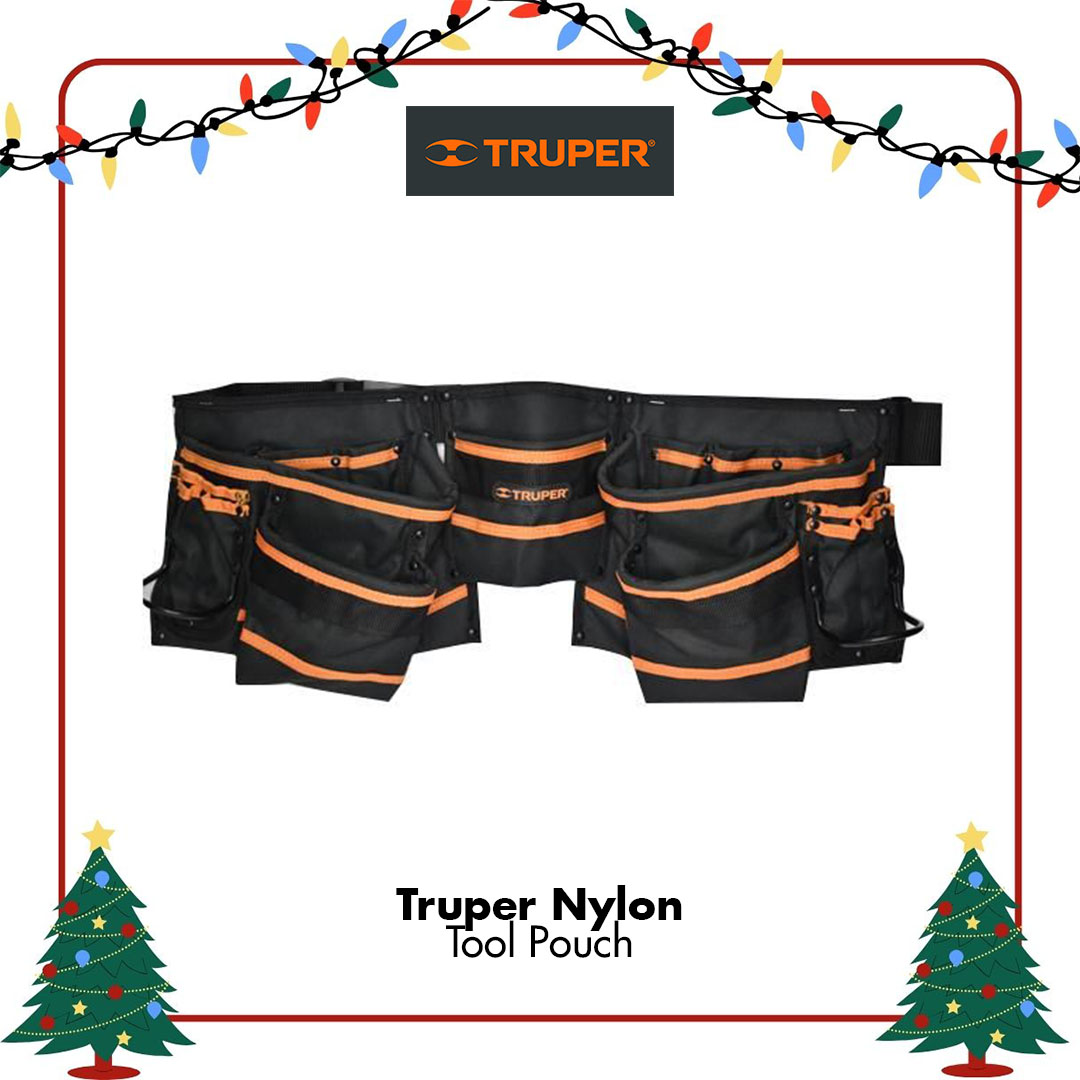
Truper Nylon Tool Pouch

Keep tools organized and within easy reach with the Truper Nylon Tool Pouch. This durable and practical pouch ensures that essential tools are always at hand, whether it’s a quick fix or a more extensive DIY endeavor.

Truper Industrial Plastic Toolbox

Give the Truper Industrial Plastic Toolbox as a present of the organization. This toolbox is built to withstand the demands of the DIY lifestyle while keeping everything in order, with ample space for tools of all shapes and sizes.

Hills Cordless Impact Drill

With the Hills Cordless Impact Drill, you can take your DIY projects to the next level. This adaptable and durable tool is ideal for activities, ranging from minor repairs to more complex woodworking projects. It’s a must-have for any DIYer who wants to improve their skills.

Wilcon E-GC

If you don’t know what to give to your loved ones during Christmas, give them a Wilcon E-GC, which is available in P500 and P1,000 denominations. Having Wilcon E-GC will provide both of you with a fun day of shopping for your home improvement items at the Wilcon Depot store this holiday season.

With Wilcon’s selection of gifts for DIYers, you can be confident that your loved ones will receive tools and accessories that enhance their craft and passion for creating. These thoughtful gifts are not only practical but also reflect the quality and innovation that Wilcon is known for.

Wilcon’s Gift Ideas for DIYers are sure to bring joy and inspiration to those who love to roll up their sleeves and turn their creative visions into reality.

Happy holidays and happy DIYing!

For more information about Wilcon, visit www.wilcon.com.ph or follow their social media accounts on Facebook, Instagram, and Tiktok. or subscribe and connect with them on Viber Community, LinkedIn, and YouTube. Or you may contact the Wilcon Depot Hotline at 88-WILCON (88-945266) for inquiries.


Spotlight is BusinessWorld’s sponsored section that allows advertisers to amplify their brand and connect with BusinessWorld’s audience by enabling them to publish their stories directly on the BusinessWorld website. For more information, send an email to online@bworldonline.com.

Join us on Viber at https://bit.ly/3hv6bLA to get more updates and subscribe to BusinessWorld’s titles and get exclusive content through www.bworld-x.com.

Tequila’s dignity: A’toda Madre Mezcaleria goes online

WINDI TAPAWAN, owner of A’toda Madre Mezcaleria, is the first and only certified agave spirits master in the Philippines and in Asia.

A’TODA MADRE MEZCALERIA only meant to make an announcement of its online bottle shop, www.atodamadretequila.com, on Dec. 5. That means that scores of brands of tequila and mezcal can now be bought online and delivered to your doorstep (including Derrumbes Mezcal, Don Julio, Los Vecinos, 1800 Tequila Blanco, Rey Campero, Clase Azul Reposado, Codigo, and Patron). However, A’toda Madre owner Windi Tapawan, the first certified Master of Agave Spirits in Asia, also gave us a deeper understanding of tequila and mezcal, and we are now wont to give a little more respect to the spirit.

We know tequila as a culprit behind many a headache and a cause for erratic behavior, but in Ms. Tapawan’s hands, the spirit gets a little more dignity, without losing any of its reputation as a drink for good times. For example, Ms. Tapawan led us through six agave spirits, each displaying complexities in its notes: one had notes of chocolate, another had smoky notes from its roasting process pre-distillation, while our favorite, Codigo 1530 Rosa Blanco, smelled like 4711 cologne, and had a little bit of a snap at its sip and had notes of black pepper and roses.

She dispelled some tequila myths: for example, more mainstream brands may be labeled with the word “mixto,” meaning it’s only made with 51% agave spirits, and the rest are other ingredients. It’s this mix that gives the signature tequila headache.

She also gave us a primer on the difference between tequila and mezcal: tequila is only made from the Blue Weber Agave plant, and can only be called “tequila” when it’s made in one of five Mexican states certified to make tequila: Guanajuato, Michoacán, Nayarit, Tamaulipas, and Jalisco. Mezcal’s world is a little more hazy: as long as its made from an agave plant, it could be called mezcal — about 20 varietals are used to make it; and some are even from wild strains — so there are many permutations to make it.

Asked if one can grow agave plants here, Ms. Tapawan said yes, although the ones grown here are smaller and are usually for ornamental purposes.

Finally, she pointed out that it was Filipinos who went to Mexico during the Galleon trade who taught Mexicans how to distill alcohol: she pointed out a label on the bottle that said that the mezcal had been made using a Filipino-Arabic still, the technology borrowed from our own methods of distilling lambanog (coconut liquor) from our own plants.

On a more melancholy note, we found out that when an agave spirit is called a spirit, it really gives up the ghost. An agave plant takes a minimum of seven years to grow before it is ready for harvesting. Unlike grain or grape, once an agave plant is harvested, it dies. “When you have a bottle of good mezcal, respect it,” said Ms. Tapawan. “A plant literally died to give that.” As we went through the vessels of mezcal and tequila — some were served in earthenware cups, while some were served on tiny glasses that got their origins from votive holders in church — she said to enjoy each sip, because, “You may never have it again.” Tequila and mezcal, a mind-eraser we thought originally, became that night a unique record of a plant’s life, a memento mori and reflecting mortality and temporality.

While A’toda Madre opened in 2014 as one of the country’s first tequila-centric bars (Ms. Tapawan herself disputed that they were the first, citing a predecessor in Cebu, and Tequila Joe’s, though she argues that the mainstream bar had more mass-market brands), Ms. Tapawan, its former marketing consultant, took over the bar after the demise of one of its founders in 2017. The bar was transformed into the country’s first mezcaleria, offering a wider array of what the agave plant could offer. She learned the business from the ground up, and earned her certification as a Master of Agave Spirits earlier this year in Mexico from the Agave Spirits Institute.

Asked why she had a passion for these specific spirits, she points to their character and when and how they’re served. “It’s a happy drink. It’s not like Scotch where it’s very heavy. You drink them in Scotland, where it’s cold and you sit there in a corner in front of a fireplace.”

As for tequila and mezcal, she said, “With one single drop, you get all these flavors. You get transported.”

Their website, www.atodamadretequila.com, is now online, although one can get a more immersive experience with an Agave masterclasses and tastings at A’toda Madre at the Sunette Tower, Durban St., Makati. — Joseph L. Garcia

Manila Water inks P7-B loan deal with LANDBANK for project funding

MANILA Water Co., Inc. has signed a 10-year term loan facility worth P7 billion with state-run Land Bank of the Philippines (LANDBANK) to fund its projects, the listed company announced on Wednesday.

“The loan will be used to partially finance Manila Water’s capital expenditure (capex) projects,” the east zone concessionaire told the local bourse.

The loan will be used to finance the projects under the approved rate rebasing for 2023, the company said.

Of the capex spending of P11.28 billion as of October, approximately P3.63 billion was allocated for service accessibility, P3.53 billion for water security, P2.73 billion for environmental sustainability, and P1.39 billion for service continuity.

In February, Manila Water also signed a term loan facility worth P3 billion with LANDBANK, intended to be used to fund its general corporate requirements and capex.

The company announced last week that it would implement the second tranche of the rate rebasing adjustments, as approved by the Metropolitan Waterworks and Sewerage System (MWSS).

MWSS approved an increase of P6.41 per cubic meter for Manila Water and a hike of P7.87 per cubic meter for Maynilad Water Services, Inc.

The rates will take effect on Jan. 1, 2024.

Manila Water customers in the east zone who consume 10 cubic meters will pay P34.13 more every month, while those consuming 20 cubic meters and 30 cubic meters will see their monthly bills go up by P76.68 and P187.01, respectively. Low-income customers consuming less than 10 cubic meters will pay P2.96 more every month.

The water company is currently seeking approval for the extension of its revised concession agreement with the MWSS from 2037 to 2047 to coincide with its 25-year legislative franchise.

In line with the extension application, Manila Water has committed to allocate P1.15 trillion for investments, primarily to ensure the continuous provision of water and wastewater services to its customers.

Manila Water serves the east zone network of Metro Manila, covering parts of Marikina, Pasig, Makati, Taguig, Pateros, Mandaluyong, San Juan, portions of Quezon City and Manila, and several towns in Rizal province.

At the local bourse on Wednesday, shares in the company went down by P0.14 or 0.76% to close at P18.36 apiece. — Sheldeen Joy Talavera

Meralco adjusts terms for 1,800-MW capacity procurement

MANILA Electric Co. (Meralco) said it has amended the terms for bidding on the 1,800-megawatt (MW) capacity procurement.

In a media briefing on Tuesday, Jose Ronald V. Valles, Meralco’s first vice-president and head of its regulatory management, said that this aligns with the recommendation of Energy Regulatory Commission (ERC) Chairperson Monalisa C. Dimalanta.

“Under the ToR (terms of reference), any bidder can offer a maximum of 1,800 megawatts, so she recommended to cap it to a certain level,” he said.

In response to the recommendation, Meralco decided to set a maximum offer of 1,200 MW and a minimum of 150 MW for the bidding process, Mr. Valles said.

With the recommended offer, at least two bidders may win in the competitive selection process (CSP), he noted.

The CSP requires contracts between power generation companies and distribution utilities to undergo price challenges, a process aimed at lowering electricity costs.

Meralco sought the guidance of the ERC to proceed with the opening bid next week.

“As of now tuloy, but we have written the ERC chair, that because there are recommendations and that we have already incorporated to the TOR, we’re seeking guidance if we can proceed with the bid opening on Dec. 27,” Mr. Valles said.

The CSP aims to find new suppliers for the electricity that were supposed to be supplied by Excellent Energy Resources, Inc. (EERI) and Masinloc Power Partners Co. Ltd. (MPPCL) — two subsidiaries under San Miguel Power Global Holdings Corp. (SMPGH).

Their contracts with Meralco were “terminated earlier this year,” the company said. The ERC approved the termination after their power supply agreement application went beyond the date by which it should have been approved by the regulator.

The two companies under SMPGH were supposed to start delivering Meralco’s needed capacity by 2024 and 2025 after securing the supply contracts in 2021.

Six entities have expressed interest in participating in the bidding, which are: GNPower Dinginin Ltd. Co., First NatGas Power Corp., SP New Energy Corp., Mariveles Power Generation Corp., EERI, and MPPCL.

Meralco’s controlling stakeholder, Beacon Electric Asset Holdings, Inc., is partly owned by PLDT Inc.

Hastings Holdings, Inc., a unit of PLDT Beneficial Trust Fund subsidiary MediaQuest Holdings, Inc., has an interest in BusinessWorld through the Philippine Star Group, which it controls. — S.J. Talavera

The 20th Grand Wine Experience: A post event review

After what seemed like an almost eternity-long absence for wine enthusiasts like me (when in reality it was only three years), the 20th Grand Wine Experience made its successful comeback on Nov. 17 at the Marriott Grand Ballroom in Newport City.

Like thousands of Metro Manila dwellers who had made their annual pilgrimage to the Grand Wine event since 2000, I couldn’t wait to be at the venue. I made it to this year’s event at around 6:30 p.m., early by the usual standards though officially this event opened at 5 p.m. This year, it seemed that Grand Wine patrons came in earlier, as the crowd was sizeable even at the time I arrived, which was previously not the case, especially since we are notorious for our “Filipino Time.”

WHAT WAS THE USUAL
Being that it was the 20th staging of the extravaganza, the Grand Wine Experience organizers — the Joseph siblings from the country’s top wine importer, Philippine Wine Merchant (PWM) — have already gotten the success formula right. As I noted since the inception of the Grand Wine Experience, this is one huge, authentic social-drinking party for the wine trade and its practitioners! There was no selling, no food and wine pairing, no presentations, no sequencing, no pretention and, best of all, self-pacing.

Other than missing a year in the mid-2000s, and then the pandemic years of 2020 to 2022, the Grand Wine Experience has been very much part of the Philippine wine culture since the start of this millennium. With this regard, this 2023 version of Grand Wine Experience was no different. Below were the usual things as expected, and as the adage goes: if it ain’t broke, don’t fix it.

Wines being poured: I really don’t know if there were 1,000+ wines and spirits in the event as advertised, but fortunately, the usual reliable suspects were there, notably renowned wine brands imported by PWM themselves: Montes, Trapiche, Saint Claire, Wente, Coppola, Yalumba, Pirramimma, Vasse Felix, Bouchard Pere & Fils, Bolla, Marques de Murrieta, Champagne Marguet and much more. Like in the past, the icon wines of each of this brand were still not openly displayed but were in special hidden stashes, to be poured only at the discretion of the organizers for control purpose.

Hosting and Entertainment: For as long as I recall especially when Marriott was the chosen venue, the hosts of the event had been the triumvirate of Johnny Revilla, Robi Joseph, and Ines Cabarrus-Habayeb — three genuinely wine-knowledgeable and passionate hosts who can relate to the crowd. The musical entertainment was provided by the Mel Villena band, another safe bet as the backdrop chill sound for wine enjoyment.

Grand Wine Buffet: Though the event was more about wine and “quality” inebriation, the food side had always been a “savior.” You can’t appreciate and taste as many different wines as you want on an empty stomach, and there were indeed plenty of delicacies and choices which Marriot’s long-tenured Executive Chef Meik Brammer had once more delivered. But I missed having the human-size edible chocolate sculpture which was in a previous Grand Wine event.

WHAT WAS UNUSUAL
The higher priced tickets and the emergence of more sake selections and spirits brands were among the unexpected and perhaps less than usual things at the 20th Grand Wine Experience. But none was as noteworthy as, for the first time, not having the presence of the eldest of the four Joseph siblings that started this all, Robert “Bobby” Lim Joseph.

Missing a Joseph: Usually every Grand Wine Experience starts with an opening toast from the four Joseph siblings that created this tradition, but this year, one of the pillars, eldest brother Bobby, was no longer around. Bobby passed away in June 2022, after bravely battling stage 4 kidney cancer for 20 years. Not seeing Bobby Joseph at this event was particularly strange, to say the least. He was surely missed, but the rest of the brothers — Ralph, Ronnie, and Raymond — were nevertheless their usual gracious selves, chatting and drinking with their guests who by now were more like family and friends than mere acquaintances.

The Sake Portfolio: Thanks to the youngest Joseph sibling Raymond’s exploits in sake, it seemed that the sake section has been getting more and more traction from Grand Wine patrons. And why not? Over the last few months, I myself have tasted some of the best sakes in town, bought in by PWM, including Masumi (my favorite), Hakkaisan (especially the Snow-aged Junmai-Daiginjo), and Dassai. With Japan being a popular Filipino travel destination, I can see sake culture making it here sooner than later. Very good vision from Raymond and rest of PWM.

Higher Ticket Price: It was a jaw-dropper when the ticket price was first announced. After all, it was P6,500 the last time the event was held in 2019, and three years later, it was P8,500 — a huge P2,000 jump of over 30%. While we all know of the current inflation, the amount still created an early shock wave, but then, when we think of it, Spiral at the Sofitel already charges around P5,000 for their dinner buffet without the wine. The question next for calculative individuals was whether one could drink P3,500 (P8,500 less P5,000) worth of alcohol to justify the cost — and the answer should be a resounding “yes.” If one chose and drank the right alcohol at Grand Wine, it would be worth the ticket price, not to mention being in the company of similar-minded people.

Fewer Wines, Better Selection: Honestly, I think this year’s Grand Wine featured fewer everyday drinking wines than it did in 2019. The wine selection seemed smaller in quantity in lieu of more spirits and sakes being featured, but better wines were being poured. Gone were the days when I saw some entry level wines making it to the list. Like all my previous Grand Wine Experiences, except for 2013, I would always stay up till midnight or closing — whichever came first. (On Nov. 15, 2013, I was already inside the Grand Wine event when I got a call from one of my siblings that my mom was rushed to the ICU, so I just went to congratulate the Joseph brothers and left for the hospital immediately. My mom, Rosa Ang Lao, would sadly pass away two days later on Nov. 17 — this year’s Grand Wine Experience fell exactly on her 10th death anniversary). And the reason I stay late always is because no one wants to leave a good party when the party is not yet over, and at these annual Grand Wine gatherings, the party somehow never stops, wines never stop pouring, and you will always encounter somebody you know who you want to catch up with, and before you realize it, it is past midnight already.

Congratulations once more to Ralph, Ronnie, Raymond, and the rest of PWM. While I would have loved to see more new faces, but the old familiar faces and genuine camaraderie built from the wine business were and would always be a welcome sight. And, yes, my liver may have been a bit messed up from the indulgence, but I have survived anew to tell my tale!


Sherwin A. Lao is the first Filipino wine writer member of both Bordeaux based Federation Internationale des Journalists et Ecrivains du Vin et des Spiritueux (FIJEV) and the UK-based Circle of Wine Writers (CWW). For comments, inquiries, wine event coverage, wine consultancy, and other wine related concerns, e-mail the author at wineprotege@gmail.com, or check his wine training website https://thewinetrainingcamp.wordpress.com/services/.