Home Blog Page 3651

Injured seaman awarded disability benefits by SC

BW FILE PHOTO

THE Supreme Court (SC) has ordered Eagle Clarc Shipping Philippines, Inc. and Wilhelmsen Ship Management AS to pay a seafarer $18,135 in disability benefits and $1,400 in sickness allowance.

In a 10-page resolution, the tribunal affirmed the Court of Appeals’ finding that seafarer Jerome V. de Guia was entitled to the benefits after a company-designated doctor deemed him disabled after suffering a mild degenerative knee injury while at work.

“It is basic that the entitlement of overseas seafarers to disability benefits is a matter governed by law and contract,” it said.

The shipping and manning firms were also ordered to pay legal fees and 6% interest.

Mr. De Guia slipped while repairing a leaky pipe on the M/V Ramform Atlas, injuring his right knee.

A company-designated physician had referred the seafarer to an orthopedic surgeon, who said the man was suffering a mild medial collateral ligament sprain and prescribed rehabilitation.

The treatment was cut short by the surgeon after it was found to be ineffective, with the seaman appealing for an extension for his medical management procedure with Eagle Clarc. The firm rejected his appeal.

Mr. De Guia sought treatment from his personal doctor who issued a medical report declaring him permanently disabled despite therapy. — John Victor D. Ordoñez

Navigating sustainability claims

STORYSET-FREEPIK

In recent years, voices clamoring for sustainable practices have reached an unprecedented pitch. This collective yearning for a greener future has spurred companies across the globe to align their products and services with the principles of sustainability. The proliferation of sustainability claims, while ostensibly a positive development, has, however, introduced a new layer of complexity for consumers and regulators alike. The growing prevalence of these claims necessitates a closer examination of their impact on consumers and the mechanisms through which they can be effectively regulated.

At the heart of the sustainability movement is the consumer, whose purchasing decisions are increasingly influenced by the environmental and social credentials of products. The allure of sustainability claims lies in their ability to resonate with the ethical convictions of consumers, promising a reduction in their ecological footprint through conscientious consumption. This phenomenon, known as “green consumerism,” has fostered a market where products adorned with eco-labels and sustainability certifications enjoy a competitive edge.

However, this landscape is fraught with challenges for consumers. The primary concern is the authenticity of sustainability claims, which can range from meticulously substantiated assertions to nebulous proclamations with little to no grounding in actual environmental or social impact. The term “greenwashing” aptly describes the latter, where companies exploit sustainability rhetoric for marketing purposes without implementing substantive changes in their operations. For consumers, navigating this minefield of claims can be daunting, leading to skepticism and decision paralysis. Moreover, the proliferation of sustainability claims has engendered a paradoxical effect; while intended to empower consumers, it often results in information overload, complicating the decision-making process rather than simplifying it.

THE PATH TO REGULATION
The regulation of sustainability claims presents a formidable challenge, necessitating a multi-faceted approach that encompasses standardization, transparency, and accountability. A critical first step is the development and enforcement of rigorous standards that define what constitutes a legitimate sustainability claim. These standards should be grounded in scientific evidence and developed in collaboration with environmental experts, industry stakeholders, and consumer advocacy groups to ensure their relevance and applicability across different sectors.

The international community is increasingly recognizing the peril of unfounded sustainability claims and it is grappling with how to manage this issue. The landscape remains diverse, with various approaches vying for effectiveness. Here are what other countries and economies have done, so far, to regulate sustainability claims:

  • The European Union (EU) has implemented comprehensive guidelines for environmental claims, including the EU Ecolabel, a label awarded to products and services meeting high environmental standards throughout their lifecycle. The EU also enforces the Unfair Commercial Practices Directive, which prohibits misleading environmental claims.
  • United States’ (US) Federal Trade Commission (FTC) publishes the Green Guides, which are designed to help marketers ensure that their environmental claims are truthful and non-misleading. The guides cover a wide range of claims, including biodegradability, compostability, and recyclability, providing examples of what may or may not constitute deceptive advertising.
  • United Kingdom’s (UK) Advertising Standards Authority (ASA) rigorously enforces rules on environmental claims through its Code of Non-broadcast Advertising and Direct & Promotional Marketing (CAP Code). The code requires that advertisers hold evidence to substantiate their environmental claims, and that these claims do not exaggerate the environmental benefit.
  • The Australian Competition & Consumer Commission (ACCC) has published guidelines on environmental claims in advertising and marketing. These guidelines emphasize the importance of truthful, accurate, and unambiguous claims, urging businesses to avoid broad, unspecific claims like “environmentally friendly” or “green” without substantiation.

A few weeks ago, the EU, on top of its Ecolabel policy, released one of the strictest policies on sustainability claims when it moved to effectively ban misleading environmental claims that rely on offsetting. News reports show that members of the European parliament voted to outlaw the use of terms such as “environmentally friendly,” “natural,” “biodegradable,” “climate neutral,” or “eco” without evidence, while introducing a total ban on using carbon offsetting schemes to substantiate the claims.

Under the new directive, only sustainability labels using approved certification schemes will be allowed by the bloc. It comes amid widespread concern about the environmental impact of carbon offsetting schemes, which have often been used to justify labeling products “carbon neutral,” or imply that consumers can fly, buy new clothes, or eat certain foods without making the climate crisis worse.

As regulations continue to evolve, various initiatives are also underway in Southeast Asia. Evidently, rapid economic growth in the region is accompanied by burgeoning environmental concerns.

Singapore Green Labelling Scheme (SGLS), managed by the Singapore Environment Council, evaluates products across various categories, from building materials to consumer electronics, based on their life cycle impact. It provides a transparent and reliable indication of environmental friendliness. This not only aids consumers in making informed decisions but also incentivizes manufacturers to adopt sustainable practices in their production processes. But it is done on a voluntary basis. Similarly, Thailand’s Green Label scheme, operated by the Thailand Environment Institute, encompasses a broad spectrum of products, including paper, textiles, and electronic devices, certifying those that minimize their ecological footprint through efficient resource use and reduced pollution. Indonesia also implements mandatory eco-labeling for certain products.

These schemes promote awareness, but concerns remain regarding consistency and enforcement. The patchwork approach creates confusion for consumers and uneven playing fields for businesses.

Transparency is yet another cornerstone of effective regulation. Companies should be mandated to disclose the methodologies and data underpinning their sustainability claims, allowing for independent verification. This could be facilitated through the establishment of a centralized database where information on the environmental and social impact of products is readily accessible to consumers and regulators. Such a system would not only enhance the credibility of sustainability claims but also empower consumers to make informed choices.

Accountability mechanisms are equally important. Regulatory bodies should have the authority to impose sanctions on companies that engage in misleading or false sustainability claims. This could include financial penalties, mandatory corrective advertising, or, in severe cases, the revocation of business licenses. The prospect of such repercussions would serve as a deterrent against greenwashing and incentivize companies to adhere to the principles of genuine sustainability.

CHARTING THE COURSE: TOWARDS A BALANCED APPROACH
Finding the right balance between fostering innovation and protecting consumers is crucial.

Here are some key considerations:

  • Standardization: Establishing clear, internationally recognized definitions and verification methods for sustainability claims would level the playing field and enhance comparability.
  • A Tiered Approach: A combination of self-regulation for low-risk claims and mandatory requirements for high-impact claims could incentivize responsible behavior while ensuring protection.
  • Consumer Education: Empowering consumers through clear labeling, educational initiatives, and complaint mechanisms is vital for effective enforcement. Consumers equipped with knowledge can become the first line of defense against greenwashing.
  • Global Collaboration: International cooperation is essential to create a level playing field, avoid regulatory arbitrage, and share best practices. A united front can create a more effective and comprehensive approach to tackling greenwashing.

Sustainability claims hold an immense benefit to guide consumer choices and drive positive change. But without effective regulation, greenwashing thrives, hindering progress and misleading consumers.

By implementing balanced, collaborative approaches that combine self-regulation, clear guidelines, and robust enforcement, we can silence the siren song of greenwashing and pave the way for a future where transparency empowers us to build a truly sustainable world.

The surging interest in sustainability, indeed, reflects a collective aspiration for a more equitable and environmentally resilient world. While sustainability claims have played a pivotal role in catalyzing this shift in consumer behavior, their proliferation has introduced significant challenges. For consumers, the task of discerning authentic claims from marketing ploys has become increasingly arduous.

By navigating this complex terrain with diligence and foresight, we can ensure that sustainability claims serve their intended purpose of guiding consumers towards a more sustainable future, rather than miring them in confusion and cynicism.


Ron F. Jabal, APR, is the chairman and CEO of PAGEONE Group (www.pageonegroup.ph) and founder of Advocacy Partners Asia (www.advocacy.ph).

ron.jabal@pageone.ph

rfjabal@gmail.com

BPI may sell dollar bonds in March, says CFO

BPI FACEBOOK PAGE

BANK of the Philippine Islands (BPI) may start its dollar-denominated bond sale in March, according to its chief finance officer.

“We’re just trying to find the right time in the market,” BPI Chief Finance Officer (CFO) and Chief Sustainability Officer Eric Roberto M. Luchangco told reporters on Monday. “If ever we do, it will probably be late in the first quarter so maybe like March. We’re already in February but we’re not yet quite ready to pull the trigger.”

This would be earlier than the originally planned second-quarter sale.

BPI last year said it would try to raise at least $300 million in dollar-denominated bonds in the second quarter to refinance debt maturing in September.

Mr. Luchangco said it could try to raise a smaller amount from the bond sale depending on market conditions. “It might be a size similar to what we’re replacing, which is $300 million. But we need to look at the timing.”

BPI President and Chief Executive Officer Jose Teodoro K. Limcaoco on Jan. 26 said the bank had ample time to issue the bonds, but it will depend on benchmark rates on the secondary market.

BPI Treasurer and Global Markets head Dino R. Gasmen earlier said the lender would issue the bond earlier than its maturity date to avoid geopolitical and economic risks.

BPI’s net income rose by 44.3% from a year earlier to P13.1 billion as revenue increased and loss provisions declined. Full-year profit increased by 30.5% to P51.7 billion.

BPI shares rose by 0.71% or 80 centavos to close at P113.40 each.

Meanwhile, BPI’s stock brokerage arm expects the Philippine Stock Exchange index (PSEi) to close at the 7,500 level this year, driven by corporate earnings amid the expected interest rate cuts by the central bank.

“There is a possibility for a slight correction or some sideways movement in the near term,” BPI Securities Corp. President Haj Narvaez said in a statement on Thursday. “It has been a remarkable rally since October.”

On Thursday, the PSEi gained 0.29% or 20.12 points to close at 6,850.16. The broader all-share index added 0.2% or 7.45 points 3,574.21.

“I still believe the arrow is pointing up until yearend. Earnings will grow around 10% this year and rate cuts are likely coming. Combined, this is a recipe for P/E (price-earnings ratio) multiple expansion,” Mr. Narvaez said.

Bangko Sentral ng Pilipinas (BSP) Governor Eli M. Remolona, Jr. earlier said a rate cut is unlikely in the first half, and there is still room to raise interest rates amid risks to inflation and robust economic growth.

The central bank raised borrowing costs by 450 basis points from May 2022 to October 2023, bringing the policy rate to a 16-year high of 6.5%.

But Mr. Narvaez said the PSEi would struggle in the first half due to low liquidity, before rising in the second half.

“We’ve seen turnover fall to about P4 billion per day,” he said. “Back in 2021, we were doing about P8 billion. The low turnover is in line with expectations and a function of high rates offered by less risky assets. We only see it (liquidity) improving meaningfully in the back end of the year or six to nine months after rate cuts occur.”

The country would start to see a more pronounced liquidity improvement in the second half, or closer to the fourth quarter, Mr. Narvaez said. “And when you have improvement in liquidity, that will probably be accompanied as well by more foreign interest. Typically, foreign funds tend to focus on the large-cap stocks.”

Mr. Narvaez said investors should focus on large-cap stocks such as property-focused groups as liquidity improves and foreign interest increases. — Aaron Michael C. Sy

Forecast for the Year of the Wood Dragon

Photo by Macrovector on Freepik

According to shengxiao, or the Chinese zodiac, 2024 is considered the Year of the Wood Dragon, which begins on Feb. 10 and ends on Jan. 28 next year. This period is expected to be marked by a strong sense of energy and innovation, making it an ideal time for new beginnings and creative endeavors.

The Dragon is a symbol of power, nobleness, honor, luck, and success, while the wood element is associated with ambitiousness, vitality, and determination. The combination of the two is said to make 2024 a year of abundance and unpredictability. Hence, the Year of the Wood Dragon is believed to bring about positive transformations, challenges, and opportunities.

Marites Allen, popularly known as the “feng shui queen,” has recently revealed on her official website her forecasts for each animal sign as they enter the Year of the Wood Dragon.

According to Ms. Allen, the year 2024 will bring an auspicious opportunity for those born under the Rat zodiac sign. This rare cosmic alignment will bring together the Wealth and Success stars, paving the way for a period of great luck and prosperity. For those who have been facing challenges and obstacles in their lives, this alignment could be the turning point they have been waiting for, as the positive energy of the stars will help them overcome any difficulties and pave the way for success in all areas of life.

Meanwhile, the Ox is currently facing a turning point in its destiny, with good luck on its side. Ms. Allen said that past challenges have prepared them for success, leading to newfound opportunities and blessings waiting to be discovered. “Misunderstandings, disagreements, the ebb and flow of cosmic tides are natural phenomena. To navigate these cosmic currents, engage in open communication and sail through disagreements with grace,” she advised.

When it comes to opportunities and challenges, the year 2024 promises to be a tale of contrasts for those born under the sign of the Tiger. Ms. Allen predicts that 2024 will be a year of great fortune and harmony, filled with both pleasant and challenging experiences. “Like a forge that tempers steel, these challenges will mold you into someone with an unwavering spirit,” Ms. Allen said.

On the other hand, Ms. Allen said that Rabbit-born people are destined to experience a wide array of opportunities across various facets of their lives. This year, the Victory and Success stars are shining favorably upon them, bringing the promise of a fresh start and encouraging them to pursue long-held dreams with renewed enthusiasm. Regardless of the challenges faced in the previous year, such as financial setbacks, turbulent relationships, business obstacles, or health issues, 2024 offers an opportunity to mend what’s been broken, revitalize aspirations, and move forward with a newfound sense of optimism.

Those born under the Dragon zodiac sign may receive favorable news and should prioritize reconciliation over conflict. Ms. Allen mentioned that one potential barrier to achieving their goals is their state of health. If they are experiencing a lack of energy, poor health, or a lack of motivation, it is important to seek assistance in order to address their health and wellness needs. Ms. Allen also advised them to be conscientious about their actions and decisions, thereby earning more favorable karmic outcomes.

2024 also brings personal growth and development for those individuals born under the Snake sign. Despite the looming threat of illness, there are several positive stars aligned in their favor. Ms. Allen predicts that these stars promise a fresh start and ignite the flames of ambition, indicating a year of growth and success.

Horse-born individuals are still in for a prosperous year ahead, according to Ms. Allen. However, it is crucial to remain cautious as potential threats of robbery, losses, or injuries loom in their chart. When it comes to health, the outlook for the Horse may bring about some unfortunate issues and concerns. Ms. Allen said that they should invest in their annual physical examinations or any routine health practices to ensure their well-being.

Meanwhile, the auspicious Future Prosperity Star No. 9 is shining on those born under the Sheep sign, indicating increased prosperity and fortune. With careful navigation, this good luck could potentially increase up to nine times. Ms. Allen said, “It’s crucial to acknowledge that success won’t arrive effortlessly; a few obstacles may indeed dot your journey towards affluence. Yet, with unwavering determination, you are poised to be counted among this year’s triumphant individuals.”

This year, the Future Prosperity star is expected to bless people born under the Monkey sign with abundant opportunities and great fortune. Since the Dragon is the ruling animal of the year, this is an especially good time for Monkeys in terms of their work and finances.

As the secret friend of the Dragon, Rooster-born people are presented with numerous opportunities in life. According to Ms. Allen, engaging in social events and networking can lead to valuable connections that offer advantages both personally and professionally. However, it’s important to note that the Rooster has the Misfortune star, which indicates challenges in many forms.

Ms. Allen also mentioned that 2024 is the year of conflict for Dog-born individuals. However, there are both positive and negative forces at work. The key to success this year lies in embracing change and being open to new possibilities. “Consider shifting your location, exploring new career paths, or even undergoing a refreshing transformation in your appearance. By embracing change, you can outshine the wrath of the Dragon and pave the way for your success in 2024,” Ms. Allen mentioned.

Pigs or Boars are predicted to have some negative twists and turns this year. Fortunately, people born under this sign have the ability to navigate through any challenges that come their way. Ms. Allen advised them to stay positive and look forward to the abundance of opportunities ahead. In addition, positive changes, particularly in financial life, traveling luck, and educational or progress on professional chances, are also possible this year. However, the star of miscommunication and disputes may pose hurdles, especially in legal matters and personal relationships. Therefore, it is important to be prepared to handle disagreements with tact and diplomacy, as this will help them maintain peace and harmony in life. — Mhicole A. Moral

DITO breaking barriers with the lowest postpaid plan and UNLI 5G offers

DITO Telecommunity, the fastest-growing telecommunications provider in the country, disrupts the postpaid market with its newest and most affordable postpaid plans — DITO Mobile Postpaid FLEXPlan 388 and UNLIMITED 5G data offering for all SIM-Only plans — both designed to provide Filipinos with data-packed plans at the most affordable prices.

The new FLEXPlan 388 SIM-Only is DITO’s starter plan for individuals who want to start their postpaid journey. Customers can enjoy a total of 50GB of data; the usual 25GB plus an additional 25GB of 5G data, UNLI all-net calls & texts, and a bonus 12-month Prime Video subscription — all these with absolutely no lock-in period.

In addition to all these values, DITO is also giving all new FLEXPlan 388 subscribers a special introductory offer of P288 per month for the first three months, valid for a limited period.

“In time for the new year, our DITO Mobile Postpaid FLEXPlan 388 is our best and lowest postpaid deal yet since we launched our postpaid plans last year. Introducing this plan is a testament to our commitment to providing equal access to everyone, ensuring that our customers receive exceptional value-for-money plans without spending much,” said Evelyn Jimenez, DITO Chief Commercial Officer.

Customers can apply for DITO FLEXPlan 388 SIM-Only via the DITO App, DITO Website, DITO Experience Stores, and device retail partners.

Additionally, DITO revamps its SIM-Only Plans and introduces UNLIMITED 5G data offerings for SIM-Only Plans for as low as P888, which comes with 40GB of 4G data per month.

All SIM-Only plans come with UNLI all-net calls and texts and no lock-in period. Customers can also enjoy DITO’s Advance Pay feature for SIM-Only Plans, which allows advance payments for monthly subscription fees with up to 40% discount!

“Meanwhile, we also revamped our SIM-Only plans and added UNLIMITED 5G data offerings because we want to provide our customers with limitless browsing experience and unparalleled 5G service to elevate their digital lifestyles at very affordable costs,” Ms. Jimenez added.

To enjoy UNLI 5G postpaid plans, customers can apply via the DITO App, DITO Website, or DITO Experience Stores nationwide.

“At DITO, we ensure that our connectivity meets affordability. We aim to bridge the gap between our customers’ digital dreams and reality. We want to democratize the postpaid market and give every individual the chance to experience the benefits of mobile postpaid,” Ms. Jimenez concluded.

For more updates on the latest postpaid offers, visit https://dito.ph/postpaid.


Spotlight is BusinessWorld’s sponsored section that allows advertisers to amplify their brand and connect with BusinessWorld’s audience by enabling them to publish their stories directly on the BusinessWorld website. For more information, send an email to online@bworldonline.com.

Join us on Viber at https://bit.ly/3hv6bLA to get more updates and subscribe to BusinessWorld’s titles and get exclusive content through www.bworld-x.com.

A Minute With: Emin and Engelbert Humperdinck on Elvis, duets and sideburns

AZERBAIJANI singer Emin (L) and British singer Engelbert Humperdinck -- REUTERS

LONDON — Azerbaijani singer Emin reimagines 12 Elvis Presley songs for his new album Now or Never, which includes a duet with veteran British performer Engelbert Humperdinck.

The two singers met in Baku in 2012 when Mr. Humperdinck, 87, represented the United Kingdom at the Eurovision Song Contest.

In an interview with Reuters, Emin and Mr. Humperdinck spoke about their duet, “Help Me Through The Night,” performing together and Humperdinck sharing stories about knowing the “King of rock ‘n’ roll.”

Below are excerpts edited for length and clarity.

Q: Emin, what was the idea behind the album?

Emin: “We wanted to give it all a very unified sound, very classical sound. We didn’t want to rearrange the songs dramatically or make them sound contemporary. We just wanted to reinvent what’s been done 50 or 60 years ago.

“…I think it’s important to keep this music going.”

Q: How did the duet come about?

Emin: “We were pretty much done with (the album) and Engie (Humperdinck) had a show in Los Angeles so I went to see him with my friends… we organized a dinner and I invited (music producer) David (Foster)… I think it was David who said, ‘Engelbert, we… have never produced you.’ He said ‘yeah, it’s a shame, maybe one day,’ And that’s me coming in, I said ‘Guys, we have an opportunity, we’re all in L.A. come on, let’s do it.’ And that’s how the song came around.”

Q: Engelbert, you must have shared some stories about Elvis?

Emin: “I bug Engie all the time… he’s got a million stories… that include Elvis.”

Humperdinck: “When you meet an artist or a star of his caliber for the first time, they usually just shake your hand but Elvis embraced me and that was the most touching moment of my life.”

Q: And what about the sideburns?

Humperdinck: “I’m afraid Elvis did steal my sideburns but he was welcome to it and he made it more famous than I did.”

Q: What was it like performing the song together in Baku?

Emin: “When we did our duet, it was a big surprise because it was the first time we performed ‘Help Me Make It Through the Night’… Then (Humperdinck) stayed for like three or four more songs and the audience just went crazy for him.”

Q: Engelbert, at nearly 88 you’re recording music and still performing, you clearly love what you do.

Humperdinck: “I don’t want to retire because what am I going to do, sit at home, watch television, no. I have a great following… very good, very staunch and I love them. And I’m going to keep going until God calls me.” — Reuters

MPTC unit to start toll collection at Silang (Aguinaldo) Interchange on Feb. 10

MPCALA Holdings, Inc., a unit of Metro Pacific Tollways Corp. (MPTC), said it will start collecting toll fees for the Silang (Aguinaldo) Interchange on Saturday, Feb. 10.

In a statement on Thursday, MPCALA, the concessionaire of  Cavite-Laguna Expressway (CALAX), said the Toll Regulatory Board (TRB) has allowed the collection of toll beginning Feb. 10, at 12:01 a.m.

“The implementation of these toll rates aids in the continuous maintenance and enhancement of our toll road while ensuring efficient and safe travel for our users. The Silang (Aguinaldo) Interchange has become a vital part of our network, significantly enhancing the connectivity and economic landscape of the region,”  said Raul L. Ignacio, president and general manager of MPCALA.

The Silang (Aguinaldo) Interchange connects to Aguinaldo Highway, which was opened in November.

Class 1 vehicles entering Greenfield will have to pay P30 to P81, while class 2 vehicles will pay P60 to P163, and class 3 vehicles will pay P91 to P244.

For motorists entering Laguna Technopark, class 1 vehicles will pay between P15 and P66; between P30 and P132 for class 2 vehicles; and between P45 and P199 for class 3 vehicles.

Toll fees for class 1 vehicles at Laguna Boulevard range from P30 to P51, class 2 vehicles will pay between P29 and P102, and class 3 vehicles will pay from P91 to P153.

At the Santa Rosa-Tagaytay entry point, toll fees range from P14 to P45 for class 1 vehicles, P29 to P90 for class 2 vehicles, and P43 to P134 for class 3 vehicles.

Class 1 vehicles entering Silang East will pay tolls from P17 to P64; class 2 vehicles from P35 to P128; and class 3 vehicles from P52 to P192.

For the Silang (Aguinaldo) entry point, toll fees range from P17 to P81 for class 1 vehicles, P35 to P163 for class 2 vehicles, and P52 to P244 for class 3 vehicles.

CALAX, a 45-kilometer four-lane toll road, is expected to reduce travel time between SLEX and the Manila-Cavite Expressway to 45 minutes from the current 2.5 hours.

It features eight interchanges: Technopark, Laguna Boulevard, Santa Rosa-Tagaytay Road, Silang East, Silang (Aguinaldo), Governor’s Drive, Open Canal, and Kawit Interchange, as well as a toll barrier before the South Luzon Expressway (SLEX).

MPTC is the tollways unit of Metro Pacific Investments Corp., which is one of three key Philippine units of Hong Kong-based First Pacific Co. Ltd., the others being Philex Mining Corp. and PLDT Inc.

Hastings Holdings, Inc., a unit of PLDT Beneficial Trust Fund subsidiary MediaQuest Holdings, Inc., has a majority stake in BusinessWorld through the Philippine Star Group, which it controls. — Ashley Erika O. Jose

Workers’ rights vs management prerogative

Some human resource (HR) groups on Facebook often give incorrect advice to their members. Many of them are lazy enough to fall back on the so-called management prerogative without realizing the many exceptions where prerogative does not apply. Can you give me a better understanding of these issues? — Lone Wolf.

Your question reminds me of a 30-something gentleman who professes to be a life coach. I asked him: “What good advice can you give when you’ve not reached retirement age?” He ignored me. Indeed, good advice depends much on age. With it, you can easily determine what is wise from experience. Of course, it doesn’t mean that all old people’s opinions can be relied on.

To answer your question, the term “management prerogative” is a much-abused excuse given by incompetent people managers. They use it to manage their businesses with a minimum of worker “interference.” Obviously, this is wrong because management prerogative is not an absolute right.

Tempering prerogative is labor rights, which are mostly rooted in human rights. If management refuses or ignores appeals to labor rights, labor and management are headed for conflict, resulting in ruffled feelings, deteriorating productivity, disobedience, falling revenue and many more.

COMPARISON
There are four basic management functions — planning, leading, organizing and controlling or PLOC. It is a systematic approach which means people managers must get things done through their direct reports. This can only happen if they get the full cooperation of the workers without unnecessarily harming work relations.

Performing the PLOC does not mean barking orders as it is in the police and military. Command-and-control management style has become obsolete many decades back. There’s no need for managers to shout at their workers to get things done because there are better ways of doing it. Let me count the ways:

One, management right to choose and hire workers. As soon as the workers come on board, they are secure in their jobs unless these workers prove that they’re unfit. Management must give all the opportunities for workers to prove their worth, not necessarily limited to probationary employment or performance improvement plans.

Two, management right to manage the business. This is best supported by the workers’ right to participate in problem-solving and decision-making. Also known as “industrial democracy” or co-ownership in management lingo, it is the best way to seek high labor productivity.

Three, management right to transfer workers. This includes promotion or demotion. This can be tempered by worker refusal to accept the transfer to another job or location if it means defeating the establishment or propagation of a union. And much more, if the transfer means endangering life and limb of the concerned worker.

Four, management right to set policies and procedures. Office regulations are best issued and managed with the workers’ active support. They can challenge their logic if they adversely affect their best interests. One example is when an employer reduces a worker benefit that has been enjoyed for several years.

Five, management right to set working hours. They must be reasonable and widely practiced in other organizations. There should be no surprise implementation of work schedules that would upset normal human behavior. If this happens, management must be willing to pay a premium, like night differentials or hazard pay to willing workers.

Six, management right to discipline workers. This can be tempered by the workers’ right to be given due process and many opportunities to clear their name, especially if it can potentially result in dismissal. This includes the right to know the specific offense committed and to have at least five days to explain themselves.

Last, management right to earn a fair return on investment. This is one of the most controversial issues in labor-management relations. This means the workers’ right to receive their just share (profit sharing) in the fruits of production or whatever cost savings (gainsharing) that are discovered through the workers’ effort.

NO ABSOLUTE RIGHT
The above listing is not comprehensive, but it includes some of the most contentious issues in an organization, especially profit sharing or gainsharing. This happens all the time because current laws do not specify the exact amount to be shared with workers. This is complicated by the fact that employees do not share in the company’s losses.

On the other hand, workers complain that they can’t do so much when employers resort to “creative accounting” to reflect losses, when in truth it has enough profit to spare. This is the main reason why the law requires management to disclose its audited financial statements.


Bring Rey Elbo’s “Kaizen Blitz Problem-Solving Workshop” as an exclusive event for your organization. For details, chat with him on Facebook, LinkedIn, X (Twitter) or e-mail elbonomics@gmail.com or via https://reyelbo.com

The ICC and arresting Philippine public officials

STORYSET-FREEPIK

Solicitor General Menardo Guevarra admitted that the International Criminal Court (ICC) can indeed issue a warrant of arrest. Carrying it out though is another matter: “Without any cooperation from the Philippine government it will be very difficult to enforce that warrant in Philippine territory.” Although that’s not actually accurate.

Article 127.2 of the Rome Statute does provide that “A State shall not be discharged, by reason of its withdrawal, from the obligations arising from this Statute while it was a Party to the Statute, including any financial obligations which may have accrued. Its withdrawal shall not affect any cooperation with the Court in connection with criminal investigations and proceedings in relation to which the withdrawing State had a duty to cooperate and which were commenced prior to the date on which the withdrawal became effective, nor shall it prejudice in any way the continued consideration of any matter which was already under consideration by the Court prior to the date on which the withdrawal became effective.”

And yet, it’s hard to argue that the present proceedings fall within that provision. Even the ICC itself was utterly divided on that question, with two members of the deciding Appeals Chamber doubting the validity of the proceedings. They essentially pointed out the simply commonsensical: the ICC cannot exercise jurisdiction over the Philippines considering the latter already withdrew from the Rome Statute before the Prosecutor requested authorization to commence the investigation.

Judges Marc Perrin de Brichambaut and Gocha Lordkipanidze (by way of their Dissenting Opinion, July 18, 2023) went on to say, correctly, that “the Pre-Trial Chamber erred in law in concluding that the Court had jurisdiction over the Philippines Situation despite the Philippines’ withdrawal from the Rome Statute. xxx [Consequently, we would have] directed the Pre-Trial Chamber to withdraw its authorization for the Prosecutor’s investigation and discontinue all proceedings in the situation.”

Consequently, despite an international tribunal’s compétence de la compétence authority, the ICC’s principle of complementarity alongside that of Philippine sovereignty should therefore prevail.

Even then, assuming purely for the sake of discussion that the ICC proceedings are valid, although various arguments can be said for warrants issued against former and even certain incumbent public officials, the same cannot specifically apply to the sitting Vice-President, as media commentary would have us believe.

For one, from the very beginning and as late as the “Judgment on the appeal of the Republic of the Philippines against Pre-Trial Chamber I’s ‘Authorization pursuant to Article 18(2) of the Statute to resume the investigation’” (July 2023), no mention was ever made of Vice-President Sara Duterte, except once: that she took over as vice-president in 2022. Her sudden inclusion — should such be true — smacks of a denial of due process.

Which leads to this point: she is the sitting vice-president, for which Article XI.2 of the Constitution is relevant: “The President, the Vice-President, the Members of the Supreme Court, the Members of the Constitutional Commissions, and the Ombudsman may be removed from office, on impeachment for, and conviction of, culpable violation of the Constitution, treason, bribery, graft and corruption, other high crimes, or betrayal of public trust. All other public officers and employees may be removed from office as provided by law, but not by impeachment.”

In other words, while charges may arguably be filed against a sitting vice-president, to arrest such an official normally removeable only through impeachment is another matter. And if a local court is proscribed from arresting an incumbent vice-president (which would effectively “remove” such official from office), even more then should a foreign tribunal’s warrant of arrest be considered invalid and without effect.

Granted, the Rome Statute’s Articl e 27.2 does provide that “immunities or special procedural rules which may attach to the official capacity of a person, whether under national or international law, shall not bar the Court from exercising its jurisdiction over such a person.” However, the same remains inapplicable for the reasons mentioned above and because of our Constitution.

Because the fact remains that treaties merely form part of the laws of the land (Constitution, Article II.2) and in our jurisdiction are of a level subservient to the Constitution. While indeed there may be a need to comply with treaty obligations (e.g., the Rome Statute’s Article 86 and 87.7), nevertheless, that obligation is subordinate to the primacy of — and the duty of our officials to follow — the Constitution. And as per Article VIII.5.a, the Supreme Court is expressly mandated to strike down any treaty going against our Constitution.

Finally, this needs to be keenly considered: a public official that causes the arrest of anyone listed in Article XI.2 arguably commits a “culpable violation of the Constitution,” which could either lead to impeachment of the former (if such an official is also included in Article XI.2) or arrest under related criminal laws, including the Anti-Graft and Corrupt Practices Act, that possibly negates the immunities provided for in the Constitution’s Article VI.

The views expressed here are his own and not necessarily those of the institutions to which he belongs.


Jemy Gatdula read international law at the University of Cambridge. He is the dean of the Institute of Law of the University of Asia and the Pacific, and is a Philippine Judicial Academy lecturer for constitutional philosophy and jurisprudence.

https://www.facebook.com/jigatdula/

Twitter  @jemygatdula

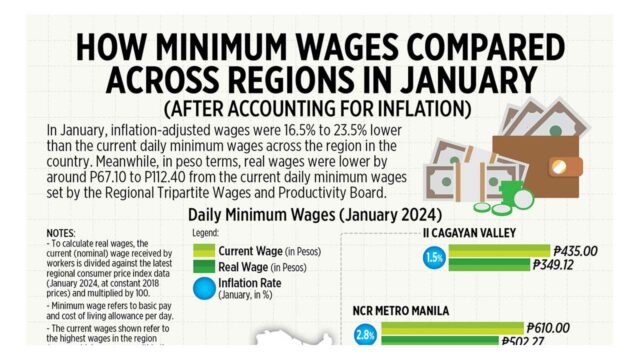
How minimum wages compared across regions in January

(After accounting for inflation)

In January, inflation-adjusted wages were 16.5% to 23.5% lower than the current daily minimum wages across the region in the country. Meanwhile, in peso terms, real wages were lower by around P67.10 to P112.40 from the current daily minimum wages set by the Regional Tripartite Wages and Productivity Board.


How minimum wages compared across regions in January

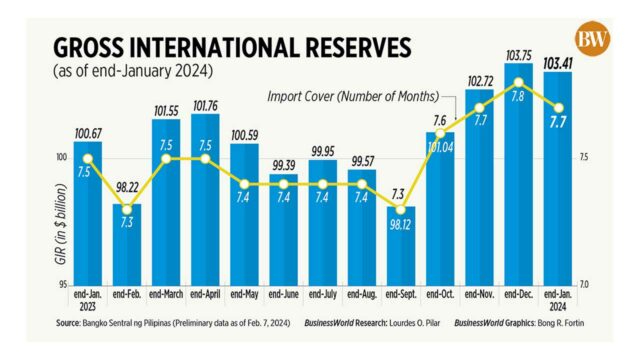
Gross International Reserves

THE PHILIPPINES’ gross international reserves (GIR) inched down in January following three straight months of growth as the National Government paid some of its debt. Read the full story.

Gross International Reserves

Transformational growth through sustainability, diversity and digitalization

Leading think tanks, analysts and multilateral agencies expect the Philippines to become a high middle-income country within the decade and the 18th largest economy in the world by 2050. This growth is expected to be fueled by our traditional economic drivers of remittances and BPO revenues, coupled with the demographic dividend from a growing and young population. It is against this backdrop that corporations and entrepreneurs have developed their plans and budgets to make the necessary investments that will allow them to capture opportunities and expand their businesses. And yet, given the volatile environment filled with the complex issues that we face, it is difficult to imagine how we can achieve our growth goals.

As I reflected on these, I was reminded of a quote attributed to Andy Grove that best summarizes his book Only the Paranoid Survive: “A corporation is a living organism; it has to continue to shed its skin. Methods have to change. Focus has to change. Values have to change. The sum total of those changes is transformation.”

This is the real challenge of our times — how to achieve “transformational growth” in what is perhaps the inflection point that will either see us rise to expected economic success or muddle along with the rest of the world. Which then begs the question: How do we make it happen? Let me propose three components that I believe drive transformational growth — sustainability, diversity and digitalization.

SUSTAINABILITY
In the realm of ESG, environmental sustainability stands out as a pivotal pillar. The urgency to preserve our planet has never been more apparent, with climate change and environmental degradation posing existential threats.

The Philippine government has demonstrated its commitment on the global stage by signing key international agreements. The Kyoto Protocol in 2003 and the Paris Agreement in 2016 affirmed its intention to reduce greenhouse gas emissions and combat climate change.

And more recently, it has participated in the Conference of Parties (COP) meetings, including COP28, where nations come together to address global environmental challenges. These efforts underscore the country’s commitment to preserve biodiversity and foster sustainability nationally and internationally and encourage us to integrate environmentally sustainable practices into our daily lives.

As finance executives, we must recognize the impact our decisions can have on the environment and strive to align our corporate strategies with sustainable practices. We wield considerable influence over resource allocation and corporate decision making. Incorporating ESG metrics into financial evaluations, encouraging disclosure of environmental impacts and fostering a culture of environmental responsibility are integral steps. Moreover, promoting responsible investing and engaging in collaborative industry initiatives can amplify our impact.

At Ayala Land, Inc., realizing that our products and services are valued by generations, we have ingrained sustainability at our core. This thrust has driven positive change, yielding substantial benefits. Our journey began in 2007 when we formalized sustainability as a guiding principle in land use and development. Then, in 2009, we launched our first sustainable estate in the country, Nuvali, spanning 2,290 hectares and straddling the cities of Sta. Rosa, Cabuyao and Calamba in Laguna. In the same year, our board formed a sustainability committee to oversee Ayala Land’s sustainability program.

In 2014, following a materiality process, we identified our four focus areas — site resilience, pedestrian mobility and transit connectivity, resource efficiency, and local economic development. Fast forward to 2017, we announced our carbon neutrality program, wherein we aimed to neutralize scope 1 and 2 emissions from our commercial properties.

In 2021, aligning with global efforts to prevent the earth’s temperature from exceeding 1.5C, we announced, as part of the Ayala group of companies, our commitment to achieve net-zero emissions by 2050. Our business-as-usual growth scenario predicts a simultaneous rise in carbon emissions, necessitating immediate and critical interventions. To address this now, our proactive measures involve a comprehensive strategy that includes increased use of renewable energy and sustainable sources alongside the decarbonization of our supply chain and downstream activities. Anticipated results include an emission reduction of more than 50% of our 2030 target compared with the business-as-usual scenario, propelling us significantly closer to our 2050 goal of net-zero emissions.

Along this journey, our sustainable practices have not only aligned us with the values of an evolving consumer base demanding more livable spaces, but have also encouraged a culture of innovation within our organization.

Encouraging eco-friendly solutions has led to the advancement of pioneering concepts and developments in our country. Among these are the One Ayala Integrated Transport Hub, the transit connectivity and pedestrianization of the Makati central business district, Bonifacio Global City and our other estate developments, circular waste management systems aimed at diverting waste that would otherwise go to landfills and recycling practices that have led to the commercial production of eco-bricks and pavers and precast walls and stairs.

Including sustainability in our business practices and strategies not only protects our environment for future generations but also positions our companies for resilience and long-term growth.

DIVERSITY
Diversity is the condition of having or being composed of differing elements or qualities, according to the Merriam-Webster dictionary. It is within this context that I refer to diversity as a growth enabler, fostering an inclusive environment that values and learns from diverse backgrounds, experiences and perspectives. Recognizing the importance of diversity acts as a catalyst for innovation and untapped potential. Diverse teams bring fresh approaches to problem-solving, stimulating creativity and leading to more holistic solutions to complex challenges. A Boston Consulting Group study pointed out that companies with more diverse management teams had 19 percentage points higher innovation revenues than those with below-average diversity scores. In addition, inclusive companies are 1.8 times more likely to be change-ready than their less inclusive peers.

Ayala Land, led by Meean Dy, the company’s first female CEO in its 35-year history, is strategically incorporating talents and experts from various fields including digitalization, HR and hotel operations. As the company continues its customer-centric cultural transformation, which requires innovative thinking, creativity and change readiness to be successful, it recognizes the need to bring to the table diverse skill sets, expertise and backgrounds to provide unique problem-solving approaches while fostering a dynamic environment that allows ideas to flourish. This year, the company will establish a council to develop its diversity framework and initiatives.

DIGITALIZATION
In the rapidly evolving landscape of today’s global economy, digitalization is not a mere choice; it is imperative not only for growth but also for survival and relevance. Nations and companies face complex challenges ranging from managing vast amounts of data, ensuring efficient and transparent operations and enhancing engagement with customers and stakeholders. Digitalization is the key to unlocking innovative solutions for these challenges.

In the Philippines, the government has been promoting digitalization through initiatives like the National ICT Ecosystem Framework, which focuses on enhancing the country’s digital infrastructure, fostering innovation and promoting the use of technology for economic growth. There’s also the e-Government Master Plan, which “aims to create a networked and collaborative environment for improved public service delivery” through the digital transformation of essential public services. Recognizing that digitalization is not just a technological upgrade but a strategic imperative, the Philippine government’s efforts exemplify the crucial role of embracing technology for national development.

Over the past decade, we at Ayala Land have diligently built our digital foundation by following a roadmap, establishing and investing in our captive BPOs, adopting and continuously upgrading our enterprise resource planning system and fortifying our cybersecurity measures. Today, we have embarked on digitalization 2.0, with a focus on elevating customer experience.

As we refine this strategy, we have brought in industry experts to ensure our approach is not only comprehensive but also superior in delivering value to our stakeholders. Digitalization is not merely a technological shift but a strategic move to remain at the forefront in an increasingly competitive and digital-centric world.

TRANSFORMATIONAL GROWTH
Why do sustainability, diversity and digitalization lead to transformational growth? The answer lies in recognizing that these are not isolated endeavors; they are interwoven threads shaping the fabric of a future-ready organization.

Sustainability guarantees our longevity and adaptability. Diversity brings depth to our perspectives, fostering innovation and resilience. Digitalization, the backbone of modern enterprises, allows us to efficiently deliver new products and services, find new ways to engage customers and turn them into lifelong partners.

These three components are key to achieving Ayala Land’s aspiration to grow at 2x the country’s GDP or to double its net income by 2028, translating to an annual compounded growth of 15%.

As finance executives, we are responsible for navigating our organizations through these challenging times. It is incumbent that we collectively harness the power of sustainability, diversity and digitalization to chart a course toward a future marked by growth and collective prosperity.

The views and opinions expressed here are those of the author and do not represent the views of Ayala Land and FINEX.


Augusto “Toti” D. Bengzon is the CFO, chief compliance officer and treasurer of Ayala Land, Inc., and the 2024 FINEX president.