Home Blog Page 3648

Age, mental capacity dominate presidential campaign trail after report questions Biden’s memory
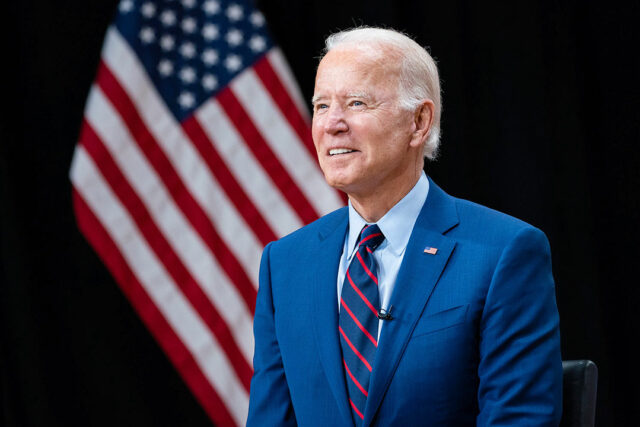
US PRESIDENT JOSEPH R. BIDEN — WHITEHOUSE.GOV

THE MENTAL ABILITY and age of the United States’ presidential candidates took center stage on the campaign trail on Saturday, following a report that suggested President Joseph R. Biden was suffering memory lapses.

Former President Donald Trump accused both Mr. Biden, the Democrat he will likely face in November’s general election, and Nikki Haley, Trump’s last remaining rival for the Republican presidential nomination, of lacking the mental capacity to be president.

Ms. Haley — like Trump, campaigning in South Carolina where the two will meet in a primary election on Feb. 24 — went after both men, calling Mr. Trump mentally deficient and saying Mr. Biden is too old to be president.

Meanwhile, the Biden White House, responding to the report on Thursday from a Department of Justice special counsel that said Mr. Biden had a poor memory, continued its full-scale attack on Mr. Trump’s age and mental acuity after Mr. Trump recently mixed up names and made other verbal gaffes.

“Every single time Donald Trump opens his mouth, he’s confused, deranged, lying, or worse,” T.J. Ducklo, a Biden spokesman, said in a statement released by Mr. Biden’s reelection campaign.

The issue of mental competency has become a major topic in this year’s presidential campaign. Mr. Biden, 81, and Mr. Trump, 77, are the two oldest men respectively to have been elected president. In recent days, Mr. Biden has mixed up the names of some world leaders.

The issue is a vexing one for Mr. Biden’s reelection campaign. In a Reuters/Ipsos poll conducted in September, 77% of respondents said they agreed with a statement that Mr. Biden was too old to work in government, while 56% said the same of Mr. Trump.

Ms. Haley, 52, has called for mental competency tests for presidential candidates over 75 years old. The issue was thrust front and center again after Special Counsel Robert Hur, a former US attorney in Maryland during Mr. Trump’s administration, said in his report that he chose not to bring criminal charges against Biden following a 15-month investigation into his handling of classified documents because the president cooperated.

Mr. Hur said the Democratic incumbent would be difficult to convict and described him as a “well-meaning, elderly man with a poor memory” who was not able to recall to investigators when his son, Beau Biden, died. Mr. Biden angrily denied Mr. Hur’s allegations about his memory, saying in a White House appearance on Thursday night, “my memory’s fine.”

Trump, at a rally in Conway, South Carolina, said Hur’s report showed Biden “is not fit to serve as our commander in chief.”

Mr. Trump — who faces four state and federal criminal trials, including one for mishandling classified documents — is close to clinching the Republican nomination, and the prospect of a likely general election rematch with Mr. Biden in November. Ms. Haley, who has no clear path to the nomination after Trump’s consecutive wins in Iowa, New Hampshire and Nevada, is refusing to quit the race, making a potential last stand in her home state of South Carolina, where she trails badly in opinion polls behind Mr. Trump.

Mr. Trump on Saturday called his former UN ambassador “birdbrain” and “brain-dead,” suggesting she did not have the mental capacity to enter the White House.

Ms. Haley, beginning a two-week bus tour of South Carolina, called Mr. Biden “diminished.” She also cited a recent Trump speech where he confused her with former Democratic House of Representatives Speaker Nancy Pelosi. “It’s bigger than just Joe Biden. Whether it’s Donald Trump getting me confused with Nancy Pelosi … it’s time for a new generational leader,” Ms. Haley told reporters. — Reuters

Russia launches drone attacks on Kyiv, southern Ukraine, says Ukraine’s military

UKRAINE and Russian flags are seen through broken glass in this illustration taken March 1, 2022. — REUTERS

RUSSIA launched drone attacks overnight on Kyiv and southern Ukraine, injuring at least one civilian and damaging a gas pipeline and residential buildings in the river and sea port of Mykolaiv, Ukraine’s military said on Sunday.

Ukraine’s Air Force said on the Telegram messaging app that its air defense systems destroyed 40 out of 45 Russia-launched Shahed attack drones overnight.

“The air alert in the capital lasted almost two hours,” Serhiy Popko, the head of Kyiv’s military administration, said on Telegram.

He added that over Kyiv all the drones were downed on their approach. According to preliminary information, there were no casualties nor destruction in or near the capital. Skies over Kyiv were declared clear soon before 4 a.m. (0200 GMT).

Ukraine’s southern military command said on Telegram that its air defense systems were engaged for more than five hours and destroyed 26 Russia-launched Shahed drones over several southern regions, chiefly over the Mykolaiv region near the Black Sea.

At least one civilian was injured in the southern Ukraine attack, the military said.

“The priority for the enemy was again the coastal strip of infrastructure and agro-industrial facilities,” the military said.

Falling debris from a downed drone and the blast wave damaged residential buildings and a gas pipeline in Mykolaiv, the military command said.

Four drones downed over the Black Sea port of Odesa, the military said.

Reuters was not able to independently verify the reports. Both Russia and Ukraine have increased their air attacks away from the frontline in recent months, targeting each other’s critical energy, military and transport infrastructure. — Reuters

Pakistan ex-PM Imran Khan’s party aims to form government, urges peaceful protests

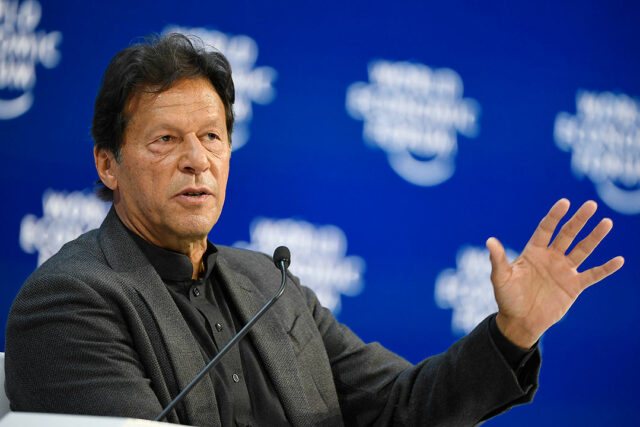
World Economic Forum/Valeriano Di Domenico

ISLAMABAD — Candidates backed by the party of jailed Pakistani opposition leader Imran Khan plan to form a government, a senior aide to the former prime minister said on Saturday, urging supporters to peacefully protest if final election results are not released.

The nation of 241 million people voted on Thursday in a general election, as the country struggles to recover from an economic crisis and battles militant violence in a deeply polarized political environment.

Both Mr. Khan and his main rival, three-time former Prime Minister Nawaz Sharif, declared victory on Friday, increasing uncertainty over who will form the next government at a time when swift policy action is needed to address multiple challenges.

Gohar Khan, the chairman of Khan’s Pakistan Tehreek-Insaf (PTI) party who also acts as the former prime minister’s lawyer, called on “all institutions” in Pakistan to respect his party’s mandate.

At a press conference, he said if complete results of the polls were not released by Saturday night, the party would hold peaceful protests on Sunday outside government offices returning election results around the country.

Hundreds of Mr. Khan’s supporters rallied in the northwestern city of Peshawar led by two of his aides who said they had been declared losers despite having won the polls.

“We never expected it would happen to us,” said Taimur Khan Jhagra, one of Mr. Khan’s former provincial ministers.

The protesters chanted slogans against what they called a vote fraud. Mr. Sharif said on Friday his party had emerged as the single largest group and would talk to other groups to form a coalition government.

By 5 p.m. (1200 GMT) on Saturday, results were still not in for 10 of the 265 seats contested in the election — 48 hours after the polls closed.

The latest tally, posted on the election commission’s website, showed independent candidates had won 100 seats, with Mr. Sharif’s Pakistan Muslim League-Nawaz (PML-N) taking 72 seats.

At least 90 of the victorious independent candidates were backed by Mr. Khan and his party, a Reuters analysis showed — putting them well ahead of Mr. Sharif’s party. Mr. Khan’s supporters were running as independents because they had been barred from contesting the polls under his party’s electoral symbol by the election commission for not complying with electoral laws.

Despite the ban and Mr. Khan’s imprisonment for convictions on charges ranging from leaking state secrets to corruption to an unlawful marriage, millions of the former cricketer’s supporters came out to vote for him, even though he cannot be part of any government while he remains in prison.

However, under Pakistan’s electoral laws, independent candidates are not eligible to be allocated reserved seats, 70 of which are meant to be distributed according to party strength. Mr. Sharif’s party could get up to 20 of these seats.

Mr. Khan’s close aide and media adviser, Zulfi Bukhari, told Reuters the party would announce within the next day the party banner they will ask independents to join. In Pakistan, independent candidates cannot form a government on their own and need to join a party.

“And we have no fear of independents going anywhere, because these are the people who have struggled for the last 18 months and endured all kinds of torture and oppression,” Mr. Bukhari told Reuters in a WhatsApp voice message.

Whoever seeks to form the next government would need support from other parties with no one close to the seat threshold for a simple majority in parliament.

Beside Mr. Khan and Mr. Sharif, the Pakistan Peoples Party of Bilawal Bhutto Zardari, the son of assassinated premier Benazir Bhutto, remains a major player with at least 53 seats.

The rest were won by small parties and other independents. This sets up a period of intense political negotiations over the next few days before a parliamentary vote to elect a new prime minister and government can take place.

“No one can form a government without us,” Mr. Bhutto Zardari told local Geo TV.

‘STABLE HANDS’
Pakistan’s army chief congratulated the country on Saturday for the “successful conduct” of the election, saying the nation needed “stable hands” to move on from the politics of “anarchy and polarization.”

The military remains the country’s most powerful institution and has for decades had a huge role in making and breaking governments. Mr. Khan accuses the military of a crackdown on him and his party. The military denies this. From jail, Mr. Khan released an audio-visual message created with artificial intelligence rather than having a statement read out by his lawyers, as is usually the case, in which he rejected Mr. Sharif’s claim to victory.

In the message posted on social media platform X, he called on his supporters to celebrate what he called a win that had been achieved despite a crackdown on his party and alleged poll rigging to limit the success of PTI-backed candidates.

The United States, Britain and the European Union on Friday each expressed concerns about the electoral process, urging a probe into reported irregularities.

British Foreign Secretary David Cameron cited “serious concerns” that raised questions “about the fairness and lack of inclusivity of the elections.”

Pakistan’s foreign office responded to the comments on Saturday, saying they ignored the “undeniable fact” that the election had been successfully conducted.

“It is our hope that the process will be concluded effectively and it will reflect the will of the people,” said former Nigerian President Goodluck Jonathan, who is leading the Commonwealth team to observe the voting.

Jonathan called on those with grievances over the election to raise them in line with the laws of Pakistan. — Reuter

Russia closes presidential candidate registration with Putin, 3 others

Russian President Vladimir Putin — KREMLIN.RU

RUSSIA’s registration of candidates for the March presidential election has closed, TASS reported on Sunday, with a list including President Vladimir Putin, who is expected to win, and three politicians who all support Moscow’s war in Ukraine.

The list did not include the Russian anti-war candidate Boris Nadezhdin after the Central Election Commission (CEC) barred him on Thursday from running, saying it had found flaws in the collection of signatures required for the support of his candidacy.

The CEC registered Vladislav Davankov, deputy chair of the Russian Duma and a member of the New People caucus; Leonid Slutsky, the leader of the Kremlin-loyal ultra-nationalist Liberal Democratic Party (LDPR); and the Communist Party nominee, Nikolai Kharitonov.

Mr. Putin, 71, who has chosen to run as an independent rather than as the candidate of the ruling United Russia party and who has been Russia’s paramount leader since 2000 and controls all the state’s levers, is expected to easily win next month’s vote.

While nobody has expected the 60-year-old Nadezhdin — who has characterized Putin’s war in Ukraine as a “fatal mistake” — to win, his trenchant criticism has surprised some analysts. The Kremlin has said it does not see him as a serious rival to Mr. Putin.

Mr. Nadezhdin said on Thursday he would challenge the CEC’s decision in Russia’s Supreme Court.

The war, which the Kremlin calls a “special military operation,” is nearing the end of its second year. It has killed thousands on both sides, displaced millions of Ukrainians, and turned scores of cities and villages into rubble. — Reuters

Hermes to raise prices after Q4 sales boom

PARIS — Birkin bag maker Hermes said it will raise prices this year after sales jumped 17.5% in the fourth quarter of 2023, demonstrating the resilience of high end shoppers despite economic headwinds.

Sales for the three months to the end of September totalled 3.36 billion euros ($3.62 billion), up 17.5% at constant foreign exchange rates. That was ahead of expectations for 14% growth, according to Visible Alpha consensus estimates.

The company plans to lift prices by between 8% and 9% this year globally, executive chairman Axel Dumas told reporters on Friday.

One of the most consistent performers in the luxury goods industry, Hermes has a track record of outpacing rivals when economic conditions deteriorate, thanks to its classic designs and careful management of production and stocks, which helps maintain the label’s aura of exclusivity.

Handbags like the coveted $10,000 plus Birkin model are affordable only for the wealthiest shoppers — who are typically the more immune to choppy economic conditions.

Hermes will pay a 4,000 euro bonus to each of its over 22,000 employees worldwide, the company said. — Reuters

New highs for Nikkei, nervous new year break for China

REUTERS

SINGAPORE — Japanese shares hit 34-year highs on Friday as world stocks eyed a third week of gains, while adjustments to interest rate expectations sent the yen to a two-month low and the Australian and New Zealand dollars in opposite directions.

In China, mainland markets were closed and Hong Kong traded thinly and shut early, with the Hang Seng down 0.8% amid nerves authorities may not deliver on promises for support.

The index lost 29% in the zodiac year of the rabbit and the dragon year begins with China sentiment in the dumps and expectations of some sort of support announcement in Lunar New Year holiday.

“I am betting that (decisive action) is happening,” said Chi Lo senior markets strategist for Asia Pacific at BNP Paribas Asset Management.

“But it is a leap of faith so to speak. Because the Chinese government has made too many promises and the market and investors have been frustrated by the lack of follow up … so we do need to see Beijing come up with concrete measures.”

MSCI’s broadest index of Asia-Pacific shares outside Japan fell 0.3% though still eked a weekly rise.

Japan’s Nikkei, which has been receiving a gush of foreign inflows as investors flee China, rose 0.3%, aided by a retreating yen that traded at its weakest in more than two months at 149.49 per dollar.

SoftBank led gains in Tokyo with a 10% rise as it swung to profit and shares in its Arm chip design unit leapt almost 50% after an upbeat revenue forecast.

Nissan shares collapsed almost 12% for their largest fall in decades after the automaker cut its outlook on slumping China sales.

Margin improvement drove shares in building-materials maker Boral up more than 8% to a record high in Australia.

In commodities, Brent crude futures were at $81.46 a barrel and on course for a weekly gain of more than 5% following Israel’s rejection of a ceasefire offer from Hamas and a US strike on an Iran-backed militia commander in Iraq.

REVISION
This week bond markets have been on the back foot in the wake of a strong jobs report and a chorus of central bank comments labouring on reticence on rate cuts.

Australia’s top central banker warned on Friday there was still some way to go to meet the midpoint of its 2-3% inflation target, and markets pushed out rate cut pricing and had the Aussie dollar heading for a sixth weekly loss in a row.

Across the Tasman Sea, the odds of a further hike from the Reserve Bank of New Zealand are narrowing after ANZ called for two more rate rises in both February and April.

The next policy meeting is on Feb. 28 and markets have shifted to imply around a 38% chance of a hike, compared with almost no chance a week ago.

The New Zealand dollar rose 0.5% to $0.6129 and headed for a 1% weekly gain. The euro was steady at $1.0771. The yen has been weighed by Bank of Japan (BOJ) Deputy Governor Shinichi Uchida saying rapid hikes were unlikely.

Two-year US Treasury yields are up about eight basis points (bps) this week to 4.45%.

Ten-year yields seem to have settled above 4% and were steady at 4.15% on Friday, up 12 bps this week. Bitcoin is up 8.6% on the week to $46,254.

Later on Friday, US inflation revisions will be closely watched for any sign that market assumptions that inflation is in retreat need re-calibration.

“It sounds like something only economics boffins are interested in but last year the revisions were big enough to make the US’s inflation momentum stronger than first thought,” said Corpay currency strategist Peter Dragicevich in Sydney.

“There is a risk this occurs again.” — Reuters

China’s New Year travel rush kicks into high gear, country adds record number of trains

PEOPLE shop for Chinese Lunar New Year decorations in Yu Yuan Garden in Shanghai, China, Jan. 31, 2019. — REUTERS/ALY SONG

BEIJING — China on Friday kicked into high gear on the eve of the annual Lunar New Year holiday, with travelers cramming onto trains and planes to head back to their hometowns and families preparing for traditional reunion dinner gatherings.

The country has been adding travel capacity to help smooth transportation after harsh weather threatened trips for millions returning home for the holiday. Some 1,873 passenger trains were added on one day across a vast railway network, a record according to state media outlet Global Times.

Railway activity ramped up after snow and freezing rain crippled train service earlier in the week, with some passengers stuck on trains for hours after power supplies were cut.

Several provinces rushed to upgrade emergency response measures to remove snow that restricted traffic flow on hundreds of highways, stranding passengers in cars. Authorities worked to clear ice off power lines and train tracks, and de-ice planes and runways at airports.

In the busiest travel migration period in the world, 13.1 million passengers rode on China’s national railway on Wednesday alone. That marked the first time during the Spring Festival travel rush, also known as Chunyun period, that daily passengers exceeded 13 million, according to Global Times.

In Shanghai on Friday, railway stations across the metropolis were expected to have 475,000 passengers, an increase of 61.7% over the same period in 2019, Shanghai government-owned The Paper reported.

For the two weeks leading up to the Spring Festival, the Shanghai railway network was expected to send 7,170,900 passengers, exceeding the total in the same period in 2019, The Paper said.

The eight day-long holiday officially begins on Saturday but many travelers opt to begin their trips earlier. It also marks a year since China fully lifted COVID-19 curbs that had disrupted the holiday for the three years prior.

The turbulent weather in central and south China during the Lunar New Year travel season, the worse seen in years, was expected to spoil trips home for hundreds of millions.

In 2008, unseasonably cold weather and ice storms across central and southern China killed at least 129 people, caused transport chaos and cut off power and water for millions as people struggled to get home.

Chinese weather forecasters predict normal seasonal temperatures in most areas over the next few days. — Reuters

North Korea leader Kim: we will wipe out enemies if they use force -KCNA

KCNA VIA REUTERS
SEOUL — North Korean leader Kim Jong Un said the country would not hesitate to use all of its military power to wipe out enemies if any of them used force against it as he marked the anniversary of the founding of its military, state media reported on Friday.
Kim made the comments during a visit to the defense ministry on Thursday, rallying soldiers to uphold the ideology of the ruling Workers’ Party and defend the country with their lives, KCNA news agency reported.
“If enemies try to use force against our country, we will make the bold decision to change history and not hesitate to use all our super power to wipe them out,” KCNA quoted him as saying.
Kim repeated his vow to never hold dialogue or negotiations with South Korea, which he said was his country’s “enemy No. 1,” and said the policy of powerful military readiness was the only way to ensure peace and security for North Korea, KCNA said.
Kim declared at a major meeting of the ruling party at the end of 2023 that peaceful reunification is impossible and his country was making a policy change on how it deals with the South, in a major shift redefining its ties with Seoul.
The KCNA report said Kim made the visit to the defense ministry with his “respected daughter,” indicating he was accompanied by his daughter Ju Ae, who is expected by analysts to play a possible future role in the country’s leadership.
North Korea has marked the foundation of its military on Feb. 8 and last year held a large military parade at midnight showcasing its largest intercontinental ballistic missiles.
State media made no mention of a similar large-scale event this year but said there was a parade of an honor guard for Kim at the defense ministry and that he attended a banquet with military commanders and soldiers to celebrate the anniversary. – Reuters

Malaysia’s top court declares some state Islamic laws unconstitutional

STOCK PHOTO | Photo by Thilipen Rave Kumar: https://www.pexels.com/photo/assorted-flags-1625603/
KUALA LUMPUR — Malaysia’s top court on Friday declared more than a dozen Islamic laws enacted by the state of Kelantan as unconstitutional, in a landmark decision that could affect the legality of similar sharia laws in other parts of the Muslim-majority country.
Malaysia has a dual-track legal system with Islamic criminal and family laws applicable to Muslims running alongside civil laws. Islamic laws are enacted by state legislatures while civil laws are passed by Malaysia’s parliament.
A nine-member Federal Court bench, in an 8-1 decision, declared 16 laws in Kelantan’s sharia criminal code “void and invalid”, including provisions criminalizing sodomy, incest, gambling, sexual harassment, and desecrating places of worship.
Chief Justice Tengku Maimun Tuan Mat who delivered the majority judgement said the northeastern state had no power to enact the laws, as their subject matter were covered under parliament’s law-making powers.
“The essence of those provisions are matters under the federal list which only parliament has the power to make,” she said.
Kelantan, which lies just south of Thailand in Malaysia’s north, is governed by Parti Islam Se-Malaysia (PAS) which has advocated for a stricter interpretation of Islamic law.
The constitutional challenge was filed by a Kelantanese lawyer and her daughter against laws covering sharia offenses that were passed by the state and came into force in 2021.
The case has sparked uproar among some conservative Muslim groups, who fear the challenge could undermine the position of Islam in Malaysia.
Security was tight around the court complex in Malaysia’s administrative capital Putrajaya as around 1,000 demonstrators gathered outside to protest the case. They prayed and chanted “God is great” as the judgement was delivered.
Nik Ahmad Kamal Nik Mahmod, a law professor at Malaysia-based Taylor’s University, said the decision could have a “domino effect” with sharia laws in other states likely to see similar challenges.
“There is a need to rewind and reconsider the existing states’ jurisdiction on Islamic law,” he said, adding that Malaysia’s constitution should be amended to avoid conflicts between sharia and civil laws. – Reuters

Putin, in rare US interview, says Russia has no interest in wider war

RUSSIAN PRESIDENT VLADIMIR PUTIN — KREMLIN.RU-COMMONS.WIKIMEDIA.ORG
Russian President Vladimir Putin said in an interview that aired on Thursday that Russia will fight for its interests “to the end” but has no interest in expanding its war in Ukraine to other countries such as Poland and Latvia.
In his first interview with an American journalist since before Russia’s invasion of Ukraine nearly two years ago, Mr. Putin said Western leaders had come to realize it was impossible inflict a strategic defeat on Russia and were wondering what to do next.
“We are ready for this dialogue,” he said.
Mr. Putin also said he believed it was possible to reach an agreement to free US journalist Evan Gershkovich of the Wall Street Journal, who has been detained in Russia for nearly a year and is awaiting trial on spying charges.
the Russian leader made the comments in a more than two-hour interview with conservative talk-show host Tucker Carlson that was conducted in Moscow on Tuesday and aired on tuckercarlson.com.
Asked if he could imagine a scenario in which he would send Russian troops to Poland, a NATO member, Mr. Putin replied:
“Only in one case, if Poland attacks Russia. Why? Because we have no interest in Poland, Latvia, or anywhere else. Why would we do that? We simply don’t have any interest.”
Mr. Putin spoke in Russian and his remarks were dubbed into English. He began with lengthy remarks about Russia’s relations with Ukraine, Poland, and other countries.
Mr. Putin devoted a substantial part of the interview to complaining that Ukraine had been on the verge of agreeing a deal to end hostilities at talks in Istanbul in April 2022, but backed away, he said, once Russian troops withdrew from near Kyiv.
“Well now let them think how to reverse the situation,” he said. “We’re not against it. It would be funny if it were not so sad that. This endless mobilization in Ukraine, the hysteria, the domestic problems, sooner or later it will result in an agreement.”
The Russian leader said the US had pressing domestic issues to worry about. “Wouldn’t it be better to negotiate with Russia? Make an agreement. Already understanding the situation that is developing today, realizing that Russia will fight for its interests to the end,” Mr. Putin said.
Washington, which has sent Ukraine more than $110 billion in aid since Russia invaded in February 2022, has made clear it has no interest in talking on Mr. Putin’s terms
Mr. Putin was last formally interviewed by a US media outlet in October 2021, when CNBC’s Hadley Gamble spoke to him.
The Carlson interview came as US lawmakers debate whether to provide more money for Ukraine’s war effort. It also aired the same day as Ukrainian President Volodymyr Zelenskiy replaced the popular army chief with his ground forces commander.
A procedural vote in the US Senate helped advance a bill that includes $61 billion in new funds for Ukraine, but it faces uncertainty in the Republican-dominated House of Representatives where dozens of members, particularly those closely allied with former President Donald Trump, have voted against Ukraine aid.
PROGRESS IN JOURNALIST’S CASE
Mr. Putin said Russian and American special services were discussing the Gershkovich case and had made some progress.
Mr. Putin suggested that in return, Moscow wanted Germany to free Vadim Krasikov, who was convicted of the 2019 murder of a Chechen dissident in Berlin, although he did not mention Krasikov by name.
“There have been many successful examples of these talks crowned with success,” Mr. Putin said. “Probably this is going to be crowned with success as well but we have to come to an agreement.”
Russia and the United States have agreed high-profile prisoner swaps in the past – most recently in December 2022 when Moscow traded Brittney Griner, a US basketball star convicted of a drugs offense in Russia – for Russian arms trafficker Viktor Bout.
The Kremlin said Mr. Putin agreed to the Carlson interview because the approach of the former Fox News host differed from the “one-sided” reporting of the Ukraine conflict by many Western news outlets.
Mr. Carlson is considered to have close connections to Mr. Trump, who is expected to be the Republican Party candidate in the November US presidential election.
Complaining about the billions of dollars in aid sent to Kyiv so far, Mr. Trump has called for de-escalation of the war in Ukraine, in which the Biden administration has strongly backed the Zelenskiy government.
For his part, Mr. Carlson has said much Western media coverage of the war is biased in Kyiv’s favor. – Reuters

Biden will not face criminal charges for mishandling classified papers, says ‘memory is fine’

US PRESIDENT JOSEPH R. BIDEN — WHITEHOUSE.GOV
WASHINGTON — President Joe Biden will not face charges for knowingly taking classified documents when he left the vice presidency in 2017, according to a prosecutor’s report released Thursday that will raise new problems for the Democrat as he seeks reelection.
Special Counsel Robert Hur said he opted against bringing criminal charges following a 15-month investigation because Biden cooperated and would be difficult to convict, describing him as a “well-meaning, elderly man with a poor memory.”
Mr. Hur’s conclusion ensures that Biden, unlike his expected 2024 presidential rival Donald Trump, will not risk prison time for mishandling sensitive government documents.
But it could cause further embarrassment for Mr. Biden, 81, as the oldest person to ever serve as US president tries to convince voters that he can serve another four-year term.
“Mr. Biden would likely present himself to a jury, as he did during our interview of him, as a sympathetic, well-meaning, elderly man with a poor memory,” wrote Mr. Hur, who served as the top federal prosecutor in Maryland during the Trump administration and was tapped to lead the Biden probe by Attorney General Merrick Garland in January 2023.
Biden has also sought to draw a contrast with Mr. Trump, 77, on issues of personal ethics and national security.
In a speech to congressional Democrats in Virginia, President Biden emphasized that he had cooperated with the investigation.
“I did not throw up any roadblocks. I sought no delays,” Mr. Biden said, adding that Mr. Hur noted he returned the classified documents, while “Mr. Trump allegedly did the opposite.”
Mr. Trump has described the four criminal prosecutions he faces — including one for his handling of classified documents — as politically motivated. He has claimed, without evidence, that Mr. Biden was behind the state and federal cases.
“THIS HAS NOW PROVEN TO BE A TWO-TIERED SYSTEM OF JUSTICE AND UNCONSTITUTIONAL SELECTIVE PROSECUTION!” Trump wrote on social media.
Mr. Trump’s allies seized on the report to underline concerns about President Biden’s age.
“If you’re too senile to stand trial, then you’re too senile to be president,” said Alex Pfeiffer, a spokesperson for Make America Great Again, a group allied with Trump.
MEMORY ISSUES
Mr. Hur wrote that the president’s memory was “severely limited” when he was interviewed by members of his prosecution team. Mr. Biden forgot what year his term began as vice president under President Barack Obama and when it ended, Hur wrote, and he forgot what year his son Beau died.
Mr. Biden grew emotional about the inclusion of his son in the special counsel report during remarks at the White House.
“How the hell dare he raise that. Frankly when I was asked the question I thought to myself, wasn’t any of their damn business,” Mr. Biden said.
He also defended his mental acuity, declaring, “my memory is fine.”
President Biden’s lawyers said his memory lapses were not unusual for someone trying to describe events that took place years ago. “Such comments have no place in a Department of Justice report,” they wrote in comments included in Mr. Hur’s report.
After the report’s release, Mr. Biden’s lawyers criticized Mr. Hur for overreach.
“It was plain from the outset that criminal charges were not warranted,” his personal lawyer Bob Bauer said. “Yet the special counsel could not refrain from investigative excess.”
‘INAPPROPRIATE COMMENTS’
White House lawyer Richard Sauber said Mr. Hur’s report contained “a number of inaccurate and inappropriate comments.”
Hur found that Biden took a handwritten memo to then-President Obama in 2009 opposing a planned troop surge in Afghanistan, and handwritten notes related to intelligence briefings and national security meetings.
Mr. Biden told his ghostwriter during a conversation in February 2017, a month after leaving the vice presidency, that he had “just found all the classified stuff” downstairs in a home he was renting in Virginia, referring to documents on the US war in Afghanistan.
Mr. Hur’s report found that President Biden read aloud classified notebook passages to his ghostwriter on at least three occasions recounting meetings in the White House Situation Room.
The ghostwriter deleted audio recordings of his conversations with Mr. Biden after learning about the special counsel’s investigation but kept transcripts, Mr. Hur said.
Mr. Hur wrote that President Biden’s actions “present serious risks to national security, given the vulnerability of extraordinarily sensitive information to loss or compromise to America’s adversaries.”
But he said the documents may have been taken to Mr. Biden’s home while he was vice president, when he had the authority to keep such documents.
Mr. Hur’s investigators interviewed Mr. Biden in October as part of his probe.
Mr. Hur said President Biden would not have faced charges, even absent a longstanding Justice Department policy against indicting a sitting president.
Members of Mr. Biden’s legal team found the classified papers at the office of his Washington think tank and his personal residence in Wilmington, Delaware.
Mr. Trump faces a 40-count federal indictment for retaining highly sensitive national security documents at his Florida resort after leaving office in 2021 and obstructing US government efforts to retrieve them.
While the two cases have similarities, there are also some notable differences.
The White House said Mr. Biden’s attorneys found a small number of classified documents and turned them over after discovery.
Mr. Trump resisted doing so until a 2022 FBI search turned up about 100 classified documents, leading to obstruction of justice charges against the former leader and two employees at his Mar-a-Lago resort.
Mr. Trump has pleaded not guilty. A trial is scheduled for May but is likely to be delayed. – Reuters

Thailand, Malaysia, Singapore hope to lure Chinese with visa-free travel

BW FILE PHOTO
SINGAPORE/BANGKOK — Chinese engineer and aviation enthusiast Wei Ming is exactly the kind of visitor the tourism authorities in Singapore, Malaysia, and Thailand are looking for.
After Singapore scrapped visas for Chinese citizens, Wei, 44, said he ditched plans to go to Australia and booked a six-day holiday there instead. He said he also looked into visiting Bangkok and Kuala Lumpur, the two other visa-free Southeast Asian countries, but decided on the city-state because of the Singapore Airshow, which opens to the public on Feb 24.
As thousands of Chinese prepare to go abroad during the first Spring Festival holiday since Beijing lifted pandemic travel restrictions last year, Singapore, Thailand, and Malaysia are hoping their unprecedented visa waivers will lure a large proportion of these visitors – and their much-needed spending.
Chinese travellers often complain about the length of time and the hassle it takes for them to obtain travel visas, and their passport is 62nd on the Henley Passport Index, which ranks the passports of 199 countries according to the number of destinations their holders can access without a prior visa.
While waiving visas can make a destination more attractive, China’s slowing economic growth, job uncertainties and decline in income this year are likely to temper any outbound travel, analysts say.
“There is a feeling that the economic hardships and lack of disposable income are hitting much harder than in other parts of the world and that any travel is therefore staying within China where costs are lower,” said John Grant, chief analyst at travel data firm OAG, adding that the three Southeast Asian countries “may be looking for the trickles.”
BIG SPENDERS
Before the pandemic, Chinese tourists were a vital source of revenue, accounting for more than a quarter of all holiday makers to Thailand in 2019. Chinese visitors were also the top spenders in Singapore, splashing out over S$4 billion ($3 billion) that same year.
Even though fewer Chinese are traveling than before the pandemic, Chinese account for the bulk of visitors to Thailand, which launched its visa waiver in September, and tourism authorities there say they expect 177,000 Chinese tourists for the Lunar New Year holiday, more than three-times 2023 levels.
“The direction has been good since the visa free program,” said Chattan Kunjara Na Ayudhya, deputy governor at the Tourism Authority of Thailand. “It’s starting to get back to pre-pandemic levels.”
Malaysia’s visa-free deal for Chinese started in December, and it is hoping to attract 5-7 million Chinese visitors this year, which would be almost double pre-pandemic levels.
For the Lunar New Year, hotels including those under The Ascott Limited group, are launching promotions such as discounts and special activities and snacks for the festival.
Because of its status as an Asian air traffic hub, Singapore is ahead of its Southeast Asian rivals in flying in Chinese visitors, with the number of direct flights connecting mainland China rising nearly 5% this month from the same month in 2019.
Both Malaysia and Thailand still have far fewer direct flights: 33% and 17% less than 2019 levels respectively, data from aviation analytics firm Cirium shows. – Reuters