Home Blog Page 364

CICC warns vs AI-driven love scams

STOCK PHOTO | Image by terimakasih0 from Pixabay

THE Cybercrime Investigation and Coordinating Center (CICC) have warned Filipinos against the rising cases of artificial intelligence (AI)-driven love scams, which could increase emotional and financial harm among victims.   

“Artificial intelligence allows scammers to sustain emotional manipulation through fake identities, automated conversations, and staged interactions, making love scams more organized, more convincing, and more dangerous,” CICC Executive Director Renato A. Paraiso said in a statement on Monday.

“These schemes are no longer isolated incidents but coordinated operations designed to emotionally groom victims before exploiting them financially,” he said.

Jocel G. De Guzman, co-founder of group Scam Watch Pilipinas, said the most common love scams include those sharing personal stories before asking money; scammers posing as foreigners drawing victims into fake foreign exchange or cryptocurrency schemes.

Another love-scam profile is “The Seducer,” who “relies on attractive profile photos, quickly steers conversations toward sexual topics, overshares personal details, and may solicit nude photos that can later be used for blackmail.”

Other profiles include which attempt to seek money from victims include “The Serviceman” and “The Escort,” while the “Slow Burn” tries to “build trust gradually through seemingly harmless conversations and personal anecdotes… and later manipulates victims into sending money.”

“Scammers now use AI-generated photos and fabricated identities to create realistic online personas, while scripted and automated conversations allow them to communicate with multiple victims at once in a consistent, emotionally calculated manner,” the group said. — Beatriz Marie D. Cruz

DoT to adopt LANDBANK digital payment portal

LAND BANK of the Philippines (LANDBANK) has expanded its partnership with the Department of Tourism (DoT) as it digitalizes tourism payments and streamline procurement via the bank’s digital payments portal.

“By streamlining payments and accelerating procurement processes, we aim to support the DoT in focusing even more on its core mission — promoting our country, empowering tourism enterprises and workers, and welcoming the world to our shores,” LANDBANK President and Chief Executive Officer Lynette V. Ortiz said in a statement on Monday.

Under two memoranda of agreement, signed with Tourism Secretary Ma. Esperanza Christina C. Frasco on Jan. 13, the DoT will adopt the LANDBANK Link.BizPortal, which conducts online payments for accreditation, regulatory fees, penalties, and bidding documents for commercial establishments and businesses.

LANDBANK said the “plug-and-play” system is expected to streamline administrative processes and reduce manual interventions for DoT.

The DoT will also be enrolling in the Government Purchase Card program, with an initial rollout covering 16 regional directors nationwide.

The program aims to strengthen internal financial controls while expediting the procurement of goods and services essential to tourism operations.

“We are happy that LANDBANK has seen and supported the vision of the Department of Tourism. In many ways our work is very similar in that its main goal is community development — ensuring that our local communities benefit from access to economic opportunities,” said Ms. Frasco. — Aaron Michael C. Sy

DoTr working on Calbayog Airport upgrade for jet operations

THE Department of Transportation (DoTr) said it is now coordinating with airlines to prepare Calbayog Airport to service jet operations.

Transportation Acting Secretary Giovanni Z. Lopez said the DoTr is in close coordination with airlines, as well as the government of Calbayog in Samar to prepare the airport to service jet operations.

The DoTr said the Civil Aviation Authority of the Philippines (CAAP) is set to allocate P60 million for the asphalt overlay of 300 meters of runway.

The agency earlier said that upgrading provincial airports would help reduce domestic airfares by enabling them to accommodate jet operations.

CAAP has also earmarked nearly P100 million for the correction of the runway, which is up for bidding by March, and another P10 million for the airport fencing, the DoTr said.

The precision approach path indicator light will also be installed along the runway to enhance visual, vertical guidance for aircraft during landing in preparation for its night operations, the DoTr said, adding that the new modern tower is set to be completed within this month.

Meanwhile, the Department of Public Works and Highways said it is in coordination with the Philippine Ports Authority (PPA) for the implementation of Calbayog Coastal Road project.

Public Works Secretary Vivencio B. Dizon said the Calbayog Coastal Road project will provide an alternate route for motorists in the province, while also easing traffic congestion.

In a separate media release, the Transportation department and PPA said they are fast-tracking port upgrades in Bicol, and Samar.

The agencies said the port regulator has now outlined plans to rehabilitate ports in Matnog, particularly the terminal expansion project in the province, while also prioritizing port upgrades in Samar to enhance its maritime links to key hubs. — Ashley Erika O. Jose

32 Sulu soldiers survived Basilan sea mishap

COTABATO CITY — Among the 316 survivors in the boat mishap off the coast of Basilan last week were 32 personnel of an Army unit in Sulu, now back to their duties in the province.

Officials of the Western Mindanao Command (WestMinCom) and a station in Sulu of the state-owned Radyo Pilipinas reported on Monday that Brig. Gen. Alaric Avelino P. Santos, commander of the 1102nd Infantry Brigade (IB) in Sulu, met the 32 personnel at their Jolo headquarters and cheered them on for having survived the ordeal.

The 32 soldiers were among the almost 400 passengers of the M/V Trisha Kerstin 3 that sank before dawn on Jan. 26 near Basilan’s Hadji Muhtamad island town, while sailing for Jolo from the Zamboanga City Port.

Civilian survivors told reporters and personnel of the Basilan Provincial Disaster Risk Reduction and Management Office that among those who calmed them down and helped them put on life vests distributed by crewmen of the ill-fated M/V Trisha Kerstin 3 were the members of the 21st IB onboard.

Emergency responders from the office of Basilan Governor Mujiv S. Hataman and the mayor of Hadji Muhtamad Arsina Kahing-Nanoh, separately told reporters on Monday that the number of boat passengers who perished in the incident is now 43.

WestMinCom’s commander, Army Major Donald M. Gumiran, has ordered officials of their units in Basilan and in Sulu to support the rehabilitation and psychological interventions by different line agencies for rescued passengers of the M/V Trisha Kerstin 3. — John Felix M. Unson

Philippine 2025 pineapple exports up 13.6%

DEL MONTE PHILIPPINES FACEBOOK PAGE

PINEAPPLE EXPORTS are estimated to have grown 13.6% in 2025 to about 775,000 metric tons (MT), supported by increased production and strong demand from key Asian markets, according to the Food and Agriculture Organization (FAO), citing preliminary data.

In a market review, the FAO said Costa Rica likely remained the world’s biggest pineapple exporter in 2025, although the FAO said its shipments were projected to decline 16% to about 2.02 million MT. The Philippines was second, ahead of Ecuador and Honduras.

The FAO attributed the increase in shipments from the Philippines to government investment in the industry.

“The Philippine Department of Agriculture made significant investments in improving yields in key production areas, including via the provision of fertilizer, packaging materials, and training in pest management, which facilitated higher output,” the FAO said.

China remained the leading destination for Philippine pineapples, with exports to the market rising 19% year on year during the first nine months of 2025.

“Growth in exports to China was boosted by a weather-related decline in Chinese domestic production, which resulted in lower yields and lower quality,” the FAO said.

Exports to Japan also grew substantially, increasing 27% year on year in the first nine months, the FAO said.

According to the FAO, the average export unit value of Philippine pineapple shipments was $668 per MT in the first nine months, up 6% from a year earlier.

Meanwhile, the FAO reported weaker export performance for several other Philippine fruits in 2025.

Exports of mango, mangosteen, and guava were estimated to have declined 12.25% to 8,489 MT, while papaya exports were also thought to have fallen 9.64% to 6,476 MT. — Vonn Andrei E. Villamiel

Clark NSCR, Mabalacat depot progress allows fast-tracking of extension — DoTr

A train is seen at the construction site of the Malanday Depot and station in Valenzuela City. — PHILIPPINE STAR/MIGUEL DE GUZMAN

THE Department of Transportation (DoTr) said the North South Commuter Railway (NSCR) Extension project can now be fast-tracked after hitting certain milestones at the rail line’s Clark segment and Mabalacat depot.

In a statement on Monday, the DoTr said the milestones include the installation of the first main support beam for the Clark segment and the start of rail welding at the Mabalacat depot.

It said that the installation of the initial girder will facilitate the installation of massive girders, while the rail welding will lead to the installation and connecting permanent rail across project sites.

The Clark segment or the Contract Package N-04 involves civil engineering works for about 6.5 kilometers of railway track structure which includes the rail line’s underground station at Clark International Airport.

This also covers the construction of the elevated viaduct and bridge, as well as the underground tunnel to Clark airport.

The 147-kilometer NSCR will connect Malolos, Bulacan with Clark International Airport, and Tutuban, Manila with Calamba, Laguna. The P873-billion project is co-financed by the Japan International Cooperation Agency and the Asian Development Bank. It will have 35 stations and three depots. 

Full operations are expected by January 2032; partial operations on the Malolos to Valenzuela segment are projected by December 2027; operations on the Clark to West Valenzuela segment are expected by October 2028.

The DoTr is also bidding out the NSCR’s operations and maintenance contract, which it expects to award within the year.  — Ashley Erika O. Jose

Pangasinan solar project saved one year’s processing time due to green lane system, BoI says

THE green lane system of expedited permits saved a solar project in Pangasinan over a year in processing time, the Board of Investments (BoI) said.

The BoI issued the statement on Monday in conjunction with the start of construction of Spotlight Power, Inc.’s 49.9-megawatt Mabini Solar Power Project.

“Through the facilitation and oversight of the BoI One-Stop Action Center for Strategic Investments (OSACSI), the project was able to secure key permits from separate National Government agencies on an expedited basis, resulting in significant time and cost savings,” it said.

“As a result, the project reached the groundbreaking stage within 11 months from pre-development, compared with the usual two-year timeline for similar undertakings,” it added.

Spotlight Power President Aris Tulalian said the green lane program “helped address regulatory bottlenecks and enabled the project to proceed on an accelerated timeline.”

The project, which will be built by China CAMC Engineering Co., Ltd., is expected to contribute clean and reliable energy to the grid, support the reduction of carbon emissions, and generate employment opportunities.

It forms part of Zenith Renewables, Inc.’s portfolio of renewable energy (RE) initiatives.

“This project sends a strong signal to both local and foreign investors that the Philippines is serious about improving the ease of doing business and advancing high-impact, future-ready investments across the regions,” BoI Governor Marjorie O. Ramos-Samaniego said. 

At the end of 2025, OSACSI endorsed 232 projects for green lane treatment. These account for P6.11 trillion in investments and are expected to generate over 398,000 jobs.

The majority of the projects were in RE, comprising 179 projects worth over P5.2 trillion.

The others were digital infrastructure, infrastructure, food security, manufacturing, and pharmaceuticals.

The BoI tallied 16 operational green-lane projects worth P257.98 billion, while six projects worth P5.03 billion are in the pre-operations stage.

In pre-development are 163 projects worth P5.48 trillion, while 47 projects worth P362.91 billion are under construction.

Established through Executive Order No. 18, the green lane initiative aims to expedite strategic investments and translate investment commitments into actual, on-the-ground projects. — Justine Irish D. Tabile

Thai franchisors exploring PHL expansion, DTI says

CHA-THAI.COM

BRANDS are considering expanding their Philippine footprint through franchising, the Department of Trade and Industry (DTI) said.

In separate social media posts, the DTI said it met with representatives from Thai groups Tiptari Co. Ltd. and ZEN Corp. Group Public Co. Ltd. to discuss possible expansion.

The discussions with Tiptari centered around its ChaTraMue brand’s expansion plans in the Philippines, it said.

“The meeting underscored ChaTraMue’s rapid growth since its 2023 entry, plans to expand beyond Metro Manila, and its strategy to grow through franchising and product distribution,” it added.

ChaTraMue currently operates 14 Philippine outlets.

“The company also expressed interest in expanding its franchising network and identifying local partners for ready-to-drink beverages and ice cream products,” it added.

Meanwhile, ZEN Group, which operates Khiang Restaurant, discussed plans to expand its Thai and Japanese dining concepts in the Philippines, it said.

“Khiang currently operates two branches in Metro Manila, (while) additional outlets are scheduled to open in 2026,” it added. — Justine Irish D. Tabile

Philippines seeks World Bank funding for water, solid waste projects

REUTERS

THE PHILIPPINES is seeking funding from the World Bank for a water, sanitation, and solid waste management project, the bank said.

The Philippines Accelerated Water and Sanitation Project is targeted for approval by the bank’s board on March 30, according to a document uploaded to the bank’s website on Feb. 2.

The project cost is $268.84 million, with the departments of Public Works and Highways  and Interior and Local Government (DILG) serving as implementing agencies.

The project hopes “to increase access to safely managed water supply and sanitation services and improve the performance of water service providers in selected areas of the Philippines,” the World Bank said.

In a separate report, the Philippines is also aiming to obtain a $1.07-billion loan from the World Bank to improve waste management and reduce plastic pollution in the National Capital Region.

The Clean Metro Manila project is estimated to be approved by the board in November with the project cost estimated at $1.07 billion, the bank said in a Jan. 30 report.

Implementing agencies are the DILG, the Department of Environment and Natural Resources, and the Metropolitan Manila Development Authority.

“The first phase of Clean Philippines multiphase programmatic approach will cover Metro Manila, the National Capital Region (NCR), including all of its 17 LGUs (local government units),” it said.

The NCR encompasses 17 LGUs and 1,710 barangays, with 14 million inhabitants.

Solid waste volumes are expected to reach P23.6 million tons by 2025, particularly organic waste and plastics, the bank said, noting poor waste-disposal practices, declining waste-management capacity, and limited plastic-processing capacity.

“Barangays are responsible for solid waste collection but are constrained by the lack of funds and collection trucks,” the World Bank said. — Aubrey Rose A. Inosante

Market-vendor QR system present in over 900 LGUs at end of 2025

People buy food items at a market in Quezon City, Nov. 22, 2024. — PHILIPPINE STAR/MIGUEL DE GUZMAN

THE NUMBER of local government units (LGUs) that have integrated a central bank-backed quick response (QR) code program for public market vendors more than doubled last year, according to the Bangko Sentral ng Pilipinas (BSP).

BSP Deputy Governor Bernadette Romulo-Puyat said 922 LGUs had adopted the Paleng-QR Ph Plus in 2025, more than doubling the year-earlier total.

“From 408 local government units in 2024, we now have more than 900 LGUs that have adopted the program, covering markets, mall stores, and transport hubs nationwide,” she said at a briefing in Dumaguete City.

By 2026, the BSP aims to grow the number to 1,700 LGUs, Ms. Romulo-Puyat said, not counting barangays.

She also noted that the Department of Information and Communications Technology has been tapped to broaden the program’s reach.

Ms. Romulo-Puyat said Information and Communications Technology Secretary Henry Rhoel R. Aguda will assist the central bank by supplying internet connectivity to unconnected markets.

“Secretary Aguda told us to write down kung saan ’yung mga palengke na walang internet connectivity, at bibigyan niya ng Starlink (Secretary Aguda told us to list the markets without internet connectivity and he will give them Starlink),” she said.

The BSP, together with the Department of the Interior and Local Government, launched the Paleng-QR Ph in June 2022 as part of the National Strategy for Financial Inclusion.

In November 2022, it introduced Paleng-QR Ph Plus, which widened the program’s scope to include shopkeepers and tricycle operators and drivers.

The central bank said the initiative seeks to promote the “acceptance of digital payments…in all cities and municipalities.” — Katherine K. Chan

PHL fish catch declining 45,000 MT a year due to overfishing, lax regulation — report

PHILIPPINE STAR/WALTER BOLLOZOS

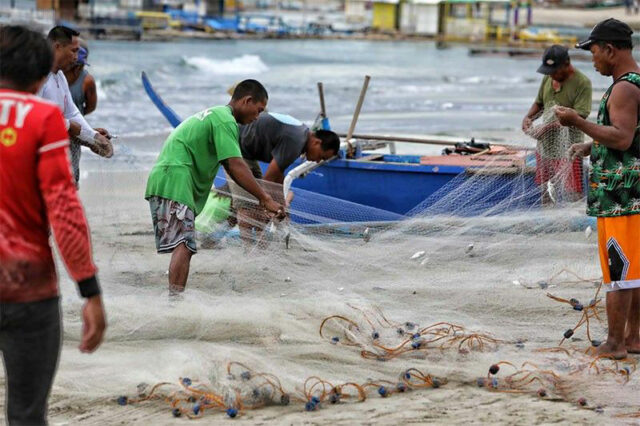
THE Philippine fish catch is declining by an average of 45,000 metric tons (MT) each year due to overfishing, illegal fishing, and weak enforcement of fisheries law, according to Oceana Philippines.

In a report, Oceana Philippines said capture fisheries production fell from 2.6 million MT in 2010 to about 1.9 million MT in 2023, representing an annual loss of 45,472 MT.

“Our fisheries are not just declining, they are in freefall. We’ve lost nearly 600,000 MT of potential catch in just over a decade. That’s enough fish to provide a healthy meal to every Filipino for a month,” Von Glenn S. Hernandez, vice-president of Oceana Philippines, said at the report’s launch on Monday.

The report found that 88% of assessed fish stocks are being harvested faster than they can recover, indicating severe exploitation across most commercially important species.

“Some evidence suggests localized stock recovery in areas such as the Davao Gulf and Zamboanga Peninsula. However, scientific data show many fish populations remain overfished even after years of seasonal closures,” the report said.

The continued depletion of fish stocks poses a serious threat to national food security, the report said. Fish account for 11.7% of the country’s total food requirement.

Illegal, unreported, and unregulated fishing also resulted in an estimated P5.4 billion in losses from 2022 to 2023, which the organization described as economic value “stolen from the sector.”

The group said unregulated fishing and declining fish stocks are exacerbating poverty in coastal communities. In 2023, an estimated 353,000 fisherfolk families were living below the poverty line, including about 93,000 families classified as food-poor or unable to afford basic food needs.

Oceana urged the government to take immediate action by strengthening enforcement of Republic Act (RA) No. 10654, or the amended Philippine Fisheries Code, to curb illegal fishing and ensure the long-term sustainability of the country’s fisheries.

Under the amended Fisheries Code, only municipal fisherfolk — those operating boats weighing less than 3.1 gross tons and employing non-destructive, passive fishing practices such as hook-and-line and gill nets — are allowed to fish within municipal waters. These waters extend up to 15 kilometers from the coastline, including offshore islands.

However, Oceana said only 51% of coastal local government units (LGUs) have complete municipal water delineation.

Data cited in the report also showed that more than 270,000 cases of “apparent intrusions” by commercial fishing vessels into municipal waters were recorded between January 2017 and January 2024.

While Fisheries Administrative Order No. 266 was issued in 2020 to require vessel monitoring measures (VMM) for commercial fishing vessels, Oceana said enforcement gaps have allowed unchecked operations and unverified catch reports to persist.

“The Bureau of Fisheries and Aquatic Resources (BFAR) has not fully utilized the system despite about 90% of commercial vessels (being equipped) with VMM devices as of 2024,” the report said.

Section 18 of the Fisheries Code allows commercial fishing within the 10.1- to 15-kilometer zone of municipal waters, subject to strict conditions, including certification from the National Mapping and Resource Information Authority and the conduct of public hearings.

However, Oceana noted that only one of the 174 coastal LGUs authorizing commercial fishing in municipal waters has complied with all required conditions.

The report also cited staffing and budget constraints at BFAR, noting a 28% drop in personnel from 2017 to 2023, with about 68% of current staff employed on a contractual basis. BFAR also receives only 6% to 15% of the Department of Agriculture’s (DA) budget.

“The challenge is so big relative to the resources available. These declines (in staff and resources) happened despite the expanded mandate of BFAR under RA 10654,” according to Alice Joan G. Ferrer, executive director of Too Big to Ignore Philippines and one of the report’s authors, said at the launch.

Oceana called on the government to strengthen enforcement in hotspot areas, expand BFAR’s workforce and budget, resolve legal impediments to vessel monitoring, and complete municipal water delineation, prioritizing regions with high intrusion rates.

“We will be sharing the report and our demands with the DA and BFAR. The fisheries crisis has been happening under the radar. Hopefully, they take notice and respond with urgency,” Mr. Hernandez told reporters. — Vonn Andrei E. Villamiel


TP opens second BPO office in Davao City

INFORMATION TECHNOLOGY and business process management (IT-BPM) company TP in the Philippines, formerly Teleperformance, said it opened a second site in Davao City, making it its 26th location in the Philippines.

TP Davao Uprise is also the company’s fourth site on Mindanao. It will be located at The Uprise at Felcris Centrale mall.

The company is making a “long-term commitment to regional growth, talent development, and inclusive job creation in the Philippines.”

“The launch of TP Davao Uprise reflects our confidence in Davao City as a strategic growth hub and in Mindanao as a critical pillar of the country’s IT-BPM industry,” Rahul Jolly, chief executive officer of TP, said in a statement on Monday.

“With scale-ready infrastructure, a deep talent pool, and strong public-private collaboration, Davao continues to enable us in TP to deliver world-class service to our clients,” he added.

Mindanao Development Authority Chairman Leo T. Magno said the IT-BPM industry is among the fastest-growing industries  in the region.

“Investments such as TP’s expansion in the Davao Region translate the national vision into concrete outcomes — generating quality, future-ready jobs for Mindanaoans,” he added.

“As TP continues to expand its footprint in Mindanao, it also creates a strong demonstration effect. It sends a clear message to other investors that Mindanao is open, capable, and ready for business,” he added.

According to the company, Davao City is the largest talent hub in Mindanao, being home to over 100,000 IT-BPM professionals. It is also known for low attrition rates.

“Davao continues to prove itself as a destination for resilient, highly capable, and customer-focused talent,” according to Jeffrey Johnson, chief people officer at TP.

“TP Davao Uprise expands our ability to provide meaningful employment, career mobility, and skills development while supporting clients that require specialized, domain-ready teams,” he added. — Justine Irish D. Tabile

ADVERTISEMENT
ADVERTISEMENT