Home Blog Page 3545

The class of 2024

The innovative vehicles confirmed or likely to arrive in PHL this year

By Dylan Afuang

IF YOU’VE BEEN following the goings on in local auto industry — hopefully through “Velocity” and, in which case, we extend our sincerest gratitude — you may have noticed a couple of trends that have been emerging lately.

Competitive upstarts from China have been vying for space in the Philippine market alongside established players that mostly hail from Japan and South Korea. The influx of electrified vehicles (EVs) coming from the world over is stronger than ever, as legislators and automakers embark on reducing the environmental impact of our motoring.

Of course, there’s no forgetting the car world’s responses to customer preferences for crossovers and SUVs.

Validating these trends is the flurry of motor shows and vehicle launches that happened here and abroad last year. The automotive year 2024 will likely be just as vibrant.

That said, we list the innovative models that are confirmed, or those that we predict, to excite and disrupt the local market today.

BMW 5 and i5 Touring
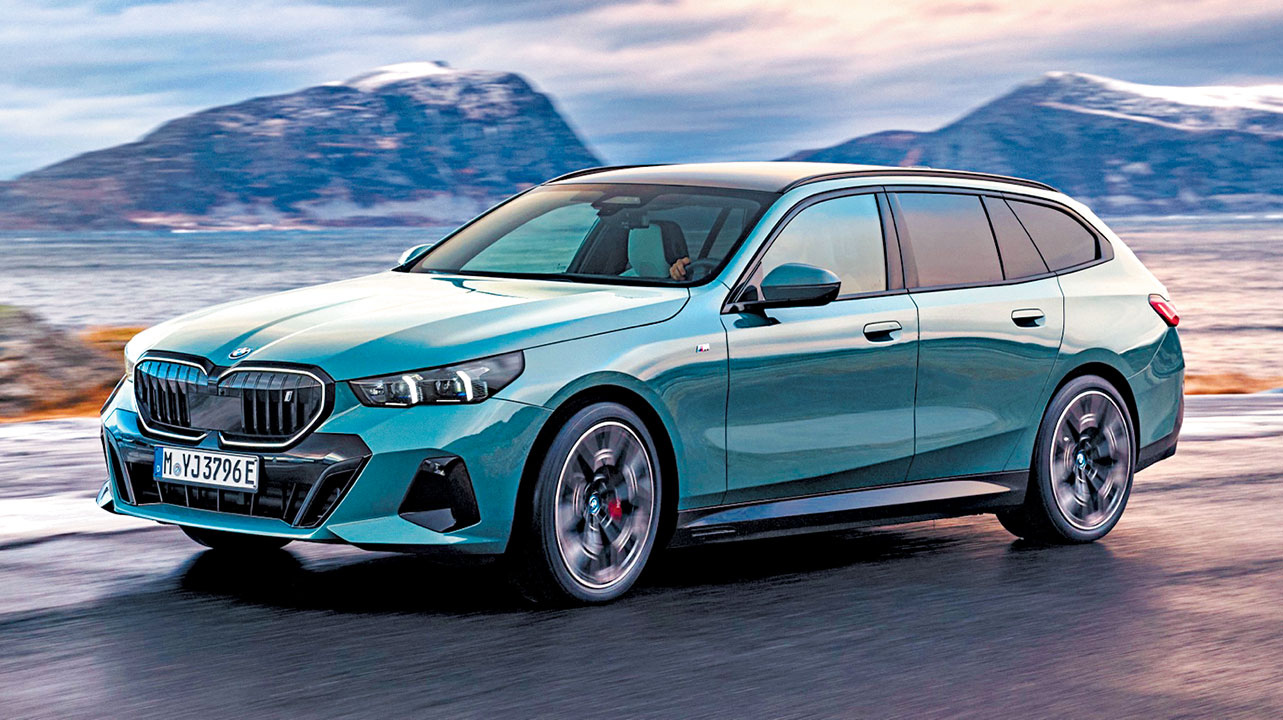
PHOTO FROM BMW

Last year, the official local distributor of BMW vehicles kept the wagon sector alive and stayed the course to electrification. To recall, SMC Asia Car Distributors Corp. launched the 3 Series Touring wagon and the i5 — the latter being the electrified version of its venerated, combustion-engined 5 executive sedan. Both powertrains are marketed here.

Nothing’s been confirmed yet, but the local BMW arm does present buyers a choice of electric or gas power, or sedan and wagon body styles (with the 3 Series), so could the 5 and i5 Touring make their arrival? The 5 and i5 Touring flex battery electric or hybrid power. Unique to these, however, is the added practicality and luggage space a family-friendly wagon can provide.

BYD Seal
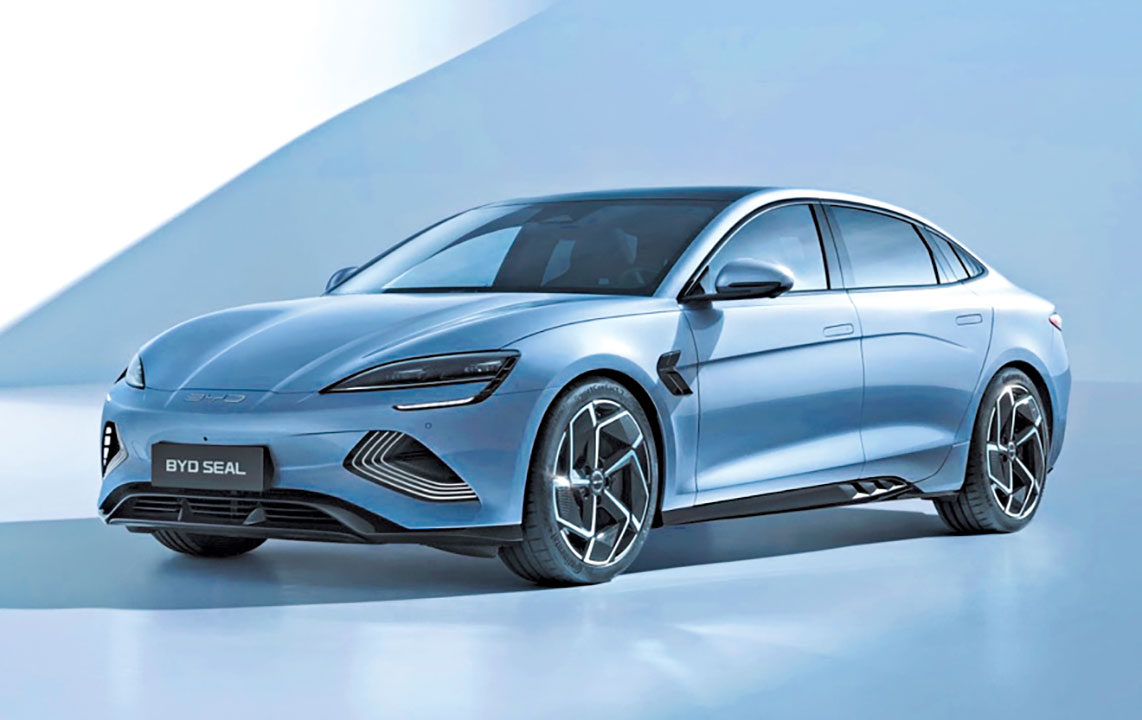
PHOTO FROM BYD

This rising Chinese automaker could reasonably credit its worldwide recognition to the Seal. By virtue of its impressive performance and quality, BYD’s electric sedan has gained critical acclaim. As the brand is also trying to establish a foothold in Southeast Asia, local BYD distributor AC Mobility could contribute to that goal should it launch the Seal here.

Beneath the Seal’s sleek skin is the company’s proprietary Blade Battery — designed and developed in-house — whose lithium iron phosphate material uses less rare earth components and has a longer life than contemporary EV batteries. The battery also contains a smart module placement to make the battery smaller and lighter. Range and power is rated at 570km and 312hp, respectively.

Changan Deepal S7
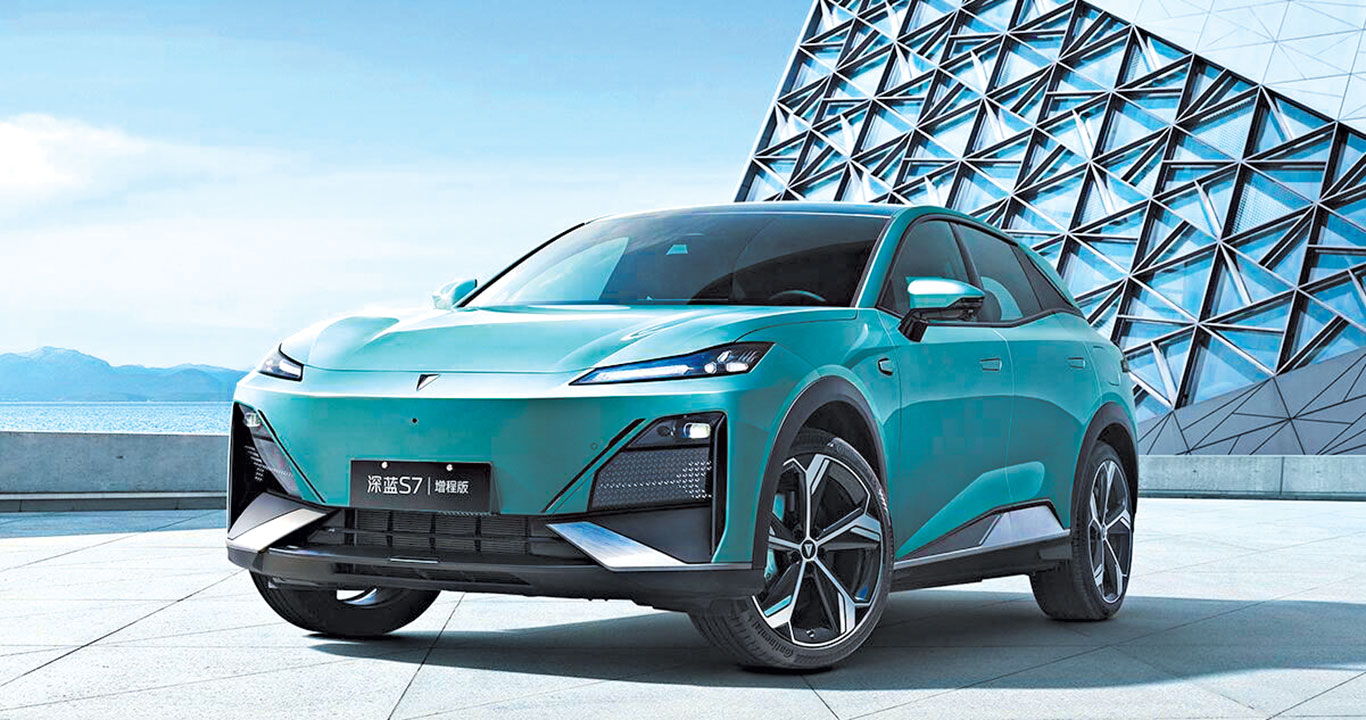
PHOTO FROM CHANGAN

As reported before, Chinese player Changan is boosting its electrification strategy and will move 1.2 million cars outside its home market by 2030. The company’s sub-brands — such as luxury EV brand Deepal — carry the expectation to contribute to that figure. With Changan Auto in the Philippines, operated by Inchcape, Deepal is expected to enter the local market this year.

The S7 electric SUV could herald the brand’s arrival. Poised as an upscale offering, the S7 sports a sleek exterior with LED lights and luxury interior accoutrements. This Deepal — developed at Changan’s giant facility in Chongqing — produces 258hp and 320Nm, and sports a range of 620 kilometers in its top-of-the-range form.

Chery eQ1
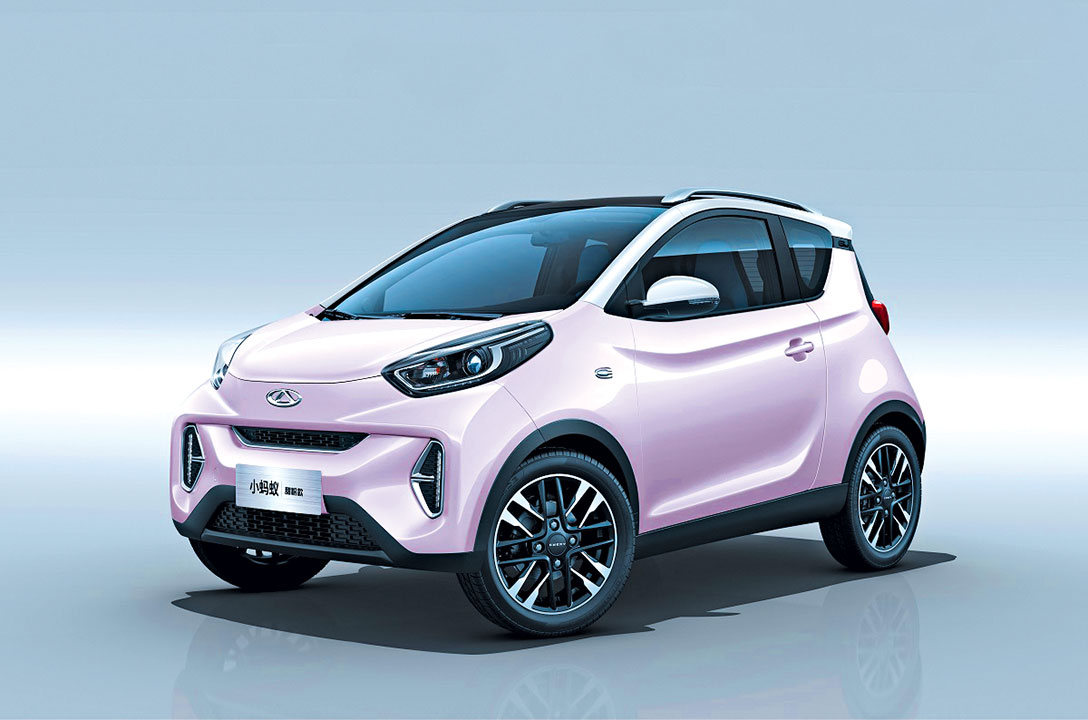
PHOTO FROM CHERY

At last year’s Philippine EV Summit, Chery Auto Philippines showcased its own hybrid and battery electric vehicles that it calls new energy vehicles (NEVs), true to the Chinese state’s nomenclature. One NEV that stood out — despite measuring only 3.2 meters long — was an electric hatchback called the eQ1.

If Chery would sell the eQ1 here, it would surprise buyers with a long equipment list that belies its size. Within the hatchback’s 1.6-m width and 1.5-m height, the car displayed at the show featured a huge infotainment screen, power front seats, and a panoramic sunroof. It may not appear like it initially, but the eQ1 could accommodate four people.

Ford Bronco and Mustang

PHOTO FROM FORD

The American automaker is known for its brawny Bronco SUV and Mustang muscle car, and soon, Ford Philippines will bring the latest versions of the brand’s historic nameplates. Confirming the launch is the company’s recent opening of the order books for the two models.

In exchange for P4.998 million, the four-wheel drive Bronco packs a 330-hp 2.7-liter V6 engine and the promise of superior off-road abilities. Meanwhile, the legendary Mustang returns, with its P3.999-million range-topping model bringing a five-liter V8 pumping out 486hp and 567Nm. The power is sent to the rear wheels via a 10-speed automatic and advanced suspension damping.

Geely Geometry C
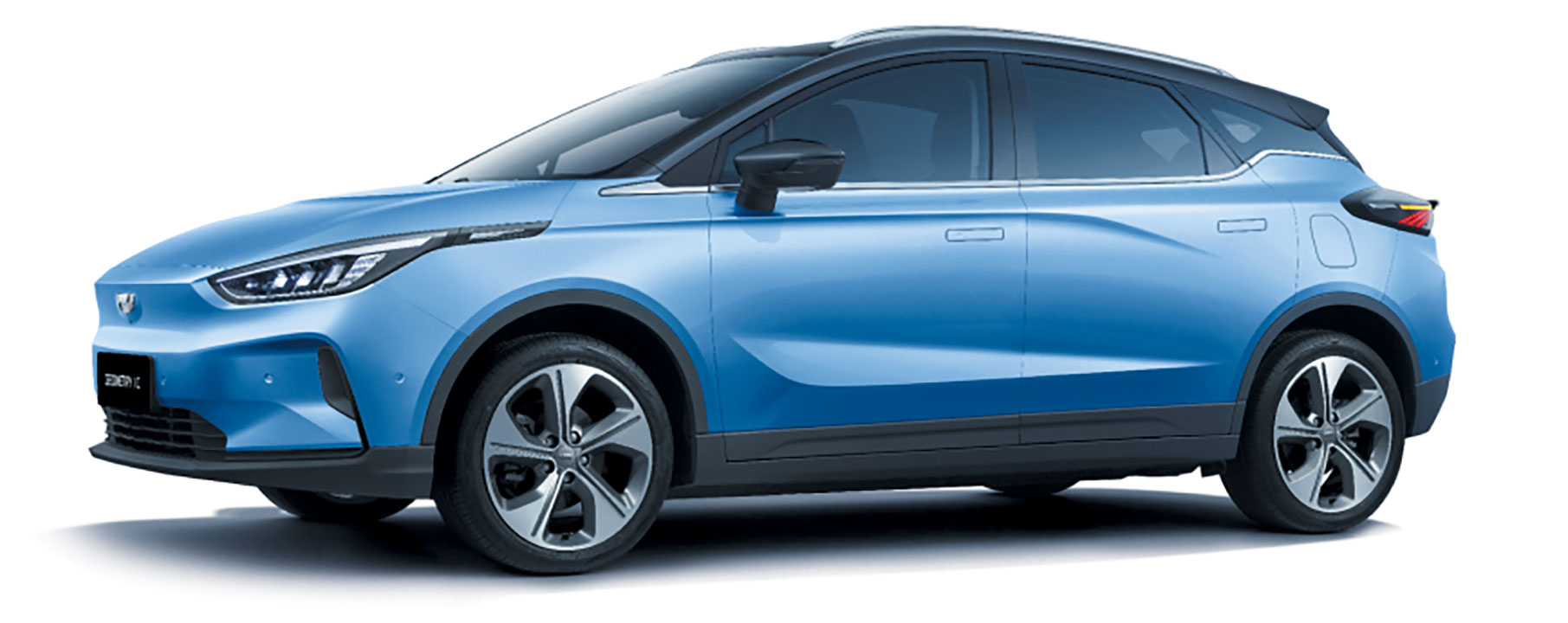
 

PHOTO FROM GEELY

Under local Geely arm Sojitz G Auto Philippines (SGAP), the brand’s Geometry is anticipated to join the electrification fray — with the C as the first offering here. No word on the official launch yet, but the local media have been given a preview of the C as SGAP welcomed its new president earlier this year.

With pricing projected to be below P1.6 million, the compact Geometry C is seen as a rival to the BYD Atto 3. In China, the C runs on a 70-kWh lithium-ion battery that powers one electric motor. Range is measured at 485km, while the equipment comprises a 12.3-inch touchscreen infotainment, head-up display, and adaptive cruise control.

Honda HR-V e:HEV

PHOTO FROM HONDA

In 2023, Honda Cars Philippines, Inc. (HCPI) launched the sixth generation of the CR-V — that also comes in hybrid e:HEV form. This began HCPI’s offering of the Japanese brand’s hybrid models. With an electrified Honda now in the scene, could more of the kind follow suit?

We imagine the HR-V, the compact SUV’s more compact stablemate, entering the market with hybrid power. Electric motors and a lithium battery pack work alongside a gasoline engine in powering the vehicle, in order to lower fuel consumption and emissions. This technology helps the HR-V e:HEV achieve an impressive 34kpl.

Hyundai Ioniq 5 N

PHOTO FROM HYUNDAI

What was once seen as a value South Korean brand is undergoing a brand renaissance. Hyundai has made vast developments in electrification and design, and the Ioniq 5 represents the brand’s accomplishments. Not long after its establishment, Hyundai Motor Philippines, Inc. (HMPH) began to offer the handsome and technologically advanced EV here.

Could HMPH launch the Ioniq 5 N here, then? Whether or not that materializes, the fact remains that this is the alpha version of the normal Ioniq. Made by the brand’s N division, the Ioniq 5 N boasts an aggressive exterior kit with 21-inch alloy wheels, and 650ps that’s dispatched to all four wheels — which results in a 3.4-second zero-to-100kph time and a top speed of 260kph.

JAC e-JS4 or e-JS1

PHOTO FROM JAC

Chinese car and truck maker JAC will see a new distributor in Astara Philippines. Next to other Chinese brands GAC and JMC, and French company Peugeot, this will be the mobility company’s fourth brand in the nation.

Reports say that Astara plans to expand JAC’s dealer network — and most notably, launch electrified cars — and improve consumer perception of the brand. This prompts the question: Will the e-JS4 and e-JS1 BEVs be imported into the nation? We’ll get our answer once the partnership between the brand and distributor further develops.

Jaecoo 7 and Omoda 5
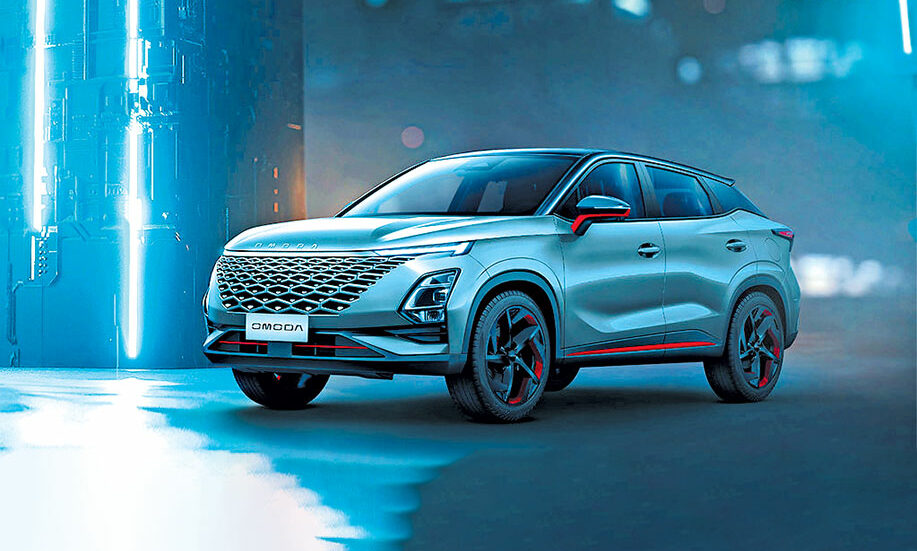
PHOTO FROM OMODA

Jaecoo and Omoda will add to the roster of Chinese players in the country, as the two firms are confirmed to mark their entry at the 2024 Manila International Auto Show in April. Both brands are under the Chery umbrella.

The Jaecoo 7 and Omoda 5 EV will be the first offerings. Featuring internal combustion power and a wealth of tech, the 7 is poised to compete with its contemporaries offering similar equipment. On the other hand, 5 is promised to be a competitively priced EV with a range of up to 450km.

Kia EV5

PHOTO FROM KIA

As we reported late last year, Kia Philippines is slated to launch the Kia EV6’s compact sibling this year. The introduction of the EV5 supports the goal of Ayala Corp. (which operates AC Mobility that distributes Kia in the Philippines) to create an EV ecosystem.

The EV5 will join the EV6 in the local roster of the brand. Contingent on what overseas markets receive, the local EV5, which is assembled in China and Korea, may come in a larger 88-kWh battery pack or a 64kWh one. With the largest battery size in tow, the electric SUV has a range of 720km.

Lexus LBX
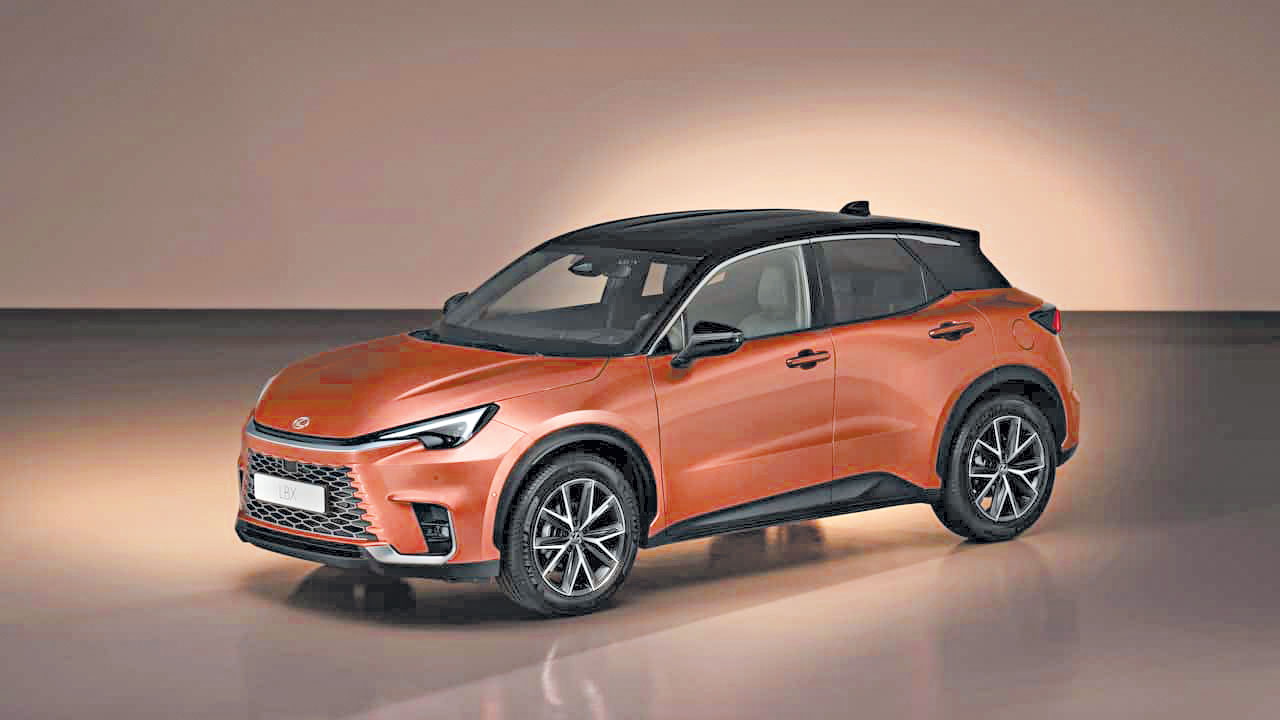
PHOTO FROM LEXUS

As you read this, the “Lexus Breakthrough Crossover” or LBX could be right here, right now (it actually launches todayKap). Based on parent company Toyota’s GA-B platform, it’s the Japanese luxury brand’s most compact vehicle to date. The LBX is priced at P2.968 million.

Within its compact 4.19-m length and 1.82-m width are Lexus’ hybrid and luxury hallmarks. Fuel consumption is quoted at 22.72kpl, thanks to the LBX’s combined use of a 1.3-liter gas engine and electric motor. Moving inside the LBX’s well-crafted cabin, Mark Levinson audio, changeable mood lighting, and rich leather materials cater to the occupants.

Lynk & Co. 06

PHOTO FROM LYNK & CO.

United Asia Automotive Group, Inc. (UAAGI) is now the steward of another Chinese make — Lynk & Co. Globally, what’s positioned as an upscale brand is operated by Geely and Volvo (although the two brands have their own respective local distributors), and it joins UAAGI’s roster of brands — Chery, BAIC, and Foton.

Lynk & Co., which plugs itself as a “born digital” firm designed and engineered in Sweden, has manufactured one million vehicles since its establishment in Berlin in 2016. The 06 will be launched here at the Manila International Auto Show (MIAS) and enable more people to upgrade their mobility.

Maserati Grecale and Granturismo Folgore

PHOTO FROM MASERATI

From the likes of BMW, Lotus, and Porsche, the choices of fast, luxurious battery electric vehicles aren’t lacking. With its Folgore range, Italian marque Maserati has joined the realm of premium EVs. Aside from powerful combustion units, the Granturismo grand tourer and Grecale SUV are also electrified and so bear the Folgore name.

The Granturismo will be locally launched tomorrow; it and the Grecale Folgore could be exciting choices. For one, the Granturismo Folgore’s 800V design and three electric motors produce 761ps and 1,350Nm — and promise a top speed of 320kph and a 2.7-second zero-to-100kph sprint. Meanwhile, the Grecale can muster 557ps and a 220kph top speed.

Mazda MX-5
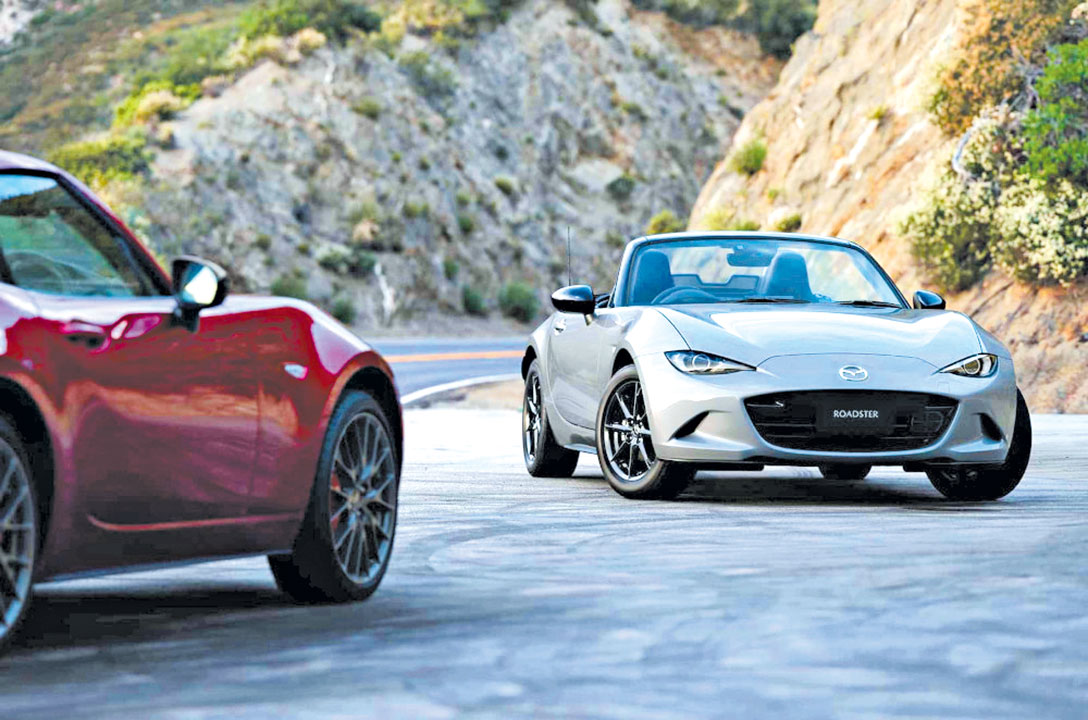
PHOTO FROM MAZDA

For nine years now, the “ND” MX-5 — the current iteration of Mazda’s legacy roadster — has been present in the Philippines and around the world. And last year, while the majority of its changes weren’t immediately obvious, the Japanese automaker subtly modernized the MX-5. Fans of the roadster will welcome it here, should Bermaz Auto Philippines introduce it.

New all-LED lighting units, including DRLs that are now integrated into the headlights, are part of the so-called “ND3” makeover. Two-liter-engined MX-5 manual cars have had their engine retuned for increased responsiveness, and their asymmetric limited-slip differential and steering response have been adjusted for enhanced cornering stability.

MG Cyberster

PHOTO FROM MG

The British-Chinese brand is decisively going electrified. Distributor SAIC Motor Philippines stated that, until 2025, at least eight MG models are planned to be introduced in the Philippine market — and that includes the MG Cyberster, slated to arrive in the first quarter of the year.

In our previous report, SAIC Motor Philippines President Felix Jiang stated that the Cyberster “embodies MG’s renowned British roadster heritage, (but) for the 21st century.” The Cyberster is powered by a 77kWh battery and, with 335bhp and rear wheel drive, MG claims a zero-to-100kph time of 4.6 seconds.

Mitsubishi Xforce
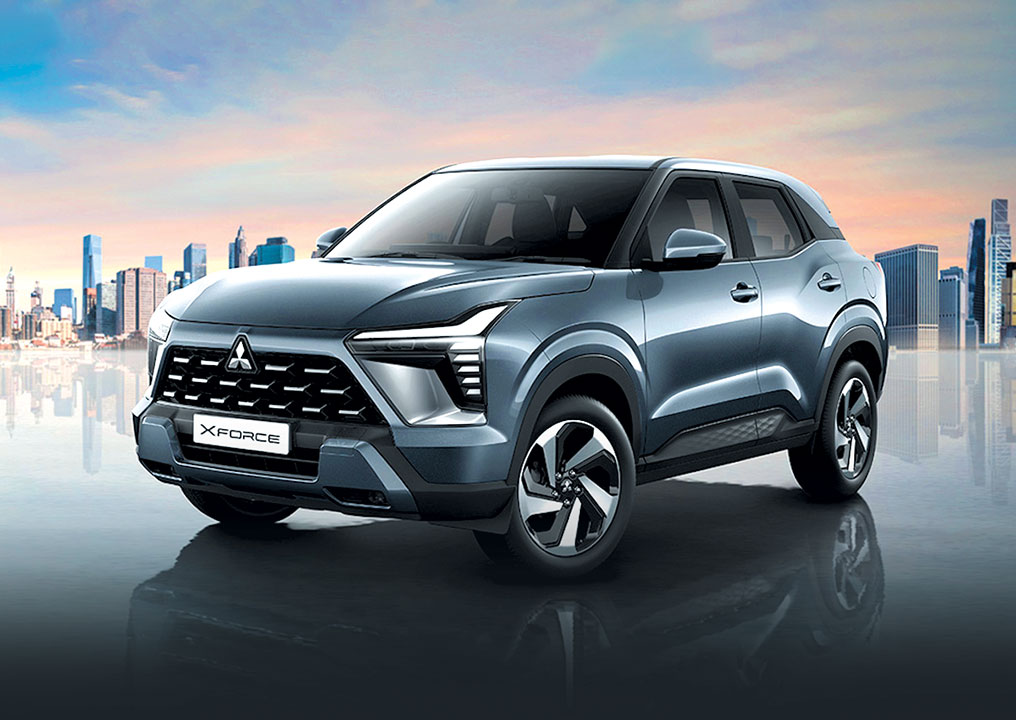
PHOTO FROM MITSUBISHI

The Xforce compact crossover is confirmed to debut in June and, like the Triton pickup, it’s expected to increase Mitsubishi Motor Philippines Corp.’s (MMPC) market share this year. Competing in a highly contested segment, the model is specifically designed for markets in Southeast Asia, Latin America, the Middle East, and Africa.

Fresh from its Indonesia debut, the Xforce was heralded among the winners of the iF Design Awards 2024 that recognized vehicles for their standout styling. Being a crossover, the Xforce boasts 220mm of ground clearance and a drive mode for rougher terrain, and features that buyers expect in the segment, such as digital infotainment and driver displays, to name a few.

Mini Cooper

PHOTO FROM MINI

The brands the Autohub Group distributes here are known for EVs. There’s the premium Lotus Eletre and the mainstream Segway electric scooters. So, while nothing’s been confirmed yet on exact timing, the company that also markets Mini could introduce the new Cooper: The latest generation of the famous bug-eyed hatchback that now comes with a choice of gas or electric power.

The Cooper Electric might bring its 181-hp or 215-hp electric drivetrains that are capable of an estimated range of up to 400km. As for the conventionally powered Cooper, its turbocharged gasoline mills can produce upwards of 200hp and yield a sub-five-second nil-to-century run. Inside the new Cooper cars are OLED infotainment screens and sustainable cabin materials.

Nissan Ariya
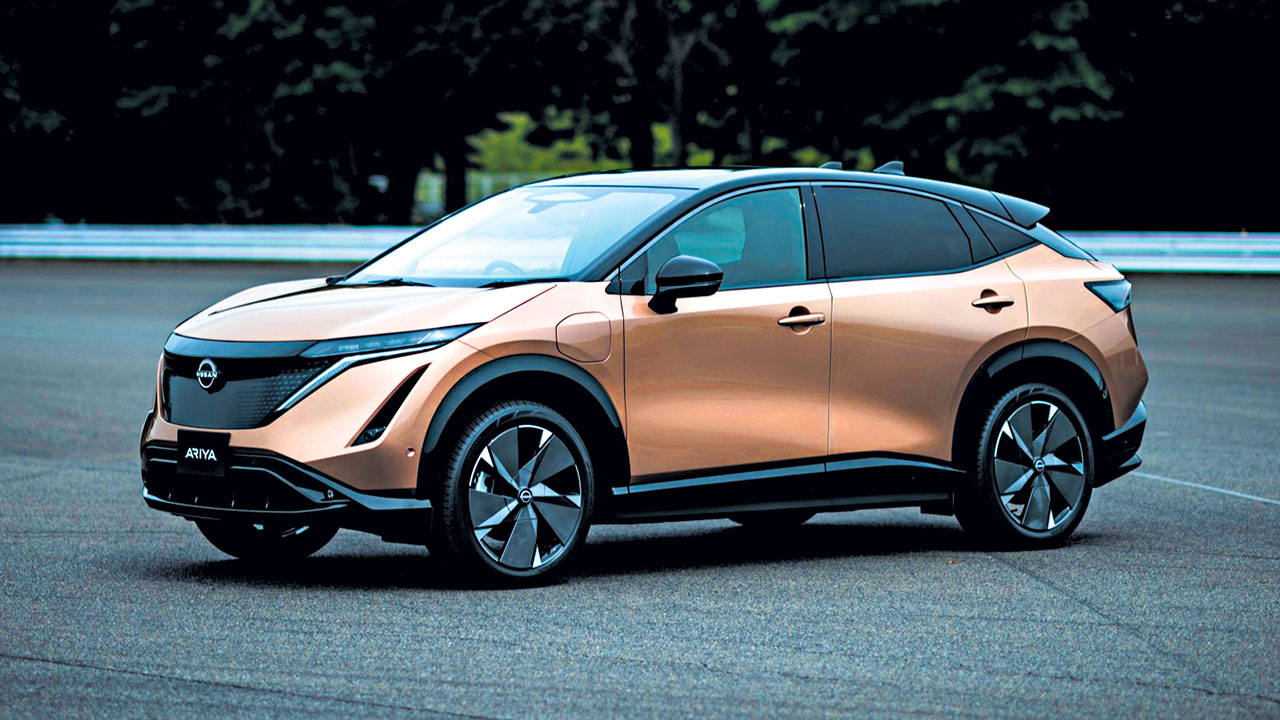
PHOTO FROM NISSAN

The Leaf electric hatchback is widely regarded as the first mass-market EV, and the second-generation of the model is part of Nissan Philippines, Inc.’s (NPI) local roster. Since the Leaf’s introduction, the Japanese car maker has boosted its electrification strategy with the Ariya, the brand’s first battery-electric SUV.

Given its range and positioning, the Ariya could compete in the premium EV sector, if NPI decides to bring it here. Among its powertrain choices, the Ariya can come with a 91kWh battery capable of over 500km of range, electric motors placed on the front and rear axles to create Nissan’s version of all-wheel drive called e-4orce, which generates 215hp and 300Nm of pull.

Peugeot E-2008

PHOTO FROM PEUGEOT

Would buyers like an electric Peugeot? When Peugeot Philippines previewed locally last year the E-2008 — whose “e” moniker denotes it as the battery-electric version of the French brand’s compact crossover — it probably wanted to gauge public clamor for such a vehicle. Since then, the E-2008 has been revised, and what could it offer — that is, if it comes here this 2024?

The EV’s letter “E” has been capitalized to better emphasize its means of propulsion. Subtle design tweaks abound in the car’s slinky shape, with the most obvious change found in the front end’s three-pronged LED “fangs.” Range is increased to 436km, and within the stylish cockpit Peugeot cars are known for, a larger infotainment screen with better connectivity is fitted.

Porsche Taycan

PHOTO FROM PORSCHE

Subtle styling tweaks and improvements on performance have been made to the famous and sporty four-door EV from the German auto marque. Considering that the Taycan has been serving the local demand for premium EVs, we’re guessing that Porsche could bring the updated model here soon or later.

The top-rung Taycan Turbo S banners the headline updates: Porsche claims that it runs to 100kph in 2.4 seconds, power is up to 940hp, and range is raised to 678km (176km more than before). Standard across the “Taycan 2.0” family, meanwhile, are active dampers for better handling, more power boosts, and improvements in battery charging and thermal management.

Toyota Tamaraw
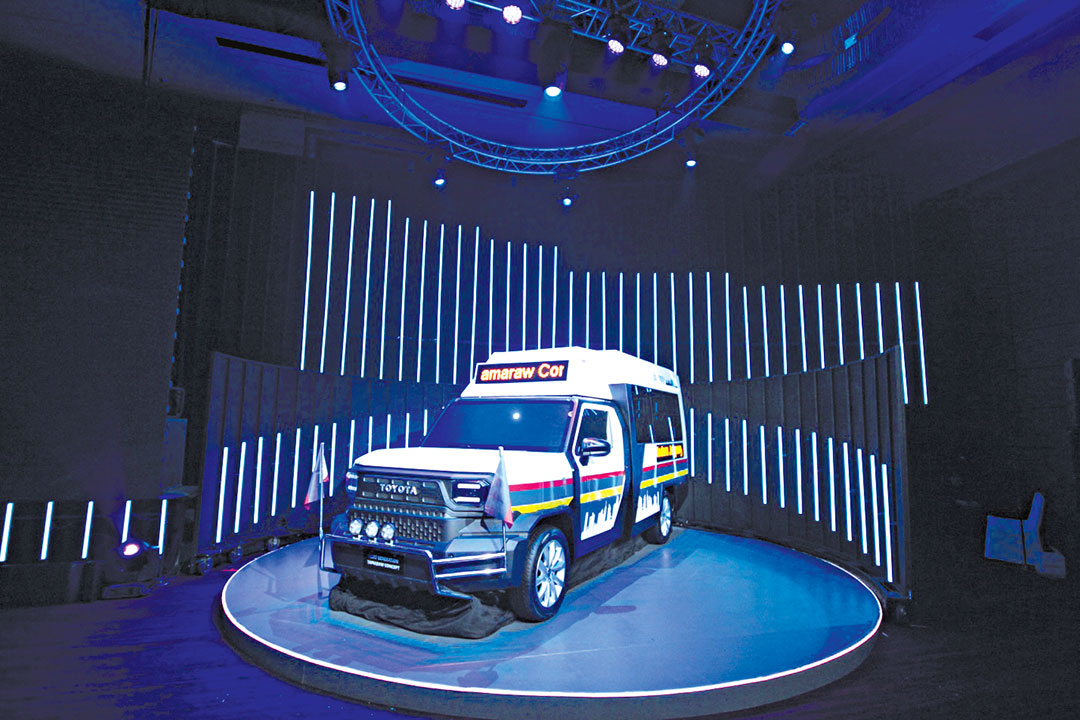
PHOTO FROM TOYOTA MOTOR PHILIPPINES

A truck nameplate once famed here in Southeast Asia returns in a new, modern form — and it’s also slated to be produced in the Toyota Motor Philippines (TMP) Santa Rosa, Laguna, plant this 2024 to supply the model’s sale here. TMP had invested P4.4 billion for the model’s local production.

Like its predecessors, the new Tamaraw is poised to reliably serve many through commercial applications. A part of Toyota’s IMV (innovative international multi-purpose vehicles) 0 family, the truck can come as a passenger or delivery van or a pickup truck — thanks to its modular platform. A choice of gasoline or diesel engines promise reliable and efficient service.

Volvo EX30

PHOTO FROM VOLVO

Volvo Philippines introduced last year the XC40 and C40 Recharge compact crossovers — products of the Sweden-based auto marque’s transition to becoming a full-EV brand. Meanwhile, the brand’s smallest model — the EX30 — was introduced in foreign markets. This makes us wonder: Could the brand’s local arm bring the baby crossover here soon?

In typical Volvo fashion and like its larger siblings, the EX30 wears a minimalist design inside and out. The cabin, in particular, was reportedly made from sustainable and recycled materials. Powering the EX30 is a choice of single- or dual-electric motor setups — with the latter’s 428ps and 3.6-second zero-to-100kph time making the crossover the fastest Volvo so far.

Which innovative vehicle can excite the market the most this 2024?

Boxed item

PHOTO BY KAP MACEDA AGUILA

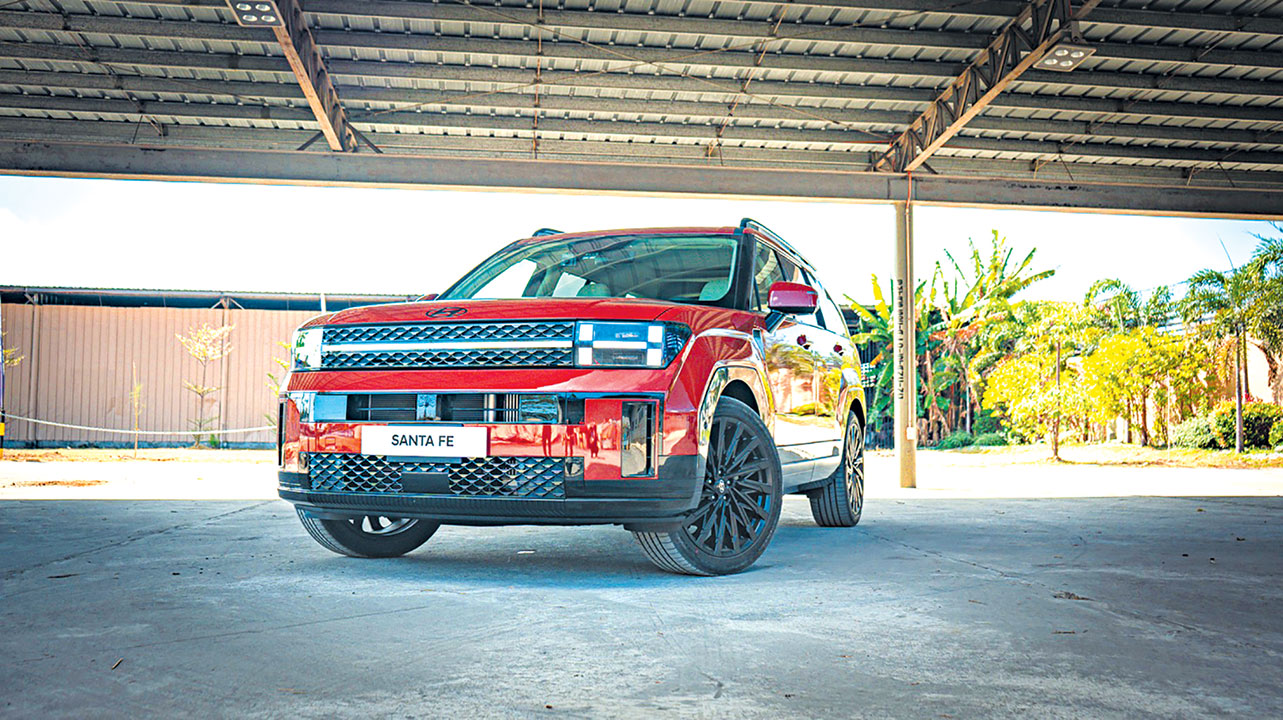
The latest-gen Hyundai Santa Fe goes off script, and that’s just fine

WHEN THE RENAISSANCE of Hyundai in the Philippines was put into motion with the establishment of Hyundai Motor Philippines (or HMPH) under the leadership of its president, Dong Wook Lee, in June 2022 ago, one of the changes effected was the rationalization of the local lineup. It wasn’t just a matter of updating models, either. Another important consideration was to reckon where the actual units were coming from and if the resulting SRP as a function of taxes, tariffs, and logistical expenses would make them price-competitive versus the competition.

At any rate, after all was said and done, Hyundai effectively shed its sedans (plus two small crossovers) and brought in new MPVs and SUVs, along with its highly competitive (in both pricing and looks) electric vehicles in the Ioniq 5 and 6.

Still, a couple of iconic nameplates have continued to remain relevant globally, and it made sense for Hyundai to continue to bring in their updated iterations here. One of them is the Tucson compact SUV; the other is the larger Santa Fe, whose all-new version finally went on sale in showrooms across the country recently.

Following a December 2023 preview, HMPH afforded select members of the media some brief, albeit meaningful, seat time with the three-row, midsize SUV.

Addressing the elephant in the room, HMPH Sales Training Supervisor Jay Galvez conceded that, yes, the Santa Fe calls to mind the boxy profile of the Land Rover Defender — surely a consensus for many a scribe and “influencer.” In fact, it looks more like a Defender than the outgoing older Santa Fe sibling it replaces.

“The fifth generation has become boxy… and we at HMPH say that it’s okay to compare it to the Defender. (We’d like to think) that it’s an affordable version of it,” he said.

Bannering the all-new Santa Fe is a larger interior, a so-called “plus alpha” philosophy connecting “outdoor-indoor living.” This is expressed in the fully collapsible second- and third-row seats which make full use of the space within. HMPH said in a release that this feature yields a cargo bed perfect for “groceries, home projects, sports and recreation, or camping trips.” The maximum load space with all the seatbacks down is 1,156 liters.

“We will market this as camping-friendly, for use in different outdoor activities,” underscored Mr. Galvez in his presentation.

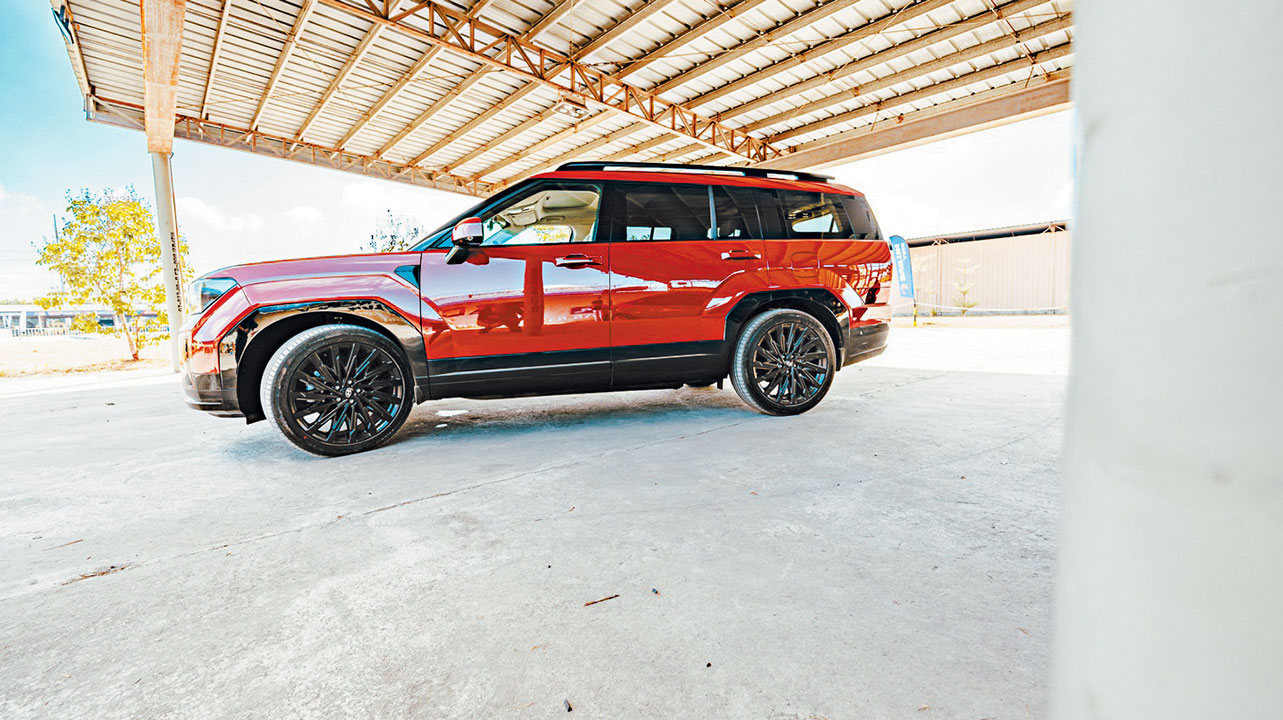
One of the strongest points of the Santa Fe is also arguably one of its more polarizing features. The tailgate extends to the sides of the vehicle — allowing a wider (by 145 millimeters over the fourth generation) opening for easier loading and unloading. However, this has necessitated the move of its rear combination to the tailgate itself. It may be niggling observation, but I think these lamps sit a tad too low for my taste.

Overall though, give the Santa Fe’s designers a tip of the hat for imbuing the vehicle an aggressive though neater profile even as it grows significantly (45-mm longer and 95-mm taller). Couple this with a shorter overhang and longer (by 50mm) wheelbase which allow the occupants to benefit from the resulting increased interior space.

And despite resisting the ever-present inclination toward sharper (i.e., wedgier) designs, the Santa Fe remains Cd-conscious — cutting down on wind drag through angled side mirrors, active air flaps in the top and bottom of its front bumper, skid plates, and spoiler.

A bridge-type roof rail exists alongside a dual sunroof, and the Santa Fe adds a thoughtful touch to provide easy access to that roof-mounted accessory: a so-called C-pillar assist handle you can grab on to lift yourself up. With a capacity rated at 200 kilograms, it can also be used when you’re, say, cleaning the roof.

The Santa Fe abounds with “H” easter eggs in its design — said to be another aspect of its new brief. From the H-shaped LED lamps with DRLs and lower bumper garnish in front, to the similarly shaped taillights, there are lots of Hs to count outside and inside. The mood lighting of the front dash is H-shaped, as are the air-conditioning vents and even seat stitching. A couple of online reviewers from the US counted more than 70 of these H elements, in fact.

Another quaint execution in the Santa Fe sees the gear shifter moving to the steering column as a shift-by-wire stalk, much like the one found in the Ioniq 5 and 6.

It is a mostly digital affair in the cabin, led by a free-standing 12.3-inch panoramic curved display instrument cluster attached to an infotainment screen of the same size. On the left of the dual screens is a fingerprint recognition system that allows multiple users to program seat memory and infotainment system preferences.

A UV-C sterilization compartment is on the upper right side of the dash. “Since the Santa Fe was conceptualized during the pandemic, this has been retained for the users’ health and sanitation,” reported HMPH. Meanwhile, a full-touch climate control panel is on the center stack and under it is a dual wireless charging pad. There are more charging options within, via six USB-C ports, and a 12V socket. As for storage compartments, there is space in between the front row seats, and a thoughtful bi-directional console box with a lower sliding tray.

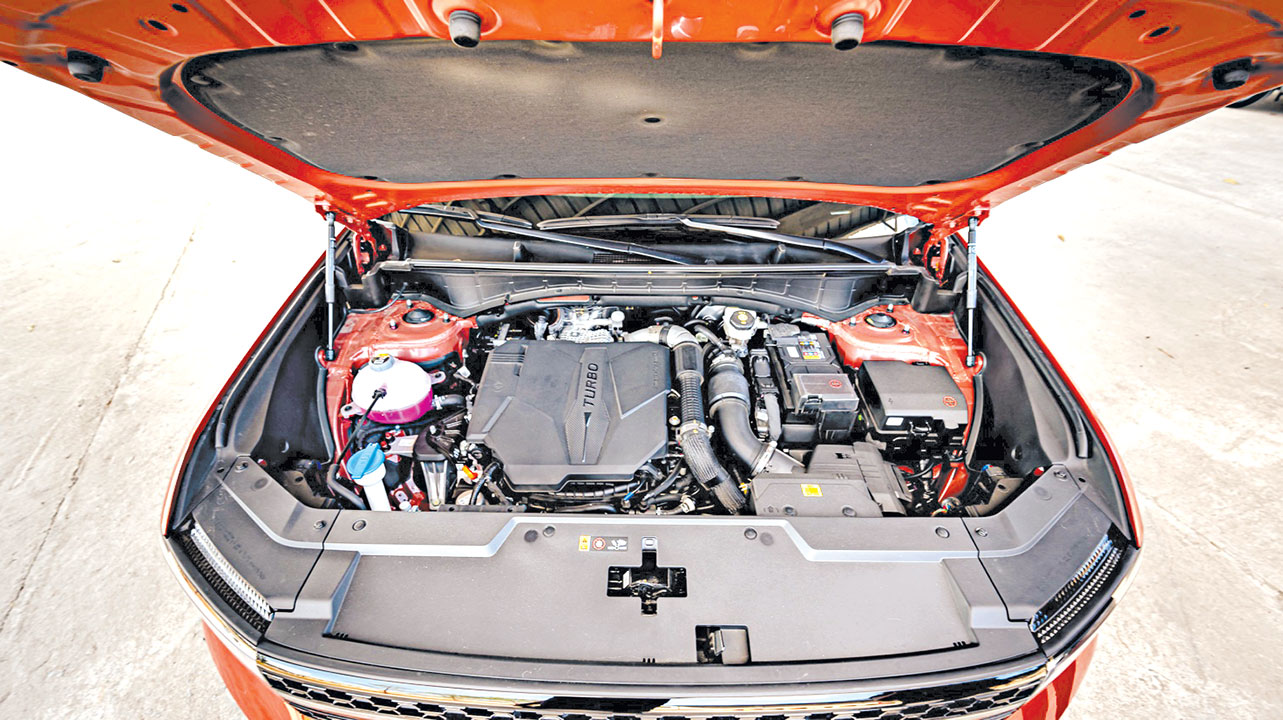
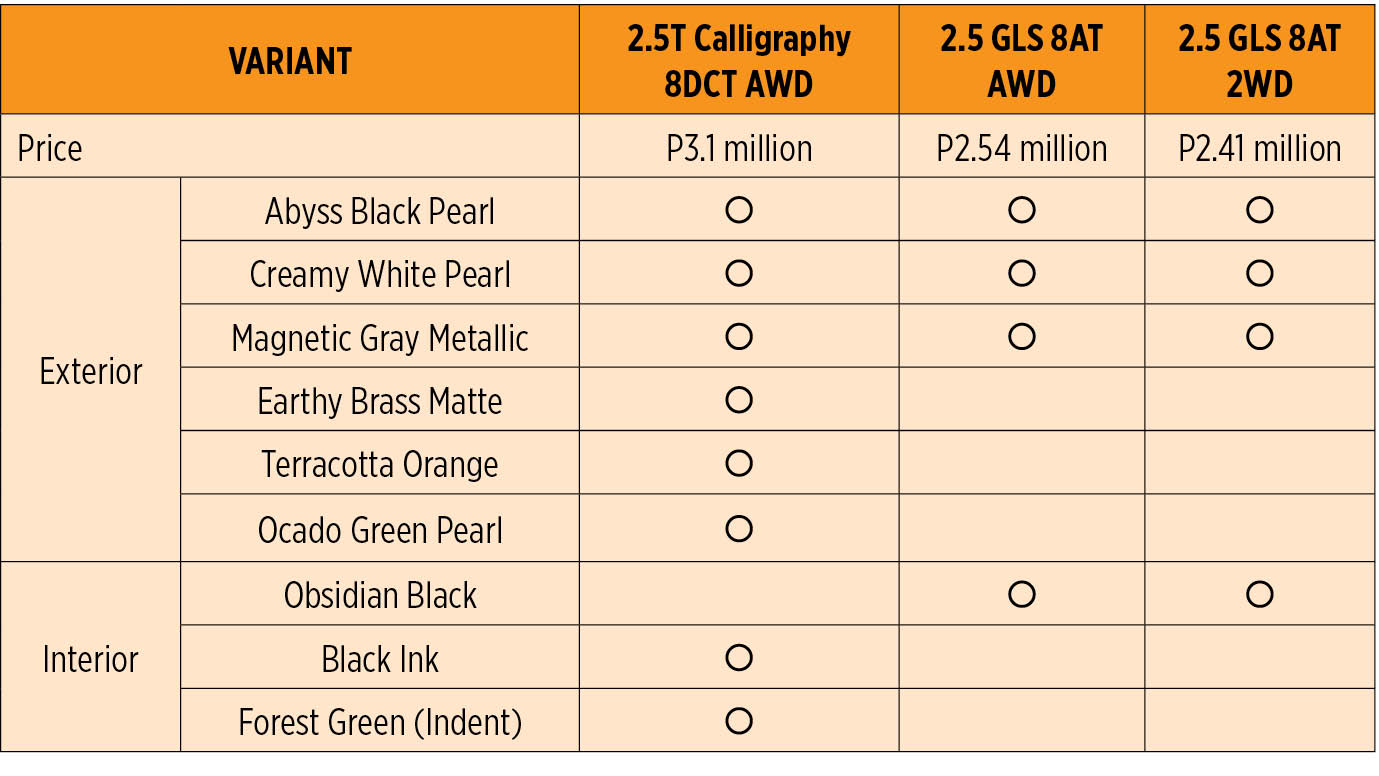
Powering the highest variant (2.5T Calligraphy 8DCT AWD), is a turbocharged 2.5-liter mill mated with an eight-speed dual clutch transmission; output figures are 281ps and 422Nm. Drive and terrain settings “can be adjusted based on user preference on the engine power map, transmission patterns, stability control and braking.” Its modes are Normal, Eco, Sport, Smart, Auto, Sand, Mud, and Snow. The company’s proprietary Hyundai Traction (HTRAC), basically its AWD system, benefits from Downhill Brake Control, “that supports sudden changes in weather or difficult terrain.”

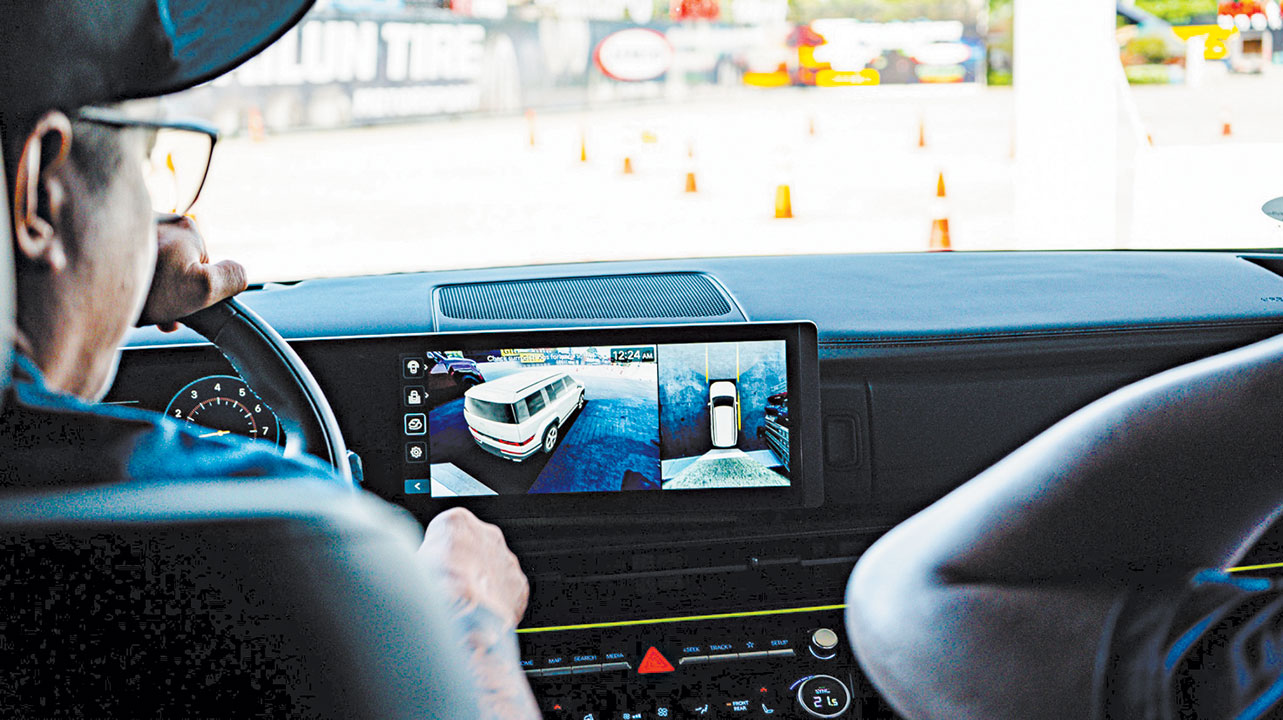
Standard on all variants are driver, passenger, side, and curtain air bags — in addition to a suite of safety features called the Hyundai SmartSense. The list of advanced driver-assist features include: Smart Cruise Control with Stop and Go, Forward Collision Avoidance, Lane Following and Keeping, Blindspot View Monitor, Reverse Parking Collision Avoidance, Parking Distance Warning, Manual Speed Limit, Rear Occupant Alert, and Surround View Monitor.

During our aforementioned advance jaunt with the Calligraphy variant of the Santa Fe, we were familiarized with the convenient (not overly light) steering of the vehicle and its surprising maneuverability despite its hulking size. And when making abrupt turns and taking corners at speed, the SUV displays some lean yet isn’t too soft or jarring. Flooring the throttle from a standstill shows it is light on its feet, and can stop in a surprisingly short span. Finally, it’s not all about looks either. Taken through an off-road section meant to showcase articulation, the Santa Fe kept its composure and soaked up the terrain most nicely.

You could very well say that through this boxy Santa Fe, Hyundai has shown it can, well, think out of the box.

HMPH said the all-new Santa Fe will be a part of the Hyundai Mobility Experience tour, which resumes on March 22 to 24 at the Ayala Malls Glorietta in Makati City, and is slated to head out to other cities outside Metro Manila. For more information, follow the company on Facebook and Instagram (hyundaimotorphilippines).

Style (03/18/24)


Marks & Spencer goes denim-chic

MARKS & SPENCER (M&S) goes homey for the 2024 Denim and March Collection. These include a pure cotton beach dress with a Bardot neckline and a cozy puff-sleeved dress. Men just want to have fun too: in menswear, these include stretch and vintage-style denims, crafted from 25% recycled cotton. Other items are roomy and laid-back styles in polos, shirts, and shorts. Features of the line include moisture wicking technology, easy to iron and quick-dry capabilities, 360-flex denim, and Sun Smart UPF50+. Visit a Marks & Spencer store, and shop in-store to earn rewards points as a M&S Rewards member through the M&S Philippines Viber Community at bit.ly/MSPH-VC. Shop selected lines online and also earn rewards points on www.marksandspencer.com.ph.


Toms offers summer sales

FROM March 15 to 31, customers at Toms stores get “impact tokens” to play a game of darts and receive a gift depending on where the dart lands. Stores offering “impact tokens” include SM Megamall, SM Mall of Asia, Eastwood, Glorietta 4, Estancia Mall, SM Baguio, SM Lipa, SM Bataan, and SM Seaside Cebu. Toms funds its partner humanitarian organizations and work towards advancing women’s progress in the community for every shoe sold. New shoes include the Toms Sandals Willa Women, Espadrille Alpargata Women, and Espadrille Valencia Women, crafted using recycled rubber and cotton. A summer sale is ongoing until April 30, offering up to 50% off selected items.


Sally Hansen offers salon-quality nails at home

NAIL polish brand Sally Hansen introduces the Sally Hansen Miracle Gel: The Ultimate do-it-yourself (DIY) Gel Manicure (P645). This boasts of patented technology, ensuring longer wear and making it chip-resistant and life-proof nail polish. It can help achieve a salon-quality finish without the need for a UV lamp. The line also offers Sally Hansen Miracle Gel Special Effects Top Coats (P695), with each topcoat having its own finish. This allows the creation of a unique manicure that can last up to eight days, without the need for a UV lamp. Other Miracle Gel offerings include Unicorn Top Coat (with color-shifting effect), and Sugar Top Coat (for a sugar-coated texture effect). These top coats are 100% vegan and cruelty-free. To apply, clean and dry nails, then use nail polish remover to remove residue on the nail. Apply two coats of Miracle Gel, and dry for five minutes. Finish by applying one more coat of Miracle Gel. Sally Hansen is available at Rustan’s, SM Stores, The Landmark, Mitsukoshi Beauty, LOOK; and online at Lazada, Shopee, and Zalora.

EPI seen to hit half of renewable energy goal by 2025

FREEPIK

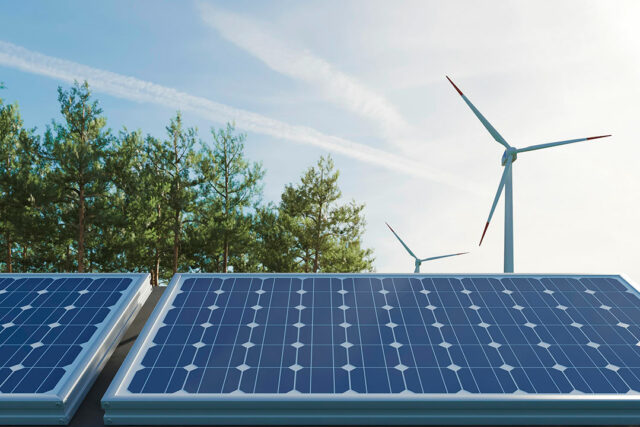
EMERGING POWER, Inc. (EPI), the renewable energy subsidiary of Nickel Asia Corp. (NAC), is projected to achieve half of its goal of developing one gigawatt (GW) of renewable energy (RE) projects by 2025, a company official said.

“By next year, we would have reached already half of our goal,” Andre Mikael Lu Dy, NAC’s vice-president for treasury and investor relations and sales, said at a recent briefing.

“Half a gigawatt is what we’ll be operating by 2025, [and] those that will be under construction would have been 1.5 GW by then,” he added.

EPI currently has operational renewable energy projects with a total capacity of 174 megawatts (MW).

About 487 MW are projects under construction and 1.8 GW in development stages.

Among the projects in the pipeline is the 240-MW solar project in Leyte with Shell Overseas Investments B.V. (Shell).

The first phase of the solar project, with a capacity of 120 MW,  is targeted to be operational by the second quarter of 2025.

EPI and Shell forged a joint venture in 2022 to develop one gigawatt of renewable projects in the country by 2028.

The EPI-Shell venture focuses on utility scale solar photovoltaic while “evaluating opportunities” in onshore wind and energy storage systems.

Outside the partnership, EPI, through its subsidiary Northern Palawan Power Generation Corp., is targeting to construct its 145-MW solar project in Subic-Cawag by second quarter this year.

“We will construct by second quarter, as early as April for the development of 145-MW facility which we hope to operate by the fourth quarter of next year,” Mr. Dy said.

For geothermal, EPI is currently producing up to two MW of electricity, which it intends to scale up through the development of up to 10 MW.

“By 2026, we will more than deliver our goal of one GW by 2028 in an earlier timeline,” Mr. Dy said. — Sheldeen Joy Talavera

PRULove Wealth: A guarantee of financial security amid uncertain times

By Jomarc Angelo M. Corpuz

In recent years, unpredictable circumstances have ravaged the country, leaving many Filipinos scrambling to rebuild and stabilize their lives. From natural disasters to the COVID-19 pandemic, Filipinos are renowned for their resilience and determination in the face of adversity. This has then inspired a strong sense of optimism, allowing Filipinos to remain hopeful in the face of crisis.

While Filipino resilience is sometimes the lone bright spot during troubled periods, assurance that ensures stability—especially financially—during harsh circumstances is something that everyone deserves.

Whether through guaranteed cash payouts, insurance coverage, or steady income streams, innovative financial plans provide flexibility and security offering assurance in an unpredictable world.

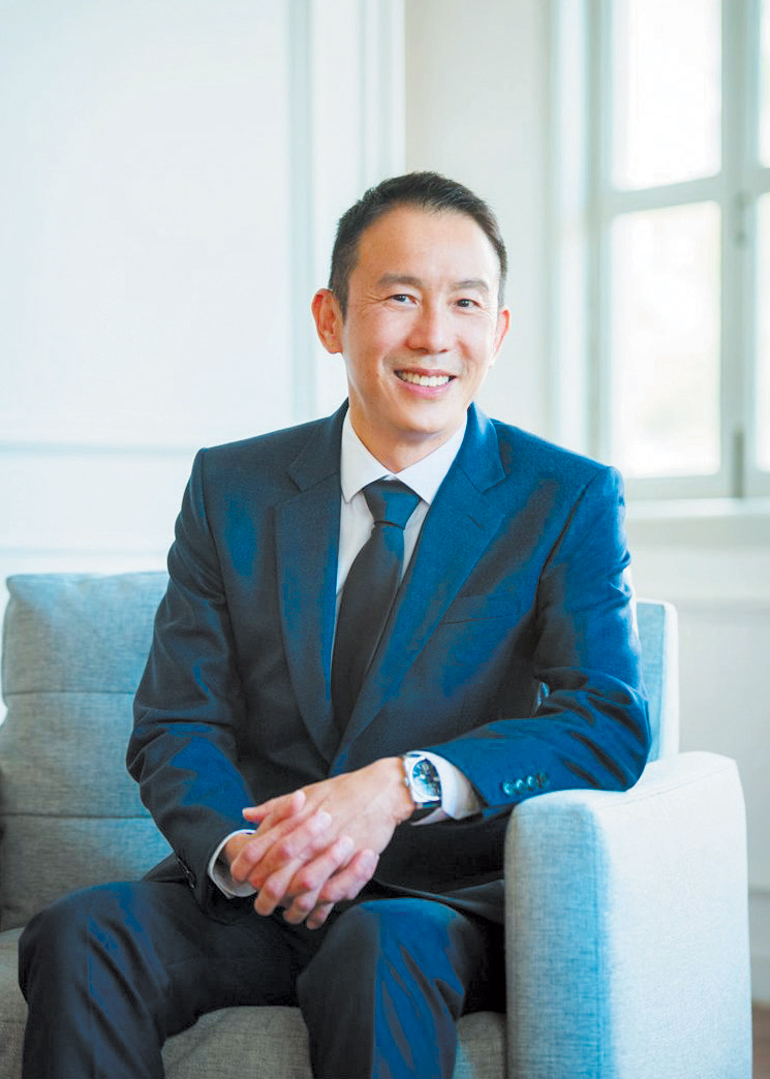
Life insurance company Pru Life UK’s Vice-President and Chief Product Officer Garen Dee shared that in uncertain times, guaranteed financial benefits are of the utmost importance. These benefits provide an emergency cushion for Filipinos and their families, putting their minds at ease despite possibilities of economic volatility and market fluctuation.

“During uncertain times, more people start to appreciate the beauty of having guaranteed financial benefits. They realize that they need something that would give them a sense of security and stability that in a way translates to peace of mind,” Ms. Dee said.

The demand or preference for guaranteed financial benefits varies per individual. Some prefer to have high exposure to risks with superior returns and some favor secure investments with minimal to no risk exposures. After going through market volatility and high inflation rates for the past year, a trend has emerged showing that Filipinos assess and rebalance their financial portfolios preferring less risky financial products.

Having the benefit of the Filipino people in mind, Pru Life UK has launched PRULove Wealth as their latest gift to their customers.

“PRULove Wealth is Pru Life UK’s latest product that guarantees returns regardless of market conditions,” shared Ms. Dee.

“Customers get stable earnings from 4% cash payouts every year for 7 years; secured wealth through guaranteed 100% cashback in as short as 7 years or the end of the maturity as long as insured is still around; and peace of mind for themselves and their families because of the product’s up to 125% insurance protection during the seven-year period,” Ms Dee continues.

This new product is a PHP-denominated one-time pay, non-participating endowment product with guaranteed life insurance and annual anticipated cash payouts for seven years. The plan is eligible for applicants from 7 days to 60 years old for the insured and 18 to 99 years old for the policy owner.

For a minimum of PHP 500,000, Filipinos can take advantage of Pru Life UK’s limited offer and ensure financial stability in uncertain times. Application process for PRULove Wealth is quick and easy.

“The product is simple and easy to understand. We want more customers to have access to this kind of product. We want to help more Filipinos get a better life by financially protecting them,” Ms. Dee stated.

The product is tailored for individuals looking for alternate options to diversify their finances. It can be for retirees, individual investors, and families who want to generate steady income without the risk of losing their hard-earned money.

“It’s suited for individuals looking for a one-time placement or short-term savings needs but want the assurance that after seven short years, they get their money back regardless of what happens in the market. This is the perfect product for them,” Ms. Dee said.

The insurance company’s newest product exemplifies its commitment to being the Filipino’s most trusted partner for every life and protector for every future, through simple and accessible financial and health solutions that empower Filipinos to achieve their goals.

“Our customers are always at the heart of everything we do. We constantly look for ways to address their evolving needs to help them achieve their financial goals,” Ms. Dee stressed.

Interested individuals can avail of the limited offer by approaching their existing Pru Life UK agent or by visiting the life insurance company’s website at www.prulifeuk.com.ph. To learn more about PRULove Wealth, inquiry forms may be sent to Pru Life UK through their webpage.

________________________

4% payout and 125% insurance coverage based on single premium paid.

Product terms & conditions including on cash back apply.

Limited time offer and subject to availability.


Spotlight is BusinessWorld’s sponsored section that allows advertisers to amplify their brand and connect with BusinessWorld’s audience by publishing their stories on the BusinessWorld Web site. For more information, send an email to online@bworldonline.com.

Join us on Viber at https://bit.ly/3hv6bLA to get more updates and subscribe to BusinessWorld’s titles and get exclusive content through www.bworld-x.com.

Understanding trust services: How they work and how to avail of one

FREEPIK

By Mhicole A. Moral, Special Features and Content Writer, BusinessWorld

The sheer number of investment options, tax laws, and financial regulations may leave even the most astute individuals feeling overwhelmed and uncertain. As financial transactions are becoming increasingly complex, both individuals and businesses are seeking trustworthy partners for their assets and financial affairs.

One of the most important non-banking services is what is commonly referred to as the trust service. At its core, a trust entity is a legal entity that holds and manages assets on behalf of individuals, families, or organizations. Trust arrangements are created for various purposes, including wealth preservation, estate planning, and charitable endeavors. Trust services, therefore, involve the administration and management of these trusts by financial institutions or professional trustees.

A trust company is empowered to act as an agent or trustee on behalf of an individual or group for the purpose of the administration, management, and eventual transfer of assets to a beneficiary. These services are designed to provide solutions to specific requirements of clients such as the administration and distribution of assets in accordance with the wishes of the client.

In the Philippines, the TOAP is the country’s oldest professional association in the financial industry, working closely with the Bangko Sentral ng Pilipinas (BSP) to unite, professionalize, and promote the trust and investment management industry. The association works closely with the government to discuss regulations and issues concerning the trust industry in a way that suits the best interest of the investing public.

“Trust is still predominantly used by clients for investments though there is increasing interest among the wealth management players to use trust for wealth management, estate planning, protection of interest of minors and the incapacitated as well as the achievement of lifegoals. This expansion of trust beyond investment is crucial in ensuring the growth and longevity of the trust industry,” said Rafael G. Ayuste, Jr., former president of TOAP and former chief trust officer of BDO Unibank, in an interview with BusinessWorld.

Trust services, according to Dr. Robert B. Ramos, CFA, CAIA, president and CEO of RCBC Trust Corp. and former president of Trust Officers Association of the Philippines (TOAP), contribute to the overall financial landscape, offering individuals and businesses a variety of options to secure their financial future.

“Generation of income and growing your funds? We have UITFs (Unit Investment Trust Funds) and IMAs (Investment Management Accounts) for retail clients. Providing retirement benefits to the employees of our corporate clients? We offer retirement fund accounts. Wealth preservation and succession planning? We provide customized estate planning services. There are various tools and products at our disposal that can help us craft a bespoke plan that addresses the complex and special needs of our high-net-worth clients,” said Dr. Ramos.

TOAP’s member-institutions provide a range of trust and fiduciary products, each serving specific purposes within the financial ecosystem.

One commonly known type is personal management trust, an arrangement that helps individuals manage their personal affairs, including financial planning, estate management, and asset protection. The primary goal of personal management trust is to ensure that the beneficiary’s interests are protected and that the trust assets are managed effectively. A revocable living trust allows individuals to maintain control of their assets during their lifetime while facilitating a seamless transfer of those assets upon death. Irrevocable trusts, on the other hand, are often used for tax planning and asset protection, providing a more secure structure.

Trust entities acting in a fiduciary capacity may act as executors in probate cases, ensuring the deceased’s wishes are carried out and overseeing the distribution of assets to heirs. They can also assume the role of guardians, managing the financial affairs of minors or incapacitated individuals.

In an institutional trustee capacity, such as in the case of escrow services, it protects the interests of two contracting parties by ensuring the fulfillment of agreed-upon terms and conditions. This service is valuable for transactions like installment-based purchases or asset dispositions subject to restrictions or clearances.

While personal management trusts cater to individual needs, other fiduciary services extend their scope to corporate and organizational requirements. Corporate trust services involve a trustee acting on behalf of a corporation to manage and safeguard assets, typically related to bonds and securities. Corporate trustees ensure compliance with legal and financial obligations, acting as intermediaries between issuers and investors.

Another common trust service is the UITF. It is an open-ended pooled trust fund, denominated in pesos or acceptable currencies, operated and administered by a trust entity. Governed by a Declaration of Trust, that provide a mechanism for investing, operating, and administering the fund, UITFs allow participation by any type of investor, whether conservative, moderate, or aggressive, and for as low as P1,000 only.

The importance of financial goals

Trust services encompass a range of offerings designed to manage assets and meet financial needs regardless of time horizon. This involves thoughtful consideration of short-term and long-term objectives, risk tolerance, and the desired legacy.

Mr. Ayuste emphasizes that the most important step before embarking on the investment journey with trust services is understanding one’s goals. Whether it’s saving for retirement, funding education, or wealth preservation, identifying the purpose of the investment sets the direction for the entire process.

“This understanding determines what the investment will be and how long it will stay invested. A second factor and just as critical is the investor’s capacity to undertake risk. This is easily determined through the Customer Suitability Assessment (CSA), which is provided by all trust entities,” he explained. “An investor with medium- to long-term horizon and aggressive risk profile can invest in securities with higher risks such as equities. In return for undertaking such risk, the investor should be rewarded with a higher return on investment. A conservative investor with a short-term goal, on the other hand, can invest in less risky outlets such as short-term government securities and money market securities.”

Similarly, Dr. Ramos noted that it is important to have a thoughtful and strategic approach in determining the right trust products and services that best suit the financial goals and needs of the individuals or businesses.

“We always start with the question — what are your goals and objectives? We then find out what the risk appetite of the client is and if there are other considerations that we need to take into account before we come up with a recommendation, such as liquidity needs, financial capacity, and investment horizon. We always explain to our clients that when it comes to investments, there is no one-size-fits-all approach. What works for one client may not work for another. So, it is important to establish the goals and preferences of the clients first before deciding which investment product to go for,” Mr. Ramos explained.

According to the former TOAP presidents, trust services allow individuals and corporations to tailor their approach based on their unique financial objectives. This customization ensures that the chosen trust structure aligns seamlessly with the overarching financial goals.

Trusts also serve as powerful tools for risk management, mitigating the risks against potential threats to financial stability.

Bridging more Filipinos in a digitalized environment

According to Mr. Ayuste, the advent of online shopping has already familiarized Filipinos with the convenience of accessing goods and services from the comfort of their homes. However, this digital access has not translated proportionally to investments in the financial sector.

The lack of investment in the financial sector can be attributed to the lack of understanding of trust services. While many Filipinos may be familiar with traditional banking services, trust services are often overlooked and underutilized.

Trust services, such as IMAs, personal trust and estate management (PMT), and escrow, can offer clients a range of benefits that traditional banking services may not be able to provide.

“A number of different factors come into play, such as confidence to use digital facilities for other than payments and fund transfers of small amounts of money, challenges in terms of internet speed, and product availability being limited to UITFs, among others,” he mentioned. “A factor, within the reach of TOAP, is the expansion of products and services available digitally. This should contribute to greater participation from the consumer.”

Furthermore, TOAP understands that the younger generation, particularly Gen Z and Millennials, are tech-savvy and prefer to consume information through digital platforms. As a result, the association has taken an innovative approach to engage this market by offering personalized and digitalized financial planning advice and investment opportunities.

For instance, digitalization has enabled more banks to reach more clients and improve their efficiency.

“Because of digitalization, our clients are able to avail of our products and services wherever they are 24/7. Because of the improved access, more Filipinos are able to invest their hard-earned money in the products that they prefer,” Dr. Ramos said.

Steven C. Te of BDO Unibank Inc. – Trust and Investments Group and the current president of TOAP, said that engaging the youth in financial education and trust services requires innovative approaches that resonate with their digital-centric lifestyle.

“TOAP has recognized that to be able to connect to younger individuals, it needs to immerse itself into their world that is primarily driven by social media, digital and mobile banking, electronic wallets, and, recently, artificial intelligence or AI,” Mr. Te said.

Moreover, financial literacy is an essential skill that every individual needs. Mr. Te said that trust services further empower individuals to make informed financial decisions, ultimately contributing to economic stability and individual well-being.

For more information on TOAP and its initiatives, visit their official website at https://www.toap.org.ph/. Get to know TOAP’s member-institutions and know what products and services they offer by visiting https://www.toap.org.ph/members-directory.

This article is in the special edition of BusinessWorld In-Depth digital magazine, in celebration of Trust Consciousness Week. Get the full issue for FREE via BWorldX. Visit www.bworld-x.com.


Spotlight is BusinessWorld’s sponsored section that allows advertisers to amplify their brand and connect with BusinessWorld’s audience by publishing their stories on the BusinessWorld Web site. For more information, send an email to online@bworldonline.com.

Join us on Viber at https://bit.ly/3hv6bLA to get more updates and subscribe to BusinessWorld’s titles and get exclusive content through www.bworld-x.com.

A healthy liver for a healthier life

Dr. Chan Chung Yip, Hepatobiliary and Pancreatic Surgeon

A healthy lifestyle is both a necessity and a privilege throughout one’s life. One must take care of the body, not overlooking any vital part, in order to sustain health. For instance, the liver, which is the biggest organ in the body, plays a vital role in maintaining a person’s overall health as it is responsible for filtering toxins from bloodstreams, bile production, regulating blood sugar levels, and creating nutrients for the body.

However, if not properly taken care of, the liver can face potential risks. According to liver and pancreas surgeon Dr. Chan Chung Yip, the liver can be damaged by various insults, including viruses, alcohol toxins, and fat in the liver.

When the liver is damaged, two types of diseases occur, namely damage to the liver substance itself and tumors resulting from the liver damage. Nevertheless, thanks to medical advancements, improved treatments in the liver, pancreas, and bile duct is possible.

For diseases that damage the liver substance, severe cases can lead to liver failure, which can only be treated with a liver transplant, which is a surgery to remove the current (damaged) liver and replace it with a healthy one. Typically, liver transplants are used for patients with end stage liver failure.

While liver transplants are an ideal treatment option, it still carries risks among patients. According to Dr. Chan, the risks of liver transplants occur in the surgery itself or from the use of immunosuppressive drugs, which are necessary during the process of liver transplantation.

“In the immediate period where you have the complications of liver transplant, we’re looking at whether the new liver is working or not. During the transplant, we need to connect the blood vessels and bile duct, and there can be complications pertaining to these connections,” he further explained.

Whereas, for tumors, because the liver is large, they do not make much noise. Thus, only when they grow larger, do they cause pain and discomfort in the abdomen. Therefore, treatments for tumors should depend on the size, location, and health of the liver. According to Dr. Chan, treatments include open or laparoscopic surgeries, ablation, chemotherapy and radiotherapy.

Among these treatments, laparoscopic surgery on the liver, bile duct, and pancreas is one of the technically challenging and complex procedures for surgery. Laparoscopic surgery is a type of surgery that examines and operates on organs inside the abdomen using a camera and fine instruments.

“Laparoscopic surgery has the advantage of minimal excess, the wounds are much smaller, the pain is a lot less, the recovery from the surgery is a lot better as compared to open surgery, and the cosmetic outcomes are much improved. This procedure is undertaken increasingly these days,” Dr. Chan said.

Recently, advancements in laparoscopic surgeries have been made such that the procedures are easier, faster and more precise. For instance, tools used for the surgery have improved, such as the laparoscopic instruments, energy devices, and ultrasonic dissectors, which are used to cut through the liver.

Dr. Chan also noted the recent development of video systems, which are used to visualize and analyze the procedure better. “We use 3D system to help us visualize better. With a better appreciation of the depth of the surgical field. This will allow better coordination, leading to better outcomes of the surgeries,” he said.

Treatment for the liver is complex and cannot be taken lightly, making the choice of where to undergo such treatment crucial. Among hospitals, Mount Elizabeth is renowned for specializing in liver treatment. It has a comprehensive multidisciplinary team, comprising skillful surgeons and other medical professionals specializing in care of patients with liver diseases.

In sum, maintaining a healthy liver is key towards a healthy life. Keeping a healthy lifestyle is thus necessary in protecting the liver from the risk of disease.

“The liver is an amazing organ, it’s an organ that can regenerate itself. And by looking after the liver, the liver can surpass the rest of our entire life,” Dr. Chan said.

For inquiries, please contact Mount Elizabeth Hospital’s patient assistance center located at G/F-B Marco Polo Hotel, Meralco Avenue and Sapphire Street, Ortigas Center, Pasig City 1600; e-mail manila.ph@ihhhealthcare.com or call 0917-526-7576. Follow them at facebook.com/MountElizabethHospitalsSGPhilippinesOffice.


Spotlight is BusinessWorld’s sponsored section that allows advertisers to amplify their brand and connect with BusinessWorld’s audience by publishing their stories on the BusinessWorld Web site. For more information, send an email to online@bworldonline.com.

Join us on Viber at https://bit.ly/3hv6bLA to get more updates and subscribe to BusinessWorld’s titles and get exclusive content through www.bworld-x.com.

The Velocity Q&A: Rommel T. Juan (Chairman Electric Vehicle Association of the Philippines)

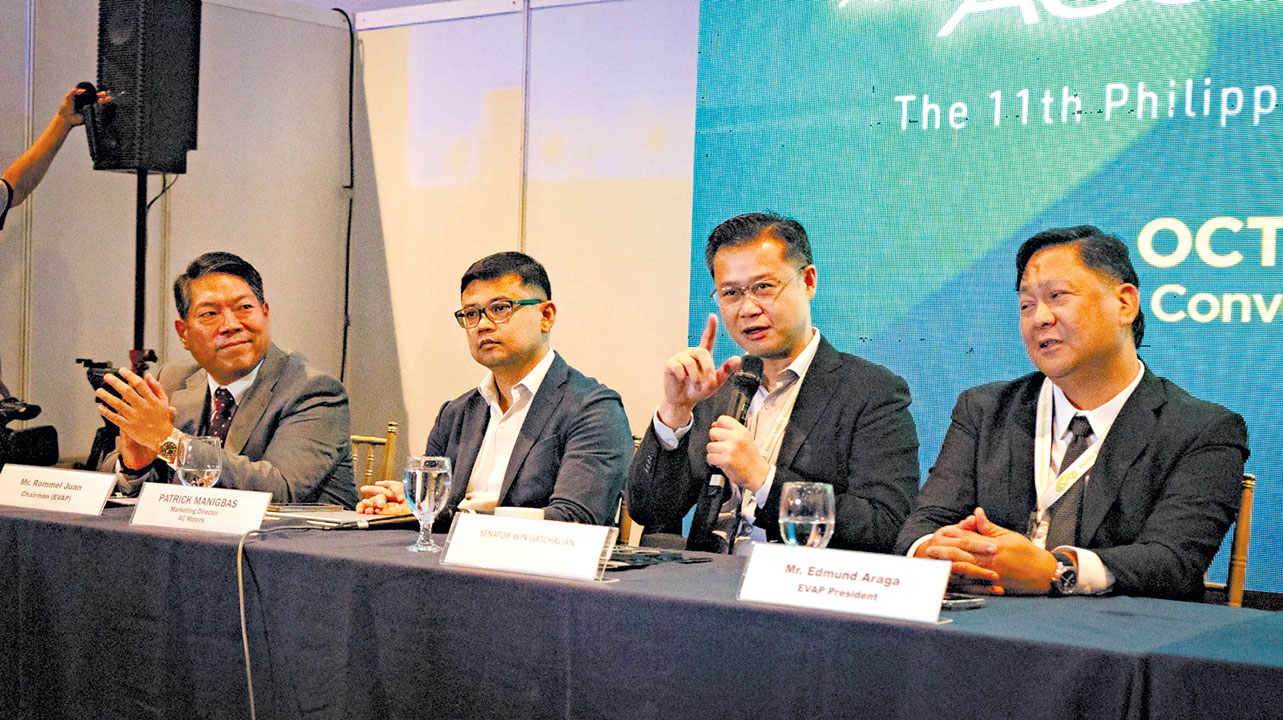
Electric Vehicle Association of the Philippines (EVAP) Chairman Rommel Juan (left) with fellow resource persons at last year’s Philippine Electric Vehicle Summit: AC Motors Marketing Director Patrick Manigbas, Senator Sherwin Gatchalian, and EVAP President Edmund Araga. — PHOTO BY KAP MACEDA AGUILA

Interview by Kap Maceda Aguila

AT NO POINT in the country’s history has there been this many electrified options in mobility — ranging from traditional hybrids, plug-in hybrid electric vehicles, and battery electric vehicles. The concerted move toward the ultimate goal of weaning mobility away from fossil fuels has long begun, but not without the anticipated hiccups and stumbling blocks as policies and legislation struggle to keep up with the momentum.

Take, for instance, the highly polarized discussion on what to do with light electric vehicles (namely, e-bikes and e-tricycles) and the potential risk for accidents they pose as they jockey for position on major thoroughfares. While the Metropolitan Manila Development Authority (MMDA), via pronouncements made by MMDA Chairman Romando Artes, is putting its foot down in this matter, the final version of the IRR is surely far from hammered down as stakeholders weigh in.

But there appears to be no stopping the inevitable as the people become more aware — and rightfully afraid — of how we’re imperiling our future by polluting the planet and causing climate change. There needs to be a decisive step toward cutting our carbon footprint.

The Electric Vehicle Association of the Philippines (EVAP) has long been espousing the advancement of the electric vehicle (EV) industry — doing yeoman’s work in enlisting champions from legislature, government, and the private sector. It prides itself as “a catalyst for the growth and development of electric vehicles in the Philippines by advocating policies, providing technical expertise, and promoting collaboration among stakeholders.” Significantly, it stages the annual Philippine Electric Vehicle Summit (PEVS) as a venue to showcase, discuss, network, and ultimately ascertain where our industry is.

We talked with EVAP Chairman Rommel T. Juan on our EV scene — its challenges, needs, and opportunities; how we compare to our neighbors; and what the future looks like.

VELOCITY: How would you describe our local EV scene compared to our ASEAN neighbors?

ROMMEL T. JUAN: ASEAN neighbors such as Thailand, Malaysia, Singapore and Indonesia are ahead, but we are catching up. We are ahead or at par with the other neighboring countries.

The country has obviously gone a very long way toward the electrification of mobility from the early days of EVAP’s campaign to today. How mature or adequate are the state’s policies to promote or hasten the adoption of electric transport?

I think EVIDA (Electric Vehicle Industry Development Act) was a huge step already. However, as experienced in countries where EVs have really boomed, we really need more fiscal incentives and subsidies. We hope that the CREVI (Comprehensive Roadmap for the Electric Vehicle Industry) can address this once it is finalized.

What remains on your wish list?

Local EV battery manufacturing and leasing is on my wish list. I believe that this is the main thing needed for us to locally make more affordable e-PUVs and e-trikes.

Electric tricycles and e-bikes have recently been on the news for the wrong reasons, and they seem to fall through the cracks of policies and regulations. In your opinion, what needs to be done?

I think we need to regulate EVs the same way we do ICE (internal combustion engine) vehicles. Small e-trikes with less-than-certain power ratings should not be allowed on major thoroughfares. And, like regular vehicles, they must be registered.

It’s notable that more OEMs now are bringing in fully electric offerings, but one of EVAP’s thrusts is to get local enterprises and businesses in on the action, so to speak. How do you see this happening, and how can this be hastened or promoted?

I still think the niche of local EV production is in electric PUVs and e-trikes. But as I mentioned, the price is still too high. The answer lies in battery leasing. Take out the cost of the battery when you buy the unit, and just lease or rent it from a battery leasing company.

There is still considerable pushback that the country is not ready to go full or even significantly EV on account of the lack of charging infrastructure. What do you say about this? Some say that hybrids are the way to go.

I think that the country is ready to go full EV. The technology is there and the infrastructure is catching up fast. When I say catching up, I only mean the public charging stations. However 98% of EV users charge at home and would only use public chargers when they need to go long distances.

It appears that developed economies which had been previously full throttle on EVs are starting to reconsider their position for a variety of reasons.

I think this is merely a speedbump. There are many reasons why the demand suddenly went down. One is that EVs experienced unprecedented high sales during the pandemic, and the market is just correcting. Another is that some big car companies which sold EVs could not keep up with the demand because of an inadequate battery supply. Also, the world leader, which is Tesla, has been aggressively lowering its price — thereby disrupting the market.

Another concern is that increased governmental incentives to shore up the EV industry may actually one day hobble economies by taking away all of the revenues and tariffs normally going to government.

Hopefully when this time comes, people would have successfully transitioned.

What is the realistic timeline you see for EVs in the Philippines? When will we see a majority of vehicles being electric or electrified here?

It’s tough to say. I think it will take a very long time for EVs to overtake ICE-powered vehicles in the Philippines. I’m not waiting for that time. I just want to see more and more people get to try using EVs and feel the difference. Owning an EV is so very liberating. Just plug in when you get home or in the office, if possible, and you never have to worry about getting gas, or even think about its fluctuations in fuel prices. At EVAP, we have been advocating the use of EVs for 15 years, and we are simply delighted that more and more big brands are introducing their EV models and that more individuals are getting to try them — and actually later purchase EVs. It’s just like switching from a regular cellphone to a smartphone; it’s just better and easier to use.

French lawmakers approve bill to apply penalties on fast fashion

PARIS — France’s lower house of parliament on Thursday approved a bill seeking penalties on ultra-fast fashion products, sold by companies like China’s Shein, aimed at helping to offset their environmental impact.

The bill calls for gradually increasing penalties of up to €10 per individual item of clothing by 2030, as well as a ban on advertising for such products.

All voting lawmakers unanimously approved the bill, which will head to the senate before it can become law.

The popularity of fashion retailers Shein and Temu — which scale up orders based on demand thanks to ultra-flexible supply chains — have disrupted the retail sector while established players like Zara and H&M continue to largely rely on predicting shoppers’ preferences.

Shein said in a statement to Reuters that the clothes it produces meet an existing demand, which allows its rate of unsold garments to remain consistently in low single digits, whereas traditional players can have up to 40% waste.

It added that the only impact of the bill would be to “worsen the purchasing power of French consumers, at a time when they are already feeling the impact of the cost-of-living crisis.”

The bill comes as the French environmental ministry said it would propose a European Union ban on exports of used clothes, in a bid to tackle the worsening problem of textile waste. Reuters

Globe, Converge tie up to expand fiber optic networks 

MUHAMMAD RAUFAN YUSUP-UNSPLASH

GLOBE TELECOM, Inc. has partnered with Converge ICT Solutions, Inc. for co-build projects in Bicol and Leyte to extend fiber optic networks.

“By pooling our resources and expertise, we’re not only expanding our network more efficiently but also significantly lowering the costs associated with such extensive infrastructure projects,”  Joel R. Agustin, Globe senior vice-president and head of network planning and engineering, said in a statement on Sunday.

The collaboration between Globe and Converge was forged in February 2022 and was completed in the third quarter of the same year. 

The project covers co-building of projects stretching 137 kilometers from Pili, Camarines Sur, to Legazpi City, Albay, as well as the deployment of microduct solution underground facilities.

With the completion of the project, Globe said that it has decided to embark on a second co-build project with Converge in Leyte covering 209 kilometers to connect Tacloban and Maasin.

The second project is expected to be completed by the third quarter of 2024.

“These initiatives fall under Globe’s core fortification program, designed to achieve comprehensive enhancements, expand fiber network, upgrade network capacity, and accommodate Hyperscalers’ needs,” Globe said. 

Mr. Agustin said this partnership allows Globe to improve its network availability and consistency. 

“We share the same focus on delivering reliable service to our customers,” he said. — A.E.O. Jose

Lessons from Thailand

TOURISM AUTHORITY OF THAILAND

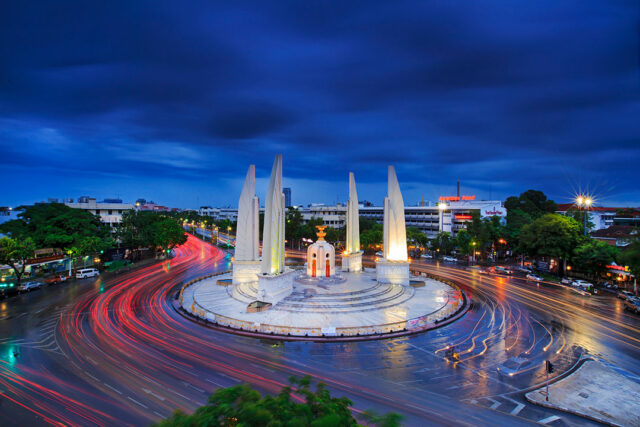
In the center of Bangkok, a couple of kilometers northeast from the Grand Palace and roughly five kilometers west of the main Siam shopping district, at the corner of Ratchadamnoen Avenue and Dinso Road, is the Democracy Monument. In its center is a representation of the box holding Thailand’s 1932 constitution, the country’s first one after the coup that ended its absolute monarchy.

The monument is easy to miss — a moderately sized traffic circle that for most tourists is little more than a drive-by landmark caught somewhere in between Bangkok’s grand temples and its shopping district. Politically, it’s also easy to overlook. Counting the first provisional charter after the coup, Thailand has had 19 constitutions, including provisional charters, or an average of one every five years. And the distribution appears roughly even, with seven since 1991. In comparison, the Philippines has had only three constitutions, starting from the first one in 1935. And there is a possibility that we may see a new Thai constitution in the next few years. Thailand has had 13 successful coup attempts, and nine unsuccessful ones. In 1992, the Black May protests against military rule were held a few hundred meters away from the Democracy Monument and resulted in 52 deaths, with hundreds injured and an unknown number missing.

But economically, Thailand today is what we aspire to become: a manufacturing center for global value chains for white goods, autos, and computer components, among others. The Map Ta Phut Industrial Estate south of Bangkok, which opened in 1990, is the 8th largest petrochemical complex in the world, feeding those very same industries. Its 2022 per capita GDP, according to the World Bank, is $6,900 compared to our $3,500. In 2019, Thailand drew 40 million tourists, nearly five times our 8.5 million. During a recent trip to the east of France, when I mentioned that I was from Southeast Asia I drew recognition of Phuket and Bali, not Palawan or Boracay.

How did a country that was once our peer leapfrog over us in industrial development when its politics are several times more problematic and unpredictable than our own?

The answer is not some special and unique Thai political sauce that is not found elsewhere in Southeast Asia. The common refrain is that Thailand has a monarch, but the king, revered as he is, does not intervene in day-to-day decisions or long-term industrial policymaking. It is not in some magical quality of Thai workers. When I asked one Thai owner of an auto component original equipment manufacturer (OEM) some time ago what his biggest worry was, he said that it would be Indonesians learning to push the same buttons as his workers — a transferable and trainable skillset.

Rather, what Thailand has offered foreign investors are two Cs: credibility and coordination.

On the surface, the country’s politics are messy, unpredictable and sometimes violent. But beneath it is a substratum of familial, economic, and political interests that through the past four decades have generally recognized what foreign investors need in the country and maneuvered the country’s policymakers and bureaucrats to avoid killing the proverbial golden goose of manufacturing. In this network are families that own businesses that benefit greatly from the inward FDI, whether as partners or landlords to their production facilities. Others cater to domestic consumption, which have benefited from the increase in incomes as Thai agricultural workers found higher-paying jobs in the cities and industrial estates.

The other part is coordination, which is the Thai system’s ability to formulate policies for foreign investors and implement them in a consistent and coherent way, across agencies and between central and local governments, and within reasonable time frames. One example is how local governments regularly work with their polytechnics and vocational institutions to deliver the skilled workers needed by factories or new manufacturing facilities ahead of the planned investments.

What Thailand has taught us is that learned lessons and narratives can be sometimes be more effective than formal rules. The bureaucrats and agencies that oversee the auto industry have significant political clout, sometimes more than the politicians who run the country, because of the broad recognition of the sector’s value to the Thai economy. Furthermore, the narrative that manufacturing and industry need to be accommodated, and that their flourishing in Thailand works to the broader benefit of the country, constrain local governments or vested interests from rent-seeking or other extractive activities.

Networks that derive economic benefits from Thailand’s manufacturing sector then pressure the government to avoid disruptive policies that would threaten Thai industrial competitiveness and its credibility with foreign investors. With millions employed in manufacturing, any warning from the business sector that policy changes could weaken the sector generates significant attention, both privately and in the media. This system has been key to Thailand’s attractiveness to foreign investors — unstated, unwritten, but understood and tested across multiple governments and constitutions, under both civilian and military rule.

But Thailand did not plan it out, it evolved as it took in foreign investors.

Of course, some luck was involved. During the rule of the generals in the late 1980s and early 1990s, they entrusted policymaking to some technocrats who not only pushed trade liberalization and bureaucratic reforms, but also ensured that before they left office that there were appointed officials who’d see their reforms through into the succeeding administrations.

With Philippine politics now thrashing around on the issue of constitutional change, Bangkok’s lesson is that there is no magic bullet for the economy. Thailand’s credibility with foreign investors was built through years, if not decades, of consistency and predictability in the investment environment for the manufacturing sector. Opening up the economy is one step, but it will not be enough. Rules matter, but so do narratives, in shaping bureaucratic behavior and investor perceptions. And narratives are, in turn, the net result of complicated interactions, across the whole range of stakeholders in the community and the economy. Change must lift all of them up, otherwise resentment will follow for those left behind.

The question now is: are we changing the Philippine system to deliver the credibility and coordination that foreign investors seek, especially for the large capital projects whose payoff will span two or even three administrations? What is our narrative, and how do we change it?


Bob Herrera-Lim is a managing director at Teneo, a New York-based consulting firm that advises companies and investors globally. He covers all of Southeast Asia for the firm’s clients. He is also a fellow of the Foundation for Economic Freedom.

Rates of T-bills, bonds may be mixed before Fed

BW FILE PHOTO

RATES of Treasury bills (T-bills) and Treasury bonds (T-bonds) could be mixed this week after faster-than-expected US inflation reduced expectations of policy easing by the US Federal Reserve this year.

The Bureau of the Treasury (BTr) will auction off P15 billion in T-bills on Monday, or P5 billion each in 91-, 182-, and 364-day papers.

On Tuesday, it will offer P30 billion in reissued 20-year T-bonds with a remaining life of 19 years and 11 months.

T-bill and T-bond rates may track the mixed movements in secondary market yields last week amid reduced expectations of policy easing by the Fed this year following the release of the latest US consumer and producer inflation data, Rizal Commercial Banking Corp. Chief Economist Michael L. Ricafort said in a Viber message.

“Fast money was seen taking profit today following hotter than expected PPI (producer price index) data from the US, which threatens the base case three cuts from the Fed,” a trader said in an e-mail on Friday.

The trader said the 20-year T-bond could see strong demand and fetch an average rate ranging from 6.25% to 6.3%.

At the secondary market on Friday, the 91-day T-bill rose by 0.77 basis point (bp) week on week to yield 5.7729%, based on PHP Bloomberg Valuation Service Reference Rates data published on the Philippine Dealing System’s website. Meanwhile, the 182- and 364-day papers went down by 1.68 bps and 8.84 bps to end at 5.7729% and 6.0195%, respectively.

On the other hand, the 20-year bond rose by 4.46 bps week on week to 6.3001%.

The US consumer price index (CPI) increased solidly in February, beating forecasts and suggesting some stickiness in inflation, Reuters reported.

Although the CPI rose 0.4% in February in line with forecasts, a 3.2% year-on-year gain came in just ahead of an expected 3.1% increase. Core figures also topped estimates.

A Labor department report likewise showed the producer price index (PPI) rose by 0.6% month on month in February, compared with a 0.3% increase expected by economists polled by Reuters, amid a surge in the cost of goods like gasoline and food.

It rose by 1.6% in the 12 months to February, versus an estimated growth of 1.1%.

Traders now see a 62% chance of the Fed cutting rates in June, according to the CME FedWatch tool, down from 67% before the PPI data.

The Fed will meet to discuss policy on March 19-20.

The US central bank held its target rate steady at the 5.25-5.5% range for a fourth straight time during its meeting in January. It raised borrowing costs by 525 bps from March 2022 to July 2023.

Last week, the BTr raised P15 billion as planned from the T-bills as total bids reached P50.708 billion, more than thrice the amount on the auction block.

The Treasury raised P5 billion as programmed from the 91-day T-bills as tenders reached P13.555 billion. The average rate of the three-month T-bill went down by 0.6 bp to 5.772%. Accepted rates ranged from 5.73% to 5.825%.

The government likewise made a full P5-billion award of the 182-day debt as bids hit P17.631 billion. The average rate for the six-month T-bills rose by 2.9 bps to 5.966%. Accepted rates were 5.93% to 5.993%.

Lastly, the BTr borrowed P5 billion as planned from the 364-day papers as demand for the tenor totaled P19.522 billion. The average rate of the one-year T-bill went down by 1.3 bps to 6.087%. Accepted yields were 6.089% to 6.125%.

Meanwhile, the reissued T-bonds to be auctioned off on Tuesday were first offered on Feb. 27, where the government raised P30 billion as planned. The bonds fetched a coupon rate of 6.25% and an average rate of 6.209%.

The BTr is looking to raise P180 billion from the domestic market this month, or P60 billion from T-bills and P120 billion through T-bonds.

The government borrows from local and foreign sources to help fund its budget deficit, which is capped at 5.1% of gross domestic product this year. — A.M.C. Sy with Reuters