Home Blog Page 3437

Ninja Van eyes provincial market

NINJA VAN PHILIPPINES FACEBOOK PAGE

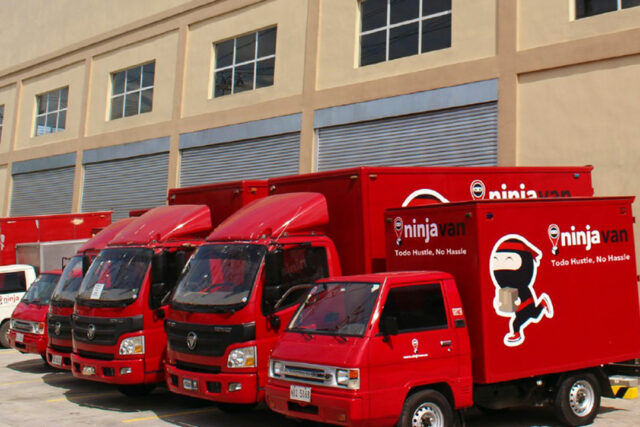
Logistics company Ninja Van Philippines seeks to boost its presence in provincial areas to help address retail challenges, according to its country head.

“Our logistics infrastructure has already expanded to second- and third-tier cities,” Jose Alvin Perez, country head of Ninja Van Philippines, told reporters last week.

Ninja Van, which has as many as 8,000 delivery fleets in the country, wants to boost its business in these areas, he added.

The company sees growth outside Metro Manila, specifically Pampanga and provinces in Mindanao, Mr. Perez said.

“We are surprised that in some regions, for example Mindanao, there’s a lot of e-commerce activity there,” he said, adding that majority of their business would still be in Metro Manila.

Ninja Van Philippines handles almost 500,000 parcel deliveries daily, Mr. Perez said.

Last week, the company launched its new service, Ninja Restock, which streamlines the resupply and delivery process nationwide.

The company also offers other logistic solutions such as its fulfillment service that offers integrated manpower, warehousing, and inventory management solutions.

In 2023, Ninja Van announced the expansion of services beyond last-mile delivery to encompass a comprehensive suite of logistic solutions.

Ninja Van now offers Ninja Direct, Ninja Fulfillment, Ninja Rewards and account management services, the company said on its website.

The company also operates in Singapore, Malaysia, Indonesia, Vietnam, and Thailand. Its network manages two million parcel deliveries daily through its 2,000 hubs in the Southeast Asian region. — Ashley Erika O. Jose

The case for improving drunk driving laws in the Philippines

RAWPIXEL.COM-FREEPIK

In the Philippines, an average of over 10 people die every day due to road crashes. Of these, an estimated three deaths are attributable to alcohol as a risk factor.

The World Health Organization (WHO) states that road traffic crashes as the leading cause of death among people aged 15-29 years globally.

Driving entails a certain level of risk due to factors like poor weather and road conditions, mechanical failures, distracted driving, and human error. But in many cases, the fatalities and injuries are completely preventable. This is certainly true in the case of alcohol-impaired driving.

The side effects from alcohol use, including impaired judgment, coordination, and reaction times, transform potentially safe drivers into serious hazards on the road. Drunk driving incidents, unlike other road crashes that might involve non-controllable factors, can be avoided entirely by ensuring that individuals do not operate vehicles under the influence.

In response to this, the WHO has identified advancing and enforcing drunk driving countermeasures as one of the five most cost-effective interventions to reduce alcohol related harm. Recommended drunk driving countermeasures include:

• establishing and restricting blood-alcohol concentration (BAC) limits (with lower limits for novice and professional drivers);

• sobriety checkpoints and random breath-testing;

• administrative suspension of licenses, graduated driving licenses for novice drivers, and ignition interlocks; and,

• other complementary measures including mandatory driver education, provision of alternative transportation, counseling and, as appropriate, treatment programs for repeat offenders and carefully planned, high-intensity and well-executed mass media campaigns.

Republic Act No. (RA) 10586, also known as the “Anti-Drunk and Drugged Driving Act of 2013,” appears to align in various respects with the WHO recommendations. However, in the Global Status Report on Road Safety 2015, the WHO gave the Philippines a rating of 1 out of a maximum score of 10 in the enforcement and implementation of RA 10586.

In a conversation with Prof. Roberto Valera, a former Professorial Lecturer at the Far Eastern University and a current lecturer at the Metro Manila Development Authority (MMDA) on Land Transportation Office (LTO) rules and regulations, three challenges stood out as regards the enforcement of RA 10586:

1. There is a shortage of law/traffic enforcement officers, including a lack of deputized officers, compounded by insufficient training regarding the proper protocol.

2. There is a deficiency in the appropriate equipment, particularly an inadequate supply of properly calibrated breathalyzers.

3. There are inadequate incentives for enforcement personnel and the public to adhere to the law.

The challenges outlined by Mr. Valera underscore the need for a comprehensive approach that addresses these enforcement gaps to effectively reduce drunk driving incidents.

Stiff penalties for drunk driving such as large fines, long jail times, and strict license suspensions, would seemingly deter offenders, however experience has often proven that these are insufficient, even ineffective, especially when there is a disconnect between the severity of the laws and the actual enforcement of these laws. Heavier penalties are effective only when would-be offenders realize there is a high likelihood of being caught and punished.

Many of the provisions of RA 10586 are simply not enforced.

The shortage of law enforcement officers means that with the high volume of traffic on the road, it is difficult to proactively identify and apprehend drivers on the road who are under the influence of alcohol. While the law allows the deputation of officers from Local Government Units, the law does not require deputation. The lack of officers becomes most apparent during late evenings, when there are less officers on duty and there are likely more drivers who have consumed alcohol, not to mention the decreased visibility.

Even when drivers do get apprehended for probable cause of drunk driving, there remains a high enough probability that they can evade prosecution. For instance, in a 2016 BusinessWorld column, Dinna Louise Dayao recounted an incident where an apparently intoxicated driver was involved in a car collision but managed to escape criminal charges due to the absence of a breathalyzer result*.

Mr. Valera also referenced a case where a drunk driving charge was dismissed in court because the driver in question was too impaired to complete the three field sobriety tests as stipulated in RA 10586. This situation presents quite a paradox: the driver’s extreme intoxication, which should have conclusively demonstrated the danger he posed to others, ironically prevented the completion of the tests, thereby disabling the officers from collecting the evidence needed to secure a conviction.

It seems that outside the LTO, there is a lack of broader governmental commitment to effectively implement RA 10586. Many prosecutors maintain stringent standards on the admissibility of evidence, which, combined with insufficient deputation, inadequate training on protocols, and a shortage of calibrated breathalyzers, can lead to LTO officers feeling discouraged from pursuing cases against drivers who violate the law.

Although the law ostensibly allocates resources for acquiring the necessary equipment and training officers through the Special Road Safety Fund sourced from the Motor Vehicle User’s Charge (Section 7, RA 8794), a review of the General Appropriations Act reveals no specific budgetary line item for the implementation of RA 10586.

On All Saints’ Day in 2023, a tragic accident involving a pickup truck in Calamba, Laguna resulted in the deaths of a family of four and injuries to five other individuals. Senator Raffy Tulfo alleged that the suspected driver “smelled of liquor” at the time of the incident. This prompted him to file Senate Bill No. 2546, imposing stricter penalties for driving under the influence.

It is commendable that our legislators are addressing the issue of drunk driving. We urge them to focus on putting in place proactive or preventive measures for more effective enforcement. Harshly penalizing drunk driving addresses offenses after the fact, whereas proactive enforcement preserves lives before they are jeopardized.

The key is deterrence; prevent crashes from happening. Policymakers must pursue measures to discourage drinking and thus disable driving under the influence.

In this regard, we urge Congress to raise alcohol taxes. This serves as a most effective strategy to reduce overall alcohol consumption. Further, a higher alcohol tax increases government revenues. The additional funds could then be allocated to enhance the under-funded road safety programs, contributing to more consistent enforcement. This approach not only curbs the immediate availability of alcohol but also financially supports the necessary infrastructure to prevent drunk driving incidents.

To summarize, preventive measures and robust enforcement strategies on curbing and ultimately eliminating drink driving will dramatically reduce the number of needless tragedies that occur each year. The impact of alcohol on road safety is not an inevitable risk, but a preventable one.

*“So many drunk drivers, so few breathalyzers,” (July 29, 2016) https://www.bworldonline.com/weekender/focus/2016/07/29/6335/so-many-drunk-drivers-so-few-breathalyzers/


AJ Montesa heads the tax policy team of Action for Economic Reforms.

New NFA palay buying prices not expected to push retail prices higher

A farmer threshes newly harvested palay grains at a ricefield in Mogpog, Marinduque in central Philippines, March 22, 2016. — REUTERS

By Adrian H. Halili, Reporter

THE National Food Authority’s (NFA) new buying prices for palay or unmilled rice are not expected to push retail rice prices higher, with traders already paying much more at farmgate, analysts said.

“I don’t see that happening (retail price increases) since NFA buying will be limited to buffer stock requirements,” Raul Q. Montemayor, national manager of the Federation of Free Farmers said in a Viber message.

“NFA’s main objective is to accumulate buffer stocks. Traders are already buying palay at relatively high prices, so propping up palay prices does not have to be NFA’s concern at this time,” he said.

The NFA Council last week hiked the buying price range for dry and clean palay to P23 to P30 per kilogram (kg) and to P17 to P23 per kg for fresh palay. Prices vary by grade and location.

The Department of Agriculture said that the increase was designed to offer farmers a more competitive price as the old NFA buying prices had diverged significantly from what private traders were paying.

Traders were reportedly buying dry palay from farmers for between P28 to P30 per kg.

Last year, the NFA set the purchase price for dry and wet palay at P19-P23 and P16-P19 per kg, respectively.

Monetary Board member V. Bruce J. Tolentino said that the NFA’s uniform buying scheme may not be suitable for every part of the country.

“A fundamental weakness of NFA is that… its buying price is exactly the same all over the country, regardless of local demand and supply conditions,” Mr. Tolentino said in a Viber message.

NFA OIC Administrator Larry Lacson has said that the NFA will set prices on a per province basis, with the new guidelines to be drafted this week.

The NFA Council had also approved a P10-billion modernization plan to increase its capacity to process and store rice.

He added that after modernization, the NFA’s drying capacity will increase to 180,000 metric tons.

“What we need is at least 495,000 metric tons of drying capacity,” Mr. Lacson said.

Philippines remains the world’s 32nd most powerful country

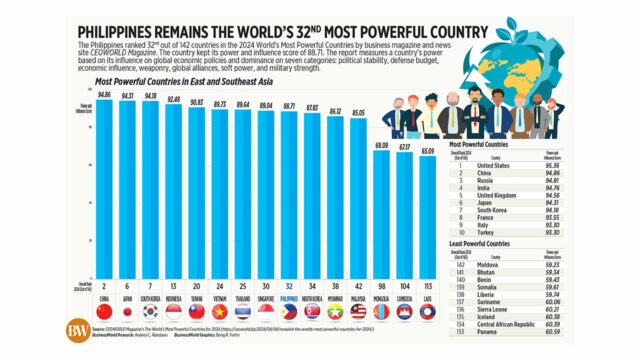
The Philippines ranked 32nd out of 142 countries in the 2024 World’s Most Powerful Countries by business magazine and news site CEOWORLD Magazine. The country kept its power and influence score of 88.71. The report measures a country’s power based on its influence on global economic policies and dominance on seven categories: political stability, defense budget, economic influence, weaponry, global alliances, soft power, and military strength.


Philippines remains the world’s 32<sup>nd</sup> most powerful country

Globe on track to complete submarine cable project

GLOBE.COM.PH

Globe Telecom, Inc. is on track to complete its $150-million (P8.5 billion) domestic submarine cable network by the second quarter, it said in its annual report.

The submarine cable network, a project with Eastern Communications and InfiniVAN, Inc., seeks to speed up connectivity across the country especially in underserved areas.

“The $150-million Philippine Domestic Submarine Cable Network, the longest of its kind in the country, is on track for the entire system completion by the second quarter of 2024 to further boost digitalization in the countryside,” Globe said.

In February, the Ayala-led telecommunication company said it had activated 90% of the cable landing stations — the facilities where undersea fiber optics transmit internet data across the country.

The project covers a total cable distance of 2,500 kilometers and is considered the longest in the Philippines.

Globe has also signed deals with about a dozen telecommunication companies in Asia to invest $300 million for its Asia Link Cable System project.

“Once completed by 2026, the 6,000-km Asia Link Cable system will add capacity to Globe’s existing network for its internal and customer requirements through Singapore and Hong Kong, the two main Asian hubs for internet traffic,” it said in its report.

Globe shares closed 0.69% or P12 lower at P1,738 apiece on Friday. — Ashley Erika O. Jose

Divisoria: Fashion capital of the Philippines?

ROLLS OF CLOTH being transferred to shops in Divisoria. For decades, the Manila district was arguably the center of the fashion trade because designers would source their fabric needs from the area. — BW FILE PHOTO

Runway show will try to prove that

WHILE Manila is the country’s capital city and serves as a metonym for the entire Philippines, a lot of the country’s activity is no longer centered there. While the presidential palace, Malacañang, still sits there, the country’s legislative bodies sit somewhere else. The arts and society perform and preen at nearby Pasay, and the country’s financial districts are in Makati, Taguig, and Ortigas (we can argue that Binondo serves as an informal one). Still, Manila has one card up its sleeve: Divisoria.

Rampa Manila 2, a fashion show that will be held on June 19 at the Bulwagang Antonio Villegas in Manila City Hall, will be a tribute to Divisoria, the colonial-era trading hub that still exists today. Thanks to its strategic location then and now near ports, roads, and trains, Divisoria is still a central market, where goods from manufacturers here and abroad land and are sold at almost-factory price.

One of the draws there are the textile markets, and in a way, the cloth trade in Divisoria makes it a fashion capital — at least in the eyes of Rampa Manila’s Creative Director, designer Bang Pineda. “Manila is the fashion capital, because of Divisoria,” he said in a press conference at Manila City Hall on April 11. He also said that this year’s theme would be “Texture, Textile and Technique.”

Rampa Manila 2 is a sequel to last year’s project, Rampa Manila, held last year near Manila Day (June 24). Participating designers last year included Puey Quiñones, Michael Leyva, Jo Rubio, Marlon Tuazon, and Albert Andrada. This year, the roster includes Anthony Ramirez, Neric Beltran, Marc Rancy, Val Taguba, Jhobes Estrella, and even new blood, namely: Dhenyze Guevara, Morissette Magalona, and Joanna Santos.

Mr. Pineda said, “Lahat kami started out as young designers, namimili ng tela sa Divisoria (we were all young designers who started out buying cloth in Divisoria).”

DIVISORIA’S PROBLEMS
At the same event, Manila Mayor Honey Lacuna-Pangan discussed problems Divisoria is having, and how the city could improve it.

“It’s so sad. Before kasi talaga, puntahan ang Divisoria for any needs; any kind of textile. During the past few years, nag-dwindle talaga iyong desire to go to Divisoria to avail textiles,” she said. She said that a lot of designers these days would rather get them somewhere else or import them directly.

Ms. Lacuna-Pangan and Department of Tourism, Culture, and Arts of Manila (DTCAM) Director Charlie Dungo also discussed projects that would have revived Remedios Circle as the fashion district of Manila (as it had been in the 1970s to the ’80s), but rents in the area were simply too high for the project to be feasible.

“It’s also the local government of Manila’s way to help iyong ating stakeholders doing business here. We’re trying to invite designers and future designers to go back to where it all started,” she said about these districts. “Ang ating ultimate goal is pataasin ang antas ng industriya ng fashion, hindi lang sa Maynila, kundi sa buong Pilipinas (our ultimate goal is to improve the level of the fashion industry, not just in Manila but the whole Philippines).” — Joseph L. Garcia

India’s voting machines are raising too many questions

SHRESHTH GUPTA-UNSPLASH

NOW that the quid pro quo in India’s opaque electoral funding has been exposed, electronic voting machines are the next port of call for judicial scrutiny. And rightly so.

The national elections have been paperless since 2004. Yet, the voting devices remain deeply controversial. On April 16, Supreme Court judges will hear petitions demanding 100% matching of ballots recorded electronically with paper slips. Currently, these physical records are briefly shown to electors behind a glass screen; only a small sample gets counted.

The poll will start, in phases, on April 19. The last ballots will be cast June 1, at the peak of a brutal summer, and the results are expected June 4. The tight schedule doesn’t offer much scope for deeper reforms sought by citizens’ groups, such as placing a record of the vote in the hands of electors, who will then put them in a box. This, the Election Commission has argued, will take India back to paper voting, with all its attendant law-and-order problems.

Still, given the slide in recent years in India’s democratic credentials, it would be dangerous to brand calls for change as Luddite or reject them on grounds of technical expediency.

The stakes are high. A third term for Prime Minister Narendra Modi, the pollsters’ consensus outcome, could mean a further tilt toward his divisive politics. The majority Hindu voters are being bombarded with messages of religious polarization, with the prime minister dismissing the opposition Congress Party’s manifesto in public rallies as bearing the imprint of the Muslim League, the party that played a key role in the bloody partition of the subcontinent in 1947.

There are plenty of cheerleaders — both for Modi, and for India’s drift away from its secular, democratic constitution — especially in the country’s impoverished, overpopulated north, which has suddenly been filled with a newfound enmity toward minorities, particularly Muslims. But are almost 1 billion voters onboard with the idea of a Hindu nation or against it? There’s only one way to find out: a fair ballot that’s transparent to everyone voting and observing.

Will 2024 be a credible election? Western democracies, having flirted with technology, have mostly decided against surrendering the act of recording a citizen’s most profound political choice entirely to machines. In 2009, Germany’s constitutional court declared computer-aided voting unconstitutional for failing to meet standards of public scrutiny. Most votes in the US presidential elections are paper ballots marked by hand or machines. Even Estonia, considered a pioneer, still has substantial paper voting.

A vote has three legs: It must be cast as intended, recorded as it is cast, and counted as it is recorded. Before machines were introduced, every Indian election brought news of “booth capture.” People with guns would simply march in and hijack the vote. Since electronic voting machines don’t accept more than four ballots in a minute, parties no longer have an incentive to hire muscle.

Yet, the election equation still looks wobbly. There is considerable skepticism about whether people’s choices are being recorded fairly, and if they’re being counted right. Opposition parties are protesting. “The king’s soul is in the EVM,” Rahul Gandhi, the main opposition leader, said at a public rally in Mumbai last month, referring to Modi and the electronic voting machine.

Kannan Gopinathan, an electrical and electronics engineer, was involved in the 2014 general election as a civil servant and found no reason to doubt the integrity of the vote. The setup was nothing more than a calculator. An elector pressed a button on a ballot unit. A control unit recorded the selection. Neither part connected to any external device or network. They were joined by a simple cable.

The problem, as Gopinathan told me on a recent trip, crept in with the nationwide introduction of a third accessory in the 2019 election: voter verifiable paper audit trail. This additional unit sits between the ballot and the control units. It was introduced to assuage the voter’s concern about what happens after she presses the button. Now, the candidate and the party symbol are displayed — for a few seconds, behind a tinted glass — before the light goes out, the paper gets cut, and she goes home satisfied.

Trouble is, the appendage is much more than just a dumb display. Unseen by the voter, it also tells the controller unit what choice to record, something that should be done only by the ballot unit. And since these additional devices are programmed for each constituency before elections, they are no longer immune to potential outside influences. As computer scientist Madhav Deshpande asked in an article earlier this year: “What is the guarantee that the vote is unchanged after it is displayed?”

Gopinathan, who has since resigned from government service, has turned into one of the country’s most vocal critics of electronic voting. He emphasizes that he has no evidence that any of the machines have ever been manipulated. What worries him is that they can be — the setup is no longer that of a rudimentary calculator. Besides, nobody wants to tackle the knottier issue. If the paper audit is supposed to supersede the machine’s count, then “Where does my vote legally reside — in paper, or in bits and bytes?” he asks.

The sometimes cozy and often coercive relationship between capital and politics in the world’s largest democracy has already been laid bare in all its ugliness. With the Indian Supreme Court lifting the veil from anonymous electoral funding, quid-pro-quo deals and corporate donations to evade harassment are for all to see. The voting machine is the next obvious candidate for scrutiny.

And that’s just as well. It isn’t only the contestants but the voters themselves who may be at a permanent disadvantage. A poor person who wants a state-paid hospital bed or a reasonably priced train ticket gets one opportunity in five years to express her preference. But she gets the same chance as a tycoon who wants a lower corporate tax rate or a real-estate concession. A seemingly democratic election gives Modinomics a fig leaf of legitimacy for policies that have made India among the most unequal societies on earth.

If the credibility of elections comes under doubt, then the fig leaf drops. In that case, the average voter must be resigned to accept whatever deal is thrown up by the confluence of strongman politics, crony capitalism, and a machine that blesses both — in perpetuity.

BLOOMBERG OPINION

DA lifts ban on Belgian, French poultry

PHILSTAR FILE PHOTO

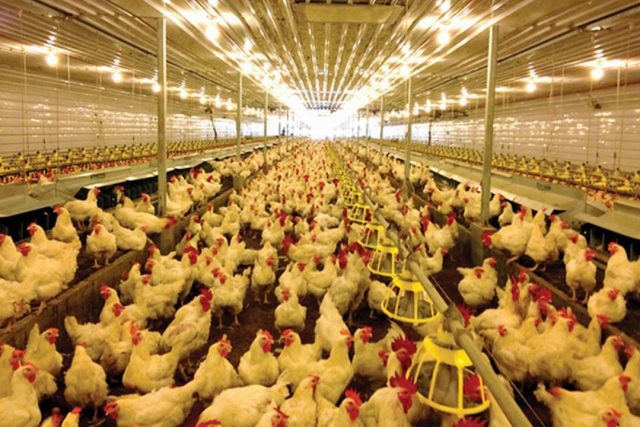
THE Department of Agriculture (DA) said that it lifted the import ban on poultry from Belgium and France.

Separate memorandum orders issued by the agency said that poultry meat, day-old chicks, eggs and semen from the two countries are now allowed to enter the Philippines.

The DA said that based on Belgium’s self-declaration report to the World Organisation for Animal Health, all cases of Highly Pathogenic Avian Influenza (HPAI) or bird flu cases have been resolved and no further outbreaks were reported after Feb. 21.

France also reported that cases of HPAI have been resolved with no additional outbreaks after Feb. 29.

In January, the DA banned imports of live poultry and poultry products from Belgium and France after outbreaks in the two countries. — Adrian H. Halili

Chinese car makers bullish on PHL

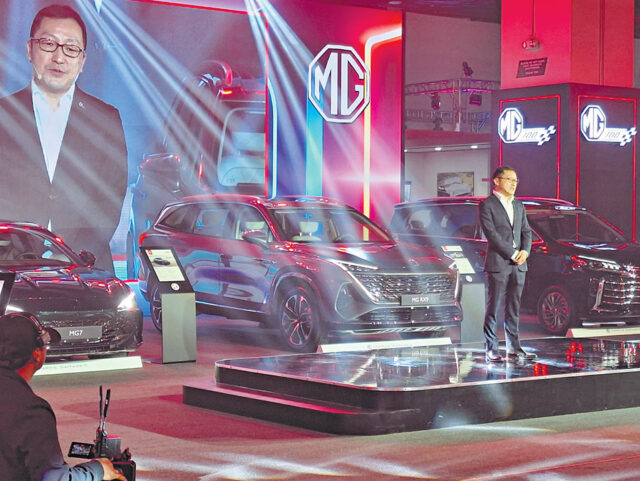
SAIC Motor Philippines President Felix Jiang speaks at the MG booth. — PHOTO BY DYLAN AFUANG

This year’s edition was a battleground for new and established players from our neighbor in the north

#mias2024smx

By Dylan Afuang

AT THE SECOND venue of the 2024 Manila International Auto Show (MIAS), Chinese auto brands further emphasized their serious battle with established firms — most of which come from America, South Korea, and Japan — for market share in the Philippines.

Twenty-one car makers, out of the 29 that participated in the country’s annual motor show, originate from China.

The 19th MIAS was simultaneously held at two venues last April 4 to 7 — one in the show’s traditional venue, World Trade Center, and the other at the SMX Convention Center — both located in Pasay City. A few of the upstarts staged product unveilings at SMX.

Auto marques Hongqi, Hycan, Omoda and Jaecoo, and Seres are a handful of Asian brands that signaled their local arrival at MIAS. They will be competing for market approval against the likes of Foton and MG.

These firms showed what they can offer the local market.

Hycan Philippines boast “competitively priced and premium-quality” vehicles, company Vice-President and Managing Director Bryan Keith Chua told “Velocity.”

Hycan, an EV joint venture brand of the GAC Group and Nio, was established in 2019 and arrived in the country this year. At MIAS, the brand unveiled its Z03 crossover, A06 Plus fastback, and V09 van. These are priced at P1.688 million, P1.788 million, and P3.788 million, respectively.

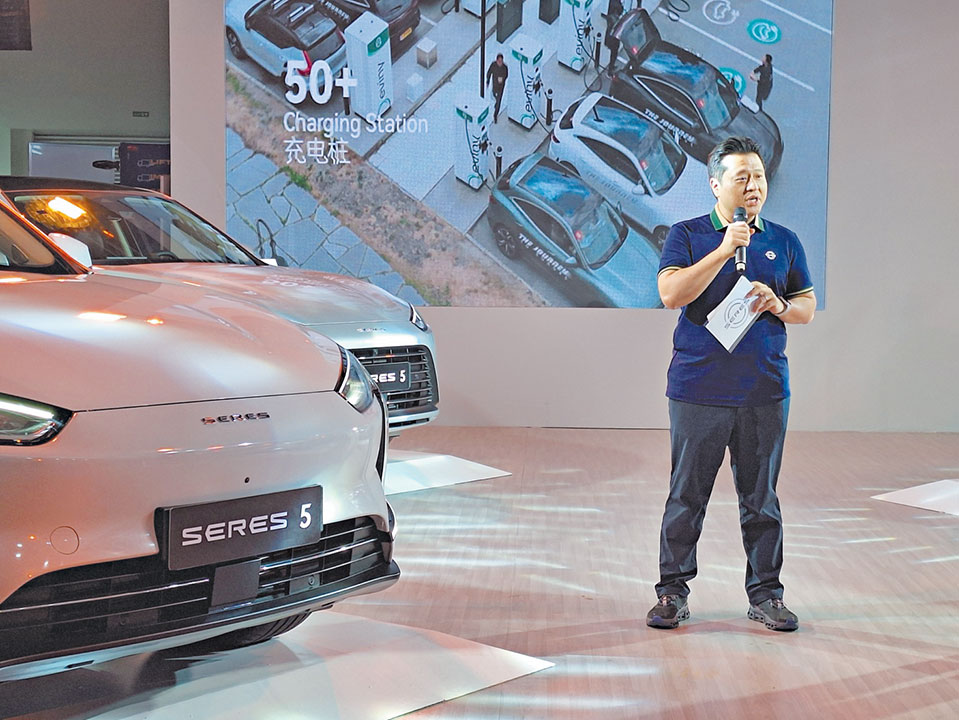
Seres Motor Philippines boasts “cars that not only move you physically, but also… move the industry toward a more sustainable and intelligent mobility lifestyle,” company Director Kevin Chan stated in his speech at MIAS.

Seres eyes to arrive here within the year, and it produces vehicles with battery electric, hybrid-electric, and electric power with a gas engine that extends range. These come in the form of the brand’s 5, 7, and E5 models, which were showcased.

Sibling brands Omoda and Jaecoo are now here. “Our cars are produced (in compliance) with serious global standards in durability and safety,” affirmed Omoda and Jaecoo General Manager for Eastern Europe and Asia Pacific Jeff Li.

The executive added that with the brands’ five research and development centers worldwide, its products are tailored for the markets in which they are sold. The Omoda 5 and E5 electric SUV, and Jaecoo J7 and J8 luxury SUVs, signify Omoda and Jaecoo Philippines’ establishment.

Local Hongqi distributor EvoXTerra, through President Rashid Delgado, revealed at MIAS new “customer experience initiatives to all and existing Hongqi owners,” such as free maintenance and 24/7 roadside assistance, and the P1.98-million HS3 crossover, the brand’s entry model.

Hongqi was established in its home market in 1958, and last year, the marque arrived locally with EV and ICE models. It opened its first showroom in BGC, Taguig City, and recently, a Manila Bay outlet, the executive added.

Foton and MG, considered to be mainstream Chinese brands here, look not to be outdone.

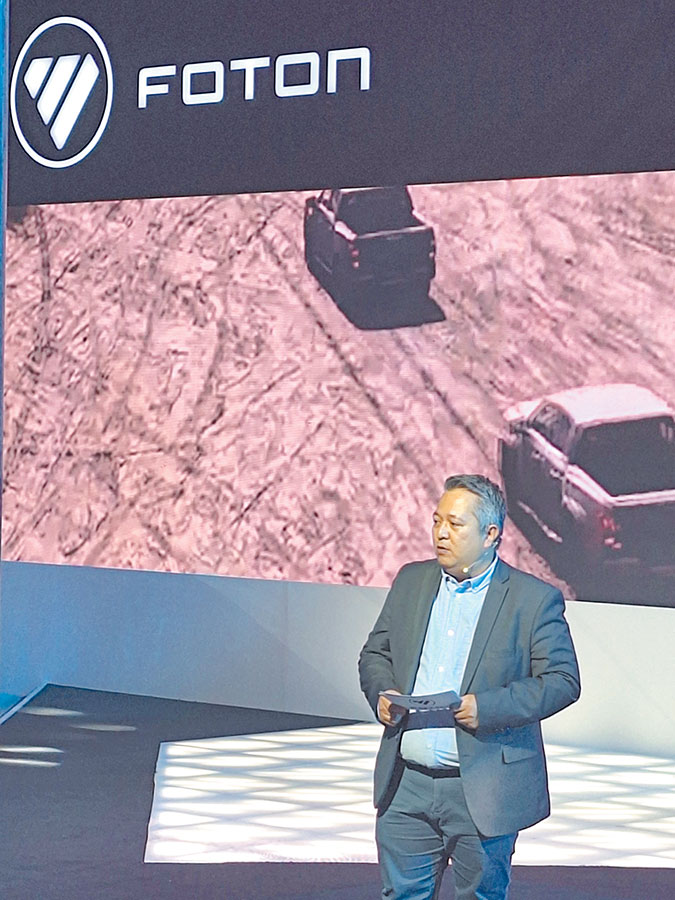
Foton Motor Philippines, Inc. (FMPI) General Manager Levy Santos unveiled “Foton’s new products that are diverse and meet the mobility needs of Filipinos, from full electric vans, trucks, and hybrid pickup trucks.”

FMPI officially launched the Tunland V7 and V9 pickups powered by mild hybrid diesel, and the Thunder and Transvan HR Cargo boasting battery electric power. Mr. Santos also proudly expressed that the brand’s trucks are “gawa ng Pilipino, para sa Pilipino (made by Filipinos for Filipinos)!”

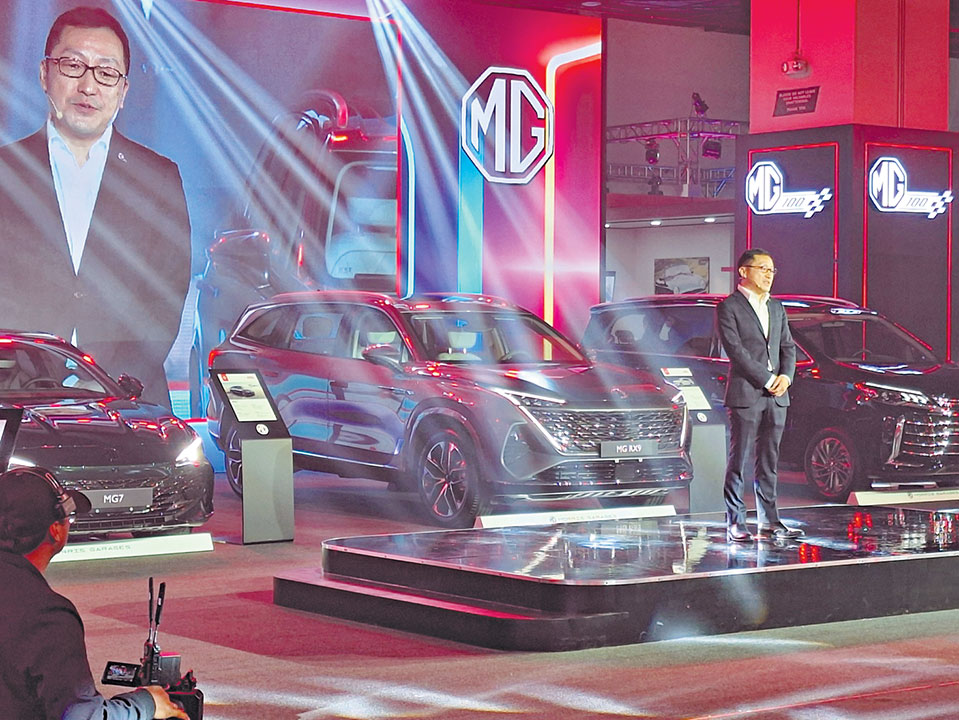
Distributed by SAIC Motor Philippines, MG occupied the largest stage at SMX as it presented its “diverse roster of cars suited for every kind of Filipino motorist,” as company President Felix Jiang underscored.

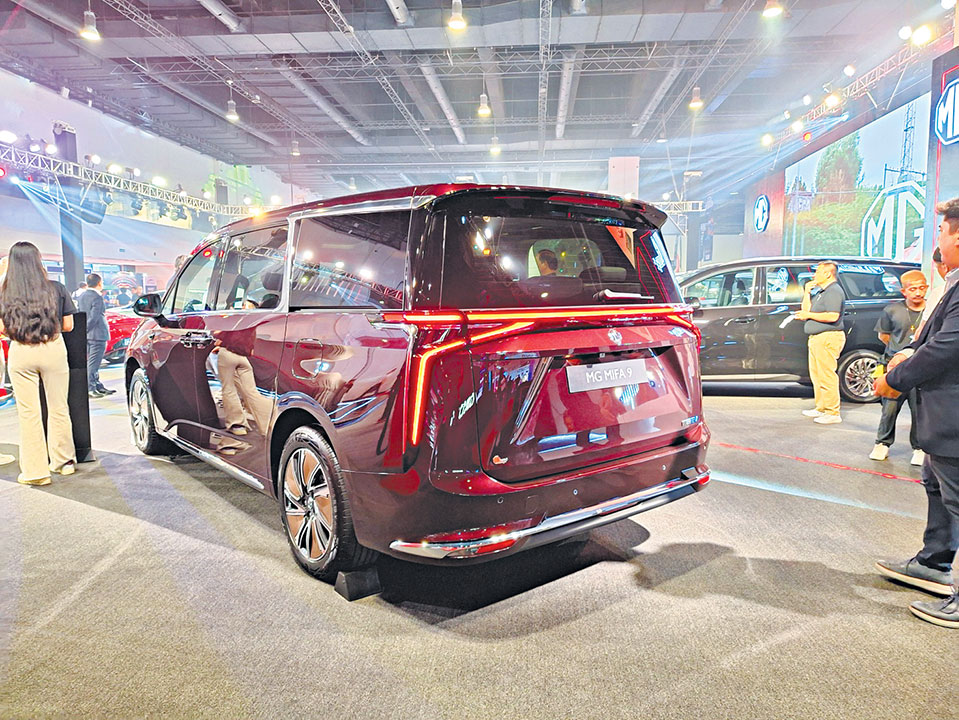
MG launched the P1.838-million ZS EV crossover, the P2-million MG4 XPower performance hatchback, and previewed its Mifa 9 electric van. Leading MG’s EV range is the Cyberster sports car, for which order books have been opened.

SAIC Motor also displayed its MG 3 hybrid hatchback, and the gas-powered G50 MPV, 7 sedan, and RX9 SUV.

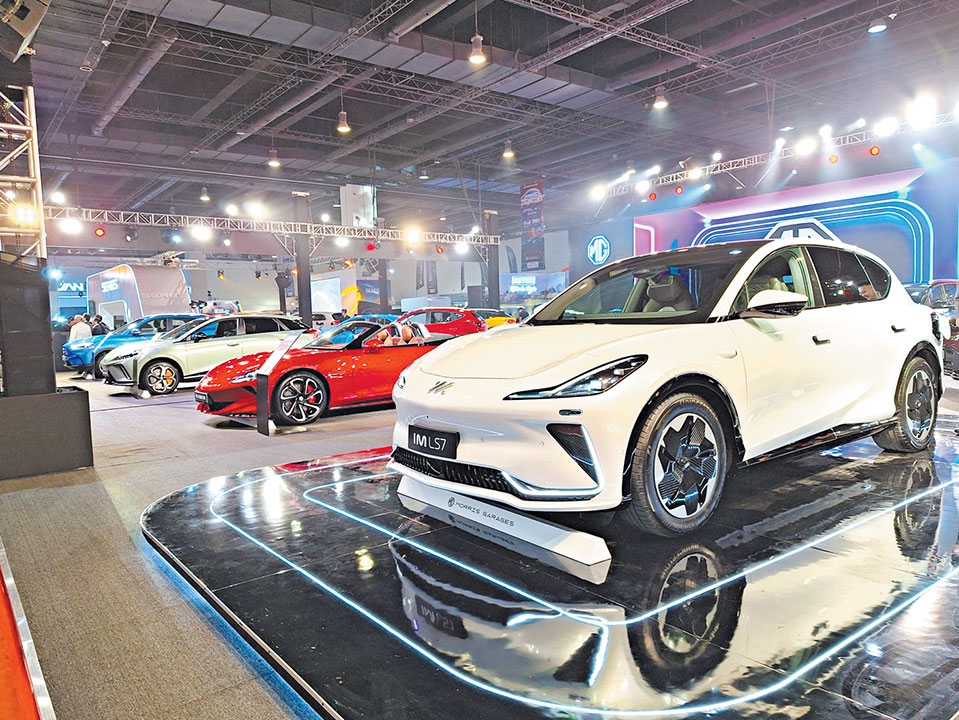
The company introduced IM Motors, a new premium electric marque under MG’s umbrella. The LS7 crossover represents what it can offer in the premium segment, such as a 42-inch widescreen across the dashboard, high-beam LIDAR for autonomous driving, and zero-gravity seats.

Business Expectations Survey

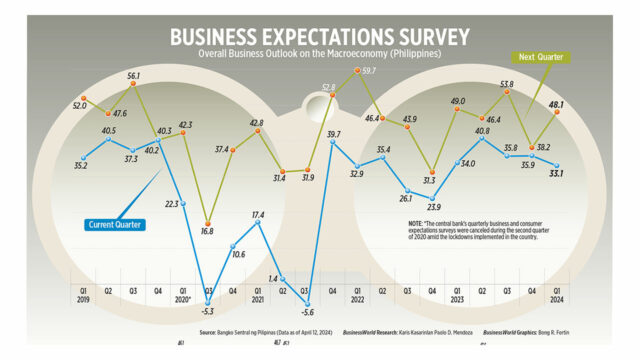
The Bangko Sentral ng Pilipinas said that business sentiment was “less bullish” in the first quarter. The confidence index for businesses eased slightly to 33.1% in the first quarter from 35.9% a quarter ago. Read the full story. https://www.bworldonline.com/top-stories/2024/04/12/587690/filipino-consumers-were-less-pessimistic-in-q1-bsp-survey/.


Business Expectations Survey

Cebu Landmasters banks on rate cuts to boost income

LISTED property developer Cebu Landmasters, Inc. (CLI) is banking on lower interest rates to boost earnings and support its capital-raising efforts this year, according to an official.

“The rate cuts that we are anticipating will help not only in our ability to raise capital, but it should improve our margins too,” Cebu Landmasters Chief Finance Officer Beauregard Grant L. Cheng said told an online news briefing last week.

“Lower interest rates can help spur more demand and more buyers who want to be homeowners,” he said.

Last week, the Philippine central bank kept its key rate at 6.5% for a fourth consecutive meeting after inflation quickened to 3.7% in March from 3.4% in February.

Mr. Cheng said one of the risks being monitored by the company is inflation, which could affect the prices of construction materials.

“If the prices of commodities and raw materials go up as the prices of fuel go up, that’s always a risk for us,” he said. “Delivery and shipping costs are always a big part of our input costs, whether it is for cement or any other construction material.”

Mr. Cheng said Cebu Landmasters posted high reservation sales in the first quarter and is expected to exceed the company’s P20.6 billion worth of reservation sales last year.

“We’re anticipating that in 2024, when all is said and done, we should be able to exceed the reservation sales that we had from last year,” he added.

In 2023, Cebu Landmasters’ net income rose by 29% to P4.64 billion last year as consolidated revenue increased by 20% to P18.8 billion.

Its shares were last traded on April 12 at P2.93 each. — Revin Mikhael D. Ochave

T-bill, bond rates to rise as BSP, Fed stay hawkish

BW FILE PHOTO

RATES of Treasury bills (T-bills) and Treasury bonds (T-bonds) on offer this week are expected to rise amid expectations of higher for longer yields at home and in the United States (US) due to elevated inflation.

The Bureau of the Treasury (BTr) on Monday will auction off P15 billion in T-bills, or P5 billion each in 91-, 182-, and 364-day papers.

On Tuesday, it will offer P30 billion in reissued 20-year T-bonds with a remaining life of 14 years and nine months.

T-bill and T-bond rates may climb to track the rise in secondary market yields last week, Rizal Commercial Banking Corp. Chief Economist Michael L. Ricafort said in a Viber message.

Secondary market rates climbed due to expectations of delayed rate cuts by both the US Federal Reserve and the Bangko Sentral ng Pilipinas (BSP) amid sticky inflation, the first trader said in an e-mail.

A second trader said T-bill rates may go up by 10-20 basis points (bps), while the reissued 20-year bonds may fetch yields of 6.57% to 7%.

Meanwhile, a third trader said the bonds on offer this week could fetch rates of 6.7% to 6.9%.

At the secondary market on Friday, the 91-, 182-, and 364-day T-bills went up by 2 bps, 0.27 bp and 4.57 bps week on week to end at 5.7727%, 5.8969%, and 6.0514%, respectively, based on PHP Bloomberg Valuation Service Reference Rates data published on the Philippine Dealing System’s website.

The 20-year bond likewise climbed by 52.49 bps week on week to close at 6.8021%.

Inflation is proving to be a stickier problem than US central bank officials had anticipated it would be just a couple of months ago, while other measures of the economy show little signs of slowing down. That combination has pushed the anticipated start of an easing cycle further down the road, Reuters reported.

US consumer price index (CPI) data came in stronger than expected in March, prompting a broad resetting of expectations for when the Fed will be able to cut rates this year. Financial markets are now pricing in a July or September start to Fed rate cuts, versus an earlier view of June.

The CPI rose 0.4% last month after advancing by the same margin in February, the Labor department’s Bureau of Labor Statistics said.

In the 12 months through March, the CPI increased 3.5%, the most since September. The CPI was also boosted by last year’s low reading dropping out of the calculation. It rose 3.2% in February. Economists polled by Reuters had forecast the CPI gaining 0.3% on the month and advancing 3.4% year on year.

Meanwhile, BSP Governor Eli M. Remolona, Jr. last week said they could begin their policy easing cycle later than initially expected as they have become “more hawkish than before” due to persistent upside risks to inflation stemming from higher food and transport costs.

He said they could cut rates by 25 bps in the third quarter if inflation is within target and economic growth is weak.

However, policy easing could start as late as the first quarter of 2025 if inflation risks persist, he said.

The Monetary Board kept the target reverse repurchase rate unchanged at a near 17-year high of 6.5% at its meeting on Monday, as expected by all 16 analysts in a BusinessWorld poll. Rates on the overnight deposit and lending facilities were likewise kept at 6% and 7%, respectively. 

The central bank hiked borrowing costs by 450 bps from May 2022 to October 2023 to help bring down elevated inflation.

Philippine headline inflation picked up to 3.7% year on year in March from 3.4% in February. This was slower than the 7.6% clip in the same month last year.

Still, this was within the BSP’s 3.4-4.2% forecast for the month and was slightly below the 3.8% median in a BusinessWorld poll. This also marked the fourth straight month that the CPI was within the central bank’s 2-4% target.

For the first quarter, headline inflation averaged 3.3%, below the BSP’s baseline forecast of 3.8% and risk-adjusted forecast of 4%.

Last week, the BTr raised P15 billion as planned from its T-bill offer as total bids reached P39.939 billion, or more than twice the amount on the auction block.

Broken down, the Treasury borrowed P5 billion as programmed from the 91-day T-bills as tenders for the tenor reached P10.333 billion. The three-month paper was quoted at an average rate of 5.772%, 6.8 bps higher from the previous week. Accepted rates ranged from 5.698% to 5.8%.

The government likewise made a full P5-billion award of the 182-day securities, with bids reaching P15.036 billion. The average rate for the six-month T-bill stood at 5.885%, up by 2 bps from the prior week, with accepted rates at 5.823 to 5.919%.

Lastly, the Treasury also raised P5 billion as planned via the 364-day debt papers as demand for the tenor totaled P14.57 billion. The average rate of the one-year T-bill climbed by 1.8 bps to 5.983%. Accepted yields were from 5.95% to 6.025%.

Meanwhile, the reissued 20-year bonds to be auctioned off on Tuesday were last offered on  Nov. 22, 2023, where the government made a full P20-billion award of the papers at an average rate of 6.593%, 15.7 bps below the 6.75% coupon for the series.

The Treasury plans to raise P195 billion from the domestic market this month or P75 billion from T-bills and P120 billion via T-bonds.

The government borrows from local and foreign sources to help fund its P1.48-trillion budget deficit, which is capped at 5.6% of gross domestic product for this year. — BMDC with Reuters