Home Blog Page 34

World weighs fate of Mideast ceasefire after US seizes Iranian cargo ship

Smoke rises after reported Iranian missile attacks, following strikes by the United States and Israel against Iran, in Manama, Bahrain, February 28, 2026. — REUTERS/STRINGER TPX IMAGES OF THE DAY

WASHINGTON/CAIRO — Concerns grew on Monday that the ceasefire between the United States and Iran might not hold after the US said it had seized an Iranian cargo ship that tried to run its blockade and Iran vowed to retaliate.

Efforts to build a more lasting peace in the Middle East (ME) likewise appeared to be on shaky ground, as Iran said it would not participate in a second round of negotiations that the US had hoped to kick off before the ceasefire expires on Tuesday.

The US has maintained a blockade of Iranian ports, while Iran has lifted and then reimposed its own blockade on marine traffic passing through the Strait of Hormuz, which typically handles roughly one-fifth of the world’s oil supply.

The US military said on Sunday it fired on an Iranian-flagged cargo ship as the vessel sailed toward Iran’s Bandar Abbas port. “We have full custody of their ship, and are seeing what’s on board!” President Donald J. Trump wrote on social media.

Iran’s military said the ship had been traveling from China. “We warn that the armed forces of the Islamic Republic of Iran will soon respond and retaliate against this armed piracy by the US military,” a military spokesperson said, according to state media.

Oil prices jumped and stock markets wobbled, as traders pondered the prospect that traffic in and out of the Gulf would remain at a bare minimum.

IRAN REJECTS PEACE TALKS
Iranian state media reported that Tehran had rejected new peace talks, citing the ongoing blockade, threatening rhetoric, and Washington’s shifting positions and “excessive demands.”

“One cannot restrict Iran’s oil exports while expecting free security for others,” Iran’s First Vice-President Mohammadreza Aref wrote on social media. “The choice is clear: either a free oil market for all, or the risk of significant costs for everyone.”

Mr. Trump earlier warned Iran that the US would destroy every bridge and power plant in Iran if Tehran rejected his terms, continuing a recent pattern of such threats.

Iran has said that if the United States were to attack its civilian infrastructure it would hit power stations and desalination plants of Gulf Arab neighbors.

PREPARING FOR TALKS THAT MIGHT NOT HAPPEN
Mr. Trump said his envoys would arrive in Islamabad on Monday evening, one day before a two-week ceasefire ends.

A White House official told Reuters the US delegation would be headed by Vice-President JD Vance, who led the war’s first peace talks a week ago, and also include Mr. Trump’s envoy Steve Witkoff and son-in-law Jared Kushner. But Mr. Trump told ABC News and MS Now that Mr. Vance would not go.

Pakistan, which has served as the main mediator, appeared to be preparing for the talks. Two giant US C-17 cargo planes landed at an air base on Sunday afternoon, carrying security equipment and vehicles in preparation for the US delegation’s arrival, two Pakistani security sources said.

Municipal authorities in the Pakistani capital of Islamabad halted public transport and heavy-goods traffic through the city. Barbed wire was rolled out near the Serena Hotel, where last week’s talks were held. The hotel told all guests to leave.

Now in its eighth week, the war has created the most severe shock to global energy supplies in history, sending oil prices surging because of the de facto closure of the Strait.

Thousands of people have been killed by US-Israeli strikes on Iran and in an Israeli invasion of Lebanon conducted in parallel since the war began on Feb. 28. Iran responded to the attacks with missiles and drones against Israeli and nearby Arab countries that host US bases.

Iran’s parliament speaker, Mohammad Bagher Ghalibaf, who has led Iran’s side in the talks, had earlier said the two sides had made progress but were still far apart on nuclear issues and the Strait.

European allies, repeatedly criticized by Mr. Trump for not aiding his war effort, worry that Washington’s negotiating team is pushing for a swift, superficial deal that would require months or years of technically complex follow-on talks. Reuters

Increase in renewable energy curbs emissions growth in 2025, IEA says

A view of the logo of the International Energy Agency in Paris, France, December 15, 2023. — REUTERS/SARAH MEYSSONNIER

PARIS — Global emissions rose at a slower rate in 2025 as the expansion of renewable energy (RE) sources, like solar power, helped developing countries offset emissions growth in advanced economies, led by the United States, the International Energy Agency (IEA) said in a report on Monday.

Energy-related carbon dioxide emissions rose 0.4% in 2025, slowing from recent years as a boom in solar power supply dominated changes in the supply mix, the IEA said.

Overall global energy demand growth eased to 1.3%, just below the average of the previous decade, while gas demand growth slowed sharply because of relatively high prices in the first half of the year.

The data included a reversal of a long-term trend, with advanced economies recording their first annual rise in emissions since 2018, the agency said. This was led by the US, which relied more heavily on coal-generated electricity amid high gas prices.

US energy demand growth reached its second-highest level since 2000, excluding post-recession rebound years, driven by strong electricity demand from data centers, robust industrial growth and colder temperatures, the IEA said.

In China, which the IEA classifies as a developing economy, emissions fell as the country led additions of solar capacity.

Emissions in India fell during normal economic conditions for the first time on record, having previously decreased only in the pandemic year of 2020 and during the oil shocks of the 1970s, largely because of a strong monsoon season and increased renewable generation. — Reuters

EV sales soar in main European markets as drivers shun expensive petrol

REUTERS

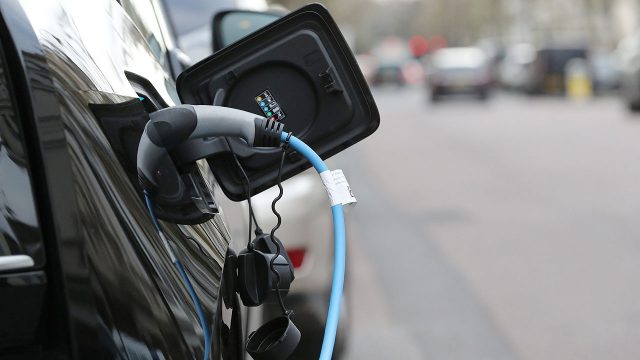
SALES of fully electric cars in Europe’s main auto markets jumped by almost a third in the first quarter of 2026, as drivers looked for alternatives to combustion engines after the war in Iran caused the highest spike in petrol prices in years.

New battery-electric vehicle (BEV) registrations, a proxy for sales, rose 29.4% from a year ago to almost 560,000 in the quarter and were up 51.3% at over 240,000 in March alone in 15 European markets, data collected by trade association E-Mobility Europe and research firm New Automotive showed on Monday.

Last year, those markets accounted for 94% of all BEV sales in the European Union (EU) and the European Free Trade Association (EFTA), whose countries align with EU laws regulating CO2 emissions, data by the ACEA auto lobby show.

“March’s surge in electric car sales is one of Europe’s biggest recent gains in energy security, in a month when oil dependence has become a real vulnerability,” E-Mobility Europe Secretary General Chris Heron said in a statement.

The joint statement from the two organizations said the half-million BEVs registered in the quarter were enough to reduce oil consumption by 2 million barrels per year.

The region’s five largest EV markets — Germany, France, Spain, Italy and Poland — have recorded growth of more than 40% in BEV sales so far this year, it said. It estimated that 21.2% of all new cars registered in the EU and EFTA in March were electric.

In a separate report published earlier in April, New Automotive said BEV registrations in Britain, Europe’s second-biggest BEV market after Germany, grew 12.8% in the quarter, also helped by rising petrol prices, and accounted for 22.5% of new car sales in the country. Reuters

Major 7.5-magnitude quake hits off Japan, tsunami warning issued

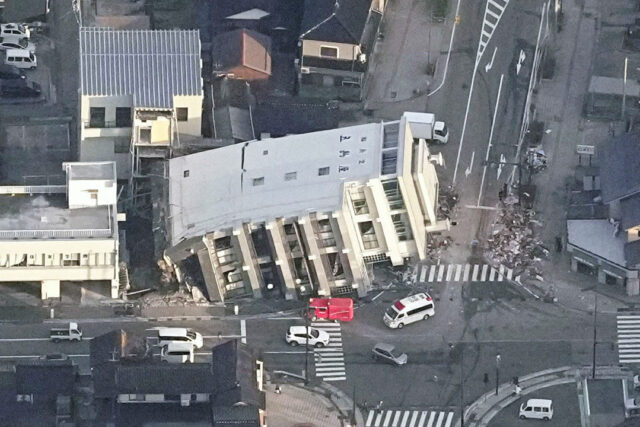
AN AERIAL VIEW shows a collapsed building caused by an earthquake in Wajima, Ishikawa prefecture, Japan, Jan. 2, 2024, in this photo released by Kyodo. — KYODO VIA REUTERS

TOKYO — A magnitude 7.5 earthquake struck off the northeastern coast of Japan on Monday, as authorities urged residents to stay away from coastal areas where tsunami waves of up to 3 meters (9.84 ft) were expected.

The biggest waves were forecast to hit Iwate and Aomori prefectures at the top of Japan’s main Honshu island, and the northern island of Hokkaido, authorities said.

In the hour following the earthquake, which struck at 4:52 p.m. (0752 GMT), tsunami waves as high as 80 cm had been detected, while warnings remained for waves as high as 3 meters.

Several port towns including Otsuchi and Kamaishi – both hard-hit by a massive earthquake and tsunami in 2011 – issued evacuation orders for thousands of residents, according to public broadcaster NHK.

Prime Minister Sanae Takaichi said the government had set up an emergency task force and urged citizens in the affected areas to evacuate to safety.

“Possible damage and casualties are now being looked into,” Ms. Takaichi told reporters at her offices in Tokyo.

Big aftershocks may occur in the following days and weeks, an official from Japan’s Meteorological Agency (JMA) said at a separate televised press conference.

Ships sailed out of Hachinohe port in Hokkaido in anticipation of the waves, footage aired on NHK showed, as a ‘Tsunami! Evacuate!’ alert flashed across the screen. A 3-meter tsunami could cause damage to low-lying areas, flooding buildings, and anybody exposed would be caught in its currents, according to JMA.

Bullet train services in Aomori were halted due to the tremors, Kyodo news agency reported.

NO ABNORMALITIES REPORTED AT IDLED NUCLEAR PLANTS
The quake measured an ‘upper 5’ on Japan’s seismic intensity scale — strong enough to make it difficult for people to move around and cause unreinforced concrete-block walls to collapse. The tremor had an epicenter in the Pacific Ocean and was 10 km deep, JMA said.

Located in the “Ring of Fire” of volcanoes and oceanic trenches partly encircling the Pacific Basin, Japan is one of the world’s most earthquake-prone countries, with a tremor occurring at least every five minutes.

It accounts for about 20% of the world’s earthquakes of magnitude 6.0 or more, such as the 2011 disaster that caused nuclear meltdowns at a Fukushima power plant.

There are no nuclear power plants currently in operation in the affected areas and Hokkaido Electric Power Co. and Tohoku Electric Power Co. said there were no abnormalities reported at their idled facilities there. — Reuters

Hong Kong fire victims scour scorched homes for keepsakes

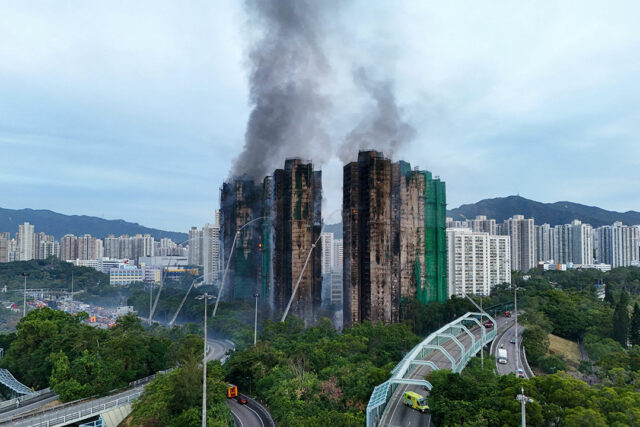
A DRONE view shows flames and thick smoke rising from the Wang Fuk Court housing estate during a major fire in Tai Po, Hong Kong, China, Nov. 27. — REUTERS/TYRONE SIU

HONG KONG  — Victims of Hong Kong’s deadliest fire in decades began government-supervised visits to their ravaged former homes on Monday for the first time since the November blaze, looking to retrieve personal items that might have survived.

The flames that engulfed seven residential towers, each of 31 floors in the northern district of Tai Po, killing 168 people, took nearly two days to douse, and eclipsed London’s Grenfell Tower inferno of 2017.

“I have taken away most of the stuff I wanted, those items of value,” said Steven Chung, 50, adding that he did not know how to describe his emotions after sifting through his old apartment but now worries more about finding affordable housing.

Mr. Chung was among around 270 former residents returning to the complex on Monday, many carrying objects such as paintings, computers, and bicycles as they left the government subsidized housing.

One, who declined to give his name, said he had been unable to retrieve anything, as his entire home was burnt.

Until May 4, former residents of the complex, Wang Fuk Court can spend three hours in their flats on each visit, while wearing facemasks, helmets and gloves for protection.

Firemen are among the 1,000 staff tasked to assist the estimated total of 6,000 visitors, who will be escorted by officials to ensure items are kept safe.

“I hope everyone will abide by the three-hour rule,” Warner Cheuk, Hong Kong’s deputy chief secretary, told reporters outside the complex, patrolled by officers and cordoned off with orange tape and crowd-control barriers.

Up to four people can register to enter each home, but for severely damaged flats the number is limited to one.

Many affected residents are elderly, with more than a third older than 65, Midland Realty’s analysis of government data shows.

Months after the fire, people in the Asian financial hub are still grasping for answers to how it started and demanding accountability.

An independent committee began hearings in March to decide the causes and the scale of bid-rigging by construction firms in building projects.

The panel’s lead lawyer blamed human factors for the failure of most of the fire safety systems.

Authorities have threatened severe punishment for anyone who tries to “politicize” the disaster.

In April, the Housing Bureau ruled out redevelopment of the site, on grounds of the long time required and surrounding uncertainties. In February the government said it aimed to spend about HK$4 billion ($512 million) to buy out the owners. — Reuters

Venezuela’s Machado plans to return home by end of year, urges swift elections

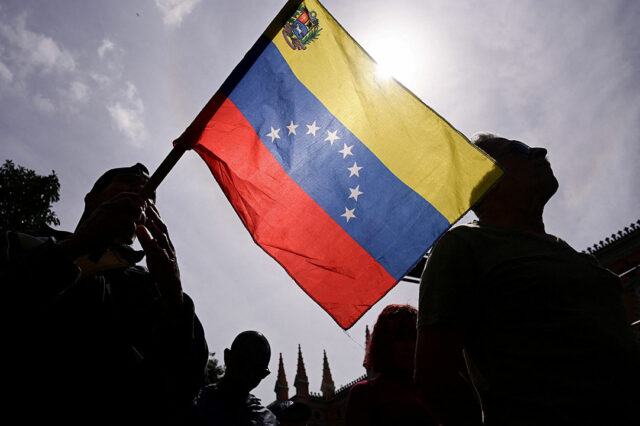
A person holds a Venezuelan flag as government supporters gather after US President Donald Trump said the US has struck Venezuela and captured its President Nicolas Maduro, in Caracas, Venezuela, January 3, 2026. — REUTERS/GABY ORAA

MADRID — Venezuelan opposition leader Maria Corina Machado expects to be back in her home country before the end of 2026 and is urging the United States to accelerate plans for elections.

Speaking in an interview with Reuters late on Sunday, the Nobel Peace Prize winner said that she “absolutely” saw herself back in Venezuela soon, warning that the longer it took for the country to hold elections the greater the risk of civil unrest.

“We believe that in order to (manage) the anxiety and expectations and the urgency of the Venezuelan people in an orderly, civic way, it is very important to start taking steps towards what the whole country requires and demands, which is free and fair elections,” she said.

The US captured President Nicolas Maduro in January, raising hopes among some of his opponents that Ms. Machado, 58, would play a central role in running the country. US President Donald Trump instead put Delcy Rodriguez, Mr. Maduro’s former deputy, in charge, saying Ms. Machado didn’t have the support needed to run the country in the short term.

Ms. Machado left Venezuela in December, defying a decade-long travel ban to receive the Nobel Prize, after mainly living in hiding for more than a year following disputed elections in 2024.

Mr. Maduro was declared the winner in those elections over opposition candidate Edmundo Gonzalez, leading to countrywide protests. Ms. Machado, an industrial engineer by training, had been barred from running for office.

Ms. Rodriguez has since won praise from the US administration for her performance, but Ms. Machado rejected that as a sign Mr. Trump wanted her in the position for the long term.

“What I heard was President Trump praising how she follows his instructions,” she said.

“They (the Rodriguez government) have never been as weak as they are right now… they are starting to realize that things have changed and this is a totally different moment.”

VENEZUELANS EXPECT ‘MAJOR CHANGE’
Ms. Machado said that with Mr. Maduro’s capture Venezuelans were expecting major changes to the government and economy, and those expectations needed to be met fast to prevent the risk of “anarchy”.

“It’s like a huge dam that’s been (gathering) more and more and more energy, frustration, and courage, and expectations,” she said.

“My challenge, our challenge, is to channel those energies peacefully, civically, with one objective, which is an electoral process. If people feel that this is not the purpose of all that’s going on, these forces could get out of hand.”

She said the electoral roll needs to be updated before elections to include those previously blocked from voting and new electoral council members need to be selected, something that could be achieved “in eight or nine months”.

She demurred from saying that Mr. Trump, to whom she gifted her Nobel Prize medal, wasn’t moving fast enough.

“We wouldn’t be where we are right now, moving ahead, if it wasn’t for the US administration and President Trump’s decision to bring Nicolas Maduro to justice.”

“But certainly I understand the urgency and demands of my people and I think we should move ahead in the democratic and electoral process.”

CRITICAL OF SPAIN
During her trip to Madrid, Ms. Machado held a rally on Saturday for exiled Venezuelans, drawing thousands of people to a square in the Spanish capital to hear her say that they would soon be able to go home.

About a quarter of Venezuela’s population has fanned out across Latin America, the Caribbean, Spain and the US since 2014, fleeing an oil-dependent economy crippled by mismanagement.

She met with Spain’s right-wing opposition leaders but declined to meet with Prime Minister Pedro Sanchez, telling Reuters that the Spanish government had not done enough to challenge the Maduro regime.

“We expected Spain to be perhaps the main voice in highlighting the horrible situation of our country, the crimes against humanity that have been committed, the terrorism of state that has been deployed. Unfortunately, it didn’t happen.”

“Fortunately there are other voices – and I’ve met with some of them this week – and we certainly feel that we do have in Europe an ally to Western values and to build back in Venezuela institutions that will last for centuries.”

Since leaving Venezuela, Ms.  Machado has mainly been based in the US and spoke of her delight at being able to reunite with her three adult children.

“As a mom I’ve always felt very guilty in terms of the consequences my family, especially my children, have suffered because of my decisions,” she said.

“I tell myself every day that I do it for them, for every single young Venezuelan and those that have not been born yet, that they will have a country that they feel proud about and they can live as free citizens.”

Ms. Machado asked her children to live abroad for security reasons after becoming a lawmaker.

She has also enjoyed catching up with technological developments of the past 20 years that hadn’t reached Venezuela, saying finding Uber taxis was one particular revelation.

“On the other hand, I am used to my country. I feel I should be back with my people and I’m counting the days.” — Reuters

DOST, DBM kick off Earth Day 2026 expo for sustainable products and industries

DOST-FPRDI Director Rico J. Cabangon (second from left) with DBM Secretary Rolando U. Toledo (third from left) during the Earth Day 2026 trade fair launch, April 20, 2026. — DOST-FPRDI FB PAGE

The Department of Science and Technology (DOST) on Monday kicked off its Earth Day 2026 exhibit and trade fair, featuring forest-based innovations and local small businesses, in partnership with the Department of Budget and Management (DBM).

The three-day expo, held in observance of Earth Day on Wednesday, is taking place at the DBM main office in Manila. It also marks the first collaboration between the DOST-FPRDI and DBM to showcase its products and services.

“We are trying to promote the technologies of FPRDI through the DBM so that stakeholders can appreciate the technologies we generate,” Rico J. Cabangon, director of DOST-FPRDI, said in an interview during the expo’s kickoff event.

DOST-FPRDI showcased various forest-based product innovations, such as musical instruments, school chairs and desks, and furniture, all mainly made from engineered bamboo.

The featured innovations also serve as a concrete demonstration for the DBM, which oversees the national budget, of how allocated funds are being used and implemented by DOST-FPRDI.

More than 10 micro, small, and medium enterprises (MSMEs) engaged in forest-based industries, most of which have benefited from DOST-FPRDI programs, were also invited to present their products.

“We want to help our MSMEs—that is our main goal,” Mr. Cabangon said, noting the expo’s intended outcome.

“We also want to promote the technologies we generate through our MSMEs and let our fellow Filipinos understand the importance of sustainability and environment-friendly technologies.”

During his conversation with DBM Secretary Rolando U. Toledo during the expo tour, Mr. Cabangon said he was encouraged to strengthen efforts to raise public awareness of locally developed forest-based products, citing their potential.

Moving forward, he said the agency aims to continue its aggressive promotion through social media and partnerships with DOST regional offices and local government units to host similar exhibits.

“Hopefully, by the end of the year or early next year, we’ll do that,” Mr. Cabangon said.

He added that there is already an ongoing plan that requires sufficient preparation, funding, and resources to achieve the goal of making these technologies more phyically visible nationwide. — Edg Adrian A. Eva

Metrobank gets top honors at PDS Annual Awards for 11th straight year

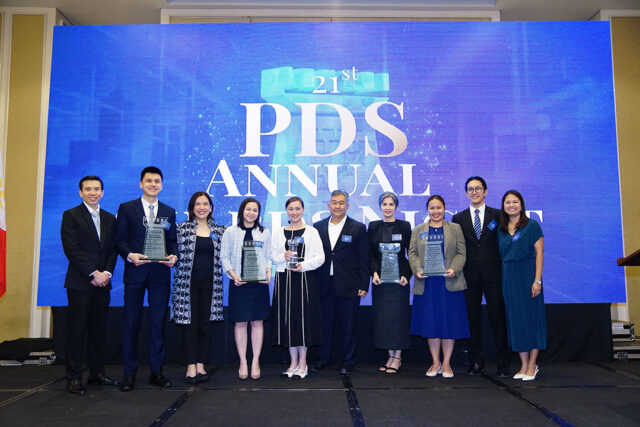
Metrobank's Financial Markets Sector executives receive top honors at the PDS Annual Awards. — METROPOLITAN BANK & TRUST CO.

METROPOLITAN BANK & Trust Co. (Metrobank) received the highest honors at the 2025 Philippine Dealing System’s (PDS) Annual Awards for the 11th consecutive year.

Metrobank received the Cesar E.A. Virata Award – Best Securities House for Bank Category for excellence in fixed-income securities trading from the PDS Group during its 21st Annual Awards Night ceremony held on March 26. This is the highest distinction given by the PDS.

“The milestone marks the longest winning streak by any bank, reflecting Metrobank’s consistent strength in trading, distribution, and market-making,” the bank said in a statement.

Through the annual awards, PDS Group recognizes market participants and stakeholders across different sectors of the financial market. A total of 47 awards for the depository, custody, settlement, and fixed-income market categories were handed out.

Metrobank was also recognized as top fixed-income dealing participant, top corporate securities market-maker, and top dealing participant for corporate securities. It also placed fifth among the top five fixed-income brokering participants.

“We humbly accept this recognition as a reflection of what we have worked hard to build over the years. More than strong business performance, it speaks to the integrity, discipline, teamwork, and customer trust that continue to guide us, as well as the close collaboration across among our teams, from frontliners to support functions, who make this possible,” said Angelica “Jikee” S. Reyes, Metrobank executive vice-president and deputy head of its Financial Markets Sector. 

“This recognition is particularly meaningful as it comes at a time of heightened market uncertainty. It reinforces our responsibility, as market participants, to remain steady and disciplined, helping ensure that markets continue to function in an orderly and responsible manner. We remain committed to navigating these conditions with resilience, and to upholding the trust placed in us by our clients, regulators, and the broader investing community.”

Fixed-income trading at the secondary market reached a record P15.91 trillion last year, surging by 61% from P9.89 trillion in 2024, PDS Group data showed. — BVR

South Korea’s Lee to seek big boost in economic ties in summit with India’s Modi

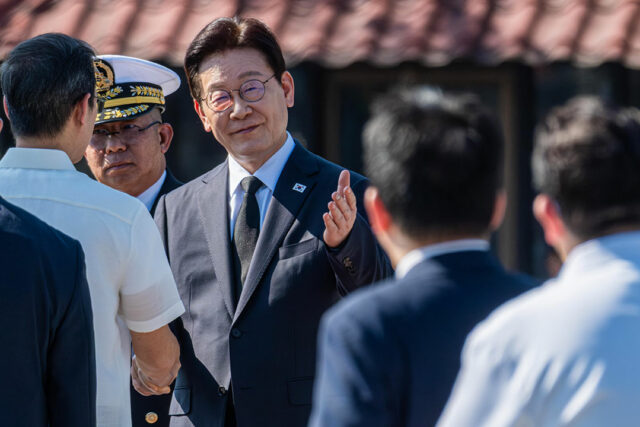
Republic of Korea President Lee Jae Myung at the Rizal Monument during a two-day state visit to the Philippines, Mar. 3, 2026. — PHILIPPINE STAR/RYAN BALDEMOR

SEOUL — South Korean President Lee Jae Myung heads into talks with Indian Prime Minister Narendra Modi in New Delhi on Monday, aiming for a big boost in economic cooperation, particularly in areas such as shipbuilding.

It is the first South Korean presidential state visit to India in eight years.

“The level of economic cooperation between South Korea and India is still very low,” Mr. Lee said on Sunday at a dinner meeting with members of the Korean community in New Delhi.

“Going forward, we will expand that space and make the relationship between South Korea and India completely different from what it is now.”

The two countries are seeking to improve their Comprehensive Economic Partnership Agreement with the aim of nearly doubling bilateral trade to $50 billion by 2030 from $25.7 billion last year, according to presidential adviser Wi Sung-lac.

During his stay, Mr. Lee will also take part in business events with corporate leaders. Other areas where the countries might work together include finance, artificial intelligence, and defense, Mr. Wi said.

SEOUL LOOKS TO NEW DELHI FOR NAPHTHA
Mr. Lee said on Sunday that supply chain instability and global economic strains linked to the Iran war will make the countries “the most important strategic partners” for each other. He also described India as no longer just a consumer market, but a key country in global production and supply chains.

Last month, South Korea urgently asked India to expand naphtha supplies, seeking to cushion potential disruption from Middle East tensions.

India accounted for about 8% of South Korea’s naphtha imports last year. South Korean Trade Minister Yeo Han-koo said greater imports could also help ease trade imbalances between the two countries.

South Korea had a $12.8 billion trade surplus last year, with exports worth $19.2 billion and imports of $6.4 billion, according to Korea International Trade Association data.

In a policy seminar at South Korea’s parliament last week, Maeng Hyun-chul, a research fellow at Seoul National University’s Asia Center, noted India’s longstanding complaint of a widening trade deficit with South Korea and said that political ties had not kept pace with commercial ties.

He said shipbuilding could emerge as an area for greater cooperation because it matches India’s priority on job creation while drawing on South Korean industrial strengths. Food and consumer sectors linked to the popularity of Korean culture could also be areas for growth, he added.

Mr. Lee will be visiting Vietnam after India. — Reuters

Bulgaria’s pro-Russian former president set for landslide election win, exit polls show

STOCK PHOTO | Image by FREEPIK

SOFIA — Pro-Russian former President Rumen Radev is set for a runaway victory in Bulgaria’s election and may even secure a parliamentary majority, exit polls showed, potentially ending years of weak coalition governments and altering the European Union member’s foreign policy.

An updated exit poll conducted by Sofia-based Alpha Research showed Radev’s Progressive Bulgaria with 44%, far ahead of the long-dominant GERB party, led by former Prime Minister Boyko Borissov, at 12.5%.

If confirmed, the performance, which outstripped opinion polls, would mark one of the strongest results by a single party in a generation, sideline a party that has ruled on and off for decades, and may see an end to the instability that has resulted in eight elections in five years.

“Progressive Bulgaria won decisively. This is a victory of hope over distrust, a victory of freedom over fear, and finally, if you will, a victory of morality,” Mr. Radev said of the exit poll results during a press conference.

Mr. Radev, a eurosceptic and former fighter pilot who opposes military support for Ukraine’s war effort against Moscow, stepped down from the presidency in January to run in the parliamentary election, which comes after mass protests forced out the previous government in December.

He rode a wave of frustration with political instability in the Balkan country of 6.5 million people, where voters are sick of corruption and veteran parties that have dominated politics for decades. Alpha Research put turnout at 47% with one hour of voting to go, up from the 39% total in the last election in October 2024.

“There is now an opportunity for the things people have been hoping to see change to actually become visible,” Evelina Koleva, a manager at digital marketing company in Sofia, told Reuters.

Final election results are expected on Monday.

RADEV MAY HAVE TO COMPROMISE
In his campaign, Mr. Radev drew comparisons with Hungary’s pro-Kremlin former Prime Minister Viktor Orban when he talked about improving relations with Moscow and resuming the free flow of Russian oil and gas into Europe. He also criticized the EU for relying too heavily on renewable energy.

It is not clear how much his views will impact the foreign policy of Bulgaria, a NATO member on the EU’s southeastern flank which joined the euro zone in January — a move Mr. Radev has criticized.

He said he would be willing to work on judicial reform with the pro-European reformist We Continue the Change-Democratic Bulgaria (PP-DB) coalition, which came third in the Alpha Research exit polls with 11.3%. A minority government was also an option in the 240-seat parliament, Mr. Radev said.

“Bulgaria will make efforts to continue its European path,” he said. “But a strong Bulgaria and strong Europe… needs pragmatism because Europe has fallen victim to its own ambition to be a moral leader in a world without rules.”

GERB’s Mr. Borissov appeared to concede in a post on Facebook, but added a note of caution: “To win the elections is one thing; to govern is quite another. Elections decide who comes first, but negotiations will decide who governs.”

Bulgaria has developed rapidly since the fall of communism in 1989 and joined the European Union in 2007. Life expectancy has risen sharply, unemployment is the lowest in the EU, and the economy has greater safeguards since joining the euro zone in January.

But it lags behind other EU countries in many metrics, and graft remains endemic, including in elections, where vote-buying is rife.

The cost of living has become a particular issue since Bulgaria adopted the euro. The previous government fell amid protests against a new budget proposing tax increases and higher social security contributions. — Reuters

US seizes Iranian cargo ship, Tehran vows to retaliate

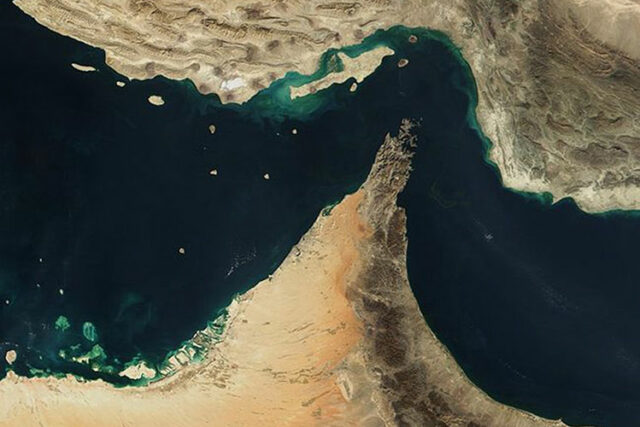
Satellite image of the Strait of Hormuz. — JACQUES DESCLOITRES/NASA/FLICKR

WASHINGTON/ISLAMABAD — The United States said on Sunday that it had seized an Iranian cargo ship that tried to run its blockade and Iran said it would retaliate, raising the possibility that the ceasefire between the two countries might not last for even the two days it is set to remain in force.

Efforts to build a more lasting peace in the region likewise appeared to be on shaky ground, as Iran said it would not participate in a second round of negotiations that the US had hoped to kick off before the ceasefire expires on Tuesday.

A weeks-long blockade of shipping that has driven global oil prices higher likewise might remain in place.

The United States has maintained a blockade of Iranian ports, while Iran has lifted and then reimposed its own blockade on marine traffic passing through the Strait of Hormuz, which typically handles roughly one-fifth of the world’s oil supply.

The US military said Sunday it had fired on an Iranian-flagged cargo ship as the vessel sailed toward Iran’s Bandar Abbas port. “We have full custody of their ship, and are seeing what’s on board!” President Trump wrote on social media.

Iran’s military said the ship had been traveling from China. “We warn that the armed forces of the Islamic Republic of Iran will soon respond and retaliate against this armed piracy by the US military,” a military spokesperson said, according to state media.

Iranian state media also reported that Tehran had rejected new peace talks, citing the ongoing blockade, threatening rhetoric, and Washington’s shifting positions and “excessive demands.”

“One cannot restrict Iran’s oil exports while expecting free security for others. The choice is clear: either a free oil market for all, or the risk of significant costs for everyone,” Iran’s First Vice President Mohammadreza Aref wrote on social media.

Mr. Trump had earlier warned Iran that the United States would destroy every bridge and power plant in Iran if Tehran rejected his terms, continuing a pattern of such threats throughout the war.

Iran has said that if the United States were to attack its civilian infrastructure it would hit power stations and desalination plants of Gulf Arab neighbors.

Brent crude futures jumped about 7% to $96.85 a barrel and S&P 500 futures fell about 0.9% in early Asian trading, as investors dealt with conflicting messages about the war.

PREPARING FOR TALKS THAT MIGHT NOT HAPPEN
Mr. Trump said his envoys would arrive in Islamabad on Monday evening, one day before a two-week ceasefire ends.

A White House official had said the US delegation would be headed by Vice President JD Vance, who led the war’s first peace talks a week ago, and also include Mr. Trump’s envoy Steve Witkoff and son-in-law Jared Kushner. Mr. Trump had separately told ABC News and MS Now that Mr. Vance would not go.

Pakistan, which has served as the main mediator, appeared to be preparing for the talks. Two giant US C-17 cargo planes landed at an air base on Sunday afternoon, carrying security equipment and vehicles in preparation for the US delegation’s arrival, two Pakistani security sources said.

Municipal authorities in the capital city of Islamabad halted public transport and heavy-goods traffic through the city. Barbed wire was rolled out near the Serena Hotel, where last week’s talks were held. The hotel told all guests to leave.

The apparent diplomatic setback could set the stage for a renewed surge in oil prices when markets reopen after the weekend.

Now in its eighth week, the war has created the most severe shock to global energy supplies in history, sending oil prices surging because of the de facto closure of the strait.

Thousands of people have been killed by US-Israeli strikes on Iran and in an Israeli invasion of Lebanon conducted in parallel since the war began on February 28. Iran responded to the attacks with missiles and drones against its Arab neighbors that host US bases.

Iran’s parliament speaker, Mohammad Baqer Qalibaf, who has led Iran’s side in the talks, had earlier said the two sides had made progress but were still far apart on nuclear issues and the strait.

European allies, repeatedly criticized by Mr. Trump for not aiding his war effort, worry that Washington’s negotiating team is pushing for a swift, superficial deal that would require months or years of technically complex follow‑on talks.

Iran’s semi‑official Tasnim news agency reported that two liquefied petroleum gas tankers that attempted to transit the strait were turned back by Iran’s armed forces on Saturday. One of the tankers – the Angola‑flagged LPG tanker G Summer – later exited the Gulf on a second attempt, according to MarineTraffic vessel tracking data. — Reuters

Poll: Slight majority sees BSP rate hike

A woman shops for groceries at a store in Manila. — PHILIPPINE STAR/RYAN BALDEMOR

THE BANGKO SENTRAL ng Pilipinas (BSP) is widely expected to raise interest rates for the first time in more than two years as inflation risks mount amid tensions in the Middle East, according to a slight majority of analysts in a poll.

A BusinessWorld poll conducted last week showed that 11 out of 19 analysts expect the Monetary Board to hike the target reverse repurchase rate by 25 basis points (bps) at its policy meeting on April 23.

If realized, this would bring the benchmark rate to 4.5% from the current 4.25%, marking the BSP’s first tightening move in over two years or since October 2023. 

On the other hand, eight analysts said the BSP will likely hold its key rate steady, citing supply-driven inflation risks and weaker growth prospects.

Since starting its easing cycle in August 2024, the central bank has slashed the benchmark policy rate by a total of 225 bps to an over three-year low of 4.25%. It also kept borrowing costs steady in an off-cycle meeting last month to calm markets amid growing uncertainties stemming from the war.

Most analysts said the Monetary Board will likely raise rates on Thursday as a preemptive move to anchor inflation expectations, with inflation seen breaching the 2-4% target if energy prices remain elevated.

“A 25-bp hike would allow the BSP to reaffirm its commitment to price stability, even as it keeps a calibrated and data-dependent stance going forward,” Ruben Carlo O. Asuncion, chief economist at Union Bank of the Philippines, said.

Metropolitan Bank & Trust Co. (Metrobank) Chief Economist Nicholas Antonio T. Mapa said in a Viber message that monetary tightening will help “corral inflation expectations that may be fraying due to surging energy costs and subsequent pickup in prices due to second-order effects.”

BSP Governor Eli M. Remolona, Jr. last week told BusinessWorld that they have room to raise rates to temper rising inflation amid the Middle East conflict as they expect government spending to support growth.

Mr. Remolona noted that second-round effects may emerge sooner than expected as the global oil price shock is expected to spill over into domestic food and transport costs. 

In March, elevated oil prices due to the war drove inflation to a near two-year high of 4.1%, faster than the BSP’s 3.1%-3.9% forecast and 2%-4% target for the year.

“While current pressures remain largely supply-driven, historical experience suggests prolonged shocks tend to spill over into demand-side dynamics, increasing the risk of de-anchored inflation expectations,” Bank of the Philippine Islands (BPI) Lead Economist Emilio S. Neri, Jr. said in a report.

Rizal Commercial Banking Corp. Chief Economist Michael L. Ricafort noted in a Viber message the BSP had raised borrowing costs in 2022 when Russia’s invasion of Ukraine led to global crude oil prices breaching $100-per-barrel levels.

“There is a possibility of BSP rate hike, similar to the previous cycle four years ago in an effort to curb inflationary pressures at the bud and better manage inflation and prevent it from spiraling further, in an effort to bring back inflation to the inflation target range of 2%-4%, even if the unintended consequences include slowing down the economy,” Mr. Ricafort said.

Marco Antonio C. Agonia, an economist and analyst at the University of Asia and the Pacific (UA&P), said in an e-mail that the move on Thursday will be a one-off hike, with the BSP standing pat for the rest of the year.

“Given the softer growth outlook, further rate hikes may be too damaging for economic performance,” Mr. Agonia said.

Mr. Agonia noted a rate hike will also provide peso relief without using too many reserves.

Since the US and Israel began attacks on Iran on Feb. 28, the peso has weakened to breach the P60-per-dollar level, hitting a record low of P60.748 on March 31.

“The peso will likely remain under pressure as the situation in the Middle East remains fluid. A sharper depreciation would amplify imported inflation. This foreign exchange-inflation feedback loop may ultimately become a binding constraint, and may require tighter policy even in the face of a supply-driven shock,” Mr. Neri said.

HOLD?
Meanwhile, eight analysts expect the BSP to hold rates on Thursday, as monetary tightening cannot do much in addressing supply shocks.

Philippine National Bank economist Alvin Joseph A. Arogo said in an e-mail that the BSP should keep the policy rate at 4.25% on April 23 since raising financing costs seems at odds with the earlier move to provide loan relief amid current output constraints.

“Monetary tightening this soon could seriously put at risk prospects for growth recovery without doing much dent on inflation,” he said.

In a report, DBS said the BSP will likely keep rates unchanged amid slowing growth.

“The Philippines faces a potential stagflationary shock this year, with growth witnessing a weak handover from last year, while inflation comes off a low base, and peso remains under pressure,” DBS said.

China Banking Corp. (Chinabank) in a note said the BSP is likely to adopt a “prudent wait-and-see approach” due to heightened global uncertainty.

“Domestically, inflationary pressures continue to be driven largely by volatile supply-side factors, while demand conditions are showing signs of softening, reducing the case for immediate monetary tightening,” Chinabank said.

ING said the weaker growth outlook will prompt the BSP to hold rates but expects Thursday’s decision to “likely be close.”

“The Philippines remains one of the most oil-exposed economies in the region, prompting us to downgrade our 2026 GDP (gross domestic product) growth forecast to 4.5%. Against this weaker growth backdrop — and assuming the current geopolitical escalation eases in the near term — our base case is for the central bank to remain on hold in April,” ING said.

HAWKISH BSP
Meanwhile, Chinabank said concerns over the de-anchoring of inflation expectations are likely to keep the BSP hawkish.

“The Philippines is in the hawkish camp, leaving the door open to modest tightening moves this year if price risks prevail, as retail fuel prices are prone to swings in tune with global prices,” DBS said.

Standard Chartered Bank Asia Economist and FX Analyst Jonathan Koh said in a report that while they do not expect a rate hike this month, the BSP could raise borrowing costs at its June 18 meeting.

“Inflation passthrough is likely to pick up in coming months, driven by faster fiscal spending, possible transport fare hikes, higher rice and food prices, and Philippine peso-driven imported inflation, which could eventually prompt a one-off rate hike to safeguard price stability,” Mr. Koh said.

On the other hand, Patrick M. Ella, an economist at Sun Life Investment Management and Trust Corp., said the central bank could even reverse its expected rate hike this week by the second half of the year if the Middle East conflict is resolved soon. — Aaron Michael C. Sy

ADVERTISEMENT
ADVERTISEMENT