Home Blog Page 3309

Coal plant moratorium to stay — DoE

PIXABAY

By Ashley Erika O. Jose, Reporter

The Department of Energy (DoE) is maintaining a moratorium on the development of greenfield coal-fired power plants even as most hydropower plants are currently running on derated capacities, resulting in insufficient power supply affecting the main grids.

“The moratorium (stands, if the LNG or liquefied natural gas) power plants would have a higher degree of reliability, then the private sector may opt for that rather than put up coal plants,” Energy Secretary Raphael P.M. Lotilla said in a virtual press briefing on Thursday.

In 2020, the Energy department issued a moratorium on the development of new coal-fired power plants, as the country sought to reduce its dependence on coal.

Mr. Lotilla said the DoE sees no reason to lift the moratorium for now as more than 4,000 megawatts (MW) of power supply is expected to boost the country’s overall supply.

At least 4,164.92 MW of power projects are expected to come online this year, which are expected to boost the country’s overall power supply.

Broken down, 4,030 MW will be in Luzon, 80.25 MW are in Visayas and 52.50 MW are in Mindanao.

About 1,224.655 MW will begin operations within the second quarter, while 1,352.167 MW will go online in the third quarter and 1,571.154 MW by yearend.

At present, 161.20 MW of these committed projects are now in full commercial operation, while 835.888 MW are under the commissioning and testing stage.

The DoE said these power projects are a combination of both renewable energy and conventional power plants and even liquefied natural gas (LNG) powered plants.

The higher-than-expected temperatures this summer months caused hydropower plants to run on derated capacities, the Institute for Climate and Sustainable Cities (ICSC) said.

YELLOW ALERT

On Thursday, a yellow alert status was raised over the Luzon and Visayas power grids for the eighth time this month, the National Grid Corp. of the Philippines (NGCP) said.

The Energy department said yellow alert will continue affecting the country’s main grids until next month due to higher-than-expected temperatures and rising power demand.

According to the grid operator’s advisory, a yellow alert was raised over Luzon from 1-5 p.m and 7-11 p.m. as 19 power plants are still on forced outage while one power plant is running on derated capacity. This resulted in the unavailability of 1,424.3 MW to the grid.

Of the 19 power plants, NGCP said that four have been offline since last year, while three were on forced outage since January. Twelve plants have been on forced outage since April.

Yellow alerts are issued when the supply available to the grid falls below a designated safety threshold. If the supply-demand balance deteriorates further, a red alert is declared.

Luzon’s power demand on Thursday reached 13,941 MW against available capacity of 14,568 MW.

Visayas power grid was also placed under yellow alert from 1-4 p.m., 6-7 p.m., and 8-9 p.m. due to the unavailability of 670.8 MW to the grid.

A total of 24 power plants are offline in Visayas, while 12 are running on derated capacities.

Luningning G. Baltazar, assistant director of the DoE’s Electric Power Industry Management Bureau, said Luzon has already breached the projected peak demand for the year.

Data provided by the DoE showed Luzon hit a peak demand of 14,016 MW on Wednesday against a projected peak demand of 13,917 MW this year. Peak demand in Visayas and Mindanao on Wednesday hit 2,586 MW and 2,534 MW, respectively. Visayas and Mindanao have a projected peak demand of 2,891 MW and 2,584 MW, respectively, for the year.

Energy Undersecretary Rowena Cristina L. Guevara said more yellow alerts, and possibly red alerts are expected until May.

The Energy Regulatory Commission (ERC) said it has already called on six power generation companies to explain the recent power plant outages.

“The ERC expects to have preliminary findings by the first week of May to determine whether show cause orders need to be issued to the relevant stakeholders, in view of possible violations of outage allowances,” ERC said in a statement.

The power regulator declined to identify the six power generating plants as its investigation is still ongoing.

“The Commission is diligently studying additional measures we can put in place under this extraordinary increase in demand, as a result of the effects of El Niño, and unavailability of supply or reserves,” ERC Chairperson Monalisa C. Dimalanta said.

The ERC said it is also monitoring the price of the Wholesale Electricity Spot Market (WESM) as the spot market prices climbed 47% this week.

“While we are completing our investigation on the outages, we are not losing sight of the fact that consumers — households and businesses alike — will bear the brunt of unavailable supply and/or high WESM prices. That is why, early on, we have emphasized to distribution utilities the importance of contracting for power supply to at least avoid exposure to price spikes in the WESM,” Ms. Dimalanta said.

Last year, the ERC said it had imposed a total of P60 million worth of penalties against generation companies for breaching the allowable number of outage days.

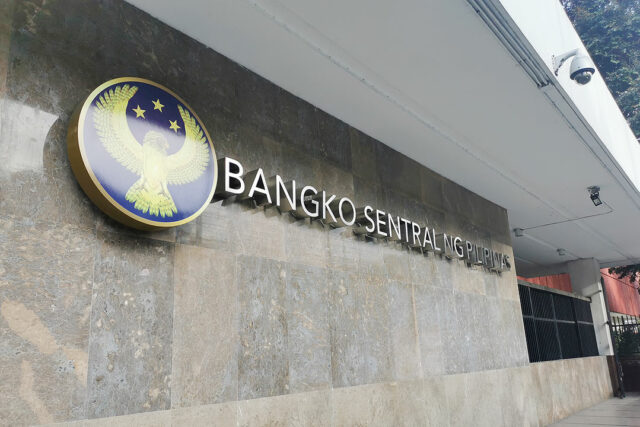
Peso fall won’t spur rate hike yet, says Recto

BW FILE PHOTO

THE PHILIPPINE peso’s current slump is unlikely to prompt the central bank to raise its key interest rate from a 17-year high at this time, according to Finance Secretary Ralph G. Recto.

The Bangko Sentral ng Pilipinas’ (BSP) next policy move “will be dependent on inflation data,” Mr. Recto said in a mobile-phone reply to Bloomberg News. Asked if a rate hike is being considered as the local currency slipped to as low as P57.96 against the dollar on Thursday, Recto said: “For now, I don’t think so.”

The peso fell to a fresh 17-month low against the dollar, staying past the closely watched P57-level for the second week as central banks grapple with the outlook of higher-for-longer US rates and tensions in the Middle East.

Mr. Recto, one of seven members of the BSP’s monetary panel, is signaling patience, even after a resurgent dollar prompted its neighbor Indonesia on Wednesday to unexpectedly raise interest rate to defend its currency.

Aside from the exchange rate, inflation and economic growth will also weigh on the BSP’s next policy decision on May 16. Price gains accelerated for a second month in March, and BSP Governor Eli M. Remolona, Jr. sees rising risk that inflation may breach the central bank’s 2%-to-4% goal for a third straight year.

The BSP chief said last week that the central bank is still on course to cut rates later this year or in early-2025 despite the peso’s weakness.

National Economic and Development Authority (NEDA) Secretary Arsenio M. Balisacan on Thursday, meanwhile, said tight monetary policy could crimp growth, as he underscored the need for non-monetary measures to tame inflation.

“Even though interest rate hikes — a monetary policy tool utilized by the BSP — can decelerate inflation by discouraging consumption and investment activities, it may also dampen demand and reduce economic opportunities made available to Filipino workers,” Mr. Balisacan said in a statement that backs a plan to ease importation rule — Bloomberg

HSBC expects BSP to begin easing in Q4

Bangko Sentral ng Pilipinas main office in Manila. — BW FILE PHOTO

THE BANGKO SENTRAL ng Pilipinas (BSP) is expected to delay its policy easing as upside risks to inflation have worsened, but rate hikes are unlikely, HSBC Global Research said.

“The easing cycle may be delayed, but we don’t think there will be any rate hikes ahead with non-monetary policies at work,” HSBC economist for ASEAN (Association of Southeast Asian Nations) Aris D. Dacanay said in a report on Thursday.

HSBC said the central bank is expected to start easing with a 25-basis-point (bp) cut in the fourth quarter, later than its earlier forecast of rate cuts in the third quarter.

It now sees the benchmark rate falling to 6.25% by yearend from 5.75% previously.

“Nonetheless, we continue to expect the BSP to bring its policy rate down to as much as 5% by the end of 2025.”

The Monetary Board has hiked borrowing costs by 450 bps from May 2022 to October 2023, bringing the policy rate to a near 17-year high of 6.5%. The BSP stood pat for a fourth straight meeting in April.

Mr. Dacanay cited recent developments that have added to upside risks to the inflation outlook, such as volatile oil prices.

“Risks to inflation have risen over the past two weeks. Tensions in the Middle East have brought oil prices up, while global rice prices remain elevated,” he said.

HSBC also noted the dollar’s recent strength, coupled with sticky inflation in the United States, may push the US Federal Reserve to keep rates tight for longer.

BSP Governor Eli M. Remolona, Jr. earlier said that expectations of rate cut delays by the Fed have caused weakening in other currencies against the dollar, including the peso.

Fed Chairman Jerome H. Powell has said they might have to keep “restrictive” policy rates for longer amid persistent inflation in the US. Markets are now seeing the Fed cutting rates by September instead of initial expectations of June.

“Market players already expect headline inflation to breach the BSP’s 2-4% target band in the few months ahead due to base effects being unflattering,” HSBC added.

Inflation accelerated for a second straight month to 3.7% in March. This brought the first-quarter inflation average to 3.3%.

April inflation data will be released on May 7.

The BSP expects full-year inflation to settle at 3.8%. The central bank also earlier warned that inflation could overshoot the 2-4% target over the next two quarters amid persistent upside risks.

“To better support the peso and tighten one’s grip on inflation expectations, the BSP will likely stick to its word and begin its easing cycle late this year. And the BSP can easily do this with robust growth,” Mr. Dacanay added.

He also cited other macroeconomic indicators that give the BSP room to delay its easing, such as strong labor market conditions, faster credit growth, stable exports, and improved manufacturing.

“We also downplay the risk of further rate hikes. Although inflation risks have emerged in the form of high oil and rice prices, these risks are supply-side in nature,” HSBC said.

Mr. Dacanay said the most efficient way to mitigate the potential impact is through supply-side interventions.

Mr. Remolona earlier said that current policy settings are “already tight.” The central bank would only consider further tightening if inflation expectations are deanchored. — Luisa Maria Jacinta C. Jocson

NCR economic output grew by 4.9% in 2023

Buildings are seen from the Mabini Bridge in Manila, June 16, 2023. -- PHOTO BY MIGUEL DE GUZMAN, The Philippine Star

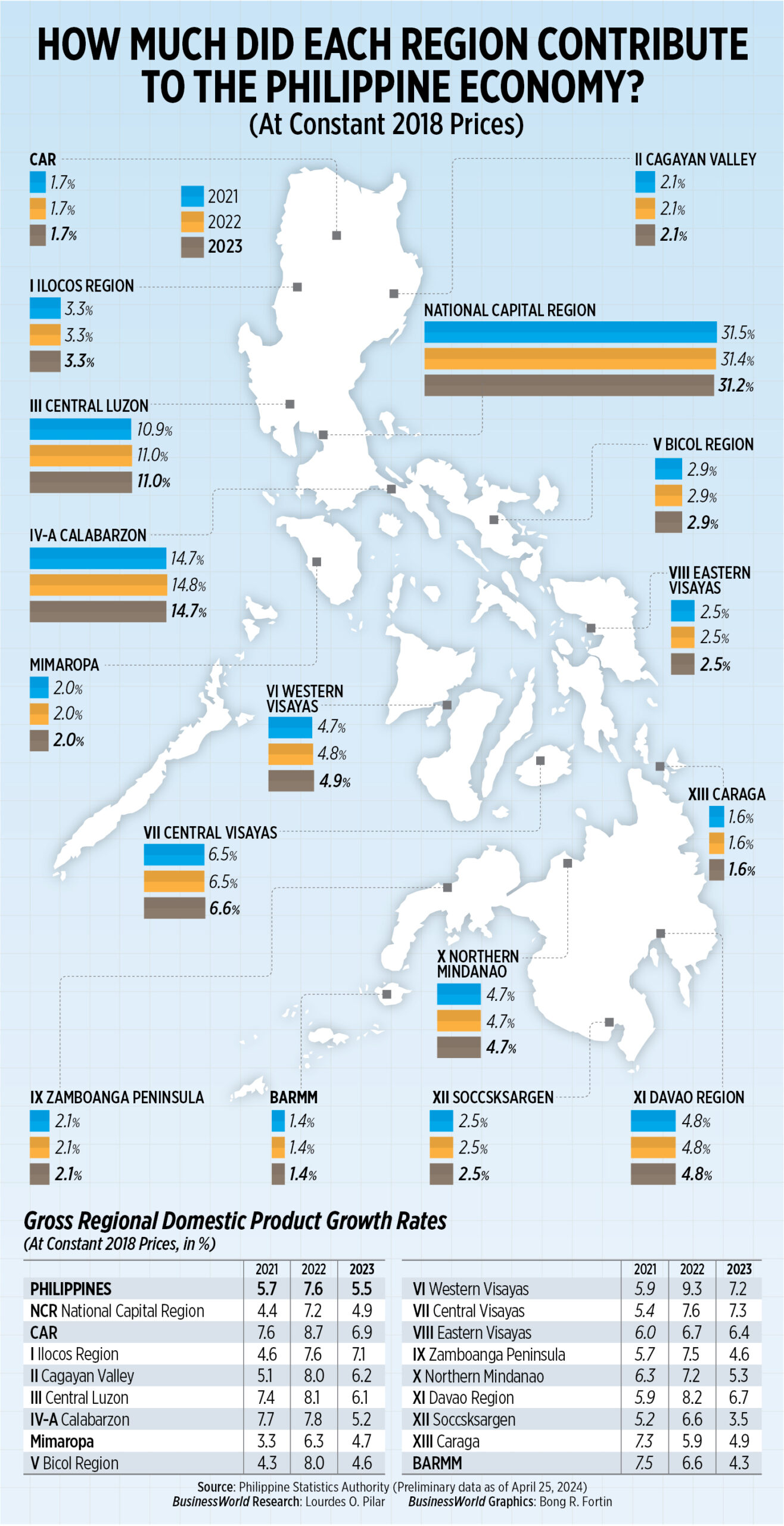
METRO MANILA’S economic output expanded by 4.9% in 2023, the slowest pace in two years, due to base effects and weaker output of key sectors, the Philippine Statistics Authority (PSA) said on Thursday.

Preliminary PSA data on the latest regional accounts showed that the National Capital Region’s (NCR) economic growth slowed sharply in 2023 from the 7.2% expansion in 2022.

This was Metro Manila’s weakest economic growth since the 4.4% print in 2021.

NCR growth was also slower than the Philippines’ 5.5% gross domestic product (GDP) print last year.

“NCR’s growth, although slower, was still in positive territory. An easing from the 2022 figure which reflected the economy’s reopening was only expected,” PSA-NCR Regional Director Paciano B. Dizon said during the briefing.

He also said that base effects are at work with the normalization of the post-pandemic boom becoming apparent in the 2023 GDP growth.

At constant 2018 prices, the economy of NCR amounted to P6.57 trillion last year, 5% higher than P6.27 trillion in 2022.

NCR contributed the largest share to the overall Philippine economy last year at 31.2%, followed by Calabarzon (14.7% share) and Central Luzon (11%).

All 17 regions posted growth in 2023, although slower than the prior year. Eight regions posted economic growth faster than the national average.

Central Visayas was the fastest-growing region at 7.3%, easing from 7.6% in 2022. This was followed by Western Visayas at 7.2% (from 9.3%) and Ilocos Region at 7.1% (from 7.6%).

Meanwhile, Soccsksargen recorded the slowest growth among the regions with 3.5% in 2023, from 6.6% in 2022. It was followed by the Bangsamoro Autonomous Region in Muslim Mindanao (4.3% from 6.6%), Bicol Region (4.6% from 8%), and Zamboanga Peninsula (4.6% from 7.5%).

Metro Manila’s economy was primarily driven by services, which accounted for 82.7% of its economy. Services increased by 5.7% last year, slowing from 8.2% in 2022.

Wholesale and retail trade, which accounted for more than a fourth of services, grew by 4.4% in 2023, slower than 7.2% in 2022.

Financial and insurance activities, which made up 24% of services, expanded by 8% last year versus 7.1% in 2022. Professional and business services growth slowed to 5.8% last year from 9.6% in 2022.

Meanwhile, industry, which accounted for 17.3% of the NCR economy, grew by 1.3% last year, slower than the 3.2% in 2022.

Agriculture, which accounted for 0.01% of NCR’s economy, was the only major sector that posted annual growth. Agriculture expanded by 5.4% in 2023 versus 3.5% in 2022.

“Contributing to [NCR’s] slowdown despite the country’s full reopening include inflationary pressures amidst high policy rate,” Security Bank Corp. Chief Economist Robert Dan J. Roces said in a Viber message.

The Monetary Board has hiked borrowing costs by 450 bps from May 2022 to October 2023, bringing the policy rate to a near 17-year high of 6.5% Headline inflation averaged 6% last year.

“The (NCR) growth is slower than what it should be due to the higher interest rates, volatility in the market, and supply chain constraints,” John Paolo R. Rivera, president and chief economist at Oikonomia Advisory & Research, Inc., said in a Viber message.

By sectoral output, Western Visayas had the quickest growth in services to 10.2% last year but slower than the 13% in 2022. It was followed by Cordillera Administrative Region (8.9% from 10.9%) and Mimaropa (8.8% from 11.7%).

Cagayan Valley led the industry sector with 8.5% growth last year, easing from 11.5% in 2022.

Central Visayas posted the fastest growth in agriculture output with 8%, reversing the 4.7% contraction of the previous year.

On the expenditure side, BARMM posted the highest growth in household spending (7.5% from 6.2%).

Government spending growth was the fastest in Northern Mindanao at 4.3% last year from 4.2%.

Western Visayas had the quickest expansion in gross capital formation, the investment component of the region’s economy, at 12.9% last year. This was still lower than the 14.8% in 2022.

NCR remained the largest gross regional domestic product (GRDP) on a per-capita basis at P460,969 last year, up by 3.8% from P443,976 figure in 2022.

“Looking ahead, the [NCR’s] GRDP is projected to pick up pace based on resilient commercial activities, increased public infrastructure spending, and the growth of digital financial services,” Mr. Roces said, “provided inflation is managed effectively.”

PSA will release April inflation data on May 7. — Andrea C. Abestano

Middle East tensions may impact OFW remittances, inflation

Analysts warned that oil prices may spike amid the unrest in the Middle East. -- REUTERS

By Luisa Maria Jacinta C. Jocson, Reporter

THE ONGOING Israel-Iran conflict may hurt remittances from Middle East-based overseas Filipino workers (OFWs), as well as increase volatility in oil prices that may stoke inflation, analysts said.

“This might be exacerbated by the potential effect on Filipino OFWs. While in the past, alternative jobs were explored by Filipino contract workers outside the war zone, still any serious outbreak of a war could definitely make a dent on workers’ remittances,” Diwa C. Guinigundo, country analyst for the Philippines of GlobalSource Partners, said in a Viber message.

“In turn, we might be looking at lower remittances, lower consumption expenditure and lower economic growth,” he added.

Markets were rattled after Iran launched hundreds of drones and missiles against Israel last week in retaliation for an alleged airstrike by Israel on the Iranian consulate in Syria earlier this month.

Remittances may be affected if the conflict intensifies and the government sees it necessary for OFWs to return home, Jonathan L. Ravelas, senior adviser at professional service firm Reyes Tacandong & Co., said in a phone call.

Latest data from the Department of Foreign Affairs showed that there are about 30,000 Filipinos in Israel and 2,000 in Iran.

Cash remittances in the first two months of the year rose by 2.8% to $5.48 billion, data from the central bank showed.

In the January-February period, Middle East countries were among the top sources of remittances.

Saudi Arabia was the third-highest source of overall remittances, equivalent to $307.981 million or 5.6% of the total. The United Arab Emirates also accounted for $206.29 million or 3.8% of remittances during the period.

Remittances from Israel stood at $24.402 million in the first two months of the year, inching down by 1.5% from the previous year. The BSP did not record any remittances from Iran.

RISING OIL PRICES

Analysts also warned that oil prices may spike amid the unrest in the Middle East.

“The escalation of tensions in the Middle East poses a threat to the Philippine economy in the form of higher oil prices. As the Philippines is a net oil importer, it is vulnerable to global oil spikes,” Sarah Tan, an economist from Moody’s Ana-lytics, said in an e-mail.

Iran, the third-largest producer among members of the Organization of the Petroleum Exporting Countries (OPEC), produces about 3 million barrels of oil per day (bpd). Iran’s output accounts for around 3% of total world output, Reuters re-ported.

Ms. Tan said that higher oil prices will add to energy and fuel costs, lifting the cost of production across the country.

“Rising oil prices due to geopolitical tensions pose a significant upside risk to the outlook on inflation as well as current account deficits in the Philippines,” Nomura Global Markets Research Chief ASEAN Economist Euben Para-cuelles said in an e-mail.

Mr. Guinigundo said the increase in petroleum prices will have “pervasive” effects on inflation, the peso and overall economic growth.

“Some observers even now are looking at a possible $100 per barrel in case of a more serious outbreak of war. Recall that in 2018 there was an unprecedented rise in oil prices that pushed inflation beyond 5%,” he said.

The Development Budget Coordination Committee (DBCC) adjusted the assumptions for Dubai crude oil to $70-$90 per barrel this year but kept the assumptions at $65-$85 per barrel from 2025 to 2028.

Ruben Carlo O. Asuncion, chief economist at Union Bank of the Philippines, Inc., said in a Viber message that if oil prices continue to be elevated, this will weigh on inflation.

“Indeed, the escalation of tensions threatens to derail the country’s already choppy progress on inflation,” Ms. Tan added.

Inflation accelerated for a second straight month to 3.7% in March from 3.4% in February.

Transport inflation rose to 2.1% in March from 1.2% in the previous month amid an increase in the prices of oil products.

The BSP said it expects inflation to temporarily overshoot the 2-4% target range over the next two quarters as upside risks remain. The central bank sees inflation averaging 3.8% this year.

“Any hit on the peso due to higher fuel imports could upset actual inflation and inflation expectations,” Mr. Guinigundo said.

The peso closed at P57.78 per dollar on Thursday, depreciating by 23 centavos from its P57.55 finish on Wednesday. This was its worst finish in more than 17 months or since its P58.19 a dollar close on Nov. 10, 2022.

“The BSP will likely become more vigilant of a scenario where headline inflation could breach its 2-4% for longer and the risk of further currency weakness given the double whammy from higher oil imports and a hawkish Fed,” Mr. Para-cuelles added.

‘MINIMAL IMPACT’

On the other hand, analysts said the spillovers from the geopolitical tensions may not be as severe, though the central bank will still need to remain vigilant about risks to inflation.

“The spillover effects will be minimal on the Philippine economy and on monetary policy making at the central bank,” Moody’s Analytics Chief Asia and Pacific (APAC) Economist Steve Cochrane said in an e-mail.

“It does, however, put the BSP on high alert regarding the evolving shape of the conflict in the Middle East, and other geopolitical risks such as China’s aggressiveness in the South China Sea,” he added.

Miguel Chanco, Pantheon Macroeconomics chief Emerging Asia economist, said that the potential spillovers to global oil prices seems “fairly contained” at the moment.

“But it’s obviously impossible to predict, and what’s undeniable is that the risk of much higher oil prices is more acute today than they were late last year,” he said in an email.

Mr. Cochrane also noted that the volatility in oil prices would subside since there was no “sharp response” from Iran.

Despite this, Mr. Cochrane said that the BSP will still need to remain cautious.

“The BSP will want to be sure that external sources of inflation, such as imported energy, do not generate upside pressure on prices. And with the US Federal Reserve appearing to be positioned to keep the Federal Funds Rate at its current cyclical peak for longer, the BSP will likely keep its policy rate unchanged for longer as well,” Mr. Cochrane said.

For Mr. Chanco, any further escalation that would lead to a material spike in global prices would have an impact on inflation in the Philippines, “likely keeping it stickier for a little longer and, by extension, preventing the BSP from considering monetary policy easing in the foreseeable future.”

Analysts said that the Philippine central bank will likely extend its policy pause if upside inflation risks remain.

“It is clear that the BSP is in a waiting game. Until inflation stabilizes firmly within the BSP’s 2-4% target range, BSP will stand pat. Should it take longer than earlier anticipated, this will push back the prospect of rate cuts and see the BSP delay monetary easing,” Ms. Tan said.

The central bank stood pat for a fourth straight meeting in April, keeping its benchmark rate at a near 17-year high of 6.5%.

“My baseline remains at this stage that the BSP’s cutting cycle starts only in October, but clearly this could easily be delayed,” Mr. Paracuelles said.

BSP Governor Eli M. Remolona, Jr. said that the central bank may postpone policy easing as late as the first quarter of 2025 if macroeconomic conditions worsen.

PHL’s ongoing transition to a cashless society

Photo from freepik/macrovector

In a country with strong digital presence, many Filipinos has adopted digitalization into their lifestyles. An apparent evidence of this is the growing adoption of digital payments among individuals and businesses, which is paving the way towards a cashless society.

Aiming for the country’s transition towards a “cash-lite” society, the Bangko Sentral ng Pilipinas (BSP) has effectively been shifting retail payments to digital channels, paving the way for more businesses to join the new revolution of digital payment and banking. Cashless payments, which include cards, mobile wallets, and QR codes, are continuing to play a significant role in the growth of digital payments in the country.

BSP Deputy Governor Mamerto E. Tangonan previously noted that the use of digital payments has reached its peak during and after the coronavirus disease 2019 (COVID-19) pandemic. He noted that digital retail payments began with 1% in 2013, then jumped to a 42.1% share in 2022, and finally hit the 50% mark in 2023.

In 2022, the BSP reported that the total transaction volume reached 4.85 billion, with 2.04 billion done through digital platforms. The report also said the main driving forces behind this growth were merchant payments, person-to-person transfers, salaries, and wage payments.

Adding to this is a recent study by Visa, which showed most Filipinos are not only familiar with contactless cards but also using them for transactions. The data indicated that digital payments are gaining reaction across different age groups, with 55% utilizing QR codes and 32% opting for contactless cards.

Looking at these numbers, the progress of digital payments in the country is looking positive, opening opportunities for easier access to financial services.

Global management consulting firm McKinsey & Company said that the rise of digital financial services and mobile wallets are leading the way to such success. With the whole buzz of fintech innovation, industry players are moving quickly to bring digital banking and services across sectors, especially in rural areas and sectors that are often overlooked, where accessing financial services can be a struggle.

McKinsey highlighted that the country’s banking population is expected to reach 85 million by 2030, showing a significant 30% increase from 65 million in 2022. This growth is fueled by the tech-savvy customer base, who are actively seeking out innovative financial services.

Photo from unsplash/David Dvořáček

Moreover, according to Visa’s recent study, younger generations are the ones driving the growth of cashless or digital payment in the country. The data revealed that mobile wallets are on the lead, being used in 87% of transactions, while contactless payments accounted for 70% of the transactions. The study also showed that 78% of mobile wallet users scan through QR codes, whereas 38% pay through QR codes.

Going cashless is not only convenient for local transactions, but also for making purchases abroad. To ensure a hassle-free trip, for instance, many Filipinos opt for digital payment or cashless transactions. Visa has reported that 55% of Filipino consumers use cashless payment; and now, QR codes are catching the eye of Filipinos, even while traveling.

The trend of using contactless payments in transactions and in-stores has resulted in a significant number of Filipinos (43%) carrying less cash in their wallets as most establishment and services are the leading users of digital payment in recent years.

To accelerate the adoption of digital payments in the country, initiatives from the public sector are seen. Bills Pay PH, for instance, is a simplified platform which allows users to pay their bills. This initiative caters to all Filipinos, improving access to financial services more conveniently. QR PH, a national standard for quick response codes, enables merchants and consumers to carry out digital transactions smoothly and conveniently. In addition, Paleng-QR PH program maximizes the use of QR codes as digital payments in public markets and tricycle hubs.

Boost from digital banks

With such strides taken towards digitalizing payments and transactions over the years, gone indeed are the days of carrying around wads of cash as Filipino consumers are fully embracing the cashless society. And digital banks are seen to be further pushing this transition forward.

At the BSP’s recent 5th Regional Macroeconomic Conference Series, Maria Lourdes Jocelyn S. Pineda, vice-president of the Digital Bank Association of the Philippines, stressed that going digital is necessary for the sector, especially as the country fully embraces digital transactions.

Following the increased use of digital payments in recent years, the BSP announced digital banking as a new banking category. Thanks to its easy-to-use features, 24/7 operations, and higher interest rates, digital banking is setting a new standard for banking in the digital age. The country currently has six BSP-licensed digital banks, namely Maya Bank, GoTyme, Overseas Filipino Bank, Tonik Bank, UnionDigital and UNOBank.

With technology being at the core of digital banks, cybersecurity measures are essential to protecting consumers. To do this, digital banks have made strides in strengthening their cybersecurity practices, risk management, and policies. Due to these advancements, digital banks can expect a significant increase in their loan books this year.

“We are always vigilant, and we invest heavily on technology because we can’t afford to commit mistakes,” Ms. Pineda said.

The cashless landscape will indeed continue, as more Filipinos are shifting to cashless payments and industry players are feeling optimistic about it.

“Filipinos are becoming more comfortable with cashless payments, and we are confident that they will continue to embrace new innovations in the digital payment landscape,” Jeff Navarro, country manager for Visa, said in an article on Visa’s website discussing the rise of cashless transactions. — Angela Kiara S. Brillantes

Megaworld targets to open P1.2-B Mactan World Museum by 2027

TAN-LED property developer Megaworld Corp. said it is building a P1.2-billion modern museum inside its 30-hectare The Mactan Newtown in Lapu-Lapu City, Cebu.

The company aims to complete and open the Mactan World Museum by 2027, Megaworld said in a statement to the stock exchange on Thursday.

The museum will be built along Newtown Boulevard, right in front of Megaworld’s 8 Newtown Boulevard residential condominium.

It will display a collection of historic artifacts curated by Dannie Alvarez, president of the Alliance of Greater Manila Museums, Inc. and former head of the Committee on Museums of the National Commission for Culture and the Arts, the company said.

“The museum will lend a visual retelling of the travel and arrival of Portuguese explorer Ferdinand Magellan and his crew in Mactan, his defeat against fearless tribal leader Lapu-Lapu, and the Hispanic heritage of the Manila Galleon trade,” Megaworld noted.

“The museum will feature five main exhibit galleries on the second-floor showcasing collections, artifacts, replica mementos, and interactive virtual displays related to various influences and historical events between the Philippines and Spain. These subjects include Spain’s quest for spices, the Kingdom of Sugbu, Magellan’s early expeditions, and the Battle of Mactan, among others,” it added.

It will also feature two performance halls: Flamenco Studio and a Multimedia Room. These can be combined into one main hall, accommodating approximately 270 people.

Additionally, Megaworld said that the Mactan World Museum will offer various activities centered on Filipino-Spanish traditions and culture. These activities include a seasonal bazaar showcasing Cebu’s main delicacies, a guitar-making and retail area, and a self-operated Filipino-themed photo studio.

“It has always been part of our townships’ mission and identity to celebrate the arts, culture, and heritage of every location where we are present. We are excited to bring our plans to fruition for the Mactan World Museum here in Lapu-Lapu City, a destination that plays a big historical significance as far as the Philippines-Spanish heritage is concerned,” Megaworld Lifestyle Malls Head Graham M. Coates said.

“Being at the center of The Mactan Newtown, this museum will provide locals and tourists with a creative avenue to connect, share interests as a community, expand knowledge, and form a deeper appreciation not only for Mactan but also for our nation’s history,” he added.

In addition to the museum, the Mactan Township will include the two-level Mactan Expo Center.

The township features various properties, including the 547-room Savoy Hotel Mactan Newtown, the 550-room Belmont Hotel Mactan, and the Mactan Newtown Beach.

It also includes residential condominium developments, office towers, schools such as the Newtown School of Excellence, retail shops, service outlets, and restaurants.

On Thursday, Megaworld shares went down by 0.56% or one centavo to P1.79 apiece. — Revin Mikhael D. Ochave

Megawide bags contract to build Landers Aseana City

SAAVEDRA-LED Megawide Construction Corp. has secured the contract to build a new Landers Store in Aseana Business Park, Parañaque City.

Landers Aseana is an 18,710.91 square meter development, with construction expected to be finished by March 2025, Megawide said in an e-mailed statement on Thursday.

The ceremonial concrete pouring for project was done on March 20.

Landers Aseana will be Megawide’s fifth project for the Landers brand with Southeast Asia Retail, Inc. (SEARI), following other outlets in Alabang, Muntinlupa City; Balintawak, Quezon City; Arcovia, Pasig City; and Otis, Manila.

“Our foray into these kinds of modern, designed-for-convenience facilities showcases the breadth of our portfolio and our long experience in the commercial segment,” said Megawide Construction Chief Operating Officer Frederick T. Tan.

Megawide said the project will be constructed using the company’s proprietary brand of precast technology, composed of up to 80% precast materials including half slabs, footing tie and intermediate beams, girders, columns, and retaining walls.

The proportion marks an increase from previous builds, where only 20% precast was incorporated, the company said.

“Precast will be vital to meet SEARI’s requirement for a December 2024 soft launch of its newest branch, in time for this year’s Yuletide season. Facilitating a shorter timetable will significantly enhance our brands,” Mr. Tan said.

Megawide returned to profitability, logging a consolidated net income of P269 million in 2023, compared to the P1.87 billion net loss the prior year. The company’s consolidated revenue surged by 26% to P18.6 billion.

On Thursday, Megawide shares dropped by 1.02% or three centavos to P2.90 per share. — Revin Mikhael D. Ochave

Cruising through challenges

Photo from Freepik

Much like a reliable SUV trekking through a bog, the Philippine automotive industry has recently been trudging along the twists and turns of the global economy, facing challenges head-on while maintaining a steady pace.

While the Philippine economy’s resilience keeps it pushing along, the obstacles are taking their toll at least on the short term. As the latest figures from the Chamber of Automotive Manufacturers of the Philippines, Inc. (CAMPI) and the Truck Manufacturers Association (TMA) reveal, the sector’s performance in March saw only a modest 1.6% increase year-on-year, clocking in at 37,474 total units from 36,880 units a year earlier. This marks the slowest growth in over two years since the 7.3% decline in February 2022.

Zoomed out, however, the first quarter of 2024 showcased a robust performance, with vehicle sales revving up by 12.7% year-on-year, reaching a total of 109,606 units. Commercial vehicle sales surged by 12.2% to 81,395 units, while passenger car sales soared by 14% to 28,211, laying the groundwork for a promising year ahead.

CAMPI President Rommel R. Gutierrez expressed confidence, affirming that the first-quarter performance positions the industry on track to achieve the conservative 2024 sales forecast of 468,300 units.

“Year-to-date sales performance was driven by sustained demand for new vehicles, supported by overall supply improvement,” Mr. Gutierrez said in a statement.

“Our first-quarter performance keeps us on track to achieve our 2024 target,” he added.

Car sales for March was attributed to factors such as elevated interest rates and fluctuating inflation rates. Commercial vehicles sales, which continued to steer the market with a significant 73% of total sales, saw an increase of 2% to 27,347 units from a year earlier. It did, however, dip by 3.8% from the previous month of February.

Amidst these fluctuations, certain segments shone brighter. Asian utility vehicle (AUV) sales surged by an impressive 23.4% to 6,421 units, providing a glimmer of optimism. Month-on-month, AUV sales inched up by 1%.

Conversely, light commercial vehicle sales slipped by 2.6% to 20,101, while sales of light trucks fell by 1.3% to 447. Sales of medium trucks dropped by 17.8% to 333 units, and the heavy truck segment plummeted by a staggering 61.5% to just 45 units, showcasing the diverse landscape within the industry.

Month-on-month, sales of light commercial vehicles, light and heavy trucks also fell by 5.3%, 13.4% and 26.2%, respectively. Meanwhile, sales of medium trucks grew by 27.6% from the previous month.

Finally, passenger car sales saw a slight increase of 0.7% to 10,127 units in March compared to a year ago. Month on month, sales of passenger cars went up by 5.1%.

Toyota Motor Philippines Corp. maintained its dominant position with a 45.3% market share, closely followed by Mitsubishi Motors Philippines Corp. and Nissan Philippines, Inc.

Cause for optimism

Earlier this year, CAMPI’s Mr. Gutierrez said that he expected a robust year for the automotive sector, proclaiming that the possibility of selling 500,000 units could be achievable.

Expectations of lower inflation and a stronger trajectory for economic growth drive this confidence. “[Selling 500,000 units] is possible. We had 21.9% growth last year. It is near 500,000 units sold,” he said.

Should this come to pass, it would signify a 16.3% annual growth over the 429,807 units that were sold in 2023. The increased estimate also coincides with CAMPI’s hopes to grow car sales by 10% to 15% this year.

“The drivers would be the tempered inflation rate and the remittances from overseas Filipino workers (OFWs),” he said.

Photo from Freepik

The Bangko Sentral ng Pilipinas (BSP) kept its benchmark rate at 6.5% during its meeting in December.

Even though it dropped to 3.9% in December, the nation’s inflation rate dropped to only an average of 6% in 2023, still higher than the 5.8% recorded in 2022. Data from the BSP indicated that between January and November of last year, cash remittances through banks increased by 2.8% to $30.211 billion from $29.38 billion.

Meanwhile, CAMPI members sold 429,807 units in 2023, up 21.9% from the 352,596 units they sold the previous year of 2022. This also surpassed the group’s revised sales target of 423,000 units for the whole year.

In 2023, sales of passenger cars increased by 27.2% to 109,264 units, whereas sales of commercial vehicles increased by 20.2% to 320,543 units. AUVs surged by 30.5%, while light commercial vehicles increased by 18.3%, drove the growth in commercial vehicle sales.

According to CAMPI, better supply circumstances for all brands, easier access to credit, and sustained customer demand were the reasons for the higher sales.

“Last year was a very strong year for the industry, and we are very excited about 2024,” Mr. Gutierrez said.

“Positive economic outlook, new model introductions and the electrification trend are expected to contribute to record-breaking sales this year,” he also said.

The slowdown in sales seen this March was affected by stubborn inflation rates, which rose for a second straight month in March to 3.7% amid rising food prices. Food inflation accelerated to 5.7%, its fastest pace in four months, mainly driven by rice.

Inflation can affect car sales, primarily by diminishing consumers’ purchasing power as the cost of living rises, leaving them with less disposable income for significant purchases like cars. Another reason is that to counter inflation, the BSP is forced to keep interest rates sufficiently tight to keep it within their 2%-4% target for 2024.

This results in higher borrowing costs for auto loans, discouraging some potential buyers or leading them to seek cheaper alternatives. Not to mention, inflation can cause a snowball effect in costs for automakers, as more expensive production costs squeeze profit margins and potentially necessitating price hikes, which could deter buyers or undermine automakers’ competitiveness.

Finally, inflationary pressures can influence consumer sentiment, prompting individuals to become more cautious about major financial commitments like buying a car, thus delaying purchases and impacting sales.

Fortunately, such concerns are expected to ease over the course of 2024, after the current El Niño ends.

“In the second half of this year, we expect the pressure from food prices to diminish, because a big part of that food inflation was imported in the sense that food prices, particularly for staple, have been rising in the world market,” National Economic and Development Authority (NEDA) Secretary Arsenio M. Balisacan said.

The Department of Science and Technology (DoST) previously stated that although the El Niño weather phenomenon is predicted to last until May, the Philippines may still be affected until August.

Mr. Balisacan noted that economic growth in the first half may be affected if inflation continues to breach the 2%-4% band.

“[It’s] a challenge because domestic consumption, particularly home consumption and investment, are very sensitive to inflation and interest rates,” he said.

“With food prices starting to come down, that should be good for growth. But of course, if the energy prices continue to rise, then it could affect logistics, distribution, and it could impact food prices too. But we hope that it will not be serious,” Mr. Balisacan said.

Due to trade limitations, price increases, and geopolitical tensions, the Development Budget Coordination Committee (DBCC) reduced its goal range for gross domestic product (GDP) growth earlier this month, moving it from 6.5%-7.5% to 6%-7% this year. — Bjorn Biel M. Beltran

SPC Power board OK’s sale of Bohol Light shares to Razon’s Primelectric

SPCPOWERGROUP.COM

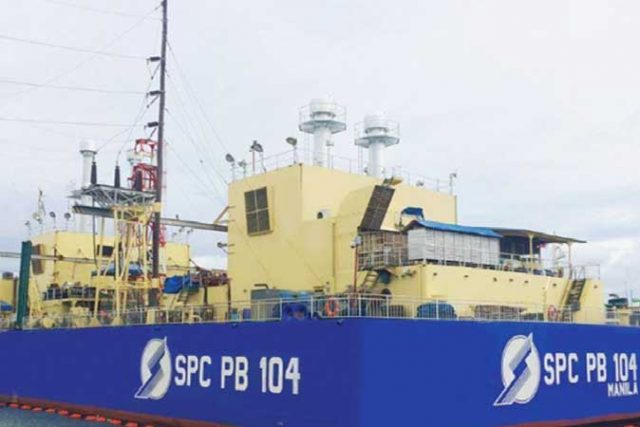
SPC Power Corp. said its board of directors has approved the sale of its shares in Bohol Light Co., Inc. to Primelectric Holdings, Inc. for nearly P200 million.

The company holds a total of 29.93 million common shares priced at P6.67 per share, totaling P199.5 million in Bohol Light, the power distribution utility in Tagbilaran City, as stated in a stock exchange disclosure by the compa-ny, the company said in a stock exchange disclosure.

The sale of its share to Primelectric Holdings, a subsidiary of Razon-led MORE Electric and Power Corp. (MORE Power), was approved by SPC Power’s board on Wednesday.

The company did not disclose the percentage of its stake in Bohol Light, other than stating that the agreement between the two parties is in accordance with the terms and conditions of a share purchase agreement.

SPC Power’s other units are SPC Island Power Corp., Cebu Naga Power Corp., SPC Malaya Power Corp., SPC Light Co., Inc., and SPC Electronic Co., Inc.

The company is also the operator of the 146.5-megawatt (MW) Panay Diesel Power Plant and the 22-MW Bohol Diesel power plant in Tagbilaran City, Bohol, according to the company’s website.

At the stock exchange on Thursday, shares in the company closed 19 centavos or 2.03% lower to end at P9.17 apiece. — Ashley Erika O. Jose

Filinvest REIT expects to power 94% of office buildings with RE soon

FILINVEST REIT Corp. (FILRT) expects that 94% of its office building portfolio will soon transition to renewable energy (RE) sources, the Gotianun-led company said on Thursday.

Filinvest Three in Muntinlupa City has qualified for the Green Energy Option Program (GEOP) and seeks to be powered by 100% renewable energy by the third quarter. Additionally, Axis Tower One, also in Muntinlupa, and Filinvest Cyber-zone Cebu Tower 1 in Cebu City will be supplied with renewable energy starting in June, FILRT said in a stock exchange disclosure.

“The addition of Filinvest Three, Axis Tower One, and Filinvest Cyberzone Cebu Tower 1 will further expand the company’s renewable energy portfolio from 13 to 16 out of 17 office buildings, covering 94% of FILRT’s total office portfolio in terms of number of properties,” the company said.

FILRT recently announced the shift of its five office building properties to renewable energy sources under the GEOP. These include Plaza D in January, and Plaza B, Plaza C, Plaza E, and 5132 in February, all located in Muntinlupa.

This brought the company’s renewable energy portfolio to 13 out of 17 office buildings, accounting for 76% of its total properties.

“This strategic move not only fulfills our long-standing sustainability commitments but also resonates with the core objectives of our tenants in forging a more sustainable future,” FILRT President and Chief Executive Officer Maricel Brion-Lirio said.

Other FILRT buildings powered by renewable energy include Vector One, Vector Two, Vector Three, iHub 1 and 2, Filinvest One, Filinvest Two, and Plaza A.

The GEOP is an initiative led by the Energy department in accordance with Republic Act No. 9513 or the Renewable Energy Act. The program offers a choice for end-users to shift to an electricity supplier capable of delivering energy from 100% renewable energy generating facilities.

On Thursday, FILRT stocks fell by 3.91% or 11 centavos to P2.70 each. — Revin Mikhael D. Ochave

Navigating the latest automotive trends

Photo from vectorjuice on Freepik

As we continue on the highway of 2024, the automotive industry stands at the crossroads of innovations and shortages, with new challenges and opportunities that it may face in the coming months. This year promises to be filled with exciting developments, more sustainability options, and solutions that will revolutionize how automobiles are perceived.

Local car sales are expected to continue to carry the momentum of 2023 in the next eight months as the Chamber of Automotive Manufacturers of the Philippines, Inc. (CAMPI) forecast another record-breaking year and a 9% increase from last year’s sales of 429,807 units to 468,300 units in 2024.

“We are starting 2024 with a positive business and consumer confidence outlook. We see new model introductions and the expansion of electrified vehicle line-up especially in the hybrid electric vehicle segment, and more brands coming into the market,” CAMPI President Rommel R. Gutierrez said.

Furthermore, electric vehicles (EVs) are becoming more popular in the country as Filipinos look for more sustainable options due to increased awareness of climate change and its environmental impact.

According to data from the Electric Vehicle Association of the Philippines (EVAP), 2,557 e-vehicles were sold in the country from January to June 2023 alone, a 500% increase compared to 426 units sold in the entire 2022. The group forecasts sales to continue skyrocketing during the decade and projects around 6.6 million registered electric vehicle units by 2030.

“By 2030 most of the manufacturers won’t be doing any more [internal] combustion engines or ICE. So, everything will be electric. Obviously, new car sales or vehicle sales will be all-electric. If ever there will be some combustion engines, only a small amount,” EVAP Chairman Emeritus Ferdinand I. Raquelsantos was quoted as saying in a report from The Philippine Star.

Globally, Bloomberg expects 16.7 million EVs sold in 2024, a 21% increase from 13.8 million units last year. Meanwhile, the research platform Market and Markets reported the installation of over one million charging points for EVS in 2023 with more expected to be built in 2024.

Digital’s involvement in automotive

Another trend for car enthusiasts to look out for in 2024 is the overall involvement of the internet in the automobile industry. Generally, car shoppers go online when researching potential automobile purchases. Software company Ruler Analytics found that nearly 95% of vehicle buyers use digital channels as a source of information instead of going to dealerships.

Additionally, data from Forbes suggests that online car purchases, where the full car buying experience is digital, may reach 7.1-7.3 million units sold globally this year. Meanwhile, Statista projects online vehicle sales to gain more popularity within the decade and be worth around 176.24 billion U.S. dollars in 2031.

Furthermore, cars with a Wi-Fi hotspot have become more appealing to drivers who travel for business and pleasure. Following Chrysler’s release of a Wi-Fi-enabled vehicle in 2008, other car manufacturers have quickly followed suit, offering built-in Wi-Fi access in most new models in the market today.

Daunting challenges

Despite these opportunities and positive trends in the automotive industry, there are also some challenges that may arise for the sector within the year. American insurance company Progressive notes that the pandemic in 2020 led to a manufacturing pause that not only drastically decreased vehicle production that year but also brought supply chain challenges felt four years later.

In an effort to slow down the spread of COVID-19, people stayed in their homes and fewer automobiles were used. Car manufacturing also stalled in 2020 and did not ramp back up to 2019 levels until July of that year. This led to the automotive industry producing fewer cars and selling fewer vehicles due to the low demand. While car production numbers slightly increased in the following years, Progressive foresees some level of unpredictability for the foreseeable future.

Geopolitical issues and wars may also lead to supply chain challenges for the automotive sector this year. Progressive mentions that Russia’s invasion of Ukraine compounded microchip supply chain issues as both were suppliers of semiconductor raw materials.

Wars lead to worsened shortages and cause ripple effects as trade routes and suppliers will have to pivot. With the ongoing Israel-Gaza war and the looming Iran-Israel conflict, it remains to be seen if these disputes will amplify or have no effect on the automotive industry’s supply chain problems.

There is also a global shortage of technicians and mechanical workers. According to data from Auto Service World, the automotive industry needs at least 642,000 technicians to fill its shortage in the United States alone.

Software company Wrench Way cited several factors affecting the technician shortage in society including the youth’s preference for white-collar jobs over vocational occupations and the perception that the career is “dirty.”

Additionally, Auto Service World said that as the demand for technicians increases so will the skills required to work in the profession as modern automobiles have new software, EV architecture, and even artificial intelligence.

Modern problems brought about by new technologies and innovations will also be in the spotlight this year. With the rise of autonomous driving advancements and vehicle connectivity, cyberattacks on automobiles have become a reality. American telco company AT&T says that keyless car theft, phishing, infotainment attacks, and even remote hacking are the cyber threats automobiles face due to new features.

The automotive industry is navigating a year defined by a blend of promising opportunities and daunting challenges. 2024 promises exciting developments, from the continued rise of electric vehicles to the integration of e-commerce in the car-buying process. With a growing focus on sustainability and technology, car buyers can expect more eco-friendly options and seamless digital experiences when purchasing vehicles.

However, despite these opportunities, challenges including supply chain disruptions, geopolitical tensions, and workforce shortages must be addressed. As the industry looks for solutions to these problems, adaptation, innovation, and collaboration will be essential in charting a course toward a more sustainable and resilient automotive future. — Jomarc Angelo M. Corpuz