Home Blog Page 3127

Readiness to strengthen economic progress

L-R: Rafael F. de Mesa of Aboitiz InfraCapital, Inc.; George I. Royeca of Angkas; Jesus C. Romero of Converge ICT Solutions Inc.; and Emmanuel L. Estrada of Globe — Photo by Jesse Bustos | The Philippine Star

By Angela Kiara S. Brillantes, Special Features and Content Writer

The Philippines remains as a shining example of economic progress, with industries like infrastructure, telecom, and mobility leading the way in growth. As these sectors experience continuous growth, how, then, can they keep up this momentum and further enable the country’s economic growth in the coming years?

In the first panel discussion of this year’s BusinessWorld Economic Forum last May 22, panelists representing significant players in both physical and digital infrastructures shared their insights and outlook on the challenges and opportunities for infrastructure to contribute to the nation’s economic progress.

Among the panel’s takeaways, behind successful recent development in the Philippines is connectivity, which has seen to be at the center of everything. More than improving economic prosperity, connectivity has the power to transform industries and societies; and, according to George I. Royeca, chief executive officer at Angkas, the power of connectivity has recently been found in creating jobs and improving Filipinos’ living standards.

“The means for connectivity is used for livelihood of Filipinos. There are a lot of jobs that are being facilitated through mobile platforms or mobile internet-enabled platforms. That gives you a preview of the potential for human capital and how we can use technology for the masses to uplift their lives, create value for them, and increase their value while doing so,” Mr. Royeca said.

Connectivity is evolving and transforming mobility, and creating better cities to live in. Ride-hailing apps like Angkas leveraged this opportunity to address transport needs in the Philippines as mobility has become a more essential part of daily life.

Angkas Chief Executive Officer George I. Royeca — Photo by JLCG Creative and Digital Solutions

“Mobility for us is like oxygen; you need mobility wherever you are,” he stressed. “At that level, we focus on the workforce and making sure we give them an affordable and safe way to the workplace. It is something that is always going to be needed no matter what,” he said.

Meanwhile, Rafael F. De Mesa, head of economic estates at Aboitiz InfraCapital, Inc., shared positive prospects that await the Philippines, among which is that it is one step forward into becoming an attractive investment destination.

“For us, in developing economic estates, we’re very encouraged [by] the interest we are seeing as we move around in the region. We’re on the radar already. The big part of that is the government’s push to get out there and promote the country and highlight the benefits of locating here, as well as the reforms that have been made to make it an attractive investment. We’re quite optimistic. We’re positioning ourselves to take advantage of that interest in the Philippines,” Mr. De Mesa said.

UNLOCKING OPPORTUNITIES

Further into the digital infrastructure, digital connectivity is pertinent today, especially, when it has a profound influence in daily life.

Globe Vice-President for Regulatory Development and Strategy Emmanuel L. Estrada — Photo by JLCG Creative and Digital Solutions

Emmanuel “Manny” Estrada, vice-president for regulatory development and strategy at Globe, said the Philippines is at the right track of embracing digitalization, adding that digital connectivity has enabled people to access technology and online services that fuel development moving forward.

“Everyday, we see how the internet and IT technology impact our daily lives, from social media, connecting to friends, to doing your daily jobs,” Mr. Estrada explained. “In our daily lives, we cannot do without a solid connectivity, even our ride-hailing apps and online selling all depend on that.”

Mr. Estrada also pointed out the need for further investments and innovations in connectivity as development becomes more reliant on digital connectivity.

“While connectivity is being commoditized, there is also room for growth to continue to invest in connectivity and innovate for the services, because everybody needs to go to digital,” he said.

Furthermore, Jesus C. Romero, senior executive vice-president and chief operations officer at Converge ICT Solutions, Inc., shared their company is a few steps ahead as the misconception of expensive internet is decreasing in recent years due to the rise of low-end products that are both affordable and accessible to Filipinos.

“[Before], broadband was an area that was totally underserved. The Philippines is geographically positioned to being a telecom hub. The first thing we did is to adjust rates so that it becomes more affordable, make a nationwide fiber access network. The industry needs to make sure that they can provide the service, make it available and affordable so that Filipinos can consume it,” Mr. Romero shared.

“Today, the whole fiber broadband industry is more vibrant; we’ve all moved forward to make this a better market serving more customers,” he added. “Last year, we took another step. We took fiber broadband down to an affordable level for the masses.”

SIGNIFICANCE OF TALENT

As digitalization becomes more of a necessity, the country has been reaping its benefits as efforts in this area continue to increase. How, now, can the country fully utilize it toward even more substantial growth?

Mr. Royeca of Angkas underscored the significance of tapping into the potential of the young talent and workforce in the country. One way to do this is to upskill employees.

“[W]e have very talented developers; [but] the problem is experience. [Yet,] we know what we want; we know what kind of skills that we want. This gap is an opportunity because the already talented young population that we have, we can accelerate their growth into highly skilled workers just in terms of this paradigm shift,” he said.

For their part at Angkas, Mr. Royeca noted that they seek to present the ride-hailing app more as a platform that can create financial opportunities and uplift lives, especially in informal sector.

For this to be realized, however, Mr. Royeca highlighted the need for inculcating financial literacy and a “nanopreneur” mindset among its riders.

“Financial literacy is not just knowing how to loan or getting your documents ready, but it’s a mindset. It’s about how we move them (motorcycle drivers) from a single-income household to a dual-income household,” he explained. “A lot of these people look at motorcycles as a way for their economic freedom or to get out of the poverty line. It’s not as simple as going to the motorcycle business, but how do we reinforce that nanopreneur [mindset] to be able to expand and thrive.”
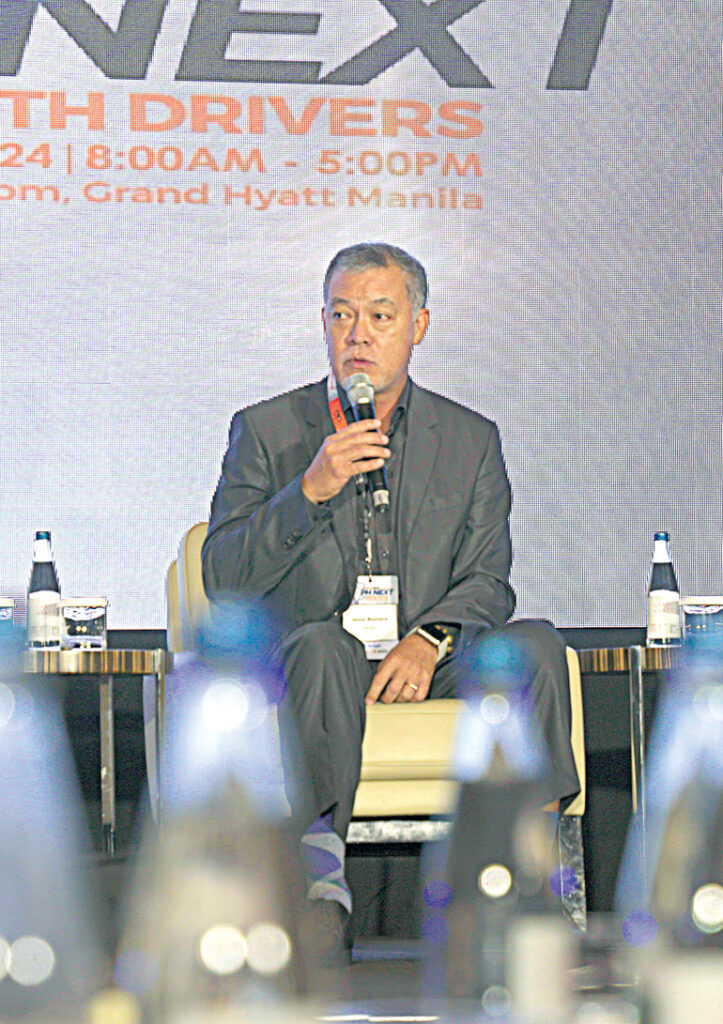
Converge ICT Solutions, Inc. Senior Executive Vice-President and Chief Operations Officer Jesus C. Romero — Photo by JLCG Creative and Digital Solutions

Mr. Romero of Converge, meanwhile, mentioned of the need for interventions in upskilling new entrants to the workforce.

“There is always this issue that there’s supposed to be a lot of graduates; but when you look at [them], they’re good enough to hire but still lacking,” he shared. “One of the things we’re working on with other parties is [determining] what kind of intervention will be made available to them in the area of digital services where their skill sets can be dramatically improved. What content can be put there, monetized, subsidized, or something people can afford? Let’s multiply this concept. We’re trying to put it together and make it available.”

Mr. De Mesa of Aboitiz InfraCapital also emphasized the need for honing skills and cultivating better leaders.

“Today, our advantage is our young and growing population, but the question is how we evolve later and ensure this growth is sustainable. There’s a need to develop better leaders, people with more interpersonal skills, it’s a much wider thing but it’s an opportunity, we just need to plan for it and take advantage of it,” Mr. De Mesa said.

A NATIONWIDE APPROACH

Also emphasized during the discussion was the collaborative approach among public sector, private sector, and society as whole.

“The only way to get this done is [to make sure] it is well-socialized and communicated (and the Filipino understands) what is needed to be done, then they’ll be more willing to work together. It is a whole-of-society approach, every single element and stakeholder will be able to contribute to this and push for it and make sure nothing gets sidetracked. Otherwise, it just becomes another coffee-table book at some point.” Mr. Estrada of Globe said.
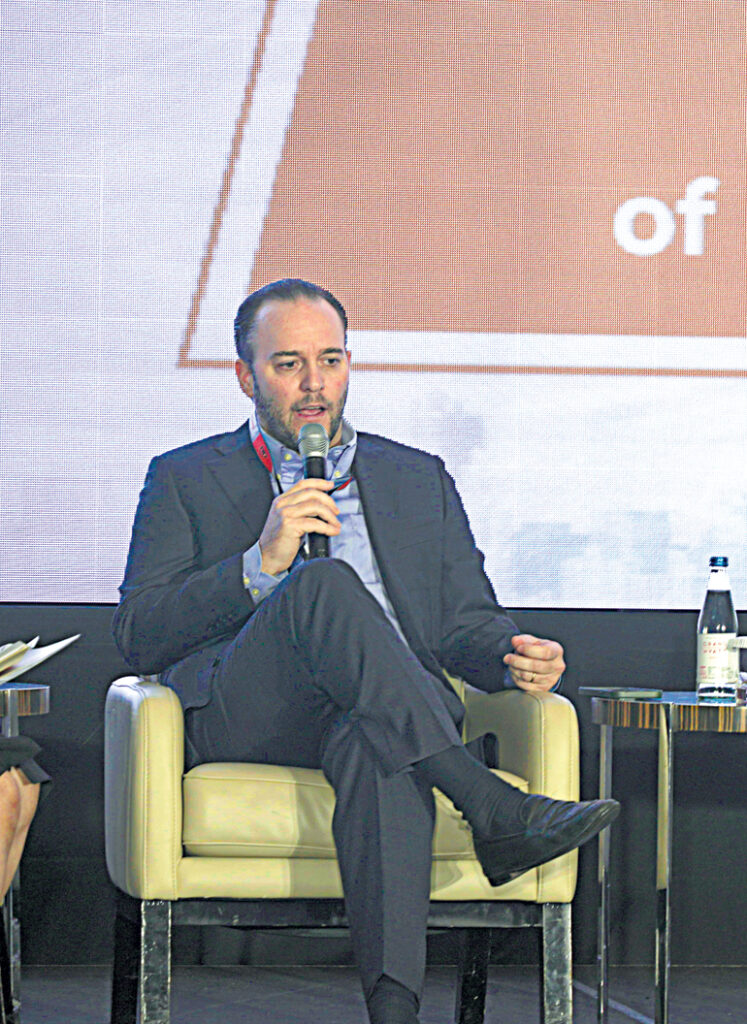
Aboitiz InfraCapital, Inc. Head of Economic Estates Rafael F. De Mesa — Photo by JLCG Creative and Digital Solutions

For Aboitiz InfraCapital’s Mr. De Mesa, collaborative efforts are key to make the Philippines become an attractive destination for investments.

“With the Philippines, it’s never been a question about its potential. It’s about being able to fulfill that potential. If we cooperate and coordinate more, we can make the Philippines a more compelling destination for investment,” he said.

“Between the government and private sector [and with] things like the Private Sector Advisory Council, I think that sends a strong message to the world about the Philippines being serious in attracting investments,” he added. “I’m hopeful that will continue beyond administration and ultimately be able to fulfill our potential in the long run.”

Adding to this, public-private partnerships are seen to stimulate innovation and bring out the potential of industries for economic development.

“There is strength in partnership with the government because they provide the parameter, landscape, and the platform for which we can do many things. This can be a learning to a lot of agencies, and you need to make these types of mechanism to experiment on innovative strategies on how to unearth the potential of various industries, service, and products,” Mr. Royeca of Angkas said.


Chemical Industries shifts to real estate, merges with 6 firms

STOCK PHOTO | Image Dmitry Berdnyk from Unsplash

CHEMICAL Industries of the Philippines, Inc. is changing its name to Uniholdings, Inc. and will merge with six companies as part of its shift to the real estate business.

The Securities and Exchange Commission (SEC) approved the name change on May 24, the company said in a statement to the Philippine Stock Exchange (PSE) on Wednesday.

The name change aligns with the proposed amendment of its business purpose to engage in property development, it said.

Chemical Industries, which started in 1959, manufactures, sells and distributes industrial chemicals and leases office space, according to its corporate profile on the PSE website.

The chemical segment makes and trades chemical products for water and sewage treatment and inorganic coagulants for the paper industry. It stopped operating this segment since CAWC, Inc., Chemphil Manufacturing Corp., and Kemwater Phil. Corp. ceased operations.

In a separate disclosure on Thursday, the company said its board approved on May 29 the exclusion of Unioil Group, Inc. from a planned merger, as well as the continuation of the merger with six other companies. UniHoldings will become the surviving entity.

These are Addventure Properties, Inc., Citiworld Properties and Development Corp., Exquadra, Inc., Quantumlink Realty Corp., Buklod Realty Corp., and Rivertanks, Inc., Exquadra, Citiworld, Quantumlink, and Buklod are engaged in property leasing.

“After a careful review of the business plan of the company and its affiliates, the company has adopted the above resolutions to clearly delineate and define the lines of businesses within the organization, with Uniholdings, Inc. focusing primarily on businesses related to real estate,” it said.

The company will file the final merger articles and plan and other documents with the corporate regulator, Philippine Stock Exchange and other regulatory agencies, it added.

Uniholdings also changed its office address after the corporate name change.

“Chemical Industries deemed it best to transfer its principal place of business in view of the sale of the land and building where the previous principal office of the corporation was established,” it said.

After the transfer of the principal office to Pasig City, the company would prioritize leasing activities, it added.

The company noted that in implementing the merger, all shares of capital stock of the absorbed companies issued and outstanding on the effective date of the merger would be canceled, subject to valuation confirmation and approval by the SEC.

In exchange for the net assets of the absorbed companies and the canceled shares of their stockholders, 61.98 million Uniholdings shares will be issued, it added.

In another disclosure, Chemical Industries said it expects its public float to go below the 10% minimum public ownership and 20% minimum for backdoor-listed companies.

“The company has been required to do a follow-on offering and hopes to raise the public float to a level compliant with PSE requirements, after the follow-on offer exercise,” it said.

It is still finalizing the merger plan, which it would file with the SEC by next week, it added. — Revin Mikhael D. Ochave

Fusing style, sustainability, and innovation in modern vehicle design

Assisted control of distance from the leading car centering in lane — Photo by Ian Maddox | Wikimedia Commons

Combining a comfortable and spacious interior and an aesthetic exterior defines modern vehicles, creating an all-encompassing experience that prioritizes style and comfort. In pursuit of this, car manufacturers are using the latest technologies to significantly enhance both the exterior and interior design of cars, emphasizing convenience, functionality, and user experience.

Throughout the years, the interior of a vehicle has evolved from driver and passenger seats into a functional space where technology, comfort, and aesthetics converge. Modern car interiors are designed, not only to allow people to drive but also to offer a better driving experience, convenience to the passengers, and cutting-edge features that integrate all the latest technologies in a single automobile.

One of the rising trends for car exteriors is the newly developed Advanced Driver Assistance Systems (ADAS). With concerns for sustainability, new materials, finishes, colors, textures, and emerging technology integrations, ADAS in modern cars is expected to provide implications for vehicle design.

While there are autonomous vehicles (AV) available in the market, the Society of Autonomous Engineers explains that high-level vehicle simulation still faces a long and winding road, noting that “safety and robustness are critical in automated driving.”

Sustainable fabric choices are becoming more popular with car manufacturers as well. Several brands are slowly transitioning away from traditional materials used for car interiors in favor of more environment-friendly options. Animal-free alternatives to leather, recycled materials, and even pineapple fibers are set to level up car interiors without causing more damage to the environment.

Backup camera displayed in digital instrument panel — Photo by Badgernet | Wikimedia Commons

More screens are also expected to be integrated into modern vehicles. With digital technology becoming more advanced and in demand, car interiors can potentially feature larger, more ergonomic display panels and touchscreens and fewer buttons, knobs, and compartments.

As beverages like coffee and tea become more fashionable, heated and cooled cup-holders in vehicle interiors are slowly becoming mainstream. Ensuring that drinks remain at the desired temperature throughout the drive, these innovations add an extra layer of comfort and hydration to the driving experience.

Meanwhile, despite their muscly and robust looks, car exteriors are not all about appearance. While aesthetics attract most car buyers to an automotive, a car’s exterior plays a huge role in preserving its value, protecting against environmental damage, and enhancing overall performance.

In line with almost any other industry, one of the more necessary adjustments that car manufacturers must accommodate is to make their automobiles sustainable and cut fuel consumption. Redefining car aerodynamics that is efficient, sustainable, and stylistic has led to a trend in vehicles with broad shapes, low ride height, and lightweight construction that aims to make the car’s interior spacious and improve its aerodynamic performance.

With the evolution of glass technologies, panoramic car roofs are also emerging as a trend for car exteriors. These glass roofs allow natural light to flood the cabin and provide a sense of openness and spaciousness to the interior. The sought-after feature adds a touch of sophistication to the driving experience while connecting occupants with the environment.

The functionality of doors is also becoming realized as more and more car manufacturers produce more double-door cars. Swing-out double doors grant modern five-seater cars four-door access without taking up the body space or adding extra weight as in the traditional models.

Another bright spot for car exterior designs is the aggressive and stylish headlights that give ordinary vehicles a sports car-like look. Car manufacturers have given emphasis on producing high-output lighting technology that consumes relatively less amount of power. These sleek, angular headlights not only contribute to the overall aesthetic appeal of the vehicle but also enhance visibility and safety on the road.

These emerging trends and more innovations are infused into the lineup of several automotive manufacturers. Hyundai, for instance, offers automobiles that blend near-luxury experience with a robust commitment to sustainability and innovation, offering something for every type of driver.

Hyundai NPX1 — Photo from hyundai-n.com

Hyundai’s NPX1 is the first concept model based on its award-winning IONIQ 5 N high-performance electric car. The new model sports aesthetic enhancements and features performance upgrades such as lightweight hybrid carbon wheels and high-performance brake pads, promising a smooth driving experience.

Moreover, Hyundai’s Sonata showcases the premium placed by the company on both luxury and practicality regarding the interior and comfort aspects of their vehicles. The Sonata offers 46.1 inches of legroom for front-row passengers and almost 35 inches for those in the second row while providing premium cloth upholstery, and power-adjustable seats with lumbar support.

Additionally, Hyundai’s Tucson and Palisade provide their owners with the company’s latest innovations as they feature an Intuitive dashboard layout with a touchscreen infotainment system and dual automatic temperature control as standard features. The Tucson also offers customizable 64-color LED ambient lighting for a more personalized touch. — Jomarc Angelo M. Corpuz

Megaworld tapped by PEZA to develop and operate Arcovia City

MEGAWORLDINTERNATIONAL.COM

THE PHILIPPINE Economic Zone Authority (PEZA) has signed a registration deal with Megaworld Corp., making it the developer and operator of the Arcovia City IT Park in Pasig City.

In a statement on Thursday, PEZA said its partnership with Megaworld would help boost efforts to make the country a premier investment hotspot in the region “with ecozones as drivers of growth and development.”

“Megaworld’s commitment to nation-building is evident through their active participation in the country’s ecozone program,” PEZA Director General Tereso O. Panga said in the statement.

“By establishing new zones, we can host global players in the information technology and business process management industries, thereby giving more opportunities to Filipinos,” he added.

PEZA and Megaworld signed the agreement last week at the PEZA head office, according to the state investment promotion agency.

Megaworld oversees nine economic zones with 221 registered businesses that generate $3.29 billion (P193 billion) in exports and 160,000 jobs.

Megaworld has spent P817.5 million on the horizontal development of the IT Park in Pasig City, which is part of the listed company’s mixed-use development, PEZA said.

“We are optimistic that more business titans in the real estate development sector will follow Megaworld’s lead and either establish or expand their portfolio in the government’s ecozone program,” Mr. Panga said.

Arcovia City is one of the two economic zones proclaimed by President Ferdinand R. Marcos, Jr. this year, bringing the number of proclaimed zones under him to 13 with P4.86 billion in investments.

It aims to entice more local and international investors to bolster economic growth and create more jobs for Filipinos.

Megaworld shares lost 1.62% or three centavos to close at P1.82 each. — Justine Irish D. Tabile

ERC approves Alsons contract for power reserves

By Sheldeen Joy Talavera, Reporter

THE ENERGY Regulatory Commission (ERC) has provisionally approved a deal that would allow Alsons Consolidated Resources, Inc. to implement its new contract for power reserves.

This came after its unit Western Mindanao Power Corp. said it might shutter its diesel power plant in Zamboanga City due to insufficient fuel supply. This could cause rotating brownouts in the city and nearby areas.

Western Mindanao Power had a nonfirm ancillary services procurement agreement with the National Grid Corp. of the Philippines (NGCP), which allowed it to provide power to the city.

The contract expired on April 25. The NGCP, however, awarded a new firm ancillary services procurement deal, which was put on hold pending ERC approval.

“This interim relief provides us the opportunity to implement a firm ancillary services procurement agreement contract awarded to Western Mindanao Power Corp. for dispatchable reserve, reactive power support and black start service,” Alsons Deputy Chief Financial Officer Philip Edward B. Sagun said at the company’s virtual annual stockholders’ meeting on Thursday.

He added that once clarifications have been made with the ERC, Western Mindanao Power could continue providing electricity to support the “much needed grid stability” in the Zamboanga Peninsula.

Ancillary services are tapped by grid operators to support the transmission of power from generators to consumers to maintain reliable operations.

“We are in the process of procuring the necessary fuel to ensure the uninterrupted operation of Western Mindanao Power Corp.,” Mr. Sagun said.

Alsons Chairman Nicasio I. Alcantara in a separate statement said the company expects the increased power demand to continue given the Philippines’ projected economic growth of 6-7% this year.

“We are committed to driving business growth by maintaining highly efficient plant operations, accelerating our project implementation and continuously seeking opportunities to expand our footprint,” Mr. Alcantara said.

Alsons operates four power facilities with a total capacity of 468 megawatts, serving more than eight million people across 14 cities and 11 provinces in Mindanao.

BPI looks to increase share of sustainability in loan portfolio

BPI FACEBOOK PAGE

​BANK of the Philippine Islands (BPI) is working on ramping up the share of sustainability initiatives in their overall lending portfolio, even as it already takes up over half of the total, a senior official said.

“If you look more broadly at sustainability overall, what I can say is that about 52% of our portfolio is linked to sustainability initiatives,” BPI Chief Finance Officer (CFO) and Chief Sustainability Officer Eric Roberto M. Luchangco said in a press conference on Thursday.

“That means not just environmental, but even the social side and even governance. Across the environmental, social, and governance side, it’s about 52% of our entire portfolio,” he added.

He noted that there is still “room to grow” for the share of sustainability in its portfolio.

“Green assets have been increasing (in) absolute amount and even as a percentage of our portfolio. So it continues to be a growth area for us,” he said.

In particular, Mr. Luchangco said that a majority of their energy generation portfolio is in renewable energy.

“Over 50% of our power generation portfolio is in renewable energy. Meanwhile, coal-fired has dropped significantly. And I think this compares very favorably compared to the overall grid in which it is over 50% powered by coal.”

Meanwhile, Mr. Luchangco said that the bank is continuously working on expanding its lineup of sustainability-related products.

“We’re always looking for new products that will kind of broaden our sustainability product portfolio. It has to be something that’s interesting to our customers where we see customer demand and where we’re able to find good partners to work with.”

BPI will also offer more sustainability and green bonds in the future, Mr. Luchangco said.

“It’s always an area of interest for us. I think it’s a matter of timing. Issuing green bonds is important to us. But we do have to time it with the financing requirements as well. What you’ll see is that over time, we will issue more green bonds,” he said.

The bank is also working on setting up a framework for when it plans to issue blue bonds.

“We expect to have a strong reception for that. We’d be keen to come into an issue. So, we do expect strong demand for that at the time that we decide to come to the market.”

Last year, the central bank approved a gradual reduction in the reserve requirement rate for green, social, sustainability, and other sustainable bonds to encourage banks to extend more loans for green and sustainable projects. 

BPI saw its net income grow by 25.8% year on year in the first quarter to P15.3 billion as higher revenues helped offset increases in loan loss provisions and operating expenses.

Profit growth is expected to be flat, depending on when the Bangko Sentral ng Pilipinas cuts interest rates, BPI Chief Executive Officer Jose Teodoro K. Limcaoco said last month.

The bank also expects its loans to grow by 11-12% this year, driven by a 6% boost following its merger with Robinsons Bank Corp., Mr. Luchangco said last month.

BPI’s shares went down by 60 centavos or 0.5% to end at P120.20 apiece on Thursday. — Luisa Maria Jacinta C. Jocson

Pacific Online lone qualified bidder for PCSO e-lotto deal

PACIFIC Online Systems Corp. is set to secure a five-year lease with the Philippine Charity Sweepstakes Office (PCSO) for an e-lotto platform.

The company received a notice from the PCSO on Wednesday saying it had been chosen as the only qualified bidder for the contract for a web-based app for electronic lotto.

“As the single calculated bid, the submitted bid will be subjected to a post-qualification review by the PCSO’s special bids and awards committee,” Pacific Online said in a disclosure to the Philippine Stock Exchange on Thursday.

“Should there be no issues raised during the post-qualification, it is expected that the PCSO special bids and awards committee will be issuing its notice of award,” it added.

Pacific Online provides and manages online lottery systems, terminals and software for the Philippine gaming industry.

It has been providing technical and market expertise in the distribution of lottery products in the country in partnership with the PCSO for more than two decades.

Pacific Online shares fell by 1.03% or five centavos to close at P4.80 each. — Revin Mikhael D. Ochave

Gearing engine designs towards sustainability

Photo from Freepik

With the buzz around automotive sustainability, the industry is at a crucial point. It is being driven towards adopting more sustainable practices that address environmental risks, changing consumer preferences, and the imperative to conserve resources.

In response, automakers have been putting in efforts to elevate their engine designs through innovations that increase power and improve fuel efficiency.

At present, the automotive market is abounding with new car features and innovations that significantly boost fuel efficiency and lower emissions. These include developments in turbocharged engines, stop-start systems, and continuously variable transmissions (CVTs), among them.

According to EY Insights, this fundamental shift presents a golden opportunity to drive future prosperity.

“Automotive companies that deliver across all these areas will be much better positioned to find new sources of value, power their continued prosperity, transform at the speed required, and play a leading role in creating a sustainable future for everyone. But that delivery must be comprehensive and consistent,” the report said.

Turbocharging

Turbocharging is expected to be utilized by more manufacturers to improve fuel efficiency in vehicles, whether they are electric vehicles, commercial vehicles, or another type. By compressing the air entering the engine, it helps burn fuel and produce more power. Vehicles that are powered with turbocharging provide better driving performance and fuel efficiency that many drivers are looking for.

“Automobile turbochargers have gained widespread adoption as manufacturers respond to stringent pollution regulations and aim to enhance fuel efficiency. Turbochargers play a pivotal role in improving overall vehicle performance and fuel economy, making them integral to modern car design,” re-search and consulting firm Verified Market Reports said in an article.

As turbocharging technology evolves, manufacturers are looking to produce more turbochargers that can withstand higher pressures and temperatures, making them more efficient and durable. It has also expanded to various industries, including aviation, marine, and industrial where increased power and efficiency are crucial.

Start-Stop system

Automakers are on a roll in continuously adding new features to reduce fuel consumption and meet environmental standards. One of these features is the start-stop system, which automatically shuts off the engine when the car is stopped in gear, helping prevent unnecessary fuel waste during idle periods. As soon as the driver releases the brake or presses the accelerator, the engine automatically turns on. During this interval, which lasts from 30 seconds to three minutes, other car features like air-conditioning or heated seats rely solely on battery power.

CVT

Another popular feature is equipping continuously variable transmissions (CVT) into their engines. The adoption of CVT technology has enabled automakers to improve power and fuel efficiency in vehicles. Even with smaller engines, vehicles equipped with CVT can still deliver smooth driving performance and improved fuel economy.

Alternative fuels

On top of these features, opting for fuels with lower carbon content and fewer emissions can be key to reducing emissions. By switching to alternative fuels like biofuels and hydrogen, which can be obtained from natural and renewable sources, automobiles can reduce greenhouse gas emissions and reliance on fossil fuels.

According to business standards company BSI Knowledge, biofuels can cut down 83% greenhouse gas emissions; and biofuel-powered vehicles offer a more sustainable and equitable transportation for drivers. It is also a good alternative for heavy goods vehicles, given the weight of their load and the length of travel they take.

Meanwhile, according to technology research company TWI Global, hydrogen fuel cells can be another good alternative in powering vehicles as this technology provides a high-density source of energy with good efficiency, coupled with zero greenhouse gas emissions and fast charging times.

As car technology continues to evolve rapidly, the automotive sector is stepping up its game innovation and solutions that boost power and fuel economy, all while saving fuel and reducing carbon emissions.

“For automotive companies, sustainability goes to the heart of what they make, how they make it, and how they make money from it. Any kind of transformation will always create complex business and technical problems that need the best mix of insight, skills, attitudes and experience to solve. The difference with the transformation to sustainability is that nobody has done it before,” EY Insights said in its report. — Angela Kiara S. Brillantes

Sony in talks to buy Queen’s music catalog in potential $1-billion deal

SONY MUSIC is in talks to acquire Queen’s music catalog, which includes hits such as “Bohemian Rhapsody,” in what could be one of the biggest ever deals of its kind.

Sony is working with another investor on a purchase that could potentially total $1 billion, people familiar with the matter said, asking not to be named discussing confidential information.

The talks, which also cover merchandising and other business opportunities, are ongoing and may not result in an agreement, according to the people. A spokesperson for Sony declined to comment. A representative for Queen could not be reached for comment.

Artists have been selling their catalogs to investors for increasing sums in recent years. Earlier this year, Sony acquired a half interest in pop star Michael Jackson’s music catalog from the late singer’s estate for at least $600 million, Billboard reported. Bob Dylan also sold his recordings to Sony in 2022.

Queen’s back catalog includes some of the biggest selling hits, including “Don’t Stop Me Now,” “Another One Bites the Dust,” and “We Will Rock You.”

Brian May, Roger Taylor, John Deacon, and the estate of Freddie Mercury are equal shareholders in Queen Productions Ltd., which produced revenue of £40.9 million ($52 million) for the year ended Sept. 30, 2022, according to the latest available filings.

The value of music catalogs soared over the last decade thanks to the growth of paid streaming services and low interest rates. Universal Music Group NV this year bought a minority stake in Chord Music Partners, a company that owns more than 60,000 songs, including ones written by artists like the Weeknd, John Legend, and Lorde.

Not all music catalog deals have been a success. In 2022, members of the band Pink Floyd decided to sell their catalog for at least $500 million but bids failed to materialize.

Companies that have focused on buying up music rights have also struggled. Founded in 2018 in London, Hipgnosis bought up song catalogs with the goal of turning music into an asset class, but the fund struggled to recoup its investment in music rights and is currently being sold to Blackstone, Inc. It owns song catalogs from Blondie, the Kaiser Chiefs, and the Red Hot Chili Peppers. — Bloomberg

Banks ramp up spending on cybersecurity as attacks rise

PHILSTAR FILE PHOTO

PHILIPPINE BANKS are ramping up their spending on cybersecurity as threat actors target financial consumers, industry officials said.

“The banks are investing so much, especially because we are the prime targets right now,”Land Bank of the Philippines Chief Information Technology Security Officer and Information Security Officers Group President Archieval B. Tolentino during a panel discussion at the 2nd Management Association of the Philippines ICT Summit on Wednesday.

Mr. Tolentino said the targets of threats are not necessarily the banks themselves but “customers who are the low-hanging fruit in the ecosystem of cybersecurity.”

According to cybersecurity firm Kaspersky, the Philippines had the highest number of financial-related phishing attempts on business devices in 2023 in the Southeast Asian region with 163,279 incidents. Financial phishing refers to fraudulent resources related to banking, payment systems, and digital shops.

Mr. Tolentino cited an incident where a cybercriminal created a fake Facebook page claiming that a bank was giving away financial assistance and requiring victims to send money to receive it.

“As for the question of our income, there’s a significant impact because we have to follow the Bangko Sentral ng Pilipinas’ regulations, in order to… secure the bank,” he said.

Nilo C. Zantua, Rizal Commercial Banking Corp. senior vice-president, chief technology officer, and Information Technology Shared Services Group head, said the increase in online banking amid the pandemic also increased the importance of cybersecurity.

“We saw that in 2020, and 2021, it grew by sevenfold. Imagine, we were expanding our digital footprint…,” he said at the same panel.

Asked about budgeting for cybersecurity, he said there has to be a right policy, plan, and strategy to ensure that the business understands the threats and risks, including regulatory and financial.

“In my case, we are fortunate that the board of directors as well as the senior management executive committee is fully supportive of the cybersecurity strategy and plan,” Mr. Zantua said.

Investing in cybersecurity is imperative as the Philippine economy moves into the digital space where more banking transactions are happening, First Metro Investment Corp. Head of Research Cristina S. Ulang said in a Viber message on Thursday.

“As volumes grow, the risk and opportunity balance will swing to either negative (prone to loss/theft/wastage) or positive (gainful opportunities). It is the latter that robust cybersecurity architecture among banks should support and protect,” Ms. Ulang added.

Digital Pinoys National Campaigner Ronald B. Gustilo said increased spending for cybersecurity by banking institutions gives customers the assurance that their transactions are safe.

“Banking institutions should ensure that aside from technology, they should also hire individuals that are competent and knowledgeable with existing and emerging threats in cyberspace,” Mr. Gustilo said in a Viber message on Thursday. — Aubrey Rose A. Inosante

A clearer direction towards a digitally secured space

Experts assessed the status of cybersecurity in the Philippines in a panel discussion of this year’s BusinessWorld Economic Forum held last May 22.

GCash, cybersecurity bodies tackle safeguarding digital economy in BusinessWorld forum

The foundation of a flourishing digital economy relies on two things: secure the cyberspace and building trust among its users. While the digital space is making life easier for Filipinos, risks exist and increasing; and both the public and private sector calls for action to address such risks as early as now.

In a panel discussion of this year’s BusinessWorld Economic Forum held last May 22, experts assessed the status of cybersecurity in the Philippines and explored the actions that should be done moving forward.

Ingrid Beroña, chief risk officer at GCash

The Philippines is among the top country with the most digital users in the world. The country’s economy is revolving around the digital space, from banking to retail to entertainment; and, as a result, Filipinos heavily rely on this digital space.

As the country is playing catch-up with digitalization efforts, there is still a lot to uncover in the digital landscape.

Chito Jacinto, vice-president and chairman of membership and events at Information Security Officers Group (ISOG) and Ingrid Beroña, chief risk officer at GCash, pointed out that the Philippines is at the learning process and at an early stage of cybersecurity maturity.

“At this point, we just passed through the infancy stage. But then, we’re just trying to keep up with the digitalization efforts, because cybersecurity is in support of the digital efforts of every business. Whatever level there is for the infrastructure, you can expect that cybersecurity cannot exceed what the digitalization phase has actually achieved,” Mr. Jacinto said.

While the digital era has brought many benefits to the country, the Philippines opens itself up to cyber risks as it leans more on digitalization.

Alexander Ramos, executive director of the Cybercrime Investigation and Coordinating Center (CICC), and Police Colonel Jay Guillermo, chief of the Cyber Response Unit at the Philippine National Police Anti-Cybercrime Group (PNP ACG), stressed during the discussion that fast transactions challenge them in securing the digital space.

Another challenge noted by the panel is the lack of regulations that support each other.

“One regulatory body will tell you that you cannot share this information, and another regulatory body will tell you to share this type of information, so that other institution may learn from it. And there’s just not enough policies and law out there around cybersecurity. This is a space where we can develop more,” Ms. Beroña of GCash said.

Solutions to implement

As suggested by the panelists, stronger cybersecurity solutions should be enforced to address cyber risks.

Alexander Ramos, executive director of the Cybercrime Investigation and Coordinating Center

For Mr. Ramos of CICC, more security options in transactions should be provided to individuals.

“As far as the private sector is concerned, everybody is competing with speed,” he said. “I believe we have to give the consumers the upper hand. We have to give them control for their transactions. We’re asking to give more control to the consumer, especially focusing on options on security.”

For businesses, meanwhile, a strong IT infrastructure is needed to ensure they are digitally secured. ISOG’s Mr. Jacinto cited three important factors businesses need when implementing IT infrastructure.

“IT infrastructure is dependent on three things: people, process, and technology. If any of these three fails, your infrastructure fails as well,” he said.

Significant roles to play   

Chito Jacinto, vice-president and chairman of membership and events at Information Security Officers Group

In response to the call for giving individuals more power in securing themselves in the digital world, GCash has been providing several services and products that are centered on cybersecurity, as Ms. Beroña noted.

GCash has employed cybersecurity solutions that allow end-users to protect their personal data, as well as their financial transactions. These solutions include features like a double safe that checks every change of devices in the app; a real-time self-application protection for modifying devices; one device nomination; a ‘one device only’ policy; and suspension and freezing of accounts.

GCash also keeps updating its security protocols while remaining vigilant against emerging threats to ensure the safety and security of the financial information and transactions of its users.

GCash has also strengthened its encryption for a more secured connection with other platforms, providers, and merchants and an educational campaign, which is vital towards end-users to help them become well-informed about various online scams.

Furthermore, it has been leveraging on artificial intelligence to combat cybercrime and ensure that the cyberspace is safe.

“I know that fraudsters and even perpetrators also need a tool that could be used to move forward. Artificial intelligence (AI) has actually helped us a lot in ensuring that our space is safe,” Ms. Beroña said.

Police Colonel Jay Guillermo, chief of the Cyber Response Unit at the Philippine National Police Anti-Cybercrime Group

Meanwhile, PNP ACG’s Mr. Guillermo said the public sector has taken steps to prevent online scams by implementing laws and policies. As a result, he emphasized that the cybercrime rate plummeted from 40-50% to 20% in the previous years.

CICC’s Mr. Ramos, noted that the government is taking swift action in establishing policies and regulations that will safeguard the cyberspace.

“We have existing regulators ensuring that the users are protected, but we are still asking Congress for more,” he said. “We want the laws pertaining to cyberspace [to] have flexibility because of the rapid changes in technology. The law itself must be flexible to adapt to emerging trends or issues.”

Investing in public-private partnerships also plays a crucial role in detecting fraudulent activities. GCash, for its part, is working with local authorities to ensure security in the cyber space.

“We have a good relationship with local authorities, and they are working with us to ensure that the space is secure. If the money is still in GCash, we do our best effort to return that money. However, if the money is out of GCash, what we can do is support putting these perpetrators behind bars and that’s why we work with our local authorities on that,” Ms. Beroña said.


Spotlight is BusinessWorld’s sponsored section that allows advertisers to amplify their brand and connect with BusinessWorld’s audience by publishing their stories on the BusinessWorld Web site. For more information, send an email to online@bworldonline.com.

Join us on Viber at https://bit.ly/3hv6bLA to get more updates and subscribe to BusinessWorld’s titles and get exclusive content through www.bworld-x.com.

Five innovative tools from Lazada that help sellers sell more and shoppers save more

In a post-pandemic world, e-commerce presents a prime opportunity for sellers to expand their business, with Southeast Asia’s digital commerce user base projected to exceed 400 million by 2025, as per Lazada’s report made in partnership with Synagie and GroupM1.

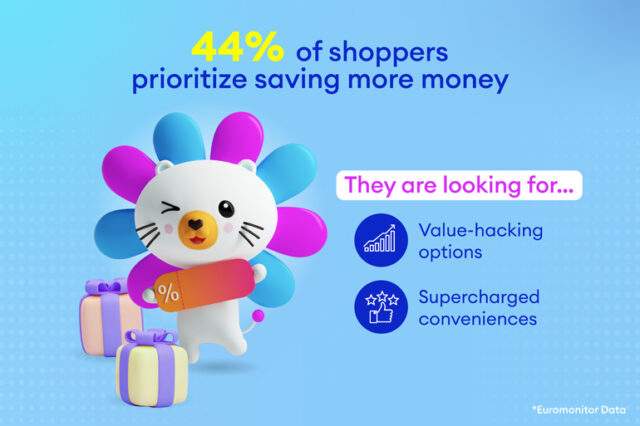
However, amidst the challenging economic backdrop, cost of living has become major concerns among consumers. A Euromonitor report in 2023 highlights growing concerns among global consumers (74%) about the rising cost of everyday items. This economic pressure is also leading many (44%) to prioritize saving more money2.

For e-commerce sellers to effectively answer such needs, they must be able to provide value-hacking options that enable shoppers to maximize their budgets while also offering supercharged convenience3 through personalized shopping experiences. Here, we look at the various Lazada tools that help sellers boost sales for their online stores.

To support businesses in seamlessly transitioning from offline to online and drive their sales, Lazada equips sellers with cutting-edge AI technology and digital solutions. Lazada’s extensive seller tools stand out for their ability to enhance visibility and discovery, encouraging buyers to purchase from new sellers.

Lazada Promotion Tools

Promotion is one of the most powerful ways to grab buyers’ attention and help them maximize their budgets through better or limited-time deals. Sellers can leverage enticing discounts through Store Flash Sales and Seller Vouchers to engage customers, boost sales, and cultivate brand loyalty.

LazCoins Discount

Encouraging engagement, LazCoins rewards frequent users with discounts and exclusive gifts, enhancing product visibility and driving traffic to sellers’ stores. Lazada’s Birthday campaign in 2024 saw three times more coins redeemed compared to last year, indicating that consumers are getting savvier with promotions.

Lazada Special Free-Shipping Program

With free-shipping vouchers, sellers can attract potential buyers, increase average spending, reduce cart abandonment rates, and foster customer loyalty. According to Lazada’s report, free shipping is considered one of the four major key purchasing intent driving buyers to cart out their purchases aside from product placement, photos, and deals. The survey4 showed that 46% of shoppers clicked the free-shipping option while browsing.

Lazada Sponsored Solutions

With Lazada suite of solutions, sellers can expect increased brands’ visibility to buyers, optimized campaign results, and valuable support in navigating the e-commerce landscape for lasting success5. As of 2024, more than 600K sellers across the region have used Lazada Sponsored Solutions6 and enjoyed an ROI of up to 10x7. Here are some of Lazada’s top solutions for a start:

• Sponsored Discovery precisely targets potential shoppers by enhancing store visibility in Lazada’s search and recommendation placements. With 94% of shoppers purchasing the products from the ‘Search’ function while 71% of shoppers purchasing from ‘Recommendation’ results8, this solution is a powerful tool in reaching the right audiences.

• Sponsored Affiliates tap into Lazada’s vast network of affiliate media and KOL partners, ensuring access to a wide pool of potential buyers off-platform.

Lazada Campaign Participation

During Lazada’s 12.12 All Out Year-End Sale in December 2023, local sellers across Southeast Asia experienced a five-fold increase in sales within the first 12 hours of the sale, while electronics sellers experienced a nine-fold increase in sales compared to a regular day. Participating in Lazada’s campaigns provides immense opportunities to gain visibility among consumers with high purchasing intent, leading to significant sales boosts for sellers.

These are only some examples of how sellers can use the various tools to boost their e-commerce businesses. For those interested in staying up-to-date on the latest tips and tricks, Lazada offers free resources for sellers, most notably on Lazada University, a hub of online courses designed to sharpen skills and knowledge to thrive in the fast-paced, and ever-changing e-commerce market.


1 Transforming Southeast Asia – From Discovery to Delivery report (2022) – Lazada Sponsored Solutions

2 Value hacker consumers finding clever ways to maximise budgets and afford quality purchases (2023) – Euromonitor International

3 Here’s what consumers prioritize in Asia, according to WGSN’s latest report: cultural transformation, value-hacking, and more – Adobo Magazine

4 Transforming Southeast Asia – From Discovery to Delivery report (2022) – Lazada Sponsored Solutions 5 Overview: Lazada Sponsored Solutions – Lazada Sponsored Solutions (Jan, 2023)

6 Accumulated data from Lazada Sponsored Solutions updated as of 2024

7 Data from Lazada Sponsored Solutions Feb.-March 2024

8 Transforming Southeast Asia – From Discovery to Delivery report (2022) – Lazada Sponsored Solutions (Dec. 2022)


Spotlight is BusinessWorld’s sponsored section that allows advertisers to amplify their brand and connect with BusinessWorld’s audience by publishing their stories on the BusinessWorld Web site. For more information, send an email to online@bworldonline.com.

Join us on Viber at https://bit.ly/3hv6bLA to get more updates and subscribe to BusinessWorld’s titles and get exclusive content through www.bworld-x.com.