Home Blog Page 2991

A juicy new serum

WHILE vitamin C skincare products may enjoy a reputation for their brightening properties, they may leave the skin sensitive, especially under the sun. Korean beauty brand Innisfree is assuring us that that won’t always have to be the case (as long as you wear sunscreen).

Innisfree launched their Vitamin C Green Tea Enzyme Brightening Serum and its accompanying Vitamin C Green Tea Enzyme Brightening Pads in an event on July 11 in Megamall. While the serum was released in stores last year, the pads are completely new.

Pia Ylisa Alday, Marketing Communications Senior Executive for Innisfree Philippines (distributed by Amorepacific Philippines, Inc.) said in a speech, “The green tea enzymes, it actually helps exfoliate your skin. The vitamin C works better because the green tea exfoliates your skin first, so the vitamin C is absorbed better than your skin.”

According to her, it helps fade 45% of dark spots in seven days. According to their website, Innisfree tested the product for three days and four weeks on women aged 20 to 49. Other results in the test included an improvement on acne marks and uneven skin tone.

Addressing skin sensitivity with vitamin C products, Ms. Alday pointed out that in an irritation test they performed, the sensitive skin response was 0.00 (the website says that this was a primary irritation test they performed on sensitive skin). “They’re actually safe to be used every day,” she said. Onstage, she announced that they were handing out keyrings attached with tubes of their own sunscreen: “When you use vitamin C, you should always use suncreen. Actually, if you don’t use vitamin C, you also have to wear sunscreen.”

In an interview with BusinessWorld, she did say, “We don’t recommend using it together with retinol.” Retinol, a member of the vitamin A family, is often used to treat signs of ageing in skin.

BEAUTIFUL SKIN, BEAUTIFUL EARTH
Ms. Alday also discussed their sustainability campaigns: in February this year, Innisfree received its cruelty-free certification from People for the Ethical Treatment of Animals (PETA). She explained that they only received their certification this year because in some countries (like China), animal testing is still a requirement. “We discontinued the items that are still required to be tested on animals in China,” she said. Other sustainability measures include printing boxes with soy ink, and recycling empty bottles of their products. “You can actually return that to our stores, and we repurpose,” she said. “We’ve actually recycled 1400 tons of bottles.”

She points out that they source their ingredients sustainably: “We’ve been working with other sustainability groups and then we try to make sure that the ingredients we get are from sustainable sources.” For example, the vitamin C in the new products is made from Korea’s Hallabong oranges.

“We get our ingredients from nature…we cannot just take from nature. We have to give back also,” she said.

Innisfree stores can be found in Festival Mall, Glorietta 3, SM Mall of Asia, SM Aura, Mitsukoshi BGC, SM Baguio, SM City Iloilo, SM Clark, SM North EDSA, SM Megamall, SM Makati, and Trinoma. — JLG

For a better glow

DEWHA.CO

By Zsarlene B. Chua

Beauty Review
Dewha 10-day Signature Line Starter Kit

AS A skincare enthusiast and occasional reviewer, one of my favorite things to do is try out new brands I haven’t tried or even heard of before and put their unique selling proposition to the test — whether it was specifically formulated for those with combination skin or dry skin, or anti-aging, etc.

When I got my hands on Dewha, I was excited to see if their formulas would make my skin glow. Dewha is a Singaporean beauty brand established in 2020 that claims to be a “skincare-cosmetic hybrid brand” which is a fancy way of saying that their make-up has skincare ingredients in them. With a tagline “Own Your Glow” — the brand philosophy is all about glow-focused skincare. But what even constitutes glowy skin?

Glowing skin, according to Medical News Today, typically refers to healthy-looking skin that can be achieved through a consistent and effective skincare routine alongside a balanced diet and adequate sleep. Glow, in this case, means a healthy skin that radiates vitality and wellness. It’s a more holistic way of looking at skin health.

The question now is, can you really achieve glowing skin through skincare alone — and in 10 days? Well, Dewha is trying to make a case for itself with its 10-day Signature Line Starter Kit that promises glowing skin in that period.

I typically use skincare products for a few weeks to really test them out for effectiveness and overall experience. Since Dewha has a trial pack that promises results in a little over a week, then that’s where we’ll base this review on.

The Dewha products were provided by the brand for BusinessWorld’s review.

PACKAGING AND FORMULA
Dewha’s 10-Day Signature Line Starter Kit (P2,399) contains three products — Marine Pearl Double Peel and Detox Exfoliator (3 sachets at 6g each); Marine Pearl Revitalizing Glow Essence (20 ampoules at 2 ml each); and the Marine Pearl Double Regen Jam and Cream (10 sachets at 2 g each).

I do appreciate offering a trial set for people new to the brand, but I’m not really a fan of single-use sachets. While I understand that the sachets are to control the amount of product used, I’ve used trial sets that come in tiny bottles (plus, they’re perfect for travelling!)

Eco-friendly packaging concerns aside, what I did like about Dewha is their commitment to streamlining one’s skincare routine with just three products. Well, it’s not really “just” three products as the exfoliator comes with a peeling gel and a physical scrub. The moisturizer comes in either jam and cream form, but I do appreciate that they specifically write it on the box how and when to use each product.

On formulation, it comes with its trademarked Crystal PRO-Biosome formula said to “stimulate skin regenerative processes, boosting the production of peptides, collagen, and ceramides.” It also includes exosomes (is it the new “it” ingredient as EXO Celestial which I reviewed previously also had it as a key ingredient) for accelerate tissue regeneration and skin repair; probiotics fermented to strengthen skin barrier, protect against environmental damage, and combat inflammation; and pearl and marine mineral extract for skin brightening properties.

All in all, it looks good on paper.

ROUTINE
While it is a streamlined process, the three products don’t really constitute an entire skincare regimen, at least for me. Exfoliators are a once-a-week thing which means I need to still use a facial cleanser before using anything from the line. For this review, I’m using Dermorepubliq’s Clarifying Gentle Face Wash + Niacinamide + Botanical Extracts (P199/100 ml), which is, as stated, a very gentle facial wash, perfect for these kinds of experiments (it doesn’t have highly reactive ingredients and provides a clean canvas for new products).

After cleansing my face, I used the Marine Pearl Double Peel and Detox Exfoliator. I used the peeling gel first. Peeling gels work by gently exfoliating the skin’s surface. They contain enzymes or mild acids that break down and dissolve dead skin cells and debris on the skin’s surface, which are then physically rolled away as the gel is massaged into the skin. So no, the blobs that you rub away are not your dead skin, but rather the ingredients that help remove those dead skin cells.

As experienced as I am when it comes to skincare, peeling gels terrify me as it has led to injury on my face more than once — it’s a user error as I don’t dry my face enough before I use peeling gels and the blobs that exfoliate stick on the fine wet hairs on my face. When I remove it by scrubbing, my skin comes with it.

Too much information, I’m sure, but peeling gels and I don’t really mesh well together. I was terrified using the peeling gel at first and I did have some trouble with it at first as again, I didn’t dry my face enough. After I managed to remove the blobs by washing my face with cleanser again and a soft washcloth, I came out with a few sensitive areas but no injuries, which is a win in my book.

I typically would have stopped using peeling gels after that, but I made a commitment, so I used it again the next week and I did much better, but overall, I’m just not a fan of peeling gels.

What I was a fan of was the Detox Exfoliator part of the routine which is a gentle physical exfoliant you use after the peeling gel. You rub the teal blue exfoliator on the rougher, oilier areas of your skin or the T-Zone, which for me is my nose and between my brows to clean them up. Do use caution when rubbing as it can injure your skin — if you’re my age and used those apricot scrubs, you know what I mean.

The result of the exfoliators was a softer, smoother base, prepping it for the other products in the line.

Next up is the Marine Pearl Revitalizing Glow Essence. Essences are a hybrid product that combines the consistency of a toner with the active ingredients of a serum. 2 ml might not look like much (but I promise you that it is). I was able to do three rounds of the product when applied using my hands and not cotton rounds, really packing in the hydration and active ingredients before I went in on the cream. If you know the layering technique of patting your face with toner or essence, letting it set a bit, then doing it all over again until you achieve that hydrated base, that’s what I was able to do with just 2 ml. I enjoyed this product a lot and it might just be my favorite of the entire line — I think this might be the product that lent a noticeable glow on my skin after a week of using it.

The Marine Pearl Double Regen Jam and Cream is the final step. This product really threw me in for a loop as the cream has the consistency of a lightweight gel and is recommended for nighttime use. It’s for when you need more hydration and moisture on drier areas of the face, while the jam (also teal-blue like the exfoliator) has a thicker consistency and is recommended for daytime use and on oilier parts of the face. In my mind, it’s the opposite: the jam is better on the drier areas of my face while the cream on the oilier. I was reasonably confused but I did enjoy the consistency and the effectiveness of each product when used my way. With my skin being normal to dry, I do need more moisture and hydration to get that glow, and I do like how my skin feels after using the jam/cream combo.

At the end of the routine, my face does feel bouncier and brighter, and over the 10 days, I did notice that my skin became softer and more moisturized. While I do need more time to see more permanent effects on my skin like a more long-term reduction of dullness, I am happy to report that I did see a glimmer of a glow on my face. This is especially exciting for me, as now that I’ve reached my 30s, I’m in a constant battle against premature aging.

All in all, I really did enjoy Dewha and I’m working on integrating the products (mostly the essence and jam/cream) into my regular rotation. It does make me consider trying out their cosmetic products as well, but that’s something for further down the line.

I definitely recommend Dewha for those who want a little oomph and glow for their skin.

But as much as I love the products and see how they benefited my skin, I still believe that you don’t need to spend a lot of money to access good skincare products, especially if you’re a newbie. Dewha products are not cheap as its P2,399/40ml for the jam/cream and P1,799/80 ml for the essence.

There are plenty of budget-friendly skincare lines you can explore as you establish your routine. Don’t feel pressured to use only the trendiest products on the market. What truly matters is finding products that effectively suit your skin’s needs at a price point that fits your budget. Skincare products are just one aspect of achieving healthy skin: your lifestyle choices also play a crucial role.

In the same way, if you’re someone with a bit more disposable income, don’t feel bad investing in more premium products and ingredients. Treat yourself to the best skincare that fits your budget and meets your needs.


Zsarlene Chua is a former BusinessWorld reporter who is now a fledgling PR girl. She’s all about skincare, makeup, and video games. None of the products reviewed are the writer’s clients. Contact the author at zsarlene.chua@gmail.com.

T-bill, bond rates may drop on BSP easing hints

STOCK PHOTO | Image by RJ Joquico from Unsplash

RATES of Treasury bills (T-bills) and Treasury bonds (T-bonds) to be auctioned off this week may continue to decline after the Bangko Sentral ng Pilipinas (BSP) chief reiterated that they remain on track to cut borrowing costs for the first time in over three years as early as next month.

The Bureau of the Treasury (BTr) will auction off P20 billion in T-bills on Monday, or P6.5 billion each in 91- and 182-day papers and P7 billion in 364-day debt.

On Tuesday, the government will offer P30 billion in reissued 10-year T-bonds with a remaining life of nine years and six months.

Yields on the T-bills and T-bonds to be offered this week could track the broad drop in secondary market yields seen on Friday after Bangko Sentral ng Pilipinas (BSP) Governor Eli M. Remolona, Jr. reiterated the possibility of an August rate cut, Rizal Commercial Banking Corp. Chief Economist Michael L. Ricafort said in a Viber message.

Secondary market yields ended mostly lower on Friday on profit taking after US Treasuries rallied following softer June US consumer inflation data, which bolstered expectations that the US Federal Reserve would kick off its own policy easing cycle by September.

The reissued 10-year bonds on offer this week could see strong demand and fetch yields ranging from 6.2% to 6.3%, the trader added.

At the secondary market on Friday, the rates of the 91-day and 364-day T-bills went down by 3.07 basis points (bps) and 3.68 bps week on week to end at 5.6845% and 6.0480%, respectively, based on PHP Bloomberg Valuation Service Reference Rates data published on the Philippine Dealing System’s website. Meanwhile, the 182-day T-bill’s yield went up by 1.7 bps week on week to 5.9839%.

On the other hand, the rate of 10-year bond dropped by 26.13 bps week on week to 6.2503%.

Last week, Mr. Remolona said the better-than-expected June inflation print gives them “a bit more scope for easing” in their Aug. 15 review.

Headline inflation eased to 3.7% in June from 3.9% in May. This was below the 3.9% median estimate in a BusinessWorld poll of 14 analysts. The June consumer price index (CPI) was within the BSP’s 3.4-4.2% forecast for the month, and also marked the seventh straight month that inflation settled within the central bank’s 2-4% annual target.

For the first six months, the CPI averaged 3.5%, slightly faster than the BSP’s 3.3% full-year forecast.

The BSP last month kept its policy rate at a 17-year high of 6.5% for a sixth straight meeting after raising interest rates by a cumulative 450 bps from May 2022 to October 2023.

Meanwhile, US consumer prices fell for the first time in four years in June amid cheaper gasoline and moderating rents, firmly putting disinflation back on track and drawing the Federal Reserve another step closer to cutting interest rates in September, Reuters reported.

The consumer price index dipped 0.1% last month, the first drop since May 2020, after being unchanged in May, the Labor department’s Bureau of Labor Statistics said.0.4% in May.

In the 12 months through June, the CPI climbed 3%, the smallest gain since June 2023. That followed a 3.3% advance in May. Economists polled by Reuters had forecast the CPI ticking up 0.1% and gaining 3.1% year on year.

Last week, the BTr raised P20 billion as planned from the T-bills it auctioned off as total bids reached P43.185 billion, or more than twice as much as the amount on offer.

Broken down, the Treasury borrowed P6.5 billion as programmed from the 91-day T-bills as tenders for the tenor reached P14.18 billion. The average rate for the three-month paper rose by 1.2 bps week on week to 5.698%. Accepted rates ranged from 5.65% to 5.724%.

The government likewise made a full P6.5-billion award of the 182-day securities, with bids reaching P15.56 billion. The average rate for the six-month T-bill stood at 5.968%, inching up by 0.9 bp from the previous week, with accepted rates at 5.92% to 5.995%.

Lastly, the Treasury raised the planned P7 billion via the 364-day debt papers as demand for the tenor totaled P13.445 billion. The average rate of the one-year debt increased by 2.3 bps to 6.073%. Accepted yields were from 6.03% to 6.095%.

Meanwhile, the reissued 10-year bonds to be offered on Tuesday were last auctioned off on June 11, where the government raised just P26.225 billion out of its P30-billion offer at an average rate of 6.754%, 50.4 bps above the 6.25% coupon rate.

The BTr wants to raise P215 billion from the domestic market this month, or P100 billion from T-bills and P115 billion via T-bonds.

The government borrows from local and foreign sources to help fund its budget deficit, which is capped at P1.48 trillion or 5.6% of gross domestic product for this year. — AMCS with Reuters

SEC integrates digital services into eSECURE platform

BW FILE PHOTO

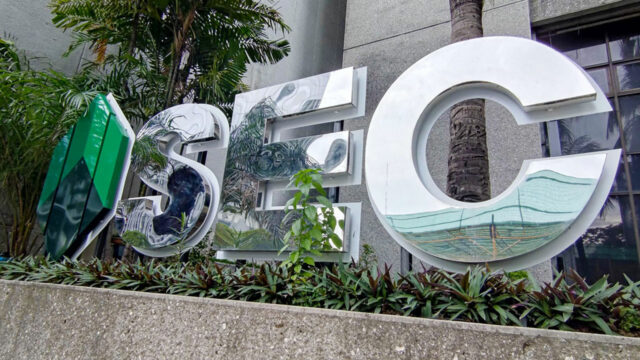
THE Securities and Exchange Commission (SEC) is integrating all of its digital services into a single platform called the Electronic SEC Universal Registration Environment (eSECURE) to increase the security of its online transactions and as part of its shift to automated processes.

The corporate regulator issued Memorandum Circular (MC) No. 10 on July 10, which provided the guidelines on the eSECURE platform, the SEC said in a statement over the weekend.

“eSECURE serves as a user’s digital passport to the different online services provided by the commission, allowing the management of one’s SEC accounts and online transactions from one place through a single account,” the SEC said.

The platform allows risk-based credentialing procedures using a repeatable electronic know your customer (eKYC) process and credentialing system that aims to strengthen the identification, trustworthiness, reachability, and veracity of persons representing corporations and individuals using the commission’s online services.

Credentialing via eSECURE is needed for sensitive SEC online services such as the company registration system, research and data retrieval service, automated certification examination system, complaint systems, and capital market participant licensing.

“The eKYC process serves as an important tool to curb money laundering and terrorist financing committed through the use of corporate vehicles,” the SEC said.

“The credentialing system also provides a more efficient alternative to the use of wet signatures and notarization in documents submitted to the SEC, as these documents may now be digitally authenticated,” it added.

Meanwhile, the SEC said that users of online services not categorized as sensitive or critical may opt not to register for an eSECURE account, but will be required to establish their identity for each online SEC transaction.

Other SEC services, such as the Electronic Filing and Submission Tool, the MC 28 Submission Portal, and the Electronic System for Payment to SEC, will also be integrated into eSECURE in the future.

“To ease the transition to and adoption of the registration and authentication process through eSECURE, the process will not be mandatory, which means that the public may still avail of SEC online systems and submit scanned hard copies of documents that are manually signed and duly notarized,” the SEC said. — Revin Mikhael D. Ochave

Why is Sweden paying grandparents to babysit? It’s worth a try

JOHNNY COHEN-UNSPLASH

AT FIRST GLANCE, the policy sounds absurd, especially to many Americans: In Sweden, grandparents are now eligible for government subsidies to babysit their grandchildren. As a proud grandparent myself, I would be willing to pay to babysit my grandkids. (I don’t have to, but I would.) It would feel wrong to accept government money for my services.

And even in the Swedish context, the program seems excessive. The country has long had first-rate and well-subsidized child-care facilities, which is another reason not to pay grandparents anything, and Sweden already has high levels of government spending and taxation. Is this additional benefit — and expenditure — really what it needs?

But sometimes even apparently foolish ideas have compelling rationales — so compelling, in fact, that you begin to rethink whether they’re foolish at all. These are often the cases that require the hardest thinking.

If you look at Sweden’s policy closely, it adheres pretty well to some basic economic principles: namely, the notion of Pareto improvements, which benefit all parties involved.

Start with the fact that Swedish parents currently receive extensive paid leave upon the birth of a child, and so it can be said they are already paid to look after their children. Whether or not you agree with that policy, it is longstanding and well-established. Take it as a given.

Now imagine that you are an ambitious Swedish doctor or lawyer, climbing the career ladder, and are self-aware enough to realize you do not always have entirely the right degree of natural patience necessary for parenting. In that case, you might prefer to go back to work following the birth of your child. Under the status quo ex ante, you could not work and draw your normal salary and still get the full child-care benefit, even though some child benefits are paid automatically.

There is thus a potential inefficiency in the system. You may stay at home just to get the money, even when an alternate arrangement might be better for everyone.

Now add grandparents to this equation. If the grandparents can be paid to take care of your child, all of a sudden the extended family as a whole doesn’t lose the money by having the parent go back to work. Instead, that money is transferred to the grandparents, so the work disincentive is diminished.

And economists will tell you that the parents and grandparents can do their own settling up. If the grandparents are well-to-do, for instance, and eager to spend time with their grandkids, they might funnel some of that money back to the parents or the child, either directly or indirectly. In some cases, on net, the grandparents may not end up getting paid anything at all.

In essence, you can think of this policy as a model designed to maximize gains from trade.

One side effect is that, to the extent the parent who returns to work is a high earner, government tax revenue will increase. That will help pay for the policy, partially if not entirely.

The logic for this policy may hold all the more for single parents. In that case, the costs of giving up work may be even higher, since on a single income climbing the career ladder and investing in future earnings will be all the more important. Enlisting aid from grandparents may also be more necessary, given the higher burdens on a single caregiver. A defender of the policy would cite these accommodative benefits, whereas a critic might allege they encourage single parenthood too much.

More broadly, fiscal conservatives might point out that the policy still costs some money upfront, while social conservatives might argue that it commodifies family relationships. The policy’s supporters, on the other hand, might note that it can help some people get back to work and also make the grandparents happier. The children might benefit too.

As for myself, I am still unsure whether this new policy is a good idea, though it has stronger virtues and benefits than I first thought. But I am all the more certain of one final lesson: Framing is everything. The very same policy, described in different terms, can sound eminently reasonable or badly out of whack. Keep that in mind next time you are tempted to render a quick verdict on someone else’s idea.

BLOOMBERG OPINION

Natural habitat

PHOTO BY DYLAN AFUANG

Taking the beaten path with the Ford Bronco and Mustang

By Dylan Afuang

FORD’S WILDEST and youngest animals — the Mustang muscle car and Bronco SUV — descend from vehicle species that are seen as having rough and raucous personalities. These new versions boast of gadgets that aim to modernize, but still capture, the raw driving experience for which their nameplates are known. Could the new cars fulfill this promise?

On the snaking tarmac of the Clark International Speedway and the perilous terrain around the Sacobia River — both in Pampanga — media and content creators experienced the most advanced spawn of the Mustang and Bronco breeds brought here by Ford Philippines.

Now in its seventh generation, the latest Mustang is touted as the sharpest-handling among its iterations. Mustangs of yesteryear — particularly the 1965 original — gave birth to the American “muscle car” segment, or coupes whose powerplants result in superb straight-line speed, mated to chassis that exhibited relaxed, if not sharp, handling.

Two Mustang breeds are available locally: the 2.3L EcoBoost Premium Fastback (P3.499 million), and the 5.0L GT Premium Fastback (P3.999 million) whose V8 engine boasts 493hp and 567Nm of torque. Standard on both versions are rear-driven wheels, a slick-shifting 10-speed automatic transmission, Ford’s MagneRide Damping System, and Brembo brakes.

“Here, you can feel the difference in the car’s performance, ride, and handling,” Ford Philippines Managing Director Mike Breen boasted of the Mustang’s merits to the media.

Behind the wheel of the Mustang GT Premium, we found the car’s Active Valve Exhaust, which allows the exhaust to exhibit noises from somber to snarling, enhancing the driving experience beyond the V8 engine’s sheer turn of speed. With the “Track” driving mode activated, stability nannies weakened and the MagneRide system kept the car balanced amid spirited cornering.

Tracing its roots back to 1966, the latest Bronco, which the world first saw in 2021, is a revival of a rugged SUV nameplate that bowed down in the 90s to make way for the more luxurious Expedition. Both legacy models promise off-road driving thrills, but with the former’s Sasquatch package, the Bronco expresses this more boldly.

The Sasquatch package comes standard in the sole variant available here, which is aptly called the Bronco Outerbanks with Sasquatch package (P4.998 million). The suite includes 17-inch alloy wheels shod in chunky, 35-inch mud terrain tires flanked by fender flares, and Bilstein shock absorbers and high-riding suspension.

“There’s nothing like driving the SUV that started it all for Ford in its element,” the executive said of the Bronco. The elements Mr. Breen referred to were the slippery rocky and lahar-coated trails, muddy hills, and the shallow river around and in Sacobia — all of which the SUV easily conquered.

Indeed, we witnessed the SUV’s “Goes Over Any Type of Terrain” (GOAT) selection of seven driving modes live up to its name. Front and rear locking differentials boosted the Bronco’s grip. The 360-degree camera offered a crisp view of the dips and ruts of the course. The Trail Turn Assist locked one of the vehicle’s inside wheels to make it perform a tight U-turn over the rocky trail.

Beyond their novel and functioning technologies, the endearingly rugged characteristics of Ford’s classic muscle car and off-roader remain.

Brainsparks Founders Circle explores growing Philippine startup ecosystem

Founder-focused incubator Brainsparks, together with event partners Shell Philippines and Pilipinas Shell Foundation, Inc., held “Founders Circle: Startup Secret Sauce,” last June 19 at the Draper House, Makati City.

The event featured a panel discussion that delves into the startup ecosystem in the Philippines and Southeast Asia. The discussion highlights the driving force behind the Philippine startup ecosystem’s growth and the key components to utilize to further develop its potential.

Panelists included representatives from the different players and stakeholders of the regional startup ecosystem, such as e27 Co-Founder and Programs Director Thaddeus Koh, 1Export Co-Founder and CEO Melissa Nava, Kaya Founders Investment Director Toby Floro, and Department of Trade and Industry (DTI)-Innovation and Collaboration Division Chief Karl Pacolor.

According to the panelists, Manila’s startup ecosystem recently doubled its valuation, a clear sign that the Philippine startup ecosystem is rapidly gaining traction. This also places the Philippines as the fastest emerging startup hub in the world. This is supported by the recently published 2024 Global Startup Ecosystem Report, which found that Manila’s startup ecosystem was valued at $6.4 billion, almost double the $3.5-billion valuation the year prior.

“This growth is a testament to the hard work and innovation of our startups through the support of the local startup community, and we are committed to supporting this journey,” Mr. Pacolor said.

Mr. Pacolor also highlighted the support from the government in nurturing the startup ecosystem, citing the Innovative Startup Act (ISA), which mandates the government to support startup companies and businesses in the Philippines.

In addition, Mr. Koh of e27 stated that the Philippines is becoming a prime market for startups, emphasizing its potential and funding opportunities.

“The Philippines is a thriving hub for tech companies. Its strategic location in Southeast Asia, coupled with a highly skilled and affordable workforce, grants access to a massive regional market and acts as a gateway to neighboring economies,” he said.

Mr. Floro shared that being a founder is no easy feat; and from what he witnessed and experienced as an investor, he learned that starting a company based on current trends is not the best way to go.

Ms. Nava further expounded on this point, saying that when starting a business or startup, thinking about major crisis points and making sure that your business is future-proof is very important.

More events from Brainsparks

Brainsparks aims to contribute more to the growth of the Philippine startup landscape by hosting events like the aforementioned that offer valuable insights.

The Brainsparks Founders Circle, particularly, is a set of events that bring together founders, entrepreneurs, and industry leaders from diverse fields, to share their extensive knowledge, insights, and experiences. The event aims to be a venue for participants to network, learn, explore, and discuss the most current trends, challenges, and opportunities in the thriving startup ecosystem.

“Startup Secret Sauce” is this year’s 4th installment of the series. Prior to this, Brainsparks first held “The New Paradigm of Startups,” which delved into the transformative role of artificial intelligence (AI) in lead generation and marketing strategies for startups, last May 8. This was followed by “Eco-Forward Entrepreneurs” last May 22, which highlighted the ways how businesses can seamlessly integrate inclusivity and sustainability into their core practices, and “Future of Sustainable Creativity” last June 5, which explored the dynamic landscape of the design and creative industry in the Philippines.

In addition to Founders Circle, Brainsparks has partnered with various local and international organizations to implement several programs designed to help startups reach their full potential. These include the Shell LiveWIRE Accelerator Program and Ecothon Philippines intensive boot camp.

More recently, e27 and Brainsparks join forces for Echelon Philippines 2024, a pioneering event bringing together the expertise of startup leaders, visionary entrepreneurs, and forward-thinking investors from the Philippines and Southeast Asia to propel the next growth phase. It serves as a platform for jump-starting regional partnerships for funding and investments through showcases and business matchings, sharing insights from thriving and emerging sectors to unveil new opportunities, inspiring entrepreneurship in emerging sectors, and fostering new talent entering existing markets to drive growth.

Echelon Philippines 2024 is happening on Sept. 26-27. To learn more, visit e27.co/echelon/philippines/.

Style (07/15/24)


Rustan’s rewards frequent shoppers

RUSTAN’S is celebrating its Frequent Shoppers Program (FSP) members with an exclusive gathering on Saturday, July 20. Designed to reward and honor patrons who have stood by the premier department store throughout its evolution, this exclusive FSP Day event will unfold across all five Rustan’s stores — Makati, Shangri-La, Alabang, Gateway and Cebu. There will also be surprises at rustans.com. On the day itself, guests will be welcomed with a drink, and 1000 FSP points upon registration, and another 10,000 for updating your member information. Loyal patrons can earn x10 FSP points for every purchase of select brands, available in-store and through Personal Shopper On Call. Plus, enjoy 10% off on all brands at Rustans.com. For the Kid’s Department, enjoy up to 25% off on trusted family brands like Keenz, Tiny Winks, BabyBjorn, and Stokke. Additionally, Rustan’s Home essentials are available up to 25% off, with notable French labels like Haviland, Daum, Bernardaud, and Christofle.

Men’s fashion features up to 20% off including Jack Nicklaus, Hackett, Parker, and Emporio Armani; while the Women’s division offers 10% off on Vendome, plus exclusive gifts with purchases from Anne Klein and Yoya. For fine jewelry, patrons can add to their collection with offers up to 15% off on Rustan’s Silver Vault brands. Furthermore, SSI is offering up to 25% off on globally renowned names, including Kate Spade, Kurt Geiger, Marc Jacobs, and Bally. Meanwhile, beauty lovers can elevate their routines with their favorite skincare, haircare, and make up products. With names like Stila, Anastasia Beverly Hills, Saturday Skin, Grown Alchemist, and Neal’s Yard Remedies, available at up to 25% off. Rustan’s Beauty is offering more pampering treats with Buy One Get One deals and Gifts with Purchase from Malin+Goetz, Clarins, Clarins Skin Spa, Murad, L’Occitane and Perricone. RSVP and register at https://rustanrsvp.rustans.com.ph/. Upon confirmation, you will receive a QR code via email, which may be presented on July 20 at the registration booth for full access.


Eyebrowdery introduces Nano Brows

EYEBROWDERY, a provider of eyebrow enhancement services in Manila, launched Nano Brows, a semi-permanent eyebrow procedure utilizing digital technology.

Nano Brows offers an alternative to traditional microblading techniques. Unlike microblading, which uses a manual blade to deposit pigment, Nano Brows employs an advanced digital machine to create hair-like eyebrow strokes. The service is a non-invasive procedure so no cutting or slicing of the skin is involved, minimizing discomfort and risk of infection. It uses a digital machine to ensure precise placement of pigment for a natural, flawless look. Nano Brows boasts of longer-lasting pigment than traditional microblading methods because the digital machine creates hair-like strokes for a realistic, undetectable enhancement. There is also minimal smudging and blurring over time. This service has no downtime and retouches can be done in just two weeks. Eyebrowdery has branches in SM Megamall, SM Cebu, Ayala Feliz, and Greenhills.


Beauty convention in Alabang

THE CHAMBER of Cosmetics Industry of the Philippines (CCIP) presents Cosmeticon 2024 on July 17 to 18 at Acacia Hotel in Alabang, Muntinlupa City. The two-day immersive conference will have talks on digitalization and sustainability, the twin trends shaping the future of beauty. Other topics involve latest regulatory updates, and market trends from industry leaders, as well as government input from the Food and Drug Administration, the Bureau of Customs, the Department of Trade and Industry, and other agencies. For inquiries, contact 0916-731-8850 or visit bit.ly/3XhlDAe.

Credit Suisse shuts down PHL representative office

CREDIT SUISSE AG’s representative office in the Philippines has ceased operations, the Bangko Sentral ng Pilipinas (BSP) said in a circular, marking the Swiss lender’s exit from the country.

“The Monetary Board (MB), in its Resolution No. 709 dated (June 20), noted the cessation of operations of Credit Suisse AG Representative Office, Philippines,” the BSP said in a circular letter dated July 8 and signed by BSP Deputy Governor Chuchi G. Fonacier.

The MB in 2018 granted Credit Suisse the authority to open a representative office in the Philippines for its wealth management business.

Credit Suisse’s representative office was registered with the Securities and Exchange Commission in February 2018 and began operations in June that year.

The bank in 2011 established its onshore stock brokerage Credit Suisse Securities (Philippines), Inc. The brokerage ceased its trading operations in March this year.

These developments came following the merger between Credit Suisse and UBS AG following the former’s failure.

UBS in May this year completed the merger of the main parent companies of the Swiss bank and Credit Suisse, which it acquired last year after its longtime rival collapsed, putting an end to one of the bastions of the country’s financial sector, Reuters reported.

The merger concluded within the planned timeline and was facilitated by strong support from global regulators, said UBS.

The parent merger is expected to allow the Swiss bank to get started with trickier stages of the integration such as combining IT systems, migrating clients from Credit Suisse and cutting the enlarged bank’s workforce of more than 110,000.

The UBS absorption of Credit Suisse has left Switzerland with a single global bank, one boasting a balance sheet around twice the size of the country’s annual economic output. — LMJCJ with Reuters

NGCP says hopeful for investment recovery decision amid long wait

By Sheldeen Joy Talavera, Reporter

THE National Grid Corp. of the Philippines (NGCP) said it hopes that the Energy Regulatory Commission (ERC) will issue a decision that ensures fair recovery of its investments.

“We have faith that the ERC will come out with the decision soon,” NGCP Spokesperson Cynthia P. Alabanza told reporters on Friday last week.

“(It) has been quite a while, but we are still hoping that (the rate reset) will come out, and whatever comes out will be fair and will encourage investors to (invest in) NGCP,” she said in Filipino.

Ms. Alabanza said that NGCP needs the support of the government and other external stakeholders.

The grid operator is hoping to recover the costs it incurred in building some transmission projects.

Sought for comment, ERC Chairperson and Chief Executive Officer Monalisa C. Dimalanta said that the commission seemed to have demonstrated “clearly” its commitment to “diligently” complete the NGCP reset.

“There have been several roadblocks along the way that constrained us from meeting our self-imposed deadlines, but with the receipt of all consultant reports two weeks ago, we have dedicated days for Commission deliberation to complete the final determination,” she said in a Viber message.

The rate reset process is usually a “forward-looking” exercise that requires the regulated entity to submit forecasted expenditures and proposed projects over a five-year regulatory period.

The fourth regulatory period covers the years 2016 to 2020, while the fifth regulatory period covers the years 2021 to 2025.

Ms. Dimalanta said that the ERC is targeting to complete the rate reset for the fourth regulatory period by the end of the month.

This year, the NGCP completed transmission projects that will accommodate additional generation capacity to meet the growing demand.

The NGCP recently fully energized the Mariveles-Hermosa-San Jose (MHSJ) 500-kilovolt (kV) transmission line at its full 8,000-megawatt (MW) capacity.

The P20.94-billion MHSJ transmission line will accommodate an additional 2,200 MW of supply from new power plants in Bataan and Zambales to the rest of the Luzon grid.

The grid operator also fully energized the P67.98-billion Cebu-Negros-Panay 230-kV Transmission Backbone in April, thereby strengthening the link among three major islands in the Visayas.

The P51.3-billion Mindanao-Visayas Interconnection achieved full operational status in January, enabling power sharing between Mindanao and Visayas with a capacity of up to 450 MW, expandable by another 450 MW.

“We appreciate NGCP’s aggressive push to complete all these projects, especially with the need of the country for more capacity,” Jose M. Layug, Jr., president of the Developers of Renewable Energy for Advancement, Inc., said in a Viber message.

Mr. Layug has encouraged the NGCP and all government agencies, such as the Department of Energy, ERC, and National Transmission Corp., “to continue to work together and ensure alignment between the generation and transmission plans to avoid past experience.”

Noel M. Baga, convenor of the think tank Center for Energy Research and Policy, said that the Philippines is “making significant progress in the development of its grid system.”

“These developments enhance the country’s ability to share power between regions connected by the grid, reducing the likelihood of blackouts and improving overall system stability. But so much more needs to be done,” he said in a social media message.

Mr. Baga said that the government and the NGCP must increase the number of grid interconnection projects and accelerate their completion.

Vanilla pilot farm planned using Israeli technology

REUTERS

THE Department of Agriculture said that it is planning to set up a vanilla pilot project in partnership with an Israeli agri-technology company.

The project will involve training for interested farmer cooperatives, Undersecretary Jerome V. Oliveros told BusinessWorld.

He identified the Israeli partner as LR Group, which runs a vanilla farm in Papua New Guinea.

“The LR Group has a very ambitious and productive vanilla project in Papua New Guinea,” he said.

“We can bring (the technology) here, and we can probably provide our farmers this technology, subsidize part of it, and then tap the private sector,” he said.

He added that LR Group has managed to shorten the growing time for vanilla to three years from the normal five years.

“We have to (evaluate) the return on investment on that technology also, because, at the end of the day, you have to make a profit… that’s what the farmers need to see,” he said.

Mr. Oliveros added that the department will also provide interested cooperatives with technical support should they seek to join the vanilla project.

“Their best practices there, I think we can adopt,” he said.

He added that vanilla producers here typically grow their crop alongside cacao. — Adrian H. Halili

Raising the quality of education

PHILIPPINE STAR/MICHAEL VARCAS

In the column “PISA and quality education” (BusinessWorld, July 8, 2024, https://tinyurl.com/26cfz8dg), I wrote that high economic growth predicts high performance in education. Specifically, the report of the Organization for Economic Co-operation and Development (OECD) on PISA (Programme for International Student Assessment) points out that “some 62% of the difference in countries’/economies’ mean scores is related to per capita GDP.”

At the same time, says the OECD, “some 31% of differences in student performance are due to differences in countries’ education systems — mainly in how they are organized, financed and use their resources.” So even as economic policy or growth policy does the heavy lifting, the education system, including the Department of Education (DepEd), must contribute a significant share to attain quality education.

The OECD findings give us a distinct frame to re-examine the education system.  My own reflections follow.

1. Dramatic outcomes don’t happen instantly.  Have clear and realistic targets.

That means achieving rapid high growth that translates into higher incomes for the people explains vastly improved education outcomes.

Given education quality’s highly dependent relationship with the country’s economic performance, DepEd by itself cannot catapult education quality so high overnight. But there can be ambitious yet clear and realistic targets to accelerate quality improvements that can substantially outpace economic growth and development.

Improvements in quality outcomes must be a centerpiece of the targeting, monitoring and evaluation of performance. If we look at the historical planning and monitoring parameters of DepEd, they are heavy on physical input targets, such as the number of classrooms built, the number of teachers covered by professional development programs, the number of computer units provided, and so on. Their impact on quality outcomes is assumed to follow automatically, and there are no measurable links between education inputs and target quality outcomes.

Results of large-scale assessments, both national and international, should be an integral component of the planning, monitoring and evaluation standards of DepEd. National targets must be understood and brought down to the operational levels, at the level of regions, divisions and ultimately, the schools.

In terms of timeline, one full cohort corresponding to the rollout of the updated Matatag curriculum, from Grade 1 to Grade 12, will be a good planning horizon for decisive quality improvements, with the current baseline clearly set and fighting targets set and monitored for the key stages of this cohort and succeeding cohorts. The Matatag curriculum is the revised K to 10 curriculum resulting from a review, and introduces changes including decongestion, focus on foundational skills, balanced cognitive demands, clearer articulation of 21st century skills, reduced learning areas, intensified values and peace education, and parity with international standards. Of course, this does not mean that the present older student population will be ignored. There must be a catch-up plan for them as well.

2. Strategic and monitored decentralization is indispensable.

As targets are brought down and monitored at the level of regions, divisions and schools, so too must they be empowered to find solutions. Regional, divisional and school-based approaches and interventions are as important as centralized evidenced-based policies.

The problems and capabilities at the frontlines are highly contextualized, and there is no one-size-fits-all solution.

In this connection, I believe that the DepEd practice of periodically rotating regional directors and division superintendents is better abandoned.  It must give way to assignment movements that are for clear causes. Stability in local leadership will be needed for program continuity and better monitoring, evaluation and cross-comparison of approaches, best practices and outcomes. School-based management will be a decisive component to how successful the quality drive will be.

Greater local reliance will require reviewing the distribution of general appropriations between centrally and locally managed funds, towards making sure that local units are given a commensurate increase in resources. Caution should be taken, however, that redistribution will have administrative consequences such as new challenges in procurement and fiscal management and accountability.

3. Quality outcomes will need quality inputs.

A great transformation in quality outcomes will not be realized without a great transformation in the quality of inputs. While new resources for education will be much needed but which we also know will be highly constrained, much can be done to improve the quality of inputs all around. Internal efficiencies will have to be generated from better planning, targeting, operations, monitoring and evaluation. Two inputs where transformation must be palpable are in the quality of learning resources, particularly textbooks, and teaching, particularly through teacher professional development.

4. Mitigating internal inequalities will unlock rigidities.

The international economic disparity as it relates to PISA results is as much reflected in national socioeconomic disparity as it relates to student performance.

The OECD report derives a composite indicator for economic, social and cultural status (ESCS) from three variables related to family background of the learners — parents’ highest level of education in years, their highest occupational status, and home possessions. Within countries, 25% of students with the lowest values on the ESCS are categorized as socioeconomically disadvantaged students, while 25% of students with the highest values on ESCS are categorized as socioeconomically advantaged students. Generally, the mean score of socioeconomically advantaged students is significantly higher than socioeconomically disadvantaged students in varying degrees across participating countries and economies.

For the Philippines, the disadvantaged students scored an average of 339 in mathematics versus 375 for advantaged students, 324 versus 376 in reading, and 335 versus 386 in science. The internal disparity is also visible in the regional distribution of results, with the National Capital Region (NCR) being the best performer, and Regions IVA and III performing above the national average. There is a region, however, that defied the trend — the Cordillera Autonomous Region, whose performance was close to NCR’s. The internal disparity is likewise manifested in the significantly better performance of private schools over public schools.

Thus, targeted internal redistribution of resources for more support to disadvantaged areas will lift performance and give our disadvantaged learners fairer education opportunities. The interventions will have to address multiple underlying dimensions of inequality, including equity in home and community resources, equity in school resources, equity in instruction and equity in nutrition.

5. Leverage private and other non-DepEd resources for the public good.

The acceleration of quality improvements will require more resources than the economy can afford through government appropriations. There is a high level of goodwill and broad support for education that can be further harnessed through existing partnership programs, such as Brigada Eskwela, the annual community and multi-stakeholder effort to assist schools in their pre-school opening preparations.

But bolder and more innovative initiatives are needed. One untapped big potential is leveraging DepEd’s prime real properties for development projects that directly serve its needs and programs (such as teacher professional development facilities) while allowing commercial purposes to attract private investments. Viable options may be explored under the various arrangements allowed by Republic Act No. 11966 or the Public-Private Partnership Code of the Philippines. While this may invite controversy and opposition from some quarters, the key will be in providing a compelling case for proposed projects.

6. Embrace lessons, continuity and further reforms.

Learning lessons from trailblazing education programs and initiatives both here and abroad should be a feature of the quality transformation. Also, while any new leadership can be expected to introduce reforms with a unique stamp, there is also value in the continuity of programs that are shown to be working.

DepEd is a resilient institution. For all the criticisms leveled against it, it is still the institution that the country relies on for support during natural calamities, public health emergencies and elections.

With open, inclusive and visionary leadership, the great transformation of education quality can be done. We wish incoming Secretary Angara, his team and the DepEd family all the best, for our learners’ and country’s present and future.


Nepomuceno Malaluan is a founding trustee of Action for Economic Reforms and a former DepEd undersecretary.