Home Blog Page 2988

Basic deposit accounts grew to 23.6 million at end-Sept.

BW FILE PHOTO

THE NUMBER of basic deposit accounts (BDAs) in the country jumped to 23.6 million as of end- September 2023, the Bangko Sentral ng Pilipinas (BSP) said on Tuesday.

Data from the central bank released via a social media post on Tuesday showed that the number of BDAs nearly tripled (175%) from the 8.6 million accounts recorded as of the third quarter of 2022.

The total value of BDA deposits also surged by 624% to P35.6 billion at end-September 2023 from the P4.9 billion posted a year earlier.

The BDA was introduced in 2018 and is meant to promote financial inclusion and address the needs of the unbanked and underserved Filipinos.

This type of account has a low opening amount of P100 or less, no maintaining balance requirement, no dormancy charges, a maximum balance of P50,000, and requires only simple identification documents.

These accounts can also earn interest of up to 4% per annum in select banks.

In 2022, the BSP directed lenders to limit BDAs to one per depositor.

As of end-September, there were a total of 156 banks offering BDAs.

The central bank wanted to bring at least 70% of Filipino adults into the formal financial system by end-2023. Officials earlier said they were confident the target was met amid the rising adoption of e-wallets and online payments.

At end-2022, the share of Filipinos with bank accounts reached 65% of the adult population. — L.M.J.C. Jocson

Is Dune an example of a white savior narrative – or a critique of it?

SCIENCE-FICTION film as a genre allows us to encounter hypothetical worlds in which to understand our own.

These films often present utopian and dystopian worlds, exploring themes of nationalism and heroism. They often include a strong, white, male lead who heroically rescues the poor and the good from the stranglehold of authoritarianism. Therefore, historically, science fiction has had mass appeal for political zealots from the far left to the alt-right.

In Denis Villeneuve’s Dune: Part Two (2024), however, science fiction becomes a genre to subvert colonial and patriarchal narratives of the white, masculine savior.

WHAT IS A ‘WHITE SAVIOR’?
Elements of a white savior narrative are pervasive in Villeneuve’s first Dune film (2021), which hints at — but doesn’t commit to — subverting this narrative. But before we get into the details, it helps to understand what the “white savior complex” is.

This is, to put it simply, the idea that a white person or people are needed to help or “save” people of color from their circumstances.

White saviorism, also called the white “messiah complex,” is born of a legacy of colonialism, and often performed in a paternalistic or self-serving way. For decades, we’ve seen this narrative play out in science-fiction films, from the Star Wars franchise to Avatar (2009).

THE SETUP
Signs of white saviorism in the first Dune film are recognizable in the male protagonist, Paul Atreides, played by Timothée Chalamet. Paul is destined for messianic status in both films, which have so far stayed close to the plot line of Frank Herbert’s book series of the same name.

However, Chalamet’s casting as a white savior is complicated by his physicality. In both demeanor and appearance, Paul Atreides contradicts the traditional masculinity of science-fiction heroes, with his fine features, elfin stature, and mummy’s boy status.

The first film follows the House of Atreides as it travels to the distant planet, Arrakis, to take charge of the scarce and precious spice production which their future wealth, power and survival depend on.

The Indigenous inhabitants of Arrakis, the Fremen, are portrayed as being deeply connected to the desert environment.

They find innovative ways to survive in the extreme weather conditions yet are considered savage by the aristocratic characters in the film. They’re even referred to as “rats” by the film’s villainous, luminously white, oil-bathing leader, Baron Vladimir Harkonnen.

This reflects a common criticism of the white savior complex: it perpetuates stereotypes about the Indigenous people being “helped,” while ignoring their strengths and agency.

DUNE AS A COLONIAL CRITIQUE
It’s tempting to consider Dune’s narrative, settings, and costume design as an appropriation of Islamic and Arab culture. For example, there are scenes where the Fremen are dressed in Bedouin clothing, worshipping behind an Islamic architectural screen in ways that are reminiscent of Muslim prayers at a mosque.

The cinematography and light also appear to refer to 19th-century paintings by Jean-Léon Gérôme, much of which are of Islamic subjects. Such appropriations aren’t unique to Dune; the landscape of Arrakis itself is reminiscent of Tatooine, the desert planet where some of the action takes place in the original Star Wars trilogy.

While the intention may be to create otherworldly settings, the portrayal of a desert land often relies on stereotypical tropes of “exoticness” associated with the Middle East, as well as the use of Arabic-sounding names for characters and locations.

Nonetheless, there is a surprising critique of colonialist fantasy in Dune: Part Two, which primarily takes place through changes between the script and the book. These changes enable us to see the white savior from the perspective of Chani (played by Zendaya), Paul’s Fremen love interest.

In the book, Chani is a supporting character who is merely there to encourage and promote Paul’s ascendancy. She is also a white person who is bound to Paul through having his children. In the film, Chani’s character has been adapted to provide a critical counterpoint.

This reveals Villeneuve’s directorial intention in reframing the book to account for the postcolonial and feminist perspectives of the 21st century. In many ways, Dune: Part Two can be read through the post-colonial perspective of late Palestinian-American writer Edward Said.

In his 1978 book Orientalism, a founding text of post-colonialism, Said argued against the West’s distorted image of the East or the Orient as exotic, backward, uncivilized and sometimes dangerous.

He expressed that Western scholars, artists and politicians use Orientalism as a pervasive framework to depict the East as the “Other.” This reinforces a binary opposition between the West as rational, developed, and superior and the East as irrational, undeveloped, and inferior.

While we see this play out in both Dune films’ visual tropes, a more nuanced message is delivered through the character of Chani.

PAUL THROUGH CHANI’S EYES
Chani is a woman of color who is skeptical of Paul’s mother’s intentions for him as leader. She also refuses to believe in the prophecy of a savior, as is held by some Fremen.

Ultimately, the film’s postcolonial and feminist leanings are made explicit in the final scenes. Through careful cinematography and editing, the audience is encouraged to see, from Chani’s perspective, the ways in which Paul is being manipulated.

When Paul avenges the death of his father and takes control of the empire, promising to marry the empress — despite having declared his enduring love for Chani — we encounter this betrayal from Chani’s standpoint.

The scenes tend to switch back to her disappointment as the witness. As viewers, we are not encouraged to celebrate Paul’s rise to messiah. Rather, we mourn the loss of his moral conscience with Chani. And this point is affirmed when we see Chani surfing the worm alone in the final scenes.

As a woman of color who is both independent, powerful, and resistant to the white savior narrative, Chani activates the idea of looking at cinema from a non-white vantage point. She leads us to be critical of both colonial and patriarchal narratives.

Where will this lead? We will have to find out in the next film.


Cherine Fahd is an associate professor for Visual Communication at the University of Technology Sydney. Sara Oscar is a senior lecturer for Visual Communication at the School of Design of the University of Technology Sydney.

First Gen’s profit climbs 4% to $277 million

LOPEZ-LED First Gen Corp. saw a 4% increase in its attributable recurring net income to $277 million for 2023, driven by higher electricity prices and average selling price.

First Gen’s revenues declined by 7% to $2,475 million from $2,667 million in 2022, driven by lower fuel revenues caused by a drop in natural gas and liquefied natural gas prices globally, the company said in a regulatory filing on Thursday.

“This was also accompanied by lower electricity output sold by the natural gas platform,” the company said.

The geothermal plants of Energy Development Corp. (EDC), First Gen’s renewable energy subsidiary, saw improved earnings owing to higher electricity prices.

EDC logged recurring earnings of $119 million, higher by 24% from $96 million in 2022.

First Gen’s hydropower platform reached recurring earnings of $4 million, down 23% from $5 million in 2022.

“The Pantabangan-Masiway power plants had a reduction in the volume of electricity sold due to the transfer of its power supply contract to EDC last August 2022, as well as low water reservoir levels,” the company said.

The decline in electricity sold was offset by an increase in Wholesale Electricity Spot Market volumes sold and lower purchases of replacement power.

For its natural gas platform, First Gen saw a 5% drop in recurring earnings to $184 million from $190 million.

Its 420-megawatt (MW) San Gabriel power plant and 97-MW Avion power plant had a higher recurring earnings due to the full availability of both plants last year coupled with lower fuel costs.

Both the 1,000-MW Sta. Rita and 500-MW San Lorenzo power plants posted lower recurring earnings attributed to “the incurrence of elevated interest expenses.”

FGEN LNG Corp., the company’s incorporated special purpose vehicle of the Interim Offshore LNG Terminal, started to generate commissioning revenues from its pre-commercial operations.

“FGEN LNG generated revenues of $8 million and a recurring net loss of $20 million in 2023,” the company said.

The natural gas portfolio accounted for 65% of its total consolidated revenues, while 32% came from EDC’s geothermal, wind, and solar plants.

The remaining revenues came from First Gen’s hydro plants and its retail electricity supplier First Gen Energy Solutions.

First Gen President and Chief Operating Officer Francis Giles B. Puno said that the year 2023 was “a positive year” following the recent developments across the company’s business segments.

“This year, these developments should translate to additions to First Gen’s earnings as the LNG Terminal reaches commercial operations and the effectivity of the terminal lease agreement with Gas Aggregator Philippines, Inc. happens,” he said.

“Casecnan will likewise be a positive addition to the bottom line from day one of its turnover,” he added.

To recall, the 165-MW Casecnan hydroelectric power plant in Nueva Ecija was turned over by the Power Sector Assets and Liabilities Management Corp. to First Gen in February, with a bid price of $526 million.

On Thursday, shares of the company went down by P0.12 or 0.61% to close at P19.66 each. — Sheldeen Joy Talavera

Entertainment News (03/22/24)


Under a Piaya Moon the big winner of CinePanalo

THE INAUGURAL Puregold CinePanalo Film Festival crowned Under a Piaya Moon as the best film among its feature-length entries. Kurt Soberano’s debut feature, about a young man in 1980s Bacolod City aspiring to win a local pastry competition, bagged six awards in total, including Best Actor for Jeff Moses and Best Supporting Actor for Joel Torre. Close behind was the dramedy Pushcart Tales, which left with four awards including Best Director for Sigrid Andrea Bernardo. Ronjay-C Mendiola’s Last Shift was the best film winner in the student short film category, winning five awards in total. Audience choice awardees were A Lab Story for full-length and Saan Ako Pinaglihi? for shorts. The festival films are having an extended run of screenings at the Gateway 2 Cinemas in Araneta City, Quezon City until March 26.


Earth Hour events coming up in Metro Manila

THE ANNUAL switch-off slated for March 23 will have multiple activities lined up this year. P-pop boy group SB19’s Pablo as WWF-Philippines’ Earth Hour Music Ambassador will be the main guest at Manila’s event in the Kartilya ng Katipunan. The yearly global switching off of lights will be observed from 8:30 to 9:30 p.m., local time. The Philippines will be joining over 190 countries and territories around the world that are taking part in the grassroots movement for nature. The program beside the Manila city hall building will also have Ched and Lirah Bermudez as performers. Meanwhile, in Araneta City, Cubao, Quezon City, many landmarks and structures will be dimming their lights at the same time. Prior to the switch-off at night, Ali Mall will be accepting secondhand items and blood donations to promote the gift of giving. For more details on Earth Hour events in these locations, visit Manila City and Araneta City’s social media pages.


Hard Rock Cafe branches mark Women’s Month

HARD Rock Cafe Manila and Hard Rock Cafe Makati will have special live band entertainment and exclusive food and drink offerings for the benefit of the Global Gift Foundation and Magee-Womens Research Institute this month. Through its charitable arm, Hard Rock Heals Foundation, the company is raising funds throughout the month through woman-led performances at many of its locations around the world. In the Philippines, the in-house band CIRCA will have a Miley Cyrus Flowers Tribute Night on March 22 at Hard Rock Cafe Makati. Exclusive food and drink offerings supporting the cause are Pink Lace Margarita, the Run the World gin-based cocktail, Spring Pasta, Halibut Sandwich, Mango Peach Salad, and Coconut Almond Sundae, until April only.


Coffee Fest on at BGC’s 5th Avenue

BONIFACIO Global City (BGC) will be holding the Art, Bikes and Coffee at BGC’s Coffee Fest on March 23-24. Hosted by events host and former radio DJ Cerah Hernandez, this year the festival is moving to 5th Avenue in order to house more merchants, pop-up shops, and workshops. The Coffee Fest includes a pop-up by Crimson River Tattoo, Wabi Sabi Studio’s mug pottery workshop, a Paint Pour Workshop by Paint It Fun, a photobooth from The Archives Booth, and nail art from Posh Nails. On March 24, San Ride Bukas will be having a panel themed Women Empowerment Through Cycling as they celebrate Women’s Month. There will also be community rides as San Ride Bukas holds their All Women’s Coffee Ride, and Wideye Coffee has its own Sunset Ride. Merchants for cycling equipment and gear will be showcasing their offers, such as R.O.X., adidas, Specialized Philippines, The Breakaway + Passe, Life Cycle, 2Wheel Nation Cycling, Papsy’s Bikes and Brews, and San Ride Bukas. The Coffee Fest will also have a Cupping Demo hosted by 1C Coffee; Ten-Four Coffee will be holding a Outdoor Brewing Competition; and Vinyl on Vinyl is collaborating with Wideye Coffee for an exclusive special drink. Check out the rest of the coffee merchants setting up shop at Coffee Fest: Single Origin, Tiger Sugar, Pocofino, Elephant Grounds, harlan + holden Coffee, Coffee Laboratory, Supersam, Malongo Atelier Barista, Paik’s Coffee and Bakery, Figaro, Muji, Ten-Four Coffee, Wideye Coffee, KombiBrew, 1C Coffee, Fireplace, De’ja Brew, Sweets & Grinds, Seattle’s Best Coffee, Kaulayaw, Twenty Four Bakeshop, Baristart, Cooper’s Coffee Haus, Baker J, Seven Coffee, Randy’s Donuts, Krispy Kreme, Jamba Juice, Kiji Bakehouse, Sspace Coffee, Auro Chocolate Cafe, Nespresso, and Arabica. Moment Coffee + Om Bakes will also be serving vegan desserts, while Decimal Coffee will have a free library open for all. Finally, there will be performers throughout the fest, including Tolo Marvelous, Norris King, Red-I, DMaps (Diego Mapa) on March 23 and an all-women set consisting of Poli Poli, Seoulstepps, and DJ Honey on March 24. For more information, be sure to follow BGC on Facebook and Instagram.


Award-winning Filipino films arrive on Netflix

STARTING March and stretching until June, seven Filipino films from the recent Metro Manila Film Festival will be joining the Netflix platform. Those who missed the theatrical run can start catching up with Rewind, the Dingdong Dantes and Marian Rivera-starrer and one of the highest-grossing Filipino films of all time, on March 25. It will be followed by the Eugene Domingo and Pokwang comedy Becky and Badette on April 4, historical epic Gomburza on April 9, offbeat horror film Kampon on April 18, family drama Family of Two on June 1, action fantasy Penduko on June 7, and the time-bending folkloric horror film Mallari on June 21.


UST Conservatory of Music brings back annual concert

AFTER an absence of five years, the University of Santo Tomas (UST) Conservatory of Music will be bringing back its annual concert, Sampung mga Daliri, on April 13 at the university’s Quadricentennial Pavillion. What was once a staple of the university’s activities was halted due to the pandemic and is finally making its comeback. The concert will feature the UST Symphony Orchestra, UST Woodwind Orchestra, UST Conservatory of Music Voice Faculty, UST Jazz Band, and other departments and groups in the conservatory. This year, they will serve up a “Pastiche Patisserie,” a medley of pieces ranging from Classical, Broadway, OPM, and more. Tickets range in price from P400 to P2,000, and the show starts at 6 p.m. on April 13. For ticket inquiries, message the UST Conservatory of Music on Facebook.


Ghostbusters: Frozen Empire in cinemas this April

THE LATEST addition to the funny and scary Ghostbusters franchise is coming to Philippine screens on April 10. Written and produced by Jason Reitman, son of the late Ivan Reitman who directed the first and second Ghostbusters, it is co-written and directed by Gil Kenan. The new film stars McKenna Grace, Paul Rudd, Carrie Coon, and Finn Wolfhard as the Spengler family, who return to the story’s iconic New York City firehouse to team up with the original Ghostbusters. When the discovery of an ancient artifact unleashes an evil force, the Ghostbusters new and old must join forces to save the world from a second Ice Age. Ghostbusters: Frozen Empire comes to cinemas on April 10.


Ena Mori releases new song

FILIPINO-JAPANESE pop artist Ena Mori has released her new single, “Heartache Generation,” via Offshore Music and Sony Music Entertainment. The track chronicles the singer-songwriter’s bouts with existential crisis as she approaches her birthday. “It’s about being afraid of getting older and feeling overwhelmed with life that changes so quickly,” Ms. Mori said in a statement. Co-produced by Tim Marquez, the track explores contemporary and vintage music elements and comes with a music video that Ms. Mori shot on Ray-Ban Meta smart glasses. “Heartache Generation” is out now on all streaming platforms.


ABS-CBN’s A Soldier’s Heart streaming in the Middle East

AN ARABIC-DUBBED Filipino drama is now being shown in the Middle East with ABS-CBN’s collaboration with Rabee Alhajabed Art Production & Distribution FZE. The Philippine hit action-drama series A Soldier’s Heart is available on three streaming platforms: Maraya, Shofha, and Weyyak, covering Egypt, Saudi Arabia, the United Arab Emirates, and other Arabic-speaking territories. The series follows Alex, an IT expert who joins the army and crosses paths with a Muslim family whose identity makes him reconsider where his future might lie. A staple of Philippine popular culture, the action-fantasy drama Darna, will soon be available with its own Arabic-dubbed version as well.


Christian Bautista classic reimagined

THE HIT song “The Way You Look at Me” by Christian Bautista has been reinterpreted by Indonesia’s rising pop star, Nyoman Paul. The new version was arranged by Indonesian composer Andi Rianto for the newcomer to take on. Nyoman Paul Fernando Aro (his full name) traces back to his roots in Bali, where he was born in 2001. He draws from his diverse Indonesian and Swedish heritage for his work. “The Way You Look at Me” is out now on all streaming platforms.


Drama series A Journey on Netflix this April

KAYE Abad, Paolo Contis, and Patrick Garcia will be going on a trip for the upcoming Netflix series A Journey. The show follows a woman (Abad) who refuses treatment for cancer and goes on a road trip across Tasmania with her husband (Contis) and best friend (Garcia) to check off items on her bucket list. It is directed by RC Delos Reyes. A Journey arrives on Netflix on April 12.

Transitioning from bad to good airport

FREEPIK

Consult Google and with 218,000 results, you get a whole range of descriptions of the Ninoy Aquino International Airport (NAIA), from the “most stressful” airport in Asia to being the world’s worst airport. Google was spot on why this is so. There has been underinvestment in Manila’s major gateway to the world, and it is so grossly mismanaged.

From 2010-2023, it was reported that the Manila International Airport Authority (MIAA) spent only P27.1 billion or P2.1 billion per year. Roughly, this is around 7% of its gross revenue against other airports in Asia-Pacific which allocate about 20% to 24% of their gross revenues for capital expenditure. Indeed, NAIA airports need more than a makeover, but a total rehabilitation.

Rappler once quoted BusinessFinancing.co.uk which ranked NAIA as the fourth worst airport in Asia for business travelers. It ranked 2.78 over 10, outranking only Saudi Arabia’s King Abdulaziz International Airport at 2.72/10, Kazakhstan’s Almaty International Airport (2.62/10), and Kuwait International Airport (1.69/10). Business travelers must have experienced any or all of the following: delayed flights, long queues, filthy toilets, power outages, and corrupt security personnel.

Yet it looks like very few bureaucrats realized until recently that Manila’s airports, regardless of terminals, must be the reason why many tourists would skip what used to be the pre-war Pearl of the Orient. Or they were aware of this, but they would not lift a finger because the status quo worked in their favor. Navigating the short distance from NAIA to Makati, or Manila, could be a nightmare, period, something that even the catchiest tourist slogan cannot override, or mitigate. We are quite sure that it is not only in this country that traffic is horrendous, the streets unsightly, and evidence of sheer neglect by those in authority in great abundance. But that’s it, we waste hundreds of millions of pesos on tourist ads and promotion, but we can’t get the essentials of good tourism business right. Our signage in world-class tourist destinations are hardly useful, and in some cases, non-existent.

We have spent billions of pesos attracting foreign investors, or dividing society to amend the Philippine Constitution to get foreign capital to engage in business here, but our airports are not even welcoming. We cannot even reduce the number of signatures one needs to secure before a business starts operating, or increase our internet speed to minimum global standards.

Why, even a Filipino first timer who travels abroad and returns finds it traumatic that arriving passengers should be subjected to a gauntlet — from very few immigration desks to very few carousels. When flight arrivals are within half an hour of each other, one should be prepared to line up for at least half an hour and to wait for one’s luggage for another half an hour. Or even forever.

It is worse for those catching another flight to another part of the Philippines, or outside. Much worse if they have to do it from another terminal.

Manila is not exactly visitor-friendly based on what visitors see when they come out of the airport. In Singapore or Hong Kong, even in Kuala Lumpur, one can choose from various options on how to travel to the city proper. Cabs are registered and in queues, buses are available, and trains are linked to the city. Grabs or Ubers can freely pick up passengers. We have very limited and rather pricey options in Manila.

We are therefore excited to see how the plan of San Miguel’s Ramon S. Ang would pan out and put an end to NAIA’s ill repute. The project involves the rehabilitation of passenger terminals and airside facilities, the provision of facilities to allow for intermodal transfer at the airport, and the construction of a connection from NAIA terminal 3 to the Metro Manila Subway. Eight-level multipurpose buildings adjacent to terminals 1, 2, and 3 are to be built to house administrative offices to decongest the terminals by 30%. Parking slots for 9,000 cars will be made available.

It was said in subsequent announcements that the project now includes the construction of a new passenger terminal in three years. Indeed, if the rehab efforts would only work around terminal 1, no additional space for more check-in counters, immigration desks, custom security, and carousels will be created. NAIA’s four terminals even if put together, can be easily dwarfed by the new airports in the region, and elsewhere. Singapore’s Changi and Seoul’s Incheon airport strategies should be an excellent guide for future expansion. Both airports started small but grew over the years based on earlier expansion plans — justified by higher passenger traffic and enabled by accumulated resources.

Since we are not privy to the blueprint, it will be useful to ask whether trains will be installed to connect all the terminals, as in Singapore’s Changi or Hong Kong’s Chek Lap Kok, or maybe dedicated buses on dedicated roadways, as in Tokyo’s Haneda? London’s Heathrow terminals are serviced by both rail, the Tube, and by bus. Equally important, an integrated transport system to and from the airport would be ideal. A total solution is absolutely necessary.

It was just last Monday, March 18, that the concession agreement was signed. If the whole project development process for this Public-Private Partnership (PPP) that took only 12 months to complete is any guide, we should be able to see the results really quickly, too.

While three groups qualified to bid for the P171-billion contract, it was the consortium of San Miguel Holdings Corp., RMM Asian Logistics, Inc., RLW Aviation Development, Inc., and Incheon International Airport Corp. that clinched the contract.

If executed to the letter, the project should increase the current passenger capacity from 35 million a year to 62 million annually. The whole NAIA complex will be rehabilitated and modernized. Its runway capacity will be expanded to at least 48 air traffic movements at the peak hourly rate. Initially, the contract covers 15 years for the consortium to rehabilitate, operate, and maintain the airport and this may be extended by 10 years. The government will share 82.16% of the revenues. This would translate into, by some accounts, some P1.05 trillion for the next 15 years.

Definitely, as President Ferdinand Marcos, Jr. said, this is an “investment in the future.” It is more than “fixing faulty escalators, infested seats and power outages within six months.” It is shedding our image as a laughingstock among the world’s airports.

What makes a world-class airport?

World design firm Gensler recently proposed that world-class airports are “beyond retail and dining offerings, sleep pods, or the latest ‘it-amenity.’” The hallmarks of a global airport start with how they reflect the livability, the quality of life of its own city. Quoting Skytrax World Airport Awards, Gensler cites the prime example of Singapore’s Changi Airport where various gardens punctuate the beautiful yet highly functional airport. This reflects the essence of Singapore. There is a fine balance of open space with what it calls unparalleled shopping, airline efficiency, and some unexpected surprises like a slide for adults! Gensler writes the same for Incheon Airport and Munich Airport.

To address this, we need to have some fundamental repairs of Metro Manila.

Gensler also talks about seamless connectivity. By this, it refers to passengers getting to and from the terminal. We wrote about this a few paragraphs back, and here, Gensler critiqued the airports in the United States where only 5% have connections to passenger rail. Since travel extends beyond air, it is essential that passengers can get from place to place because their time is not unlimited. Access to public transport is critical, and here integrating the airport with cabs, rail, and buses will afford the greatest mileage in passenger convenience.

Seamless connectivity should also cover mobile communication. Gensler cites the plus points of free WiFi, powering stations, and some convenient nooks for private conversations. Airlines should be supported with IT infrastructure to allow for the use of passengers’ smartphones to check in, change flights, and do airport shopping.

Gensler also raised the importance of ensuring that the airports are for the people, that airports need to be more progressive by addressing various needs of their visitors coming in and flying out. In San Francisco, they have yoga rooms. In some Italian airports, they have family rooms. Personalization, to Gensler, is also very important. Connecting with passengers through their personal devices on their flights, or change of gates, baggage updates could make a difference between a global airport, and just a primitive one.

Rethinking services is another criterion of a global airport. Passenger-friendly services, from curb-side check-in, to security, to information desks, are crucial if the global airport is to be customer-centric. Cleanliness is non-negotiable.

Finally, Gensler talked about “agile, yet invisible infrastructure.” It refers to the use of new technology like new bag-handling procedures, shifting security screening, and constant change of aircrafts. Strategic planning for the future is indispensable. Incheon’s more than 180-kilometer baggage handling facility is legendary for its super-fast and accurate bag tracking and delivery system.

These must be the key factors behind Skytrax World Airport Awards’ 10 best airports in the world in 2023 list. Singapore’s Changi Airport won the titles World’s Best Airport, World’s Best Airport Dining, and World’s Best Airport Leisure Amenities. Last year was Changi’s 12th time winning. The others are Doha Hamad, Tokyo Haneda, Seoul Incheon, Paris Charles de Gaulle, Istanbul, Munich, Zurich, and Madrid Barajas.

There are bad airports, and there are good global airports. This PPP project with San Miguel and Incheon will hopefully show us how to transition from bad to good.


Diwa C. Guinigundo is the former deputy governor for the Monetary and Economics Sector, the Bangko Sentral ng Pilipinas (BSP). He served the BSP for 41 years. In 2001-2003, he was alternate executive director at the International Monetary Fund in Washington, DC. He is the senior pastor of the Fullness of Christ International Ministries in Mandaluyong.


PBCom to raise P15 billion under new bond program

PHILIPPINE Bank of Communications (PBCom) is looking to raise P15 billion from its fundraising program approved on Thursday.

The bank’s board of directors on Thursday approved a P15-billion peso-denominated bond program, with funds raised to be used to refinance its debt obligations, diversify funding sources, and support loan growth, PBCom said in a disclosure to the local bourse on Thursday.

“The bond program will support the bank’s growth objective while simultaneously achieving diversification of its funding structure as well as reduce dependency on short-term funding sources,” PBCom said.

The total amount under the program will be issued in multiple tranches, the bank said. The bond offers will have at least 1.5 years, depending on market demand, it added.

The interest rate for each issue will also be determined based on prevailing market rates at the time of the offerings, the bank said.

The bank’s board on Thursday likewise approved the issuance of the first tranche of bonds under the new program with an issue size of at least P2 billion with an oversubscription option, PBCom added.

“Actual issuance of bonds under the bond program shall be subject to regulatory approvals and market conditions,” the lender said.

PBCcom’s attributable net income grew by 5.35% year on year to P1.36 billion in 2023. — AMCS

The Crown leads nominations for BAFTA Television awards

ELIZABETH DEBICKI (L), who portrays Princess Diana, and Dominic West (R), who plays Prince Charles, were both nominated for acting awards for their work on The Crown.

LONDON — The final season of Netflix royal drama The Crown led nominations for the BAFTA Television Awards on Wednesday, with a scene from former footballer David Beckham’s docuseries also up for a prize.

The Crown, which dramatizes the political and personal events that shaped the reign of Britain’s late Queen Elizabeth, has eight nods at the annual British television industry awards, including four in the acting categories.

Dominic West, who plays then-Prince Charles, and Elizabeth Debicki, who portrays the late Princess Diana, are among the cast members nominated.

“Demon 79,” the final episode of season six of the anthology series Black Mirror, has seven nominations, including in the leading actress category for Anjana Vasan. She plays a shop assistant who has to commit three murders to stop the world ending.

Crime drama Happy Valley has six nominations, including a leading actress nod for its star, Sarah Lancashire. Other nominees for that prize include Helena Bonham Carter for biographical mini-series Nolly and Bella Ramsey for the adaptation of the post-apocalyptic video game The Last of Us.

That series and the media dynasty drama Succession have five nominations each, including in the international category, where they face competition from culinary drama The Bear and road rage mini-series Beef, among other shows.

More than 100 programs are nominated and 17 out of the 44 nominees in the performance categories received their first nod in the BAFTA Television Awards, which take place on May 12.

“I’m delighted to see so many first-time nominees, so much new and emerging talent, and so many debut projects recognized today,” Sara Putt, chair of BAFTA, said in a statement.

“We hope our awards can play a positive role in reinforcing the value of nurturing new talent and ideas, as well as holding a mirror up to stubborn industry inequities,” she added, noting female directors were “still significantly outnumbered” by male counterparts in awards submissions.

Nominees for the memorable moment award, which were revealed last week, include a scene from Beckham — a mini-series about the British soccer star — in which David Beckham teases his fashion designer wife Victoria to be honest about her “working class” upbringing.

Other contenders for the award, the only one voted for by the public, include the announcement of Ncuti Gatwa taking over the lead role in British sci-fi series Doctor Who. — Reuters

Jollibee group’s Smashburger names former Starbucks exec as CEO

THE Jollibee group’s fast-casual burger brand Smashburger has appointed Denise Nelsen as its chief executive officer (CEO).

Ms. Nelsen was named Smashburger’s CEO in January, making her the first CEO of the burger brand, Jollibee said in a statement on Thursday.

 She previously served as senior vice-president of Starbucks’ United States operations.

 “With her extensive experience and proven leadership in the food and beverage industry, she is set to propel the Smashburger brand into a new era of growth,” Jollibee group President and CEO Ernesto Tanmantiong said.

 “Her appointment signifies the Jollibee group’s commitment to excellence and diversity, and with all her capabilities and energy, we are confident that she will drive success for Smashburger, thereby contributing to the growth of the Jollibee Group as a whole,” he added.

As of end-2023, Smashburger has presence in eight countries. The burger brand has 236 locations, of which 210 are in the US.

 Smashburger’s products include burgers, sandwiches, turkey and black bean burgers, salads, fries, and hand-spun shakes.

“As we embark on various new brand ventures in 2024, I’m eager to support our continuous efforts to stay at the forefront of taste innovation in the industry, while collaborating with our international expansion teams to bring the joys of Smashburger to more guests worldwide,” Ms. Nelsen said.  

Jollibee saw a 16% increase in its 2023 attributable net income to P8.77 billion as the company’s revenue grew by 15.2% to a record high of P244.11 billion.

 On Thursday, Jollibee shares rose by 2.32% or P6 to P265 apiece. — Revin Mikhael D. Ochave

High court rejects appeal in case involving delayed SSS contributions

THE Supreme Court (SC) rejected an appeal filed by a real estate company, which was found by a lower court to have failed to remit employee contributions to the Social Security System (SSS) on time.

In a seven-page resolution, the SC Second Division upheld a decision of the Court of Appeals (CA) against RGV Real Estate Center, Inc. for violating the Social Security Law for failure to remit contributions.

RGV also violated SSS Circular No. 52 for failing to remit salary loan/calamity loan amortizations of its employees.

“The SSS is a government agency that is imbued with the salutary purpose of carrying out the State’s policy of establishing, developing, promoting, and perfecting a sound and viable tax-exempt social security system,” the SC resolution made public on Wednesday read.

The SSS had repeatedly issued Demand Letters seeking the payment of more than P3 million representing employee contributions.

RGV also availed the condonation program, which allows members with outstanding balances to settle their arrears by installment. In this instance, RGV still failed to comply with the condonation program’s rules.

The Social Security Commission first heard the case and found RGV liable to pay almost P7.5 million in unpaid contributions, interest, and penalties for late remittance.

The CA then ruled the case to be not reviewable.

“Needless to say, the entitlement and amount of benefit and privilege of its (SSS) members are adversely affected by the non-remittance of the much-needed contributions. Any divergence from the rule subjects the employer not only to monetary sanctions but also to criminal prosecution,” the SC said in its resolution. — Chloe Mari A. Hufana

Establishing a public record for Philippine forests — Chocolate Hills included

WIRESTOCK-FREEPIK

THE PROBLEM with the resort built within the Chocolate Hills in Bohol boils down to two key factors: property rights and information availability.

Over half of the Philippines’ land area, 15.8 million hectares, is classified as forest lands, including protected areas like the Chocolate Hills. These lands are under State ownership, but certain rights are granted to individuals or groups for the purposes of management, conservation, preservation, or development. Moreover, ownership rights granted prior to the declaration of an area as protected are to be respected.

Here’s the catch: information on forest lands is not publicly available. While the country’s alienable and disposable lands (A&D lands), spanning 14.2 million hectares, can be privately owned with information readily available through land titles or government records (the Registry of Deeds), the same does not hold true for forest lands. There is no equivalent system in place to provide accessible information on the rights, restrictions, and responsibilities associated with forest lands.

In the case of the Chocolate Hills, there is no database where the public can access to check or verify the rights, parties, and allowable activities in the area. Information on forest lands exists but is known and accessed by few, even within the Department of Environment and Natural Resources (DENR).

FOREST CADASTRE
Forest lands, unlike A&D lands, are not part of the country’s cadastre system. A cadastre is a comprehensive and up-to-date information system that encompasses records of land interests, including rights, restrictions, and responsibilities. It incorporates detailed geometric descriptions of land parcels connected to tenurial instruments, as well as assessments of parcel value and any improvements made on the land.

Finland, Germany, and New Zealand have unified cadastre systems that cover all types of land, including forests. However, in countries like Turkey and Greece, there are separate cadastres specifically for forests. In the Philippines, there is somewhat of a cadastre for forests, but it’s not comprehensive — it only records forest lands with tenure agreements like Integrated Forest Management Agreements or IFMA, Community-Based Forest Management Agreements or CBFMA, and Protected Area Community-Based Resource Management Agreements or PACBARMA, among others — leaving out other areas without a tenure.

SAMPLE FOREST BLOCK IN A FOREST CADASTRE
Visualize the forest cadastre as a colossal jigsaw puzzle, with each piece representing a forest parcel with crucial information. Imagine the Chocolate Hills divided into squares, 20 hectares each with data on dimensions, coordinates, physical attributes, rights allocation, stakeholders, and allowable activities. This comprehensive information is essential for effective forest land management. However, such data is not found in a publicly available database, leaving a significant gap in how such natural resources ought to be managed or taken care of.

A PUBLIC RECORD
It is high time we integrated forest lands into our existing national cadastral system. Why?

First, our forest lands will have an indisputable claims and rights information system. We can ensure that everyone knows who has rights in which areas and what they can do with them. This will also help clarify boundaries and resolve conflicts. Moreover, if a local government unit intends to protect, use, or develop forest land within their jurisdiction, they will base their planning, management, and assessment on the forest cadastre.

Second, all information is transparent and accessible, enabling us to take better care of our forests. This means we can plan better, manage resources more effectively, and understand what’s happening in our forests. It also gives existing forest managers and potential investors a clear picture of what’s allowed and what’s not. And, if someone is using the forest in a way they should not be, we can easily pinpoint who they are and hold them accountable for their actions.

Thirdly, having a robust information system about forest lands makes them bankable and increases their value. A forest cadastre would encourage green and sustainable investments. Many banks are ready to help projects that improve or protect forests. However, to facilitate this process, there must be a transparent public information system enabling these institutions to verify the legitimacy of rights in forest lands.

WHAT IS NEXT?
Several bills have been introduced in both the House of Representatives and the Senate aimed at integrating forest lands into the national cadastral system. This forest cadastre would encompass all claims, rights, and tenure within the forest lands which include: 1.) mineral lands under mining laws, 2.) protected areas under the National Integrated Protected Areas System and Expanded National Integrated Protected Areas System laws, 3.) Certificate of Ancestral Domain Titles/Certificates of Ancestral Land Titles under the Indigenous Peoples’ Rights Act, and 4.) CBFMA, IFMA, Socialized Industrial Forest Management Agreement, and other forest-related tenurial instruments. This initiative aligns with Section 53.c. of Department of Environment and Natural Resources Memorandum Circular 2010-13, which emphasizes the inclusion of lands ineligible for private ownership in lot surveys to be issued cadastral lot numbers.

With a low forest cover (23% of total land area) and looming climate change and food security issues, sustainable management of our already diminished forest resources is anchored on well-defined property rights and accessible and reliable information.

The Chocolate Hills situation is just the tip of the iceberg. There are other cases out there yet undiscovered. A forest cadastre could bring these existing cases to light or prevent similar ones from happening again. But more importantly, the forest cadastre would enable us to plan better and make smarter decisions about using our forest lands and resources sustainably.


Angela Arnante teaches at the University of Asia and the Pacific and is the assistant director for Policy and External Affairs of the Foundation for Economic Freedom.

Maximizing economic potential through SEZs

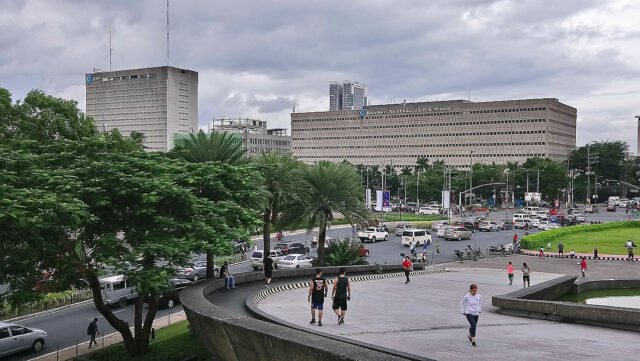
Mactan Economic Zone — Photo from www.facebook.com/PEZAPH

Every nation seeks economic growth for the prosperity and welfare of its people, and to succeed in that endeavor in the modern age requires innovative strategies to attract investments, promote exports, and encourage private enterprises to create employment opportunities.

One such strategy employed by the Philippines is the establishment of Special Economic Zones (SEZs) under the auspices of the Special Economic Zone Act, officially known as Republic Act No. 7916. Enacted in 1995, this landmark legislation provides a legal framework for the creation, operation, and regulation of SEZs across the archipelago, aiming to harness the country’s economic potential and propel it onto the global stage.

At its core, the SEZ Act seeks to stimulate economic activity and foster industrialization by designating specific areas as SEZs, endowed with a suite of incentives and benefits to entice both domestic and foreign investors.

Businesses and enterprises who conduct their operations in these specific areas are then entitled to both fiscal and non-fiscal. Naturally, these added benefits serve as powerful magnets for investments, especially into sectors deemed crucial for national development. From reduced corporate income tax rates to streamlined regulatory processes and access to world-class infrastructure, SEZs offer an attractive proposition for businesses looking to establish or expand their operations in the Philippines.

The SEZ Act classifies SEZs into various types, each tailored to accommodate specific industries or activities, ranging from Freeport Zones, Agro-Industrial Economic Zones, and more.

Manufacturing Economic Zones are specialized areas focused on accommodating manufacturing industries, including automotive, electronics, garments, and other value-added manufacturing activities. Examples of this type of special economic zone is the Toyota Sta. Rosa, Laguna — SEPZ Industrial Complex and the Mactan Export Processing Zone in Cebu City.

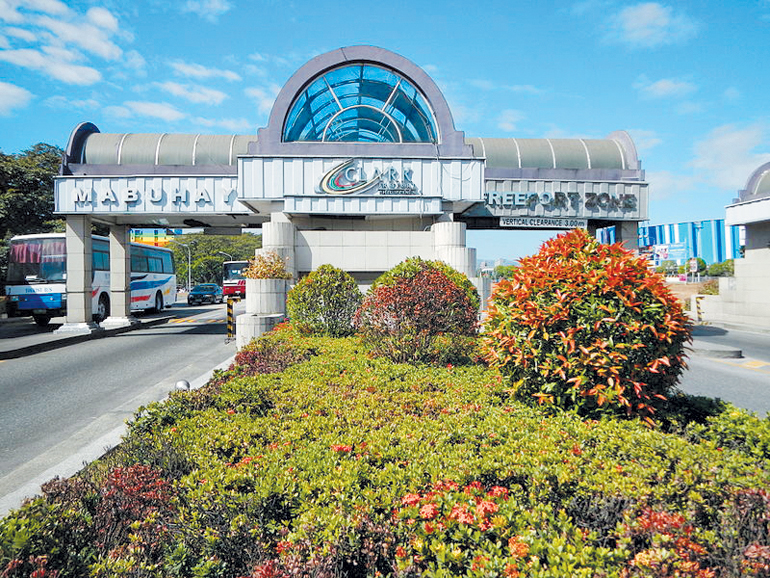
Clark Freeport and Special Economic Zone — Photo from EN.WIKIPEDIA.ORG

Manufacturing zones aim to attract foreign direct investments in manufacturing, promote technology transfer, and enhance the competitiveness of the Philippine manufacturing sector. These zones often feature industrial parks, industrial estates, and export processing zones, facilitating the establishment of manufacturing facilities and production lines.

Meanwhile, Agro-Industrial Economic Zones are designated areas for agribusiness and agro-industrial activities. Focusing on rural development and agricultural modernization, these zones provide facilities and services to support agricultural processing, manufacturing, and value-added activities, often integrating farming, processing, and marketing activities to create synergies along the agricultural value chain.

Examples of Agro-Industrial Economic Zones are the Sarangani Agro-Industrial Eco Zone and the AJMR Agro-Industrial Economic Zone in Davao City.

In contrast to the aforementioned zones, which focused on consumer goods, Tourism Economic Zones (TEZ) are dedicated to promoting tourism-related activities, including resorts, hotels, leisure facilities, and eco-tourism projects. Businesses doing operations in these zones are centered on services, such as providing transportation networks, accommodations, and entertainment amenities.

TEZs aim to attract both domestic and international tourists, contributing to the development of the local tourism industry and generating employment opportunities. In 2022, the local government of Pagudpud in Ilocos Norte announced their intention to establish a tourism economic zone in Barangay Caparispisan.

Similarly, Information Technology (IT) Parks focus on the service-centric strengths of the Filipino workforce. IT Parks are SEZs focused on hosting IT and business process outsourcing (BPO) companies, software development firms, and technology-related enterprises, providing incentives, state-of-the-art infrastructure, telecommunications facilities, and support services to foster the growth of the IT and BPO sectors.

Given the significance of the IT and BPO sector to the Philippine economy, there are plenty of IT Parks all over the country, such as the Cebu IT Park and the Batangas State University (BatStateU) Knowledge, Innovation, and Science Technology (KIST) Park established in Batangas City in 2020.

There are also ecozones for industries like medicine, such as Medical Tourism Parks, ecozones designed to promote medical tourism. Most recently, the Philippine Economic Zone Authority announced their plans to launch new pharmaceutical-medical device (pharma-dev) economic zones within 2024, with four locations across the country already under consideration.

Special economic zones are a key component in making a country more competitive and productive through facilitating the exchange of ideas, information, and technology. And they will continue to play a driving role in the Philippines’ economic plan, with the Senate approving a bill promoting the establishment of the new Bulacan Special Economic Zone and Freeport this month.

Senator Mary Grace S. Poe-Llamanzares, chairperson of the Senate panel on public services and sponsor of the bill, said she hopes the establishment of an ecozone will open the doors for more investments and more jobs in Bulacan.

“I witnessed the signing of the NAIA [Public-Private Partnership] project and it brought about a lot of hope because I feel now the gateway for many of our visitors to our country will be much improved,” the senator previously said in a speech.

“The same way, I have high hopes for this ecozone that it will spur investment, create more jobs and will actually be a model, not just here in the Philippines, but all over Asia, that would hopefully increase our gross domestic product,” she added.Bjorn Biel M. Beltran

BPI Wealth looks to increase market share

THE WEALTH MANAGEMENT unit of Bank of the Philippine Islands (BPI) is looking to increase its market share among high to ultra-high net worth individuals in the Philippines through tailor-made products and initiatives, its top official said on Thursday.

BPI Wealth President and Chief Executive Officer Maria Theresa D. Marcial said at a briefing that there are around 20,000 high to ultra-high net worth persons in the Philippines, with 25% of them currently being served by BPI Wealth.

She said BPI Wealth hopes to raise this market share by five percentage points through its product offerings.

The company last year launched its Wealth loan product, which gives clients access to liquidity. BPI Wealth is aiming to disburse P12 billion in Wealth loans this year, Ms. Marcial said.

It also launched discretionary model portfolios this year, allowing clients to invest for wealth preservation, income generation, or capital growth.

BPI Wealth also offers a multi-family office solution to help clients navigate issues in investment management, legal advisory, comprehensive planning, estate planning, business succession, and property management.

Ms. Marcial added that the high to ultra-high net worth population is expected to continue growing as Philippine gross domestic product is seen to expand by around 6% this year, which could boost firms’ and individual incomes.

“We expect that fixed income will really outperform. In the past year or so, we’ve seen very short-term money market instruments doing very well. I think in the next six months or six to nine months, we should start rethinking our portfolios and shifting to longer durations,” she said.

Expectations of easing inflation and lower borrowing costs will also prop up equities, Mr. Marcial added. — A.M.C. Sy