Home Blog Page 296

Port of Davao seizes P235-M illicit cigarettes

THE Bureau of Customs (BoC) said it intercepted P235 million worth of illicit cigarettes in operations across Maguindanao del Norte, Maguindanao del Sur and the Davao Region.

In a statement on Monday, the bureau said the seizures conducted by the Port of Davao totaled 6,400 master cases with an estimated value of P235 million. It included brands such as Bosqu, Cannon Menthol, and Gajah Baru.

This was part of a broader campaign against illicit cigarettes, which undermine government revenue through lost excise taxes.

“We make sure that once these illegal products are seized, they are completely destroyed and never find their way back into the market,” Customs Commissioner Ariel F. Nepomuceno said.

“This is our commitment to lawful trade, fair competition, and public interest.”

In a separate statement, the BoC has bolstered its good governance reforms with the Integrity, Accountability, and Modernization program.

“Among the major accomplishments carried out and enhanced was the full implementation of the updated Integrity Action Plan across all offices, with technical support from the World Customs Organization (WCO),” it said on Monday.

Customs also approved a revised Code of Conduct on 21 April 2025, aligned with existing national laws and the WCO Model Code of Ethics. — Aubrey Rose A. Inosante

New PMA building to boost cadet life and training

FORT DEL PILAR, Baguio City — The Philippine Military Academy (PMA) is set to significantly improve cadet life and training with the groundbreaking of the Henry Sy Sr. Hall on Monday.

The project is a major upgrade in facilities designed to better support the Academy’s growing cadet corps and demanding military training programs, said PMA Superintendent Vice-Admiral Caesar Bernard N. Valencia, explaining that the new hall directly strengthens the Academy’s mission of shaping future military leaders.

By investing in modern, functional infrastructure, the PMA ensures that cadets train, live, and learn in an environment that matches the standards expected of tomorrow’s officers.

Built for scale and flexibility, the two-story, 21,000-square-meter Henry Sy Sr. Hall will transform daily cadet routines. Its main dining hall will seat up to 2,500 cadets at once, easing operations and improving efficiency, while its adaptable spaces can host trainings, assemblies, and sports activities.

The project also boosts cadet development beyond the classroom. A rainwater harvesting system supports sustainable operations, while a new athletic track oval will enhance physical fitness and competitive sports — key pillars of military readiness.

As a flagship project under the PMA Growth Plan, the Henry Sy Sr. Hall reinforces the Academy’s commitment to providing better living, dining, and training conditions for its cadets. With this facility, the PMA continues to invest in the people who will one day lead and defend the nation. — Artemio A. Dumlao

Neophyte cops injured in brutal Basilan ‘reception rite’

COTABATO CITY — Officials of the Bangsamoro regional police have vowed to prosecute a group of policemen involved in a brutal “reception rite” in Lamitan City in Basilan last week for 114 neophyte colleagues that left many of them injured.

Brigadier General Jaysen C. De Guzman, director of the Police Regional Office-Bangsamoro Autonomous Region (PRO-BAR), was in Lamitan City on Sunday to personally investigate the incident that many local executives in the province condemned via social media.

“Under the principles of command responsibility, negligent supervisors will face administrative sanctions and appropriate charges shall be filed against those involved,” Mr. De Guzman said on Monday, referring to the incident.

The victims of the violent reception rite were new members of PRO-BAR’s Regional Mobile Force Battalion (RMFB) 14, mostly from the Moro Islamic Liberation Front, recently trained and admitted into the Philippine National Police as part of the erstwhile rebel group’s 2014 truce with the national government.

The RMFB 14 is a rapid deployment law-enforcement unit of PRO-BAR, whose regional headquarters is in Camp SK Pendatun in Parang town in Maguindanao del Norte, less than 40 kilometers from Cotabato City, capital of the Bangsamoro region.

Local officials in Basilan said on Monday that two of those mauled and whipped with sticks by colleagues senior to them in the service, lost consciousness and were immediately brought to a hospital for treatment.

Many others have contusions and scratches in different parts of their bodies caused by the maltreatment by their companions in the RMFB 14, now detained, awaiting administrative litigation for their offense. — John Felix M. Unson

Truck industry counting on infra, logistics to drive demand in 2026

OLYMPUS DIGITAL CAMERA

TRUCK manufacturers said they are banking on government infrastructure projects, logistics demand, and fleet modernizations to drive sales this year.

In a statement on Monday, the Truck Manufacturers Association, Inc. (TMA) said that truck sales hit 11,361 units in 2025, including 6,783 Category III trucks, 3,690 Category IV, and 888 Category V.

The truck categories refer to payload weights, with Category V being the heavy-duty class, suitable for infrastructure and large-scale logistics.

The TMA described the market last year as steady, with overall sales levels largely maintained.

“Continued government infrastructure projects, improving logistics demand, and increasing investments in fleet modernization are expected to further drive demand for trucks in the coming year,” it added.

Robert D. Carlos, newly elected president of TMA, said that the group is confident about the outlook for 2026.

“Our member companies are prepared to meet the growing demand for reliable, efficient, and innovative commercial vehicles that support the country’s development goals,” he said.

He hopes to advance TMA priorities such as road safety and sustainable transport solutions during his term.

“This year, TMA will take a more active role in participating in government programs and initiatives, particularly those focused on road safety, environmental protection, and possibilities to strengthen local truck manufacturing,” he said.

“Our member companies have been continuously innovating their products while integrating advanced safety features and greener technologies — to help support national objectives,” he added. — Justine Irish D. Tabile

Critical minerals deal to position PHL as major supplier to clean energy industry

FREEPIK

THE critical minerals memorandum of understanding (MoU) between the US and the Philippines will prepare the industries involved to service global demand for materials needed for clean energy and technology, exporters said. 

“The pact aims to pivot the Philippines from raw ore export to domestic processing of nickel, cobalt, and graphite, enhancing high-value exports and supply chain security,” the Philippine Exporters Confederation, Inc. (Philexport) said in a statement on Monday.

“By enhancing responsible mining and processing capabilities, the Philippines is prepared to meet global demand for materials critical to clean energy and technology,” it added.

The Philippines and the US signed an MoU to develop the domestic critical minerals and rare earths industry.

“This partnership is anticipated to attract investment, create jobs, and bolster the country’s role in the global high-tech supply chain,” Philexport said.

“Further, it strengthens ties for Filipino-led mining companies to access the US market and secure supply chains,” it added.

Former Trade Secretary Ramon M. Lopez said the pact will lead to “greater value-added critical mineral exports.”

These are “essential in new industries such as the electrified vehicle batteries and electronics,” he said in a Viber message.

He said the MoU could help “attract investments in resource-based export manufacturing activities that will create more jobs and sustainable community development.”

“Our country has been promoting more mineral processing activities as it has been included in the Strategic Investment Priorities Plan under the CREATE law and its predecessor, the Investment Priorities Plan of the Board of Investments,” he added. 

According to the Department of Environment and Natural Resources, the MoU is set to evolve the Philippines beyond depending on the export of raw mineral ores and steer it towards domestic processing and value addition.

The US has also entered similar critical minerals agreements with Australia, Canada, Japan, South Korea, the UK, Malaysia, and Thailand. — Justine Irish D. Tabile

Sugar purchase contracts could be deemed eligible collateral for cane farmer financing

PHILSTAR FILE PHOTO

THE departments of Agriculture (DA) and Agrarian Reform (DAR) said on Monday that they are exploring how to make sugar purchase contracts acceptable as collateral for the financing of sugarcane farms.

“The DA and DAR, in coordination with relevant agencies, will assess both the use of purchase contracts as collateral to enhance farmer financing,” according to a joint statement from legislators and agriculture officials.

The purchase contracts will involve the sale of a certain volume of domestic sugar from cane farmers.

The joint statement was signed by Senate Agriculture chairman, Senator Francis Pancratius N. Pangilinan, House Agriculture panel chairman Rep. Wilfrido Mark M. Enverga, Agriculture Secretary Francisco P. Tiu Laurel, Jr., and officials from the Sugar Regulatory Administration (SRA).

The financing scheme was pitched as a means of addressing declining farmgate prices and refining constraints.

Assistance programs are also being configured to reach more small farmers, they said.

The targeted farmers include agrarian reform beneficiaries and agrarian reform communities.

The DA and the SRA said they will also review the import, use, and market impact of artificial sweeteners.

“DA and SRA will periodically review import programs to ensure that policies are aligned with actual domestic refining output and prevailing market conditions,” it said. — Adrian H. Halili

Manila Water non-revenue water ‘among Asia’s lowest’

MANILAWATER.COM

EAST ZONE concessionaire Manila Water Co., Inc. said it ended 2025 with a non‑revenue water (NRW) level of 13.55%, which it said was among the “lowest in Asia.”

The full-year NRW averaged 14.27%, which the company attributed to operational efficiency upgrades across its network. The average is a step back from 2024’s 13.51%.

“Keeping NRW low allows more of the water we produce to reach our customers. Every liter we save strengthens the system and helps ensure that households continue to enjoy reliable, 24/7 water service,” Jeric T. Sevilla, Manila Water’s communication affairs group director, said in statement on Monday.

NRW refers to water lost due to leaks and illegal connections, which are not billed to customers.

According to Manila Water, reducing NRW translates to more water that can be delivered to households.

Every percentage-point improvement in NRW can result in savings of up to 15 million liters of water per day.

Manila Water said system efficiency remains its priority, which will entail targeted pipe and meter replacements, pressure optimization, active district metered area monitoring, and enhanced digital tools to improve response time to leaks.

Manila Water serves over 7.8 million customers in the East Zone of Metro Manila, parts of Marikina, Pasig, Makati, Taguig, Pateros, Mandaluyong, San Juan, portions of Quezon City and Manila, as well as several towns in Rizal province. — Sheldeen Joy Talavera

DA exploring how to optimize rice imports, supply, prices

PHILIPPINE STAR/KRIZ JOHN ROSALES

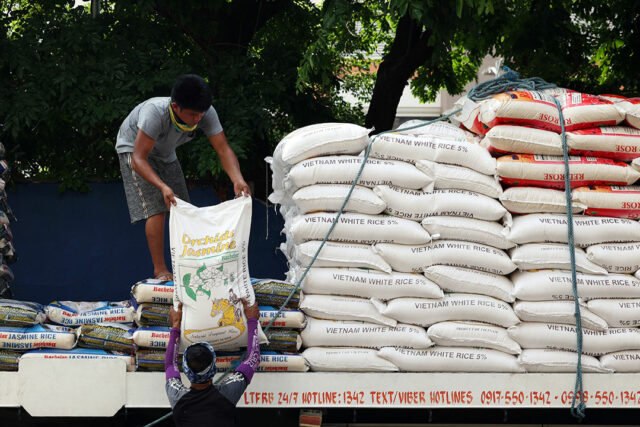
THE Department of Agriculture (DA) said it ordered the creation of a technical working group (TWG) to study a more data-driven approach to importing rice in a manner that will managing supply and prices effectively while protecting farmer interests.

In a statement on Monday, the DA said it is working to finalize rice import policies by May to lay the groundwork for a more structured scheme of rice importing in 2026.

The DA said the TWG will be tasked with making recommendations on volume, timing, and distribution of rice imports, guided by data on regional supply levels and inventory.

According to the DA, the TWG will be composed of representatives from the DA’s Office of the Undersecretary for Rice Industry Development, Food Terminal, Inc., the Philippine Rice Industry Stakeholders Movement, and the Philippine Rice Importers Association.

Agriculture Secretary Francisco P. Tiu Laurel, Jr. was quoted in the statement as saying that the TWG deliver policy recommendations within weeks.

The DA said the group is also expected to study mechanisms to ensure that imports do not disrupt the harvest or depress farmgate prices.

“Initial import volumes for May will remain ‘simple,’ but more complex mechanisms — such as linking import participation to purchases from local farmers — are firmly on the table for later in the year, potentially after the wet season,” the DA said.

The da said it will also impose stricter reporting requirements for rice inventories, noting that only a limited number of registered warehouses are currently compliant.

Traders and warehouse operators that fail to submit inventory data could lose their eligibility to import rice, the DA said.

“By aligning import timing with verified market needs and enforcing compliance across traders and millers, the DA aims to curb speculative behavior that distorts prices at the farm gate. For consumers, the payoff is steadier supply and fewer price spikes,” the DA said. — Vonn Andrei E. Villamiel

DENR adopts development plan for forest carbon-credits market

STOCK PHOTO | Image from Freepik

THE Department of Environment and Natural Resources (DENR) said it adopted a roadmap to guide the development of a carbon-credits market for forestry projects.

In a statement, the DENR said Secretary Raphael P.M. Lotilla signed a Department Administrative Order (DAO) formally adopting the framework known as “Roadmap to Readiness in the Voluntary Forest Carbon Market (2026-2030).”

The market will allow trading in carbon credits generated by forestry projects to offset their greenhouse gas emissions.

The DENR said the roadmap provides a national strategic framework to position the Philippines as a high-integrity destination for forest carbon investments.

“It aims to unlock the economic value of the country’s carbon sinks while ensuring that forest protection and restoration initiatives support the nation’s climate goals under its Nationally Determined Contributions and promote sustainable livelihoods for local communities,” the DENR said.

According to the DENR, the plan harmonizes rules governing forest assets and develops data analytics and digital infrastructure, including a National Forest Monitoring System and a Forest Carbon Credit Database, to ensure environmental integrity and prevent double counting.

Under the DAO, the Forest Management Bureau was designated the lead agency for terrestrial forest carbon initiatives, while the Biodiversity Management Bureau will oversee blue carbon ecosystems such as mangroves and seagrass beds.

“In consultation with the Department of Finance, the department will explore sustainable financing mechanisms, including a potential Trust Fund to reinvest carbon revenues directly into forest management and protection,” the DENR added. — Vonn Andrei E. Villamiel

National Revenue Authority touted as possible BIR, BoC replacement

BW FILE PHOTO

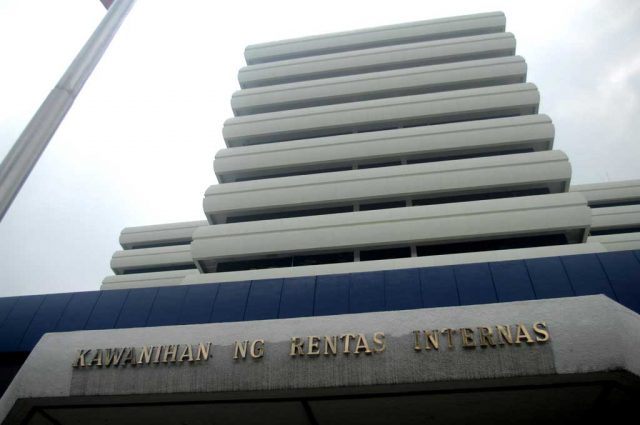
THE overhaul of the government’s main revenue agencies must be revisited, particularly the consolidation of the bureaus of Customs and Internal Revenue into a National Revenue Authority (NRA), a former Finance department official said.

Former Undersecretary Cielo D. Magno called for the revival of a proposal to establish the NRA, “given all of these challenges and problems with respect to revenue mobilization.”

“I think it’s again time to think of reforming the Bureau of Internal Revenue (BIR) and the Bureau of Customs (BoC), and revisiting the idea of creating a National Revenue Authority,” she said in a University of the Philippines School of Economics event on Feb. 6.

House Bill 695, filed in 2017 by former President Gloria Macapagal‑Arroyo, sought to replace the BIR and streamline tax collection.

Last year, the BIR came under fire from the private sector over the alleged misuse of letters of authority, which serve as the precursor to tax audits. The Bureau of Customs also faced complaints from US firms about intrusive inspections, inconsistent charges, and demands for “facilitation fees.”

Both agencies missed their 2025 collection targets as the economy slowed in the wake of the flood control corruption scandal and a freeze on rice imports.

Meanwhile, Raymond Abrea, chairman and chief executive officer of the Asian Consulting Group, backed the abolition of both bureaus and proposed a state-owned, professionally managed, performance‑driven NRA.

Mr. Abrea said the NRA should operate like a government‑owned and -controlled corporation (GOCC) to insulate revenue collection from political interference.

“This is crucial because the Constitution mandates that the authority to collect revenue rests with the government. So the legal aspect of that needs to be studied carefully,” he said in the Chikahan with Prof. Cielo Magno: The Tax ng Ina Mo Podcast on Feb. 4.

Mr. Abrea likened the NRA to the Inland Revenue Authority of Singapore.

A GOCC structure would free the NRA from budget constraints, attract top private‑sector talent, and fully automate tax and customs administration using digital platforms, artificial intelligence, and blockchain systems, he added.

The government hopes to collect P4.82 trillion in revenue in 2026, with P3.431 trillion expected from the BIR and P1.003 trillion from the BoC.

BusinessWorld reached out to the Department of Finance, but said its officials were not immediately available to comment.

The BIR and Customs Commissioners were approached for comment, but had not replied at the deadline. — Aubrey Rose A. Inosante

Ceramic tile imports could be subject to safeguard measures investigation

WILCON

THE Department of Trade and Industry (DTI) said it will be looking into possible safeguard measures against imported ceramic tiles.

In a notice dated Feb. 3, the DTI said it received an application from the Ceramic Manufacturers’ Association, Inc. to initiate a preliminary investigation into imported ceramic tiles from various countries.

“The application alleged that the increased imports have contributed significantly to the serious injury suffered by the local industry,” it said.

After evaluating the application, the DTI said there are prima facie indications that justify the initiation of the probe.

“The period of investigation is from 2020 up to the first quarter of 2025,” it said.

In a report, the DTI said imports of ceramic tiles have been fluctuating from 2020 to 2024, with imports growing 81% from 2020 to 2022 before decreasing 29% in 2023. In 2024, imports were little changed.

During the period of investigation, China accounted for 71% of the imported ceramic tiles, followed by Indonesia (14%) and Vietnam (10%).

The report also found that imports have consistently accounted for much more than the volume of domestic production.

“In 2020, the imports’ share relative to domestic production was approximately 235%, rose sharply in 2021, and reached its peak in 2022. This indicates that imports grew much faster than local production during this period,” it said.

In the first quarter of 2025, the report found that imports were equivalent to about three times domestic output.

“The market share of the domestic industry steadily declined from 2020 to 2024, while imports increased their share over the same period,” it said.

“Market conditions in the first quarter of 2025 indicate a strong reliance on imports, with domestic industry contributing only marginally to total supply,” it added.

“Based on the above findings, there are indications that increased imports of ceramic tiles are the substantial cause of serious injury to the domestic industry in terms of loss of market share, declining domestic sales, utilization rate, reduction in labor productivity, incurred losses, and increased production cost,” the DTI said. — Justine Irish D. Tabile

Farmer training seen helping revive Samar abaca industry

BW FILE PHOTO

FARMERS in Calbayog City are receiving training on modern abaca production techniques, fiber grading, and disease management, part of a program to revive the Samar abaca industry.

In a statement, the Philippine Fiber Industry Development Authority (PhilFIDA) said farmers are expected to emerge with skills in planting material management, disease identification and control, fiber extraction, and quality classification.

PhilFIDA said the training sessions will help boost the production of high-quality fiber and enhance market competitiveness, en route to reviving the island’s abaca industry.

The Philippine Statistics Authority (PSA) reported that abaca production in Samar has declined over the past decade, dropping from 1,807 metric tons (MT) in 2010 to about 940 MT in 2024.

The province’s share of national abaca production  also declined from 2.72% in 2010 to 1.45% in 2024.

Last week, participants attended a two-day training session organized by the government of Calbayog, with resource support from PhilFIDA.

The program included hands-on field activities, such as disease identification and a visit to the city’s regular abaca nursery in Barangay Gabay.

“PhilFIDA remains committed to empowering abaca farmers through continuous skills development and technology transfer,” it said. — Vonn Andrei E. Villamiel